Category: News

Theater for winter 2026: ‘Hamnet,’ a local ‘Evan Hansen’ and Robert Falls returns to the Goodman
A new year has dawned and Chicago’s energetic new theater season will keep your winter chill away. Here’s a quick look at 10 of the most intriguing shows opening between now and the end of March, listed in alphabetical order. I’ve not yet seen these shows, of course, so I always offer the caveat that some may not live up to expectations — but the odds are good!
It hardly needs stating that there are many more than 10 productions on offer. Chicago theaters always do a poor job of managing their calendars; the vast majority of major new shows open in a 10-day period at the end of January, allowing for rehearsals to start only this week. That’s frustrating, given the heavy demand in early January, although the first month of the year does host benefit appearances at Chicago Shakespeare Theater by both Suzy Eddie Izzard (Jan. 16-17) and Ian McKellen (Jan. 30).
There really is much to look forward to throughout 2026, including new theaters for Northlight Theatre in Evanston and for Steep Theatre and TimeLine Theatre in Chicago. “Hamilton” is returning to Loop this winter; the Trump-Kennedy Center’s loss is our gain.
But this business always is about what is on the stage, and the next few weeks always are a great time to see a Chicago show.
“The Dance of Death”
The great Irish playwright Conor McPherson (“Shining City,” “The Seafarer”) adapts August Strindberg’s famously dark and sardonic drama from 1900 about a man and his wife who despise and try to sabotage each other. This version was first seen locally at Writers Theatre in Glencoe around a dozen years ago; in reviewing that long-ago production, I described “Dance of Death” as “an impassioned, fever dream of an apocalyptic play.” Yasen Peyankov directs a notable cast for this new Steppenwolf production that includes Cliff Chamberlain, Kathryn Erbe and Steppenwolf co-founder Jeff Perry.
Jan. 29 to March 22 at Steppenwolf Theatre, 1650 N. Halsted St.; 312-335-1650 and www.steppenwolf.org
Kathryn Erbe and Cliff Chamberlain will star in the Steppenwolf Theatre Company’s production of “The Dance of Death.” (Sandro Miller)
“Dear Evan Hansen”
This musical about a struggling but empathetic high schooler with a book by Steven Levenson and score by Benj Pasek and Justin Paul truly has a cult following. Although the national tour of the original Broadway production has played Chicago more than once, the Paramount Theatre in Aurora won the rights (over several competitors) to the first locally staged production. The rising director Jessica Fisch is at the helm in the historic venue, known for its high-quality production values and large orchestra. I, for one, am ready to see a fresh production of this title.
Feb. 4 to March 22 at Paramount Theatre, 23 E. Galena Blvd., Aurora; 630-896-6666 and www.paramountaurora.com
“Eureka Day”
In another collaboration with the presenter Broadway in Chicago, the nonprofit Chicago company TimeLine Theatre stages the first Chicago-area production of this comedy by Jonathan Spector poking fun at liberal, pseudo-progressive elites mostly mismanaging their Montessori school. I previously reviewed the Broadway production directed by Anna D. Shapiro and called the show “amusingly observed, sharply penned and generally well-performed play with character types who will be all too familiar to anyone who has (or had) kids in such an exhausting kind of private school.” Lili-Anne Brown directs this new local staging with a Chicago cast.
Jan. 13 to Feb. 22 at Broadway Playhouse at Water Tower Place, 175 E. Chestnut St.; www.broadwayinchicago.com.
“Hamnet”
Given the success of the recent film adaptation of the novel by Maggie O’Farrell, speculating how the loss of his real-life child influenced William Shakespeare’s writing of “Hamlet,” I suspect this would have been quite a hot ticket at Chicago Shakespeare Theater, even without the prestige of a Royal Shakespeare Company production. Lolita Chakrabarti (“Hymn,” “Life of Pi”) was the adaptor of the stage version. I don’t envy everyone involved having to compete with such an extraordinary film, but then the novel was also the reason for its success and informs the stage version, too.
Feb. 10 to March 8 at Chicago Shakespeare Theater on Navy Pier, 800 E. Grand Ave.; 312-595-5600 and www.chicagoshakes.com
The source novel “Hamnet” by Maggie O’Farrell. (Penguin Random House/TNS)
“Holiday”
One of the highest profile shows of the winter, Philip Barry’s classic romantic comedy “Holiday” will be helmed by Robert Falls, marking his return to the Goodman Theatre after his exit as artistic director some two years ago. This 1928 play (which was twice adapted for film) has itself been adapted by the late, great playwright Richard Greenberg, making this an especially poignant show, given that it will be a twice-posthumous posthumous work. The show already has a soupçon of Broadway buzz, albeit most likely with the addition of some bold-faced names to the cast.
Jan. 31 to March 1 in the Goodman’s Albert Theatre, 170 N. Dearborn St.; 312-443-3800 and www.goodmantheatre.org
“Morning, Noon and Night”
Leslie Ann Sheppard, Christina Gorman and Adam Schulmerich are the Shattered Globe Theatre ensemble members in the Chicago premiere of a well-received familial dramedy by the Boston playwright Kirsten Greenidge that explores life in the post-pandemic era as well as the dystopian aspects of the digital takeover that shows no sign of abating. AmBer Montgomery directs. Relatively few plays have explored the lingering trauma of the COVID-19 times; this, apparently, is one that does.
Feb. 13 to March 28 at Theater Wit, 1229 W Belmont Ave.; 773-975-8150 and www.sgtheatre.org
“Salome”
The Scottish director David McVicar was the creative mind behind Lyric Opera’s stunning “Medea” this fall; this winter, his production of this long-controversial (and occasionally banned) one-act opera by Richard Strauss, a blend of Biblical themes with erotic imagery and obsessive characters (not to mention the famed “Dance of the Seven Veils”), arrives in Chicago. The libretto is Hedwig Lachmann’s German translation of the 1891 French play of that name by Oscar Wilde, as edited by the composer. McVicar’s gory staging caused quite a stir at the Royal Opera House in Covent Garden in 2008. At Lyric, the debuting Jennifer Holloway will sing the title role with Brandon Jovanovich as Herod.
Jan. 25 to Feb. 14 at Lyric Opera of Chicago, 20 N. Wacker Drive; 312-827-5600 and lyricopera.org
The 2024 Broadway cast of “Stereophonic” at the John Golden Theatre in New York. (Julieta Cervantes)
“Stereophonic”
The first national tour of this extraordinary play by David Adjmi, a fictionalized take on the drama surrounding Fleetwood Mac’s obsessive and brilliant behavior inside the recording studio, is one of the best new plays of the past decade. It makes for a truly extraordinary piece of theater when married with a hyper-naturalist production from the phenomenal director Daniel Aukin. David Zinn’s mind-blowing set, which is being re-created for the road, is itself worth the price of admission. I reviewed the Broadway production last year and called the show “a three-hour dissection of ego, insecurity and the messy, messed-up gorgeousness of the creative process.” Alas, the amazing original cast is not touring, but one hopes the new road crew will at least come close.
Jan. 27 to Feb. 8 at the CIBC Theatre, 18 W. Monroe St.; www.broadwayinchicago.com
“Theater of the Mind”
With the name of the polymath David Byrne as something of an insurance policy, the Goodman makes its first foray into the trendy world of high-concept, off-site, immersive theater that attempts to remove the figurative wall between artist and spectator. Devised by the famed veteran musician and Mala Gaonkar, “Theater of the Mind” debuted at the Denver Center in 2022 and was often described there as something of a journey inside Byrne’s head, albeit with the intention of allowing audience members to apply Byrne’s formative experiences to their own lives. The show has timed entries and offers small groups a journey through what essentially is an art installation.
March 11 to May 31 in the Reid Murdoch Building, 333 North LaSalle St.; 312-443-3800 and www.goodmantheatre.org
David Byrne speaks about his show “Theater of the Mind” on Feb. 25, 2025, at the Goodman Theatre. (Brian Cassella/Chicago Tribune)
“White Rooster”
Matthew C. Yee, a writer-actor-musician with an interest in mythologically based stories, is one of the Chicago theater’s most interesting talents and after a too-quiet fall and winter, Lookingglass Theatre returns to production with a premiering piece penned by Yee that is billed as a familial drama, probing life, death and the rituals that accompany them both. Within that penumbra, Yee has transposed Chinese folklore into the Americana setting that compels much of Yee’s boundary-crossing work.
March 5 to April 12 at Lookingglass Theatre in Water Tower Water Works, 163 E. Pearson St.; 312-337-0665 and www.lookingglasstheatre.org
Chris Jones is a Tribune critic.
cjones5@chicagotribune.com
https://www.chicagotribune.com/2026/01/06/theater-winter-2026/

Major Data Breaches Put Hundreds Of Thousands Of New Zealanders At Risk
Major Data Breaches Put Hundreds Of Thousands Of New Zealanders At Risk
Authored by Rex Widerstrom via The Epoch Times (emphasis ours),
Hundreds of thousands of New Zealanders could have their personal information exposed online after hackers breached two major websites and stole large amounts of data.
In the first case, a group calling itself Kazu announced it had obtained records from the Manage My Health (MMH) website, an online portal that connects patients with doctors and healthcare providers and allows them to access health information, book appointments, and order repeat prescriptions.
The website collects and manages sensitive information about patients.
Some released samples by the hacker reportedly included information about patients’ conditions, medical test results, clinical notes, vaccination records, medical photographs and personal identification details.
Initially, the hackers demanded a $60,000 ransom to stop them from releasing the more than 400,000 files online by Jan. 15, 2026.
However, on Jan. 4, the group said on its Telegram channel that it had brought forward the payment deadline to Jan. 6, citing MMH’s quick response to the hack and an alleged lack of concern for patients’ data.
“Their ignorance of our emails and messages, along with their failure to acknowledge users or explain exactly what happened, is the main issue,” the group Kazu wrote on Telegram.
“Many MMH users have been asking the company for an explanation, but they’ve either ignored them or responded with vague statements.
“That’s why we decided to reduce the deadline and put pressure on the company.”
Hacker Group Wants A ‘Minimum’ Ransom
At the same time, Kazu explained that the group decided to settle for a “minimum” ransom of $60,000 instead of the initial amount of $300,000 “to protect the data and quickly close the deal.”
Kazu also threatened to leak the files if the ransom was not paid in the next 48 hours.
MMH’s Response
In an update on Jan. 3, MHH announced that the company had fixed the security gap and strengthened data protection.
“We’ve identified and closed the specific gaps that allowed unauthorised access. This fix has been independently tested and verified by external cybersecurity experts,” it said.
“We’ve added extra checks when people log in and limited how many times someone can try to access the system in a short time.
“All health documents have been re-secured and their storage has been strengthened.”
The company also noted that the website’s system environment was now secure and operated as intended.
MHH expected 6-7 percent of its estimated 1.8 million users were affected by the incident amid an ongoing investigation.
“We expect to start notifying those affected following confirmation of forensics and liaison with PHOs and GPs to ensure that individuals are getting the right information, in line with Privacy Act requirements, and are properly supported,” it said.
“The forensic team is continuing work to confirm our analysis of the specific documents involved. Completion of this step will enable us to proceed with more targeted communications to affected parties and we will start informing people directly from early next week.”
Meanwhile, New Zealand Health Minister Simeon Brown said his ministry was reviewing the breach.
“I know this breach will be very concerning to the many New Zealanders who use Manage My Health, and we need assurances around the protection and security of people’s health data,” Brown said in a statement.
“Patient data is incredibly personal, and whether it is held by a public agency or a private company, it must be protected to the highest of standards.”
The minister also noted that the review would be conducted no later than Jan. 30, with a focus on an “immediate response to the incident.”
Neighbourly Data Breach
In an unrelated but similar incident, the personal details of users of a large “community noticeboard” type website called Neighbourly have also been offered for sale on the dark web.
People use the site to make announcements, contact other members, and buy and sell items.
The site is run by media company Stuff, which runs several newspapers and a news website, and provides a daily news bulletin for one of the country’s TV networks.
According to The Daily Dark Web, a website that monitors activity on the dark web, about 150GB of data was stolen from Neighbourly by an unnamed threat actor, including full names and physical addresses, email addresses, phone numbers, GPS coordinates, user biographies, and private messages.
Neighbourly was shut down on New Year’s Day and restored recently, with the site confirming the breach on Jan. 3.
In a message to its users, Neighbourly operating team apologised for the incident and informed them that the data breach had been contained.
“Following best practice, we will look to seek a court injunction against any use of the material,” the team said.
“We want to apologise to our members for this occurrence and any concerns it may have caused you over the past few days.
“We will work closely with all our staff to ensure we have the most robust processes in place to prevent it from happening again.”
Tyler Durden
Tue, 01/06/2026 – 06:30
https://www.zerohedge.com/political/major-data-breaches-put-hundreds-thousands-new-zealanders-risk
Classical music for winter 2026: Embracing the unexpected
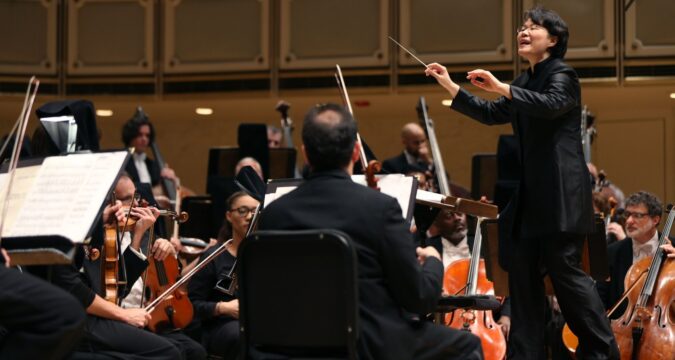
Chicago might have already hit its first deep freeze, but the local classical music scene pulses with life this season. Mezzo-soprano Joyce DiDonato, the Chicago Symphony’s artist-in-residence, returns to sing a work specially written for her and string trio Time For Three (Feb. 10), and director-in-waiting Klaus Mäkelä bookends his East Coast CSO tour with two home-turf appearances (Feb. 19-21 and March 5-6, all three at Symphony Center, 220 S. Michigan Ave.; cso.org). Meanwhile, Lyric’s production of “El último sueño de Frida y Diego” (March 21 to April 4; www.lyricopera.org), composed by the bountifully gifted Gabriela Lena Frank, ought to be on any art-lover’s calendar — not just the opera buffs.
Surveying the music calendar this season, however, I noticed a theme: Presenters, big and small, were going out on a limb with bold and unusual themes. Perhaps their concerts feature obscure or wet-ink works. Maybe they serve up tried and true classics with a twist. All piqued my interest — and, I hope, yours.
Keeping up with the Ha-Ha-Hahlers
When he’s not a host on WFMT, Robbie Ellis is a singer and musical humorist in the mold of Tom Lehrer. A very Viennese program at the Northbrook Symphony, which he recently joined as general manager, leans on those chops. Gustav Mahler’s Symphony No. 1 might be the main event, but Ellis also sings a short song by Alma Mahler and his own satirical “Radetetetetzky March,” a fond sendup of the Vienna Philharmonic’s famed New Year’s concert tradition. Also slated: Lehrer’s “The Wiener Schnitzel Waltz” and “Alma,” the latter with some 21st-century updating by Ellis.
“The Titan,” 4 p.m. Jan. 11 with the Northbrook Symphony, Sheely Center for the Performing Arts, 2300 Shermer Road, Northbrook; tickets $50, free for audiences ages 6 to 17; northbrooksymphony.org
Dinner and a show
OK, make that brunch. Apollo’s Fire, a welcome addition to the Chicago early music scene since its post-pandemic expansion from Cleveland, brings its “Baroque Bistro” series to Hey Nonny in Arlington Heights. Place your order before the start of the concert, dine in, then cap it off with dessert and a performance — in this case, a smorgasbord of Irish fiddle tunes, spirituals and even some early jazz.
“Blues Café 1700,” 1 p.m. (12 p.m. doors) at Hey Nonny, 10 S. Vail Ave., Arlington Heights; tickets $38-$50; apollosfire.org
The Chicago Sinfonietta stays current
The coming year will be a premiere-apalooza for this beloved local ensemble, with new works appearing on each of its subscription concerts this season. Kathryn Bostic composed the score of the 2024 film “The Supremes at Earl’s All-You-Can-Eat,” adapting a book of the same name by Sinfonietta cellist Edward Kelsey Moore; Bostic creates a suite from the film for the orchestra’s annual Martin Luther King, Jr. Day concert. Then, in March, Sinfonietta and Deeply Rooted Dance Theater team up for “Seventh Sense: Incidents in the Life of Queen Amanirenas,” a rumination on an ancient queen of Kush by English composer Shirley J. Thompson.
“Open Heart,” 4 p.m. Jan. 18 at Wentz Concert Hall, 171 E. Chicago Ave., Naperville, and 4 p.m. Jan. 19 at the Auditorium Theatre, 50 E. Ida B. Wells Drive; “Still I Rise,” 7 p.m. March 6 at Wentz Concert Hall, 171 E. Chicago Ave., Naperville, and 7 p.m. at Harris Theater for Music and Dance, 205 E. Randolph St. Tickets for both concerts $30-$70 at chicagosinfonietta.org
A musician rehearses on stage at Ganz Hall at Roosevelt University. Art Song Chicago presents “Dichterliebe” there later this month. (Jose M. Osorio/Chicago Tribune)
A less-heard “Dichterliebe”
Who says Schumann’s poet has to be a man? (In fact, the composer’s original dedicatee was a German soprano.) Mezzo-soprano Samantha Hankey leaves her mark on the immortal song cycle under the auspices of Art Song Chicago (formerly the Collaborative Arts Institute of Chicago). Myra Huang supports on the piano.
“Dichterliebe,” 7 p.m. Jan. 25 at Roosevelt University’s Ganz Hall, 430 S. Michigan Ave.; $49 general admission, $43 seniors, $16 students; artsongchicago.org
Experiments and exhibitions
Museums don’t always spring to mind as hotbeds for live music. But this winter, two city institutions will host concerts related to ongoing exhibitions. First, the Art Institute invites Grammy darlings Third Coast Percussion to perform pieces for player piano by late architect Bruce Goff, the subject of a major retrospective running through March. Then, the MCA hosts two performances tied to the closing of “Yoko Ono: Music of the Mind”: artist Anna Martine Whitehead staging Ono’s “Cut Piece,” and Northwestern’s Contemporary Music Ensemble playing compositions by Ono and her contemporaries.
“Bruce Goff — Rolls and Reimaginations by Third Coast Percussion,” 6 p.m. Jan. 29 in the Art Institute of Chicago’s Rubloff Auditorium, 111 S. Michigan Ave.; free with museum admission but registration at artic.edu required.
“Day for Yoko Ono,” 12 p.m. Feb. 7, and “Night for Yoko Ono,” 7:30 p.m. Feb. 18, both in the Museum of Contemporary Art Chicago’s Edlis Neeson Theater, 220 E. Chicago Ave.; $30 general admission, $24 seniors, $10 students and teachers; mcachicago.org
Music director designate Klaus Mäkelä takes a bow with the Chicago Symphony Orchestra at Symphony Center on Dec. 18, 2025. His first concerts with the CSO in 2026 will be Feb. 19-21. (Chris Sweda/Chicago Tribune)
A Weill rarity
Emigre composer Kurt Weill was a prolific composer for the stage, yet only his “Threepenny Opera” and “Rise and Fall of the City of Mahagonny” get staged with any regularity. Chicago Opera Theater breaks the mold by reviving “Der Silbersee,” a 1933 “play with music” about a poverty-stricken man, the police officer who shoots him and the curious intertwining of their lives.
“Der Silbersee,” March 4-8 at the Studebaker Theater in the Fine Arts Building, 410 S. Michigan Ave.; tickets $58-158; chicagooperatheater.org
The music of invention
Before the Industrial Revolution, the dot-com boom and the rise of AI, there was the Renaissance. The printing press, clocks, muskets — all these inventions changed humankind forever. The Newberry Consort explores how instruments also evolved thanks to technological innovations, contrasting music from the Renaissance against similar selections from the Middle Ages.
“Corkscrews, Coils, & Clocks” with the Newberry Consort, in three performances: 7:30 p.m. March 13 at the University of Chicago’s Bond Chapel (1025 E. 58th St.), 4 p.m. March 14 at Saint Luke’s Episcopal Church (939 Hinman Ave., Evanston) and 4 p.m. March 15 at Roosevelt University’s Ganz Hall (430 S. Michigan Ave.); $45 general admission, $25 affordable access, $10 students, free for children; newberryconsort.org
Director Bruce Tammen rehearses with the Chicago Chorale at First Unitarian Church of Chicago in 2016. He retires at the end of this season. (Erin Hooley/Chicago Tribune)
A chorusmaster’s final bow
Bruce Tammen has built the Chicago Chorale into one of the city’s finest large choral ensembles. He retires at the end of this season with Gabriel Fauré’s Requiem on May 31, but March’s headlining presentation of “The Peaceable Kingdom” — a seldom heard, eight-movement work by midcentury American composer Randall Thompson — best reflects his venturesome programming.
“The Peaceable Kingdom,” 8 p.m. March 14 at St. Vincent de Paul Church, 1010 W. Webster Ave., and 3 p.m. March 15 at Hyde Park Union Church, 5600 S. Woodlawn Ave.; $30 general admission, $15 students; chicagochorale.org
A VR “Butterfly”
“I’ve always felt like I belonged in opera, except in pieces set in Asia,” Lyric Opera chief artistic officer Matthew Ozawa said in a feature on the company’s website. He’s not alone: “Madama Butterfly” is endlessly popular yet divisive, with many alienated by its stereotypical portrayals of Japanese people and customs. Following his gut-punch of a “Fidelio” last year, Ozawa and an Asian American creative team lean into Puccini’s imagined Japan by setting the opera in a video game simulation.
“Madama Butterfly,” March 14 to April 12 at Lyric Opera of Chicago, 20 N. Wacker Drive; tickets $47-$390; lyricopera.org
A Bach Passion? It’s possible
Bach is recorded as having composed five Passion oratorios, but only two, the St. Matthew and St. John Passions, survive — one of music history’s great tragedies. But we have crucial clues about another, the St. Mark Passion. First, its libretto survives. Second, historians believe it was a parody work — not in the Tom Lehrer or Robbie Ellis sense, but in that it recycled music Bach had already written. Musical sleuths have leaned on Bach’s corpus to reconstruct the work ever since. The latest attempt, by British composer Malcolm Bruno, gets its local premiere thanks to Bach in the City, a successor organization to the Bach Week Festival.
“Bach’s St. Mark Passion,” 7:30 p.m. March 20 at St. Vincent de Paul Church, 1010 W. Webster Ave.; $30 general admission, $25 seniors, $10 students and children; bachinthecity.org
Hannah Edgar is a freelance critic.
https://www.chicagotribune.com/2026/01/06/classical-music-winter-2026/

Lizzadro Museum’s Community Music Programs curates auditory art
The Lizzadro Museum of Lapidary Art in Oak Brook always features lots to look at. Once a month, there’s also something special to hear during the museum’s Community Music Programs.
Upcoming programs feature New Vintage Strings, presenting “A Century of Songs: Hits Through the Decades” on Jan. 11; Downtown Charlie Brown on Feb. 1; and David Polk on March 22.
The events all are at 2 p.m. and cost $20 per person or $5 for museum members. Reservations are required at lizzadromuseum.org/calendar.
Lizzadro Executive Director Kyle Brill said they started the Community Music Programs “in the late stages of COVID when there weren’t a lot of music venues that were opening up because we had a nice intimate space where we could do a music performance.”
“It’s a way for the museum to support arts that isn’t in our wheelhouse,” Brill said. He said the series also gives people who might not otherwise visit the museum a chance to see what it has to offer.
That turned out to be a wonderful benefit for the museum. Brill reported that over half of the people attending the concerts have never visited the museum before.
“Oftentimes, they will join as a member to save the money initially,” museum educator Sara Kurth said. “But then they keep coming back to the museum.”
Brill observed that because they schedule a variety of music, “we’re tapping into different local crowds. Oftentimes, artists will bring their own local followers with them. That’s where we see the most first-time visitors.”
There are also performers who enjoy the events so much that they return to perform again.
“We have some artists who are returning every year,” Kurth said. “We get sellout performances for those individuals because of their popularity and the stories they tell.”
Double bassist Jeremy Beyer founded New Vintage Strings in 2018, along with his wife violinist Emily Beyer, Violinist Maura Brown and violist Allison Zabelin. The group sometimes performs as a trio or a duet, but they will be a quartet on Jan. 11 at Lizzadro. Other string players sometimes substitute for a founding member.
Beyer said the four founding members decided to call their group New Vintage Strings because, “We like modern music. We like the classics. We can play a wide variety of genres in a new way.”
In further describing the group’s style, Beyer noted, “We like to put a jazzy or classical spin on pop songs and classic rock songs that everybody knows and loves.”
The New Vintage Strings frequently performs at breweries and restaurants in the Fox Valley area, including Elgin, St. Charles, and Geneva. That’s convenient for three of the members. Beyer and his wife live in St. Charles, Brown lives in South Elgin, and Zabelin is from Highland Park.
For the Lizzadro performance, “Our program is going to feature popular songs from the past one hundred years,” Beyer said. “Our goal is to play a song or two from each decade from the 1920s to today—all instrumental, either jazzy or classical rock.”
Selections will include “Summertime,” “Stand by Me,” “Here Comes the Sun,” “Kashmir,” “Everybody Wants to Rule the World,” and others. “Something for everyone,” Beyer declared.
Downtown Charlie Brown, left, and Harry Binford will be sharing the blues during a Community Music Program at the Lizzadro Museum of Lapidary Art in Oak Brook on Feb. 1. (Lizzadro Museum of Lapidary Art)
This will be the third year in a row for Downtown Charlie Brown to perform in the Community Music Program. Brown will be handling keyboard and vocals while Harry Binford will again be on acoustic guitar. They will play the blues — a music form born in the Mississippi Delta, and share stories about such legends as Robert Johnson, Muddy Waters, Howlin’ Wolf and Son House.
“I love to get a chance to tell the stories and the history of the blues. I’ll also bring some artifacts with me,” Brown said before a performance last year.
He said he prefers performing at the museum as compared to noisier venues.
“The music is upfront,” he explained, “because that’s what the people came for.”
This will also be a repeat performance at Lizzadro for Chicago-born saxophonist David Polk, who will be accompanied by pianist Leandro Lopez Varady. Polk is known for the David Polk Project, a five-piece group, but the Lizzadro performance will be a duo.
Saxophonist David Polk will be accompanied by pianist Leandro Lopez Varady when he performs a Community Music Program on March 22 at the Lizzadro Museum of Lapidary Art in Oak Brook. (Barb Bultinck)
Polk has been writing original music since 1979 and has released four CDs. He has been the solo tenor saxophonist with Orchestra 33 for over 30 years and has simultaneously pursued a solo career for nearly that long.
For his most recent recording, Polk played his interpretations of eight ballads from “the Great American Songbook.”
“They were recorded live from the beginning to the end,” he said. “My improvisations and my melodies were all one take.”
Polk said he plans to do half original music and half covers at Lizzadro during the hour-long performance.
It seems obvious that Polk will enjoy the performance as much as the audience will.
“I’m fortunate to be able to play music and pay my bills,” Polk said. “All through my whole life it was just playing the saxophone and teaching the saxophone. I’m fortunate to live the life of music.”
Myrna Petlicki is a freelance reporter for Pioneer Press.
https://www.chicagotribune.com/2026/01/06/lizzadro-museum-community-music-program/

Patrons pour one out for Miskatonic Brewing as it shuts down in Darien
Loyal patrons of Miskatonic Brewing Company, a fixture for 10 years in Darien, packed the place on its final Sunday, eager to sample at least one more pint of the brews that had them coming back for more.
Josh Mowry, 39, a co-owner of the craft brewery and pub with partner John Wyzkiewicz, said the financial strain of running a second site led to the difficult decision to close.
They had opened the Darien site in 2015 at 1000 N. Frontage Road. Its final day was Dec. 30.
They opened a second location, with a full kitchen, in downtown Naperville in December 2023. However, that site closed Nov. 1.
Sales at the Naperville site plunged, Mowry said, when a water main replacement project on Washington Street and work on a nearby bridge started in April 2024. It wasn’t done until July 2025.
Parking was reduced. Patrons had to walk on wooden bridges to get to businesses. There were long delays simply driving to the area. When the work was finished, business had slowed to the point where the financial burden of the Naperville satellite location began affecting the original brewery in Darien, he said.
The impending closure was announced earlier in December, but there was a festive feeling in the air on the final Sunday, Dec. 28, as the brew pub was filled with thirsty patrons including Bret Juliano, 37, of Addison.
A cartoonist who has drawn Dust Bunny Mafia for 12 years, Juliano was fond of Miskatonic because it “was one of the first breweries that had an art show that I participated in.”
“I’m going to miss it. They have a great community. They’re very different with the style of beers they produce. I really enjoy the Long Tongue Liar, a sour beer,” said Juliano, who purchased a four-pack to take home.
At a nearby table, Mike Friddle and Janet Wezner, both of Shorewood, took a break from a heated game of euchre to discuss one of their favorite breweries.
Shorewood residents Janet Wezner and husband Mike Friddle visit Miskatonic Brewing Company Dec. 28 in Darien, just days before the brewery and taproom closed for good. They said they will miss the place. (Steve Metsch/Pioneer Press)
The husband and wife visit Miskatonic a couple times each month.
“I work for a bottle shop, a craft beer place called Iron & Glass, and we serve their beer,” said Friddle, a retired police officer turned bartender.
“Miskatonic, when we found out they were closing, we bought a bunch of their glasses and served Long Tongue Liar. If you bought an $8 pint, you kept the glass,” Friddle said.
He fondly recalled a Miskatonic pop-up event where they served bratwurst and sausages.
“The place was packed,” Friddle said. “It sucks that they’re going out of business.”
He and Wezner were “very surprised” by the closing.
“Every time we come here, I try something different,” Wezner said. “There’s never enough craft breweries. People travel to them.”
Friddle is hoping another craft brewery acquires the location.
If one does, Mike Pavlo, 53, of Woodridge, will be there. Pavlo said he has visited 296 craft breweries in Illinois.
“I’m here for research,” Pavlo joked.
“(Miskatonic) is close to the top. Well-made beer,” Pavlo said. “It’s sad. Very sad.”
Pavlo thought Mowry may have stayed in business if rather than open another location in Naperville he had instead added a kitchen or brought a food truck to the Darien site.
“This place makes great stouts. Absolutely,” he said.
Tom Hartsfield, a bartender at Miskatonic Brewing Company in Darien, made lifelong friends in his five years working there, he said. The brewery closed Dec. 30 after 10 years. (Steve Metsch/Pioneer Press)
There were no carry-out stout four-packs left on Dec. 28, bartender Tom Hartsfield said.
“I’ve worked here for five years. It’s a bummer. It’s been a special place for me,” Hartsfield, 33, of Forest Park, said. “I’ve made some lifelong friends here.”
“Sad to see it go, but glad to be here for the end,” he said.
Mowry is also feeling sad, but his feelings are buoyed by the warm response from patrons.
“The silver lining of what has been a bummer of the last couple months is the people who are really sorry to see us go,” Mowry said. “I didn’t want to close but the financial wounds of the Naperville location were too large for the whole organization to bear.
“We did spend a few months trying to see if we could make it work.”
Miskatonic Brewing Company co-owner Josh Mowry draws a brew at Miskatonic Brewing Craft Kitchen in downtown Naperville in 2024. Mickatonic’s Naperville location closed in Novermber, and its original brewery in Darien closed at the end of December. (Steve Metsch/Pioneer Press)
In the end he didn’t want to leave employees hanging with a sudden closing. Most of the 50 employees from both locations have found new jobs, he said.
In a 2024 business profile in the Naperville Sun, Mowry was leery of the impact construction work downtown would have on business.
“We were cruising pretty well, it was working out, then we saw local traffic to the area completely dry up,” he said on Jan. 2.
“I cannot overstate the amount of comments I get from people who said they just stopped going and have not gone back,” he added.
Increased utility costs, along with higher tariffs on aluminum, didn’t help, he said.
“Our industry right now is struggling. We’re seeing it harder for everybody,” Mowry said.
“We spent a good year putting a lot of capital and effort into getting Naperville through the harder times, but when it was all said and done, there wasn’t a position afterward where we were able to keep the Darien location. …. Too many burdens brought it down.”
While he saw “a small bounce back in business” after the Naperville work ended last July, it wasn’t enough to keep the doors open.
Cartoonist Bret Juliano spent one more outing Dec. 28 sipping beer while drawing characters at Miskatonic Brewing Company in Darien. (Steve Metsch/Pioneer Press)
The married father of three children – ages 10, 7 and 2 — is now looking for a job rather than developing new craft beers. But he has no regrets.
“It’s hard to find fault in the overall decision,” he said.
While he doesn’t think the craft brewing industry is over saturated, he noted there are fewer people drinking.
“Two of the largest bourbon distilleries in our country are halting production for a year,” he added.
In a social media post in December, it was clear the love from patrons was shared by the owners.
“It’s been an honor to be part of your weekend kickoff celebrations, your chill weekday rituals, and your ‘let’s just grab one’ evenings. You turned our weird little brewery into a home,” the post stated.
“We are grateful for every visit, every board game night, every story swapped across the bar. Our team poured their hearts into this place, and you met that with warmth and support from day one. … Thank you for being the best part of Miskatonic.”
Steve Metsch is a freelance reporter for Pioneer Press.
https://www.chicagotribune.com/2026/01/06/miscatonic-brewing-darien-closes/

Bruce Rauner: When it comes to K-12 education, Illinois families deserve high standards and proven policies
Illinois recently released the 2025 School Report Card that should prompt a serious conversation about the future of education in the state.
This year’s report card, the first issued under Illinois’ new scoring system, showed higher proficiency rates in reading and math. But state leaders have been clear about why: They lowered the bar for proficiency. The numbers look better on paper not because students learned more, but because state leaders changed the definition of success to better fit their own narratives.
Illinois now faces a choice.
The state can continue down a path of weakened standards and cosmetic improvements or it can immediately course-correct, reset expectations and chart an honest path forward that delivers real academic gains for students and real value for taxpayers.
Lowering the bar is not a strategy to improve student outcomes. It is a waving of the white flag.
Illinois students are still struggling with the fundamentals. Fewer than 4 in 10 students are proficient in math. Achievement gaps across racial, ethnic and economic lines remain wide. And rising graduation rates tell us little if diplomas are not backed by genuine readiness for college or careers.
If the state is serious about improvement, the focus must return to what actually works.
That starts with reading. Illinois should fully align literacy instruction with the science of reading and eliminate discredited practices such as three-cueing, which encourages students to guess at words instead of learning how to decode them. States that have embraced evidence-based reading instruction are seeing real gains. Illinois should follow that lead rather than masking weak outcomes with lower benchmarks.
Math must be treated with the same urgency. Foundational math skills are built in elementary school, yet too often they are shortchanged. Illinois should require at least 60 minutes of daily math instruction in the early grades, ensuring students have the time and structure necessary to master core concepts. No accountability system can compensate for insufficient instruction.
Related Articles
David Blobaum: Admitting unprepared students into college isn’t equity
These reforms are not radical. They are the minimum expectations of a serious education system. And we know they work
In both reading and math, Mississippi students are now significantly outperforming Illinois students despite Mississippi having the highest poverty rate in the country. Once ranked 50th, Mississippi is now ninth in fourth grade reading and 16th in fourth grade math in 2024, beating Illinois — 29th in reading, 33rd in math — by nearly half a grade level.
Yet instead of strengthening standards and accountability or even keeping the standards in place, Illinois’ state superintendent and State Board of Education have chosen to lower the passing scores on testing, soften school labels and remove key indicators that once provided early warnings when students were falling behind. Each of these decisions moves the state further away from the clarity taxpayers, students and families need to evaluate the effectiveness of the system and the readiness of students.
There’s strong public support for accountability. According to a ExcelinEd survey taken of 1,000 registered voters last fall, 65% of Americans believe there is a lack of accountability for persistently underperforming schools. Asked to select indicators that show how well a school is performing, most respondents pointed to student grade-level performance, student academic growth over time and graduation rates.
Taxpayers have repeatedly been told that increased investment in public education will produce better results. While the investments have come, the results have not. So instead, Illinois leaders are taking the easy way out by moving the goalposts to their benefit. This exercise won’t ensure more students reach grade-level proficiency or are better prepared for their postsecondary lives. It will just give the appearance that they are.
Moving the goalposts may make these report cards look better in the short term, but it does nothing for the students who leave school unable to read proficiently, unprepared for algebra or saddled with college debt and limited job prospects.
Illinois has an opportunity to choose a different path that’s grounded in high standards, strong accountability and real results. The question is whether state leaders are willing to follow that path.
If taxpayers are going to invest billions in public education, they deserve more than better optics. They deserve genuine positive outcomes.
Bruce Rauner, who served as the 42nd governor of Illinois, is a board member of the Foundation for Excellence in Education and the Foundation for Excellence in Education in Action.
Submit a letter, of no more than 400 words, to the editor here or email letters@chicagotribune.com.
https://www.chicagotribune.com/2026/01/06/opinion-illinois-k-12-education-standards/

Daniel DePetris: Donald Trump wants to be the emperor of Latin America
Last week, Venezuelan dictator Nicolás Maduro was on stage in front of his supporters, waving his hands and dancing, seemingly oblivious to the danger that awaited him. Monday, that same man was a criminal defendant incarcerated at the Metropolitan Detention Center in New York’s Brooklyn borough, having just been arraigned on drug trafficking, narcoterrorism and weapons charges.
Maduro’s fall from grace happened in the middle of the night while he was tucked in bed. After coordinated airstrikes against Venezuelan airfields to knock out the country’s air defense network, low-flying helicopters carrying U.S. special operations forces swooped down on Maduro’s hideout, killed his Cuban security team and whisked him and his wife, Cilia Flores, away to the USS Iowa Jima offshore. Venezuelans awoke the next morning to news that the tall, burly man who had ruled the country for nearly 13 years and through fraudulent elections was forcefully extradited by the Americans back to the United States to stand trial. The whole operation was as smooth as silk.
Much of the coverage to date has focused on the nuts and bolts of how the U.S. snatch-and-grab mission was conducted. But there’s a bigger theme to highlight: What happened in Venezuela over the weekend is the most dramatic illustration of the so-called Trump corollary for the Western Hemisphere. And it can be best summed up simply: As a matter of policy, the United States aspires to sole dominance of the region.
To students of history, this ambition isn’t new. Similar to other great powers, the United States has long looked at its near-abroad at its exclusive domain, where the influence of geopolitical competitors must be constrained to the maximum extent possible. The list of U.S. covert actions and outright interventions in Latin America is about as long as a 5-year-old’s wish list for Santa: the U.S. invasions of Mexico in 1846 and 1914; the U.S. invasion of Cuba in 1898; the U.S. occupation of Haiti between 1915 and 1934; the 1954 coup against Guatemala’s leftist government; and the U.S. invasion of Panama in 1989, to name just a few. Washington under both Republican and Democratic presidents has thrown America’s weight around to mold the region to its liking.
Trump has carried on with that tradition, albeit in a more heavy-handed way. In the past, U.S. presidents largely justified interventions, coups and various other pressure tactics against adversarial governments at an attempt to spread democracy, contain the threat of other great powers or make Latin America writ-large a more stable place. Trump, however, is unapologetically brandishing U.S. power to, in effect, create an entire hemisphere full of supplicants willing to do America’s bidding. Some Democratic lawmakers have called it a form of 21st century imperialism. While the “i-word” is a dirty one in the U.S. vocabulary and conjures up days of colonies, empires and the strong pummeling the weak into submission, it’s not totally out of left field. And if we’re being honest, Trump probably wouldn’t have too much of a problem with the characterization.
The Trump administration has argued from the get-go that Maduro is a master manipulator, a fraud, a gangster and one of the world’s chief narcos who shipped copious amounts of cocaine into the United States for the profits. The only option, U.S. officials have said, is removing him from office and prosecuting him in a U.S. court. And such a move, while brazen, isn’t unprecedented — 37 years ago, President George H.W. Bush did the same exact thing when he invaded Panama, captured its dictator Manuel Noriega and flew him back to the United States, where he was convicted and sentenced to 40 years in prison for drug trafficking.
The difference, however, is that unlike his predecessors, Trump is more brash about leveraging all the tools of U.S. power and doesn’t even bother to make a coherent case about why he’s doing it. He also isn’t using the typical talking points and justifications prior U.S. presidents have used. In some ways, this is refreshing; after all, does anyone truly believe that overthrowing a democratically elected government in Guatemala and supporting military coups in Chile and Brazil during the Cold War were about saving democracy?
On the other hand, Trump’s actions aren’t without costs. For tens of millions of people already suspicious of U.S. motives in Latin America and aware of its history there, the capture of Maduro reaffirms their belief that what Washington cares about first and foremost is enhancing its control over the region’s politics and crushing anyone in its path. The fact that Maduro was a reviled figure in much of the Western Hemisphere and deserving of his fate doesn’t mean that a significant chunk of the region, particularly Latin American states with leftist or center-left leaders, don’t take issue with the way the United States violated another country’s sovereignty to arrest its de facto head of state. One of those states is Brazil, where President Luiz Inacio Lula da Silva issued a statement pillaring Washington for crossing “an unacceptable red line” and calling on the United Nations to respond strongly. Another example is Mexican President Claudia Sheinbaum, a leader who has gotten along with Trump on both a personal and professional level but nevertheless condemned the attack.
Despite those concerns, Venezuela could very well be the beginning of the story, not the end. The successful stealth operation against Maduro has emboldened Trump to even newer heights. He’s openly talking about military action against cocaine labs in Colombia, annexing Greenland and returning to his consistent flirtation with bombing cartels in Mexico.
What is unmistakably clear is that the United States now expects a degree of subjugation from the Western Hemisphere. Or else.
Daniel DePetris is a fellow at Defense Priorities and a foreign affairs columnist for the Chicago Tribune.
Submit a letter, of no more than 400 words, to the editor here or email letters@chicagotribune.com.
https://www.chicagotribune.com/2026/01/06/column-venezuela-us-maduro-trump-depetris/

Evanston 5-bedroom century-old bungalow: $1.7M
Address: 1006 Ridge Avenue, Evanston
Price: $1,725,000
This five-bedroom, four-bathroom home in Evanston has only been owned by three families over a century and many of its original architectural details have been preserved. This home retains classic Chicago yellow brick in basket weave patterns, a restored green Ludowici tile roof, as well as stained glass, woodwork and hardware from the 1920s. On the lower level, there are 9.5-foot wood beam ceilings with exposed brick and radiant heated floors, with space for entertaining, a fitness room and a wet bar. Other features include bay windows in the family room, a kitchen with stainless steel appliances, including a double oven, two sinks in the primary bathroom, a home office space, a patio, a landscaped front yard and a two-car garage.
Listing Agent: Julie Fleetwood, Jameson Sotheby’s International Realty, 847-902-2539
This five-bedroom home in Evanston has recently been listed for over $1.7 million. (LVN Studios)
This five-bedroom home in Evanston has recently been listed for over $1.7 million. (LVN Studios)
This five-bedroom home in Evanston has recently been listed for over $1.7 million. (LVN Studios)
This five-bedroom home in Evanston has recently been listed for over $1.7 million. (LVN Studios)
This five-bedroom home in Evanston has recently been listed for over $1.7 million. (LVN Studios)
This five-bedroom home in Evanston has recently been listed for over $1.7 million. (LVN Studios)
This five-bedroom home in Evanston has recently been listed for over $1.7 million. (LVN Studios)
This five-bedroom home in Evanston has recently been listed for over $1.7 million. (LVN Studios)
This five-bedroom home in Evanston has recently been listed for over $1.7 million. (LVN Studios)
This five-bedroom home in Evanston has recently been listed for over $1.7 million. (LVN Studios)
This five-bedroom home in Evanston has recently been listed for over $1.7 million. (LVN Studios)
This five-bedroom home in Evanston has recently been listed for over $1.7 million. (LVN Studios)
This five-bedroom home in Evanston has recently been listed for over $1.7 million. (LVN Studios)
This five-bedroom home in Evanston has recently been listed for over $1.7 million. (LVN Studios)
This five-bedroom home in Evanston has recently been listed for over $1.7 million. (LVN Studios)
Some listing photos are “virtually staged,” meaning they have been digitally altered to represent different furnishing or decorating options.
To feature your luxury listing of $1,000,000 or more in Chicago Tribune’s Dream Homes, send listing information and high-res photos to ctc-realestate@chicagotribune.com.
https://www.chicagotribune.com/2026/01/06/evanston-bungalow-home-of-the-week/

Editorial: Rampant fraud is undermining faith in government. Gov. Tim Walz was right to exit.
A little over a year after running on the Democratic Party’s national ticket, Gov. Tim Walz announced Monday he is dropping his bid for reelection as governor of Minnesota, saying the scope of the state’s brazen fraud problems involving its administration of benefit programs demands his full attention as governor.
That was the right decision, and we admire Walz’s choice to hold himself accountable.
While he has not conceded wrongdoing, the unfolding investigations have called into question his administration’s ability to oversee the distribution of federal cash to Minnesotans in need. There was little reason to entrust him with another term after such a massive failure.
The fraud involving the Minnesota nonprofit known as Feeding Our Future (a group that claimed to disburse child nutrition support funds but actually stole most of the cash) has resulted in 78 indictments and 57 convictions so far, costing taxpayers $250 million or more.
That figure is dwarfed by the scale of the Gopher State’s Medicaid fraud scandal. As much as half of the roughly $18 billion in federal funding that supported 14 Minnesota-run programs since 2018 may have been lost to fraud, a federal prosecutor said last month.
These are the types of stories cited by many on the political right as evidence that the nation’s welfare programs are out of control and exorbitant. For those on the political left who typically are far more supportive of social-net spending, Minnesota is a political nightmare and some have circled the wagons in defense. Wiser heads, though, can see that the fraud also robbed funds from those who needed them the most and that rooting out fraud should not be a partisan issue.
The scale of the scandal in Minnesota can’t be dismissed as a few bad apples. It exposes just how fallible big government can get. In this case, the extent of taxpayer waste is unconscionable. “What are we even paying taxes for?” comedian Theo Von posted on X.
This problem, of course, doesn’t end with Walz and Minnesota. Stories of fraudulent acts continue to emerge from other parts of the country, including Ohio and Mississippi. Democrats may be more enthusiastic supporters of Medicaid than Republicans as a general matter, but residents of red states rely on these programs every bit as much as those in blue states. And fraudsters have been running rampant all over the country.
Here in Illinois, the Tribune reported that hundreds of government workers improperly obtained millions in Paycheck Protection Program money. According to the Illinois Office of the Executive Inspector General, more than 200 state employees have been fired or resigned, some face criminal prosecution, and over $2.8 million in taxpayer-funded loans went to workers across multiple agencies. As of June 30, the OEIG had found “reasonable cause” of wrongdoing in 378 cases, concluding that many state employees obtained PPP loans using falsified information.
Chicago Inspector General Deborah Witzburg is also looking into the issue, initially identifying nearly 1,000 potentially improper PPP loans involving city employees. We’re glad to see Witzburg’s focus on this upsetting problem, though we bemoan her publicly saying she was prioritizing cases involving employees of the Chicago Police Department over other city departments and reporting only nine cases (so far), according to Tribune reporting.
Scott Stantis editorial cartoon for Jan 6, 2026, on Tim Walz not running for re-election. (Scott Stantis/For the Chicago Tribune)
Nine is but a tiny percentage of initial 1,000, leading to the impression that many fraudulent city employees are likely to escape scrutiny. Yes, we understand resources are limited, but this problem deserves watchdogs’ full attention and we’d like to know more about the other 991 loans initially identified.
One need only look north to Minnesota, where cops do not seem to have been the problem, to see why. And, frankly, it’s hardly fair for state employees to be subject to greater scrutiny than their civilian counterparts at the city.
PPP abuse isn’t the only problem. In November, Illinois Attorney General Kwame Raoul charged a physician who allegedly billed Medicaid and Medicare for more than $1 million in services he did not personally provide.
Even before the Minnesota story broke, the Ohio attorney general had been investigating Medicaid abuse cases, indicting multiple providers for alleged fraudulent activity. The good news for Ohioans is that their state has a Medicaid Fraud Control Unit that works with state and federal partners to target fraud, waste and abuse in its health care system. We imagine this unit will have its hands full in the coming months.
As it becomes clear that our massive social safety net is extremely vulnerable to abuse by bad actors, it’s fair to put these systems under a microscope to ensure they’re working as intended. It’s hard to see, after doing that, how spending wouldn’t go down, given how much money has been siphoned off by fraud.
Public trust is hard to build and easy to lose, and the mess in Minnesota that has undermined Walz’s reputation shows what happens when oversight failures are allowed to fester until they explode into scandal. It behooves our elected leaders to beef up oversight operations, and governors must become proactive on this issue.
Instead of waiting for your political opponents to attack, why not get ahead of the story and ferret out waste, fraud and abuse on behalf of your constituents?
Submit a letter, of no more than 400 words, to the editor here or email letters@chicagotribune.com.
https://www.chicagotribune.com/2026/01/06/minnesota-theft-ppp-wirtzburg-chicago-medicaid-fraud/
Editorial: Tick, tick goes the Doomsday Clock
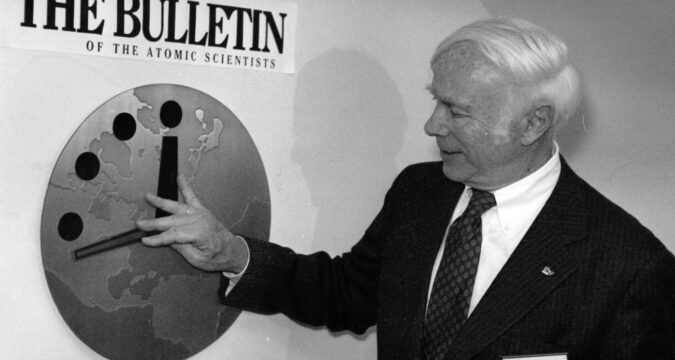
This month, the Bulletin of the Atomic Scientists at the University of Chicago is scheduled to announce whether the hands of its famous Doomsday Clock will move closer to midnight. It feels like a safe bet that Armageddon is drawing nearer today than it has in a long, long time.
The Doomsday Clock started almost 80 years ago, when physicists who developed the Bomb grew alarmed at its use against Japan to end World War II.
Between the late 1940s and the early 1990s, nuclear war wasn’t a remote possibility: It almost happened, repeatedly, as America and the Soviet Union fought the Cold War. Chicago’s atomic scientists moved the hands of their clock from seven minutes to midnight at its start in 1947 to just two minutes to midnight as of 1953, when the U.S. and Soviets started testing enormously powerful hydrogen bombs.
Fortunately for humanity, the 1990s ushered in a period of relative peace and proactive disarmament. In 1991, after the U.S. and Soviet Union signed the START treaty reducing strategic nuclear stockpiles, the clock was turned back to 17 minutes before the hour. The stockpile of nuclear warheads shrunk from more than 60,000 in the mid-1980s – an insane level of overkill – to an estimated 12,000. Test explosions became increasingly rare.
Today, unfortunately, the world is entering a new, more dangerous phase. The number of doomsday weapons and the number of countries wielding them threatens to grow. The clock gives humanity just 89 seconds to reverse course, its most perilous setting ever. Yet fewer people are paying attention,
The de-escalation that started in the early 1990s never would have happened without intense public pressure. That included mass demonstrations demanding an end to the arms race. And don’t underestimate the impact of 1980s movies such as “Threads” and “The Day After,” with their plausible depictions of death and horror after a nuclear exchange.
People in those days were scared, and rightfully so. Now, the fear factor is way down. It shouldn’t be.
New START, one of the landmark disarmament treaties that helped to pull the world back from the brink, is set to expire in February with barely a whisper of acknowledgement. In April, the United Nations will host a non-proliferation conference, and it appears likely that short-sighted national interests will outweigh concerns about the common good. Nuclear-weapons testing could make a destabilizing comeback in 2026.
Countries across the world are re-arming, as they recognize increased threats to their security. People forget that South Africa once had the bomb, and Ukraine was rife with atomic weapons after the fall of the Soviet Union.
Russia’s war on Ukraine is especially troubling. Drone incursions, sabotage and the vulnerability of nuclear reactors to attack is turning Europe into a dangerous flashpoint. The militarization of space, expanded anti-missile defenses and the potential risks of AI could create additional instability.
Proliferation is a red-alert risk again. One of arms control’s greatest successes — keeping the so-called nuclear club to nine countries — could fall by the wayside in short order.
When Ukraine agreed to give up the nuclear weapons on its soil in the mid-1990s, Russia provided a security guarantee that proved worthless. Now Europe has reason to doubt President Donald Trump’s commitment to NATO’s nuclear defense, forcing a reassessment among countries that depend on the U.S. for deterrence.
In Asia, South Korea and Japan are widely viewed as capable of producing nuclear weapons on short notice. With China and North Korea expanding their nuclear arsenals, and the U.S. increasingly viewed as unreliable, regional rivals may decide they need nuclear weapons for self-defense.
In the Middle East, Iran has flirted with joining the nuclear club for years. The joint U.S.-Israeli bombing of its nuclear facilities over the summer has driven the Iranian program farther underground, beyond the reach of international inspectors. If Iran gets the bomb, Saudi Arabia probably will want one too.
None of this is inevitable. It would be madness to resume nuclear testing, let treaties lapse and expand arsenals that already could wipe out the planet. Diplomacy worked for decades, mainly because of an understanding that avoiding nuclear war was essential to humanity’s future. Today’s global leaders need to start acting accordingly.
Submit a letter, of no more than 400 words, to the editor here or email letters@chicagotribune.com.