Category: News

California Promises ‘Swift Consequences’ For Drivers Who Exceed 100 MPH
California Promises ‘Swift Consequences’ For Drivers Who Exceed 100 MPH
Authored by Cynthia Cai via The Epoch Times (emphasis ours),
California is cracking down on extreme speeding in a move that could lead to faster license revocation for drivers exceeding 100 mph on highways, according to the California State Transportation Agency.
A speed limit sign in Huntington Beach, Calif., on March 21, 2023. John Fredricks/The Epoch Times
Drivers cited by the California Highway Patrol (CHP) for the crime “will have their citation automatically forwarded to the DMV’s Driver Safety Branch—no matter their prior record” under the new joint pilot program between CHP and the Department of Motor Vehicles (DMV), the agency stated in a press release.
The DMV will review each case and the person’s driving history to determine the penalty, which may include “suspension or revocation of driving privileges,” before the person is even scheduled for court.
“We believe that early intervention is the key to saving lives,” said DMV Director Steve Gordon in a press release. “We want to take immediate action against dangerous drivers before their carelessness leads to a deadly crash.”
CHP cites roughly 1,600 individuals each month for driving 100 mph or faster. In 2024, the CHP issued a total of more than 18,000 citations for extreme speeding, the DMV stated.
In May 2025, the CHP adopted a fleet of 100 low-profile patrol cars, allowing officers to blend in with traffic better and spot reckless behavior. During the following six months, CHP officers driving these cars issued close to 33,000 speeding tickets across the state, according to the DMV.
“Driving over 100 miles per hour is not a mistake; it is a reckless choice that endangers everyone on the road,” said CHP Commissioner Sean Duryee in the DMV press release. “This new program delivers swift consequences to keep dangerous drivers off California’s roadways before their actions cause irreversible harm.”
The DMV stated that the process of penalizing drivers through the legal system is often lengthy. Once a driver is cited for extreme speeding, the citation is sent to the courts for processing.
Under the current California vehicle code, driving over 100 mph will result in a maximum fine of $500 and potentially a license suspension of up to 30 days for the first offense. Subsequent violations result in higher fines and a license suspension.
Drivers who are cited for speeding can also receive additional citations for other violations that may result in jail time, including reckless driving or causing bodily injury to others on the road.
The new DMV–CHP pilot program is “designed to act more quickly” than the court system, according to the DMV.
The state reported speeding as a “major factor in traffic deaths statewide,” as it contributes to about a third of traffic fatalities, according to the transportation agency.
In October 2025, the state launched a Southern California-focused initiative to address speeding-related traffic fatalities.
The state allocated $7 million to the Los Angeles Department of Transportation to help fund safety upgrades along Avalon Boulevard, and invested over $191 million for safety improvements along State Route 91, the state transportation agency stated on its website.
The improvements may include automated speeding detection cameras, high-visibility traffic markings, redesigning intersections to reduce conflicts, and upgrading infrastructure for safe walking and biking, in addition to promoting community engagement and law enforcement partnerships.
At that time, the agency said it set an “interim goal to cut deadly and serious injury crashes” by 30 percent by 2035.
The agency said the DMV will compare citation and outcome data to evaluate the effectiveness of the CHP–DMV pilot program in reducing car crashes.
Tyler Durden
Mon, 01/05/2026 – 17:40

Screaming + vomiting: ‘Scromiting’ is the mysterious cannabis syndrome becoming more common
Like many cannabis smokers, Jared Panks used marijuana as medicine. As a paramedic, he’d seen the disastrous effects of other drugs and alcohol so, after years of fighting fires for the U.S Forest Service, he began to smoke marijuana to dull the pain from scoliosis and his torn-up knees.
He became more interested in the plant’s potential benefits after seeing family members suffer from cancer and opioid abuse. Panks and his wife founded HomeGrown ORegonicX, a small medical cannabis farm that serves the deaf community in Oregon, and started smoking pot frequently every day to test different strains.
He was shocked in 2013 when he was struck by vicious bouts of vomiting. He would start vomiting in the morning and continue the rest of the day non-stop, sometimes for days at a time. He couldn’t eat or keep down fluids. Only a hot shower would offer some relief. The condition would fade, then reemerge after two or three months, often at times of stress..
Panks lost 50 pounds as his body seemed to be trying to purge something. His abdomen and back ached from constant dry heaves. His throat was burned by the stomach acids, and a dentist told him his teeth were ruined.
When a doctor gave him his diagnosis, he initially refused to believe it: cannabinoid hyperemesis syndrome, or CHS. While Panks doesn’t scream from it, other people affected sometimes cry out in pain, leading to its other name: scromiting, for the combination of screaming and vomiting.
“Sometimes it goes 14 days, where my whole body starts to seize up,” Panks said. “I have to go to the ER and get fluids. It can be very, very brutal. You’re sliding down the stairs because you don’t have the strength to stand up.”
The condition is rare and the mechanism of its cause unexplained, prompting some cannabis advocates to refuse to believe it. But Panks is far from alone. A new study of hospital emergency departments nationwide by the University of Illinois Chicago found the number of diagnosed cases of CHS jumped sevenfold from 2016 to 2022.
The increase came at the same time as increased cannabis legalization and potency, and peaked at 33 cases per 100,000 ER visits during the COVID pandemic, when substance abuse increased sharply. The increase came primarily among young adults, 18 to 35, most of them men.
Most people with CHS are long-term users who smoke every day, often high potency weed or concentrates, research shows. Seventy-five percent of people diagnosed with CHS consumed cannabis every day, a systematic review found.
Normally, cannabis is well-known for its ability improve appetite. The U.S. Food and Drug Administration has approved synthetic THC for the treatment of nausea from conditions such as chemotherapy, though many patients prefer flowers from the plant itself.
But like any drug, what can have mild effects in moderation may have toxic effects from over-consumption. It is known that cannabis acts on the endo-cannabinoid system, which helps regulate the digestive system.
The lead author of the UIC study, professor James Swartz, said he believes the increase in state legalization and higher potency were the main factors at work behind the increase. He hopes the study will encourage clinicians to consider CHS when treating patients.
“There is still some skepticism,” Swartz said. “Proponents of cannabis say this is being alarmist, it hardly occurs. No, this is real, and it’s common enough that it’s of concern.”
People should consider the condition when considering how much to use and what’s safe, and take “a long hard look” at very high potency products, he said.
Swartz has some unlikely allies in the cannabis world.
Tim Blake, founder of The Emerald Cup, the Oscars of the cannabis world, said he ran into a wall with hyperemesis years ago and had to cut way back on his consumption.
Related Articles
Today in Chicago History: Recreational marijuana sold legally for the first time in Illinois
Federal push to relax marijuana classification should help the industry in Illinois. But the effects for consumers may take time.
President Donald Trump signs order that would reclassify marijuana as less dangerous drug
Sweeping ban on hemp products in Chicago advances in City Council
End of federal shutdown includes nationwide ban on hemp products that get people high
Blake is 68 and has been smoking since he was 14, with a few periods of abstinence. He has grown cannabis and used it to deal with three rounds of metastatic cancer, so he is an enthusiastic advocate.
But a little more than 10 years ago, he got very sick with cyclic vomiting. It only went away after he quit smoking for several months to eliminate the buildup of THC, the main component of pot that gets users high, and which accumulates in the body’s fatty tissues.
Now, like drinkers who abstain from alcohol for “Dry January,” he starts every year by abstaining from cannabis for a month or two to clean out his system. When he stopped smoking, he would sweat profusely for five days to clean out his system. He stopped using concentrates, but still vapes once a day or so, and meditates daily.
He decries the high THC dabs and concentrates that have transformed the use of marijuana for some, and advocates a more moderate approach to consumption, comparing weed to alcohol.
“We shouldn’t be drinking 151 rum shots every day,” he said. “We should do more beer and wine. It is a real issue we want to address so people can safely and effectively use cannabis.”
Panks, who with his wife started Deafining Cannabis to develop sign language related to the plant, said that instead of focusing on high THC, users should look more into the effects of cannabis terpenes, the compounds that help give cannabis and other plants their distinctive effects.
“We need to stop looking at THC percentages and more at the terpenes, so you can understand how your body reacts,” he said. “I hope to be part of a study that can further define the mechanism of CHS and a documentary on the process so that we all can have a better understanding of the science behind it.”
CHS research remains in its infancy, but may be enhanced by recent federal efforts to reclassify cannabis as a less dangerous drug. The World Health Organization only recently recognized CHS as a medical condition. Everyone affected by CHS wants more research to explain its causes, cures, the potential roles of neem oil and other pesticides, and why it affects some people and not others.
For now, abstinence remains the only known cure for CHS.
Prominent cannabis advocate Alice Moon said she wants more research so maybe she can use cannabis again someday.
“I promote a substance I cannot consume,” she said. “I’m adamant about spreading awareness, because I don’t want anybody to be as sick as I was.”
https://www.chicagotribune.com/2026/01/05/scromiting-cannabis-cannabinoid-hyperemesis-syndrome/
Indiana General Assembly reconvenes for 2026 session
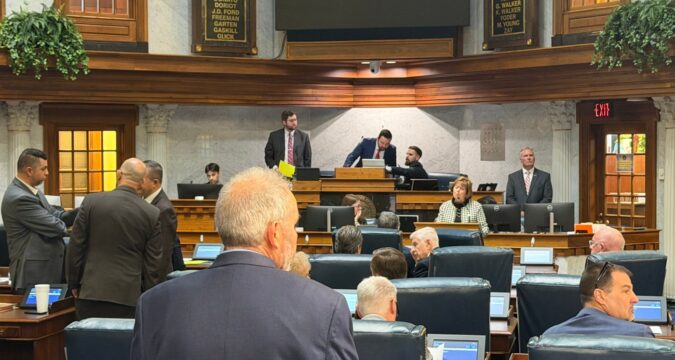
The Indiana House and Senate reconvened Monday for the 2026 session, where they announced priorities and the votes for mid-census redistricting in early December were behind them.
The House met during the first week of December and passed, in a 57-41 vote, a bill that would’ve allowed for mid-census redistricting and a new Congressional map. The following week, the Senate met and the bill failed with 31 senators voting against and 19 voting in favor.
The Indiana legislature took up mid-census redistricting at the request of President Donald Trump and his administration, who spent the latter part of 2025 pressuring Republican-led states, starting with Texas, to take up mid-census redistricting to increase the Republican majority in the U.S. House of Representatives.
State Sen. Rodney Pol, Jr., D-Chesterton, said the failure of the mid-census redistricting bill shows the legislators, regardless of party, can “work together and ignore the noise.” The Senate is starting fresh for the rest of the session, he said.
“This one is going to be a palate cleanser,” Pol said.
But, the Senate has seen a shake-up since the mid-census redistricting failed, with State Sen. Andy Zay, R-Huntington, saying he will leave the Senate Jan. 8 after being appointed chair of the Indiana Utility Regulatory Commission.
State Sen. Liz Brown, R-Fort Wayne, submitted her resignation as Assistant Majority Floor Leader effective immediately, the day after the Senate voted against mid-census redistricting.
Pol said he anticipates more Senators stepping away from their seat in the coming weeks and months.
“Some have mentioned this is their last go around. I think the Senate is going to look very different next year,” Pol said.
The Senate met Monday for under 15 minutes, when many senators talked from their seats to those sitting around them or stood in the aisles and talked with colleagues.
State Sen. Rick Niemeyer, R-Lowell, said the 2026 session will be a quick one, likely ending at the end of February. The Republican majority will likely focus on tax bills, Niemeyer said, to address the impacts of Senate Enrolled Act 1, which established a new property tax system by saving two-thirds of taxpayers up to $300 on their 2025 property tax bill, while local governments will lose $1.4 billion through 2028.
“We’re still looking at the tax bills from last year,” Niemeyer said. “I don’t know what (the bills are) but it’s coming.”
Indiana House Democrats and Republicans also shared their goals for the 2026 session.
State Rep. Matt Lehman, R-Byrne, said during the House of Representatives session Monday that this year’s session will be busy. Republicans want to continue work to improve Indiana’s economy, he said.
The Republicans plan to reduce taxes for Hoosiers, Lehman said, which he believes has been a constant concern for constituents.
“I think when hardworking Hoosiers go to work every day, one thing they’re going to want to know is that when they’re getting their paycheck, they’re going to keep as much as they can,” Lehman said. “I think we have a bright future, and we’ve all worked hard to make sure that our communities grow and that our economy is growing.”
Lehman also wants to address housing affordability issues during the 2026 session, including for young families. He also wants to lower health care costs and continue to improve education in Indiana.
Indiana House and Senate Republicans plan to announce their specific goals later this week.
To achieve their goals, Lehman said Indiana Republicans and Democrats must work together.
“We have some work to do, and we’re going to do it together,” Lehman said. “My pledge has always been that we might not agree on everything, but we’ll work together and will be respectful when we disagree.”
House Democratic Leader Phil GiaQuinta, D-Fort Wayne, also said during Monday’s session that it’s important for the parties to work in tandem.
State reps. Carey Hamilton, D-Indianapolis; Phil GiaQuinta, D-Fort Wayne; Cherrish Pryor, D-Indianapolis; and Greg Porter, D-Indianapolis, host a news conference following the Indiana House session on Monday, Jan. 5, 2026. (Maya Wilkins/Post-Tribune)
“We can make Indiana affordable for all people,” GiaQuinta said. “Indiana House Democrats intend to fight for that future. I hope we can work together across the aisle to tackle the cost-of-living crisis and deliver real solutions to very real problems.”
On the House floor, GiaQuinta detailed Democrats’ session agenda, and the party hosted a news conference after about the same priorities. State Reps. Cherish Pryor, D-Indianapolis; Carey Hamilton, D-Indianapolis; and Greg Porter, D-Indianapolis, all joined GiaQuinta for the news conference.
House Democrats plan to work to cut utility bills, lower health care costs, make homeownership achievable, reduce the cost of child care and support safe communities, GiaQuinta said.
“What unites Hoosiers across geography, race, religion, class, politics and culture?” GiaQuinta asked. “When it comes to policy, the answer is working people. Across Indiana, families are doing everything right — working hard, playing by the rules, and they’re still struggling to get ahead.”
Concerning utility bills, Democrats want to eliminate the sales tax on residential utility bills, limit utility profit margins, pause rate hikes and have Indiana Utility Regulatory Commission members elected rather than appointed.
According to a July report from the Citizens Action Coalition, statewide electric utility bills have increased by more than $28 per month, or 17.5%. NIPSCO residential customers were hit hardest, with about a $50 per month, or 26.7% increase, in one year.
Across the state, utility bills have risen, GiaQuinta said, and he wants residential customers to have the same tax perks as data center operators, some of which do not have to pay sales tax on utility bills. Eliminating the sales tax could save Hoosiers about $350 per year, GiaQuinta said.
Even if Hoosiers save only $10 per month, Pryor said the savings will be significant to the elderly or those on a fixed income.
“People are trying to decide whether or not they pay for their medication, whether or not they pay for their medication, whether or not they get groceries,” Pryor said. “Even a little bit of money they need to go to the grocery store or put in their gas tank … that will be significant.”
House Democrats also want to lower health care costs, including a cap on insurance premiums, creating a state health insurance exchange and stopping medical debt from impacting credit scores. The Democratic caucus also wants to help fund police, fire and emergency services in communities, including by taking Senate Enrolled Act 1 back to the drawing board and addressing how the changes have impacted public safety funding.
Like the Republicans, House Democrats want to fix housing issues, GiaQuinta said, including by making it easier for first-time homebuyers statewide. Democrats want to create a tax-free savings account for first-time homebuyers, create a first-time homebuyer grant fund and deliver property tax credits.
“The average age of first-time homebuyers has jumped to a record high of 40 years old,” GiaQuinta said. “A house is often the biggest financial asset Hoosiers will ever own, and it’s time to start acting like it for the sake of our younger adults who have been boxed out of homeownership compared to previous generations.”
House Democrats also want to do bipartisan work to lower child care costs statewide, including by splitting costs between employers, the state and parents, creating a child care tax credit and fully funding vouchers to keep daycare centers open. Hamilton called child care “a major crisis” for Indiana families and the economy.
“Every day matters right now,” Hamilton said. “Some facilities are struggling to stay open, so we can make immediate decisions to fund those programs and keep those facilities open.”
This year’s session is about seven weeks long, Porter said, and he believes that House Democrats can achieve their goals in that time, especially after they already dealt with redistricting in about two weeks.
GiaQuinta is eager to put redistricting in the past, he said.
“We seemed to move heaven and earth to put a redistricting bill on the board,” GiaQuinta said. “These things are more important than that, so we should be doing everything we can to get these bills moving on the floor and some relief for taxpayers.”
Senate Democrats will focus on the cost of child care, housing, healthcare and utilities during the 2026 session, said Senate Democratic Leader Shelli Yoder, D-Bloomington.
“Hoosiers are feeling the squeeze in their everyday lives,” Yoder said. “Housing costs are rising, child care is increasingly unaffordable, health care is unpredictable and utility bills keep climbing. Our Session 2026 priorities are about affordability, stability and making sure state government is working for the people who live here.”
As it relates to housing, Senate Democrats will file bills to establish a $3,000 first-time homebuyer tax credit, expand renter tax deductions, allow homeowners to build rental units and turn empty buildings into housing, prevent landlords from conducting hard credit checks and cut red tape that blocks affordable developments, Pol said.
For healthcare, Senate Democrats will file bills to cap insulin at $35 per month, require insurers to pass cost savings to patients, reform Medicaid redetermination and access to prevent wrongful coverage loss and address medical debt, Pol said.
For utilities, Senate Democrats will file bills to repeal the 7% sales tax on utility bills, cap utility payments at 6% of household income, freeze rate hikes for three years, create stronger accountability for rate-setting processes, prohibit summer shutoffs for low-income residents and eliminate reconnection fees, Pol said.
To address childcare, Senate Democrats will file bills to restore funding for On My Way Pre-K and Child Care and Development Fund and to create statewide paid family leave, Pol said.
After the legislature funded the CCDF vouchers, which partially pay for On My Way Pre-K, the Braun administration slashed the funding over the summer, Pol previously said.
The goal of the childcare bills, Pol said, is to ensure that parents can keep their jobs while their children receive early child education and care.
“Our child care priorities focus on protecting income during critical life moments so people can care for their loved ones and stay connected to the workforce,” Pol said in a statement.
mwilkins@chicagotribune.com
akukulka@post-trib.com
https://www.chicagotribune.com/2026/01/05/indiana-general-assembly-reconvenes-for-2026-session/

Indiana auditors: Lake Sheriff improperly used nearly $300K for donations, golf, travel costs
A state audit released Monday accused Lake County Sheriff Oscar Martinez Jr. of improperly using nearly $300,000 for charity or church donations, golf outings and travel costs.
In an 83-page report, auditors flagged 221 purchases totaling $265,000 from the jail’s commissary fund from January 2022 to December 2024 that violated state law, noting that Martinez often mischaracterized the expenses as “Prevent Juvenile Delinquency,” “(Juvenile) Crime Prevention,” and “Community Relations.”
In one instance, records show Karma Cigar Bar in Merrillville was paid $5,000 in July 2023 for “family violence prevention.” The report concluded Karma got $17,500 in total for “preventing juvenile delinquency” and $3,500 as a “cerebral palsy donation.”
In addition to the $265,000 spent, it cited nearly $25,000 in other “questionable” purchases with commissary money; almost $3,500 in non-employee travel expenses, including for Martinez’s wife; and required him to repay $59,000 for the audit’s costs.
“I think I had a good, strong suspicion there was misuse,” said Lake County Commissioner Mike Repay, D-Hammond, by phone Monday. “I didn’t realize the use was so blatantly for his personal benefit. That’s the shocking part.”
“This is on a level that’s really, really egregious,” he said. “I would think to repaint helicopters is not a great use of taxpayer money. It’s not the same as staying at some of the most posh hotel rooms.”
In his response to auditors, Repay wrote the Lake County Board of Commissioners asked for guidance “as early as 2019” for Martinez’s “irregular” purchases with commissary money.
Although the law designates commissary funds are supposed to be for only specific costs, sheriffs haven’t faced meaningful oversight, leading to corruption reports around the state. Over the years, sheriffs and sheriff’s associations have guarded the fund against oversight like their “own little piggybank,” Repay said in an interview.
State auditors were performing an annual audit of the county’s 2022 expenses when they noticed that commissary funds were disbursed at Martinez’s direction rather than based on an actual vendor invoice, so they launched a special investigation of the commissary fund. Martinez claimed that purchases outside of those listed in the law are paid out of his campaign fund, but the state audit showed otherwise.
The audit report was sent to the Indiana Attorney General’s Office and local U.S. Attorney.
“I couldn’t imagine a situation where there wouldn’t be criminal charges. I really couldn’t,” Repay said, when asked about the prospect. “Other people get to decide if it’s criminal, or not, whether there’s guilt or not.”
The Board of Commissioners had tried to bring an organization from the outside to question and audit the jail’s operations, including the commissary. In February 2021, they tried to have a consultant go to the jail, but were “thwarted” by the Sheriff’s Department.
They sued for increased oversight and lost, Repay said. At the time, they were looking “mainly about conditions at the jail,” which would have benefited from that money.
A Lake County Sheriff’s Department spokeswoman did not respond to a request for comment by press time. Martinez is term-limited and leaves office in December. He won a party caucus in 2017 after former Sheriff John Buncich was convicted of bribery and wire fraud.
Martinez’s attorney John Kopack disputed the audit’s finding, noting “commissary funds are not tax dollars” and that investing in community groups was a form of crime prevention.
The report shows Martinez gave $16,000 to St. John Girls Softball League, where he served as president in 2021 and was involved with the entity for at least 15 years.
A $1,000 gift to the Northern Indiana Area Labor Federation was written in paperwork for reducing substance abuse or juvenile delinquency. In reality, it was a $1,000 golf sponsorship.
The report also cited the department for 17 officers that used jail commissary funds for $56,000 for hotels at conferences around the U.S. Martinez accounted for $37,000 of the total — including $9,200 for a five-night stay at a 2022 International Association of Chiefs of Police conference in Dallas, almost $4,000 in hotel charges for a Shooting, Hunting, and Outdoor Trade Show (“SHOT show”) in Las Vegas, and nearly $6,900 bill for a 2024 Motorola conference in Grapevine, Texas.
Another noted Martinez charged $605 from 2022 to 2024 from a Sheriff’s credit card for an iCloud and Apple Music Family Subscription. He later repaid $491, which only covered the $121 in iCloud expenses.
Deputy Commander Jeremy Kalvaitis told auditors that the Apple Music was for “official business” because it was used in parades. The account was under the name of Melissa Martinez, the sheriff’s wife.
The report said Martinez improperly used $1,500 in commissary funds to pay for conference registration costs for his wife and nine others in 2022 and 2023. Also, Martinez and various officers got reimbursed for $5,700 in restaurant bills at conferences where they also got a per diem allowance. Auditors found 46% of the reimbursed costs were for alcohol.

Caribbean travel resumes after disruptions from US military operation in Venezuela
Key airlines announced Caribbean air travel has returned to normal after hundreds of flights were disrupted this weekend by the U.S. military operation that captured Venezuelan President Nicolás Maduro on Saturday.
Major airlines reopened flights across the Caribbean region after U.S. Transportation Secretary Sean Duffy said on X that the U.S. would lift airspace restrictions at midnight Eastern time on Saturday night.
Earlier that day, Duffy shared on X, formerly known as Twitter, that the Federal Aviation Administration had restricted airspace in the Caribbean and Venezuela to ensure travelers’ safety.
“Early this morning in support of the Department of War, the FAA restricted the airspace in the Caribbean and Venezuela to ensure the SAFETY of the flying public,” Duffy wrote.
Holiday travel was disrupted after the U.S. conducted a military operation in Venezuela capturing Maduro who was flown out of the country early on Saturday. No airlines were flying across Venezuela that day, and major airlines canceled hundreds of flights across the Caribbean region, including in Puerto Rico, the Virgin Islands and Aruba, The Associated Press reported.
Once restrictions were lifted, airlines scrambled to accommodate passengers who were stuck at airports or holiday getaways by increasing aircraft capacity and number of flights across the region.
United Airlines said in a recent statement that it had resumed “normal operations” in the Caribbean. A United spokesperson said the airline added 14 extra flights on Sunday with additional flights on Monday “to assist customers whose travel was disrupted.” The airline had canceled multiple flights between Chicago and the Caribbean region over the weekend.
American Airlines also said on Sunday that it had resumed scheduled services in the Caribbean region, adding nearly 7,000 seats and 43 extra flights to “boost capacity” for customers. The flights aimed to increase connectivity between the eastern Caribbean with the airline’s hubs in Chicago, Miami and Charlotte, North Carolina, on Sunday and Monday, according to the airline’s statement.
JetBlue said on Monday that the airline had “resumed normal operations” and was working to rebook customers on available flights. The airline’s corporate communication’s team also said it had added flights and increased capacity on the aircraft to support travel across the Caribbean.
According to FlightAware, 47 flights were canceled at Chicago O’Hare International Airport on Saturday, with five of those coming from Puerto Rico’s Luis Muñoz Marín International Airport. Others scheduled from St. Thomas in the Virgin Islands, Aruba, and other areas in the Caribbean were also canceled.

The Mamdani Symptom: How The Radical Left Is Making Its Stand In The Heart Of American Capital
The Mamdani Symptom: How The Radical Left Is Making Its Stand In The Heart Of American Capital
Submitted by Thomas Kolbe
That the radical Left worldwide would celebrate the inauguration of communist Zohran Mamdani as mayor of New York City was entirely predictable. What is striking, however, is the ostentatious triumphalism displayed at a time when the Trump administration is systematically exposing illegal extraction mechanisms and financial flows step by step.
It is a moment of celebration for the radical Left in the United States. After the defeat in the 2024 presidential election, the inauguration of Zohran Kwame Mamdani—the first Muslim mayor of New York City—marked the resurgence of socialist forces within the Democratic Party.
Naturally, the ever-shrill Alexandria Ocasio-Cortez was present, as was leftist know-it-all Bernie Sanders, who administered Mamdani’s oath on the Quran.
Socialism is a recurring social disease, and Zohran Mamdani is one of its visible symptoms. His political program is well known in Germany as well, particularly to the German Left. Public transportation is to be made free of charge. A millionaire tax is to be introduced. Childcare is to become a free public service. Affordable housing is to be created through large-scale public construction.
We know all of this: massive market interventions—and all of it has failed repeatedly.
And yet New Yorkers granted Mamdani a mandate, giving him a lead of more than nine percentage points over his competitors.
The Familiar Promise
“I will not hold back when it comes to improving the lives of New Yorkers,” Mamdani declared. “I am Muslim, I am a democratic socialist, and I refuse to apologize for that,” he said during the campaign.
He may yet be forced to apologize when projects such as the targeted over-taxation of predominantly white neighborhoods or his harebrained idea of municipally run grocery stores collapse—either due to the U.S. Constitution or the basic logic of free-rider effects in public goods.
But Mamdani is not really about this grotesque socialist program, which only appeals to prosperity-spoiled young activists and moralizing NGO operatives.
Mamdani was positioned by the radical Left to defend structures that have been built up over decades with the explicit goal of transforming society into a socialist control state—one we can already observe taking shape in Brussels.
The Counterrevolution Is Underway
Donald Trump’s hardline deregulation agenda and demonstrative return to classical American capitalism have unleashed a dynamic that extends far beyond his presidency. The political Left in the U.S.—especially its radical wing—has been forced into a kind of ideological molting. This reaction can now be studied in real time: in New York as well as in California, where left-wing radicalism has been entrenched for years.
That a self-professed communist has taken control in the global capital of capitalism carries particular political weight. New York is no ordinary city. Capital is concentrated here; the core infrastructure of the American financial system is located here. Leftist access to these levers marks a qualitative escalation.
Seizing Power At The Heart Of Capital
It is reasonable to expect capital flight—both from large investors and from segments of the middle class. A gradual relocation of stock market activities away from Wall Street is also conceivable. But such processes take time. And during that time, Mamdani and his communist allies will create facts on the ground.
This is where the looting begins: the American upper class, and increasingly the middle class, will be bled fiscally to finance expanded protest infrastructures, NGOs, and the political machinery that President Trump was able to dry up by dismantling USAID and related funding mechanisms.
At the same time, the conflict in California is accelerating. The socialist state government under Governor Gavin Newsom is attempting to immobilize residents through aggressive exit taxes—keeping them fiscally exploitable for ideologically driven policies. Republican-led red states, meanwhile, are benefiting from a massive influx of middle-class families fleeing these left-radical disaster zones.
For Europeans in the EU, this ideological clash in the United States is of immense importance. It offers a preview of how Brussels might react in the event of secession, resistance, or a loss of power.
The instruments are already in place: exit taxes, increased capital levies, the digital euro to control capital flows, CO₂ trading schemes, and cross-border certificate regimes. These are soft or hard capital barriers, depending on how deeply they are applied. Brussels and the Frankfurt-based central banking apparatus are prepared for the moment when Europe’s fragile power construct is seriously threatened by a rising conservative Right.
The Institutionalized Extraction Economy
Over decades, the United States has allowed an extraction economy to develop that costs the country hundreds of billions of dollars annually. This includes entire networks of Somali communities established under administrations such as Barack Obama’s, whose primary purpose was to extract taxpayer funds via social infrastructure—such as daycare centers without actual childcare services—redirecting those funds into private channels and financing the democratic-socialist movement.
These structures are now being dismantled.
President Trump must confront them just as decisively as he does the fentanyl attacks deliberately directed at the American population from abroad. Germany is experiencing a similar, albeit far more amateurish version of this phenomenon through its asylum industry—less efficient, but no less catastrophic for taxpayers.
This entire complex operates on a different scale than the green crony economy worth hundreds of billions of euros. In the United States, the Trump administration has already inflicted such damage on this green apparatus that capital is once again moving freely in markets, with renewed investments in nuclear power and pipeline infrastructure.
In short: the American economy is poised for a significant surge this year—driven by the systematic dematerialization of the green complex.
The radical Left has spent years constructing institutional frameworks to legally safeguard its activities. It has embedded itself in municipal structures and continues to shape the agenda in Europe through political hubs such as the World Economic Forum and Brussels.
That the United States has managed—through the effective shutdown of USAID and the drying up of cheap dollar credit routed through London and the LIBOR mechanism—to cripple large parts of this financial architecture will one day be regarded as a major historical achievement.
Today, however, this transformation is obscured by media noise—particularly the fixation on Donald Trump’s erratic public appearances. The real story being written runs far deeper.
Brussels, London—Vectors Of Confrontation
Again and again, the vectors of the Trump administration’s strategy point toward Brussels and London. The hardline stance in the trade conflict with the EU Commission—and especially with British Prime Minister Keir Starmer—has not only generated a flood of unfavorable headlines and memes for Europeans; it has tangible economic consequences.
The United States is pushing back against euro-protectionism. It is resisting the manipulation of trade via climate policy. And it refuses to be intimidated by the expanding censorship regime and rent-seeking industry spawned by the Digital Services Act.
Vice President JD Vance and Secretary of State Marco Rubio have made the message unmistakably clear. With the release of the new security strategy, EU Europe has been presented with a choice: return to the consensus of Western values—respect for the individual, free speech, and fair trade—or face not only harsher rhetoric, but problems beyond what it has so far been able to imagine.
Consider Europe’s dependence on LNG imports. Consider the reality that, at the push of a button in Washington, Europeans could be left alone in the Ukraine conflict—a conflict they have knowingly refused to de-escalate. A giant with feet of clay. And increasingly, a giant acting emotionally out of panic over its waning power, intellectually overwhelmed.
America’s Self-Assertion
The coming months will be decisive. At the latest since the United States’ forceful intervention in Venezuela, it has been made clear that Washington will not tolerate the influence of China, Russia—or Europe—on its doorstep.
The fentanyl attack originating in China is now being openly confronted, and intelligence operations funded by drug money within the United States are being shut down. For the first time, America has a genuinely sovereign, patriotic government.
If this administration succeeds in saving potentially hundreds of billions of dollars per year by draining the Somali swamp and other extraction vehicles—and consolidating the federal budget through these measures alone—voters will reward it in the midterm elections this fall. And the Mamdani episode in New York will be remembered with little more than a knowing smile.
* * *
About the author: Thomas Kolbe, born in 1978 in Neuss/ Germany, is a graduate economist. For over 25 years, he has worked as a journalist and media producer for clients from various industries and business associations. As a publicist, he focuses on economic processes and observes geopolitical events from the perspective of the capital markets. His publications follow a philosophy that focuses on the individual and their right to self-determination.
Tyler Durden
Mon, 01/05/2026 – 17:00

Gary man accused of fatally stabbing brother
A Gary man was charged with fatally stabbing his younger brother on Saturday over a rent money dispute.
Thomas C. Campbell, 59, is charged with murder. He is in custody and being held without bail, according to court records. He faces up to 65 years in prison if convicted.
Detectives were dispatched to the 1100 block of Taney Street in Gary on Jan. 3 for an apparent stabbing, according to the probable cause affidavit. Witnesses told police that Thomas Campbell had stabbed his brother Erik in the front yard. Erik Campbell, 53, later died from his injuries while en route to Methodist Hospital Northlake, court records state. He was stabbed in the left side of his neck, both sides of his chest, left arm, back and stomach.
The officer who first responded to the scene said he encountered Thomas Campbell, who was sitting on the porch steps of a residence and covered in a red, blood-like substance, records state. Another man was lying face down in a pool of red-like substance. Thomas Campbell told police that he was fighting with his brother and they were punching each other with closed fists, the affidavit states. Thomas Campbell said he thought Erik was reaching in his waist for something, so he pulled out a knife, blacked out and kept stabbing.
Police found a knife with a blood-like substance on the blade, which was located in the front yard, court records state.
A family member of the brothers told police that Thomas Campbell was sent to get rent money, which he doesn’t like to pay. Erik Campbell confronted Thomas about his failure to pay, which led to the physical fight, records state. A witness saw them on the ground and noticed Thomas Campbell had a knife, telling him to stop, but he continued to stab Erik.
Another witness saw Thomas leave the residence, then come back with his hand suspiciously in his pocket, the affidavit states. Erik saw this and wouldn’t let Thomas inside because he thought Thomas had a gun. The second witness went inside for safety, then re-emerged, noticing the brothers were fighting, court records state. Another man approached Thomas with the intent to take away the knife. He saw Erik Campbell on top of Thomas and it appeared Erik was giving up before Thomas stabbed him repeatedly, records state.
Surveillance camera footage from a nearby residence showed Erik Campbell pleading with Thomas to show him what’s in his pocket; Thomas Campbell’s right hand was concealed inside a hoodie pocket. Erik told him that he is always trying to scare people with his behavior, but he is not scared and asked to see what was concealed, the affidavit states. Erik mentioned that Thomas had pulled a knife on another man recently.
The brothers looked like they were preparing for a physical fight and Erik tries to disarm Thomas by swiping at it, court records state. Then Thomas engages his brother, with Erik moving backwards with his hands up for a fist fight. Thomas suddenly takes out the knife he had hidden in his pocket and starts stabbing Erik in the chest, neck and torso, records state. They both fall on the ground and Erik lands on top of Thomas.
Another person approaches Thomas, trying to get him away from Erik and yelling, the affidavit states.
Thomas Campbell is visible calling 911, saying he stabbed his brother and saying Erik threatened him with a gun. But the individual who subdued Thomas said Erik never pulled out a gun and none was recovered at the scene, court records state.
Thomas Campbell was interviewed by police, where he said he was running errands for a family member and was confronted by Erik when he returned. Thomas said it was a buildup of 20 years and knew it would get bad, as he claimed Erik was threatening to kill him, so he was in fear and tried to avoid it, records state.
He said Erik punched him in the eye, so he used a knife to defend himself. He said Erik constantly bullied him and wanted him dead, the affidavit states. Once he was informed Erik was dead, he no longer wanted to talk to police.
Thomas’ account was not consistent with surveillance footage as Erik is never shown punching anyone in the face or producing a weapon, court records state.
https://www.chicagotribune.com/2026/01/05/gary-man-accused-of-fatally-stabbing-brother/

Highland Park Players’ production of The Lion King KIDS will present lessons to learned for the audience
There are lessons to be learned in Disney’s “The Lion King KIDS,” according to Jenna Veverka, who directs the family musical for the Highland Park Players.
“I believe the show is about growth, overcoming challenges, friendships, healing, and a lot of self-discovery,” she said. “Watching Simba grow to become an adult live in front of you shows the challenges of what it means to grow up.”
Wheeling resident Veverka will bring these lessons to audiences on 10 a.m. and 11:30 a.m., Feb. 7 and 15, and 10 a.m., 11:30 a.m., and 1 p.m. Feb. 8 and 14 at the Heller Nature Center, 2821 Ridge Road. Highland Park. Tickets are $18. For reservations, visit highlandparkplayers.org.
The much-loved tale of “The Lion King” follows a lion cub named Simba who is in line to be king of the Pride Lands. The king’s brother has other plans, leading to a dark time in the Pride Lands until Simba musters the courage to reclaim his rightful throne.
Director Veverka has been involved in theater onstage and behind the scenes since childhood, from acting to props, wigs, hair, and makeup, but this is her first time directing. “It was like a dream come true,” she said. “I was very grateful for Highland Park giving me this opportunity.”
It is especially meaningful, she indicated, because she loves the show.
A bonus is that her boyfriend, Henry Allan, is the music director. “We get along really well and he’s helped me navigate the theater world,” she said.
Veverka indicated that she is enjoying directing children. “I really like the fact that they all have their own unique personalities,” she said. “They’re all so sweet and they’re all very, very talented, too.”
She leads a cast of 14 young people, ranging in age from 8 to 15.
Veverka said that she is enjoying “using my creative freedom to direct the show.” That includes emphasizing character development with the cast.
“I always ask them at the beginning of rehearsal, ‘What is one trait that you describe for your character? What is one thing your character wants?’”
Her cast includes 10-year-old Vivian Davis of Deerfield, who plays Rafiki. The Walden Elementary School fifth grader performed in “Finding Nemo” last year with Highland Park Players. She has acted with several other companies, starting when she was four or five years old.
“Rafiki is the narrator of the story. He helps guide the story,” Vivian said. “Rafiki is an interesting character to play because he has a mysterious personality. That makes it really fun. He knows what’s happening next in the story and he’s very wise.”
She said that she likes the story of the musical because “It’s talking about growing up and challenges you might have to face in life and being brave. The message of the play is that you have to be brave sometimes and face some fears. Everything’s just part of growing up.”
Vivian said her favorite song in the show is “He Lives in You” because “it has a very nice vibe. It’s very motivating and it makes me want to keep singing.”
Vivian said that she had decided to audition for “The Lion King KIDS” because when she performed in “Finding Nemo, “I liked playing on the kids-by-kids show because I would always remember when I was younger and going to a lot of shows, it would put a smile on my face. I really hope to do that for other kids.”
Nine-year-old Evan Fenton of Deerfield, who plays Timon, a wisecracking meerkat, is a fourth-grader at Kipling Elementary School. This is her fifth show with the Highland Park Players.
“He’s a funny guy,” Evan said of her character. “I’m funny, too.”
“Hakuna Matata” is one of Evan’s favorite songs in the show.
She likes the story of “The Lion King” because “There are animals in it,” Evan said.
Evan noted that the story teaches “How to grow up and be yourself.”
The young actor said that she enjoys being onstage because, “I get to pretend to be someone else and make people happy.”
Myrna Petlicki is a freelance reporter for Pioneer Press.
https://www.chicagotribune.com/2026/01/05/highland-park-players-lion-king-kids/
Zelensky Names Canada’s Chrystia Freeland, Notable Anti-Russia Hawk As Top Advisor
Zelensky Names Canada’s Chrystia Freeland, Notable Anti-Russia Hawk As Top Advisor
Apparently Zelensky is simply skipping his own people and going straight to appointing officials within foreign governments to top advisory positions.
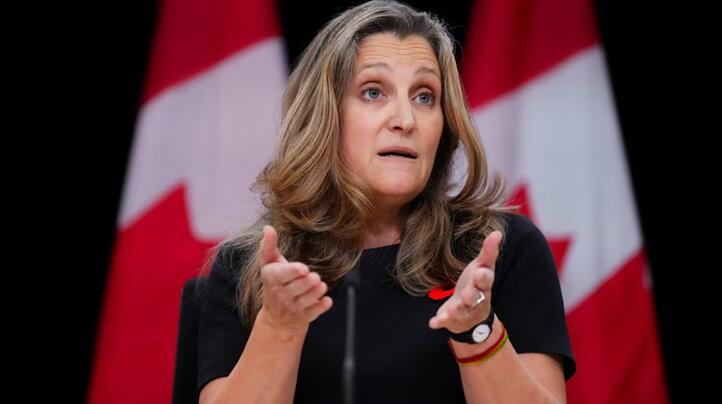
Ukraine has named former Canadian Deputy Prime Minister Chrystia Freeland as an economic advisor amid a broader reshuffle of senior government positions, also coming on the heels of the massive energy ministry related corruption scandal which has unleashed chaos within his administration.
It should also be noted that Canada is a founding member of NATO – so handing Freeland a position in the Ukrainian presidential office won’t go down well at the Kremlin, which will see this as yet more justification for its vehement condemnation of NATO expansion.
“Chrystia is a professional… and has significant experience in attracting investments and conducting economic transformations,” President Zelensky announced on Telegram Monday.
Freeland was Canada’s deputy prime minister from 2019 to 2024 under Prime Minister Justin Trudeau and was appointed Canada’s special representative for Ukraine’s reconstruction in 2025.
Almost as capable as energy guru Hunter Biden https://t.co/4rvgo4VRKm
— zerohedge (@zerohedge) January 5, 2026
But she might better be remembered for leading the legal crackdown on Canada’s trucker ‘Freedom Convoy’ movement, the large anti-vaccine mandate and Covid lockdown protest that had gripped Ottawa for several weeks in 2022.
Freeland sought to legally prosecute (and later some of these cases ended in convictions on “mischief”) innocent truckers who were merely exercising their rights to politically organize and protest.
So we doubt she’s going to ‘help’ Ukraine’s situation, amid the grinding war at a moment Kiev is at a crossroads: reach a peace agreement with Moscow, or the war drags on with no end in sight.
🚨”This aged very well”
In 2014, Mearsheimer debated Chrystia Freeland and Michael McFaul in London, he told both of them that if they continued with their policies that Ukraine would be destroyed as a consequence of their actions, to which they laughed.pic.twitter.com/2kUfmmJW11
— Ignorance, the root and stem of all evil (@ivan_8848) November 13, 2025
“Ukraine needs to increase its internal resilience — for the sake of Ukraine’s recovery, if diplomacy works as quickly as possible, and for the sake of strengthening our defense, if we have to work longer to end the war due to our partners’ delays,” Zelensky recently wrote on Telegram, looking ahead to 2026.
Tyler Durden
Mon, 01/05/2026 – 16:40
Tim Walz, Democrats’ 2024 VP pick, drops bid for third term as Minnesota governor; Sen. Amy Klobuchar considers running
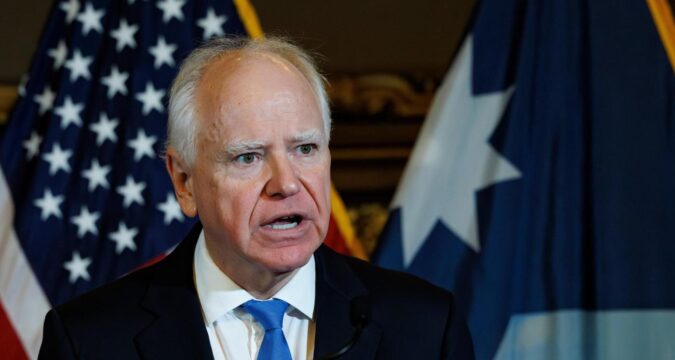
ST PAUL, Minn. — Minnesota Gov. Tim Walz, Democrats’ 2024 candidate for vice president, is ending his bid for a third term amid President Donald Trump’s relentless focus on a fraud investigation into the state’s child care programs and its Somali community.
Less than four months after announcing his reelection campaign, Walz said Monday that negative attention and Republican attacks have contributed to an “extraordinarily difficult year for our state,” making it impossible for him to serve full time as governor while also being a candidate to keep his job.
“Every minute that I spend defending my own political interest would be a minute I can’t spend defending the people of Minnesota against the criminals who prey on our generosity and the cynics who want to prey on our differences,” Walz said at the state capitol. “So I’ve decided to step out of this race, and I’ll let others worry about the election while I focus on the work that’s in front of me for the next year.”
Walz did not take questions from reporters after speaking for about seven minutes, much of which involved repeating his earlier written statement announcing his decision.
“Donald Trump and his allies — in Washington, in St. Paul, and online — want to make our state a colder, meaner place,” Walz said, referring to the Trump administration withholding funds for the programs and the Republican president’s attacks on Somali immigrants in Minnesota.
Walz did not explicitly acknowledge the impact of a viral video from a right-wing influencer who claimed he’d found rampant fraud at day care centers operated by Somali residents in Minneapolis. But the Trump administration has cited the video in its decision to cut off certain federal funding streams, and the video’s creator, Nick Shirley, was happy to take credit for the governor’s decision.
“I ENDED TIM WALZ,” Shirley posted Monday on social media.
Trump wrote on social media that Walz was not running “because he was caught, REDHANDED” with “stealing Tens of Billions of Taxpayer Dollars,” an accusation against the governor that lacked evidence despite widely acknowledged fraud problems. The president said Walz “has destroyed the State of Minnesota.”
The candidates to replace Walz
Walz’s exit scrambles the contest in a Democratic-leaning state that Republicans have insisted they can win. Democrats hold 24 of 50 governor’s seats nationwide, with 36 seats, including Minnesota’s, on the ballot this year.
Democratic Sen. Amy Klobuchar is considering entering the Minnesota race, according to a person close to her. The person, who wasn’t authorized to speak publicly and spoke on the condition of anonymity, said the senator, who ran for president in 2020, has not made a final decision.
Around a dozen Republicans are already running. They include MyPillow founder and chief executive Mike Lindell, an election denier who is close to Trump. They also include Minnesota House Speaker Lisa Demuth, of Cold Spring; Dr. Scott Jensen, a former state senator from Chaska who was the party’s 2022 candidate; state Rep. Kristin Robbins, of Maple Grove; defense lawyer and former federal prosecutor Chris Madel; former executive Kendall Qualls; and former Minnesota GOP Chair David Hann.
A military veteran, union supporter and former high school educator and coach, Walz helped enact an ambitious Democratic agenda for his state, including sweeping protections for abortion rights and generous aid to families.
Kamala Harris picked Walz as her running mate in the 2024 presidential election after his attack line against Trump and his running mate, then-Ohio Sen. JD Vance — “These guys are just weird” — spread widely.
Walz continued building his national profile since his and Harris’ defeat in November. He was a sharp critic of Trump as he toured early caucus and primary states. In May, he called on Democrats in South Carolina to stand up to the Republican president, saying, “Maybe it’s time for us to be a little meaner.”
There were partisan reactions to Walz’s announcement
Democratic National Committee Chairman Ken Martin, who led Minnesota Democrats when Walz was first elected governor in 2018, said Walz “entered public life for the right reasons and never lost sight of them.” Walz’s guiding principle, Martin added, “has always been showing up and doing the work that actually makes their lives better.”
Klobuchar, posting on X, praised Walz as “a true public servant” who made a “difficult decision” but said nothing about her own pending choice.
Another Minnesotan, Republican House Majority Whip Tom Emmer, was more succinct, issuing a statement that said only: “Good riddance.”
At the Republican Governors Association, spokeswoman Courtney Alexander blasted Walz for “failed leadership” and said the state’s next Democratic candidate “will need to defend years of mismanagement and misplaced priorities.”
Walz stood by his stewardship, saying “a single taxpayer dollar wasted on fraud should be intolerable” and insisting that his administration has been working diligently to address the problem.
A look at Walz’s time as governor
During his two terms, Walz navigated a closely divided legislature. In his first term, he served alongside a Democratic-led House and Republican-controlled Senate that resisted his proposals to use higher taxes to boost money for schools, health care and roads. But he helped broker compromises.
He used the office’s emergency power during the COVID-19 pandemic to shutter businesses and schools, prompting Republican pushback.
Republicans also were critical of Walz over what they saw as his slow response to sometimes violent unrest that followed the killing of George Floyd, a Black man, by a white Minneapolis police officer in 2020. Walz pleaded for calm after Floyd’s death but stood out as a white political leader who expressed empathy toward Black Americans and their experiences with police violence.
In his second term, Walz worked with Democratic majorities in both legislative chambers to chart a more liberal course in state government, aided by a huge budget surplus. Minnesota eliminated nearly all the state abortion restrictions enacted in the past by Republicans, protected gender-affirming care for transgender youths and legalized the recreational use of marijuana. Walz and his fellow Democrats also enacted free school meals for all students and a paid family and medical leave program that went live on Jan. 1.
That record, combined with Walz’s rural background and experience representing southern Minnesota in Congress, landed him on Harris’ radar after she replaced Joe Biden at the top of the Democratic ticket. After a whirlwind search, she opted for Walz over other candidates including North Carolina’s Roy Cooper, Kentucky’s Andy Beshear, Pennsylvania’s Josh Shapiro and former Transportation Secretary Pete Buttigieg.
Walz got a warm welcome from Democratic voters but drew mixed reviews for his lone debate against Vance.
More recently, Walz has been frustrated in his efforts to enact new gun control measures following a mass shooting last August at Annunciation School in Minneapolis, which left two children dead and injured dozens. He had hoped to call a special session to consider a list of gun safety proposals.
Barrow reported from Atlanta.
https://www.chicagotribune.com/2026/01/05/tim-walz-drops-bid-minnesota-governor/