Category: News

East Aurora prepares for what’s next after immigration enforcement activity on school property in the fall
It was in the morning, probably second or third period, recalled Nelson Granadillo, when he was told federal agents were outside his building. The principal of Simmons Middle School on Aurora’s East Side had been in a meeting with a teacher when he got the news.
“I didn’t believe it,” Granadillo told The Beacon-News of that day in early November.
He recalls walking to the front door and seeing a few vans, with people in vests, who appeared to be in the process of making an arrest. A parent of one of his students — who had been coming to the building for a meeting, he explained — ran to the door, and the school let her in.
This is Granadillo’s second year in East Aurora School District and his first year as principal of Simmons. Before this, he’d spent years working in School District U-46.
“It’s one of those things in life that you say, ‘It would never happen to me,’” Granadillo recalled of the situation he found himself in. “We had protocols from the district for (these) situations. … We’re always getting ready, I’m prepared for the worst. But I (thought) it would never happen to us.”
The school activated a hold-in-place, Granadillo explained, keeping students from leaving the classroom. District leadership was called, some of whom showed up to the school shortly after. According to district officials, two people who had been in the car with the parent who ran inside were detained.
Bob Halverson arrived a little later. The district’s superintendent and a few other district leaders got a call about a situation going on at Simmons and came to the school.
“The son came out of the classroom to greet his mom in the hallway, and he literally collapsed out of, just, you know, exhaustion and just everything he was dealing with,” Halverson recalled of the day. According to Halverson, the child’s father had recently been detained by federal agents.
Halverson and another district leader ultimately drove the mother, the student, his younger sister and their cousin home, picking up McDonald’s for them along the way.
“That was the thing for me that kind of solidified that we needed to do more at that point in time,” Halverson said. “That day was the one that kind of stuck out for me.”
The incident at Simmons on Nov. 5 garnered attention on social media, with talk and video about it swirling around Facebook.
The U.S. Department of Homeland Security did not return The Beacon-News’ request for comment about the incident at Simmons.
The alleged federal immigration action occurred about two months into President Donald Trump’s administration’s immigration crackdown in Chicago, dubbed Operation Midway Blitz. Thousands were detained across Chicago and its suburbs — most of whom had no known criminal record — and fear and uncertainty have permeated work, school, Halloween celebrations and more.
And, as this incident in Aurora — and others like it across the broader Chicago area — arose over the past few months, an unusual semester at East Aurora School District 131 has prompted the district to examine its procedures and adapt to unexpected circumstances, particularly as the question of what’s next for Chicago in the Trump administration’s federal immigration crackdown remains unclear.
In East Aurora, an incident at an elementary school almost two weeks earlier on Saturday, Oct. 25, had prompted some concern within the district. Two protestors were detained outside Allen Elementary after being confronted by federal agents, prompting the district’s school board to pass a measure banning federal immigration enforcement actions from occurring on its property just a few days later.
But preparation within the district had been going on much longer, Halverson has said.
At a school board meeting in November, he described how the district had been anticipating the immigration crackdown reaching its schools. East Aurora had been reviewing its visitor procedures, ensuring students had updated emergency contacts and sharing “Know Your Rights” resources with the school community.
“It has been trying times for our community for sure,” Halverson said at that meeting. “And we’re there to support our students, support our parents.”
Just before winter break began, district administrators and building representatives gathered for a training session about handling federal immigration enforcement activity.
“This isn’t political,” Halverson said at the training, “but our kids have a right to come to school and be safe every day.”
Citing continued uncertainty about federal immigration enforcement ramping up in the area once again, Halverson said he was “thankful” that the district “had the foresight to continue moving forward with this process.”
“If we would have pressed pause and said, ‘Hey we’re hearing that they’re not going to come back (until) March,’ we wouldn’t be prepared,” Halverson said.
At the meeting, staff from the Chicago Teachers Union presented some of the information they’ve learned from enforcement activity at schools in Chicago.
CTU staff member Vinay Espinosa-Ravi, for example, described what kind of information to document at the scene of a potential detention, warned against interfering with immigration enforcement actions and discouraged posting documented information on social media but rather reporting the activity to the Illinois Coalition for Immigrant and Refugee Rights or the proper district authorities.
CTU organizer Linda Perales went over the details of a valid judicial warrant and what federal agents’ badges and vehicles tend to look like.
Associate Superintendent of Leadership and Learning Jonathan Simpson said East Aurora’s district administrators have assisted with daily dismissal in light of the incidents on district property. After the Simmons incident, they shifted to being present at drop-off in the morning, Halverson said.
Other staff have the opportunity to help with providing “safe routes,” Halverson said, though he emphasized that doing so isn’t mandatory. Going forward, the district plans for staff volunteers to serve as the points of contact at their respective buildings if another situation at a school should occur.
“We’ve already seen a lot of our staff doing these things naturally to help out when those crises have come,” Halverson said.
The district’s adaptation to the circumstances has been gradual, according to Becky Roireau, the East Aurora Council AFT Local 604 teachers union president.
“With each event, we just got a little bit better at responding, taking feedback, and responding and developing a plan,” she told The Beacon-News in December.
The idea for the training in December, she said, was so that leadership from the district’s schools could take the information and share it with the employees at their respective buildings.
“Whatever level it ramps up to, what we wanted to be is spend(ing) any time in this lull preparing, so we’re not just being reactive,” Roireau said.
Attendance is another issue the district plans to address, according to Halverson and Simpson. Weekly attendance has been trending several percentage points lower than last year even though attendance rates had started considerably higher at the start of the semester.
“I think we were setting a really good standard for our staff and our students where we were trying to really get after that sense of belonging, so I think that initial jump was due to some of that,” Halverson told The Beacon-News. “And then, it literally, if you look at it (the district’s dip in attendance), that timeline lines up right when the ICE enforcement … got really strong.”
Simpson added that attendance dropped last year too, when President Trump took office.
For the middle and high school students, Simpson said the district is finding that some older siblings are staying home to help watch their younger siblings these days.
“Taking on some more of, kind of, adult responsibilities,” he said. “And that’s pulling them out of school, too. So how can we connect them with resources that we have? Because we do know that we want the kids in school, and it’s the safest place for them to be as well.”
Starting in January, Halverson said leadership at each school will be going forward with training their staff on the information presented at the December training and on the protocols the district has in place. The plan is for each school to form a group of staff volunteers who will help out should there be reports of federal immigration activity at their building.
East Aurora School District Superintendent Bob Halverson speaks at a training session with district leaders on Dec. 19, 2025, about recent federal immigration enforcement action in Chicago and its suburbs. (Molly Morrow/The Beacon-News)
And part of what the district will do to respond is what it always does: teach its students, and try to protect them.
After the November incident at Simmons, Granadillo, the school’s principal, said the school had “pretty much a normal day … when it comes to teaching and learning.”
“All the stress and everything was happening in the main office,” he said.
The incident brought up the question, however, about how much to tell students about a situation like this. One classroom had a view of the incident, Granadillo said.
The next day, he recalled, the school worked to fix some blinds on its windows that were malfunctioning.
“Just protecting the students … from what’s happening outside,” Granadillo said of his approach when it comes to activating protocols and overseeing his school. “Just making sure that they don’t know what’s happening.”
mmorrow@chicagotribune.com
https://www.chicagotribune.com/2026/01/06/east-aurora-district-131-federal-immigration-response/

Letters: The US invasion of Venezuela is about oil
If you believe that President Donald Trump’s ruthless, mercenary and illegal pursuit of Venezuela (with whom we are not at war) and Nicolás Maduro is all about Venezuelan oil, you would be right. Venezuela has the largest oil reserves in the world, significantly more than either Saudi Arabia, Iran, Iraq, Canada or Kuwait. Mention of those other nations shouldn’t surprise any reasonably informed American. Nor should the fact that the U.S., when under the control of Republicans, has involved itself in conflicts with or about each of these nations.
It’s all about oil, baby, and Trump’s order to kidnap and remove Maduro from power, besides being illegal, was intended to change the regime there. Another person gets to rule who will open the (oil) floodgates to American oil companies’ exploitation of Venezuela’s reserves. (Big oil gave $445 million to Trump and Republicans during the 2024 election cycle.)
— David Kahn, Boca Raton, Florida
Chance at democracy
I thank our commander in chief, Donald J. Trump, for ordering strong military action to capture Venezuelan President Nicolás Maduro.
Maduro suppressed the people of his own country, rigged elections, engaged in the drug trade and committed crimes against humanity. He posed as the president of the South American nation. But in reality, Maduro reigned as a brutal dictator. It was necessary to remove Maduro from power, for the benefit of humanity.
I was thrilled to learn about the large-scale U.S. military operation in Venezuela, which resulted in the capture of Maduro. I hope that with his arrest, the people of Venezuela can now have a real chance of establishing a democratic society in their country.
— Tawsif Anam, Madison, Wisconsin
We’ve lost credibility
There is something profoundly wrong when a democratic nation invades another country based on manufactured or shifting pretexts. The United States has increasingly projected itself as a global bully, treating weaker nations as fair game for regime change by force — simply to assert power and dominance.
Ironically, the true long-term threats to human freedom come from authoritarian states such as North Korea, Russia and China. Yet by our own actions, we have weakened our moral standing and, in effect, encouraged and legitimized Russia’s invasion of Ukraine and China’s saber-rattling over Taiwan. When international norms are violated selectively, principles lose their force.
If and when such aggressions fully materialize, the United States will lack the moral and ethical authority to credibly object. A nation once viewed as a defender of democratic values now risks being seen by much of the world as just another power acting out of self-interest. That loss of credibility may prove far more damaging than any single foreign policy failure.
— Amar Davé, Ottawa
Afraid of the future
On Saturday, in the middle of the night, the Donald Trump administration invaded Venezuela, a sovereign nation, and kidnapped their president and his wife! The U.S. has no legal right to attack and invade another nation without provocation or to arrest their leaders and remove them from their country. This is unconstitutional and illegal under international law. Nobody is defending Nicolás Maduro. He is a horrible man, but that does not justify what the U.S. did. This is what dictators do, not American presidents.
We should all be very afraid and even more angry that our president is now acting like other tyrants in the world, with no oversight, no controls and no limits. We are looking more and more like Russia. Laws mean nothing to Trump or his administration of sycophants. Members of Congress, at least those loyal to Trump and not to our Constitution, are not doing their jobs. Congress did not authorize the action in Venezuela. Might does not make right.
Is this the country you grew up in, the country you want the next generations to live in? Trump and his cabal must be stopped now before our Constitution is forever destroyed and we become a dictatorship. We should all be afraid of what will come next.
— Cyndi Kehoe, Elk Grove Village
Assist for Venezuela
Nicolás Maduro lost Venezuela’s 2024 election for president and was the illegitimate leader of Venezuela, and what people seem to forget is that Chicago spent more than $400 million feeding and housing Venezuelan migrants fleeing economic collapse, hyperinflation and poverty. So I see no problem with the U.S. bringing him to justice for narcoterrorism.
Although we have no right or authority to take over Venezuela when it already has a legitimate elected president. Edmundo González won the 2024 election; we should help him develop the infrastructure to be able to pump the oil that would bring Venezuela out of poverty and make the country one of the most stable and secure countries in South America.
— Andrew Kachiroubas, Chicago
There are parallels
It is hard to see how the United States can negotiate an equitable peace in Ukraine, when President Donald Trump engineered, in Venezuela, what Vladimir Putin has justified in Ukraine.
This is getting more and more like Germany in 1939.
— Susan Haley, Oak Brook
More clarity achieved
Now that the U.S. has invaded Venezuela, we can better understand why President Donald Trump supports Vladimir Putin’s invasion of Ukraine.
— Tom Witte, Batavia
The nudge China needs
President Donald Trump’s invasion of Venezuela has other countries nervous that they will be his next target. But there is one ramification nobody has yet pointed out.
China has always declared that Taiwan is a part of mainland China. And just last week, China conducted a massive show of force near Taiwan, which it labeled “Justice Mission 2025,” escalating what many understand to be a prelude to an invasion.
Trump recently announced a multibillion-dollar deal to send to Taiwan a massive armament package, including high-mobility artillery rocket systems, howitzers and drones. Now that Trump invaded Venezuela, don’t be too surprised if Chinese President Xi Jinping uses this as a pretext to conquer Taiwan before that military package arrives.
— Charles Chi Halevi, Lincolnwood
And what comes after?
After reading about all of the meticulous planning and months of rehearsals for the forced removal of Venezuela’s president, Nicolás Maduro, I’m inclined to wonder: Did anyone in the administration think to ask, “What happens on Day 2?”
— John McAuley, Glenview
The board’s platform
Seeing the editorial Monday morning (“A positive change for Venezuela but a diminishment of US moral authority for years to come”) has me reassessing my Tribune subscription. The editorial is littered with right-wing rhetoric such as “left-wing mayors howled” and “socialist mayors.” (Really, “howl”? I’ve heard coyotes howling but have yet to see a democratic mayor baying at the moon.) The Tribune Editorial Board sounds as if it is bereft of sound reasoning and adopts a more knee-jerk and MAGA-like response to important matters.
In this day and age when sound thinking cannot easily be found, I prefer to not spend my hard-earned money on a publication that uses its platform to “howl” at those with views different from its own.
— Bill DeMarco, Chicago
He showed us who he is
It started with the “Gulf of America.” He tried it out and tried it on. Y’all laughed and played along.
— Kathy Spotts, St. Charles
Madness needs to end
The madness of this presidency and administration cannot end soon enough!
— Mark C. Page, Tinley Park
Submit a letter, of no more than 400 words, to the editor here or email letters@chicagotribune.com.
https://www.chicagotribune.com/2026/01/06/letters-010626-venezuela-donald-trump/

Visualizing The Decline Of Global Wine Production (And Consumption)
Visualizing The Decline Of Global Wine Production (And Consumption)
Wine production and consumption have entered a sustained decline over the last decade.
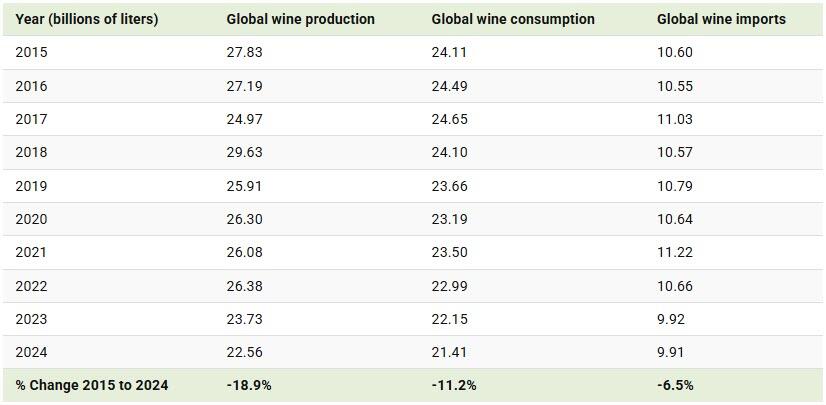
This chart, via Visual Capitalist’s Niccolo Conte, tracks how global wine output, consumption, and trade have evolved since 2015.
The data for this visualization comes from the International Organisation of Vine and Wine (OIV). It tracks production, consumption, and imports from 2015 through 2024, measured in billions of liters.
Wine Production Hits a Decade Low
Global wine production peaked intermittently during the late 2010s, reaching nearly 30 billion liters in 2018.
Since then, output has steadily fallen, dropping to just 22.6 billion liters in 2024. That represents an almost 19% decline over the nine-year period.
Extreme weather events, including droughts, heatwaves, and late frosts, have disrupted harvests in major wine-producing regions. At the same time, rising costs and tighter environmental regulations are adding pressure to growers worldwide.
Consumption Declines More Gradually
While production has fallen sharply, global wine consumption has declined at a slower pace. Total consumption dropped from about 24.1 billion liters in 2015 to 21.4 billion liters in 2024, a decline of roughly 11%.
Health-conscious lifestyles, aging populations in traditional wine markets, and younger consumers drinking less alcohol overall are contributing factors.
Global Trade Shows Signs of Softening
Wine imports have also edged lower, falling about 6.5% over the same period.
After peaking above 11 billion liters in the early 2020s, global wine trade slipped below 10 billion liters by 2023 and 2024.
If you enjoyed today’s post, check out Ranked: Which Country Consumes the Most Coffee? on Voronoi, the new app from Visual Capitalist.
Tyler Durden
Tue, 01/06/2026 – 05:45

Today in Chicago History: Cody Parkey kicks ‘double doink’ that costs Bears chance to advance in playoffs
Here’s a look back at what happened in the Chicago area on Jan. 6, according to the Tribune’s archives.
Is an important event missing from this date? Email us.
Front page flashback: Jan. 7, 2021
More than 1,500 people were arrested after supporters of President Donald Trump marched on the U.S. Capitol on Jan. 6, 2021, and interrupted the peaceful transfer of power after Trump’s loss to Democrat Joe Biden in the 2020 election. (Chicago Tribune)
People loyal to Donald Trump stormed the U.S. Capitol building, halting Congress’ counting of the electoral votes to confirm President-elect Jo Biden’s victory.
Nationwide, more than 1,500 people were arrested in all 50 states and the District of Columbia on charges stemming from the Capitol breach, an investigation that has been described by prosecutors as the largest criminal probe in the country’s history.
After his inauguration in January 2025, however, Trump pardoned or commuted the sentences of everyone involved.
Weather records (from the National Weather Service, Chicago)
High temperature: 60 degrees (2008)
Low temperature: Minus 16 degrees (2014)
Precipitation: 1.44 inches (1918)
Snowfall: 14.4 inches (1918)
Chicago residents were encouraged to dig out their streets in order to help milk and fuel trucks get to their destinations in early January 1918. Almost 15 inches of snow — the ninth-largest snowstorm in the city’s history — fell Jan. 6-7, 1918. (Chicago Tribune)
1918: A two-day blizzard (which began on this day) dropped 14.9 inches of snow on Chicago. It’s the ninth largest snowstorm in the city’s history.
Almost 14 inches fell on the first day of the storm, which the Tribune described as “one-third the snowfall of the year 1917 and almost half that of 1915.” The newly fallen snow topped more than 4 inches already blanketing the ground.
Chicago’s 10 largest snowfalls since 1886 — and how the Tribune covered them
Hundreds of vehicles stalled in drifts up to 6 feet deep, downed telephone and telegraph wires blocked communication with cities including Indianapolis and more than 300 men were enlisted to clear snow in the Loop, becoming exhausted by winds that registered 44 mph there, according to the Weather Bureau (known as the National Weather Service today).
Deliveries of food, milk and coal were impossible due to the conditions, and the city couldn’t clear the roads despite “the employment of 2,200 laborers, 631 teams and seven snow plows.” So, the call was put out for men and students dismissed from school to help with the effort.
Evelyn Nicol at Abbott Laboratories in North Chicago in an undated photo. (Karen Nicol)
1976: Evelyn Carmon Nicol received a U.S. patent for urokinase production. The Kentucky native was a highly respected immunologist for local companies Abbott and Baxter and one of the few Black women to be awarded a patent in the sciences.
Vintage Chicago Tribune: Inventions and innovations by Black Chicagoans
The first time her name appeared in the Tribune, however, was after she died from complications of the coronavirus in 2020. Yet, thanks to her own meticulously kept records, Nicol’s life story and incredible accomplishments can continue to be told for generations.
Chicago Bears kicker Cody Parkey (1) misses the potential game-winning kick on Jan. 6, 2019, in an NFC Wild Card playoff game at Soldier Field. The Bears lost to the Eagles, 16-15. (Brian Cassella/Chicago Tribune)
2019: The Chicago Bears pulled ahead 15-10 against the Philadelphia Eagles in the NFC wild card game on a 22-yard touchdown pass from Mitch Trubisky to Allen Robinson with 9:04 left in the fourth quarter. The Bears’ vaunted defense almost closed things out, stopping the Eagles on three consecutive plays from the 2-yard line in the game’s final 2 minutes.
But on fourth-and-goal with 1:01 left, Nick Foles hit Golden Tate on a sprint-out to the right, and the Eagles surged ahead. Tarik Cohen returned the ensuing kickoff 35 yards, and Trubisky pinpointed his second pass on the final drive for a 25-yard completion to Robinson, putting the Bears quickly into field-goal range.
Chicago Bears kicker Cody Parkey nailed a 43-yard kick with 10 seconds left — only he would have to try once more because the Eagles canceled it with a timeout. His second attempt clanked off the uprights — hitting the left upright before bouncing off the crossbar. Parkey’s “double doink” cost the Bears the game and a chance to advance in the playoffs.
49 people from Illinois have been charged for taking part in the US Capitol riot on Jan. 6, 2021
2021: At least 49 people from Illinois were accused and convicted as part of the ongoing investigation into the Jan. 6, 2021, attack on the U.S. Capitol, which prosecutors have described as one of the largest criminal investigations in American history.
Feds begin dismissing Jan. 6 cases against Illinoisans after President Trump issues blanket pardon
Want more vintage Chicago?
Subscribe to the free Vintage Chicago Tribune newsletter, join our Chicagoland history Facebook group and follow us on Instagram for more from Chicago’s past.
Have an idea for Vintage Chicago Tribune? Share it with Kori Rumore and Marianne Mather at krumore@chicagotribune.com and mmather@chicagotribune.com
https://www.chicagotribune.com/2026/01/06/january-6-chicago-history/

Today in History: Year-round daylight saving time begins
Today is Tuesday, Jan. 6, the sixth day of 2026. There are 359 days left in the year.
Today in history:
On Jan. 6, 1974, year-round daylight saving time began in the United States on a trial basis as a fuel-saving measure in response to the OPEC oil embargo. The country, however, returned to standard time in October, effectively ending the experiment.
Also on this date:
In 1919, former President Theodore Roosevelt died in Oyster Bay, New York, at age 60.
In 1941, President Franklin D. Roosevelt, in his State of the Union address, outlined a goal of “Four Freedoms” — human rights worthy of defending universally: freedom of speech and expression, the freedom to worship God in one’s own way, freedom from want, and freedom from fear.
In 1982, truck driver William G. Bonin was convicted in Los Angeles of 10 of the “Freeway Killer” slayings of young men and boys. (Bonin was later convicted of four other killings; he was executed in 1996.)
In 1994, figure skater Nancy Kerrigan was clubbed on the leg by an assailant at Detroit’s Cobo Arena; four men, including the ex-husband of Kerrigan’s rival, Tonya Harding, went to prison for their roles in the attack. (Harding pleaded guilty to conspiracy to hinder prosecution but denied any advance knowledge about the assault.)
In 2005, former Ku Klux Klan leader Edgar Ray Killen was indicted on murder charges 41 years after three civil rights workers were killed in Mississippi. (Killen was later convicted of manslaughter and sentenced to 60 years in prison; he died in prison in 2018.)
Related Articles
Holocaust survivor Eva Schloss, stepsister of Anne Frank, dies at 96
Robbins Historical Society director aims to digitize and increase access to town’s Black history
Today in Chicago History: It’s a girl! First child born to Bears owner George Halas.
Today in History: Door plug blows off Alaska Airlines plane
Today in Chicago History: Fox’s WFLD-Ch. 32 begins broadcasting
In 2021, supporters of President Donald Trump, fueled by his false claims of a stolen election, assaulted police and stormed into the U.S. Capitol to interrupt the certification of Democrat Joe Biden’s victory, forcing lawmakers into hiding. A Trump supporter, Ashli Babbitt, was shot and killed by police as she tried to breach a barricaded doorway inside the Capitol. Capitol Police Officer Brian Sicknick, injured while confronting the rioters, suffered a stroke the next day and died from natural causes. Congress reconvened hours later to finish certifying Biden’s victory. In January 2025 — on the first day of his second term — Trump granted blanket clemency to more than 1,500 people convicted or awaiting trial or sentencing for Jan. 6 offenses.
Today’s Birthdays: Actor-comedian Rowan Atkinson, who played Mr. Bean, is 71. Golf Hall of Famer Nancy Lopez is 69. TV chef Nigella Lawson is 66. Football Hall of Famer Howie Long is 66. Football Hall of Famer Charles Haley is 62. Actor Norman Reedus is 57. TV personality Julie Chen Moonves is 56. Actor Eddie Redmayne is 44. Actor-comedian Kate McKinnon is 42. Businessman Eric Trump is 42. Entrepreneur and yoga instructor Hilaria Baldwin is 42.
https://www.chicagotribune.com/2026/01/06/today-in-history-year-round-daylight-saving-time-begins/
Electric Cars Make Up Nearly 96% Of New Car Sales In Norway
Electric Cars Make Up Nearly 96% Of New Car Sales In Norway
Authored by Naveen Athrappully via The Epoch Times (emphasis ours),
In 2025, electric cars accounted for 95.9 percent of all new cars sold in Norway, the Norwegian Road Traffic Information Council (OFV) said in a statement on Jan. 2.
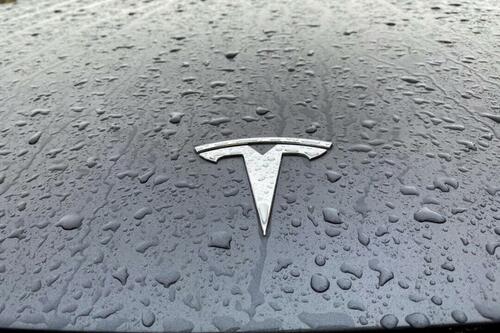
The Tesla logo on the hood of a car in Oslo, Norway, on Nov. 10, 2022. Victoria Klesty/Reuters
“This means that the goal set by politicians 10 years ago has been achieved: New car sales in Norway are now emission-free,” it said. A total of 179,550 new passenger cars were registered last year, breaking the previous annual record set in 2021.
“2025 was also the year when the number of electric cars surpassed the number of diesel cars and became the largest powertrain in the total passenger car population,” the statement said.
For December 2025 specifically, 35,188 new passenger cars were registered in the country, with electric cars accounting for 97.6 percent of these vehicles, a sign of how EVs “now dominate new car sales” in the country, OFV said.
Norway, with a population of around 5.53 million, is a high-income country, according to Harvard data. With a GDP per capita of $87,702, the nation is the third-richest per capita among 145 countries. Norway’s oil wealth helps sustain its welfare system.
Tesla consolidated its position as “Norway’s largest car brand” last year, with a record 34,285 new passenger cars registered—a 19.1 percent market share, roughly one in five new cars.
Tesla’s Model Y set an annual record last year, hitting 27,621 first-time registrations, which is the “highest number ever registered for a single car model in Norway in one year,” according to OFV.
Chinese companies also saw their share in Norway’s EV market rise last year. A total of 24,524 new passenger cars registered last year were of Chinese origin. This accounted for 13.7 percent of new car sales, up from 10.4 percent the previous year, according to the council. The biggest Chinese car brand was BYD.
“2025 has been a very special car year. We see the effect of long-term and targeted electric car policy, and how specific tax decisions have immediate effects on the market,” OFV Director Geir Inge Stokke said.
“The final sprint towards the end of the year has been historically strong, and there is no doubt that the VAT change from January 1, 2026, has contributed to a great many choosing to secure a new electric car before the year was over.”
As for the European Union overall, electric cars accounted for 16.9 percent of the EU new car registrations for the January–November 2025 period, according to a Dec. 23, 2025, statement from the European Automobile Manufacturers’ Association.
The biggest markets for new EV registrations in the EU were Germany, Belgium, the Netherlands, and France, with registrations in Germany jumping over 41 percent year-over-year.
However, hybrid-electric cars remained the “preferred choice among EU consumers,” accounting for 34.6 percent of new registrations, more than double the share of electric cars, the association said.
While EV sales in the EU remain robust, the picture is different in the United States.
New U.S. EV sales in November 2025 are estimated to total 70,255 units, down 41.2 percent from a year ago, industry expert Cox Automotive said in a Dec. 15 statement. Compared to October 2025, November sales were down 5.2 percent.
Cox attributed the slump to the expiration of a federal tax credit.
The New Clean Vehicle Tax Credit granted buyers of new EVs up to $7,500 in incentives. The measure was included in the Inflation Reduction Act, signed into law by President Joe Biden in 2022.
President Donald Trump signed the One Big Beautiful Bill Act into law in July 2025, ending the credits on Sept. 30 of that year.
“Market share reached multi-year lows as sales declined. Weak demand fueled a surge in inventory, with days’ supply reaching elevated levels. Pricing eased across the market, underscoring an industry struggling to find balance in the post-incentive era,” Cox said.
“As we head into 2026, the EV market will continue navigating post-incentive challenges, with inventory and pricing dynamics shaping near-term performance.”
As for the overall new-vehicle sales situation in the United States, Cox estimates the number will reach 16.3 million units in 2025, up by almost 2 percent from 2024 and the “best result since 2019,” the company said in a Dec. 17 statement.
For 2026, Cox predicts new-vehicle sales pace to decline by 2.4 percent to 15.8 million units, highlighting factors such as the lack of EV tax incentives.
While Tesla saw sales jump in Norway, its global performance has taken a hit. In 2025, the company delivered 1.64 million units, according to a Jan. 2 statement. This is down 8.3 percent from 1.79 million deliveries in 2024.
Tesla shares fell by 2.59 percent on Jan. 2.
Tyler Durden
Tue, 01/06/2026 – 05:00
https://www.zerohedge.com/technology/electric-cars-make-nearly-96-percent-new-car-sales-norway
Russia Straps MANPADS Missile On Shahed Drone To Counter Attack Helicopters
Russia Straps MANPADS Missile On Shahed Drone To Counter Attack Helicopters
Low-cost drones have transformed modern warfare forever during the nearly four-year-long Russia-Ukraine war. These commercially available systems have been used to strike cities, power grids, ports, refineries, and military bases, delivering maximum impact at minimal cost.
The evolution of these drones is notable as well. One major issue that drones on both sides of the battlefield have faced is counter-drone operations involving electronic warfare, interceptor drones, fighter jets, and attack helicopters. However, none have yet proven consistently effective at scale.
In response, both sides have increasingly deployed attack helicopters to hunt drones, using machine guns and missiles to shoot them down at close range.
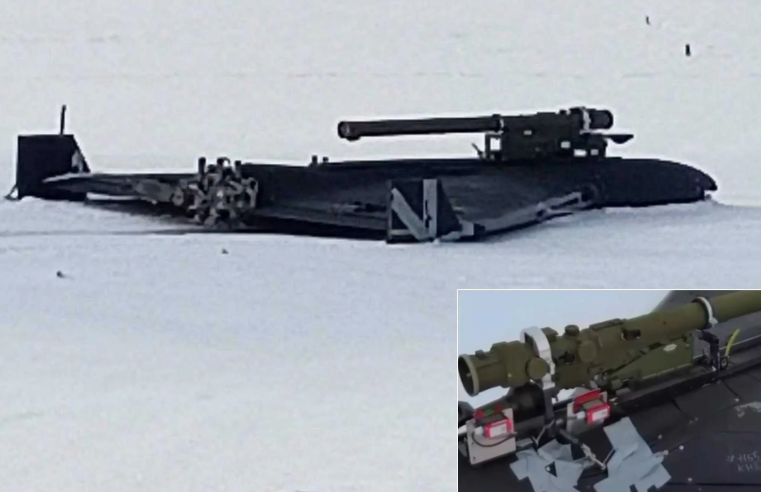
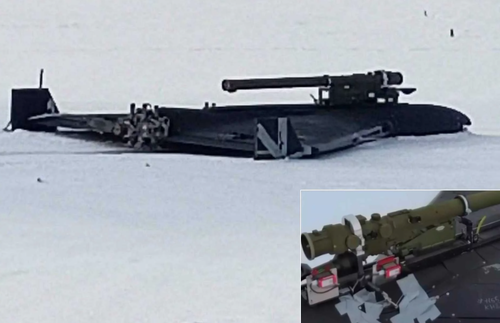
To deter enemy aircraft, the Russians apparently have mounted a shoulder-fired man-portable air defense missile on top of an Iranian-designed loitering munition known as a Shahed-136.
Military blog Army Recognition states Ukrainian forces have “intercepted for the first time a Shahed drone fitted with an Igla-S MANPADS missile.”
Here’s more color on the first publicly documented case of a MANPADS missile mounted on a Shahed drone for air defense purposes:
On January 4, 2026, the Ukrainian Unmanned Systems Forces stated that fighters from the Darknode Battalion of the 412th Nemesis Brigade intercepted a Russian Shahed-type kamikaze drone fitted with an Igla-S man-portable air defense system. This variant, observed for the first time during the war, carried a camera and a radio modem, allowing the missile to be launched remotely by an operator located on Russian territory to threaten Ukrainian helicopters and low-flying aircraft involved in counter-drone interception.
Ukraine may now have to allocate more air defense assets and counter-UAS resources to deal with such a threat, as MANPADS-armed drones could potentially serve as a decentralized air defense layer for Russia’s advancing forces. (Picture source: Ukrainian MoD)
According to Serhii “Flash” Beskrestnov, a Ukrainian military and technical expert, the missile launch was not automatically but manually triggered by the Shahed operator using the onboard camera feed and radio link. This new variant was assessed as being intended to engage Ukrainian helicopters and other low-flying aircraft that had previously intercepted Russian drones at close range using machine guns or cannons. Army aviation crews were warned to avoid approaching Shahed drones on a head-on course and to be particularly cautious when encountering drones flying in circular or loitering patterns, which were interpreted as potential attempts to draw aircraft into missile engagement zones. Ukrainian units also indicated that examination of the tactics associated with this configuration was ongoing in order to adapt interception procedures.
The rapid evolution of low-cost drones is a concerning development, and it is almost certainly only a matter of time before such drones appear in the Americas. Drug cartels in Mexico are already known to have deployed smaller ones for surveillance and attacks.
Tyler Durden
Tue, 01/06/2026 – 04:15
Germany’s Middle Class Under Siege In 2026
Germany’s Middle Class Under Siege In 2026
Submitted by Thomas Kolbe
Save in times of plenty, and you’ll have in times of need. An old German proverb, now proving tragically prophetic. The hardship caused by a completely derailed climate-socialist ideology is only just beginning. This socialist experiment is likely to continue ravaging the country until its economic substance is entirely consumed.
The new year begins as the old one ended: a fiscal raid on the wallets of the middle class. In Brussels and Berlin, there is satisfaction that citizens have been quietly, without spectacle, subjected to yet more tax increases—whose revenues, like a rising tide, lift all ships only slightly.
On January 1, the CO₂ price per ton of emitted gas rose from €55 to €65. This levy, applied to fossil fuels such as gasoline, diesel, natural gas, and heating oil, threads like a red line through the entire value chain—even reaching private households’ bills. The green extraction mechanism is now firmly entrenched, funding Brussels’ expanding activities increasingly, and is defended tooth and nail by the ruling politicians.
The Lie of Tax Relief
When the federal government celebrates its minimal tax relief for lower- and middle-income groups, reality tells a different story. In truth, these relentless fiscal collectors are increasing the tax burden further. Only the distracting work of state-affiliated media prevents the growing hyperstate’s costs from becoming fully visible.
2026 is set to become an expensive year for Germany’s shrinking middle class, visible soon on the first paycheck of the year. That will reveal the true cost of an overextended welfare state and the one-of-a-kind experiment of transforming Germany’s social insurance system into a quasi-global insurance scheme.
Never since World War II has the German middle class faced such fiscal and economic pressure.
The Burden of State Subsidies on the Middle Class
The countless subsidies and state interventions financing the complex “green arts” sector, the Ukraine war, and now the military buildup constitute a direct attack on the German middle class. Businesses and net taxpayers pay an ever-rising “blood price” each year to sustain Berlin’s and Brussels’ ideological and power ambitions.
The still-active renewable energy subsidy program, the EEG, alone consumes over €16 billion this year for an energy grid that, since the end of nuclear power, no longer provides a secure base for industrial production, sending both industrial and household electricity costs to dizzying heights. Trittin’s “ice ball” has become a cost Himalaya no one can climb.
Germany’s seven-year industrial decline, which is now accelerating, precisely chronicles the path of the deliberate destruction of its industrial base. Nearly 300,000 industrial jobs have been lost since 2018—tragic, yet apparently of little concern to Berlin’s policymakers.
Local city treasurers, however, are feeling the pain: as corporate tax revenues collapse under industrial destruction, citizens can expect cuts in public services and steep tax hikes. Schools, kindergartens, sports facilities—all face drastic savings. A big “thank you” goes to Berlin central planning.
Industry on the Edge: Loans Fizzle
What Friedrich Merz, Ursula von der Leyen, and other central planners aim for is clear: using state loans to occupy freed-up industrial capacities. Yet no matter how much funding flows into the new social program under the banner of a special fund for green and military production—the effect has already fizzled. In December, the entire Eurozone industrial sector, measured by current Purchasing Managers’ Indices (PMI), slipped into recession. Germany has been continuously downsizing its industry for seven years.
A victory for Brussels’ central planners, whose goal appears to be the economic and geopolitical neutralization of the country. After years of deindustrialization and waves of bankruptcies, this strategy is hard to interpret otherwise. Germany’s PMI now sits at 47 points—clearly in contraction. Hundreds of thousands of jobs will be lost this year. Last year alone, 24,000 companies went bankrupt. Exact figures for job and net direct investment outflows are not yet available; in 2024, €64.5 billion flowed out of Germany. German industry is no longer competitive.
Quick Blame Game
The culprits are quickly identified. U.S. tariffs, a favorite topic of sympathetic media, are often cited, though the crisis began long before Donald Trump. Dumping competition from China is also highlighted. While this is a factor, 99 percent of Germany’s economic problems are homegrown.
No one forced the country to keep its borders wide open for a decade, pushing its social insurance to the brink of collapse—all to create new voter bases for the united political left and to break resistance from the bourgeois right.
Shrinking Middle Class and Falling Investments
This trend is reflected in the middle class. The DATEV SME Index shows falling real revenues across all sectors, particularly trade, construction, and consumer services. Investments are nearly frozen: only 20 percent of companies plan rising investments, according to LBBW’s SME radar for the coming year.
The ideological green agenda has left its mark. High electricity costs, falling incomes, and persistent inflation are bleeding the middle class dry. Retail felt this for the first time during Christmas: nominal sales rose 1.5 percent, yet real sales fell by 1 percent in the peak month.
Economic stress will be a constant companion for Germany’s middle class in 2026. High property prices, zero real interest on savings, and rapid erosion of economic substance collide with an ever-expanding state. Bureaucracy and the state apparatus are evolving into a parasitic leviathan, funded by a shrinking number of contributors.
Consequences for Industry, Trade, and City Centers
Too much depends on Germany’s high industrial value creation: service businesses, high factor incomes, and secure municipal finances—all are now being lost, reflected in city centers.
Where once life flourished, roughly 5,000 retailers die every year, an irretrievable loss. The desolation mirrors what citizens feel in their wallets: the ebb has begun.
The middle class’s evaporating purchasing power is most visible in hospitality, where families cut costs first. Hotels lost 3.7 percent in real revenue in 2025, while restaurants and bars fell 4.1 percent year-on-year. Households are saving wherever possible. High energy costs, rising social charges, and a weakening job market leave a trail of economic decline.
Missed Lessons: The Population and the Crisis
Structural economic crises take time to penetrate public consciousness. Most households first tighten belts without complaint.
The state exploits this calm before the storm to consume citizens’ wealth faster than the private sector can compensate. With net new debt over 5.5 percent this year—including accounting tricks—this is particularly evident. The devotion of a portion of the population to ideological doctrine becomes an expensive, destructive tragedy.
Germany faces a nation unprepared to draw necessary lessons: reversing migration policy, adapting the bloated state apparatus to new economic realities, and downsizing accordingly. A turn toward a meritocratic market economy remains absent.
Until these lessons are learned and acted upon, Germany will continue to fall.
* * *
About the author: Thomas Kolbe, born in 1978 in Neuss/ Germany, is a graduate economist. For over 25 years, he has worked as a journalist and media producer for clients from various industries and business associations. As a publicist, he focuses on economic processes and observes geopolitical events from the perspective of the capital markets. His publications follow a philosophy that focuses on the individual and their right to self-determination.
Tyler Durden
Tue, 01/06/2026 – 03:30
https://www.zerohedge.com/economics/germanys-middle-class-under-siege-2026
Rick Steves’ Europe: Falling in love with the Matterhorn
I have a confession: I’m in love with the Matterhorn. There’s just something about this triangular peak of Disneyland fame – the most recognizable mountain on the planet. Just seeing it is one of the great experiences in Switzerland. And hiking with that iconic summit as a background is even better.
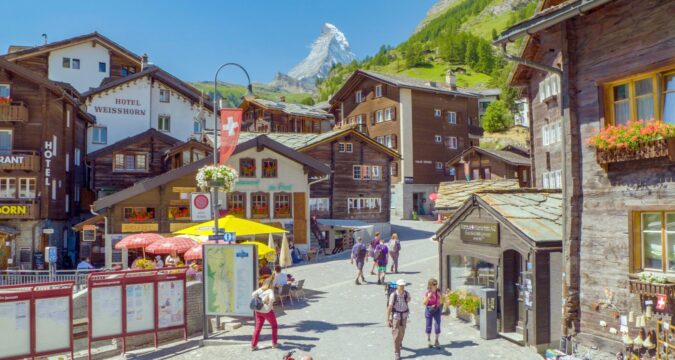
The 14,690-foot Matterhorn towers above Zermatt, a tiny-but-touristy town of roughly 6,000 people nestled at the dead-end of a long valley in Switzerland’s remote southwest. While it’s barely two hours from Bern and Interlaken by train (or about three hours from Zürich or Lausanne), it’s not really on the way to anywhere. Especially considering its inconvenient location, many travelers find it overrated. If you make the trek and are met with only cloudy weather, you may end up with a T-shirt that reads, “I went all the way to Zermatt and didn’t even see the Matterhorn.” (This isn’t rare; it took me multiple trips before I caught a clear glimpse of it.)
But in sunny weather, riding the high-mountain lifts, poking through lost-in-time farm hamlets, and ambling along on scenic hikes – all with that famous pointy mountain nodding its white head in the background – make the trip worthwhile. And Zermatt itself also has pockets of traditional charm, with streets lined with chalet after chalet and overflowing flower boxes.
There are no gas-engine vehicles in Zermatt – only electric buses and taxis that slalom between the pedestrians like four-wheeled Vespas. (Drivers must park down in the valley and ride the train into town.) Strolling up the town’s main street, Bahnhofstrasse, is a joy. Even bikes are forbidden on the main drag; the street is reserved for people and, in summer, a twice-daily parade of goats. Sure, the town hosts plenty of fabulously wealthy visitors, but locals like to say that the “traffic-free” nature of the town is a great equalizer. Zermatt strives to be a high-class mountain resort, but for active guests.
Once upon a time, Zermatt was a humble village of farmers, but with the first ascent of the Matterhorn in 1865 and the arrival of trains in 1891, it found itself on the Grand Tour of Europe. Over time, its residents learned it was easier to milk the tourists than the goats, and mountain tourism became the focus. Aside from the stone quarries that you’ll pass on the way into town, tourism is Zermatt’s only industry.
This little town is capable of entertaining about two million guests each year, hosting more than a hundred modern chalet-style hotels and a well-organized and groomed infrastructure for summer and winter sports. From town, countless lifts head to all sorts of hikes, ski slopes, and incredible views. But really it all comes back to the star of the show: the Matterhorn.
High summer into early fall is the best time to come to Zermatt. Visiting in spring is generally a bad idea, because most trails, lifts, and restaurants are closed. (Although, on the plus side, there are no crowds.) Early fall also works, as most lifts and trails remain open until the snow returns. (In winter, skiers take over the town, and prices jump even higher than in summer.) Zermatt has earned its reputation for untrustworthy weather – the valley can get completely socked in at any time of year. While two good-weather days are enough to experience the highlights, add at least one buffer day to your itinerary as insurance against rain.
The Zermatt region has three high-mountain summit stations linked by lifts and hikes: Matterhorn Glacier Paradise (closest to the Matterhorn), Gornergrat (with a historic cogwheel train that goes to 10,000 feet), and Rothorn (farthest up the valley from the Matterhorn). While prices are steep, the community has invested hundreds of millions of dollars in their mountain lifts in recent years. They’re absolutely state-of-the-art, and experiencing them is unforgettable.
Gornergrat is my pick if you can fit in only one high-mountain excursion, simply because it’s a best-of-all-worlds experience. It features sweeping views from the top station and my favorite hike in the region, between the Rotenboden and Riffelberg train stops. Whichever excursion you opt for, pay close attention to the weather – the lifts aren’t cheap, and none of them is worth the cost if the Matterhorn is shrouded by clouds.
Related Articles
Caribbean travel resumes after disruptions from US military operation in Venezuela
Nicolás Maduro’s capture disrupts Caribbean holiday travel
Starved Rock, Illinois’ most popular state park, to get $18M trail upgrades in new year
Rick Steves’ Europe: Edinburgh’s Royal Mile
Winter storm snarls US holiday travel across Northeast and Great Lakes
That said, don’t wait for perfectly clear skies to head into the hills – even in bright, sunny weather, the Matterhorn loves playing peek-a-boo behind the clouds. If it’s at least sunny-ish, get up the mountainside. Like me, you may find love at first sight of the Matterhorn.
(Rick Steves (www.ricksteves.com) writes European guidebooks, hosts travel shows on public TV and radio, and organizes European tours. This column revisits some of Rick’s favorite places over the past two decades. You can email Rick at rick@ricksteves.com and follow his blog on Facebook.)
https://www.chicagotribune.com/2026/01/06/rick-steves-europe-falling-in-love-with-the-matterhorn/

English Remains The World’s Most-Spoken Language
English Remains The World’s Most-Spoken Language
Language plays a central role in shaping global communication, culture, and economic exchange. While some languages dominate due to large native-speaking populations, others achieve global reach through widespread adoption as a second language.
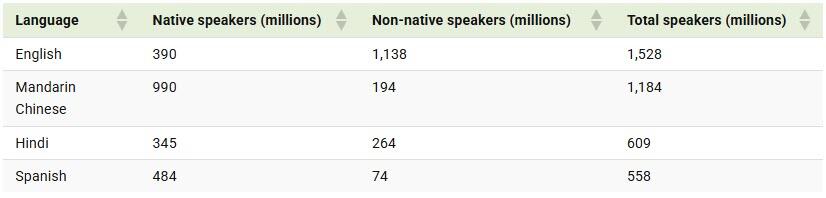
This infographic, via Visual Capitalist’s Niccolo Conte, compares the native and non-native usage of the world’s most spoken languages in 2025, using data from Ethnologue.
The World’s Most Spoken First and Second Languages
English is the most spoken language with approximately 1.53 billion speakers worldwide.
However, just 390 million people speak English as their first language, meaning nearly 75% of English speakers use it as a second language, making it the dominant global lingua franca across industries and professions.
The table below shows native and non-native speaker counts for the world’s most spoken languages in 2025:
In total, about 18.8% of the world’s population speaks English, but only a quarter of those are native speakers.
Mandarin Chinese ranks second with roughly 1.18 billion speakers.
In contrast to English, Mandarin is primarily spoken as a first language, with more than 83% of its speakers being native.
Hindi and Spanish follow as the next most spoken languages worldwide. Hindi has around 609 million speakers, split more evenly between native and non-native usage due to India’s multilingual population.
Spanish stands out as one of the most widely spoken native languages globally, with nearly 87% of its speakers using it as their first language. Spoken Spanish is concentrated across Spain, Latin America, and parts of the United States.
If you enjoyed today’s post, explore more language and culture insights on Voronoi, including The Most Used Languages on the Internet.
Tyler Durden
Tue, 01/06/2026 – 02:45
https://www.zerohedge.com/geopolitical/english-remains-worlds-most-spoken-language