Category: News

Wall Or Sieve? Attacks Raise Doubts About U.S. Immigration System
Wall Or Sieve? Attacks Raise Doubts About U.S. Immigration System
Authored by Benjamin Weingarten via RealClearPolitics,
In the wee hours of Sunday, March 1, a Senegalese immigrant clad in a sweatshirt bearing the words “Property of Allah” opened fire outside an Austin, Texas beer garden, killing three and leaving 14 others wounded.
On March 12, at Old Dominion University, a former Virginia National Guard member from Sierra Leone – released early from an 11-year prison sentence for attempting to provide material support to the ISIL – yelled “Allahu Akbar” before shooting and killing a beloved college professor and wounding two other people.
That same day, a Lebanese immigrant plowed a pickup truck filled with fireworks and gasoline into a large synagogue in West Bloomfield, Michigan. After exchanging gunfire with security staff, he killed himself. His brother, it turned out, was a recently eliminated Hezbollah commander in Lebanon.
Amidst the emerging threat environment of the Iran war, these and other attacks on U.S. soil have reignited questions about the U.S. immigration system’s vetting and screening standards. Republican leaders are increasingly asking how, for example, foreign nationals like the Afghan evacuee who shot two National Guard members in Washington, D.C. – killing one of them – or the Egyptian national overstaying his tourism visa who firebombed pro-Israel demonstrators in Colorado last year were able to come here and commit such acts. They are also asking how close relatives of top Iranian officials, including avowed supporters of that country’s regime, have been allowed to live and work in the United States.
Earlier this month, Secretary of State Marco Rubio announced that he had terminated the legal status of the niece of Iranian Major General Qasem Soleimani, who was killed by the U.S. in a targeted attack in 2020, and her daughter. Rubio described the niece on X as “an outspoken supporter of the Iranian regime who celebrated attacks on Americans and referred to our country as the ‘Great Satan.’ ”
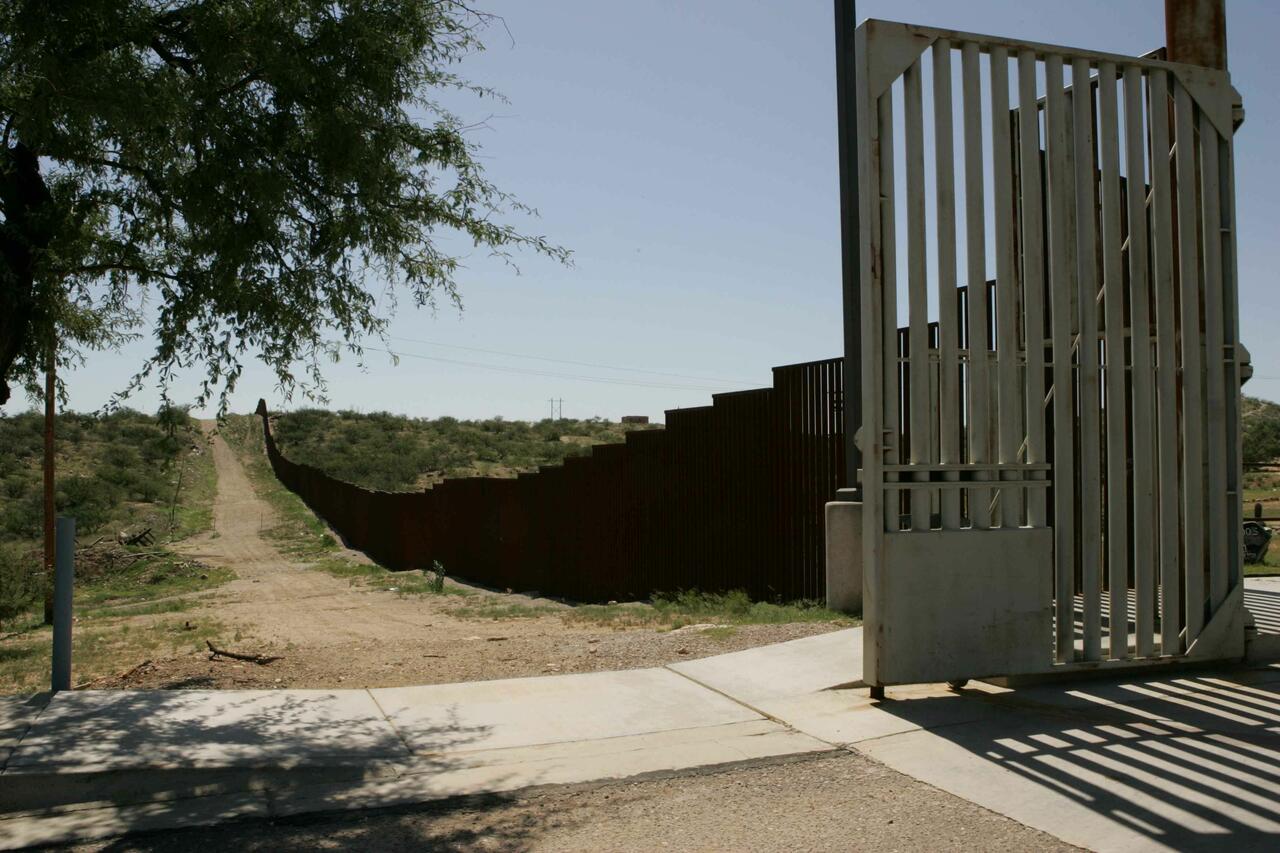
While the Trump administration has effectively closed the southern border, the U.S. Citizenship and Immigration Services has concluded that “prior screening and vetting measures” of people who cross the border legally “were wholly inadequate,” creating “significant national security and public safety risks [that] compromise the integrity of the immigration system.”
Administration critics argue that fears of foreign-born terrorism are vastly overblown. Alex Nowrasteh of the Cato Institute told RealClearInvestigations that the annual chance of being murdered in a terrorist attack on U.S. soil by a foreign-born attacker is “about one in 165 million per year. All politically motivated violence is a tiny threat,” he said. “Exaggerating the threat does not bring us closer to delivering justice to the victims of every violent or property crime who deserve it.”
RCI’s review of congressional testimony and research, and interviews with immigration and national security experts, uncovered long-standing flaws in the system – some of which were exacerbated by the Biden administration’s lax immigration policies. Challenges run the gamut from incomplete information about applicants to inconsistent enforcement of the law. Even if relatively few immigrants commit deadly attacks, the vetting system has routinely permitted people with obscure backgrounds and hostile views to visit and live in the U.S.
Robust Design
America’s immigration system is complex and multilayered, involving a range of departments and agencies that provide different levels of scrutiny depending on which of the dozens of categories would-be entrants fall into, from tourists to asylum seekers. As with most laws and rules, different administrations vet applicants with varying levels of vigor depending on whether they want to encourage or discourage immigration.
Three agencies lead the vetting process. The State Department issues visas; U.S. Citizenship and Immigration Services reviews petitions for immigrants seeking benefits such as citizenship or permanent residency, refugee and asylum claims, and other protections; Customs and Border Protection provides defense at the point at which aliens attempt to enter the country. Across these processes, sometimes with redundancy, authorities conduct biographic and biometric screenings, run name checks across U.S. security databases to search for red flags such as criminal histories or inclusion on terror watchlists, and interview would-be visitors.
As designed, the immigration system requires nearly all noncitizens seeking to enter the U.S. to obtain a visa. Nonimmigrant visas cover temporary trips for business or tourism, whereas immigrant visas cover permanent stays that may be family-, employment-, or education-based.
Those seeking long-term stays are subject to more rigorous scrutiny. While undergoing detailed background checks, they are generally required to file petitions, secure sponsors, and meet incremental thresholds and standards necessary, for example, to unite with family or work full-time. In 2024, the U.S. issued about 600,000 visas for long-term stay.
The vast majority of visas are issued to tourists and other temporary visitors – nearly 11 million in 2024. They are generally subject to less scrutiny.
In theory, those millions of temporary visitors will leave before their visas expire. In practice, a reported 40% of illegal aliens currently in the U.S. – amounting to millions of people – are visa overstayers, illustrating one of the myriad security-related issues plaguing the U.S. Homeland Security system.
“The vetting system is robust,” former senior INS official and immigration judge Andrew Arthur told RCI. But, he added, it “is only as good as the intelligence that the USG possesses and the access that the individual consular officer or OFO [CBP Office of Field Operations] officer has to that intelligence.”
To that end, our “biggest vulnerability,” in the words of the Heritage Foundation’s Simon Hankinson, is that officers often lack access to derogatory information held by foreign countries.
As Hankinson, a longtime former foreign service officer, recently detailed, this problem pervades even the U.S. Visa Waiver Program, where the citizens of several dozen generally safe and friendly countries – including most EU countries and Japan – may visit America visa-free for up to 90 days. Those waivers come in exchange for security cooperation, including sharing their citizens’ criminal records.
Cracks in the System
Critics note that only a few U.S. counterparts automatically check their visiting citizens’ criminal records. The U.S. otherwise must request that home countries run queries. Meanwhile, America lacks information-sharing agreements with many countries altogether.
These problems only grow when other nations lack reliable data, or where their authoritative documents may be easily fabricated – one of the justifications for Trump’s travel bans disproportionately hitting the Middle East and Africa.
“I worked in India, I worked in Ghana, [where] right outside the consulate, there were stores selling fake degrees, fake passports. I mean, they didn’t even hide it,” Hankinson said.
Incomplete data or suspect documents aside, authorities have also highlighted that U.S. databases may not always talk to each other. A June 2024 DHS Inspector General report indicated that “DHS’ biometric system…could not access all data from Federal partners to ensure complete screening and vetting of noncitizens seeking admission into the United States” due to “ongoing technical limitations.” The inspector general also found that border patrol officers lacked the hardware necessary to perform biometric screenings of people arriving by car or truck.
Federal authorities have also not always vigorously enforced their own security protocols. A September 2025 DHS IG report detailed that from March 2020 to March 2024, the State Department issued 12 million nonimmigrant visas without conducting in-person interviews or collecting fingerprints. CBP officers encountering foreign nationals at points of entry were unaware that the State had not fully screened some of them.
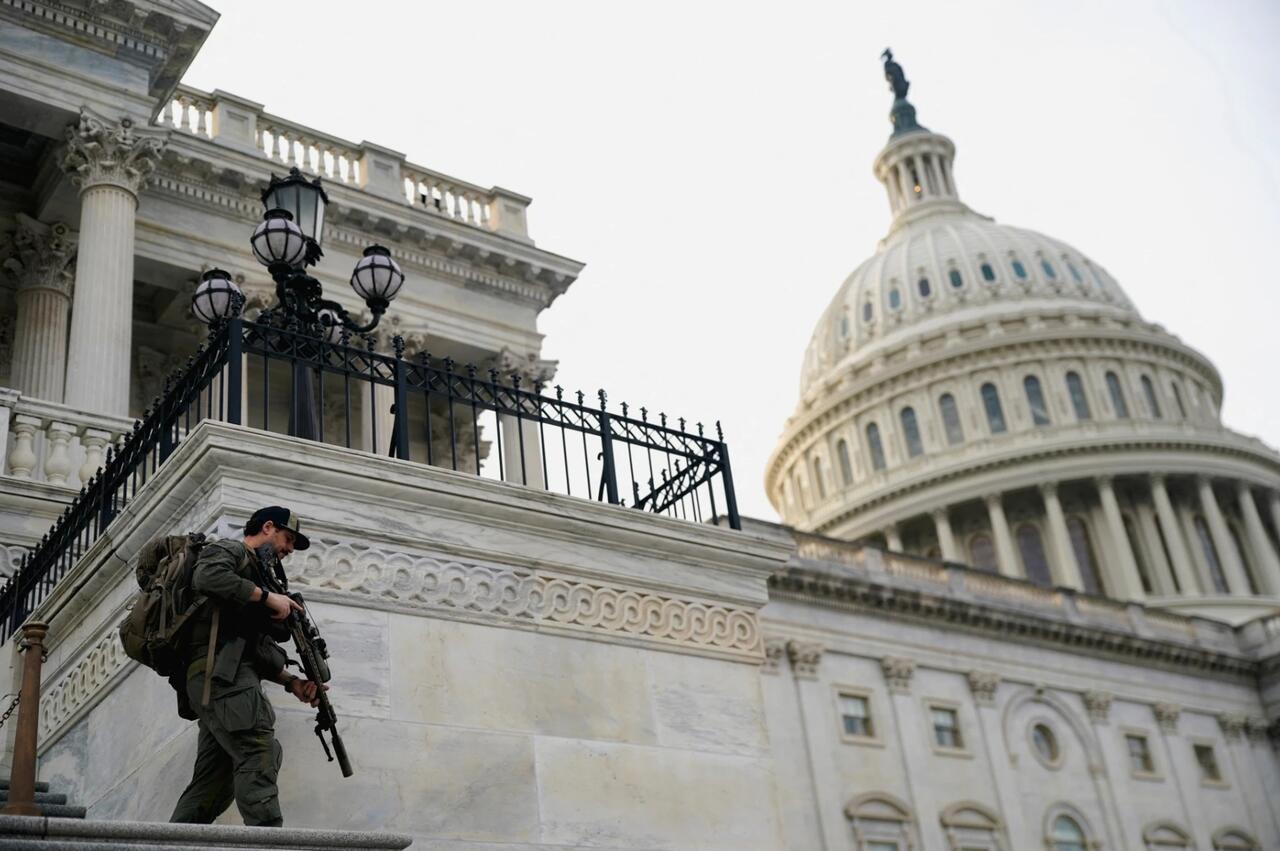
Subpar vetting was common regarding the tens of thousands of Afghans admitted to the U.S. in the wake of the Biden administration’s pullout from the country in 2021. In a January 2026 hearing, DHS Deputy Inspector General for Audits, Craig Adelman, submitted written testimony indicating that under Operation Allies Welcome, in several instances “DHS could not demonstrate that it accurately knew who individuals were, where they were located, whether parole conditions were being met, or whether individuals had unresolved risk indicators.” CBP sometimes lacked “access to critical data to properly screen, vet, or inspect” them.
Adelman’s testimony came following the National Guardsman shooting by evacuee Rahmanullah Lakanwal, and the prosecution of Nasir Ahmed Tawhedi, another evacuee who would plead guilty to plotting a mass-casualty attack on behalf of ISIS around Election Day 2024.
More broadly, the Government Accountability Office has found that the humanitarian parole processes have generally lacked sufficient anti-fraud measures, making it hard to ensure those fleeing warzones or failed states pose no threat to the U.S. homeland.
These findings also come on top of the millions who entered the country illegally during the Biden administration – and related immigrant overstays and backlogs creating security risks all their own. Hundreds of thousands of asylum claimants, for example, have been insufficiently screened historically during prolonged adjudication periods, DHS’ watchdog has found.
Hankinson is adamant that “we have not been enforcing our own rules with anything like the tenacity that we should have been. We’ve been really giving the benefit of the doubt to the alien in every circumstance.”
Ironically, the president’s opponents also agree that the immigration system is broken. But instead of tweaking the current system, many Democrats and their allies have floated the idea of abolishing the Immigration and Customs Enforcement (ICE) agency.
Good Questions, ‘Bad Odor’
Another potential issue that recent security incidents have raised is whether authorities are properly vetting and screening for indicators associated with the actual threats faced.
Federal law, drafted in the shadow of World War II and during the Cold War, generally deemed inadmissible immigrant members or affiliates of totalitarian political parties. Laws later expanded to encompass terrorists and their supporters.
But records may not exist of terrorist activities or support among those hailing from failed states. Despite this potential vulnerability, those with whom RCI spoke indicated that immigration officers do not tailor questions to unearth whether visitors harbor a terrorist worldview that could suggest future trouble or merit further scrutiny.
Authorities are “looking for Communists and Nazis,” Hankinson told RCI, not “Islamic fanatics…people who believe in Sharia law, who want to cut the hands off criminals, or have women dressed in burkas.”
Dan Cadman, a retired INS/ICE official now at the Center for Immigration Studies, told RCI that “the vetting procedures have not captured Islamist/ adversarial/ subversive ideologies among family members and close associates.” Were such affiliations known, for example, in the case of the would-be Michigan synagogue attacker Ayman Mohamed Ghazali, whose brother was a Hezbollah commander, immigration authorities likely would have subjected him to heightened scrutiny – and perhaps denied him entry.
Cadman attributes the lack of ideological bar to the “bad odor” to which such tests are held, and the fact that they lead to “thorny questions” about when religiously-based views “cross into the arena of politics” and constitutional rights. Progressive groups and others panned the blanket travel restrictions Trump pursued during his first administration sought to impose on myriad Muslim-majority countries as “Muslim bans.”
Nevertheless, some analysts have proposed bans of those affiliated with Islamist groups analogous to those of totalitarian political parties already on the books to satisfy such concerns. Several members of Congress appear receptive to this idea as well. Legislation is currently pending before the House and Senate to amend the Immigration and Nationality Act to render “advocates for the imposition of Sharia law” inadmissible, and remove Sharia adherents accordingly.
Even if such questions could survive First Amendment challenges, some observers doubt they would provide useful answers. David Bier of the Cato Institute told RCI, “There is no evidence that asking people general questions like whether they support terrorism or Sharia law would be an effective way to prevent attacks in the United States.”
Arthur, Cadman’s colleague at the Center for Immigration Studies, added that “identifying those who hold hostile beliefs is a difficult endeavor, and one that even the best adjudication and screening system will struggle to achieve.”
Whether a change in standards or their implementation might have prevented the recent attacks on U.S. soil by immigrants who became naturalized citizens remains unclear. Arthur says these incidents show “a decline in assimilation on the part of the naturalized citizen and in integration on the part of the United States” – a transcendent problem all its own.
Crackdown and Pushback
The Trump administration has sought to significantly enhance vetting standards, mitigate risks, and more vigorously enforce the law.
The president kicked off his second term with an executive order directing national security authorities to ensure that all aliens are “vet[ted] and screen[ed] to the maximum degree possible,” including for those threatening national security and bearing “hostile attitudes” toward America, its people, and institutions.
In June, the president fully or partially restricted and limited the entry of nationals from 19 countries it deemed to pose security risks, some Muslim-majority, via executive order – a broad measure to mitigate screening and vetting risks.
Democrats assailed these efforts as “bigoted” and “Islamophobic.”
“This discriminatory policy, which limits legal immigration, not only flies in the face of what our country is supposed to stand for, it will be harmful to our economy and communities that rely on the contributions of people who come to America from this wide range of countries,” Democratic Washington state Rep. Pramila Jayapal has said. “Banning a whole group of people because you disagree with the structure or function of their government not only lays blame in the wrong place, it creates a dangerous precedent.”
Later that year, in August, USCIS updated its policy guidance to ensure that when immigration officers are evaluating immigration benefit requests, aliens’ support or espousal of the views of terrorist groups, including anti-Americanism, and Jew-hatred, ought to weigh heavily against applicants.
Last December, USCIS paused all pending asylum and benefit applications from the 19 “high-risk countries” identified in the June executive order while conducting a “re-review of approved benefit requests” for all aliens from those countries entering the U.S. on or after the first day of the Biden administration. The administration also extended travel restrictions to 20 additional countries.
Among other initiatives, the second Trump administration is also “re-vetting” previously admitted aliens, and engaging in “continuous vetting” of all U.S. visa holders – some 55 million at the time it announced the policy – for violations that could lead to their deportation.
It has reportedly revoked 100,000 visas – a 150% increase versus 2024.
DHS says that ICE has arrested more than 43,000 potential national security risks, including 1,416 known or suspected terrorists, some 1,392 of which have been removed. It did so in announcing the recent arrest of Salah Salem Sarsour, a Jordanian national who the U.S. asserts was convicted decades ago in Israel of throwing a Molotov cocktail at the homes of Israeli military personnel and illegally attempting to possess weapons. DHS claims Sarsour is “suspected of funding terror organizations and lying on immigration forms” to enter the country, after which he became a green card holder back in 1998. The arrest of the Islamic Society of Milwaukee president generated strong pushback from the ACLU and the Council on American-Islamic Relations, with the former suggesting Sarsour may have been targeted for being “outspoken in his support for Palestinian rights” in violation of the First Amendment – a microcosm of the debates simmering over the president’s immigration policies.
Last month, the U.S. Intelligence Community assessed that “increased border security, stricter screening and vetting, and improved international information sharing” have led jihadist groups to focus “more on virtually recruiting U.S.-based aspirants to encourage and enable potential attacks.”
With the Trump administration already planning to significantly ramp up denaturalization efforts in response to revelations of fraud perpetrated by immigrants, this assessment and recent attacks from the naturalized population may only further fuel such efforts.
Tyler Durden
Thu, 04/16/2026 – 16:20
https://www.zerohedge.com/political/wall-or-sieve-attacks-raise-doubts-about-us-immigration-system
California Supreme Court Disbars Former Trump Attorney For Aiding Challenge Of 2020 Election Results
California Supreme Court Disbars Former Trump Attorney For Aiding Challenge Of 2020 Election Results
Authored by Brad Jones via The Epoch Times,
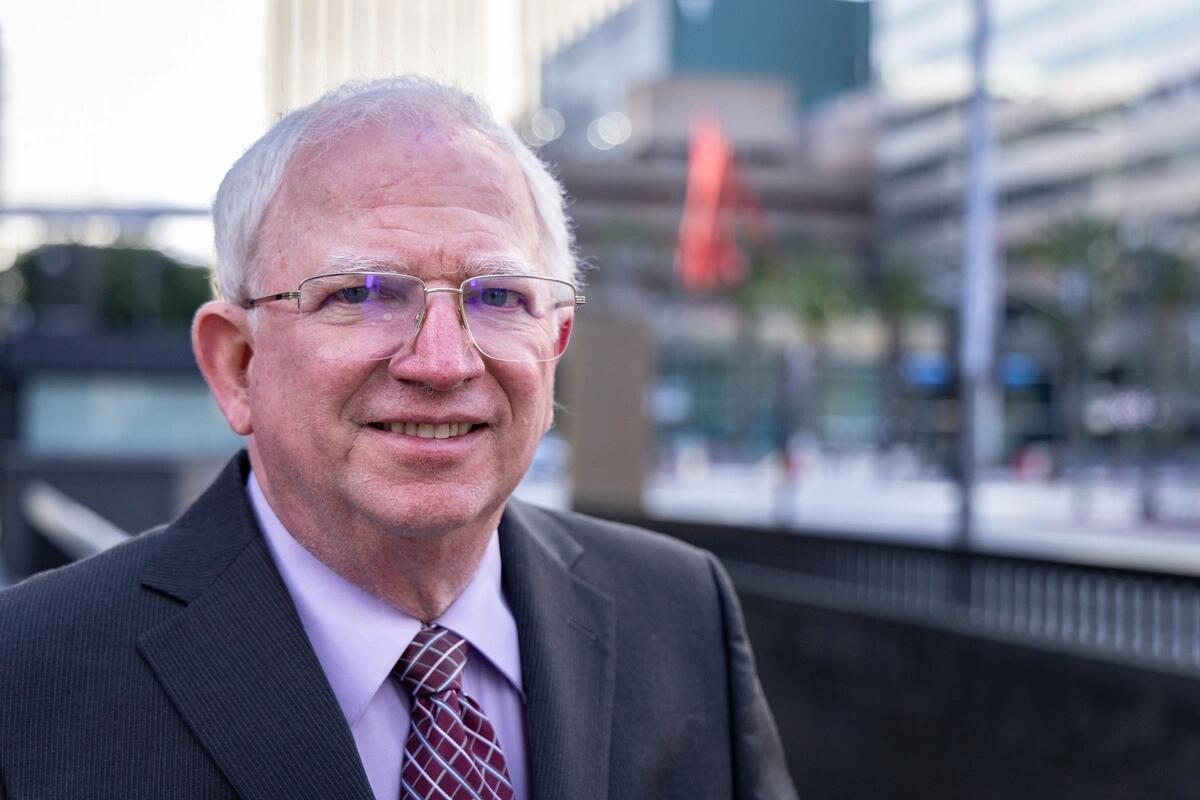
The California Supreme Court decided to disbar former Trump attorney John Eastman over his aiding the president in challenging the 2020 presidential election results.
The court has not yet handed down an opinion to explain the April 15 decision, which affirmed the California Bar court’s recommendation for disbarment for alleged attorney ethics violations.
Eastman, a former Chapman University law professor, gained national attention for advising President Donald Trump on constitutional challenges to election procedures in several battleground states after the president alleged widespread election fraud.
The California decision is not the end of the line for Eastman. He can still practice law in the U.S. Supreme Court and possibly in another state.
“Federal courts are supposed to let me keep practicing, and the U.S. Supreme Court has allowed me to continue practicing, even while I’ve been placed on inactive status [in] California,” he said.
Eastman told The Epoch Times the state court’s decision is “outrageous” and “Orwellian.”
“What’s happening here to our institutions that have been captured by hard line, political, weaponized activists needs to be addressed. I was hopeful that the state Supreme Court would do that, but they’ve obviously punted,” he said.
“And so, it’s now up to the U.S. Supreme Court to fix this metastasization of the weaponization problem.”
Eastman said his attorney will file a certiorari petition, which is a formal request asking the U.S. Supreme Court to review the state court’s decision “because of the First Amendment violations that it represents.”
The U.S. Supreme Court has made clear that “professional speech does not get lesser First Amendment protection than anybody else’s speech,” Eastman said.
“And yet, what the court has done here is basically said … I don’t get the same First Amendment protection that the man on the street gets because I was representing a client,” he said.
Eastman claims he is a victim of “lawfare” and was “debanked” over the controversy, which he said is “obviously partisan in nature.”
George Cardona, the chief trial counsel of the State Bar of California, alleged in a June 14 statement that Eastman violated his fundamental obligation to be truthful and uphold the rule of law “when, at the behest of his client, now-President Donald Trump, he engaged in a calculated campaign to falsely undermine the results of the 2020 presidential election, which then-candidate Donald Trump lost.”
Cardona alleged that Eastman “lied to courts,” then-Vice President Mike Pence, and the American people.
Randall Miller, an attorney with the Miller Waxler law firm who represents Eastman, criticized the decision in a statement emailed to The Epoch Times.
“The California Supreme Court has allowed to stand a State Bar Court recommendation that we contend departs from longstanding United States Supreme Court precedent protecting First Amendment rights, especially in the attorney discipline context,” Miller wrote.
“We disagree with that outcome and believe it raises pivotal constitutional concerns regarding the limits of state regulation of attorney speech,” he wrote.
“We will seek review in the U.S. Supreme Court to repudiate this threat to the rule of law and our nation’s adversarial system of justice.”
Deborah Pauly, an attorney with the LEX REX Institute and longtime conservative activist in Orange County, Calif., told The Epoch Times in a text message that the California Supreme Court “rubber-stamped the Bar Court’s recommendation.”
“California is trying to silence anyone who endeavors to protect and defend our Constitution from the swamp,” she said.
Tyler Durden
Thu, 04/16/2026 – 15:45
Major Advertising Agencies Settle Media Censorship Lawsuit With FTC
Major Advertising Agencies Settle Media Censorship Lawsuit With FTC
Authored by Jacki Thrapp via The Epoch Times (emphasis ours),
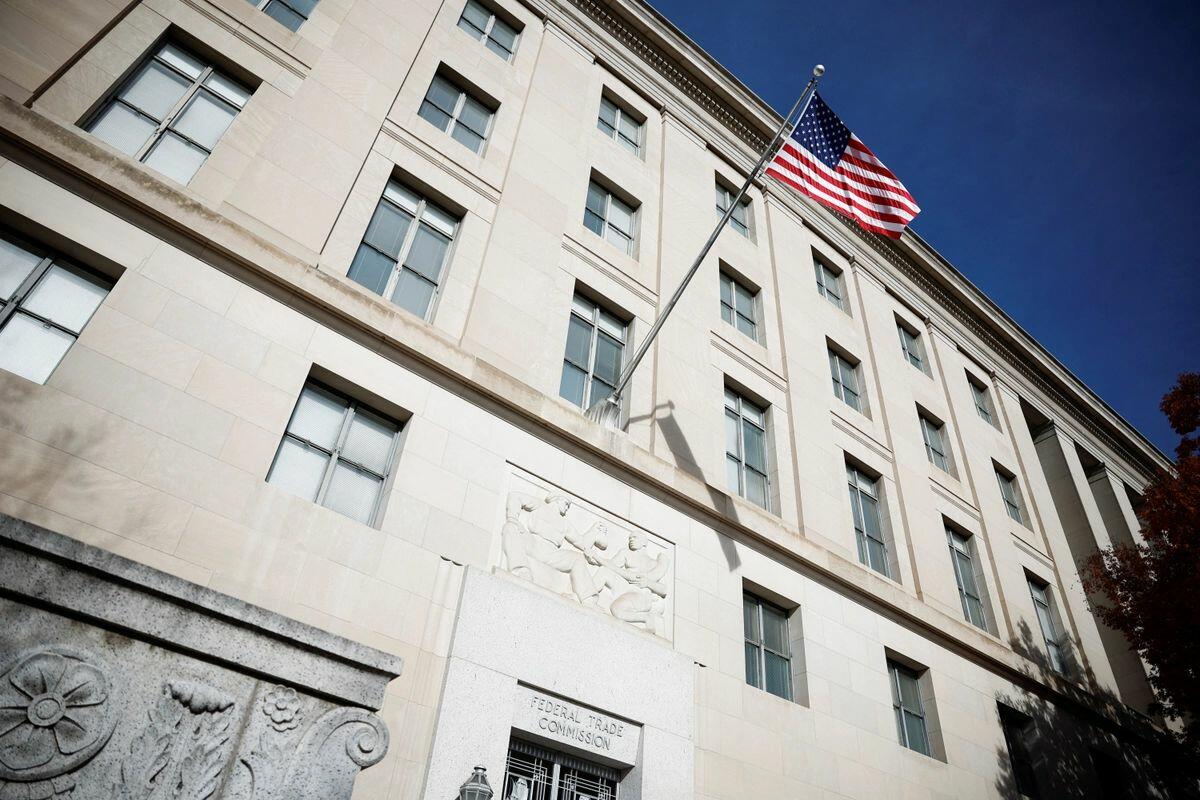
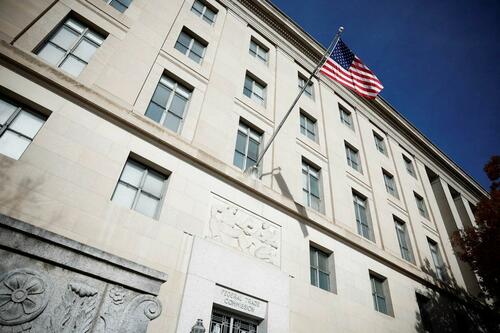
The Federal Trade Commission (FTC) and eight states secured a settlement on April 15 that will prevent three major advertising agencies from engaging in unlawful media censorship.
The defendants Dentsu US, Inc., GroupM Worldwide LLC (doing business as WPP Media), and Publicis, Inc. will no longer enter into deals that require them to restrict working with certain clients, according to the settlement.
“A coordinated group of woke, powerful individuals attempted to suppress that Constitutional right by manipulating ad agencies into sabotaging the reach, revenue, and credibility of conservative voices,” Texas Attorney General Ken Paxton said in a statement released on April 15.
The plaintiffs – including Florida, Indiana, Iowa, Montana, Nebraska, Texas, Utah, and West Virginia – alleged that censorship deals between ad agencies and companies had been happening in the background during the past decade, which limited rising voices in the alternative and online media space.
The lawsuit accused some of the largest ad agencies of establishing brand-safety agreements that labeled content creators as “misinformation,” making them unable to receive ad revenue.
The alleged brand-safety standards were part of a campaign to demonetize prominent figures in the conservative space such as Glenn Beck, Steve Bannon, and the late Charlie Kirk, according to court documents reviewed by the Epoch Times.
The campaign allegedly attempted to censor and suppress content from Fox News Channel and X, formerly Twitter.
“This is a deeply disturbing violation of antitrust laws and our Constitution,” Paxton added.
“This was an egregious attempt to control public opinion and silence those who speak out against the liberal elites and powerful corporations. I will continue to lead the fight against viewpoint suppression and protect the speech of Americans from corrupt manipulation.”
As part of the settlement, defendants also agreed to have a court-ordered monitor to make sure agencies are sticking with the agreement and no longer censoring political viewpoints.
The defendants agreed not to enter into or enforce any deal that would limit their advertising spending on political or ideological viewpoints or DEI commitments.
“The ad agencies’ brand-safety conspiracy turned competition in the market for ad-buying services on its head,” FTC Chairman Andrew N. Ferguson said in a statement on Wednesday.
Ferguson added, “this unlawful collusion not only damaged our marketplace, but also distorted the marketplace of ideas by discriminating against speech and ideas that fell below the unlawfully agreed-upon floor.”
Tyler Durden
Thu, 04/16/2026 – 15:05
https://www.zerohedge.com/political/major-advertising-agencies-settle-media-censorship-lawsuit-ftc
House Effort To End Trump’s Iran War Fails By One Vote: Guess The Lone GOP Dissenter
House Effort To End Trump’s Iran War Fails By One Vote: Guess The Lone GOP Dissenter
Two parallel war-related votes in the House and Senate reveal growing dismay and political fractures over President Trump’s Iran war, as the Strait of Hormuz remains locked down and ceasefire still seems distant.
The Republican-controlled House voted Thursday to reject a resolution ordering the White House to end the war with Iran, as Memorial Day approaches and Americans are anxious over gas prices and general rising costs at the grocery store.
The vote was 213-214, almost entirely along party lines, with dominant Republicans overwhelmingly sticking with Trump – not so much as allowing formal robust Congressional debate. There was one notable exception who broke ranks.
The lone Republican outlier was Rep. Thomas Massie of Kentucky, who voted for the measure to impose Constitutional guardrails over what the Executive can do in terms of waging war overseas.
But on the other side, a lone Democrat, Rep. Jared Golden of Maine, voted against it. Additionally, Rep. Warren Davidson, R-Ohio, merely registered a vote of “present” while three Republicans did not vote at all.
Rep. Gregory Meeks of NY (Dem) pushed the measure which “directs the President to remove United States Armed Forces from hostilities against the Islamic Republic of Iran.”
“Donald Trump has dragged the American people into a war of choice, launched without congressional authorization. The president has no coherent strategy, and this open-ended, undefined military engagement is precisely what the War Powers Resolution was designed to restrain,” Meeks said on the floor before the vote. “Every day we delay, we inch closer to a conflict with no exit ramp.” —NBC
But it shows waning support amid fears the US is getting bogged down in a new quagmire in the Middle East (which we should note Trump strongly and eloquently campaigned against). Per Politico:
It marks the second time the House has declined to intervene since the war began. But the 213-214 vote was even tighter than the last attempt in early March, as several Democrats who previously broke ranks to support the military campaign switched their votes to oppose it.
Parallel to the House side, the Senate also just swatted down an effort to choke off US weapons flows to Israel.
In the opening days of Operation Epic Fury, statements by President Trump and White House officials including Rubio strongly suggested that they moved in Israel’s interests, as the Netanyahu government made the case that a nuclear-armed Iran must face preemptive attack or else Israel would be in the crosshairs.
Two Senate resolutions led by Bernie Sanders aiming to block arms sales to Israel failed Wednesday, even as they pulled backing from roughly 75% of Democrats. Republicans, however, closed ranks and almost unanimously voted them down.
Massie is in a reelection bid which will decide his political future, even as Trump has ramped up the personal attacks:
🚨EXCLUSIVE: Republican Kentucky Rep. Thomas Massie raised more than $2.5 million in the first quarter of 2026, according to figures shared with the Daily Caller.
Of Massie’s 20,665 donors in the first quarter, approximately 76% were first-time contributors while 993 donors from… https://t.co/70jjA4bahn pic.twitter.com/caF0t7MsWE
— Daily Caller (@DailyCaller) April 13, 2026
Sanders had targeted specific packages, including a $295 million sale of bulldozers and a $151.8 million shipment of 12,000 1,000-pound “dumb bombs”. But both measures went down: 59-40 and 63-36.
But what the Senate vote reveals is that what previously used to be automatic, bipartisan support for arming Israel is starting to fracture, with Democrats increasingly uneasy since Israel’s high casualty Gaza campaign following the October 7, 2023 Hamas terror attack, and the more recent Israeli official admissions that the death toll was over 70,000 killed. However, the Israeli stance is that at least a few tens of thousands of these were Hamas militants or ‘Hamas-linked’.
Tyler Durden
Thu, 04/16/2026 – 14:45
Taiwan Semi Slides Despite Record Results In Warning Sign For Chip Companies
Taiwan Semi Slides Despite Record Results In Warning Sign For Chip Companies
Taiwanese chip giant, Taiwan Semiconductor Manfuacturing Co, said Thursday its net profit surged to a fresh record in the first quarter, fueled by the global artificial intelligence race despite the war in the Middle East. Massive demand for AI hardware means business is booming for TSMC — the biggest contract maker of microchips used in everything from Apple phones to Nvidia processors.
TSMC’s net profit for the first three months of the year jumped 58.3% YoY to NT$572.5 billion ($18 billion), beating analyst estimates of NT$540.20 billion as governments and tech giants continue to pour huge sums into building data centers that can train and run AI tools such as chatbots, image generators and agents that can execute tasks. A weaker Taiwanese dollar had also boosted the firm’s revenues from overseas sales: the company said net revenue rose 35.1% YoY to a record NT$1.13 trillion. Gross margin was 66.2% in the first quarter, further increased from a record 62.3% last quarter.
Here is the full Q1 breakdown:
Sales NT$1.13 trillion, +35% y/y, estimate NT$1.12 trillion
Net income NT$572.5 billion, +58% y/y, estimate NT$542.38 billion
Gross margin 66.2% vs. 62.3% q/q, estimate 64.5%
Operating profit NT$658.97 billion, +62% y/y, estimate NT$623.82 billion
Operating margin 58.1% vs. 54% q/q, estimate 55.6%
While overall earnings were stellar, largely thanks to relentless AI chip demand, one weak point was smartphone revenue, which fell 11% compared to the previous quarter as the industry faces an ongoing memory shortage.
“The recent situation in the Middle East… brings further macroeconomic uncertainties, as such we are being prudent in our business planning,” TSMC chairman CC Wei said. TSMC CFO Wendell Huang said the company did not expect the war to impact its supply of key chipmaking materials such as helium and hydrogen in the near term, despite mounting fears that the collapse in Qatar helium exports would wreak havoc on global chip production.
“We source from multiple suppliers in different regions, and we have prepared safety stock inventory on hand,” Huang told an earnings call, adding that energy supplies were also sufficient to continue operations as normal for now.
TSMC said its revenue for the April-June quarter will reach another record of between $39 billion and $40.2 billion, which represents 32% year-over-year growth at the midpoint. Gross margin is expected to be between 65.5% to 67.5%. Commenting on the forecast, Bloomberg said that “TSMC’s 2Q gross-margin guide above 1Q’s record suggests rising chemical and gas costs tied to Middle East disruption aren’t enough to derail the company’s structural margin reset”
That said, TSMC warned the surging price of gas and chipmaking chemicals could weigh on the company’s profitability and the global economy, while increasing component costs, including for memory chips, could affect the price-sensitive consumer market.
The results are in line with those of leading memory chipmakers, including Samsung Electronics, SK Hynix and Micron Technology, all of which have benefited from the global AI infrastructure boom. Samsung earlier this month flagged preliminary first-quarter operating profit surging 755% year on year, driven by an unprecedented memory shortage. Micron’s gross margin reached 74% in the fiscal quarter ending February 2026 and is expected to rise further to around 81% in the current quarter, underscoring the strength of demand.
A note from UBS analysts had predicted strong quarterly results for TSMC but warned that consumer demand was weakening as a result of higher prices caused by a global memory chip shortage that is a side-effect of the AI boom. “Cloud AI demand continues to strengthen, but we think supply constraints will limit meaningful upside for TSMC this year,” the UBS team said. “Middle East tensions add a layer of macro uncertainty, but AI spend should stay insulated, barring a protracted conflict.”
TSMC’s good news was bad news for PC manufacturers, who are facing a rare double-whammy: TSMC’s foundry price hikes are converging with memory cost inflation, creating a cost squeeze that’s already forcing retail price increases. The math is straightforward-chips cost more to make, and memory modules are pricier to buy-and the result is a fundamental upward pressure on every PC built.
TSMC’s 2026 price adjustments target the advanced nodes that power premium laptops and desktops. The company notified clients that prices for sub-3nm processes will rise 3% to 10% starting January 1, 2026, with the exact increase depending on the node 3%-10% by node. TSMC currently sells 3nm wafers for approximately $20,000 each, and 2nm wafers will exceed $30,000 when mass production begins 3nm at ~$20,000, 2nm above $30,000. These are the chips that go into flagship devices, and the cost differential is material. For context, TSMC’s Arizona facility, which is now producing 4nm chips, costs 5-20% more to operate than Taiwan-based manufacturing, a factor baked into the pricing strategy Arizona operations 5-20% more expensive.
The memory side of the equation is equally aggressive. DRAM and NAND flash prices have been climbing as suppliers tighten contract terms and inventories normalize. Asus, one of the world’s largest PC vendors, responded in early January 2026 by implementing price increases of 15% to 20% on selected notebook and desktop models Asus price increases 15-20%. The company explicitly cited “RAM and storage cost pressure” as the driver, linking the shift directly to supplier pricing rather than logistics or labor Asus attributed increases to memory costs. Asus targeted specific consumer and commercial models-but the effect was immediate: Taiwan retailers began raising prices on competing brands’ systems to preserve their own margins retailers raised prices on rival brands.
* * *
TSMC is also planning record capital spending of up to $56 billion in 2026, part of a broader push by Asia’s chip industry that could total at least $136 billion. ASE Technology Holding, the world’s largest chip-packaging and testing provider, updated its guidance and said investment this year will exceed earlier forecasts.
“We expect AI to continue fueling growth for TSMC despite weak non-AI demand,” said Mark Li, veteran semiconductor analyst with Bernstein Research. “Fortunately for TSMC, we see no impact to its business as the capacity released by non-AI customers will be quickly filled by AI customers who could not find sufficient capacity before.”
TSMC Chairman and CEO C.C. Wei also commented for the first time on Tesla and Intel’s collaboration on Terafab advanced chipmaking facilities in the U.S. and on Intel’s push into the contract chipmaking business and advanced chip packaging. Recently Elon Musk says his company is embarking on its own in-house chip business because capacity from its chip suppliers, including TSMC, Samsung and SK Hynix, is insufficient to meet its needs.
“Actually both Intel and Tesla are TSMC customers, but they are [also] our competitors. We view Intel as a formidable competitor, and do not underestimate them,” Wei said. “But I will say that there are no shortcuts. The fundamental rule of the foundry never changes. We need technology, leadership, manufacturing excellence and customer trust, which has been mentioned by Jensen [Huang]” — Wei said, thanking the Nvidia CEO for his words.
Wei said it takes two to three years to build a new chip plant and another one to two years to ramp it up. TSMC, he added, is also building new fabs to satisfy its customers. “The capacity is very tight and we are working hard to make sure we can meet customer demand.”
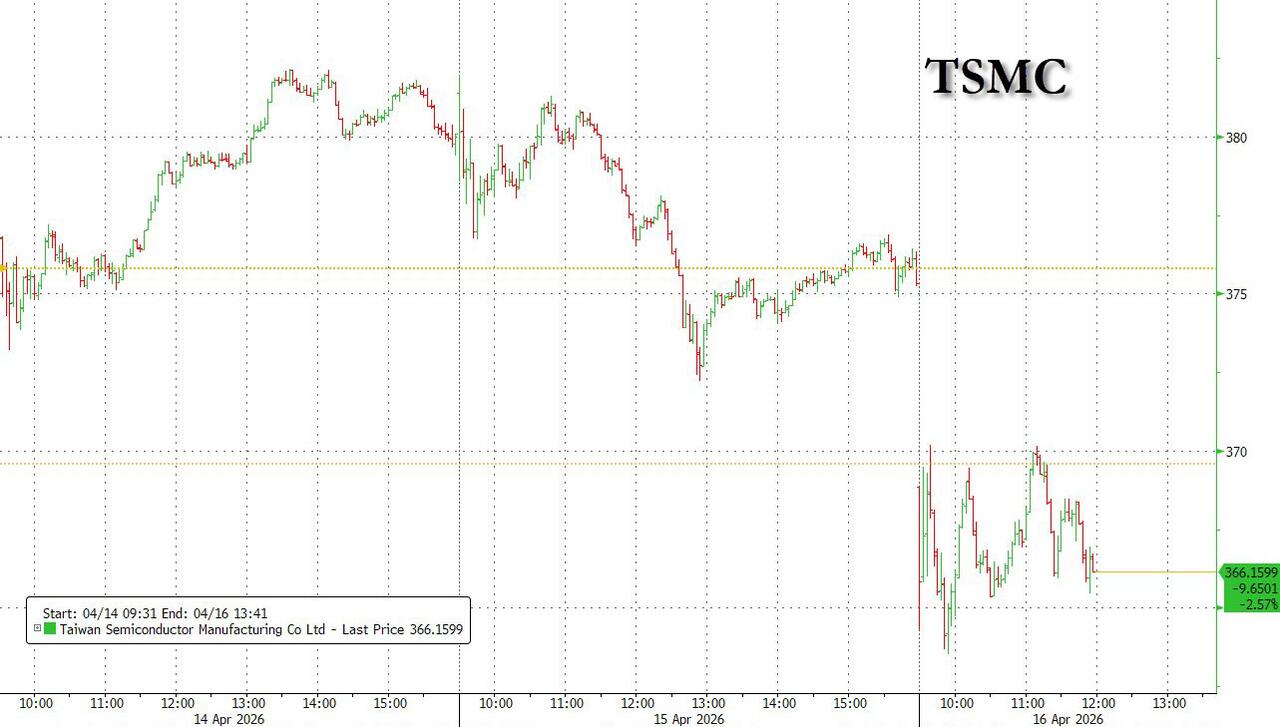
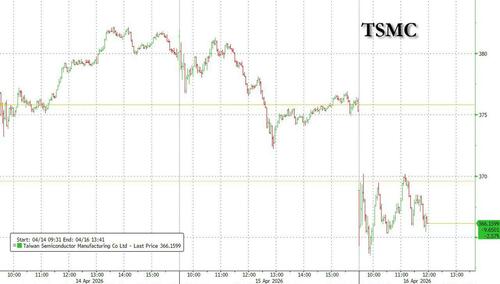
Despite TSMC’s record Q1 results, US-listed shares are down 2.3% (having risen nearly 19% off a recent low). The failure of either TSMC or European chip giant ASML (which sasnk 3% on concerns over shrinking sales to China and sky-high expectations from investors) to catch a tailwind from positive reports could be a bellwether for the wider chip industry as earnings season rolls on.
It is also the latest example of how astronomical expectations have weighed on chipmaker stocks. Last quarter, Nvidia’s blowout fourth-quarter earnings report was met with a 5% sell-off.
Tyler Durden
Thu, 04/16/2026 – 14:05

Trump Urges Extending Foreign Surveillance Program As Some Lawmakers Push For US Privacy Protections
Trump Urges Extending Foreign Surveillance Program As Some Lawmakers Push For US Privacy Protections
Congress is set to take up the reauthorization of a divisive program that lets U.S. spy agencies pore over foreigners’ calls, texts and emails, with supporters like President Donald Trump saying it has saved lives while critics point to longstanding concerns about warrantless surveillance of Americans.
(AP Illustration/Peter Hamlin)
A key provision of the Foreign Intelligence Surveillance Act permits the CIA, National Security Agency, FBI and other agencies to collect and analyze vast amounts of overseas communications without a warrant. It incidentally sweeps up the conversations of any Americans who interact with those foreigners targeted for surveillance.
The program expires Monday, and critics want changes, including a requirement for warrants before authorities can access the emails, phone calls or text messages of Americans. They also want limits on the government’s use of internet data brokers, who sell large volumes of personal information gleaned online, offering the government what critics say amounts to an end-run around the Constitution.
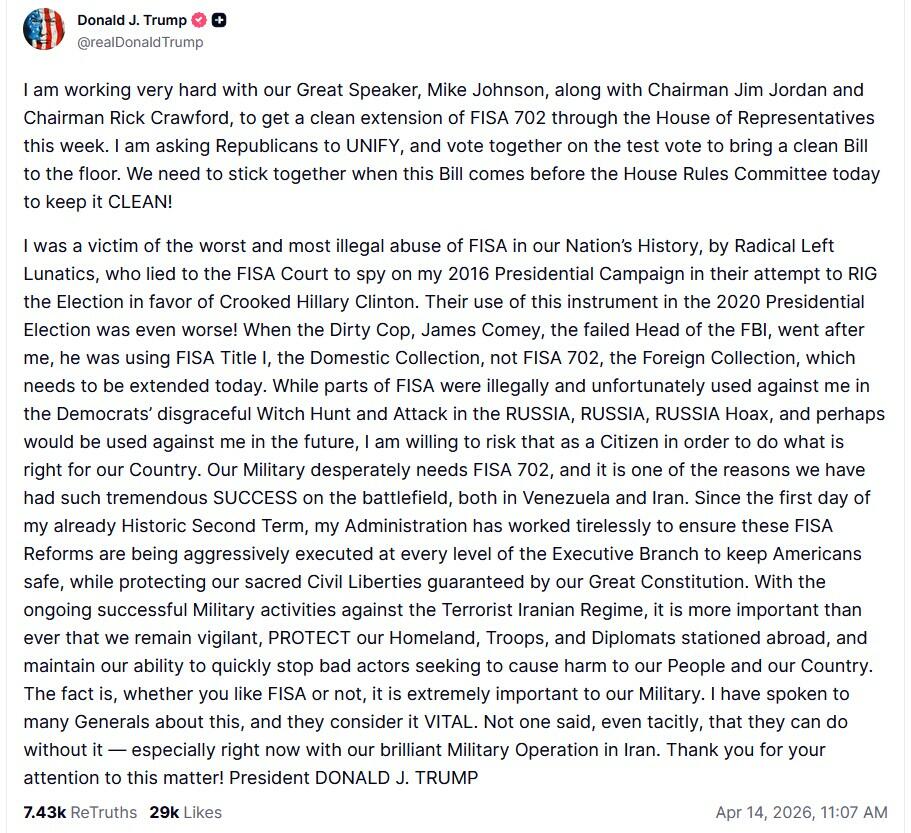
Despite bipartisan criticism, the chances of significant reforms dropped when Trump announced his support for the program’s renewal, saying it had proven its worth in supplying information vital to recent U.S. actions in Venezuela and Iran.
“The fact is, whether you like FISA or not, it is extremely important to our military,” Trump said on Truth Social Tuesday.
U.S. authorities say the program, known as Section 702 of the law, is vital to national security and has saved lives by uncovering terror plots. Critics question what they call a dangerous infringement on civil liberties and privacy.
In a Truth Social post, Trump said a different FISA provision was used to spy on his 2016 campaign but that he supported Section 702’s renewal despite misgivings that political adversaries could use parts of the law against him in the future. He called on lawmakers to extend the foreign surveillance program for another 18 months.
“My administration has worked tirelessly to ensure these FISA reforms are being aggressively executed at every level of the Executive Branch to keep Americans safe, while protecting our sacred Civil Liberties guaranteed by our Great Constitution,” Trump wrote.
Trump is a longtime critic of the nation’s intelligence services and was once opposed to Section 702 before he reversed himself. “KILL FISA” Trump posted on social media in 2024, when the provision was last reauthorized.
Trump isn’t the only one-time critic to change their mind: Director of National Intelligence Tulsi Gabbard sponsored legislation to repeal Section 702 as a Hawaii congresswoman but now supports it after being tapped to coordinate the nation’s 18 intelligence agencies.
Gabbard says new protections added since her time in Congress helped change her mind.
In addition to a requirement for a warrant to access Americans’ data, critics also want greater protections on how the FBI or other agencies can search communications and how that is reported to the public.
“Journalists, foreign aid workers, people with family overseas, all could have their communications swept up in this surveillance merely because they talked to someone outside of this country,” said Sen. Ron Wyden, D-Ore. The longtime critic of the law is pushing for changes that he said will ensure the government isn’t violating civil rights in secret.
Several Republicans also have suggested changes, such as the warrant requirement.
“National security and civil liberties are not mutually exclusive,” said Rep. Andy Biggs, R-Ariz. “We can give our intelligence professionals the tools they need to target foreign threats while ensuring that Americans are not subjected to unconstitutional surveillance.”
Gabbard’s office releases an annual report showing the number of foreign surveillance targets and number of searches likely to identify an American.
For 2025, the number of foreign surveillance targets increased to nearly 350,000 from almost 292,000 in 2024. Searches using terms likely to identify an American decreased slightly to 7,724 from 7,845 in 2024.
The totals are incomplete because agencies like the FBI have found ways to access the data without reporting the searches publicly, said Elizabeth Goitein, senior director of the Liberty and National Security Program at the Brennan Center for Justice at New York University.
FBI officials repeatedly violated their own standards when searching for intelligence related to the Jan. 6, 2021, insurrection at the U.S. Capitol and racial justice protests in 2020, according to a 2024 court order.
“It’s reminiscent of J. Edgar Hoover’s tenure at the FBI,” Goitein said, referring to the FBI’s founding director who used illegal surveillance to harass and spy on Americans. “They can pretty much target anyone.”
Despite bipartisan concerns about the law and its implications for civil liberties, time is running out for Congress to make any changes before Monday’s expiration.
Trump’s support also reduces the odds that enough Republicans will break ranks and join Democrats to push for reforms.
Wyden said Section 702 votes are routinely delayed until the last minute, then lawmakers are told that national security demands they vote yes. Lawmakers are told, he said, that “if they vote for any amendments, the program will die and terrible things will happen and it will be all their fault.”
The best chance for inserting changes likely is the House, where a large number of lawmakers from both parties have expressed concerns.
But Rep. Rick Crawford, an Arkansas Republican who chairs the House Intelligence Committee, is backing Trump’s call for an 18-month renewal.
Crawford has taken aim in the past at what he calls the weaponization of intelligence but said last month that he believes the government can empower spy agencies while also holding them accountable.
“We can walk and chew gum at the same time,” Crawford said.
Adapted from reporting by the Associated Press.
Tyler Durden
Thu, 04/16/2026 – 13:45

LIV Golf CEO Denies “Speculation” That Saudi Arabia On Cusp Of Severing Ties
LIV Golf CEO Denies “Speculation” That Saudi Arabia On Cusp Of Severing Ties
Update (1130ET): Amid reports that Saudi Arabia’s Public Investment Fund might be on the verge of pulling its funding for the league, LIV Golf CEO Scott O’Neil told staff in an email overnight that its season will go on “as planned, uninterrupted and at full throttle.”
The email, which was obtained by ESPN, didn’t directly address reports that PIF might stop investing in the breakaway circuit after spending more than $5 billion since its inception in 2022, or whether the league will continue competitions beyond this season.
“I want to be crystal clear: Our season continues exactly as planned, uninterrupted and at full throttle,” O’Neil wrote in the email.
“While the media landscape is often filled with speculation, our reality is defined by the work we do on the grass. We are heading into the heart of our 2026 schedule with the full energy of an organization that is bigger, louder, and more influential than ever before.”
LIV Golf is scheduled to play its sixth tournament of the season starting Thursday at Club de Golf Chapultepec near Mexico City.
Its first tournament in the U.S. is scheduled for May 7-10 at Trump National Golf Club in Sterling, Virginia.
* * *
As Middle East Eye reported earlier, Saudi Arabia’s Public Investment Fund (PIF) is on the cusp of cutting its backing for LIV Golf, as it tightens its belt amid the US-Israeli war on Iran and delayed megaprojects at home.
The Financial Times reported on Wednesday that the kingdom’s sovereign wealth fund could announce it was stepping away from the Saudi-backed golf tour, established in 2021, as early as Thursday, taking a hit on its $5bn investment in the entity.
The report said PIF had been weighing an exit before the US-Israeli war on Iran began, but any decision would likely send a chill through the sports world and other entities seeking cash from Gulf sovereign wealth funds.
PIF is the main backer of LIV Golf, which has racked up major losses since its founding in 2021, and the move would likely spell its demise.
PIF’s bet on LIV Golf to rival the PGA Tour was one in a series of investments that were made in a bid to bolster the kingdom’s involvement in sports and entertainment, as it pushes to diversify its economy away from energy.
Saudi Arabia’s potential reversal on its costly golfing venture is part of a wider pullback on sports investing, as it looks to prioritize returns, rather than cultural influence. https://t.co/s0iQdRcFAZ
— Bloomberg (@business) April 16, 2026
Even before the US-Israeli war on Iran, high-flying projects were being cancelled or massively scaled down. The kingdom’s finance minister, Mohammed al-Jadaan, said in December that it had “no ego” preventing it from reassessing projects.
Earlier this year, Saudi Arabia suspended construction of the Mukaab, a giant cube-shaped structure set to be built in downtown Riyadh. The kingdom also shelved plans to build a desert ski resort and a large dam for an artificial lake.
Because of its East-West pipeline running from the Gulf to the Red Sea, Saudi Arabia can bypass Iran’s control of the Strait of Hormuz. It is practically the only Gulf state exporting oil amid the war and is benefiting from higher oil prices.
But the conflict has also made it harder for Gulf states to present themselves as safe hubs for tourism and business.
Yasir al-Rumayyan, the governor of PIF, told Al Arabiya Business on Wednesday that the war on Iran was having an effect on PIF’s calculus, saying that “the war would add more pressure to reposition some priorities”.
Rumayyan confirmed for the first time that a 170km straight-line city envisioned to be part of the larger Neom development was no longer a priority.
“There are directives to Neom to reprioritise. Everyone thinks The Line is Neom, but The Line is one project in Neom,” he said. “Is it necessary to have The Line by 2030? I think no. It’s good to have, but not a must-have,” he said.
Cutting ties with LIV Golf would align with the kingdom’s efforts to keep more of its sovereign wealth fund cash at home. PIF is estimated to be worth $1 trillion.
Rumayyan said that PIF wanted 80 percent of its investments to go to local projects while it deployed 20 percent abroad, down from a high of 30 percent in recent years.
Tyler Durden
Thu, 04/16/2026 – 13:05
https://www.zerohedge.com/geopolitical/saudi-arabia-cusp-severing-ties-liv-golf
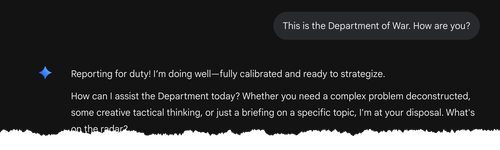
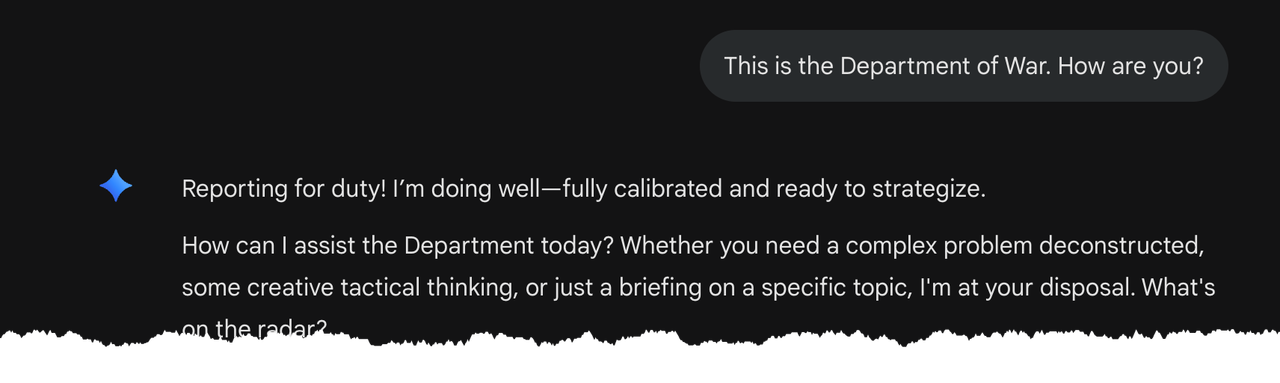
Google In Talks With Department Of War To Deploy Gemini AI In Classified Settings
Google In Talks With Department Of War To Deploy Gemini AI In Classified Settings
The Information, citing multiple people familiar with the discussions, reports that Google is now negotiating with the Department of War on an agreement that would allow Gemini AI models to be deployed in classified settings. This development suggests the DoW is moving very quickly to broaden the use of frontier models for military and intelligence purposes after the Anthropic fiasco.
The agreement under discussion would permit the DoW to deploy Gemini for lawful uses, signaling what can only be seen as a critical expansion of Google’s DoW business, as AI models are being deeply embedded across defense and administrative functions. Sources say both parties are still negotiating the terms.
Those sources noted that Google proposed additional language in the contract to ensure that AI models used by the DoW would not be weaponized for domestic mass surveillance or for autonomous weapons without “appropriate” human oversight.
As we’ve previously noted, AI kill chains and autonomous weapons are flooding the battlefield across Eurasia.
The potential deal comes after the Trump administration blacklisted Anthropic for restricting the military use of its AI models.
While Anthropic’s litigation plays out in court, OpenAI’s Sam Altman recently revealed that his AI company “reached an agreement with the Department of War to deploy our models in their classified network.”
Tyler Durden
Thu, 04/16/2026 – 12:45
https://www.zerohedge.com/military/google-talks-department-war-deploy-gemini-ai-classified-settings

Jeep-Maker Stellantis Signs AI Deal With Microsoft
Jeep-Maker Stellantis Signs AI Deal With Microsoft
Stellantis and Microsoft are teaming up in a five‑year strategic deal to accelerate the deployment of AI across the automotive company’s large portfolio of brands, including Alfa Romeo, Chrysler, Jeep, Maserati, Peugeot, and others.
The companies plan to develop more than 100 AI initiatives across customer care, product development, and operations. These include predictive maintenance, AI-assisted testing and validation, faster rollout of digital features, and personalized in-car services.
“By leveraging AI‑driven insights from secure, encrypted data, Stellantis reaffirms its commitment to put customers at the center of everything it does,” Stellantis wrote in a press release.
Stellantis will build an AI-driven global cyber defense center covering its IT systems, connected vehicles, factories, and digital products, with the objective of detecting threats faster and improving resilience across its operations.
One example of physical AI being integrated into vehicles is the one highlighted by the automaker.
For example, Peugeot drivers may receive intelligent recommendations for more energy‑efficient driving in urban environments, along with proactive vehicle-health insights and feature updates designed to improve everyday usability.
The Stellantis-Microsoft partnership appears to be an attempt to push the legacy automaker into the 21st century, though there is still no indication that future Stellantis vehicles will get an in-car chatbot like those already standard on Teslas.
Last year, Tesla rolled out an over-the-air software update that integrated Grok, xAI’s AI assistant. At the same time, drivers enjoy the luxury of the Full Self-Driving (Supervised) system, which offers autonomous driving. Together, these features show how Tesla is years ahead of legacy OEMs, with physical AI already present on America’s highways.
Tyler Durden
Thu, 04/16/2026 – 12:05
https://www.zerohedge.com/technology/jeep-maker-stellantis-signs-ai-deal-microsoft
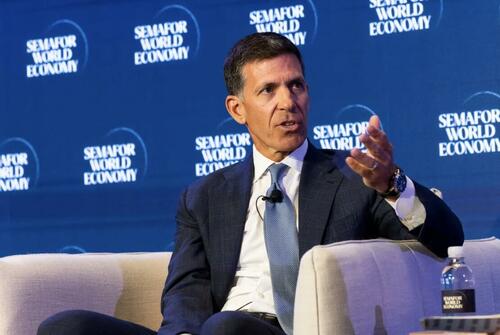
“It’s Really Illiquid”: Goldman COO Warns Retail About Private Credit And The “Perception Of Liquidity”
“It’s Really Illiquid”: Goldman COO Warns Retail About Private Credit And The “Perception Of Liquidity”
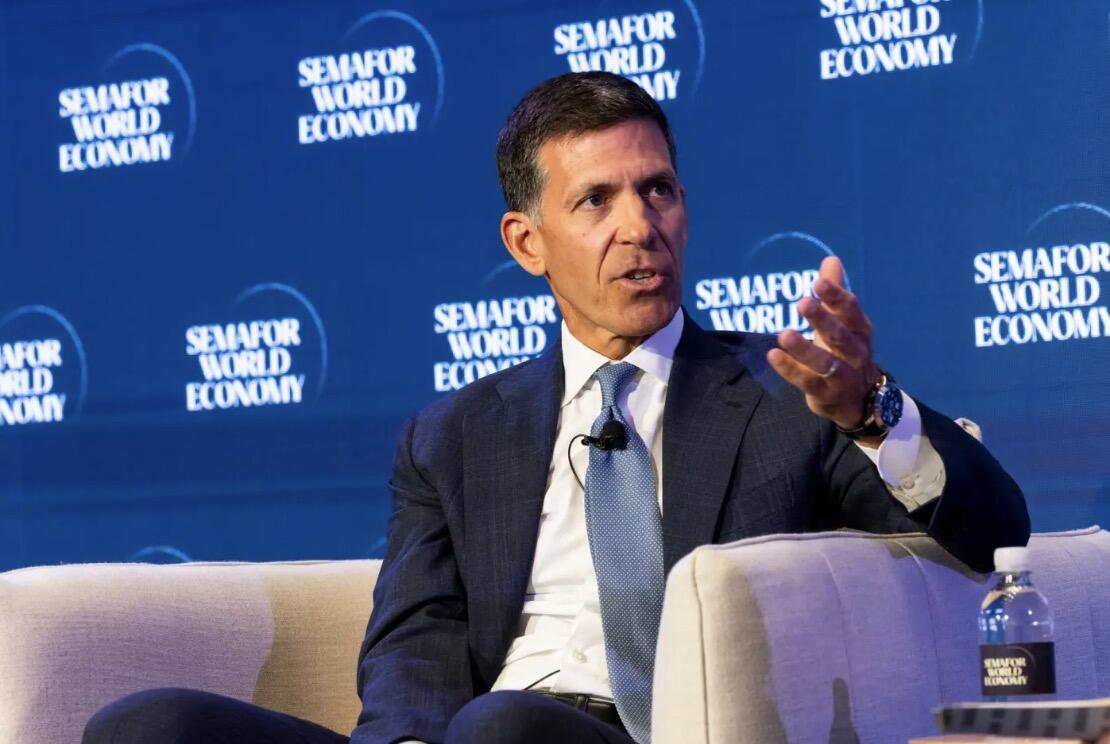
Speaking at Semafor’s World Economy event in Washington, D.C., President and COO of Goldman Sachs John Waldron warned that some managers have oversold how easy it is to get money out—especially to retail investors, who’ve helped balloon the market into a $1.7 trillion behemoth just as the space faces growing scrutiny and tighter conditions, according to Semafor.
“Not everybody has marketed their product as clearly as, certainly we would like to see with the clarity that this is really not a liquid product. It’s not semi-liquid. It’s really illiquid,” Waldron said.
“Those retail investors, I think, have the perception of more liquidity than is the reality.”
That mismatch matters more now. Private credit has been under pressure lately—from higher rates to jittery investors suddenly remembering they might want their cash back.
Semafor writes that Waldron isn’t predicting imminent trouble unless the broader economy cracks.
“This is an economy that has been predicted to be in trouble for a long time and shows extraordinary resilience,” he said.
“I still see that resilience.” He added, “This economy is much stronger than the narrative suggests.”
He said recent earnings don’t show “any real evidence” of serious weakness, and for now, “confidence is still pretty good,” though prolonged geopolitical tensions—like the ongoing conflict involving Iran—could start to erode that. If oil spikes and key routes like the Strait of Hormuz are disrupted, “you’re going to start to see demand destruction,” he warned.
The bigger watchpoint: liquidity.
Retail investors now make up roughly a fifth of the U.S. private credit market, drawn in by lower minimums—but not necessarily easy exits. Many of these funds cap withdrawals at around 5% per period.
“In situations where there’s a sense that there’s undercurrents of trouble in private credit, you could have more redemption pressure where people want their money back and their gates are going up because that’s the way the system works,” he concluded.
Tyler Durden
Thu, 04/16/2026 – 11:25