Category: News
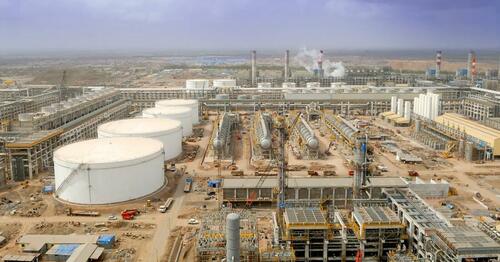
India’s Central Bank Tells Oil Refiners To Stop Buying Dollars On Spot Market
India’s Central Bank Tells Oil Refiners To Stop Buying Dollars On Spot Market
By Julianne Geiger of OilPrice.com
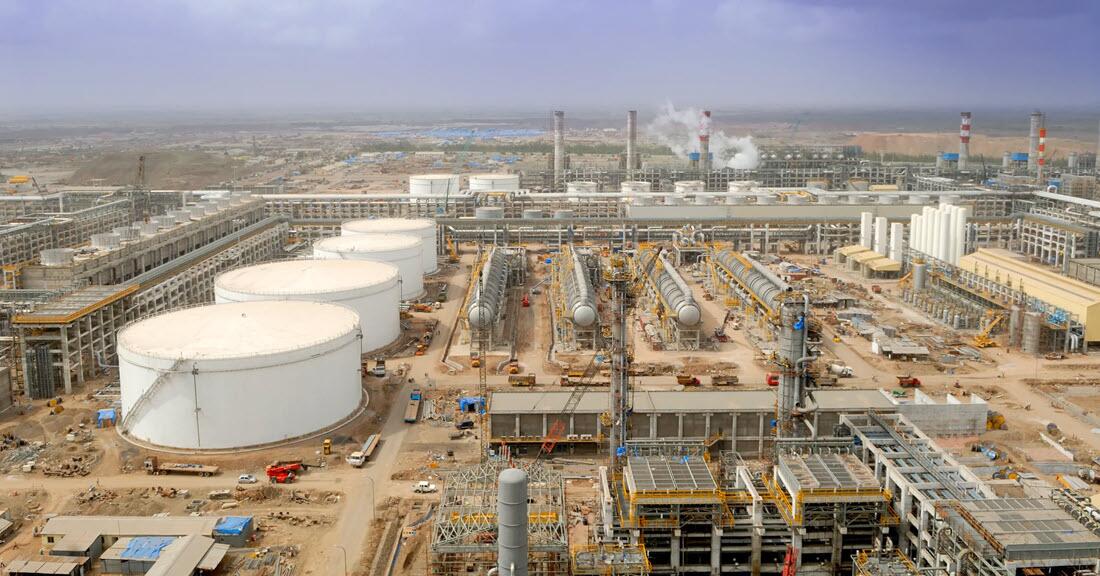
India’s central bank has told state-run oil refiners to stop buying dollars in the spot market and instead use a government-backed credit line.
That matters because oil is priced in dollars, and refiners are some of the biggest buyers of dollars in the country. When they all go into the market at once to pay for crude, it puts direct pressure on the rupee. That pressure has been building for weeks.
The Reserve Bank of India is now stepping in to manage the demand.
State refiners, including Indian Oil Corporation, Hindustan Petroleum Corporation, and Bharat Petroleum Corporation, have been asked to draw dollars through a special credit facility routed via State Bank of India. Together, these companies account for about half of India’s 5.2 million barrels per day of refining capacity.
Instead of going into the open market to buy dollars on the spot—meaning immediate purchase at current exchange rates—they can either access this credit line or buy dollars at a reference rate set by the central bank—potentially adding costs to India’s oil refiners.
The goal is simple: reduce visible demand for dollars in the market.
India’s currency has been under pressure. The rupee has fallen more than 3% this year and hit a record low past 95 per dollar in March, driven by higher oil prices and foreign capital outflows. Oil imports are a major factor. India imports the bulk of its crude, and every cargo requires dollar payments.
By centralizing those flows through SBI and shifting demand off the spot market, the RBI is trying to smooth out volatility and limit sharp moves in the currency.
The measures have been in place for about two weeks. Traders say activity from oil companies in the spot market has already slowed.
The move follows additional direction from India’s government in February, which asked refiners to consider buying more crude oil cargoes from the US and Venezuela, steering clear of Russian crude.
The central bank has also sold dollars from its reserves and tightened rules around certain currency trades. The rupee has since recovered about 2%, last trading near 93.20 per dollar.
For now, the strategy is focused on managing dollar demand at the source: oil imports
Tyler Durden
Thu, 04/16/2026 – 22:35

Last US Convoy Exits Syria After Brutal 14-Year Regime Change Proxy War
Last US Convoy Exits Syria After Brutal 14-Year Regime Change Proxy War
Widespread reports on Thursday say the very last US military convoy has finally departed Syrian territory, with the years-long occupation of the primarily northeast oil and gas rich sector over in a ‘mission accomplished’ fashion.
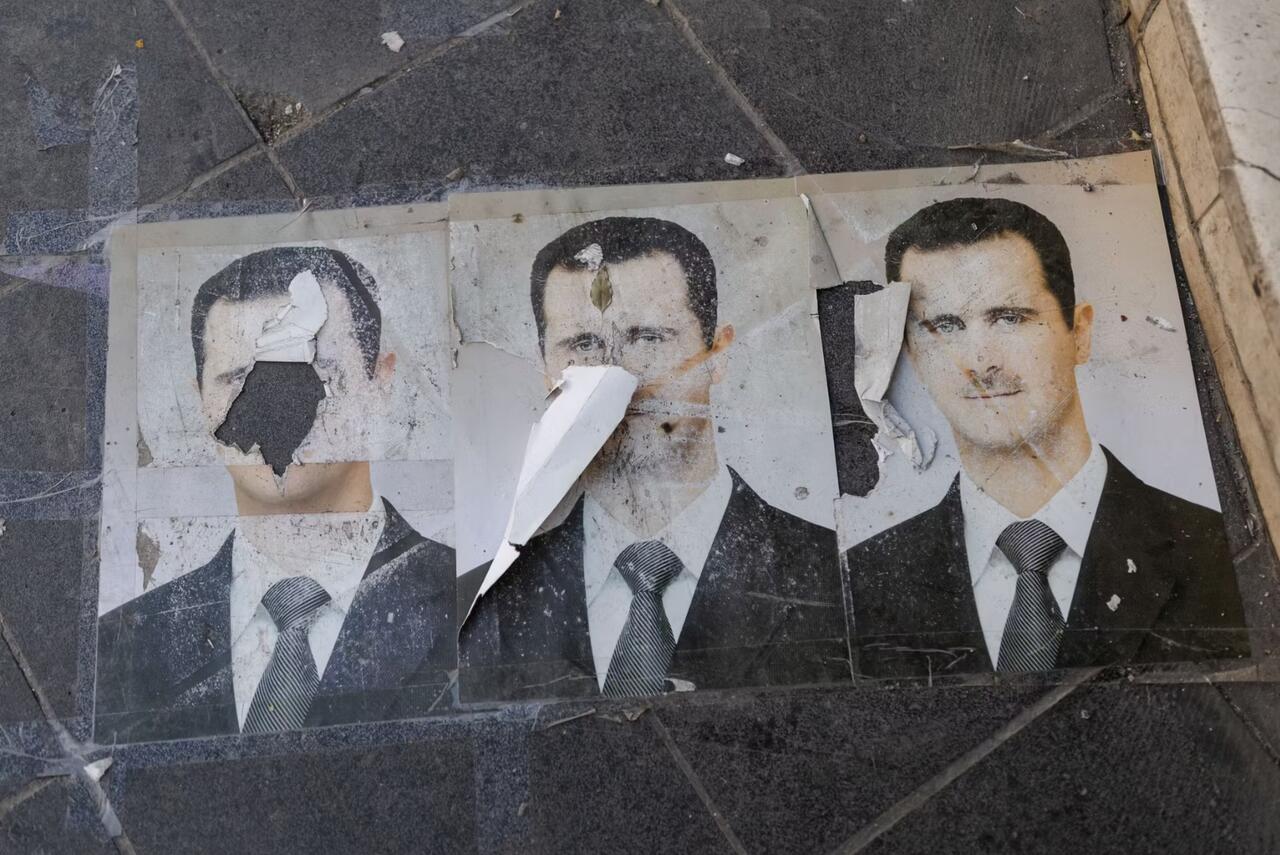
It brings to a final close the 14-year long bloody proxy war which overthrew the Assad government and ultimately installed a pro-US/Saudi axis puppet, in the person of founding Syrian Al Qaeda Abu Mohammad al-Jolani, now known as President Ahmed al-Sharaa.
Hundreds of thousand of people lost their lives in the regime change war, with the country and its economy left in a sanction-starved and conflict-demolished state of ruins.
The US-backed Syrian Foreign Ministry declared Washington had decided to “complete its military mission” in the country. “The Syrian state is today fully capable of leading counter-terrorism efforts from within, in co-operation with the international community,” it said, happy to now be back in control of the domestic oil and gas supply.
The ministry “welcomes the completed handover of military sites where United States forces were previously present in Syria to the Syrian government,” adding that “the handover of these sites was carried out … in full coordination between the Syrian and American governments.”
While Pentagon propaganda had for years touted an ‘anti-ISIS’ mission, the real purpose of the troop presence was to cut off Damascus under Assad of its sovereign natural resources, and to arm and prop up a Kurdish-Arab coalition called the Syrian Democratic Forces (SDF).
All the while, the CIA supported Sunni hardline jihadists who were indistinguishable from ISIS in their ideology in the fight against the Syrian Army, and the civilian population which often largely supported the secular Ba’ath government. The broader strategy has long been to destroy the Tehran-Baghdad-Hezbollah ‘Shia axis’ – even if that meant using ISIS as a tool of regime change.
Ironically, in the process of this US handover of oil and gas facilities back to post-Assad Damascus, the Kurds were thrown under the bus. Their dream for an autonomous enclave (Rojava) once again proved illusory, and in the long term the Kurds will find themselves at the mercy of Sunni fanatics on the one hand, and Turkish state under Erdogan on the other.
The United States did not withdraw from Syria. The United States privatized Syria. The man President Trump installed as the sovereign face of the Hormuz bypass architecture was on the Specially Designated Global Terrorist list with a ten million dollar American bounty on his head… pic.twitter.com/mhmX7g2x6p
— Shanaka Anslem Perera ⚡ (@shanaka86) April 16, 2026
Following the US withdrawal, Jolani regime troops moved into Qasrak Base in Hasakah Governorate in north-eastern Syria on Thursday. Earlier, in February, the US exited the Shaddadi in eastern Syria and Al-Tanf on the Syria–Jordan–Iraq border.
US Central Command (CENTCOM) confirmed the completion of the process for “turning over all of our major bases in Syria.” But it also said US forces “continue to support partner-led counter-terrorism efforts.”
* * *
Repositioning troops related to ongoing anti-Iran operations…
It seems that the US has ended its ground presence in Syria, which lasted for 12 years.
The last convoy has just rolled out of the Qasrak base in northeastern Syria and is now moving toward Jordan.
We all know what that means. pic.twitter.com/kUlk0r5zsf
— Chay Bowes (@BowesChay) April 16, 2026
Tyler Durden
Thu, 04/16/2026 – 22:10

What AI Doesn’t Know – And Why It Matters
What AI Doesn’t Know – And Why It Matters
Authored by Richard Porter via RealClearPolitics,
Artificial intelligence has taken the wired world by storm, but the backlash came almost as fast. Progressives complain of job losses, environmentalists question the ecological impacts of huge data centers, and local activists are clamoring for assurances that household utility bills won’t skyrocket because of the centers’ voracious electricity requirements. Others simply worry that the technology will overwhelm humans’ ability to control it.
At least in part, these reactions stem from the overselling of AI.
AI is super cool, but it’s not superhuman nor is it super intelligent. AI is simply very fast processing of vast amounts of data.
Intelligence, knowledge, understanding and wisdom are all different concepts; the distinction between them elucidates the scope and limits of both human and electronic “intelligence.”
Intelligence is the ability to process information into an internally coherent framework that’s useful and adds or detracts from knowledge to the extent it is more or less accurate. Knowledge is the accumulation of information organized into coherent frames or models that help us understand. Understanding is awareness of the significance, purpose, or meaning of accumulated knowledge.
And wisdom is judgment seasoned by experience and the awareness that intelligence, knowledge, and understanding are limited, inherently flawed, and useful only to the extent they advance a worthwhile purpose.
Nearly 2,500 years ago, the Oracle of Delphi reportedly declared that no man was wiser than Socrates. Socrates claimed to be stunned by this because he was keenly aware of how much he didn’t know. But after talking to others widely acclaimed to be knowledgeable, such as the leading politicians, poets, philosophers, and artisans of his day, he discerned this Delphic wisdom: Those claiming knowledge were ignorant of their own ignorance, whereas Socrates knew he knew nothing.
For this insight, Socrates was put to death for impiety and corrupting the youth of Athens, thereby proving for all time both the foolishness of his accusers’ certainty and the wisdom of Socratic questioning.
This bears repeating today, as we enter the Age of Artificial Intelligence: it’s wise to question the “intelligence” of machines, the “knowledge” they propagate, and our understanding of the significance and limits of the technology.
AI models are amazing and useful despite being incomprehensible to most of us, but AI is not infallible. AI will expand human knowledge and understanding of the world only if and to the extent that human users are encouraged to question AI results, processes, and functions.
People make mistakes, as do the people making and training the machines. Still, people tend to trust machines more than people, especially with respect to processing information that’s harder to process. For example, tennis players have more faith in electronic line calls over human line calls, although that faith in the new technology has been shaken by errors, such as when ball marks are inconsistent with the electronic line calls.
As AI use spreads, people will increasingly rely on AI and trust its results for routine tasks (like Google searches), while most people remain more skeptical of AI results for more complex tasks and do not trust AI to act to handle certain tasks for its users without human intervention.
It’s wise to question AI’s results; errors are common even in routine searches.
Examples of AI errors, hallucinations and political bias are rife. A Northwestern University business school professor of my acquaintance recently asked ChatGPT for advice evaluating investment alternatives. ChatGPT recommended he invest in a particular fund and described in detail that fund’s returns, risks, and assets. When the professor went to invest in ChatGPT’s recommended fund, he discovered the fund did not actually exist; ChatGPT made it all up (a phenomenon commonly referred to as “AI hallucination”).
Indeed, AI can screw up even mundane tasks: In my research for this piece, a Google AI summary ascribed quotes to Socrates that are not supported by any historical record.
Artificial intelligence – like human intelligence – is prone to error and is not always reliable, but that’s to be expected, especially in a fledgling technology. AI is artificial intelligence, not artificial knowledge, understanding, or wisdom. AI is a processor, a very fast processor, that organizes and distills information – and organized information is easier to evaluate and use by humans than vast amounts of unorganized information.
Properly understood, AI supplements and does not replace human intelligence, knowledge, or understanding; plus, the limitations and faults within these amazing models remind us that human intelligence is limited, too. Human intelligence imperfectly organizes the imperfect data to which a human has access and frames data in a subjective, not an objective, manner.
Many of us expect the machines that humans make to have “better” intelligence than the intelligence of its human creators – more objective, more comprehensive, more insightful. This is a naïve hope. In one sense, it is “better.” AI organizes more information faster than humans can. But who do they think programmed the thing? Every AI model is regurgitating imperfect information collected, created, and input by imperfect, subjective human beings.
What to make of all this?
First, perhaps the math nerds creating AI are mistakenly training machines to handle information processing on human topics as if human topics are math problems with a specific answer. Perhaps instead, machines should be trained to suggest questions to consider instead of answers to accept with respect to human inquiries relating to politics, economics, psychology, child rearing, crop science – the full range of arts, humanities, and social sciences.
Second, people training these machines should be explicit about the biases and perspectives being built into how the AI organizes, sorts, and frames information. (My own bias on this topic is that I believe American AI companies should be building AI with quintessentially American framing.)
Third, AI creators should consider the political, regulatory, and legal risks of “overselling” what AI is and what it can do. For example, should AI creators anticipate a duty to warn users of shortcomings with AI’s results and/or disclaimers of warranties?
Fourth, AI creators need to consider improving the quality of data upon which the systems are being trained, recognizing that many online data sources intentionally mislead to advance political agendas. Perfectly “unbiased” information is impossible to obtain, but some information is more accurate and less biased than other information; trainers should exercise better judgement about data.
The creation of AI large language models is an incredible feat of engineering. It’s quite useful, and will soon be essential, but it is still a product of human invention. As such, we need to recognize that AI is ultimately just the latest, greatest – but still imperfect – implement invented and used by homo sapiens to make life better for homo sapiens.
Richard Porter is a member of the Board of Directors of the Alfa Institute, a platform for ideas, policy proposals and new technology integration pertaining to artificial intelligence
* * *
Tyler Durden
Thu, 04/16/2026 – 21:45
https://www.zerohedge.com/markets/what-ai-doesnt-know-and-why-it-matters
Drought Engulfs 60% Of U.S. As Farmers Begin Spring Planting
Drought Engulfs 60% Of U.S. As Farmers Begin Spring Planting
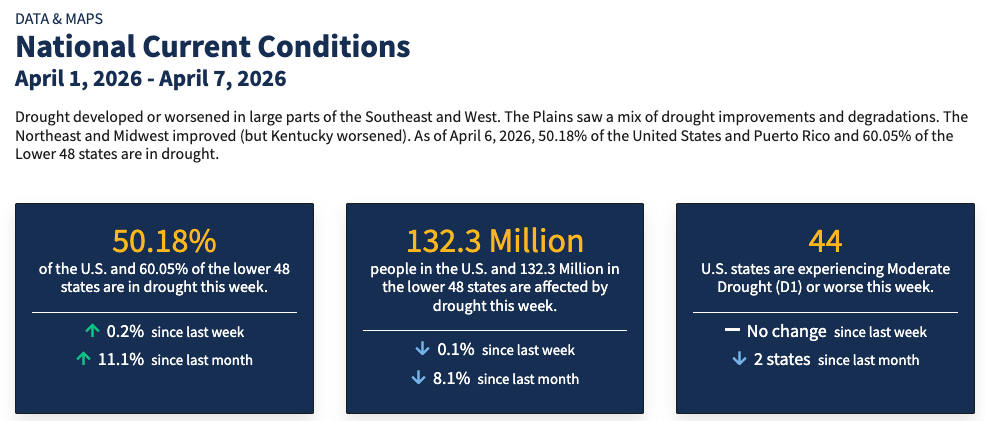
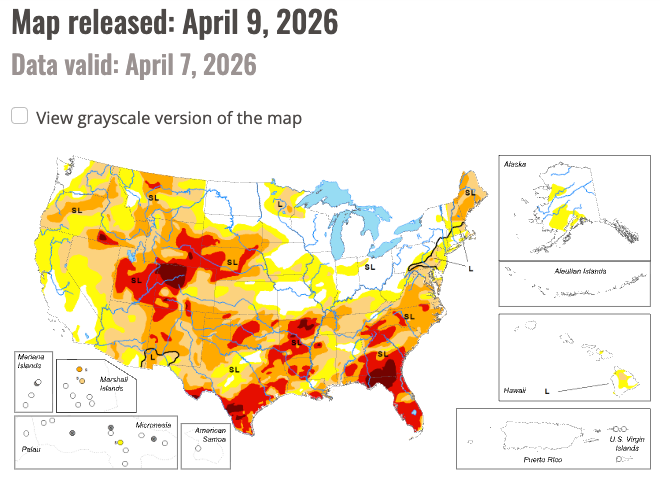
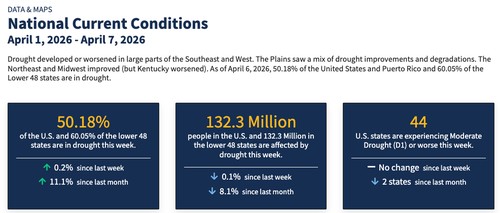
A massive drought has emerged across large swaths of the US agricultural belt, threatening crops and livestock and eventually affecting food prices, at a time when fertilizer and diesel costs are soaring. As of early April, 60% of the Lower 48 is in drought as the Northern Hemisphere growing season begins and farmers begin plantings, according to NOAA.
The southern US is already experiencing severe, extreme, and even exceptional drought conditions, putting pressure on key crops such as sugarcane, rice, and peanuts, while fruit trees have also been damaged by extreme temperatures.
Across the Great Plains, otherwise known as the nation’s breadbasket, winter wheat farmers are being forced to decide whether to keep the struggling crop or cut losses and replant, with dry soil also making germination harder.
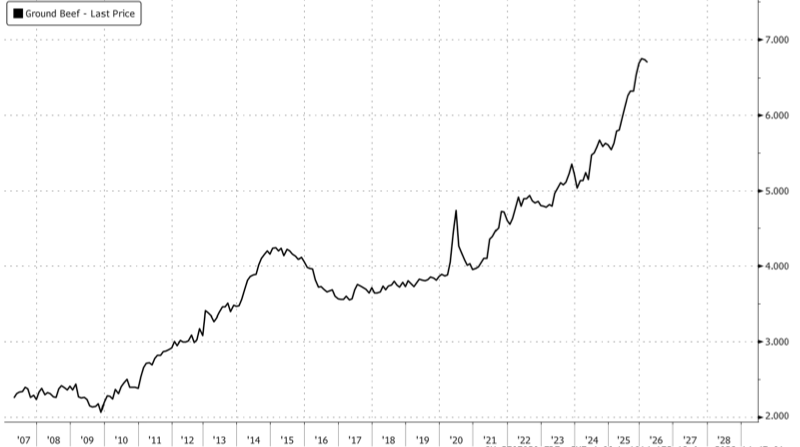
The drought also complicates matters for ranchers, as the nation’s cattle herd is already at its lowest level since the 1950s. As a result, some ranches may further reduce their herds, which will only push beef prices to new record highs.
In the western US, the problem is not so much rainfall as shrinking mountain snowpack, which threatens irrigation supplies ahead of the growing season. Water-use cutbacks for agricultural purposes are already being discussed or imposed in places such as Washington’s Yakima Basin and along the Colorado River.
Related:
Meteorologists Warn About Super El Nino Event
Washington, D.C. Will Feel Like June. Cue MSM Climate Doom Propaganda
X user Tony Heller noted, “The US is facing a drought possibly similar to the drought of 1610, which wiped out the Jamestown Colonists.”
The US is facing a drought possibly similar to the drought of 1610, which wiped out the Jamestown Colonists.https://t.co/3Iz9DZwLZv pic.twitter.com/8dyGFhaa0m
— Tony Heller 🇺🇸 🇯🇵 (@TonyClimate) April 13, 2026
All bad news for food prices. Traders are piling into these agri ETFs: “Why The Fertilizer Crisis May Spark Record Inflows Into Agri ETFs.”
Tyler Durden
Thu, 04/16/2026 – 21:20
https://www.zerohedge.com/weather/drought-engulfs-60-us-farmers-begin-spring-planting
Why The Crash Was Delayed
Why The Crash Was Delayed
Authored by Robert Aro via Mises Institute,
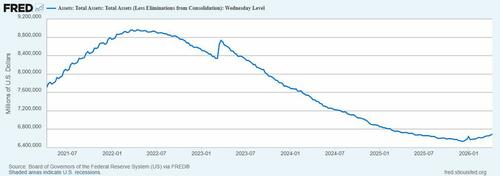
Whatever happened to the mother of all crashes that was supposed to arrive when the Federal Reserve began tightening its balance sheet back in 2022? For several years, I’ve been scratching my head, convinced that draining the balance sheet by trillions of dollars should have triggered a systemic banking failure or some other Black Swan event. In the past, crises like Lehman/AIG or the 2020 lockdowns took the blame, when in reality, the root cause was always monetary.
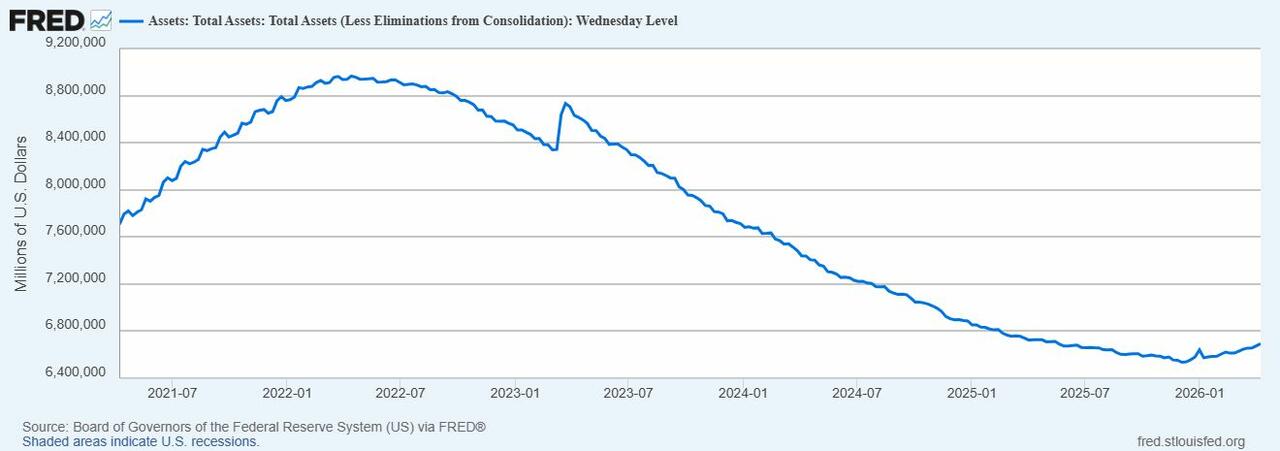
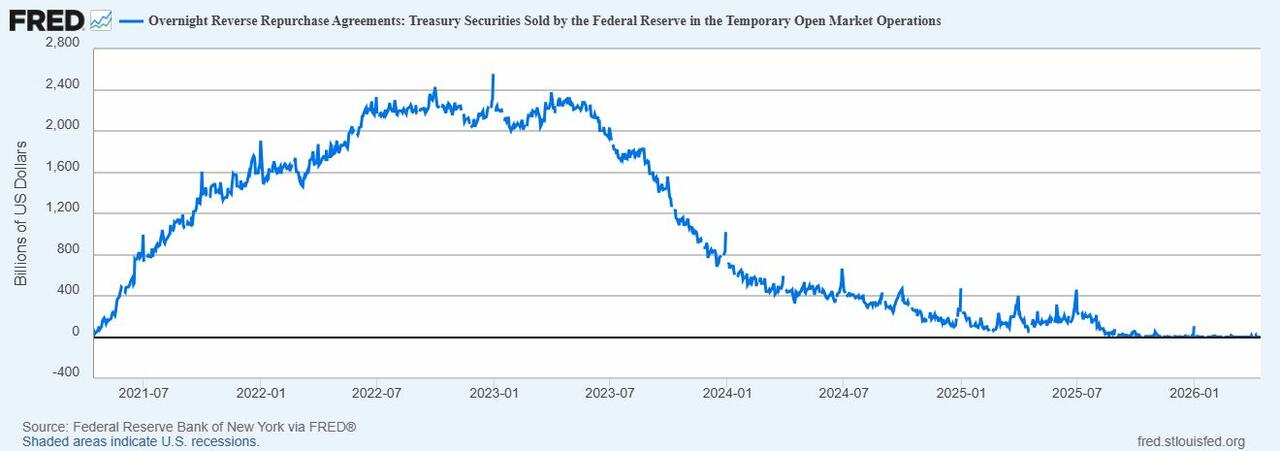
From the peak in June 2022 to the trough in December 2025, the asset side of the Fed’s balance sheet shrank by roughly $2.3 trillion. That was the front door. But through the back door, something else was happening on the liability side: the Fed’s Overnight Reverse Repo Facility (RRP) was releasing $2.5 trillion of previously frozen private liquidity back into the financial system.
If Quantitative Tightening (QT) removed liquidity, the RRP added it back… plus interest.
To recap: during QT, the Fed allows its holdings of Treasury securities and mortgage-backed securities (MBS) to mature. Financial intermediaries repay the Fed, and the Fed literally deletes that money from the system. This is the classic setup that exposes malinvestments, stresses credit markets, and reveals the imbalances described in Austrian Business Cycle Theory.
But this time it really was different because of the Reverse Repo Facility.
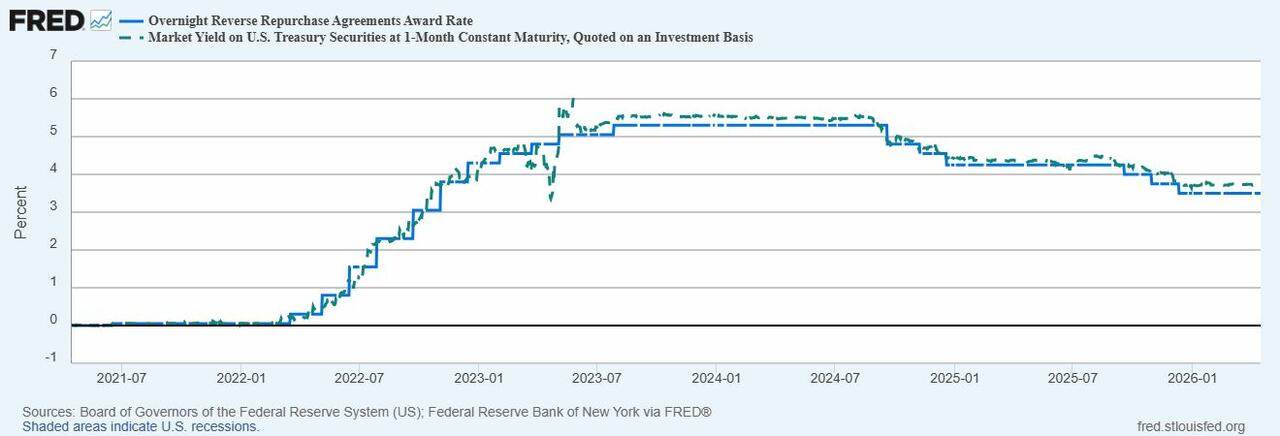
By mid-2023, the (March 2023) Silicon Valley Bank crisis had passed and the Fed’s Bank Term Funding Program was alive and well; then the hikes finally tapped out. Eventually, the 1-Month (4-Week) Market Yield on U.S. Treasuries outpaced the Fed’s RRP rate, and the incentive changed. Fund managers began a stampede out of the Fed’s facility and rotated into T-bills to chase a higher risk-free return.
In less than two years, the RRP withdrawals injected around $100 to $200 billion+ a month into the financial system at its peak. This was effectively a backdoor stimulus program that bypassed the Fed’s official QT narrative and funded the government’s deficit. Correlation does not equal causation, but it’s also not surprising that the Dow Jones broke out to new highs at almost the exact moment the RRP began to unwind.
The system was running on stored liquidity thanks to a giant buffer accumulated during the pandemic stimulus era. But as of 2026, that buffer is gone. The RRP liability has flatlined at essentially zero, meaning that the trillion-dollar offset to QT has been fully exhausted.
Perhaps it was no coincidence that once the RRP hit empty, the Fed’s tightening ended. On December 11, 2025, the Federal Reserve Bank of New York announced it would begin Reserve Management Purchases (RMP’s) at a pace of approximately $40 billion per month. While they use Fedspeak to avoid the term Quantitative Easing (QE), in reality, they’ve returned to official balance sheet expansion. They are being forced to replace the lost RRP liquidity with fresh money printing.
The math remains staggering. Since June 2022, the Fed was slashing its balance sheet by embarking on a QT narrative. The result? A net liquidity injection to the tune of $200 billion. And they called it “tightening.”
With the RRP buffer now empty, we are entering uncharted territory. The Fed’s $40 billion a month balance sheet expansion is several times less than what was entering the system via the RRP drain. Ironically, what the Fed hopes will act as QE might feel more like QT. We are about to find out just how long the system can survive a true monetary contraction.
Tyler Durden
Thu, 04/16/2026 – 20:55

US Army Trials Unmanned Hunter Wolf Robot With Gun, Radar In Combat Drills
US Army Trials Unmanned Hunter Wolf Robot With Gun, Radar In Combat Drills
The U.S. Army is quietly putting armed robots through their paces alongside real soldiers – and new footage suggests these machines could soon be a regular sight on tomorrow’s battlefields.
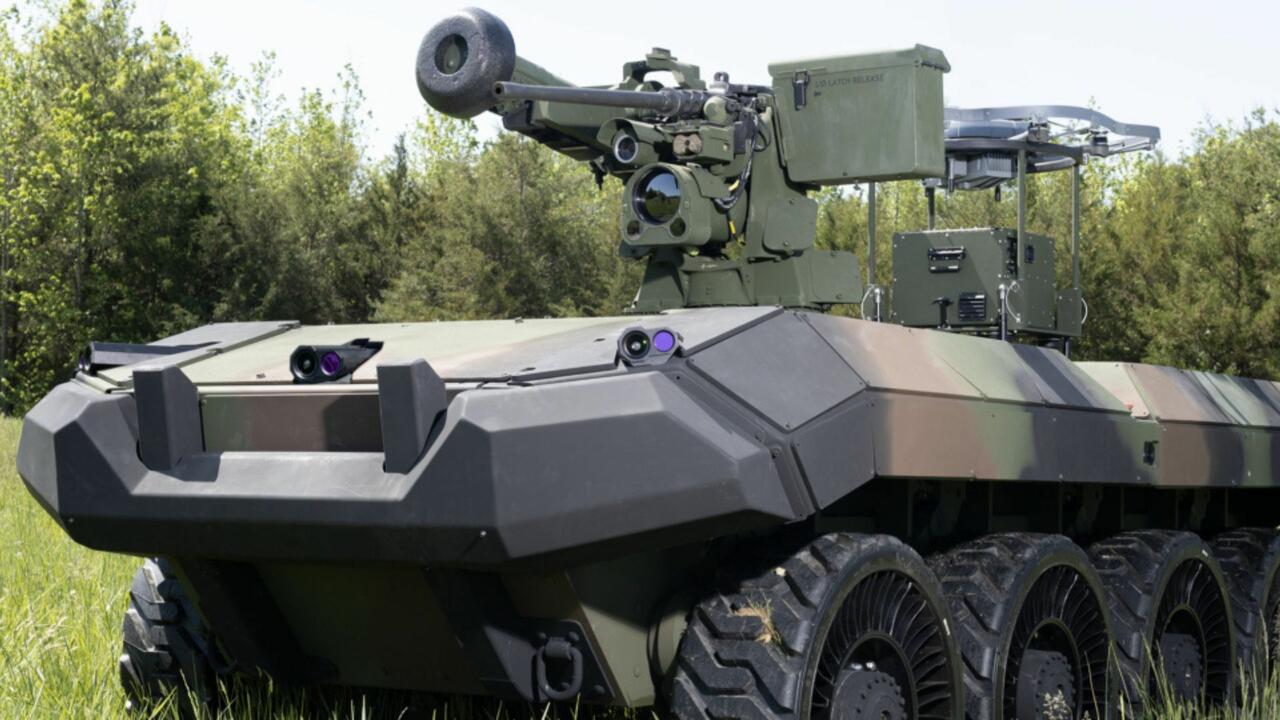
Wolf-X robotic combat vehicle by HDT Global.Blade HDT
Fresh imagery dropped on Monday by the Defense Visual Information Distribution Service shows a Hunter Wolf unmanned ground vehicle rolling with the 101st Airborne Division during a full-on combat simulation at the Joint Readiness Training Center (JRTC) in Louisiana. The display amounted to a serious stress test in one of the Army’s roughest training environments – where ideas either prove they work or get ditched fast.
The Hunter Wolf’s appearance at JRTC marks a significant shift – as units aren’t just playing around with unmanned gear in isolated experiments anymore; they’re dropping it straight into realistic, chaotic scenarios. Elements of the 101st used the vehicle for logistics runs and security tasks throughout the exercise. Photos show it fitted with a remotely operated .50-caliber machine gun, which hints that the Army is testing it for more than just hauling supplies—it’s being eyed for actual tactical roles too.
The Hunter Wolf was originally picked up under the Army’s Small Multipurpose Equipment Transport program to take some of the crushing load off soldiers’ backs. But at Fort Polk, they ran it with a remote weapon station and EchoShield radar, turning it into a rolling set of eyes and teeth. The combo lets a unit push sensors and firepower forward without putting troops in the open. The robot can scout ahead, scan for threats, and even lay down fire while the soldiers stay under cover.
At the same time, it still hauls the basics – ammo, water, batteries, comms gear – so small units can stay mobile and supplied across wide, contested spaces. In today’s fights, logistics and security are blurring together anyway. A robot that can do both fits right in.
Defense analyst Teoman S. Nicanci (Army Recognition Group) points out that the real story here is the Army choosing a high-intensity training rotation like JRTC instead of a safe, staged test. It shows they’re serious about folding this tech into actual formations and missions, not just checking boxes.
For units like the 101st, where speed and mobility are everything, these unmanned platforms help keep that edge without burning out the troops or exposing them unnecessarily. Future battles are going to be packed with drones, artillery, and precision strikes—anything that cuts risk while keeping the pressure on is worth its weight.
Bottom line: the Hunter Wolf isn’t science fiction anymore. The Army is learning, right now, how to weave robots into the fight so soldiers can move faster, hit harder, and come home safer.
h/t Interesting Engineering
Tyler Durden
Thu, 04/16/2026 – 20:30

IMF Warns Australia Set For One Of Highest Inflation Rates In Developed World
IMF Warns Australia Set For One Of Highest Inflation Rates In Developed World
Authored by Rex Widerstrom via The Epoch Times (emphasis ours),
The International Monetary Fund (IMF) says Australia is on track to have one of the highest inflation rates in the developed world.
Australian dollars coins in Melbourne, Australia, on April 4, 2024. AAP Image/Joel Carrett
In the latest edition of its World Economic Outlook, the global lender said economies around the world “face repercussions [from] the direct impact of higher commodity prices, indirect second-order effects on inflation expectations—which tend to be especially sensitive to energy and food prices—and amplification effects coming from [conservative] sentiment in financial markets.”
While the global economy had withstood “a series of shocks, yet another one—this time a military conflict engulfing the Middle East since the end of February—is testing this resilience,” the IMF warned.
It predicted that Australia’s GDP growth would remain flat this year at 2025’s level of 2.0 percent and would fall in 2027 to 1.7 percent.
Those figures are lower than previously projected, down from 2.1 percent for this year and 2.2 percent for next.
While that will be a consideration as Treasurer Jim Chalmers drafts his next budget for delivery on May 12, even more alarming is the forecast for inflation, with the consumer price index at 4.0 percent this year and 3.2 percent in 2027.
Those inflation figures exceed those of most advanced economies, including the United States (3.2 percent in 2026 and 2.1 in 2027), the UK (3.2 and 2.4), Germany (2.7 and 2.3), New Zealand (3.1 and 2.3), Japan (2.2 and 2.3),
Australia’s unemployment is also expected to be stubborn, at 4.2 and 4.3 percent respectively.
IMF Calls for Less State Intervention in Economy
Prior to the outbreak of the Iran War the IMF had intended to revise its growth forecasts upwards, but the closure of the Strait of Hormuz and attacks on oil and gas facilities reversed the positive momentum and raised the prospect of a major energy crisis, according to IMF chief economist Pierre-Olivier Gourinchas in a press briefing.
Under a “severe” scenario, in which an extended conflict results in greater damage to energy infrastructure, global growth would fall to 2 percent in 2026 and be perilously close to a global recession.
“What should we avoid?” Gourinchas asked.
“Price caps, subsidies, and similar interventions are popular, but they distort prices. They’re often poorly designed, hard to unwind, and extremely costly,” he said.
“Most countries don’t have that luxury anymore. Where support for the most vulnerable is needed, targeted and temporary measures should be deployed, consistent with medium‑term plans to rebuild fiscal buffers and avoiding stimulating demand where inflation is rising.”
Government Stimulus a Mistake: Experts
Two experts spoken to by the Epoch Times said they were unsurprised by the IMF’s forecasts.
While declining to offer his own forecast of GDP, John Quiggin, professor of economics at the University of Queensland, said he agreed that the Australian Labor government’s cut to fuel excise was “giving the wrong signals.”
“The only merit is that it is temporary,” he said. It is due to end in 3 months.
Graham Young, executive director of the Australian Institute for Progress, said the government was giving “a masterclass in how to repeat the 1970s and 80s and turn a price increase into an inflation increase.
“On its own, the oil price will redirect spending largely from non-essentials to fuel, but if the government tries to soften the hit, and they do that without corresponding savings somewhere else, then it will turn into inflation,” he explained.
He cautioned that further pressure on inflation would occur if the Australian Council of Trade Unions is successful in its bid to increase the minimum wage by 5 percent without a corresponding rise in productivity.
“Wage increases without productivity increases are almost always inflationary first and deflationary second as they put businesses out of business, increase unemployment, and contract the economy,” Young said.
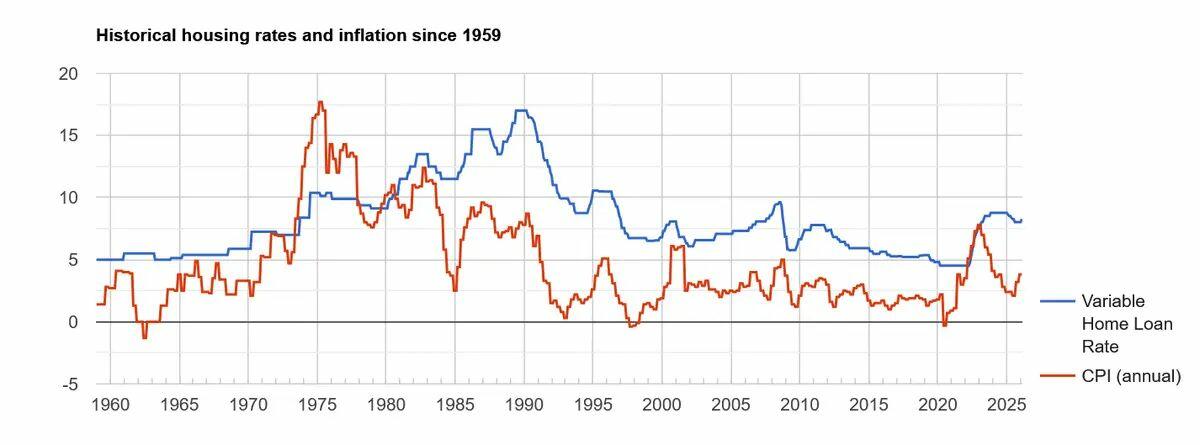
He recalled how interest rates were “probably not high enough to kill inflation” in 1975 and so were progressively raised until the peak in 1989/90.
“Our rates are better placed at the moment than in the 70s, but not by much,” he said.
RBA Deputy Governor Andrew Hauser said, at a speaking event in the United States on April 14, that inflation expectations were rising in the short term, but remained anchored long term.
“Our estimate is that the supply capacity of the Australian economy at the moment probably can only grow at about 2 percent,” he told New York University guests.
“By the third or fourth quarter of last year, inflation began to pick up, and is now around 3.5 percent on core and nearer 4 on headline, which is too high.
“It’s obvious that inflation is going up in the short term, and people are very conscious of that. There’s not much monetary policy can do about that, other than prevent it from getting into long-term inflation expectations. The big question for us is what it’s going to do to [business] activity … Those are the numbers we’re crunching through at the moment.”
Treasurer Jim Chalmers has left for Washington D.C., to discuss the economic crisis with international counterparts, including the UK’s Chancellor of the Exchequer Rachel Reeves, and Chinese Finance Minister Lan Foan at the IMF-World Bank Spring Meetings.
The IMF report showed it was “a dangerous moment for the global economy,” Chalmers said. “We’re weighing all of this extreme uncertainty as we prepare a budget focused on resilience and reform.”
Tyler Durden
Thu, 04/16/2026 – 20:05
DOJ Launches Investigation into Sexual Assault Allegations Against Eric Swalwell
DOJ Launches Investigation into Sexual Assault Allegations Against Eric Swalwell
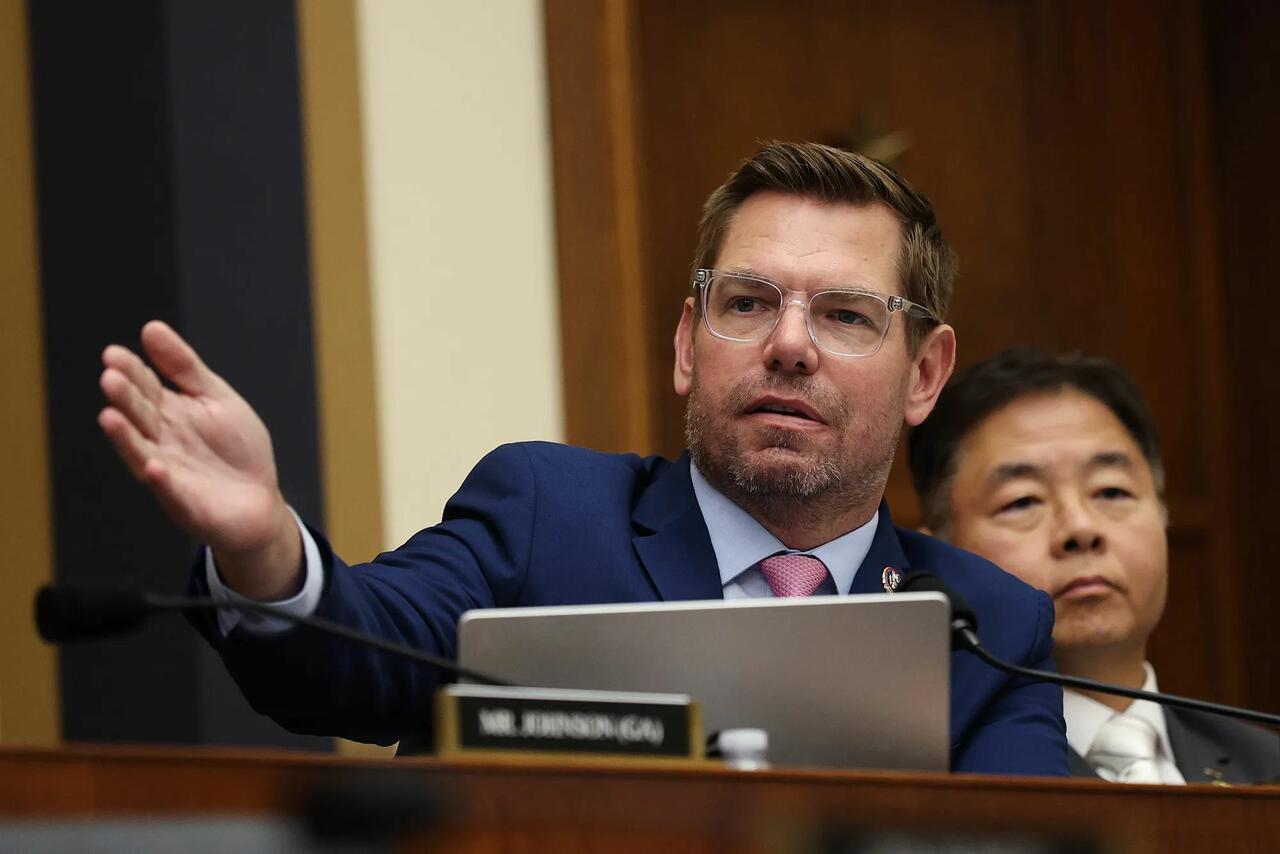
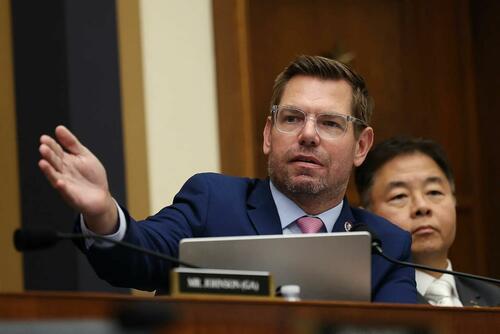
The U.S. Department of Justice has opened a criminal investigation into multiple sexual assault and misconduct allegations against former Rep. Eric Swalwell (D-Calif.), federal officials confirmed Thursday, marking the latest escalation in a scandal that has already forced the longtime congressman to resign from the House and suspend his bid for California governor.
Swalwell, who represented California’s 14th District since 2013, stepped down from Congress on Tuesday amid bipartisan pressure and a House Ethics Committee probe into claims that he engaged in sexual misconduct, including toward a staffer under his supervision. The Ethics review is expected to close following his resignation, as the panel’s jurisdiction is limited to current members.
The DOJ’s involvement adds a federal layer to ongoing local probes. The Manhattan District Attorney’s Office is investigating an alleged 2024 sexual assault in a New York City hotel room involving a former staffer, while the Los Angeles County Sheriff’s Department and District Attorney’s Office have opened inquiries into a separate 2018 claim. Prosecutors have been assigned to review evidence in the LA case.
The allegations first gained widespread attention last week when the San Francisco Chronicle and CNN reported claims from a former staffer and three other women. The former aide accused Swalwell of sexually assaulting her on two occasions: once in 2019 while she was employed by him, and again in April 2024 after a gala event in New York, where she said she was too intoxicated to consent and attempted to refuse. Three additional women described unwanted explicit messages, unsolicited nude photos, and harassment, some occurring during his gubernatorial campaign.
On Tuesday, a fifth woman, Lonna Drewes – a Beverly Hills-based former model and fashion software entrepreneur – held a news conference to detail her accusations. Drewes alleged that in July 2018, after meeting Swalwell socially and believing they were developing a friendship, he invited her to his West Hollywood hotel room under the pretense of picking up papers. She claimed he drugged her drink, raped her, and choked her until she lost consciousness. Drewes said she had only one glass of wine that evening and provided authorities with journal entries, texts, and photos as evidence. She has since reported the incident to law enforcement and stands with the other accusers.
Swalwell has categorically denied all allegations of non-consensual or illegal conduct. His attorney called the claims “false, fabricated and deeply offensive.” In a statement announcing his resignation, Swalwell acknowledged “mistakes in judgment” from his past but maintained that no laws or House rules were violated. He said he would fight the accusations while stepping aside to avoid distracting from his constituents’ needs.
Political Fallout and Special Election
The swift collapse of Swalwell’s political ambitions stunned observers. He had been viewed as a frontrunner in the race to succeed term-limited Gov. Gavin Newsom. He suspended his gubernatorial campaign on Sunday as the allegations mounted and bipartisan calls for his resignation or expulsion grew. Democrats, including House leaders, distanced themselves, while some Republicans pushed for an immediate expulsion vote.
Newsom has scheduled a special election to fill Swalwell’s seat: a primary on June 16 and general election on August 18, 2026. The resignation was formally read into the House record this week.
#NEW: Rep. @laurenboebert talks sexual misconduct allegations on the Hill “Why is everybody so horny here?”
She says people need to “go to church. Find Jesus.” pic.twitter.com/KASrfx7lkc
— Vinay Simlot (@VinaySimlot) April 16, 2026
Tyler Durden
Thu, 04/16/2026 – 19:40
CBP Says It Seized More Than 60 Pounds Of Cocaine From US Citizen At Border
CBP Says It Seized More Than 60 Pounds Of Cocaine From US Citizen At Border
Authored by Troy Myers via The Epoch Times,
U.S. Customs and Border Protection (CBP) officers at the U.S.–Mexico border prevented more than 60 pounds of cocaine from entering the country, allegedly smuggled by an American citizen—a “trusted traveler”—the agency exclusively told The Epoch Times on Wednesday.
At California’s San Ysidro Port of Entry, a 25-year-old man was arrested on April 7 for allegedly concealing more than $1.1 million of the illegal narcotics within his vehicle and now faces federal prosecution.
The man was not named by CBP.
He was categorized as a “trusted traveler” because he was a participant in the Secure Electronic Network for Travelers Rapid Inspection program, the agency said. The program allows expedited passage into the United States for pre-approved, low-risk travelers. All applicants for the program undergo an extensive background check and an in-person interview prior to being enrolled.
Despite having qualified for expedited treatment, the man was referred for a secondary inspection while entering the United States.
“Trust, but verify,” the agency said.
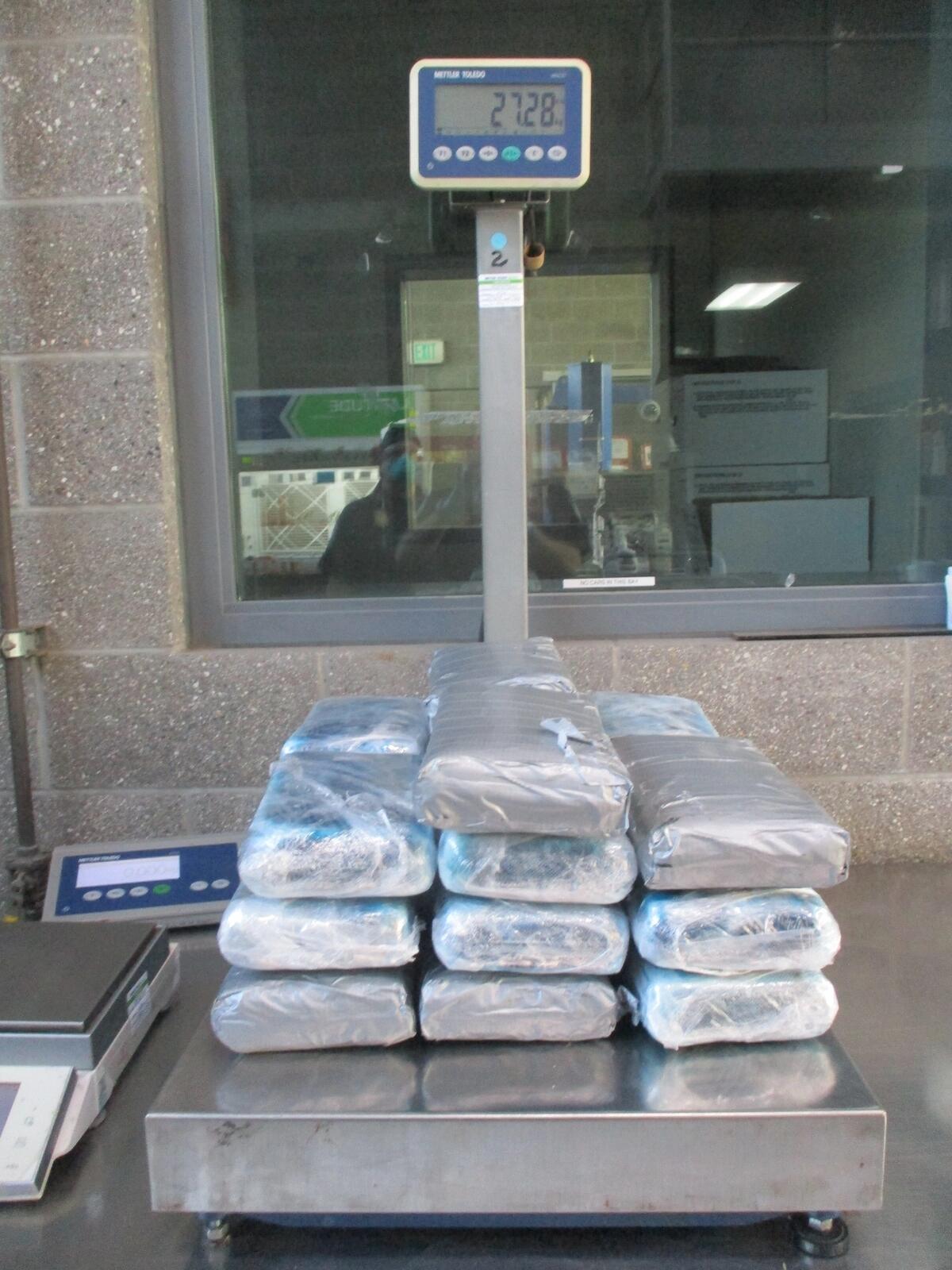
Illegal narcotics hidden in the driver’s vehicle doors are shown, at the San Ysidro Port of Entry on April 7, 2026. Border Patrol agents seized more than 60 pounds of cocaine from a U.S. citizen. U.S. Customs and Border Protection
During the secondary inspection, CBP said it used non-intrusive imaging technology that revealed “anomalies” within the doors of the driver’s 2020 Honda Civic. A canine team additionally alerted officers to the presence of narcotics.
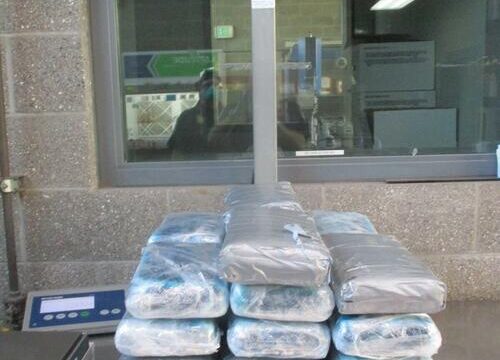
According to CBP, officers discovered 20 packages containing 27.28 kilograms, or 60.14 pounds, of cocaine. The drugs, vehicle, and two cellphones were seized.
The driver was arrested and faces charges of narcotics importation and smuggling, CBP said.
“This arrest is a clear message that no one is above the law,” San Ysidro Port Director Mariza Marin said.
“We will hold everyone accountable for their actions, especially those who betray the trust of our traveler programs by attempting to smuggle dangerous narcotics.”
This latest encounter comes as the Trump administration delivered 11 straight months of zero releases at the southern border, while CBP is making increased illegal narcotics seizures across the country compared to a year prior.
Nationwide, CBP seized more than 65,000 pounds of drugs in March, which included 613 pounds of fentanyl. Compared to March 2024, that total amount is 27 percent higher.
Border Patrol agents seized more than 60 pounds of cocaine from a U.S. citizen. The illegal narcotics were hidden in the driver’s vehicle doors, on April 7, 2026, at the San Ysidro Port of Entry. U.S. Customs and Border Protection
The agency said it has seized 24 percent more drugs this fiscal year through March than it did during the same time period for FY 2024.
Comparing similar figures extending into President Joe Biden’s administration, CBP seized 19 percent more illegal narcotics so far this fiscal year than it seized, on average, during the same period in each of the last four fiscal years, according to the agency.
To date in FY 2026, data showed CBP has seized a total of 341,000 pounds of drugs.
The agency counts all drug types, including cocaine, ecstasy, fentanyl, heroin, ketamine, khat, LSD, marijuana, methamphetamine, and other drugs. CBP also reports drug seizures from the southern border, northern border, coastal areas, and interior.
In February, CBP exclusively shared with The Epoch Times that it had prevented more than 660 pounds of methamphetamine, worth about $6 million, from illegally entering the United States. The drug bust came from a single commercial truck at the World Trade Bridge in Laredo, Texas.
Only days before that encounter and at the same Laredo entry point, federal officers seized 36 pounds of cocaine worth about half a million dollars. CBP said it was enough for 190,000 lethal doses.
A CBP spokesperson noted that the drug seizure metrics on its website do not include illegal narcotics seized from joint operations, such as the U.S. Coast Guard or local law enforcement, when another agency would take possession of the drugs.
“In addition to what Border Patrol and [the Office of Field Operations] has seized, which is above and beyond what has been seized in years prior, there’s also these additional activities that stop it before it even gets to the border,” the spokesperson previously told The Epoch Times.
Tyler Durden
Thu, 04/16/2026 – 19:15
https://www.zerohedge.com/political/cbp-says-it-seized-more-60-pounds-cocaine-us-citizen-border
CBP Says It Seized More Than 60 Pounds Of Cocaine From US Citizen At Border
CBP Says It Seized More Than 60 Pounds Of Cocaine From US Citizen At Border
Authored by Troy Myers via The Epoch Times,
U.S. Customs and Border Protection (CBP) officers at the U.S.–Mexico border prevented more than 60 pounds of cocaine from entering the country, allegedly smuggled by an American citizen—a “trusted traveler”—the agency exclusively told The Epoch Times on Wednesday.
At California’s San Ysidro Port of Entry, a 25-year-old man was arrested on April 7 for allegedly concealing more than $1.1 million of the illegal narcotics within his vehicle and now faces federal prosecution.
The man was not named by CBP.
He was categorized as a “trusted traveler” because he was a participant in the Secure Electronic Network for Travelers Rapid Inspection program, the agency said. The program allows expedited passage into the United States for pre-approved, low-risk travelers. All applicants for the program undergo an extensive background check and an in-person interview prior to being enrolled.
Despite having qualified for expedited treatment, the man was referred for a secondary inspection while entering the United States.
“Trust, but verify,” the agency said.
Illegal narcotics hidden in the driver’s vehicle doors are shown, at the San Ysidro Port of Entry on April 7, 2026. Border Patrol agents seized more than 60 pounds of cocaine from a U.S. citizen. U.S. Customs and Border Protection
During the secondary inspection, CBP said it used non-intrusive imaging technology that revealed “anomalies” within the doors of the driver’s 2020 Honda Civic. A canine team additionally alerted officers to the presence of narcotics.
According to CBP, officers discovered 20 packages containing 27.28 kilograms, or 60.14 pounds, of cocaine. The drugs, vehicle, and two cellphones were seized.
The driver was arrested and faces charges of narcotics importation and smuggling, CBP said.
“This arrest is a clear message that no one is above the law,” San Ysidro Port Director Mariza Marin said.
“We will hold everyone accountable for their actions, especially those who betray the trust of our traveler programs by attempting to smuggle dangerous narcotics.”
This latest encounter comes as the Trump administration delivered 11 straight months of zero releases at the southern border, while CBP is making increased illegal narcotics seizures across the country compared to a year prior.
Nationwide, CBP seized more than 65,000 pounds of drugs in March, which included 613 pounds of fentanyl. Compared to March 2024, that total amount is 27 percent higher.
Border Patrol agents seized more than 60 pounds of cocaine from a U.S. citizen. The illegal narcotics were hidden in the driver’s vehicle doors, on April 7, 2026, at the San Ysidro Port of Entry. U.S. Customs and Border Protection
The agency said it has seized 24 percent more drugs this fiscal year through March than it did during the same time period for FY 2024.
Comparing similar figures extending into President Joe Biden’s administration, CBP seized 19 percent more illegal narcotics so far this fiscal year than it seized, on average, during the same period in each of the last four fiscal years, according to the agency.
To date in FY 2026, data showed CBP has seized a total of 341,000 pounds of drugs.
The agency counts all drug types, including cocaine, ecstasy, fentanyl, heroin, ketamine, khat, LSD, marijuana, methamphetamine, and other drugs. CBP also reports drug seizures from the southern border, northern border, coastal areas, and interior.
In February, CBP exclusively shared with The Epoch Times that it had prevented more than 660 pounds of methamphetamine, worth about $6 million, from illegally entering the United States. The drug bust came from a single commercial truck at the World Trade Bridge in Laredo, Texas.
Only days before that encounter and at the same Laredo entry point, federal officers seized 36 pounds of cocaine worth about half a million dollars. CBP said it was enough for 190,000 lethal doses.
A CBP spokesperson noted that the drug seizure metrics on its website do not include illegal narcotics seized from joint operations, such as the U.S. Coast Guard or local law enforcement, when another agency would take possession of the drugs.
“In addition to what Border Patrol and [the Office of Field Operations] has seized, which is above and beyond what has been seized in years prior, there’s also these additional activities that stop it before it even gets to the border,” the spokesperson previously told The Epoch Times.
Tyler Durden
Thu, 04/16/2026 – 19:15
https://www.zerohedge.com/political/cbp-says-it-seized-more-60-pounds-cocaine-us-citizen-border