
Category: News

From AI to immigrant rights, here’s what to know about Illinois’ new education laws in 2026
Several new state laws affecting education take effect this month, highlighting the rights of immigrant students and the growth of artificial intelligence in schools.
Here’s what you need to know.
Expansion of student rights regardless of immigration status
An amendment to the Illinois School Code prohibits public schools from denying a student access to a free education based on their immigration status or that of their parents, underscoring long-standing constitutional federal protections amid renewed scrutiny of immigrant rights at the state level.
Proponents say the move addresses concerns with escalating federal immigration enforcement — a major focus for President Donald Trump’s administration.
Trump’s Operation Midway Blitz, the 64-day crackdown in Chicago and the surrounding suburbs, left schools particularly vulnerable. Schools also must not exclude a child “from participation in or deny a child the benefits of any program or activity” even if they’re noncitizens.
“In the face of federal threats to our schools and students, our communities came together and organized to demand that our state leaders stand up for education for all Illinois children,” Lawrence Benito, executive director of the Illinois Coalition for Immigrant and Refugee Rights, said when the legislation was passed in May.
AI law encourages responsible and ethical usage
Artificial intelligence is already reshaping how students learn and teachers work, prompting state lawmakers to step in with new regulations.
The Illinois State Board of Education is now required to provide guidance to districts and educators on the use of artificial intelligence in K-12 settings. That includes explaining what AI is, how it works and how it could be used in classrooms.
The state board must also include guidance on the impact AI systems and applications could have on student data privacy, including providing best practices for teaching students about responsible and ethical AI use.
Similarly, an amendment to Illinois’ Public Community College Act requires that community college courses not be taught solely by AI or generative AI programs in place of instructors.
Supporters of recent state AI regulations said the measures will address potential threats to public safety and personal privacy, and to counter any mendacious actions created by AI, while not hindering innovation.
This contrasts with the Trump administration, which, in a December 2025 executive order, actively encouraged the adoption of AI applications across sectors, stating that “to win, United States AI companies must be free to innovate without cumbersome regulation.”
Special education resources expanding
Schools are now required to provide written notice to parents or guardians of students with disabilities that they have the right to have an advocate present at any meeting regarding their child’s current or prospective individualized education program — a legal document that gives eligible students access to special education resources. It also gives parents and guardians the right to ask for an IEP facilitator for their child’s program.
Parents and guardians will also have additional access to information pertaining to their children’s mental health records if they receive special education services, according to House Bill 2994.
Several new advancement opportunities for students
Seventh and eighth grade students now have the opportunity to earn high school credits. The credits will be awarded to students who participate in and pass the course at the high school they will eventually attend.
High school students will have access to a catalog of internships, externships and volunteer opportunities statewide. The list will be posted on the State Board of Education’s website on July 1 each year and sent to each school district under the amended school code.
Students have permission to participate in work-based learning experiences and career-development opportunities, including 4-H and Future Farmers of America programs, and have it count toward their school day. Participation and learning outcomes must first be approved by a licensed educator.
Programs for gifted and talented students will also have more leeway on how they are structured.
New higher education policies
Public and private universities are now required to post their cost of attendance on their websites.
Additionally, public universities and colleges make at least three on-site mental health professionals available.
Other changes to statewide education
Additional statewide changes to education include early literacy, data transparency and access to language-learning materials.
All school districts are now required to screen and report early literacy scores of their K-3 students to the State Board of Education.
The State Board of Education will collect data on funding related to student homelessness. This includes the amount of funding each school district reserved in the preceding school year to serve homeless children and youths, per the amended school code. This information will be publicly available on the State Board of Education’s website.
Illinois school districts are now required to create educational materials on the benefits of American Sign Language for sharing with schools serving grades K-8. By July 1, the materials must also be posted on the State Board of Education’s website.
Tribune reporters Jeremy Gorner and Laura Rodríguez Presa contributed.
https://www.chicagotribune.com/2026/01/10/new-illinois-education-laws-2026/

Entering fourth Olympics, Oak Park speedskater Emery Lehman nears finish line
MILWAUKEE — As usual, Marcia Lehman could not watch.
It had been that way for a long time, this habit of not watching her son’s races, Though it had become part superstition by now, it had always been more about coping. The truth is that she could not handle it. The anxiety. The nerves. The helplessness of being a spectator.
And so in the moments before Emery Lehman approached the starting line last weekend at the Pettit National Ice Center, Marcia made a familiar exit and walked outside. She began her go-to calming routine, pacing and smoking a cigarette or three. Anything to take her mind off the pressure and stakes, both of which felt much heavier than usual.
Emery Lehman, the Oak Park native and one of the fastest speedskaters in the world, was in that moment attempting to qualify for his fourth consecutive Olympics. Never mind that his place on Team USA was likely already secure, given his role on a formidable Team Pursuit squad that didn’t necessarily require he qualify individually.
To make the Olympics that way, though, by the appointment of a committee, felt like a consolation to him. It felt not quite as earned. And after dedicating much of the past 20 years to speedskating — after moving to Salt Lake City to train six years ago and after deciding that these Milan Cortina Winter Olympics would be his last, gold or bust — Lehman wanted to earn it.
He needed to earn it, in fact, after all he’d poured into the sport. Twelve years ago at the Sochi Games, then-17-year-old Lehman ascended from Oak Park, where he grew up, to become at the time the youngest person ever to make the U.S. Long Track Speedskating team. Everything back then was in front of him.
Emery Lehman skates on his way to winning the men’s 1500-meter competition on Jan. 4, 2026, during the U.S. Olympic Team Trials Long Track at the Pettit National Ice Center in Milwaukee. (Brian Cassella/Chicago Tribune)
Now, at 29, he entered the Olympic Trials last weekend in Milwaukee understanding the end was near.
He’d become what he long pursued when he was younger. He’d gone from chaser to chased, from young-and-up-and-coming to, as Lehman put it, “one of the older, grumpy guys on the team.” It wasn’t that long ago when he was looking up to Shani Davis, the Chicago native who won gold in 2006 and 2010, and to members of the U.S. team pursuit squad that won silver 16 years ago.
“I don’t know if I quite live up to their reputation to the younger guys now,” Lehman said, “but it definitely feels weird to be on the opposite end of that.”
‘It’s time’
In the months before trials, Lehman had been living in an odd kind of limbo typical for elite athletes in transition, in any sport. He found himself ready for the end, and for his final finish line. Yet now that it was in sight, it conjured all kinds of emotion. He spent most of the past four years, since winning bronze in team pursuit in Beijing in 2022, working toward an ending.
The ideal finish is obvious enough: a gold medal in team pursuit, reveling atop the podium with teammates Casey Dawson and Ethan Cepuran, a native of Glen Ellyn who Lehman watched grow up. The trio has been skating together for most of the past four years. They won gold last March at world championships in Norway and they all know the stakes approaching Milan.
“I don’t think it’s really something that needs to be said,” Lehman said. “Between the three of us, it’s something that’s just understood.”
His teammates in that event, though, may well have another chance after Milan. Dawson and Cepuran — “I’ve known Ethan since he was sitting on a bucket in the middle of the ice,” Lehman said, remembering when Cepuran was practically a newborn — are both 25.
Emery Lehman, right, celebrates with teammate Casey Dawson after winning the men’s 1500-meter competition and qualifying for the Olympics on Jan. 4, 2026, during the U.S. Olympic Team Trials Long Track at the Pettit National Ice Center in Milwaukee. (Brian Cassella/Chicago Tribune)
Their final competitive finish line, whenever and wherever it comes, is likely years away. For Lehman, it’s here. It’s known. And though speedskaters can remain competitive into their 30s, his decision to make these Olympics his final competition is not something he has second-guessed.
“I was like, ‘It’s time,’” he said. “And I still feel that way, like it’s time to move on. I’m ready for the next thing. But I think now that it’s real and it’s two months away, I’m like, ‘I’m gonna miss this,’ you know?”
Well, he isn’t going to miss all of it. Or perhaps even most of it.
Speedskating is among those niche Olympic sports that captures the country’s attention for a week or two every four years. It’s a sport, like many, the television cameras can’t accurately capture, and one best appreciated in person — the closer to the ice the better to understand the skill involved, just how fast the best skaters really are and how thin the margins between winning and losing.
Occasionally, transcendent national stars are born. Apolo Ohno, in short track. Bonnie Blair, in long track. Shani Davis, who excelled in both but won four Olympic medals in long track. But for every Davis or Dan Jansen, the Olympic gold medalist who in 2014 described Lehman “as the future of distance skating in the United States,” there are countless elite skaters who find themselves seconds or fractions of seconds from joining such company. The chase of greatness can be maddening.
Emery Lehman’s parents, David and Marcia, center, applaud other skaters on Jan. 4, 2026, during the U.S. Olympic Team Trials Long Track at the Pettit National Ice Center in Milwaukee. Marcia is too nervous to stay inside the arena during Emery’s races. (Brian Cassella/Chicago Tribune)
In the same breath in which he said he’d miss it all, Lehman detailed the toll.
“I’ve gotta say, like, 75% of the time things are tough,” he said. “Skating is not going well, races aren’t going well. You’re just like, ‘I want this to be over.’ … I just always go back to like, man, I spend a lot of time on the road. A lot of the time in training. And you’re just beating yourself up, and you’re not happy…
“I mean, I love training and I love skating, but it’s really difficult. There’s very few people that come out of practice every day and they’re full of confidence and like, ‘I did perfect today, I couldn’t have done any better,’ or, ‘I’m really happy with the time.’ You know, obviously, I go out there and try my hardest every time.
“But I’d say, yeah — well over half the time I’m unhappy with the results or the times or how I’m feeling, or whatever it is, and that’s tough. It’s tough to deal with every day.”
Home ice
Entering trials, Lehman had already begun preparations for his post-Olympics life. A new job awaited in Chicago. A new place in Logan Square. A descent back into normalcy, after the grueling insanity of those marathon training sessions in Utah, where he’d long become familiar with exhausting bike rides up mountains, legs burning in pursuit of one final Olympic dream.
The full realization of that dream required Lehman to qualify individually, and that’s why he felt as nervous as he did when he skated to the starting line of the 1,500 meters last Sunday. His mom by then was outside, cigarettes at the ready. It was impossible to know who was more nervous or more sick at the specter of the race not going well.
Emery Lehman warms up during the U.S. Olympic Team Trials Long Track at the Pettit National Ice Center in Milwaukee on Jan. 3, 2026. (Brian Cassella/Chicago Tribune)
It was “make or break,” as Emery put it later. The thought occurred to him that if it did not go well — if he stumbled or fell, or was just a fraction of a second slower than he knew he could be —it might be the last competitive 1,500-meter race of his life.
“It was a lot of pressure,” he said.
While his mom sought relief outside, Emery’s dad, David, settled in near the track, along with others in Emery’s cheering section. In some ways Emery had grown up here, inside the Pettit Center. He could still remember the first time he and his father came for a Friday night free skate.
Emery was 8- or 9-years-old, he said, when he and his dad glided around the Olympic-sized oval for the first time. They made it a competition to see how fast they could make it around, and “it was a big deal,” Emery said, when they completed it in a little less than a minute. In a way, that was the start of this 20-year journey, one that had taken him to Sochi in 2014, PyeongChang in 2018, Beijing four years ago and, at last, back to the Pettit last weekend. Home ice, in a way.
Twenty years after a 58-second lap brought him some boyhood joy and inspired a flicker of speedskating ambition, Lehman needed 24.2 seconds to round the oval during his first lap of the 1,500 at trials. A quiet murmur spread and grew louder throughout the packed bleachers surrounding the track while Lehman glided around and around again, anticipation building.
Emery Lehman waves after winning the men’s 1500-meter competition on Jan. 4, 2026, during the U.S. Olympic Team Trials Long Track at the Pettit National Ice Center in Milwaukee. (Brian Cassella/Chicago Tribune)
As he crossed the finish line, the spectators’ applause drowned out the satisfying sound of his skates flying atop the ice. His finish in 1:44.02 was more than a second and a half faster than the next-closest time, which belonged to Dawson. Lehman, usually stoic on the ice, let loose some rare emotion. He pumped his fists. He wore a smile of satisfaction. It all happened the way he’d hoped.
The time was his fastest ever in the 1,500 at sea level. His fastest ever at the Pettit Center.
“A good way to skate my final 1,500 meter here,” he said.
‘When it mattered most’
By the time Lehman was celebrating, his mom had reentered the building. Usually, Marcia first learns how Emery fared through text messages from David, and then she finds him in the stands or somewhere along the ice. This time, in the moments after Emery’s best 1,500 in Milwaukee, she knew how he’d done based on the reception she received walking back inside.
Everyone wanted to give her a hug. There were people she’d known for years at the Pettit Center. Parents of other skaters. Longtime friends. Shani Davis, who’d come out to watch the trials, was there, too, and among the first to wrap his arms around Marcia in celebration. If anyone could understand Emery’s journey, and the long pursuit of greatness, it was Davis.
Marcia Lehman, center, and her husband David Lehman, right, celebrate with friends after their son, Emery Lehman, won the men’s 1500-meter competition on Jan. 4, 2026. (Brian Cassella/Chicago Tribune)
“I’ve known Emery since he was a little boy,” Davis said, and he could remember Lehman attending an event at the Pettit, where Davis competed and trained, in 2006 after Davis returned from the Turin Games with his medals. A young Emery had his picture taken with Davis, then a burgeoning star, a new American Olympic hero.
“And now, 20 years later, he has medals of his own,” Davis said of Lehman. “And now he’s going over to Italy, where it started for me, and he has a chance of winning gold medals for himself.
“So that’s really cool.”
Before the 1,500, Davis and Lehman shared a small moment. Davis said he “looked him in the eyes” and gave him a fist bump. There were no words, or need for them. As Davis recalled, it “seemed like he was really confident knowing that he was ready for the moment. And he went out there and he destroyed it.
“So I’m really proud of him for stepping up when it mattered most.”
Davis rose to the peak of the sport around the time when Lehman developed an interest in it. In his earliest days in speedskating, Lehman excelled in short track. Parents of other kids, Marcia Lehman said, “were really mad” because Emery kept winning. As Marcia recalled those days last week, she remembered another turning point.
It was when she and David brought Emery up for one of his first races at the Pettit. After it, they were back at a hotel talking with one of Emery’s first coaches, “and were having, like, a Scotch or something,” Marcia Lehman said.
“And he said to me, ‘Your son’s gonna make the Olympics.’ And I looked at him, and I go, ‘He’s 10.’ And he’s like, ‘I’ve been doing this a long time. You watch.’
“And he was right. And here we are.”
Becoming a champion
In his final Olympics, Lehman will carry the memory of the man, and coach, who was perhaps most responsible for his first. Lehman always had the raw talent. An ardent hockey player, and a huge fan of the Chicago Blackhawks as a kid, he always had the speed. Jeff Klaiber took those things and molded Lehman into an Olympian, at times pushing boundaries and pushing Lehman to the brink.
The two began working together when Lehman was 14. His mom had asked Klaiber, an Olympic speedskater who competed in the 1988 and 1992 Winter Games, to coach her son. Klaiber took measure of both mother and son. How serious were they? How good did Lehman want to be? Klaiber interviewed Marcia while he watched Emery skate.
He agreed to take on a teenager whose natural ability was undeniable, yet unrefined. Then the hard work began, like a sculptor chiseling a block of marble into a work of art.
“We definitely had a complicated relationship as the years went on,” Lehman said, “just because I think we spent so much time together and went through so much together.”
Speedskater Emery Lehman, second from right, and his coach Jeff Klaiber talk during training for the Sochi Olympics on Jan. 9, 2014, at the Pettit National Ice Center in Milwaukee. (Brian Cassella/Chicago Tribune)
Klaiber turned Lehman into a junior national champion and a world-class speedskater. His star rose quickly but Klaiber commanded a level of seriousness, of dedication, that could be exhausting. Especially for a teenager. And especially for a teenager such as Lehman, who continued to play hockey, and also made time for lacrosse and baseball while excelling in school.
As great as he was as a coach — as demanding and disciplined – Klaiber fought demons. When he died in 2023, at 61, his obituary detailed a rich and well-lived life, one full of hobbies and passions: stand-up comedy, radio DJing, painting and, above all, speedskating, which “was central to Jeff’s entire life.”
It also detailed how, in 2005, after a hip injury, Klaiber became addicted to painkillers and alcohol. The final summation of his life described how he fought with “incredible and valiant efforts.”
But “the last few years were particularly difficult,” his obit read. “He fell victim to a disease that is very much the same as contracting cancer. No shame. No stigma.”
Lehman could not remember the last time he spoke with his old coach. They stopped working together before the 2018 Olympics. The news of Klaiber’s death rocked the tight-knit community at the Pettit Center, where “people around the rink were distraught,” Lehman said, and trying to make sense of something that to many was incomprehensible.
As he has grown a little older, Lehman has come to appreciate what he couldn’t a decade ago. Klaiber pushed him in ways other coaches didn’t. There were moments they butted heads. Plenty of times when Lehman wanted to focus on his academic pursuits— he went on to earn a bachelor’s degree in civil engineering from Marquette University and a master’s degree in structural engineering from Johns Hopkins University — or other athletic endeavors.
Speedskater Emery Lehman, of Oak Park, goes through off-ice training exercises for the Sochi Olympics on Jan. 9, 2014, at the Pettit National Ice Center in Milwaukee. (Brian Cassella/Chicago Tribune)
He wanted to be well-rounded. Klaiber, meanwhile, wanted him to be the best speedskater he could be. They met somewhere in the middle, though closer to the side of the all-in devotion Klaiber commanded. The result was that a 17-year-old kid, still in high school at the time, represented his country on the world’s largest stage.
Lehman better understands it all now. He wishes Klaiber could know this version of him.
“He put a lot into the sport, and he only expected from me as much as he put into it,” he said. “And had we worked together now, I think we would get along splendidly.”
The finish line
The morning after he finished first in the 1,500 at trials, Lehman arrived at the Pettit Center for a team meeting. The rink was quiet, only a few skaters taking practice laps in front of empty bleachers. And in the serenity memories came back easily: the first time around the oval almost 20 years ago, with his Dad; those long sessions with Klaiber; the countless drives up from Oak Park.
There was still one more race later that day, in mass start, but the 1,500 was the last competitive race here that Lehman wanted to win. And he’d done it. Now his attention turned toward Milan and the pursuit of gold in team pursuit, a niche event in a niche sport, and one in which Lehman, Cepuran and Dawson know they must skate in precise harmony.
Ethan Cepuran, left, and Emery Lehman skate together in the men’s mass start event on Jan. 5, 2026, during the U.S. Olympic Team Trials Long Track at the Pettit National Ice Center in Milwaukee. (Brian Cassella/Chicago Tribune)
Lehman is the most experienced of the group, and the oldest, and the only one who is retiring after these Olympics. And so, for him, the stakes are higher.
“Me and Ethan have learned so much from him,” Dawson said of Lehman. “And also, I think Emery has learned a lot from us, as well, being the younger guns on the team.”
They form a compelling trio, and one that last November set a new world record (with a time of 3:32.49) at the World Cup in Utah. The group stands as good of a chance to win gold in Milan as any, though Italy and the Netherlands, along with Norway, France and China, also offer worthy competition. Cepuran, whose family has been close with Lehman and his family for a long time (Cepuran’s dad was among Lehman’s first coaches), has tried to avoid thoughts of the end.
It’s unavoidable, though, that Lehman’s journey is reaching its conclusion. Gold or bust.
“I’m not trying to think about that too much yet,” Cepuran said. “I have thought about it before, and it’s sad because he’s somebody that I’ve looked up to my whole career. And also because, you know, he’s the old guy on our team at the moment, and all of a sudden I’m going to be the old guy.
“But he’s been such a good teammate all these years that you just want to help see him through and reach his potential these last few weeks that he’s an elite athlete.”
Emery Lehman celebrates after winning the men’s 1500-meter competition on Jan. 4, 2026, during the U.S. Olympic Team Trials Long Track at the Pettit National Ice Center in Milwaukee. (Brian Cassella/Chicago Tribune)
For Lehman, so much of the past few years has been about fulfilling his potential. That’s why qualifying individually was as important as it was, even if he’d have made Team USA, anyway, as a specialist for team pursuit. It wasn’t that long ago, four years, when he was the age of his teammates in that event. And eight years ago he was as young as fellow Olympian Jordan Stolz, 21, is now.
Stolz is the undeniable star of American speedskating, a gold medal favorite whom NBC will undoubtedly highlight often next month in Milan. On the women’s side, it’s Erin Jackson. Lehman, once part of the future of his sport, has no illusions about it, or ego.
“Having Erin and Jordan on the team kind of overshadows us, with all the pressure, which I don’t mind,” he said. “I don’t mind because it’s all eyes on them, and team pursuit is kind of pushed down the line a little bit. So I think that helps, a little bit.
“But yeah, it’s something that we really want,” he said of winning gold. “I think it’s something that we know we can do, but I think it’s something that we know we can’t take for granted.”
After 12 years and three Olympics, few members of Team USA, in any sport, understand the stakes or the stage as well as Lehman. His parents will be in Milan and his mom likely won’t be able to bring herself to watch, again. During team pursuit, Lehman will take the ice with his teammates and he’ll know what they’re feeling, “because every time we go to the line,” he said, “we’re all kind of shaking in our boots a little bit.”
Then the starting gun will sound. The nerves will dissipate. And as much as Lehman is looking forward to the finish he’ll have one more chance to be a part of something that endures.
https://www.chicagotribune.com/2026/01/10/olympics-oak-park-speedskater-emery-lehman/

As Chicago Bears dangle a stadium in Indiana, Kansas City and Chiefs fans weigh cross-border stadium move
KANSAS CITY, Mo. — As the Chicago Bears make their first NFL playoff appearance in five years while dangling the threat of moving to northwest Indiana, take a look westward to Kansas City where the Chiefs, failing to make the postseason for the first time in 11 years, have left their fans to ponder the team’s move across the border to Kansas in what will be one of the nation’s largest taxpayer-subsidized stadium deals in history.
“It’s 20 minutes east to go to Arrowhead. It’ll be 20 minutes west to go to the new stadium,” said Stephen Fanning, a bartender for more than 40 years at the 80-year-old Quaff Sports Bar & Grill in downtown Kansas City, Missouri, representing minimized concerns over the move from the Chiefs’ current stadium.
“This is a metropolitan area, so whether you’re from Missouri or Kansas, both sides go back and forth and the whole area benefits,” he said. “Nobody here says they’re from Kansas City, Missouri, or Kansas City, Kansas. They say they’re from Kansas City.”
Unlike Chicago and northwest Indiana, which are not homogeneous regions, the Kansas City metroplex and its 2.4 million people are tightly intertwined across Missouri and Kansas, making a potential Bears move to Gary or Hammond very different from the Chiefs’ efforts. In the Kansas City area, game-day shoppers buying tailgating supplies often don’t realize they’ve crossed state lines until they go to a Kansas grocery store and find they can’t buy liquor there.
To be sure, there are critics of the Chiefs’ move. Officially called GEHA Field at Arrowhead Stadium, but known simply as Arrowhead, the stadium opened in 1972 and has been renovated several times, becoming an iconic location for the National Football League team and a popular venue where its more than 76,000 seats offer clean sightlines.
“It’s not so much the going across state lines. That’s not a big deal,” said Michael Taylor of Clinton, Missouri, who also has a residence in Kansas City, Missouri.
“It’s just that historic nature of Arrowhead and it just being vacant. There’s some people who just absolutely hate it and are going to swear they’re never going to a Chiefs game again and throwing away all their Chiefs gear,” he said. “But they’re just passionate about Arrowhead. That’s much more about Arrowhead than moving across the state line.”
Even stoic Chiefs Coach Andy Reid, who has led the team to five Super Bowls and three wins since the 2019 season, dismissed the move to Kansas when it was announced last month.
“It doesn’t matter if it’s here or Kansas. We’re not moving to Florida or somewhere else. We’re right here,” Reid said. “We’ve always had Kansas people come here to the Missouri side and it will be likewise the other way. That’s the beautiful thing about it. Plus, it will be a beautiful facility and something the fans will be very proud of.”
But to James McIlvaine, who’s in his 40s and was born and raised in Kansas City, “They’re abandoning Arrowhead, the nostalgia factor and the tradition and history. For me growing up, that’s all I’ve ever known — the Truman Sports Complex with the Chiefs, with Kauffman (the MLB Royals baseball stadium) right next to each other for as long as I can remember.”
The Kansas City Chiefs prepare for introductions before their Christmas Day game against the Denver Broncos at GEHA Field at Arrowhead Stadium in Kansas City, Missouri, Dec. 25, 2025. (Reed Hoffmann/AP)
Still, McIlvaine said, “The flip side of that is eventually you’re going to need a new stadium, right? So how do you fund it? How do you come about it?”
That’s the quandary confronting the Bears, Illinois lawmakers and state taxpayers.
A 2024 plan to renovate the Soldier Field lakefront campus with a new $3.2 billion domed stadium, which would also require about $2.5 billion in taxpayer-supported financing, was quickly deemed a nonstarter by Gov. JB Pritzker and top lawmakers.
That came after the team’s 2023 purchase of the former Arlington International Racecourse and its 326 acres, which still appears to be the team’s primary focus for a $2 billion team-financed stadium.
But the Bears also are seeking state legislation and other guarantees that would provide the team with local property tax breaks and more than $800 million in taxpayer-financed infrastructure upgrades. The state has not ruled out highway improvements to access such a stadium but the property tax breaks have stalled in Springfield.
There’s also the $525 million in outstanding debt for the 2003 renovation of Soldier Field, the smallest stadium in the NFL. The Bears have maintained that the amount is a state debt and not the team’s.
The inaction prompted Bears President and CEO Kevin Warren to tell fans in a December letter that “our efforts have been met with no legislative partnership” and that northwest Indiana was in the mix. Warren assured, “This is not about leverage.”
But House Speaker Emanuel “Chris” Welch criticized the team, estimated to be worth more than $8 billion, for wanting priority consideration in the upcoming spring legislative session.
“When folks say, ‘What’s your priorities going into the legislative session?’ we’re trying to bring down the cost of living,” Welch said at a City Club of Chicago event on Tuesday. “Talking about a brand-new Bears stadium when this one’s not even 25 years old, that’s insensitive to what real people are going through right now.”
In 2024, team President and CEO Kevin Warren presented renderings as the Bears announced their plans to build a new domed lakefront stadium at Soldier Field in Chicago. (Brian Cassella/Chicago Tribune)
In Kansas City, voters on the Missouri side had the opportunity to keep the Chiefs in a modernized Arrowhead last April but rejected the 40-year extension of a tax similar to the 3/8-cent sales tax that has been used to fund both the football and baseball stadium complex.
The vote became muddled when the baseball Royals said they wanted to move to downtown Kansas City’s Crossroads neighborhood, a popular area with a variety of small businesses that risked being displaced.
Opposition to the baseball stadium site, as well as what some say was a poor sales job to convince voters that they were merely extending a current tax and not paying a new one for the Royals, led to its defeat — and opened the door for Kansas to enter the picture.
“They wanted to put it down there by Union Station, by Crossroads. This little open space. There ain’t no parking. There ain’t no space,” said Kevin Thurman, 70, a volunteer at the American Jazz Museum, of the Royals’ stadium plans, which are still in flux.
A lifelong Kansas City resident, Thurman grew up blocks from the city’s original Municipal Stadium, home to the Kansas City Monarchs of the Negro Leagues, and the previous home for the Kansas City Athletics and Royals and the Chiefs until 1971.
“People in Kansas been driving over here for years but they ain’t being paid for it, right? Now they will,” Thurman said.
In a Dec. 22 announcement, and with several details still to be finalized, the state of Kansas announced a commitment to issue nearly $2.8 billion in 30-year bonds backed by the state’s share of growth in sales taxes in a taxing district that could cover more than 300 square miles. Local municipalities within the district could also commit a share of their sales taxes, as well as provide property tax breaks.
The funding would be applied to a new domed stadium along with a nearby training facility in suburban Olathe, Kansas. Additionally, a share of the state’s sports-betting fund would be used for stadium maintenance, as would the team’s $7 million annual rent.
The Hunt family, owners of the Chiefs, is expected to contribute about $1.6 billion toward the project.
But the sheer size and length of the sales tax diversion, and possible property tax breaks, have raised some concerns about whether municipal services will be affected in an area already facing rapid growth due to a new NASCAR track and a planned Mattel Adventure Park, featuring Barbie- and Hot Wheels-themed rides and exhibits, also being funded through Sales Tax and Revenue, or STAR, bonds.
Still, the big jump by Kansas raises questions about whether Indiana can raise the ante to attract the Bears.
A Chicago Bears digital billboard located just off of Route 53 flashes advertisements at sunrise at the former Arlington International Racecourse on May 23, 2025, in Arlington Heights. The Chicago Bears may eventually make this the site of their new stadium and entertainment district. (Stacey Wescott/Chicago Tribune)
State Rep. Kam Buckner, a Chicago Democrat whose district includes Soldier Field and who has been involved in stadium negotiations with the Bears, has his doubts.
“We are differently situated than the KC metro area and the situation that the Chiefs have,” he said. He also noted how much time and money the NFL, as a hugely successful business concern, put into bringing a football team and the league back to Los Angeles and that owners and their interest in revenue sharing would be unlikely to leave the nation’s third-largest media market, even if it’s just a few miles east of the Illinois-Indiana border.
“Nobody in America watches appointment television anymore, right? Everybody’s streaming and whatnot, except in the case of the National Football League, which is why the TV contracts are worth so much money,” he said. “That overhead shot coming in from the south side of Soldier Field and scooping around the lake and showing the rest of the skyline, it makes their product sellable, right? You can’t re-create that thing. The league knows it as well.”
Buckner said even if the Bears “can suck all the money they want out of Indiana and get new money for personal seat licenses and luxury suites and all of those things, at the end of the day, it does not pencil out, because they would be leaving the Chicago metro area or Chicago proper, or even just Cook County. I don’t love Arlington Heights but it makes more sense than Hammond, right? It does not work, it’s not going to put more money into the pots of the owners.”
The Illinois Republican Party has sought to play political football with the Bears’ consideration of Indiana, using social media to blame the state and Chicago’s Democratic leadership. But when asked what taxpayer-financed stadium deal should be offered to the Bears, there was no response.
In Kansas City, the Chiefs will continue to play in Arrowhead until their new stadium is opened in 2031. In the meantime, Arrowhead is undergoing some renovations as it plays host to six FIFA World Cup soccer matches from mid-June through mid-July, including a quarter-final game.
Grant Brunner, a 33-year-old bartender at The Blue Line, Kansas City’s hockey bar, is preparing for the international influx of fans.
“They just changed the law here for the two months that the people are going to be here. Bars and taverns can stay open 23 hours a day,” he said.
https://www.chicagotribune.com/2026/01/10/chicago-bears-stadium-kansas-city-cheifs-fans/

Can cut trees be safely used for firewood?
I am having a couple of trees cut down next week. Is it OK to use the wood as firewood? One is a maple and the other is a pine tree.
— Jackson Bos, Libertyville
I am a big fan of having a fire in the fireplace at home, especially on a snowy weekend or a cold rainy one when I do not have to travel. There is something very relaxing about a fire in a fireplace while I am reading a book. The most important thing to consider regarding your firewood is to make sure that it is properly seasoned before burning it in the fireplace. This will minimize the buildup of creosote in the chimney. Creosote is a highly combustible substance that condenses in liquid form as wood smoke cools in the chimney and then solidifies as it dries. It is a product of combustion and builds up when the fireplace operation is cool and inefficient with smoky, smoldering wood that is wet or unseasoned. Properly seasoned wood produces the most heat and the least amount of creosote. Freshly cut wood from a live tree contains up to 80% moisture and needs to be seasoned (or dried to 20-25% moisture content) before it is burned indoors. Wood containing more than 25% moisture is considered green and should never be burned in a fireplace or woodstove in a building.
If your maple tree is not dead, the wood will probably not be ready to burn this winter, as the wood will contain too much moisture. I avoid using wood from pine, spruce and arborvitae for my fireplace as they tend to throw out burning particles and the tarry smoke from burning can quickly coat the inside of the fireplace with creosote. Be sure to have your chimney cleaned regularly when using a fireplace or wood stove. A trained, professional chimney sweep will clean your chimney with the proper equipment and inspect it for cracks, water leaks, misalignment and deterioration. I cut down four callery pear trees this fall and I look forward to burning the wood next winter, though I may try a few logs this year to see how it goes after drying for four months.
The ground in my garden is somewhat frozen now. That means that in our area it is a good time to remove large trees. There will be less impact on the garden during the removal process if the ground is frozen. If any of the trees in your garden are dead, the wood may be used for burning this winter. I cut a dead birch tree down in late summer 2025 and the wood is fine for burning now.
If the tree is alive now, season the wood you generate with the removal by cutting up the logs and splitting them into fireplace-sized pieces. It is best to stack them out of the rain for six to 12 months. Hardwoods like oak will burn better if seasoned for more than a year. Improperly seasoned hardwoods can smolder and lead to the buildup of creosote. The firewood will start to deteriorate and not be good to burn after four to five years. I have some old logs at home that I now must dispose of as they are starting to rot. Stack wood off the ground in a way that allows air to circulate and carry away the moisture as it evaporates through both ends of each piece. Protect the wood pile from the rain but try to avoid completely covering it with plastic tarps as air circulation is necessary for proper seasoning.
If steam bubbles and hisses out of the end grain as the firewood heats up on the fire, the wood is wet or green and needs to be seasoned longer before burning. Other signs of unseasoned wood are bark that is tightly attached and a wet, fresh-looking center with lighter and drier looking wood near the edges or ends. You can tell the wood is dry from the hollow sound it makes when you knock two pieces together. Seasoned wood is also cracked, gray in color and much lighter without the water content compared to green wood. When you split a seasoned piece of wood, it will have more of a white color on the inside with cracks running through each piece and a lot of small cracks on the inner rings. The wood will also be more brittle.
I have had success using logs from a variety of different trees in my fireplace. Use caution when splitting your wood with an axe as it is easy to slip with the axe and injure your leg or foot. I make sure my two small dogs are indoors when I split wood as the pieces often go flying out from the log as the axe cuts through. If you have a lot of wood to split, consider renting a gas-powered log splitter. Bulk firewood is sold by the cord or a portion of that, such as half or quarter cord. A cord of wood measures 8 feet long, 4 feet high, and 4 feet deep.
For more plant advice, contact the Plant Information Service at the Chicago Botanic Garden at plantinfo@chicagobotanic.org. Tim Johnson is senior director of horticulture at the Chicago Botanic Garden.
https://www.chicagotribune.com/2026/01/10/cut-trees-for-firewood/
Líderes de Groenlandia rechazan rotundamente la propuesta de Trump para controlar la isla
Associated Press
NUUK, Groenlandia.eenland (AP) — Los líderes de los partidos políticos de Groenlandia rechazaron las repetidas propuestas de Donald Trump para que Estados Unidos tome el control de la isla y afirmaron que el control del territorio debe decidirlo su pueblo.
“No queremos ser estadounidenses, no queremos ser daneses, queremos ser groenlandeses”, señalaron el primer ministro de Groenlandia, Jens-Frederik Nielsen, y los líderes de cuatro partidos en un comunicado el viernes por la noche.
Trump reiteró el viernes que le gustaría llegar a un acuerdo para adquirir Groenlandia, una región semiautónoma que forma parte de Dinamarca, aliada de la OTAN, “de la manera más fácil”. El presidente republicano agregó que si su país no la posee, entonces Rusia o China la tomarán, y Estados Unidos no los quiere como vecinos.
Si no se hace “de la manera fácil, lo haremos de la manera difícil”, afirmó Trump sin dar más detalles acerca de lo que podría significar eso. La Casa Blanca dijo que está considerando una serie de opciones, incluida la utilización de la fuerza militar, para hacerse con la isla.
Los líderes de los partidos locales reiteraron que “el futuro de Groenlandia debe ser decidido por el pueblo groenlandés”.
“Como líderes de los partidos groenlandeses, queremos subrayar una vez más nuestro deseo de que termine el desprecio de Estados Unidos por nuestro país”, añadió la nota.
Funcionarios de Dinamarca, Groenlandia y Estados Unidos se reunieron el jueves en Washington y volverán a hacerlo la próxima semana para discutir un nueva iniciativa de la Casa Blanca para controlar la isla.
La primera ministra de Dinamarca, Mette Frederiksen, ha advertido que la toma estadounidense del territorio supondría el fin de la OTAN.
El comunicado de los líderes políticos apuntó que “el debate sobre el futuro de Groenlandia se lleva a cabo en diálogo con el pueblo groenlandés y se prepara sobre la base del derecho internacional”.
“Ningún otro país puede interferir en esto”, añadió. “Debemos decidir el futuro de nuestro país nosotros mismos, sin presión para una decisión rápida, demoras o interferencias de otros países”.
El comunicado estaba firmado por Nielsen, Pele Broberg, Múte B. Egede, Aleqa Hammond y Aqqalu C. Jerimiassen.
Aunque Groenlandia es la isla más grande del mundo, tiene una población de alrededor de 57.000 habitantes y no cuenta con un ejército propio. Su defensa es responsabilidad de Dinamarca, cuyo ejército es muy inferior al estadounidense.
No está clara cuál sería la respuesta de los demás miembros de la OTAN a una toma por la fuerza por parte de la Casa Blanca o si acudirían en ayuda de Dinamarca.
___
Esta historia fue traducida del inglés por un editor de AP con la ayuda de una herramienta de inteligencia artificial generativa.

Protestas en Irán rondan las dos semanas mientras las autoridades endurecen la represión
Por JON GAMBRELL
DUBÁI, Emiratos Árabes Unidos (AP) — Las protestas que se extienden por Irán se acercaban el sábado a la marca de las dos semanas, y el gobierno reconoció las manifestaciones en curso a pesar de la intensificación de su represión y de que la República Islámica sigue aislada del resto del mundo.
Con el acceso a internet y las líneas telefónicas cortadas, evaluar las manifestaciones desde el extranjero se ha vuelto más complicado. Pero el número de muertos en las protestas aumentó a al menos 65 y hay más de 2.300 detenidas, según la Agencia de Noticias de Activistas de Derechos Humanos, con sede en Estados Unidos. La televisora estatal iraní reportó las bajas en las fuerzas de seguridad mientras describe el control que ejercen sobre la nación.
El líder supremo iraní, el ayatolá Ali Jamenei, ha anunciado una próxima oleada de represión, a pesar de las advertencias de Estados Unidos.
“Estados Unidos apoya al valiente pueblo de Irán”, escribió el secretario de Estado estadounidense, Marco Rubio, en la plataforma social X el sábado. El Departamento de Estado, por su parte, advirtió que “No jueguen con el presidente (Donald) Trump. Cuando dice que hará algo, lo dice en serio”.
Televisora estatal destaca el reto de Irán en pantalla dividida
El sábado marca el inicio de la semana laboral en Irán, pero muchas escuelas y universidades impartieron sus clases online, según informó la televisión estatal iraní.
La cadena reprodujo repetidamente un arreglo orquestal marcial y enérgico de ”Epopeya de Khorramshahr”, del compositor iraní Majid Entezami, mientras emitía imágenes de movilizaciones progubernamentales. La canción, que se emitió constantemente durante la guerra de 12 días contra Israel, rinde homenaje a la liberación de la ciudad de Khorramshahr por parte de Irán en 1982, durante la guerra entre el país e Irak. También se ha utilizado en videos de mujeres que se cortaban el cabello en protesta por la muerte de Mahsa Amini en 2022.
“Los reportes sobre el terreno indican que la paz reinó por la noche en la mayoría de las ciudades del país”, informó un conductor de la televisión estatal. “Después de que varios terroristas armados atacaran lugares públicos e incendiaran propiedades privadas anoche, no hubo noticias de ninguna concentración o caos en Teherán y en la mayoría de las provincias anoche”.
Esto se contradecía directamente con un video online verificado por The Associated Press que mostraba manifestaciones en la zona de Saadat Abad, en el norte de Teherán, con lo que parecían ser miles de personas en la calle.
”¡Muerte a Jamenei!”, coreaba un hombre.
La agencia noticiosa semioficial Fars, considerada cercana a la Guardia Revolucionaria paramilitar de Irán y uno de los pocos medios capaces de publicar en el extranjero, difundió imágenes de cámaras de seguridad que, según indicó, procedían de manifestaciones en Isfahan. En ellas, un manifestante parecía disparar un arma larga, mientras otros prendían fuego y lanzaban bombas incendiarias a lo que parecía ser un complejo gubernamental.
El Club de Jóvenes Periodistas, asociado a la televisora estatal, reportó que los manifestantes mataron a tres miembros de la fuerza Basij, formada por voluntarios de la Guardia, en la ciudad de Gachsaran. Además, indicó que un funcionario de seguridad murió apuñalado en la provincia de Hamadán, un policía fue asesinado en la ciudad portuaria de Bandar Abbas y otro en Gilan, y una persona más murió en Mashhad.
La televisión estatal también emitió imágenes de un servicio fúnebre al que asistieron cientos de personas en Qom, una ciudad santa chií justo al sur de Teherán.
Más manifestaciones el fin de semana
La teocracia iraní cortó el acceso a internet y las llamadas telefónicas internacionales el jueves, aunque permitió que algunos medios estatales y semioficiales publicaran. La cadena de noticias Al Jazeera, financiada por Qatar, informó en vivo desde Irán, pero parecía ser el único medio extranjero relevante capaz de trabajar.
El príncipe heredero exiliado de Irán, Reza Pahlavi, quien convocó protestas el jueves y viernes, pidió a los manifestantes que salgan a las calles el sábado y domingo con la antigua bandera con el león y el sol, utilizada durante la época del sha.
El apoyo de Pahlavi a Israel y el recibido de ese país le han reportado críticas en el pasado, especialmente después de la guerra de 12 días de junio. Los manifestantes han coreado consignas de apoyo al sha en algunas protestas, pero no está claro si se trataría de guiño a Pahlavi o de un deseo de regresar a un tiempo anterior a la Revolución Islámica de 1979.
Las manifestaciones comenzaron el 28 de diciembre por el colapso de la moneda iraní, el rial, que se cotiza a más de 1,4 millones por dólar, mientras la economía nacional sufre la presión de las sanciones internacionales, impuestas en parte debido a su programa nuclear. Las protestas se intensificaron y se convirtieron en llamados que desafían directamente a la teocracia.
___
Esta historia fue traducida del inglés por un editor de AP con la ayuda de una herramienta de inteligencia artificial generativa.
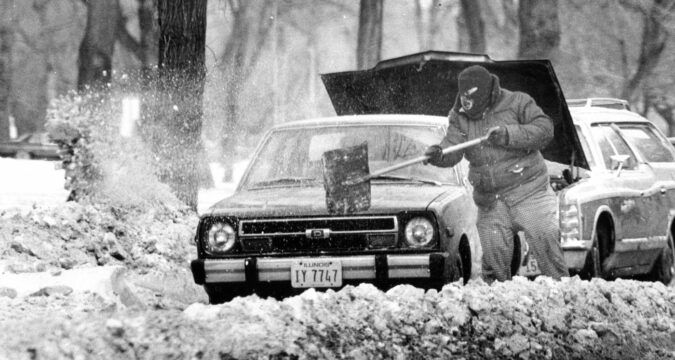
Today in Chicago History: At minus 26 degrees, the city was colder than Hell (Mich.)
Here’s a look back at what happened in the Chicago area on Jan. 10, according to the Tribune’s archives.
Is an important event missing from this date? Email us.
Front page flashback: Jan. 11, 1988
The Chicago Bears lost unexpectedly to the Washington Redskins on Jan. 10, 1988, at Soldier Field. It was the second consecutive year the Bears were knocked out of the playoffs by the Redskins, and also was Bears running back Walter Payton’s final NFL game. (Chicago Tribune)
“A whole bunch of eras ended for the Bears Sunday in Soldier Field, where the Washington Redskins knocked them out of the NFC divisional playoffs for the second year in a row, 21-17,” Tribune reporter Don Pierson wrote.
Running back Walter Payton gained 85 yards in his final NFL game. When asked why he lingered on the bench in the bitter cold after the clock ran out, he said he was simply avoiding retirement as long as he could.
“I didn’t want to hurry up the moment. I didn’t feel like forcing it,” Payton said. “(Being retired) hasn’t sunk in yet.”
Weather records (from the National Weather Service, Chicago)
High temperature: 60 degrees (1975)
Low temperature: Minus 26 degrees (1982)
Precipitation: 2.29 inches (1975)
Snowfall: 8.4 inches (2009)
People picket the use of mobile classrooms that were placed next to Guggenheim Elementary School at 7146 S. Sangamon St. in Chicago in 1963. (Al Phillips/Chicago Tribune)
1962: Chicago Public Schools earmarked $1.35 million for the purchase of mobile trailer classrooms.
Superintendent Benjamin Willis refused to allow Black children to be bused from their crowded neighborhood schools to those in white areas with more resources. That’s why the portable classroom trailers were nicknamed “Willis wagons” and became symbolic of the city’s long struggle over segregated education.
At minus 26 degrees, Jan. 10, 1982, was the coldest day in Chicago history until minus 27 degrees was recorded on Jan. 20, 1985. (Chicago Tribune)
1982: Chicagoans suffered through what was then the coldest day in city history — with a low temperature of minus 26 degrees.
Chicago weather: A look back at our coldest recorded temperatures
The bitter cold felt throughout the city was worse than what thermometers registered in the tiny town of Hell, Michigan, which was minus 17 degrees.
“There is not a place in Hell that isn’t frozen, but it sounds like you people have it a lot worse than we do,” Jan Davis of the Hell Creek Ranch, a recreation area about 20 miles north of Ann Arbor, told the Tribune. “We’re all warm, which is appropriate for Hell, don’t you think?”
The Dishonor Roll: Meet the public officials who helped build Illinois’ culture of corruption
1996: Chicago water commissioner John Bolden resigned his $102,792-a-year post after he told Mayor Richard M. Daley he took several thousand dollars from FBI mole John Christopher. Bolden was named as part of Operation Silver Shovel, which was the FBI’s more than three-year sting.
Bolden pleaded not guilty on April 11, 1997, to taking bribes. A jury found Bolden guilty of tax evasion in September 1997, but acquitted him of more serious charges.
Chicago Bears coach Matt Nagy and general manager Ryan Pace were both fired on Jan. 10, 2022, by the organization. (Chicago Tribune)
2022: Chicago Bears coach Matt Nagy was fired (and so was general manager Ryan Pace) after going 6-11 in Nagy’s fourth season.
From George Halas to Ben Johnson: What was said about every Chicago Bears coach when they were hired
Want more vintage Chicago?
Subscribe to the free Vintage Chicago Tribune newsletter, join our Chicagoland history Facebook group, stay current with Today in Chicago History and follow us on Instagram for more from Chicago’s past.
Have an idea for Vintage Chicago Tribune? Share it with Kori Rumore and Marianne Mather at krumore@chicagotribune.com and mmather@chicagotribune.com
https://www.chicagotribune.com/2026/01/10/january-10-chicago-history/

Today in History: President Barack Obama deliveres his farewell address in Chicago
Today is Saturday, Jan. 10, the 10th day of 2026. There are 355 days left in the year.
Today in history:
On Jan. 10, 2017, President Barack Obama delivered his farewell address in Chicago, in which the two-term Democrat urged national unity and highlighted achievements of his presidency including the Affordable Care Act. Republican Donald Trump took office days later after a 2016 election in which Trump defeated Democrat Hillary Rodham Clinton.
Obama’s Top 10 Chicago moments
Also on this date:
In 1776, Thomas Paine anonymously published his influential pamphlet, “Common Sense,” which argued for American independence from British rule.
In 1860, the Pemberton Mill in Lawrence, Massachusetts, collapsed and caught fire, killing as many as 145 people.
In 1861, Florida became the third state to secede from the Union prior to the Civil War.
In 1863, the London Underground was born when the Metropolitan Railway, the world’s first underground passenger railway, opened to the public with service between Paddington and Farringdon Street.
In 1920, the League of Nations was established as the Treaty of Versailles went into effect.
In 1946, the United Nations convened its first General Assembly session in London with 51 nations represented. The proceedings defined the scope and purpose of the world body.
In 1973, at least 40 workers were killed in an explosion and collapse of a large liquefied natural gas tank that was undergoing routine cleaning and maintenance in the New York City borough of Staten Island.
In 1982, San Francisco 49ers receiver Dwight Clark caught a touchdown pass from Joe Montana with 58 seconds left in the NFC Championship Game; one of the most famous plays in NFL history, “The Catch” led the 49ers to a 28-27 victory over the Dallas Cowboys and a berth in Super Bowl XVI, where they defeated the Cincinnati Bengals for their first Super Bowl victory.
Related Articles
Today in Chicago History: ‘McCaskey, you’re a bum!’ The coin flip that cost the Bears Terry Bradshaw.
Today in History: iPhone introduced
Vintage Chicago Tribune: Bears faced the Green Bay Packers in playoffs for the first time 85 years ago
Today in History: Joaquin ‘El Chapo’ Guzman captured
Today in Chicago History: Brown’s Chicken murders — 5 employees, 2 owners found dead inside Palatine restaurant
In 2013, a series of bomb blasts in Pakistan killed more than 100 people, including dozens who died in a sectarian attack in the southwest city of Quetta. Hundreds of others were injured.
Today’s birthdays: Olympic decathlon gold medalist Bill Toomey is 87. Singer Rod Stewart is 81. Rock singer-musician Donald Fagen (Steely Dan) is 78. Singer Pat Benatar is 73. Hall of Fame racing driver and team owner Bobby Rahal is 73. Actor-comedian Jemaine Clement is 52. Actor Sarah Shahi is 46. Business owner Jared Kushner is 45. Actor and singer Reneé Rapp is 26.

Cómo Estados Unidos podría hacerse con el control de Groenlandia y los posibles desafíos
Por EMMA BURROWS y BEN FINLEY
El presidente de Estados Unidos, Donald Trump, quiere hacerse con Groenlandia. Ha dicho repetidamente que Washington debe tomar el control de la isla, que tiene una ubicación estratégica y es rica en minerales, y es una región semiautónoma que forma parte de Dinamarca, aliada de la OTAN.
Funcionarios de Dinamarca, Groenlandia y Estados Unidos se reunieron el jueves en Washington y volverán a hacerlo la próxima semana para discutir un nueva iniciativa de la Casa Blanca, que está considerando una serie de opciones, incluyendo el uso de la fuerza militar, para adquirir la isla.
Trump señaló el viernes que va a hacer “algo con Groenlandia, les guste o no”.
Si no se hace “de la manera fácil, lo haremos de la manera difícil”, afirmó sin dar más detalles acerca de lo que podría significar eso. En una entrevista el jueves, le dijo a The New York Times que quiere poseer Groenlandia porque “la propiedad te da cosas y elementos que no puedes obtener solo firmando un documento”.
La primera ministra de Dinamarca, Mette Frederiksen, ha advertido que la toma estadounidense de Groenlandia supondría el fin de la OTAN, y los groenlandeses sostienen que no quieren formar parte de Estados Unidos.
A continuación, un vistazo a algunas de las formas en que Estados Unidos podría tomar el control de Groenlandia y los posibles desafíos.
Acción militar podría alterar las relaciones globales
Trump y sus funcionarios han manifestado que quieren controlar Groenlandia para mejorar la seguridad estadounidense y explorar acuerdos comerciales y mineros. Pero Imran Bayoumi, director asociado del Centro Scowcroft para Estrategia y Seguridad del Atlantic Council, dijo que el repentino interés en la isla es también el resultado de décadas de negligencia por parte de varios expresidentes hacia la posición de Washington en el Ártico.
La fijación actual se debe en parte a “la realización de que necesitamos aumentar nuestra presencia en el Ártico, y aún no tenemos la estrategia o visión adecuada para hacerlo”, apuntó.
Si Estados Unidos se hiciera con el control de Groenlandia por la fuerza, sumiría a la OTAN en una crisis, posiblemente existencial.
Aunque Groenlandia es la isla más grande del mundo, tiene una población de alrededor de 57.000 habitantes y no cuenta con un ejército propio. Su defensa es responsabilidad de Dinamarca, cuyo ejército es muy inferior al estadounidense.
No está clara cuál sería la respuesta de los demás miembros de la OTAN a una toma por la fuerza por parte de la Casa Blanca o si acudirían en ayuda de Dinamarca.
“Si Estados Unidos elige atacar militarmente a otro país de la OTAN, entonces todo se detiene”, declaró Frederiksen.
Trump sostiene que necesita controlar el territorio para garantizar la seguridad de su país, citando la amenaza de barcos rusos y chinos en la región, pero “no es cierto”, dijo Lin Mortensgaard, experta en política internacional del Ártico en el Instituto Danés de Estudios Internacionales, o DIIS.
Aunque probablemente haya submarinos rusos, como ocurre en toda la región ártica, no hay buques en superficie, añadió Mortensgaard. China tiene buques de investigación en el océano Ártico central, y aunque los ejércitos chino y ruso han realizado maniobras militares conjuntas en el Ártico, los ejercicios se realizaron más cerca de Alaska, apuntó.
Bayoumi, del Atlantic Council, dijo que duda que Trump vaya a hacerse con Groenlandia por la fuerza porque es una medida impopular tanto entre los legisladores demócratas como republicanos, y probablemente “alteraría fundamentalmente” las relaciones de Estados Unidos con sus aliados en todo el mundo.
Estados Unidos ya tiene acceso a Groenlandia gracias a un acuerdo de defensa de 1951, y Dinamarca y Groenlandia estarían “muy contentas” de acomodar una mayor presencia militar estadounidense, apuntó Mortensgaard.
Por eso, “hacer estallar la alianza de la OTAN” por algo que Trump ya tiene, no tiene sentido, aseveró Ulrik Pram Gad, experto en Groenlandia en el DIIS.
Acuerdos bilaterales pueden ayudar
El secretario de Estado de Estados Unidos, Marco Rubio, dijo a un grupo selecto de legisladores estadounidenses esta semana que era la intención del gobierno republicano sería comprar Groenlandia, en lugar de usar su poderío militar. Funcionarios daneses y groenlandeses han señalado con anterioridad que la isla no está en venta.
No está claro cuánto podría costar comprar la isla, o si Estados Unidos se la adquiriría a Dinamarca o a Groenlandia.
Washington también podría incrementar su presencia militar en Groenlandia “a través de la cooperación y la diplomacia”, sin llegar a ostentar el control, apuntó Bayoumi.
Una opción podría ser que Washington obtenga derecho a veto sobre las decisiones de seguridad tomadas por el gobierno groenlandés, como ocurre en islas del Pacífico, dijo Gad.
Palaos, Micronesia y las Islas Marshall tienen un Pacto de Libre Asociación, o COFA, con Estados Unidos.
Eso le da a la Casa Blanca el derecho de operar bases militares y tomar decisiones sobre la seguridad de las islas a cambio de garantías de seguridad de Estados Unidos y alrededor de 7.000 millones de dólares de ayuda económica anual, según el Servicio de Investigación del Congreso.
No está claro cuánto mejoraría con esto la estrategia de seguridad actual de Washington. Estados Unidos ya opera la remota Base Espacial Pituffik en el noroeste de Groenlandia, y, en virtud de los acuerdos en vigor, puede llevar tantos soldados como quiera.
Se espera que las operaciones de presión fracasen
La política groenlandesa Aaja Chemnitz dijo a The Associated Press que los habitantes de la isla quieren más derechos, incluida su independencia, pero no quieren pasar a fomar parte de Estados Unidos.
Gad sugirió que las operaciones de presión para persuadir a los groenlandeses de que se unan a Estados Unidos probablemente fracasarían. Esto se debe a que la comunidad es pequeña y su idioma es “inaccesible”, dijo..
El ministro de Exteriores de Dinamarca, Lars Løkke Rasmussen, convocó al principal representante estadounidense en Dinamarca en agosto para quejarse de que “actores extranjeros” estaban buscando influir en el futuro del país. La prensa danesa reportó que al menos tres personas vinculadas a Trump llevaron a cabo operaciones de influencia encubiertas en Groenlandia.
Incluso aunque Estados Unidos lograra hacerse con el control del territorio, esto le supondría un gran gasto, indicó Gad. Esto se debe a que los groenlandeses tienen ciudadanía danesa y acceso al sistema de bienestar danés, que incluye atención médica y educación gratuitas.
Para igualarlo, “Trump tendría que construir para los groenlandeses el estado de bienestar que no quiere para sus propios ciudadanos”, dijo Gad.
Es poco probable que se resuelva el desacuerdo
Desde 1945, la presencia militar estadounidense en Groenlandia ha pasado de miles de soldados en más de 17 bases e instalaciones, a 200 en la remota Base Espacial Pituffik, en el noroeste de la isla, de acuerdo con los datos ofrecidos por Rasmussen el año pasado. La base apoya las operaciones de alerta de misiles, defensa antiaérea y vigilancia espacial, tanto para Estados Unidos como para la OTAN.
El vicepresidente de Estados Unidos, J.D. Vance, señaló en declaraciones a Fox News el jueves que Dinamarca ha descuidado sus obligaciones de defensa antimisiles en Groenlandia, pero Mortensgaard apuntó que “tiene poco sentido criticar a Dinamarca”, porque el motivo principal por el que Washington opera la base de Pituffik isla es para proporcionar una detección temprana de misiles.
El mejor resultado para Copenhague sería actualizar el acuerdo de defensa, que permite a la Casa Blanca tener una presencia militar en la isla, y que Trump le estampe una “firma dorada”, dijo Gad.
Pero esto es poco probable porque, como sugirió, Groenlandia es “útil” para el mandatario estadounidense.
Cuando Trump quiere cambiar la agenda informativa, incluso para alejar la atención de los problemas políticos internos, “puede simplemente decir la palabra ‘Groenlandia’ y todo vuelve a empezar”, manifestó Gad.
___
Esta historia fue traducida del inglés por un editor de AP con la ayuda de una herramienta de inteligencia artificial generativa.

Protestas contra ICE en EEUU tras tiroteos en Minneapolis y Portland, Oregón
Associated Press
MINNEAPOLIS, Minnesota, EE.UU. (AP) — Ciudades y pueblos de todo Estados Unidos convocaron protestas en contra de la aplicación de la ley de inmigración para el sábado, después de que un agente federal disparó y mató a una mujer en Minneapolis y otro hiriera de bala a otras dos personas en Portland, Oregón.
Las movilizaciones se producen mientras el Departamento de Seguridad Nacional sigue adelante en las Ciudades Gemelas con lo que califica como su mayor operación de control migratorio hasta la fecha. El gobierno del presidente, Donald Trump, señaló que los dos tiroteos fueron actos de defensa propia contra conductores que emplearon sus vehículos “como armas” para atacar a los agentes.
Indivisible, una organización social creada para resistir a la administración Trump, dijo que había cientos de protestas programadas en Texas, Kansas, Nuevo México, Ohio, Florida y otros estados. Muchas fueron denominadas “ICE Out for Good” (“ICE fuera para siempre”) utilizando el acrónimo, en inglés, del Servicio de Inmigración y Control de Aduanas. Indivisible y sus secciones locales organizaron protestas en los 50 estados el año pasado.
En Minneapolis, una coalición de grupos por los derechos de los migrantes convocó una manifestación en Powderhorn Park, un gran espacio verde próximo al lugar donde Renee Good, de 37 años, fue baleada en un vecindario residencial el miércoles. La concentración y la marcha celebrarán la vida de Good y pedirán el “final del terror letal en nuestras calles”, agregaron.
Las protestas celebradas hasta el momento en el vecindario han sido pacíficas, en contraste con la violencia registrada en Minneapolis tras el asesinato de George Floyd en 2020 a manos de la policía. El jueves y el viernes se registraron algunos enfrentamientos cerca del aeropuerto entre grupos más pequeños de manifestantes y agentes que custodiaban el edificio federal utilizado como base para la campaña migratoria en las Ciudades Gemelas.
La Casa Blanca ha enviado a miles de agentes federales a Minnesota en el marco de una nueva y amplia ofensiva vinculada en parte a acusaciones de fraude que involucran a residentes somalíes. Más de 2.000 oficiales participaban en el operativo.
Algunos fueron trasladados allí tras su abrupta retirada de Luisiana, donde formaban parte de otra operación que comenzó el mes pasado y se esperaba que durara hasta febrero.
___
Esta historia fue traducida del inglés por un editor de AP con la ayuda de una herramienta de inteligencia artificial generativa.


