Category: News

Charles Schwab To Launch Spot Bitcoin Trading For Retail Clients
Charles Schwab To Launch Spot Bitcoin Trading For Retail Clients
Authored by Micah Zimmerman via Bitcoin Magazine,
Charles Schwab announced further details and plans in their attempt to launch direct spot bitcoin trading through its new platform, Schwab Crypto™, signaling a major step by one of the country’s largest brokerage firms into the digital asset market.
The feature will roll out in phases over the coming weeks and will allow retail clients to buy and sell bitcoin and ethereum through existing Schwab platforms, the bank said.
The move gives millions of Schwab clients the ability to trade bitcoin alongside traditional holdings such as stocks, ETFs, and mutual funds. Clients will access Schwab Crypto through Charles Schwab Premier Bank, SSB, which will act as custodian for the digital assets.
Blockchain infrastructure provider Paxos will handle sub-custody and trade execution under a federally regulated trust structure.
“Clients want to conduct more of their financial lives at Schwab,” said Jonathan Craig, Head of Retail Investing.
“With Schwab Crypto, they can trade digital assets within their existing accounts while drawing on the service, research, and tools they rely on.”
At launch, Schwab Crypto will enable direct trading in bitcoin and ethereum, which together represent about three-quarters of global crypto market capitalization.
Schwab will charge a transaction fee of 75 basis points on the dollar value of each trade, placing its pricing at the low end of the brokerage industry. Over time, the firm plans to add more cryptocurrencies and enable transfer capabilities for deposits and withdrawals.
Schwab said its platform will integrate digital assets across Schwab.com, the Schwab Mobile App, and the thinkorswim® trading suite. Clients will retain access to Schwab’s 24/7 customer service network, digital asset education through Schwab Coaching®, and research from the Schwab Center for Financial Research.
Charles Schwab is jumping into bitcoin
Joe Vietri, Head of Digital Assets at Schwab, described the launch as an extension of the firm’s broader digital strategy.
“Our goal is to be the destination of choice for retail investors who want to integrate digital assets into their portfolios with confidence,” Vietri said.
Paxos, a New York–based blockchain provider overseen by the Office of the Comptroller of the Currency, will supply the infrastructure that underpins the new trading offering. Its custody platform is already used by several global financial institutions seeking regulated access to digital assets.
Schwab already holds a strong presence in the digital asset ecosystem, with clients owning roughly 20 percent of spot crypto exchange-traded products.
The new feature expands Schwab’s reach beyond indirect crypto exposure through ETFs, mutual funds, and futures tied to cryptocurrency benchmarks.
The company’s entry into spot trading will position it alongside firms such as Coinbase, Robinhood, and Webull, which have long provided retail access to major digital currencies.
Tyler Durden
Fri, 04/17/2026 – 14:40
https://www.zerohedge.com/crypto/charles-schwab-launch-spot-bitcoin-trading-retail-clients
Record Share Of Home Sellers Cut Listing Prices In February: Report
Record Share Of Home Sellers Cut Listing Prices In February: Report
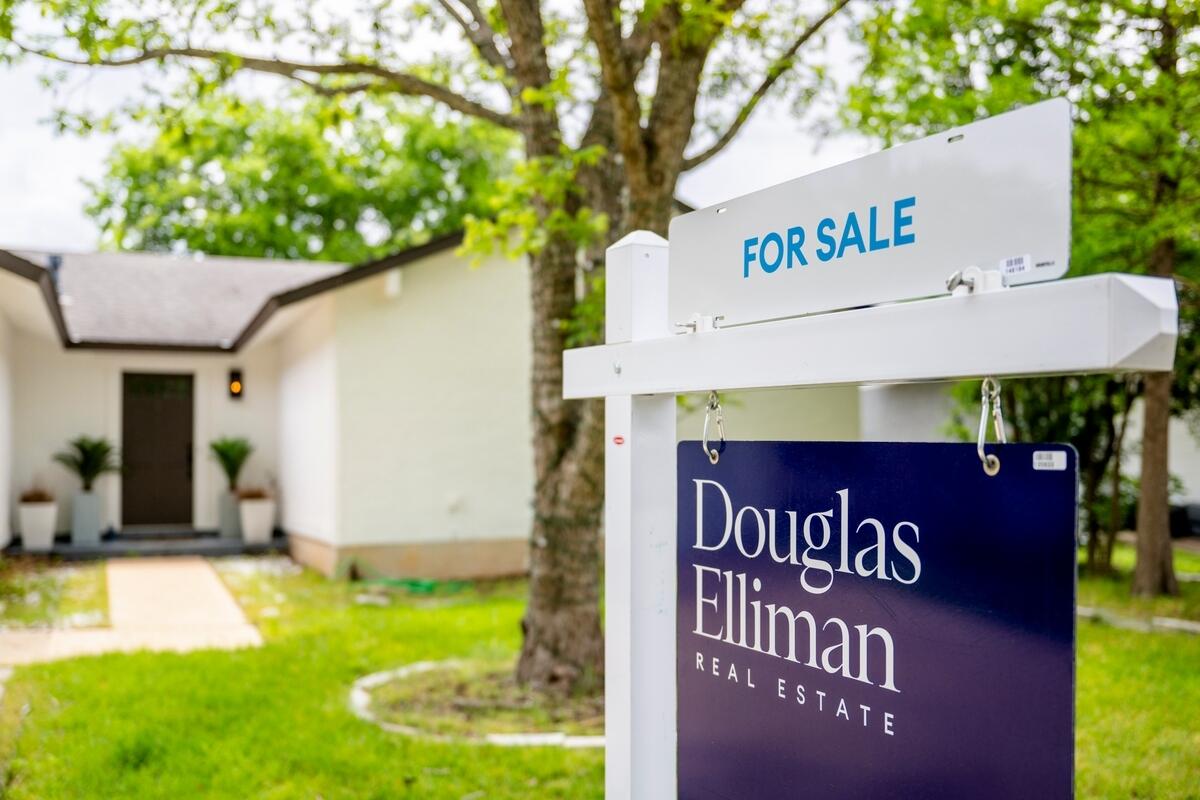
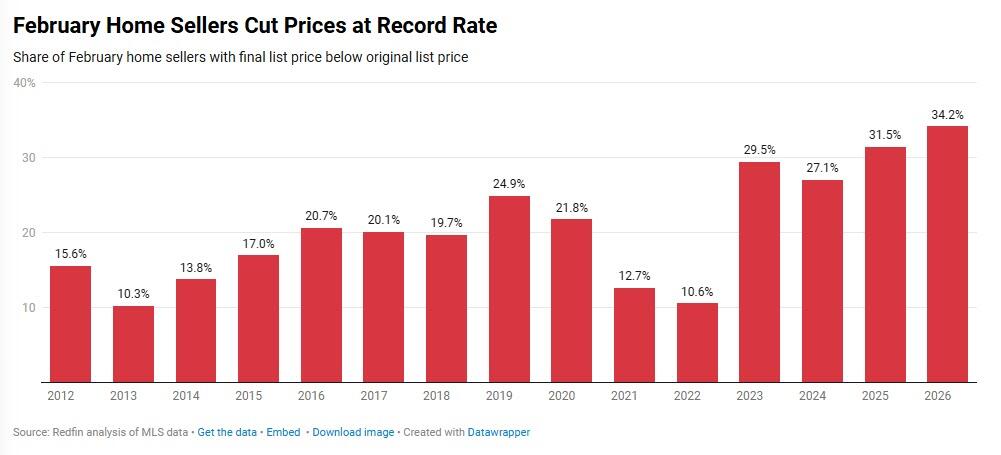
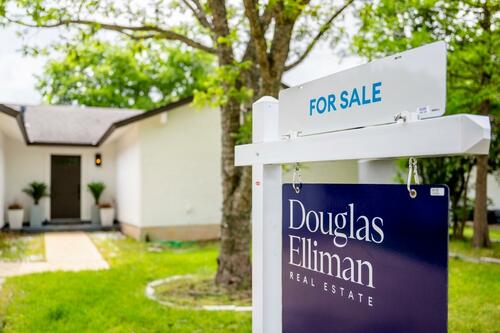
A record share of home sellers cut their listing prices in February as competition for homebuyers necessitated steep price reductions, an April 9 report by real estate platform Redfin said.
About 34.2 percent of sellers reduced their listing prices in February, up from 31.5 percent in the same month a year earlier, according to Redfin’s analysis of MLS data.
That was the highest February share since the firm began tracking MLS records in 2012.
The sellers who cut their listing prices reduced them by an average of $40,915, said Redfin.
That amounts to a 7.3 percent cut, the highest for any February since 2023.
Final sales prices could include further reductions due to negotiations on such items as closing costs, contingency fees, and other contractual stipulations.
“Price cuts are on the rise because it’s a buyer’s market,” said Redfin data journalist Lily Katz and senior economist Yingqi Xu.
“There are hundreds of thousands more home sellers in the market than buyers because buyers have been spooked by high mortgage rates, high prices and economic uncertainty. When sellers outnumber buyers, buyers can often negotiate on price because they have a lot of options to choose from.”
As The Epoch Times’ Bill Pan reports, in markets flush with new housing inventory, the number of sellers who slashed their listing prices was far more pronounced.
Nearly 60 percent of sellers in San Antonio, Texas, lowered their listing prices in February, Redfin reported, while slightly more than 55 percent of sellers in Austin, Texas, initiated price cuts, followed by Dallas (47.3 percent), Tampa, Florida (45.9 percent), and Fort Lauderdale, Florida (44.9 percent).
Homebuilding in Texas and Florida has begun to cool after years of growth and cyclical overbuilding, the National Association of Realtors (NAR) reported earlier this year. In Florida, home prices are being affected by rising insurance costs related to natural disasters, while condominium homeowner’s association fees have skyrocketed due to new safety regulations on older buildings more than three stories tall.
Conversely, sellers were far less likely to reduce prices in markets where housing inventory is limited. Just over 7 percent of sellers in San Francisco reduced their listing prices in February, with 11.1 percent of sellers in San Jose following suit. In Newark, New Jersey, about 13 percent of sellers dropped their listing prices.
Sellers who have been in their homes longer and have higher amounts of equity were less inclined to drop their sales prices, Redfin’s analysts noted.
“Many people bought during the peak of the pandemic market when home prices were soaring,” Katz and Xu wrote.
“In a lot of areas, prices have come down, meaning sellers are at risk of being underwater. Many of these sellers price high initially in an attempt to recoup their investment, only to find they must lower their expectations because the market has adjusted.”
Sales of existing homes rose by 1.7 percent in February from January to a seasonally adjusted annual rate of 4.09 million, according to the National Association of Realtors. However, sales were down by 1.4 percent year over year.
Tyler Durden
Fri, 04/17/2026 – 14:20

FIFA Rebukes NJ’s Lefty Governor In Transportation Dispute
FIFA Rebukes NJ’s Lefty Governor In Transportation Dispute
Authored by Luis Cornelio via Headline USA,
Leaders behind the 2026 FIFA World Cup rebuked New Jersey Gov. Mikie Sherrill after she launched what appeared to be a social media campaign complaining that the state would be stuck footing the bill for public transportation tied to the event.
The 2026 World Cup is set to span multiple days, including eight matches at New Jersey’s MetLife Stadium in June.
Estimates suggest the games could generate over $3 billion in economic impact for the region.
However, the state is expected to expand public transportation services, as has been typical for previous World Cup host sites.
The agreement between FIFA and New Jersey was signed under Sherrill’s predecessor, former Gov. Phil Murphy, a Democrat who left office in January.
“We inherited an agreement where FIFA is providing $0 for transportation to the World Cup,” Sherrill wrote on X, adding that New Jersey is expected to cover roughly $48 million in transportation costs.
“I’m not going to stick New Jersey commuters with that tab for years to come. FIFA should pay for the rides. But if they don’t – I’m not going to let New Jersey get taken for one,” she added.
FIFA pushed back, saying it was “quite surprised” by Sherrill’s remarks, as quoted by several media outlets.
“FIFA worked for years with host cities on transportation and mobility plans, including advocating for millions of dollars in federal funding to support host cities for transportation,” the organization said.
FIFA also pointed to the lack of precedent for such demands, noting that previous major events at MetLife Stadium did not require organizers to cover fan transportation costs.
FIFA have responded to this – and strongly.
“We are quite surprised by the NJ Governor’s approach today on fan transportation. The original FIFA World Cup 2026 Host City Agreements signed in 2018 required free transportation for fans to all matches. Recognizing the financial… https://t.co/ZHgGIIxo8n
— Adam Crafton (@AdamCrafton_) April 16, 2026
The dispute centers on how to move roughly 40,000 fans expected at MetLife during matches this summer.
The Sherrill administration has reportedly considered charging up to $100 per rider to transport fans from New York City to the stadium, located in East Rutherford, New Jersey, about 10 miles from Manhattan.
The logistics are complicated by the decision to prohibit parking at MetLife Stadium due to public safety concerns, forcing attendees to rely on mass transit, rideshares and chartered buses.
Tyler Durden
Fri, 04/17/2026 – 14:00
https://www.zerohedge.com/political/fifa-rebukes-njs-lefty-governor-transportation-dispute

Critical Metals Shares Surge 40% After Expanding Rare Earth Mining Position In Greenland
Critical Metals Shares Surge 40% After Expanding Rare Earth Mining Position In Greenland
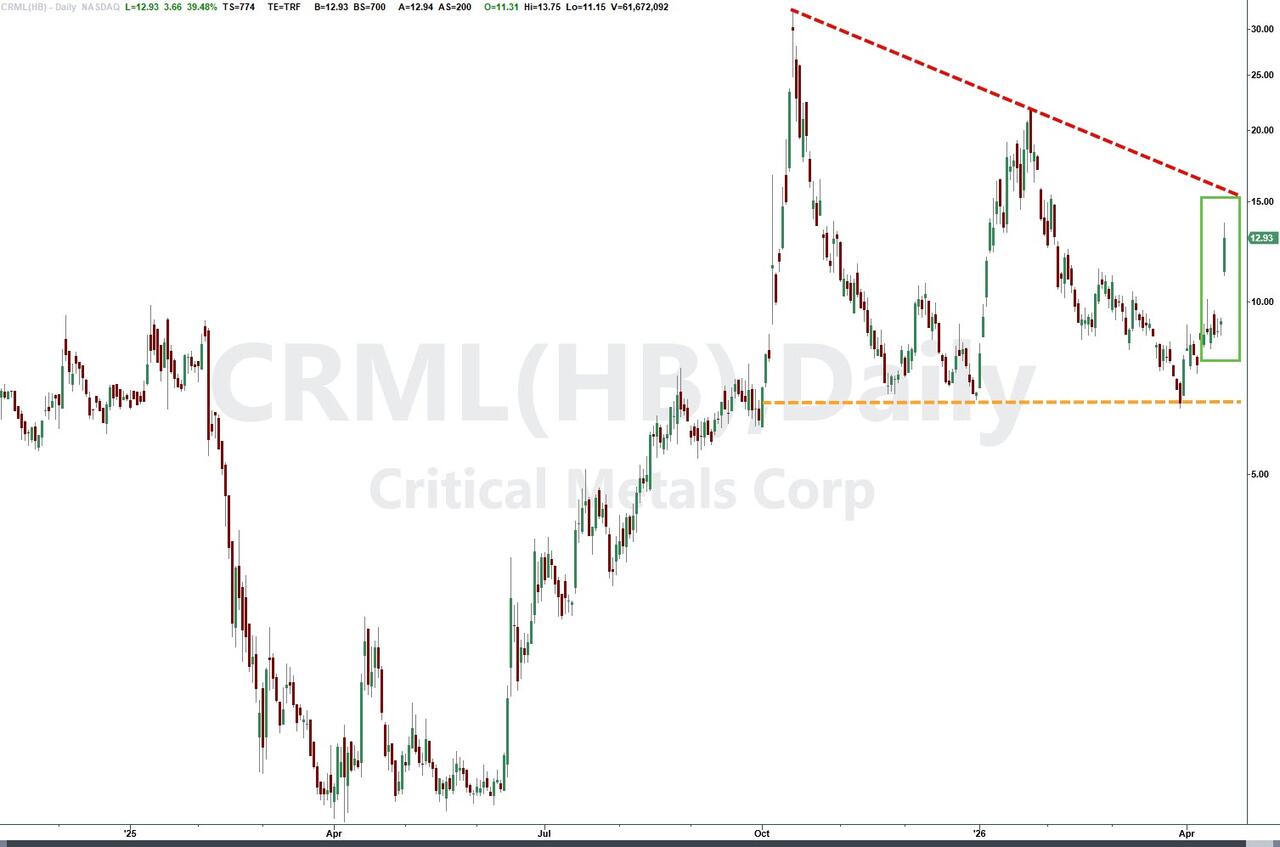
Critical Metals Corp. shares have surged as much as 45% in trading today after the company significantly expanded its position in Greenland’s Tanbreez rare earth project, tightening its grip on a resource it sees as central to a US-friendly supply chain, according to Bloomberg.
It marks the biggest intraday gain in half a year and lifting the company’s valuation to roughly $1.7 billion.
According to documents reviewed by Bloomberg, the firm raised its ownership to 92.5% by purchasing the remaining 50.5% stake it previously didn’t control from Rimbal Pty Ltd. The company confirmed the transaction in a statement released Friday.
With this deal, Critical Metals now holds a dominant share of Tanbreez, a deposit rich in rare earth elements such as terbium and dysprosium—materials essential for electronics and defense systems. The company describes Tanbreez as one of the largest known rare earth resources globally.
“We believe this important catalyst and hurdle now achieved helps to accelerate the approval by the Greenland government for permitting to commence mining,” said Analyst Tim Moore from Clear Street. He has a $20 price target on the name and sees the increased stake as “positive with funding matching estimates and control change being approved after previous delays”, per Bloomberg.
The acquisition comes amid a broader push by the US and its partners to lock in supplies of critical minerals and lessen dependence on China, which still leads the world in rare earth processing. Greenland, with its vast untapped reserves, has become an increasingly strategic location—though projects there remain costly and face regulatory hurdles.
Over the past year, Greenland has drawn growing attention from Washington, with renewed political and commercial interest reflecting its rising importance in global resource competition.
The island is no longer just a remote outpost—it’s becoming a focal point in the evolving economic and geopolitical relationship between Greenland and the United States.
Tyler Durden
Fri, 04/17/2026 – 13:40

Senate Votes To Repeal Biden-Era Mining Ban In Minnesota, Sending Bill To Trump
Senate Votes To Repeal Biden-Era Mining Ban In Minnesota, Sending Bill To Trump
Authored by Aldgra Fredly via The Epoch Times,
The U.S. Senate narrowly voted on April 16 to overturn a 20-year mining ban imposed by the former Biden administration on a national forest in northeastern Minnesota.
The measure, which passed 50–49 and will now advance to President Donald Trump’s desk, will reverse the previous administration’s mining ban on 225,504 acres in the Superior National Forest and pave the way for Twin Metals, a subsidiary of Chile-based Antofagasta, to carry out mining activities in the area.
Rep. Pete Stauber (R-Minn.), who sponsored the legislation, said on X that he was thankful for the Senate’s decision to approve the bill. The House approved the bill on Jan. 21.
“A major victory for America and Minnesota’s 8th Congressional District was secured today,” he wrote on X.
“Mining is our past, our present, and our future – and the future looks bright!”
The Biden administration imposed an order in 2023 to block mining in the Boundary Waters Canoe Area Wilderness and the surrounding watershed located in the Superior National Forest for 20 years. But Stauber said on Jan. 12 that the former administration did not properly transmit the required notice to Congress about the ban.
The vote to overturn the ban came under the Congressional Review Act, which gives Congress the authority to review and disapprove federal actions within 60 Senate session days of the action’s submission.
The Sierra Club, which has opposed overturning the ban, said mineral mining bans had not been considered rules that are subject to the Congressional Review Act in past administrations.
“The Boundary Waters is one of the country’s most iconic wilderness areas, visited by thousands every year. It should be a place for recreation and conservation, not for pollution and exploitation,” Athan Manuel, director of the Sierra Club’s land protection program, said in a statement.
Save the Boundary Waters, a nonprofit advocacy group, said the Senate’s passage of the measure “sets a dangerous precedent for public lands nationwide.”
“We’re not done fighting. There are still paths to stop this mine,” the group said in a post on X.
If the ban is lifted, the Trump administration will be free to reissue mining leases to Twin Metals, which has been trying to develop the mine for decades on land controlled by the federal government. The mine would need to undergo an environmental review and obtain permits.
Twin Metals said in a statement to multiple news outlets that the bill’s passage marked “a critical moment” for the United States’ efforts to strengthen its mineral supply chains.
“The Twin Metals team looks forward to a robust discussion and engagement with our communities through any future regulatory processes,” Twin Metals spokeswoman Kathy Graul said.
Tyler Durden
Fri, 04/17/2026 – 13:20

Microsoft Triples-Down On Data Centers, As Half Of Planned Projects Face Cancelations, Delays
Microsoft Triples-Down On Data Centers, As Half Of Planned Projects Face Cancelations, Delays
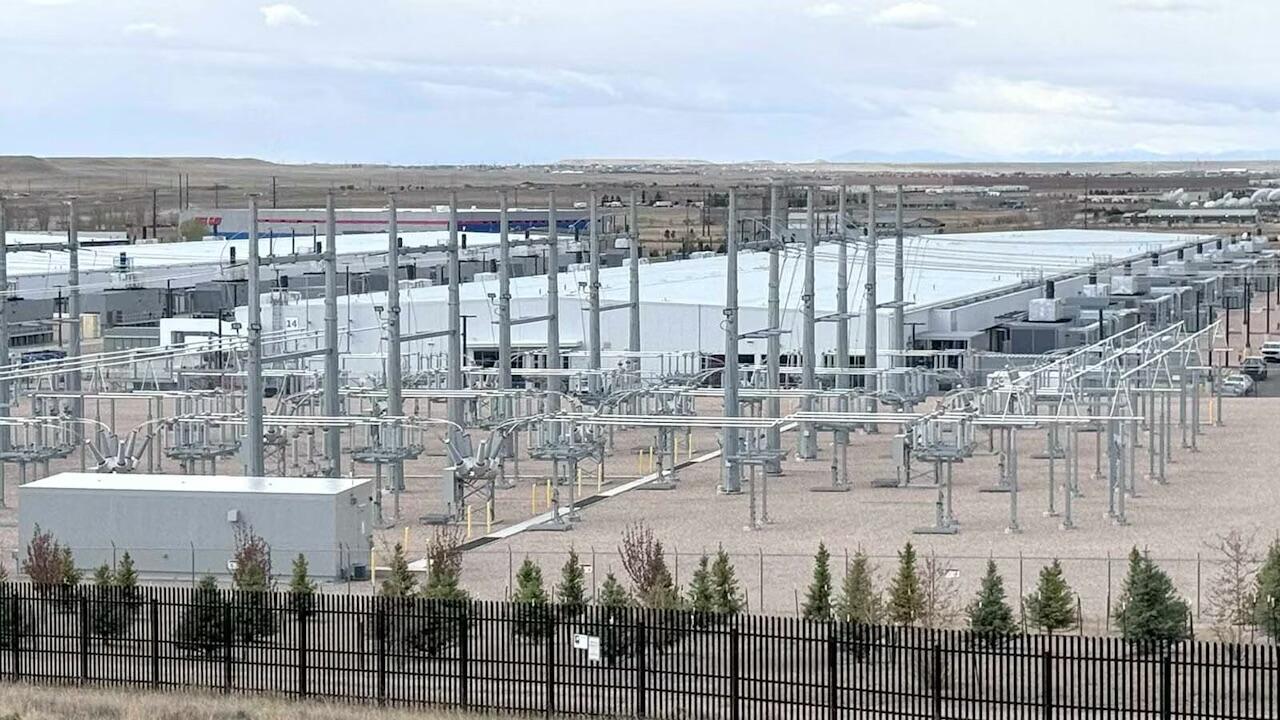
Microsoft unveiled plans to triple its data center footprint in Cheyenne, Wyoming, snapping up roughly 3,200 acres on the city’s south edge.
The deal covers a 200-acre parcel in Bison Business Park plus an adjacent 3,000-acre tract, turning what is already one of the company’s longstanding hubs into a sprawling complex.
With 11 data centers operational and three more under construction across four campuses, the tech giant is betting big on the Cowboy State’s energy resources and workforce.
A company spokeswoman called it a “commitment to continued growth,” citing the area’s skilled labor, solid infrastructure, and thriving energy sector.
The land grab hit the headlines amid a far less rosy picture for the data center frenzy in the United States and beyond. Announcements keep piling up at a disturbing clip, fueled by the AI “gold rush” and hyperscaler spending projected to top $700 billion this year alone.
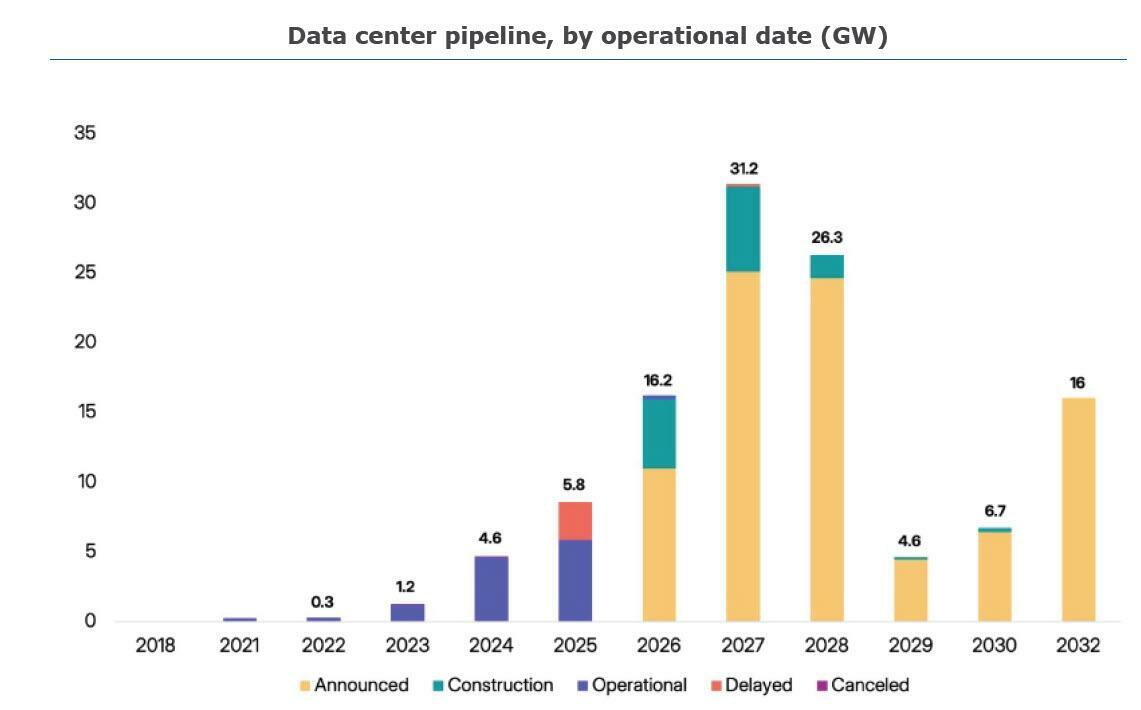
Earlier this week we reported that nearly half of the roughly 16 gigawatts of U.S. data-center capacity slated to come online in 2026 will likely face delays or outright cancellation. In fact, only about 5 gigawatts have even broken ground, according to Sightline Climate’s latest outlook. Supply-chain gaps, transformer shortages, and grid constraints are turning ambitious blueprints into paper tigers.
Even in Cheyenne, not everyone is popping champagne. State Senator Cale Case voiced caution about future ratepayer impacts and grid congestion,
“It looks good on paper,” Case said.
“But what happens down the road when those supplies become constrained? So, it’s not benign, and it takes a lot of thought. I don’t think you can ever say this is not going to impact other customers.”
In the UK, OpenAI recently paused its ambitious Stargate project over prohibitive energy costs and regulatory hurdles, as we recently highlighted. Wyoming’s climate and energy edge may insulate Microsoft’s Cheyenne bet for now, but the global wave of cancellations suggests many shiny press releases will never pour concrete.
Tyler Durden
Fri, 04/17/2026 – 12:40

US Chemists Turn Natural Gas Into Liquid Fuel Without High Heat And Pressures
US Chemists Turn Natural Gas Into Liquid Fuel Without High Heat And Pressures
Authored by Prabhat Ranjan Mishra via Interesting Engineering,
Chemists in the United States have discovered a new way to turn natural gas into liquid fuel.
The team from Northwestern University has successfully converted methane directly into methanol in a single step. They harnessed tiny bursts of plasma — or mini “lightning bolts” — in glass tubes submerged in water.
Methanol is a versatile, high-demand industrial chemical used to make many products people use every day.Employee/Alexander/Driscoll
Using pulses of high-voltage electricity
“We’re using pulses of high-voltage electricity,” said Northwestern’s Dayne Swearer, the study’s corresponding author.
“If the electrical potential is high enough, lightning bolts form inside of our reactor the way they do during a summer thunderstorm. We’re taking advantage of that chemistry to break methane’s bonds without heating the entire system to extreme temperatures.”
While the current method is reliable, it’s energy intensive and emits millions of tons of carbon dioxide per year globally. Using just electricity, water and a copper-oxide catalyst, the new process could offer a cleaner, electrified path to producing one of the world’s most widely used chemical building blocks, according to a press release.
Methanol is a versatile, high-demand industrial chemical
The team also revealed that the methanol is a versatile, high-demand industrial chemical used to make many products people use every day. It also is commonly used as an industrial solvent and is gaining attention as a cleaner-burning fuel for ships and industrial boilers.
One of the world’s most used commodity chemicals, methanol is a key ingredient in plastics, paints and adhesives. More recently, researchers have explored methanol as a promising liquid fuel because its combustion produces lower sulfur emissions and particulate pollution than gasoline and diesel, as per the release.
Industry generates methanol through a multi-step process
The team also pointed out that currently, the industry generates methanol through a multi-step process, starting with steam reforming. First, methane is reacted with steam at temperatures exceeding 800 degrees Celsius to break it into carbon monoxide and hydrogen. Then, those gases are recombined under extremely high pressures — 200 to 300 times standard atmospheric pressure — to form methanol. Tearing methane apart and rebuilding it consumes an enormous amount of heat and inherently generates carbon dioxide along the way.
“The extreme temperatures are needed to break the unreactive chemical bonds between carbon and hydrogen in methane,” Swearer said.
“Then, you must use high pressure to squeeze all those molecules together onto the catalyst in order to make the methanol molecule. It works, but it’s not the most straightforward path to making methanol from methane.”
For the new single-step process, James Ho, a Ph.D. candidate in Swearer’s lab and the study’s first author, built a plasma “bubble reactor,” which is essentially a porous glass tube coated with a copper oxide catalyst. Then, the team flowed methane gas through the tube while applying electrical pulses.
The electricity transformed the methane gas into plasma, splitting methane and water into highly reactive fragments. Those fragments then recombined to form methanol, which immediately dissolves into the surrounding water. That rapid “quenching” stopped the chemical reaction at the right moment, preventing the methane from decomposing into carbon dioxide.
“More than 99% of the observable universe is comprised of plasma,” said James Ho. “But even though it’s ubiquitous, it really is an untapped resource in the field of chemistry. The reason we use cold plasmas is because we can produce them at low temperatures and normal atmospheric pressure conditions.”
Tyler Durden
Fri, 04/17/2026 – 12:20

Cybertruck Sales “Propped Up” By SpaceX Buying Spree
Cybertruck Sales “Propped Up” By SpaceX Buying Spree
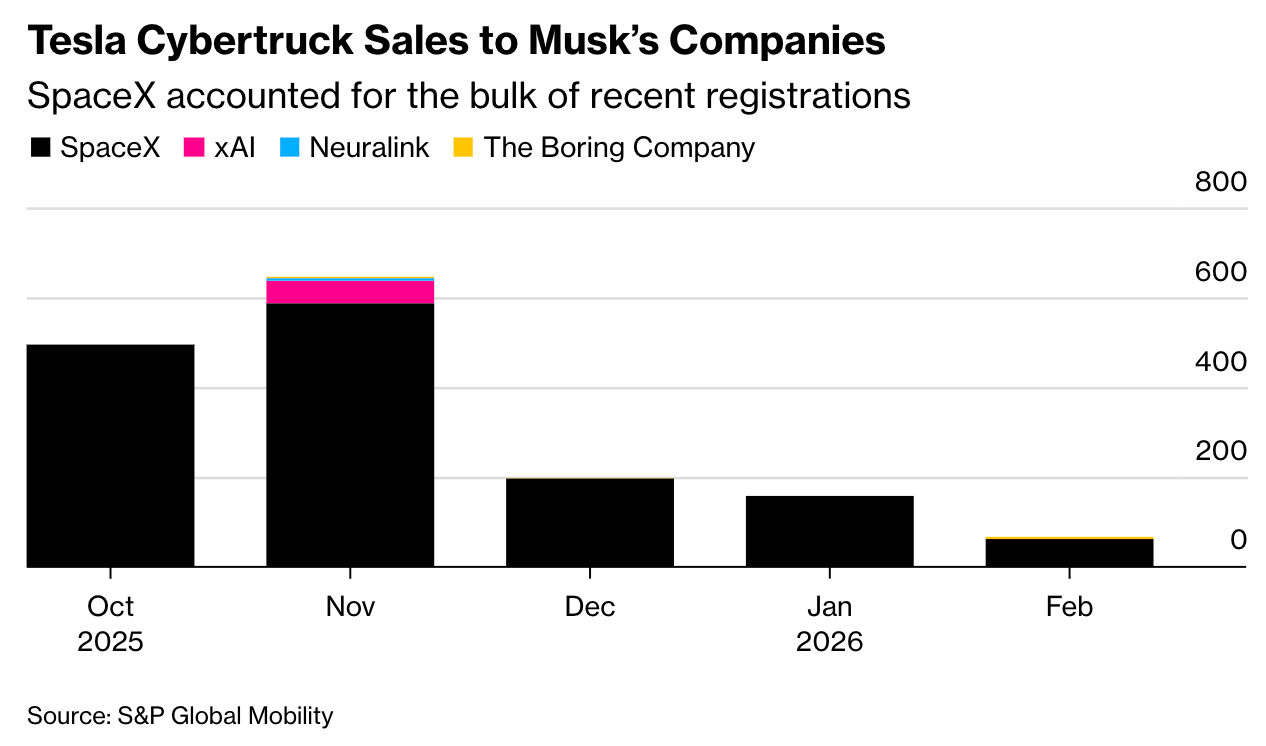
Bloomberg is out with a new report saying Tesla’s Cybertruck sales were “propped up” in the fourth quarter by purchases from companies inside Elon Musk’s business empire.
SpaceX accounted for 1,279 Cybertruck registrations, or about 18% of all U.S. Cybertruck registrations during the last quarter of 2025. The report went on to say that xAI, Boring Co., and Neuralink also purchased the stainless-steel EV during the period.
“That means almost one in every five Cybertrucks registered during the period were delivered from one part of Musk’s sprawling business empire to another,” Bloomberg’s Dana Hull noted.
Hull added, “Without those sales to other Musk-run companies — which included xAI, Boring Co. and Neuralink, in addition to SpaceX — Cybertruck registrations in the fourth quarter would have fallen 51%.”
Hull quoted Sam Fiorani, vice president of global vehicle forecasting for advisory firm AutoForecast Solutions, who said, “Tesla is running out of buyers for the Cybertruck.”
Hull said the registration data was sourced from S&P Global Mobility and, in her words, suggests only that “demand for the pickup is fading just two years after launch.”
Cybertruck’s struggles are not unique to Tesla. In fact, electric pickups have been a major bust across the U.S. EV market. Ford recently converted its electric F-150 Lightning production lines to extended-range hybrid vehicles. And we’re sure in President Trump’s war economy, autos will be converting EV lines or other production lines into making weapons (read report).
Despite the continued downturn in EVs, Cox Automotive data show the Cybertruck was still the top-selling EV truck in the U.S. in the first quarter.
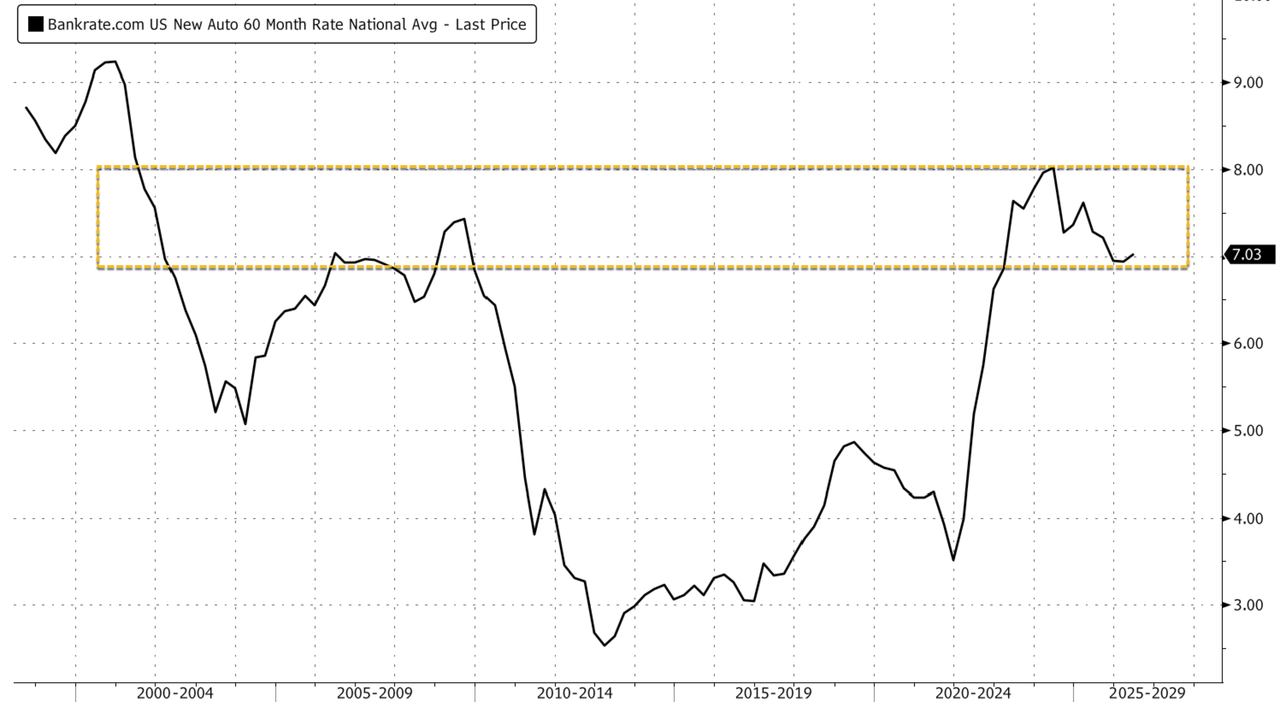
High sticker price and elevated interest rates are likely major factors behind the Cybertruck’s dismal sales. Bankrate data show the national average 60-month loan rate for new vehicles is still above 7%, down from 8% during the Biden years but still sharply higher than the sub-4% levels seen in 2021.
Federal subsidies for EVs have also been cut under the Trump administration’s second term.
Tyler Durden
Fri, 04/17/2026 – 12:00
https://www.zerohedge.com/markets/cybertruck-sales-propped-spacex-buying-spree

Hochul Joins Mamdani In New York’s “Eat The Rich” Movement
Hochul Joins Mamdani In New York’s “Eat The Rich” Movement
The hunt is on…
New York City Mayor Zohran Mamdani used Tax Day to announce a new fee targeting wealthy people who still linger in the city after moving their primary residences to other states.
The tax, called pied-à-terre (or “foot on the ground”) is designed to hit people who still maintain high-value properties in the city. It is a remarkably moronic effort to ensure that wealthy people cut all ties with the city. However, Gov. Kathy Hochul has yielded to the far left and joined the effort.
Mamdani, a socialist who supports the “decommodification” of private property, is seeking major tax increases, including a 10% property tax, to fund his pledges for free buses, city-run stores, and other policies.
He will need it. Mamdani not only recently admitted that he cannot fulfill his pledge for free buses this year, but that he will only build the first of five promise city-run stores next year at the cost of $30 million — almost half of what he set aside for all five promised stores.
The new measure would add a fee to existing taxes for owners of high-value properties worth more than $5 million.
Mamdani declared the new fee part of “Happy Tax Day,” which will generate $500 million more to “help fund things like free child care, cleaner streets, and safer neighborhoods.”
He is also pushing Hochul to increase taxes on the 33,000 New Yorkers earning more than $1 million annually as well as those corporations that have not left the state. Other blue states from Washington to Virginia are moving toward similar millionaire taxes.
The move is consistent with other blue states seeing the same exodus of wealthy taxpayers and businesses due to the rising budgets and tax burdens. Rather than seeking to make their states magnets for investment, California and other states are pursuing retroactive wealth taxes and so-called “Teddy Bear laws” that refuse to recognize changes of residency.
New York has used its “Teddy Bear” regulations to declare that people who fled to other states are still residents subject to taxation because of the location of their sentimental attachments in New York (like a Teddy Bear) from pets to children.
In my new book, “Rage and the Republic,” I discuss these taxes and how they are the final stage of economic atrophy for states like New York. Politicians like Hochul cannot muster the courage to face bloated budgets, excessive union pension contracts, and runaway spending. In other words, it is too difficult to create a state that draws investment and residents like so many red states. Instead, they are chasing the remaining wealthy people who still maintain contacts with the state.
The result is a form of economic Darwinism in which the herd of wealthy taxpayers is thinned further by capturing the slowest or most nostalgic individuals.
The irony is that Houhul and Mamdani are working to cut the final ties of these former residents, convincing them that they are viewed as parasites to be pursued relentlessly for more taxes.
In Rage and the Republic, I discuss these efforts as a dangerous form of “economic factionalism,” a popular tactic historically used by demagogues to curry public favor by vilifying the wealthy.
Mandani denounced those who “store their wealth in New York City real estate [and] reap the huge financial rewards” while “hurt[ing] working New Yorkers.”
This is evident in the renewed claims of figures such as Sen. Elizabeth Warren (D., Mass.), who used Tax Day to renew calls for her unconstitutional wealth tax.
Warren posted on X that “It’s time to make the ultra-wealthy pay their fair share. It’s time to pass a wealth tax.”
Socialist Vermont Sen. Bernie Sanders also made the same claim. In a Guardian op-ed, Sanders cited shocking figures claiming that Elon Musk pays a tax rate of only 3.3% while Jeff Bezos pays less than 1%.
The claim comes from the dubious source ProPublica, which performs a statistical sleight of hand. In reality, the publication shows that figures like Jeff Bezos paid $973 million in taxes on income of $4.22 billion. That is a 23% tax burden, not less than 1%. Musk paid 30% with a $455 million tax bill.
The top 1% of taxpayers in this country paid roughly 40% of all taxes. The top 5% pays over 40% of taxes.
The Democrats are committed to economic factionalism as a strategy for the midterm elections. It is a major driver of the rage politics that many hope will allow them to regain power in November. It will come at a great cost to states like New York.
Hochul and Mamdani can hunt down the remaining wealthy taxpayers lingering in their state. In the end, it will not generate nearly as much revenue as it will cost as residents and businesses look elsewhere for position living and business environments.
The best way to improve the standard of living in these states is to improve their economies and tax bases. Instead, blue states like California and New York are raising costs across the board, including through pushes for a $ 30-per-hour minimum wage. In California, the massive increases in the minimum wage have already resulted in substantial job losses and business closures.
It is unlikely that many wealthy individuals will stick around to experience what Mayor Mamdani calls “the warmth of collectivism.” Instead, it will be average New Yorkers who are burned by his “eat the rich” policies.
Jonathan Turley is a law professor and the best-selling author of “Rage and the Republic: The Unfinished Story of the American Revolution.”
Tyler Durden
Fri, 04/17/2026 – 11:40
https://www.zerohedge.com/political/hochul-joins-mamdani-new-yorks-eat-rich-movement

Kamikaze Drone Maker Raises $320 Million In U.S. IPO As ‘War Unicorns’ Rise
Kamikaze Drone Maker Raises $320 Million In U.S. IPO As ‘War Unicorns’ Rise
The rise of “war unicorns” will be an impressive development to watch over the next several years, as we’ve diligently laid out for readers for months, well before the U.S.-Iran conflict, how a massive government push and in capital markets would begin to prioritize the next generation of defense-tech firms rather than big, bloated legacy defense contractors.
Aevex, a military drone maker backed by Madison Dearborn Partners, is the latest example of capital markets getting excited about war unicorns, with the company selling 16 million shares at $20 each in an IPO, with shares expected to begin trading on Friday. The deal was reportedly oversubscribed multiple times, according to Bloomberg sources.
Aevex is a direct public-market play on low-cost kamikaze drones, with a sizable portion of last year’s revenue linked to Ukraine. It has two unmanned systems programs, Phoenix Ghost and EUCOM AOR Deep Strike, that have delivered or committed to deliver more than 9,300 units, representing about $1.2 billion in contract value through the end of this year.
The war unicorn is positioned to benefit from the Department of War’s massive shift toward startups that can produce advanced weapons at a fraction of the cost and on a faster timeline than the large primes, such as Lockheed and Boeing. There is also a major shift within the DoW toward low-cost advanced weapons systems, such as drones and AI kill chains.
Aevex sees demand for unmanned systems expanding to $11 billion in the U.S. and $26 billion globally by 2030.
Bloomberg noted that Aevex posted a net loss of $16.9 million on $432.9 million in revenue in 2025, compared with net income of $78.5 million on $392.2 million in revenue a year earlier.
Aevex’s public debut is only the beginning of war unicorns tapping public markets. We’ve outlined how the DoW’s procurement process has been reset to favor startups. The DoW is also setting up a 30-person investment banking team called the “Economic Defense Unit” to deploy $200 billion in private equity over three years to fund these unicorns.
Follow the money: President Trump’s war economy is being spun up …
War Economy Returns: From Trucks To Tanks, Pentagon Looks To Automakers To Rebuild America’s Arsenal
What comes next, particularly in the U.S. market, is a rapid push to harden the airspace over critical infrastructure, data centers, and other high-value assets, because there is an alarming gap in the low-cost air defense layer against FPVs. Lessons from conflict areas across Eurasia are being learned at hyperspeed.
Tyler Durden
Fri, 04/17/2026 – 11:20
https://www.zerohedge.com/markets/kamikaze-drone-maker-raises-320-million-us-ipo-war-unicorns-rise