Category: News

Brooklyn Beckham accuses David and Victoria of putting branding before family, sabotaging wedding
LOS ANGELES — A Beckham family falling-out has spilled further into public view in a series of social media posts from Brooklyn Beckham alleging that his parents David and Victoria Beckham have tried to sabotage his marriage and have always prioritized public branding over their family relationships.
“For my entire life, my parents have controlled narratives in the press about our family. The performative social media posts, family events and inauthentic relationships have been a fixture of the life I was born into,” Brooklyn Beckham wrote in several pages of text posted via Instagram stories.
At 26, he’s the eldest of the four children of the retired English soccer superstar and former Spice Girl-turned-fashion designer and has worked as a model and photographer, even aspiring to be a chef. He married American actor Nicola Peltz, daughter of activist investor Nelson Peltz, in 2022.
“Recently, I have seen with my own eyes the lengths that they’ll go through to place countless lies in the media, mostly at the expense of innocent people, to preserve their own facade. But I believe the truth always comes out,” the posts said.
The posts make public a barely veiled feud that had been brewing in anonymously sourced stories in tabloids for months. Younger brother Cruz Beckham said on Instagram in December that Brooklyn had blocked family members on social media.
“I do not want to reconcile with my family.” Brooklyn Beckham wrote. “I’m not being controlled, I’m standing up for myself for the first time in my life.”
Unlike his three younger siblings, Brooklyn Beckham did not appear in his mother’s recent Netflix docuseries, and did not show up at the October premiere.
Many of the grievances described in the Instagram stories stem from the Peltz-Beckham wedding in Florida. He accused his mother of bailing at the last minute on designing Peltz’s wedding dress, and said she “hijacked” the first dance he was supposed to have with his wife to music performed by Marc Anthony.
“She danced very inappropriately on me in front of everyone,” Brooklyn Beckham wrote. “I’ve never felt more uncomfortable or humiliated in my entire life.”
Without giving specifics he also wrote that before the wedding his parents “repeatedly pressured and attempted to bribe me into signing away the rights to my name.”
David and Victoria Beckham did not have an immediate public response to the posts, and messages to representatives from The Associated Press were not immediately answered.
In a Tuesday appearance on CNBC, David Beckham, who is at the World Economic Forum in Davos, Switzerland, did not directly address his son’s statements, but said that children make mistakes on social media, and should be allowed to.
“That’s what I try to teach my kids. But you know, you have to sometimes let them make those mistakes as well,” he said.
Married since 1999, David and Victoria Beckham have three other children, 23-year-old Romeo, 20-year-old Cruz and 14-year-old Harper.
https://www.chicagotribune.com/2026/01/20/beckham-family-branding/

Leftists Call For Political Purge Of MAGA If They Return To Power
Leftists Call For Political Purge Of MAGA If They Return To Power
You might have thought it wasn’t possible, but leftist activist rhetoric has become even more unhinged than usual in the past month as ICE agents try to do their lawful jobs in Democrat controlled sanctuary cities like Minneapolis.
During the Obama Administration, ICE carried out millions of deportations of illegal aliens without a peep from progressives. Suddenly, under Trump these same operations are now being called “fascism” and grounds for insurgency. The reason these arrests have led to more violence today is not because of ICE, it is because NGO paid and trained activists are getting in the way.
First, impeding law enforcement officials, blocking roads, sabotaging vehicles and physically assaulting agents is not a legal form of protest.
Second, the American public voted for mass deportations to happen; not just for migrants who break the law after they sneak into the US, but for all migrants who sneak into the US. Democrats and a radical minority of activists are therefore attempting to disrupt the democratic process and prevent the Trump Administration from carrying out the will of the people.
But it doesn’t stop there.
A narrative is building among Democrat politicians and NGO activists alike which is essentially calling for a political purge of conservatives if progressive leaders return to government power in the next few years. Multiple blue city mayors, governors and police administrators have already threatened to “arrest ICE agents” for carrying out deportations within sanctuary city jurisdictions.
Jacob Frey and Tim Walz made thinly veiled threats suggesting that local police could intervene. Walz called on residents of Minneapolis to film all ICE agents so that they could be “prosecuted later.”
Jacob Frey says residents are calling on Minneapolis police to fight ICE agents.
Watch the police chief’s face when he says this.pic.twitter.com/fwHVCTsxd7
— Breanna Morello (@BreannaMorello) January 15, 2026
These speeches echo sentiments of leftists on social media calling for a Stasi-like purge if Democrats get back control of Congress and the White House. They assert that ICE agents can be identified and later imprisoned for enforcing basic immigration laws, even if their deportation arrests were legal and constitutional at the time.
TIM WALZ: “If you see these ICE agents in your neighborhood, take out that phone and hit record.”
“Help us create a database of the atrocities against Minnesotans, not just to establish a record for posterity, but to bank evidence for future prosecution.” pic.twitter.com/V7fCMY3WZ1
— Fox News (@FoxNews) January 15, 2026
The Trump Administration and ICE have responded, asserting that such actions would constitute an insurrection. In other words, blue cities would be at war with the federal government.
Philadelphia “Sheriff” @PhilaSheriff Rochelle Bilal should resign before she embarrasses herself any further.
“Arresting ICE officers”?
Try it. See what happens. pic.twitter.com/IZgvHN9RyV
— U.S. Immigration and Customs Enforcement (@ICEgov) January 10, 2026
The insanity of leftists, however, is not to be taken lightly. Activist influencers want Trump and anyone associated with him thrown in the gulag. They are even suggesting that they can drag Trump and his allies before a tribunal and Democrats will “find the crimes” they are guilty of. As Lavrentiy Beria, head of Stalin’s secret police in the Soviet Union allegedly stated:
“Show me the man, and I’ll show you the crime…”
Ex-CNN host Jim Acosta and Democrat podcaster Jennifer Welch recently agreed that the left needs to take revenge on President Donald Trump. Not just by winning elections, but by putting him in prison for winning his election.
WEAPONIZATION: Democrat activists Jennifer Welch and Jim Acosta say mass prosecutions of Trump and Republicans would be necessary for national reconciliation when Democrats regain power, arguing that expanding the SCOTUS would be required to jail Trump. pic.twitter.com/0a8hfU9qiq
— @amuse (@amuse) January 17, 2026
Elon Musk took to X and posted a warning to conservatives in response to the clip, stating: “They mean it.”
This is not a new tactic for Democrats. They attempted to jail Trump a number of times on fabricated charges in order to prevent him from running for office in 2024. They imprisoned around 1270 J6 protesters for an insurrection that never happened in order to make an example. They went after Trump’s political allies with arrests and lawsuits. They tried to bury Musk with investigations and red tape. All of this was designed to undermine any chance of conservatives regaining a presence in government.
Without a doubt, if Democrats somehow steal the kind of power they once had during the Biden Administration, they will take action to ensure no one is able to take it from them again. Or, they will start a civil war in the process.
Tyler Durden
Tue, 01/20/2026 – 16:45
https://www.zerohedge.com/political/leftists-call-political-purge-maga-if-they-return-power

Mayor Brandon Johnson says he will not try to buy back Chicago parking meters
Mayor Brandon Johnson said Tuesday the city will not try to buy back Chicago’s parking meters after all, following days of speculation over whether he would attempt to find a way out of an infamous sale almost two decades ago.
Speaking to reporters at an unrelated event, the mayor confirmed he will forgo potentially purchasing the meters from the private company Chicago Parking Meters LLC.
Johnson said his team looked into making a bid for the citywide system, which the company took control of for $1.2 billion in a 75-year lease the City Council approved at Mayor Richard M. Daley’s behest in 2008, but determined the cost was “far too high.”
He said it would cost at least twice as much as that original lease price to buy the meters back, adding that the cash-strapped city would need to borrow to finance the purchase.
Chicagoans overwhelmingly hate the deal — which has seen the private investors already recoup their investment and then some with decades of control ahead of them and parking rates continuing to rise — and City Hall has been trying for years to figure out how to break it, to no avail.
“I want to put the rumors to bed. We are not pursuing a purchase of the city’s parking meters at this time,” Johnson said. “This purchase would have made a bad deal even worse. The price was too high and requires debt service payments that extend too far and impose too much risk. Chicagoans would most likely end up footing the bill yet again for this original decision to privatize our parking.”
The mayor said any potential buyback would require all parking revenues to go toward debt service for about the next four decades, which “would eliminate the flexibility to lower rates for residents or remove parking meters to make way for pedestrian ways and bike lanes.”
The council, in turn, would have to vote on hiking parking rates year after year, Johnson argued. He hinted that public transit expansion, automated vehicles and additional bike lane construction could also impact future parking habits, making any revenue projections on a meter purchase deal premature.
A spokesperson for Chicago Parking Meters did not immediately respond Tuesday. Johnson declined to share specifics on the negotiations beyond his remarks on the purchase price.
The company reported over $160 million in parking revenues in 2024, up from nearly $151 million in 2023, the two most recent years for which revenue data is available.
Top Johnson advisor Jason Lee shared little Tuesday morning, citing a non-disclosure agreement, but he broadly criticized the original parking meters sale. The contract was one sided and the money the deal raised for Chicago was quickly spent, he said.
“Things come across the desk and we do due diligence on things that are presented,” Lee said ahead of Johnson’s announcement. “You have a fiduciary responsibility to look at all possibilities.”
Facing the fallout from the 2008 recession, the city sold a 75-year lease of the city’s 36,000 parking meters to a private buyer led by Morgan Stanley, agreeing to also boost fees for the first time in 20 years. Though it was the first of its kind nationally, it was just one privatization effort under Daley, coming on top of the lease of the Skyway toll road, downtown parking garages, and the attempted, but failed privatization of Midway Airport.
The deal was set to net the city about $1.15 billion — with $150 million being dedicated to plugging the city’s deficit and $400 million being put into a long-term reserve.
Had the city kept the meters and raised rates to the same level it pledged in securing the deal, it was estimated back in 2009 the city would have still earned about $1.5 billion over time.
Between 2009 and 2024, the meters had brought in more than that, however — $1.97 billion in parking revenues alone, $1.87 billion in gross profits and net operating income of $1 billion, according to CPM audits. Meanwhile, the city ran through much of the initial payout to plug early budgets.
Mayor Rahm Emanuel revised the deal in 2013 to allow for free Sunday parking, different hours of operation and the ability for drivers to pay by phone. Efforts to unwind the lease have been unsuccessful. That included a 2009 lawsuit arguing the privatization deal went against the city’s right to create parking and traffic policy and tied future officials’ hands; and a 2021 class-action suit alleging CPM had a “monopoly” that was unfair to drivers.
The bad agreement of the past only made it more important for Johnson and his team to be judicious, Lee said. “It would be easy in a fit of exuberance to rush into another bad deal. So you have got to be very careful and scrutinous because there’s a lot of risk.”
The City Council would need to approve any parking meter sale, to the city or a new private owner, Lee said. Such a review could give Johnson and aldermen a chance to win more favorable terms from a buyer, even if the city does not buy the system itself.
Ald. Bill Conway, 34th, said Tuesday morning he first heard of a planned sale of the meters by its current owner from friends in private equity. The downtown alderman, a DePaul University finance professor himself, believed the latest debt sale by Johnson’s administration – unnecessarily large, in his view – may have been sized with a parking meter deal in mind.
Whether or not a new deal would have been a good idea would have depended on a number of factors, he said, speaking before Johnson’s backed away from the rumored purchase. Major changes in how Chicagoans use cars make the matter hard to predict, he added.
“The devil’s in the details,” he said.

Dogsledding goes off with a hitch at Glenview’s Yukon Adventure Day
With little snow on the ground but frigid temperatures evoking the great north, dogsled teams pulling wheeled carts — rather than sleds — delighted visitors who braved the cold Saturday, Jan. 17 at the Glenview Park District’s event, called Robert’s Yukon Adventure Day.
It was the fourth year of the event, held at The Grove National Historic Landmark, 1421 Milwaukee Ave., Glenview.
The “Robert” in “Robert’s Yukon Adventure Day” refers to Illinois’ first naturalist, Robert Kennicott, who grew up at The Grove and took two expeditions to the Yukon in 1859 and 1865.
“This event is a great way to celebrate The Grove’s rich heritage,” said Lorin Ottlinger of Glenview, The Grove’s director.
“Robert Kennicott spent spent a lot of time in The Yukon and what a perfect day we have to simulate the Yukon.
“Everybody loves coming out and seeing the dog sleds and the dogs and walking around and experiencing a little taste of what Robert Kennicott might have experienced back in the 1800s,” Ottlinger added.
Diane J. Michalski, The Grove’s recreation program supervisor, said, “Robert’s Yukon Adventure Day gets individuals out in the winter and brings people of all ages and backgrounds together around shared learning, fun and local heritage.
Using a wheeled cart rather than a dogsled due to the meager amount of snow, the Adopt-A-Husky dog sled team completes a run at Robert’s Yukon Adventure Day on Jan. 17, 2026 at The Grove National Historic Landmark in Glenview. (Karie Angell Luc/Pioneer Press)
“By embracing winter, a season when people might otherwise stay indoors, the event gets the community outside together.
“The Grove itself is a historic and ecological hub in Glenview,” Michalski added, “a place community members visit year-round for nature, history and learning.”
The four-hour midday event included snow shoeing and other snow activities, hot cocoa and s’mores by a campfire, learning opportunities, an indoor snowball fight and the running of dog sledding teams (with a wheeled cart) by Adopt-a-Husky, Inc. of Carol Stream, founded in 1998. Glenview’s dog team appearance was sponsored by the Grove Heritage Association.
Keani, 3, a female Siberian husky, is with her owner Mary Hanner of Marengo, at Robert’s Yukon Adventure Day on Jan. 17, 2026 at The Grove National Historic Landmark in Glenview. (Karie Angell Luc/Pioneer Press)
“Unfortunately, there’s not enough snow to do a whole lot with, so we will be on wheels,” said Noel Dagley of Bartlett, treasurer of Adopt-A-Husky.
“We need at least four to five inches to run on snow (without wheels via a cart),” Dagley said.
But, “We’re out here to show what Siberian huskies were bred to do,” Dagley said. “We’re also out here to educate the public about Siberian huskies and sledding and also about rescue.”
“Siberian huskies are great family pets, they’re good with children,” Dagley added. “However, they are not for everybody because they do require a lot of exercise and mental stimulation and if you do not supply that, they come up with their own and typically that’s not something desired for your house.
Center, with family, in pink ear muffs and blue snowpants, Tessie Lussen, 10, a fifth-grader from Evanston, visits with the Adopt-A-Husky sled dogs at Robert’s Yukon Adventure Day on Jan. 17, 2026 at The Grove National Historic Landmark in Glenview. (Karie Angell Luc/Pioneer Press)
“They’re also Houdinis, so they try to escape wherever they’re at, so you have to make sure they’re in a secure place at all times,” Dagley said.
“They were bred to run over 100 miles in a day.”
Keani, 3, a female Siberian husky, was brought to participate by her owner Mary Hanner of Marengo.
Using a wheeled cart, the Adopt-A-Husky dog sled team completes a run over an inch or so of snow at Robert’s Yukon Adventure Day on Jan. 17, 2026 at The Grove National Historic Landmark in Glenview. (Karie Angell Luc/Pioneer Press)
Hanner adopted Keani last August. Hanner joked that by Keani being outside that day, it might, “get rid of her energy.
“At home, she (Keani) likes to play ball,” Hanner said.
David Kosnik of Morton Grove and his children Emily, 7, a second-grader and Louisa, 11, a sixth-grader, are frequent visitors at The Grove.
“Today’s a special day to see the dogs,” David Kosnik said.
Here to experience dog sledding was Tessie Lussen, 10, a fifth-grader from Evanston and Tessie’s parent Susan Gihring.
“She loves dogs, she wanted to come out and see these sled dogs,” Gihring said.
“I like the dogs,” Tessie said. “I think they’re really, really cute.”
Netflix Craters On Disappointing Guidance, Stock Buyback Pause
Netflix Craters On Disappointing Guidance, Stock Buyback Pause
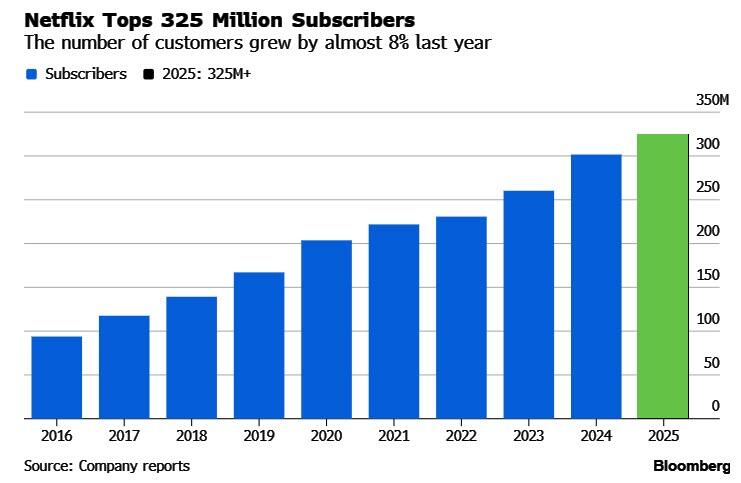
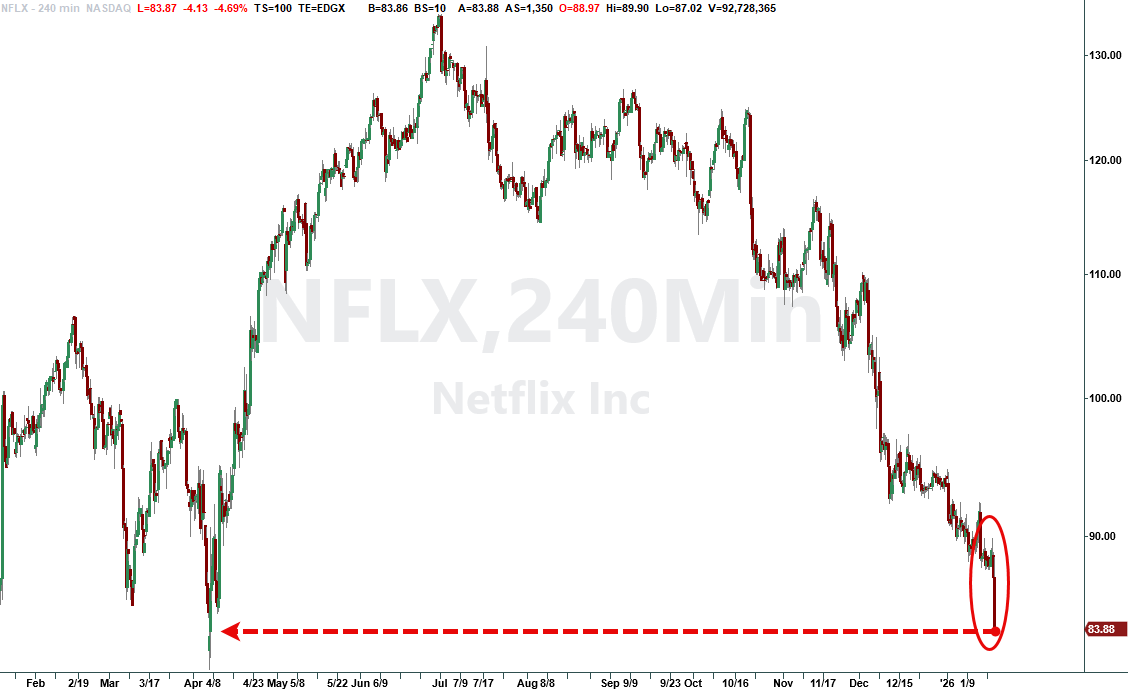
It was already an ugly quarter for NFLX shareholders who have been caught in a painful takeover battle for Warner Bros Discovery which has hammered the stock. And it only got uglier moments ago when Netflix reported Q4 earnings which came in solid, along with record subscribers for 2025, but it was the company’s disappointing guidance due to higher program spending, together with the halt of stock buybacks (to fund the pending WBD deal) that slammed the stock to levels last seen during the Liberation day panic.
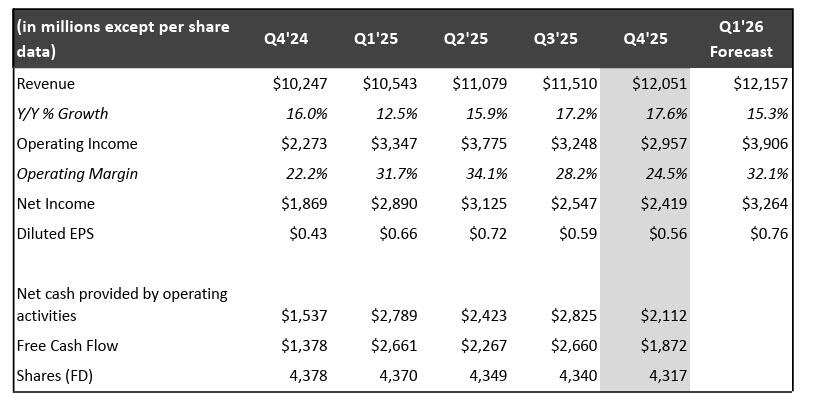
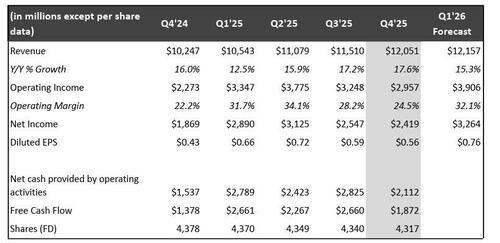
Here is what NFLX reported for Q4 results:
EPS 56c vs. 43c y/y, beating estimates of 55c
Revenue $12.05 billion, +18% y/y, beating estimates $11.97 billion
US & Canada revenue $5.34 billion, +18% y/y, beating estimates $5.26 billion
EMEA revenue $3.87 billion, +18% y/y, beating estimate $3.84 billion
Latin America revenue $1.42 billion, +15% y/y, matching estimate $1.42 billion
APAC revenue $1.42 billion, +17% y/y, missing estimate $1.44 billion
Operating income $2.96 billion, +30% y/y, beating estimate of $2.89 billion
Operating margin 24.5% vs. 22.2% y/y, beating estimate of 24.2%
Cash flow from operations $2.11 billion, +37% y/y, beating estimate of $1.68 billion
Free cash flow $1.87 billion, +36% y/y, beating estimates $1.46 billion
So far so good, because absent a small miss on APAC revenue, the quarter was generally in line (as a reminder, Netflix stopped providing regular updates on its subscriber total, directing investors to focus on more traditional financial metrics).
Some more details on Q4 results:
Q4 revenue grew 18% year over year (+17% on a foreign exchange (F/X) neutral basis), driven primarily by membership growth, higher pricing, and increased ad revenue. Despite unfavorable F/X movements during the quarter, revenue was 1% above our guidance due to stronger-than-forecasted membership growth and ad sales.
Operating income in Q4 was $3.0B, up 30% year over year, and operating margin expanded two percentage points year over year to 25% – both slightly ahead of our forecast due primarily to the revenue upside.
Diluted EPS amounted to $0.56 vs $0.43 in Q4’24 (+31% year over year), slightly above our forecast (adjusted for our 10-for-1 stock split). Net income included ~$60M of costs (booked in interest expense) related to our recent Warner Bros.-related bridge loan and associated bridge reduction financings (which was not included in our guidance).
With our strong Q4 results, we met or exceeded all of our full year 2025 financial objectives. We grew revenue 16% to $45B (+17% on a F/X neutral basis) and we increased our operating margin to 29.5% for the year, up from 26.7% in 2024. We also made great progress growing advertising revenue. In 2025, which was only our third year selling advertising, ad revenue grew by more than 2.5x vs. 2024 to over $1.5 billion.
The streaming leader said it plans to increase spending on films and TV shows by 10% in 2026 while forging ahead with plans to buy the studio and streaming business of Warner Bros., a deal that would unite two of the world’s largest entertainment companies. Netflix spent about $18 billion on programming last year, with subscribers growing almost 8% to top 325 million.
The strong subscriber metrics and results were to be expected in a quarter that had a particularly strong programming lineup to close the year, including the final episodes of Stranger Things, a documentary series about hip-hop mogul Sean Combs and a new Frankenstein film.
But while Q4 was solid, it was the company’s forecast that was the first alert, with the company reporting revenue, operating income and margins all of which came below estimates.
Sees EPS 76c, missing estimates of 82c.
Sees revenue $12.16 billion, missing estimates of $12.17 billion
Sees operating income $3.91 billion, missing estimates of $4.18 billion
Sees operating margin 32.1%, missing estimates of 34.4%
Extending the forecast to the full year, there was more disappointment, because while revenue came in just barely higher than expected, both margin and free cash flow came in well below the median consensus.
Sees revenue $50.7 billion to $51.7 billion, estimate $50.96 billion
Sees operating margin 31.5%, estimate 32.4%
Sees free cash flow about $11 billion, estimate $11.93 billion
Some more details on the forecast from the investor letter, which suggests that the takeover of WB Discovery will weigh on the bottom line for some time, including an additional $275 million in acquisition-related expenses, on top of the $60 million already spent.
For 2026, based on F/X rates as of 1/1/2026, we forecast revenue of $50.7B-$51.7B. This represents 12%-14% year over year growth (or 11%-13% F/X neutral growth), driven by increases in membership and pricing plus a projected rough doubling of ad revenue in 2026 vs. 2025.
We’re targeting a 2026 operating margin of 31.5% (based on 1/1/26 F/X rates), up from 29.5% in 2025, which includes approximately $275M of acquisition-related expenses. Our margin forecast also reflects content amortization growth of ~10% in 2026, with higher growth in the first half than the second half due to the timing of title launches.
As a result, we expect higher operating income growth in the second half of 2026 than in the first half. We still see plenty of room to increase our margins and our intent is to grow our operating margin each year, although the magnitude of margin expansion will vary year-to-year as we balance reinvesting in our business with improving profitability.
Summarizing the highlights from the guidance, the company sees higher operating income growth in H2 2026 vs H1; sees “plenty of room” to increase margin; the company intends to grow operating margin each year. NFLX sees about doubling of ad revenue in 2026 vs 2025.
Netflix is buying Warner Bros. to obtain one of the strongest film and TV libraries in the world, content it can mine for new material and help the company expand newer businesses like consumer products, experiences and video games. Last year’s programming budget delivered a marginal increase in viewership for Netflix, with overall engagement growing about 2% in the second half.
Yet even as growth in new users and viewing has slowed, Netflix has sustained double-digit sales growth by raising prices and introducing advertising. The company predicts ad sales will double this year from $1.5 billion in 2025.
And while investors were not delighted with some of the aspects,, the big hit to the stock after hours was news that Netflix would pause share buybacks to accumulate cash to help fund pending Warner Bros. acquisition.
This, together with the poor guidance, sent the stock tumbling 5%, and back to the lowest level since the April Liberation day.
Tyler Durden
Tue, 01/20/2026 – 16:32
https://www.zerohedge.com/markets/netflilx-craters-disappointing-guidance-stock-buyback-pause

Elgin hires engineer to start planning for National Street bridge repairs
Elgin has hired an engineering firm to start the work needed to repair the National Street bridge over the Fox River, which an Illinois Department of Transportation inspection shows is structurally deficient but still functional.
The bridge receives biannual inspections to ensure it maintains a structural integrity level sufficient for safe usage, City Manager Rick Kozal said at last week’s council meeting.
“While the bridge meets requirements for safe travel, a comparison of recent inspections indicates increased deterioration in the overall bridge condition,” Kozal said.
Staff is recommending rehabilitation work be done to extend the bridge’s “useful life” by 10 to 15 years, which will give Elgin time to start planning for a future bridge replacement project, he said.
IDOT last inspected the bridge in 2024 and found the superstructure — the upper part of the bridge that supports traffic — to be in “fair condition with minor section loss and cracks,” according to the inspection.
The substructure, or the portion that supports the deck where piers and abutments are located, is also in fair condition. The deck is in “poor condition with advanced deterioration,” the agency said.
It was determined the span is not functionally obsolete.
A preliminary engineering analysis showed the need to remove and replace the bridge sidewalks and railings and repair the pier and abutment concrete and bridge girder concrete, according to city documents.
HR Green Inc. has been hired for $179,974 to complete the design work needed by April. Elgin officials said they anticipate seeking construction bids this spring.
If all goes according to plan, construction would start in June and be finished in November.
No cost estimate for the total project is available.
Elgin officials said they also plan to look at two railroad crossings between the National Street bridge and Route 31 to see if new pavement markings and advance driver notifications will improve safety in light of concerns raised by residents, according to city documents.
National Street bridge carries about 6,900 motorists across the Fox River daily. It was built in 1949 and has been rehabilitated several times, the last being in 2017, documents said.
It’s one of four downtown bridges, with the others being on East Chicago Street, Highland Street and Kimball Street. Elgin has plans to replace the Kimball and Chicago Street bridges.
The city has completed about 70% of Phase I engineering for the Kimball Street bridge, used by about 20,000 motorists daily. Phase II is to start this year. Design plans were unveiled at public hearings last year and construction tentatively set to start in 2028.
Phase I engineering for the East Chicago Street bridge is also being done. Construction could start in 2029.
Gloria Casas is a freelance reporter for The Courier-News.
https://www.chicagotribune.com/2026/01/20/national-bridge-elgin-repairs-engineering/
Indiana housing bill passes out of committee
House Bill 1001, which addresses housing matters and is a Republican priority bill, passed out of the House Local Government Committee in a 7-3 vote, with two of the no voters stating they are close to voting yes and likely would as the bill advances.
House Bill 1001 states single-family dwellings and townhouses in residential areas, an accessory dwelling unit within a single-family home, and affordable housing on property purchased by a religious institution before Jan. 1, 2025 in a residential or commercial zone are permitted uses that are approved without a hearing.
The bill restricts a unit’s ability to impose and increase fees related to building approval and permits, among other design-element limitations.
Bill author State Rep. Doug Miller, R-Elkhart, said such housing legislation “has been on (his) mind” for 12 years, which is as long as he’s served in the legislature. Miller offered an amendment to the bill to make some changes to the fee rate charges and duplex qualifications.
Miller said that portions of the bill are required, while other sections of the bill have an opt-in option for county and town leaders.
“We have to think about the underlying bill and the direction that House Bill 1001 is striving to take: to improve the ability of Hoosiers to either purchase a home or have a rental home to go to or, equally as important, to be able to exert their property rights,” Miller said.
In committee, 20 people testified on the bill, largely in favor of the bill but with some concerns.
David Bottoroff, executive director of the Association of Indiana Counties, said the organization supports the bill. Because of the impacts of Senate Enrolled Act 1, which offers some property tax cuts but will greatly decrease local budgets, expanding housing – and therefore property taxes – will help local communities.
“It is important for us, for our members, to have sustainable housing,” Bottoroff said.
Amy Krieg, government affairs director with Accelerate Indiana Municipalities, said the organization supports increasing housing opportunities and addressing barriers to housing production in Indiana. But, the organization has concerns with the bill because it “extends beyond setting state-wide guardrails into areas that remove local decision-making in ways that have unintended consequences,” Krieg said.
Westfield Mayor Scott Willis said he had concerns about House Bill 1001 because it would “wipe away most of the work that has been done to ensure we have balanced and sustainable growth moving forward and instead puts decision-making in the hands of national-level builders who are more focused on their bottom line.”
“Preserving that local role helps ensure development decisions align with what will serve the community over time,” Willis said.
When talking with the Westfield Council members, Willis said he doesn’t care about density but rather home type and its location to offer walkability within the community.
“We want attainable housing, but if everything goes attainable in Westfield, it’s just going to make our finances that much worse,” Willis said. “We don’t have a commercial tax base … but if the flood gates open, we’ll lose control of that.”
Clarksville Town Manager Kevin Baity said the town has concerns about the bill and its impact on local government. For example, Baity said with the bill’s proposal to limit fee increases to once every five years, “fees could not possibly keep up with our cost of operation with our planning and zoning departments.”
“Local governments are the boots on the ground and know first-hand how their residents want their community to develop and grow. Local zoning already takes into consideration various housing options, including affordability and character,” Baity said.
The bill would allow for affordable housing on property owned by a religious institution, which Baity said would allow the religious institution to build housing without input from local government or community members.
“In essence, we’re turning churches into a front for developers,” Baity said.
Rabbi Aaron Spiegel, executive director of the Greater Indianapolis Multifaith Alliance, said the organization supports the bill because of its provision to build affordable housing on property owned by religious institutions.
After government entities, the largest landowners in the United States are congregations, Spiegel said, many of which have “unused or underutilized” property.
“The faith community understands, perhaps better than any community, that the housing market is in crisis and that housing is a human right,” Spiegel said. “They want to repurpose their assets to match their mission of taking care of the most vulnerable. What stops them is the cost and the complexity of housing development.”
Alexander Mingus, executive director of the Indiana Catholic Conference, said the organization supports the bill because it would allow a religious organization to build affordable housing on its property as a permitted use.
“The Catholic Church is one of the largest non-governmental land owners in the world, and certainly has a lot of property in Indiana. We want to step up to that call in helping to be a good partner with addressing the affordable housing shortage,” Mingus said.
The amended bill passed the committee in a 7-3 vote.
State Rep. Blake Johnson, D-Indianapolis, said he “was very close to a yes” on the bill and will likely support it moving forward. But, Johnson said he wanted more clarity on the quality versus quantity of the affordable housing and to ensure the bill’s impacts could be tracked.
State Rep. Justin Moed, D-Indianapolis, said he shared some of his concerns with the bill with State Rep. Miller, but that he would likely support the bill moving forward.
akukulka@post-trib.com
https://www.chicagotribune.com/2026/01/20/indiana-housing-bill-passes-out-of-committee/
By The Numbers… Trump’s (Second) First Year In 10 Charts
By The Numbers… Trump’s (Second) First Year In 10 Charts
Authored by Emel Akan and Andrew Moran via The Epoch Times,
Trump’s policies have influenced everything from economic growth and stock market performance to gas prices and mortgage rates.
Stock Market Performance
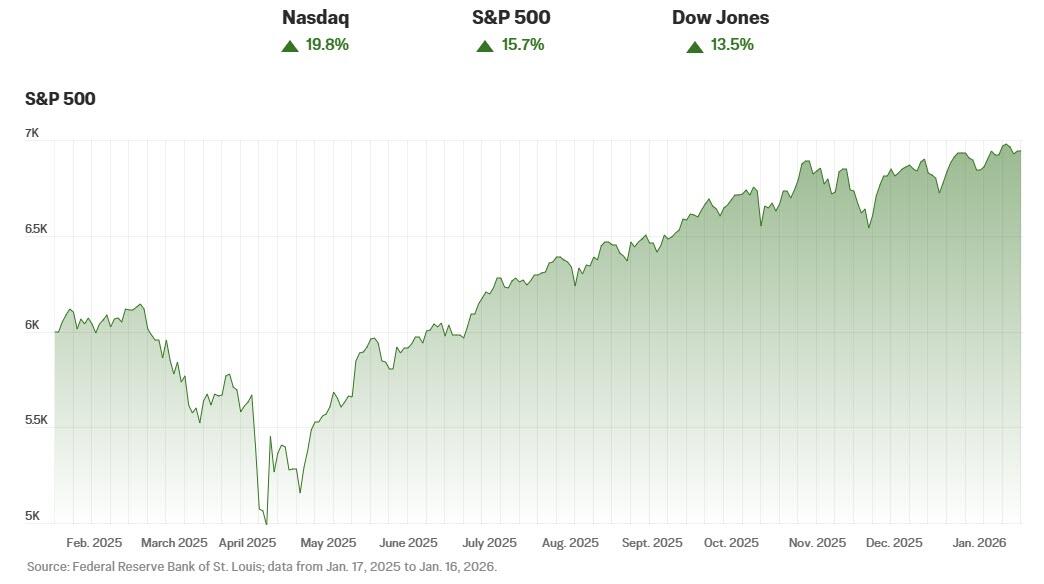
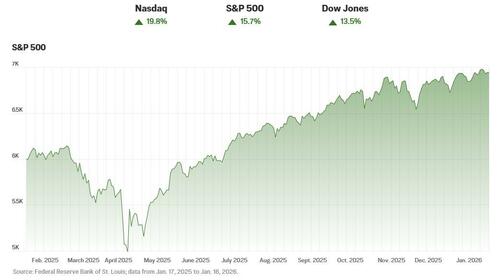
Since President Trump took office in January 2025, stock indexes have reached new highs.
The S&P 500 Index rose nearly 16 percent through Jan. 14, compared to a 24 percent increase over the same period in Trump’s first term. In the past 12 months, the Dow Jones Industrial Average increased 13 percent and the Nasdaq gained 20 percent.
Economic Growth
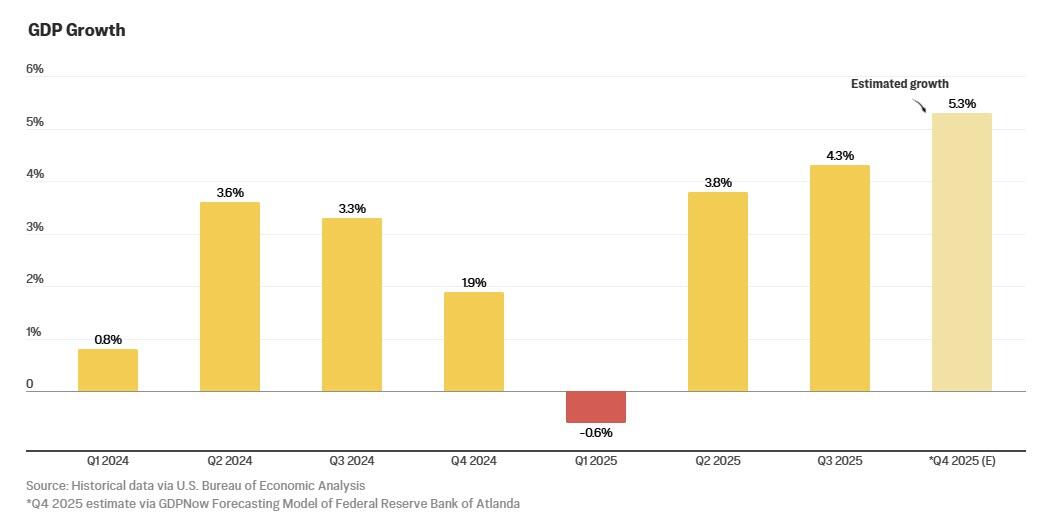
After a 0.6 percent contraction in the first quarter, U.S. economic growth accelerated and exceeded economists’ expectations in 2025, avoiding a feared recession. GDP grew by 3.8 percent in Q2 and 4.3 percent in Q3—the strongest performance in two years.
Although official data for October 2025 through December 2025 are pending, the Atlanta Federal Reserve estimates growth at around 5 percent. Treasury Secretary Scott Bessent expects 2026 to be a “gangbuster year,” with continued strong economic growth.
Inflation
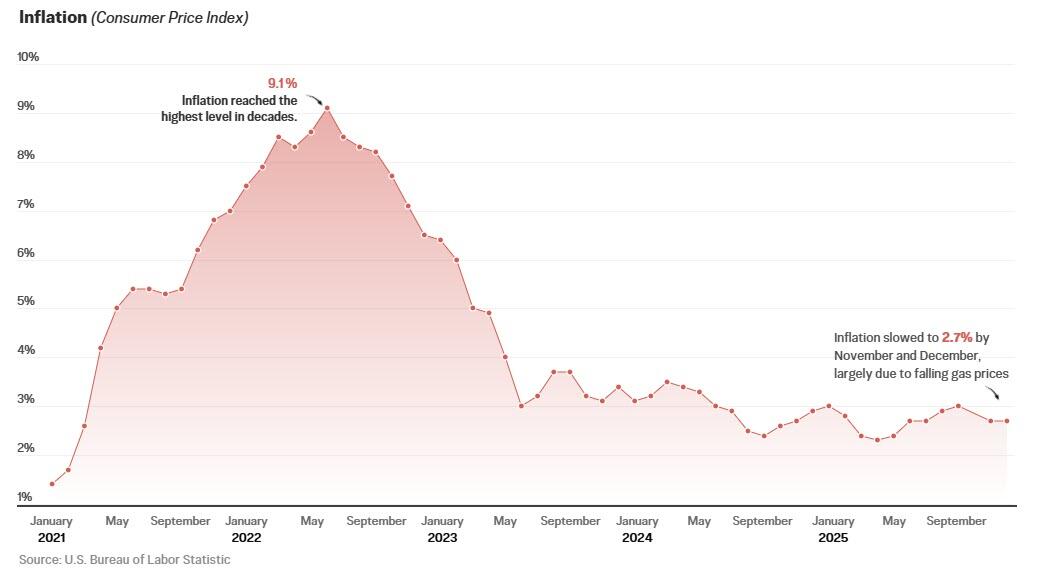
Inflation reached 9.1 percent in 2022, the highest level in decades. Although consumer prices remained elevated through 2025, inflation rates were lower than those recorded during the Biden administration.
The annual rate began 2025 at 3 percent, fell to 2.3 percent in April, and rose back to 3 percent five months later. In November and December, price pressures eased, with the 12-month rate slowing sharply to 2.7 percent thanks mainly to falling gas prices.
Trade
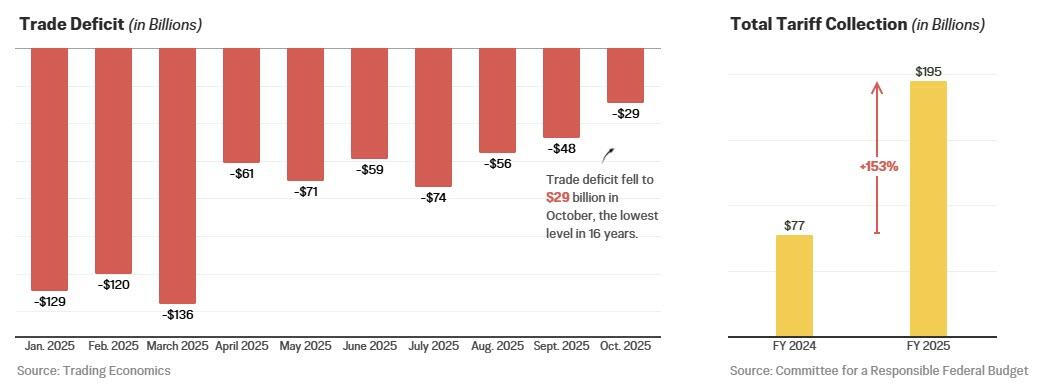
Despite the trade deficit widening in the first three months of 2025 as businesses rushed to front-run President Donald Trump’s global tariffs, America’s monthly trade balance has improved substantially.
Since peaking at $136 billion, the U.S. goods and trade deficit fell to $29 billion in October—the lowest level in 16 years.
Employment
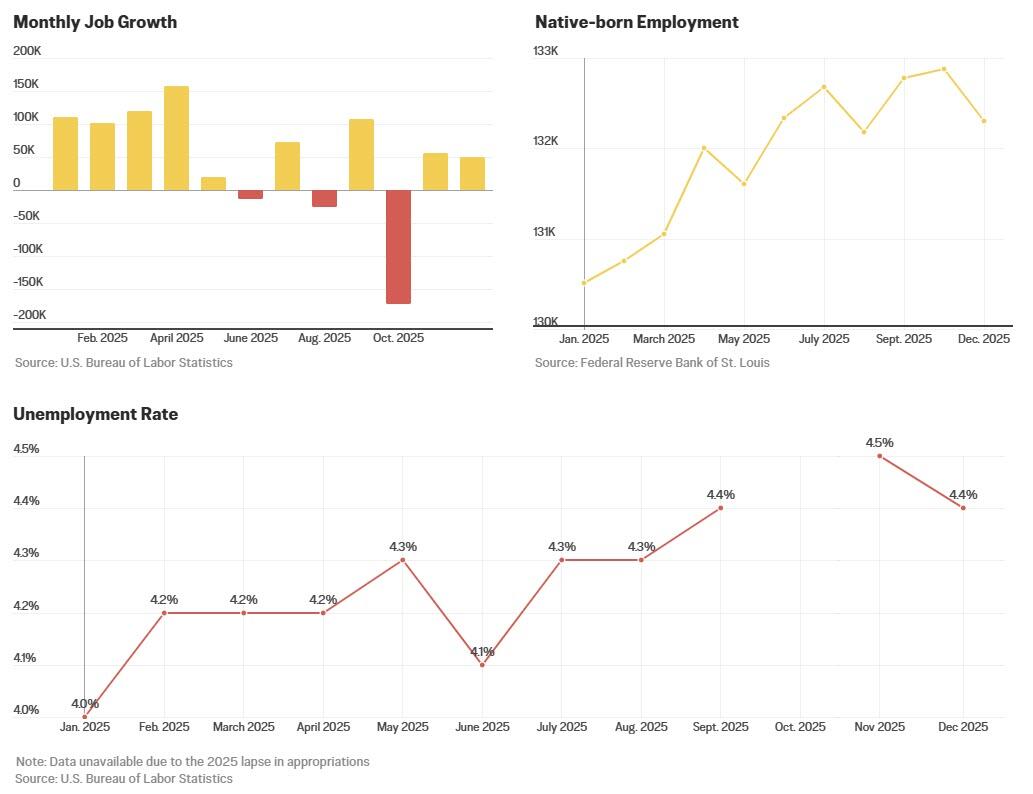
Since last summer, the U.S. labor market has been characterized by what some economists call “low fire, low hire,” with companies neither reducing nor expanding their workforce.
In 2025, employers added 584,000 jobs in total, averaging 49,000 per month.
However, job growth slowed as government payrolls fell by 277,000, reflecting the administration’s efforts to shrink the federal government bureaucracy and support private sector jobs.
Gas Prices
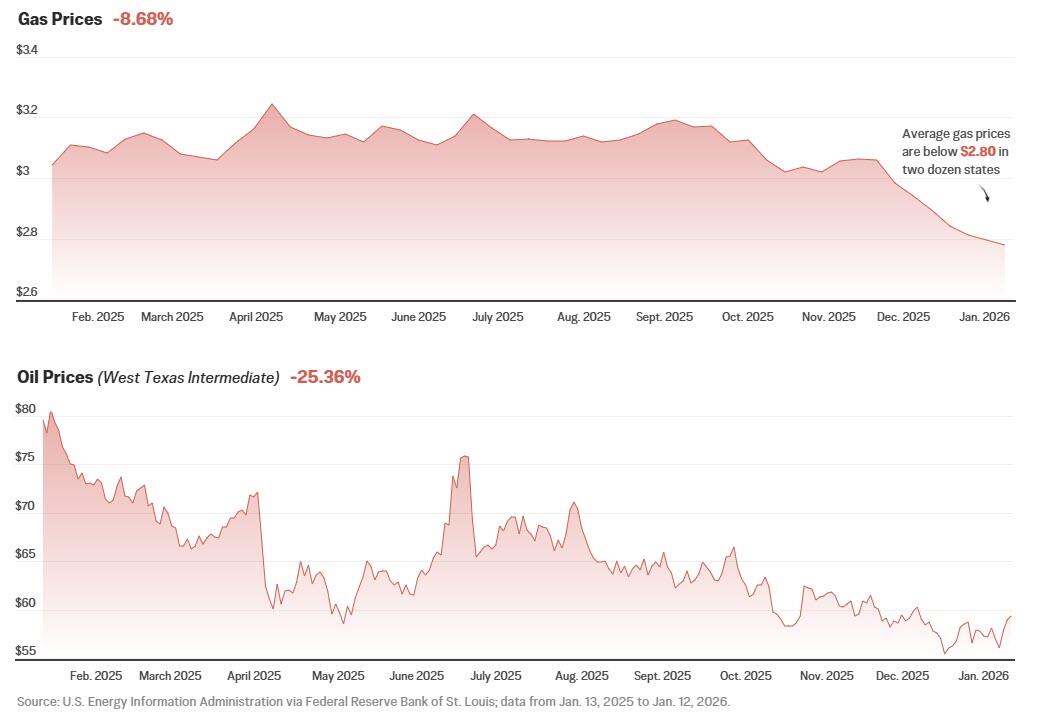
One of the major achievements of the Trump administration has been the substantial decline in gas prices. From record production to loosening regulations, businesses and consumers have seen lower energy costs.
Crude oil prices are trading below $60, while two dozen states are enjoying average gasoline prices below $2.80 a gallon. Market watchers expect the same trends in the year ahead.
Mortgage Rates
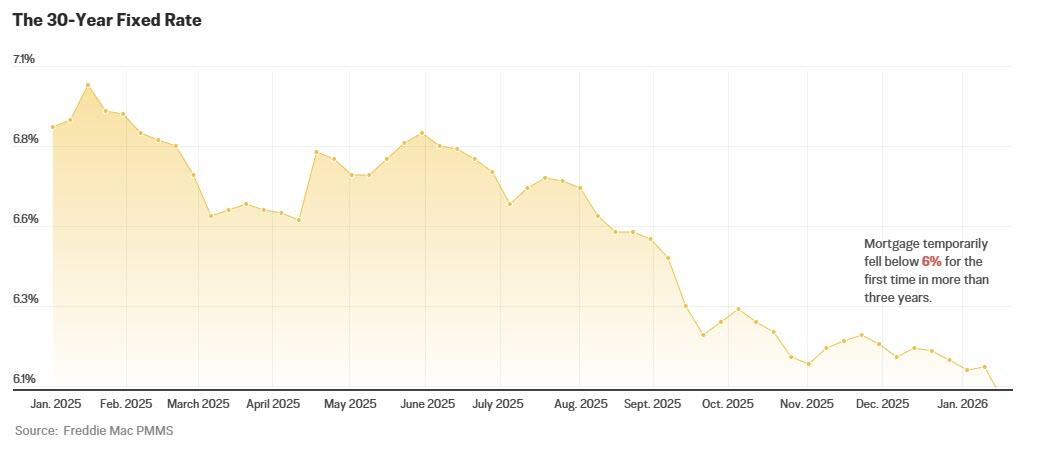
When President Donald Trump started his second term at the White House, the 30-year fixed-rate mortgage was around 7 percent. Since then, it has fallen significantly, even temporarily sliding below 6 percent for the first time in more than three years.
This has been driven by a blend of falling Treasury yields and federal housing strategies to bring down costs.
Border Security
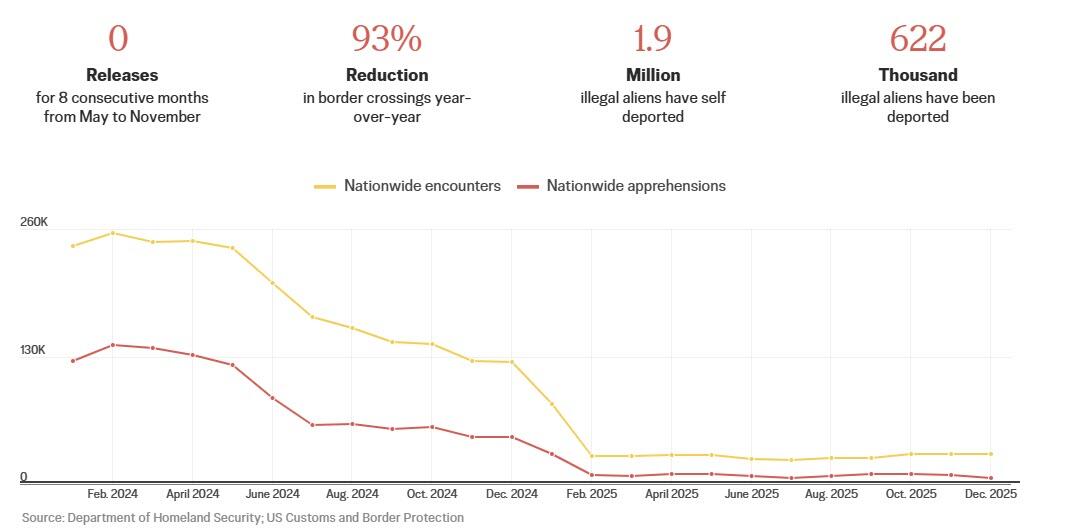
President Donald Trump has emphasized border security as a central policy priority. By securing the border, the United States has experienced a 93 percent reduction in border crossings, 622,000 deportations, and 1.9 million self-deportations.
This has been accomplished by bolstering enforcement personnel and tightening procedures.
Executive Actions
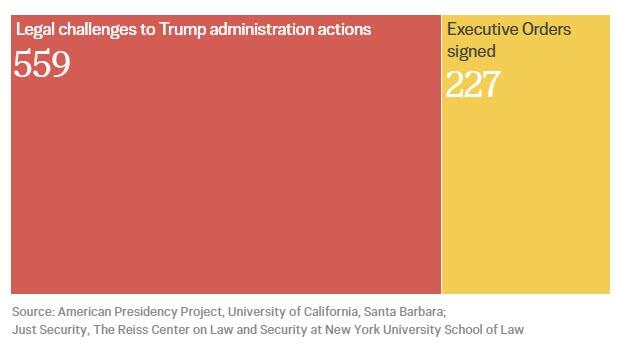
While the administration secured a major legislative victory with the One Big Beautiful Bill Act, President Donald Trump has used the power of the executive branch to advance many of his policy objectives, including tariffs and regulations.
Some of the more than 220 signed executive orders have also drawn legal scrutiny from advocacy organizations, companies, and states, leading to battles that have reached the Supreme Court.
Tyler Durden
Tue, 01/20/2026 – 16:20
https://www.zerohedge.com/markets/numbers-trumps-second-first-year-10-charts
For-profit Prime Healthcare to acquire nonprofit Franciscan Health Olympia Fields
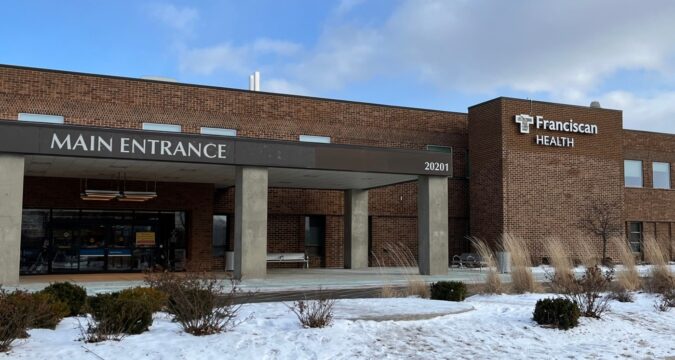
Franciscan Alliance announced Friday it will sell Franciscan Health Olympia Fields to Prime Healthcare.
The 214-bed Olympia Fields hospital is part of Franciscan Health, a nonprofit Catholic health care network that mostly serves Indiana. Franciscan Health Olympia Fields is the alliance’s only Illinois hospital, according to a news release.
“Franciscan Health Olympia Fields has a legacy of service, and we believe Prime Healthcare is uniquely positioned to carry that mission forward,” Frank J. McHugh, interim president and CEO of Franciscan Health Olympia Fields, said in a news release. “Prime’s proven ability to strengthen hospitals while honoring values-based care gives us hope and confidence in the future of access and quality for the South Suburbs.”
The parties said the proposed purchase was still subject to the approval of the Illinois Health Facilities and Services Review Board, as well as other regulatory approvals. The network and hospital will continue to operate independently until the sale closes.
Prime Healthcare is a for-profit health care network headquartered in California that includes 51 hospitals in 14 states.
Prime Healthcare expanded into Illinois when it purchased eight Illinois hospitals from another Catholic healthcare system, Ascension, in a deal that closed in March 2025.
Under that sale, six of the eight Ascension hospitals switched from nonprofit to for-profit, while St. Mary’s Hospital in Kankakee and St. Francis Hospital in Evanston remained nonprofits under the Prime Healthcare Foundation, Prime Healthcare’s nonprofit arm.
The announcement of the Franciscan Health Olympia Fields purchase did not specify whether the hospital will remain a nonprofit, or be converted to a for-profit operation. Communications representatives for Prime Healthcare did not immediately respond to requests for clarification.
Prime has focused on acquiring hospitals in financial distress.
“Our agreement with Franciscan Alliance reflects Prime Healthcare’s enduring mission to save, strengthen and invest in community hospitals while honoring Franciscan’s deep commitment to serving the poor and vulnerable,” Sunny Bhatia, president and chief medical officer of Prime Healthcare, said in a news release.
Under the purchase agreement, Prime Healthcare will also incorporate Specialty Physicians of Illinois, LLC, according to the news release.
Managing chronic disease
Franciscan Health announced Tuesday it will offer a program intended to help manage chronic disease in Olympia Fields and in Michigan City, Indiana.
Through the Produce Prescription Program, food-insecure participants with chronic conditions like diabetes or heart disease will be eligible to receive vouchers for fresh fruit and vegetables for six months. Participants will be required to complete a free six-week cooking course, the announcement said.
People interested in participating in the Olympia Heights program can contact Shelby Beasley at Shelby.Beasley@franciscanalliance.org or 219-228-1037, Franciscan Health said.
elewis@chicagotribune.com
https://www.chicagotribune.com/2026/01/20/prime-healthcare-acquire-franciscan-health-olympia-fields/
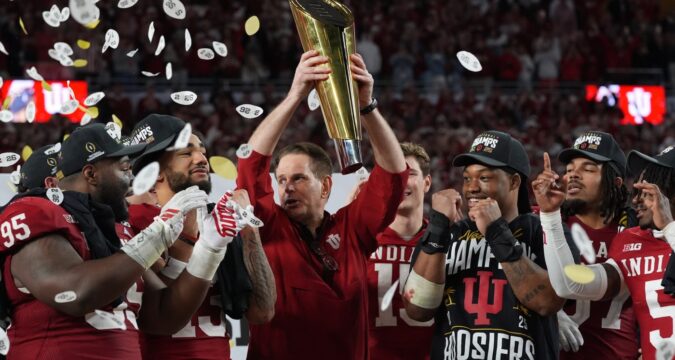
Column: Indiana’s epic run from losers to 16-0 national champs rivals the 2016 Chicago Cubs’ journey
There’s really no debating that Indiana’s journey from losingest team ever to national champion is the greatest story in college football history.
No major program was as synonymous with losing as Indiana, though Northwestern, which this season passed the Hoosiers for most L’s in college history, was a close second.
The real question is whether Indiana’s championship is the best sports story ever, and that’s an argument with no definitive answer. Beauty is in the eye of the beholder, and rags-to-riches stories are part of every sport.
Just last weekend, Chicago was celebrating the 10-year anniversary of the end of the longest title drought in North American professional sports history — the Cubs’ 2016 World Series championship. They were known for decades as the “lovable losers,” a label the franchise finally shed on one memorable November night in Cleveland.
Indiana cornerback Jamari Sharpe (22) celebrates after defeating Miami in the College Football Playoff national championship game Monday, Jan. 19, 2026, in Miami Gardens, Fla. (AP Photo/Marta Lavandier)
The players on this IU team will celebrate this feeling for quite a while, as all champions do, but the passage of time will make it even sweeter, knowing they accomplished something many thought impossible.
“I think we sent a message, first of all, to society that if you keep your nose to the grindstone and work hard and you’ve got the right people, anything’s possible,” Indiana coach Curt Cignetti said after the 27-21 win over Miami at Hard Rock Stadium. “In our particular situation in the athletic world, college football has changed quite a bit. The balance of power also.
“But we have the right people on our staff, in the weight room, in the locker room, and we have great senior leadership and togetherness — and we had a really good quarterback that played his best when the chips were down. Are there eight first-round draft choices on this team? Probably not, no, there aren’t. But this team, the whole was greater than the sum of its parts.”
Ditto the 2016 Cubs, who had only three players with a realistic chance of making it into the Baseball Hall of Fame: starting pitcher Jon Lester, who is eligible next year; closer Aroldis Chapman; and slugger Kyle Schwarber, who has 340 home runs and should get in if he winds up with 500 or more. (Schwarber, an IU alumnus, was at the title game Monday in Miami Gardens, Fla.)
Otherwise, it was a team with some very good players having career years and role players who did more than was expected of them.
Indiana has a probable No. 1 draft pick in quarterback Fernando Mendoza and other potential NFL players in cornerback D’Angelo Ponds, wide receivers Omar Cooper Jr. and Elijah Sarratt, offensive linemen Carter Smith and Pat Coogan and edge rusher Mikail Kamara.
But it was the sum of the parts that made it all work, along with a coach in Cignetti who proved to be as good as advertised by his hype man — who happened to be himself.
“Google me,” was the now-famous line Cignetti uttered when he came to Indiana two years ago with a Herculean task and little fanfare. His bravado — telling fans, “Purdue sucks … but so does Michigan and Ohio State” — was a call to arms to wake up a moribund program that was accustomed to losing.
It was reminiscent of Joe Maddon’s arrival in Chicago on Nov. 3, 2014, when he sat atop a podium at the Cubby Bear and declared: “I’m going to be talking playoffs next year. (If not) why even report? I’m going to talk playoffs and talk World Series. And I believe it.”
The Cubs were coming off a 73-89 season and had not yet signed Lester. Their highest-paid pitcher was Edwin Jackson, who finished 2014 with a 6.33 ERA. Schwarber, Kris Bryant and Javier Báez were still highly touted prospects in the minors. The idea that the Cubs could win a World Series in two years was as ludicrous as Indiana winning a national title two years after Cignetti’s arrival.
But somehow it happened.
“We had the luck that year,” first baseman Anthony Rizzo said Saturday at the Cubs Convention. “We had the juju, and we came out on top. It’s so hard to finish it off.”
Indiana discovered that as well, leading by six points as Miami marched to the Hoosiers 41-yard line with less than a minute to go. But Carson Beck’s long toss to Keelan Marion was picked off by cornerback Jamari Sharpe, sealing the win and starting the celebration.
Marion said afterward he didn’t know Beck had thrown the ball, blaming himself for the play.
“I’ve got to look for the ball and make a play for him,” he said. “So that’s all on me.”
Of course many factors contributed to the Hoosiers’ win, just as the Cubs had a lot of things go right in Game 7 of the World Series after Chapman served up a game-tying home run to Rajai Davis in the eighth inning that put everyone on edge.
Ben Zobrist, who came through with the go-ahead RBI double in the 10th, admitted to fans Saturday at the Cubs Convention that after feeling confident about the team all year, he momentarily wondered if the curse was real after Davis’ home run.
Indiana fans celebrate in the streets of downtown Bloomington, Ind., after defeating Miami in the College Football Playoff national championship game Monday, Jan. 19, 2026. (Jon Cherry/Getty Images)
Indiana fans also might have been wondering if their bubble was going to burst in the last minute of Monday’s game. A lifetime of losing will do that to you.
But the dream was real, and it was spectacular. The football version of the movie “Hoosiers” played out just like the script demanded.
The party will go on in Bloomington, Ind., for quite some time, and as the victory sinks in, the journey will grow more special as the years go on. Zobrist said the magnitude of the Cubs’ Game 7 win took a while to process.
“At the time it definitely felt surreal and you’re kind of like, ‘What’s happening to us?’ as you’re experiencing all that,” he said. “But now, after experiencing 10 years of love from this city and Cubs fans … talking to the players now and all the respect and credibility they give you just because you were part of that team, it’s a pretty special feeling to know you were part of doing something really special for this city and the organization.”
The Cubs haven’t won it all since, but the 2016 team’s love affair with fans never ended. And no matter what happens next to the Hoosiers, Cignetti and his 16-0 championship team will be legends in Indiana for the rest of their lives.
You can Google it.
https://www.chicagotribune.com/2026/01/20/indiana-national-champions-chicago-cubs-world-series/