Category: News
Districts 2 and 9 still without board members in Kane County
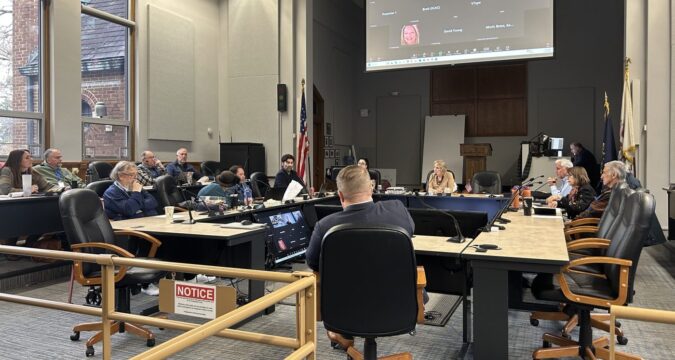
Two seats — representing Districts 2 and 9 — remain vacant on the Kane County Board as the March 17 primary election nears, with discussion continuing about how and when the seats will be filled.
Kane County’s District 2 board seat has been vacant since early October, when board member Dale Berman died at the age of 91. Berman was a longtime resident of North Aurora and a four-term village president, and had been serving on the Kane County Board since 2021.
The board sought applications for Berman’s seat and made several attempts to appoint someone to fill the position until it’s up for election in the fall of 2026, but ultimately failed to vote in a candidate in November. The situation prompted some concern from board members about the transparency of the selection process and the board’s procedure for appointing candidates.
As for District 9, that seat opened after former board member Gary Daugherty resigned in December, citing illness as the reason for his departure.
The county began seeking candidates to fill Daugherty’s seat at the end of last month, and was accepting applications until Jan. 14. Last week, the board officially declared the seat vacant at its regular meeting.
In both districts, an appointment by the board to the seat would only last through November, when candidates for both seats will be voted on by residents in the fall general election.
Currently, there are three candidates, all running as Democrats, vying for the District 2 seat in the March 17 primary election, according to records from the Kane County Clerk’s Office: Ellen Nottke, Martha Davidson and Matthew Dingeldein. For District 9, there are two Republican candidates — Jennifer Abbatacola and Jeffrey R. Magnussen — running in the primary election, along with one Democratic candidate, Marc A. Guttke.
The general election is set for Nov. 3.
The board last week discussed how and whether the seats would be filled before the November election.
Board member Jarett Sanchez asked about the District 2 vacancy and when another appointment would be made, and if it would be before the March primary — noting that that had been a concern when the board was discussing filling the District 2 seat in November. At the time, Kane County Board Chair Corinne Pierog had argued that appointing a candidate in the running in 2026 might give that individual an advantage in the upcoming election.
Sanchez pointed out that a candidate who had been recommended by the board’s search committee has since removed herself from the ballot, which he noted “kind of solves the problem.”
Pierog on Jan. 13 noted that she had followed state statute when making a recommendation, but that her picks for candidates to fill the District 2 seat were rejected by the board.
Board member Michelle Gumz said she was not opposed to waiting until after the March primary to appoint a candidate, and that she thinks it is “safe for (Pierog) to go ahead and say that that’s what the intention might be.”
But Pierog said she needed to confer with the Kane County State’s Attorney’s Office.
According to state statute, a vacancy on the board needs to be filled within 60 days of it occurring, with the new member appointed by the county board chair with “the advice and consent” of the board. The District 2 vacancy is now beyond the 60-day window.
State’s Attorney Jamie Mosser said “yes and no” in response to the concerns raised by Pierog.
“We’re under an obligation where we should be filling that seat because that district deserves to have a voice in votes,” Mosser said at last week’s meeting. “The issue is somebody within that district could potentially sue if we remain inactive.”
As for the District 9 seat, Pierog said on Jan. 13 that a committee of board members has been formed to evaluate the candidates. Once applications are in, she said, there will be two meetings of that committee. It will review the candidates’ resumes and bring forward a recommendation to the full board, which has to vote to approve a candidate.
A county spokesperson confirmed on Jan. 15 that the candidates for both seats are being reviewed, with plans to bring recommendations forward to the county board in February.
mmorrow@chicagotribune.com

Watch Live: President Trump Joins White House Press Briefing Before Davos Trip
Watch Live: President Trump Joins White House Press Briefing Before Davos Trip
Trump is expected to appear at Tuesday’s White House press briefing to mark the one-year anniversary of the start of his second term.
White House Press Secretary Karoline Leavitt teased the surprise in a post on X, saying, “A very special guest will be joining me at the podium today…. TUNE IN.”
The rare appearance at the briefing podium comes as the president faces extraordinary pushback from America’s European allies over his planned tariffs over Greenland, tensions he’ll face in person this week at the World Economic Forum in Davos, Switzerland.
Watch the full briefing here… “Brace!”
Tyler Durden
Tue, 01/20/2026 – 13:24
Exposed: Teachers Unions Funneling Millions To Soros-Linked Groups, Far-Left Agendas
Exposed: Teachers Unions Funneling Millions To Soros-Linked Groups, Far-Left Agendas
Authored by Steve Watson via Modernity.news,
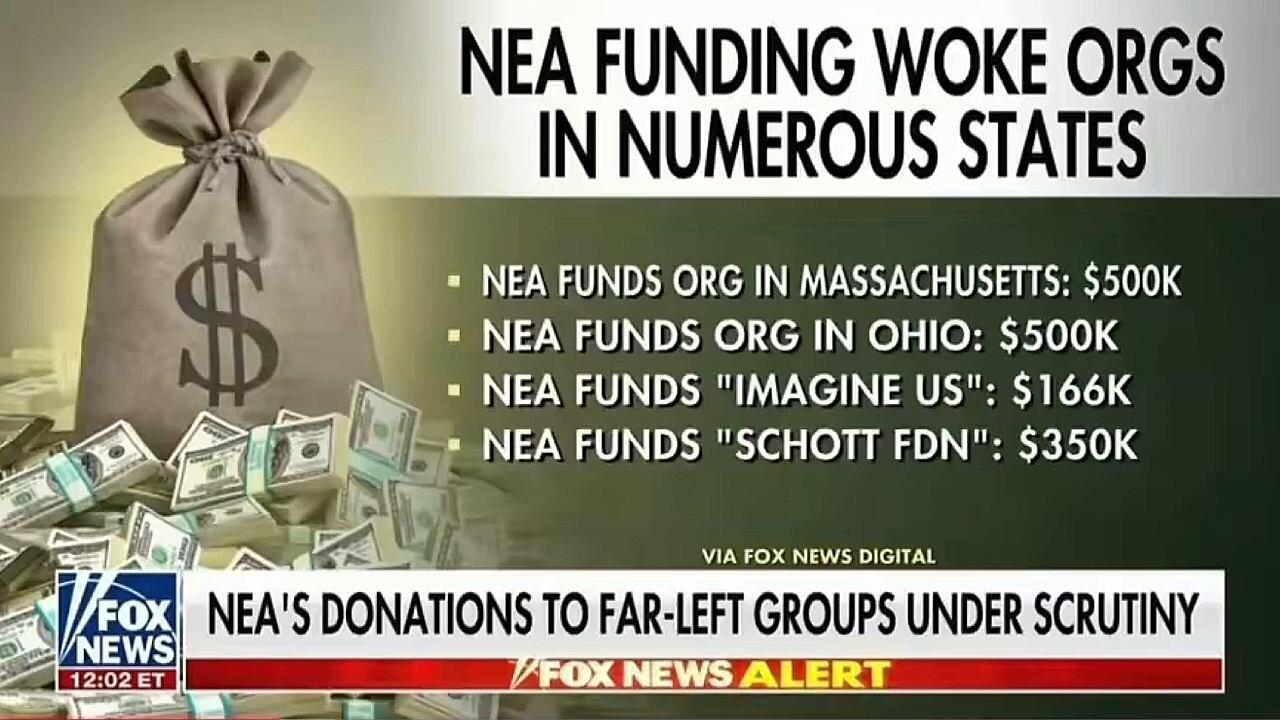
New Labor Department filings reveal the National Education Association (NEA), the nation’s largest teachers’ union, has been channeling millions in taxpayer dollars to far-left political outfits, including Soros-backed networks and shadowy activist groups.
Instead of bolstering education, these funds are propping up anti-American causes, from anti-Israel protests to rigging electoral maps.
The bombshell underscores the deep rot in union leadership, where public money meant for schools is weaponized against conservative values and national security.
New filings show Teachers Unions are funneling millions of taxpayer dollars to the Democrat Party
🚨 They are also sending our taxpayer money to George Soros, Dark Money groups, Far-Left organizations and money is being used to rig gerrymandering and for protests
These are not… pic.twitter.com/5VC9750XoE
— Wall Street Apes (@WallStreetApes) January 18, 2026
The filings, obtained by Fox News Digital, paint a damning picture of misdirected priorities. “The NEA’s last fiscal year report showed it sent $300,000 to the 1630 Fund, the liberal dark money group Fox News has been reporting on extensively, and in most cases exclusively — Tens of thousands of dollars to the (George Soros’) Tides Foundation Network,” according to the report.
These aren’t voluntary donations from union members’ pockets—these are taxpayer dollars funneled through the system. The Tides Foundation has ties to anti-Israel activism, while the Sixteen Thirty Fund operates as a hub for progressive dark money, influencing elections without transparency.
The NEA didn’t stop there, the report notes, adding it “was also involved in several state issues. It backed a campaign to end standardized testing in Massachusetts and fight gerrymandering in Ohio, to the tune of half a million dollars for each of those and it sent hundreds of thousands of additional money to groups committed to racial and education justice movements.”
One of the biggest payouts was a whopping $3.5 million to Education International, a global teachers’ federation where NEA President Becky Pringle serves as vice president. Critics call it a cozy self-dealing arrangement, with American tax dollars flowing offshore to international agendas.
Panelist Emily Compagno expressed outrage over the lack of awareness: “This is absolutely frightening because I’ll bet you the amount of teachers that don’t know where that money is going, the parents know even less.”
She continued, “the thought that your child’s education and more appropriately the teacher in charge of it, the steward of your child while you are not with them in the public schools, that that is where their association is going? That’s where their influence and their persuasion, your hard money? This is a travesty.”
Legal expert Josh Ritter highlighted the betrayal: “Instead we’re finding out that it’s going towards programs and ideology adverse to parents even, adverse to their interests in understanding what their kids are going to be taught, the education that is going to be handed out to them. It’s really disturbing.”
Cheryl Casone pointed to a legal expert who noted “They’ve got a federal charter. That federal charter should be looked at and possibly revoked. Because obviously that charter says they’re supposed to promoting the cause of education in the United States, advance the entrance of the profession of teaching. So the teachers are not being served in what is happening.”
This exposure aligns with a broader pattern of leftist infiltration in education. As we highlighted earlier, two Pittsburgh kindergarten teachers have been placed on leave after filming themselves celebrating Iranian assassination threats against President Trump.
Such incidents reveal how radical ideologies seep into classrooms, turning educators into activists who prioritize hate over learning.
From unions bankrolling “social justice” over actual education to teachers applauding violence against a president fighting for America First policies, the system is rigged against patriotic families.
Reading levels plummet, math scores lag behind global competitors, yet millions vanish into the abyss of progressive activism.
During the COVID era, these same unions colluded with the CDC to keep kids locked out of schools, prioritizing politics over child welfare.
Now, with funds flowing to gerrymandering schemes and racial agitation, it’s clear: unions aren’t about teachers or students—they’re Democrat fundraising arms in disguise.
As Trump vows to eliminate the Department of Education and empower states, parents must demand accountability. Defund these corrupt entities, revoke their charters, and redirect every penny to real education—free from leftist indoctrination.
Your support is crucial in helping us defeat mass censorship. Please consider donating via Locals or check out our unique merch. Follow us on X @ModernityNews.
Tyler Durden
Tue, 01/20/2026 – 13:20

Trump administration urges judge to reject Minnesota’s attempt to stop its immigration crackdown
MINNEAPOLIS — The Trump administration is urging a judge to reject efforts by Minnesota and its largest cities to stop the immigration enforcement surge that has roiled Minneapolis and St. Paul for weeks.
The Justice Department called the lawsuit, filed soon after the fatal shooting of Renee Good by an immigration officer, “legally frivolous.” Lawyers argued that the Department of Homeland Security is acting within its legal powers to enforce immigration laws.
Operation Metro Surge has made the state safer with the arrests of more than 3,000 people who were in the country illegally, the government said Monday in a court filing.
“Put simply, Minnesota wants a veto over federal law enforcement,” Justice Department attorneys wrote.
Minnesota Attorney General Keith Ellison said the government is violating free speech and other constitutional rights with its unprecedented sweeps. He described the armed officers as poorly trained and said the “invasion” must cease.
The lawsuit filed Jan. 12 seeks an order to halt or limit the enforcement action. More filings are expected, and it’s not known when U.S. District Judge Katherine Menendez will make a decision.
Ilan Wurman, who teaches constitutional law at University of Minnesota Law School, doubts the state’s arguments will be successful.
“There’s no question that federal law is supreme over state law, that immigration enforcement is within the power of the federal government, and the president, within statutory bounds, can allocate more federal enforcement resources to states who’ve been less cooperative in that enforcement space than other states have been,” Wurman told The Associated Press.
Julia Decker, policy director at the Immigrant Law Center of Minnesota, expressed frustration that advocates have no way of knowing whether the government’s arrest numbers and descriptions of the people in custody are accurate. U.S. citizens have been dragged from their homes and vehicles during the Minnesota surge.
“These are real people we’re talking about, that we potentially have no idea what is happening to them,” Decker said.
In a separate lawsuit, Menendez said Friday that federal officers can’t detain or tear gas peaceful protesters who aren’t obstructing authorities.
Good, 37, was killed on Jan. 7 as she was moving her vehicle, which had been blocking a Minneapolis street where Immigration and Customers Enforcement officers were operating. Trump administration officials say the officer, Jonathan Ross, shot her in self-defense, although videos of the encounter show the Honda Pilot slowly turning away from him.
Since then, the public has repeatedly confronted officers, blowing whistles and yelling insults at ICE and U.S. Border Patrol. They, in turn, have used tear gas and chemical irritants against protesters. Bystanders have recorded video of officers using a battering ram to get into a house as well as smashing vehicle windows and dragging people out of cars.
President Donald Trump last week threatened to invoke an 1807 law and send troops to Minnesota, though he has backed off, at least in his public remarks.
https://www.chicagotribune.com/2026/01/20/trump-minnesota-immigration-crackdown/
Prosecutors rest in Uvalde officer’s trial over response to 2022 school shooting
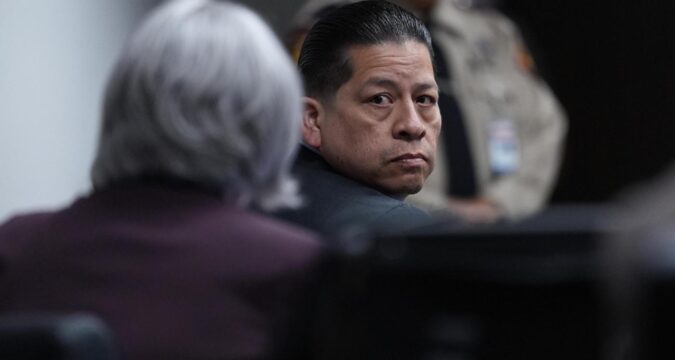
Prosecutors on Tuesday rested in the trial of a former Uvalde, Texas, school police officer after more than a week of presenting a case to jurors that he failed in his duty to stop a gunman in the critical first minutes of the 2022 Robb Elementary School attack.
The prosecution called a state investigator as their final witness in the case against Adrian Gonzales, who has pleaded not guilty to 29 counts child abandonment or endangerment. He faces up to two years in prison if convicted.
It was unclear if Gonzales will take the stand in his own defense before the case goes to the jury.
His attorneys began their defense by calling to the stand a woman who worked across the street from the school who told jurors she saw the shooter ducking between cars and trying to stay out of view — testimony that could reinforce Gonzales’ claims that he never saw the gunman.
During nine days of testimony, jurors have heard at times gripping and emotional testimony from teachers who recounted the terrifying moments when the 18-year-old gunman entered the school and killed 19 students and two teachers. Prosecutors have presented graphic photos from inside the classrooms and brought to the witness stand officers who described the chaos of the response.
At one point early in the trial, the sister of one of the teachers killed that day was removed from the courtroom after an angry outburst after one of the officers testified.
The prosecution’s case has tugged at the raw emotion and shock of the carnage of May 24, 2022, as they attempt to show what could have been avoided had Gonzales intercepted the gunman in the early seconds of the attack.
Prosecutors allege the 52-year-old Gonzales, a 10-year police veteran who had led an active shooter response training course two months before the shooting, abandoned his training and did not try to stop gunman Salvador Ramos before he entered the school.
“Every second counts in an active shooter situation.” special prosecutor Bill Turner said Tuesday, drilling down on 3 minutes between when Gonzales first arrived and when he went into the building. “Every second, more victims can die if a police officer is standing and waiting.”
Gonzales, however, has insisted he didn’t freeze in the chaotic early moments and never saw the gunman. His lawyers insist three officers on the other side of the school saw the gunman still outside and didn’t fire a shot. Body camera footage shows Gonzales being among the first group of officers to enter a shadowy and smokey hallway trying to reach the killer in a classroom.
The trial in Corpus Christi, Texas, is a rare case of a police officer charged with failing to stop a criminal act to protect lives.
Jury heard powerful and emotional testimony from teachers and parents
The trial has included some graphic and violent evidence.
In addition to the classroom photos, jurors have heard recordings of the jarring gunshots and listened to a medical examiner describe the fatal wounds to the children. They also heard brief, yet anguished testimony from several parents of children were killed or wounded that day.
Teacher Arnulfo Reyes described seeing a “black shadow with a gun” enter the room before he was shot and all 11 of his students were killed. Other teachers described young students, some as young as second grade, grabbing safety scissors to attack the gunman if he came in their room.
Prosecutors stumbled at times while presenting their case, including inconsistent testimony from witnesses and mistakenly showing a photo from inside the classroom that showed “LOL” written in blood.
A teacher who was one of the early witnesses was dismissed because prosecutors had not disclosed before trial that she recalled seeing the gunman dressed in black approaching the school.
Defense lawyers asked for a mistrial on the second day but were denied. After the state rested, they asked the judge to determine the state had not proved it case. That also was denied.
Hundreds of officers went to the school but only two have been charged
Gonzales was one of 376 federal, state and local officers swarmed to the school as the attack unfolded. It would take more than an hour for a tactical team to breach a classroom and kill the gunman.
Only Gonzales and former Uvalde schools police chief Pete Arredondo have been criminally charged for the delayed response.
https://www.chicagotribune.com/2026/01/20/uvalde-officers-trial/
Immigration enforcement a topic at MLK Day event in Gurnee: ‘Solidarity gives us direction’
The Rev. Dr. Martin Luther King Jr. gave a speech entitled “Beyond Vietnam” a year to the day before his assassination. Former U.S. Rep. Jesse Jackson Jr., D-Chicago, repurposed King’s message from 59 years ago to “Beyond Venezuela.”
Jackson said King knew he would alienate people with a message criticizing the war being pursued by then U.S. President Lyndon B. Johnson. Nevertheless, he was compelled to speak and take an antiwar position.
“‘It was time to break the silence,’” Jackson said, quoting King. “Silence is a form of betrayal. With Venezuela, it’s time to break the silence. We are not going to solve any of our problems with violence.”
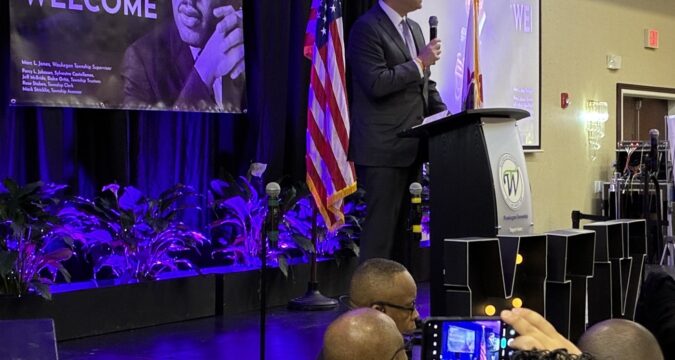
Jackson made his remarks to more than 600 people as the keynote speaker at the annual Waukegan Township Rev. Dr. Martin Luther King Jr. Dreamers’ Breakfast on Monday in Gurnee, remembering King’s legacy on the national holiday created in 1983 to honor him.
Waukegan Township Supervisor Marc Jones said the theme this year was strength in solidarity. It aligned with Jackson’s remarks, as well as those of U.S. Rep. Brad Schneider, D-Highland Park, and the Rev. Heriberto Ramirez, a former Waukegan resident now leading a church in Wisconsin.
“Solidarity is what transforms individual strength into collective power,” Jones said. “When we stand together, our burdens become lighter, our voices become louder and our impact becomes greater. Solidarity reminds us no one is invisible, no one is alone and no one’s pain or potential is insignificant.”
A dancer from Waukegan-based Ballet Folklorico entertains more than 600 people at the annual Waukegan Township Rev. Dr. Martin Luther King Jr. Dreamers’ Breakfast Monday in Gurnee. (Steve Sadin/For the Lake County News-Sun)
Along with speeches from a variety of community members, there were prayers from local clergy, songs from a choir, dancers and 20 people were honored as “Drum Majors for Justice” for actions they took to better the community.
Although the day was set aside to honor King and his legacy, Operation Midway Blitz, carried out in the Chicago area by federal immigration enforcement agents, as well as the related activity now taking place in Minnesota, were on people’s minds.
Jackson was critical of President Donald Trump’s immigration enforcement efforts. He said they are based on the color of people’s skin and their country of origin, whether it be Mexico, Venezuela or elsewhere.
“There is no such thing as an illegal person. Everyone is part of society, each and every one of us,” Jackson said. “We like avocados. We like tacos. Where do they come from? Mexico.”
Waiting to receive their Drum Major for Justice Award at the annual Waukegan Township Rev. Dr. Martin Luther King Jr. Dreamers’ Breakfast Monday in Gurnee were, from the left, Ed Nero, Carolina Fabian, Carissa Casbon and Wayne Springs Jr. (Steve Sadin/For the Lake County News-Sun)
Schneider came to the breakfast with a prepared speech. He never gave it. He said after speaking off the cuff about the legacy of King and former U.S. Rep. John Lewis, D-Georgia, that they are important to him. He occupies Lewis’s last office on Capitol Hill.
“When I was growing up, I had a picture in my room, an 8-by-10, with three images on it — John Kennedy, Robert Kennedy and Dr. King. There was a song then about them,” he added, referring to the lyrics from the tune, “I thought I saw him walking up over the hill with Abraham, Martin and John.”
“Remembering him is very important,” Schneider said during his speech. “His life had purpose, and we should celebrate it. His message to us is to not give up. When the path is difficult, we need to walk it. When we take it, we have to do as he did.”
Emphasizing King’s teachings and the uncertainty of the current situation in the country, Jones said progress does not stem from one individual working alone. King brought people together to push for change.
Former U.S. Rep. Jesse Jackson Jr. watches a performance before taking the stage as the keynote speaker at the annual Waukegan Township Rev. Dr. Martin Luther King Jr. Dreamers’ Breakfast Monday in Gurnee. (Steve Sadin/For the Lake County News-Sun)
“In moments of uncertainty, strength gives us reliance,” Jones said. “Solidarity gives us direction. Together, they give us purpose. They remind us even when the path is difficult, we do not walk alone.”
Ramirez, who once worked for Waukegan Township, now leads a church in Arcadia, Wisconsin. It is an approximate two-hour drive from Minneapolis. He said there are agents from U.S. Immigration and Customs Enforcement (ICE) in Arcadia, a community with a large immigrant population.
“Everyone is afraid,” Ramierz said after his speech. “People won’t leave their homes. I go out to see what is happening and let people know.
Talking about a family of five he knows, Ramirez said the undocumented parents in their 40s, two grown native-born children in professional careers and the youngest at 14 are no longer together.
A crowd of more than 600 people give Former U.S. Rep. Jesse Jackson Jr. a standing ovation after his keynote address at the annual Waukegan Township Rev. Dr. Martin Luther King Jr. Dreamers’ Breakfast Monday in Gurnee. (Steve Sadin/For the Lake County News-Sun)
“They beat the (14-year-old) son,” Ramirez said, referring to ICE agents. “The father was deported. The mother was released after six weeks.”
Waukegan Mayor Sam Cunningham said at the breakfast that he liked what he heard when Jackson said, “No person is illegal.”
“It helps us to find resilience,” Cunningham said. “It inspires me and others to help those who strive for better lives. What Jesse Jackson said will make us stronger in a time of need.”
Dulce Ortiz, the executive director of Mano a Mano Family Resource Center and a Waukegan Township trustee, was named one of the Drum Majors for Justice. She liked what she heard from Jackson about people allegedly in the country illegally.
“It stood out when he said no one is illegal,” Ortiz said. “His call to engage your neighbors is a powerful statement for the time we’re in. No matter who you are, you should be treated with dignity and respect.”
Carolina Fabian, the vice president of the Waukegan Community Unit School District 60 Board of Education, was another Drum Major for Justice. She first sounded the alarm about the dangers to families from immigration enforcement in November of 2024.
“It’s important on Martin Luther King Day we are mindful of everything he gave to us and what he stood for,” Fabian said. “He always wanted to help those who were the most needy. We need to be especially mindful of it now.”
Other Drum Majors were the Rev. Alex Soler, U.S. Navy Chief Annie Criddell-Outlaw, Brooklyn Mattison, Lake County Board member Carissa Casbon, Dwane Springs, Ed Nero, Gale Graves, Ian Nigel Whittington, Irshshad Khan and Jason Lenzi.
Others included Jennifer Onan. Jerry Archibald, Lake County Sheriff John Idleburg, North Chicago Ald. Michael R. Jackson, Rene Lee, Shaemia Newsome, Sheryl Porter Gray, Tameka Wilson and Zach DeFlorfio.
https://www.chicagotribune.com/2026/01/20/mlk-day-dreamers-breakfast/
Líderes OTAN advierten que agresividad de Trump hacia Groenlandia pone en riesgo la alianza con EEUU
Associated Press
DAVOS (AP) — Líderes OTAN advierten que agresividad de Trump hacia Groenlandia pone en riesgo la alianza con EEUU.
Mamdani y Sanders se solidarizan con enfermeras en huelga en Nueva York
Por PHILIP MARCELO
NUEVA YORK (AP) — El alcalde de la ciudad de Nueva York Zohran Mamdani y el senador Bernie Sanders se unieron el martes a las enfermeras en Manhattan durante el noveno día de la huelga más grande de su tipo que la ciudad ha visto en décadas.
Los socialistas democráticos, hablando ante una multitud bulliciosa de enfermeras frente a Mount Sinai West en el Upper West Side, instaron a los ejecutivos de los hospitales a regresar a la mesa de negociaciones para resolver la disputa que llevó a unas 15.000 enfermeras a dejar sus puestos de trabajo la semana pasada.
“La gente de este país está harta de la avaricia en esta industria de la salud”, declaró Sanders, el senador de Vermont con más años de servicio y nativo de Brooklyn, mientras enumeraba los salarios multimillonarios de los directores de los tres sistemas hospitalarios afectados por la huelga.
Añadió Mamdani: “Ahora es su momento de necesidad, cuando podemos asegurar que esta sea una ciudad en la que no solo se puede trabajar, sino también una ciudad en la que se puede vivir”.
El sindicato de enfermeras dice que ha mantenido una sesión de negociación con cada uno de los tres sistemas hospitalarios afectados —Mount Sinai, Montefiore y NewYork-Presbyterian— desde que comenzó la huelga el 12 de enero.
Pero las partes dicen que esas reuniones de varias horas han terminado con poco progreso, y no hay planes hasta ahora esta semana para reanudar las conversaciones.
“No nos ofrecieron nada. Todo fue performativo”, indicó Jonathan Hunter, enfermero en Mount Sinai y miembro del equipo de negociación.
La Asociación de Enfermeras del Estado de Nueva York se reunió el domingo por la noche con funcionarios de Montefiore después de mantener negociaciones el viernes con los administradores de Mount Sinai y el jueves con funcionarios de NewYork-Presbyterian.
Los administradores de los hospitales dicen que seguirán la guía de los mediadores sobre cuándo reunirse nuevamente con sus contrapartes sindicales. Cada hospital afectado está negociando con el sindicato de manera independiente.
Los hospitales dicen que el sindicato está proponiendo aumentos salariales que equivalen a un incremento salarial de 25% durante tres años. Mantienen que la solicitud es irrazonable, ya que sus enfermeras ya están entre las mejor pagadas de la ciudad.
“Las demandas de la asociación ignoran las realidades económicas de la atención médica en la ciudad de Nueva York y el país”, señaló NewYork-Presbyterian en un comunicado el martes, citando recortes federales a Medicaid, así como el aumento de los costos generales.
El martes por la mañana, afuera de Mount Sinai West, enfermeras y simpatizantes marcharon en el frío glacial, coreando “un día más, un día más fuerte” mientras una caravana de taxistas tocaba sus bocinas en apoyo.
Nicole Rodriguez, una enfermera en Mount Sinai West, sostuvo que su mayor preocupación en la disputa contractual es preservar sus beneficios de atención médica.
Comentó que tiene una enfermedad autoinmune que la hace enfermarse a menudo y transmitir enfermedades a su hijo.
“Si mi hijo no está bien, yo no estoy bien, y no puedo estar al lado de la cama y ser la enfermera que quiero ser”, manifestó. “Espero que la administración abra los ojos a cuánto apoyo tenemos aquí afuera, y vean que necesitan meter la mano en sus bolsillos y dar a las enfermeras su atención médica”.
El sindicato dice que los hospitales están buscando reducir los beneficios de las enfermeras, pero los hospitales dicen que han propuesto mantener sus beneficios actuales financiados por el empleador, los cuales, según ellos, superan lo que la mayoría de los empleados privados reciben.
Mientras tanto, los hospitales dicen que sus operaciones médicas están funcionando con normalidad a pesar de la huelga. Han contratado a miles de enfermeras temporales para cubrir turnos y dicen que han hecho compromisos financieros para extender su empleo.
“Todos los que han venido a trabajar, incluidos muchos que han ido más allá para apoyar la respuesta operativa, están ayudando a salvar vidas”, apuntó Brendan Carr, CEO de Mount Sinai, en un comunicado al personal el lunes.
___________________________________
Esta historia fue traducida del inglés por un editor de AP con ayuda de una herramienta de inteligencia artificial generativa.
Markets May Be Wrong About The Risks Of Venezuela & Greenland
Markets May Be Wrong About The Risks Of Venezuela & Greenland
Most of the recent reports about the potential opportunity in Greenland and Venezuela focus on the large capital expenditure required, technical challenges, and legal security risks. However, markets may exaggerate the risks and underestimate the potential.
It is interesting to read that the United States should not invest in Venezuela and Greenland because they are high-risk, low-potential areas, but the same analysts find no problem in China and Russia developing those resources.
The oil market will likely lose most of its geopolitical risk premium with Venezuela’s transition to a transparent democracy and a possible regime change in Iran. Adding the development of Greenland may have the same effect that the shale revolution had. The potential of lower gas prices and tech disinflation, higher investment, and more transparent price formation is significant.
The world does not have resource scarcity. It has legal and regulatory excess. In fact, most of the limitations in Greenland and Venezuela are legal and regulatory, more than technical, even if the technical aspect may include some challenges. Deregulation and a transparent legal framework are key to unlocking the enormous potential.
Greenland is undeniably a high-return mining opportunity. The Malmbjerg Molybdenum project offers an estimated 33.8% IRR with $1.17 billion Net Present Value on $820 million capital expenditure. All the feasibility studies have been completed, the permitting is done, and it is just a question of taking the decision to act. The Tanbreez rare earth project offers an exceptional 180% estimated IRR with around $3 billion NPV on just $290 million capex. Similar economics can be found in its graphite & gold resources. Manageable capital expenditure and a return on invested capital that comfortably exceeds the weighted average cost of capital with rapid payback periods.
In oil and gas, the Greenland opportunity finds more legal and regulatory resistance, but the returns may be significantly higher. Greenland holds very large but still unproven oil and gas resources, with technically attractive volumes but slightly more challenging economics due to government policy.
A USGS Circum‑Arctic assessment estimates mean undiscovered conventional resources in the East Greenland Rift Basins at about 31.4 billion barrels of oil equivalent (oil, gas, and natural gas liquids). The Greenland government mentions a separate West Greenland/Baffin Bay assessment with a mean resource of more than 18 billion barrels of oil equivalent. Independent basin studies for onshore Jameson Land suggest around 4 billion barrels of unrisked recoverable oil, with about 1.2 billion barrels targeted by the first two planned wells. Onshore blocks are less expensive and logistically safer than deep‑offshore Arctic projects. Analysts highlight that even a significant discovery would likely carry high break-even prices due to Arctic logistics, absence of infrastructure, export‑terminal requirements and harsh operating conditions. Different independent analyses show breakeven oil prices at $75/bbl and IRRs of 13%. However, the inflated cost estimates come mostly from the estimates of small independent exploration companies, not from more efficient and cost-effective majors.
The problem in Greenland is not navigating the technical challenges and reducing costs but government interventionism. In 2021, the government stopped issuing new oil and gas exploration licenses, citing climate-related reasons. This limits the potential, as there is little option of improving costs via economies of scale and major player involvement. Many other areas with technical challenges have proven to be economically viable at $60 a barrel with a better combination of cost structures and engineering economies of scale.
Greenland suffers a policy paradox. Legal licenses exist, but an overtly anti‑oil stance and strong so-called environmental scrutiny have made investor confidence The challenges posed by Arctic logistics and infrastructure limitations primarily stem from the difficulty of installing large-scale operations, which discourages oil companies from making productive investments. cost-efficient systems. Litigation, regulatory animosity, political opposition, and permitting delays are the main problems. Greenland’s undeniable oil and gas opportunity can be unlocked with a solid program of environmentally respectful and technically efficient investments where major players can leverage economies of scale and find the technical solutions to reduce costs.
Analysts’ estimates of high costs in Greenland are made with a static view of the industry, which has proven to be able to slash expenses and boost productivity numerous times in equally challenging areas.
The case in Venezuela is also very attractive and only limited by legal and political insecurity.
Venezuela’s oil production has plummeted from 3.5 million barrels per day to less than a million due to the dictatorship’s plundering of PDVSA, the national oil company, and abandoning productive investment. The Maduro regime weaponized PDVSA to make it a cash machine for its political spending, financing of dictatorships, and making the leaders of the regime rich.
A speedy recovery of 500 thousand barrels per day is relatively easy and would require Chevron’s four joint ventures to currently produce around 200 kb/d, which accounts for about 22–25% of total Venezuelan output, and this figure could increase by 50% in less than a year and a half by simply leveraging existing resources. Productive capacity of existing fields would require the intervention of the main service providers to solve the leaks and revamp the technically outdated infrastructure.
Adding one million barrels per day to the country’s output would require a maximum of $70 billion of capital expenditure. However, restoring to 2018 levels only needs $20 billion. In fact, once legal, regulatory, and safety hurdles are lifted, companies may find that the cost is substantially lower.
Many existing projects in Venezuela could raise production and improve project‑level IRRs once political risk, legal limitations, and contracts normalize. Petropiar, in the Orinoco Belt, is currently at 50% of capacity because the upgrader did not have major maintenance in six years as the government corruption and interventionism soared. With full maintenance and recovery, production can double from current levels. The Petroboscán project in Lake Maracaibo can easily increase production by 40% through workovers and incremental recovery technology.
In Venezuela’s main projects, infrastructure and wells already exist. Therefore, adding incremental production from infill drilling, artificial lift, and maintenance is relatively fast with low additional costs, which could double IRRs rapidly.
Chevron’s four joint ventures currently produce around 200 kb/d, about 22–25% of total Venezuelan output, and this figure could increase by 50% in less than a year and a half “just leveraging what’s on the ground,” which means high‑return, short‑cycle investments in maintenance and debottlenecking, according to the company.
The Junín and Carabobo projects are older development plans (Junín 2, 4, 5, 6 and Carabobo 1–3) that can produce between 200 and 450 kb/d for each block, but progress has stalled due to corruption, insecurity, and the country’s financial problems.
A 2025 Energy Analytics Institute (EAI) report estimates that six major heavy-oil projects would need about $47.4 billion in investment and could increase production capacity by around 2.1 million b/d, showing the large amount of production that could be restarted if conditions become safe, clear, and appealing. Venezuela currently has four upgrading units, but only one (at Petropiar) is operational. Therefore, the implementation of new or restored upgraders is crucial for rapidly increasing Orinoco crude production.
The most attractive return and the best way to recover the economy of Venezuela come from rehabilitating existing joint ventures and partially built Orinoco projects, where sunk infrastructure plus large in‑place reserves combine to provide small incremental capex and large production increases, according to the EAI report.
The recovery of Venezuela’s oil industry can generate significant benefits for the nation and its citizens once a transparent system of ownership, royalties, and legal framework is implemented. Venezuela will, therefore, need to implement a system like what Milei has created for Argentina, the RIGI framework, designed to provide legal and investor security for large-scale international investments. The Venezuela investment opportunity must be syndicated and implemented through consortiums to accelerate the capital deployment and maximize the output improvement.
The Venezuela opportunity for the world is enormous. It has the world’s largest crude reserves, and a new government that guarantees international arbitration, transparent and solid contracts and a hydrocarbon law reform can also create tens of thousands of jobs directly and indirectly, strengthening the domestic supply chains, bringing back the more than 18 thousand technical experts the Maduro regime dismissed, and restoring PDVSA’s management and workforce to incorporate credible professionals instead of political figures.
The Venezuela opportunity offers an average 20% IRR at current oil prices once the initial restoration phase is completed. Decades of underinvestment and political dysfunction can be solved rapidly with decisive actions and technical skill. In five years, Venezuela can double current production levels and lead to an economic recovery that requires restoring private property security and eliminates the dictatorship’s parallel administrations and opaque agreements.
A more stable post‑Maduro setting can give results quickly and start a multi-year process of unlocking investment and recovering production. A Breakwave Advisors special report shows that a recognized government and market reintegration can allow production to trend back toward historic peaks (around 3.5 mbpd). Wood Mackenzie highlights that with regulatory clarity and access to capital, Venezuelan supply could become a significant medium‑term growth source for refiners configured to heavy crude. An Energy Policy Research Foundation (EPRINC) technical report says that, with “proper investment,” Venezuela could sustain roughly 2.5 mbpd over 20–30 years, highlighting scope for production growth using horizontal wells, artificial lift, and other secondary recovery technologies.
In Venezuela, less than $10B dedicated to productivity technologies in specific heavy‑oil projects could double recovery factors over a 5-year period, showing +20% IRR project‑level economics relative to reserves in place.
Can it be done quickly? An Atlantic Council study highlights that licensing and contract reforms letting existing operators expand, plus new and transparent participation contracts, could add 500–600 thousand barrels per day in 12–18 months.
The only reason why analysts see the current challenges as insurmountable is because it seems difficult to believe that the legal and investor security framework will change drastically to an investment-friendly and transparent system.
What Greenland and Venezuela show is that the enormous resource and development opportunities may have technical challenges, but those are easily solvable once the legal and regulatory framework changes from a corrupt and unstable system, in Venezuela, or an interventionist one, like Greenland, to a political and regulatory system focused on facilitating investment and looking for solutions, not creating problems.
Once politics stop interfering, investment will thrive. If you want respect for the environment, economic development, and sustainability, you should trust engineers, not politicians.
Tyler Durden
Tue, 01/20/2026 – 12:40
https://www.zerohedge.com/geopolitical/markets-may-be-wrong-about-risks-venezuela-greenland
Indígenas de la Amazonía piden educación intercultural bilingüe en Ecuador
Associated Press
QUITO (AP) — Decenas de indígenas de tres comunidades de la Amazonía ecuatoriana realizaron el martes una marcha para exigir a las autoridades que acepten un proyecto educativo bilingüe en su idioma, con sus tradiciones y saberes culturales.
Vistiendo ropa tradicional, cintillos, collares de semillas, tocados de plumas y algunos con los rostros pintados, las delegaciones de las etnias waorani, cofán y sinangoe caminaron por el norte de Quito tocando tambores y en medio de gritos hacia el Ministerio de Educación.
“Este proyecto, tiene un objetivo central de revitalizar nuestras identidades culturales”, expresó a periodistas Wider Guaramag, presidente de la comunidad Cofán.
Después de siete años de desarrollo, el proyecto quedó listo para ser entregado a las autoridades educativas y tiene el propósito de lograr la aprobación de una educación intercultural en su propio idioma que además priorice costumbres, vestimenta, música, danza, cantos tradicionales, rituales, cacería, pesca y recolección, añadió.
Los indígenas de Ecuador suelen recurrir a marchas y protestas para obtener lo que consideran que por derecho les pertenece.
Gaba Guiquita, indígena waorani, uno de los gestores del proyecto educativo intercultural, aseguró que “queremos tener educación propia” y argumentó que ese proyecto educativo ”es muy importante porque nuestros abuelos nos enseñaron sabiduría, inteligencia y queremos transmitir eso a nuestro niños y jóvenes”.
La presidenta encargada María José Pinto —el mandatario Daniel Noboa se encuentra en Davos —, dijo hace poco que los niños “tienen que encontrarse e identificarse con lo que están aprendiendo” y destacó la importancia de la diversidad cultural, lingüística y conocimiento ancestral.
Una delegación de los manifestantes será recibida por el subsecretario de Educación Intercultural, José Asencio Atupaña. La constitución de Ecuador incorpora el enfoque intercultural y reconoce a los pueblos indígenas el derecho a recibir instrucción en su lengua materna.
“Queremos pedir al Ministerio de Educación que puedan registrar esta educación intercultural y que se pueda garantizar el derecho a la educación intercultural en nuestros territorios”, añadió Waramag.