Category: News
Autoridades salvadoreñas denuncian red de estafas telefónicas que opera desde prisión colombiana
Associated Press
SAN SALVADOR (AP) — El ministro de Justicia y Seguridad Pública de El Salvador, Gustavo Villatoro, denunció el sábado una red criminal de estafas telefónicas que opera desde una prisión de Colombia que, aseguró, afecta a varios países de Latinoamérica. Pidió a las autoridades colombianas que pongan orden en ese penal.
Villatoro afirmó en conferencia de prensa —acompañado del fiscal general de la República, Rodolfo Delgado y el ministro de la Defensa Nacional, el vicealmirante René Merino Monroy— que el gobierno salvadoreño ha identificado, con ayuda de tecnología del gobierno de Estados Unidos, que las llamadas de los estafadores salen de la prisión de Combita en Colombia.
“Ahorita hay más de 101 teléfonos encendidos, donde ellos están haciendo este tipo de llamadas”, afirmó Villatoro el mostrar en una pantalla una imagen satelital de la prisión.
Recientemente, varios salvadoreños han denunciado en las redes sociales que han sido víctimas de estos estafadores por medio de llamadas telefónicas. Villatoro explicó que los estafadores citan a las víctimas a un lugar generalmente despoblado, en el trayecto les van sacando información y cuando llegan al lugar les dicen “mirá, somos del Cártel Jalisco Nueva Generación, te tenemos rodeado, si quieres liberarte, tenés que entregar esta cantidad de dinero”.
Una pareja de emprendedores salvadoreños denunció en las redes sociales el intento de una estafa similar, en la que personas con acento colombiano y mexicano los contactaron, los hicieron llegar a un lugar despoblado y posteriormente le llamaron a un familiar para pedirle dinero por su rescate.
Villatoro aseguró que agencias policiales de República Dominicana, Honduras, Guatemala, Argentina y Perú han confirmado a las autoridades salvadoreñas que en esos países está ocurriendo “la misma modalidad” de estafas con el mismo origen: una prisión de Colombia.
Señaló que como autoridades salvadoreñas “no podemos hacer ninguna operación en esa cárcel. No nos queda más que pedirles a las autoridades y al gobierno colombiano que haga algo, que vayan a hacer una requisa, porque no se entiende cómo en una cárcel de America latina los reos van a tener acceso a esta cantidad de teléfonos y a esta cantidad de sims”.
“Más allá de la situación política o que nosotros o nuestro presidente no le caiga bien al presidente de Colombia (Gustavo Petro), pues por lo menos por hermandad latinoamericana, las autoridades colombianas tienen que poner orden en esta cárcel porque somos los salvadoreños, hondureños, dominicanos, panameños, costarricenses, peruanos, bolivianos, chilenos, argentinos, los que estamos pagando las consecuencias de la flojera en el tratamiento penitenciario de estos criminales”, agregó.

Illinois women stage 2nd-half rally but fall short in 81-75 loss to No. 24 Nebraska
LINCOLN, Neb. — Britt Prince scored 20 points, Logan Nissley and Jessica Petrie each scored 15 points and 24th-ranked Nebraska held off Illinois 81-75 on Saturday.
Reserve Petra Bozan scored 11 points for the Cornhuskers (15-5, 4-5 Big Ten), who shot 49% (27 of 55).
Cearah Parchment scored 25 points, Berry Wallace 22, Destiny Jackson 13 and reserve Maddie Webber 11 for Illinois (15-5, 5-4).
Prince’s short jumper not a minute into the second half gave Nebraska its largest lead of the game at 43-24. The Illini got within 56-44 at the end of three quarters, but not until late in the fourth did they become a threat.
Jackson made two foul shots with 2:30 left to get Illinois within double figures for the first time since early in the first. Parchment made 1 of 2 foul shots and Jackson made two more to make it 71-65 with 1:45 left, but the Illini couldn’t get any closer.
Amiah Hargrove’s 3-pointer with 5:18 left in the first quarter gave Nebraska a 9-7 lead and started a 10-0 Cornhuskers run. They led for the remainder.
Nebraska led 19-11 at the end of the first and 41-23 at halftime.
Up next
Illinois: vs. No. 3 UCLA on Wednesday.
Nebraska: vs. Northwestern on Wednesday.
https://www.chicagotribune.com/2026/01/24/illinois-nebraska-women-big-ten/
Left-Wing NGOs Transition To Targeting ‘Critical Economic Chokepoints’ In Minneapolis
Left-Wing NGOs Transition To Targeting ‘Critical Economic Chokepoints’ In Minneapolis
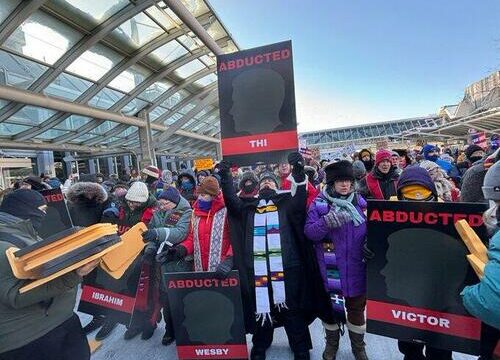
Left-wing nonprofit groups in Minneapolis appear to have moved beyond pressure campaigns targeting ICE agents and federal law enforcement, shifting from street protests/riots toward actions that may disrupt critical infrastructure on Friday. The apparent objective is to target economic chokepoints and critical infrastructure, a pressure tactic consistent with the color revolution playbook previously deployed by dark-money funded NGO networks aligned with the Democratic Party’s protest-industrial complex and financed by left-wing billionaire foundations.
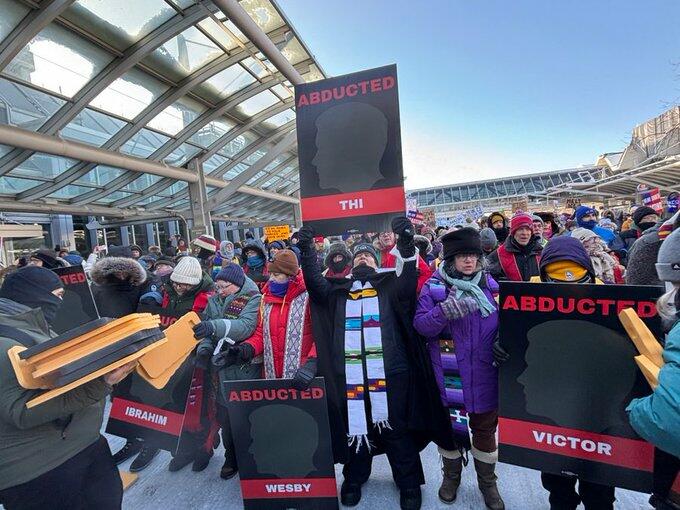
Local media outlet The Minnesota Star Tribune reported on Friday evening that “at a demonstration outside Minneapolis–St. Paul International Airport’s main terminal, a Metropolitan Airports Commission spokesman said police arrested roughly 100 demonstrators.”
Following a morning demonstration outside Minneapolis–St. Paul International Airport’s main terminal, a Metropolitan Airports Commission spokesman said police arrested roughly 100 demonstrators.
📸 Elizabeth Flores/The Minnesota Star Tribune
Follow updates here:… pic.twitter.com/h39Z5689IN
— The Minnesota Star Tribune (@StarTribune) January 23, 2026
Footage from the protest area appears to show demonstrators – mainly white liberal boomers – blocking the main access road to Terminal 1 at the international airport.
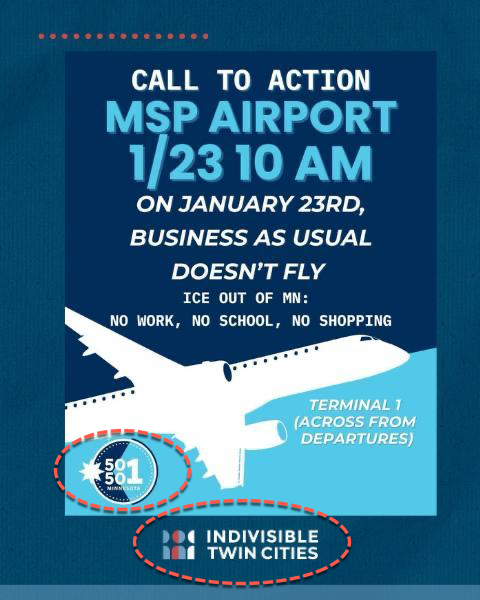
We’re not quite certain who organized the protest at the airport, but a flyer floating around social media appears to show the same left-wing nonprofit that organized ‘No Kings’ rallies across the country last year – largely seen as a failure because the mobilization effort only attracted white liberal boomers.
Here’s the flyer showing that Indivisible Twin Cities and 50501, dark-money-funded NGOs, could’ve been the organizers of the event to shut down critical infrastructure:
According to previous reporting by Peter Schweizer & Seamus Bruner of the Government Accountability Institute, the ‘No Kings’ protest brand was created by The Indivisible Project (or “Indivisible”). That entity and its eponymous offshoots – “Indivisible Civics,” “Indivisible Action,” “Indivisible East Bay,” et al – sprung up as an activist mobilization machine in response to Trump’s 2016 victory.
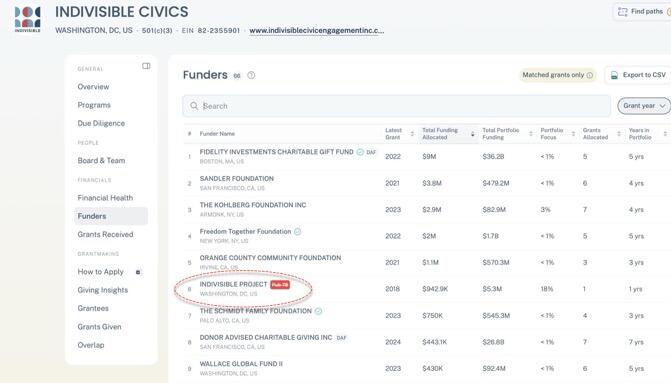
Parsing through 990 filings: Indivisible Civics funds the Indivisible Project.
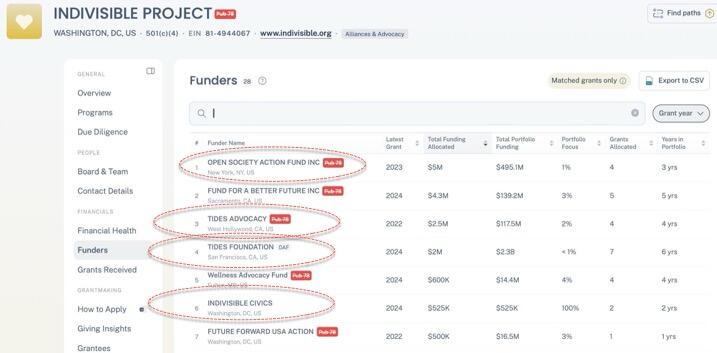
As for Indivisible Project, the typical foundations that fund chaos nationwide also fund this entity.
The evolution of the protest to now shut down critical infrastructure comes as left-wing NGOs are attempting an “economic blackout” across Minnesota. As we noted days ago, the state is being used as a testing ground by Marxist revolutionists who will replicate pressure campaigns that work in the metro area across every sanctuary city when spring rolls around.
Left-Wing NGOs Plan “Economic Blackout” Across Minnesota As State Becomes Testbed For Revolution
Let’s take a step back because the protest at the airport is a similar playbook that was used by revolutionary pro-Palestine groups in recent years that targeted critical economic chokepoints of the economy, from highways to bridges to airports and even land ports (read here). The goal of the protest industrial complex is not to help the cause; rather, it is all part of a sinister plan to collapse the nation from within.
There is good news: Treasury Secretary Scott Bessent sat down with journalist Christopher Rufo earlier this month to discuss plans to investigate dark-money-funded NGOs sowing chaos nationwide.
Among the topics discussed in the Bessent-Rufo interview were left-wing nonprofits, with Bessent acknowledging that “we are examining” NGO activities and funding structures…
Bessent continued:
Yes, yes, and yes. So, these groups that are engaging in this—we have the authority and are examining them. Because when you see these protesters, someone is financing them. There are safe houses. When you see the 300 people with the same laser that they’re using to blind DHS agents in courthouses in Portland, someone bought those lasers.
And again, what we do is follow the money—just like we followed it with the mafia, just like we follow it. We’ll find out who’s done this.
I announced today that we are going to put in effect a whistleblower program. And my sense is that the rats will turn on each other.
As I believe you reported—or someone talked about in a roundtable—one of the Somali fraudsters tried to bribe a juror with $120,000. What turned out, she’d been given $200,000 to bribe the jurors, and she skimmed. It’s like the scorpion—it’s in their nature.
EXCLUSIVE: Treasury @SecScottBessent tells me that the Trump Administration will launch investigations into left-wing nonprofits that serve as a front for violent protests and criminal obstruction of ICE operations. It’s time to stop left-wing terrorism in America. pic.twitter.com/roorsk4XLA
— Christopher F. Rufo ⚔️ (@christopherrufo) January 9, 2026
Bessent said “rats,” the question there is whether he was referring to the actual rodent, or an acronym for the Rockefeller Foundation (R), Arabella network (A), Tides Foundation (T), and Soros Foundation (S), some of the foundations that have been funding the protest industrial complex against President Trump and attempting to derail the America First agenda.
Let’s circle back to retired Lt. Gen. Michael Flynn’s comments in late November:
General Flynn Calls For National Address From Trump On Color Revolution Threat
As spring and warmer weather approach, the protest industrial complex will be operating at full steam. It is time for the Trump administration to get ahead of these Marxist revolutionaries, whose main goal is a color revolution and regime change in the White House, the end of America First, and to collapse the nation from within.
Tyler Durden
Sat, 01/24/2026 – 16:55
NBA postpones Timberwolves-Warriors game in Minneapolis after fatal shooting by federal officer
MINNEAPOLIS — The NBA game between the Minnesota Timberwolves and Golden State Warriors was postponed on Saturday afternoon following another fatal shooting by a federal officer in Minneapolis.
The game was rescheduled for Sunday afternoon. The Timberwolves and Warriors also are scheduled to play Monday night.
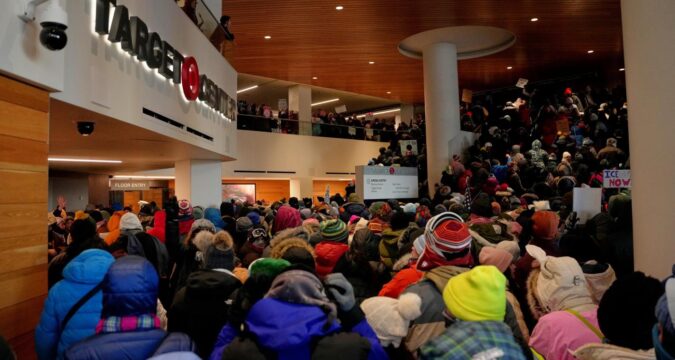
The league announced the decision was made to “prioritize the safety and security of the Minneapolis community” after 37-year-old Alex Pretti was killed in a confrontation with officers on a street in a commercial district less than two miles from the Target Center, the downtown arena where the Timberwolves play. With the crowd of protesters growing around the shooting site Saturday, the Minnesota National Guard was assisting local police to try to keep the peace.
The Minnesota Twins were holding their annual winter fan festival at Target Field, across the street from the Target Center, and ended the event an hour early for the “expedited departure” of all guests.
Thousands of people marched through downtown Friday with the air temperature well below zero in protest of the presence and tactics of the federal force that swelled to about 3,000 officers in the Twin Cities area this month as part of the Trump administration’s immigration crackdown.
Two weeks ago, 37-year-old Renee Good was fatally shot in her car as she drove away from a group of officers following a confrontation. The Timberwolves held a moment of silence for Good before their game the following night.
Stranded by winter weather? Here’s what airlines owe you.
Winter weather can upend even the best-laid travel plans, but one less thing to worry about is losing money if your flight is canceled: U.S. airlines are required to provide refunds.
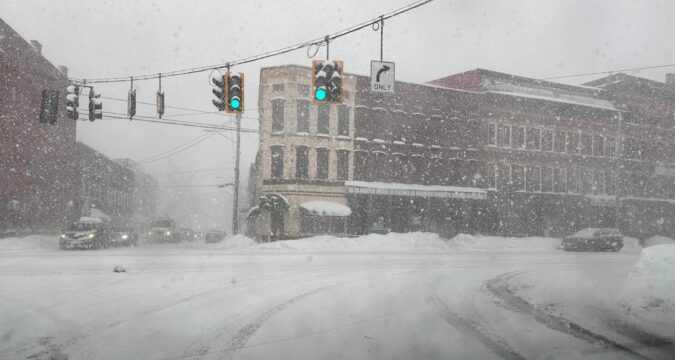
A monster storm started to wreak havoc Saturday across parts of the country, with 12,200 weekend flights and counting canceled. Forecasters warned that catastrophic damage, especially in areas pounded by ice, could rival that of a hurricane.
Almost 12,000 flights canceled as major winter storm bears down across much of the US
Here’s a guide for winter travelers as flight disruptions pile up:
Keep an eye on weather forecasts
When airlines expect bad weather to create problems for flights, they often give travelers a chance to postpone their trips by a few days without having to pay a fee. Search online for your airline’s name and “travel alerts” or similar phrases to look for possible rescheduling offers.
American Airlines, for example, said it is waiving change fees for passengers impacted by the storm and adding extra flights around the country in an effort to help passengers reach their destination after the storm passes.
Check before going to the airport
Use the airline’s app to make sure your flight is still on before heading to the airport.
Cancellations can happen hours — or even days — before departure time. Consider American and Delta Air Lines: By mid-day Saturday, each carrier had canceled more than 1,000 of its scheduled Sunday flights, according to flight tracking site FlightAware.
Oklahoma’s largest airport suspended all flights Saturday, while Dallas–Fort Worth International Airport, a major hub, saw more than 700 departing flights canceled and nearly as many arriving flights called off. Flight disruptions also were stacking up at airports in Chicago, Atlanta, Nashville and Charlotte, North Carolina.
Disruptions were expected to intensify Sunday, FlightAware data showed. By late Saturday afternoon, nearly all departing flights scheduled to leave Ronald Reagan Washington National Airport on Sunday — 405 flights, or about 95% — had already been canceled. Major disruptions were also forecast for airports in Charlotte and Atlanta, home to the nation’s busiest airport, as well as New York’s John F. Kennedy International Airport and LaGuardia Airport, where 87% of Sunday’s departing flights have so far been canceled.
My flight was canceled, now what?
If you’re already at the airport, get in line to speak to a customer service representative. If you’re still at home or at your hotel, call or go online to connect to your airline’s reservations staff. Either way, it helps to also research alternate flights while you wait to talk to an agent.
Most airlines will rebook you on a later flight for no additional charge, but it depends on the availability of open seats.
Can I get booked on another airline?
You can, but airlines aren’t required to put you on another carrier’s flight. Some airlines, including most of the biggest carriers, say they can put you on a partner airline, but even then it can be a hit or miss.
Am I owed a refund?
If your flight was canceled and you no longer want to take the trip, or you’ve found another way to get to your destination, the airline is legally required to refund your money — even if you bought a non-refundable ticket. It doesn’t matter why the flight was canceled.
The airline might offer you a travel credit, but you are entitled to a full refund. You are also entitled to a refund of any bag fees, seat upgrades or other extras that you didn’t get to use.
When will I get my refund?
If you paid with a credit card, a refund is due within seven business days after you decline an offer from the airline for another flight or a voucher, and within 20 calendar days if you paid for the ticket with a check or cash, according to the U.S. Department of Transportation.
What else will my airline cover?
U.S. airlines aren’t required by the Transportation Department to compensate passengers for meals or lodging when an airline cancels or significantly delays a flight during an “uncontrollable” event like bad weather.
Each airline, however, does have its own policies for assisting passengers who are stranded by a so-called “controllable” flight cancellation or long delay. These include disruptions caused by maintenance issues, crew shortages or computer outages that halt operations. The Transportation Department can hold airlines accountable for these commitments and maintains a website that lets travelers see what each airline promises if a major disruption is their fault.
Other tips
If the weather forecast is troubling, Kyle Potter, executive editor of Thrifty Traveler, suggests looking into booking a backup flight. Some airlines stand out as potential backups, Potter says, because they let customers get a full refund as long as they cancel within 24 hours of booking.
The customer service phone lines will be slammed if flight cancellations and delays start stacking up during a bad storm. If you’re traveling with someone who has a higher frequent-flyer status, call the airline using their priority number. Another trick: Look up the airline’s international support number. Those agents can often rebook you just the same.
https://www.chicagotribune.com/2026/01/24/winter-weather-airlines/
Donald Trump threatens Canada with a 100% tariff over its China trade deal and escalates feud with Carney
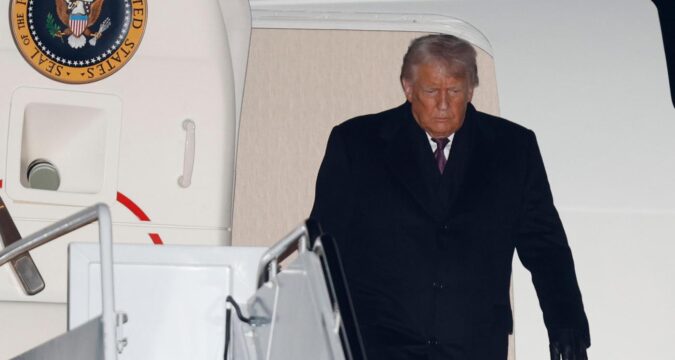
WASHINGTON — President Donald Trump on Saturday threatened to impose a 100% tariff on goods imported from Canada if America’s northern neighbor went ahead with its China trade deal, intensifying a feud with Prime Minister Mark Carney, a rising voice in the West’s pushback to Trump’s new world order.
Trump said in a social media post that if Carney “thinks he is going to make Canada a ‘Drop Off Port’ for China to send goods and products into the United States, he is sorely mistaken.”
It was unclear when Trump might impose the threatened tariff. He said in the post it would happen “immediately” if Canada made a deal with China, which Carney did a week earlier, drawing initial praise from the president.
The White House did not offer any additional details.
While Trump has waged a trade war over the past year, Canada forged ahead with its own deal to lower tariffs on Chinese electric vehicles in return for lower import taxes on Canadian farm products. At the time, Trump said that agreement was what Carney “should be doing and it’s a good thing for him to sign a trade deal.”
Dominic LeBlanc, Canada’s minister responsible for trade with the United States, said Canada and China had resolved “several important trade issues” but there was no pursuit of a free-trade agreement.
Trump’s threat came amid an escalating war of words with Carney as the Republican president’s push to acquire Greenland strained the NATO alliance. Trump had commented while in Davos, Switzerland, this week that “Canada lives because of the United States.” Carney shot back that his nation can be an example that the world does not have to bend toward autocratic tendencies. “Canada doesn’t live because of the United States. Canada thrives because we are Canadian,” he said.
Trump later revoked his invitation to Carney to join the president’s “Board of Peace” that he is forming to try to resolve global conflicts.
Trump’s push to acquire Greenland has come after he has repeatedly needled Canada over its sovereignty and suggested it also be absorbed the United States as a 51st state. He posted an altered image on social media this week showing a map of the United States that included Canada, Venezuela, Greenland and Cuba as part of its territory.
In his message Saturday, Trump continued his provocations by calling Canada’s leader “Governor Carney.” Trump had used the same nickname for Carney’s predecessor, Justin Trudeau, and his first use of it toward Carney was the latest mark of their soured relationship.
Daniel Béland, a political science professor at McGill University in Montreal, said “there was a sense Trump showed more respect for Carney than for Trudeau. Now, after Carney’s visit to China and, even more, his widely celebrated Davos speech, which clearly outshined and upset Trump, the gloves are off.”
Carney has emerged as a leader of a movement for countries to find ways to link up and counter the U.S. under Trump. Speaking in Davos before Trump, Carney said, “Middle powers must act together because if you are not at the table, you are on the menu” and he warned about coercion by great powers — without mentioning Trump’s name. The prime minister received widespread praise and attention for his remarks, upstaging Trump at the World Economic Forum.
The prime minister even spoke of a “rupture” between the U.S. under Trump and its Western allies that would never be repaired.
Trump, in his Truth Social post Saturday, also said that “China will eat Canada alive, completely devour it, including the destruction of their businesses, social fabric, and general way of life.” In a later post, the president said: “The last thing the World needs is to have China take over Canada. It’s NOT going to happen, or even come close to happening!”
Carney has not yet reached a deal with Trump to reduce some of the tariffs that he has imposed on key sectors of the Canadian economy. But Canada has been protected by the heaviest impact of Trump’s tariffs by the Canada-U.S.-Mexico Agreement. That trade agreement is up for a review this year.
In the fall, the Canadian province of Ontario aired an anti-tariff ad in the U.S. that prompted Trump to end trade talks with Canada. The television ad used the words of former President Ronald Reagan to criticize U.S. tariffs. Trump pledged to increase tariffs on imports of Canadian goods by an extra 10%. He did not follow through.
As for China, Canada had initially mirrored the United States by putting a 100% tariff on electric vehicles from Beijing and a 25% tariff on steel and aluminum. China had responded by imposing 100% import taxes on Canadian canola oil and meal and 25% on pork and seafood.
But as Trump’s pursued pressure tactics, Canada’s foreign policy has been less aligned with the U.S., creating an opening for an improved relationship with China. Carney made the tariff announcement earlier this month during a visit to Beijing.
Carney has said that Canada’s relationship with the U.S. is complex and deep and that Canada and China disagree on issues such as human rights.
LeBlanc, the trade minister, said in a statement that Canada would work to ensure that the future of that relationship “benefits workers and businesses on both sides of the border.”
Canada is the top export destination for 36 U.S. states. Nearly $3.6 billion Canadian (US $2.7 billion) worth of goods and services cross the border each day. About 60% of U.S. crude oil imports are from Canada, as are 85% of U.S. electricity imports.
Canada is also the largest foreign supplier of steel, aluminum and uranium to the U.S. and has 34 critical minerals and metals that the Pentagon is eager for and investing in for national security.
Gillies reported from Toronto.
https://www.chicagotribune.com/2026/01/24/trump-canada-tariff/
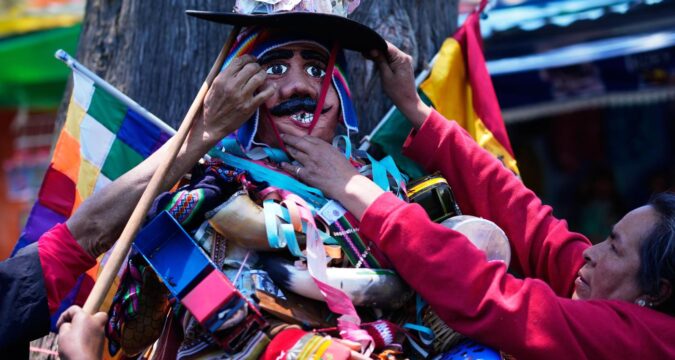
Bolivianos piden a Ekeko, dios de la abundancia, poder superar crisis económica
Associated Press
LA PAZ (AP) — Cientos de bolivianos asistieron al inicio de la festividad de la Alasita en La Paz el sábado al mediodía, con el pedido principal al Ekeko, el dios de la abundancia, que les dote alimentos y dinero para superar la crisis económica que afecta a la nación andina.
Apurada, Ana María Loza, de 55 años, vende bolsitas con productos básicos de la canasta familiar. Varias familias le compraban también billetes, que son réplicas de menor tamaño —sin valor— de dólares, euros y bolivianos, la moneda boliviana.
“Creo que todos queremos lo mismo, que nuestra Bolivia mejore económicamente”, dijo Loza, una mujer aymara que cree en el Ekeko.
En esta fiesta de Alasita —o de la miniatura— que se realiza cada año el 24 de enero tiene como personaje principal al Ekeko, un hombre regordete y bigotudo que carga entre sus ropas billetes, alimentos y objetos en miniatura. Según la creencia popular, es el dios de la abundancia al que, si se le entrega una miniatura de los sueños, él los hace realidad.
Esta festividad se extiende como un mercado callejero por el centro de La Paz, donde centenares de artesanos y vendedores exponen las miniaturas: autos, casas, edificios, títulos profesionales, maletas para viajar, entre otros.
En 2017, fue declarada Patrimonio Cultural Inmaterial de la Humanidad por la UNESCO.
El presidente de centro-derecha Rodrigo Paz también asistió al evento y llevó ante los guías espirituales aymaras los objetos pequeños que compró. Poco antes también visitó la iglesia vecina a Palacio de Gobierno y regaló billetes de tamaño pequeño a los bolivianos.
Alasita es una palabra aymara que significa “cómprame”. La feria, tiene origen indígena, suele concentrar a más 6.000 comerciantes, así como a miles de artesanos, creyentes y brujos aymaras. La feria se extiende durante casi un mes en el centro de La Paz.
La celebración tiene su origen en antiguas creencias de pueblos prehispánicos andinos y ha logrado vencer el tiempo e incluso el veto de la Iglesia católica, que durante la época colonial trató de desterrar el culto por considerarlo ateo, según los antropólogos. El mismo Ekeko se ha ido transformado a lo largo de los años.
Los creyentes llevan sus sueños trasladados en objetos pequeños a que sean bendecidos por la Iglesia católica y posteriormente a que sean challados por un brujo andino. La challa es un ritual andino que consiste en rociar a los pequeños objetos con alcohol, cerveza y pasarlos por incienso.
“Con fe cada año le pido al Ekeko trabajo para pagar mis deudas, es la fe que te lleva a conseguir tus sueños”, dijo Victoria Huanca, una ama de casa de 34 años.

Stablecoins: A Quiet Revolution In Finance
Stablecoins: A Quiet Revolution In Finance
Authored by Robert Burrows via BondVigilantes.com,
With geopolitics taking centre stage, the seismic tremors of Stablecoin activity go largely unnoticed. Stablecoins sit at a fascinating intersection of finance and technology. They promise the speed and programmability of cryptocurrencies with the price stability of traditional money.
What began as a niche settlement tool for crypto markets is now being discussed as a parallel monetary system—with profound implications for banks, credit creation, and financial stability.
What are stablecoins?
Stablecoins are digital tokens designed to maintain a stable value, usually pegged to a fiat currency like the US dollar. While there are several types, fiat-backed stablecoins dominate the market, accounting for roughly 90% of usage.
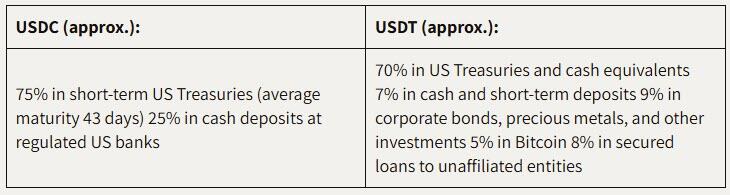
Two of the most widely used examples are USDC (Circle) and USDT (Tether).
Both are backed by reserves, but the composition of those reserves varies:
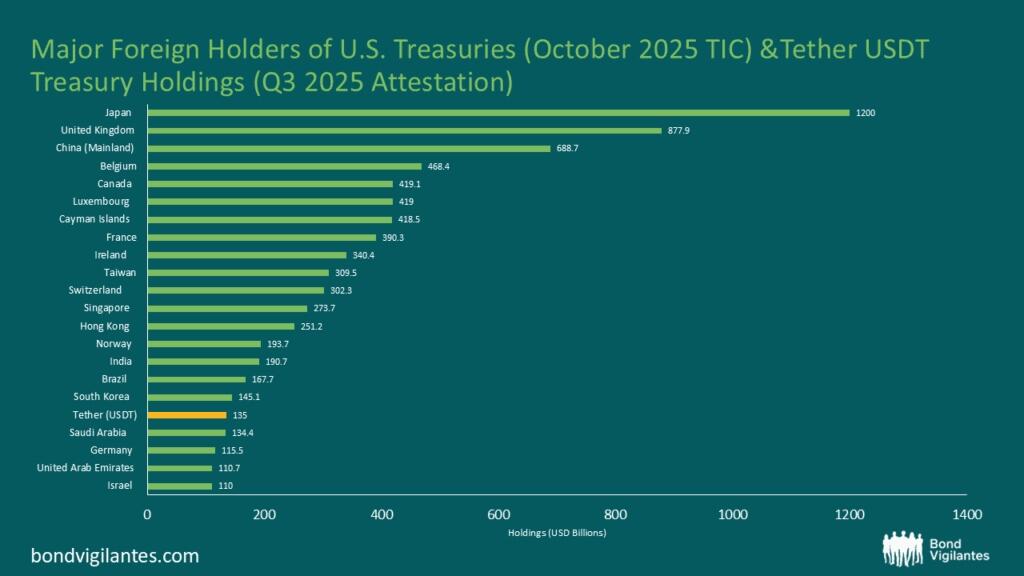
Stablecoins are becoming major players in the treasury market with Tether now the 17th largest holder of treasuries on the planet.
Source: US department of Treasury as of October 2025
How are stablecoins different from cash?
If you can already pay with a bank card, does it matter if settlement takes two days instead or instantly?
For most consumers, the benefits of stablecoins look incremental compared to existing digital banking services.
But there is one notable difference: interest.
The GENIUS act and interest rules
The GENIUS Act, proclaimed by Donald Trump to have been named after himself, was signed into law in July 2025 and created a federal framework for stablecoins. Its aim is to provide regulatory clarity, consumer protection, and oversight. Crucially, the Act prohibits stablecoin issuers from paying interest directly to holders, ensuring they behave like cash rather than investment products.
However, third-party platforms, such as Coinbase or Binance can still pass through yield to users. That is, the interest earned by Circle or Tether from holding the interest bearing reserves is passed on to the exchanges, which then pass through to holders of the stablecoins through a process called ‘staking’. It is important to note that these yields are not guaranteed to be passed through and remain poorly understood, which has likely limited adoption.
Core use cases driving adoption
Payments and Settlement: Stablecoins enable near-instant, 24/7 settlement without relying on correspondent banking networks. For cross-border payments, this can be far cheaper and faster than SWIFT. Global remittance costs on average about 6.5% per transaction on flows of roughly $900 billion. Stablecoins could cut that close to zero. It’s no surprise Western Union is exploring its own stablecoin as its business model faces disruption.
Cryptocurrency market infrastructure: The cryptocurrency universe has gone from strength to strength (less so lately). Stablecoins act as the base currency of the crypto ecosystem, allowing traders to move in and out of risk assets without touching the banking system.
Financial Inclusion: In countries with weak banking systems or high inflation, dollar-pegged stablecoins offer a stable store of value without requiring a bank account. With the US dollar as the world’s reserve currency, adoption in South America and Africa is easy to imagine. Asian markets may lean towards both US-backed and yuan-backed stablecoins. Financial inclusion can cut both ways, as it may accelerate capital flight from emerging economies and funnel more funding into US debt markets.
The funding threat to banks
Banks rely on deposits to fund loans.
Stablecoins disrupt this in three ways:
Deposit disintermediation: If households and corporates hold stablecoins instead of bank deposits, banks lose a cheap and stable source of funding.
Reduced credit creation: Stablecoin reserves are typically invested in:
Treasury bills
Reverse repos
Cash at central banks
This shifts money away from private lending and towards government financing. For the US, this is convenient given its $38 trillion debt stock, with 40–45% needing rollover in the next 18 months.
Pro-cyclicality risk: In a crisis, depositors may rush into stablecoins perceived as safer, amplifying stress on bank funding and making bank runs increasingly likely.
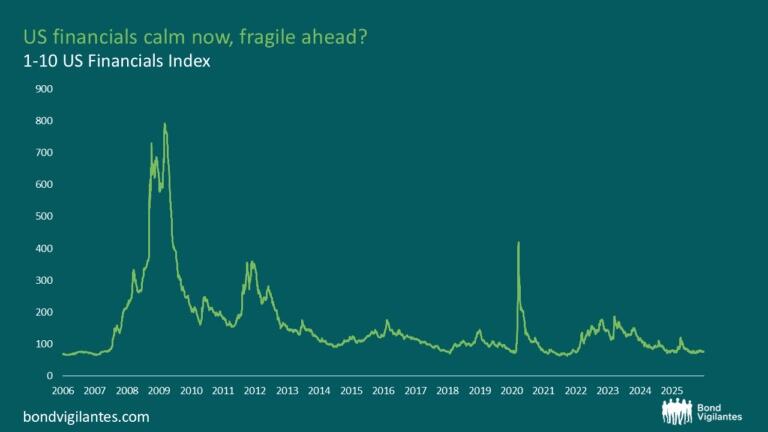
The stablecoin market is currently $300 billion in size, with bullish growth forecasts of $4 trillion by 2030. If this growth is realised, it will likely come at the expense of bank deposits and not from new external sources. This is a problem for the banks, and it won’t come as a surprise that recent crypto legislation stalled just last week amid banking industry lobbying against stablecoin interest payments. Stablecoins are not necessarily a catalyst for widening but is another concern for a sector which has spreads trading at all time tights.
To summarise, for everyday consumers, stablecoins offer little beyond what bank accounts already provide. For banks and the economy, the stakes are much higher. If stablecoins disintermediate banks, lending costs rise, credit availability shrinks, and growth slows, unless alternative credit channels scale up quickly.
The US Government will welcome the extra demand for short-term debt, but the cost could be a fundamental reshaping of the banking system.
Tyler Durden
Sat, 01/24/2026 – 16:20
https://www.zerohedge.com/crypto/stablecoins-quiet-revolution-finance
Frigid weather doesn’t stop Aurora event marking anniversary of Women’s March
Aurora resident Marielena Arroyo-Jurado believes in standing up for what you believe in, no matter how cold it is outside.
“In terms of being here and volunteering, it’s important to continue to stand tall for your rights and for what you believe in,” Arroyo-Jurado said after being dropped off at Wilder Park in Aurora on Saturday morning to take part in an event marking the anniversary of the 2017 Women’s March, which included events held around the country just over nine years ago.
“Despite the weather, democracy takes no break – rain or shine – it continues on,” Arroyo-Jurado said. “There’s no break in this and it’s important to spread the awareness of women’s equality and coming together and supporting each other.”
Saturday’s event in Aurora was organized by the Indivisible Kendall County group and included scheduled speeches by Aurora Mayor John Laesch; state Rep. Barbara Hernandez, D-Aurora; Kane County Board member Sonia Garcia; and Chuck Adams, the founder of Indivisible Aurora, as well as a short ceremonial walk in downtown Aurora.
According to a press release from the Yorkville-based Indivisible Kendall County group before Saturday’s event, “participants of all ages, backgrounds and identities are invited to gather in support of gender equality, reproductive freedom, racial justice, LGBTQ+ rights and the protection of all communities who continue to fight for dignity and equity.”
Cecilia Martinez, who handles marketing for the group, spoke two days before the event and declared it was a go despite Saturday’s predicted bitter weather.
“We haven’t done an anniversary walk before, at least not that I’m aware of, but we posted this on our website and advised people to dress warm,” Martinez said.
“We want to raise awareness about women’s groups and the struggles across the country right now,” she said.
Chuck Adams, of Aurora, said it was important to be at the event “after organizers reached out to me to be a speaker.”
“It was one of those things that I decided I certainly needed to do,” Adams said. “We need to stand up for our neighbors. Certainly, this is a time of turmoil for a lot of communities, especially those who are
marginalized historically. We just need to show up and make sure all of those folks, regardless
of their orientation or circumstances, are not alone.”
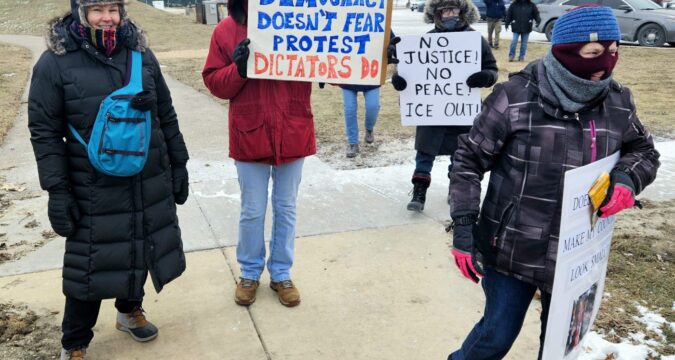
Despite the cold weather, Johanna Byram of Yorkville was one of about 50 people who came out to Wilder Park in Aurora on Saturday, Jan. 24, 2026, for an event honoring the anniversary of the Women’s March in 2017. (David Sharos/For The Beacon-News)
Johanna Byram of Yorkville was also on hand at the event.
“With the weather, I wish it wasn’t like this, but this is important as we’re losing so many of our
rights with the stroke of a pen,” Byram said. “We have had so many things taken away that women have fought for over many generations.”
About 50 people attended the event on Saturday.
“The numbers today may be small, but it still matters,” Byram said. “You have to stand up. You have to be counted.”
David Sharos is a freelance reporter for The Beacon-News.
Newsom Announces California Will Remain In WHO Despite US Withdrawal
Newsom Announces California Will Remain In WHO Despite US Withdrawal
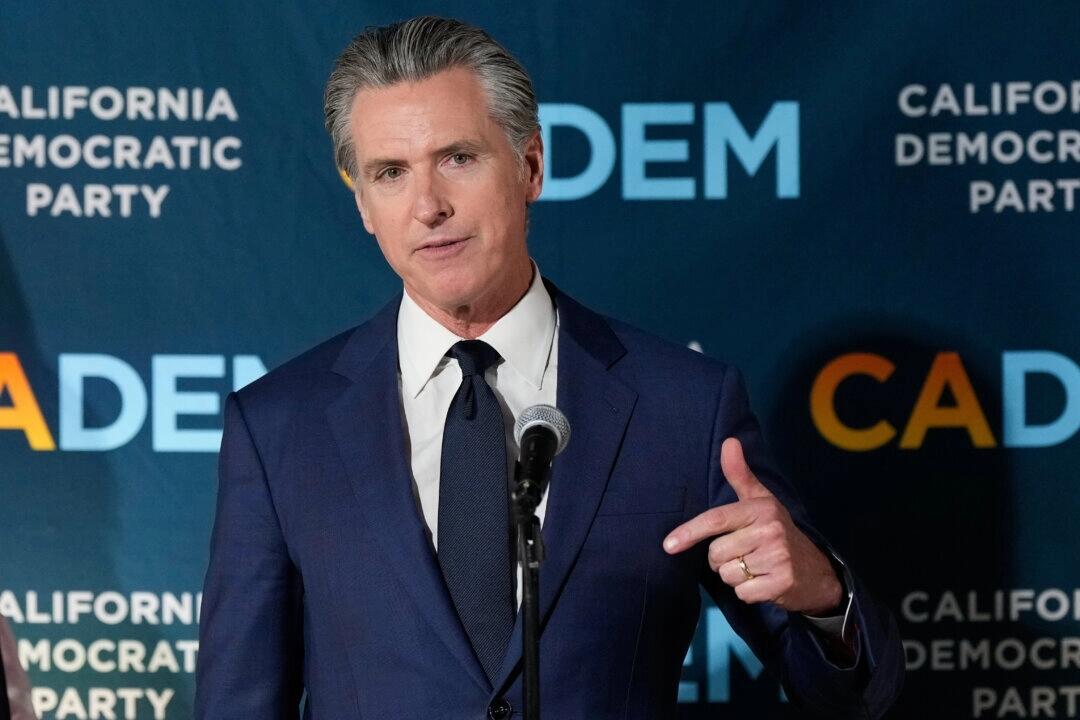
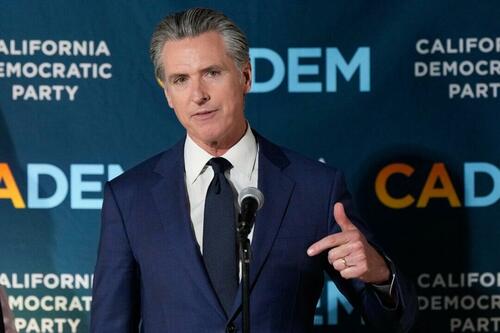
California Democratic Gov. Gavin Newsom announced Friday that the Golden State will remain a part of the World Health Organization’s network, even though the Trump administration just completed the United States’ withdrawal from the WHO.
“The Trump administration’s withdrawal from WHO is a reckless decision that will hurt all Californians and Americans,” Newsom wrote.
“California will not bear witness to the chaos this decision will bring. We will continue to foster partnerships across the globe and remain at the forefront of public health preparedness, including through our membership as the only state in WHO’s Global Outbreak Alert and Response Network.”
As Jacki Thrapp reports for The Epoch Times, Newsom, who confirmed in October that he’s considering a 2028 presidential bid, revealed the new collaboration after meeting with WHO Director-General Dr. Tedros Adhanom Ghebreyesus at the World Economic Forum in Switzerland.
Newsom’s decision goes against the Trump administration’s approach to the agency, which is managed by the United Nations.
Trump, a critic of the WHO’s pandemic responses, has wanted the United States to exit the WHO ever since his first term. His administration formally made the split on Thursday.
“This action responds to the WHO’s failures during the COVID-19 pandemic and seeks to rectify the harm from those failures inflicted on the American people,” said Secretary of State Marco Rubio and Health and Human Services Secretary Robert Kennedy Jr in a joint statement Jan. 22.
The Trump administration said the agency “abandoned its core mission and acted repeatedly against the interests of the United States,” even though America was a founding member and the largest financial contributor.
All U.S. funding of WHO has ended, amounting to about $111 million in annual “mandatory dues” and $570 million in “voluntary contributions,” according to the Department of Health and Human Services.
“We right these injustices and bring an end to the bureaucratic inertia, entrenched paradigms, conflicts of interest, and international politics that have rendered the organization beyond repair,” the press release by Rubio and Kennedy added.
“We will get our flag back for the Americans who died alone in nursing homes, the small businesses devastated by WHO-driven restrictions, and the American lives shattered by this organization’s inactivity. Our withdrawal is for them.”
Rubio and Kennedy said the WHO refused to give the United States its flag back after the departure announcement.
Tyler Durden
Sat, 01/24/2026 – 15:45