Category: News

Justin Rose lidera en Torrey Pines con 62; Koepka regresa a la PGA con 73
Por DOUG FERGUSON
SAN DIEGO (AP) — Justin Rose tuvo oportunidades de birdie en todos los hoyos, salvo uno, y firmó un 62, 10 bajo par, en el Campo Norte de Torrey Pines, considerado el más fácil, para liderar por un impacto el Farmers Insurance Open el jueves, un día que marcó el regreso de Brooks Koepka desde la serie LIV Golf.
Koepka atrajo mucha atención bajo el sol brillante a lo largo de la costa del Pacífico. Fue el primer miembro de la Gira de la PGA que se marchó a la liga rival financiada por Arabia Saudí.
Rescindió su contrato, al que le restaba un año, y se le dio luz verde para volver a la PGA.
Koepka no hizo un birdie sino hasta su último hoyo en el Campo Sur, considerado más difícil, para una tarjeta de 73, uno sobre par. Se mostró feliz de resolver por fin la primera ronda.
“Desde el primer tee, fue genial. En realidad, me hizo calmarme un poco”, dijo Koepka. “Como dije, me hizo sentir bien simplemente el estar aquí”.
Rose no pasó el corte en su debut de 2026, la semana pasada en The American Express. Aunque el Campo Norte es más sencillo, su juego fue preciso. Incluso sin birdies en dos de los pares cinco, logró un gran puntaje antes de dirigirse al Sur.
Justin Lower, nervioso mientras su esposa permanecía en casa a punto de dar a luz a mellizos, tuvo un 63 en el Norte. Hideki Matsuyama y Max Greyserman entregaron sendas tarjetas de 64.
Seamus Power tuvo el puntaje más bajo con 65 en el Campo Sur, que ha sido sede de dos Abiertos de Estados Unidos y registró un promedio de 72,482. El puntaje promedio en el Norte fue de 69,139. De los 22 jugadores con 67 golpes o menos, sólo Power y Max McGreevy (66) estaban en el Sur.
“El campo Norte claramente es uno en el que quieres aprovechar al máximo y es genial haberlo hecho hoy, sin duda”, dijo Rose.
Hizo par desde el fairway en su hoyo de cierre en el noveno, par-cinco, tras caer en un búnker. Sacó la bola a unos cuatro pies y falló el putt de birdie. Pero sólo tuvo que sufrir una vez, en el hoyo 14 de 451 yardas y mantuvo una tarjeta limpia.
_____
Deportes AP: https://apnews.com/hub/deportes
‘My Colon Literally Blew Up’: Thousands Sue Over GLP-1 Weight Loss Drug Side Effects
‘My Colon Literally Blew Up’: Thousands Sue Over GLP-1 Weight Loss Drug Side Effects
A growing wave of lawsuits is challenging the safety warnings accompanying blockbuster weight-loss drugs that have rapidly reshaped American medicine and culture, raising questions about whether patients were adequately informed of the risks tied to medications now used by tens of millions of people.
The plaintiffs’ stories vary widely, but share a common claim: that drugs known as GLP-1 receptor agonists – including Ozempic, Wegovy and Mounjaro – caused severe, life-altering injuries that were not sufficiently disclosed at the time they were prescribed.
A Maryland truck driver says he suffered what doctors described as an “eye stroke,” losing vision first in one eye and then the other. A Louisiana woman developed a serious neurological condition after weeks of vomiting and malnutrition. An Oklahoma real-estate agent alleges her colon ruptured without warning while she was driving her granddaughter home from a softball game.
“My colon blew up. Literally blew up,” said JoHelen McClain, the Oklahoma plaintiff. “I was trying to slim down and feel healthy.”
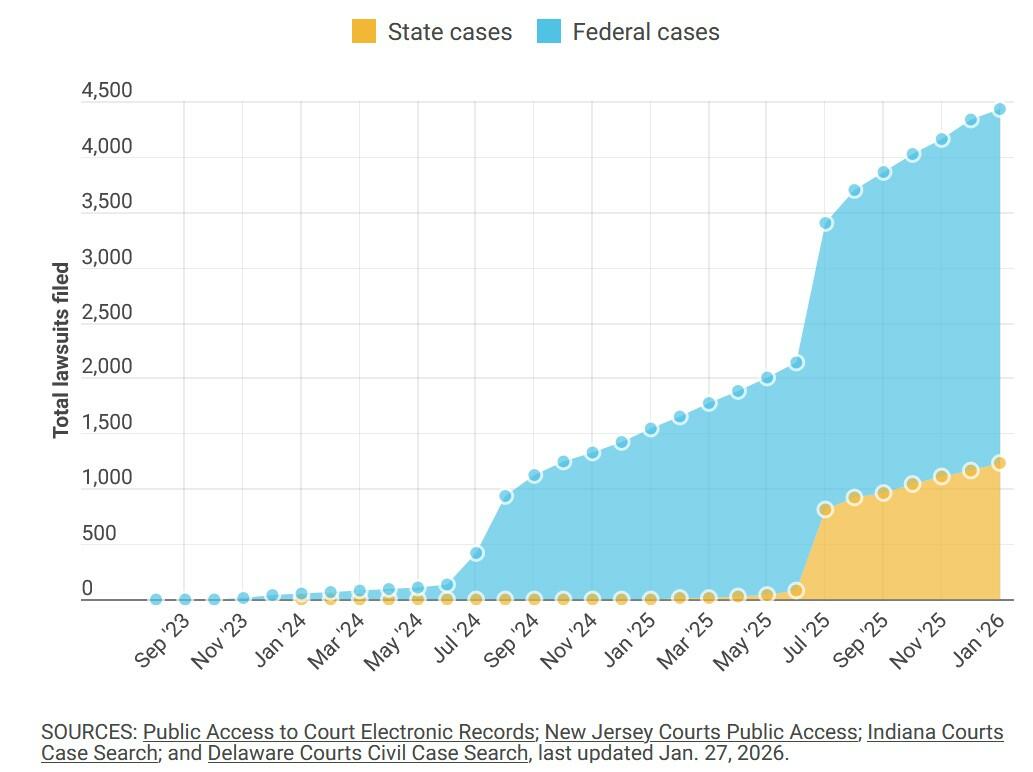
All three are among more than 4,400 plaintiffs who have filed lawsuits since 2023 against the drugs’ manufacturers, Novo Nordisk and Eli Lilly, according to court filings. The cases are now consolidated into federal and state litigation expected to take years to resolve.
The suits come amid explosive growth in the use of GLP-1 drugs. An estimated 12% of American adults – more than 31 million people – are currently using a GLP-1 medication, according to the nonpartisan health policy group KFF. Prescriptions rose from roughly one million in 2018 to about nine million in 2022, and usage doubled again between 2024 and 2025, Gallup data show.
Originally developed to treat diabetes, the drugs mimic a hormone that slows digestion, stimulates insulin release and increases feelings of fullness. Their success has helped reduce U.S. obesity rates for the first time in more than a decade and spurred research into additional benefits, including reduced risks of kidney disease, addiction and dementia.
Yet plaintiffs allege that the same mechanism slowing digestion can, in some patients, lead to serious gastrointestinal and neurological injuries.
In court on Jan. 13, Novo Nordisk attorney Katie Insogna said (via USA Today):
75% of the federal lawsuits include an allegation of gastroparesis, also known as “stomach paralysis,” a chronic condition where the stomach slows or stops emptying food into the small intestine;
18% of the cases allege the drugs caused ileus, a condition in which bowel muscles fail to push food and waste out of the body;
18% of the plaintiffs allege intestinal obstructions;
8% say they suffered from gallbladder injuries, with some of these patients requiring surgical removal of gangrenous tissue;
8% of the plaintiffs allege other serious gastrointestinal complications, such as extreme vomiting, chronic acid reflux or abdominal pain that required multiple hospitalizations in some cases. Others say their digestion issues have continued even after they stopped taking the drugs.
USA TODAY’s review of the lawsuits also found at least 110 plaintiffs alleging sudden blindness or severe vision changes, and at least one alleging Wernicke’s encephalopathy, a neurological condition linked to vitamin B1 deficiency.
The drugmakers deny the allegations. In a joint filing last year, the companies said “the safety profile of GLP-1 RAs has been well-established in hundreds of clinical trials, large-scale observational studies, and nearly two decades of real-world use.”
“Novo Nordisk remains confident in the benefit-risk profile of our GLP-1 medicines, when used consistent with their indications and product labeling,” said company spokesperson Flavia Brakling, adding that labels are updated “in cooperation with the FDA and consistent with federal regulations.”
An Eli Lilly spokesperson said, “Patient safety is Lilly’s top priority,” noting that the labels for Mounjaro, Zepbound and Trulicity have “always warned of potential ‘gastrointestinal adverse reactions, sometimes severe.’”
Legal experts say the cases may hinge on whether plaintiffs can prove causation and whether warnings were legally sufficient at the time.
“Proving the drugs caused certain outcomes will be an issue,” said Ana Santos Rutschman, a health-law professor at Villanova University, along with determining “the extent and timing of warnings.”
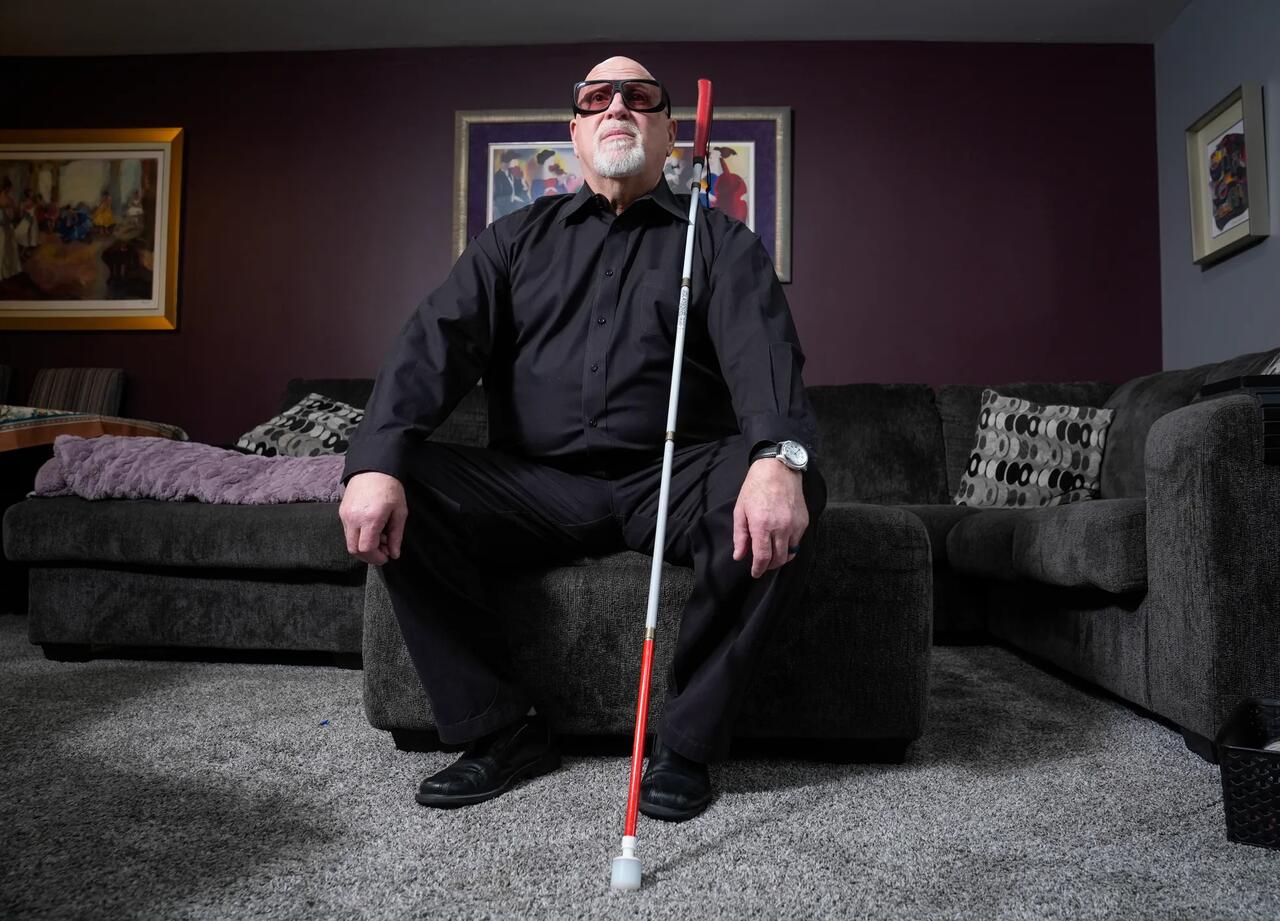
For Todd Engel, the Maryland truck driver, the outcome has already been devastating. After four months on Ozempic to manage diabetes, he woke in December 2023 with vision loss in one eye. Diagnosed with non-arteritic anterior ischemic optic neuropathy, or NAION, he continued taking the drug after doctors failed to identify a cause. In October 2024, he lost vision in his remaining eye.
“You’re not going to believe this,” his wife, Shelley, recalled him saying. “I can’t see at all.“
Now legally blind, Engel has lost his job and commercial driver’s license. “This whole thing has been catastrophic to me and my wife,” he said.
A 2024 JAMA Ophthalmology study of nearly 17,000 patients found an increased risk of NAION among those prescribed semaglutide compared with other treatments, though it did not establish causation. European regulators later described the condition as “very rare,” prompting label updates abroad. U.S. labels warn of vision changes but do not mention NAION by name.
“What happened to me should have never happened,” Engel said.
McClain’s case unfolded differently. After losing 40 pounds on Wegovy, she suffered a sudden colon rupture in March 2024, followed by emergency surgery, sepsis and months of recovery. She now lives with a permanent stoma.
“I read everything I could find on it before I went on it,” she said. “They did not warn about any of the stuff that happened to me at that time.”
In Louisiana, Mark Smith says his wife Robin developed permanent brain damage after months of vomiting while taking Mounjaro. Doctors later diagnosed her with Wernicke’s encephalopathy.
“I still have my wife, physically, not mentally anymore,” he said.
Eli Lilly has said Mounjaro’s label has always warned of severe gastrointestinal reactions. Plaintiffs argue those warnings failed to convey how extreme or irreversible some outcomes could be.
“These drugs are not new,” said Ziyad Al-Aly, director of research at the St. Louis Veterans Affairs Health Care System. “What’s new about them is that the companies then realized, ‘Oh my God, they actually work on weight loss.’”
Al-Aly said he sympathizes with the plaintiffs but believes the drugs’ benefits outweigh the risks for most patients. “There is nothing that’s really all benefit and no risk,” he said.
The first bellwether trials in the consolidated litigation are not expected until 2027. Legal experts say such cases often take four to five years.
Tyler Durden
Thu, 01/29/2026 – 21:20

Waste Of The Day: How The Grinch Stole $30,000
Waste Of The Day: How The Grinch Stole $30,000
Authored by Jeremy Portnoy via RealClearInvestigations,
Topline: The Grinch did not successfully steal Christmas this season, but he did use up $30,493 in taxpayer money.
A viral Grinch-themed house in Dallas drew crowds so large that the city needed extra police personnel hours, vehicles and barricades to control the nightly crowd of visitors, WFAA-TV reported.
Key facts: The 9,000-square-foot mansion in the Preston Hollow neighborhood in North Dallas became famous on TikTok in 2024, thanks in part to a Santa statue with President Donald Trump’s face. The house received coverage from the Today Show and an Instagram post from rapper Snoop Dogg, and the ensuing crowds cost the city of Dallas $25,375 in 2024 – rising to over $30,000 in 2025, according to WFAA.
Neighbors were unhappy, and the home received a citation for violating city codes on noise and light glare. The home was also featured in a city council presentation that warned of safety risks from large events, including residents trapped in their homes and limited access for first responders, according to WFAA.
Homeowner Ryan De Vitis called his neighbors “the real-life Grinch” over the controversy, which may explain his choice of theme for 2025.
But this year, his neighbors were prepared. The Preston Hollow Citizens for a Safer Community bought a special events permit and used their own money to hire off-duty police officers to limit vehicle and foot traffic in the area.
That offset “significant” expenses for taxpayers, the city told WFAA, but the Dallas police still had to devote additional resources towards securing the street.
Critical quote: “While I appreciate homeowners lighting their homes to bring joy to others during the holidays, compromising public safety resources to this extent doesn’t reflect the spirit of the season,” City Councilwoman Gay Donnell Willis told KERA News last year.
Summary: The Grinch’s heart grows three sizes once he discovers the true meaning of Christmas, but the only thing growing in Dallas is the size of its projected budget deficits.
The #WasteOfTheDay is brought to you by the forensic auditors at OpenTheBooks.com
Tyler Durden
Thu, 01/29/2026 – 20:55
https://www.zerohedge.com/political/waste-day-how-grinch-stole-30000
Ian Cunningham is leaving the Chicago Bears front office for the Atlanta Falcons GM job
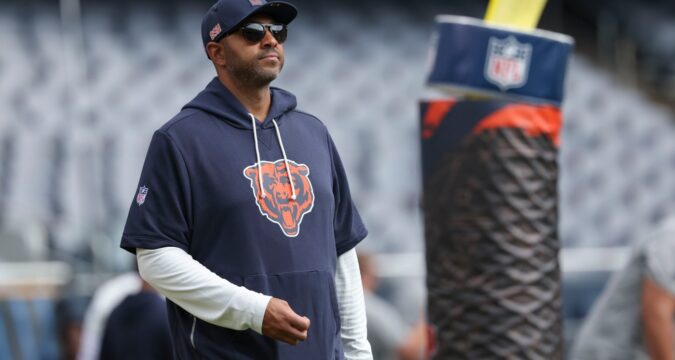
Chicago Bears assistant general manager Ian Cunningham is leaving to become the general manager of the Atlanta Falcons, according to an ESPN report Thursday evening.
After four years with the Bears, Cunningham heads to Atlanta to work with the franchise’s new president of football, Matt Ryan.
One of the first moves Bears GM Ryan Poles made when he took over football operations at Halas Hall in January 2022 was to hire Cunningham as his No. 2. Cunningham, a former college offensive lineman like Poles, previously worked for the Baltimore Ravens and Philadelphia Eagles front offices.
Cunningham, 40, interviewed this month for the Falcons president of football position, but the job went to Ryan, the former MVP quarterback. The Falcons are reorganizing their front office after firing GM Terry Fontenot and coach Raheem Morris this month. In his role as GM, Cunningham is expected to report to Ryan.
That could be notable for the Bears if the NFL determines that Cunningham is not taking what the league calls a team’s “primary football executive” role. The NFL’s Rooney Rule, which requires teams to interview minority candidates, rewards teams with a compensatory draft pick if another team hires away a minority candidate for its top executive job or head coaching position.
In this case, the NFL might consider Ryan the primary football executive and the Bears might not receive any compensation for losing Cunningham.
There are plenty of interesting threads to this move. Poles and Ryan played together at Boston College, so Ryan certainly knew whom to call for a reference about Cunningham.
Cunningham has been interviewing for GM positions for several years. He was a finalist a year ago for the Jacksonville Jaguars job, a reported finalist for the Washington Commanders job in 2024 and he turned down the Arizona Cardinals job in 2023, among other interviews.
Now he will begin a new journey in Atlanta.
https://www.chicagotribune.com/2026/01/29/chicago-bears-ian-cunningham-atlanta-falcons/

Trump Reopens Airspace Over Venezuela, Restores Direct US Flights After 5+ Years
Trump Reopens Airspace Over Venezuela, Restores Direct US Flights After 5+ Years
Venezuela had already long been an embargoed country, akin to Cuba in many aspects. For example, direct commercial passenger and cargo flights between the US and Venezuela have been impossible, going back to a May 2019 suspension ordered during the first Trump administration.
But after the US military ouster of Maduro, President Trump said Thursday that he ordered the reopening of Venezuela’s commercial airspace. This move, and the fact that Washington will now be overseeing the country’s monthly budget, demonstrates how decisively the US now claims to be running affairs in the oil-rich South American state.
Trump told a televised cabinet meeting he has already “informed” interim president Delcy Rodríguez that US oil companies would soon be arriving to scout potential projects.
It was once documented that after the US-NATO overthrow of Libya’s Muammar Gaddafi, the oil executives made it to Tripoli before the diplomats, as their private jets were faster. This looks to be the case with Venezuela too, given the US Embassy has not even yet reopened.
“American citizens will very shortly be able to go to Venezuela, and they will be safe there. It’s under very strong control,” Trump said at the White House.
Shortly after Trump’s remarks, American Airlines said it would move to resume flights to Venezuela, pending formal approval from the administration and assurances of “secure conditions”. Trump confirmed that he had directed the Transportation Department to lift the previous restrictions.
Trump also had some positive words in support of Maduro’s former Vice President, current interim leader Rodríguez:
The president said he had instructed the US transportation secretary, Sean Duffy, and Pentagon officials to implement the change before the day’s end. He characterized the security situation in Venezuela as being “under very strong control” after Rodríguez replaced Maduro.
She had days ago declared that she would stop taking orders from Washington, but this was clearly more for domestic consumption, where she has to pretend she’s asserting national sovereignty in decision-making.
But Venezuela is clearly a country that is anything but sovereign at this moment. More details on Washington’s role have been freshly revealed in the NY Times:
Venezuela’s interim government has agreed to submit a monthly “budget” to the Trump administration, which will release money from an account funded by the country’s oil sales and initially managed by Qatar, Secretary of State Marco Rubio said on Wednesday.
But the plan drew sharp questions from skeptical Democrats, and Mr. Rubio conceded that it was “novel” and hastily designed. The role of Qatar — a Middle Eastern country thousands of miles from Venezuela whose ruler has won President Trump’s favor — drew particular criticism from Democrats, who questioned its legality and transparency.
Mr. Rubio detailed the plan during an appearance before the Senate Foreign Relations Committee. It was Mr. Rubio’s first public testimony to Congress since American forces captured Venezuela’s leader, Nicolás Maduro, on Jan. 3, and an opportunity to clarify U.S. policy toward the country.
WOW.
Sen. Shaheen reveals $500M from Venezuelan oil sales.
$300M went to the Maduro government.
The other $200M?
Marco Rubio admits it’s just “sitting in an account.”
In Qatar.
So who controls it? Who benefits? And why is Congress being kept in the dark? pic.twitter.com/kTpMuLShtk
— Brian Allen (@allenanalysis) January 28, 2026
Qatar’s playing middleman is indeed interesting and ironic, given how suspicious conservatives have been of the tiny oil and gas rich Gulf country. Lately enemies of Tucker Carlson have blasted him for being influenced by Qatari funds, and yet here the Trump administration is quite openly and unapologetically embracing it.
Tyler Durden
Thu, 01/29/2026 – 20:30

Earthquakes adquieren a Timo Werner del Leipzig en fichaje de renombre para la MLS
SAN JOSÉ, California, EE.UU. (AP) — Los Earthquakes de San José adquirieron el jueves al delantero Timo Werner, procedente del club alemán Red Bull Leipzig, mediante un contrato de jugador designado que permanecerá vigente hasta junio de 2028 y que representa una de las mayores adquisiciones en la historia del equipo de la MLS.
Werner, de 29 años y cuyo acuerdo está pendiente de recibir su visa y certificado de transferencia internacional, también ha jugado para Stuttgart, Chelsea y a préstamo con el Tottenham durante una carrera distinguida en la que ha ayudado a levantar trofeos en la Liga de Campeones, la Liga Europa, la Supercopa de la UEFA y el Mundial de Clubes.
También ha aparecido en 57 partidos y ha anotado 24 goles con la selección de Alemania.
“Siempre es una gran decisión ir a América, pero todo está ahí para tener éxito”, comentó Werner en un comunicado. “El estadio y las instalaciones son hermosos. Además, me impresionó mucho que un entrenador experimentado como Bruce (Arena), que ha tenido tanto éxito en la liga, volara hasta Alemania para hablar conmigo sobre el plan.
“Los aficionados de los Earthquakes pueden esperar un jugador que lo da todo en el campo, en cada partido. En cada club al que me he unido, he querido ganar un trofeo. Al final, siempre he cumplido. Por eso quiero venir a San José: para ganar”.
San José adquirió la llamada “prioridad de descubrimiento” de Werner a los Red Bulls de Nueva York por 50.000 dólares en dinero de asignación general.
“Creo que será una excelente adquisición para nuestro equipo”, indicó Arena. “Tener un jugador del calibre de Timo es simplemente excepcional para el club y la comunidad. Creo que nos ofrecerá calidad en el campo, experiencia y liderazgo”.
Los Earthquakes comienzan la temporada de la MLS el 21 de febrero contra el Sporting Kansas City.
_____
Deportes AP: https://apnews.com/hub/deportes

‘He’s going to be finishing a lot of games for us’: Chicago White Sox finalize deal with Seranthony Domínguez
Seranthony Domínguez has pitched in big moments.
That was one of the traits that stood out to the Chicago White Sox.
“That level of experience is going to be really valuable,” general manager Chris Getz said Thursday after the Sox finalized a two-year, $20 million deal with the right-hander reliever.
The contract includes a $1 million signing bonus and mutual option for the 2028 season. Under terms of the agreement, Domínguez will receive $7 million in 2026 and $10 million in 2027, with a $12 million mutual option for 2028 or a $2 million buyout.
Reports of the deal first surfaced Friday.
Getz and manager Will Venable discussed the addition Thursday during an art makerspace community event at the Boys & Girls Clubs of Chicago, Bartlett J. McCartin Club in Bridgeport, which served as a lead-in to this weekend’s SoxFest Live festivities.
“He’s got big stuff and he’s got an ability to get both-sided hitters out,” Getz said of Domínguez . “We felt like he was the top remaining reliever on the market, and we’re excited we were able to convert on it.”
Domínguez, 31, had a 3.16 ERA, two saves and 20 holds in 67 combined relief outings for the Baltimore Orioles and Toronto Blue Jays in 2025. He had 79 strikeouts in 63 2/3 innings pitched.
Domínguez set career highs in appearances, innings, holds and strikeouts last season. He limited right-handed batters to a .132/.269/.182 slash line (16-for-121).
He joins a bullpen that includes right-handers Grant Taylor and Jordan Leasure.
“We’re talking about a bullpen now that is going to allow us to get to the finish line to stack up more wins,” Getz said.
Domínguez is 23-23 with a 3.50 ERA and 40 saves in 322 career relief appearances during seven major-league seasons with the Philadelphia Phillies (2018-19, 2021-24), Orioles (2024-25) and Blue Jays (2025). He has 360 strikeouts in 306 innings.
Domínguez has a 1.86 ERA with 37 strikeouts in 29 innings during 29 career postseason appearances, including a 1.93 ERA in five games for the Blue Jays in last year’s World Series against the Los Angeles Dodgers.
“He’s going to be finishing a lot of games for us,” Venable said. “We definitely view him as somebody that is going to lock us down at the back end.”
To make room for Domínguez on the 40-man roster, the Sox designated infielder Bryan Ramos for assignment.
Ramos, 23, went 2-for-12 (.167) with two doubles, two RBIs and one run in four games with the Sox in 2025. In 36 career games with the Sox from 2024-25, Ramos had a .198 average (22-for-111) with six doubles, three home runs and 13 RBIs.
The moves were part of a busy day for the Sox, who earlier Thursday announced that outfielder Braden Montgomery and pitchers Noah Schultz and Hagen Smith were among the 22 nonroster invitees to spring training camp. It’s the second straight year the three highly touted prospects received invitations to camp.
Montgomery, the No. 36-ranked prospect in baseball according to MLB.com, had a combined .270/.360/.444 slash line with 12 home runs and 68 RBIs in 121 games between Class A Kannapolis, High A Winston-Salem and Double-A Birmingham in 2025.
Schultz, the team’s first-round pick in 2022, went a combined 4-5 last season with a 4.68 ERA in 17 starts for Birmingham and Triple-A Charlotte. The lefty had 76 strikeouts in 73 innings. MLB.com ranks the Oswego East product as the No.49 prospect in baseball.
Fellow left-hander Smith, the team’s first-round pick in 2024, is ranked No. 72 on the MLB.com list. He went 3-3 with a 3.57 ERA in 20 starts for Birmingham in 2025. Smith struck out 108 and walked 56 in 75 2/3 innings.
Montgomery, Schultz and Smith are three of the 15 players from within the organization to be invited to big-league camp.
That group includes two more left-handed pitchers in Shane Murphy and Tyler Schweitzer, right-handers Mason Adams, Adisyn Coffey, Tyler Davis, Zach Franklin and Ben Peoples, outfielder Dru Baker, infielders Sam Antonacci, William Bergolla Jr. and 2023 first-round pick Jacob Gonzalez and catcher Michael Turner.
The Sox also officially announced the signings of right-handed pitcher Tyson Miller, left-handed pitcher Ryan Borucki, infielders Oliver Dunn, Tim Elko and LaMonte Wade Jr. and outfielders Dustin Harris and Jarred Kelenic to minor-league contracts.
All seven received nonroster invites to Sox spring training camp.
Borucki, a Mundelein product, went 1-3 with a 4.63 ERA in 39 combined relief appearances for the Pittsburgh Pirates and Blue Jays last season.
“Ryan Borucki is an arm that we feel like could fit into the bullpen,” Getz said. “He’s pitched in the big leagues, he’s been very effective against lefties, he’s developing some weapons to help combat righties as well.”
Spring training is around the corner. The first workout for Sox pitchers and catchers is scheduled for Feb. 10 in Glendale, Ariz. The first full-squad workout is set for Feb. 15.
Jersey news: For the first time, the Sox will have a jersey-patch sponsor after announcing an agreement with CME Group on Wednesday. The CME Group logo will be featured on the home, road and alternate jerseys.
https://www.chicagotribune.com/2026/01/29/chicago-white-sox-seranthony-dominguez/

About FACE: Trump Administration Using Abortion-Focused Law To Defend Believers
About FACE: Trump Administration Using Abortion-Focused Law To Defend Believers
Authored by Benjamin Weingarten via RealClearInvestigations,
Instead of the word of the Lord, worshippers at the Jan. 18 Sunday prayer service at Cities Church in St. Paul were met with chants such as “ICE out” and “Justice for Renee Good.” But that’s not all. Families in the pews were harangued as “pretend Christians” and “comfortable white people,” and even condemned as “Nazis,” who would “burn in hell” by at least one of the dozens of opponents of the Trump administration’s Twin Cities Immigration and Customs Enforcement surge who disrupted church services.
The protestors participating in “Operation Pullup” said they targeted the church and hurled such invective at its congregants because one of the church’s eight pastors is a federal immigration officer.
Two days later, federal prosecutors lodged a criminal complaint accusing the demonstration’s leader, Nekima Levy Armstrong, and other protestors including Chauntyll Louisa Allen and William Kelly, of conspiring to violate the rights of the congregants to freely worship, under charges historically brought almost exclusively against anti-abortion protestors tied to the Freedom of Access to Clinics Entrances or FACE Act.
Conservatives have long complained that the federal government weaponized the law to target pro-life Christians praying outside abortion clinics – with the Biden-led Justice Department for the first time combining FACE Act charges with such “conspiracy against rights” charges under the Ku Klux Klan Act to dramatically increase jail sentences. Now, the Trump administration is seeking to employ these laws to defend faithful Christians – and other worshippers – and bring their opponents to justice, under a long-dormant provision of the FACE Act aimed at protecting religious liberty.
It is not clear how successful this effort will be. A magistrate judge struck the FACE Act charge against the three protestors not because the law did not apply in the case but because, he ruled, prosecutors lacked probable cause at that juncture. The judge did leave in place a conspiracy charge against the three connected to the First Amendment’s protection of religious rights.
Whether authorities ultimately substantiate the FACE Act charge before a judge with further evidence, or secure it before a grand jury, Attorney General Pam Bondi was adamant, in tweeting on the day of the arrests, “Listen loud and clear: WE DO NOT TOLERATE ATTACKS ON PLACES OF WORSHIP.”
Echoing previous complaints from pro-life advocates, progressives are now complaining that the Trump administration is weaponizing the law against its political opponents. The NAACP, whose Minneapolis chapter Armstrong formerly headed, issued a press release calling the administration’s actions unconstitutional, and asserting that “The only reason the FBI and DHS arrested them is that they didn’t like what they had to say.”
FACE in Trump’s Crosshairs
While progressives have seen the FACE Act as essential to protecting abortion rights since it was passed in 1993, many conservatives have seen it as a cudgel to punish the exercise of religious freedom.
In one of the first acts of his second term, President Trump pardoned nearly two-dozen pro-life protestors prosecuted by the Biden administration, many convicted on dual FACE Act and conspiracy against rights charges.
One day later, on Jan. 24, 2025, the Justice Department’s chief of staff issued a memorandum altering the department’s FACE Act charging policy. It directed that “future abortion-related FACE Act prosecutions and civil actions will be permitted only in extraordinary circumstances, or in cases presenting significant aggravating factors, such as death, serious bodily harm, or serious property damage.”
Going forward, the assistant attorney general for the Civil Rights Division would have to approve all abortion-related FACE Act actions, the memo stated. The department would also dismiss several pending cases with prejudice.
The prosecution of the Minnesota church protestors represents part of a new legal front opened by the Justice Department to protect worshippers and houses of worship using long-ignored provisions of the 32-year-old law.
FACE Act’s Forgotten Provisions
Citing evidence of growing “anti-abortion violence and blockades,” Sen. Edward M. Kennedy introduced the FACE Act in 1993, claiming it would protect abortion providers facing an “unacceptable reign of terror.” The law initially prohibited individuals from engaging in violence, threats of violence, obstruction, intimidation, or interference solely against those seeking abortions or facilitating them and associated medical facilities.
Kennedy urged that Congress enact the law “before another doctor dies, or another clinic is blockaded or burned to the ground.” Peaceful protestors, the longtime “liberal lion” of the Senate assured, would “have nothing to fear from this legislation.”
One of Kennedy’s Republican colleagues was not so sure. Utah Sen. Orrin Hatch offered an amendment extending the bill’s protections to those exercising or seeking to exercise their right to pray at a house of worship, as well as the houses of worship themselves. In introducing the amendment, Hatch asserted that it “would ensure that the First Amendment right of religious liberty receives the same protection from interference that…[the bill] would give abortion.”
“Simply put, anyone who votes against this amendment or who attempts to dilute it values religious freedom far less than abortion,” Hatch added.
Ted Kennedy accepted the amendment without objection. Congress would concur, adopting the provision and, among other things, expanding the bill’s protections to encompass not only abortion centers, but all reproductive health service facilities.
In 1994, the FACE Act became law. The signing ceremony foreshadowed how the Justice Department would apply the law, with then-Attorney General Janet Reno emphasizing that the bill achieved the Justice Department’s goal of protecting women’s “constitutional right to choose to have an abortion.”
In the ensuing decades, nearly every FACE Act prosecution brought under Democrat and Republican administrations alike targeted protestors at abortion facilities.
According to data obtained by Texas Republican Rep. Chip Roy, between 1994 and 2024, the Justice Department brought 211 FACE Act cases, 205 of which came against pro-life activists.
Roy obtained the statistics in probing the Biden administration, which he and other conservatives and Christian organizations allege selectively deployed the law to target pro-life protestors, while ignoring attacks on pro-life activists, reproductive facilities, and churches – particularly in the wake of the Dobbs Supreme Court decision overturning Roe v. Wade.
The Biden Justice Department brought 24 FACE Act cases against 55 defendants. Only two of the two-dozen cases, covering five individuals, concerned attacks on pregnancy resource centers, despite testimony from former FBI Director Christopher Wray that in the wake of the leak of the Dobbs decision, “more of our abortion-related violent extremism investigations have focused on violence against pro-life facilities as opposed to the other way around.”
The Biden administration’s critics noted that when it did apply the law, it tried to give it more bite. For the first time, its Justice Department tacked on felony “conspiracy against rights” charges in FACE Act cases, increasing prison sentences from no more than six months for a first-time nonviolent FACE Act offender to upwards of 10 years. In congressional hearings, Republican witnesses claimed the law was being weaponized to punish peaceful pro-life protestors.
Democrats challenged this view. In a June 2025 House Judiciary Committee hearing touching on the FACE Act, Rep. Jamie Raskin of Maryland, the ranking Democrat on the committee, cited evidence from the National Abortion Federation that the Dobbs decision had given rise to “an immediate spike in major incidents targeting abortion providers, including arson, burglaries, and death threats.” Raskin dismissed the claims of weaponization, asserting that “If more people have been convicted of attacking pro-choice abortion clinics than have been convicted of attacking pro-life pregnancy centers…it is because there have been vastly more people attacking abortion clinics than attacking pregnancy centers.”
Even as the debate around FACE focused on abortion, some said it should be applied more widely. In her 2023 congressional testimony, Arielle Del Turco, Director of the Center for Religious Liberty at the Family Research Council, reported that between January 2018 and April 2023 alone there were 565 attacks against churches across the U.S. Vandalism made up the lion’s share of recorded incidents, but there were also dozens of arson attacks or attempts, as well as gun-related incidents, bomb threats, and interruptions of religious services – many “directly tied to anti-religious animus related to the abortion issue” following the Dobbs leak and decision, Del Turco said.
“As long as the FACE Act remains law, it should be used as a tool to go after perpetrators of attacks such as th[e]se,” she said.
The Biden Justice Department did not heed this advice. It failed to prosecute a single case concerning an attack on a house of worship pursuant to the FACE Act.
Changing Face of FACE
The Trump administration has worked to change the often one-sided and exclusively pregnancy-related focus of federal law enforcement under the FACE Act – although its initial case concerned a synagogue, not a Christian church.
Last September, amid a rise in antisemitic attacks in the U.S. following Hamas’ Oct. 7, 2023, massacre, the Justice Department brought what it billed as its first-ever FACE Act case aimed at defending a house of worship.
The complaint concerned various incidents occurring during what the department characterized as a “violent protest” at a suburban New Jersey synagogue.
The department alleged that defendants, including several individuals, the Party for Socialism and Liberation-New Jersey, and American Muslims for Palestine-New Jersey, “engaged in a coordinated effort to intimidate and disrupt Jewish worshipers at a religious event held at the synagogue,” including “physical assaults” on, among others, the event’s organizer, Dr. Moshe Glick, “anti-Semitic and threatening chants, and defiance of police orders.”
Dr. Glick held the event, which included an Israel real estate fair at the synagogue, after shifting it from his home following alleged threats from one of the defendants, and on pro-Palestinian social media accounts publicizing his home address and indicating protestors would target it.
Approximately 50 anti-Israel protestors, lacking a permit to protest, mobbed the gathering in violation of police orders, allegedly obstructing Jewish worshippers from accessing it and attempting to intimidate and disrupt the service. Demonstrators reportedly chanted slogans such as “Zionists are Nazis,” “Intifada, Intifada,” and “From the River to the Sea, Palestine will be free” in protest of an event they claimed promoted the sale of “stolen land.”
According to the complaint, one defendant participating in such activities, Altaf Sharif, a Muslim who marched on the synagogue’s property, allegedly blared a vuvuzela in Glick’s ear. The doctor swatted the vuvuzela away, and Sharif charged at him. In defending Glick, a fellow worshipper, David Silberberg, pepper-sprayed Sharif in the eyes. Another protester responded by yelling, “The Jew is here!” pointing at Silberberg. Sharif put Silberberg in a headlock, threw him to the ground, and allegedly dragged him down a hill outside the synagogue, and “drilled…[his] head into the ground.” With local police officers failing to quickly respond, the doctor intervened, hitting Sharif on the head with his flashlight. This caused Sharif to let go of Silberberg, enabling him to escape.
The Justice Department’s civil suit seeks to prohibit the defendants from threatening the synagogue or any other house of worship in New Jersey, as well as Dr. Glick’s residence.
The suit came months after Garden State local prosecutors alleged that Glick and Silberberg were the aggressors, charging the two with bias intimidation, aggravated assault, possession of a weapon for an unlawful purpose, and unlawful possession of a weapon. The investigation and prosecution would reportedly suffer from myriad deficiencies, including withholding of exculpatory evidence, coaching a witness, and soliciting false testimony. Prosecutors dropped their original indictment, but not the case. That prosecution suffered a blow when, on Jan. 20, in his waning hours in office, outgoing Gov. Phil Murphy pardoned Glick. (The case against Silberberg remains pending.)
Glick issued a statement expressing his gratitude to the governor, as well as Assistant Attorney General for Civil Rights Harmeet Dhillon and the Trump Justice Department for “having the fortitude to protect religious freedom and bias motivated violence utilizing the FACE Act,” in apparent recognition of the civil case the department brought.
Dhillon told RCI that “Moshe Glick was unfairly targeted for defending a member of his congregation from violent, antisemitic protestors outside of their synagogue. Governor Murphy was right to end this outrageous prosecution, and this Department of Justice will continue to vigorously enforce the right of every American to worship in peace and without fear.”
The Council on American Islamic Relations, which had supported the prosecution of Glick and Silberberg, panned the pardon, with its New Jersey chapter executive director writing in a press release, “Selective accountability, especially in cases touching public safety, weakens confidence in our justice system.”
Just days after the pardon, the Justice Department sought FACE Act charges in defense of congregants of St. Paul’s Cities Church.
Armstrong said that the Trump administration’s efforts to bring the activists to justice are “how you continue to move us towards authoritarianism, when you weaponize the investigative powers that you have and the departments that you have.”
“This is fascism right at work right now where you go to jail and prison because you exercise your First Amendment right to criticize the government,” her lawyer charged.
In response, a Justice Department spokesperson told RCI that: “Political violence has no place in this country, and this Department of Justice will investigate, identify, and root out any individual or violent extremist group attempting to commit or promote this heinous activity.”
Meanwhile, Justice Department officials have indicated in public remarks that they may be probing incidents at other houses of worship.
Tyler Durden
Thu, 01/29/2026 – 20:05

US gymnast Jordan Chiles may regain her 2024 Olympic medal after appeal granted to rehear case
GENEVA — American gymnast Jordan Chiles may reclaim the bronze medal on floor exercise from the 2024 Paris Olympics that was stripped from her following an appeal by Romania after all.
Switzerland’s supreme court on Thursday said its judges sent the “highly exceptional circumstances” of the bronze medal awarded in the women’s floor exercise back to the Court of Arbitration for Sport to examine new evidence.
The outcome of an event that created a celebrated Olympic photo featuring Chiles, floor exercise silver medalist Simone Biles and gold medalist Rebeca Andrade of Brazil — all women of color — rests on just a handful of seconds: Can the U.S. team prove it made a timely appeal in the Olympic arena on behalf of Chiles?
The federal judges’ ruling — highly unusual in cases of this nature — suggested Chiles could regain the bronze medal she originally got in Paris after challenging her judged score.
Chiles’ third-place finish was overturned within days on appeal by the Romanian team to the CAS’ Olympic court in Paris. The medal was awarded in Bucharest the next week to Ana Maria Barbosu.
The federal court wants CAS to examine a recording that could show the original U.S. challenge of the judged score was within a one-minute deadline on the field of play.
“In the highly exceptional circumstances of the case in question,” the Swiss Federal Tribunal said in a statement, “it considers that there is a likelihood for the audio-visual recording of the final on Aug. 5, 2024 to lead to a modification of the contested award in favor of the applicant (Chiles).”
The CAS said in a statement Thursday it “can now ensure a thorough judicial review of the new evidence that has since been made available.”
The court based in Lausanne, across the Olympics’ home city from the supreme court, gave no timetable for the review. It likely will take at least one year to prepare and process before a verdict is ready.
Still, the federal court’s decision has given Chiles renewed hope of keeping her medal and putting the controversy behind her.
Silver medalist Simone Biles, left, and bronze medalist Jordan Chiles, right, bow to gold medalist Rebeca Andrade during the medal ceremony for the individual floor finals at the Summer Olympics on Aug. 5, 2024, in Paris. (Abbie Parr/AP)
USA’s Simone Biles takes a picture holding her silver medal with gold medalist Brazil’s Rebeca Andrade and teammate Jordan Chiles with the bronze in the individual floor exercise on Aug. 5, 2024, at Bercy Arena during the Paris Olympics. (Brian Cassella/Chicago Tribune)
“We are delighted that the Swiss Federal Supreme Court has righted a wrong and given Jordan the chance she deserves to reclaim her bronze medal,” Maurice M. Suh, part of the legal team representing Chiles, said in a statement. “As the Court recognized, there is ‘conclusive’ video evidence that Jordan was the rightful winner of the bronze medal.”
Suh added that Chiles will “fight vigorously” and is grateful to have a “full and fair opportunity to defend her bronze medal.”
USA Gymnastics praised the court for recognizing “the flaws in the initial process and that Jordan’s case can now be heard inclusive of all relevant evidence.”
Chiles, now 24, has pressed forward with her life after dealing with significant online backlash — some of it racially tinged — in the immediate aftermath.
She returned to compete collegiately at UCLA while also leaning into her burgeoning celebrity, participating on the reality competition “Dancing With the Stars,” posing for the Sports Illustrated swimsuit issue, and is currently featured in a commercial for a female athleisure apparel line that also includes tennis icon Serena Williams and track star Sha’Carri Richardson.
Graves reported from Pittsburgh.

Inside The Booming, Dangerous World Of Pokémon Cards
Inside The Booming, Dangerous World Of Pokémon Cards
The skyrocketing value of rare Pokémon trading cards has turned what was once a childhood pastime into a target for increasingly bold criminals, with armed robberies and burglaries hitting collectors and specialty stores across the U.S. in recent months, The New York Post reports.
Pokémon heist! The Poke Court / Instagram
In one of the most recent high-profile cases, three masked suspects stormed Poké Court in Manhattan’s Meatpacking District on January 15 during a community event attended by more than 40 people. The robbers brandished firearms, smashed display cases with hammers, and fled with more than $100,000 worth of cards and cash, including a first-edition Charizard valued at around $15,000, according to CBS News.
Days earlier, a collector leaving RWT Collective in West Los Angeles was held at gunpoint in an underground parking lot and relieved of approximately $300,000 in rare Pokémon cards, ABC7 reports. That incident was part of a broader wave of strikes in Southern California over that weekend, including a power-tool break-in at Simi Sportscards in Simi Valley that resulted in losses estimated between $10,000 and $50,000, as well as earlier burglaries at stores in Burbank—where four suspects were arrested after a December 2025 theft valued in six figures—Glendale, and other locations, according to NBC Los Angeles.
Additionally, Tag Collects in Carrollton, Georgia, lost nearly $100,000 on Christmas Eve, while multiple metro Atlanta shops saw combined losses exceeding six figures, FOX 5 reports. An armed robbery at a Wilmington, North Carolina, store yielded $20,000 in stolen goods and led to an arrest in January 2026. Scattered incidents have also been reported in states including Massachusetts, Connecticut, Maryland, and Fargo, North Dakota, according to The Post.
“The cards are fungible and unregistered,” collector Charlie Hurlocker told The Post. “You don’t need a black market.”
The Pokémon card craze is so hot that even celebrities are getting in on the action.
YouTuber Logan Paul is currently auctioning his one-of-a-kind PSA 10 Pikachu Illustrator card through Goldin Auctions. Paul originally acquired it for $5.275 million, and bidding—set to close on February 15—has already reached $5.1 million, or $6.324 million including the buyer’s premium.
“I just gotta bring a security team to move it with me,” Paul reportedly told auction house head Ken Goldin.
“I’ve got a bunch of armed guards here,” Goldin, who stars in “King of Collectibles: The Golden Touch” on Netflix, said he told Paul. “We can meet you.”
So what’s really behind the surge in value? Goldin told The Post that he believes nostalgia is the culprit.
Fellas, it might be time to put down the pictures of cartoon creatures and touch grass.
Tyler Durden
Thu, 01/29/2026 – 19:40
https://www.zerohedge.com/personal-finance/inside-booming-dangerous-world-pokemon-cards