Category: News
Letters: Let’s remember the everyday heroes and not lose our society and our way of life
“ABC News” recently featured the story of a snowplow driver in Ohio who cleared the way for an ambulance to reach a young child needing to get to the hospital, then led the way back to the hospital. All turned out well. A hero.
It was nice to see something good on the news. It got me thinking. There are many heroes every day and everywhere. We often hear stories of firefighters, police officers and the like. True heroes. They often make the news, and their efforts are acknowledged. They deserve it.
There are everyday heroes also. Too many to mention, but they plow our streets early so we can get to work. They deliver food, medications, mail, newspapers and more. The repair technicians, the teachers, the clerks in stores. On and on. I say again, too many to mention. In fact, almost all of us help society with our efforts. We receive help from others. The success of our way of life depends upon it. The least we can do, and should do, is thank people in our interactions with them. Tip appropriately. Let them know we care.
Looking at politics and the daily news, let’s not lose what we have.
Here’s a story of a society that wasn’t doing so well. A friend had a relative visiting from the former Soviet Union. The conversations included the exchanges, “How are you doing? Do you need anything?” “No, no, things are going OK. Well, maybe a pair of shoes.” “Let’s go get a pair right now.” “Will they have my size?”
He was dumbfounded by the shelves full of shoes with all styles and sizes. It wasn’t the same in the Soviet Union.
Again, let’s not lose our way of life and our society.
— Bill Burns, South Elgin
The virtues of Chicagoans
Subzero temperatures in Chicago have shown the world that Chicagoans are not the scumbags that the president claims they are. The city workers spent long hours plowing and salting the streets to make travel safe. Church and civic groups provided food and shelter to those in need. Children of working parents were invited to classmates’ homes when school was canceled. Postal carriers made their rounds. People went overboard, checking on their neighbors, driving them to doctor’s appointments, shoveling the sidewalks and offering to go shopping.
The newspaper truck delivered our paper on the curb, and our neighbor brought it up and put it on our porch. Young adults repaid these neighbors by paying it forward to the people in their own neighborhoods.
Yes, Chicago has its problems, but when the chips (temperatures) are down, there is no better place to be.
— Mary Ann McGinley, Wilmette
Preserve historical truth
Bernard Cherkasov and Kelley Szany’s powerful reflection on Fritzie Fritzshall’s legacy reminds us why Holocaust education remains so urgent (“The living lessons of Auschwitz,” Jan. 28). As director of a new museum in Lithuania on Jewish history, I am similarly committed to telling the vivid stories of Holocaust victims and survivors.
The level of Holocaust denial and ignorance is alarming. A 50-state survey of American citizens ages 18 to 39 found that nearly half could not name a single concentration camp or ghetto, despite there having been more than 40,000. In Europe, at least 20% of people across seven countries believed that 2 million or fewer Jews were murdered during the Holocaust.
Our museum tells the story of the Lithuanian Jewish community from its origins to the Holocaust. Of the 190,000 Jews who lived in Lithuania on the eve of the Second World War, over 90% perished during the Holocaust. We keep the real-life testimony of Jews at the heart of the museum, seeking to do full justice to Lithuanian Holocaust victims and their individual stories.
Since opening in 2025, we have welcomed around 2,000 visitors per week, including many school groups and international visitors. Museums such as ours are custodians of historical truth. In an age of disinformation, misinformation and dangerous rhetoric that dehumanizes entire communities, we must do everything we can to preserve them and extend their reach.
— Jonas Heraklis Dovydaitis, director, Lost Shtetl Museum, Šeduva, Lithuania
An oath to Constitution
This is a reflection on National Holocaust Remembrance Day, observed on Jan. 27 each year.
I lived six years, from 2004 to 2010, in Germany. The remembrances and reminders of the vile Nazi regime are everywhere: plaques, notices, memorials, etc., reminding people of what occurred at the site. Even in the little village where I lived, its former Gestapo headquarters was labeled with information of the cruelty and lawlessness that occurred there.
Each time I stumbled across such a reminder, I was thankful the United States was a country where all government workers and leaders swore an oath to the Constitution of the United States — not to a person.
There are no words to describe the grief, stupidity and evil caused by the loss of that principle of honoring the U.S. Constitution.
— Dee King, McHenry
A good dream of justice
I have been having nightmares about the state of the world. But one recent night, I had a great dream. In it, some good nations got together and formed a force that went into Russia, grabbed the autocratic Vladimir Putin and took him to an international court to be tried for crimes against humanity.
Unfortunately, I woke up right before I found out whom the next autocratic would-be world emperor they would take to be tried for his or her crimes against humanity.
— Steve Manst, Arlington Heights
14th Amendment rights
Regarding the op-ed by state Rep. Norine Hammond, “What state Democratic lawmakers can do to reduce ICE operations” (Jan. 29): I was appalled to read her reference to immigrants as “criminal” merely because they have been accused of crimes.
Surely, public servants such as Hammond are familiar with the Constitution: The 14th Amendment requires that people receive due process of law and equal protection under the law.
This Democrat would prefer to see law enforcement focus on preventing and solving crimes. In addition to disrupting Illinois businesses, schools and harming Illinoisans, Immigration and Customs Enforcement has prevented local law enforcement officers from doing their jobs.
The sooner Operation Midway Blitz ends, the better for Illinois!
— Ronni Graff, Northbrook
Dehumanizing words
State Rep. Norine Hammond alleges that, according to the Department of Homeland Security, “Illinois released 1,768 criminal illegal immigrants with active detainers.” Really? Illinois is releasing people arrested, tried and convicted of heinous crimes? Oh, wait. Merely “accused” of committing crimes.
Lots of people who are accused of committing crimes are, for one reason or another, never convicted of actually committing a crime. Be that as it may, what, pray tell, is a “criminal illegal alien,” per the DHS description? If I should see one walking down the street, what would this person look like?
Is Hammond confusing people who happen to be present in our neighborhoods who were not born in our land with her concept of “criminal illegal immigrants”? Please explain.
Being here is not a crime, except under certain very narrowly described circumstances, such as having previously been deported for violating civil requirements for entering our land without going through the bureaucratic rigmarole.
As a proud descendant of forbearers who came to this land without jumping through any bureaucratic hoops or possessing passports and visas, I fail to see any reason why we shouldn’t conservatively roll back the laws on immigration to their status in the early 18th century. None of this post-steam punk claptrap, please.
I’m an originalist when it comes to constitutional matters. If it was good enough for James Madison, John Jay and Alexander Hamilton, it’s good enough for me.
— Bill Porter, Vernon Hills
The limits of lethal force
In his letter of Jan. 30 (“Kimmel’s narrative”), David Tulanian compliments late-night comedian Jimmy Kimmel for extending condolences in response to the killing of Minnesota nurse Alex Pretti by federal Border Patrol agents. Tulanian expresses regret that killings of citizens by undocumented individuals were not also extended similar sympathy.
I don’t know the circumstances around the killings committed by these immigrants who entered our country illegally, but I will point out that law enforcement officers may use their weapons only when necessary to protect themselves or others from potential harm.
In an oft-quoted excited moment during a police-involved riot, Mayor Richard J. Daley stated that the police were not there to create disorder but to preserve disorder.
— Sheldon I. Saitlin, Boca Raton, Florida
Oversight by Congress
The administration’s current trajectory is a stain on our democracy. Between the reckless threats to annex Greenland — which have destroyed our trust on the world stage — and the daily civil liberties violations at home, America is slipping into a dark place.
Most horrifying are the recent killings of U.S. citizens by federal agents during immigration raids. When the government can take the lives of its own people without due process, the Constitution becomes a mere suggestion. We are being told by officials such as U.S. Attorney General Pam Bondi to ignore what we are seeing with our own eyes, but Operation Midway Blitz is a reality that Illinois must resist.
I am proud of our state leadership for fighting back legally, but every citizen needs to wake up. We cannot accept diplomacy by force abroad or enforcement by execution at home.
We must demand that our representatives exercise their Article I oversight immediately.
— Amanda Staley. Harvard, Illinois
Sullivan in correct lane
Now some letter writers are telling sports columnist Paul Sullivan to stay in his lane (Jan. 29): Write on sports topics, not politics. So shut up and dribble?
His column is titled “In the Wake of the News.” The subtle references to our country’s troubles are certainly in the wake, if not the forefront, of our news.
Keep it up, Mr. Sullivan.
— Bill O’Connor, Lake Geneva, Wisconsin
At heart of our climate
I give Paul Sullivan accolades for his “In the Wake of the News” column. His sports reporting is outstanding, as is his commentary on the state of our country. His comments, through subtle, strike at the heart of our political climate.
He’s a wonderful, insightful writer.
— Chuck Kessler, Northbrook
Reevaluating enforcement
On May 4, 1970, four innocent people were murdered and nine others injured on the campus of Kent State University by members of the Ohio National Guard. That tragedy, for which nobody was ever held accountable, is widely viewed as a defining moment in American history. It did lead directly to a significant increase in the intensity of and participation in the anti-Vietnam War protest movement.
The recent killings of two innocent people in Minneapolis by federal immigration agents hopefully will similarly lead to a reevaluation of the entire current immigration enforcement efforts as well as the realization by all reasonable citizens that this tragedy must result in the enactment of a fair and sensible immigration policy at the federal level.
America needs to demonstrate to the world that it is still a country of the rule of law and democratic values and that the principles set forth in our Constitution are still the norms to which we aspire.
— Doug Steinman, Morton Grove
Submit a letter, of no more than 400 words, to the editor here or email letters@chicagotribune.com.
https://www.chicagotribune.com/2026/02/02/letters-020226-us-society/

Jim Nowlan: A party for unrepresented suburbia — the Democratic-Republicans
This is my annual appeal for creation of a new political party, this one to be focused on America’s suburbs. I call it the Democratic-Republican Party, to borrow the name of our nation’s first opposition party, created by Thomas Jefferson and James Madison.
At present in America there are political parties for urban and rural, small-town America, respectively, but none for suburbia.
The Democratic Party is liberal on social issues as well as on spending, which plays to urbanites. Donald Trump Republicanism is nativist and big on spending; this plays to small-town and rural America, which receives more government services than the other two, more prosperous geopolitical regions. In 2020, for example, farmers received more than 40% of their net income from the federal government.
Throughout history, the Democratic Party has been for the working person. But its present party leadership seems somehow incapable of proclaiming as much.
Neither party speaks for the suburbs, which tend to be moderate on social issues such as abortion rights and gun rights and more conservative on spending. Suburbanites also tend to have higher levels of postsecondary education and thus place a high value on educational achievement.
Based on six decades in and out of the political trenches, I observe that most Americans simply want order, harmony and prosperity in their lives. And, to be left alone as much as possible by governments, other than for Medicare and Social Security, which are absolute keepers.
Identification with the two major parties has been declining sharply. Forty-five percent of American voters now identify as independents, up from one-third just 20 years ago, according to a new Gallup survey. More than half of Gen Z and millennials say they are independent.
The obvious model for a new suburban-focused party is the Liberal-Democratic Party in the United Kingdom. This significant third party in United Kingdom politics holds 72 of 650 seats in Parliament and has been a major force in British politics for more than a century (originally, the Liberal Party). The Lib Dems are strong in pockets of the U.K., such as southwest London and the West Country of England, and in Wales. Voters in this party are highly educated, favor good government and electoral reforms, and tend to be moderate.
The major American parties are not likely to come back toward the middle to win elections. Extensive gerrymandering of districts has shifted many contests from the November general election to the spring primaries. Few voters participate in these once-preliminary contests, and the primaries tend to be dominated by the respective, activist wings of the parties. Moderates need not apply.
Democratic-Republican, or DR, is an appropriate name for the new party, as it would likely appeal to both disaffected Democrats and Republicans. The original party of Jefferson and Madison was, by the way, for the little guy, and small, limited national government (though they didn’t always practice what they preached).
I propose a slogan for the DRs: “Pursuing success for all Americans,” which every party should be championing. This is not so powerful as MAGA (which Trump appropriated from Reagan); nothing is, but both are aspirational and positive.
The new, suburban-centered party would be regional, certainly at first, focused on winning seats in Congress and our legislatures — just as the fledgling Republican Party was regional in 1854. The DRs couldn’t win, initially, in most rural or urban areas, just as the rural-based Illinois Republican Party today fares badly in the suburbs and Chicago.
The ideal national political figure to lead the Democratic-Republicans is Rahm Emanuel, the former Mr. Everything — congressman, chief of staff to Barack Obama, mayor of Chicago, ambassador to Japan. A lifelong Democrat, Emanuel has no future in his old party. First, he is too moderate, and second, as mayor, he mishandled the aftermath of the police killing of Laquan McDonald, which has turned off Black Democratic leaders.
In recent months, Emanuel has been opining in conservative organs such as The Wall Street Journal about how America has lost its focus on education, the fount of all success, and on the importance of rather traditional family values.
Friends of mine who have worked, respectively, for Emanuel as well as with him report he is smart as a whip, intense, energetic, a tough taskmaster yet decent. Good qualities for a party leader.
Poll after poll shows that American voters yearn for something different. The present, polarized major parties have only themselves to blame for a putative new party that speaks broadly to positive goals. Let’s pursue success for all Americans.
Jim Nowlan has been an Illinois Republican precinct committeeman, state legislator, statewide candidate, campaign manager for U.S. Senate and presidential candidates, senior aide to three unindicted Illinois governors and chair of the Illinois Executive Ethics Commission. He lives in Princeton, Illinois.
Submit a letter, of no more than 400 words, to the editor here or email letters@chicagotribune.com.
https://www.chicagotribune.com/2026/02/02/opinion-political-party-suburbs/
Yunus Emre Tozal: Blue Line is failing in its mission to be a vital link between O’Hare and the city
When my flight finally touched down at O’Hare International Airport, I should have felt nothing but excitement. As Mayor Brandon Johnson recently highlighted in public remarks celebrating new aviation data, O’Hare has surpassed Atlanta to become the busiest airport in the United States. It is a milestone worth celebrating — yet my first real encounter with the city quickly tempered that pride.
I had come to Chicago with a quiet list in mind. I wanted to walk past the old apartment where Ernest Hemingway once lived, to stand beneath the steel sky of Millennium Park and see my reflection bend across Cloud Gate, better known as The Bean, and to feel the city’s streets, its weight, its confidence. Chicago has always promised something rare: a city that is serious about ideas, architecture, labor and public life.
Friends and online advice were clear: “Take a taxi or ride-share into the city.” Some were even more direct: “Don’t take the train. It’s slow, dirty and uncomfortable.” I assumed this was an exaggeration. Chicago is, after all, a city known for innovation, infrastructure and global ambition. Surely the connection between one of the world’s busiest airports and downtown would reflect that.
It didn’t.
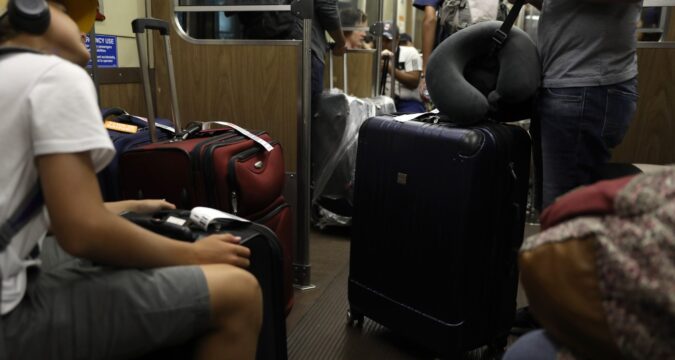
The CTA Blue Line, which links O’Hare to the heart of Chicago, technically works — but it does not work well. The ride is loud, slow, often crowded, sometimes uncomfortable and at times even unsafe-feeling. For travelers arriving late at night, carrying luggage or navigating harsh Midwestern weather, the experience can be discouraging. It is not the kind of arrival that prepares you for a city of bold architecture, world-class museums, lakefront paths and neighborhoods rich with culture.
At first glance, this may sound like a familiar transit complaint. But the issue runs deeper. Chicago’s infrastructure is not keeping pace with its growth, and the consequences extend well beyond individual inconvenience.
This gap is not felt by passengers alone. It also shapes the daily reality of managing O’Hare as a system. When the connection between the airport and the city is slow or unreliable, the effects surface in curbside congestion, roadway access, terminal circulation and passenger flow — areas that fall squarely within the operational environment of the Chicago Department of Aviation. In this sense, the quality of the airport-city transit link quietly influences how effectively aviation officials can manage growth, efficiency and long-term planning.
I’m a civil engineer, but examining cities through an engineering lens has long been more than a professional habit — it is a way of understanding how urban priorities are translated into everyday experience. Today, in most European cities, landing at an airport almost automatically means stepping onto a comfortable, reliable metro or rail connection into the city center. In the United States, however, this standard remains uneven, achieved consistently only in a handful of cities such as New York, Seattle and a few others. For a city such as Chicago — with its architectural legacy, cultural depth and steady flow of global visitors — this gap raises an obvious question: Shouldn’t a city of this stature have resolved this long ago?
Technically, the Blue Line is operated by the CTA. But its current condition is not the responsibility of a single agency. The Chicago Department of Transportation, the state of Illinois, regional transportation bodies and federal infrastructure priorities all shape the reality of this vital corridor. The airport-city connection is not merely a rail line; it reflects broader transportation vision, funding decisions and interagency coordination.
Travelers arrive at O’Hare International Airport on the CTA Blue Line, Dec. 22, 2022. (Brian Cassella/Chicago Tribune)
The Blue Line’s shortcomings cannot be reduced to institutional failure. Its performance is the outcome of the CTA’s operational capacity, CDOT’s urban mobility priorities, state-level infrastructure funding choices and the consistency of federal investment in public transit. In that sense, the challenge is less about trains and more about whether public actors at different levels can align around a shared, long-term vision.
That alignment matters — especially around O’Hare. The passenger experience does not begin or end at the terminal. How travelers reach the city shapes their perception of Chicago as a whole. The first hour in a city often determines whether a visitor feels welcomed or warned.
Chicago deserves better than a warning.
This is a city where you can spend the morning along Lake Michigan, the afternoon in a neighborhood cafe and the evening in a theater or jazz club. It is a city of ideas and ambition, of neighborhoods that still believe in public space. A reliable, comfortable and safe transit connection from O’Hare is not a luxury; it is a signal that the city takes mobility — and visitors — seriously.
A renewed Blue Line would do more than modernize a train:
It would strengthen Chicago’s global competitiveness.
It would reduce congestion and environmental impact.
It would expand equitable access to the city.
It would ease operational pressure around O’Hare, allowing public agencies to focus on long-term planning.
It would support tourism and local economic growth.
Chicago rightly celebrates O’Hare’s status as the nation’s busiest airport. But to sustain that success, the infrastructure connecting the airport to the city must rise to the same standard.
Modernizing the Blue Line is not simply about upgrading a transit line. It is about elevating the entire Chicago experience. The journey from O’Hare should feel like the opening paragraph of a great city — not a footnote explaining why so many visitors choose a taxi instead.
Yunus Emre Tozal is a civil engineer in Chicago and a master’s of art student at Catholic Theological Union.
Submit a letter, of no more than 400 words, to the editor here or email letters@chicagotribune.com.

From the Olympics in Italy to skiing the Wisconsin slopes, race is on to adapt to warming winters
SALEM LAKES, Wis. — Under a blazing sun, dozens of skiers and snowboarders last week whizzed down a hill just north of the Illinois state line. Despite the blinding white of the slopes, most trails on Wilmot Mountain are typically replenished with artificial snow, which ski locations across the globe are increasingly relying on as pollution from burning fossil fuels changes the climate, increases average global temperatures and shortens winters.
People ski at Wilmot Mountain ski resort in Wilmot, Wisconsin, on Jan. 29, 2026. The resort, located just over the Wisconsin border, uses a combination of real and artificial snow. (Armando L. Sanchez/Chicago Tribune)
And as lovers of winter sports from around the world prepare to watch one of the most popular sporting events kick off Friday, organizers for the Winter Olympics are also racing to adapt to the new reality.
Unseasonably warm winter temperatures in northern Italy — an average rise of 6.4 degrees Fahrenheit since it hosted the Winter Games in 1956 — and a reduced snowpack will require 2 million cubic yards of artificial snow to ensure consistent conditions for athletes. New snowmaking systems have been installed in Bormio for Alpine ski racing and ski mountaineering, and in Livigno for freestyle skiing and snowboarding events, according to The Associated Press.
“That has to be some kind of undertaking, to do that, cause you got to get it right. I mean, these kids are going quick. You want their conditions to be good,” said John Jedele, a resident of Antioch who skis at Wilmot Mountain in Wisconsin a few times a week.
For the most part, hobbyists, athletes and Olympians on the slopes — from northern Italy to southeastern Wisconsin — say they don’t feel any changes in performance or experience between artificial and real snow.
“I can’t tell the difference, and I’m an expert skier. Been skiing my whole life,” said Chuck Randles, general manager at Wilmot Mountain of Vail Resorts.
However, a warming world will still affect logistics for future winter games. A 2024 study found that only half of potential Olympic host locations may have reliable cold temperatures by 2050 if greenhouse gas emissions are not curbed significantly.
And the processes behind snowmaking tend to be incredibly energy and water-intensive: The 2022 Winter Olympics in Beijing used over 192 million gallons of water to create an entirely artificial snowscape, a move that was criticized.
Snowy ski destinations in the Northern Hemisphere, including the Rockies and the Alps, have been trying to adapt to a changing landscape as human-made climate change has been shrinking snowpacks over the last four decades.
“I didn’t realize, even in Switzerland, they make snow,” said Mary Jedele, who has been skiing alongside her husband for over five decades.
Randles, who worked at Vail Resorts in Utah and Colorado, said those states have gotten less snow this season than their typical hundreds of inches. In fact, they are experiencing a record-low snow year with above-average temperatures and severe drought.
“They are much more reliant on the manufactured snow this year than they are in a typical year,” Randles said.
The Jedeles had been planning to visit friends and go skiing in Park City, Utah, after the holidays in December. But warm temperatures and the prospect of no fresh snow, or powder, changed their plans. Sites out west also generally don’t have the capacity to produce as much artificial snow as those in the Midwest and eastern United States do.
“They said, ‘Don’t come,’” John Jedele said.
“They’ll have to come to Wilmot,” Randles laughed.
“Well, yeah! Bring ’em here!”
A person carries skis at Wilmot Mountain ski resort in Wilmot, Wisconsin, on Jan. 29, 2026. The resort, located just over the Wisconsin border, uses a combination of real and artificial snow. (Armando L. Sanchez/Chicago Tribune)
Already, ski resorts in the Midwest might be better prepared for warmer, shorter winters. Because of historically variable weather — often leading to unfavorable snow conditions — sites in the region have had to rely on artificial snow more than their snowier counterparts out West.
Wilmot Mountain was an early pioneer in snowmaking. Almost 15 years after opening, the resort began testing and tweaking a system that included yard sprinklers, pipes for air and water, and electric heaters to prevent the latter from freezing too early.
The modern process uses so-called snow guns or cannons, a machine that forces water and pressurized air through, with a fan that launches the water droplets, which freeze as they fall to the ground. If outdoor temperatures are extremely cold, the recipe mostly calls for water. When it is not cold enough, the compressed air is crucial to chill the water enough so it becomes snow instead of ice.
“Artificial snow is, ultimately, the same as natural snow,” Randles said.
Related Articles
Brookfield Zoo leads effort to protect polar bears as Trump opens Arctic refuge to oil drilling
Great Lakes ice resurges this winter, but unpredictable shifts threaten businesses and ecosystem
A snowy, cold start to winter follows a very warm fall. How are Illinois seasons changing?
He compared the final product to ice made in a freezer and ice naturally forming in a pond, which are the same, he said, except that the freezer kind is manufactured.
“Even in a good snow year,” like Wilmot’s current season with 22 inches of natural snowfall, Randles said, “we are largely dependent on manufacturing snow.”
The main drawback to snowmaking, he said, is that it can’t replicate the texture of fresh, fluffy and light snow, also known as powder, which many skiers and snowboarders enjoy.
A foot of natural snow gets compacted into about an inch by people skiing and snowboarding over it, and later by a big machine or tiller that smooths the surface over, Randles said. This season, that compacted base at Wilmot has averaged 30 inches: 2 inches have come from almost 2 feet of natural snow, and 28 inches have been manufactured.
“Natural snow is a little extra icing on the cake,” Randles said. “We absolutely love it, but it doesn’t materially impact our business.”
Addressing the energy and water use from snowmaking — by recycling water, as well as automating the process and making it more efficient — is key to the resort’s carbon neutrality goals, Randles said.
The water they use, he said, is moved temporarily from ponds and natural springs on the Wilmot property to the snow cannons. It is then thrown into the air, where it freezes, and it sits on the slopes for a few months before melting and returning to the watershed of the Fox River, which flows from southeast Wisconsin to Ottawa, Illinois, some 80 miles southwest of Chicago, where it meets the Illinois River.
A snow machine sits at Wilmot Mountain ski resort in Wilmot, Wisconsin, on Jan. 29, 2026. The resort, located just over the Wisconsin border, uses a combination of real and artificial snow. (Armando L. Sanchez/Chicago Tribune)
The resort has 56 new snowmaking guns, including low-energy fan towers, which complement existing equipment. As older equipment is replaced, Randles said, automation is crucial to reduce the time it takes for workers to do it manually — sometimes up to an hour to turn on a snowmaking system.
“We tell (the machine)to make snow when the temperature is right,” Randles said. With an onboard weather station, it monitors conditions to automate and fine-tune the process. “It’s turning itself on as soon as it’s right, it’s adjusting the ratio of air to water to make the most efficient snow, the most snow we can. And then, before it gets too warm, it’s turning itself off.”
While humans have learned to manufacture a natural process to make their own snow, Mother Nature ultimately prevails. If the wet bulb temperature — a combination of air temperature and humidity — is any higher than 27.5 degrees, Randles said, the process becomes inefficient, and the snow turns out wet and slushy, as the water can’t freeze before reaching the ground.
“We can trick science, but we can’t beat it,” Randles said.
Editorial: Dr. Thomas Fisher for 7th Congressional District
In the endorsement business, it is both rare and heartening to be genuinely excited about what a candidate for the United States Congress, and a political newcomer to boot, might achieve, not just for the people of his district but for a nation badly in need of healing and fresh ways of looking at its debilitating problems.
We feel that way about the 51-year-old Thomas Fisher, an emergency room doctor at University of Chicago Medicine, a former White House fellow in the Department of Health and Human Services during the administration of Barack Obama and the most impressive of the more than a dozen candidates running in the Democratic primary for Illinois’ 7th District.
Fisher is not well-known to voters. But his life story is compelling: When Fisher was growing up in Hyde Park, his father was a dermatologist and his mother was a Chicago Public Schools social worker. Fisher was a graduate of Kenwood Academy High School, went to Dartmouth, qualified as a doctor at the University of Chicago and did a master’s in public health at Harvard, then returning to work in the UChicago ER. He’s stayed ever since. Fisher, who is single, battled night and day for victims of the COVID-19 crisis and also, he told us, has spent years trying to save too many residents of the 7th District from death due to gun violence. Understandably, he has strong feelings there.
As people hear the sophistication of Fisher’s ideas on health care reform, which are grounded in realpolitik but also come with full awareness of the extent of the health care crisis in the 7th District, and his determination to address the disparity in life expectancies within his district, we believe support will grow.
Already, he carries the endorsement of U.S. Rep. Lauren Underwood and the 314 Action Fund, which aims to bring scientists and medical professionals into government. We see such well-known Chicago names as Martin Nesbitt, co-CEO of private equity firm Vistria Group, and former Commerce Cecretary Bill Daley on his list of donors. Emails currently are circulating from groups like Leadership Greater Chicago, arguing that Fisher is one of the city’s major Black talents, an intellectual heavyweight whose eloquence will allow him to speak effectively to people from all walks of life in the extraordinarily diverse 7th District and who could harness Obama-like optimism to improve his constituents’ lives. We could see Fisher play a leading role guiding America out of its healthcare crisis, given the chance.
We get ahead of ourselves there; Fisher would merely be one of 435 in the House of Representatives. Still, the winner of the Democratic primary of the 7th District is a virtual certainty to be sworn into office. The 7th is known as the bluest district in Illinois and is of course the seat of Danny K. Davis, who announced last summer that he would not seek reelection after nearly 30 years in office. Fisher is well aware that he will hardly command Davis’ seniority but told us “this is one of the safest Democratic seats in the nation and thus you can speak with a full throat. You can project power by virtue of the seat itself.”
Indeed. Like many districts in our gerrymandered time, the 7th meanders far, encompassing a good chunk of the city of Chicago, including all or parts of River North, the Loop, the West Loop and such neighborhoods as East Garfield Park, West Garfield Park, North Lawndale, and West Englewood, among others. The 7th also includes all or part of inner suburban Broadview, Bellwood, Forest Park, Hillside, Oak Park, La Grange Park, Maywood, River Forest, Berkeley and Westchester.
“I have learned,” Fisher told us, noting that his donor list includes Republicans, “that hard work does not guarantee success. Some of my poorest patients have incredible intellectual ability but just have had no opportunity. Too often Democrats run like they are filling out a grant application. I think we should let people know we care. I will do the ‘block and tackle’ in the district, but I am also interested in transformational change.”
We met with Fisher and almost all of his opponents in a series of in-person meetings. Fisher has many talented opponents.
Richard Boykin, 57, was Davis’ chief of staff and was a Cook County commissioner. He’s also a regular contributor to this newspaper’s Opinion section. Boykin told us his vast political experience at Davis’ side would help him “hit the ground running” in Washington, where he already spends some of his time. We don’t doubt that would be the case and consider the affable Boykin a candidate with a genuine dedication to public service who would have compassion for all his constituents. We also admire Boykin as a freethinker who would be a congressman willing and able to reach across the aisle.
Jason Friedman, who is the son of Chicago developer Albert Friedman and told us he is a “fourth-generation Chicagoan” who worked for both the Clinton White House and Sen. Dick Durbin, has many views that are aligned with those of this board. He emphasized to us the importance of “igniting growth” in the region and said his business experience had taught him how to “deliver services,” one on one, if necessary. But he also said he was running because he believes Chicago is “worth investing in” and that he wants to “stand up for our community.”
As the head of Friedman Properties, which has an extensive stake in the health of (especially) Chicago’s Near North Side, Friedman, with his pro-business sentiments and record of job creation, will be a logical choice for many who worry about downtown Chicago’s economic health, and we believed him when he told us he would be focused on “getting things done” for the district’s South and West Side residents, too. But Friedman, 51, certainly would be a big change in this particular seat; perhaps too much of one.
Anabella Mendoza, a 27-year-old progressive and the youngest of these candidates, impressed us with her commitment to social justice and in our meeting emphasized immigrant rights and what she deemed “the affordability crisis” in the district. She’s short on experience, though. Reed Showalter, 32, is a progressive with a resume that lists time as an attorney at the Federal Trade Commission, as a counsel in the U.S. Justice Department, and as a senior policy adviser in the White House National Economic Council. Showalter is known for his support of LGBTQ issues and his opposition to Israeli actions in Gaza. He also emphasized health care issues, telling us that “when you can’t go to the doctor, you are not free.” Showalter said he has “dedicated his life to trying to take on the conversations about economic power.”
We similarly enjoyed hearing from Jazmin J. Robinson, 38, a well-prepared human resources professional who lacks political experience and said she would apply many of her stills from her profession to this race. Chicago Treasurer Melissa Conyears-Ervin, 50, who made the decision to challenge Davis only to lose in 2024, is running again. She also told us she would serve her district well. We’ve written critically in the past about Conyears-Ervin’s ethics and her relationship with her staff and also her choice not to invest the city’s money in safe U.S. Treasury securities as a way to protest Donald Trump. She told us that was merely a temporary action.
Native Texan Rory Hoskins, 53, speaks our language, and the first Black mayor of Forest Park emphasized his support for small businesses and the economic success story of his village. And it was good to hear from South Side native Anthony Driver Jr., 32, another rising Chicago-based leader engaged in many important issues with a personality that matches his surname. A member of Chicago’s Community Commission for Public Safety and Accountability and former executive director of the Service Employees International Union, Driver told us he would give voice to the many in his district who feel “unheard.” Driver, a dedicated political strategist and activist, has endorsements from several labor unions and progressive aldermen; his day in elected office will come.
Aside from the well-resourced Friedman, Fisher’s leading rival is most likely La Shawn Ford, a member of the Illinois House of Representatives, representing the 8th District on the West Side since 2007 and endorsed by Danny Davis. Ford, 53, who was raised in the Cabrini-Green housing project, also has a compelling personal story and he emphasized both his experience and his determination to serve the district and oppose President Donald Trump’s ICE incursions (one of many issues on which all the Democratic candidates agreed), although we did not see the same fire in his belly for the 7th District in our meeting as we did with some of the others around our table.
Other candidates running include David Ehrlich and Felix Tello; the latter joined our meeting and is a colorful personality with a binder full of ideas for change.
On the Republican side, the candidates are Chad Koppie, a retired pilot and perennial candidate who has said he does not believe Joe Biden legitimately won the 2020 election, which is absurd, and Patricia “P Rae” Easley, a WVON media personality who has spent time in Senegal and whose sharp words for Chicago Mayor Brandon Johnson on the issue of migrant housing (she was opposed to the extending of large resources) have made some headlines. Since neither of those candidates have a chance of winning the seat or can compete with the Democratic slate on their personal merits, we are not making an endorsement on that side of the ticket.
Some Republicans in the district, given that this seat hasn’t been open for decades, may be tempted to grab a Democratic ballot. They may well consider Friedman to be a viable choice and a better conduit for a pro-growth agenda. That said, we think Fisher will be a pragmatist and a political moderate and reach across the aisle far more than Davis was wont to do. So we think he is the better choice for Republicans, too, even if they will have to swallow Fisher’s stated interest in taxing unrealized gains and some other policies in the Democratic mainstream.
We don’t agree with all of Fisher’s ideas, either. But this is the best moderate, mission-driven candidate with the resume, communication skills and the longtime commitment to the district in which he has saved many lives bolstering his candidacy. We saw firsthand his ability in just a few minutes to convey a sophisticated analysis of the U.S. healthcare system’s myriad problems in terms that any American could understand.
His election would honor the past of the 7th District and be a bold bet on its future.
Thomas Fisher has our endorsement.
Submit a letter, of no more than 400 words, to the editor here or email letters@chicagotribune.com.

FTC Warns 42 Law Firms Over DEI Hiring
FTC Warns 42 Law Firms Over DEI Hiring
The Trump administration is still going after DEI – or ‘diversity, equity and inclusion’ (i.e. white people are the scourge of the earth) – this time, in Big Law.
On Friday, the Federal Trade Commission (FTC) sent letters to 42 law firms warning them about “potentially unfair and anticompetitive employment practices” involving DEI, after they all participated in an anti-white program run by “Diversity Lab,” a “for-profit DEI-consultancy business.”
All of these firms recently participated in the Mansfield Certification program, according to public information. Mansfield Certification is a creation of the company Diversity Lab, a for-profit DEI-consultancy business, which claims to “write the unwritten rules” establishing common race and gender-based employment practices across the legal industry. To receive the certification, law firms must agree to follow certain of Diversity Lab’s DEI-based employment standards. Public information also suggests that they would meet regularly with Diversity Lab and their competitor law firms to discuss common implementation of Diversity Lab’s criteria.
According to the FTC, the letter recipients “are among the largest law firms in the United States, collectively employing over 50,000 attorneys subject to Diversity Lab’s criteria.”
In order to qualify for Mansfield Certification, law firms must agree to consider talent pools for promotions and leadership opportunities that comprise at least 30% ‘underrepresented’ racial and other groups.
As a result of the process, many firms have reportedly met the 30% benchmark for external hiring and internal promotion.
“Millions of American citizens participate in our economy both as workers and as consumers. The antitrust laws protect them from anticompetitive employer agreements in labor markets just as much as they do from anticompetitive seller agreements in product markets,” reads the letter.
Diversity Lab says the Mansfield program ensures “fair and equal” opportunity for all lawyers to advance to leadership roles, and focuses on “equal treatment, equal opportunity, and equal access.” The program is pitched as an “inclusive sourcing process” rather than a diverse slate policy.
The premise, of course, is that merit-based hiring is racist – yet they claim it’s the exact opposite.
As the Epoch Times notes further, the program does not dictate or require that underrepresented groups be selected for any leadership role or activity. Nor does adopting the initiative result in any individual being excluded from employment consideration on the basis of gender, race, or other demographic characteristics.
“Mansfield does not, explicitly or implicitly, ask employers or their decision-makers to make any selection or employment decision because of a demographic trait. As always, employment and advancement decisions remain outside of the scope of Mansfield and should be based solely on merit,” according to Diversity Lab.
The FTC letter cited an October 2024 statement from Diversity Lab, which claimed that more than 360 law firms earned Mansfield Certification in 2023-24.
The agency reminded law firms that unfair and anticompetitive employment practices also include collusion or unlawful coordination among entities regarding DEI metrics.
“Potentially anticompetitive collusion between law firms on DEI metrics can include quotas by which they agree to compose panels of job candidates based on race, sex, or other personal characteristics other than the candidate’s merit, or by which law firms agree to make final decisions about hiring and promotions based on those personal characteristics,” it said.
“Such agreements can distort competition for labor in legal professions, including along dimensions like hiring decisions, pay, and promotions.”
Ferguson warned that participation in the Mansfield program risks subjecting law firms to liability under civil rights laws. He asked the firms to review their relationship with Diversity Lab and other similar organizations.
Tackling DEI
Since assuming office, President Donald Trump has signed orders aimed at dismantling DEI policies.
On Jan. 20, he issued a presidential action titled “Ending Radical And Wasteful Government DEI Programs And Preferencing” with the objective of terminating all discriminatory programs, including illegal DEI and diversity, equity, inclusion, and accessibility (DEIA) policies and practices in the federal government.
Trump signed another presidential action on Jan. 21—Ending Illegal Discrimination and Restoring Merit-Based Opportunity.
DEI and DEIA policies “undermine our national unity, as they deny, discredit, and undermine the traditional American values of hard work, excellence, and individual achievement in favor of an unlawful, corrosive, and pernicious identity-based spoils system,” Trump wrote.
He ordered all agencies to “enforce our longstanding civil-rights laws and to combat illegal private-sector DEI preferences, mandates, policies, programs, and activities.”
In its statement, the FTC said the letters’ recipients are among the largest law firms in the country, collectively employing over 50,000 attorneys who are subject to Diversity Lab’s Mansfield criteria.
One of the law firms to whom the FTC letter was sent is Paul Weiss. In March last year, Trump issued a presidential action aimed at “addressing risks” from Paul Weiss, alleging that the law firm discriminates against its employees based on race and other categories banned by civil rights laws.
“Those who engage in blatant discrimination and other activities inconsistent with the interests of the United States should not have access to our Nation’s secrets nor be deemed responsible stewards of any Federal funds,” the president wrote.
Trump later agreed to drop the action after Paul Weiss pledged to eliminate DEI policies, including in hiring, and to provide $40 million in free legal services to support the administration’s initiatives.
Another law firm mentioned in the FTC letter, Latham & Watkins, also entered into a similar settlement with the Trump administration.
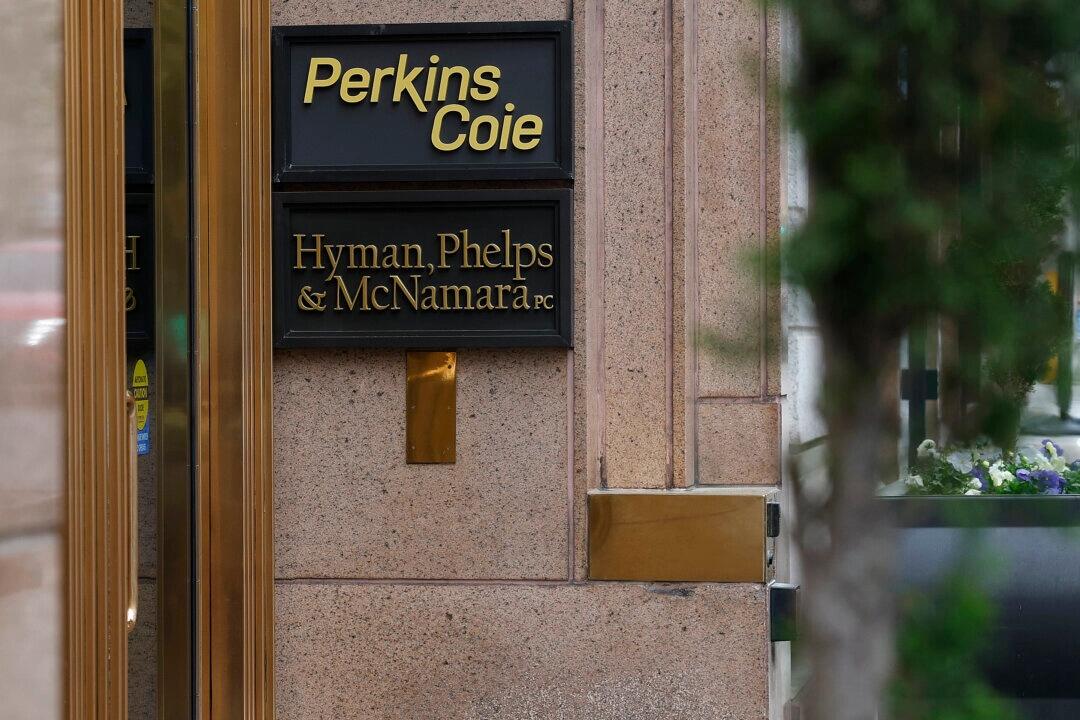
Law firm Perkins Coie, which sued the administration after being named in a presidential executive action, is included among the 42 law firms targeted in the FTC letter.
The Epoch Times reached out to Paul Weiss, Latham & Watkins, Perkins Coie, and Diversity Lab for comment, but did not receive a response by publication time.
Tyler Durden
Mon, 02/02/2026 – 05:45
https://www.zerohedge.com/political/ftc-warns-42-law-firms-over-dei-hiring

Best turmeric supplements for inflammation and digestive support
Which turmeric supplement is best?
Turmeric is both a plant native to Asia and Central America and the spice that’s derived from said plant. It’s used to flavor foods, as a dye and in supplement form, to combat inflammation among other symptoms and conditions. Turmeric supplements may also include extra ingredients for additional beneficial effects.
The best turmeric supplement is the Garden of Life MyKind Organics Extra Strength Turmeric Supplement. You only need to take one pill a day, and it includes extra ingredients for better absorption and to aid your digestion.
What to know before you buy a turmeric supplement
What is turmeric good for?
Turmeric supplements mainly work to reduce inflammation, which can also soothe pain. Some conditions that can respond well to these effects include:
Arthritis
Back pain
Digestion issues
Headaches
Heartburn
Menstrual pain
Muscle and joint swelling
Skin inflammation
Forms
Turmeric supplements come in three forms.
Capsules come in quick-dissolve packets. These are often the easiest to swallow due to their slick nature, but they can also be pulled open to add the powder to something else.
Pills are made of tightly compressed powder. They can be hard to swallow for some and if you can’t swallow them, they need to be crushed, which is difficult, or chewed, which is bitter.
Powders easily let you add your supplement to a drink or food. This isn’t recommended for turmeric as it imparts a bitter flavor if too much is used; considering the size of most supplement doses, this is all but assured.
Dosage
Turmeric supplement dosage can be split between potency and quantity.
Potency refers to how much turmeric is included in one dose. It can be as little as 100 milligrams or as much as 1,500 milligrams. Crucially, many supplements require you to take several servings throughout the day to reach a full dose.
Quantity, then, refers to how many servings are included. For example, one 1,500 milligram dose may require three servings to reach, and the bottle includes 90 servings, meaning that the bottle has 30 days’ worth of doses.
What to look for in a quality turmeric supplement
Non-genetically modified organisms
Most supplements, turmeric or not, don’t use any genetically modified ingredients, including pesticides and the like. Look for the United States Department of Agriculture’s certification; if it lacks it, it may not actually be non-GMO.
Dietary compliance
Most turmeric supplements aim to be compatible with as many dietary restrictions as possible. This includes being manufactured in facilities with no risk of cross-contamination from allergens such as nuts or shellfish and refusing to use ingredients that would make them unusable by those who adhere to kosher, vegan and gluten-free lifestyles.
Other ingredients
Turmeric supplements often include extra ingredients to tackle more issues than just inflammation.
Black pepper extract is the most common extra ingredient, often going by Bioperine. It helps the body absorb curcumin, the primary compound of turmeric and the compound responsible for the beneficial effects.
Ginger root is also common, as it also aids in absorption.
Probiotics are the last most common addition. They help with digestive issues, both those you may already have and those that large doses of turmeric supplements can cause.
How much you can expect to spend on a turmeric supplement
They can cost as little as $5 to as much as $50. Cost mainly depends on the size and quantity of doses included, but extra ingredients and brand names can also add to the cost.
Turmeric supplement FAQ
Are there reasons not to take turmeric supplements?
A. There are a few groups of people and some situations that call for avoiding turmeric supplements:
It can thin the blood and cause the clotting process to slow down, so it should be avoided if you’re on blood thinners or have blood-related issues.
Those who are pregnant, breastfeeding or have estrogen-related hormonal issues.
Diabetics, as it can raise your blood sugar.
Those with sensitive stomachs.
Do turmeric supplements have any side effects?
A. Yes, though they’re rare unless you take a high dose. These side effects can include:
Diarrhea
Dizziness
High heart rate
Lightheadedness
Nausea
Vomiting
Other side effects are possible if the supplement contains other ingredients besides turmeric.
What’s the best turmeric supplement to buy?
Top turmeric supplement
Garden of Life MyKind Organics Extra Strength Turmeric Supplement
What you need to know: Just one of these a day can ease multiple issues.
What you’ll love: Besides the anti-inflammation from turmeric, this supplement includes black pepper for better absorption, probiotics for digestion and ginger for increased bioavailability. All ingredients are non-GMO and the capsules are gluten-free, vegan-friendly and kosher-friendly. It comes with 60 or 120 servings.
What you should consider: It has a lower dose of turmeric than many other supplements. The pills are large, so some customers struggled to swallow them.
Top turmeric supplement for the money
BioSchwarts Turmeric Curcumin With Bioperine Supplement
What you need to know: This supplement offers one of the highest dosages of turmeric you can find.
What you’ll love: It’s almost entirely turmeric with only 10 milligrams of black pepper to boost absorption out of the 1,500-milligram dose. There are no allergens in the gluten-free and vegan-friendly capsule including soy, nuts or shellfish. It’s made in the U.S.
What you should consider: With the high dosage comes a high chance of side effects such as gas, nausea and stomach cramps. It can take time to start noticing positive effects.
Worth checking out
MegaFood Turmeric Curcumin Extra Strength Supplement
What you need to know: This supplement has one of the longest ingredient lists for improving whole-body health.
What you’ll love: You only need two capsules a day and they can be taken anytime, including on an empty stomach. Besides turmeric, this also contains black pepper for absorption and a blend of fruits for nutrition and antioxidation. It comes in 60-, 90- or 120-count bottles.
What you should consider: It costs a little more than most turmeric supplements. Some purchases received broken bottles. Others took them for months and didn’t feel any positive effects.
Prices listed reflect time and date of publication and are subject to change.
Check out our Daily Deals for the best products at the best prices and sign up here to receive the BestReviews weekly newsletter full of shopping inspo and sales.
BestReviews spends thousands of hours researching, analyzing and testing products to recommend the best picks for most consumers. BestReviews and its newspaper partners may earn a commission if you purchase a product through one of our links.
Distributed by Tribune Content Agency, LLC.
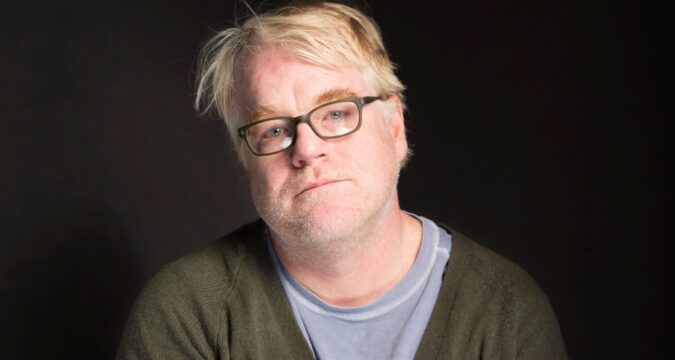
Today in History: Philip Seymour Hoffman found dead
Today is Monday, Feb. 2, the 33rd day of 2026. There are 332 days left in the year.
Today in history:
On Feb. 2, 2014, Oscar-winning actor Philip Seymour Hoffman, widely considered one of the greatest actors of his generation, was found dead in his New York apartment from an accidental drug overdose.
Also on this date:
In 1536, present-day Buenos Aires, Argentina, was founded by Spanish explorer Pedro de Mendoza.
In 1653, New Amsterdam — now New York City — was incorporated as a city.
In 1848, the Treaty of Guadalupe Hidalgo was signed, officially ending the Mexican-American War.
In 1925, the legendary Alaska Serum Run ended as the last of a series of dog mushers brought life-saving medication to Nome, the scene of a diphtheria epidemic, traveling 674 miles in just six days.
In 1943, the remainder of Nazi forces at the Battle of Stalingrad surrendered in a major victory for the Soviets in World War II.
In 1990, in a dramatic concession to South Africa’s Black majority, President F.W. de Klerk lifted a ban on the African National Congress and promised to free Nelson Mandela.
In 1992, Václav Havel, the dissident playwright who led an anti-communist revolution, became the first president of the independent Czech Republic, after Czechoslovakia’s split. He previously served as the first democratically elected president of Czechoslovakia after the fall of communism.
In 2013, former Navy SEAL and “American Sniper” author Chris Kyle was fatally shot along with a friend at a gun range west of Glen Rose, Texas; Eddie Ray Routh was later convicted of murder and sentenced to life in prison without parole.
Related Articles
Today in Chicago History: 5 women slain inside Lane Bryant store in Tinley Park
Indiana Landmarks grants aid preservation efforts in Lake and Porter counties
Hometown author’s labor of love showcases community spirit of Flossmoor via book and film
Vintage Tribune: Pioneering Black broadcaster Jack Cooper modeled success as host, businessman
Today in History: John S. Rock admitted to the bar
In 2022, four men were charged with being part of the drug distribution crew that supplied a deadly mix of narcotics to actor Michael K. Williams of “The Wire,” who had overdosed five months earlier.
Today’s birthdays: Rock singer-guitarist Graham Nash is 84. Television executive Barry Diller is 84. TV chef Ina Garten is 78. Actor Brent Spiner is 77. Football Hall of Famer Dave Casper is 74. Model Christie Brinkley is 72. Singer Shakira is 49. Republican Sen. Katie Britt of Alabama is 44. Actor Gemma Arterton is 40. Actor Zosia Mamet is 38. Actor Paul Mescal is 30. Actor Ellie Bamber is 29.
https://www.chicagotribune.com/2026/02/02/today-in-history-philip-seymour-hoffman-found-dead/
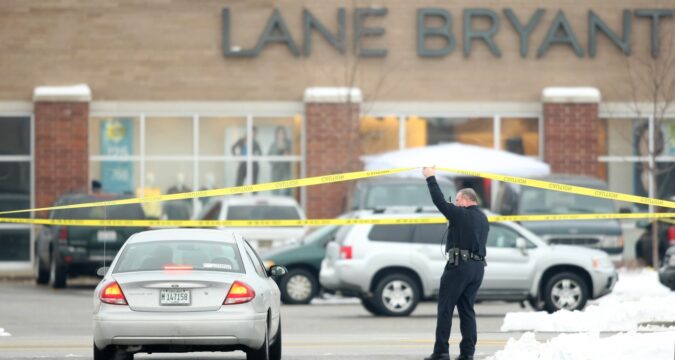
Today in Chicago History: 5 women slain inside Lane Bryant store in Tinley Park
Here’s a look back at what happened in the Chicago area on Feb. 2, according to the Tribune’s archives.
Is an important event missing from this date? Email us.
Vintage Chicago Tribune Special Edition: ‘It’s GROUNDHOG DAY!!!!!’
Front page flashback: Feb. 2, 2008
Five women were killed and another was wounded when a man posing as a delivery driver entered the Lane Bryant women’s clothing store at Brookside Marketplace in Tinley Park on Feb. 2, 2008. Since then, police have sifted through thousands of leads in attempt to find the killer. (Chicago Tribune)
2008: Five women — 42-year-old store manager Rhoda McFarland of Joliet; Jennifer Bishop, 34, of South Bend, Indiana; Sarah Szafranski, 22, of Oak Forest; Connie Woolfolk, 37, of Flossmoor; and Carrie Hudek Chiuso, 33, of Frankfort — were killed, shot execution-style, inside a Lane Bryant women’s clothing store in Tinley Park by a gunman who posed as a delivery man. A sixth woman, also a store employee, was shot in the neck but survived and provided police with a description of the killer. The case is still unsolved.
Weather records (from the National Weather Service, Chicago)
High temperature: 52 degrees (2020)
Low temperature: Minus 16 degrees (1996)
Precipitation: 1.45 inches (1983)
Snowfall: 6.6 inches (2011)
According to an advertisement in the Feb. 1, 1925, edition of the Tribune, the first Sears Roebuck and Co. store at Homan Avenue and Arthington Street offered deals of great value. “Never has any store in Chicago, or elsewhere, for that matter, been able to offer the savings Sears, Roebuck and Co. do!” (Chicago Tribune)
1925: Sears opened its first retail store on Chicago’s West Side.
The Homan Square site was already home to the company’s mail-order plant when the store, which featured an optical shop and a soda fountain, opened. Sears’ national headquarters was based here on a 55-acre site. Operations moved to the new Sears Tower headquarters in 1973, then to Hoffman Estates in 1995.
Sears closed its last Chicago store in 2018.
The only North American elevated on Feb. 2, 1983, in Vatican City to the Sacred College of Cardinals, Joseph Bernardin was the fifth archbishop of Chicago to receive the red biretta and scarlet robes of the office. (Chicago Tribune)
1983: Pope St. John Paul II elevated Archbishop Joseph Bernardin to become the fifth Chicago Cardinal.
Chicago Bears legend Walter Payton during a news conference in Rosemont, Feb. 2, 1999, at which he announced he was being treated for a rare liver disease. (Charles Bennett/AP)
1999: Former Chicago Bears running back Walter Payton announced that he had primary sclerosing cholangitis (PSC), a rare, life-threatening liver disease.
“The people that really care about me, if you could continue to pray. And to those who want to say what they say, God be with you also,” he said.
Abandoned vehicles sit along northbound Lake Shore Drive after a blizzard hit the area on Feb. 2, 2011. (E. Jason Wambsgans/Chicago Tribune)
2011: Snowmageddon. Seven people died during a snowstorm from Jan. 31 to Feb. 2 (nicknamed the Groundhog Day blizzard) that dropped 21.2 inches — the third largest snowfall in the city’s history.
Chicago’s 10 largest snowfalls since 1886 — and how the Tribune covered them
Want more vintage Chicago?
Subscribe to the free Vintage Chicago Tribune newsletter, join our Chicagoland history Facebook group, stay current with Today in Chicago History and follow us on Instagram for more from Chicago’s past.
Have an idea for Vintage Chicago Tribune? Share it with Kori Rumore and Marianne Mather at krumore@chicagotribune.com and mmather@chicagotribune.com
https://www.chicagotribune.com/2026/02/02/february-2-chicago-history/

US Approves New Massive Arms Deals For Israel, Saudis – Bypasses Congressional Review
US Approves New Massive Arms Deals For Israel, Saudis – Bypasses Congressional Review
On Friday, the US government authorized significant arms sales to Israel and Saudi Arabia, amounting to approximately $15.7 billion, as the White House continues to escalate threats of war against Iran.
The US State Department approved four arms packages for Israel totaling $6.67 billion, which includes a $3.8 billion deal for 30 Apache attack helicopters and a $1.98 billion sale of 3,250 Joint Light Tactical Vehicles.
Additional approvals include $740 million for power packs for armored personnel carriers and $150 million for light utility helicopters.
House Democratic Representative Gregory Meeks called the move shameful for “bypassing the Congressional review process” and a repudiation of Congress’ oversight role by Donald Trump.
“Shamefully, this is now the second time the Trump administration has blatantly ignored long-standing Congressional prerogatives while also refusing to engage Congress on critical questions about the next steps in Gaza and broader US policy,” Meeks declared.
White House officials justified the approvals by citing Washington’s commitment to “upholding Israel’s security,” even as war monitors have alleged Israeli forces have commit war crimes in Gaza, including ongoing violations that have killed over 500 Palestinians since the “ceasefire” began in October 2025.
In parallel, the State Department also approved a $9 billion sale to Saudi Arabia, covering 730 Patriot interceptor missiles intended for air defense systems.
The sales come amid a heightened risk of a new US war against Iran and the heavy militarization of West Asian waters.
US President Donald Trump has publicly referred to the deployment of the USS Abraham Lincoln Carrier and its accompanying warships as a “beautiful armada” currently stationed in the Arabian Sea and moving toward the Persian Gulf.
Iranian officials warned that any US base used to attack their country would be considered a legitimate target, saying: “We will target the same base and the same point from which air operations against us are launched,” but clarified that the Islamic Republic “will not attack countries because we do not consider them to be enemy countries.”
Almost 37 Trillion Dollars in Debt, United States accounts for 15 to 20% of Israel’s Defence Budget.. pic.twitter.com/RyqFyTqhXA
— The Resonance (@Partisan_12) January 19, 2026
Gulf states warn that further escalation could destabilize the region, putting their economic and security interests at risk, and threatening major infrastructure and development plans such as Saudi Arabia’s Vision 2030.
Saudi Arabia, the UAE, Qatar, and Kuwait have informed the US that they will not allow their territory or airspace to be used for military actions against Iran, seeking to maintain a neutral stance and avoid becoming targets.
Tyler Durden
Mon, 02/02/2026 – 05:00