Category: News

Axon’s Ukraine Drone Deals Signal Big U.S. Counter-UAS Push
Axon’s Ukraine Drone Deals Signal Big U.S. Counter-UAS Push
Axon, formerly TASER International, has evolved beyond its roots as a police-tech vendor and is now positioning itself to soon be a major importer of drone and counter-drone technology after a series of deals with Ukrainian defense companies.
Axon currently sells hardware to local police forces, federal agencies, security, and military-adjacent markets. Some of this hardware includes Tasers, body-worn cameras, digital evidence systems, and AI voice companions, while the company’s pivot is now moving toward battlefield-tested drone technology in Ukraine, which will likely be deployed here in the U.S.
Axon has made at least two Ukraine-linked defense-tech deals this year, both centered on drones, autonomy, ISR, and counter-UAS.
The first deal of the year, dated Feb. 17, was published in Kyiv Post:
The Fourth Law
Axon backed Kyiv-based The Fourth Law, a drone-autonomy firm developing AI modules for UAVs and interceptor drones. The investment amount was not disclosed. The funding is aimed at R&D for autonomy systems designed to counter Shahed-type drones and protect cities and critical infrastructure. Kyiv Post reported that The Fourth Law’s systems are used by more than 50 Ukrainian military units.
Then, in March, Kyiv Post reported another:
Buntar Aerospace
Axon led a $10.4 million funding round for Ukrainian drone developer Buntar Aerospace, alongside Norwegian investment consortium Munkene AS and other private investors. The deal includes a strategic partnership focused on commercial cooperation and technology integration around ISR capabilities. Buntar’s core product is the Buntar-3, an electric VTOL reconnaissance drone with up to four hours of flight time, plus mission-management software called Copilot.
Late last summer, executives at Axon met with Ukrainian drone manufacturers in Kyiv to propose a collaboration on countering drones.
Also, last year Axon acquired the Ukrainian company Dedrone for its AI-powered airspace security system, which safeguards large-scale events, airports, critical infrastructure, and even military bases against drones.
Craig S. Smith of Eye on AI recently penned a note explaining how Ukraine has become “the world’s AI weapons laboratory as the rise of drones, AI kill chains, and robots is being deployed and tested in what can only be described as a hyperdevelopment fashion. This allows combat-proven defense technology to flourish very quickly, and companies like Axon have understood that, in Ukraine’s nonexistent capital markets, valuations for this technology are dirt cheap.
It’s not just Axon sniffing around Ukraine for cheap war unicorn startups with proven battlefield-tested companies. There are numerous firms, from robotics to private equity, searching for these unicorns because they see the urgent need to bring this cheap counter-drone technology back to the U.S., where virtually every high-value asset, from data centers to power grids, has a missing layer of low-cost air defense against FPVs.
As we’ve previously noted, the passive acoustics early-warning counter-drone space is about to heat up (read here).
Tyler Durden
Mon, 04/27/2026 – 06:55
https://www.zerohedge.com/technology/axons-ukraine-drone-deals-signals-bigger-us-counter-uas-push

If The British Lose The Falkland Islands It Will Be Their Own Fault
If The British Lose The Falkland Islands It Will Be Their Own Fault
This month, after four years of tensions between Europe and Russia, the Russian Navy executed an operation in the North Atlantic on the doorstep of British waters. Using an Akula-Class nuclear submarine as a decoy, the Russians sent covert spy subs to map underwater infrastructure, including vulnerable internet cables and pipelines.
Given the precarious nature of the war in Ukraine, the Russian action is being called “brazen” by European leaders. Critics argue, though, that the Russians only carried out the operation because they feel they have little to fear from the Royal Navy.
This problem was further exposed when Iranian missiles and drones targeted multiple British bases in March after the initial start of the war. Kier Starmer sent only one vessel (the HMS Dragon) for air defense, and this ship was then called back in April for maintenance. The military response by the British was called “pathetic” by many who expected at least a rudimentary naval presence for security.
Europe’s “hands off” policy in the Strait of Hormuz aside, it is becoming clear that these countries could not field an adequate and functional fleet even if they wanted to. In fact, their apprehensions about helping to secure the strait under NATO might be, in part, a result of their fear of being discovered as militarily impotent.
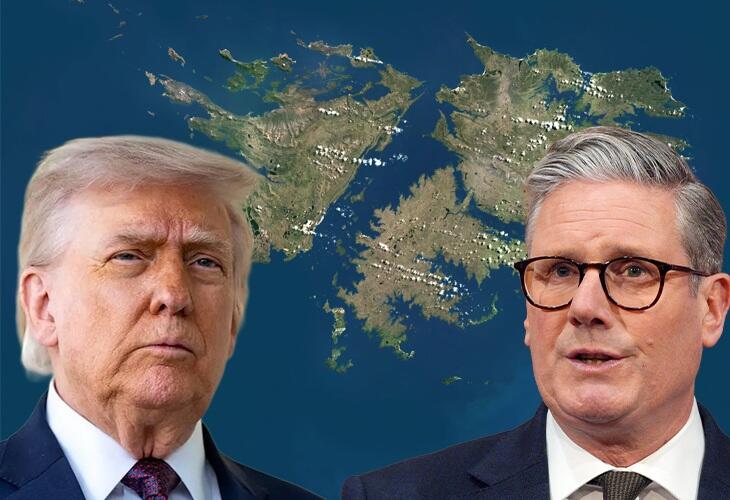
These recent events and others have led the Trump Administration to question the purpose of a NATO alliance that has nothing to offer and relies almost completely on the US military as a deterrent (or shield) in the face of a wider war. This lack of faith in Europe (including Britain) has bled into orbiting issues, including the Falkland Islands.
Argentine President and Trump ally Javier Milei has launched a new effort to claim control of the Falkland Islands, reigniting a long-standing dispute with the United Kingdom over the archipelago, which once led to war.
“The Malvinas were, are, and always will be Argentine,” Milei said on X in Spanish on Friday, using the Argentine name for the islands. In a separate interview with the Argentine digital channel Neura, Milei said that the country was doing “everything humanly possible” to return the Falklands to Argentina.
LAS MALVINAS FUERON, SON Y SIEMPRE SERÁN ARGENTINAS.
VLLC! https://t.co/frox4fn03r
— Javier Milei (@JMilei) April 24, 2026
The US has always been “officially neutral” on the Falklands, but leaned in favor of British control for decades. The British media has recently accused Trump of shifting to the Argentinian side and asserting that he might be “plotting” to help Millei reacquire the islands.
This claim comes from a leaked policy memo from Trump advisers about a possible “reassessment” of the US position on the Falklands. It had nothing to do with any statements made by the White House. The media has blown the story up into a tale of betrayal by the Trump Administration against his British friends.
At bottom, if the President did change the US stance on the Falkland Islands, it would likely be to become truly neutral instead of simply pretending to be neutral. In other words, if Argentina wanted to take the islands, the US would not intervene. And, evidence suggests that if this happened the British would not be able to do much about it.
Currently, the Royal Navy has only 63 active vessels in its fleet (compare this to nearly 300 active vessels in the US navy). That said, the word “active” is misleading. At any given time, over 50% of British vessels are under repair or in dry dock, which means they only have 20-30 ships ready to fight under current conditions (high readiness). Strategic assessments indicate that Britain would need all of these vessels to go to war with Argentina and guard their interests in the Falklands.
Today, the British have only one patrol ship in the area (the HMS Medway).
Ultimately, Britain’s lack of military readiness and their ongoing hostility towards the Trump Administration has created conditions in which they could lose the very territory they fought to keep in 1982. During that war, the British (and the UK) relied on extensive US intel and logistical support. Now, that support is gone and their navy is much smaller and less effective (the Royal Navy task force sent to secure the islands in 1982 had 127 ships).
If they lose the Falkands today, they will only have themselves to blame.
Tyler Durden
Mon, 04/27/2026 – 05:45
https://www.zerohedge.com/geopolitical/if-british-lose-falklands-it-will-be-their-own-fault

Outrage As Taliban Afghan Illegal Who Sexually Assaulted 7-Year-Old Gets Just 2.5 Years In Prison
Outrage As Taliban Afghan Illegal Who Sexually Assaulted 7-Year-Old Gets Just 2.5 Years In Prison
Authored by Steve Watson via Modernity.news,
An Afghan small boat migrant with admitted ties to the Taliban kidnapped and sexually assaulted a seven-year-old girl inside a taxpayer-funded hotel – and a UK court has handed him just two and a half years in prison.
This is the direct result of open borders policies that continue to flood Britain with unvetted arrivals who bring incompatible cultural attitudes and a total disregard for the safety of local communities.
The attack took place in September at a Government-funded hotel in Acton, West London. Afsar Safi, 30, enticed the child away from her mother using an apple before forcibly pulling her along a corridor by the arm and taking her to his room, where he carried out the sexual assault. The girl escaped after alerting security staff.
Small boat migrant who kidnapped and sexually assaulted girl, 7, in hotel worked for Talibanhttps://t.co/72rQ8F9mQx
— GB News (@GBNEWS) April 25, 2026
Safi crossed the Channel illegally in 2021. His own asylum paperwork stated he had been associated with the Taliban since the age of ten. That application has been rejected and he is appealing the decision.
During sentencing at Isleworth Crown Court, Safi explained his actions through a Pashto interpreter.
“I like children and she was a child,” he said, adding “I asked her where she was going. She said she was waiting for her mother to go shopping.”
He then admitted, “I kissed her to the face. I kissed her out of the love for children. Back home, all the people do that.”
Yeah, tell us about it.
The seven-year-old victim gave harrowing evidence to the jury.
“I could not tell him to go away because I was too scared,” she told the court, adding “He put his arms around me. It feels like he’s coming after me all the time. My nightmares feel like they are real, so I cry sometimes.”
Safi was convicted of kidnapping and sexual assault. The judge sentenced him to just two and a half years in prison and ordered him placed on the sex offenders register for seven years. He could be released on licence in as little as six months.
This is not an isolated incident. It is the predictable outcome of a system that prioritises housing illegal arrivals in hotels and now quietly disperses them into communities without proper vetting or local consent.
As the Daily Mail today notes, the Labour government is secretly moving hundreds of migrants, including Afghans, into picturesque villages across the country. In one Surrey village, locals only discovered the policy when an Afghan man in his twenties began loitering at the school gates and harassing girls.
What do they hope to achieve by plopping sets of 100 Afghans into tiny countryside villages where 97% are white upper and upper middle class English people? It’s almost like they want to cause the most culture shock possible. https://t.co/qRxhjKsVK8
— m o d e r n i t y (@ModernityNews) April 25, 2026
Meanwhile, just days ago three asylum seekers were found guilty of the callous rape of a woman on Brighton beach after finding her staggering alone in the street.
BREAKING: Three asylum seekers have been found guilty over the rape of a woman on Brighton beach.
The woman was separated from her friends on a night out when the trio found her “staggering in the street” alone, Hove Crown Court heard.https://t.co/CR7vCNbRiv
📺 Sky 501/YT pic.twitter.com/kivh5FUIsZ
— Sky News (@SkyNews) April 23, 2026
This pattern repeats because the government refuses to secure the borders, deport failed claimants, or put British citizens first. Taxpayers foot the bill for hotel accommodation while communities bear the real cost in safety and social cohesion.
The message from these cases is unmistakable. Unchecked mass immigration from cultures with vastly different standards on child protection and women’s safety is not “compassion.” It is a reckless gamble with the lives of the most vulnerable.
Britain needs a commons sense border policy that ends the small boat invasion, removes those with terrorist links, and stops the dispersal of unvetted migrants into our villages and towns. Anything less leaves more children at risk.
Your support is crucial in helping us defeat mass censorship. Please consider donating via Locals or check out our unique merch. Follow us on X @ModernityNews.
Tyler Durden
Mon, 04/27/2026 – 05:00
“The Dynamic Has Shifted”: Global Automakers Now Bet Heavily On China For Global Expansion Strategies
“The Dynamic Has Shifted”: Global Automakers Now Bet Heavily On China For Global Expansion Strategies
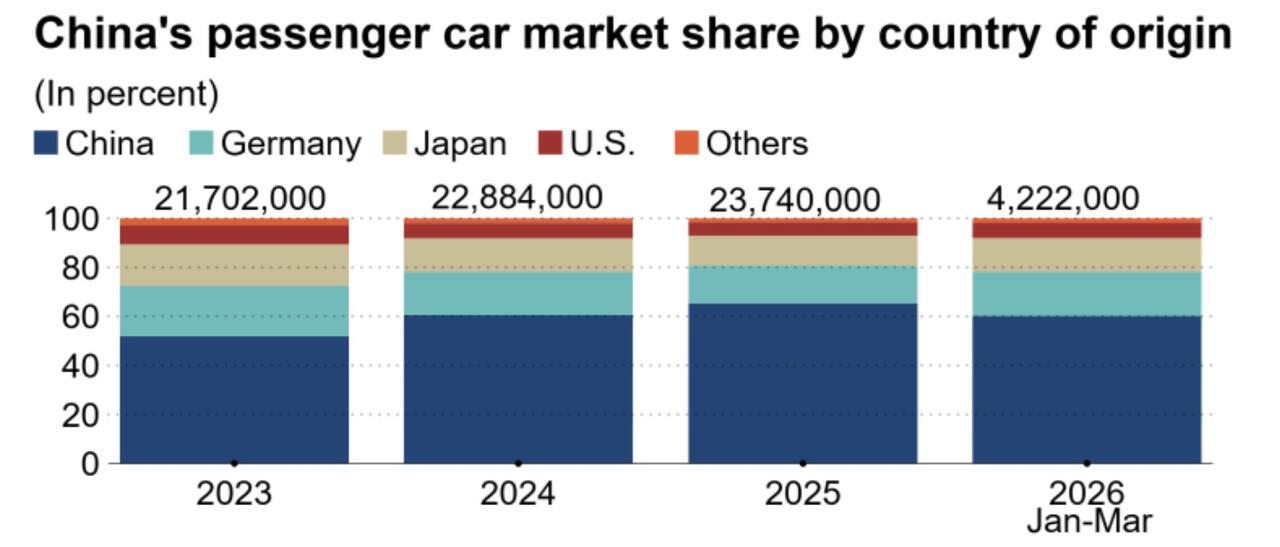
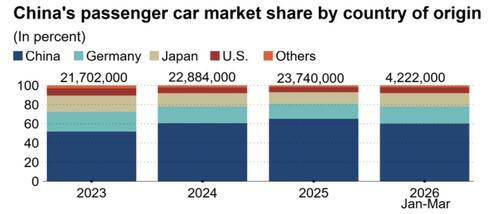
Foreign automakers are rushing to debut China-developed models at a major auto show, recognizing they can’t afford to lose ground in the world’s largest car market, according to Nikkei.
After years of declining sales, many legacy brands are shifting to an “in China, for global” strategy—using local innovation not just to regain domestic customers, but to compete abroad.
Companies like Volkswagen and Nissan are leaning heavily on Chinese partnerships to accelerate development and integrate advanced tech.
Volkswagen, for instance, is working with Xpeng and Horizon Robotics to build software-driven vehicles and unveiled several new models at the Beijing auto show. It plans to launch over 20 EVs in China this year and up to 50 by 2030. Still, its sales dropped 14.9% in Q1, and it now expects lower long-term volumes. As one executive put it, “The era of super-returns is over.”
Despite setbacks, China has become a source of efficiency. Volkswagen says it has cut EV development time by 30% and slashed some production costs by half. CEO Oliver Blume noted that the country’s rapid innovation “… we can carry over to other processes around the world.” The company is also expanding exports of China-built cars to regions like Asia-Pacific and South America.
Nissan is pursuing a similar “in China, for China, to global” approach, aiming to absorb local technology and turn China into an export hub. CEO Ivan Espinosa emphasized: “The technology, the speed and the cost that we have achieved in the China ecosystem can play a very important role for us.” New models and collaborations have helped Nissan’s China sales rebound, and it plans to export more vehicles globally.
The Nikkei report says that other automakers are following suit. Honda has begun selling a China-made EV in Japan, while Hyundai is expanding local partnerships and model offerings. Even Peugeot and Citroen have returned to Chinese auto shows, signaling renewed commitment.
The broader shift reflects a reversal of roles in the global auto industry. As one analyst observed, “Thirty years ago, Western automakers entered China as teachers… Today, that dynamic has fundamentally shifted.”
Tyler Durden
Mon, 04/27/2026 – 04:15
US Has No Plan To Renew Iranian, Russian Oil Waivers, Bessent Says
US Has No Plan To Renew Iranian, Russian Oil Waivers, Bessent Says
Authored by Kimberley Hayek via The Epoch Times,
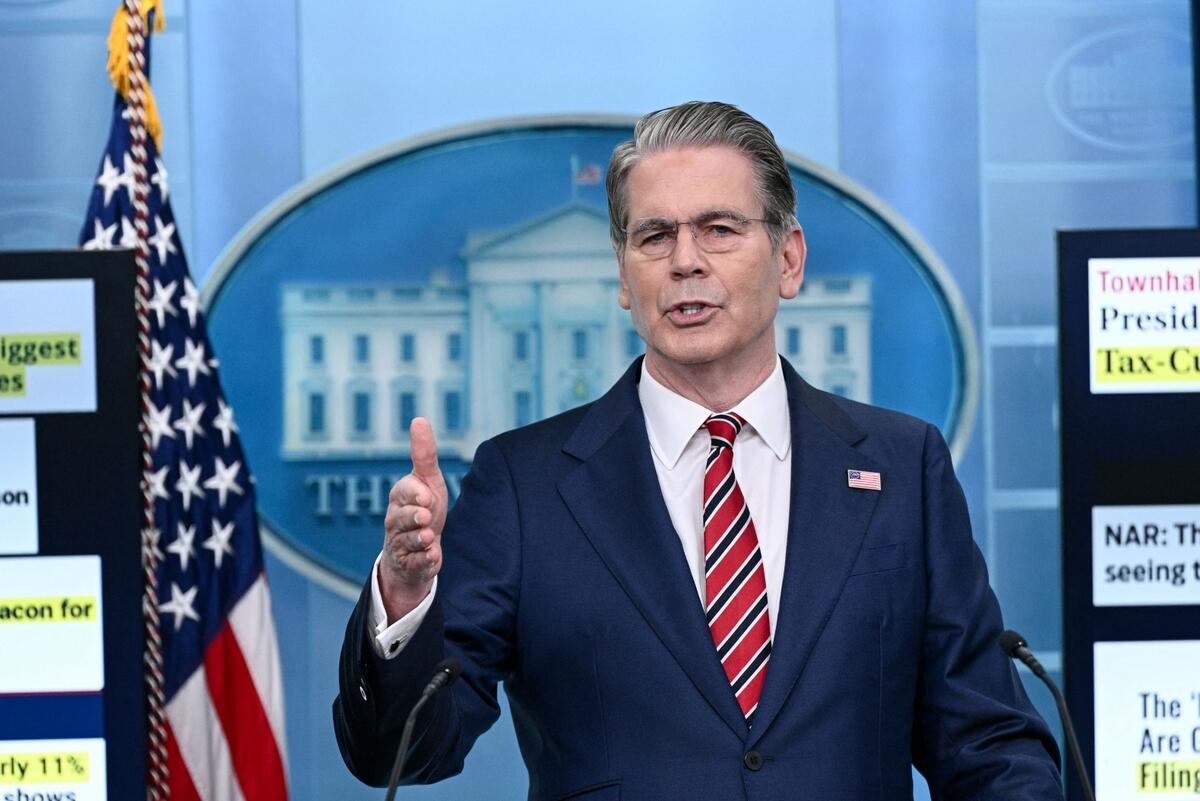
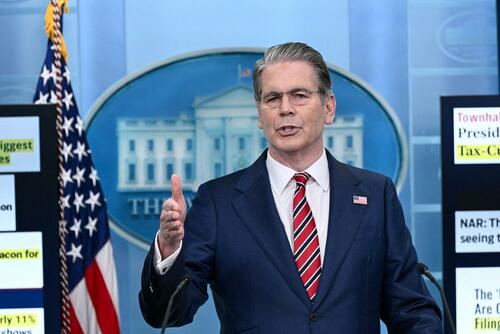
U.S. Treasury Secretary Scott Bessent said on April 24 that the United States will not renew the sanctions waivers that enabled buyers to take delivery of Iranian and Russian crude already loaded on tankers at sea.
Bessent said a one-time license covering Iranian oil on the water would not be extended, calling it “totally off the table.” The parallel waiver for Russian oil and petroleum products will also be allowed to end, he said.
“We will not be renewing the general license on Russian oil, and we will not be renewing the general license on Iranian oil,” Bessent said. “That was oil that was on the water prior to March 11. So all that has been used.”
The Treasury Department’s Office of Foreign Assets Control (OFAC) also on Friday sanctioned Hengli Petrochemical (Dalian) Refinery Co., a Chinese plant that can process roughly 400,000 barrels a day.
“Hengli has played an outsized role in purchasing crude oil from Iran’s armed forces,” the Treasury said in a statement.
The OFAC also sanctioned approximately 40 shipping companies and tankers connected to Iran’s so-called shadow fleet.
The action was executed under Executive Order 13902 and President Donald Trump’s National Security Presidential Memorandum 2, the framework for the White House’s “maximum pressure” campaign.
“Treasury will continue to constrict the network of vessels, intermediaries and buyers Iran relies on to move its oil to global markets,” Bessent said in the Treasury statement.
On Friday, Bessent also disclosed the seizure of about $344 million in cryptocurrency held in crypto wallets the government has tied to Tehran.
“We will follow the money that Tehran is desperately attempting to move outside of the country and target all financial lifelines tied to the regime,” Bessent said.
Blockchain analysts cited in the report tied some of the wallets to the Central Bank of Iran and to Iranian cryptocurrency exchanges.
Bessent predicted earlier in the week that Iran’s oil sector was close to collapse. He said Kharg Island, the terminal that handles nearly 90 percent of Iran’s crude exports, would run out of storage “in a matter of days,” meaning producers had to shut in fragile wells that are hard and costly to restart.
“Constraining Iran’s maritime trade directly targets the regime’s primary revenue lifelines,” he said.
Bessent said on Wednesday that the maritime oil waivers covering both countries had been quietly extended for another 30 days, noting that at the spring meetings of the World Bank and the International Monetary Fund, “more than 10 of the most vulnerable and poorest countries” had pleaded for relief as crude prices rose past $100 a barrel.
That extension was executed via OFAC General License 134B, issued April 17, authorizing wind-down transactions involving Russian crude and petroleum products put on vessels by that date. The license is set to expire on May 16. It replaced an earlier authorization that ran out on April 11.
The original waiver, issued in March after the U.S.–Israeli war with Iran led to the closure of the Strait of Hormuz and a squeeze on global supply, was designed to keep barrels already at sea moving and calm jittery markets.
Bessent said that the administration is also ready to employ secondary sanctions against any country or bank that purchases Iranian oil or holds Iranian funds, noting that it is “a very stern measure.” He said pressure will next be placed on the banks and refiners still conducting business with Tehran.
Tyler Durden
Mon, 04/27/2026 – 03:30
https://www.zerohedge.com/political/us-has-no-plan-renew-iranian-russian-oil-waivers-bessent-says
Where Does Eastern Europe Begin And End?
Where Does Eastern Europe Begin And End?
Key Takeaways
There is no single definition of Eastern Europe. Its borders vary depending on historical, political, and cultural context.
Russia, Ukraine, and Belarus are almost always included, forming the region’s “core.”
The eastern boundary is widely agreed upon, but the western edge shifts significantly across definitions.
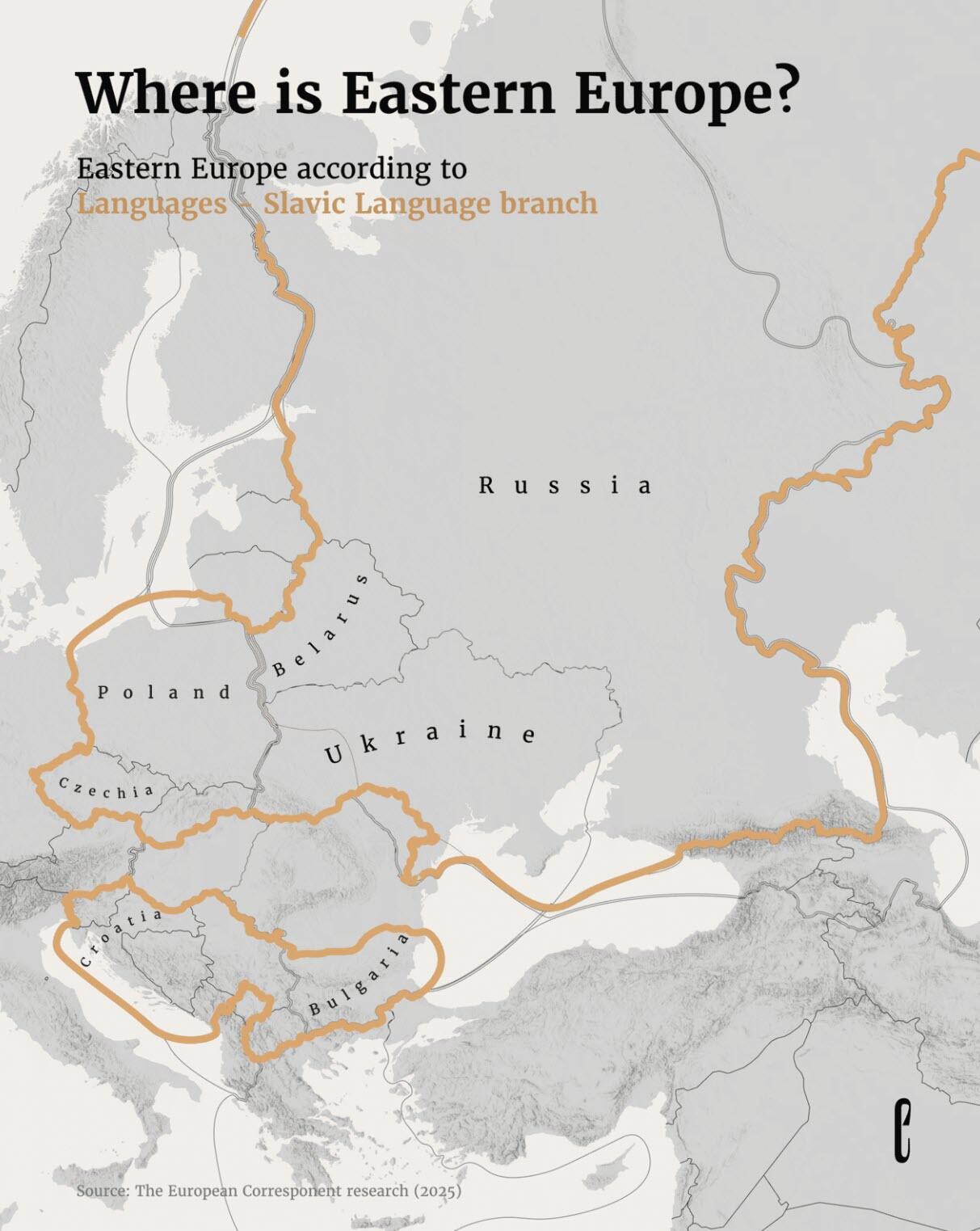
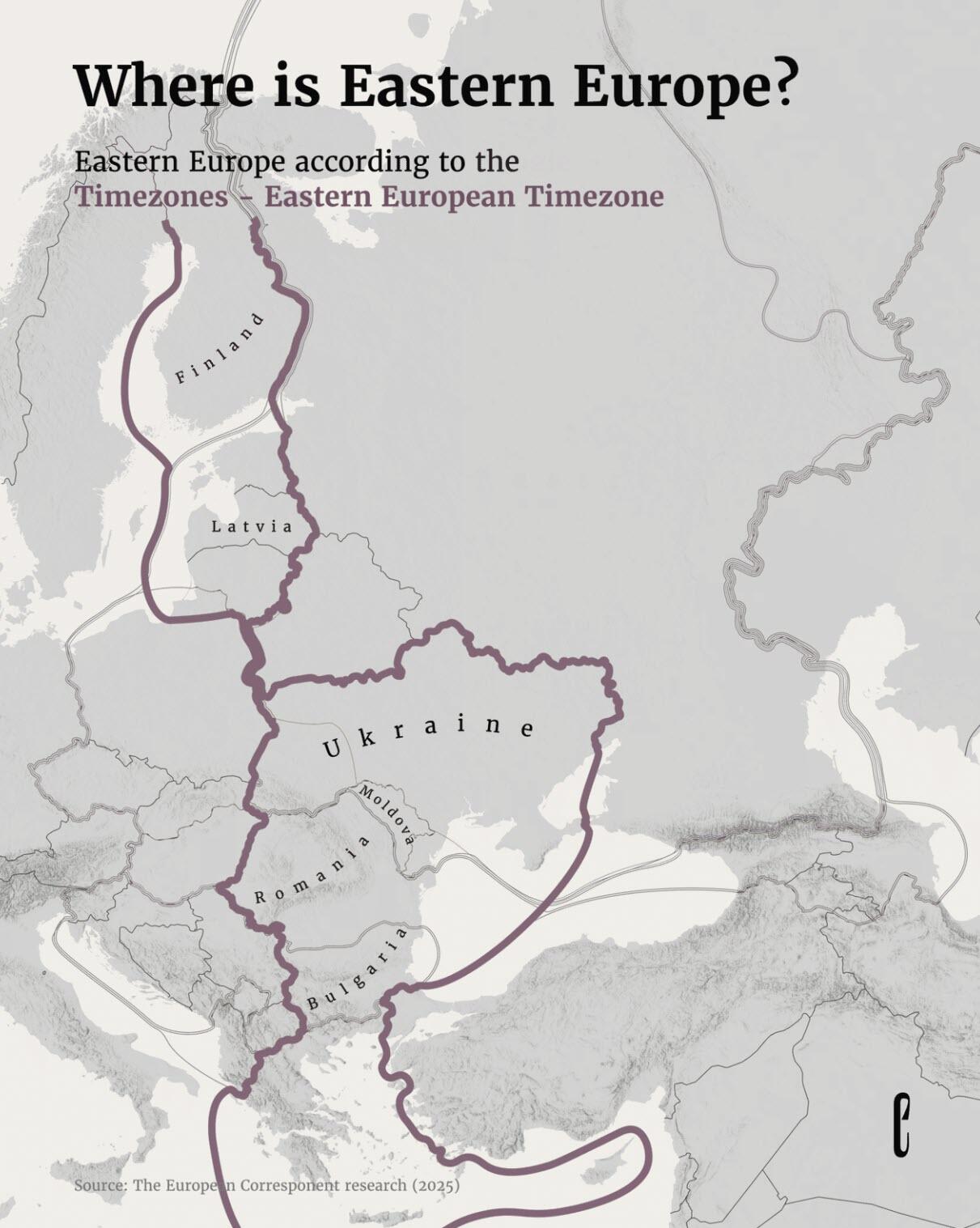
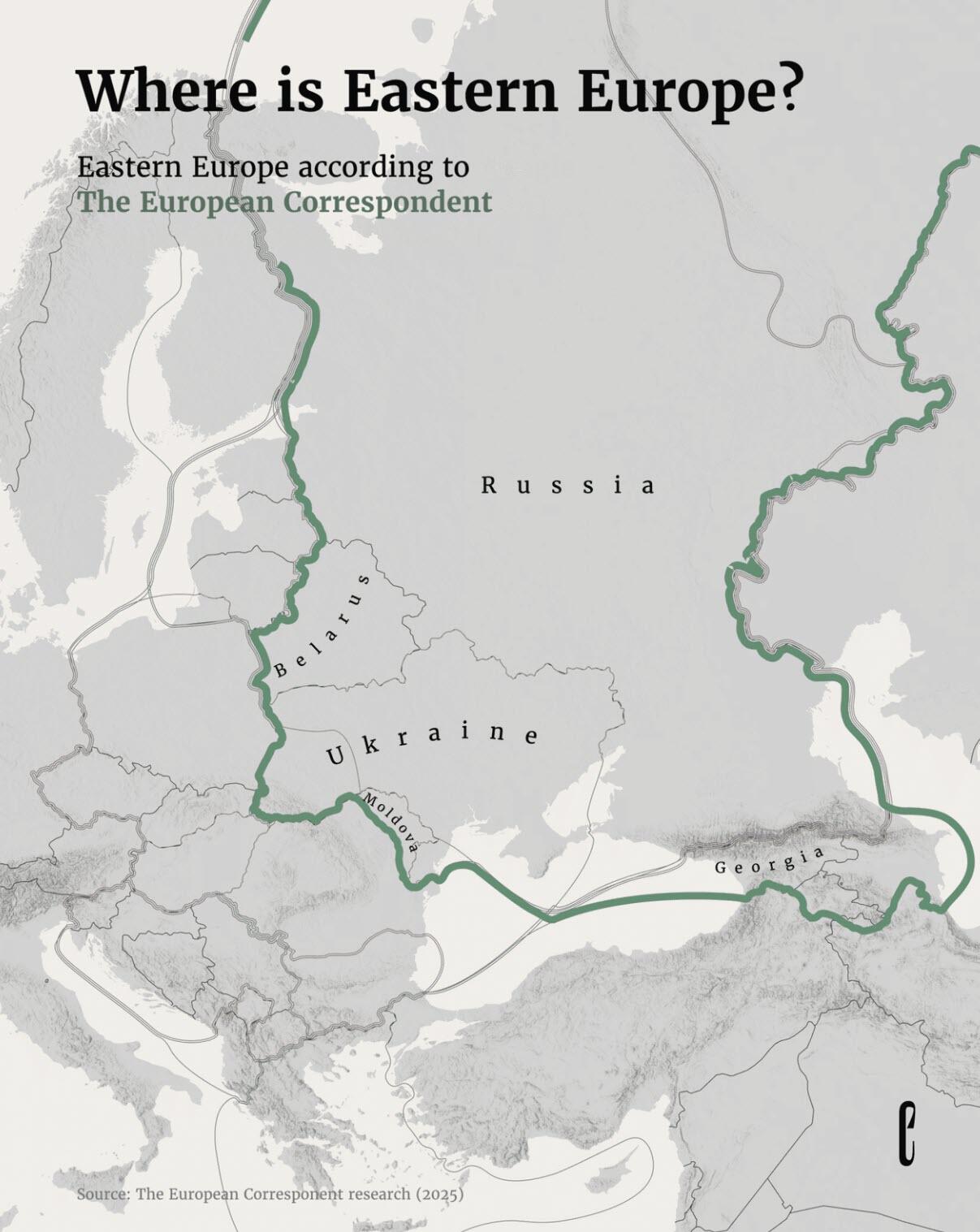
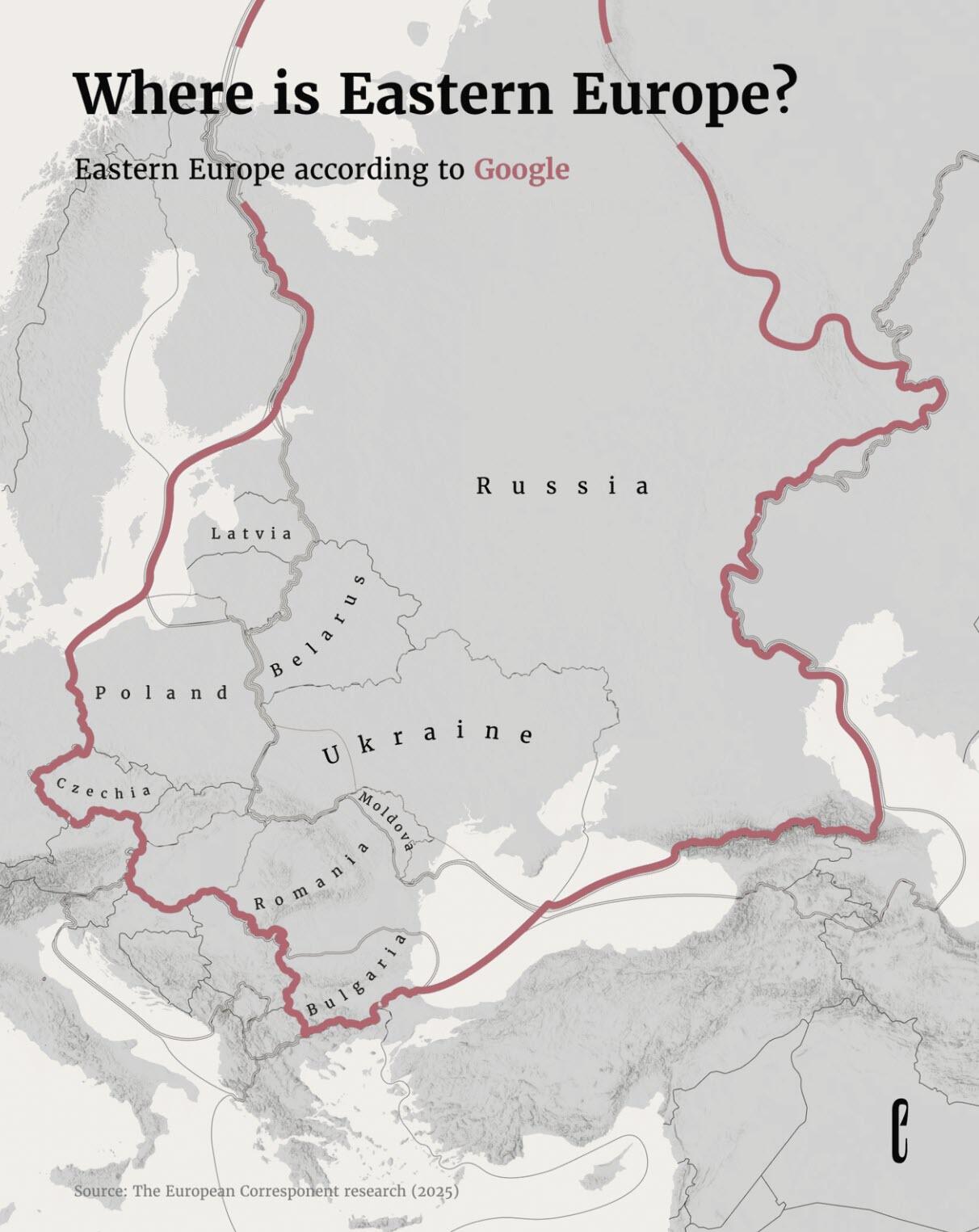
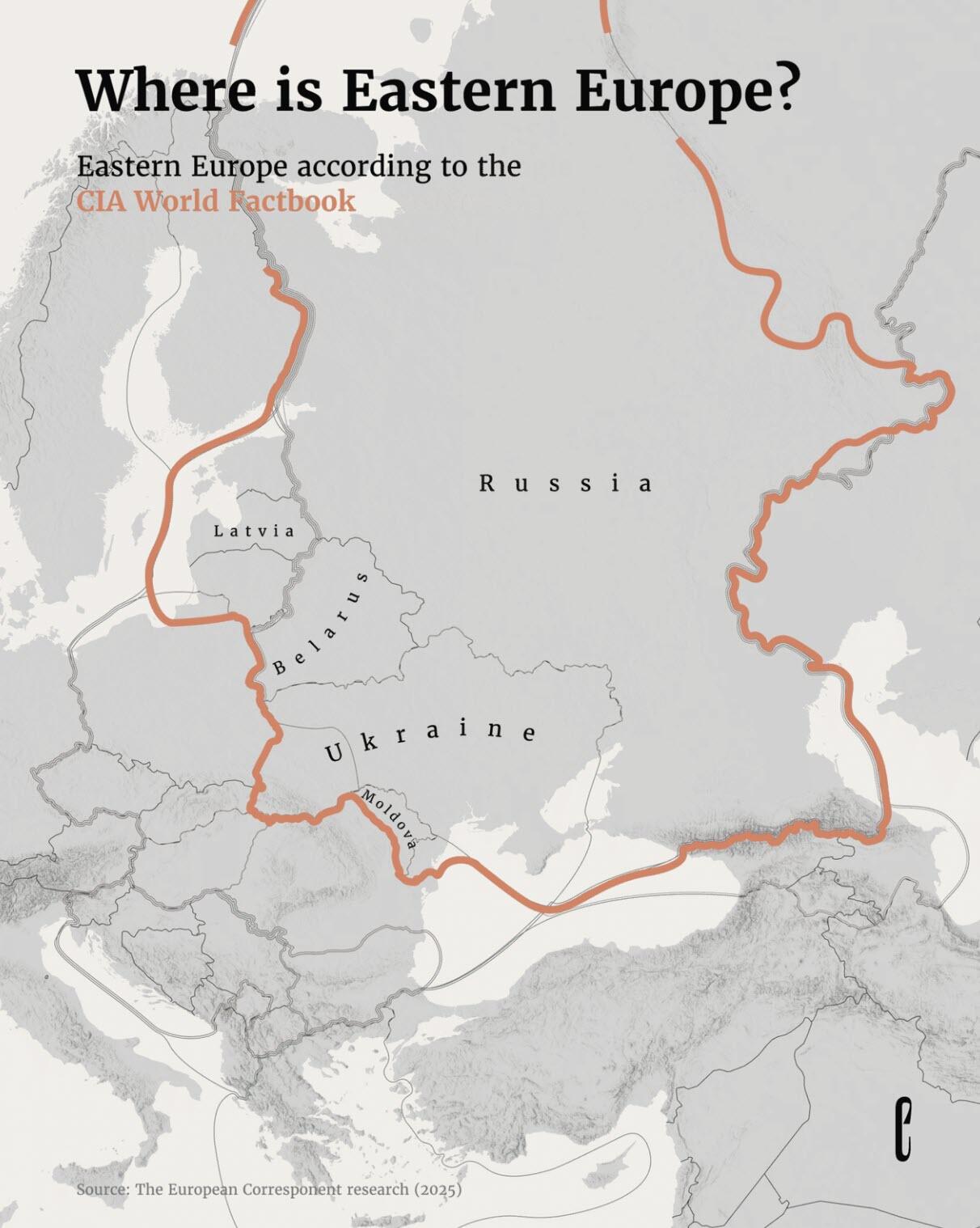
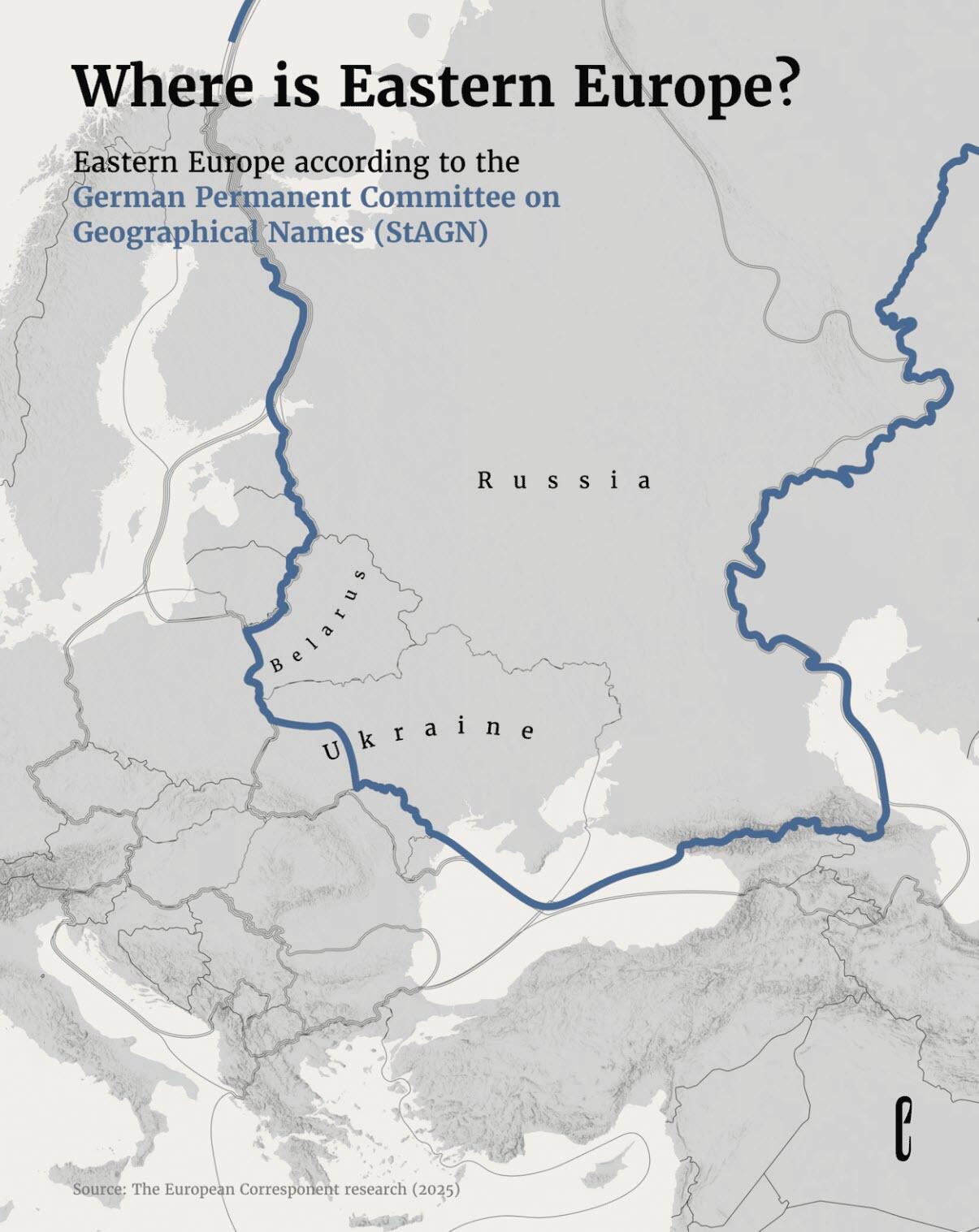
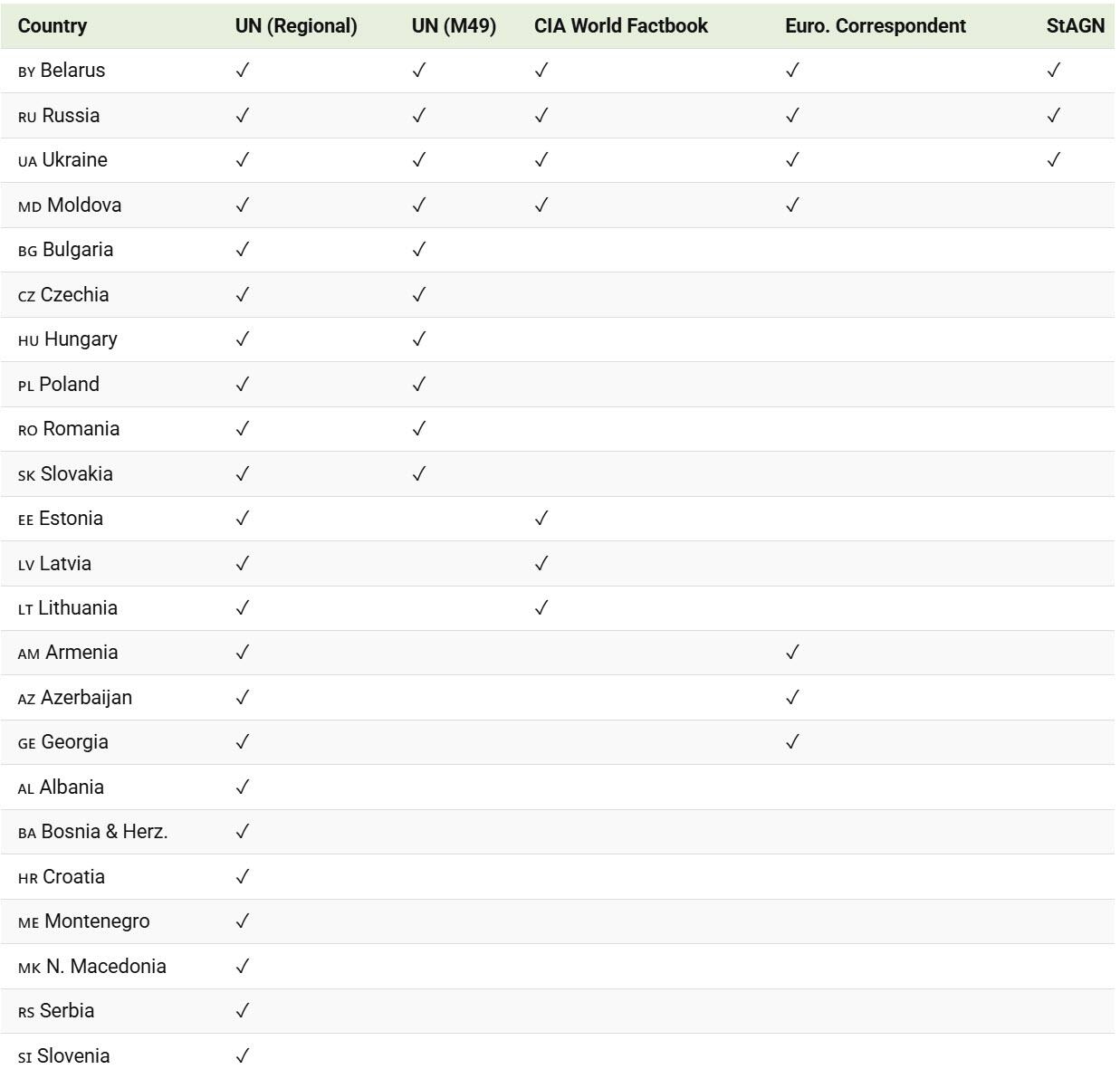
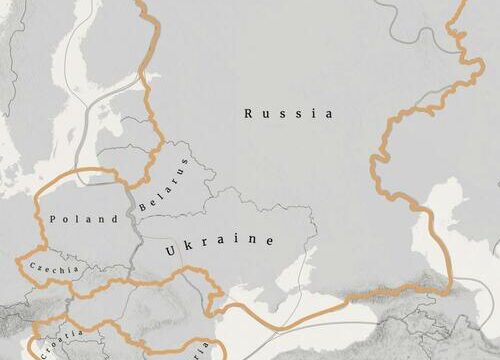
The maps below use data from various organizations to highlight interpretations of Eastern Europe’s geographical extent.
At a glance, the visualizations – via Visual Capitalist – show a tight core centered on Russia, Ukraine, and Belarus, with boundaries stretching eastward into Russia and stopping along a debated western frontier that cuts through Central Europe.
Eastern Europe’s Borders, Defined
Below are major groupings from the UN, CIA World Factbook, StAGN (Germany’s committee on geographical names), and The European Correspondent, the creator of the map.
A Region Defined by Perspective
Unlike continents or countries, Eastern Europe is not a fixed geographic entity. Instead, its definition has evolved over time, shaped by empires, ideology, and institutions. According to various modern definitions, the region can include anywhere from a handful of countries to over a dozen.
Historically, the term gained prominence during the Cold War, when it often referred to Soviet-aligned nations. This political framing still influences perceptions today.
The Core vs. the Fringe
Despite disagreements, some countries are almost always included:
🇷🇺 Russia
🇺🇦 Ukraine
🇧🇾 Belarus
These nations form the “core” of Eastern Europe across most academic and institutional definitions. Beyond them, the picture becomes less clear. Countries like Poland, Hungary, and the Czech Republic are sometimes included, but are often classified as Central Europe instead.
Research from institutions like the University of Basel highlights how these shifting classifications reflect cultural identity as much as geography.
How Far Does It Stretch?
At its maximum extent, Eastern Europe can span from Germany’s eastern border all the way to the Ural Mountains in Russia. This broader definition may include the Balkans and parts of Central Europe.
At its minimum, however, the region shrinks to just a few countries in Eastern Slavic territory. That these narrower definitions often reflect cultural or linguistic commonalities.
Ultimately, where Eastern Europe “begins” and “ends” depends on who you ask, which makes it less of a place on a map and more of an idea shaped by history and geopolitics.
Tyler Durden
Mon, 04/27/2026 – 02:45
https://www.zerohedge.com/geopolitical/where-does-eastern-europe-begin-and-end
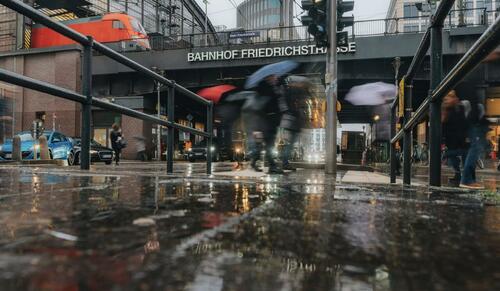
Reset Germany: Breaking With An Exhausted Ruling Class
Reset Germany: Breaking With An Exhausted Ruling Class
Authored by Frank-Christian Hansel via American Greatness,
Germany is not, in the first place, suffering from an economic crisis, an energy crisis, a migration crisis, or a crisis of state. Germany is suffering, chiefly, from a crisis of its elites.
More precisely, Germany is suffering from a crisis brought on by that milieu which regards itself as the country’s morally, intellectually, and administratively legitimate leadership class but which has, for years, sustained a regime of reality-avoidance, self-congratulation, and rhetorical substitutes for genuine action.
The misery of our situation is not that mistakes have been made. Mistakes are part of politics. The real misery is that Germany has produced a class of managerial elites that refuses to change course even when the consequences of its actions lie plainly exposed. That class does not correct itself, because it no longer measures itself against reality; rather, it measures itself against the approval of its own circles. It does not want to be right before the tribunal of reality; it wants to be right before the tribunal supplied by its own milieu.
That is the root of Germany’s decline.
The Federal Republic was once—for all its flaws—a country that drew its strength from a peculiar mixture of sobriety, an ethic of performance, technical reason, institutional discipline, and bourgeois self-restraint. This country was not great through pathos but through seriousness, not through visions but through reliability, and not through moral grandstanding but through quiet competence. That was precisely why it was strong: because it had the capacity to concentrate on what was necessary, instead of losing itself in what was desirable.
Of that Germany, little remains inside the ruling apparatus.
In place of prosaic sobriety, a political-media class has emerged that mistakes governing for pedagogical world-improvement. Its first instinct is no longer to secure, to enable, and to set limits. Its first instinct is to educate, to frame, to therapize, to reinterpret, and to morally cultivate. Its relationship to the citizen is no longer republican; it is curatorial. The citizen no longer appears to this class as the sovereign on whose behalf it works—as Helmut Schmidt once understood the office—but as a problem case: too skeptical, too stubborn, too set in his ways, and too interested in normality, safety, and prosperity.
This is where the real cultural rupture becomes visible.
Germany’s elites no longer distrust merely particular political positions. They distrust ordinary life itself. The desire for normality, the desire for affordable energy, the desire for borders, the desire for safety in public space, the desire for cultural continuity—the desire, in short, that a state should first be obligated to its own—all of this is held in the upper reaches of society to be suspect, unpleasantly banal, and morally backward.
A paradoxical situation has emerged: the more obvious the functional failures of the state, the louder the moral self-celebration of its representatives. The thinner the substance of the country, the more clamorous the professions of stance, diversity, transformation, and responsibility—with the federal president, at the top of the hierarchy, leading the chorus.
We live, accordingly, in a state that announces ever more and delivers ever less. Politics that indulges in historical sermonizing while failing at train stations, borders, schools, the electricity grid, housing, the Bundeswehr, public administration, and internal security—an elite that cloaks its own barrenness with the claim that it, at least, stands on the right side of history. That formula is the real total loss.
For whoever believes himself to be on the right side of history ceases to answer to the present. He replaces examination with conviction, outcomes with intentions, and reality with narrative. From this posture comes the mixture of hypermoralism and state failure that characterizes Germany today. They speak of humanity and lose control of migration. They speak of responsibility and destroy the energy foundations of our industry. They babble about worldly openness and ask us to tolerate the degradation of public spaces. They speak of democracy and exclude millions of voters. They take the word “diversity” in their mouths and drive cultural estrangement in their own country.
This is not accidental. It follows a deeper logic. Those who rule the Federal Republic today have grown accustomed to drawing legitimacy not from performance but from moral elevation. They no longer govern out of their own solidity but out of symbolic self-immunization. Whoever objects is not treated as an opponent but as a disturbance. Whoever points to the limits of what a society can bear is not treated as a realist but as a suspect case. Whoever invokes people, nations, cultural inheritance, sovereignty, or self-interest is not tested argumentatively but ritually delegitimized.
Which is exactly why the opposition in Germany today is, at its core, not simply one more party among others. It is, apart from its internal difficulties and the external attacks against it, the political expression of a surviving cast of mind in this country.
A surviving cast of realism, of the will to self-assertion, and of a sense for reality. It is the form in which Germany still articulates itself politically: the Germany that is not yet willing to let itself be parted from its history, its cultural identity, its industrial reason, and its claim to the normality of the state. We can say it plainly: yes, we are bourgeois dissidents.
This also explains the frenzied state of mind of the establishment. We are not opposed so bitterly because we are irrelevant. We are opposed so bitterly because we touch exactly the point that the ruling cartel must conceal at any cost: that the decline is not fated, but politically engineered; that the crisis does not come from the voters, but from the leadership classes; and that the real scandal lies not in the protest, but in the necessity of the protest—in the necessity of dissent itself.
What has exhausted itself in Germany is not merely a government or a coalition. It is the whole style of governing: a style that dissolves all limits and manages everything at once; that relativizes every binding and sanctions every deviation; that treats national self-assertion as indecent and state overreach as progressive; that subordinates economic reason to climate, legal clarity to a false morality, cultural self-respect to a pedagogy of guilt, and democratic equality to the political firewall. This model is depleted. It has no answer left to reality except to impose further demands on those it governs.
It has, ultimately, no future.
What Germany needs, therefore, is not merely a change of policy. It needs a mental restart—a return to Go—so that a true reset becomes possible. Every renewal begins with a reset. Not with grand programs, but with a rediscovery of what is real. A country must know again who it is before it can decide where it wants to go. It must stop despising itself morally before it can become politically capable of action again. That is where the real task lies.
Germany must—we must—free ourselves from our exhausted elites. Not only in terms of personnel, but also mentally and spiritually. We must find our way back to a politics that distinguishes between one’s own and the foreign, between responsibility and posture, between freedom and paternalism. We must remember that the purpose of a state is not to redeem the world but to protect its own political community. And that a nation which loses the will to self-assertion will, in the end, lose its capacity for freedom as well.
The German reset will therefore not come from the centers of today’s operations. Not from the party apparatuses, not from the editorial offices, not from the committees of a class that is blind to its own failures and seeks refuge in haughty notions of moral superiority. The reset and restart can only come from those places where something of the country’s sense of reality still remains intact: where decline is not celebrated as transformation, where the normal is not dismissed as reactionary, and where Germany is not regarded as a problem but as a task.
That surviving cast of mind, on which the reset depends, still exists. But it is not infinitely resilient.
The question, therefore, is not whether this country needs a rupture. The question is whether that rupture will be organized politically in time—or whether Germany must first pass still deeper through the exhaustion zones of its old elites. In this situation, the opposition is not merely an opposition party. It is the only political force that understands the necessary rupture not as a breakdown to be managed, but as the precondition of renewal.
Whoever truly wants to restart Germany must first have the courage to stop treating this country‘s elite misery as its fate. It was done. And what was done can be undone.
Tyler Durden
Mon, 04/27/2026 – 02:00
https://www.zerohedge.com/geopolitical/reset-germany-breaking-exhausted-ruling-class

Hayek, Orwell, And ‘The End Of Truth’
Hayek, Orwell, And ‘The End Of Truth’
Authored by Jonathan Miltimore via Civitas Institute,
In 1942, after fighting in the Spanish Civil War (1936–1937), a disillusioned writer returned to London to write about his experience. It wasn’t just that the fascists in Spain had won and his side—a small, anti-Stalinist Marxist group—had lost. What frightened him was the ease with which truth itself had been erased and replaced by propaganda.
“I saw great battles reported where there had been no fighting, and complete silence where hundreds of men had been killed. I saw troops who had fought bravely denounced as cowards and traitors, and others who had never seen a shot fired hailed as the heroes of imaginary victories … and I saw newspapers in London retailing these lies and eager intellectuals building emotional superstructures over events that had never happened.”
The writer was George Orwell, and the quote appears in his book “Looking Back on the Spanish Civil War.”
The disconnect between reality and narrative clearly made an impression on Orwell, who worried that “the very concept of objective truth is fading out of the world.” The theme of falsified history and the destruction of truth would resurface in his fictional masterpiece “Nineteen Eighty‑Four,” where “memory holes” swallowed inconvenient facts and the past was rewritten to suit the Party’s needs.
Orwell’s book would go on to sell 25 million copies worldwide, and he is today remembered as a prophet for foreseeing a future in which the state’s deliberate power could extinguish truth itself.
Yet few today remember that five years before the publication of “Nineteen Eighty‑Four,” an Austrian economist, in his own magnum opus, explored how the state destroys truth.
Management of Minds
Unlike George Orwell, Friedrich Hayek (1899–1992) is not a household name, but his 1944 classic “The Road to Serfdom” made him one of the twentieth century’s most influential thinkers—despite the book’s inauspicious beginning.
Originally a memo penned at the London School of Economics, “The Road to Serfdom” was rejected by three publishers before finding a home with Routledge. The first run—2,000 copies—sold out in 10 days. Hayek’s book went on to sell more than two million copies and be translated into over twenty languages. Its core argument was straightforward: central planning, however well-intentioned, erodes individual freedom and sets society on a path toward serfdom.
What is often overlooked is Hayek’s deeper insight. Economic control does not remain confined to the economy. Once the state directs production and prices, it inevitably reaches into thought, expression, and belief. For Hayek, the danger of socialism was not only material impoverishment—as seen in the USSR—but the steady expansion of intellectual control.
“… It is not enough that everybody should be forced to work for the same ends,” Hayek wrote. “It is essential that people should come to regard them as their own ends.”
Hayek was warning that once the state begins to manage prices and production, it will soon find it necessary to manage minds. When a government takes control over economic life, it must “justify its decisions to the people” and “make people believe that they are the right decisions.”
In doing so, it inevitably begins to decide which opinions and values align with its plan—rewarding and amplifying voices that comply while punishing, suppressing, and silencing those that do not.
‘The End of Truth’
The quotes above appear in Chapter 11 of “Serfdom,” aptly titled “The End of Truth.”
When I first read the book twenty years ago, the chapter didn’t stand out to me. Today it does. After all, we recently lived through a period in which the phenomenon Hayek described played out before our eyes.
The COVID-19 pandemic was a vast economic experiment. The federal government issued a wide array of public health “recommendations” that soon became dogmas. To question the efficacy of masks or social distancing—a policy we learned in 2024 had no basis in science—was to risk being censored or accused of spreading “misinformation.” Scientific debate gave way to official decree, and many who questioned “the plan” or resisted it lost their jobs or were booted from platforms.
None of this would have surprised Hayek, who warned that the plans constructed by central planners must be “sacrosanct and exempt from criticism.”
“If the people are to support the common effort without hesitation, they must be convinced that not only the end aimed at but also the means chosen are the right ones,” he wrote. “Public criticism or even expressions of doubts must be suppressed because they tend to weaken public support.”
Hayek’s chapter is not primarily about censorship. Instead, he argues that the rise of state power will systematically undermine the concept of truth itself and the human pursuit of it.
As governments assert control over economic and social life, facts and evidence are subordinated to political goals—an idea Orwell illustrated vividly when the Party refused to accept Winston Smith’s claim that two plus two equals four.
‘Sometimes, Winston…’
The phenomenon Orwell described was not moral relativism but factual relativism. It was a theme Hayek also addressed. The Austrian economist noted that in totalitarian systems, even basic facts—including mathematics—become subservient to state dogma. He reminded readers that in the USSR and Nazi Germany, ideology had consumed even the sciences. There was “German Physics” and a “Marxist-Leninist theory in surgery.”
“It is entirely in keeping with the whole spirit of totalitarianism that it condemns any human activity done for its own sake and without ulterior purpose,” he wrote. “Science for science’s sake, art for art’s sake, are equally abhorrent to the Nazis, our socialist intellectuals, and the communists.”
Hayek observed that as the state’s power grows, the sciences become corrupted. Instead of advancing truth, they become tools in the hands of planners.
“Once science has to serve, not truth, but the interest of a class, a community, or a state,” he wrote, “the sole task of argument and discussion is to vindicate and to spread still further the beliefs by which the whole life of the community is directed.”
Hayek said the phenomenon he described was most pronounced in dictatorships, but he added that it was not “peculiar to totalitarianism.” Even in free societies, he warned, “the most intelligent and independent people cannot entirely escape [the] influence” of state propaganda. His point was unsettling: susceptibility to propaganda is not limited to the gullible or uninformed—propaganda ensnares the thoughtful and educated as well.
The erosion of truth becomes apparent through a decay in language. Words like “freedom,” “right,” “equality,” and “justice” lose their meaning. Eventually, the word “truth” itself “ceases to have its old meaning.”
“It describes no longer something to be found,” Hayek wrote, “it becomes something to be laid down by authority—something which has to be believed in the interest of unity of the organized effort, and which may have to be altered as the exigencies of this organized effort require it.” (emphasis added)
All of this sounds familiar to readers of “Nineteen Eighty-Four,” who see Winston Smith struggling to hold onto objective truth in a world where truth is dictated by power. Surely two plus two equals four, he pleads.
“Sometimes, Winston. Sometimes they are five,” he is told in the Ministry of Love. “Sometimes they are three. Sometimes they are all of them at once. You must try harder.”
‘The Tragedy of Collectivist Thought’
Orwell was a master, and “Nineteen Eighty-Four” is a masterpiece. But Hayek was describing Orwellianism several years before Orwell gave it fictional form. (It’s also worth noting that G.K. Chesterton used the “two plus two equals four” blasphemy metaphor nearly a half-century before Orwell.)
This doesn’t diminish Orwell’s work. On the contrary, it shows how powerfully he dramatized ideas that Hayek had already diagnosed in theory. (Orwell, it should be noted, read “The Road to Serfdom” and enjoyed it, with caveats.)
Still, Hayek deserves credit for superbly articulating—in one chapter!—the phenomenon that Orwell would translate into a terrifying warning, one that millions of junior high and high school students would receive in English courses.
The economist Daniel Klein recently called “The End of Truth” the most important chapter in Hayek’s most important work. I couldn’t agree more. The chapter serves as a reminder that the human mind is not something to be controlled but something to be unleashed. If we forget this simple lesson, we risk surrendering the very capacity for independent thought that sustains civilization.
“The tragedy of collectivist thought,” he noted, “is that, while it starts out to make reason supreme, it ends by destroying reason because it misconceives the process on which the growth of reason depends.”
Tyler Durden
Sun, 04/26/2026 – 23:50
https://www.zerohedge.com/political/hayek-orwell-and-end-truth
Compute Costs More Than Talent In AI
Compute Costs More Than Talent In AI
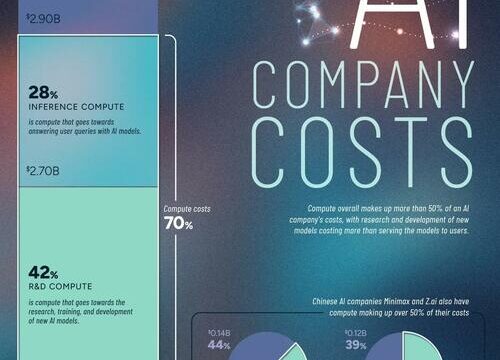
For leading AI companies, the biggest expense is not talent. It is compute.
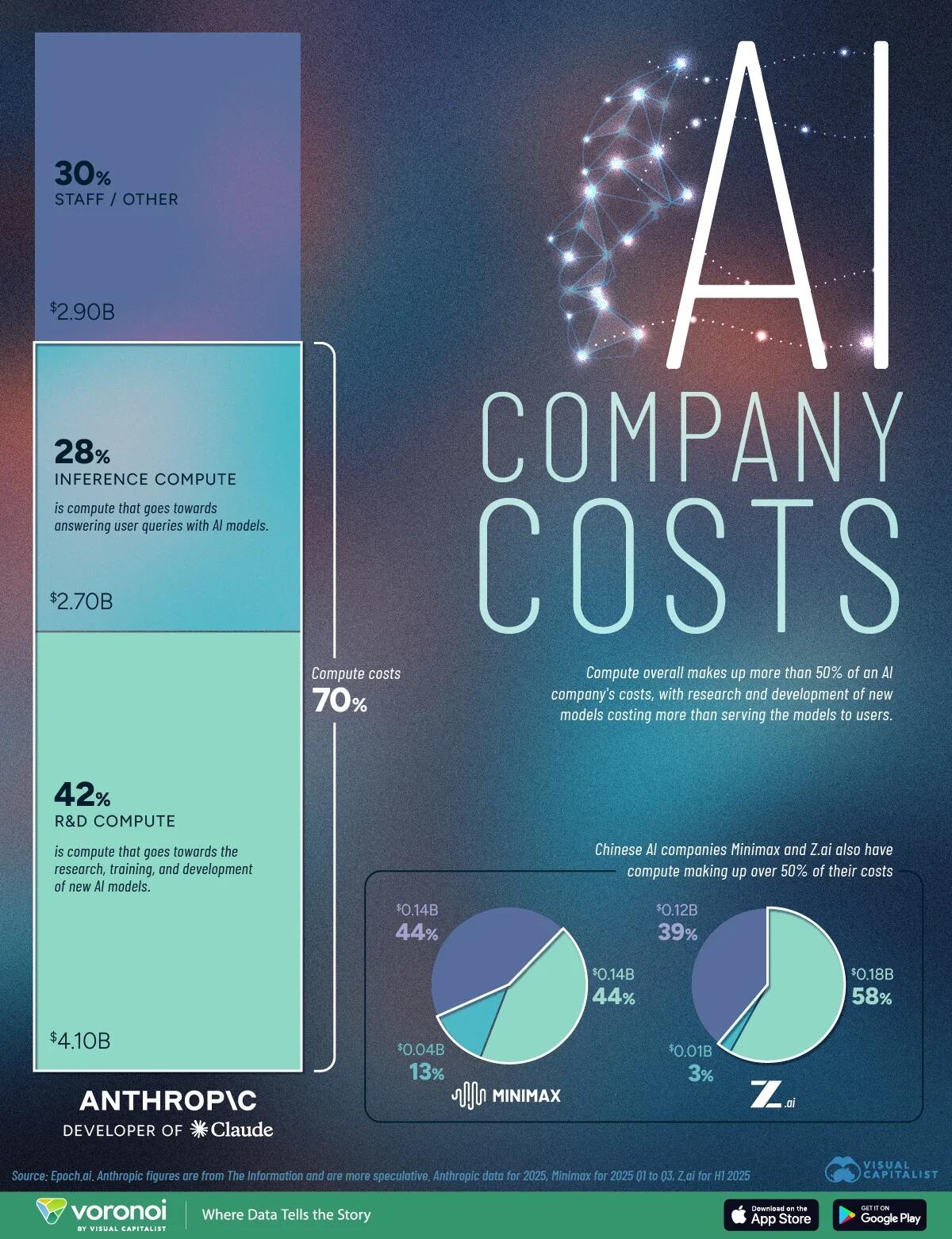
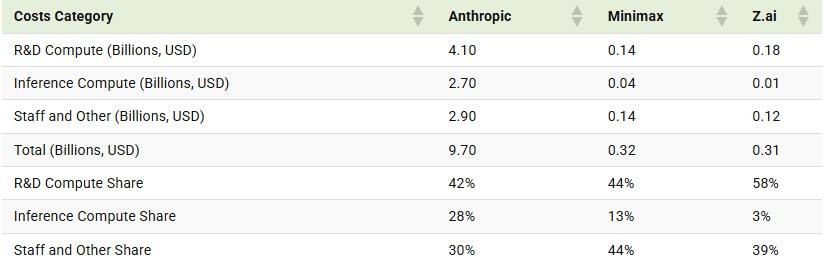
This chart from Visual Capitalist’s AI Week, sponsored by Terzo, uses Epoch AI data to compare spending at Anthropic, Minimax, and Z.ai across R&D compute, inference compute, and staff plus other costs.
In every case, compute accounts for the majority of total spending, underscoring how capital-intensive it has become to build and serve frontier AI models.
How AI Company Costs Break Down
Despite differences in scale, all three companies allocate the largest share of their budgets to a single category: compute.
The data below compares spending composition across Anthropic, Minimax, and Z.ai. Anthropic’s figures are for 2025, while Minimax’s are from Q1 to Q3 of 2025 and Z.ai’s are for H1 2025.
Across all three AI companies, compute is the main cost center. Epoch AI estimates that R&D compute and inference compute together account for 57% to 70% of total spending, making infrastructure more expensive than staff and other costs in every case.
Among the three, Z.ai has the most R&D-heavy profile, with 58% of spending tied to compute powering model development and training.
Anthropic stands out for sheer scale. Epoch AI estimates the company spent $9.7 billion in 2025, including $6.8 billion on compute alone across training and inference.
Its costs are significantly higher than Minimax’s and Z.ai’s, even if the two Chinese AI companies’ figures were annualized to match Anthropic’s full-year period.
Both Chinese companies release many of their models as open source, meaning the model weights are freely available for anyone to download, modify, and run. This strategy helps them compete with better-funded U.S. labs by building developer adoption at a fraction of the cost.
AI Talent Costs Less Than Chips and Compute
One of the clearest takeaways is that talent costs less than compute in this comparison. Even though top AI labs pay some of the highest salaries in tech, staff and other costs still account for less than half of total spending at each of the three firms.
While the chart focuses on costs, Epoch AI estimates these labs are currently spending around 2–3x more than they generate in revenue, even as some expect economics to improve over time.
How These Estimates Were Built
This dataset comes with a few important caveats. Anthropic’s figures are based on reporting from The Information and are more speculative, while Minimax and Z.ai figures come from IPO filings released in January 2026.
The time periods also differ: Anthropic data is for the full year of 2025, Minimax covers 2025 Q1–Q3, and Z.ai covers 2025 H1. Epoch AI says its expense totals include operating expenses, cost of goods and services, and non-cash items such as stock-based compensation.
If you enjoyed today’s post, check out The Soaring Revenues of AI Companies on Voronoi.
Tyler Durden
Sun, 04/26/2026 – 23:25

Charlottesville: The Deceit Underlying The Hoax
Charlottesville: The Deceit Underlying The Hoax
Authored by Steve Cortes via RealClearPolitics.com,
For years, Democratic politicians and their allies in the legacy media have spread the damnable Charlottesville Hoax: the propaganda myth that President Trump praised bigots who rioted in 2017 in the Virginia town.
Of course, the opposite is true, as Trump actually said: “I’m not talking about the neo-Nazis and white nationalists because they should be condemned totally.”
Now, we learn that the entire hoax of Trump and Charlottesville is, itself, built upon another grand lie. The media and people like Joe Biden have continually pushed the narrative that some big, organic gathering of hateful Americans descended upon Charlottesville and represented some larger threat to the republic itself. But it now turns out that the “Unite the Right” rally was organized and financed by the highly partisan, left-wing Southern Poverty Law Center.
In a sweeping 11-count indictment, the Department of Justice and acting Attorney General Todd Blanche charge the advocacy group with criminal defrauding of donors and “manufacturing the extremism it purports to oppose by paying sources to stoke racial hatred.”
The charges contained in this indictment are akin to the fire department becoming an aggressive criminal arson enterprise, setting fires all across a town, and then demanding more budget and authority to fight the very infernos it set ablaze.
So…the end result is that America endured years of propaganda that convinced a large segment of the population – in contravention of the facts – that their president supported violent hate merchants. Even worse, masses of unskeptical Americans, who consume only legacy media content, believed that the entire America First populist movement was based on bigotry, rather than patriotism.
Now, nearly a decade later, the truth is revealed about the deception that lay beneath that grand lie. There was a layer of duplicity here that is almost difficult to fathom. Only true Marxists could excuse this level of propaganda. The SPLC created hate groups and activities like the Charlottesville rally, and the complicit media then weaponized these concocted offenses by spreading outright lies about Trump’s reaction to the staged events.
I myself played a role in this saga regarding Charlottesville, best explained by a timeline:
March 2019 – After more than a year serving as a contributor on CNN, I grew tired of the near-nightly lies told about Charlottesville during the primetime hits when I was on-air. I tried my best to debunk the myth, but was routinely shouted down, and even “benched” for short periods for daring to tell the truth. So…I wrote a column at RealClearPolitics with the exact Trump transcript and precise citations.
April 2019 – Joe Biden launched his 2020 presidential campaign based entirely upon the Charlottesville lie, claiming that the “bulging veins” of the racists convinced him to run for the White House.
August 2019 – Dennis Prager had read my RealClearPolitics article and had me on his radio show repeatedly to discuss what we branded as the “Charlottesville Hoax.” He also asked me to narrate a five-minute video for his online platform, PragerU, debunking the hoax, which went mega-viral, with well over 10 million total views.
September 2019 – CNN removed me from the air. Rebecca Kutler, now the head of MSNOW and then the director of talent at CNN, expressly told me that the permanent “benching” was because of the Charlottesville video, even though I was clearly allowed to make such online videos, per the terms of my contract. I asked to be released so that I could do TV elsewhere, and she refused. In other words, they paid me to be silent, to stay on the sidelines.
December 2019 – I was released from CNN.
June 2024 – Supposedly objective “fact-checking” site Snopes finally admits the clear reality of the full transcripts and video evidence that Trump never praised bigots at Charlottesville.
April 2026 – The Southern Poverty Law Center was indicted for millions of dollars in secret payments to racists to foment and organize racial unrest and events, including the Charlottesville event itself.
This entire sad saga matters.
First, it unveils the systemic duplicity of the left in America. Because their demand for “hate” far exceeds the actual supply, they had to pay to manufacture bigotry, so that they then could oppose it.
Second, the record reveals that lies build upon lies, while the truth remains, inherently, emancipating.
Whatever any citizen thinks of Donald Trump, the entire madness of Charlottesville represents a preventable and despicable tragedy. The actions of the SPLC were criminal and mafia-like. A young woman, Heather Heyer, lost her life because of this mayhem. More broadly, millions of Americans bought into an insidious lie and believed it for years, doing grave damage to the cohesion of our society.
Only a full accounting, now, can begin the process of healing and truth-telling.
Tyler Durden
Sun, 04/26/2026 – 23:00
https://www.zerohedge.com/political/charlottesville-deceit-underlying-hoax