Category: News

Who does what in the Chicago Bears organization? Here’s a breakdown.
The 2025 season was one of great transition for the Chicago Bears. For the first time since 1922, Virginia Halas McCaskey wasn’t alive to witness it. The team’s principal owner and matriarch died Feb. 6 at age 102.
McCaskey had been around the team since she was a little girl. With her father, Bears founder, owner and coach George Halas, she witnessed the Red Grange barnstorming tour in 1925 and the NFL’s first indoor game at Chicago Stadium in 1932, among other early moments.
McCaskey inherited the team from her father after his death in 1983. Even though she spent her later years mostly behind the scenes, she was an ever-present part of the organization. She remained on the board of directors until her death, though her children handled the day-to-day operations. Chairman George McCaskey, one of four McCaskey sons on the board of directors, will remain the face of ownership.
The Bears also went through significant change on the football side. They hired Ben Johnson as head coach on Jan. 21, 2025, and he led the team to its first playoff appearance in five years and its first playoff victory since the 2010 season.
So, who does what exactly at Halas Hall? Here’s a look at many of the notable names who work for the Bears.
Chairman: George McCaskey
Bears Chairman George McCaskey on Aug. 1, 2024, in Canton, Ohio. (John J. Kim/Chicago Tribune)
McCaskey has been the team chairman since 2011, when his brother Michael retired. He’s one of 11 children of Ed and Virginia McCaskey and the grandson of George Halas.
McCaskey’s first part-time job was as an office assistant with the Bears at age 14. After earning a bachelor’s degree and a law degree from Arizona State, he worked in TV news and as an assistant state’s attorney in Lee and DeKalb counties before joining the Bears ticket office in 1991. He worked in the ticket office for 20 years before taking over as chairman.
He’s the fourth chairman in team history, following his grandfather, father and brother, and he’s the face and voice of the McCaskey family ownership group.
President and CEO: Kevin Warren
Bears President and CEO Kevin Warren on Dec. 26, 2024, at Soldier Field. (Armando L. Sanchez/Chicago Tribune)
The Bears hired Warren in 2023 as the fifth team president and the first hired from outside the organization. Before joining the Bears, Warren spent four years as commissioner of the Big Ten. That came after a lengthy career as an NFL executive with the St. Louis Rams, Detroit Lions and Minnesota Vikings.
As the Vikings chief operating officer from 2015-19, Warren oversaw the development of U.S. Bank Stadium, which opened in 2016 in downtown Minneapolis. While Warren, 61, runs all aspects of the Bears, his top objective since taking over as president has been to build the Bears a new stadium.
Board of directors: George H. McCaskey, Kevin Warren, Patrick McCaskey, Brian J. McCaskey, Edward L. McCaskey, Ed McCaskey Jr., Pat Ryan
Kevin Warren, from left, Brian McCaskey, George McCaskey, Patrick McCaskey and Ryan Poles on Jan. 22, 2025, at Halas Hall. (Brian Cassella/Chicago Tribune)
George McCaskey is the chairman, his brother Patrick is the secretary and brothers Brian and Ed Jr. are board members. The four McCaskey brothers are among nine surviving children of Virginia and Ed McCaskey.
The Bears added Edward L. McCaskey to the board of directors in 2025. The son of Patrick McCaskey and the grandson of Virginia and Ed McCaskey, he’s the first in the next generation of the family to join the board. He took the spot left vacant following Virginia’s death.
As team president and CEO, Warren is also on the board. The final member is Ryan, the billionaire Aon Corporation founder who purchased a minority stake in the team in 1990.
General manager: Ryan Poles
Bears general manager Ryan Poles on Dec. 22, 2024, at Soldier Field. (Chris Sweda/Chicago Tribune)
Poles, 39, has the final say on all football-related decisions, from whom to hire as coach to which players to draft and sign. He was just 36 when the Bears hired him in 2022 after more than a decade working in the Kansas City Chiefs front office.
Upon taking over, Poles kicked off a major rebuild. He spent his first year dismantling the team his predecessor, Ryan Pace, built. He hired (and later fired) coach Matt Eberflus. He also picked Ben Johnson to replace Eberflus. It was Poles’ decision, too, to trade away quarterback Justin Fields and draft Caleb Williams with the No. 1 pick in 2024.
Assistant GM: Vacant (previously Ian Cunningham)
Bears assistant general manager Ian Cunningham on April 23, 2024, at Halas Hall. (Brian Cassella/Chicago Tribune)
Cunningham spent four seasons with the Bears as Ryan Poles’ No. 2. He was one of the first hires Poles made after becoming general manager in January 2022.
The Falcons officially named Cunningham their general manager on Jan. 29. His exit leaves the Bears assistant GM position vacant. Poles’ current top lieutenant in the player personnel department is Jeff King, the team’s senior director of player personnel.
Head coach: Ben Johnson
Bears coach Ben Johnson on Jan. 22, 2025, at Halas Hall. (Brian Cassella/Chicago Tribune)
The Bears hired Johnson on Jan. 21 to be the 19th head coach in franchise history. He spent the previous three seasons as the Lions offensive coordinator, directing one of the NFL’s most high-powered offenses.
Johnson was highly sought as a head coaching candidate during recent hiring cycles. The Bears moved swiftly to land him after conducting initial interviews with at least 17 candidates.
The Bears hope Johnson, 39, can elevate the offense and second-year quarterback Caleb Williams. He helped quarterback Jared Goff revive his career in Detroit, and he was named the NFL Assistant Coach of the Year in 2024.
Offensive coordinator: Vacant (previously Declan Doyle)
Bears offensive coordinator Declan Doyle on April 17, 2025, at Halas Hall. (Audrey Richardson/Chicago Tribune)
Doyle held this title for one season before leaving the Bears for the same position with the Baltimore Ravens. Doyle, 29, had previously worked for Sean Payton in both New Orleans and Denver.
In 2025, he worked closely with Johnson creating the offensive game plan, although Johnson called the plays on game days. With his help, the Bears offense went from dead last in total yards in 2024 to sixth in 2025. In Baltimore, Doyle will have the chance to call plays for two-time MVP quarterback Lamar Jackson.
Defensive coordinator: Dennis Allen
Bears defensive coordinator Dennis Allen on April 17, 2025, at Halas Hall. (Audrey Richardson/Chicago Tribune)
Allen, 52, was the front-runner for the defensive coordinator job once Ben Johnson was hired. The former Saints and Oakland Raiders head coach can provide Johnson insight into his new role.
This will be Allen’s third stint as an NFL defensive coordinator. He held the role with the Broncos in 2011 and with the Saints from 2015-21 before being promoted to head coach in 2022. The Saints had one of the best defenses in the league from 2018-21 under Allen, ranking in the top five against the run all four years. They won four consecutive NFC South titles with Allen overseeing the defense.
Special teams coordinator: Richard Hightower
Bears special teams coordinator Richard Hightower on April 17, 2025, at Halas Hall. (Audrey Richardson/Chicago Tribune)
Hightower, 44, is back for a fourth season with the Bears. He oversees all aspects of special teams: place-kicking, punting, kick coverage and returns. The Bears improved steadily on special teams during the second half of 2024 and wound up fifth in the league in defense-adjusted value over average (DVOA).
Hightower is the highest-ranking coach who was retained from Matt Eberflus’ staff. He previously served as special teams coordinator for Kyle Shanahan with the San Francisco 49ers from 2017-21.
Passing game coordinator: Press Taylor
Bears passing game coordinator Press Taylor on April 17, 2025, at Halas Hall. (Audrey Richardson/Chicago Tribune)
Taylor, 37, spent the last three seasons as the Jaguars offensive coordinator. He rose through the ranks as a quarterbacks coach under Doug Pederson in Philadelphia, then followed Pederson to Jacksonville. He’ll direct the Bears passing attack and play a role in guiding Caleb Williams at quarterback.
Secondary coach/defensive passing game coordinator: Al Harris
Bears secondary coach Al Harris on April 17, 2025, at Halas Hall. (Audrey Richardson/Chicago Tribune)
Harris, 50, comes to Chicago after five years coaching the Dallas Cowboys defensive backs. He played 14 NFL seasons as a cornerback, including seven with the Green Bay Packers. He will be tasked with managing all aspects of the secondary and coaching Bears cornerbacks such as Jaylon Johnson and Tyrique Stevenson.
Wide receivers coach/assistant head coach: Antwaan Randle El
Bears wide receivers coach Antwaan Randle El on April 17, 2025, at Halas Hall. (Audrey Richardson/Chicago Tribune)
Randle El followed Ben Johnson from Detroit to Chicago, where he added the assistant head coach title. As the Lions wide receivers coach, Randle El oversaw the development of Amon-Ra St. Brown and Jameson Williams.
Randle El, 45, grew up in the south suburbs and was a three-sport star at Thornton before a successful college football career at Indiana. His nine-year NFL career included a memorable touchdown pass to Hines Ward on a trick play in Super Bowl XL for the Pittsburgh Steelers.
Quarterbacks coach: J.T. Barrett
Bears quarterbacks coach J.T. Barrett on April 17, 2025, at Halas Hall. (Audrey Richardson/Chicago Tribune)
Barrett will be in charge of the nitty-gritty details of the quarterback position and will play a huge role in Caleb Williams’ development. While Ben Johnson will oversee all the moving parts of the offense, the 30-year-old Barrett will be the one making sure Williams’ footwork and timing are on point.
Barrett played in 50 games as Ohio State’s quarterback from 2014-17, including 12 starts during the 2014 national championship season. He went into coaching in 2022 after brief playing stints in the NFL and CFL. He spent the last three years as a Lions assistant coach.
Running backs coach: Vacant (previously Eric Bieniemy)
Bears running backs coach Eric Bieniemy on April 17, 2025, at Halas Hall. (Audrey Richardson/Chicago Tribune)
Bieniemy served as Bears running backs coach for one season in 2025. He then returned to the Kansas City Chiefs as offensive coordinator, a title he held previously from 2018-22. Bieniemy originally left the Chiefs for offensive coordinator positions with the Washington Commanders (2023) and at UCLA (2024), where he had the chance to call plays.
In 2025, he went back to his coaching roots as a running backs coach. He helped D’Andre Swift produce career highs with 1,087 rushing yards and nine touchdowns. He also helped rookie running back Kyle Monangai emerge as a reliable second option. The Bears had the No. 3 rushing attack in the NFL in 2025.
Offensive line coach: Dan Roushar
Bears offensive line coach Dan Roushar on April 17, 2025, at Halas Hall. (Audrey Richardson/Chicago Tribune)
Roushar, 64, is a lifelong coach who spent a decade coaching tight ends and the offensive line for Sean Payton in New Orleans. He most recently coached the offensive line at Tulane. He will oversee a Bears line that added several new pieces, including All-Pro guard Joe Thuney and veteran center Drew Dalman.
Tight ends coach: Jim Dray
Bears tight ends coach Jim Dray on April 17, 2025, at Halas Hall. (Audrey Richardson/Chicago Tribune)
Dray, 38, is one of the few holdovers from Matt Eberflus’ staff. He has been the Bears tight ends coach since 2022. He played eight NFL seasons as a tight end. He will coach first-round draft pick Colston Loveland, Cole Kmet, Durham Smythe and the rest of the tight ends.
Defensive line coach: Jeremy Garrett
Bears defensive line coach Jeremy Garrett on April 17, 2025, at Halas Hall. (Audrey Richardson/Chicago Tribune)
Garrett will be in charge of a group that started off hot in 2024 but struggled during the second half of the season. He held the same role with the Jaguars in 2024. Before that, he spent two years at the college level, coaching the defensive lines at Liberty (2022) and Auburn (2023). His first NFL job was as the Cleveland Browns assistant defensive line coach in 2020-21.
Linebackers coach: Richard Smith
Bears linebackers coach Richard Smith on April 17, 2025, at Halas Hall. (Audrey Richardson/Chicago Tribune)
Smith, 69, is one of the most experienced coaches on the staff. He has coached football since 1979, including 37 seasons in the NFL. He was a defensive coordinator for three teams (Miami Dolphins, Houston Texans and Atlanta Falcons), but much of his experience is coaching linebackers. He will coach two veterans in Tremaine Edmunds and T.J. Edwards.
Senior defensive assistant: Bill Johnson
Johnson, 69, has coached at the college and pro levels since 1980, primarily as a defensive line coach. He spent the last three seasons coaching in the USFL/UFL. He was Texas A&M’s defensive line coach in the 1990s when Dennis Allen played safety for the Aggies. The two later coached together with the Falcons and Saints.
Head strength and conditioning coach: Pierre Ngo
Ngo was promoted this year after serving as the assistant strength and conditioning coach in 2023-24. He also worked in strength and conditioning for the Bears from 2015-20 before a stint with the Broncos in 2021-22.
Senior director of sports medicine and player health: Andre Tucker
Tucker has been the head athletic trainer since 2018. He earned a title change in 2024 but still works with players on a daily basis. He has worked as an NFL athletic trainer since 2003, including stints with the Browns, Falcons, Jaguars and Dolphins.
Director of research and analysis: Harrison Freid
Freid joined the Bears in 2022, and Ben Johnson retained him. They previously worked together with the Dolphins, for whom Freid worked for six seasons. He provides research and analytics for the coaching staff and the player personnel and football administration departments.
Director of equipment: Tony Medlin
Hall of Fame inductee and former Bear Devin Hester, right, greets Bears equipment manager Tony Medlin before the Hall of Fame Game on Aug. 1, 2024, in Canton, Ohio. (John J. Kim/Chicago Tribune)
Medlin has been with the Bears since 1987 and has been the head equipment manager since 1997. His job is to make sure the players have the proper uniforms, pads, helmets, cleats and more. He also serves as the team’s liaison with official NFL apparel providers.
Director of player engagement: Erika Marmolejo
Marmolejo works closely with players and their families to make sure they have everything they need when they come to Chicago. She provides resources in continuing education, financial literacy, professional development and personal growth.
Senior director of player personnel: Jeff King
A former NFL tight end, the 42-year-old King has worked for the Bears since 2015, working his way up from scouting intern to his current role. Ryan Poles hired King and Trey Koziol as co-directors of player personnel in 2022. King earned a promotion in 2024. He’s the third-highest-ranking member of the player personnel department behind Poles and Ian Cunningham.
Director of player personnel: Trey Koziol
Koziol went to Hinsdale Central and played with Poles at Boston College from 2003-07. He returned to BC as a graduate assistant in 2008 but left midseason for an internship with the Titans. Not wanting to leave his alma mater in a pickle, he recommended Poles take his job. They later worked together for nine years in the Chiefs front office, and Poles brought Koziol with him to Chicago.
Director of college scouting: Breck Ackley
Bears college scouting director Breck Ackley on April 25, 2025, at Halas Hall. (Chris Sweda/Chicago Tribune)
Ackley’s department, which includes a dozen scouts, scours the college ranks looking for future NFL talent.
Vice president of football administration: Matt Feinstein
Feinstein is in charge of negotiating player contracts and managing the salary cap. He joined the Bears in 2022 and earned a title change and promotion in February.
Executive vice president of stadium development and chief operating officer: Karen Murphy
Bears executive vice president of stadium development Karen Murphy on April 24, 2024, at Soldier Field. (Brian Cassella/Chicago Tribune)
Murphy has worked for the Bears since 1999, and the team promoted her a year ago, putting her in charge of the search for a new stadium. Her first title with the Bears was controller. She played a part in the 2003 Soldier Field renovations and more recent expansion projects at the team’s Halas Hall training facility in Lake Forest.
Special adviser to the president/CEO and chief administrative officer: Ted Crews
The Bears hired Crews in April 2024 to work closely with Kevin Warren. His job is to make sure the organization is consistent with its messaging and brand initiatives. He worked for the Chiefs for a decade before coming to Chicago. Crews was on the interview panel when the team conducted its head coaching search in January.
Executive vice president of people and culture and chief human resources officer: Liz Geist
Geist leads the Bears’ human resources strategy. She collaborates closely with Kevin Warren and the leadership team to align objectives and champion diversity, equity and inclusion throughout the organization. She was on the design committee for the 2019 Halas Hall renovations and was involved in interviews during the most recent head coaching search.
Executive vice president of diversity, equity and inclusion and chief impact officer: Tanesha Wade
Wade’s job is to integrate DEI principles across all facets of the organization. She has worked for the Bears since 2013 and has been in charge of their DEI efforts since 2021. She was on the search panel that identified Ryan Poles and Matt Eberflus as top candidates in 2022, as well as the panel that identified Kevin Warren for his position in 2023. She works closely with Warren and other top executives.
https://www.chicagotribune.com/2026/02/03/chicago-bears-organization-breakdown/

Trump Says Administration Will Seek $1 Billion In Damages From Harvard
Trump Says Administration Will Seek $1 Billion In Damages From Harvard
Authored by Aldgra Fredly via The Epoch Times (emphasis ours),
President Donald Trump said on Feb. 2 that his administration would demand Harvard University to pay $1 billion in damages, labeling the university as “strongly antisemitic.”
“We are now seeking One Billion Dollars in damages, and want nothing further to do, into the future, with Harvard University,” the president said in a Truth Social post.
The Trump administration last year attempted to freeze billions of dollars in federal funding from Harvard following an investigation into diversity, equity, and inclusion (DEI) initiatives and claims of anti-Semitism in higher education. The White House said in April that Harvard had failed to protect its students from harassment and violence on campus.
“Harvard has been, for a long time, behaving very badly! They wanted to do a convoluted job training concept, but it was turned down in that it was wholly inadequate and would not have been, in our opinion, successful,” Trump wrote.
“It was merely a way of Harvard getting out of a large cash settlement of more than 500 Million Dollars, a number that should be much higher for the serious and heinous illegalities that they have committed.”
Trump also accused Harvard of “feeding a lot of ‘nonsense’” to The New York Times, but did not provide further details.
The Epoch Times has reached out to Harvard for comment, but did not receive a response by publication time.
Jewish students at Harvard reported incidents of harassment following the Oct. 7, 2023, attacks against Israel by Hamas-led terrorists and the subsequent Israeli military offensive in Gaza. Students sued the school, and its former president, Claudine Gay, resigned after congressional hearings on campus anti-Semitism.
Harvard President Alan Garber, who succeeded Gay, rejected a list of conditions outlined by a federal anti-Semitism task force and filed a lawsuit against the administration in April 2025, seeking to restore $2.2 billion in grants and contracts withheld by the government.
A federal judge later reversed the funding freeze, ruling that the government violated the First Amendment through its efforts to combat anti-Semitism. The Justice Department appealed the decision in December 2025.
Trump also issued a proclamation on June 4, 2025, seeking to end Harvard’s visa program for international students, prompting the university to file another legal challenge.
Several other Ivy League schools, including Columbia University and Brown University, have reached agreements with the administration and accepted certain government demands. Columbia agreed to pay more than $220 million to the government, and Brown said it will pay $50 million to support local workforce development.
Reuters, Aaron Gifford, and Travis Gillmore contributed to this report.
Tyler Durden
Tue, 02/03/2026 – 17:00
https://www.zerohedge.com/political/trump-says-administration-will-seek-1-billion-damages-harvard
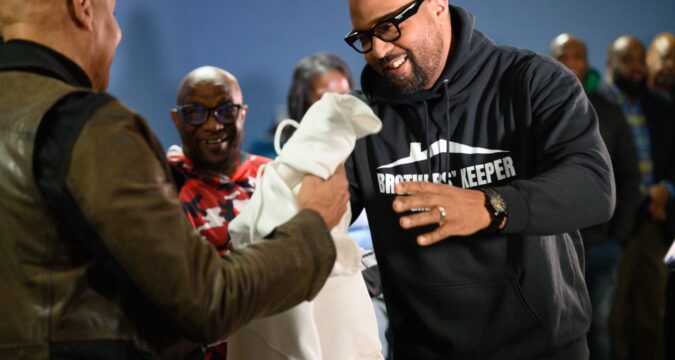
A new chapter, building for Gary’s Brothers’ Keeper homeless shelter
For Floyd Hobson III, the Brothers’ Keeper homeless shelter provided more than a roof over his head.
It gave him a road map to weather the rough times and gain self-reliance.
The front of the Brother’s Keeper shelter is shown as officials gather to announce the relocation of the facility to a new, larger location Tuesday, Feb. 3, 2026. (Kyle Telechan/for the Post-Tribune)
On Tuesday, Gary officials and local ministers celebrated a new chapter for the 40-year-old shelter.
Surrounded by twin beds inside the men’s shelter, Mayor Eddie Melton announced a $3 million investment to build a new shelter a block away in the 2100 block of Washington Street. The popular community garden, next to the existing shelter at 2120 Broadway, will be relocated by the new building, Melton said.
Initially, Melton said the city planned to use its remaining $700,000 in American Rescue Plan Act funding toward renovations at the facility.
After an assessment, Melton said a new facility that increases shelter beds from 25 to 50 emerged as the best option. Around Christmas, Melton said the city witnessed an increase of people sleeping on the streets and a lack of shelter space.
Brother’s Keeper men’s shelter director Isaac Mootye speaks as officials gather to announce the relocation of the organization to a new, larger facility on Tuesday, Feb. 3, 2026. (Kyle Telechan/for the Post-Tribune)
The city coupled its ARPA funding with $2.4 million in U.S. Department of Housing and Urban Development Community Block Grant money toward a new shelter building. To meet the grant demands, the new shelter needs to open by the end of October.
City Council President Linda Barnes-Caldwell, D-5th, authored the ordinance, expected to be approved Tuesday, that spells out the funding framework for the project.
“This will be a safe, dignified residential and resource center… a place of restoration, stability, and opportunity,” said Melton, who wore a black and white Brothers’ Keeper sweatshirt.
Construction on the modular building is expected to begin in June.
Officials bow their heads in prayer at Brother’s Keeper, a men’s shelter in Gary, as the relocation of the organization to a new, larger facility is announced Tuesday, Feb. 3, 2026. (Kyle Telechan/for the Post-Tribune)
“Hard times do not discriminate, folks. I think we know that each and every one of us go through job loss, through illness, through grief, through addiction, and through bad breaks. We can find ourselves struggling. And when that happens, a strong city should be there to support you,” Melton said.
He added the city hopes to raise an additional $1 million to furnish the shelter, provide a medical/wellness space, support job training efforts and enhance security, and build a landscaped courtyard.
Donations can be targeted for specific items such as “sponsoring a bed,” or funding the wellness area.
“For nearly 40 years, we have served this city with faith and limited resources,” said Isaac Mootye, Brothers’ Keeper executive director.
Pastor Mike Dotson, of the Washington Street Church of God, speaks as officials gather to announce the relocation of Brother’s Keeper men’s shelter to a new, larger location on Tuesday, Feb. 3, 2026. (Kyle Telechan/for the Post-Tribune)
“This new facility changes everything. It gives us the tools to not just house men, but to heal them. We are asking the community to join us in this final push to build the facility our residents deserve.”
Hobson, 39, said he graduated from West Side High School and received a degree in information technology from Indiana University in Bloomington.
He turned to Brothers’ Keeper in 2022 when his job prospects dried up after the COVID-19 pandemic.
“I couldn’t really find a job so I ended up falling into homelessness when I came back here to Gary,” he said.
Officials gather at Brother’s Keeper, a men’s shelter in Gary, as the relocation of the organization to a new, larger facility is announced Tuesday, Feb. 3, 2026. (Kyle Telechan/for the Post-Tribune)
“They have a nice system of, like, you know, helping individuals who come from a state (of) homelessness,” Hobson said.
“They are very adamant about making sure that you find employment, and you know, have something constructive to do with your time,” he said.
Hobson now has his own apartment, although he’s existing on part-time jobs and disability benefits while he’s still searching for full-time employment.
Pastor Mike Dotson, of the Washington Street Church of God, said the church purchased the shelter property in 1986 from Levin Tire.
Dotson credited the shelter’s inception to Rev. James Anderson, who founded it after living among homeless people on the streets of Chicago as part of a project when he attended the Moody Bible Institute.
He said Anderson launched the shelter with slightly more than $17,000.
Mary Edwards served as director for 32 years before Mootye.
As the press conference neared its end, the shelter residents sat in an adjoining room sipping coffee and drinking water. One man who sat alone declined to talk to a reporter.
Meanwhile, Melton pointed to a verse in Genesis which asks: “Am I my brother’s keeper?”
He responded:
“Today, we are going to answer that question. Yes, I am my brother’s keeper.”
To learn more or donate, see: https://legacyfdn.org/blog/2026/01/12/greater-gary-fund/
Carole Carlson is a freelance reporter for the Post-Tribune.

Column: Today Germany is showing the world the way
Contemporary Germany provides positive, sensible leadership for Europe and beyond.
Chancellor Friedrich Merz in recent months has enjoyed a series of successes, both rhetorical and diplomatic, that deserve more attention and praise than has to date been received. On Jan. 22, he delivered an important and insightful policy address at a meeting of international leaders in Davos, Switzerland.
Chancellor Merz emphasized that the international system of the past three decades, since the collapse of the Soviet Union and Soviet satellite bloc with the conclusion of the Cold War, has ended. The relatively stable successor system, led by the United States, where international law was relatively influential, has now also come to an end, in part because of the direct military invasion of Ukraine by Russia in 2022 and the resulting long, bloody, and so far indecisive war.
China, with impressive “strategic foresight,” has now become a great power, and more generally, we are entering an era of Great Power Politics.
Merz noted that “strength and force” have emerged as much more important than before, but do not have to dominate or even define future international relations. In his words, “We do not have to accept this new reality as fate.”
Appropriately, he emphasized the importance of responsible, far-sighted United States leadership in establishing NATO (North Atlantic Treaty Organization) soon after the end of World War II. He also stressed the European Union, which was also initially created through European and U.S. initiative to encourage economic development and security, primarily in this case by integrating West Germany with the rest of Western Europe.
Also skillfully, he complimented fresh attention devoted to Greenland and the vital importance of security for the “High North,” meaning the Arctic region.
This rhetorical tour de force caps extensive diplomatic activity over the past year. On July 17, the Kensington Treaty was signed by Merz and British Prime Minister Keir Starmer in London. The new treaty deepens existing cooperation in defense, migration, trade and other matters. Merz also called for greatly increased cooperation between the two nations and France.
This is a complement to the new Anglo-French agreement to coordinate nuclear weapons strategy. Historically, Britain has been closely tied to the United States in this regard.
Historically as well, France was distinctive for the pursuit of policies independent of Washington regarding nuclear weapons and other matters. Conflict reached a height of intensity during the Kennedy administration, when an assertive American president figuratively collided directly with imperious President Charles de Gaulle of France.
More recent years have brought low-key reconciliation across the Atlantic. In 2009, France rejoined NATO after dramatically departing the organization, and forcing NATO headquarters out of Paris, in 1966.
Chancellor Merz also scored a diplomatic success with his visit to President Trump at the White House on June 5. In contrast to a disastrous meeting earlier between President Volodymyr Zelensky of Ukraine and Trump, the session with Merz was calm, friendly and productive.
This is a result of the interpersonal skill, personal discipline and human insight of Germany’s head of government.
In concrete terms, Germany demonstrates sustained leadership of Europe and the larger Atlantic area alliance in forging a path to greater defense spending and greater support of Ukraine in the continuing brutal war with Russia.
Germany’s defense spending is projected to rise from 95 billion euros in fiscal 2025 to 162 billion euros in fiscal 2029, tangible funds used for hard realities.
Arthur I. Cyr is author of “After the Cold War – American Foreign Policy, Europe and Asia” (NYU Press and Palgrave/Macmillan). Contact acyr@carthage.edu
https://www.chicagotribune.com/2026/02/03/column-today-germany-is-showing-the-world-the-way/

PepsiCo plans price cuts to Doritos, Cheetos, Lay’s and Tostitos as demand for its drinks and snacks slips
PURCHASE, NY — PepsiCo is cutting prices on Lay’s, Doritos, Cheetos and Tostitos chips this year to win back customers exasperated by years of price hikes.
“For some consumers, low- and middle-income consumers, the biggest friction they have today in our category… is affordability,” PepsiCo Chairman and CEO Ramon Laguarta said Tuesday during a conference call with investors. “So we have been testing multiple ways to give them affordability.”
PepsiCo has leaned on price increases as the cost of packaging, ingredients and transportation rose. In the fourth quarter, PepsiCo hiked prices by 4.5% globally. Prices for PepsiCo beverages rose 7% in North America, while prices for the company’s snacks ticked up 1%.
That has pumped up revenue, including in the most recent quarter. PepsiCo said its net revenue rose 5.6% to $29.3 billion in the October-December period. That was higher than the $28.9 billion Wall Street was expecting, according to analysts polled by FactSet.
But the price hikes have also weakened demand, and consumers have begun swapping out brands they are familiar with for cheaper versions or cutting back altogether.
Volumes for PepsiCo snacks like Doritos and Cheetos fell 1% in the most recent quarter. North American beverage volumes dropped 4%. Globally, PepsiCo said beverage volumes rose 1% while food volumes fell 2%.
Laguarta said PepsiCo began testing price cuts in some markets in the second half of last year and found that they helped boost sales.
“Volume return is pretty good, and that’s what the category needs,” Laguarta said.
PepsiCo said in December that it planned to cut prices and trim nearly 20% of its product offerings as part of a deal with activist investor Elliott Investment Management.
Elliott, which took a $4 billion stake in PepsiCo in September, has been prodding the company’s board to make changes, saying PepsiCo was being hurt by slowing growth and lower profits in its North American food and beverage business.
In addition to price cuts, PepsiCo plans to accelerate the introduction of new offerings with simpler and healthier ingredients, including Gatorade Lower Sugar and Simply NKD Cheetos and Doritos, which contain no artificial flavors or colors. Lay’s potato chips will soon introduce versions made with avocado oil and olive oil.
Laguarta said younger households, in particular, love PepsiCo’s products but won’t shop the category unless the company offers versions without artificial ingredients.
PepsiCo is also responding to growing demand for functional ingredients like protein and fiber. Among its new products are Doritos Protein and Pepsi Prebiotic, which it said sold out within 30 hours after its introduction on Black Friday. PepsiCo said the soda will soon be available across the U.S.
Adjusted for one-time items, PepsiCo earned $2.26 per share in the fourth quarter. That was also higher than analysts expected. Net income attributable to the company of $2.54 billion, or $1.85 per share, is up from $1.52 billion, or $1.11 per share, during the same period last year.
Shares rose 2.5% in morning trading Tuesday.
https://www.chicagotribune.com/2026/02/03/price-cuts-lays-doritos-cheetos-tostitos/
Third Georgia Democrat Lawmaker Accused Of Pandemic Fraud
Third Georgia Democrat Lawmaker Accused Of Pandemic Fraud
A Democrat member of the Georgia House of Representatives was charged Friday with lying to obtain thousands of dollars in emergency pandemic unemployment assistance, according to federal prosecutors – the third Democrat in the Georgia House to be accused of doing so.
Dexter Sharper, 54, of Valdosta, is accused of falsely claiming he was unemployed while collecting benefits intended to those who had lost their jobs during the COVID-19 pandemic. Sharper allegedly received $13,825 in unemployment assistance between April 2020 and May 2021, while continuing to earn income from various sources.
“While many of his constituents and fellow citizens were losing jobs and desperately needed unemployment assistance during the pandemic, Representative Sharper allegedly pretended to be out of work to collect a share of unemployment benefits for himself,” said US Attorney Theodore S. Hertzberg.
Court records reveal that Sharper certified in 38 weekly filings that he was unemployed and was actively seeking employment. Investigators say he was lying and continued to receive weekly pay from the Georgia General Assembly, as well as from his party rental business – with additional income as a musician.
“These charges point to some disgraceful conduct at the highest level, which should shock and repulse every citizen”, said Georgia State Inspector General Nigel Lange. “The alleged activities describe a disgusting abuse by an elected official who appeared to trade his integrity for money destined for those in need. Shameful.”
Two other Democratic state reps have been indicted on similar charges related to pandemic unemployment fraud;
In December, Rep. Sharon Henderson was charged with two counts of theft of government funds and 10 counts of making false statements, resulting in her suspension last week by Gov. Brian Kemp.
Meanwhile, Rep. Karen Bennett resigned from office two days before she was charged and pleaded guilty to making false statements earlier in January.
Birds of a feather, eh?
Tyler Durden
Tue, 02/03/2026 – 16:40
https://www.zerohedge.com/political/third-georgia-democrat-lawmaker-accused-pandemic-fraud

US shoots down Iranian drone that ‘aggressively’ approached an aircraft carrier, military says
WASHINGTON — A U.S. Navy fighter jet shot down an Iranian drone that was approaching the aircraft carrier USS Abraham Lincoln in the Arabian Sea, U.S. Central Command said Tuesday, threatening to ramp up tensions as the Trump administration warns of possible military action to get Iran to the negotiating table.
The drone “aggressively approached” the aircraft carrier with “unclear intent” and kept flying toward it “despite de-escalatory measures taken by U.S. forces operating in international waters,” Central Command spokesman Capt. Tim Hawkins said in a statement.
The shootdown occurred within hours of Iranian forces harassing a U.S.-flagged and U.S.-crewed merchant vessel that was sailing in the Strait of Hormuz, the American military said.
The developments could escalate the heightened tensions between the longtime adversaries as President Donald Trump has threatened to use military action first over Iran’s bloody crackdown on nationwide protests and then to try to get the country to make a deal over its nuclear program. Trump’s Republican administration has built up military forces in the region, sending the aircraft carrier, guided-missile destroyers, air defense assets and more to supplement its presence.
The Shahed-139 drone was shot down by an F-35C fighter jet from the Lincoln, which was sailing about 500 miles (800 kilometers) from Iran’s southern coast, Hawkins said. No American troops were harmed, and no U.S. equipment was damaged, the military’s statement noted.
Iranian state media reported that Iran’s paramilitary Revolutionary Guard is investigating the “interruption” of the drone. Semi-official Tasnim news agency posted on its Telegram that before the footage cut out, the drone was able to successfully transfer the images it took back to Iran.
US says Iran also harassed a merchant vessel
After the shootdown, Revolutionary Guard forces harassed the merchant vessel Stena Imperative, the U.S. military said. Two boats and an Iranian Mohajer drone approached the ship “at high speeds and threatened to board and seize the tanker,” Hawkins’ statement said.
The destroyer USS McFaul responded and escorted the Stena Imperative “with defensive air support from the U.S. Air Force,” the statement said, adding that the merchant vessel was now sailing safely.
Talks between special envoy Steve Witkoff and Iranian officials were still planned, White House press secretary Karoline Leavitt told reporters.
“President Trump is always wanting to pursue diplomacy first, but obviously it takes two to tango,” Leavitt said after the incidents. She added, “As always, though, of course, the president has a range of options on the table with respect to Iran.”
Iranian President Masoud Pezeshkian said Tuesday that he instructed the country’s foreign minister to “pursue fair and equitable negotiations” with the U.S., marking one of the first clear signs from Tehran that it wants to try to negotiate with Washington.
Iranian Foreign Minister Abbas Araghchi posted on Telegram that he had spoken with his counterparts in Kuwait, Qatar, Turkey and Oman regarding regional developments and the importance of protecting “regional stability and security.”
Tensions began to rise again between the U.S. and Iran as the Islamic Republic spent weeks quelling protests that began in late December against growing economic instability before broadening into a challenge to the country’s ruling theocracy.
Trump had promised in early January to “rescue” Iranians from their government’s protest crackdown before starting to pressure Tehran again to make a deal over its nuclear program. That is even as the Republican president insists Iranian nuclear sites were “obliterated” in U.S. strikes in June.
“We have talks going on with Iran. We’ll see how it all works out,” Trump told reporters Monday. Asked what his threshold was for military action against Iran, he declined to elaborate.
“I’d like to see a deal negotiated,” Trump said. “Right now, we’re talking to them, we’re talking to Iran, and if we could work something out, that’d be great. And if we can’t, probably bad things would happen.”
Turkey had been working behind the scenes to make the talks happen there later this week as Witkoff is traveling in the region. A Turkish official later said the location of talks was uncertain but that Turkey was ready to support the process.
US military builds up presence in the region
Meanwhile, the U.S. military has been moving a growing number of assets into the region over the past several weeks, including the Lincoln and several destroyers, which arrived last week.
The carrier strike group, which brought roughly 5,700 additional service members, joined three destroyers and three littoral combat ships that were already in the region.
Analysts of flight-tracking data also have noticed dozens of U.S. military cargo planes heading to the region.
The activity is similar to last year when the U.S. moved in air defense hardware, like a Patriot missile system, in anticipation of an Iranian counterattack following the U.S. bombing three key nuclear sites. Iran launched more than a dozen missiles at Al Udeid Air Base in Qatar days after the strikes.
The U.S. has several bases in the Middle East, including Al Udeid, which hosts thousands of American troops and is the forward headquarters for U.S. Central Command.
Amiri reported from New York. Associated Press writer Aamer Madhani contributed to this report.
https://www.chicagotribune.com/2026/02/03/us-shoots-down-iranian-drone/

Indiana firing squad bills fail to advance into second half of session
Two bills pertaining to firing squad executions for death row inmates won’t advance further this session unless the authors propose them as amendments to other bills.
Senate Bill 11 was heard in committee but never voted on and didn’t advance to the Senate floor. House Bill 1119 didn’t have enough votes on the final vote by the House.
Indiana University Maurer School of Law professor Jody Madeira said she was surprised that neither of the bills advanced, especially considering that Utah, Mississippi, Oklahoma, Idaho and South Carolina allow for firing squad executions.
“I think they were just unpalatable to state legislators,” Madeira said. “I’m actually a little surprised they failed because we have these provisions in other states.”
Senate Bill 11, filed by State Sen. Michael Young, would allow for firing squad executions if medications for lethal injection can’t be obtained or the inmate chooses death by firing squad at least 30 days before the scheduled execution date.
Under Senate Bill 11, the firing squad would be made up of five Department of Correction officers selected by the warden. The firing squad members’ identity would be kept confidential and not subject to discovery in civil or criminal lawsuits, according to the bill.
At the time of execution, four members will have guns with live ammunition and one member will have a gun with blank ammunition. The guns would be loaded without the members knowing who has what kind of ammunition, according to Senate Bill 11.
Young, R-Indianapolis, said in a statement that he filed the bill because it can cost up to $300,000 per dose of pentobarbital, which is used to conduct a lethal injection, and “often expire before they can be used.”
“Securing the drugs to conduct lethal injections is costly and time consuming,” Young said.
Senate Bill 11 was discussed in committee, but never voted on and didn’t make it to the Senate floor.
House Bill 1119, authored by State Rep. Jim Lucas, R-Seymour, would’ve allowed for a jail warden to select three people to carry out a firing squad execution and each shooter would have live ammunition. The identities of the firing squad members would also be confidential amid any litigation, according to the bill.
House Bill 1119 had been amended by the House to remove nitrogen hypoxia as an execution option, mental health screening requirements for members of the execution team, and to allow at least one member of the media to watch the execution.
Lucas said capital punishment has been a part of Indiana’s history since before it was established as a state in 1816. Capital punishment has evolved from hanging, to electric chair, to lethal injection, Lucas said, and now states are considering firing squads.
“All House Bill 1119 does is evolve, like we have for centuries, and provides another method to carry out capital punishment in the form of a firing squad,” Lucas said. “I understand this is a sensitive topic. The actual issue is not the death penalty … this issue right now is amending existing Indiana law to include another method.”
Lucas said he filed the bill after learning about the cost of lethal injection.
Gov. Mike Braun disclosed in June that Indiana officials spent $1.175 million on lethal injection doses over the past year — $600,000 of which was spent on drugs that expired before use. The cost has been between $275,000 and $300,000 per dose, according to the Indiana Capital Chronicle.
State Rep. Matt Pierce, D-Bloomington, said the bill was amended from its initial premise that lethal injection drugs are expensive and hard to procure to allow for the Indiana Department of Correction to decide if they want to use lethal injection or firing squad.
“I would hope that our society has advanced a bit since our state was founded and would find a firing squad to be a barbaric way to perform an execution,” Pierce said. “We should be asking ourselves do we really think that our criminal justice system … is so perfect that it can perform an execution and not risk killing an innocent person.”
State Rep. Robert Morris, R-Fort Wayne, said using a firing squad as a form of execution would be “taking a step backwards.” Morris said there are organizations throughout the country that have been able to prove death row inmates were wrongfully convicted.
“I’m against every means of capital punishment until this body can debate it,” Morris said.
State Rep. Vernon Smith, D-Gary, said he found the bill “deeply troubling,” because shooting by firing squad “is a brutal, painful way to die.”
House Bill 1119 failed on a third reading vote last week. The final vote was 48-47, so the bill failed for lack of constitutional majority.
In total, 19 Republicans joined all present Democrats to vote against the bill. State Reps. Hal Slager, R-Schererville, Julie Olthoff, R-Crown Point, and Ed Soliday, R-Valparaiso, voted against the bill, while State Rep. Mike Aylesworth, R-Heborn, voted in favor of the bill.
State Rep. Ragen Hatcher, D-Gary, released a statement after the vote that, as a former prosecutor, she was glad the bill failed.
“It has no place in our justice system, which is centered on a mutual respect for human life. Our justice system isn’t about retribution,” Hatcher said.
The death penalty is “a flawed, irrevocable practice,” as “race, socioeconomic class and the skill of an attorney” impact each conviction, Hatcher said. If it had passed, the bill would have expedited executions, she said.
“Our justice system isn’t perfect. The system isn’t immune to bias or mistakes, and once a life is taken it can’t be returned. Hundreds of individuals sentenced to death have (been) exonerated with additional DNA testing or with new evidence,” Hatcher said. “Indiana corrections should be about justice and rehabilitation, not about finding the cheapest, most efficient, most painful way for the state to kill someone.”
As the session continues through the end of the month, Madeira said it’s unlikely that either of the bills will be added to another bill as an amendment because that would “draw bipartisan opposition.”

Nazareth grad Julian Love representing La Grange Park in Super Bowl
When the Seattle Seahawks take on the New England Patriots on Sunday in the Super Bowl in the San Francisco Bay area, people in the La Grange Park area will have a local rooting interest.
Julian Love, who graduated from Nazareth Academy in La Grange Park in 2016, will be taking the field as a starting safety for the Seahawks, a key part of a defense that allowed the fewest points in the NFL during the 2025 season and a team that finished the season at the top of the NFC on its way to the Super Bowl berth.
“The Nazareth Academy Roadrunner community will be wearing Seahawk green next weekend as we cheer on Julian Love,” school officials said in a news release. “No stranger to making Naz history, Julian is the first Nazareth Academy alum to play in the NFL Super Bowl.”
He is one of three Roadrunners who played in the NFL this year, joining Minnesota Vikings quarterback JJ McCarthy and San Francisco 49ers defensive tackle CJ West.
According to the release, Love, who grew up in Westchester, and his wife Julia, also a Nazareth alum who graduated in 2015, live in La Grange Park when they are not in Seattle.
The school called Love “a standout student-athlete for Nazareth Academy.” A two-time State Champion in football, he earned All Conference honors in the ESCC in 2014 and 2015. In 2015 he was a member of the Chicago Tribune All State Team. In addition to football, Julian was a 3-year member of the track and field team, where he earned several conference medals, and was a participant in the basketball, baseball and theater programs. He also was a Campus Ministry Eucharistic Minister and high achieving student in the classroom.
Julian Love, a 2016 graduate of Nazareth Academy and safety for the Seattle Seahawks, waves to the crowd during the 2024. La Grange Pet Parade. (Hank Beckman/Pioneer Press)
Love’s connection to Nazareth Academy continues amid his NFL career, the school said, through the Julian Love Scholarship, which provides annual financial assistance to a student of color through Nazareth’s Named Scholarship Program. He also runs a free youth sports camp every summer on the Nazareth campus.
In 2023, Nazareth Academy honored Love by retiring his No. 20 Roadrunner football jersey and inducting him into the school’s Athletic Hall of Fame.
Love is showcasing his Hall of Fame credentials as a member of the Seahawks. After moving to the team after spending his first four years in the NFL with the New York Giants, he has earned a string of accolades, including being named the team’s 2025 Steve Largent Award Winner, honored for his spirit, dedication, and integrity as well as the team’s Walter Payton Man of the Year candidate.
He became the first Seahawks player since 2000 to record 10 tackles, a sack, and a blocked field goal in a single game vs. San Francisco.
Seattle Seahawks safety Julian Love reacts to tackling Minnesota Vikings tight end T.J. Hockenson during an NFL football game Sunday, Dec. 22, 2024, in Seattle. (AP Photo/Lindsey Wasson)
He also was a 2023 Pro Bowl Selection, his first career Pro Bowl honor and the Week 15 NFC Defensive Player of the Week, recognized for his performance, which included two interceptions in a single game. In 2024 he made the NFL Top 100, ranked among the league’s best players.
During his college career at the University of Notre Dame, Love helped the team to an undefeated regular season and a College Football Playoff berth his junior season. He was a freshman All-American, and in his final season was a finalist for the Jim Thorpe award for Best Defensive Back in the country, and was named a Consensus All American. In just 3 seasons Julian broke the All Time Pass Break Up record at Notre Dame previously held since 1971.
https://www.chicagotribune.com/2026/02/03/julian-love-nazareth-super-bowl/

Clintons finalize agreement to testify in House Epstein probe, bowing to threat of contempt vote
WASHINGTON — Former President Bill Clinton and former Secretary of State Hillary Clinton finalized an agreement with House Republicans Tuesday to testify in a House investigation into Jeffrey Epstein this month, bowing to the threat of a contempt of Congress vote against them.
Hillary Clinton will testify before the House Oversight Committee on Feb. 26 and Bill Clinton will appear on Feb. 27. It will mark the first time that lawmakers have compelled a former president to testify.
The arrangement comes after months of negotiating between the two sides as Republicans sought to make the Clintons, both Democrats, a focal point in a House committee’s investigation into Epstein, a convicted sex offender who killed himself in a New York jail cell in 2019, and Ghislaine Maxwell, his former girlfriend.
“We look forward to now questioning the Clintons as part of our investigation into the horrific crimes of Epstein and Maxwell, to deliver transparency and accountability for the American people and for survivors,” Rep. James Comer, the chair of the House Oversight Committee, said in a statement.
The negotiation with the Clintons
For months, the Clintons resisted subpoenas from the committee, but House Republicans — with support from a few Democrats — had advanced criminal contempt of Congress charges to a potential vote this week. It threatened the Clintons with the potential for substantial fines and even prison time if they had been convicted.
House Speaker Mike Johnson said Tuesday that any effort to hold them in contempt of Congress were “on pause.”
Even as the Clintons bowed to the pressure, the negotiating between GOP lawmakers and attorneys for the Clintons was marked by distrust as they wrangled over the details of the deposition. They agreed to have the closed-door depositions transcribed and recorded on video, Comer said.
The belligerence is likely to only grow as Republicans relish the opportunity to grill longtime political foes under oath.
Comer told The Associated Press that Republicans, in their inquiry with the Clintons, were “trying to figure out how Jeffrey Epstein was able to surround himself with all these rich and powerful people.”
Comer, a Kentucky Republican, also said that the Clintons had expressed a desire to make the proceedings public, but that he would insist on closed-door testimony with a later release of a transcript of the interviews. He added that he was open to holding a later public hearing if the Clintons wanted it.
How Clinton knew Epstein
Clinton, like a number of other high-powered men including President Donald Trump, had a well-documented relationship with Epstein in the late 1990s and early 2000s. Neither Trump nor Clinton has been credibly accused of wrongdoing in their interactions with the late financier.
Both Clintons have said they had no knowledge that Epstein was sexually abusing underage girls before prosecutors brought charges against him.
The Clintons argued the subpoenas for their testimony were invalid and offered to submit sworn declarations on their limited knowledge of Epstein’s crimes. But as Comer threatened to proceed with contempt of Congress charges, they began looking for an off-ramp.
Both Clintons have remained highly critical of how Comer has handled the Epstein investigation and argue that he is more focused on bringing them in for testimony rather than holding the Trump administration accountable for how it has handled the release of its files on Epstein.
However, as Comer advanced the contempt charges out of the House Oversight Committee last month, he found a number of Democrats willing to help. A younger generation of more progressive Democrats showed they had few connections with the Clintons, who led the Democratic Party for decades, and were more eager to show voters that they would stand for transparency in the Epstein investigation.
Nine Democrats out of 21 on the Oversight panel voted to advance charges against Bill Clinton, and three Democrats joined with Republicans to support the charges against Hillary Clinton. As the vote loomed this week, House Democratic leaders also made it clear they would not expend much political capital to rally votes against the contempt resolutions.
That left the Clintons with little choice but to agree to testify or face one of the most severe punishments Congress can give.
https://www.chicagotribune.com/2026/02/03/clintons-testify-house-epstein-probe/