Category: News
Afternoon Briefing: Harvey City Council deadlocks, fails to select acting mayor
Good afternoon, Chicago.
A special City Council meeting called following the death of Harvey Mayor Christopher Clark ended without an acting mayor being appointed after no alderperson was able to secure support from a majority of the council.
Both 1st Ward Ald. Shirley Drewenski and 5th Ward Ald. Dominique Randle-El were nominated for acting mayor, but the City Council split down the middle.
Here’s what else is happening today. And remember, for the latest breaking news in Chicago, visit chicagotribune.com/latest-headlines and sign up to get our alerts on all your devices.
Subscribe to more newsletters | Asking Eric | Horoscopes | Puzzles & Games | Today in History
Workers continue their construction of Northwestern University’s Ryan Field in Evanston on Nov. 21, 2025. (Dominic Di Palermo/Chicago Tribune)
Northwestern will open the new Ryan Field on Oct. 2 vs. Penn State
The Friday night game will be played 100 years to the day of the first football game at the original stadium, then known as Northwestern Stadium. Read more here.
More top news stories:
Prosecutors no longer oppose release of Border Patrol bodycam in Marimar Martínez case
Mayor Brandon Johnson says up to Cook County state’s attorney to prosecute federal agents
Ken Griffin, founder and CEO of the multinational hedge fund Citadel, is shown on Nov. 5, 2014, in Chicago. (E. Jason Wambsgans/Chicago Tribune)
Ken Griffin got rich in Chicago. He thinks Florida is the future.
Billionaires Ken Griffin and Stephen M. Ross planned to announce a campaign pitching the so-called Gold Coast region of Florida as one of the best areas in the U.S. to build a company. Read more here.
More top business stories:
Drive-thru Dutch Bros Coffee may be coming to Oswego
Palos Park 6-bedroom with circular driveway and sunroom: $1.8M
Sharks center MacKlin Celebrini (71) pushes Blackhawks center Connor Bedard onto the ice during the first period, on Feb. 2, 2026, at the United Center. (Armando L. Sanchez/Chicago Tribune)
Chicago Blackhawks cruise to 6-3 win to snap a 5-game skid in final home game before NHL’s Olympic freeze
The Hawks (22-25-9) defeated the Sharks 6-3 in the final home game before the NHL Olympic freeze. It was an urgent win for the home team, which snapped a five-game losing streak. Read more here.
More top sports stories:
NBA trade tracker: Why do betting lines favor Chicago Bulls in a Giannis Antetokounmpo trade?
NFL coaching and GM tracker: Giants to hire ex-Bears coach Matt Nagy as offensive coordinator
Uncle Remus Saucy Fried Chicken co-founder Gus Rickette, 99, at his home in the Austin neighborhood of Chicago on Jan. 29, 2026. (E. Jason Wambsgans/Chicago Tribune)
Food icon: Gus Rickette of Uncle Remus Saucy Fried Chicken turns 100 this year in Chicago
The legend behind the Uncle Remus restaurants turns 100 years old this year. He and his late wife, Mary Rickette, co-founded the Black-owned house of fried chicken and mild sauce in the Austin neighborhood on the West Side, where he still lives. Read more here.
More top Eat. Watch. Do. stories:
Review: There’s quite a monster at the center of ‘Little Shop of Horrors’ at Marriott Theatre
Invictus Theatre postpones show as artistic director steps away
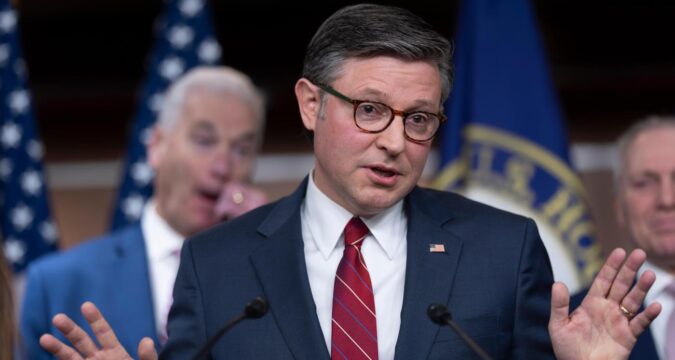
Speaker of the House Mike Johnson, R-La., gestures as he meets with reporters ahead of a key procedural vote to end the partial government shutdown, at the Capitol in Washington, Feb. 3, 2026. (AP Photo/J. Scott Applewhite)
House passes bill to end the partial government shutdown, sending the measure to Trump
Speaker Mike Johnson needed near-unanimous support from his Republican conference to proceed to a final vote. He narrowly got it during a procedural vote that was held open for nearly an hour as leaders worked to gain support from a handful of GOP lawmakers who were trying to advance other priorities unrelated to the funding measure. Read more here.
More top stories from around the world:
Trump demands $1 billion from Harvard as a prolonged standoff appears to deepen
Don Lemon says a dozen agents were sent to arrest him even though he offered to turn himself in
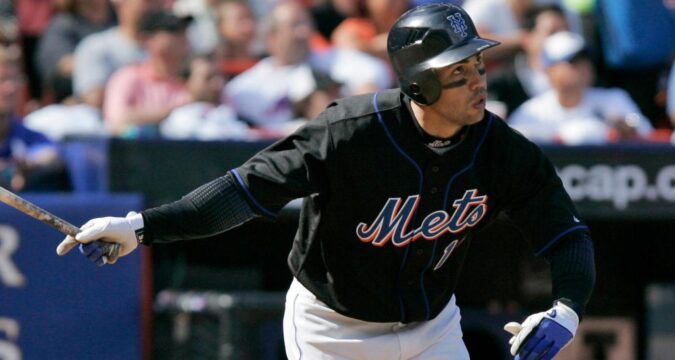
Beltrán llevará gorra de Mets en placa del Salón de la Fama. Jones, de Bravos, y Kent, de Gigantes
COOPERSTOWN, Nueva York, EE.UU. (AP) — Carlos Beltrán tendrá una gorra de los Mets de Nueva York en su placa del Salón de la Fama, Andruw Jones llevará el logo de los Bravos de Atlanta y Jeff Kent lucirá una insignia de los Gigantes de San Francisco.
El salón anunció sus decisiones el martes, dos semanas después de que Beltrán y Jones fueran elegidos por la Asociación de Escritores de Béisbol de América. Kent fue votado a Cooperstown en diciembre por el comité de la era contemporánea.
Las exaltaciones se llevarán a cabo el 26 de julio.
Beltrán, un jardinero central que fue nueve veces All-Star, bateó para .279 con 435 jonrones y 1.587 carreras impulsadas a lo largo de 20 temporadas con Kansas City (1999-2004), Houston (2004, ’17), los Mets (2005-11), San Francisco (2011), San Luis (2012-13), los Yankees de Nueva York (2014-16) y Texas (2016). Obtuvo cinco selecciones al All-Star y tres Guantes de Oro con los Mets.
“Con los Mets, experimenté mi mayor crecimiento y éxito individual. Me honra que mi placa del Salón de la Fama lleve el logotipo de los Mets”, dijo Beltrán en un comunicado emitido por el Salón.
Jones bateó para .254 con 434 jonrones, 1.289 carreras impulsadas y 152 bases robadas en 17 temporadas con Atlanta (1996-2007), los Dodgers de Los Ángeles (2008), Texas (2009), los Medias Blancas de Chicago (2010) y los Yankees (2011-12). El jardinero central terminó su carrera con los Tohoku Rakuten Golden Eagles de la Liga del Pacífico de Japón de 2013-14. Obtuvo sus cinco selecciones al All-Star y sus 10 Guantes de Oro con los Bravos.
“Los Bravos fueron el equipo que me dio mi primera oportunidad de perseguir el sueño que quería desde que era un niño. Estoy orgulloso de llevar la ‘A’ en mi placa”, indicó Jones.
Kent, un segunda base que fue cinco veces All-Star, bateó para .290 con 377 jonrones y 1.518 carreras impulsadas a lo largo de 17 temporadas con Toronto (1992), los Mets de Nueva York (1992-96), Cleveland (1996), San Francisco (1997-2002), Houston (2003-04) y los Dodgers de Los Ángeles (2005-08). Sus seis temporadas con los Gigantes fueron las más largas con un equipo de las mayores.
“Cada una de las paradas a lo largo de mi carrera fue importante para mí, pero fue con los Gigantes donde tuve más éxito y pasé más tiempo durante mi carrera”, señaló Kent.
___
Deportes MLB: https://apnews.com/hub/deportes

Bradshaw: Mastering the game of college success
It’s been a wild year in college admissions. The chaos of shifting priorities, test-optional policies, AI-generated essays, and stressed-out high school seniors created a climate where only the most informed and adaptable students could navigate the process with any real success.
Let me be blunt: if you’re not deep into this world, if you’re not studying the system the way an investor studies the market, you’ll miss it entirely.
That’s why my advice to students, and to any parent reading this who still believes college admissions is about “just getting good grades,” is simple: you need a strategy. It starts not with gimmicks or resume padding, but with a fundamental understanding of how learning actually works — and how to work within the system.
Grades aren’t everything — mastery is
At the core of every successful college application is real subject mastery. Not artificial GPA padding. Not teacher-pleasing. Actual understanding.
Too many students chase the “A” without absorbing the material. They cram for tests, memorize formulas, and burn through quizlet decks like it’s a game of flashcard roulette. But this kind of shallow learning collapses under pressure — especially at the elite college level, where professors don’t care what your high school GPA was. They care if you can think.
So my first principle is this: study the fundamentals. If you’re in math, know the theorems. If you’re in history, understand the causes, not just the dates. In science, be able to explain it without the textbook. And in English, know what the author is doing — not just what happened on page 74.
That’s the kind of learning that sticks. That’s what helps you on AP exams, in interviews, and in the real world.
Teachers are people, not robots
Second principle: learn your teacher. This is a people skill — underdeveloped in the age of screens and AI, but as important as ever. Every teacher has a pattern. A style. A set of quirks. Some are strict graders. Some reward creativity. Others expect students to parrot their notes word-for-word on the exam.
If you’re clever, you’ll get a sense of what they’re really looking for. Sit up front. Stay after class occasionally. Ask them about something they mentioned in the lecture. You’ll pick up signals. Their expectations are almost always hidden in plain sight. Office hours aren’t just for students in trouble — they’re for students who want to succeed.
The truth is, much of high school is a soft skills game. Can you listen well? Can you anticipate what your teacher wants? Can you tailor your work while still learning what you care about?
Dual learning tracks: The grade vs. the subject
That brings me to one of the best strategies I ever used as a student. I ran a dual track. On one side: what I needed to know to get the “A.” On the other: what I wanted to know about the subject. I treated the exam as a performance, and the subject as a lifelong conversation. You have to know when to shift between the two.
This is where time allocation becomes critical. If you try to master everything, you’ll burn out. But if you focus only on the grade, you risk becoming shallow and bored. The balance is key. Learn to be strategic, not just hard-working.
And remember: college is full of overachievers who all got straight A’s. The ones who stand out are those who can think independently—and speak confidently about what they love.
Study groups and the power of debate
Want to test what you really know? Try explaining it to someone else. Or better yet, argue about it.
That’s the power of a good study group. Not just for mutual support or last-minute cramming, but for intellectual sparring. Iron sharpens iron. You’ll see gaps in your thinking. You’ll hear someone else’s perspective and realize you missed the point. You’ll become a better thinker just by listening to how others process the same material.
Make it a habit: once a week, get three or four serious students together. Set an agenda. Rotate who leads. Challenge each other.
AI: The most fanatical study partner you’ll ever meet
Finally, let’s talk about ChatGPT and other AI tools. Used properly, AI can be your secret weapon. It’s not just a calculator or a grammar checker; it’s a tutor that never sleeps.
But here’s the key: you have to ask it the right questions. Don’t say, “Explain chemistry.” Say, “I’m confused about electron orbitals in the Bohr model. Can you walk me through it step by step?” The more detail you give, the better it performs. It wants to succeed. Feed it specific problems, not vague prompts.
Better yet, combine all these tools. Use AI to prep your questions for your study group. Use it to summarize lecture notes. Use it to simulate your teacher’s style and give you feedback on your essay before you turn it in.
The game has changed. Colleges may not even know what they’re looking for — but students who think critically, master fundamentals, study people, and use every tool at their disposal will always have the edge.
The trick isn’t being perfect. It’s being prepared. And a little clever.
Gerald Bradshaw is an international college admissions consultant with Bradshaw College Consulting in Crown Point.
https://www.chicagotribune.com/2026/02/03/bradshaw-mastering-the-game-of-college-success/
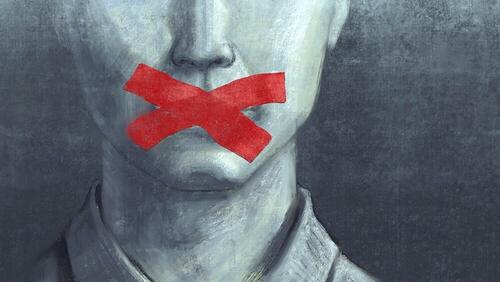
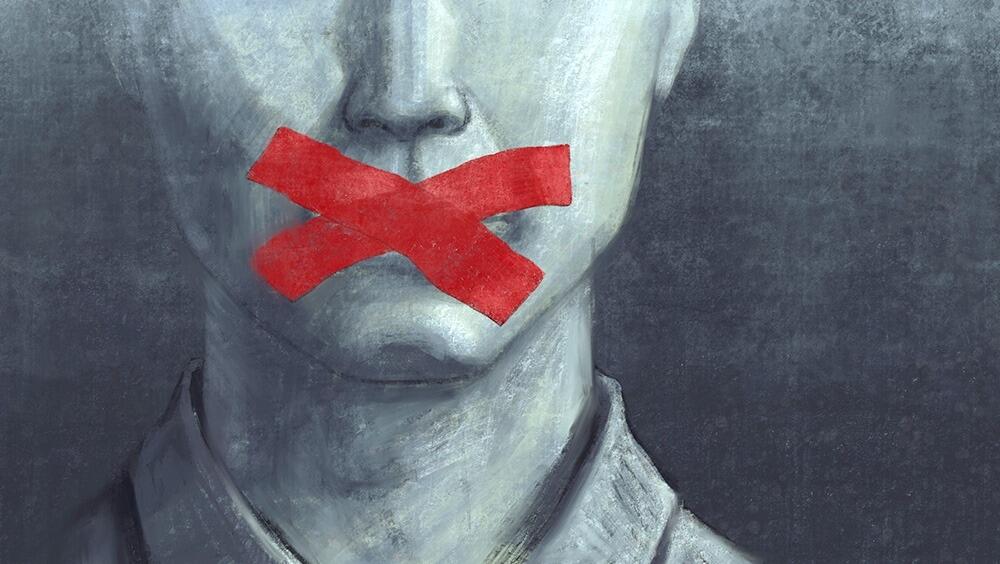
Leftist Censors Cry About Censorship
Leftist Censors Cry About Censorship
Authored by J.B. Shurk via American Thinker),
Perhaps the most discouraging condition of the modern age is the absolute breakdown in communication among members of society. It once seemed reasonable to expect that the Internet and social media might aid in our understanding of each other. Instead, online forums are filled with people who speak the same language but interpret words entirely differently.
With the arrest of former CNN commentator Don Lemon for allegedly violating the religious rights of worshipers in Minneapolis, Democrats and the corporate news media have universally condemned Attorney General Pam Bondi for somehow “infringing” upon Lemon’s First Amendment rights as a so-called “journalist.” They intentionally ignore how Lemon joined others in storming a church, intimidating congregants, and causing emotional harm to those worshipers (including children) who understandably felt as if they were under attack. Lemon and his apologists continue to defend the organized raid of a Christian service as some kind of “protest” and describe the unwanted intruders as “protesters.” For those who were made to suffer through the invasion, however, their ordeal felt like an act of terrorism perpetrated by terrorists whose intent was to scare those assembled to worship.
When society can’t agree upon the difference between “protest” and “terrorism,” we have a serious problem. We have seen this dilemma play out all over the Minneapolis area recently. Democrat officials describe federal agents conducting lawful arrests as “terrorists” and “Nazis” and defend criminal illegal aliens as “victims.” Trained mobs of leftist agitators who intentionally obstruct the professional duties of law enforcement officers insist on calling themselves “legal observers” and “peaceful protesters.” When Democrat officials and members of the corporate news media describe people who commit crimes as “legal” and “peaceful,” it is impossible for society to share any common respect for the law.
As a society, we have been debating government attacks on free speech and government-engineered censorship with increased frequency at least since the presidency of Barack Obama.
Obama was the first modern American president to really go on offense against what he called “fake news,” “misinformation,” and “disinformation.” He started the pressure campaign on Silicon Valley’s tech titans to “police” their social media sites for “false” information. While many of us vocally objected to this incipient collective of government and industry “experts” deciding for the rest of us what is “true,” Obama and his supporters insisted that “incorrect” information constituted an unacceptable national security threat.
But how can a society that disagrees about the distinctions between “protest” and “terrorism” or “criminal obstruction” and “legal observation” possibly decipher what is “correct” and “incorrect” information? When people with power accord themselves the additional power to declare what is “true,” a viewpoint monopoly inevitably rises to crush dissent. For free speech to function in any authentic form, the public sphere must remain a space where all information — whether true or false — is vigorously debated.
Otherwise, all we have is State-sanctioned dogma — or what the quietly dissenting members of communist societies once derisively referred to as “political correctness.” In a distressing sign of collapsing respect for free speech across the West, too many nations today actually police citizens’ speech in order to ensure that their thoughts and words comply with narratives constructed and deemed “correct” by the government. They do this despite having emerged victorious from a twentieth-century Cold War that routinely distinguished Western respect for freedom of speech from the suffocating Iron Curtain of the Soviet Union’s speech police.
The divisions within society have become so great that Democrats and Republicans in the United States can’t even agree about what should be protected as inviolable free speech. Conservatives and other non-leftists have felt the sting of censorship since Obama’s presidency. Without explicit warnings or explanations, Big Tech companies began removing online advertisers and other sources of revenue from conservative websites. Social media companies covertly limited the visibility (and therefore influence) of conservative writers. Search engines relegated popular conservative publications to obscurity by burying their keyword matches many pages back in relevant hits. Without any official announcements from government or corporate authorities, it became clear that conservative voices were being targeted for elimination.
Since Obama’s presidency, that cancerous viewpoint discrimination metastasized in many directions: Banks closed the accounts of conservative publications and institutions. Web hosts refused to support conservative websites. After the 2020 election, the titans of Big Tech conspired to censor any Americans who argued that various forms of electoral fraud had handed Joe Biden the presidency. The Biden administration piggybacked on Silicon Valley’s embrace of censorship by working with social media companies to censor anyone who disagreed with the government’s COVID policies. That censorship became so pronounced that even medical research was targeted for deletion under the pretense that concerns for “public health” and “national security” justified the censorship of scientific debate. As censorship of the 2020 election and COVID became more widespread, those who were doing the censoring kept pushing the envelope. For a while, it really looked as if Democrat-embraced narratives concerning everything from man-made “global warming” to “transgenderism” would be declared sacrosanct and too “politically correct” for Americans to debate. Feeling emboldened to declare “public truths,” the Biden administration turbocharged Obama’s initial directive for social media censorship by building the architecture for a “Disinformation Governance Board” whose purpose was unapologetically directed toward limiting conservative points of view.
For Republicans, conservatives, and other non-leftists, Democrats’ collusion with Silicon Valley to censor information deemed “untrue” constituted an unparalleled attack on Americans’ free speech. As with so many other conflicts in society today, ordinary Democrats didn’t recognize this threat at all. When they did acknowledge that conservative voices were being silenced, many immediately justified those infringements on Americans’ natural rights by repeating Obama’s original propaganda that “fake news,” “misinformation,” “disinformation,” and even simply information that fellow leftists judged as “harmful” to society deserved no First Amendment protections.
Perhaps more troubling, even as Democrats argue for mass censorship, they portray themselves as victims of censorship. When parents insist on protecting their children from “transgender” indoctrination, sexually explicit guides encouraging minors to engage in adult activities, and outright pornography, Democrats pretend that parental supervision violates free speech. When the FCC reprimands Jimmy Kimmel for lying to the American public by falsely blaming Charlie Kirk’s assassination on President Trump’s MAGA movement (instead of a leftist in a gay relationship with a “trans” furry and someone who allegedly disparaged Charlie’s Christian faith as a form of “hate”), Democrats pretend that Kimmel (who enjoys more free speech than almost anyone in America) is being censored. When Don Lemon joins a gang of leftist agitators to trespass inside a church, disrupt worship services, and terrorize those assembled to commune with God, the corporate news media pretend that the person doing the terrorizing is somehow a “victim” of government attacks on the First Amendment.
Right now in America censorship of non-leftists is justified, while any pushback against leftist orthodoxy is falsely portrayed as censorship. If this corrosive double standard weren’t already obvious, “comedians” such as Stephen Colbert make it more glaringly so each day. Just last week Colbert “joked” that federal agents who enforce America’s immigration laws are worse than Nazi Germany’s SS troops. Unlike members of that Nazi paramilitary organization, who would have surely imprisoned or murdered Colbert before he even had a chance to speak, ICE and Border Patrol agents put their lives on the line every day to arrest pedophiles, rapists, and murderers illegally residing in the United States. Colbert calls those law enforcement officers “Nazis,” and he will continue to enjoy the privilege of expressing his vile viewpoints on television.
However, when ordinary conservatives are censored online, Colbert says nothing. The powerful play “victim,” while the powerless are targeted and silenced.
We may speak the same language, but our words don’t mean the same things.
Tyler Durden
Tue, 02/03/2026 – 14:40
https://www.zerohedge.com/political/leftist-censors-cry-about-censorship
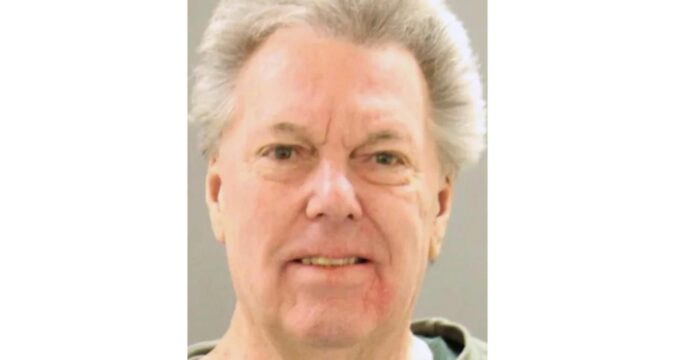
Jill Biden’s first husband charged with killing wife in domestic dispute at their Delaware home
WILMINGTON, Del. — The first husband of former first lady Jill Biden has been charged with killing his wife at their Delaware home in late December, authorities announced in a news release Tuesday.
William Stevenson, 77, of Wilmington was married to Jill Biden from 1970 to 1975. Caroline Harrison, the Delaware Attorney General’s spokesperson, confirmed in a phone call that Stevenson is the former husband of Jill Biden.
Stevenson remains in jail after failing to post $500,000 bail after his arrest Monday on first-degree murder charges. He is charged with killing Linda Stevenson, 64, on Dec. 28.
Police were called to the home for a reported domestic dispute after 11 p.m. and found a woman unresponsive in the living room, according to a prior news release. Life-saving measures were unsuccessful.
She ran a bookkeeping business and was described as a family-oriented mother and grandmother and a Philadelphia Eagles fan, according to her obituary, which does not mention her husband.
Stevenson was charged in a grand jury indictment after a weekslong investigation by detectives in the Delaware Department of Justice.
It was not immediately clear if Stevenson has a lawyer. He founded a popular music venue in Newark called the Stone Balloon in the early 1970s.
Jill Biden married U.S. Sen. Joe Biden in 1977. He served as U.S. president from January 2021 to January 2025.
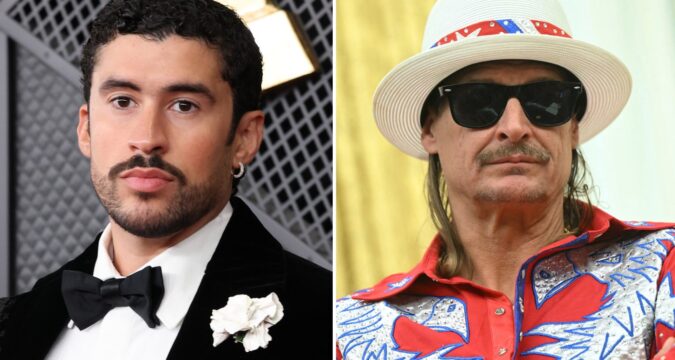
Turning Point USA plans Super Bowl alternative to Bad Bunny with Kid Rock
Turning Point USA (TPUSA) announced Monday that Kid Rock will headline the Super Bowl halftime show it’s offering as an alternative to Bad Bunny’s live performance during the Feb. 8 game.
Country artists Brantley Gilbert, Gabby Barrett and Lee Brice will share the stage with the MAGA rocker, whose hits include “We the People” and “Redneck Paradise.”
Far-right Christian organization now headed by Erika Kirk, the widow of slain activist Charlie Kirk, hinted after the NFL announced Bad Bunny as its halftime act in September that it would do a show of its own. The organization’s website ran a poll asking supporters what kind of entertainers they’d like to see for its “All-American Halftime Show.”
Options included Americana, country and worship music — and “anything in English.”
Bad Bunny, who is from Puerto Rico and performs in Spanish, addressed the Trump administration’s aggressive stance on foreigners and immigrants at Sunday night’s Grammy Award ceremony, where his “DeBÍ TiRAR MáS FOToS” was named Album of the Year.
“We’re not savage, we’re not animals, we’re not aliens,” he said in English “We are humans and we are Americans.”
He also called for ICE to cease operations in U.S. cities.
TPUSA said Monday that its halftime show will air on social media platforms YouTube, Rumble and X as well as right-wing cable networks including OAN.
The organization’s public relations manager Aubrey Laitsch told TMZ last month that several performers had committed to TPUSA’s musical performance during the NFL’s championship matchup, but said fans would have to wait until gametime to learn the lineup. It’s not clear if more names will be added.
https://www.chicagotribune.com/2026/02/03/tpusa-super-bowl-turning-point-usa-kid-rock-bad-bunny/
House passes bill to end the partial government shutdown, sending the measure to Trump
WASHINGTON — The House on Tuesday passed a roughly $1.2 trillion spending package to end the partial government shutdown, sending the measure to President Donald Trump and setting the stage for a debate in Congress over Homeland Security funding.
The vote was 217-214, and wraps up congressional work on 11 of the 12 annual appropriations bills, funding the vast majority of the government for the budget year ending Sept. 30. The last bill still to be worked out covers the Department of Homeland Security where Democrats are demanding more restrictions on enforcement operations.
Trump has said he will sign the bill when it reaches his desk.
Speaker Mike Johnson needed near-unanimous support from his Republican conference to proceed to a final vote. He narrowly got it during a procedural vote that was held open for nearly an hour as leaders worked to gain support from a handful of GOP lawmakers who were trying to advance other priorities unrelated to the funding measure.
“We have to work through individual members’ concerns. That’s the game here. It’s a consensus building operation. We do it every day,” Johnson said.
Trump had weighed in Monday in a social media post, calling on Republicans to stay united and telling holdouts “There can be NO CHANGES at this time.”
“We will work together in good faith to address the issues that have been raised, but we cannot have another long, pointless, and destructive Shutdown that will hurt our Country so badly — One that will not benefit Republicans or Democrats. I hope everyone will vote, YES!,” Trump wrote on his social media site.
The measure once signed will end the partial government shutdown that began Saturday, In addition to funding most of the federal government through Sept. 30, it includes a short-term funding patch for the Department of Homeland Security through Feb. 13 as lawmakers negotiate potential changes for the agency that enforces the nation’s immigration laws — U.S. Immigration and Customs Enforcement, or ICE.
Running Trump’s ‘play call’
The House had previously approved the final package of spending bills, but the Senate broke up that package so that more negotiations could take place for the Homeland Security funding bill. Democrats are demanding changes in response to events in Minneapolis, where two American citizens were shot and killed by federal agents.
Johnson said on Fox News Channel’s “Fox News Sunday” it was Trump’s “play call to do it this way. He had already conceded he wants to turn down the volume, so to speak.” But GOP leaders sounded as if they still had work to do in convincing the rank-and-file to join them as House lawmakers returned to the Capitol on Monday after a week back in their congressional districts.
“We always work till the midnight hour to get the votes,” said House Majority Leader Steve Scalise, R-La. “You never start the process with everybody on board. You work through it, and you could say that about every major bill we’ve passed.”
Key differences from the last shutdown
The path to the current partial shutdown differs from the fall impasse, which affected more agencies and lasted a record 43 days.
Then, the debate was over extending temporary coronavirus pandemic-era subsidies for those who get health coverage through the Affordable Care Act. Democrats were unsuccessful in getting those subsidies included as part of a package to end the shutdown.
Congress has made important progress since then, passing six of the 12 annual appropriations bills that fund federal agencies and programs. That includes important programs such as nutrition assistance and fully operating national parks and historic sites. They are funded through Sept. 30. The remaining bills passed Tuesday represent roughly three-quarters of federal spending set annually by Congress, including the Defense Department.
https://www.chicagotribune.com/2026/02/03/partial-government-shutdown/
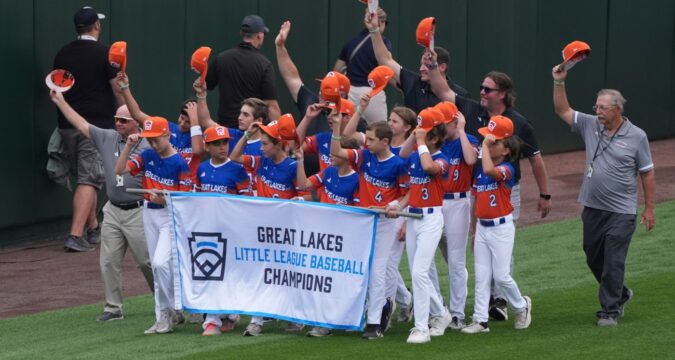
Fresh off a World Series trip, Clarendon Hills Little League players getting a refurbished field
Work at Prospect Park that will include major renovations to the baseball field used by the Clarendon Hills Little League and a few other groups is scheduled to be bid out in February and begin in early August.
All chainlink fencing will be removed from the entire field and replaced with new chainlink fencing, and there also will be a backstop netting system installed behind home plate, said Don Scheltens, executive director of the Clarendon Hills Park District.
Additional planned work includes removal of the outfield and foul area grass. Those areas will then be graded and replanted with sod. There also will be dugout repairs, irrigation adjustments and new plantings along the backside of the new home run fence.
“This is definitely a major renovation that is much needed,” Scheltens said “There really hasn’t been anything major done previously on this field.”
Along with the Clarendon Hills Little League and some Clarendon Hills baseball travel teams, the field is used by the park district’s Fall Ball League and Lady Devils Softball program.
Scheltens said the estimated cost over the renovations is about $435,000. The project budget also has an additional $85,000 included for contingencies that may arise during field work.
All of the funding will come from “Athletic Field Improvements in Prospect Park,” which was one of the categories listed on a 2024 successful $8 million referendum, which passed with 70% support of voters.
The bulk of the referendum funds are being used for a major renovation of the Lions Park Pool.
Scheltens said the planned August start date for work allows the field to be used during the 2026 summer season.
“We predict it will go through November,” he said.
Chuck Fieldman is a freelance reporter for Pioneer Press.
https://www.chicagotribune.com/2026/02/03/clarendon-hills-little-league-field/
Florida Freeze Batters Citrus Belt, Inflicts “Significant Damage” To Central Orange Groves
Florida Freeze Batters Citrus Belt, Inflicts “Significant Damage” To Central Orange Groves
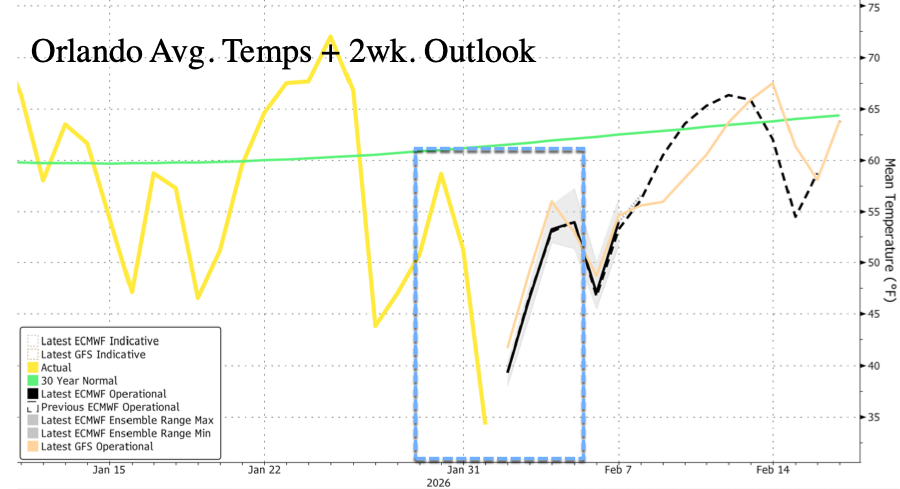
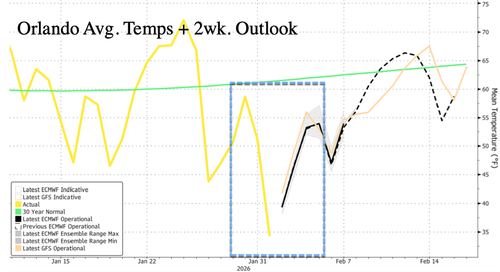
Floridians were once again warned this week to watch out for falling iguanas as an ultra-rare cold blast sent temperatures plunging to record lows of 22F in Jacksonville and 24F in Orlando. Whenever Arctic air pours into The Sunshine State, its citrus industry inevitably takes a hit, and this deep freeze comes on top of years of damage from greening disease and repeated blows from tropical cyclones that have already decimated the crop.
It’s so cold in Florida that iguanas started falling from trees. 🦎🥶
When temperatures fall into the 40s or below, iguanas can become cold-stunned, temporarily losing muscle control. They recover as conditions warm. pic.twitter.com/FjDrT7mLmz
— AccuWeather (@accuweather) February 1, 2026
“There was significant damage to the remaining oranges to be picked in central Florida,” said Jim Roemer, a meteorologist who publishes the WeatherWealth newsletter, quoted by Bloomberg.
Roemer added, “Many key areas were well below 28 degrees for over four hours between Sunday and this morning.”
Here’s a sight you don’t see every day. Frozen orange trees in Central Florida. The irrigation was still on Sunday afternoon. pic.twitter.com/MoaWtErYfV
— Michele Blood (@BloodBrief) February 1, 2026
According to Bloomberg data, the average temperature in the Orlando metro area on Sunday was in the low 30s. The good news is that temperatures are expected to rise later in the week and, by mid-month, revert to 30-year seasonal norms around the mid-60s.
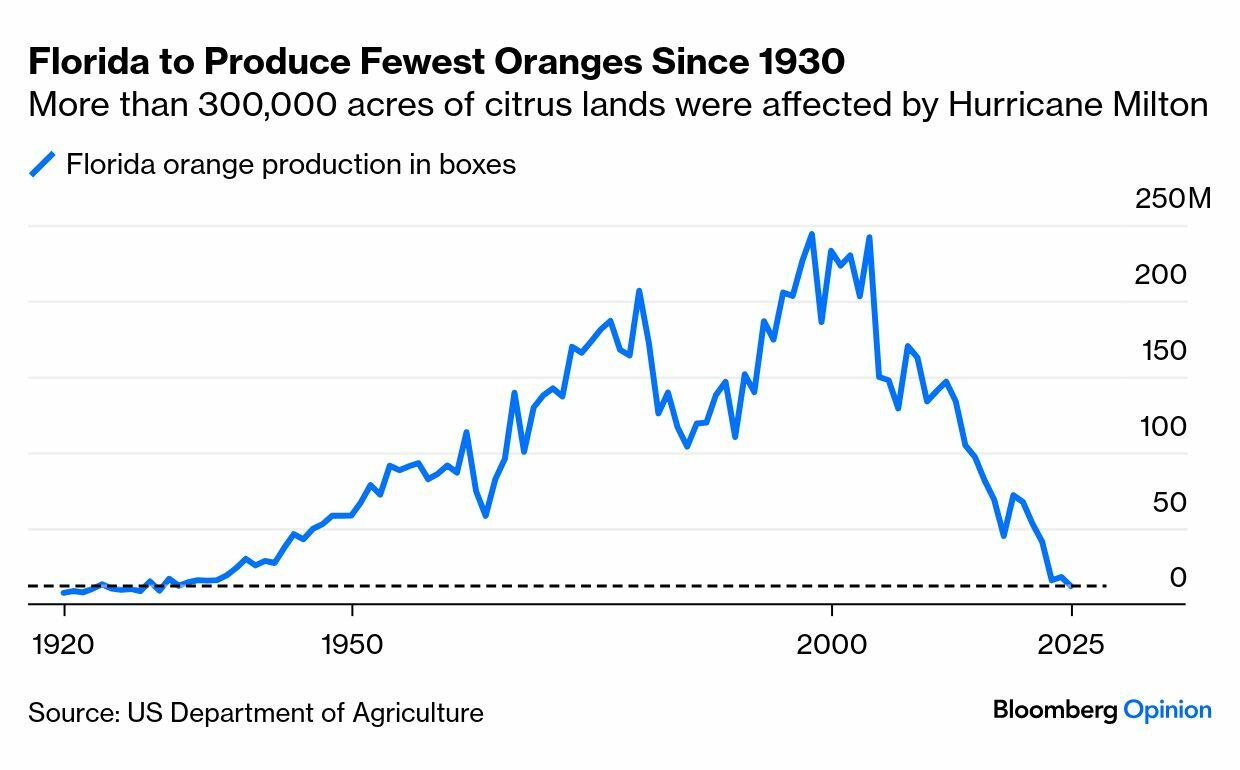
Even before the deep freeze, we have reported for years that the citrus industry in central Florida has been decimated by greening disease and tropical cyclones. The latest data from the USDA shows that this season’s orange juice harvest will be the smallest since 1930.
Judy Ganes, president of J. Ganes Consulting, told the outlet that growers were already prepared with water sprayers to help insulate oranges, and that some unharvested fruit was mature enough to be salvaged.
She added that the cold weather is expected to help with that effort, noting: “They need to get the oranges off the trees and processed before the fruit goes soft and rots, so a freeze followed by a rapid warm-up is more challenging than a lingering cold.”
Traders do not appear to view the deep freeze across major citrus-growing areas in Florida as a major issue, as orange juice futures in New York were down about 10% early Monday, trading at three-year lows after topping in early 2024 amid a citrus squeeze in US markets.
The surge in US orange juice imports from Brazil has allowed the Trump administration to mitigate potential price hikes, with prices sliding lower for much of 2025.
Tyler Durden
Tue, 02/03/2026 – 14:20
Outdoors column: Songbirds get by with a little help from us
As the below-zero temperatures continue in northern Illinois, I rejoice when each morning a fox sparrow pecks on the ground for fallen thistle seed or when a red-breasted nuthatch grabs a sunflower oiler seed from the feeder.
Many days of extreme cold can be difficult for these songbirds, which weigh less than half an ounce. Pick up a few small paper clips to get a sense of how much these birds weigh, then ponder how they are able to survive winter.
Feeding birds year-round doesn’t necessarily ensure their survival. But when it gets really cold in winter, that extra source of fat and protein in the form of sunflower seeds and suet might be just what they need to make it through a frigid evening, experts say.
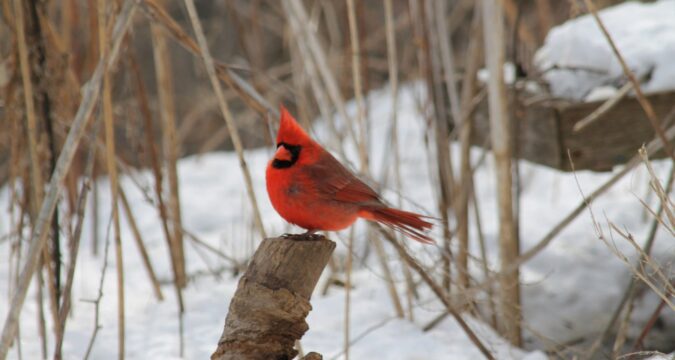
So in a small way, I may be helping the chickadees, woodpeckers, nuthatches, juncos, American tree sparrows, fox sparrow, American goldfinches and northern cardinals that have been out feeding in the yard these last few frigid weeks.
The truth is, these birds wouldn’t be here in our cold northern Illinois climate if they didn’t have other ways to cope with cold, snow, ice and wind, as well as finding food. Indeed, the birds that grace our neighborhoods in winter find food in the wild without visiting feeders.
The downy woodpecker, for example, uses its hammer-like bill and long tongue to extract overwintering insect larvae and pupae from tree trunks and branches. Chickadees also find dormant insects or spiders on or under tree bark in winter. Like nuthatches, they hide food from the wild as well as our feeders for later retrieval.
American tree sparrows spend time in fields eating grass and sedge seeds from plants like goldenrod, asters and other forbs (herbaceous flowering plants). When their food source is covered up by a huge snow, they frequent backyards, where feeder seeds may be more exposed. Trees loaded with berries also help sustain birds such as house finches and woodpeckers in winter.
These birds have anatomical adaptations to keep the cold and wind at bay. The outer feathers of small songbirds we see in winter are contoured to block wind. Downy feathers closer to the skin trap warm air, just like the thermal underwear worn next to our skin to protect us from cold.
Birds also ruffle their feathers to increase their natural insulation, and tuck their bills into shoulder feathers to reduce heat loss.
But what about their featherless legs?
Imagine standing outside on a cold February morning wearing no socks or shoes. Some bird species have an adaptation called counter heat exchange. They lower the temperature in their feet so it’s close to freezing, saving more warmth for other parts of their bodies. After especially frigid days, however, it’s not rare to see a mourning dove with one of its toes frozen off.
Small songbirds burn calories fast and lose heat fast, so they need to eat a lot. Often, before a storm is approaching, many sparrows, juncos and other songbirds congregate on or below the feeders to stuff themselves. Then they escape to a warmer place to wait out the storm using their extra fat reserves to stay alive.
Birds know where they can go to keep out of the wind, as well as where they can sleep at night. Small songbirds roost during storms and sleep at night in natural tree cavities, bird houses, dense vegetation such as evergreens, brush piles and even beneath porches. Facebook users recently posted photos of juncos chilling underneath picnic tables or hunkered in a huge stack of twigs, left untouched during fall cleanup, a good practice.
Our cedars and spruces provide shelter at night for the birds we see during the day. If I’m up at sunrise, I sometimes see a junco emerge from a cedar to look for seed on the ground beneath feeders. There are plenty of other places to go nearby, such as the group of evergreens down the block or stands of trees, shrubs and grasses next to the fire station across the street.
Some birds, like chickadees, lower their body temperature and metabolism during frigid nights. They can lower their normal temperature of 105 degrees to as low as 50 degrees. While they sleep in what’s called a state of torpor, they will not need to rely on as much of their fat reserves. At dawn, they shiver to raise their body temperature to normal, then fly away to start eating.
It’s amazing to think of what birds can do to survive winter without any help from us. However, birds do need us during this huge cold snap, and the best way to help them is to put out food that’s easy to eat and high in fat.
Tonight, more black oil sunflower seeds and thistle seeds will be added to the feeders while the birds slumber in their chosen winter shelters. Then, hopefully tomorrow morning, the fox sparrow, cardinals, goldfinches and juncos will be back to sustain me in this harsh winter.
Sheryl DeVore has worked as a full-time and freelance reporter, editor and photographer for the Chicago Tribune and its subsidiaries. She’s the author of several books on nature and the environment and co-author of a coming book on “Birds of the Midwest,” to be published by Timber Press. Send story ideas and thoughts to sheryldevorewriter@gmail.com.
https://www.chicagotribune.com/2026/02/03/outdoors-column-songbirds/