Category: News
Batavia building to be renovated, with TIF assistance, for Aurora-based software company’s new headquarters
A new corporate headquarters is slated to set up shop in Batavia’s downtown.
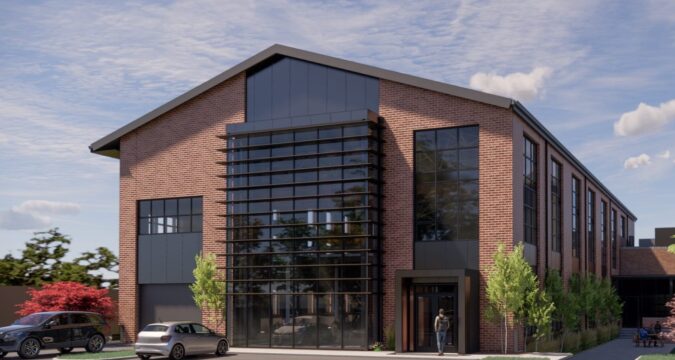
QT9, an Aurora-based software company, is planning to move into the property at 190 S. Water St. — which, per the city, previously housed the Pamarco Co., which operated a factory at the site for more than 100 years but has since relocated to a different building in Batavia.
But, before QT9 moves into the downtown space, the building is set to undergo renovations costing around $12 million, a portion of which is going to be supplied by the city.
At its meeting on Monday, Batavia’s City Council approved a redevelopment agreement for the building, which includes a promise of almost $1.9 million in TIF, or tax increment financing, funds to help with the renovation costs.
A TIF district is a sort of economic development incentive, in which the value of a property is essentially frozen, and the extra or “increment” taxes created by developing the property go into a special fund used to pay for costs related to improving the area.
The building currently sits within the city’s TIF District 3, which is set to expire in 2039, City Administrator Laura Newman said at a recent Batavia City Council Committee of the Whole meeting. But the city is also looking to create a new TIF district that would incorporate the project area, with plans for this renovation to be the first project developed using TIF assistance from the new district, Newman said.
Per the redevelopment agreement, the property would be removed from TIF District 3 and placed into TIF District 7 should it be created.
And because the project is set to be in a TIF district that hasn’t been created yet, there is currently no increment to use to fund it, according to city documents. So, the city is planning to fund the incentive by a loan from its general fund, which will be paid back using the future property tax increment created by the project, which is projected to add $7 million in equalized assessed value to the property.
At the Committee of the Whole meeting, Newman said the existing building is in “pretty rough shape” and cited the benefits the redevelopment would have on the city.
“It’s something that we have been waiting for for a very long time, and could have a tremendous impact on our downtown,” Newman said.
For example, QT9’s move to Batavia is expected to bring 65 to 70 new employees to the downtown, thereby bringing additional business to the area, according to Newman. She also pointed to the possibility that the block east of it may become a mixed-use development including apartments and public parking, meaning employees could live nearby.
“Having a large employer like this could really be a game-changer for downtown activity,” Newman said.
At the Committee of the Whole meeting, Mayor Jeff Schielke asked if the project would impact area businesses like Warehouse 55, which recently moved from Aurora into Batavia.
Austin Dempsey — the CEO of BEI Commercial Real Estate, which Dempsey said currently owns the property and which is a partner in Manhattan Real Estate Ventures, the joint venture that’s redeveloping the building — said it wouldn’t, “except for a lot more customers in the door.”
Newman also noted that the proposed designs for the building’s renovation have been received favorably by the city’s Plan Commission and Historic Preservation Commission.
Dempsey, at the meeting, said he “takes great pride in” being “a preservationist of historic buildings.”
“What a cool story of a 100-plus-year-old building that was part of a windmill factory and a munitions factory during World War II, and now it’s going to be on the cutting edge of technology,” Dempsey told The Beacon-News on Tuesday.
BEI has been developing and redeveloping properties across the area for decades, Dempsey said.
QT9 also has local roots, founder and president Brant Engelhart told The Beacon-News on Tuesday.
The company began out of Engelhart’s home in Aurora in 2005, he said Tuesday. QT9 started out based in Aurora, then for a time was located in Naperville, and currently is housed at 2731 Beverly Drive, on Aurora’s far East Side north of Interstate 88. It also has international offices in Ireland and Australia.
As for its connections to Batavia, Engelhart said at the Committee of the Whole meeting that many of his employees are already from Batavia, and some are looking at homes in the city’s downtown. His internship program is also largely made up of Batavia students.
Engelhart told The Beacon-News that QT9 has “grown explosively” in recent years. The company provides things like quality management systems and enterprise resource planning, per its website, and sells mainly in manufacturing, for industries like medical devices and pharmaceuticals, according to Engelhart.
That growth is what prompted its plans to move to a larger space, which company officials have been seeking for around two years.
The company was also looking to set up shop in a downtown building with a more walkable campus, Engelhart said, for which the Batavia building fits the bill.
“Downtown Batavia is fun,” he said on Tuesday. “There’s restaurants everywhere to walk in, there’s little shops, there’s coffee shops … it’s a great environment for my employees.”
As for the upcoming renovations, the developer is expecting construction costs of around $12 million, per the city. Of that, the city is planning to supply around 15% of the project costs.
The incentive will be provided as a reimbursement after occupancy of the building, per the city, and can be used to reimburse costs for things like engineering, architecture, demolition and remodeling. The agreement includes a claw back provision that requires repayment of a portion of the incentive if QT9 ceases operating at the building within six years of occupying it. And, if costs are lower than projected, the incentive is to be reduced proportionally so it remains at the agreed-upon percentage of the total costs.
Under the terms of the agreement, the building must be ready for QT9 to occupy it by the end of 2028, but both the developer and the software company say they are aiming for much earlier.
At the City Council meeting on Monday — at which the redevelopment agreement was approved — Dempsey told the council that the aim is to begin construction within the next 90 days. Both Dempsey and Engelhart told The Beacon-News the goal is for QT9 to occupy the building starting in late 2026 or early 2027.
The city, too, expressed enthusiasm about the plans for the building at Monday’s City Council meeting.
“This is, I think, something that Batavia should be very proud of,” Schielke said of the project, “that we’ve yet again saved one of the more historic areas and are continuing to do some very interesting things with (them).”
mmorrow@chicagotribune.com
Batavia building to be renovated, with TIF assistance, for Aurora-based software company’s new headquarters
A new corporate headquarters is slated to set up shop in Batavia’s downtown.
QT9, an Aurora-based software company, is planning to move into the property at 190 S. Water St. — which, per the city, previously housed the Pamarco Co., which operated a factory at the site for more than 100 years but has since relocated to a different building in Batavia.
But, before QT9 moves into the downtown space, the building is set to undergo renovations costing around $12 million, a portion of which is going to be supplied by the city.
At its meeting on Monday, Batavia’s City Council approved a redevelopment agreement for the building, which includes a promise of almost $1.9 million in TIF, or tax increment financing, funds to help with the renovation costs.
A TIF district is a sort of economic development incentive, in which the value of a property is essentially frozen, and the extra or “increment” taxes created by developing the property go into a special fund used to pay for costs related to improving the area.
The building currently sits within the city’s TIF District 3, which is set to expire in 2039, City Administrator Laura Newman said at a recent Batavia City Council Committee of the Whole meeting. But the city is also looking to create a new TIF district that would incorporate the project area, with plans for this renovation to be the first project developed using TIF assistance from the new district, Newman said.
Per the redevelopment agreement, the property would be removed from TIF District 3 and placed into TIF District 7 should it be created.
And because the project is set to be in a TIF district that hasn’t been created yet, there is currently no increment to use to fund it, according to city documents. So, the city is planning to fund the incentive by a loan from its general fund, which will be paid back using the future property tax increment created by the project, which is projected to add $7 million in equalized assessed value to the property.
At the Committee of the Whole meeting, Newman said the existing building is in “pretty rough shape” and cited the benefits the redevelopment would have on the city.
“It’s something that we have been waiting for for a very long time, and could have a tremendous impact on our downtown,” Newman said.
For example, QT9’s move to Batavia is expected to bring 65 to 70 new employees to the downtown, thereby bringing additional business to the area, according to Newman. She also pointed to the possibility that the block east of it may become a mixed-use development including apartments and public parking, meaning employees could live nearby.
“Having a large employer like this could really be a game-changer for downtown activity,” Newman said.
At the Committee of the Whole meeting, Mayor Jeff Schielke asked if the project would impact area businesses like Warehouse 55, which recently moved from Aurora into Batavia.
Austin Dempsey — the CEO of BEI Commercial Real Estate, which Dempsey said currently owns the property and which is a partner in Manhattan Real Estate Ventures, the joint venture that’s redeveloping the building — said it wouldn’t, “except for a lot more customers in the door.”
Newman also noted that the proposed designs for the building’s renovation have been received favorably by the city’s Plan Commission and Historic Preservation Commission.
Dempsey, at the meeting, said he “takes great pride in” being “a preservationist of historic buildings.”
“What a cool story of a 100-plus-year-old building that was part of a windmill factory and a munitions factory during World War II, and now it’s going to be on the cutting edge of technology,” Dempsey told The Beacon-News on Tuesday.
BEI has been developing and redeveloping properties across the area for decades, Dempsey said.
QT9 also has local roots, founder and president Brant Engelhart told The Beacon-News on Tuesday.
The company began out of Engelhart’s home in Aurora in 2005, he said Tuesday. QT9 started out based in Aurora, then for a time was located in Naperville, and currently is housed at 2731 Beverly Drive, on Aurora’s far East Side north of Interstate 88. It also has international offices in Ireland and Australia.
As for its connections to Batavia, Engelhart said at the Committee of the Whole meeting that many of his employees are already from Batavia, and some are looking at homes in the city’s downtown. His internship program is also largely made up of Batavia students.
Engelhart told The Beacon-News that QT9 has “grown explosively” in recent years. The company provides things like quality management systems and enterprise resource planning, per its website, and sells mainly in manufacturing, for industries like medical devices and pharmaceuticals, according to Engelhart.
That growth is what prompted its plans to move to a larger space, which company officials have been seeking for around two years.
The company was also looking to set up shop in a downtown building with a more walkable campus, Engelhart said, for which the Batavia building fits the bill.
“Downtown Batavia is fun,” he said on Tuesday. “There’s restaurants everywhere to walk in, there’s little shops, there’s coffee shops … it’s a great environment for my employees.”
As for the upcoming renovations, the developer is expecting construction costs of around $12 million, per the city. Of that, the city is planning to supply around 15% of the project costs.
The incentive will be provided as a reimbursement after occupancy of the building, per the city, and can be used to reimburse costs for things like engineering, architecture, demolition and remodeling. The agreement includes a claw back provision that requires repayment of a portion of the incentive if QT9 ceases operating at the building within six years of occupying it. And, if costs are lower than projected, the incentive is to be reduced proportionally so it remains at the agreed-upon percentage of the total costs.
Under the terms of the agreement, the building must be ready for QT9 to occupy it by the end of 2028, but both the developer and the software company say they are aiming for much earlier.
At the City Council meeting on Monday — at which the redevelopment agreement was approved — Dempsey told the council that the aim is to begin construction within the next 90 days. Both Dempsey and Engelhart told The Beacon-News the goal is for QT9 to occupy the building starting in late 2026 or early 2027.
The city, too, expressed enthusiasm about the plans for the building at Monday’s City Council meeting.
“This is, I think, something that Batavia should be very proud of,” Schielke said of the project, “that we’ve yet again saved one of the more historic areas and are continuing to do some very interesting things with (them).”
mmorrow@chicagotribune.com
Batavia building to be renovated, with TIF assistance, for Aurora-based software company’s new headquarters
A new corporate headquarters is slated to set up shop in Batavia’s downtown.
QT9, an Aurora-based software company, is planning to move into the property at 190 S. Water St. — which, per the city, previously housed the Pamarco Co., which operated a factory at the site for more than 100 years but has since relocated to a different building in Batavia.
But, before QT9 moves into the downtown space, the building is set to undergo renovations costing around $12 million, a portion of which is going to be supplied by the city.
At its meeting on Monday, Batavia’s City Council approved a redevelopment agreement for the building, which includes a promise of almost $1.9 million in TIF, or tax increment financing, funds to help with the renovation costs.
A TIF district is a sort of economic development incentive, in which the value of a property is essentially frozen, and the extra or “increment” taxes created by developing the property go into a special fund used to pay for costs related to improving the area.
The building currently sits within the city’s TIF District 3, which is set to expire in 2039, City Administrator Laura Newman said at a recent Batavia City Council Committee of the Whole meeting. But the city is also looking to create a new TIF district that would incorporate the project area, with plans for this renovation to be the first project developed using TIF assistance from the new district, Newman said.
Per the redevelopment agreement, the property would be removed from TIF District 3 and placed into TIF District 7 should it be created.
And because the project is set to be in a TIF district that hasn’t been created yet, there is currently no increment to use to fund it, according to city documents. So, the city is planning to fund the incentive by a loan from its general fund, which will be paid back using the future property tax increment created by the project, which is projected to add $7 million in equalized assessed value to the property.
At the Committee of the Whole meeting, Newman said the existing building is in “pretty rough shape” and cited the benefits the redevelopment would have on the city.
“It’s something that we have been waiting for for a very long time, and could have a tremendous impact on our downtown,” Newman said.
For example, QT9’s move to Batavia is expected to bring 65 to 70 new employees to the downtown, thereby bringing additional business to the area, according to Newman. She also pointed to the possibility that the block east of it may become a mixed-use development including apartments and public parking, meaning employees could live nearby.
“Having a large employer like this could really be a game-changer for downtown activity,” Newman said.
At the Committee of the Whole meeting, Mayor Jeff Schielke asked if the project would impact area businesses like Warehouse 55, which recently moved from Aurora into Batavia.
Austin Dempsey — the CEO of BEI Commercial Real Estate, which Dempsey said currently owns the property and which is a partner in Manhattan Real Estate Ventures, the joint venture that’s redeveloping the building — said it wouldn’t, “except for a lot more customers in the door.”
Newman also noted that the proposed designs for the building’s renovation have been received favorably by the city’s Plan Commission and Historic Preservation Commission.
Dempsey, at the meeting, said he “takes great pride in” being “a preservationist of historic buildings.”
“What a cool story of a 100-plus-year-old building that was part of a windmill factory and a munitions factory during World War II, and now it’s going to be on the cutting edge of technology,” Dempsey told The Beacon-News on Tuesday.
BEI has been developing and redeveloping properties across the area for decades, Dempsey said.
QT9 also has local roots, founder and president Brant Engelhart told The Beacon-News on Tuesday.
The company began out of Engelhart’s home in Aurora in 2005, he said Tuesday. QT9 started out based in Aurora, then for a time was located in Naperville, and currently is housed at 2731 Beverly Drive, on Aurora’s far East Side north of Interstate 88. It also has international offices in Ireland and Australia.
As for its connections to Batavia, Engelhart said at the Committee of the Whole meeting that many of his employees are already from Batavia, and some are looking at homes in the city’s downtown. His internship program is also largely made up of Batavia students.
Engelhart told The Beacon-News that QT9 has “grown explosively” in recent years. The company provides things like quality management systems and enterprise resource planning, per its website, and sells mainly in manufacturing, for industries like medical devices and pharmaceuticals, according to Engelhart.
That growth is what prompted its plans to move to a larger space, which company officials have been seeking for around two years.
The company was also looking to set up shop in a downtown building with a more walkable campus, Engelhart said, for which the Batavia building fits the bill.
“Downtown Batavia is fun,” he said on Tuesday. “There’s restaurants everywhere to walk in, there’s little shops, there’s coffee shops … it’s a great environment for my employees.”
As for the upcoming renovations, the developer is expecting construction costs of around $12 million, per the city. Of that, the city is planning to supply around 15% of the project costs.
The incentive will be provided as a reimbursement after occupancy of the building, per the city, and can be used to reimburse costs for things like engineering, architecture, demolition and remodeling. The agreement includes a claw back provision that requires repayment of a portion of the incentive if QT9 ceases operating at the building within six years of occupying it. And, if costs are lower than projected, the incentive is to be reduced proportionally so it remains at the agreed-upon percentage of the total costs.
Under the terms of the agreement, the building must be ready for QT9 to occupy it by the end of 2028, but both the developer and the software company say they are aiming for much earlier.
At the City Council meeting on Monday — at which the redevelopment agreement was approved — Dempsey told the council that the aim is to begin construction within the next 90 days. Both Dempsey and Engelhart told The Beacon-News the goal is for QT9 to occupy the building starting in late 2026 or early 2027.
The city, too, expressed enthusiasm about the plans for the building at Monday’s City Council meeting.
“This is, I think, something that Batavia should be very proud of,” Schielke said of the project, “that we’ve yet again saved one of the more historic areas and are continuing to do some very interesting things with (them).”
mmorrow@chicagotribune.com

Fans se apresuran a aprender español antes del show de medio tiempo de Bad Bunny en el Super Bowl
Por FERNANDA FIGUEROA
Se espera que Bad Bunny actúe en el espectáculo de medio tiempo del Super Bowl el domingo completamente en español, lo que ha inspirado a los fanáticos a aprender rápidamente el idioma.
En octubre, el cantante puertorriqueño, cuyo nombre verdadero es Benito Antonio Martínez Ocasio, inauguró la temporada 51 de “Saturday Night Live” expresando orgullo por este logro en español, tras lo cual dijo en inglés: “Si no entendiste lo que acabo de decir, tienes cuatro meses para aprender”.
Esa declaración avivó aún más la ira de algunos conservadores que han vilipendiado a Bad Bunny por pronunciarse en contra de las políticas antiinmigrantes del presidente Donald Trump. El cantante canceló la parte de su gira en Estados Unidos el año pasado por temor a que los agentes de Inmigración y Control de Aduanas (ICE por sus siglas en inglés) fueran en contra de sus fanáticos.
Ha habido un frenesí en internet de personas publicando sobre las letras de Bad Bunny, incluidos puertorriqueños explicando la jerga utilizada por el cantante y personas que no hablan español documentando su esfuerzo para aprender el idioma.
La anticipación por su actuación de medio tiempo solo ha intensificado desde el fin de semana pasado, cuando su disco “DeBÍ TiRAR MáS FOToS”, se convirtió en el primero en español en ganar el Grammy al álbum del año. Bad Bunny no se abstuvo de abordar en la ceremonia las operaciones federales de inmigración.
“Antes de dar gracias a Dios, voy a decir ICE fuera”, dijo en inglés después de ganar su primer Grammy por álbum de música urbana. “No somos salvajes, no somos animales, no somos extranjeros. Somos humanos y somos estadounidenses”.
Los fans estudian español antes del Super Bowl
Niklaus Miller, de 29 años, se ha tratado de aprender las letras de Bad Bunny desde la participación del cantante en SNL hace meses.
“Soy lo suficientemente iluso como para pensar ‘esto sería fácil. Podría aprenderlo bastante rápido’”, dijo Miller.
El fervor por aprender un nuevo idioma en un corto período de tiempo destaca el poderoso impacto de la cultura latina en Estados Unidos a pesar de la retórica y acciones antiinmigrantes del presidente.
“Se sintió como una forma de protesta”, dijo Miller. “¿Qué puedo hacer ahora además de lo que todos están haciendo para tratar de ayudar? Simplemente se siente bien”.
Miller dijo que ha recibido mensajes de personas que se topan con los videos en los que sale con sus padres desde que comenzó a publicar sobre el proceso de aprender español. Dicen que se sienten vistos y apreciados.
Aunque Miller no ha aprendido toda la discografía de Bad Bunny, ha aprendido partes de seis canciones que siente que serán parte del espectáculo de medio tiempo, incluidas “Tití me preguntó”, “DtMF” y “BAILE INoLVIDABLE”.
El día después de que se anunciara a Bad Bunny como el artista que encabezará el medio tiempo, O’Neil Thomas, de 28 años, un actor y creador de contenido de Nueva York, comenzó a aprender el catálogo del cantante.
“Estaba tan emocionado porque no era un artista que esperaba”, dijo Thomas. “Y dado cómo estamos ahora con el estado del país, creo que él es la persona perfecta para encabezar un escenario tan enorme”.
La respuesta a sus videos de TikTok, que muestran a Thomas aprendiendo “NUEVAYoL” y otras pistas, ha sido realmente positiva, agregó Thomas. Muchas personas puertorriqueñas se han acercado, diciendo que están orgullosas de que alguien fuera de la comunidad esté intentando aprender sobre su cultura.
La música y la cultura latina intensifican el interés en el idioma
“La gente ya estaba comenzando a hacer el esfuerzo de aprender español como resultado de su interés en la música latina”, dijo Vanessa Díaz, profesora asociada de estudios chicanos y latinos en la Universidad Loyola Marymount. “El Super Bowl en sí es un impulso adicional para una tendencia que ya estaba ocurriendo”.
Díaz, quien es coautora de “P FKN R: How Bad Bunny Became the Global Voice of Puerto Rican Resistance” (P FKN R: Cómo Bad Bunny se convirtió en la voz global de la resistencia puertorriqueña), dice que el auge de la música latina en la última década ha impulsado a los que no hablan español a aprender el idioma. El claro mensaje de Bad Bunny en sus letras, videos y actuaciones amplifica ese interés, dijo Díaz.
Después del inglés, el español es el idioma más hablado en los hogares de Estados Unidos, a excepción de tres estados, según datos del Censo de Estados Unidos. Más del 13% de los residentes de cinco años o más lo hablan.
Para Thomas, la música de Bad Bunny ofreció la oportunidad perfecta para asumir el desafío de aprender un nuevo idioma.
“Amo el español y siempre quise aprenderlo”, dijo Thomas. “Así que esto ha sido una introducción divertida para mí para finalmente concentrarme”.
Tanto Miller como Thomas dijeron que aprender español, específicamente el español puertorriqueño, en un corto período de tiempo ha sido un desafío único.
Thomas dijo que escuchar la música de Bad Bunny de manera casual es una experiencia diferente a aprender las letras.
“Escuchar su música es realmente divertido”, dijo Thomas. “La cantidad de veces que he presionado repetir solo para captar una frase, ni siquiera las puedo contar”.
Miller dijo que la parte difícil de aprender las canciones es que el dialecto puertorriqueño tiende a cortar algunas palabras y es muy rápido. Miller dijo que si no ha trabajado en entender una canción durante días, podría olvidar la pronunciación y es difícil volver a ella.
“Es divertido, pero luego estresante porque soy una persona tipo A (personas ambiciosas, trabajadoras y exigentes), así que eso ha sido difícil, honestamente”, dijo Miller. “Estoy trabajando a toda máquina”.
Un hito para la cultura latina también es políticamente divisivo
La elección de Bad Bunny en el Super Bowl ha sido divisiva desde el principio. Trump la calificó “ridícula”. Los conservadores la han calificado de antiestadounidense, aunque los puertorriqueños también son ciudadanos estadounidenses. Turning Point USA está organizando un “All-American Halftime Show” alternativo con un cartel encabezado por Kid Rock.
Todo esto ocurre en el contexto de que las comunidades latinas y de habla hispana son objetivo de las redadas de inmigración de Trump. Las acciones ejecutivas han ampliado enormemente quién es elegible para la deportación y las audiencias rutinarias se han convertido en trampas de deportación para los migrantes.
Para Bad Bunny, el espectáculo de medio tiempo es el escenario definitivo para mostrar su música, herencia e influencia global. Para la NFL y Apple Music, es un acto de equilibrio: ofrecer un espectáculo que celebre la diversidad sin provocar controversias que asusten a los anunciantes.
El comisionado de la NFL, Roger Goodell, ha defendido la elección, citando la inmensa popularidad de Bad Bunny.
Petra Rivera-Rideau, profesora asociada de estudios americanos en Wellesley College y coautora de “P FKN R”, dijo que hay una larga historia en Estados Unidos de criminalización del español.
Bad Bunny está haciendo que sea genial conocer el idioma y cambiando la narrativa en torno a él, dijo Díaz. Ahora el español es algo que la gente aspira a aprender.
Díaz no cree que su actuación necesariamente cambiará cómo se percibe a los latinos en Estados Unidos, pero dice que creará una conversación interesante dependiendo de “cómo la gente va a lidiar con la magnitud de tener a alguien como Bad Bunny en el escenario”.
En un momento en que “Estados Unidos está apuntando a latinos y migrantes y hablantes de español o incluso a aquellos que simplemente se perciben como cualquiera de esas cosas de una manera que no hemos visto en nuestras vidas”, su visibilidad es poderosa, dijo Díaz.
Fans se apresuran a aprender español antes del show de medio tiempo de Bad Bunny en el Super Bowl
Por FERNANDA FIGUEROA
Se espera que Bad Bunny actúe en el espectáculo de medio tiempo del Super Bowl el domingo completamente en español, lo que ha inspirado a los fanáticos a aprender rápidamente el idioma.
En octubre, el cantante puertorriqueño, cuyo nombre verdadero es Benito Antonio Martínez Ocasio, inauguró la temporada 51 de “Saturday Night Live” expresando orgullo por este logro en español, tras lo cual dijo en inglés: “Si no entendiste lo que acabo de decir, tienes cuatro meses para aprender”.
Esa declaración avivó aún más la ira de algunos conservadores que han vilipendiado a Bad Bunny por pronunciarse en contra de las políticas antiinmigrantes del presidente Donald Trump. El cantante canceló la parte de su gira en Estados Unidos el año pasado por temor a que los agentes de Inmigración y Control de Aduanas (ICE por sus siglas en inglés) fueran en contra de sus fanáticos.
Ha habido un frenesí en internet de personas publicando sobre las letras de Bad Bunny, incluidos puertorriqueños explicando la jerga utilizada por el cantante y personas que no hablan español documentando su esfuerzo para aprender el idioma.
La anticipación por su actuación de medio tiempo solo ha intensificado desde el fin de semana pasado, cuando su disco “DeBÍ TiRAR MáS FOToS”, se convirtió en el primero en español en ganar el Grammy al álbum del año. Bad Bunny no se abstuvo de abordar en la ceremonia las operaciones federales de inmigración.
“Antes de dar gracias a Dios, voy a decir ICE fuera”, dijo en inglés después de ganar su primer Grammy por álbum de música urbana. “No somos salvajes, no somos animales, no somos extranjeros. Somos humanos y somos estadounidenses”.
Los fans estudian español antes del Super Bowl
Niklaus Miller, de 29 años, se ha tratado de aprender las letras de Bad Bunny desde la participación del cantante en SNL hace meses.
“Soy lo suficientemente iluso como para pensar ‘esto sería fácil. Podría aprenderlo bastante rápido’”, dijo Miller.
El fervor por aprender un nuevo idioma en un corto período de tiempo destaca el poderoso impacto de la cultura latina en Estados Unidos a pesar de la retórica y acciones antiinmigrantes del presidente.
“Se sintió como una forma de protesta”, dijo Miller. “¿Qué puedo hacer ahora además de lo que todos están haciendo para tratar de ayudar? Simplemente se siente bien”.
Miller dijo que ha recibido mensajes de personas que se topan con los videos en los que sale con sus padres desde que comenzó a publicar sobre el proceso de aprender español. Dicen que se sienten vistos y apreciados.
Aunque Miller no ha aprendido toda la discografía de Bad Bunny, ha aprendido partes de seis canciones que siente que serán parte del espectáculo de medio tiempo, incluidas “Tití me preguntó”, “DtMF” y “BAILE INoLVIDABLE”.
El día después de que se anunciara a Bad Bunny como el artista que encabezará el medio tiempo, O’Neil Thomas, de 28 años, un actor y creador de contenido de Nueva York, comenzó a aprender el catálogo del cantante.
“Estaba tan emocionado porque no era un artista que esperaba”, dijo Thomas. “Y dado cómo estamos ahora con el estado del país, creo que él es la persona perfecta para encabezar un escenario tan enorme”.
La respuesta a sus videos de TikTok, que muestran a Thomas aprendiendo “NUEVAYoL” y otras pistas, ha sido realmente positiva, agregó Thomas. Muchas personas puertorriqueñas se han acercado, diciendo que están orgullosas de que alguien fuera de la comunidad esté intentando aprender sobre su cultura.
La música y la cultura latina intensifican el interés en el idioma
“La gente ya estaba comenzando a hacer el esfuerzo de aprender español como resultado de su interés en la música latina”, dijo Vanessa Díaz, profesora asociada de estudios chicanos y latinos en la Universidad Loyola Marymount. “El Super Bowl en sí es un impulso adicional para una tendencia que ya estaba ocurriendo”.
Díaz, quien es coautora de “P FKN R: How Bad Bunny Became the Global Voice of Puerto Rican Resistance” (P FKN R: Cómo Bad Bunny se convirtió en la voz global de la resistencia puertorriqueña), dice que el auge de la música latina en la última década ha impulsado a los que no hablan español a aprender el idioma. El claro mensaje de Bad Bunny en sus letras, videos y actuaciones amplifica ese interés, dijo Díaz.
Después del inglés, el español es el idioma más hablado en los hogares de Estados Unidos, a excepción de tres estados, según datos del Censo de Estados Unidos. Más del 13% de los residentes de cinco años o más lo hablan.
Para Thomas, la música de Bad Bunny ofreció la oportunidad perfecta para asumir el desafío de aprender un nuevo idioma.
“Amo el español y siempre quise aprenderlo”, dijo Thomas. “Así que esto ha sido una introducción divertida para mí para finalmente concentrarme”.
Tanto Miller como Thomas dijeron que aprender español, específicamente el español puertorriqueño, en un corto período de tiempo ha sido un desafío único.
Thomas dijo que escuchar la música de Bad Bunny de manera casual es una experiencia diferente a aprender las letras.
“Escuchar su música es realmente divertido”, dijo Thomas. “La cantidad de veces que he presionado repetir solo para captar una frase, ni siquiera las puedo contar”.
Miller dijo que la parte difícil de aprender las canciones es que el dialecto puertorriqueño tiende a cortar algunas palabras y es muy rápido. Miller dijo que si no ha trabajado en entender una canción durante días, podría olvidar la pronunciación y es difícil volver a ella.
“Es divertido, pero luego estresante porque soy una persona tipo A (personas ambiciosas, trabajadoras y exigentes), así que eso ha sido difícil, honestamente”, dijo Miller. “Estoy trabajando a toda máquina”.
Un hito para la cultura latina también es políticamente divisivo
La elección de Bad Bunny en el Super Bowl ha sido divisiva desde el principio. Trump la calificó “ridícula”. Los conservadores la han calificado de antiestadounidense, aunque los puertorriqueños también son ciudadanos estadounidenses. Turning Point USA está organizando un “All-American Halftime Show” alternativo con un cartel encabezado por Kid Rock.
Todo esto ocurre en el contexto de que las comunidades latinas y de habla hispana son objetivo de las redadas de inmigración de Trump. Las acciones ejecutivas han ampliado enormemente quién es elegible para la deportación y las audiencias rutinarias se han convertido en trampas de deportación para los migrantes.
Para Bad Bunny, el espectáculo de medio tiempo es el escenario definitivo para mostrar su música, herencia e influencia global. Para la NFL y Apple Music, es un acto de equilibrio: ofrecer un espectáculo que celebre la diversidad sin provocar controversias que asusten a los anunciantes.
El comisionado de la NFL, Roger Goodell, ha defendido la elección, citando la inmensa popularidad de Bad Bunny.
Petra Rivera-Rideau, profesora asociada de estudios americanos en Wellesley College y coautora de “P FKN R”, dijo que hay una larga historia en Estados Unidos de criminalización del español.
Bad Bunny está haciendo que sea genial conocer el idioma y cambiando la narrativa en torno a él, dijo Díaz. Ahora el español es algo que la gente aspira a aprender.
Díaz no cree que su actuación necesariamente cambiará cómo se percibe a los latinos en Estados Unidos, pero dice que creará una conversación interesante dependiendo de “cómo la gente va a lidiar con la magnitud de tener a alguien como Bad Bunny en el escenario”.
En un momento en que “Estados Unidos está apuntando a latinos y migrantes y hablantes de español o incluso a aquellos que simplemente se perciben como cualquiera de esas cosas de una manera que no hemos visto en nuestras vidas”, su visibilidad es poderosa, dijo Díaz.

321 Quakes Hit San Francisco Bay In A Week – Is The San Andreas Fault Entering A Dangerous New Phase?
321 Quakes Hit San Francisco Bay In A Week – Is The San Andreas Fault Entering A Dangerous New Phase?
Authored by Michael Snyder via The Economic Collapse blog,
The west coast is shaking again. In recent weeks we have witnessed so much seismic activity along the portion of the Pacific Ring of Fire that sits directly along the California coastline. There had been hope that the shaking would settle down, but instead it appears to be accelerating.
As you will see below, there have been 321 earthquakes in the San Francisco area within the past 7 days. If I was living in northern California, that would definitely get my attention. Scientists have warned us over and over again that “the Big One” is inevitably coming, and almost every day there are more reminders of this. In fact, San Ramon was just hit by a swarm of more than 30 earthquakes on Monday morning…
A 4.2 earthquake struck near San Ramon Monday morning, following a 3.8 quake amid a string of over 30 temblors in the area, U.S. Geological Survey said.
The 4.2 quake struck at 7:01 a.m. and followed a string of quakes that began with a 3.8 at 6:27 a.m. Dozens of earthquakes have followed.
USGS said the 4.2 quake was about 9.4 km in depth.
A magnitude 4.2 quake is quite significant.
The shaking that it caused was so extensive that people living in the heart of San Francisco actually felt “windows rattling”…
Residents in San Francisco’s Glen Park and Nopa neighborhoods reported rumbling and ‘windows rattling’ during the quake, and public transportation throughout the area was also affected by the swarm, according to the San Francisco Chronicle.
The moderate quake even activated the National Tsunami Warning Center, however, officials said there was no danger of a major wave hitting the Bay Area.
Of course this was not an isolated incident.
According to the USGS, this latest earthquake swarm was “a continuation” of a pattern of heightened activity that the region has been experiencing since last November…
ABC7 Eyewitness News spoke with the USGS Monday morning, and they say this is a continuation of the swarm of quakes the area has been experiencing.
On Friday, the area saw its first earthquake in several weeks, but there have been dozens of quakes since November.
Could it be possible that all of this activity is building up to some sort of a really big event?
According to the Southern California Earthquake Data Center, there have been 321 earthquakes in the San Francisco area in the last 7 days. The following is a screenshot…
Needless to say, this isn’t normal.
The swarm of earthquakes that hit San Ramon on Monday was centered on one of the main branches of the San Andreas Fault System…
Still, Monday’s noticeable swarm broke out right on the Calaveras Fault, a main branch of the San Andreas – the monstrous 800-mile-long fault spanning from Southern California through the Bay Area and into the Pacific.
The Calaveras splits off from the main fault line near Hollister in central California and runs parallel to it through the East Bay region.
Scientists with USGS have warned that one of these faults or other major branches nearby could soon reach their anticipated breaking point and rupture right in the heart of California.
And it isn’t just northern California that has been shaking lately.
A couple of weeks ago, a magnitude 4.9 earthquake rocked Southern California…
A 4.9-magnitude earthquake and several aftershocks rattled Southern California on Monday night, according to the United States Geological Survey.
The first and largest quake happened approximately five miles northeast of Indio Hills, which is in the Palm Desert region of Riverside County, at around 5:57 p.m., the USGS reported. It occurred at a geological depth of nearly two miles. The preliminary magnitude of the earthquake was first reported as 5.1 before it was downgraded to 4.6 and then adjusted to 4.9 by USGS officials.
Scientists keep telling us that it is just a matter of time before the San Andreas Fault System “rips wide open”.
This is something that I have written about extensively over the years.
These latest quakes are a major league wake up call.
Unfortunately, most people living in California have learned to tune out such warnings.
Interestingly, the earthquake swarm that shook San Ramon on Monday morning occurred just after the Sun released “a relentless barrage of powerful solar flares”…
The sun has erupted in a relentless barrage of powerful solar flares over the past 24 hours, firing off at least 18 M-class flares and three X-class flares, including an X8.3 eruption — the strongest solar flare of 2026 so far. Solar flares are ranked by strength from A, B and C up to M and X, with each letter representing a tenfold increase in energy — meaning X-class flares are the most powerful explosions the sun can produce
The culprit is sunspot region 4366, a volatile active region that has grown rapidly in just a few days. The flurry of activity began late Feb. 1 and has continued into Feb. 2, with multiple M-class and X-class flares erupting in quick succession. The prolific region appears to be far from finished. Spaceweather.com described the region as a “solar flare factory”, warning that its rapid growth and magnetic complexity make further eruptions highly likely.
Many scientists believe that we tend to see more seismic activity when the Sun is highly active.
Needless to say, the Sun has been extremely active lately.
And we are being warned that Sunspot AR4366 will soon be directly facing our planet…
It’s also possible that more eruptions are still to come. Sunspot AR4366 remains highly active and continues to rotate into an Earth-facing position, raising the chance that future eruptions could launch CMEs more directly toward our planet. NOAA forecasters say they expect more exciting space weather activity from this region in the coming days.
Sunspot AR4366 is absolutely massive, and I think that we should all be watching it very closely.
We live at a time when the giant ball of fire that we revolve around is becoming increasingly unstable.
We also live at a time when the ground under our feet is becoming increasingly unstable.
Unfortunately, I am entirely convinced that what we have experienced so far is just the tip of the iceberg.
Michael’s new book entitled “10 Prophetic Events That Are Coming Next” is available in paperback and for the Kindle on Amazon.com, and you can subscribe to his Substack newsletter at michaeltsnyder.substack.com.
Tyler Durden
Wed, 02/04/2026 – 16:20
South Side Irish Parade grand marshal, honorees have 9/11 connection
Carlos Yanez Jr. was a freshman at Daley College and was watching TV when his pit bull-mixed dog, Brownie, jumped on his bed Sept. 11, 2001.
The impact of Brownie’s jump caused the channel to change and he saw news coverage of the attacks on the World Trade Center.
“I thought it was a ‘Die Hard’ movie at first,” Yanez said Wednesday. “I actually saw the second plane go into the second tower.
“I literally ran to my parents’ room and woke up my dad and stepmom and I said ‘We’re getting attacked!’ I’m getting chills right now just talking about it.”
Little did Yanez know that decades later, he would have a big connection with the 9/11 attack that would benefit him greatly.
Twenty years later, Aug. 7, 2021, Yanez, now a Chicago police officer, was shot in West Englewood. His partner, Ella French, was killed and he was shot four times in the head, once in the shoulder and he lost his right eye.
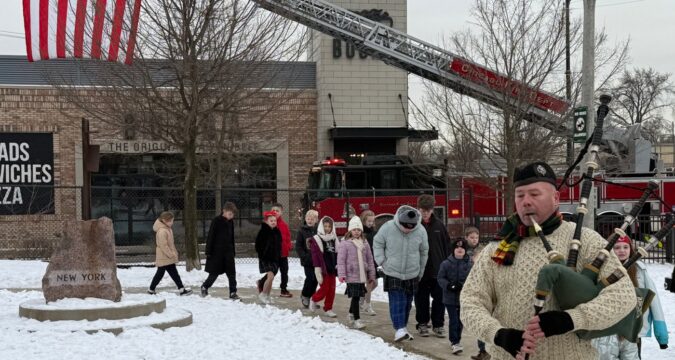
Injured Chicago police Officer Carlos Yanez Jr. stands Feb. 4, 2026, in King-Lockhart Memorial Park in Chicago, near a piece of a beam from the World Trade Center destroyed during the 9/11 attacks. (Jeff Vorva/for the Daily Southtown)
Yanez was at King-Lockhart Memorial Park in Chicago Wednesday to applaud and show support for the Tunnel to Towers Foundation as it was announced as the 2026 grand marshal of the South Side Irish Parade, which will kick off at noon March 15 in the Beverly and Morgan Park neighborhoods.
It was also announced that St. Christina Catholic Parish, celebrating it 100th anniversary, will be the parade’s honoree.
Tunnel to Towers, which helps fallen and injured officers and their families, was launched after the 9/11 attacks in honor of New York Fire Department’s Stephen Siller. Siller died on 9/11 after racing more than a mile with 60 pounds of equipment through a tunnel to get to the Twin Towers.
After he reached the South Tower it collapsed, and his body was never recovered.
That night Siller’s family came up with a plan in Siller’s name to help first responders and military personnel across the country, according to Aric Grooms, Tunnel to Towers senior manager of development.
The foundation offers mortgage-free homes for families and smart homes for catastrophically injured first responders and veterans.
Aric Grooms of the Tunnel to Towers Foundation, the 2026 South Side Irish Parade’s grand marshal, speaks Wednesday at King-Lockhart Park in Chicago. (Jeff Vorva/for the Daily Southtown)
“If you are a member of our first responder or military community and you kiss your children goodbye in the morning and you don’t make it home from your shift, the Tunnel to Towers Foundation will provide your family with a mortgage-free home,” Grooms said.
He said they have provided more than 1,700 homes and said this year the foundation wants to honor the 343 firefighters who died on 9/11 by providing 343 homes and 100 individually adaptive smart homes.
Yanez, who now lives in Willowbrook, will have his home turned into a smart home. He admits he is not sure what that will entail, but he is looking forward to the finished product.
“I’m blessed,” Yanez said. “I’m completely blessed. Truly, from the bottom of my heart I am blessed.
“Tunnel to Towers is such an amazing organization in changing lives. I hope they know they have impacted so many lives with all of the families and the children.”
St. Christina is an honoree not only for the 100th anniversary milestone, but because 80% of children attending its grammar school are sons or daughters of fire and police officers, parade officials said.
The Rev. Ryan Brady, pastor at St. Christina Catholic Parish, gives thanks Wednesday for having his school named as an honoree for the 2026 South Side Irish Parade. (Jeff Vorva/for the Daily Southtown)
The Rev. Ryan Brady is the pastor and a chaplain of the Chicago Fire Department.
“We are a parish of first responders,” Brady said. “We are a selfless community. I would like to say very proudly that they are heroes and are selfless men and women who give of themselves for our neighbors and our friends.”
Parade Committee Chairman Bill Letz said the parade started in 1979 with a small number of family members marching around the block to honor their Irish heritage, and it took off from there an tens of thousands of spectators show up.
“It’s one of the largest community St. Patrick’s Day parade events outside of Ireland,” Letz said.
This will be the 48th parade and the organization is hosting a pre-parade fundraiser at 3 p.m. on Feb. 21 at 115 Bourbon Street in Alsip.
The cost is $50 and includes beer, pop, water and music from the Larkin and Moran Brothers and Whiskey Mick.
The parade’s queen will be announced at the event.
Jeff Vorva is a freelance reporter for the Daily Southtown.
https://www.chicagotribune.com/2026/02/04/south-side-irish-parade-9-11-connection/
Former Indiana Rep. Lee Hamilton, leader of Sept. 11 panel, dies
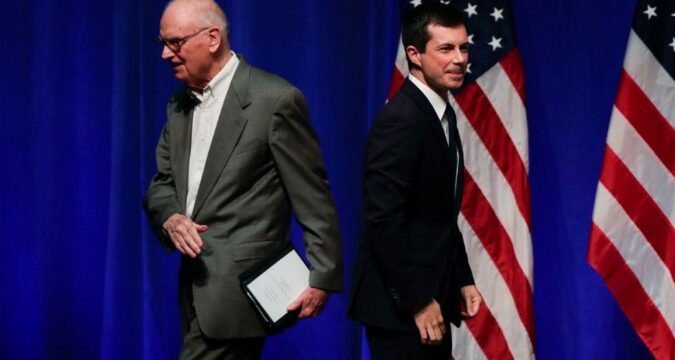
BLOOMINGTON, Ind. — Former Rep. Lee Hamilton, a crewcut-wearing Indiana Democrat who was a leading foreign affairs voice during three decades in Congress and helped oversee investigations of the Sept. 11 terrorist attacks, died Tuesday. He was 94.
Hamilton, who also led a congressional probe of the Reagan administration’s Iran-Contra affair while representing a rural southern Indiana district, died peacefully in his home in Bloomington, Indiana, said his son Doug Hamilton, who did not cite a specific cause.
Hamilton was at the forefront of congressional opposition to the 1991 Persian Gulf War waged by President George H.W. Bush and advocated continued economic sanctions against Iraq before military action over its invasion of Kuwait.
He decided against seeking reelection in 1998 and said after leaving Congress that he believed the U.S. needed to be regarded around the world as more than a leader of military coalitions.
“The United States must be — and must be seen as — an optimistic and benign power,” Hamilton said in 2003. “We must speak and act as a source of optimism, a beacon of freedom, a benign power forging a consensus approach toward a world of peace and growth and freedom. And American power must be accompanied by American generosity.”
President Barack Obama presented Hamilton with the Presidential Medal of Freedom in 2015, saying during the ceremony that Hamilton was a man “widely admired” on both sides of the aisle “for his honesty, his wisdom, and consistent commitment to bipartisanship.”
https://www.chicagotribune.com/2026/02/04/lee-hamilton-dies/

Supreme Court Allows New California Congressional Map That Favors Democrats
Supreme Court Allows New California Congressional Map That Favors Democrats
Authored by Matthew Vadum via The Epoch Times,
The U.S. Supreme Court on Feb. 4 allowed California to use its newly redrawn congressional map in the upcoming midterm elections over the objections of Republicans who filed to block it.
The decision in Tangipa v. Newsom came in an unsigned order. No justices dissented. The court did not explain its ruling.
California Republicans had filed an emergency application with the court on Jan. 20, asking the justices to block the map that gives Democrats an electoral advantage.
The new ruling comes after the court on Dec. 4, 2025, upheld a redrawn election map that aimed to increase Republican representation in Texas’s U.S. House delegation.
Republicans had argued that the new California map, which voters authorized in November 2025 by approving Proposition 50, constituted unlawful racial gerrymandering that the federal Voting Rights Act prohibits.
Gerrymandering is the manipulation of electoral district boundaries to favor a particular party or constituency.
The Supreme Court has previously ruled that race-based gerrymandering violates the U.S. Constitution but that redrawing district boundaries to boost partisan fortunes passes constitutional muster.
In a 2–1 ruling delivered on Jan. 14, a three-judge federal panel in California rejected GOP arguments, describing the referendum as a proportional and legal reaction to Republicans undertaking redistricting efforts in Texas.
“We find that Challengers have failed to show that racial gerrymandering occurred, and we conclude that there is no basis for issuing a preliminary injunction,” the court said in its written opinion.
The judges said California’s move was a reaction to similar moves undertaken in Texas that President Donald Trump encouraged.
“The stated goal of [the legislation authorizing the referendum] was to counter the actions of Texas and pick up an additional five Democratic seats,” the court wrote.
“The new map drawn by a private consultant, paid for by the Democratic Congressional Campaign Committee, and incorporated into Proposition 50, met that goal exactly.”
Republicans currently hold a thin, 218–214 majority over Democrats in the U.S. House. There are 435 seats in the House, but three are currently vacant.
Tyler Durden
Wed, 02/04/2026 – 15:45

Waukegan mayor plans overhaul of liquor license regulations: ‘The business environment today is far more dynamic and diverse’
Waukegan Mayor Sam Cunningham said he and his staff have taken a close look at the city’s liquor code since last summer, and he plans to make changes.
They will be thorough, deliberate and inclusive, he said.
With the current ordinance being “extremely long,” as well as “hard to understand and apply,” Cunningham said he plans to work with members of the City Council and key city personnel to streamline the laws surrounding alcoholic beverages.
“These Issues touch on public safety, fairness in how licenses are issued and enforced, conflicting language from many decades of amendments, and outdated language from the state liquor code and other unnecessary language,” he said.
Cunningham announced his plan to overhaul Waukegan’s liquor code at the start of a City Council meeting on Monday at City Hall and create an ordinance appropriate for the 21st century.
Since the start of the century, and particularly with the coronavirus pandemic, Cunningham said practices began to change for those in the bar and restaurant business. The code needs to be modernized to reflect current times.
“The business environment today is far more dynamic and diverse,” he said after the meeting. “Before, liquor licensing largely focused on traditional bars and restaurants with predictable operating models.”
Restaurants and bars initially closed during the pandemic. Cunningham said when they were allowed to reopen, they made changes to let people eat and drink safely. Some of those modifications, like expanded outdoor dining, remain. Operating hours changed, and there are more special events to attract patrons.
“Operators now place a higher value on speed, clarity and predictability in regulations,” the mayor said. “The ordinance needs to reflect this reality while still maintaining accountability and public safety.”
After Ald. Jose A. Guzman, 2nd Ward, joined the council after the 2023 election, each time a vote was taken on a liquor license, he left the room and did not participate. At the time, he had a liquor license because he operated Dockside Dogs at the lakefront during the summer.
A state law prohibits elected officials in cities the size of Waukegan from holding a liquor license. He said at the time he was not aware of the law when he was elected. The following spring, he did not renew the license. He said at the time there was an economic impact.
“I dropped the liquor license and stopped selling alcoholic beverages because serving the public is more important right now,” he said at the time. “They should change the law, because it keeps a lot of people out of public service.”
Some changes to the liquor laws were made piecemeal, like an effort in 2018 to keep gas stations from selling alcoholic beverages. Ald. Edith Newsome, 5th Ward, was then a member of the council. She said at a 2024 Committee of the Whole meeting, a separate class of liquor license was created and no more would be issued of that sort.
As ownership of those gas stations with a permit to sell liquor changed or the business closed, Newsome said the intent was that the license would cease to exist and eventually the practice would disappear.
Though Cunningham has not yet said what changes should be made — he wants to work closely with council members and city personnel to determine which alterations should take place — he said he can think of a number of potential modifications.
Initially, Cunningham said the city incorporated the state liquor code into the city’s ordinance. Each time the state made a change, the city had to do the same. Removing the need would be a good idea, he said. In addition, he said, requiring a potential business owner to estimate annual sales before opening is burdensome.
The current code requires a seating chart and a planned menu, which the city must approve. Cunningham also suggests changing the provision requiring a staff handbook, or limiting a bar to 50 seats regardless of its size.
If one of several owners of a business with a liquor license changes, the current law mandates a new license. Cunningham said he is not sure a new license should be required in such cases. He would also consider changing the requirement for a background check for veterans organizations or cultural clubs.
Cunningham said the process of getting an application should be streamlined. Redundant information in both a business and a liquor license is unnecessary. Making an applicant go to multiple departments for approval is also onerous, he said.
https://www.chicagotribune.com/2026/02/04/waukegan-city-council-liquor-licenses/