Category: News

Why The ‘Hype Phase’ Of Wind And Solar Is Over
Why The ‘Hype Phase’ Of Wind And Solar Is Over
Authored by Kevin Stocklin via The Epoch Times,
The Trump administration has taken a sharp turn from its predecessor regarding wind and solar energy, curtailing many of the loans, grants, and permitting that the Biden administration had put in place.
Without government subsidies and regulatory support, energy analysts are questioning whether these industries can stand on their own merits.
“We’ve reached the end of the hype phase, and the beginning of the reality phase,” Sam Romain, chairman of Americans for Energy Dominance, told The Epoch Times.
“Technologies that lower costs, improve reliability, and strengthen the grid will grow.
“Those that don’t will fade.”
On his first day in office, President Donald Trump suspended new leases and permits for wind and solar on public lands and waters and raised fees for existing projects. Subsequently, his One Big Beautiful Bill Act set tighter deadlines to cut off subsidies to wind and solar energy projects, putting more than $300 billion in planned wind and solar investments at risk of cancellation.
In August 2025, Transportation Secretary Sean Duffy canceled $679 million in federal funding for 12 offshore wind projects across the United States, stating that the administration is “prioritizing real infrastructure improvements over fantasy wind projects that cost much and offer little.”
And in December 2025, the Interior Department halted leases for five large-scale offshore wind projects under construction in the United States, citing security risks.
Calling the wind installations “expensive, unreliable [and] heavily subsidized,” Interior Secretary Doug Burgum posted on X that “ONE natural gas pipeline supplies as much energy as these 5 projects COMBINED.”
Without these subsidies, many analysts say wind and solar power will struggle to survive, at least on the scale that was envisioned under the Biden administration.
“Wind and solar won’t be able to credibly compete with affordable, reliable baseload sources like gas, coal, and nuclear at the utility scale,” Sarah Montalbano, energy policy analyst at Always On Energy Research, told The Epoch Times. “Intermittent wind and solar depend on tax credits and state mandates that require their construction.”
Today, some analysts say, developers are putting many renewable projects on hold, waiting until another Democratic administration takes the White House.
“For the remainder of Trump’s term, wind and solar will be in decline,” H. Sterling Burnett, director of climate and environmental policy at The Heartland Institute, told The Epoch Times. “Whether that sticks depends upon who is the next president.
Climate change activists hold signs during a news conference with members of the House Sustainable Energy and Environment Coalition on Capitol Hill in Washington on Nov. 13, 2025. Since taking office, President Donald Trump has slashed subsidies and canceled permits on federal lands for wind and solar energy—an industry that has long thrived on government subsidies. Madalina Kilroy/The Epoch Times
“Some wind and solar will be built due to state support and mandates, especially those already contracted for and under construction, but the money spigot is ending and that will doom new developments,” Burnett said.
As of January, there are 4,202 planned solar projects and 802 planned wind projects in development in the United States, according to Cleanview, an energy analytics firm.
State Support for Wind, Solar
While renewable energy has lost some of its strongest advocates in Washington, experts say that the industry will survive, even if scaled back, because regulation of power generation was reserved to the states in the 1920 Federal Power Act, within their borders.
And many states, particularly those run by Democrats, have regulations in place that require or incentivize utilities to buy wind and solar power over gas, coal, and nuclear.
However, even in those states that favor them, wind and solar energy are running up against two major hurdles: reliability and cost.
When comparing wind or solar to alternatives such as nuclear, “you’re comparing two very unlike things,” said Bill Glahn, policy fellow at the Center of the American Experiment and former deputy commerce commissioner for the state of Minnesota.
One is “an intermittent resource that may last 10 to 20 years before the equipment breaks down and has to be replaced, versus a 24/7 dispatchable plant that could be around 50 to 70 years,” Glahn told The Epoch Times.
He said the nuclear plants currently operating in Minnesota were built in the 1970s and will likely operate until 2040 or beyond.
“Wind and solar can’t compete on that basis,” he said.
Oilfield pump jacks in Williston, N.D., on Dec. 21, 2023. Madalina Vasiliu/The Epoch Times
Hidden Costs
Renewable energy was supposed to be a cheaper energy source, advocates claimed, because wind and sunshine are free. However, the true aggregate cost of these technologies has been obscured in several ways.
First, weather-dependent energy requires backup systems, typically gas-fired plants, to generate electricity when the sun is not shining or the wind is not blowing. However, the cost of building and running these backup systems is generally not attributed to the wind and solar plants that required them.
There are also additional costs to build new distribution lines to transmit electricity from the often remote locations where wind and solar power are generated to end users in cities and towns.
“With so many of these projects, be they wind or solar, you have to either upgrade a transmission line or upgrade the local distribution system to put those assets on the grid, and those costs are never assigned to wind and solar,” Glahn said. “The wind and solar projects cause the transmission projects to be needed—and these are multi-billion dollar projects—but that cost all gets assigned, in this extremely bizarre twist, to resources that are running and that are useful.”
In Minnesota, the source that is running is usually nuclear power and natural gas, so the additional transmission costs are attributed to them, Glahn said.
“We put the thumb on the scale to make sure wind and solar pass some rudimentary cost-benefit analysis by just out and out cheating, and it’s super frustrating,” he said.
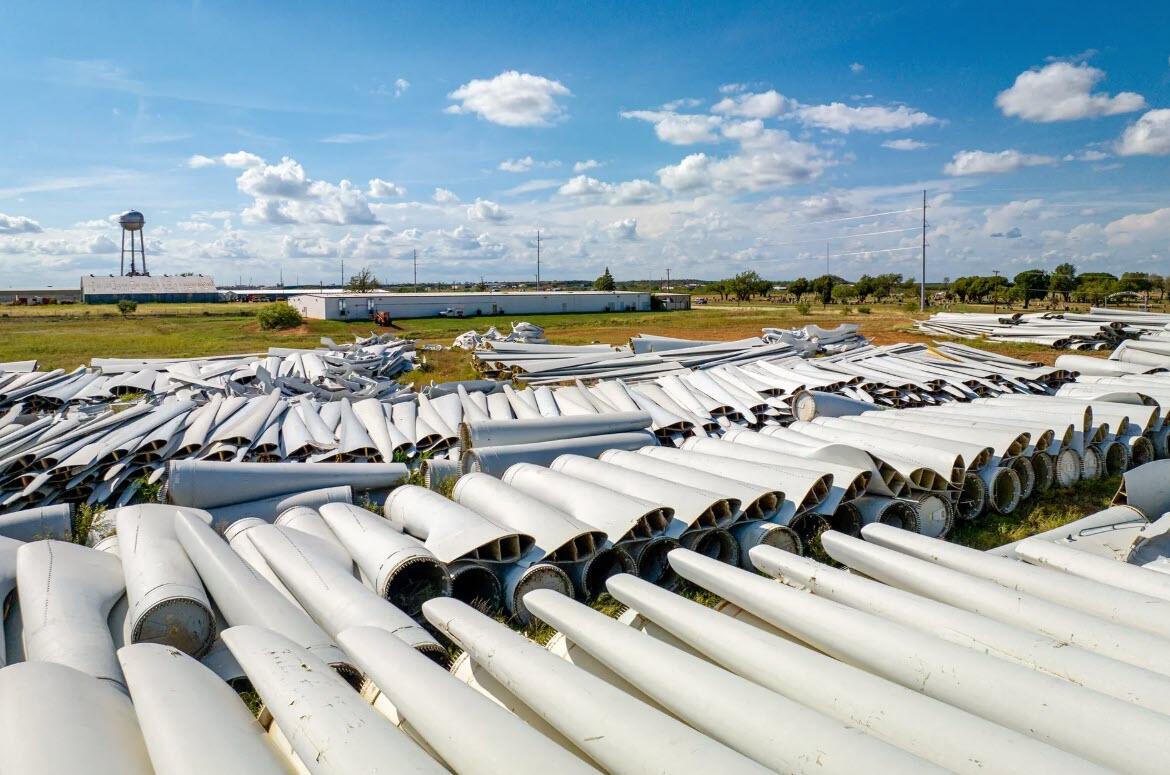
Another hidden cost is that wind and solar plants typically have shorter lifespans than gas, coal, and nuclear plants, and the expense of decommissioning them is often also not taken into account in the way that it is with traditional power plants.
An October 2025 study by Curtis Schube and Mark Mills for the National Center for Energy Analytics found that, while 30 U.S. states made little or no provisions for decommissioning wind and solar plants, the vast majority of states did so for coal, gas, and nuclear plants. In many cases, this could leave local residents with the bill for cleanup, once wind and solar facilities reach the end of their relatively short lives.
Discarded wind turbine blades are seen in a field next to the Sweetwater Cemetery in Sweetwater, Texas, on Oct. 4, 2023. Brandon Bell/Getty Images
There are currently more than 75,000 wind turbines operating across 45 U.S. states, and more than 5,700 large-scale solar installations across 49 states, according to the U.S. Geological Survey. In both cases, the first installations were built prior to 1990, putting many of them close to their decommissioning date.
Consumers often bear all of these additional costs through higher utility bills and higher taxes.
Environmental organizations that advocate net-zero policies and wind and solar construction often have strong lobbying support in state legislatures, as do public utilities that simply pass on their costs to consumers, Glahn said.
“Utilities make sure that they’re going to come out of this neutral, but the consumers are the ones who get screwed, and there’s really nobody to speak for them at the capitol,” he said.
Struggle to Pay Electric Bills
This more sober assessment of the costs and benefits of wind and solar is happening at a time when Americans increasingly are struggling to pay their electric bills.
A 2025 report by the Century Foundation states that average electricity prices have climbed by 32 percent since 2022 and as a result, 14 million Americans—or about one in 20 households—are on track to have unpaid utility bills sent to collection agencies.
“If a policy drives up bills and increases blackout risk, it’s not sustainable,” Romain said. “These ‘net zero’ mandates are often written by elites who never worry about paying their power bill.”
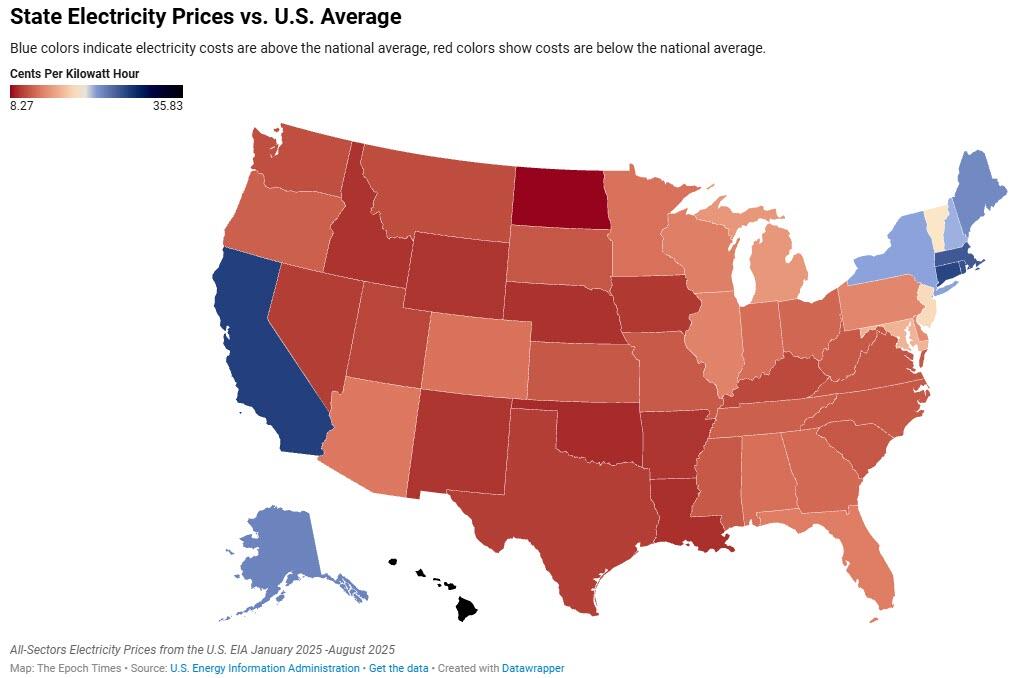
A December 2025 study by the Institute for Energy Research found that 86 percent of the states with electricity prices above the national average were Democrat-led, or “reliably blue.” All of the five states with the highest electric bills had mandates requiring that 100 percent of their power must come from carbon-free sources.
By contrast, 20 of the 25 states with the lowest electricity prices were red states, and seven of the 10 states with the cheapest electricity did not have 100 percent carbon-free mandates.
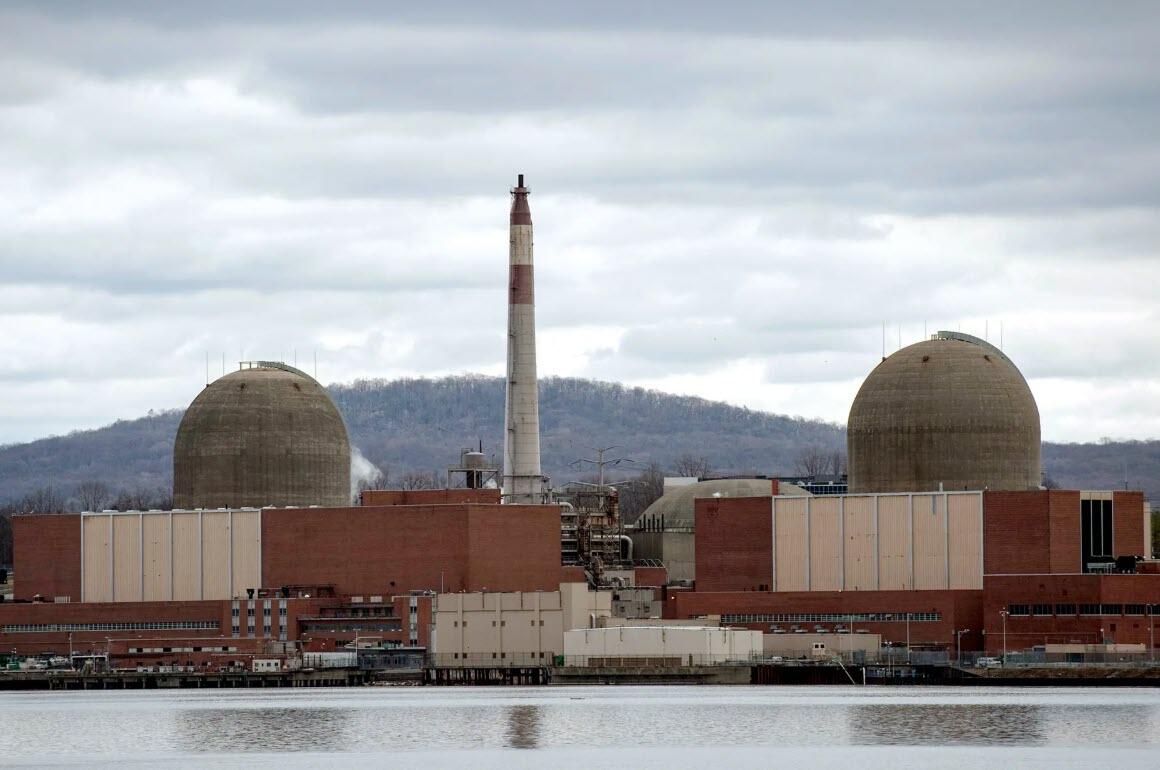
Energy analyst Robert Bryce cited the case of New York in a recent op-ed published in the New York Post. The state just approved a $615 per year rate hike in gas and electricity bills for the average New York City resident by 2028. The state’s political leaders have not only incentivized utilities to build wind and solar capacity, but also shuttered the Indian Point nuclear plant, which produced one-quarter of New York City’s electricity.
Closing Indian Point will cost between $1.5 billion and $2.2 billion by 2030, Bryce said, and as a result of such policies, New York’s electricity prices are now 58 percent above the national average.
The Indian Point nuclear power plant on the Hudson River in Buchanan, N.Y., on March 22, 2011. Bill Glahn, a policy fellow at the Center of the American Experiment, said nuclear plants have longer life spans than wind and solar and are “24/7 dispatchable,” making them more reliable. Don Emmert/AFP via Getty Images
Renewable Rejection
And while Americans may not have control over their electric bills, they are increasingly fighting back against the installations of large wind and solar projects in their neighborhoods.
“It was clear before the end of subsidies that Big Wind was facing more and more friction from local communities fighting back against their projects,” Bryce told The Epoch Times, citing the most recent example of the California Energy Commission rejecting the Fountain Wind project in Shasta County.
According to Bryce’s database, Renewable Rejection, there have been 1,148 cases to date of local communities working to halt the installation of wind, solar, or battery projects.
Wind turbines obstruct views and injure wildlife, and both wind and solar facilities consume significantly more acreage than traditional energy plants, according to a 2024 report by the Massachusetts Institute of Technology.
“When it comes to land use, nuclear plants take up as little as 10 hectares per terawatt-hour of electricity produced per year, while wind uses about 100 hectares, measuring just the area taken up by turbines,” the report found.
“This rises to an astounding 10,000 hectares if you include all the land covered by a wind farm, but most of this space is open land and can be used for ranching or farming.”
In January, a federal judge blocked the Trump administration’s attempt to revoke permits for five offshore wind projects, allowing several of them to resume construction. According to Burnett, however, even if these wind projects move through to completion, there will likely be delays and cost overruns.
“Dozens of offshore wind projects approved and permitted by the Biden administration have already ceased construction and withdrawn from the projects simply due to economics,” Burnett said. “Materials costs keep rising and supply chain problems have hampered construction.”
Wind turbines operate in a field in Beulah, N.D., on Dec. 22, 2023. Madalina Vasiliu/The Epoch Times
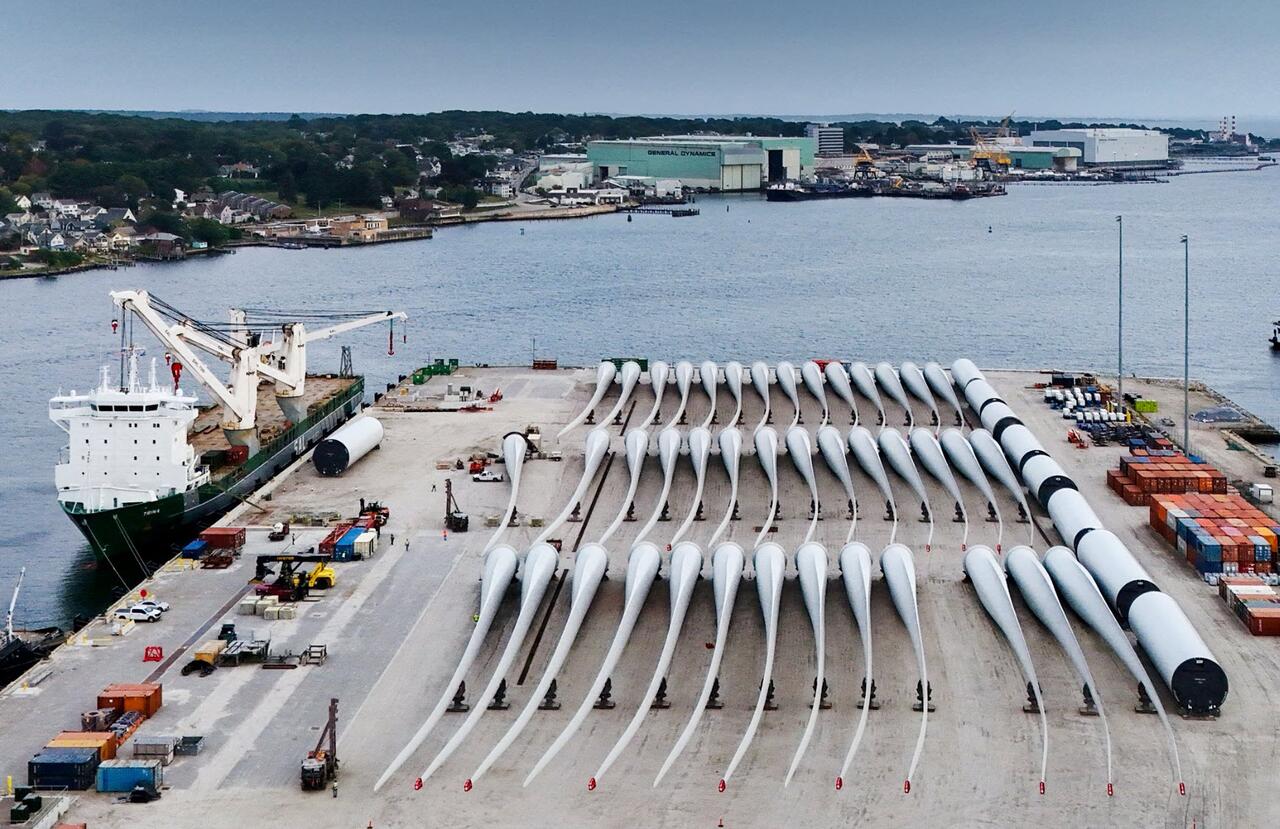
Because much of the material for wind turbines and solar panels originates in China, construction costs are being driven even higher by tariffs imposed on Chinese imports.
As their costs rise, many wind developers have repeatedly gone back to states to renegotiate terms, “and still they’ve pulled out,” Burnett said. “The remaining five projects still under construction will cost ratepayers billions of dollars, pollute the oceans, kill protected species, compromise national security, and provide relatively little reliable power.”
An aerial view shows the Kayenta Solar Plant in Kayenta, Ariz., on June 23, 2024. Observers said that the true aggregate cost of renewable energy is often understated because existing utilities must build the new lines to carry power from remote wind and solar sites to cities and towns. Brandon Bell/Getty Images
However, the prospects for solar energy are likely brighter than for wind.
“It is important to distinguish between massive wind and solar farms that stretch for miles and the solar panels that homeowners install on their rooftops,” Romain said.
“The economics of home batteries and rooftop solar work for a lot of Americans, which is why they privately installed 4.7 gigawatts of rooftop solar in 2024 alone—roughly the output of five nuclear plants.”
Bryce concurs.
“Solar will continue to grow for several reasons: It is politically popular, in many cases the economics work without subsidies, and solar land-use requirements are about one-tenth those of wind,” he said.
“The only thing dumber than onshore wind energy is offshore wind energy.”
Tyler Durden
Wed, 02/04/2026 – 17:00
https://www.zerohedge.com/energy/why-hype-phase-wind-and-solar-over

Mayor Brandon Johnson heads to budget opponent’s ward to continue fight over 2026 package
Mayor Brandon Johnson held a South Side town hall Tuesday evening to again hammer the city budget, the latest score-settling between him and the City Council bloc that passed its own plan in December after rejecting key parts of his proposal.
The fiery meeting at the South Shore Cultural Center began with local Ald. Desmon Yancy, a progressive who voted with mayoral opponents, questioning why Johnson was still attacking the budget for allegedly being short $163 million.
The mayor and his team then broke down their issues with the final spending package, a sign that last fall’s grueling fight shows no signs of simmering down over a month into 2026, even as both sides say the budget could still require midyear changes to make it work.
“If it wasn’t balanced, why wasn’t the veto power used to send it back to the council?,” Yancy said. “Pardon the pun. Something isn’t quite adding up.”
The $16.6 billion budget passed in late December in a historic rebuke of the mayor, averting a government shutdown. Just as unprecedented is the Johnson administration continuing to sound the alarm on a spate of issues it sees with the revenue projections, while his council opposition has complained those arguments are misleading.
All these forces converge to signal continued instability at City Hall in the wake of the political realignment spurred by the council rebellion against Johnson. That could present warning signs to credit rating agencies, portend a just-as-rocky budget cycle for 2027 and — per the mayor’s warnings — lead to layoffs that could hit the Police and Fire departments if fixes don’t come.
“There are forces, make no mistake about it, in this city, who would much rather work against the interests of working people,” Johnson said after Yancy’s remarks. “This budget does have projections from sources that the public has never seen or heard of before. That does bring some alarm.”
The next front of the revived 2026 budget battle could be back in City Council, where an aldermanic majority has cried foul over Johnson splitting in half an advance payment to the city’s woefully underfunded public pensions — a major sticking point in last year’s negotiations. A Finance Committee hearing into the matter is scheduled for later this month.
The mayor, for his part, has blamed “cash flow challenges” from Cook County’s side. Property tax bills were months late last year, delaying revenue payments that are necessary for pension payments, his budget director Annette Guzman told reporters in January. But that hasn’t placated Johnson critics who are looking to capitalize on openings to check the mayor’s budget team.
Regarding the $163 million shortfall estimated by Johnson’s team in the alternate budget, Guzman on Tuesday pointed out several reasons there could be gaps. First was a delay in establishing legal video gambling terminals due to state licensing timelines, plus losing $4 million from the Bally’s casino payment, she said.
Chicago Mayor Brandon Johnson, left, and Budget Director Annette Guzman answer questions from the audience during a town hall, Feb. 3, 2026, at the South Shore Cultural Center. The mayor defended his handling of the 2026 budget and took questions from the audience. (Josh Boland/Chicago Tribune)
There could also be a drop in revenue from the shopping bag tax hike because the increase could change consumer behavior, while the budget’s liquor tax changes actually dwindle the effective rate, Guzman said. A measure to license and tax augmented reality ads is not feasible to implement, while revenue projections for advertisements on public property such as light poles and bridges were inflated, she said.
On the controversial measure to raise $89.6 million by selling debt owed to the city, Guzman said “we are working closely with departments right now to put forth the sale” despite “a lot of difficulties in getting that debt sold.”
The mayor, meanwhile, revved up his tax-the-rich rhetoric — a sign that he will throw his weight behind trying to relaunch his stalled progressive revenue agenda ahead of next year’s budget, the final one to be passed before his seat and that of all 50 aldermen are on the ballot.
“Look, I know that there’s an element of the city of Chicago that believe that we can tighten our belt and to be leaner … but you’re not going to cut your way to success,” he said. “We have to take our fight to Springfield y’all. That’s where the big check is.”
It was a sharply different reception than the rosy welcome Johnson got last month at another 2026 budget appearance with a supporter, Ald. Anthony Quezada, in Avondale.
This town hall saw union supporters of both Johnson and Yancy, once allies in the city’s leftist movement, come to cheer them on. A former organizer with Service Employees International Union, the second biggest labor backer of Johnson’s 2023 election, Yancy went on the offensive against the mayor during the last budget fight.
People clap during a town hall, Feb. 3, 2026, hosted by Mayor Brandon Johnson at the South Shore Cultural Center. (Josh Boland/Chicago Tribune)
And Tuesday night — which featured Yancy’s team distributing a printout of questions challenging the mayor’s handling of the budget — shows the rift between the two progressives growing.
Also in attendance were some of the council leaders of the group that passed the alternative budget, as well as other progressive critics on council, who said they were there to support Yancy.
“The mayor has said repeatedly that aldermen who didn’t support his budget were wicked and immoral, but is it really immoral to stand up for crime victims and high school students?” Yancy said, pointing out two youth mentoring programs that saw funding cuts Johnson had proposed restored under the final budget.
And the bad feelings seem unlikely to abate anytime soon.
Hours earlier, some of Yancy’s ward constituents got a text blast with a flier of Johnson and Yancy’s faces captioned, “DON’T BE FOOLED. … Mayor Johnson has not been honest about the City Council’s Alternative Budget.”
Tribune reporter Jake Sheridan contributed.
https://www.chicagotribune.com/2026/02/04/mayor-brandon-johnson-budget-opponent-fight-2026/

Mayor Brandon Johnson heads to budget opponent’s ward to continue fight over 2026 package
Mayor Brandon Johnson held a South Side town hall Tuesday evening to again hammer the city budget, the latest score-settling between him and the City Council bloc that passed its own plan in December after rejecting key parts of his proposal.
The fiery meeting at the South Shore Cultural Center began with local Ald. Desmon Yancy, a progressive who voted with mayoral opponents, questioning why Johnson was still attacking the budget for allegedly being short $163 million.
The mayor and his team then broke down their issues with the final spending package, a sign that last fall’s grueling fight shows no signs of simmering down over a month into 2026, even as both sides say the budget could still require midyear changes to make it work.
“If it wasn’t balanced, why wasn’t the veto power used to send it back to the council?,” Yancy said. “Pardon the pun. Something isn’t quite adding up.”
The $16.6 billion budget passed in late December in a historic rebuke of the mayor, averting a government shutdown. Just as unprecedented is the Johnson administration continuing to sound the alarm on a spate of issues it sees with the revenue projections, while his council opposition has complained those arguments are misleading.
All these forces converge to signal continued instability at City Hall in the wake of the political realignment spurred by the council rebellion against Johnson. That could present warning signs to credit rating agencies, portend a just-as-rocky budget cycle for 2027 and — per the mayor’s warnings — lead to layoffs that could hit the Police and Fire departments if fixes don’t come.
“There are forces, make no mistake about it, in this city, who would much rather work against the interests of working people,” Johnson said after Yancy’s remarks. “This budget does have projections from sources that the public has never seen or heard of before. That does bring some alarm.”
The next front of the revived 2026 budget battle could be back in City Council, where an aldermanic majority has cried foul over Johnson splitting in half an advance payment to the city’s woefully underfunded public pensions — a major sticking point in last year’s negotiations. A Finance Committee hearing into the matter is scheduled for later this month.
The mayor, for his part, has blamed “cash flow challenges” from Cook County’s side. Property tax bills were months late last year, delaying revenue payments that are necessary for pension payments, his budget director Annette Guzman told reporters in January. But that hasn’t placated Johnson critics who are looking to capitalize on openings to check the mayor’s budget team.
Regarding the $163 million shortfall estimated by Johnson’s team in the alternate budget, Guzman on Tuesday pointed out several reasons there could be gaps. First was a delay in establishing legal video gambling terminals due to state licensing timelines, plus losing $4 million from the Bally’s casino payment, she said.
Chicago Mayor Brandon Johnson, left, and Budget Director Annette Guzman answer questions from the audience during a town hall, Feb. 3, 2026, at the South Shore Cultural Center. The mayor defended his handling of the 2026 budget and took questions from the audience. (Josh Boland/Chicago Tribune)
There could also be a drop in revenue from the shopping bag tax hike because the increase could change consumer behavior, while the budget’s liquor tax changes actually dwindle the effective rate, Guzman said. A measure to license and tax augmented reality ads is not feasible to implement, while revenue projections for advertisements on public property such as light poles and bridges were inflated, she said.
On the controversial measure to raise $89.6 million by selling debt owed to the city, Guzman said “we are working closely with departments right now to put forth the sale” despite “a lot of difficulties in getting that debt sold.”
The mayor, meanwhile, revved up his tax-the-rich rhetoric — a sign that he will throw his weight behind trying to relaunch his stalled progressive revenue agenda ahead of next year’s budget, the final one to be passed before his seat and that of all 50 aldermen are on the ballot.
“Look, I know that there’s an element of the city of Chicago that believe that we can tighten our belt and to be leaner … but you’re not going to cut your way to success,” he said. “We have to take our fight to Springfield y’all. That’s where the big check is.”
It was a sharply different reception than the rosy welcome Johnson got last month at another 2026 budget appearance with a supporter, Ald. Anthony Quezada, in Avondale.
This town hall saw union supporters of both Johnson and Yancy, once allies in the city’s leftist movement, come to cheer them on. A former organizer with Service Employees International Union, the second biggest labor backer of Johnson’s 2023 election, Yancy went on the offensive against the mayor during the last budget fight.
People clap during a town hall, Feb. 3, 2026, hosted by Mayor Brandon Johnson at the South Shore Cultural Center. (Josh Boland/Chicago Tribune)
And Tuesday night — which featured Yancy’s team distributing a printout of questions challenging the mayor’s handling of the budget — shows the rift between the two progressives growing.
Also in attendance were some of the council leaders of the group that passed the alternative budget, as well as other progressive critics on council, who said they were there to support Yancy.
“The mayor has said repeatedly that aldermen who didn’t support his budget were wicked and immoral, but is it really immoral to stand up for crime victims and high school students?” Yancy said, pointing out two youth mentoring programs that saw funding cuts Johnson had proposed restored under the final budget.
And the bad feelings seem unlikely to abate anytime soon.
Hours earlier, some of Yancy’s ward constituents got a text blast with a flier of Johnson and Yancy’s faces captioned, “DON’T BE FOOLED. … Mayor Johnson has not been honest about the City Council’s Alternative Budget.”
Tribune reporter Jake Sheridan contributed.
https://www.chicagotribune.com/2026/02/04/mayor-brandon-johnson-budget-opponent-fight-2026/
Mayor Brandon Johnson heads to budget opponent’s ward to continue fight over 2026 package
Mayor Brandon Johnson held a South Side town hall Tuesday evening to again hammer the city budget, the latest score-settling between him and the City Council bloc that passed its own plan in December after rejecting key parts of his proposal.
The fiery meeting at the South Shore Cultural Center began with local Ald. Desmon Yancy, a progressive who voted with mayoral opponents, questioning why Johnson was still attacking the budget for allegedly being short $163 million.
The mayor and his team then broke down their issues with the final spending package, a sign that last fall’s grueling fight shows no signs of simmering down over a month into 2026, even as both sides say the budget could still require midyear changes to make it work.
“If it wasn’t balanced, why wasn’t the veto power used to send it back to the council?,” Yancy said. “Pardon the pun. Something isn’t quite adding up.”
The $16.6 billion budget passed in late December in a historic rebuke of the mayor, averting a government shutdown. Just as unprecedented is the Johnson administration continuing to sound the alarm on a spate of issues it sees with the revenue projections, while his council opposition has complained those arguments are misleading.
All these forces converge to signal continued instability at City Hall in the wake of the political realignment spurred by the council rebellion against Johnson. That could present warning signs to credit rating agencies, portend a just-as-rocky budget cycle for 2027 and — per the mayor’s warnings — lead to layoffs that could hit the Police and Fire departments if fixes don’t come.
“There are forces, make no mistake about it, in this city, who would much rather work against the interests of working people,” Johnson said after Yancy’s remarks. “This budget does have projections from sources that the public has never seen or heard of before. That does bring some alarm.”
The next front of the revived 2026 budget battle could be back in City Council, where an aldermanic majority has cried foul over Johnson splitting in half an advance payment to the city’s woefully underfunded public pensions — a major sticking point in last year’s negotiations. A Finance Committee hearing into the matter is scheduled for later this month.
The mayor, for his part, has blamed “cash flow challenges” from Cook County’s side. Property tax bills were months late last year, delaying revenue payments that are necessary for pension payments, his budget director Annette Guzman told reporters in January. But that hasn’t placated Johnson critics who are looking to capitalize on openings to check the mayor’s budget team.
Regarding the $163 million shortfall estimated by Johnson’s team in the alternate budget, Guzman on Tuesday pointed out several reasons there could be gaps. First was a delay in establishing legal video gambling terminals due to state licensing timelines, plus losing $4 million from the Bally’s casino payment, she said.
Chicago Mayor Brandon Johnson, left, and Budget Director Annette Guzman answer questions from the audience during a town hall, Feb. 3, 2026, at the South Shore Cultural Center. The mayor defended his handling of the 2026 budget and took questions from the audience. (Josh Boland/Chicago Tribune)
There could also be a drop in revenue from the shopping bag tax hike because the increase could change consumer behavior, while the budget’s liquor tax changes actually dwindle the effective rate, Guzman said. A measure to license and tax augmented reality ads is not feasible to implement, while revenue projections for advertisements on public property such as light poles and bridges were inflated, she said.
On the controversial measure to raise $89.6 million by selling debt owed to the city, Guzman said “we are working closely with departments right now to put forth the sale” despite “a lot of difficulties in getting that debt sold.”
The mayor, meanwhile, revved up his tax-the-rich rhetoric — a sign that he will throw his weight behind trying to relaunch his stalled progressive revenue agenda ahead of next year’s budget, the final one to be passed before his seat and that of all 50 aldermen are on the ballot.
“Look, I know that there’s an element of the city of Chicago that believe that we can tighten our belt and to be leaner … but you’re not going to cut your way to success,” he said. “We have to take our fight to Springfield y’all. That’s where the big check is.”
It was a sharply different reception than the rosy welcome Johnson got last month at another 2026 budget appearance with a supporter, Ald. Anthony Quezada, in Avondale.
This town hall saw union supporters of both Johnson and Yancy, once allies in the city’s leftist movement, come to cheer them on. A former organizer with Service Employees International Union, the second biggest labor backer of Johnson’s 2023 election, Yancy went on the offensive against the mayor during the last budget fight.
People clap during a town hall, Feb. 3, 2026, hosted by Mayor Brandon Johnson at the South Shore Cultural Center. (Josh Boland/Chicago Tribune)
And Tuesday night — which featured Yancy’s team distributing a printout of questions challenging the mayor’s handling of the budget — shows the rift between the two progressives growing.
Also in attendance were some of the council leaders of the group that passed the alternative budget, as well as other progressive critics on council, who said they were there to support Yancy.
“The mayor has said repeatedly that aldermen who didn’t support his budget were wicked and immoral, but is it really immoral to stand up for crime victims and high school students?” Yancy said, pointing out two youth mentoring programs that saw funding cuts Johnson had proposed restored under the final budget.
And the bad feelings seem unlikely to abate anytime soon.
Hours earlier, some of Yancy’s ward constituents got a text blast with a flier of Johnson and Yancy’s faces captioned, “DON’T BE FOOLED. … Mayor Johnson has not been honest about the City Council’s Alternative Budget.”
Tribune reporter Jake Sheridan contributed.
https://www.chicagotribune.com/2026/02/04/mayor-brandon-johnson-budget-opponent-fight-2026/

Musk promete instalar centros de datos en el espacio con energía solar, pero expertos dudan
Por BERNARD CONDON y MATT O’BRIEN
NUEVA YORK (AP) — Elon Musk prometió esta semana revolucionar otra industria tal como lo hizo con los automóviles y los cohetes, y una vez más tiene todo en contra.
El hombre más rico del mundo dijo que quiere poner hasta un millón de satélites en órbita para formar vastos centros de datos en el espacio que operen con energía fotovoltaica, una medida para permitir un mayor uso de la inteligencia artificial y de chatbots sin provocar apagones ni disparar las facturas de electricidad.
Para financiar ese plan, Musk combinó SpaceX con su negocio de inteligencia artificial el lunes y planea una gran oferta pública inicial de la empresa combinada.
“Obviamente, la IA basada en el espacio es la única forma de escalar”, escribió Musk en el sitio web de SpaceX el lunes, agregando que “siempre está soleado en el espacio”.
Pero los científicos y expertos de la industria dicen que incluso Musk, quien superó a Detroit para convertir a Tesla en el fabricante de automóviles más valioso del mundo, enfrenta formidables obstáculos técnicos, financieros y ambientales.
Aquí hay un vistazo:
Está que arde
Capturar la energía del Sol desde el espacio para operar chatbots y otras herramientas de IA aliviaría la presión sobre las redes eléctricas y reduciría la demanda de extensos almacenes de computación que consumen granjas y bosques y requieren vastas cantidades de agua para enfriarse.
Pero el espacio presenta su propio conjunto de problemas.
Los centros de datos generan un calor enorme. El espacio parece ofrecer una solución porque es frío. Pero también es un vacío, así que el calor queda atrapado dentro de los objetos de la misma manera en que un termo mantiene el café caliente usando paredes dobles sin aire entre ellas.
“Un chip de computadora sin enfriar en el espacio se sobrecalentaría y derretiría mucho más rápido que uno en la Tierra”, señaló Josep Jornet, profesor de ingeniería informática y eléctrica en la Universidad Northeastern.
Una solución es construir radiadores gigantes que brillen en luz infrarroja para empujar el calor “hacia el oscuro vacío”, dice Jornet, agregando que la tecnología ha funcionado a pequeña escala, incluso en la Estación Espacial Internacional. Pero para los centros de datos de Musk se requeriría una serie de “estructuras masivas y frágiles que nunca antes se han construido”.
Luego está la basura espacial
Un solo satélite que funcione mal, se descomponga o se salga de órbita podría desencadenar una cascada de colisiones, lo que podría interrumpir las comunicaciones de emergencia, la previsión meteorológica y otros servicios.
Musk señaló en un reciente reporte a las autoridades regulatorias que sólo ha tenido un “evento de generación de escombros de baja velocidad” en siete años de operación de Starlink, su red de comunicaciones satelitales. Starlink ha operado alrededor de 10.000 satélites, pero eso es una fracción del millón o más que ahora planea poner en el espacio.
“Podríamos alcanzar un punto de inflexión donde la probabilidad de colisión sea demasiado alta”, comentó John Crassidis, de la Universidad de Buffalo, un exingeniero de la NASA. “Y estos objetos van rápido: 17.500 millas por hora (28.000 km/h). Podría haber colisiones muy violentas”.
Sin equipos de reparación
Incluso sin colisiones, los satélites fallan, los chips se degradan, las partes se descomponen.
Los chips gráficos GPU utilizados por las empresas de IA, por ejemplo, pueden dañarse y necesitar ser reemplazados.
“En la Tierra, lo que harías es enviar a alguien al centro de datos”, dijo Baiju Bhatt, director general de Aetherflux, una empresa de energía solar basada en el espacio. “Reemplazas el servidor, reemplazas la GPU, harías algo de cirugía en esa cosa y la volverías a colocar”.
Pero no existe tal equipo de reparación en órbita, y esas GPU en el espacio podrían dañarse debido a su exposición a partículas de alta energía del Sol.
Bhatt dice que una solución es aprovisionar el satélite con chips adicionales para reemplazar los que fallen. Pero eso es una propuesta costosa dado que probablemente cuesten decenas de miles de dólares cada uno, y los satélites actuales de Starlink sólo tienen una vida útil de unos cinco años.
Competencia y ventaja
Musk no es el único que está tratando de resolver estos problemas.
Una empresa en Redmond, Washington, llamada Starcloud, lanzó un satélite en noviembre que lleva un solo chip de computadora de IA fabricado por Nvidia para probar cómo se comportaría en el espacio. Google está explorando centros de datos orbitales en un proyecto que llama Project Suncatcher. Y Blue Origin de Jeff Bezos anunció planes en enero para una constelación de más de 5.000 satélites que comenzarán a lanzarse a finales del próximo año, aunque su enfoque ha sido más en las comunicaciones que en la IA.
Aun así, Musk tiene una ventaja: tiene cohetes.
Starcloud tuvo que usar un cohete Falcon de SpaceX para poner su chip en el espacio el año pasado. Aetherflux planea enviar un conjunto de chips que llama un Cerebro Galáctico al espacio en un cohete de SpaceX a finales de este año. Y Google también podría necesitar recurrir a Musk para poner en órbita sus dos primeros satélites prototipo planeados a principios del próximo año.
Pierre Lionnet, director de investigación de la asociación comercial Eurospace, dice que Musk rutinariamente cobra a sus rivales mucho más de lo que se cobra a sí mismo, hasta 20.000 dólares por kilo de carga útil frente a 2.000 dólares internamente.
Dijo que los anuncios de Musk esta semana indican que planea usar esa ventaja para ganar esta nueva carrera espacial.
“Cuando dice que vamos a poner estos centros de datos en el espacio, es una forma de decirles a los demás que mantendremos estos bajos costos de lanzamiento para mí mismo”, dijo Lionnet. “Es una especie de juego de poder”.
___
Esta historia fue traducida del inglés por un editor de AP con la ayuda de una herramienta de inteligencia artificial generativa.
Musk promete instalar centros de datos en el espacio con energía solar, pero expertos dudan
Por BERNARD CONDON y MATT O’BRIEN
NUEVA YORK (AP) — Elon Musk prometió esta semana revolucionar otra industria tal como lo hizo con los automóviles y los cohetes, y una vez más tiene todo en contra.
El hombre más rico del mundo dijo que quiere poner hasta un millón de satélites en órbita para formar vastos centros de datos en el espacio que operen con energía fotovoltaica, una medida para permitir un mayor uso de la inteligencia artificial y de chatbots sin provocar apagones ni disparar las facturas de electricidad.
Para financiar ese plan, Musk combinó SpaceX con su negocio de inteligencia artificial el lunes y planea una gran oferta pública inicial de la empresa combinada.
“Obviamente, la IA basada en el espacio es la única forma de escalar”, escribió Musk en el sitio web de SpaceX el lunes, agregando que “siempre está soleado en el espacio”.
Pero los científicos y expertos de la industria dicen que incluso Musk, quien superó a Detroit para convertir a Tesla en el fabricante de automóviles más valioso del mundo, enfrenta formidables obstáculos técnicos, financieros y ambientales.
Aquí hay un vistazo:
Está que arde
Capturar la energía del Sol desde el espacio para operar chatbots y otras herramientas de IA aliviaría la presión sobre las redes eléctricas y reduciría la demanda de extensos almacenes de computación que consumen granjas y bosques y requieren vastas cantidades de agua para enfriarse.
Pero el espacio presenta su propio conjunto de problemas.
Los centros de datos generan un calor enorme. El espacio parece ofrecer una solución porque es frío. Pero también es un vacío, así que el calor queda atrapado dentro de los objetos de la misma manera en que un termo mantiene el café caliente usando paredes dobles sin aire entre ellas.
“Un chip de computadora sin enfriar en el espacio se sobrecalentaría y derretiría mucho más rápido que uno en la Tierra”, señaló Josep Jornet, profesor de ingeniería informática y eléctrica en la Universidad Northeastern.
Una solución es construir radiadores gigantes que brillen en luz infrarroja para empujar el calor “hacia el oscuro vacío”, dice Jornet, agregando que la tecnología ha funcionado a pequeña escala, incluso en la Estación Espacial Internacional. Pero para los centros de datos de Musk se requeriría una serie de “estructuras masivas y frágiles que nunca antes se han construido”.
Luego está la basura espacial
Un solo satélite que funcione mal, se descomponga o se salga de órbita podría desencadenar una cascada de colisiones, lo que podría interrumpir las comunicaciones de emergencia, la previsión meteorológica y otros servicios.
Musk señaló en un reciente reporte a las autoridades regulatorias que sólo ha tenido un “evento de generación de escombros de baja velocidad” en siete años de operación de Starlink, su red de comunicaciones satelitales. Starlink ha operado alrededor de 10.000 satélites, pero eso es una fracción del millón o más que ahora planea poner en el espacio.
“Podríamos alcanzar un punto de inflexión donde la probabilidad de colisión sea demasiado alta”, comentó John Crassidis, de la Universidad de Buffalo, un exingeniero de la NASA. “Y estos objetos van rápido: 17.500 millas por hora (28.000 km/h). Podría haber colisiones muy violentas”.
Sin equipos de reparación
Incluso sin colisiones, los satélites fallan, los chips se degradan, las partes se descomponen.
Los chips gráficos GPU utilizados por las empresas de IA, por ejemplo, pueden dañarse y necesitar ser reemplazados.
“En la Tierra, lo que harías es enviar a alguien al centro de datos”, dijo Baiju Bhatt, director general de Aetherflux, una empresa de energía solar basada en el espacio. “Reemplazas el servidor, reemplazas la GPU, harías algo de cirugía en esa cosa y la volverías a colocar”.
Pero no existe tal equipo de reparación en órbita, y esas GPU en el espacio podrían dañarse debido a su exposición a partículas de alta energía del Sol.
Bhatt dice que una solución es aprovisionar el satélite con chips adicionales para reemplazar los que fallen. Pero eso es una propuesta costosa dado que probablemente cuesten decenas de miles de dólares cada uno, y los satélites actuales de Starlink sólo tienen una vida útil de unos cinco años.
Competencia y ventaja
Musk no es el único que está tratando de resolver estos problemas.
Una empresa en Redmond, Washington, llamada Starcloud, lanzó un satélite en noviembre que lleva un solo chip de computadora de IA fabricado por Nvidia para probar cómo se comportaría en el espacio. Google está explorando centros de datos orbitales en un proyecto que llama Project Suncatcher. Y Blue Origin de Jeff Bezos anunció planes en enero para una constelación de más de 5.000 satélites que comenzarán a lanzarse a finales del próximo año, aunque su enfoque ha sido más en las comunicaciones que en la IA.
Aun así, Musk tiene una ventaja: tiene cohetes.
Starcloud tuvo que usar un cohete Falcon de SpaceX para poner su chip en el espacio el año pasado. Aetherflux planea enviar un conjunto de chips que llama un Cerebro Galáctico al espacio en un cohete de SpaceX a finales de este año. Y Google también podría necesitar recurrir a Musk para poner en órbita sus dos primeros satélites prototipo planeados a principios del próximo año.
Pierre Lionnet, director de investigación de la asociación comercial Eurospace, dice que Musk rutinariamente cobra a sus rivales mucho más de lo que se cobra a sí mismo, hasta 20.000 dólares por kilo de carga útil frente a 2.000 dólares internamente.
Dijo que los anuncios de Musk esta semana indican que planea usar esa ventaja para ganar esta nueva carrera espacial.
“Cuando dice que vamos a poner estos centros de datos en el espacio, es una forma de decirles a los demás que mantendremos estos bajos costos de lanzamiento para mí mismo”, dijo Lionnet. “Es una especie de juego de poder”.
___
Esta historia fue traducida del inglés por un editor de AP con la ayuda de una herramienta de inteligencia artificial generativa.
Musk promete instalar centros de datos en el espacio con energía solar, pero expertos dudan
Por BERNARD CONDON y MATT O’BRIEN
NUEVA YORK (AP) — Elon Musk prometió esta semana revolucionar otra industria tal como lo hizo con los automóviles y los cohetes, y una vez más tiene todo en contra.
El hombre más rico del mundo dijo que quiere poner hasta un millón de satélites en órbita para formar vastos centros de datos en el espacio que operen con energía fotovoltaica, una medida para permitir un mayor uso de la inteligencia artificial y de chatbots sin provocar apagones ni disparar las facturas de electricidad.
Para financiar ese plan, Musk combinó SpaceX con su negocio de inteligencia artificial el lunes y planea una gran oferta pública inicial de la empresa combinada.
“Obviamente, la IA basada en el espacio es la única forma de escalar”, escribió Musk en el sitio web de SpaceX el lunes, agregando que “siempre está soleado en el espacio”.
Pero los científicos y expertos de la industria dicen que incluso Musk, quien superó a Detroit para convertir a Tesla en el fabricante de automóviles más valioso del mundo, enfrenta formidables obstáculos técnicos, financieros y ambientales.
Aquí hay un vistazo:
Está que arde
Capturar la energía del Sol desde el espacio para operar chatbots y otras herramientas de IA aliviaría la presión sobre las redes eléctricas y reduciría la demanda de extensos almacenes de computación que consumen granjas y bosques y requieren vastas cantidades de agua para enfriarse.
Pero el espacio presenta su propio conjunto de problemas.
Los centros de datos generan un calor enorme. El espacio parece ofrecer una solución porque es frío. Pero también es un vacío, así que el calor queda atrapado dentro de los objetos de la misma manera en que un termo mantiene el café caliente usando paredes dobles sin aire entre ellas.
“Un chip de computadora sin enfriar en el espacio se sobrecalentaría y derretiría mucho más rápido que uno en la Tierra”, señaló Josep Jornet, profesor de ingeniería informática y eléctrica en la Universidad Northeastern.
Una solución es construir radiadores gigantes que brillen en luz infrarroja para empujar el calor “hacia el oscuro vacío”, dice Jornet, agregando que la tecnología ha funcionado a pequeña escala, incluso en la Estación Espacial Internacional. Pero para los centros de datos de Musk se requeriría una serie de “estructuras masivas y frágiles que nunca antes se han construido”.
Luego está la basura espacial
Un solo satélite que funcione mal, se descomponga o se salga de órbita podría desencadenar una cascada de colisiones, lo que podría interrumpir las comunicaciones de emergencia, la previsión meteorológica y otros servicios.
Musk señaló en un reciente reporte a las autoridades regulatorias que sólo ha tenido un “evento de generación de escombros de baja velocidad” en siete años de operación de Starlink, su red de comunicaciones satelitales. Starlink ha operado alrededor de 10.000 satélites, pero eso es una fracción del millón o más que ahora planea poner en el espacio.
“Podríamos alcanzar un punto de inflexión donde la probabilidad de colisión sea demasiado alta”, comentó John Crassidis, de la Universidad de Buffalo, un exingeniero de la NASA. “Y estos objetos van rápido: 17.500 millas por hora (28.000 km/h). Podría haber colisiones muy violentas”.
Sin equipos de reparación
Incluso sin colisiones, los satélites fallan, los chips se degradan, las partes se descomponen.
Los chips gráficos GPU utilizados por las empresas de IA, por ejemplo, pueden dañarse y necesitar ser reemplazados.
“En la Tierra, lo que harías es enviar a alguien al centro de datos”, dijo Baiju Bhatt, director general de Aetherflux, una empresa de energía solar basada en el espacio. “Reemplazas el servidor, reemplazas la GPU, harías algo de cirugía en esa cosa y la volverías a colocar”.
Pero no existe tal equipo de reparación en órbita, y esas GPU en el espacio podrían dañarse debido a su exposición a partículas de alta energía del Sol.
Bhatt dice que una solución es aprovisionar el satélite con chips adicionales para reemplazar los que fallen. Pero eso es una propuesta costosa dado que probablemente cuesten decenas de miles de dólares cada uno, y los satélites actuales de Starlink sólo tienen una vida útil de unos cinco años.
Competencia y ventaja
Musk no es el único que está tratando de resolver estos problemas.
Una empresa en Redmond, Washington, llamada Starcloud, lanzó un satélite en noviembre que lleva un solo chip de computadora de IA fabricado por Nvidia para probar cómo se comportaría en el espacio. Google está explorando centros de datos orbitales en un proyecto que llama Project Suncatcher. Y Blue Origin de Jeff Bezos anunció planes en enero para una constelación de más de 5.000 satélites que comenzarán a lanzarse a finales del próximo año, aunque su enfoque ha sido más en las comunicaciones que en la IA.
Aun así, Musk tiene una ventaja: tiene cohetes.
Starcloud tuvo que usar un cohete Falcon de SpaceX para poner su chip en el espacio el año pasado. Aetherflux planea enviar un conjunto de chips que llama un Cerebro Galáctico al espacio en un cohete de SpaceX a finales de este año. Y Google también podría necesitar recurrir a Musk para poner en órbita sus dos primeros satélites prototipo planeados a principios del próximo año.
Pierre Lionnet, director de investigación de la asociación comercial Eurospace, dice que Musk rutinariamente cobra a sus rivales mucho más de lo que se cobra a sí mismo, hasta 20.000 dólares por kilo de carga útil frente a 2.000 dólares internamente.
Dijo que los anuncios de Musk esta semana indican que planea usar esa ventaja para ganar esta nueva carrera espacial.
“Cuando dice que vamos a poner estos centros de datos en el espacio, es una forma de decirles a los demás que mantendremos estos bajos costos de lanzamiento para mí mismo”, dijo Lionnet. “Es una especie de juego de poder”.
___
Esta historia fue traducida del inglés por un editor de AP con la ayuda de una herramienta de inteligencia artificial generativa.
Google Goes Wild After Hours After Beating Estimates, Projects Mindblowing CapEx
Google Goes Wild After Hours After Beating Estimates, Projects Mindblowing CapEx
Heading into today’s Alphabet earnings, we said that as a result of positioning (GOOGL positioning was 9.5/10 according to Goldman’s desk), it would be difficult for the stock, which was already priced to perfection, to impress an increasingly skeptical Wall Street, especially on the day when momentum saw its 4th biggest drop on record.
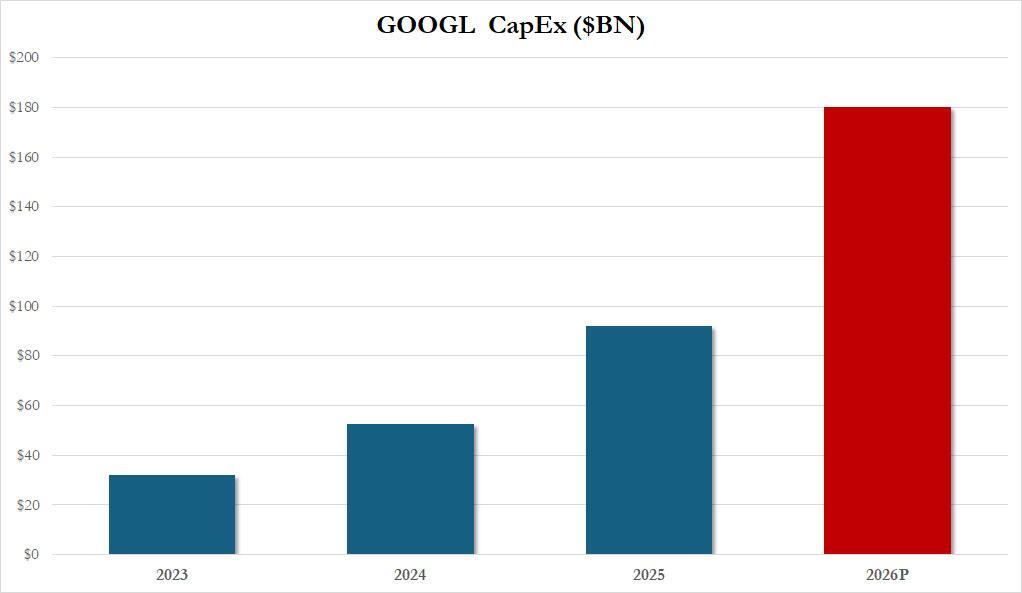
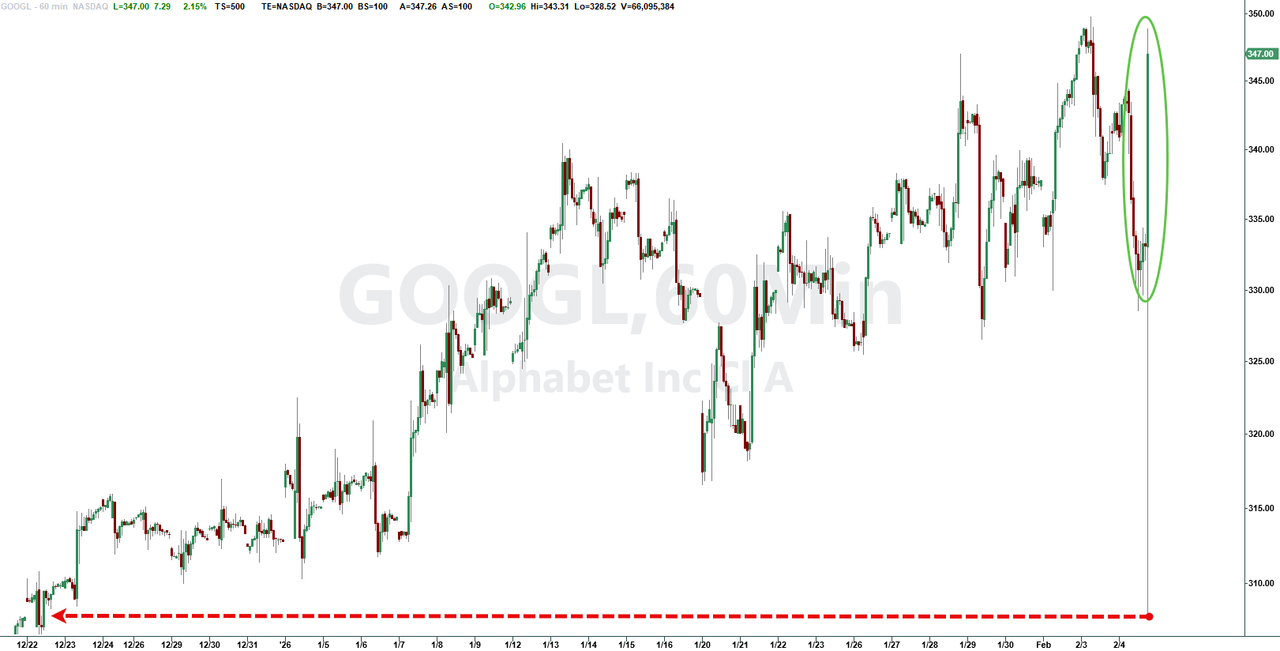
Well, that’s what happened, at least initially because despite solid results which beat across the board, the company’s shocking 2026 capex guidance (a mindblowing $175-185BN, double the 2025 number and crushing the estimate of ) absolutely spooked investors, who promptly sent the stock down as much as 7.5% after hours. But more remarkably, after losing as much as $350BN in market cap in kneejerk response to the company’s stunning capex forecast, the stock managed to rebound and even turn green, a reversal of some $800BN in the span of minutes!
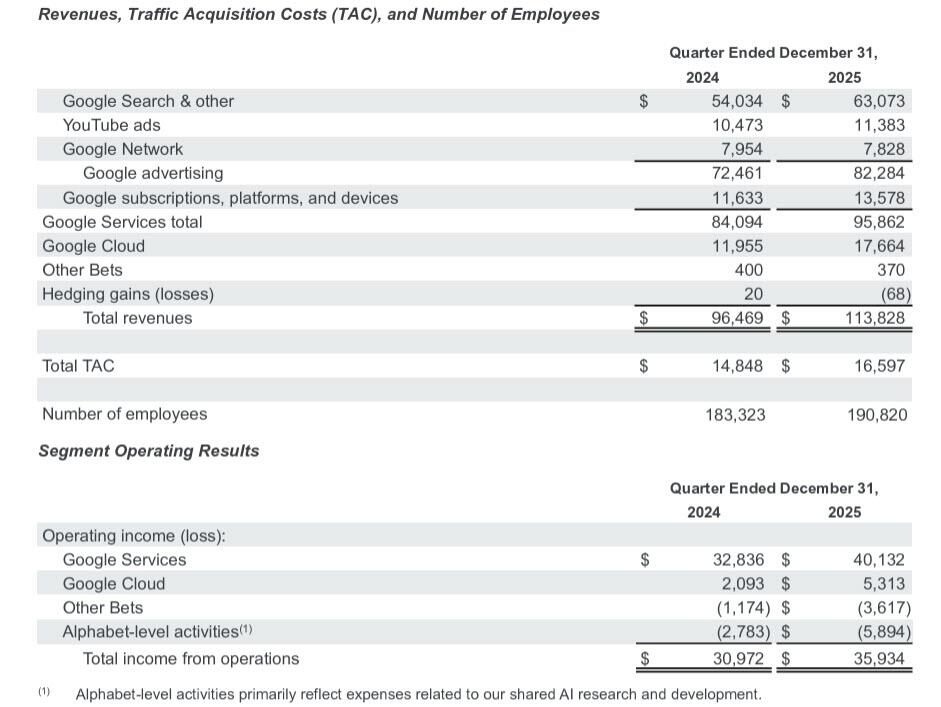
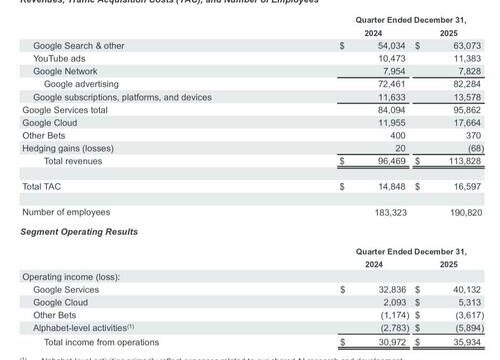
Here is what GOOGLE just reported for Q4:.
EPS $2.82, up 31% vs. $2.15 y/y, beating estimate $2.65
Revenue ex-TAC $97.23 billion, +19% y/y, beating estimates of $95.17 billion
Revenue $113.83 billion, +18% y/y, beating estimates of $111.4 billion,
Google Services revenue $95.86 billion, +14% y/y, beating estimates of $94.9 billion
Google advertising revenue $82.28 billion, +14% y/y, beating estimates of $80.89 billion
Google Search & Other Revenue $63.07 billion, +17% y/y, beating estimates of $61.37BN, and buyside bogey of 16% growth
YouTube ads revenue $11.38 billion, +8.7% y/y, missing estimates of $11.78 billion
Google Network Revenue $7.83 billion, -1.6% y/y, beating estimate $7.78 billion
Google Subscriptions, Platforms and Devices Revenue $13.58 billion, +17% y/y, missing estimate $13.81 billion
Google Cloud revenue $17.66 billion, +48% y/y, beating estimates of $16.2BN, and smashing buyside bogey of 40% growth
Other Bets revenue $370 million, -7.5% y/y, missing estimate of $443.8 million
Hedging losses $68 million vs. $20 million y/y, below estimate $108 million
Of the numbers above, perhaps the most important one was Google Cloud which saw a continued surge in customer demand as revenues increased 48% to $17.7 billion, led by an increase in Google Cloud Platform (GCP) across enterprise AI Infrastructure and enterprise AI Solutions, as well as core GCP products.
Going down the line:
Total TAC $16.60 billion, +12% y/y, above the estimate $16.19 billion
Operating income $35.93 billion, +16% y/y, missing estimates $36.95 billion
Google Services operating income $40.13 billion, +22% y/y, beating estimates of $38.01 billion
Google Cloud operating income $5.31 billion vs. $2.09 billion y/y, smashing estimates of $3.65 billion
Other Bets operating loss $3.62 billion vs. loss $1.17 billion y/y, below the estimate loss $1.3 billion
Alphabet-level activities operating loss $5.89 billion vs. loss $2.78 billion y/y, worse than estimate loss $3.57 billion
Operating margin 32% vs. 32% y/y, missing estimate 33.1%
Here, attention immediately goes to the disappointing operating income, however, it is worth noting that consolidated operating income increased 16% and operating margin was 31.6%, both missing estimates, because operating income included a $2.1 billion employee compensation charge for Waymo. Excluding this one-time item, both would have beat expectations.
Next, we look at capex and find that the Q4 number was not too crazy; in fact at $27.85BN for Q4 it actually missed estimates.
Capital expenditure $27.851 billion vs. $14.28 billion y/y, below estimate $28.17 billion
Number of employees 190,820, +4.1% y/y, below estimates of 191,138
Visual summary of the results:
CEO Sundar Pichai said the investments are paying off. “We’re seeing our AI investments and infrastructure drive revenue and growth across the board,” he said in the statement. “Search saw more usage than ever before, with AI continuing to drive an expansionary moment.” Google Cloud revenue was $17.7 billion, beating the $16.2 billion analysts expected, and is now growing at an annual run rate of over $70 billion, “representing a wide breadth of customers, driven by demand for AI products.“
Alphabet also noted that YouTube’s annual revenues surpassed $60 billion across ads and subscriptions; and the it now has over 325 million paid subscriptions across consumer services, led by strong adoption for Google One and YouTube Premium.
Some more commentary on the quarter:
4Q Gemini App monthly active users exceed over 750 million vs. over 650 million q/q
Google’s Gemini app, available on android, iPhone and web offers the company’s flagship AI model
Maintained quarterly cash dividend at 21c/shr, estimate 21c/shr
So far so good: in fact, Q4 on its own was solid enough to beat even the more aggressive estimates. But what shocked Wall Street and what sent the stock tumbling in kneejerk reaction (before it bounced) was the company’s shocking announcement:
We’re seeing our AI investments and infrastructure drive revenue and growth across the board. To meet customer demand and capitalize on the growing opportunities we have ahead of us, our 2026 CapEx investments are anticipated to be in the range of $175 to $185 billion.”
That number is…. insane because it is almost double GOOGL’s 2025 capex of $92BN, and a cool $60BN, or 50% more than the forecast $119.5BN!
The massive capex raise should ease nerves that the AI bubble is bursting: the industry has leaned on Google’s progress. Google is supplying up to one million of its specialized AI chips to Anthropic, cementing Google’s position as a key infrastructure provider in the AI space. Gemini will also be a provider of AI for Siri on Apple Inc.’s iPhones. The Gemini app has 750 million montly active users .
Still, to justify its heavy spending, Alphabet will need to demonstrate momentum in its cloud and search advertising businesses. The company has said its massive investments in AI – funding new infrastructure, research and talent – are essential for competing against rivals including Amazon.com, Microsoft and OpenAI.
Google has raced to reinvent its business for the AI age, working to keep consumers in the habit of going to its search page even when they could also go to chatbots from rivals like OpenAI. The company has quickly improved its Gemini model and integrated it throughout its products, an effort that has required massive investment in data centers and chips for model improvement and cloud customers.
In response to these crazy numbers, the stock first tumbled, dropping as much as 7.5% before rebounding and even trading green on the day.
Tyler Durden
Wed, 02/04/2026 – 16:40
Google Goes Wild After Hours After Beating Estimates, Projects Mindblowing CapEx
Google Goes Wild After Hours After Beating Estimates, Projects Mindblowing CapEx
Heading into today’s Alphabet earnings, we said that as a result of positioning (GOOGL positioning was 9.5/10 according to Goldman’s desk), it would be difficult for the stock, which was already priced to perfection, to impress an increasingly skeptical Wall Street, especially on the day when momentum saw its 4th biggest drop on record.
Well, that’s what happened, at least initially because despite solid results which beat across the board, the company’s shocking 2026 capex guidance (a mindblowing $175-185BN, double the 2025 number and crushing the estimate of ) absolutely spooked investors, who promptly sent the stock down as much as 7.5% after hours. But more remarkably, after losing as much as $350BN in market cap in kneejerk response to the company’s stunning capex forecast, the stock managed to rebound and even turn green, a reversal of some $800BN in the span of minutes!
Here is what GOOGLE just reported for Q4:.
EPS $2.82, up 31% vs. $2.15 y/y, beating estimate $2.65
Revenue ex-TAC $97.23 billion, +19% y/y, beating estimates of $95.17 billion
Revenue $113.83 billion, +18% y/y, beating estimates of $111.4 billion,
Google Services revenue $95.86 billion, +14% y/y, beating estimates of $94.9 billion
Google advertising revenue $82.28 billion, +14% y/y, beating estimates of $80.89 billion
Google Search & Other Revenue $63.07 billion, +17% y/y, beating estimates of $61.37BN, and buyside bogey of 16% growth
YouTube ads revenue $11.38 billion, +8.7% y/y, missing estimates of $11.78 billion
Google Network Revenue $7.83 billion, -1.6% y/y, beating estimate $7.78 billion
Google Subscriptions, Platforms and Devices Revenue $13.58 billion, +17% y/y, missing estimate $13.81 billion
Google Cloud revenue $17.66 billion, +48% y/y, beating estimates of $16.2BN, and smashing buyside bogey of 40% growth
Other Bets revenue $370 million, -7.5% y/y, missing estimate of $443.8 million
Hedging losses $68 million vs. $20 million y/y, below estimate $108 million
Of the numbers above, perhaps the most important one was Google Cloud which saw a continued surge in customer demand as revenues increased 48% to $17.7 billion, led by an increase in Google Cloud Platform (GCP) across enterprise AI Infrastructure and enterprise AI Solutions, as well as core GCP products.
Going down the line:
Total TAC $16.60 billion, +12% y/y, above the estimate $16.19 billion
Operating income $35.93 billion, +16% y/y, missing estimates $36.95 billion
Google Services operating income $40.13 billion, +22% y/y, beating estimates of $38.01 billion
Google Cloud operating income $5.31 billion vs. $2.09 billion y/y, smashing estimates of $3.65 billion
Other Bets operating loss $3.62 billion vs. loss $1.17 billion y/y, below the estimate loss $1.3 billion
Alphabet-level activities operating loss $5.89 billion vs. loss $2.78 billion y/y, worse than estimate loss $3.57 billion
Operating margin 32% vs. 32% y/y, missing estimate 33.1%
Here, attention immediately goes to the disappointing operating income, however, it is worth noting that consolidated operating income increased 16% and operating margin was 31.6%, both missing estimates, because operating income included a $2.1 billion employee compensation charge for Waymo. Excluding this one-time item, both would have beat expectations.
Next, we look at capex and find that the Q4 number was not too crazy; in fact at $27.85BN for Q4 it actually missed estimates.
Capital expenditure $27.851 billion vs. $14.28 billion y/y, below estimate $28.17 billion
Number of employees 190,820, +4.1% y/y, below estimates of 191,138
Visual summary of the results:
CEO Sundar Pichai said the investments are paying off. “We’re seeing our AI investments and infrastructure drive revenue and growth across the board,” he said in the statement. “Search saw more usage than ever before, with AI continuing to drive an expansionary moment.” Google Cloud revenue was $17.7 billion, beating the $16.2 billion analysts expected, and is now growing at an annual run rate of over $70 billion, “representing a wide breadth of customers, driven by demand for AI products.“
Alphabet also noted that YouTube’s annual revenues surpassed $60 billion across ads and subscriptions; and the it now has over 325 million paid subscriptions across consumer services, led by strong adoption for Google One and YouTube Premium.
Some more commentary on the quarter:
4Q Gemini App monthly active users exceed over 750 million vs. over 650 million q/q
Google’s Gemini app, available on android, iPhone and web offers the company’s flagship AI model
Maintained quarterly cash dividend at 21c/shr, estimate 21c/shr
So far so good: in fact, Q4 on its own was solid enough to beat even the more aggressive estimates. But what shocked Wall Street and what sent the stock tumbling in kneejerk reaction (before it bounced) was the company’s shocking announcement:
We’re seeing our AI investments and infrastructure drive revenue and growth across the board. To meet customer demand and capitalize on the growing opportunities we have ahead of us, our 2026 CapEx investments are anticipated to be in the range of $175 to $185 billion.”
That number is…. insane because it is almost double GOOGL’s 2025 capex of $92BN, and a cool $60BN, or 50% more than the forecast $119.5BN!
The massive capex raise should ease nerves that the AI bubble is bursting: the industry has leaned on Google’s progress. Google is supplying up to one million of its specialized AI chips to Anthropic, cementing Google’s position as a key infrastructure provider in the AI space. Gemini will also be a provider of AI for Siri on Apple Inc.’s iPhones. The Gemini app has 750 million montly active users .
Still, to justify its heavy spending, Alphabet will need to demonstrate momentum in its cloud and search advertising businesses. The company has said its massive investments in AI – funding new infrastructure, research and talent – are essential for competing against rivals including Amazon.com, Microsoft and OpenAI.
Google has raced to reinvent its business for the AI age, working to keep consumers in the habit of going to its search page even when they could also go to chatbots from rivals like OpenAI. The company has quickly improved its Gemini model and integrated it throughout its products, an effort that has required massive investment in data centers and chips for model improvement and cloud customers.
In response to these crazy numbers, the stock first tumbled, dropping as much as 7.5% before rebounding and even trading green on the day.
Tyler Durden
Wed, 02/04/2026 – 16:40
Google Goes Wild After Hours After Beating Estimates, Projects Mindblowing CapEx
Google Goes Wild After Hours After Beating Estimates, Projects Mindblowing CapEx
Heading into today’s Alphabet earnings, we said that as a result of positioning (GOOGL positioning was 9.5/10 according to Goldman’s desk), it would be difficult for the stock, which was already priced to perfection, to impress an increasingly skeptical Wall Street, especially on the day when momentum saw its 4th biggest drop on record.
Well, that’s what happened, at least initially because despite solid results which beat across the board, the company’s shocking 2026 capex guidance (a mindblowing $175-185BN, double the 2025 number and crushing the estimate of ) absolutely spooked investors, who promptly sent the stock down as much as 7.5% after hours. But more remarkably, after losing as much as $350BN in market cap in kneejerk response to the company’s stunning capex forecast, the stock managed to rebound and even turn green, a reversal of some $800BN in the span of minutes!
Here is what GOOGLE just reported for Q4:.
EPS $2.82, up 31% vs. $2.15 y/y, beating estimate $2.65
Revenue ex-TAC $97.23 billion, +19% y/y, beating estimates of $95.17 billion
Revenue $113.83 billion, +18% y/y, beating estimates of $111.4 billion,
Google Services revenue $95.86 billion, +14% y/y, beating estimates of $94.9 billion
Google advertising revenue $82.28 billion, +14% y/y, beating estimates of $80.89 billion
Google Search & Other Revenue $63.07 billion, +17% y/y, beating estimates of $61.37BN, and buyside bogey of 16% growth
YouTube ads revenue $11.38 billion, +8.7% y/y, missing estimates of $11.78 billion
Google Network Revenue $7.83 billion, -1.6% y/y, beating estimate $7.78 billion
Google Subscriptions, Platforms and Devices Revenue $13.58 billion, +17% y/y, missing estimate $13.81 billion
Google Cloud revenue $17.66 billion, +48% y/y, beating estimates of $16.2BN, and smashing buyside bogey of 40% growth
Other Bets revenue $370 million, -7.5% y/y, missing estimate of $443.8 million
Hedging losses $68 million vs. $20 million y/y, below estimate $108 million
Of the numbers above, perhaps the most important one was Google Cloud which saw a continued surge in customer demand as revenues increased 48% to $17.7 billion, led by an increase in Google Cloud Platform (GCP) across enterprise AI Infrastructure and enterprise AI Solutions, as well as core GCP products.
Going down the line:
Total TAC $16.60 billion, +12% y/y, above the estimate $16.19 billion
Operating income $35.93 billion, +16% y/y, missing estimates $36.95 billion
Google Services operating income $40.13 billion, +22% y/y, beating estimates of $38.01 billion
Google Cloud operating income $5.31 billion vs. $2.09 billion y/y, smashing estimates of $3.65 billion
Other Bets operating loss $3.62 billion vs. loss $1.17 billion y/y, below the estimate loss $1.3 billion
Alphabet-level activities operating loss $5.89 billion vs. loss $2.78 billion y/y, worse than estimate loss $3.57 billion
Operating margin 32% vs. 32% y/y, missing estimate 33.1%
Here, attention immediately goes to the disappointing operating income, however, it is worth noting that consolidated operating income increased 16% and operating margin was 31.6%, both missing estimates, because operating income included a $2.1 billion employee compensation charge for Waymo. Excluding this one-time item, both would have beat expectations.
Next, we look at capex and find that the Q4 number was not too crazy; in fact at $27.85BN for Q4 it actually missed estimates.
Capital expenditure $27.851 billion vs. $14.28 billion y/y, below estimate $28.17 billion
Number of employees 190,820, +4.1% y/y, below estimates of 191,138
Visual summary of the results:
CEO Sundar Pichai said the investments are paying off. “We’re seeing our AI investments and infrastructure drive revenue and growth across the board,” he said in the statement. “Search saw more usage than ever before, with AI continuing to drive an expansionary moment.” Google Cloud revenue was $17.7 billion, beating the $16.2 billion analysts expected, and is now growing at an annual run rate of over $70 billion, “representing a wide breadth of customers, driven by demand for AI products.“
Alphabet also noted that YouTube’s annual revenues surpassed $60 billion across ads and subscriptions; and the it now has over 325 million paid subscriptions across consumer services, led by strong adoption for Google One and YouTube Premium.
Some more commentary on the quarter:
4Q Gemini App monthly active users exceed over 750 million vs. over 650 million q/q
Google’s Gemini app, available on android, iPhone and web offers the company’s flagship AI model
Maintained quarterly cash dividend at 21c/shr, estimate 21c/shr
So far so good: in fact, Q4 on its own was solid enough to beat even the more aggressive estimates. But what shocked Wall Street and what sent the stock tumbling in kneejerk reaction (before it bounced) was the company’s shocking announcement:
We’re seeing our AI investments and infrastructure drive revenue and growth across the board. To meet customer demand and capitalize on the growing opportunities we have ahead of us, our 2026 CapEx investments are anticipated to be in the range of $175 to $185 billion.”
That number is…. insane because it is almost double GOOGL’s 2025 capex of $92BN, and a cool $60BN, or 50% more than the forecast $119.5BN!
The massive capex raise should ease nerves that the AI bubble is bursting: the industry has leaned on Google’s progress. Google is supplying up to one million of its specialized AI chips to Anthropic, cementing Google’s position as a key infrastructure provider in the AI space. Gemini will also be a provider of AI for Siri on Apple Inc.’s iPhones. The Gemini app has 750 million montly active users .
Still, to justify its heavy spending, Alphabet will need to demonstrate momentum in its cloud and search advertising businesses. The company has said its massive investments in AI – funding new infrastructure, research and talent – are essential for competing against rivals including Amazon.com, Microsoft and OpenAI.
Google has raced to reinvent its business for the AI age, working to keep consumers in the habit of going to its search page even when they could also go to chatbots from rivals like OpenAI. The company has quickly improved its Gemini model and integrated it throughout its products, an effort that has required massive investment in data centers and chips for model improvement and cloud customers.
In response to these crazy numbers, the stock first tumbled, dropping as much as 7.5% before rebounding and even trading green on the day.
Tyler Durden
Wed, 02/04/2026 – 16:40