Category: News

Driver pronounced dead after hitting CTA bus
A driver died after rear-ending a CTA bus on the Lower West Side at around 4:25 a.m., Chicago police said.
The bus, carrying five passengers, was stopped at a red light near the 2300 block of South Blue Island Avenue, when a 32-year-old man hit the back of the bus with his silver SUV, according to police. The driver of the SUV was taken to Stroger Hospital, where he was pronounced dead.
There were no other reported injuries, police said.
https://www.chicagotribune.com/2026/02/08/driver-pronounced-dead-after-hitting-cta-bus/
Mueren 2 policías en ataque armado en el noroeste de Colombia; se ofrece recompensa por autores
Associated Press
BOGOTÁ (AP) — Dos policías murieron el domingo en un ataque armado en el noroeste de Colombia, en un hecho que las autoridades adjudicaron a disidencias de las extintas FARC, que han causado zozobra en esa zona del país andino.
Los uniformados integraban la patrulla de vigilancia del municipio de Anorí, en el departamento de Antioquia, y “fueron atacados mientras cumplían tareas de “control y verificación de establecimientos comerciales”, informó en la red social X el director de la policía, general William Rincón.
Según declaró a medios colombianos el comandante de policía de esa localidad, general William Castaño, sujetos armados que se movilizaban en dos motocicletas “con armamento de largo alcance” se aproximaron a tres policías cerca de un parque de Anorí —a 300 kilómetros (186 millas) al noroeste de Bogotá—, impactando a dos de los uniformados.
Las víctimas, ambas de 38 años, murieron en el lugar, mientras que el tercer policía “alcanza a repeler la acción y se dirige a la estación policial”, indicó Castaño.
La secretaría de Seguridad de la gobernación de Antioquia ofreció una recompensa de 200 millones de pesos (más de 50.000 dólares) por información que permita identificar y procesar a los responsables del ataque contra los policías.
El gobernador de Antioquia, Julián Rendón, condenó el acto. En un mensaje en X, lo adjudicó a las disidencias de las desaparecidas Fuerzas Armadas Revolucionarias de Colombia al mando de (Alexander Díaz), alias “Calarcá”, por lo que solicitó “asistencia militar” en la zona.
Rendón reprochó al gobierno del presidente Gustavo Petro por la supuesta falta de contundencia contra ese cabecilla de la agrupación armada ilegal, con quien mantenía una mesa de negociación.
Petro, el primer mandatario de izquierda en la historia de Colombia, lleva adelante una política de diálogos para la paz a fin de conseguir el desarme de las estructuras ilegales, pero ha recibido críticas de sectores de oposición, los cuales sostienen que alienta la “impunidad”.
En esa zona del país operan la guerrilla del Ejército de Liberación Nacional (ELN), disidencias de las ex FARC y el cártel del Clan del Golfo.
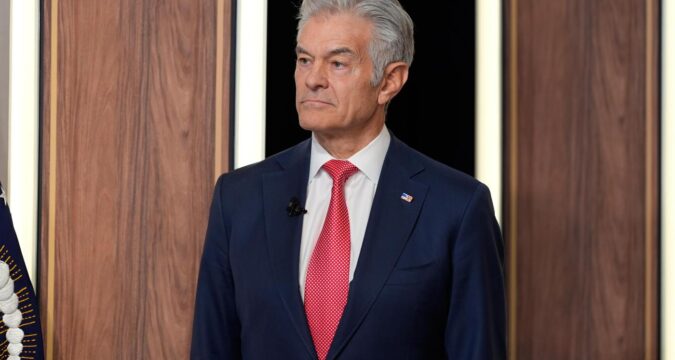
‘Take the vaccine, please,’ a top US health official says in an appeal as measles cases rise
WASHINGTON — A leading U.S. health official on Sunday urged people to get inoculated against the measles at a time of outbreaks across several states and as the United States is at risk of losing its measles elimination status.
“Take the vaccine, please,” said Dr. Mehmet Oz, the Centers for Medicare and Medicaid Services administrator whose boss has raised suspicion about the safety and importance of vaccines. “We have a solution for our problem.”
Illinois adopts American Academy of Pediatrics vaccine schedule, shunning federal recommendations
Oz, a heart surgeon, defended some recently revised federal vaccine recommendations as well as past comments from President Donald Trump and the nation’s health chief, Robert F. Kennedy Jr., about the efficacy of vaccines. From Oz, there was a clear message on the measles.
“Not all illnesses are equally dangerous and not all people are equally susceptible to those illnesses,” he told CNN’s “State of the Union.” “But measles is one you should get your vaccine.”
An outbreak in South Carolina in the hundreds has surpassed the recorded case count in Texas’ 2025 outbreak, and there is also one on the Utah-Arizona border. Multiple other states have had confirmed cases this year. The outbreaks have mostly impacted children and have come as infectious disease experts warn that rising public distrust of vaccines generally may be contributing to the spread of a disease once declared eradicated by public health officials.
Asked in the television interview whether people should fear the measles, Oz replied, “Oh, for sure.” He said Medicare and Medicaid will continue to cover the measles vaccine as part of the insurance programs.
“There will never be a barrier to Americans get access to the measles vaccine. And it is part of the core schedule,” Oz said.
But Oz also said “we have advocated for measles vaccines all along” and that Kennedy “has been on the very front of this.”
Questions about vaccines did not come up later in a Kennedy interview on Fox News Channel’s “The Sunday Briefing,” where he was asked about what kind of Super Bowl snack he might have (probably yogurt). He also he eats steak with sauerkraut in the mornings.
Critics of Kennedy have argued that the health secretary’s longtime skepticism of U.S. vaccine recommendations and past sympathy for the unfounded claim that vaccines may cause autism may influence official public health guidance in ways contrary to the medical consensus.
Oz argued that Kennedy’s stance was supportive of the measles vaccine despite Kennedy’s general comments about the recommended vaccine schedule.
“When the first outbreak happened in Texas, he said, get your vaccines for measles, because that’s an example of an ailment that you should get vaccinated against,” Oz said.
The Republican administration last month dropped some vaccine recommendations for children, an overhaul of the traditional vaccine schedule that the Department of Health and Human Services said was in response to a request from Trump.
Trump asked the agency to review how peer nations approach vaccine recommendations and consider revising U.S. guidance accordingly.
States, not the federal government, have the authority to require vaccinations for schoolchildren. While federal requirements often influence those state regulations, some states have begun creating their own alliances to counter the administration’s guidance on vaccines.
U.S. vaccination rates have dropped and the share of children with exemptions has reached an all-time high, according to federal data. At the same time, rates of diseases that can be protected against with vaccines, such as measles and whooping cough, are rising across the country.
Kennedy’s past anti-vaccine activism
Kennedy’s past skepticism of vaccines has come under scrutiny since Trump first nominated him to lead the Department of Health and Human Services.
During his Senate confirmation testimony last year, Kennedy told lawmakers that a closely scrutinized 2019 trip he took to Samoa, which came before a devastating measles outbreak, had “nothing to do with vaccines.”
But documents obtained by The Guardian and The Associated Press undermine that testimony. Emails sent by staffers at the U.S. Embassy and the United Nations said that Kennedy sought to meet with top Samoan officials during his trip to the Pacific island nation.
Samoan officials later said Kennedy’s trip bolstered the credibility of anti-vaccine activists before the measles outbreak, which sickened thousands of people and killed 83, mostly children under age 5.
Mixed messaging on autism, vaccines
Oz’s comments mark a broader pattern among administration officials of voicing discordant and at times contradictory statements about the efficacy of vaccines amid an overhaul of U.S. public health policy.
Officials have walked a fine line in criticizing past U.S. vaccine policy, often at times appearing to express sympathy for unfounded conspiracy theories from anti-vaccine activists, while also not straying too far from established science.
During a Senate hearing Tuesday, Jay Bhattacharya, the director of the National Institutes of Health, said no single vaccine causes autism, but he did not rule out the possibility that research may find some combination of vaccines could have negative health side effects.
But Kennedy, in Senate testimony, has argued that a link between vaccines and autism has not been disproved.
He has previously claimed that some components of vaccines, like the mercury-containing preservative thimerosal, may cause childhood neurological disorders such as autism. Most vaccines for measles, mumps and rubella do not contain thimerosal. A federal vaccine advisory board overhauled by Kennedy last year voted to no longer recommend thimerosal-containing vaccines.
Administration public health officials often cite the need to restore trust in public health systems after the coronavirus pandemic, when vaccine policy and the general public health response to the deadly pandemic became a highly polarizing topic in American politics.
Misinformation and conspiracy theories about the public health system also spread during the pandemic, and longtime anti-vaccine activist groups saw a swell in interest from the wider public.
Kennedy, who for years led the anti-vaccine activist group Children’s Health Defense, has been criticized for ordering reviews of vaccines and public health guidelines that leading medical research groups have deemed settled science.
Public health experts also criticized the president for making unfounded claims about highly politicized health issues. During a September Oval Office event, Trump asserted without evidence that Tylenol and vaccines are linked to a rise in the incidence of autism in the United States.
https://www.chicagotribune.com/2026/02/08/us-health-official-appeal-measles-cases/
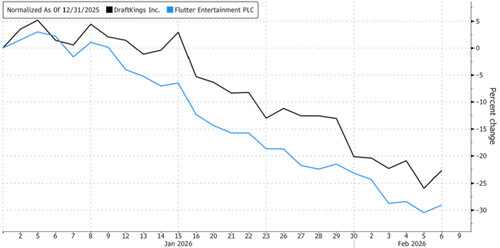
Gambling Stocks Slide Ahead Of Super Bowl As Prediction Markets Shine
Gambling Stocks Slide Ahead Of Super Bowl As Prediction Markets Shine
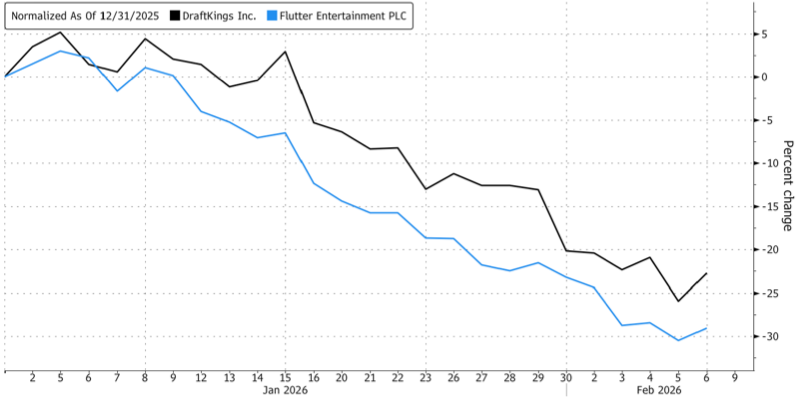
The rise of prediction markets ahead of Super Bowl weekend has become a major overhang for legacy sportsbooks, prompting investors to de-risk their equity positions and sending shares of Flutter Entertainment (owner of FanDuel) and rival DraftKings sharply lower year to date.
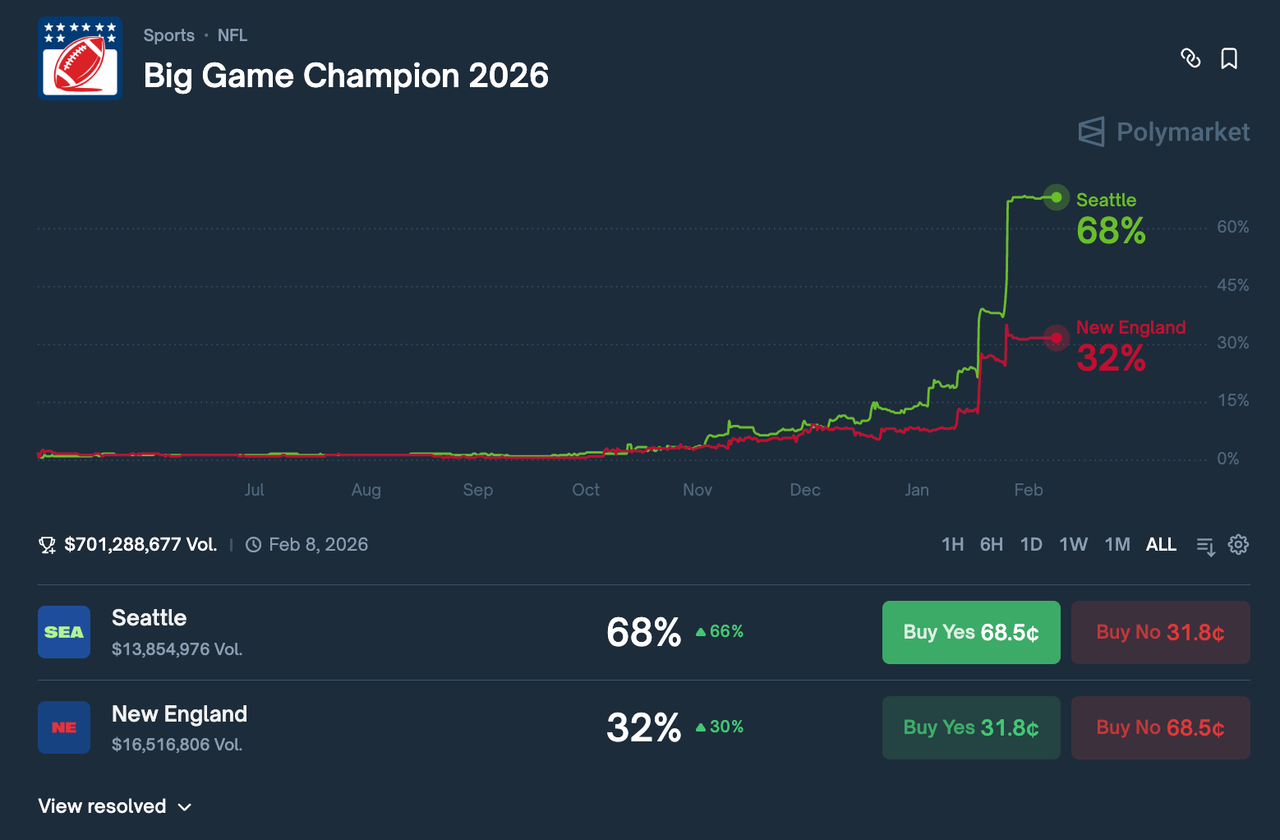
Today’s matchup between Seattle and New England at Levi’s Stadium in Santa Clara is expected to drive record trading volumes on prediction markets, according to Jordan Bender, a senior equity analyst at Citizens.
“A big piece of why we think Super Bowl handle will be down is that prediction markets are taking a bite out of that,” Bender said.
Since the 2024 presidential election cycle, prediction markets such as Kalshi and Polymarket have attracted growing trading volumes that would have traditionally flowed to sportsbook apps.
Professional sports gambler Rufus Peabody told Bloomberg, “It really feels like everything’s prediction markets, prediction markets, prediction markets.”
Peabody, who began trading on Kalshi in September, noted, “Maybe not for the average recreational bettor, but certainly in the sharp community.”
Kalshi and other federally regulated exchanges have opened prediction markets to millions of Americans living in states where sportsbooks remain illegal, sparking a fierce legal battle with federal and local gaming regulators.
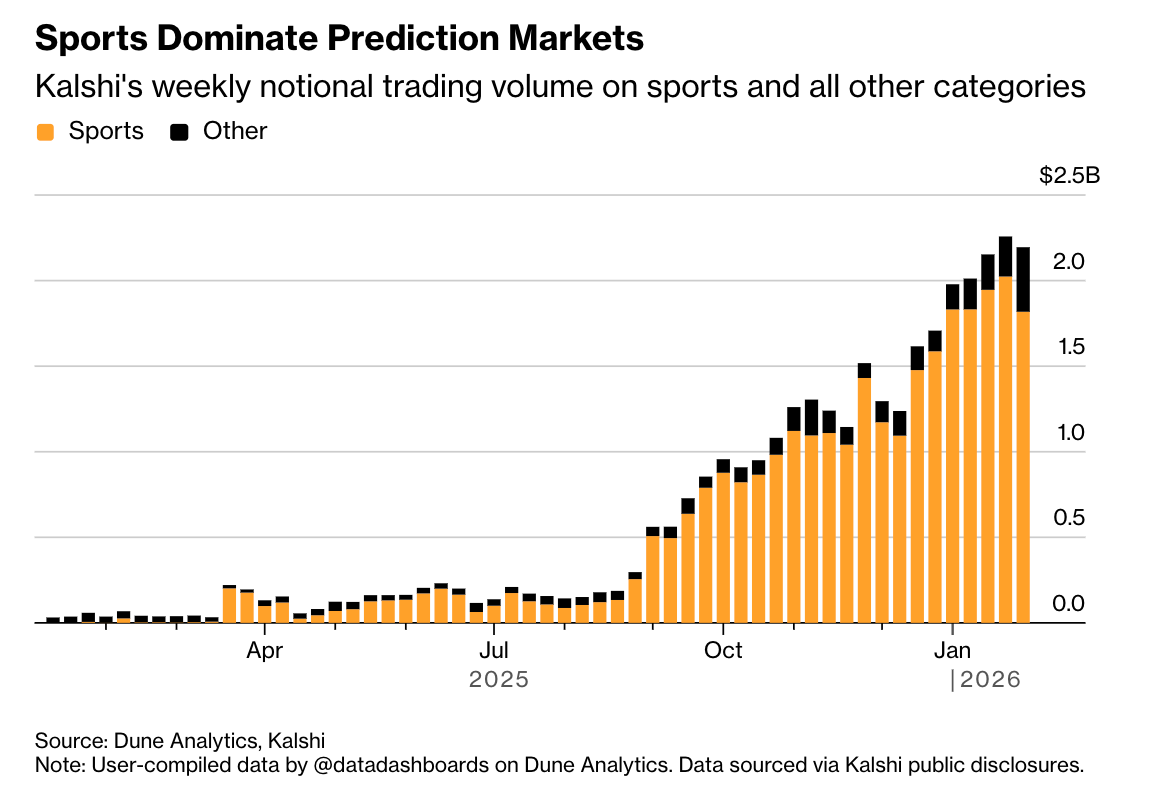
These event contracts are not just for sports but also offer bets across markets, elections, and geopolitics. The fastest growth, however, is in sports betting.
According to the Dune data dashboard, Kalshi saw nearly $10 billion in contracts traded in January, with the vast majority tied to sports betting (about $8.5 billion).
Traders on Kalshi and rival Polymarket have swapped $800 million worth of contracts tied to the Super Bowl so far, the American Gaming Association wrote in a report. This compares with $1.8 billion Americans are expected to bet on the game through traditional regulated sportsbooks.
In November, Polymarket received regulatory approval from the Commodity Futures Trading Commission to return to the US markets.
“Polymarket is back. Polymarket’s U.S. app is now being rolled out to those on the waitlist,” Polymarket states on its platform.
Despite the rise of prediction markets, several Wall Street analysts still expect the existing US sportsbook companies to take in a record Super Bowl haul this weekend.
— Polymarket Sports (@PolymarketSport) February 8, 2026
H2 Gambling Capital senior analyst Ed Birkin forecasted that total wagers – before prediction markets are taken into account – will soar 9% this year to $1.78 billion. He pointed out that prediction markets will attract $630 million in bets for the Super Bowl and account for 80% year-over-year growth in wagering activity for the event.
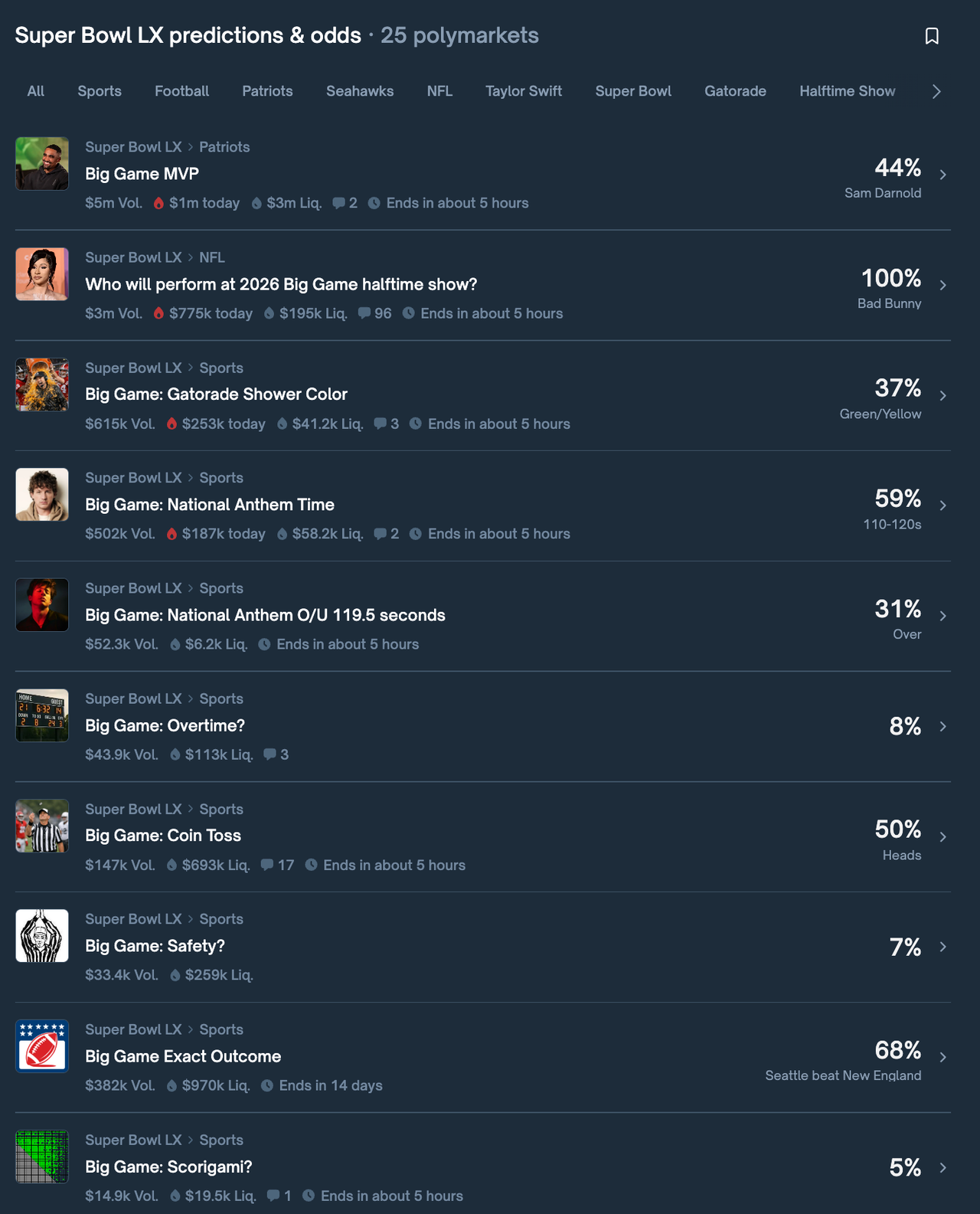
Polymarket’s latest Super Bowl bets:
More bets
Let the games begin.
Tyler Durden
Sun, 02/08/2026 – 15:45
https://www.zerohedge.com/markets/gambling-stocks-slide-ahead-super-bowl-prediction-markets-shine
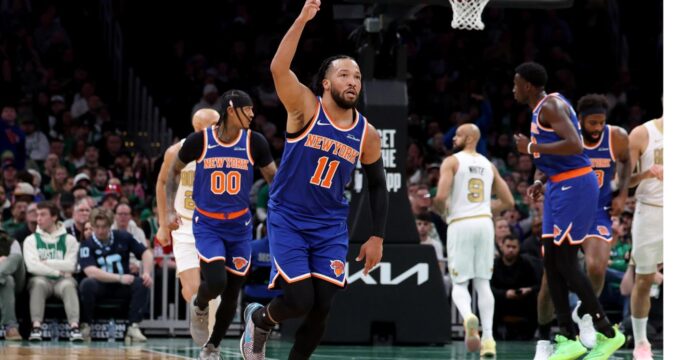
Con 31 puntos, Brunson impulsa victoria 111-89 de los Knicks ante Celtics
BOSTON (AP) — Jalen Brunson anotó 31 puntos y Josh Hart agregó 19 para ayudar a los Knicks de Nueva York a vencer el domingo 111-89 a los Celtics de Boston que tuvieron una mala noche de tiro.
Karl-Anthony Towns tuvo 11 puntos y diez rebotes para los Knicks, quienes no estuvieron en desventaja durante los últimos 42 minutos. Mikal Bridges (14 tantos) y el recién adquirido José Alvarado (12 unidades) fueron los anotadores de dos dígitos de Nueva York, que atinó 14 de 45 (40%) desde la línea de tres puntos.
Jaylen Brown anotó 26 puntos y Derrick White agregó 19 para los Celtics, quienes vieron su racha de cinco victorias consecutivas interrumpida. Baylor Scheierman comenzó en lugar del lesionado Sam Hauser y terminó con diez puntos, 13 rebotes y cinco asistencias.
Boston atinó 37% de sus tiros de campo y 7 de 41 (17.1%) desde fuera del arco.
El enfrentamiento reunió a dos de los mejores equipos de la Conferencia Este. Boston llegó con ventaja de un juego sobre Nueva York, que es segundo. Se enfrentarán una vez más durante la temporada regular el 9 de abril en Nueva York.
Los Knicks lideraban 60-53 al medio tiempo. Brunson tenía 19 puntos en dos cuartos, con 12 en el primero. Boston estuvo en desventaja por hasta 17 puntos, pero lo convirtió en un juego de dos posesiones al entrar en la segunda mitad a pesar de lanzar cinco de 22 (22.7%) desde el rango de tres puntos.
___
Deportes AP: https://apnews.com/hub/deportes
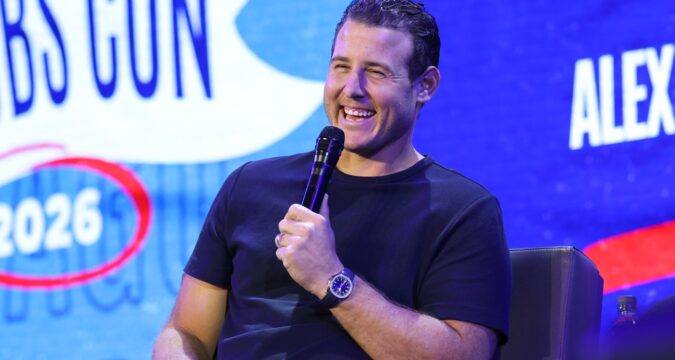
Anthony Rizzo, Clayton Kershaw and Joey Votto will join NBC Sports broadcasts as MLB analysts
Anthony Rizzo, Clayton Kershaw and Joey Votto have been hired as analysts by NBC when it returns to broadcasting Major League Baseball this year.
The network made the announcement during Sunday’s Super Bowl pregame show.
Kershaw, Rizzo and Votto will appear on pregame shows leading into “Sunday Night Baseball” games depending on their schedules and availability. They also will be pregame analysts during coverage of the wild-card round games on NBC and Peacock.
All three have recently retired from the game. Rizzo played 14 seasons for three teams and caught the final out of the 2016 World Series to give the Chicago Cubs their first title since 1908. Rizzo, who retired last September, was also a three-time All-Star selection and four-time Gold Glove Award-winning first baseman.
Kershaw, a three-time National League Cy Young Award winner in 18 seasons, retired last year after the Los Angeles Dodgers won their third World Series title in six seasons.
Votto was with the Cincinnati Reds for 17 seasons and was the NL Most Valuable Player in 2010 before retiring in 2024.
“We’re excited to welcome Clayton, Anthony and Joey, three stars right off the field who can provide fresh perspective on the players, teams, and everything that makes baseball special,” NBC Sports executive producer Sam Flood said. “We look forward to rolling out some new concepts to take advantage of the unique insights of each analyst, beginning on opening day.”
NBC recently announced Bob Costas would host the “Sunday Night Baseball” pregame show. Ahmed Fareed will also be one of the hosts. It still has not announced its play-by-play announcers and analysts for the games.
NBC also debuted a Major League Baseball spot leading into Sunday’s Super Bowl featuring New York Yankees slugger Aaron Judge along with NBC personalities. The spot will also air during the network’s coverage of the Winter Olympics.
“Our new partnership with NBC and Peacock is off to an incredible start,” said Uzma Rawn Dowler, MLB’s chief marketing officer. “They are promoting one of our top stars in a new spot, integrating popular NBC talent, and airing it in highly viewed programming. NBC’s promotional plans for MLB have been creative and demonstrate they are bringing great energy to promoting baseball.”
NBC has a long history with baseball, albeit not much recently. The network carried games from 1939 through 1989. It was part of the short-lived Baseball Network with ABC in 1994 and ’95 and then aired playoff games from 1996 through 2000.
NBC will have an opening-day doubleheader on March 26.
Reigning NL Cy Young Award winner Paul Skenes and the Pittsburgh Pirates will face Juan Soto and the New York Mets at 1 p.m. Eastern on NBC and Peacock. At 8 p.m., the two-time defending World Series champion Los Angeles Dodgers will host the Arizona Diamondbacks in the scheduled primetime game for that day.
“Sunday Night Baseball” debuts on Peacock and NBCSN on March 29 when the AL Central champion Cleveland Guardians face the AL West champion Seattle Mariners. The first Sunday night game on NBC will be on April 12 when the Guardians visit the Atlanta Braves.
The next six weeks will be on Peacock and NBCSN before NBC has Sunday night games from May 31 through Sept. 6.
https://www.chicagotribune.com/2026/02/08/anthony-rizzo-nbc-sports-mlb-analyst/

Two employees let go after Republican reorganization of Lake County election office
A full-time employee and a part-time employee have been let go from the Lake County Board of Elections and Registration office after a Republican Party reorganization of the office that included employees reapplying to work in the office and interviews.
Lake County Board of Elections and Registration Assistant Director Jessica Messler, the top Republican member in the office, said the purpose of the reorganization was to review the office’s 11 Republican employees to see where their skill sets best fit.
“It was presented to everyone in a positive way because that’s how we’re viewing it,” Messler said.
In mid-December, employees were asked to fill out an application for employment that asked them to describe how they maintain professionalism in the office, to describe their reliability, punctuality and attention to detail, and why they are a good fit for the office, according to the job application obtained by the Post-Tribune.
The application also asked the employee to sign a statement that he or she would be an at-will employee if a job was offered and to state when they would be available to start work, according to the application.
The employee was then asked to rank the positions he or she was applying for from most desired to least desired. The employees were given an “optional” culture survey where he or she could answer questions about what works well in the office, what needs improvement, what training or tools would be helpful, if communication is clear and how teamwork could be improved, according to the application.
The applicants had to sign an employee acknowledgement that they received a “Republican Employee Handbook,” according to the application.
“We did conduct interviews with everyone to see where their skillsets fit,” Messler said.
When presenting the reorganization to employees, Messler said the employees were given the job descriptions for each position in the office, which allowed employees to apply for new positions if they felt their skillset matched that position.
Ultimately, one full-time employee and a part-time employee were let go, Messler said, adding it’s not uncommon to let a part-time employee go between elections. Messler said a new full-time employee was hired.
There were a few lateral moves as well, Messler said.
“We’re confident that everyone is in the positions they best fit in,” Messler said.
Lake County Republican Party Chairman Randy Niemeyer said “it’s not uncommon to have some turnover” under a new party chairman and election office director. Niemeyer has been party chairman for three years and Messler started a year ago.
“I could’ve replaced the whole office, but we wanted to give people a chance and treat people like humans,” Niemeyer said.
Former Republican Party Chairman Dan Dernulc said in his tenure as chairman, he moved three people between different positions in the office. But the party chairperson has jurisdiction over employment in the office, he said.
“That’s the prerogative of the chairman,” Dernulc said.
Lake County Board of Elections and Registration Director Michelle Fajman said the lateral moves made in the reorganization resulted in two supervisors being “demoted” and two other employees being “promoted” into those positions.
Fajman said she was concerned about the reorganization because the office is “going into a very busy season.”
“I do not think it was the most opportune time to do this as we’re heading into a big election,” Fajman said.
In her 37 years in the election office, Fajman said she’s “never seen” a reorganization that included having employees file an application and conduct interviews. Typically, a reorganization means employees are given new titles, she said.
Fajman said the process was stressful “on both parties” as the Democratic employees were concerned about their Republican coworkers going through the reorganization.
“The Democrats in the office, we will continue to do our job and make sure everything is done correctly,” Fajman said.
akukulka@post-trib.com

El costo de la vivienda preocupa a los votantes, pero Trump quiere mantener los precios altos
Por JOSH BOAK
WASHINGTON (AP) — El presidente Donald Trump quiere que los precios de las viviendas se mantengan altos, ignorando los llamados a fomentar la construcción para que las personas puedan permitirse lo que ha sido tradicionalmente un boleto hacia la clase media.
En cambio, el mandatario ha abogado por proteger a los propietarios existentes que han visto aumentar el valor de sus viviendas. Es una postura que va en contra de lo que se necesita para solucionar una gran parte del problema de asequibilidad en Estados Unidos según muchos economistas, la industria inmobiliaria, autoridades locales y residentes de apartamentos.
“No quiero bajar los precios de las viviendas. Quiero aumentar los precios de las viviendas para las personas que son propietarias de sus viviendas, y pueden estar seguros de que eso es lo que va a suceder”, dijo Trump a su gabinete el 29 de enero.
Ese enfoque podría fortalecer la posición del presidente republicano con los votantes de mayor edad, un grupo que, con el tiempo, ha sido más propenso a votar en las elecciones intermedias. Estos comicios, que se llevarán a cabo en noviembre, determinarán si el partido de Trump puede retener el control de la Cámara y el Senado.
“Hay mucha gente que se ha vuelto rica en el último año porque el valor de su casa ha subido”, dijo el mandatario. “Y sabes, cuando obtienes la vivienda —cuando haces que sea demasiado fácil y barato comprar casas— esos valores bajan”.
Pero al atender a los votantes mayores en materia de vivienda, Trump corre el riesgo de alejar a los más jóvenes, que expandieron su coalición en 2024 y lo ayudaron a ganar un segundo mandato, y podría sumergirse en una “guerra generacional” en las elecciones intermedias, dijo Brent Buchanan, cuya firma de encuestas Cygnal asesora a los republicanos.
“El grupo de menores de 40 años es el más importante en este momento: son los que pusieron a Trump en la Casa Blanca”, señaló Buchanan. “Su deseo de participar en una elección o no va a marcar la diferencia en estos comicios. Si sienten que Donald Trump está atendiendo a los votantes mayores a costa suya, eso va a perjudicar a los republicanos”.
La lógica de apelar a los votantes mayores
En las elecciones presidenciales de 2024, el 81% de los votantes de Trump eran propietarios de viviendas, según datos de AP VoteCast. Esto significa que muchos de sus seguidores tienen hipotecas con tasas bajas o ya son propietarios de sus casas, lo que, posiblemente, atenúa la importancia de la vivienda como un problema.
Los votantes mayores tienden a acudir a votar más que los jóvenes, afirmó Oscar Pocasangre, un analista de datos de alto nivel del grupo de expertos liberal New America que ha estudiado la división por edades en la política estadounidense. “Sin embargo, apelar a los votantes mayores podría resultar ser una política equivocada si lo que se necesita para ganar es expandir la base de votantes”, señaló el experto.
Antes de las elecciones de 2026, los votantes han calificado constantemente la asequibilidad como una preocupación principal, y eso es especialmente cierto para los votantes más jóvenes en lo que respecta a la vivienda.
Booker Lightman, un ingeniero de software de 30 años de Highlands Ranch, Colorado, que se identifica políticamente como un republicano libertario, dijo que la escasez de viviendas ha sido uno de los principales problemas en su estado.
Lightman acaba de cerrar la compra de una casa el mes pasado, y aunque él y su esposa, Alice, pudieron manejar el costo, dijo que la falta de construcción ha hecho que la gente se vaya de Colorado. “Simplemente no hay suficiente oferta de viviendas”, dijo.
Shay Hata, una agente inmobiliaria de las áreas de Chicago y Denver, afirmó que maneja entre 100 y 150 transacciones al año. Pero considera que hay potencial para mucho más. “Tenemos una falta de inventario hasta el punto de que la mayoría de las propiedades, particularmente en los suburbios, reciben entre cinco y 20 ofertas”, afirmó, describiendo lo que ve en el área de Chicago.
La construcción de nuevas viviendas podría ayudar a más personas a permitirse una casa porque, en algunos casos, los compradores pueden obtener tasas hipotecarias con descuento por parte de los prestamistas preferidos de los constructores, dijo Hata. Calificó la situación actual como “muy desalentadora para los compradores porque están siendo excluidos del mercado”.
Pero la construcción pendiente ha caído durante el régimen de Trump. Los permisos para construir viviendas unifamiliares han caído un 9,4% en los últimos 12 meses hasta octubre, el mes más reciente disponible, a una tasa anual de 876.000, según la Oficina del Censo de Estados Unidos.
Las otras ideas de Trump para ayudar a las personas a comprar una vivienda
Trump no siempre ha estado en contra de aumentar la oferta de viviendas.
Durante la campaña de 2024, su equipo dijo que crearía recortes fiscales para los compradores de viviendas, reduciría las regulaciones sobre la construcción, abriría tierras federales para desarrollos de viviendas y haría que los pagos mensuales fueran más manejables al reducir las tasas hipotecarias. Los asesores también afirmaron que la reserva de viviendas se abriría debido al impulso del mandatario para realizar deportaciones masivas de personas que estaban en Estados Unidos ilegalmente.
Apenas en octubre, Trump instó a los constructores a aumentar la construcción. “Están sentados en dos millones de lotes vacíos, UN RÉCORD. ¡Estoy pidiendo a Fannie Mae y Freddie Mac que pongan en marcha a los grandes constructores de viviendas y, al hacerlo, ayuden a restaurar el Sueño Americano!”, publicó el mandatario en las redes sociales, refiriéndose a los prestamistas respaldados por el gobierno.
Pero más recientemente, ha dicho inequívocamente que no desea seguir políticas que aumentarían la oferta y bajarían los precios.
En el cargo, Trump ha centrado hasta ahora su política de vivienda en presionar a la Reserva Federal para que reduzca sus tasas de interés de referencia. Piensa que eso haría que las hipotecas sean más asequibles, aunque los críticos dicen que podría impulsar una mayor inflación. El mandatario anunció que las dos compañías hipotecarias, que están bajo tutela del gobierno, comprarían al menos 200.000 millones de dólares en valores de préstamos hipotecarios en un intento por reducir las tasas.
Trump también quiere que el Congreso prohíba que las grandes instituciones financieras adquieran viviendas. Pero ha rechazado sugerencias para expandir las reglas que permitan que los compradores usen sus cuentas de jubilación para realizar pagos iniciales, diciendo a los reporteros que no quería que la gente sacara su dinero del mercado de valores porque estaba yendo tan bien.
Hay señales de que los legisladores de ambos partidos ven los beneficios de tomar medidas para agregar viviendas antes de las elecciones de este año. Existen esfuerzos en el Senado y la Cámara de Representantes para impulsar la construcción mediante el uso de incentivos para cambiar las restricciones de zonificación, entre otras políticas.
Uno de los desafíos subyacentes en la asequibilidad es que, durante varios años, los precios de las viviendas han aumentado generalmente más rápido que los ingresos.
Esto hace que sea más difícil ahorrar para los pagos iniciales o adquirir una casa mejor. También significa que los lugares donde vive la gente se duplican cada vez más como su principal activo financiero, lo cual hace que muchas familias parezcan adineradas en papel aun si tienen problemas para pagar las facturas mensuales.
Existe otro riesgo para Trump. Si la economía crece este año, como ha prometido, eso podría aumentar la demanda de viviendas —así como sus precios— haciendo que el problema de la asequibilidad sea más pronunciado, dijo Edward Pinto, un investigador de alto nivel del American Enterprise Institute, un grupo de analistas de centroderecha.
Pinto dijo que la construcción de viviendas unifamiliares tendría que aumentar entre un 50% y un 100% durante los próximos tres años para que las ganancias promedio de los precios de las viviendas se mantuvieran niveladas —una señal, dijo, de que los temores de Trump sobre la caída de los precios de las viviendas probablemente no estaban justificados.
“Es muy difícil hacer caer los precios de las viviendas”, afirmó.
___
Esta historia fue traducida del inglés por un editor de AP con la ayuda de una herramienta de inteligencia artificial generativa.

Molotov Cocktails, Volatility, Stability, And Faux Liquidity
Molotov Cocktails, Volatility, Stability, And Faux Liquidity
By Peter Tchir of Academy Securities
Markets have experienced high levels of volatility over the past few weeks. From silver, to software stocks, to cryptocurrency, we have seen violent price swings on almost a daily basis. We have political risks, geopolitical risks, as well as the implications of a rapidly evolving technological shift. We touched on Non-Standard Deviations last week, and are going to expand on that today.
We will attempt to examine the bigger picture of the potential volatility from transitioning from one world economic order to another. We also highlight how liquidity, or in our view, the lack of a true depth of liquidity, plays in this world.
Molotov Cocktails
Gasoline, in a tank (or a bottle) at room temperature, is stable. Apply a catalyst (a rag lit on fire) and we enter the “volatility” phase. An explosive, hot, and unpredictable phase.
Once the heat has dissipated, we are left with CO2 and H2O (carbon dioxide and water). Both are very stable. And in our example, there is some broken glass from the bottle, which isn’t as stable as when it was in the form of a bottle, but it isn’t doing much of anything.
There are all sorts of examples of these transitions from one form of stability to another form of stability, with some sort of volatility in between. A rock near the edge of a cliff that is pushed over. Nuclear fission may also fit. I think we could even apply the word entropy here, but we went with the Molotov Cocktail since it implies an intentional act of destruction.
The Global Economic System
We had settled into a multilateral, trade-based global economic system. The complexity of supply chains grew over time. Dependent on trade, but optimized by companies to serve their purpose.
Companies grew and became increasingly global in their scope. For many, the concept of national boundaries was vastly diminished.
While global tensions existed, the big, richer nations were all free to trade. Many resource rich nations prospered (or at least their leaders did).
Then China, quietly, and barely noticed by anyone, tossed out the first Molotov Cocktail. That may sound provocative (and may even be provocative), but it is a good place to start this discussion. It fits with our work under Trump 1.0, when so many were lamenting that the U.S. was “starting” a trade war, and we argued that we had been in a trade war for years, if not decades, and were “finally” firing a shot.
In the past decades, China has quietly, though overtly:
Taken Intellectual Property. There is no question that the IP theft occurred. We can argue about the size of the theft, but it did occur. This was as much on “us” for letting it go on and continuing to believe that we could trade “normally” with China.
Cornered the Market on Processed and Refined Rare Earths and Critical Minerals. This is largely on “us.” We didn’t want the “dirty” aspects of this industry in our own backyards. NIMBY (Not In My Backyard) played a key role in allowing this development to occur. It was almost as though the “lack of greenness” was “hidden” if “we” let China do all the “dirty” work. Clearly the latest round of trade negotiations (and viable threats from China) have highlighted this.
Subsidies and unfair trade practices. Long after the Chinese economy developed into a high- powered, industrialized, and sophisticated manufacturing hub, the world gave it many trade advantages (on “us”). The flipside was that China was very good at subsidizing businesses by keeping prices of certain things at a level where China could then squeeze competitors out of the market. That was largely on “China” but “we” were more enamored with the cheaper prices than we were concerned about the repercussions of being de-industrialized. Heck, less industry (and carbon) was a “feature” not a “bug.”
Without a doubt, this administration has tossed a Molotov Cocktail, or two (or even a hundred), and this is reshaping the global economic system.
The administration’s policies have set off a chain reaction that is re-shaping the global economy, but much of it is in response to (or in an effort to change the path of) China, which had been steering for the world.
A ProSec System Can Be Stable As Well
As you know (and might be sick of hearing about), we think a ProSec Economy is the direction we are headed. That production for security and resiliency will dominate policy for governments (across the globe), corporations, and asset managers. We could also describe this as a “Me First” or “Me Mostly First” world order, but I think that has more negative connotations than it really should have.
In this ProSec world countries will:
Produce a significant “amount” of “things” they NEED domestically. There will be levels of “NEED” that apply. Just like humans need air more than water, and in turn, need water more than food to live, countries will identify their true “NEEDS” and develop businesses around those “things.” “Things” like electricity and energy will be high on that list. For advanced countries, semiconductors will fit into that. The need for processed, refined, and smelted materials will be addressed. Ultimately, healthcare and pharmaceuticals will be prioritized. See ProSec 2026 for a more detailed list of “things.”
The “amount” that a country can produce domestically will vary by the “thing” that it is producing. Some things, like energy and electricity, can be done fully domestically by almost any advanced country (if they adopt an array of products). Though even there, they may be dependent on others for some level of supply. There will be things that are not economically feasible to produce at scale in some countries. Countries will need to rely on close relationships (by proximity and values) to ensure a robust and resilient economy. One that cannot easily be threatened by another country’s economic policies.
There is still plenty of scope for “regular” trade. Not every good or product will be important enough for security and resilience to deserve focused efforts from governments (which will play an outsized role at the start of this changing mindset). And even on some “things” there is opportunity to trade – just not at a level where the trading partner can hold you hostage.
It is easy (at least for me) to see a STABLE global economy, based on the principles of ProSec.
It is the TRANSITION from the existing global economic state of play to this increasingly self-sufficient world that will be difficult and volatile.
Faux Liquidity Adding to The Volatility
When you look at your screens and see bids and offers lined up, the market looks quite liquid. There is some truth to it. Never has the market been more liquid for small trades. I would completely agree with that statement.
Having said that, I think we have an “illusion of liquidity” or what I prefer to call Faux Liquidity. When I “imagine” the state of liquidity, here is what I see:
Hundreds if not thousands of algos (because no human can do this) trying to compete to “scalp” the next tick or fraction of a penny on any trade. Generating bids and offers, trying to capture some portion of the flow profitably.
Some portion of these algos (the more sophisticated and presumably more profitable ones) rely heavily on correlation. Commodities might be the easiest example of this to see. Different exchanges list different contracts. There are futures, but there are also ETFs. In some cases, you have those who can participate in the “physical” space. They can try to capture what they see as “arbitrages” between markets. As you move to equities and fixed income, the ETFs (and the create/redeem process for those) can play an even larger role. There are all sorts of opportunities to manage risk (and market making) profitably.
When functioning well, this creates orderly markets that seem incredibly liquid.
The downside is:
Correlations changing rapidly. Maybe there are margin calls in one specific product on some exchange creating issues. Maybe two things that are generally correlated break apart due to a political announcement, or even a geopolitical event.
Bid/offer spreads widen as algos drop out. The beauty of thousands of algos chasing a trade means the “inside market” (best bid and offer) can be tight. If algos start losing money (using a function of increased volatility and shifting correlations), they drop out, or don’t chase as aggressively. The bid/offer spread can widen. The size that can be executed on the bid or offer decreases.
That is when we get “air pockets” or what I call “faux liquidity.”
Large trades can no longer be absorbed “easily” by the system, causing prices to lurch to and fro. One minute we are at 100. The next minute at 105. Now the bid/offers start filling back in around 105, but how the heck did we jump from 100 to 105 in seconds? Nobody knows (well, we do, it is the symptom of faux liquidity). Just like the school of fish avoids the shark (images by Grok), only to congregate moments later in another location, the algos adjust to the new level and get back to their job of making small increments while avoiding being eaten by the big move.
I didn’t even mention:
Passive investing. In a world dominated by the market cap of a handful of stocks, passive looks a lot more like momentum, where inflows (and believe it or not outflows) reinforce momentum as the flow is concentrated in so few names.
Leveraged ETFs. I have no idea why the SEC approves 2x or 3x leverage on single stocks. I barely understand it on indices, where the path dependent nature takes a toll on the investor, but I cannot begin to understand the need to have it on single stocks. These amplify movements.
0DTE. I haven’t forgotten about zero day to expiration options. Daily and weekly options dominate options trading. VIX is increasingly like the DOW – fun for old timers to talk about wistfully, but far less relevant than it once was to market discussions. As what started the day as a far out of the money option becomes an at the money option, the delta hedging needs the market to continue to move in that direction.
We live in a world where the trading instruments and the market making functionality, on any given day, have the risk of amplifying moves, creating bigger gains or losses, than might otherwise have occurred
Bottom Line
We are transitioning:
From a more global system of trading, to one where countries are more conscious of the risks of being overly dependent on others for “things” that are necessary.
From a “deterministic” world of compute, to one where probability-based AI is reshaping industries and investment at a record pace.
A shift from a U.S. dollar denominated world, where dollars were needed to trade, to provide reserves, and could play a prominent role in sanctions and other mechanisms to influence behavior, to a world where the dollar may not be as important.
Some would argue that maybe we are even shifting from a “fiat” currency world, to a “digital” or cryptocurrency world. I do think we will see more digitization, but it will be digitization of existing currencies and instruments, more than the dominance of Bitcoin (as an example). I won’t discount the idea out of hand, but it is far from my base case.
The mix of Molotov Cocktails and Faux Liquidity make for a challenging environment.
On the other hand, I think the market is underpricing the number of cuts and timing (I think at least 3 by September with a 50/50 chance that Powell cuts once before his term as Chair is over). I am worried about jobs and the “working” poor. See The Fed, Affordability, and Electricity for more on this view.
Stay warm and enjoy the Super Bowl.
Tyler Durden
Sun, 02/08/2026 – 15:10
https://www.zerohedge.com/markets/molotov-cocktails-volatility-stability-and-faux-liquidity

‘Melania’ falls steeply and ‘Send Help’ holds steady at No. 1 on a quiet weekend in theaters
NEW YORK — Hollywood largely ceded attention to football over a slow box-office weekend, with the survival thriller “Send Help” repeating as No. 1 in ticket sales and the Melania Trump documentary “Melania” falling sharply in its second weekend.
Super Bowl weekend is typically one of the lowest attended moviegoing times of the year. It was the second slowest weekend last year and in 2024 it ranked dead last for moviegoing.
Studios instead put their focus on advertising movies for the massive television audience. Among the trailers expected to hit the NFL broadcast Sunday were The Walt Disney Co.’s “Mandalorian and Grogu,” Lionsgate’s Michael Jackson biopic, “Michael” and Universal Pictures’ “The Super Mario Galaxy Movie.”
In North American theaters, the Disney.-20th Century Studios release “Send Help,” directed by Sam Raimi, lead all films with $10 million in its second weekend, according to studio estimates Sunday. With $53.7 million globally thus far, the R-rated survival thriller has proved a solid midbudget success. Disney meanwhile watched its remarkably long-lasting “Zootopia 2″ cross $1.8 billion worldwide in its 11th week of release.
“Melania,” from Amazon MGM, added 300 theaters in its second weekend but dropped steeply with to $2.4 million in ticket sales, down 67% from its much-discussed debut. The rapid downturn means the Brett Ratner-directed documentary is likely heading toward flop territory given its high price tag. Amazon MGM paid $40 million for film rights, plus some $35 million to market it.
The North American total for “Melania” stands at $13.4 million. Amazon MGM has not released international figures, though they’re expected to be paltry.
Kevin Wilson, head of domestic distribution for the studio, said the movie’s box-office performance “is a critical first moment that validates our wholistic distribution strategy, building awareness, engagement, and provides momentum ahead of the film’s eventual debut on Prime Video.”
The film’s ticket sales — which would be very good for a less expensive documentary — were a talking point throughout the week. Late-night hosts Stephen Colbert and Jimmy Kimmel hammered the movie’s sales. Kimmel called them a “rigged outcome.” Elsewhere in theaters, the Italy-set Kevin James romantic comedy “Solo Mio” debuted with a robust $7.2 million, a major win for Angel Studios, best known for its faith-based releases. “Stray Kids: The Dominate Experience,” a K-pop concert film released by Bleecker Street, launched with $5.6 million, and an additional $13.2 million overseas. The Luc Besson-directed Bram Stoker adaptation “Dracula” opened with $4.5 million, a studio-best debut for the indie distributor Vertical.
One of the most unusual releases in theaters, however, remains the low-budget indie “Iron Lung.” The YouTube filmmaker Markiplier, whose real name is Mark Fischbach, self-financed and self-distributed the R-rated video game adaptation, along with writing, directing and starring in it. In its second weekend, “Iron Lung” collected $6.2 million, bringing its two-week total to $31.2 million. It cost $3 million to make.
Top 10 movies by domestic box office
With final domestic figures being released Monday, this list factors in the estimated ticket sales for Friday through Sunday at U.S. and Canadian theaters, according to Comscore:
1. “Send Help,” $10 million.
2. “Solo Mio,” $7.2 million.
3. “Iron Lung,” $6 million.
4. “Stray Kids: The Dominate Experience,” $5.6 million.
5. “Dracula,” $4.5 million.
6. “Zootopia 2,” $4 million.
7. “Avatar: Fire and Ash,” $3.5 million.
8. “The Strangers: Chapter 3,” $3.5 million.
9. “Shelter,” $2.4 million.
10. “Melania,” $2.4 million.
https://www.chicagotribune.com/2026/02/08/melania-send-help-box-office/