Category: News

Bad Bunny’s Super Bowl halftime show in photos
The sun hung low when Bad Bunny emerged in Puerto Rico’s sugar cane fields during his halftime show, surrounded by jíbaros in pavas (rural farmers in traditional straw hats), viejitos playing dominos (an affectionate term for older men) and a piragua stand (shaved ice) — undeniable symbols of Puerto Rico.
Bad Bunny performs during halftime of the NFL Super Bowl 60 football game between the Seattle Seahawks and the New England Patriots, Sunday, Feb. 8, 2026, in Santa Clara, Calif. (AP Photo/Frank Franklin II)
From a small Caribbean island with a complicated colonial history, to the world: The artist born Benito Antonio Martínez Ocasio brought Puerto Rican culture to the Levi’s Stadium in Santa Clara, California, for his 2026 Super Bowl halftime show in what was always going to be a landmark moment for Latinos.
He started with his huge reggaeton-and-then-some hits, “Tití Me Preguntó” moving into “Yo Perreo Sola,” as he remerged on top of the casita (“little house”) from his Puerto Rican residency — Cardi B was a guest at his pari de marquesina (“house party.”)
Bad Bunny performs during halftime of the NFL Super Bowl 60 football game between the Seattle Seahawks and the New England Patriots, Sunday, Feb. 8, 2026, in Santa Clara, Calif. (AP Photo/Frank Franklin II)
Bad Bunny performs during halftime of the NFL Super Bowl 60 football game between the New England Patriots and the Seattle Seahawks, Sunday, Feb. 8, 2026, in Santa Clara, Calif. (AP Photo/Godofredo A. Vásquez)
Then he crashed through the roof — Daddy Yankee’s “Gasolina” played for a moment, clearly an acknowledgement and celebration of the Puerto Rican artists who laid the path for his career to go global.
“Mi nombre is Benito Antonio Martínez Ocasio,” he introduced himself to the crowd in Spanish. “Y si hoy estoy aquí en el Super Bowl 60, es porque nunca, nunca dejé de creer en mí y tú también deberías de creer en ti, vales más de lo que piensas.”
In English: “My name is Benito Antonio Martínez Ocasio, and if I’m here today at Super Bowl 60 it’s because I never, ever stopped believing in myself and you should also believe in yourself, you’re worth more than you think.”
The strings of his song “Monaco” played — then, a surprise Lady Gaga emerged at a wedding scene, singing her portion of “Die with a Smile,” her collaboration with Bruno Mars, joined by a salsa band.
Lady Gaga performs during halftime of the NFL Super Bowl 60 football game between the New England Patriots and the Seattle Seahawks, Sunday, Feb. 8, 2026, in Santa Clara, Calif. (AP Photo/Charlie Riedel)
Bad Bunny and Lady Gaga perform during halftime of the NFL Super Bowl 60 football game between the New England Patriots and the Seattle Seahawks, Sunday, Feb. 8, 2026, in Santa Clara, Calif. (AP Photo/Matt Slocum)
It gave Benito time for a fashion change — rocking a white suit like a classic salsero — for “Baile Inolvidable” and “NuevaYol,” with a block party set where he took a shot with Tonita, owner of one of the last Puerto Rican social clubs in New York City, Brooklyn’s Caribbean Social Club.
Ricky Martin performed “Lo Que Le Pasó a Hawaii,” (“What Happened to Hawaii”), a rallying cry for Puerto Rico’s cultural autonomy in an era of neocolonialization.
Ricky Martin performs with Bad Bunny during halftime of the NFL Super Bowl 60 football game between the Seattle Seahawks and the New England Patriots, Sunday, Feb. 8, 2026, in Santa Clara, Calif. (AP Photo/Frank Franklin II)
Behind him, jíbaros in pavas climbed power poles that exploded, symbolic of Puerto Rico’s frequent blackouts and failing power grid. It queued up a moving performance of his 2022 song “El Apagón” (“The Blackout”), in reference to Hurricane Maria, its aftermath and the continued anger and frustration over persistent, chronic power outages.
He held a Puerto Rico flag in red, white and baby blue — reflective of the Puerto Rican independence movement.
Bad Bunny performs during halftime of the NFL Super Bowl 60 football game between the New England Patriots and the Seattle Seahawks, Sunday, Feb. 8, 2026, in Santa Clara, Calif. (AP Photo/Julio Cortez)
Bad Bunny performs during halftime of the NFL Super Bowl 60 football game between the New England Patriots and the Seattle Seahawks, Sunday, Feb. 8, 2026, in Santa Clara, Calif. (AP Photo/Sue Ogrocki)
Bad Bunny performs during halftime of the NFL Super Bowl 60 football game between the Seattle Seahawks and the New England Patriots, Sunday, Feb. 8, 2026, in Santa Clara, Calif. (AP Photo/Frank Franklin II)
For around 13 minutes during the halftime show sponsored by Apple Music and Roc Nation, all eyes on the field — and around the world — were on Benito Antonio Martínez Ocasio.
Bad Bunny performed entirely in Spanish — as all of his music is recorded in the language, though he has collaborated with English-language artists. The only English singing came from Gaga. That changed at the end of the set, when he said, “God Bless America,” and then named countries in the Caribbean, Central and South America. “And my motherland, mi patria, Puerto Rico.”
Behind him, a screen read “The only thing more powerful than hate is love” in English text, a direct reference to one of his recent speeches at the 2026 Grammys.
He ended with “DtMF” as he walked out of the stadium, joined by musicians with güiros (a percussive instrument made of a hollow gourd) and panderetas (tambourines, a symbol of plena.)
For years, Bad Bunny has been one of the most-streamed artists on the planet. And on Sunday, he made it clear that his global popularity translates seamlessly to the biggest stage in the U.S. (Though he is no stranger to it. He previously appeared during the halftime show at Super Bowl LIV in 2020 alongside Jennifer Lopez and Shakira. He sang in Spanish alongside two artists whose bilingual hits helped usher in a crossover era for Latin music in the ’00s.)
Consider Bad Bunny’s 2026 halftime performance the cherry on top of a huge moment for the 31-year-old global superstar, who just 10 years ago was working at an Econo supermarket in Puerto Rico.
Last week, he took home album of the year at the 2026 Grammys for his “Debí Tirar Más Fotos,” an album that marries folkloric tradition in local Borinquen genres like bomba, plena, salsa and música jíbara with contemporary styles like reggaeton, trap and pop. It marked the first time an all-Spanish language album won the top prize.
Like most headliners, Bad Bunny kept details of his halftime performance under wraps ahead of time, though many theorized there would be some kind of political performance. He’s been critical of President Donald Trump in the past and at the Grammys last Sunday, said “ICE out” while accepting a televised award. Bad Bunny’s latest tour skipped the continental U.S.; in an interview he said it was at least partially inspired by concerns that his fans could be targeted by immigration agents.
At a press conference on Thursday, Bad Bunny told Apple Music’s Zane Lowe and Ebro Darden viewers could expect a huge party — and joked that while viewers didn’t need to learn Spanish to enjoy his set; they should learn to dance.
“I want to bring to the stage, of course, a lot of my culture,” he said at the time. “I don’t want to give any spoilers. It’s going to be fun.”
Of course, he delivered on just that — with a message of hope and a reminder of Puerto Rico’s resiliency.
https://www.chicagotribune.com/2026/02/08/bad-bunny-super-bowl-halftime-show-2/

Steve Millar’s high school boys basketball rankings and player of the week for the Daily Southtown
Leo and Brother Rice move up, while perennial powerhouse Hillcrest enters the rankings.
Top 10
With records through Sunday and previous rankings in parentheses.
1. Marist 24-4 (1): Stephen Brown and the RedHawks extend their winning streak to five straight by routing Nazareth and West Aurora.
2. Homewood-Flossmoor 22-3 (2): Darrius Hawkins Jr. delivers as Vikings shake off stunning shutout in third quarter to top Stagg 57-51.
3. Lockport 22-4 (3): Kajus Zubelis provides a boost off the bench with 11 points in 76-48 win over Shepard.
4. Leo 20-4 (5): Karon Shavers steps up as the Lions clinch the Catholic League White title, prepare for tough schedule to end regular season.
5. Mount Carmel 16-10 (4): Coach Phil Segroves looks to get Caravan back on track after losses to St. Ignatius and South Bend St. Joseph.
6. St. Laurence 21-6 (6): Senior forward Jon Garcia emerges with four 3-pointers and 14 points on senior night in 56-40 win over Hinsdale South.
7. Brother Rice 18-9 (8): Joe Niego hits buzzer-beating 3-pointer as Crusaders survive upset bid from Lake Forest Academy in pulling off 43-40 win.
8. Hillcrest 17-7 (NR): Jamir Ratliff leads the way with 25 points as Hawks roll to a 67-45 win over Kenwood at Ronald “Chops” Billinger Shootout.
9. Lincoln-Way Central 17-8 (7): Nick Brzezniak comes through with 22 points to help the Knights hold on for a 48-46 road win at Andrew.
10. Rich Township 13-12 (10): The Raptors look like a much more dangerous playoff team with Jamson Coulter back in the lineup.
Player of the Week
Senior guard Jack Dempsey pours in 27 points in Oak Lawn’s 70-64 win over Riverside-Brookfield and averages 18.3 points over three games, all victories for the Spartans.
https://www.chicagotribune.com/2026/02/08/steve-millar-boys-basketball-rankings-southland-2/
Fuerza antinarcóticos destruye fábricas de drogas en el centro de Bolivia
LA PAZ (AP) — La fuerza antinarcóticos de Bolivia destruyó dos laboratorios de droga y nueve fábricas móviles de pasta base de cocaína en un operativo en la zona cocalera del Chapare, en el que también inhabilitó una pista clandestina, informó el domingo el gobierno del presidente Rodrigo Paz.
Las acciones se llevaron a cabo en la localidad de Villa Tunari en esta zona del centro de Bolivia, considerada un bastión del expresidente izquierdista Evo Morales, quien es el principal dirigente de los cocaleros del lugar.
“La infraestructura destruida contaba con áreas de procesamiento, secado, prensado y almacenamiento, además de generadores eléctricos y capacidad logística para operar de forma continua”, informó en un comunicado Franz Cabrera, director nacional de la Fuerza de Especial de Lucha Contra el Narcotráfico (FELCN).
Según informes de la policía, el Chapare es una de las zonas más inseguras del país, en la que operan mafias vinculadas al tráfico de cocaína. Para el Ministerio de Gobierno es la principal región productora de la droga.
Por su parte, Paz —de tendencia centroderecha— aseguró en su cuenta en la red social X que su gobierno no permitirá la consolidación de “zonas liberadas” para el tráfico de drogas.
“Recuperar la soberanía de nuestro territorio y desarticular las estructuras que pretenden operar al margen de la ley es la premisa de nuestra lucha frontal contra el narcotráfico”, manifestó.
En 2024, la policía boliviana se vio forzada a salir del Chapare debido a presiones y ataques en medio de protestas y bloqueos que se extendieron casi un mes, encabezados por Morales en contra de su antiguo aliado y sucesor, el presidente Luis Arce. La policía retornó casi tres meses después, exigiendo garantías para realizar su trabajo.
Desde hace casi un mes, Morales no se deja ver en público en el Chapare, donde se atrincheró desde 2024 después que el Ministerio Público le inició una investigación por el presunto abuso sexual de una menor, la cual resultó embarazada en 2016 cuando él era mandatario. Morales alegó que el caso tiene móviles políticos después de su disputa con Arce.
Tras alcanzar la presidencia, Paz le ha dado un giro a la administración del país luego de la derrota de la izquierda, que estuvo en el gobierno casi 20 años, con Morales (2006-2019) y Arce (2020-2025). El nuevo mandatario se ha acercado a Estados Unidos y anunció el retorno a Bolivia de la DEA, la cual fue expulsada en 2008 por el entonces gobierno de Morales.
Paz adelantó que se busca la cooperación de la DEA y fuerzas antinarcóticos de otros países para fortalecer la lucha contra las drogas.
“Hoy el Estado boliviano ha demostrado presencia y capacidad operativa en territorio del narcotráfico. Cada laboratorio destruido reduce la capacidad de producción de droga destinada a mercados internacionales”, mencionó el viceministro de Defensa Social y Sustancias Controladas, Ernesto Justiniano.
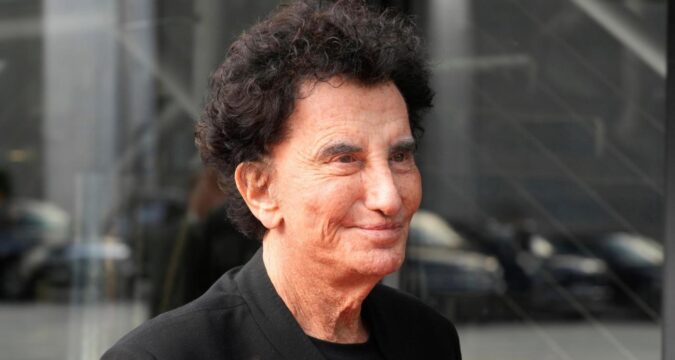
France’s former culture minister resigns over Epstein-linked tax fraud investigation
PARIS — France’s former Culture Minister Jack Lang has resigned as head of a Paris cultural center over alleged past financial links to convicted sex offender Jeffrey Epstein that prompted a tax investigation.
He is the highest-profile figure in France impacted by the release of Epstein files on Jan. 30 by the U.S. Department of Justice. He is known for his role as a culture minister under Socialist President François Mitterrand in the 1980s and 1990s.
Lang, 86, was summoned to appear at the French Foreign Ministry, which oversees the Arab World Institute, on Sunday, but he submitted his resignation.
He “is very sad and deeply hurt to be leaving a position he loves,” his lawyer Laurent Merlet said Sunday on RTL radio. “He put the interests of the Arab World Institute first,” Merlet said, adding that his client denied the allegations and called them inaccurate.
The Foreign Ministry confirmed his resignation Saturday evening.
The financial prosecutors’ office said it had opened an investigation into Lang and his daughter, Caroline, over alleged “aggravated tax fraud laundering.”
French investigative news website Mediapart reported last week on alleged financial and business ties between the Lang family and Jeffrey Epstein through an offshore company based in the U.S. Virgin Islands in the Caribbean Sea.
Jack Lang’s name was mentioned more than 600 times in the Epstein files, showing intermittent correspondence between 2012 and 2019. His daughter was also in the released files.
Foreign Minister Jean-Noël Barrot has “taken note” of Lang’s resignation and began the process to look for his successor, the foreign ministry said.
Lang headed the Arab World Institute since 2013.
https://www.chicagotribune.com/2026/02/08/frances-former-culture-minister-resigns-epstein-linked/

The Idiocracy That Is California Politics
The Idiocracy That Is California Politics
Authored by William Andersen via The Mises Institute,
After having lived in California the past four years, I can attest to the near-insanity of progressive politics in this state, yet California’s very progressive governor, Gavin Newsom, is considered a front-runner for the Democratic Party’s nomination for president in 2028.
Given how the Trump administration has helped to tank the economy through its tariffs, inflation, and outright regime uncertainty, there is a real possibility that Newsom can make California governance a reality for the entire country.
In other words, politically speaking, there seems to be no ceiling for the damage that progressive politicians in California can do with no objections from their constituents.
Thanks to the state’s governance, the cost of living here is well above the national average, even though there is no reason as to why that should be the case.
The highly-abstract worldview from which progressives draw their governing ethos continues to claim victims, but Democrats — who make up the overwhelming voter bloc in this state—do not care about the damage being done, since they can always blame Republicans and capitalism just like Big Brother blamed Goldstein.
The latest legislative caper is a wealth tax on the state’s 200 or so billionaires that is so onerous that, should voters approve it in November of this year, will drive businesses and their owners out of the state altogether.
However, California’s mostly-Democratic voters have signaled they are more than willing to approve the tax even though they know it will cause economic harm.
While I wrote the following piece more than four years ago, it still holds true and there is no chance that the political and legislative balances in this state will change — except for moving further to the left.
* * *
My colleague from the philosophy department at my former employer, Frostburg State University, was becoming increasingly angry. He was trying to be polite, but it was clear that he was raging inside. After a few minutes, he smiled a very strained smile and excused himself.
Our conversation was about California, or to be more specific, California governance. As readers can imagine, he was bullish on how the Democratic Party governs the state, California being perhaps the most one-party state in the USA. Every statewide election has gone to a Democrat in the last decade, and Democrats have a supermajority in the state legislature, which means that there is no meaningful Republican opposition and whatever the Democrats want, they get.
Not surprisingly, California governance is squarely progressive. The unions representing government employees effectively run the legislature, and as a result, pay, benefits, and pensions for those workers increasingly are straining the state budgets. (Steven Greenhut, a libertarian journalist based in California, has documented the unsustainable growth of government in that state for nearly two decades.) Yet, the state continues to march politically and economically in the progressive direction as though the laws of economics didn’t matter.
For the most part I have observed progressive California from far away, but my life took a different turn a few years ago, and the state is becoming my new home. I married a retired nurse from Sacramento in 2018, and because of health issues with her adult daughter, she has to remain in that city, something not in our original plans. Because my school’s campus either was closed or severely restricted during the covid-19 lockdowns, I spent most of the 2020 working from my wife’s home.
Living and working in California has offered me the opportunity to observe California progressivism up close, and it has been an interesting experience. Yes, the state where I officially reside, Maryland, is famously one-party and progressive, but the progressivism of California makes Maryland’s legislature look almost red state by comparison and surreal in some ways.
For example, the California legislature in its progressive wisdom effectively decriminalized theft as long as thieves take less than $950 worth of merchandise, officially reducing such theft to a misdemeanor but in effect making it legal, since progressive California prosecutors don’t like to be bothered by petty criminals. In practice, that means consumer goods are much harder to find in California stores than one might experience elsewhere. For me, the difference was quite revealing, as I recently returned to Maryland after spending close to nine months in Sacramento.
When I go to the Walmart near my wife’s home, I find many things openly are on display in Maryland are behind locked cases in California. Furthermore, California’s draconian labor laws mean Walmart has fewer employees, so if I wish to purchase something I easily could buy in Maryland, I have to wait for a long time and often I just walk away because no one is available to open the glass case. Yet, even with these provisions, shoplifting losses for California retailers are enormous, and the state’s pro-theft laws have encouraged organized grab-and-run rings.
My progressive colleagues, like my philosophy professor friend, see no problem with such developments. To them, the real thieves are the capitalists, the retailers like Walmart which refuse to pay “living wages” to their employees, and, according to Senator Bernie Sanders, the capitalists have “been looting” Americans for years. Thus, the wave of theft in that state is a positive development, according to progressives.
I can go on, but it isn’t difficult to expose the vast array of sins (economic and otherwise) committed by the California political classes, and I liken this kind of punditry to swinging a bat in a room full of pinatas—one simply cannot miss. Steven Greenhut has been exposing California’s follies for years. However, perhaps the best recent commentary I have read on the progressive mentality that governs the state comes from blogger Mike Solana, who deftly skewers progressive politicians from the Golden State who now accuse the tech industry of having “extracted wealth” from California before leaving for the greener pastures of lower-tax havens such as Texas and Florida.
Solana’s rip is worth the read if for no other reason than that he exposes the cluelessness of progressive politicians and pundits, and one can be assured that progressive politicians will fit Tallyrand’s description of the Bourbons: “They had learned nothing, and had forgotten nothing.” Yet, Solana also is puzzled as to why Bay Area politicians who fail spectacularly also win landslide elections:
Nothing in San Francisco can be set on a path to slow correction until at least six of the eleven district board seats along with the mayorship belong to sane, goal-oriented leaders cognizant of our city’s many problems, and single-mindedly focused on solving them. These politicians will likewise need to be extremely well-funded. This is to say we need a political class, funded by a political machine, neither of which currently exist. Even were both the class and the funding apparatus to rapidly emerge, and even were the new political coalition to win an undefeated string of miracle elections, it would take four years to seize meaningful political power from the resident psychotics in charge, who, as per the last election, appear to be very popular among close to ninety percent of voters (a curiosity for another wire). This is to say nothing of the broader Bay Area political toxicity, nor the state political dynamics, which are poised to exacerbate every one of our problems. It is a multi-front political catastrophe.
During the covid-19 pandemic, which California politicians—and especially Governor Gavin Newsom—mismanaged spectacularly, California voters overwhelmingly chose the progressive status quo. While writers go on and on about the mind-boggling politics of California, the voters continue to send the left-wing progressives into office at all levels of government. While some might believe that “education” is the key to the so-called self-governance of democracy, voters in California clearly are choosing their candidates for reasons other than demonstrating wisdom in office. Indeed, why voters insist on putting the worst on top is perhaps the most intriguing question one asks about California politics.
Typical wisdom says that voters “vote for their pocketbooks,” but the progressives whom the lower-income voters overwhelmingly choose to elect are responsible for California having the nation’s highest poverty rates. Furthermore, for all the antiwealth rhetoric that California’s progressive candidates spew out, the very poor and the very rich voters in California tend to choose and support the same candidates, and the Democratic Party is the party of choice of the state’s large number of billionaires.
There is little or nothing that the current progressive state government has done that promotes the promotion of real wealth in California, yet even as state authorities actively destroy economic opportunities, the voters respond by demanding more of the same. That would seem to be a mystery, but maybe not. Let me explain.
In the past few years, wildfires have ravaged huge tracts of mostly public land in California (and in much of the West, although California has been hit the hardest). There are many reasons for the fires, the most obvious being that most of California receives little rainfall and many fires occur in mountainous terrain, where it is difficult to fight them. But there is much more, and most of it has to do with progressive policies. Even the George Soros–funded Pro Publica recognizes the role of fire suppression-based land management practices in making the fires worse:
The pattern is a form of insanity: We keep doing overzealous fire suppression across California landscapes where the fire poses little risk to people and structures. As a result, wildland fuels keep building up. At the same time, the climate grows hotter and drier. Then, boom: the inevitable. The wind blows down a power line, or lightning strikes dry grass, and an inferno ensues. This week we’ve seen both the second- and third-largest fires in California history. “The fire community, the progressives, are almost in a state of panic,” (Tim) Ingalsbee said. There’s only one solution, the one we know yet still avoid. “We need to get good fire on the ground and whittle down some of that fuel load.”
Yet, the progressivist religion that defines the Democratic Party in California cannot acknowledge that the leave-nature-alone policies could have anything to do with the scope and intensity of the wildfires. Instead, the powers that be have decided that climate change—and only climate change—is responsible, and the way to deal with the problem is to impose draconian rules that make life difficult for most people living there, from outlawing new natural gas residential hookups to its infamous “road diets” imposed to discourage people from driving cars. Despite the fact that California politicians, such as Gov. Gavin Newsom, claim that these policies will significantly reduce global temperatures and make wildfires less intense, the reality is quite different, as California accounts for less than 1 percent of so-called greenhouse gases in the world.
Perhaps the most symbolic action by California’s government of progressive arrogance is the continued development of the “bullet train,” an ambitious (to be charitable) project to build high-speed rail from San Francisco to Los Angeles. Under urging from then governor Jerry Brown, voters in the Golden State in 2008 agreed to permit a bond issue to begin funding what Brown claimed would require a maximum of $33 billion. California’s mountainous terrain forced design and route changes, turning the LA-SF “dream” into a train that would run between Bakersfield and Merced, two cities in the flat Central Valley. To make matters even worse, passenger rail service via Amtrak already exists in the valley, and even if everything were to go to plan (a heroic assumption, one might add), the bullet train would save only forty-five minutes in travel from the existing route.
As the proposed length of the bullet train becomes shorter, the costs continue to skyrocket. The original $33 billion estimate now has ballooned to more than $100 billion—if the project even is completed. Yet the project continues to live. Last year I spoke to a former coworker of my wife who enthusiastically supports the rail project. When I asked her about the cost and the fact that there really is no demand for this service, her response was instructive: “But we NEED trains!” Never mind that this is a boondoggle that dwarfs almost anything else we know as government waste; never mind that California taxpayers are being forced to fund a massive wealth transfer to politically connected contractors in which there are all costs and no benefits. The state “needs” trains.
My faculty colleague also became angry at my panning the California bullet train, and I have wondered why progressives are so defensive about this project. There is no doubt that it is a huge waste of money and that the passenger-mile costs are well above anything else that exists in public transportation, but that doesn’t seem to matter. One would think that “good government” progressives would see the disconnect here.
One possible explanation comes from Murray Rothbard, who recognized that progressives ultimately are at “war with nature.” While Rothbard was writing about egalitarianism, nonetheless one can argue that progressive policies are aimed at producing very different outcomes than what would happen if people were free to make their own choices, and especially choices with their own money.
Because of the rise of the tech industry, California has seen an increase in wealth that probably is unprecedented in the history of this country—and maybe the world. Not surprisingly, the state’s tax take has massively increased in the past two decades, with the percentage of income tax revenues rising dramatically as tech entrepreneurship has created a new billionaire class. While one can think of these new billionaires as a new class of wealthy, in many ways their outlooks (at least after they become wealthy) often reflect the outlooks of the wave of entrepreneurs such as Andrew Carnegie who developed new technologies, put them to economic use, created vast amounts of wealth, and then created the foundations that ultimately would be governed by a wealth-destroying philosophy of progressivism.
In part, the wealth created permits foundation-financed “visionaries” to demand that resources be directed in a different way than would be done in a market economy, with “serve the people” and “make a difference” as mantras. We see that time and again in California, where tax-engorged “visionary” progressive politicians seize wealth created by private enterprise in order to pursue their own causes such as environmentalism.
Of course, as we already have pointed out, progressive policies tend to make the original problems worse. Not only have progressives made mass wildfires more likely, but they also have been behind the rise in homelessness in California. In the late 1970s, the San Francisco city government instituted rent controls. Not surprisingly, housing shortages followed, and the real price of housing skyrocketed. As shortages became worse, progressive politicians doubled down on the controls. Today, more than five thousand people live on the streets in San Francisco, and the government—bound by its own progressive ideals—is helpless to do anything but hand out money and defend its policies. And this in the city with the most billionaires per capita in the world.
There are three reasons why California governance will not change even as it heads toward a fiscal cliff.
First, and most important, progressive ideology is intractable and does not yield to the laws of economics. Progressive politicians are feted in the mainstream media and in California’s left-wing education institutions, and voters don’t seem to want any alternatives. (After all, California “needs” trains.) Politicians who raise questions as to this model of governance can expect to be demonized in the media and will face violent protests if they show up in public venues—and especially on college campuses.
The second reason is that California voters are drawn to progressive Democrats no matter what disasters these politicians might inflict. The highly educated voters do not support progressive Democrats just on economic issues, but also on the highly contentious social issues, and with the 2020 “revolt of the rich” dominating Democratic Party politics at the present, it is doubtful that this current wave of progressive-favoring voters will change direction.
Democrats also have the immigrant vote in their back pockets, and California has seen a wave of immigrants help turn it into a one-party state. For now, the numbers are just overwhelming, and we can expect California to move even further to the left as its housing and poverty problems become worse and Democrats successfully convince voters that free markets are cause.
The third reason things won’t change in California is that progressive government creates its own sets of monopoly rents that are distributed to politically connected interest groups. In the case of the Golden State, state-employee and municipal labor unions are by far the most powerful political entity, and they control vast blocs of voters. Their power was recently demonstrated by their support of the covid-19 lockdowns in the state—during which public employees continued to draw full pay even as the lockdown policies ravaged the state’s tax base.
Should one doubt the power of California’s government-employee unions, witness the “success” of what was called AB 5, the law that almost killed the “gig” industries in the state, putting thousands of freelance writers and musicians out of work. Written by the AFL-CIO (American Federation of Labor and Congress of Industrial Organizations) as a means of ending the Uber and Lyft rideshare services (and protect unionized taxi and public transportation workers), the fallout was so bad that even the legislature had to back off some of the restrictions. Voters did the rest last November when they beat back most of the most onerous provisions of the law. (One doubts that the musicians and writers that lost their jobs changed their progressive voting patterns in the most recent election. Such is the staying power of progressive ideology.)
If one believes that perhaps the wave of progressive voters will become “converted” to a “free minds and free markets” approach (the “left libertarian” position), the experience of New York City should be instructive. In 1975, the economy was in recession, businesses were fleeing the city’s onerous tax rates and antibusiness climate, and city officials were fraudulently selling capital bonds to pay for previously issued capital bonds. (William E. Simon, the US secretary of the Treasury in 1975, laid out the entire scenario in his blockbuster A Time for Truth.)
New York’s problem was obvious—except in the minds of progressives. Where most of us would understand that having unions running away with the budgets while suppressing productive private enterprises is a losing proposition, progressives see a nefarious capitalist plot. That New York City had a relatively brief renaissance in large part because of the deregulation of banking and finance (which was begun by President Jimmy Carter) plays no role in progressive thinking at all.
Unlike New York City, California does not have an economic ace in its pocket. Even though much of the tech industry has prospered during the state’s draconian pandemic shutdowns, the state government (not to mention cities and counties) is facing the worst financial crisis perhaps in its history. Not surprisingly, the progressive response is to increase incendiary rhetoric toward wealth creators and demand even higher taxes and more business regulations.
Progressivism is a utopian philosophy of governance that will never find nor create its utopia. If California voters and politicians do not understand the current crisis and how it came about, they probably never will understand. Instead, we will see the continuous march to perdition as California politicians refuse to acknowledge that they are killing the geese laying the golden eggs.
Tyler Durden
Sun, 02/08/2026 – 19:50
https://www.zerohedge.com/political/idiocracy-california-politics

A sus 52 años, la austriaca Claudia Riegler desafía el tiempo en su snowboard
Por JOSEPH WILSON
LIVIGNO, Italia (AP) — Cuando Claudia Riegler comenzó a hablar sobre sus rivales de snowboard en los Juegos Olímpicos de Invierno, tuvo un desliz verbal que confirmó una verdad obvia.
“Nunca pienso en la edad”, afirmó. “Si estoy compitiendo, ni siquiera sé cuántos años tienen las chicas”.
Luego, hizo una rápida y avergonzada corrección.
“¡Las chicas!” dijo. “¡Ahora suena realmente como si fuera mayor!”
Riegler no es una de las chicas. De hecho, podría ser su madre, o incluso abuela. Pero, ¿cuántas de ellas podrán decir que son orgullosas olímpicas a los 52 años?
Esta veterana austriaca compitió en sus quintos Juegos de Invierno el domingo cuando participó en el eslalon gigante paralelo en los soleados Alpes italianos.
Eso en sí mismo es un logro, especialmente dado el talento que produce Austria, un país apasionado por la nieve.
Sin embargo, no estaba aquí solo para recoger otro certificado de participación. Riegler demostró que aún podía deslizarse con las mejores del mundo. Se esforzó y logró pasar a las rondas de eliminación, justo en el límite, terminando en el puesto 16 del grupo de clasificación de 36 competidoras.
Eso la emparejó con la bicampeona defensora Ester Ledecka, 22 años más joven que ella.
Nadie esperaba que Riegler lograra una sorpresa contra Ledecka. Eso le correspondió a su compatriota austriaca Sabine Mayer, quien superó a Ledecka en los cuartos de final en su camino hacia la medalla de plata. Pero si vas a ser eliminada, bien podría ser por la mejor de la historia del deporte.
Riegler terminó 1.13 segundos detrás de Ledecka, una diferencia considerable pero no una que causara vergüenza.
Solo cuando Riegler, ya terminada su jornada, se quitó el casco de esquí adornado con un feroz lobo blanco, se pudo ver la brecha de años que la separaba de sus rivales, que incluían a una competidora de 16 años.
“Estoy realmente orgullosa de estar aquí hoy y de haber tenido una muy buena carrera contra Ester”, expresó. “Estoy feliz de haber llegado a las finales hoy e incluso hice una muy buena carrera final”.
Riegler hizo su debut olímpico en Salt Lake City en 2002, un año antes de que naciera la nueva medallista de oro, la checa Zuzana Maderova.
No muchos meses después de su debut olímpico, cuando tenía 29 años, su entrenador del equipo austriaco dijo que ya estaba pasada de moda y la sacó del equipo.
Sin embargo, lo que podría haber sido el final resultó ser el combustible que la ha mantenido en marcha durante dos décadas más.
“Tengo que decir que mi mayor motivación ahora es mi edad porque me sacaron del equipo cuando tenía 30 años y me dijeron que era demasiado vieja”, comentó Riegler. “Así que en ese momento me dije a mí misma, no, no se ha acabado. Continuaré por mi cuenta. Y si él dice esto, no tiene que ser la verdad. Tengo que encontrar mi propia verdad. Eso es lo que me motiva mucho”.
Así que siguió entrenando y, finalmente, después de tres años y un cambio de entrenador, volvió a competir con los colores rojo y blanco de Austria.
Ganó el campeonato mundial de eslalon gigante paralelo en 2015, mientras acumulaba más de 400 participaciones en la Copa del Mundo.
Ahora regresa a casa satisfecha de no haber mostrado su edad en Livigno.
Riegler no está sola entre los competidores mayores. Un suplente del equipo estadounidense de curling, Rich Ruohonen, tiene 54 años en estos Juegos.
Pero un deporte de acción como el eslalon gigante paralelo (PGS), donde los snowboarders zigzaguean en un recorrido corto para ver quién llega primero al fondo, parece adaptarse a los atletas mayores.
El medallista de oro masculino el domingo fue Ben Karl, de 40 años, otro austriaco, quien defendió con éxito su título ganado en 2022.
Para celebrar, se quitó la camiseta y flexionó sus músculos, sin mostrar signos de un “cuerpo de papá” a pesar de estar en la mediana edad.
“Me viste con mi cuerpo desnudo y creo que puedes estar en muy buena forma hasta los 40 y tal vez hasta los 50, no lo sé”, dijo. “No hay razón para desacelerar con mi edad”.
Más evidencia de que el PGS es un elixir de juventud atlética: el medallista de plata masculino Kim Sangkyum tiene 37 años, mientras que otro de los mejores competidores masculinos en la alineación del domingo fue Roland Fischnaller, de 45 años.
Debe ser algo en la nieve.
O, como señaló el entrenador de Ledecka, el excompetidor de snowboard Justin Reiter, los corredores no sufren las mismas lesiones y el desgaste general que los temerarios del halfpipe cuando intentan sus acrobacias aéreas.
“Cuando te haces un poco mayor y las rodillas empiezan a crujir, tiendes a no montar en los rieles que están en el parque o hacer saltos”, dijo Reiter. “Tiendes a deslizarte sobre los bordes y tallar y girar. Y así tienes este regreso a las raíces del snowboard”.
Para Riegler, se trata de ciclismo y entrenamiento con pesas, y una buena dosis de confianza. Dicho esto, está considerando el próximo campeonato mundial en su país como el momento para dejar la tabla definitivamente.
“Creo que sería un final realmente bonito para mí”, dijo.
___
Deportes AP: https://apnews.com/hub/deportes

Estrellas marcan el tono del Super Bowl 60: Green Day, Puth, Carlile y Jones
Por JONATHAN LANDRUM Jr. y ANDREW DALTON
SANTA CLARA, California, EE.UU. (AP) — Las estrellas han estado en el centro del Super Bowl 60, desde Chris Pratt y Jon Bon Jovi presentando a los equipos hasta una serie de actuaciones previas al juego.
Los momentos destacados en el Levi’s Stadium incluyen a Blue Ivy Carter saltando en una zona de anotación antes del juego y a Green Day rindiendo homenaje al 60 aniversario del campeonato de la NFL.
Brandi Carlile mantuvo su interpretación sincera y sencilla para “America, the Beautiful”, Charlie Puth hizo que “The Star-Spangled Banner” fuera grandiosa y conmovedora, y Coco Jones aportó un poco de ambos elementos a “Lift Every Voice and Sing”.
La próxima actuación de Bad Bunny en el medio tiempo es un momento muy esperado.
Green Day trae el rock de la Bahía, y una palabrota, a un desfile de Jugadores Más Valiosos
Los veteranos del punk-pop del Área de la Bahía de San Francisco, Green Day, subieron al escenario antes del juego y tocaron un fragmento de su canción “Good Riddance (Time of Your Life)” en un desfile de ex Jugadores Más Valiosos del Super Bowl.
Los héroes locales Steve Young, Joe Montana y Jerry Rice estuvieron entre los que salieron durante la canción destinada a celebrar los 60 años del Super Bowl.
Billie Joe Armstrong, Mike Dirnt y Tre Cool se lanzaron después a lo más duro y menos sentimental, incluyendo “Holiday”, “Boulevard of Broken Dreams” y “American Idiot”.
Armstrong no censuró la grosería que empieza con “f” en la letra de “American Idiot”. La palabra fue silenciada en la transmisión de NBC, pero provocó fuertes vítores dentro del estadio.
Carlile y Puth ofrecen momentos patrióticos antes del inicio
El cantautor Charlie Puth ofreció una interpretación amplia y conmovedora de “The Star-Spangled Banner” (el himno nacional estadounidense).
El joven de 34 años de Nueva Jersey se situó en un piano eléctrico Rhodes mientras cantaba, acompañado por un coro y una sección de metales.
Su interpretación se sintió lenta y deliberada, pero le tomó 1 minuto y 56 segundos cantar, lo cual es ligeramente más rápido que el promedio para un himno del Super Bowl.
Antes de eso, Brandi Carlile ofreció una interpretación acústica sincera de “America, the Beautiful”.
La rockera folk y country de 44 años vestía un traje negro y fue acompañada por un violín y un violonchelo en el campo del Levi Stadium.
La ganadora del Grammy dijo a The Associated Press esta semana que no usaría pistas pregrabadas, diciendo “la gente merece tenerte en vivo”.
Después de la canción, Carlile, quien es de Ravensdale, Washington, a unas 30 millas (48 kilómetros) de Seattle, dijo que estaba “aliviada y muy emocionada por los Seahawks, ¡vamos!”.
Coco Jones inicia las actuaciones del Super Bowl 60 con ‘Lift Every Voice’
Coco Jones, una cantautora y actriz de 28 años de Columbia, Carolina del Sur, vestía un vestido blanco y fue acompañada por un octeto de cuerdas mientras interpretaba “Lift Every Voice and Sing”, una canción que se ha conocido como el himno nacional no oficial de los afroestadounidenses.
“Me siento realmente increíble, espero haber hecho sentir orgullosos a mis ancestros, y espero haber inspirado a la nación a unirse”, dijo Jones a AP justo después de la canción.
Hizo una videollamada con su madre en la línea lateral después de la actuación mientras su prometido, el jugador de los Cavaliers de Cleveland Donovan Mitchell, sostenía el teléfono.
Escrita por James Weldon Johnson, la canción se ha interpretado en el Super Bowl cada año desde 2021, el primer Super Bowl después de las protestas por el asesinato de George Floyd, cuando el movimiento Black Lives Matter, y la canción, se volvieron especialmente prominentes.
Celebridades vistas en el Super Bowl 60
Chris Pratt lució una camiseta de los Seahawks mientras asistía al Super Bowl y dio una enérgica presentación al equipo antes de que salieran al campo.
En el lado opuesto del campo, Jon Bon Jovi dio la introducción de los Patriots.
Estrellas como Travis Scott y Jay-Z estaban en las líneas laterales previo al juego. La hija de Jay-Z, Blue Ivy, saltó en una de las zonas de anotación para tomarse una foto.
Entre los espectadores sentados en las suites estaban Justin Bieber, Hailey Bieber y Adam Sandler.
Bad Bunny espera su gran momento
Bad Bunny buscará destilar una carrera de diez años y una gran carga de expectativas culturales en un espectáculo de medio tiempo de 13 minutos cuando suba al escenario en el medio tiempo.
El astro de 31 años está pasando por un año monumental. Hace una semana ganó el Grammy al álbum del año por “Debí tirar más fotos”, una carta de amor a su natal Puerto Rico que fue el lanzamiento más reproducido de 2025.
Ahora, asume una actuación que por su mera existencia es un hito para la cultura latina.
Dijo esta semana que los fans no necesitaban aprender español para disfrutar de su presentación, pero deberían estar preparados para bailar.
___
Dalton informó desde Los Ángeles.
___
Esta historia fue traducida del inglés por un editor de AP con la ayuda de una herramienta de inteligencia artificial generativa.

Things go swimmingly for Homewood-Flossmoor’s Kendra Hayden in winning regional wrestling title. ‘Dominated.’
Homewood-Flossmoor’s Kendra Hayden was looking for something to fill her athletic downtime between swimming in the fall and water polo in the spring.
She decided to try wrestling as a sophomore this winter, entering the sport as a total novice. At first, things definitely weren’t easy.
“The toughest part was coming in with no skill,” Hayden said. “Then the first week of conditioning, it kicked my butt. I almost quit. But I was like, ‘I have to push it through. This happens in every sport.’
“Then I dominated.”
Hayden did just that Saturday in the first postseason tournament of her wrestling career. She won the 190-pound title at the Class 2A Ag Science Regional in Chicago, helping the Vikings take the team championship in the process.
Amara Nwoye (130) was the other individual champion for H-F, which scored 191.5 points to outlast Oak Forest (178) and the rest of the 30-team field.
Homewood-Flossmoor’s Kendra Hayden, right, wrestles against Hillcrest’s Jordyn Coleman-Harrison in the 190-pound final of the Class 2A Ag Science Regional in Chicago on Saturday, Feb. 7, 2026. (Troy Stolt / Daily Southtown)
“It’s so exciting,” Nwoye said. “I’m so proud of my teammates. I was not keeping up with the scores. When I found out we won, I was like, ‘Oh my God.’ I realized we really have a great wrestling team.”
Alex Sebek (100), Rain Scott (125), Brooklyn Strelow (135) and Iyobosa Odiase (145) won titles to lead Oak Forest.
Other regional champions included St. Laurence’s Nina Nesci (120) and Hannah Marusarz (140), Hillcrest’s Taniya Moss (105), Ag Science’s Carmen Jackson (110), Andrew co-op’s Piper Booe (115), Reavis’ Lily Fish (155), T.F. South’s Jermia Moore (170) and Shepard’s Karrine Jenkins (235).
Hayden, meanwhile, has competed well throughout her rookie season. The regional tournament, however, is a different beast. And she was a bit intimidated going into it.
Oak Forest’s Rain Scott, left, battles with Homewood-Flossmoor’s London Gandy in the 125-pound final of the Class 2A Ag Science Regional in Chicago on Saturday, Feb. 7, 2026. (Troy Stolt / Daily Southtown)
“Honestly, I came here thinking, ‘Wow, I’m really at regionals,’” Hayden said. “There are some really strong wrestlers and I honestly thought I was going to be out before the semifinal.
“But I feel really accomplished now. I just got first place at regionals. It’s amazing.”
Hayden (28-12) did it by pinning Hillcrest’s Jordyn Coleman-Harrison, the top seed at 190, in just 41 seconds in the final.
“I watched her semifinal and I was like, ‘Oh, that’s a good girl,’” Hayden said of Coleman-Harrison. “When I walked on the mat, she gave me that look and I knew I had to get in that mode to fight.
Homewood-Flossmoor’s Kendra Hayden, left, tangles up with Hillcrest’s Jordyn Coleman-Harrison in the 190-pound final of the Class 2A Ag Science Regional in Chicago on Saturday, Feb. 7, 2026. (Troy Stolt / Daily Southtown)
“She made a move and I was like, ‘Whoa, I can counter that.’ Then I actually did it. I couldn’t believe it. I started crying immediately. It was embarrassing, but it was a proud moment.”
That pride extended beyond Hayden.
“This being her first year, it’s astounding for her to win first place at regionals,” Nwoye said of Hayden. “I talked to her before her first-place match and told her what to work on, and she really took it to heart. I’m so proud of her.”
H-F coach Scott Aronson saw potential as soon as Hayden walked into the wrestling room.
“She’s just a big, strong girl,” Aronson said. “She’s got an aptitude for it. She plays water polo and I think that helped her a lot. All we had to do was get her in the proper shape, and she’s taken off with it.”
Homewood-Flossmoor’s Kendra Hayden, right, takes down Hillcrest’s Jordyn Coleman-Harrison in the 190-pound final of the Class 2A Ag Science Regional in Chicago on Saturday, Feb. 7, 2026. (Troy Stolt / Daily Southtown)
Hayden helped the Vikings win the team title despite having just 10 wrestlers in the 14 classes.
“We don’t have 50 girls like some of these teams,” Aronson said. “But the squad we have, these girls are really, really tough. They love each other and they fight for each other. It’s amazing.”
Hayden said it was a special group of teammates and coaches who pushed her to be a champion.
“I’m so proud of everyone on this team,” she said. “This is the biggest accomplishment. Everyone doubted us, but we’re a good team. We have good sportsmanship.
“We came here and we kicked some butt — but respectfully, of course.”
https://www.chicagotribune.com/2026/02/08/kendra-hayden-homewood-flossmoor-girls-wrestling/

2026 Winter Olympics: Meet the medalists from the United States
Meet all the medalists from the United States at the 2026 Olympics in Milan Cortina. And catch up on all the latest Olympic news here.
GOLD: Breezy Johnson, women’s downhill
Gold medalist Breezy Johnson poses for a photo during the medal ceremony for the women’s downhill at Tofane Alpine Skiing Centre on Feb. 8, 2026. (Photo by Ezra Shaw/Getty Images)
Ski racer Breezy Johnson won the Olympic downhill on Feb. 8 with a hard-charging run on a day marred by teammate Lindsey Vonn’s crash that saw her being taken off the mountain in a helicopter. The 30-year-old Johnson joins Vonn, 41, as the only American women to win the Olympic downhill.
GOLD: Team figure skating
From left, Evan Bates, Madison Chock, Ilia Malinin, Alysa Liu, Amber Glenn, Ellie Kim and Danny O’Shea of Team USA celebrate winning the gold medal after the figure skating team event at the 2026 Winter Olympics, in Milan, Italy, on Sunday, Feb. 8, 2026. (AP Photo/Natacha Pisarenko)
Ilia Malinin beat Japanese rival Shun Sato in a head-to-head showdown at the Milan Cortina Olympics on Feb. 8, helping the U.S. defend its team figure skating gold medal by breaking a deadlock with Japan in the final session of the competition.
https://www.chicagotribune.com/2026/02/08/2026-winter-olympics-us-medalists/

Olimpistas de EEUU enfrentan críticas en línea, incluso de Trump, por hablar de política
Por FERNANDA FIGUEROA
MILÁN (AP) — El presidente de Estados Unidos, Donald Trump, dijo el domingo que es difícil animar a los olímpicos estadounidenses que se pronuncian en contra de las políticas de su gobierno, llamando a uno de esos críticos “un verdadero perdedor” que quizás debería haberse quedado en casa.
Fue el ejemplo más reciente y prominente de los olímpicos estadounidenses en los Juegos de Milán-Cortina invitando a reacciones negativas en línea con sus palabras.
El viernes, los reporteros preguntaron a los atletas estadounidenses en una conferencia de prensa cómo se sienten representando al país durante una intensificación de las medidas contra la inmigración por la administración Trump. El esquiador de estilo libre Hunter Hess respondió que tenía emociones encontradas ya que no está de acuerdo con la situación, y que está en Milán compitiendo en nombre de todos los que lo ayudaron a llegar a los Juegos.
“Si se compagina con mis valores morales, siento que lo estoy representando”, dijo Hess. “Sólo porque llevo la bandera no significa que represento todo lo que está sucediendo en Estados Unidos”.
Entre los que criticaron a Hess se encontraba el YouTuber convertido en boxeador Jake Paul.
“De parte de todos los verdaderos estadounidenses, si no quieres representar a este país, vete a vivir a otro lugar”, escribió en X, donde tiene 4,4 millones de seguidores. Minutos después, fue fotografiado sentado junto al vicepresidente de Estados Unidos, JD Vance, en el partido de hockey femenino de Estados Unidos en Milán.
Trump dijo al día siguiente que los comentarios de Hess hacen difícil apoyarlo.
“Hess, un verdadero perdedor, dice que no representa a su país en los actuales Juegos Olímpicos de Invierno. Si ese es el caso, no debería haber intentado formar parte del equipo, y es una pena que esté en él”, escribió en su cuenta de Truth Social.
Hess no fue el único atleta expresando descontento, ni enfrentando reacciones adversas. En la conferencia de prensa del viernes con los atletas, el esquiador de estilo libre Chris Lillis hizo referencia al Servicio de Inmigración y Control de Aduanas (ICE), diciendo que está “desconsolado” por lo que está sucediendo en Estados Unidos.
“Creo que, como país, necesitamos enfocarnos en respetar los derechos de todos y asegurarnos de que estamos tratando a nuestros ciudadanos tan bien como a cualquiera, con amor y respeto”, dijo Lillis. “Espero que cuando la gente vea a los atletas competir en los Juegos Olímpicos, se den cuenta de que esa es la América que estamos tratando de representar”.
Y la patinadora artística estadounidense Amber Glenn dijo que la comunidad LGBTQ+ ha tenido un momento difícil durante la administración Trump.
Además de Paul, las figuras conservadoras que criticaron a los atletas en las redes sociales incluyen al ex quarterback de la NFL Brett Favre, el actor Rob Schneider y el representante estadounidense Byron Donalds, a quien Trump ha respaldado para la carrera por el cargo de gobernador de Florida en noviembre. También recibieron improperios por parte de estadounidenses comunes.
Glenn publicó en Instagram que había recibido “una cantidad aterradora de odio/amenazas por simplemente usar mi voz CUANDO ME PREGUNTARON cómo me siento”. Agregó que comenzará a limitar su uso de las redes sociales por su bienestar.
En respuesta a preguntas de The Associated Press, el Comité Olímpico y Paralímpico de Estados Unidos dijo en un comunicado el domingo que es consciente de una cantidad creciente de mensajes abusivos y dañinos dirigidos a los atletas y que estaba haciendo su mejor esfuerzo para eliminar contenido y reportar amenazas creíbles a las fuerzas del orden.
“El USOPC apoya firmemente a los atletas del equipo de Estados Unidos y sigue comprometido con su bienestar y seguridad, tanto dentro como fuera del campo de juego”, dijo.
Protestas contra ICE en Italia
El apoyo a Estados Unidos en el extranjero se ha erosionado a medida que la administración Trump ha adoptado una postura agresiva en política exterior, incluyendo aranceles punitivos, acción militar en Venezuela y amenazas de invadir Groenlandia.
Durante la ceremonia de apertura, los atletas del equipo de Estados Unidos fueron aclamados, pero se escucharon abucheos y silbidos cuando Vance y su esposa, la segunda dama Usha Vance, fueron mostrados en las pantallas del estadio, ondeando banderas estadounidenses desde la tribuna.
En Milán, se han desatado varias manifestaciones contra el despliegue local de agentes de ICE, incluso después de la aclaración de que son de una unidad de investigaciones completamente separada de la unidad de aplicación que está al frente de la represión de la inmigración en Estados Unidos.
Investigaciones de Seguridad Nacional, una unidad de ICE que se enfoca en delitos transfronterizos, frecuentemente envía a sus oficiales a eventos en el extranjero como los Juegos Olímpicos para ayudar con la seguridad. El brazo de ICE visto en las calles de Estados Unidos se conoce como Operaciones de Ejecución y Remoción, y no hay indicios de que sus oficiales hayan sido enviados a Italia.
Una manifestación el sábado contó con miles de manifestantes. Hacia el final, un pequeño número de ellos se enfrentó con la policía, que disparó gases lacrimógenos y un cañón de agua. Eso siguió a otra la semana pasada, cuando cientos protestaron contra el despliegue de agentes de ICE.
___
El escritor de Associated Press Graham Dunbar contribuyó a este informe.
Deportes AP: https://apnews.com/hub/deportes