Category: News
Epstein’s Gates To Pandemonium
Epstein’s Gates To Pandemonium
Authored by Jordi Pigem via the Brownstone Institute,
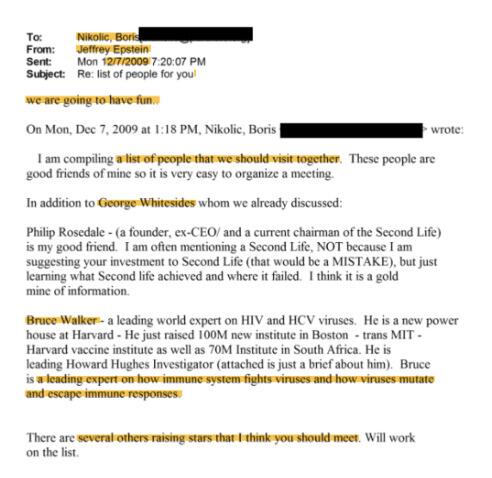
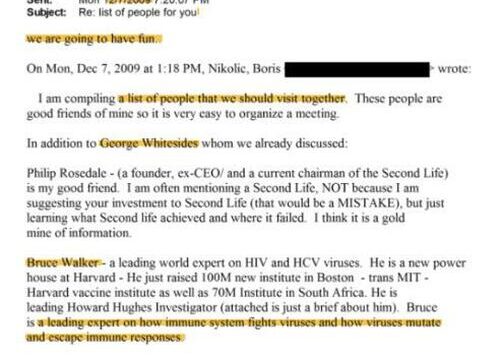
“We are going to have fun,” writes Jeffrey Epstein on December 7, 2009.
This phrase is his reply to an email by the Bill & Melinda Gates Foundation’s Science Advisor (and Scientific Advisor to Bill Gates), Boris Nikolic, who is making a list of “raising stars,” many of them scientists, that they “should visit together.”
By then, everyone must have known that Epstein was a notorious, convicted sex offender. He had been released from jail only a few months before, on July 22. He had been under investigation since 2005: federal officials had identified three dozen girls whom Epstein had allegedly sexually abused (after a controversial plea deal agreed by the US Department of Justice, he was only convicted of two crimes). Why would a high ranking official of Gates’ Foundation want to organize meetings between Epstein and prominent scientists? If it was about money, surely they could find better-looking investors. What, eventually, were they “going to have fun” with?
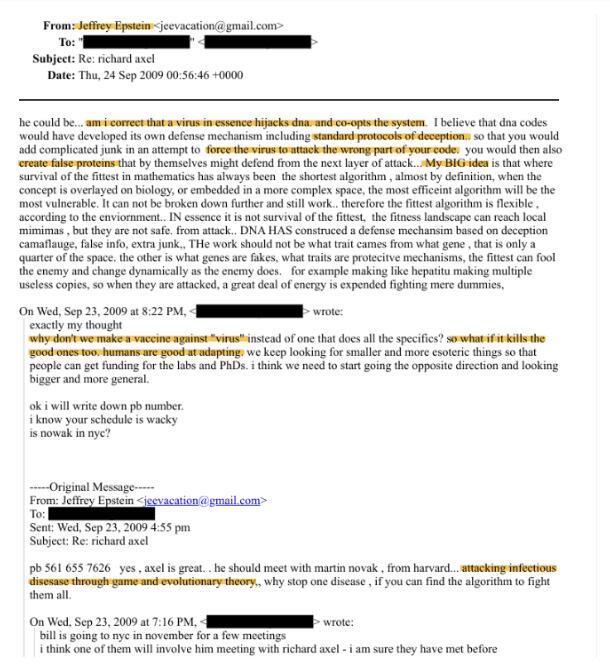
One of the revelations of the latest batch of Epstein files is his strong interest in viruses, vaccines, pandemics, and mRNA. Two months after getting out of jail, he is writing about viruses, infectious diseases, and something he calls “My BIG idea.”
Or, for instance, in January 2010, he was discussing mRNA and codons.
The latest batch documents of the investigation of Jeffrey Epstein, released on January 30, consists of over 3 million pages, with many names redacted. A helpful simulation of Epstein’s inbox has been created, fully searchable and giving access to the contents of over 7,000 emails. With keywords and patience the original documents can then be located on the DOJ website.
The trio Epstein-Nikolic-Gates also features prominently in a long agreement letter sent by Epstein to Gates. According to this 2013 document, Gates “specifically requested” Epstein to “personally serve as the representative” of Nikolic in negotiations over the termination of his work with Gates. The first section of this six-page letter states: “Mr. Gates acknowledges that Mr. Epstein has an existing collegial relationship with Mr. Gates in which Mr. Epstein received confidential and/or proprietary information from Mr. Gates.” An analysis of its contents and wider implications can be found in a detailed article by Sayer Ji on Epstein, Gates, and “Pandemics as a Business Model.”
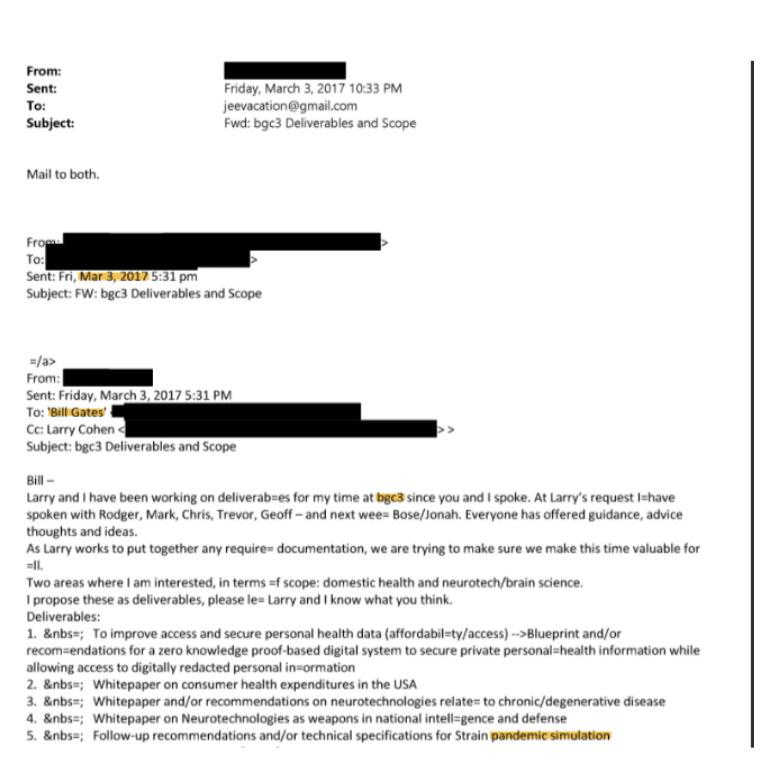
In March 2017, two and a half years before Event 201, three years before Covid-19 was officially declared a pandemic by the WHO, an email thread involving Gates and bgC3 (Bill Gates Catalyst 3, now Gates Ventures) speaks of “pandemic simulation.”
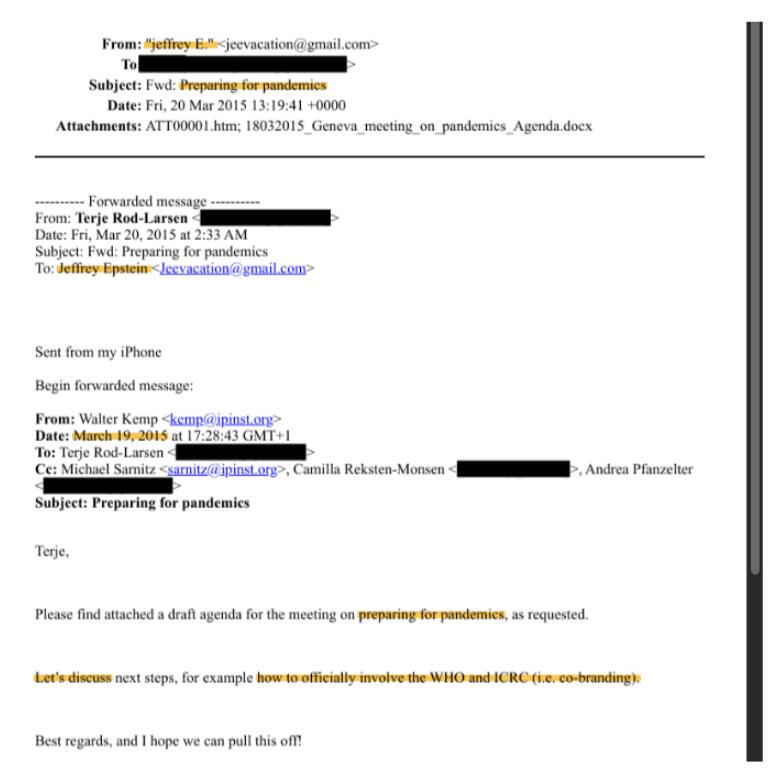
A number of emails in the Epstein files speak of pandemic preparedness. One of them, from March 2015, explicitly invites to discuss “how to officially involve the WHO” for the sake of “co-branding” (it looks like the “product” to “co-brand” is a pandemic).
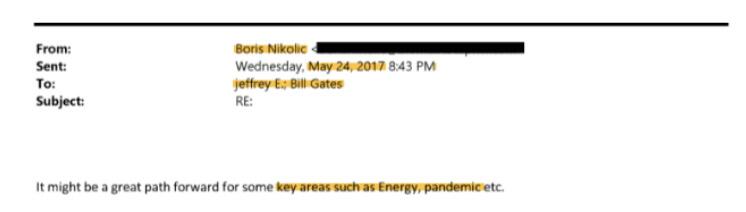
In 2017, an email from Boris Nikolic addressed to both Epstein and Gates (four years after the agreement letter about Epstein mediating the rupture between Nikolic and Gates) mentions “pandemic” as a key area for a Donor Advised Fund.
Nikolic was later named as executor in Epstein’s will, signed two days before his death, officially by suicide, in August 2019. (As I’m writing this, a friend points out to me that according to Fortnite Tracker, a player with Epstein’s username, littlestjeff1, was still playing, from Israel, in 2024…)
Epstein was a node in a large network of darkness, and the release of the files may be a threshold into it. In a video interview included in the release, Epstein tells Steve Bannon that he is only “tier-one,” “the lowest level” of sexual predator. As researcher Whitney Webb has stated in conversation with James Corbett:
Jeffrey Epstein was as much a financial criminal as a sex criminal. There’s a very particular reason why mainstream media only wants to talk about his sex crimes between 2000 and 2006. Jeffrey Epstein was also not an anomaly in the network in which he operated. Numerous people engage in sex blackmail and sex trafficking. If you think these issues died with Jeffrey Epstein, you are sorely mistaken. […] And if you were to pull on the Epstein thread, I guess you could say, you start to unravel a lot of the bigger picture.
In early 2020, not everyone knew the word pandemic. Much less familiar still was the word (more common until 1900) pandemonium. The Shorter Oxford English Dictionary defines pandemonium, in its first sense, as “the abode of all demons” and, later on, as “a place or state of utter confusion and uproar.” Covid was a pandemonium: it did generate a “state of utter confusion.” The word was coined by John Milton in Paradise Lost (1667), where Pandemonium is “the palace of Satan,” “the high capital of Satan and his peers,” and “city and proud seat of Lucifer.” Other than the prefix pan- (Greek for “all”), these words are unrelated.
It seems Gates and Epstein were much closer than it had been assumed. Gates brings to mind, among other things, pandemic preparedness (as in CEPI, the “Coalition for Epidemic Preparedness Innovations,” and Event 201, both of which had the Bill & Melinda Gates Foundation as key funder). Epstein brings to mind a darkness that involved horrible violence to children and, most likely, explicit invocation of powerful evil forces — as is increasingly common in the highest tiers of political, economic, and technological power. Gates and Epstein, pandemic and pandemonium, may be closer than we thought.
A final word. We find ourselves in a world that, to a large extent, is morally, cognitively, and spiritually already collapsing. To face this darkness without being bulldozed by it, it is essential to be aware that the primordial Source of reality (call it God or what makes sense to you) is ultimately Light, Goodness, and Truth. And that is what shall prevail at the end.
Tyler Durden
Sun, 02/08/2026 – 23:20
https://www.zerohedge.com/political/epsteins-gates-pandemonium
Column: Most Super Bowl halftimes are bonkers. Bad Bunny’s was close to art.
Let me be straight here and say I just finished watching Bad Bunny’s Super Bowl halftime show and since I’m supposed to write down a few thoughts, long story short: Holy smokes. How could you not swoon over that? I even felt a chill or two.
It was rousing, funny, surprisingly touching. Understand, I love Super Bowl halftime shows, but usually because they’re bonkers. For decades, they went beyond nuts. Until a few (Prince in 2007; Madonna in 2012; Beyoncé in 2013) transcended nuts. Bad Bunny’s was closer to a cultural moment, a paradigm shift, a reimagining of how much a halftime spectacle can resemble art. It was a love letter to home and a hand extended outward, inviting you to dance with him. No question, here was one of the more understandable halftimes.
In fact, while Kid Rock and his super friends were on Turning Point USA’s social media and YouTube channels playing an alternative halftime show in protest of the NFL handing its official halftime to a Spanish-speaking artist, Bad Bunny was professing, in both Spanish and English, the power of community, the meaning of togetherness.
But again, I love all halftime shows.
I can’t be trusted with such important opinions. Probably neither can you, and if you refused to watch because Bad Bunny sings in Spanish and you thought you wouldn’t understand what he was saying, let me raise you a Super Bowl halftime in 1970 starring Lionel Hampton on vibraphone, a recreation of the Battle of New Orleans (with a field of dead and dying soldiers) and the singing of Carol Channing. Indeed, one of the stranger Super Bowl halftime shows ever, exactly 40 years ago, the year the Chicago Bears destroyed my beloved Patriots by 36 points, was so creatively confusing, the folks of Up With People — pure uncut Super Bowl halftime kitsch — cuisinarted “Born in the U.S.A.” into a vanilla mash of Huey Lewis and Kenny Loggins, and then, whiplashing again, tacked on a note that the real star of the evening was Martin Luther King, Jr.
When it comes to Super Bowl halftimes, you can’t make this stuff up.
Mostly because it feels like they make this stuff up about 20 minutes before halftime.
See, Super Bowl halftimes are like those old Stefon sketches with Bill Hader on “Saturday Night Live,” squirreling together non-sequiturs and calling it a party. In 2011: The Black Eyed Peas, Slash and Usher. In 1995: Tony Bennett, the Miami Sound Machine and Indiana Jones. In 1988: Chubby Checker, the Rockettes and 88 grand pianos. Hell, the first Super Bowl halftime ever in 1967 starred men flying around in jetpacks, marching bands and 300 pigeons.
Bad Bunny’s performance, in comparison, did what smarter halftime shows do: Besides its over-the-moon spectacle, besides its veritable recreation of the entire island of Puerto Rico, besides the inevitable and literal fireworks, it was performed in a singular voice —not unlike what Prince did, or what Tom Petty managed in 2008 without dancers or conceptual flash.
Bad Bunny — and if you listened to his last few albums, you expected this— was mostly about music, and connections, and a familiar love gleaned from traditions. There really was no stage. There was, rather, a cast of hundreds, dancing together and spreading apart, among tall grasses, old men playing dominos, street vendors, a nail salon, utility workers dancing from their telephone poles, rows of brass horns and a full string section — the last led by Giancarlo Guerrero, the new conductor of Chicago’s Grant Park Music Festival, a Costa Rican native.
Think dizzying, but in the best of ways.
For those new to Bad Bunny, some context: His name stuck because of an old family photo, a picture of a young Benito Antonio Martinez Ocasio wearing a bunny costume, glowering. His music, holding a foot in the future and the past, is homage to Puerto Rican traditions, heavy on salsa, with notes of hip hop, big band, indie rock and reggaeton. It might not be your world, but it sounds like the world. And often, it erupts like a street party — despite his solemn singing voice coating everything in bittersweet, his phrasing alternating with dramatic gasps, as if so bereft he doesn’t notice the party behind him.
Some argue that he is the most popular recording artist in the world, and if so, I would bet that his secret is how casual and unpretentious his disparate mix sounds, how close to the ground it feels. As the New Yorker put it: “The bigger he gets, the more local he seems.” His series of concerts celebrating Puerto Rico last year became such an international event that Moody’s slightly raised its financial outlook for the island.
His halftime show was a kaleidoscopic extension of that triumph, a sunny snapshot of the island imported to the 50-yard line, largely removing anything like a traditional stage, spreading dancing and musicians outward and evenly, placing Bad Bunny at the center of a constant swirl of action.
What struck was how wholesome a Bad Bunny halftime could be. How could loud chunks of the audience have seemed threatened by this?
But then, as a bellwether of how slow we can be to embrace social change, one could do worse than watch the past 59 years of Super Bowl halftimes. For decades, it was a national toilet break. In the 1970s, during the heyday of Led Zeppelin and Earth, Wind & Fire, halftime was a bouillabaisse of marching bands and performers a decade or more past relevance. There were salutes to Duke Ellington and Old Hollywood.
The template for years of halftimes was cemented by an events director named Tommy Walker, the man behind the Main Street parade at Disneyland. Without intending, even as the Vietnam War lingered on and the national mood was grim, halftime became classic Americana, a telling mixture of self-parody and pride.
Nothing changed until the 1991 halftime, anchored by New Kids on the Block. Amazingly, that was the first halftime featuring a contemporary hitmaker, albeit inserted into Disney’s “It’s a Small World” theme.
The following year, Gloria Estefan was the halftime star.
The year after that, Michael Jackson.
And so on. Super Bowl halftime is now watched by an estimated 100 million people, far and away the most seen musical performance of the year, if not always the most remembered.
Bad Bunny’s Super Bowl halftime show in photos
Of course, since the 1990s, it hasn’t always been a smooth road. (Who told the Rolling Stones to play a new song? In 2006?) As the pageantry of Bad Bunny reminded, maybe the best way to approach a Super Bowl halftime is by blending the old-school with a lot of new. Dr. Dre and Eminem and Kendrick Lamar (2022) reworked the calcified revue halftime into a rousing survey of 2000s rap. Prince reached even further back for inspiration, finding room to include the Florida A&M University marching band.
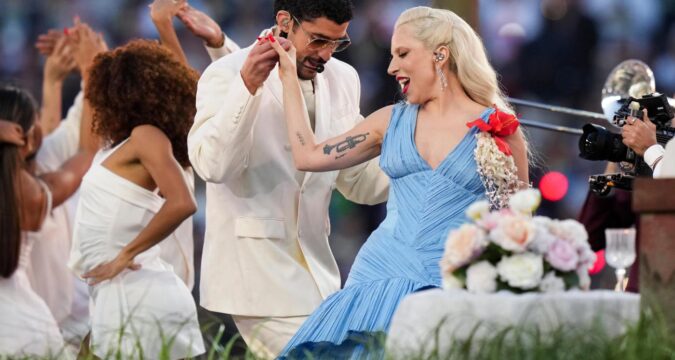
Bad Bunny brought on Lady Gaga and Ricky Martin, seamlessly, without stopping to genuflect, the mood moving from sweaty to open-hearted, then finally, with Bad Bunny dancing off the field, singing into the camera, a furious insistence on decency itself. You don’t have to speak Spanish to know when someone is standing his ground.
Bad Bunny’s powder-weight name suggests a flash-in-the-pan, an artist-of-the-week; if you never heard of the guy until you heard he was playing halftime, perhaps the announcement sounded like disrespect of the always, ahem, dignified halftime tradition. But here was a performance of such joy, class and self-determination, it struck a louder note: This political moment will pass one day; Benito Antonio Martinez Ocasio will not.
cborrelli@chicagotribune.com
https://www.chicagotribune.com/2026/02/08/bad-bunny-super-bowl-review/

Kenneth Walker III, primer corredor proclamado MVP del Super Bowl en 28 años
Por JOSH DUBOW
SANTA CLARA, California, EE.UU. (AP) — Kenneth Walker III se está adentrando en la agencia libre como el Jugador Más Valioso del Super Bowl.
Walker culminó una postemporada prolífica con otra gran actuación en el terreno de juego para ayudar a los Seahawks de Seattle vencer el domingo 29-13 a los Patriots de Nueva Inglaterra y obtener el campeonato de la NFL.
Aunque la defensa cargó a Seattle durante gran parte de la postemporada, Walker fue una vez más el motor de la ofensiva al correr para 135 yardas y sumar 26 por recepción, logrando su tercer juego consecutivo de 100 yardas desde la línea de golpeo en la postemporada. Se convirtió en el primer corredor desde Terrell Davis hace 28 años en recibir el MVP del Super Bowl.
Walker elevó su nivel de juego después de que Zach Charbonnet, su compañero de acarrreos, sufriera una lesión de rodilla que puso fin a su temporada, y no pudo haber llegado en un momento más importante para los Seahawks ni más oportuno para Walker.
El corredor de 25 años está en el último año de su contrato de novato y está programado para convertirse en agente libre en 2026. Gracias a su actuación en los playoffs, Walker está por recibir un aumento salarial significativo.
Walker acumuló 413 yardas desde la línea de golpeo en las tres victorias de Seattle en esta postemporada. Se convirtió en el primer jugador en superar las 100 yardas desde la línea de golpeo en cada juego de playoffs para un campeón del Super Bowl desde que Terrell Davis lo hizo en temporadas consecutivas en 1997-98 para los Broncos.
Aunque los dueños de equipos de fútbol de fantasía y Walker a veces se frustraron porque no llevaba una carga mayor de la ofensiva, especialmente en la zona roja, durante la temporada regular, compartir el trabajo con Charbonnet significó que Walker estuviera fresco para los playoffs, cuando estuvo en su mejor momento.
Walker promedió menos de 15 toques desde la línea de golpeo por juego en la temporada regular, cuando logró su primera temporada de 1.000 yardas por tierra desde su año de novato.
Pero promedió casi 25 toques por juego en los playoffs, cuando demostró que es capaz de ser un corredor de carga.
Walker carburó de inmediato con una carrera de 10 yardas en el primer chasquido y tuvo 55 yardas en el terreno en una serie de gol de campo más tarde en la primera mitad, siendo el jugador con más yardas en una serie en el Super Bowl en 20 años.
___
Deportes AP: https://apnews.com/hub/deportes
Neil Sitapara puts into perspective IMSA’s loss in Little Ten Conference Tournament. ‘Never made it this far.’
Hey, it’s a start.
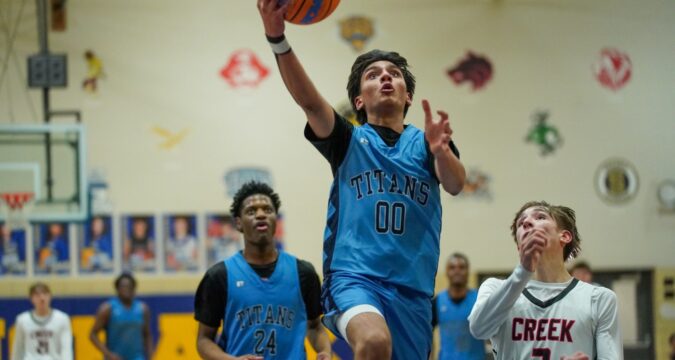
Neil Sitapara, a 6-foot senior guard for Illinois Math and Science Academy, understands that “been there, done that” for the school’s boys basketball program has been be lacking in the past.
This just wasn’t the ending to the Little Ten Conference Tournament championship game that Sitapara had envisioned.
“First, I’m grateful to be here,” Sitapara said. “Most of our seniors have been playing three years together and we never made it this far. It’s unfortunate and it hurts.
“It’s bittersweet, but we’re all grateful we got to play on this court and in this atmosphere. At the same time, we’re disappointed.”
Sitapara scored a team-high seven points Friday night for the Titans in a 40-29 loss to Indian Creek at Somonauk in the 107th edition of the oldest annually run tournament in the state.
Illinois Math and Science Academy’s Neil Sitapara (00) shoots a free throw against Indian Creek during the Little Ten Conference Tournament final in Somonauk on Friday, Feb. 6, 2026. (Sean King / The Beacon-News)
Senior guard Mofe Suleiman and junior forward Lota Onwuameze added six points apiece for IMSA (13-7), which was making its first appearance in the conference championship game.
The Titans joined Little Ten for the 2021-22 school year.
Sitapara, who hails from St. Charles and wants to be a doctor, struggled shooting 1 of 8 from the 3-point line and the Titans made just 22% (10 of 45) overall to 38% (16 of 42) for Indian Creek.
“It was rough for Neil, but it was rough for everyone,” IMSA coach Brad Snead said. “When Neil’s on, we play very well. When he’s off, we don’t play as well because they collapse on our bigs.
Illinois Math and Science Academy’s Neil Sitapara (00) deflects a pass against Indian Creek during the Little Ten Conference Tournament final in Somonauk on Friday, Feb. 6, 2026. (Sean King / The Beacon-News)
“His shooting frees up our bigs a lot.”
Payton Hueber, a 6-6 senior forward, scored nine points to lead Indian Creek (18-5). Senior guard Cooper Rissman added seven points, while three players each had six for the Timberwolves.
Senior guard Logan Schrader, who had six points and a game-high 12 rebounds, felt it was a similar script for Indian Creek.
“It’s like a lot of our games have gone,” Schrader said. “We don’t have anyone averaging 20 points. We all come together and we all score. We have guys who can get a bucket when they need to.”
Illinois Math and Science Academy’s Neil Sitapara (00) shots a corner 3-pointer against Indian Creek during the Little Ten Conference Tournament final in Somonauk on Friday, Feb. 6, 2026. (Sean King / The Beacon-News)
All five starters for Indian Creek average between nine and 11 points.
That made it tougher for IMSA, but 6-5 senior forward Omar Njikam complemented his two points with eight steals at the top of a 2-3 zone.
“Playing a guard position in that press, he’s a disruptor for us,” Snead said of Nijkam. “A lot of teams aren’t used to seeing an athletic 6-5 kid in that guard position.”
Indian Creek’s defense also stepped up, fueling a 13-3 run to open the third quarter for a comfortable 13-point lead.
“Both teams missed a lot of bunnies,” Snead said. “You’re kicking yourself in the butt saying shoulda, woulda, coulda.”
The fifth-seeded Titans reached the final by defeating top-seeded Newark 46-37 in Thursday’s first semifinal. Third-seeded Indian Creek then beat second-seeded Hinckley-Big Rock 55-49.
Illinois Math and Science Academy’s Neil Sitapara (00) heads to the basket off a steal against Indian Creek during the Little Ten Conference Tournament final in Somonauk on Friday, Feb. 6, 2026. (Sean King / The Beacon-News)
That avenged the Timberwolves’ 47-44 loss to the Royals in last season’s tourney final.
“We blew out Serena by 20 in our first game and then beat the top seed,” Sitapara said. “We played really well those last two games. (Friday night) we had a deer-in-the-headlights look.
“We lost it a little bit and let it slip away.”
It’s a challenge to seed the tournament since several regular-season conference games remain. IMSA, in fact, was scheduled to play Indian Creek again on Monday and Newark on Tuesday.
“It’s a grind from here on out,” Snead said. “But that’s basketball this time of year. That’s what you want. This was our first time reaching the Final Four here. We might have won a play-in game but that’s about it.
“It was a great experience for our kids with the big crowd and how Somonauk does a great job of running the tournament. I love it. This was our regional game.”
https://www.chicagotribune.com/2026/02/08/neil-sitapara-imsa-little-ten-conference/

Sí, hubo una boda real durante el espectáculo de medio tiempo del Super Bowl de Bad Bunny
SANTA CLARA, California, EE.UU. (AP) — La boda representada durante el espectáculo de medio tiempo del Super Bowl de Bad Bunny fue real.
Aproximadamente cinco minutos después de comenzar el show de 13 minutos en el Levi’s Stadium, se mostró la última parte de una ceremonia de boda, con un oficiante sonriente declarando a la pareja casada, y el esposo y la esposa, ambos vestidos de blanco, compartieron un beso mientras bailarines y músicos los rodeaban y sonreían.
La pareja se apartó para revelar a Lady Gaga y Los Sobrinos, una banda de salsa puertorriqueña que tocó en el álbum más reciente de Bad Bunny y en su residencia en Puerto Rico. Tocaron parte de “Die With a Smile” de Gaga antes de que Bad Bunny se uniera a la escena para su éxito “Baile Inolvidable”.
Bad Bunny bailó entre los invitados de la boda y la pareja abrazada.
Después del espectáculo, su representante confirmó que la pareja realmente se había casado durante el show. El esposo y la esposa, cuyos nombres no se mencionaron, habían invitado a Bad Bunny a su boda, pero él les dijo que en su lugar fueran parte de su espectáculo de medio tiempo.
El artista fue testigo y firmó el certificado de matrimonio. También hubo un pastel real.
La escena de la boda, que recreó una pequeña plaza al aire libre, fue parte de la gran celebración del espectáculo de Puerto Rico.
___
Esta historia fue traducida del inglés por un editor de AP con la ayuda de una herramienta de inteligencia artificial generativa.
Sam Darnold se corona en el Super Bowl justo en el lugar donde revitalizó su carrera
Por JANIE McCAULEY
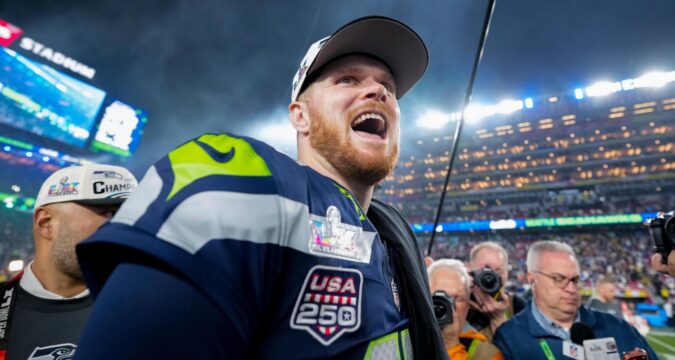
SANTA CLARA, California, EE.UU. (AP) — Qué apropiado que Sam Darnold haya puesto el colofón de su carrera de altibajos en la NFL en el mismo lugar donde recientemente la revivió.
En la banda del Levi’s Stadium hace dos temporadas, Darnold pacientemente cumplió su papel detrás de Brock Purdy como quarterback suplente de San Francisco y absorbió todo el conocimiento que pudo de los entrenadores.
De regreso en el Área de la Bahía el domingo y bajo las luces brillantes, Darnold se convirtió en campeón del Super Bowl en su primer año como titular para los Seahawks de Seattle, su quinto equipo en ocho temporadas.
Seattle capturó el segundo Trofeo Lombardi de la franquicia con una victoria dominante 29-13 sobre los Patriots de Nueva Inglaterra. Darnold incluso se vistió en el mismo vestuario el domingo donde una vez estuvo con los 49ers, luego salió al campo y completó 19 de 38 pases para 202 yardas y un touchdown.
Darnold, de 28 años, ahora tiene un título de la NFL a su nombre, y eso debería ser suficiente para demostrar que pertenece a la élite de los quarterbacks de la liga después de un comienzo muy criticado en su carrera profesional.
Se mantuvo firme para los Seahawks esta temporada a través de los altibajos, una y otra vez. Tal como lo había hecho tantas veces antes al enfrentar a los escépticos que en gran medida lo consideraban un fracaso.
Ese juego para el olvido de cuatro intercepciones en una derrota 21-19 en la Semana 11 contra los Rams a mediados de noviembre parece tan lejano ahora. Los compañeros de equipo de Darnold se mantuvieron a su lado, y él usó ese día como combustible para mejorar: venciendo a los Rams en los dos encuentros siguientes, llevando a su equipo a una victoria de 38-37 en tiempo extra el 18 de diciembre antes de un triunfo de 31-27 en el campeonato de la NFC el mes pasado.
Darnold acreditó ese tiempo con San Francisco jugando en la ofensiva del entrenador Kyle Shanahan mientras aprendía de Purdy como crucial para revivir su carrera, luego produjo un año destacado con Minnesota la temporada pasada antes de dirigirse al noroeste del Pacífico.
Darnold comenzó un juego en 2023 para los 49ers y apareció en diez, lanzando un total de 46 pases con 28 completados y un par de touchdowns. Apreciaba la orientación que recibió del entrenador de quarterbacks Brian Griese, un veterano de la NFL de 11 años.
Ha sido todo una travesía para Darnold encontrar su lugar en los profesionales después de ser seleccionado tercero en general por los Jets de Nueva York en la primera ronda del draft de 2018 de USC.
Tuvo un récord de 13-25 y un índice de pasador de 78.6 en sus primeras tres temporadas con los Jets, el segundo peor en la liga entre 43 quarterbacks con al menos 15 inicios de 2018-20.
Al otro lado del país en Seattle, Darnold ha prosperado, todavía con algunos de esos mismos lazos con San Francisco. El coordinador ofensivo Klint Kubiak fue el coordinador del juego aéreo de los Niners en 2023.
___
Deportes AP: https://apnews.com/hub/deportes
Rick Armstrong’s high school boys basketball rankings and player of the week for the Aurora-Elgin area
Oswego East, Waubonsie Valley and Marmion move up. Yorkville Christian enters the rankings.
Top 10
With records through Sunday and previous rankings in parentheses.
1. Kaneland 25-0 (1): Marshawn Cocroft scores 20 points and Connor Kimme chips in with 18 to power the Knights to a 73-68 double overtime win over Sycamore.
2. Oswego 19-8 (2): Niko Jurkovic steps up with 15 points for the Panthers, who cap off 3-0 week with 50-36 win over Minooka.
3. Batavia 18-8 (3): The Bulldogs force 16 turnovers by Quincy in Saturday’s 45-26 win and now are 13-1 in 14 games during the new year.
4. Aurora Christian 18-5 (3): Shorthanded Eagles get 24 points from Jacob Baumann in a 70-54 loss to Bishop McNamara.
5. Oswego East 17-9 (6): Dshaun Bolden scores 15 points to lift the Wolves past Yorkville 69-55 as the battle for second place in the Southwest Prairie West heats up.
6. Geneva 21-5 (5): Nathan Palmer scores 16 points but the Vikings lose 62-43 to rival Batavia.
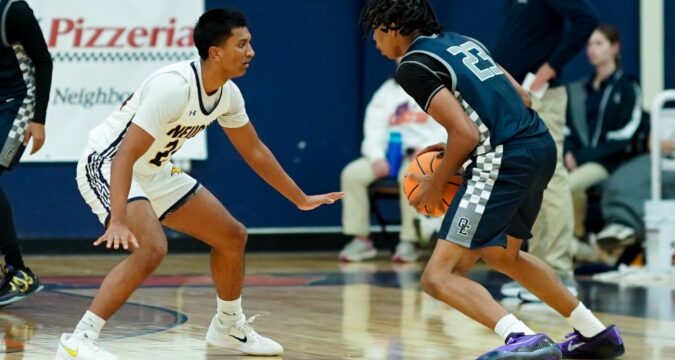
7. Waubonsie Valley 15-10 (8): Freshman guard T.J. Adams continues to spark the Warriors with eight points and three rebounds in a 47-23 win at DeKalb.
8. Burlington Central 15-10 (4): A rough week for the Rockets includes tough losses to Neuqua Valley 53-44, Cary-Grove 55-47 and Crystal Lake South 63-60.
9. Marmion 15-11 (10): Ali Tharwani returns from two-week layoff and scores 15 points for the Cadets in a 80-73 win over Joliet Catholic.
10. Yorkville Christian 16-9 (NR): Jayden Riley tops 2,000-point mark for his career as the Mustangs roll past Rockford Lutheran 88-56.
Player of the Week
Evan Blankenship, a 6-foot-6 senior forward, comes up with 23 points and 10 rebounds in a 62-43 DuKane Conference win over Geneva. His move to starting lineup over holidays coincides with a surge that sparks the Bulldogs to a 13-1 record in 2026.
https://www.chicagotribune.com/2026/02/08/rick-armstrong-basketball-rankings-aurora-elgin-2/
Seattle Seahawks ride their ‘Dark Side’ defense to a Super Bowl title, pounding the New England Patriots 29-13
SANTA CLARA, Calif. — Defense won this championship.
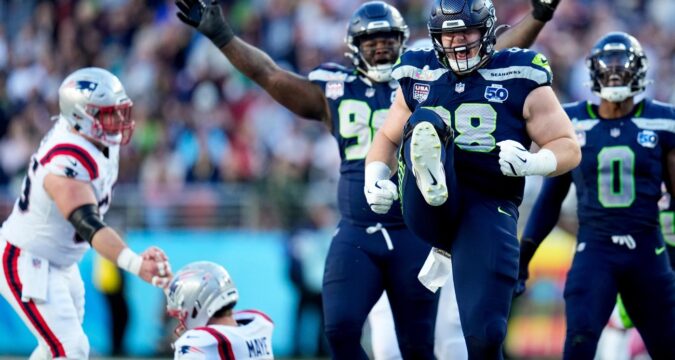
Devon Witherspoon, Derick Hall, Byron Murphy and the rest of Mike Macdonald’s ferocious unit pummeled Drake Maye, and the Seattle Seahawks beat the New England Patriots 29-13 on Sunday to win the franchise’s second Super Bowl.
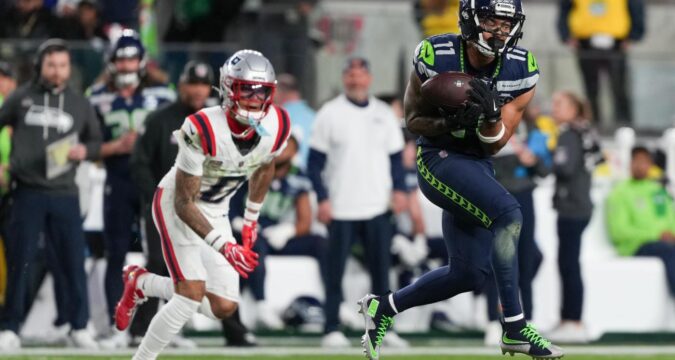
Sam Darnold threw a touchdown pass to AJ Barner, Kenneth Walker III ran for 135 yards and Jason Myers made all five of his field-goal tries.
Uchenna Nwosu punctuated a punishing defensive performance by snagging Maye’s pass in the air after Witherspoon hit his arm and ran it back 45 yards for a pick-6.
Seattle’s “Dark Side” defense helped Darnold become the first quarterback in the 2018 draft class to win a Super Bowl, ahead of Josh Allen, Baker Mayfield and Lamar Jackson.
Labeled a bust, dumped by two teams and considered expendable by two others, Darnold proved his doubters wrong while helping the Seahawks go 17-3.
Bad Bunny’s Super Bowl halftime show in photos
After leading the NFL with 20 turnovers in the regular season, Darnold didn’t have any in three playoff games. He wasn’t particularly sharp against a solid Patriots defense but protected the ball and made enough plays, finishing 19 of 38 for 202 yards.
The Seahawks sacked Maye six times, including two apiece by Hall and Murphy. Hall’s strip-sack late in the third quarter set up a short field and Darnold connected with Barner on 16-yard scoring toss to make it 19-0.
Julian Love’s interception set up another field goal that made it 22-7 with 5:35 left.
The Patriots (17-4) punted on the first eight drives, excluding a kneel-down to end the first half.
https://www.chicagotribune.com/2026/02/08/super-bowl-seattle-seahawks-beat-new-england-patriots/
Campeones del Super Bowl
Por The Associated Press
2025 — Seattle (NFC) 29, Nueva Inglaterra (AFC) 13
2025 — Filadelfia (NFC) 40, Kansas City (AFC) 22
2024 — Kansas City (AFC) 25, San Francisco (NFC) 22, tiempo extra
2023 — Kansas City (AFC) 38, Filadelfia (NFC) 35
2022 — L.A. Rams (NFC) 23, Cincinnati (AFC) 20
2021 — Tampa Bay (NFC) 31, Kansas City (AFC) 9
2020 — Kansas City (AFC) 31, San Francisco (NFC) 20
2019 — Nueva Inglaterra (AFC) 13, L.A. Rams (NFC) 3
2018 — Filadelfia (NFC) 41, Nueva Inglaterra (AFC) 33
2017 — Nueva Inglaterra (AFC) 34, Atlanta (NFC) 28, OT
2016 — Denver (AFC) 24, Carolina (NFC) 10
2015 — Nueva Inglaterra (AFC) 28, Seattle (NFC) 24
2014 — Seattle (NFC) 43, Denver (AFC) 8
2013 — Baltimore (AFC) 34, San Francisco (NFC) 31
2012 — N.Y. Giants (NFC) 21, Nueva Inglaterra (AFC) 17
2011 — Green Bay (NFC) 31, Pittsburgh (AFC) 25
2010 — Nueva Orleans (NFC) 31, Indianápolis (AFC) 17
2009 — Pittsburgh (AFC) 27, Arizona (NFC) 23
2008 — N.Y. Giants (NFC) 17, Nueva Inglaterra (AFC) 14
2007 — Indianápolis (AFC) 29, Chicago (NFC) 17
2006 — Pittsburgh (AFC) 21, Seattle (NFC) 10
2005 — Nueva Inglaterra (AFC) 24, Filadelfia (NFC) 21
2004 — Nueva Inglaterra (AFC) 32, Carolina (NFC) 29
2003 — Tampa Bay (NFC) 48, Oakland (AFC) 21
2002 — Nueva Inglaterra (AFC) 20, San Luis (NFC) 17
2001 — Baltimore Ravens (AFC) 34, N.Y. Giants (NFC) 7
2000 — San Luis (NFC) 23, Tennessee (AFC) 16
1999 — Denver (AFC) 34, Atlanta (NFC) 19
1998 — Denver (AFC) 31, Green Bay (NFC) 24
1997 — Green Bay (NFC) 35, Nueva Inglaterra (AFC) 21
1996 — Dallas (NFC) 27, Pittsburgh (AFC) 17
1995 — San Francisco (NFC) 49, San Diego (AFC) 26
1994 — Dallas (NFC) 30, Buffalo (AFC) 13
1993 — Dallas (NFC) 52, Buffalo (AFC) 17
1992 — Washington (NFC) 37, Buffalo (AFC) 24
1991 — N.Y. Giants (NFC) 20, Buffalo (AFC) 19
1990 — San Francisco (NFC) 55, Denver (AFC) 10
1989 — San Francisco (NFC) 20, Cincinnati (AFC) 16
1988 — Washington (NFC) 42, Denver (AFC) 10
1987 — N.Y. Giants (NFC) 39, Denver (AFC) 20
1986 — Chicago (NFC) 46, Nueva Inglaterra (AFC) 10
1985 — San Francisco (NFC) 38, Miami (AFC) 16
1984 — L.A. Raiders (AFC) 38, Washington (NFC) 9
1983 — Washington (NFC) 27, Miami (AFC) 17
1982 — San Francisco (NFC) 26, Cincinnati (AFC) 21
1981 — Oakland (AFC) 27, Filadelfia (NFC) 10
1980 — Pittsburgh (AFC) 31, L.A. Rams (NFC) 19
1979 — Pittsburgh (AFC) 35, Dallas (NFC) 31
1978 — Dallas (NFC) 27, Denver (AFC) 10
1977 — Oakland (AFC) 32, Minnesota (NFC) 14
1976 — Pittsburgh (AFC) 21, Dallas (NFC) 17
1975 — Pittsburgh (AFC) 16, Minnesota (NFC) 6
1974 — Miami (AFC) 24, Minnesota (NFC) 7
1973 — Miami (AFC) 14, Washington (NFC) 7
1972 — Dallas (NFC) 24, Miami (AFC) 3
1971 — Baltimore Colts (AFC) 16, Dallas (NFC) 13
1970 — Kansas City (AFL) 23, Minnesota (NFL) 7
1969 — N.Y. Jets (AFL) 16, Baltimore Colts (NFL) 7
1968 — Green Bay (NFL) 33, Oakland (AFL) 14
1967 — Green Bay (NFL) 35, Kansas City (AFL) 10
https://www.chicagotribune.com/2026/02/08/campeones-del-super-bowl/
Argentina: Vélez Sarsfield derrota 2-1 a Boca Juniors con brillo del chileno Diego Valdés
Por MARCELO R. ANDROETTO
BUENOS AIRES (AP) — Vélez Sarsfield superó a Boca Juniors en una ráfaga letal, con dos goles en tres minutos, y con los mismos dos intérpretes.
Con el chileno Diego Valdés como exquisito asistidor y Matías Pellegrini como implacable goleador, el “Fortín” se impuso 2-1 en casa el domingo y quedó como único líder de la Zona A del torneo Apertura del fútbol argentino. El “Xeneize” descontó con un notable tanto del juvenil Iker Zufiaurre con tiempo cumplido.
En tanto, Huracán se adueñó como local del clásico de barrio ante San Lorenzo, imponiéndose 1-0 con un gol del ecuatoriano Jordy Caicedo. Independiente celebró su primera victoria en el certamen al ganarle como visitante 1-0 a Platense.
Tras un primer tiempo reñido y sin demasiadas luces en el estadio José Amalfitani, en el complemento Boca sucumbió ante un Vélez con más fútbol y más energía. El dúo dinámico conformado por Valdés-Pellegrini desequilibró por completo a la última línea del equipo de Claudio Úbeda.
A los 63 minutos, Valdés colocó un centro exacto a la cabeza de Pellegrini, que dejó sin respuestas al arquero Agustín Marchesín. Y 180 segundos más tarde, la fórmula se repitió, pero por abajo: un estilete del chileno para que el delantero definiera de primera.
El uruguayo Miguel Merentiel volvió tras una lesión, pero Boca siguió careciendo de peso en el área rival. Esta vez, la ausencia que se sintió, y mucho, fue la del atacante Exequiel “Changuito” Zeballos por un desgarro muscular.
Una vez conseguida la doble ventaja, el conjunto de Guillermo Barros Schelotto dominó a placer e incluso desperdició un par de chances netas para cerrar una goleada ante un oponente que se derrumbó. Un misil de Zufiaurre tras asistencia de Leandro Paredes maquilló el resultado.
Pese a sufrir su segunda derrota en otros tantos encuentros a domicilio, Boca se mantiene provisionalmente en puestos de playoffs en la Zona A.
La única noticia positiva del domingo para los hinchas de Boca es que está cerca de cerrarse el fichaje del colombiano Edwuin Cetré, jugador de Estudiantes de La Plata, según informaron medios argentinos.
En menos de un mes, el ecuatoriano Caicedo logró meterse en el corazón de los hinchas de Huracán, con cuatro tantos en otros tantos cotejos. El conseguido ante San Lorenzo, claro, fue el más valioso.
El delantero, cuya ficha pertenece al Atlas mexicano y viene de un opaco paso por el Sporting Gijón de la segunda división española, cabeceó al gol a los 49 minutos y volcó a favor del anfitrión el clásico.
“Le doy gracias a Dios por estar viviendo estos momentos. No la estaba pasando fácil y cuando surgió la oportunidad de venir acá sabía que lo hacía a una gran institución. Espero estar a la altura”, señaló Caicedo, de 28 años y máximo artillero del certamen.
San Lorenzo, que llegó al estadio Tomás Adolfo Ducó mirando con simpatía un empate, apenas si tuvo una chance para nivelar, una pelota que dio en el palo tras una arremetida de Alexis Cuello. Pese a la derrota, el “Cuervo” sigue liderando cómodamente el historial del derbi.
Al igual que Huracán, también Independiente celebró un triunfo bautismal en el torneo. El “Rojo” se impuso 1-0 a Platense, que se quedó sin invicto. Santiago Montiel fue el autor del tanto que catapultó al equipo de Gustavo Quinteros a los primeros lugares de la Zona A.
En otros partidos de la jornada dominical, Sarmiento venció 2-1 a Atlético Tucumán en Junín, y Gimnasia derrotó 1-0 a Instituto igualaron en Mendoza.
___
Deportes AP: https://apnews.com/hub/deportes