Category: News
‘The Outsiders’ musical arrives in Chicago, bringing a teen-age Ponyboy’s world to life
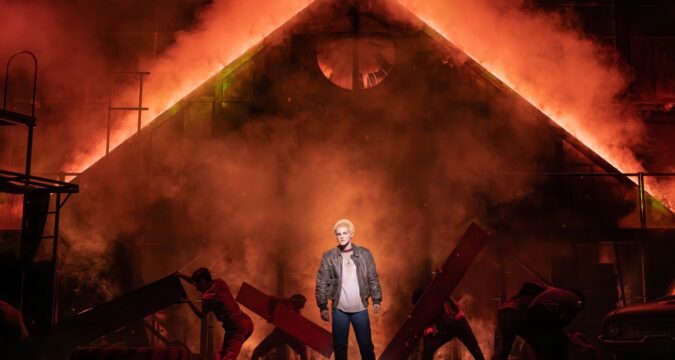
Director Danya Taymor wants “The Outsiders” to feel elemental. The 2023 musical, based on S.E. Hinton’s 1967 novel and Francis Ford Coppola’s 1983 film adaptation, boasts a production design that incorporates earth, fire, water and air — literally, in some cases, such as the rain-soaked rumble between rival gangs from 1960s Tulsa, Oklahoma. When the first national tour comes to the Cadillac Palace Theatre this month, it will retain many of these raw details (blood, gravel and, yes, rain), though no live flames are used in the touring version.
Taymor, whose work on the Broadway production won her the 2024 Tony Award for best direction of a musical, intends these effects to convey more than technical prowess. She and the team of designers (several of whom also won Tonys) envision the story as a memory play in the vein of Tennessee Williams’ “The Glass Menagerie,” with all the dreamlike qualities that entails, whether nightmarish or gold-tinged. The production also aims to evoke the physical world of characters such as Ponyboy Curtis and Johnny Cade, who are teenagers living on the poorer side of Tulsa’s socioeconomic divide.
“All the actors transform all the objects: they create the fire; obviously, they’re in the rumble; they change the set in front of you. There’s nothing hidden,” Taymor said in a recent Tribune interview. “Part of the aesthetic was also about the fact that the characters don’t have a lot of stuff. It’s still an amazing, spectacular production, but it is really grounded and gritty and within the realms of what those characters might be surrounded by.”
Originally slated to premiere at the Goodman Theatre but canceled due to COVID-19, “The Outsiders” opened at La Jolla Playhouse in 2023 and transferred the following year to Broadway, where it is still running. The musical’s book is co-written by Justin Levine (“Moulin Rouge! The Musical”) and Adam Rapp, a playwright and 2006 Pulitzer Prize finalist who grew up in Joliet (not to be confused with his brother Anthony Rapp, an original cast member of “Rent”). Levine also collaborated with Jonathan Clay and Zach Chance, of the folk duo Jamestown Revival, to write the roots/country score and lyrics.
As the film does, the musical begins with 14-year-old Ponyboy (played by Nolan White on tour) writing in a notebook about recent events he experienced with his best friend, Johnny (Bonale Fambrini). Both boys belong to the Greasers, a working-class gang in ongoing conflict with the wealthier Socs (short for Socialites). Though their home lives and social environments are often difficult or downright violent, Ponyboy and Johnny are thoughtful youngsters who look for the good in their world, whether in the beauty of a sunset or the kindness of a friend.
Hinton was only a teenager when she wrote the novel, basing the story on two gangs at her high school and launching the young-adult genre in the process.
“She was talking about real things that teenagers go through, that many of us have gone through, whether we want to have or not, and I think it touches on this universal human experience of loss,” said Taymor. “There’s so many ways into this story that I think resonate with people.”
Audience members also may relate to the theme of class divides or the experience of finding friendship with others who feel like misfits.
During the musical’s development, the creative team spent a lot of time in Tulsa, visiting the places Hinton wrote about and speaking with her and others involved in making the film. Both the Broadway and touring companies also traveled to Tulsa before starting rehearsals, and the tour officially opened there last October.
“This story really belongs to the city of Tulsa, and the people in Tulsa are so proud of it,” Taymor said.
Taymor looks forward to the tour’s arrival in Chicago, which was the site of formative moments in her early career. She directed the 2017 world premiere of Antoinette Nwandu’s “Pass Over” at Steppenwolf Theatre, a production that was filmed by Spike Lee, and later directed the play at Lincoln Center and on Broadway. In early 2020, she made her Goodman debut as the director of korde arrington tuttle’s “Graveyard Shift.” Her career has continued its ascent since then; after “The Outsiders,” she earned a second Tony nomination for “John Proctor is the Villain” in 2025, and she will direct the forthcoming film adaptation of the Kimberly Belflower play.
“Getting to work at those theaters was life-changing for me,” Taymor said of her time at Steppenwolf and the Goodman. “I found Chicago so welcoming, and I found the community so supportive, both of me coming from somewhere else but also just of each other, and I just loved it. It was a gift in my life, definitely, and I’m so thrilled that ‘The Outsiders’ is coming there, because I do think the Chicago audience will really respond to it.”
Both on Broadway and on tour, Taymor has been pleased to see young people connecting with this story, as well as multigenerational audiences taking it in together.
“I think the way the story is told — that it is being told by young people, and it’s very athletic and visceral and real — is speaking to young theatergoers and inspiring them and bringing them to the theater in a way that I find really exciting and thrilling,” she said.
This is Taymor’s first production to embark on a national tour, and she’s been fascinated by the range of audience responses.
“It does hit differently, depending on where you are in the country. There are certain references that when we were in Omaha, the audience reacted to in a different way that I’ve never heard in New York City,” she said.
“I think this story really is a populist story that’s for everyone, so getting to bring it to places and to people who might not be able to come to Broadway or New York is very, very special.”
“The Outsiders” plays Feb. 10-22 at the Cadillac Palace Theatre, 151 W. Randolph St.; tickets $69-$195 at broadwayinchicago.com
Emily McClanathan is a freelance critic.
https://www.chicagotribune.com/2026/02/09/outsiders-cadillac-palace/

Two challengers attempt to unseat Sen. Emil Jones III in Democratic primary for 14th Senate District
For the first time in his 17-year Senate career, state Sen. Emil Jones III faces a contested primary.
Jones has represented the 14th Senate District, which stretches over a wide swath of the south suburbs, from the South Side neighborhood of Roseland in the east to Orland Park and Homer Glen in the west, since 2009.
The district contains all or parts of Alsip, Blue Island, Calumet Park, Chicago, Crestwood, Dixmoor, Dolton, Harvey, Homer Glen, Merrionette Park, Midlothian, Oak Forest, Orland Hills, Orland Park, Palos Heights, Posen, Riverdale, Robbins and Tinley Park.
Both Ahmed Karrar and Kenny Williams are running to unseat Jones in the Democratic primary March 17.
Emil Jones III
Jones was an administrator at the Illinois Department of Commerce and Economic Opportunity before his 2008 election to the Senate.
The Senate seat was held by his father, former Senate President Emil Jones, Jr., an influential politician in state government who had a hand in the political ascendance of Barack Obama.
Emil Jones, Jr., announced his retirement in August 2008 — after the primaries had already concluded — and Emil Jones III was appointed as the Democratic nominee.
Jones won the seat that fall, and was re-elected in 2012, 2016, 2018 and 2022, running unopposed in both the primary and the general election each time.
State Sen. Emil Jones III sits in the chamber at the Illinois Capitol building on Jan. 8, 2025, in Springfield. (Brian Cassella/Chicago Tribune)
Jones was charged with bribery in 2022, with charges alleging he agreed to help a red light camera company block unfavorable legislation in exchange for $5,000 and a job for his legislative intern. Shortly after, Gov. JB Pritzker called for him to resign.
The case went to trial last year, but the jury deadlocked and a mistrial was declared. The case was set to be retried, but in December Jones entered into a deferred prosecution deal to leave him with no conviction so long as he paid a $6,800 fine, stayed out of further legal trouble and admitted to certain illegal conduct, including making false statements to the FBI.
Jones did not respond to repeated requests for an interview.
According to his Senate website, in his time in the Senate, Jones has worked to combat cyberstalking and cyberbullying and to improve public safety, including by passing legislation aimed at reducing gang recruitment.
“Right now, my top priorities are bringing more jobs to the 14th district, finding a responsible solution to budget, and putting an end to business as usual in Springfield,” Jones said in a statement on his website.
Ahmed Karrar
Karrar, the son of Sudanese immigrants, is an attorney and an advocate for community development. He received his law degree from Loyola University Chicago’s School of Law, and a master’s degree in public policy from Northwestern University.
“In the past six years I’ve worked in the social impact space, helping companies invest in struggling neighborhoods throughout the Midwest and using research and community engagement to connect large institutions to folks on the ground,” Karrar said.
Karrar has not previously run for office.
“Government should work for working people and the most vulnerable, and for far too long that just simply hasn’t been the case,” Karrar said. “We’re still seeing too many people living paycheck to paycheck. Too many seniors are still wondering if they’re going to be able to retire with dignity.”
Ahmed Karrar (Campaign photo)
He said he felt that situation has caused a crisis of trust in government that he hopes to work to fix.
“I believe that that environment creates a growing lack of trust in government, and apathy,” Karrar said. “It, I believe, creates a chasm that repeatedly gets filled by demagogues, folks like Donald Trump.”
Jones’ bribery charges exemplify the issues he wants to address, Karrar said.
“I think a lot of voters see that as the latest chapter of a long history of corruption, unfortunately, in this state,” Karrar said. “And it goes at the heart of what I’m trying to address with this campaign, which is improving trust in government.”
Karrar said he wants to fight for universal childcare and a graduated income tax, as well as combating the Trump administration’s policies on immigration and Medicaid cuts.
“I’ve spent my entire career, whether it’s been in the nonprofit space or the social impact space, working in community, right, ensuring community voices are respected and heard,” Karrar said. “I want to take that energy into this district.”
Kenny Williams
Kenny Williams opened his first business, Silk N Classy Hair Trends, in Riverdale in 1991. Several years later, he expanded to opening his own beauty school, the Silk N Classy Barber College. He said if elected, he’d bring his business sense to the job.
“We’ve always been involved in creating jobs,” Williams said. “We have a saying, we make jobs, we don’t take jobs.”
Williams was a member and president of the Thornton Township High School District 205 board. He was elected twice, but was forced to resign due to a 1985 felony conviction, which was later expunged.
Williams said one of his goals is to change the state law that prevents people who have been convicted of felonies from holding office. After someone has served their time for a conviction and some time has elapsed, he said, felons should automatically regain the rights of a regular citizen.
“One of my main objectives is to go there and make sure we get rid of those laws that are hurting regular people,” Williams said. “Why do you have it where a federal position, you can have 34 felonies, but a little man like me with one, that happened when I was 19, you want to keep me from supporting my people?”
Kenny Williams (Campaign photo)
Williams pointed to disparity in demographics and economics in the district’s communities.
“Roseland, you got all these boarded-up homes, vacant buildings, homes that have been taken from the seniors,” Williams said. “Then you go over west, you have Orland Park, Tinley Park, all of those places. There, basically, those places are hurting because of their property taxes.”
Williams said he wants to increase involvement in government, including opening satellite offices in each community he represents.
“The number one thing I want to do is educate people,” Williams said. “We’re gonna have the best district, the best educated, most educated, most motivated, most pumped-up.”
Williams said he would prioritize building relationships, including across the aisle.
“There’s a fight in Springfield just like it is in Washington, where you have the red against the blue, or the blue against the red, and I don’t think it should be that way,” Williams said. “You have two parties fighting, when they’re supposed to be fighting for the people.”
elewis@chicagotribune.com
https://www.chicagotribune.com/2026/02/09/challengers-sen-emil-jones-14th-district/

Yunus Emre Tozal: Why concrete barriers alone cannot fix Chicago’s Archer Avenue
The February wind cutting down Archer Avenue wasn’t just cold; it was heavy with tension. Walking through Brighton Park, I found myself in the middle of trench warfare.
On one side lay the new concrete bike-lane barriers installed by the Chicago Department of Transportation. On the other, plastered across storefronts, was the anger: signs demanding “Give Us Back Our Parking” and clear traces of political discontent. To an outsider, this looks like a mundane infrastructure dispute. But standing there, I realized the issue ran deeper than concrete and asphalt.
Structurally, the new layout is indisputably correct. The data doesn’t lie: Traffic crashes in Brighton Park outpace the Chicago average by 90%. For years, Archer Avenue has been a game of Russian roulette. The physical separators are simple geometric solutions that will save lives. On paper, this project isn’t just necessary; it is an overdue victory.
But when I listen to the voices on the street, I hit a wall much harder than any concrete barrier: distrust. For many residents, those protected lanes aren’t a safety feature; they are a signal of invasion. To them, this concrete isn’t being poured for their children but to pave the way for a wealthier demographic that hasn’t arrived yet.
The crisis on Archer Avenue isn’t a fight between bikes and cars; it is the widening chasm between the logic of those who draw the maps and the memory of those who live on them.
In civil engineering, we learn to read a city not through feelings but through equations. How do we move people from Point A to Point B with the least friction? Through this lens, painted lanes are insufficient. Against a 2-ton vehicle, a strip of paint is not a safety measure; it is merely a polite suggestion.
That is why the concrete barriers are nonnegotiable. These are not aesthetic choices; they are geometric truths. Sitting at our desks, we draw the lines, place the barriers and assume that because we have solved the equation, we have solved the problem. On paper, this project is 100% right. But cities don’t live on paper.
So why does a neighborhood fiercely resist infrastructure designed to protect its own children? The answer lies in the silent message encoded in the concrete.
On Chicago’s North Side, a new bike lane is an “amenity” — a signal of rising property values and Sunday morning coffee runs.
But on the South and West sides, that same lane is often read as the harbinger of gentrification. When residents look at that fresh pavement, they don’t see a safety feature; they see a warning that says rents are about to rise, family businesses are about to close and “You are no longer the target audience.”
To dismiss this resistance as mere stubbornness is to misread Chicago completely. In his seminal book “Great American City,” sociologist Robert Sampson describes “collective efficacy” — the capacity of neighbors to unite and act for the common good.
Ironically, the protests on Archer Avenue are proof that the neighborhood’s social fabric is intact. When residents tape those signs to their windows, they are asserting ownership. This is not chaos; it is the heartbeat of a functioning community. It just so happens that right now, that collective power has formed a defensive line against the city itself.
The city’s fundamental error lies in presenting infrastructure as a top-down gift. The attitude is essentially: “Look what we brought you!” But this technocratic benevolence blinds officials to the economic anxieties on the ground.
To a city planner, a parking spot is simply 180 square feet of public right of way. But to a business owner who has weathered three decades on Archer Avenue, that spot is the threshold of their livelihood. When you remove it without true dialogue, you aren’t just scraping away asphalt; you are destabilizing their economic security.
This brings us to the core of the disconnect: Urban planning is not merely the management of space; it is the management of relationships. As engineers, we calculate the slope, the turning radiuses and the concrete grade perfectly.
But we forget the most crucial ingredient in the mix: trust. We design the road, but we fail to build the bridge to the people who live on it. When you pour concrete before you build trust, the only result is the deep fracture we now see running down Archer Avenue.
So, what is the solution? Do we abandon the bike lanes and surrender to the status quo? Absolutely not. The lives lost and the crash statistics demand action. But we must fundamentally change how we build.
Engineering is not just about pouring concrete and walking away. True engineering involves factoring human anxiety into the equation. Instead of dismissing residents’ concerns about parking as mere resistance to progress, we must validate the deeper fear of displacement that lies beneath. We must design projects with the community, not at them. If the residents aren’t at the table, the blueprint is already flawed.
Ultimately, what we need on Archer Avenue is not just safer asphalt. We need to repair the invisible, broken bridge between City Hall and the neighborhood. Unless we rebuild that trust, these bike lanes won’t connect us — they will only drive us further apart.
Yunus Emre Tozal is a civil engineer in Chicago and a master’s of art student at Catholic Theological Union.
Submit a letter, of no more than 400 words, to the editor here or email letters@chicagotribune.com.
https://www.chicagotribune.com/2026/02/09/opinion-archer-avenue-bike-lanes-concrete/
Black History Month breakfast in Aurora puts emphasis on education
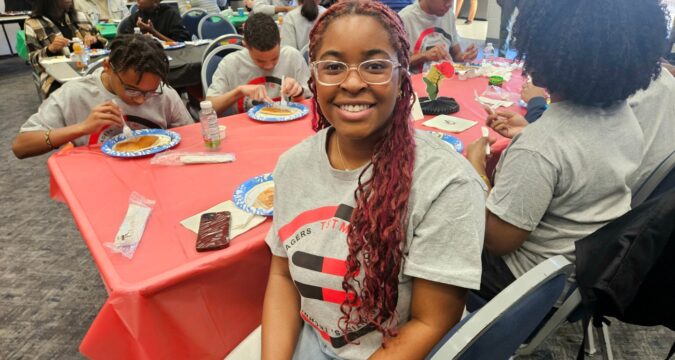
The first Saturday of Black History Month was celebrated in Aurora over the weekend at the Prisco Community Center as the Quad County Urban League hosted its annual Black History Month Pancake Breakfast.
The two-hour event, a scholarship fundraiser, was touted “as being more than a meal,” according to Theodia Gillespie, president and CEO of the Quad County Urban League.
“It’s an opportunity to celebrate Black history, uplift our students and invest in their future,” Gillespie noted in a press release.
Gillespie said the event is an opportunity to showcase the Tomorrow’s Scientists, Technicians and Managers program run by the Quad County Urban League.
According to the Quad County Urban League’s website, the program exposes minority middle and high school students to STEM and business fields while also offering tutoring sessions, field trips, supervised projects and summer programming.
“The biggest thing is to really showcase the program to the community – have them come out and really support this education program that’s kicking off Black History Month and to network with some of our community leaders,” she said of Saturday’s event. “It’s a great thing to hear about those who have been part of the program in past years and the benefits of the program for them. It really incorporates the leadership development of students involved in the program.”
Over the years, the breakfast has drawn anywhere from 100 to 200 people, organizers said.
Waubonsee Community College’s basketball team attended the event on Saturday “to showcase positive role models and images and leadership within the community,” Gillespie said.
Food preparation for the event was handled by the Urban League staff as well as some of the parents and past parents that have been involved in the educational program who donated their time, Gillespie said.
Melissa Oquendo of Oswego was helping prepare food and said she has worked in the kitchen the past five years at the event.
Joy Bowling of Aurora, left, and Melissa Oquendo of Oswego volunteer Saturday, Feb. 7, 2026, during the Quad County Urban League’s Black History Month Pancake Breakfast in Aurora. (David Sharos/For The Beacon-News)
“I know this raises money for teens and I love being part of the Quad County Urban League, and helping these students and empowering them and seeing how it’s going to help them in the future,” she said. “I look forward to this every year, showing up and seeing them and how they light up getting the scholarship and how they feel supported.”
Denel Phinn, 18, of Aurora, was one of the many students at the breakfast.
“My future plans are to become a pastor and go into the ministry,” Phinn said. “To have this organized for us, it’s really special how much Quad County cares about its students and wants them to strive for excellence and become who they want to be in the world and pursue a career. It’s really special.”
Cynthia Bailey of Gilberts and her husband Ed said they came for the first time to the event.
“For me, anything to help kids for the future is important,” Cynthia Bailey said on Saturday. “We want to help them further ahead and have that advancement.”
“It’s important to support the next generation,” Ed Bailey added. “It’s exciting to see so many young people come together and family come together to support this particular cause.”
The morning concluded with an announcement from students in the Tomorrow’s Scientists, Technicians and Managers program who unveiled their student-created board game, Legacy Lane, according to a press release.
“Our game, Legacy Lane, was created by us to honor Black History Month,” said Kai Williamson, a student in the program, in the release. “This game helps players learn about real-life experiences faced by African Americans today. As players move through the board, they explore opportunities, face challenges and learn about teamwork to lead to success.”
The Legacy Lane game will be available for purchase on Juneteenth 2026, the release said.
David Sharos is a freelance reporter for The Beacon-News.
Editorial: In 8th Congressional District, Melissa Bean is endorsed for Democrats and Jennifer Davis for the GOP
U.S. Rep. Raja Krishnamoorthi is running for Senate, so the House seat for Illinois’ 8th Congressional District is open for the first time in a decade. There’s a lot of interest in succeeding him.
On the Democratic side, eight candidates are running; on the Republican side, there are four.
The 8th is mainly a northwest suburban district, covering parts of Cook, DuPage and Kane counties and including all or parts of Hoffman Estates, Elk Grove Village, Palatine, Rolling Meadows, Schaumburg, Elgin, South Elgin, Bloomingdale, Barrington, Roselle, South Barrington, Des Plaines, Barrington Hills, East Dundee, Carpentersville and Carol Stream. The district has voted Democratic since Republican Joe Walsh lost after a single term to Tammy Duckworth, who now is one of Illinois’ two U.S. senators.
But the Democrats’ margin of victory in the 8th has narrowed in recent years. Democrat Kamala Harris won the district over Donald Trump by just seven points in 2024 after Joe Biden had topped Trump by more than 15 points in 2020. Still, Democrats are heavily favored to retain Krishnamoorthi’s seat, so it’s not surprising to see the crowded field of contenders.
The best-known Democratic candidate is Melissa Bean, who represented the 8th for three terms beginning in 2005 until she was defeated by Walsh in the 2010 election that returned Republicans to power in the House.
The seven others are an impressive array of politicians and nonpoliticians alike, all articulate and accomplished in various ways.
On the Republican side, the two top contenders are Mark Rice, who lost to Krishnamoorthi in 2024, and businesswoman Jennifer Davis.
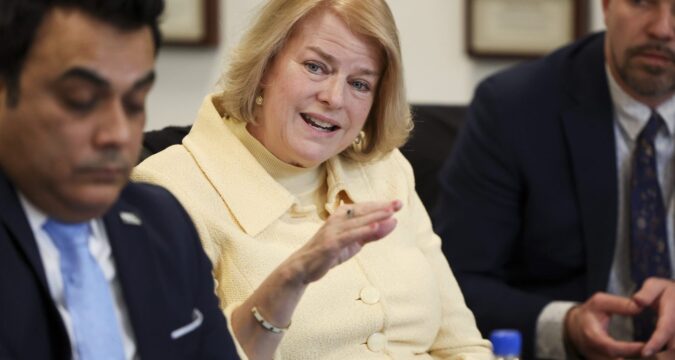
We think returning Bean, 64, to the seat is Democrats’ best option. We’ve endorsed her several times before and we admire her solid record while she was in office, coupled with her sensible but principled views on today’s stark challenges.
Davis is our choice for the GOP nomination. We think she has a better chance than Rice of appealing to voters in what remains a blue district, albeit more moderate than many others in the Chicago area.
In our discussions with the Democratic candidates, we were struck by how much agreement there was and also the civility with which the candidates conducted themselves, compared with our experience of some other Chicago-area districts also seeing large numbers of candidates vying for open seats. That’s a reflection, we think, of the district’s makeup. Unlike parts of Chicago and some of the closer-in suburbs, this isn’t an area where strident arguments about the emotional issues that have divided Democrats — support for Israel, for example — play as well with voters.
Jennifer Davis is a Republican candidate for Illinois’ 8th Congressional District. (John Kringas)
Still, Bean is perceived as the front-runner — rightly, given her name-recognition advantage over the others — and she’s catching criticism from some of her more progressive opponents for her post-congressional jobs with JBMorgan Chase and Mesirow Financial. We certainly don’t have an issue with former members of Congress going to work in corporate America, and we doubt many voters will hold that against her.
The bigger question is how she would handle the job some 16 years after leaving Washington. That time frame feels like ancient history now, at least in political terms. We were satisfied she understands today’s challenges.
We asked about the longest government shutdown in history last fall, in which Democrats were able to extract a deal to hold a Senate floor vote on extending Affordable Care Act subsidies whose expiration is resulting in substantially higher health insurance costs for many Americans. For many on the left, the decision to reopen the government in return for a vote that ultimately was unsuccessful was a failure — an example of a Democratic Senate leadership unwilling to confront Trump and the Republicans strongly enough.
Bean’s take was that Senate leaders should have held out a bit longer for a better deal, but she said she understood their situation given the pain federal workers were experiencing as they went without paychecks. “There was a win,” she said. “Democrats aren’t really good at taking the win, taking credit for the win. And the win was we got the vote. We got to bring it back up and see if we could do it.”
We agree. Given the track record of past government shutdowns, most if not all of them launched by Republicans, this one achieved far more than any of those did. GOP senators now are on the record for standing in the way of health care subsidy extensions that easily passed the Republican-led House. Whether or not you support that policy, by the standards of government shutdowns, that is a clear victory. But it takes someone who’s been around the political block a few times to see it. Duckworth has endorsed Bean.
As for the rest of the Democratic field, we liked what we heard from Des Plaines businesswoman Sanjyot Dunung, who immigrated to the U.S. from India at age 6 and has practical ideas for reforming our immigration process entailing both enforcement and investment in improving the adjudication of our legal immigration process. She is a highly intelligent centrist voice in a field that generally skews more progressive.
On the progressive side of the ledger, we were most impressed by Yasmeen Bankole, 32, a five-year trustee for the village of Hanover Park and a former aide to Sen. Dick Durbin, who has endorsed her candidacy. A supporter of universal health care and a critic of the Democratic leaders who opted to reopen the government last autumn without securing GOP support for ACA subsidies, Bankole is one of several young candidates for Congress around the area who have been elected to lower office, and she’s garnered valuable tangible experience that will serve her well as a public servant going forward. We expect to hear more from her in the future regardless of the outcome of this election.
Dan Tully, a military veteran who served in Iraq and a lawyer who’s worked in federal and private-sector positions, is very bright and offers detailed policy positions, but is focused most on holding Trump administration officials accountable for their actions and reasserting congressional oversight of the executive branch.
Junaid Ahmed garnered 30% of the vote in his 2022 primary campaign against Krishnamoorthi, so he’s well known to 8th District voters. The 50-year-old technology consultant from South Barrington challenged Krishnamoorthi, whom this page endorsed in past elections, from the left. He supports banning all U.S. military support to Israel, a position that we believe wouldn’t serve U.S. national security interests.
Rounding out the Democratic field are Kevin Morrison, Cook County’s first openly gay commissioner; Neil Khot, CEO of Schaumburg-based back-office service provider Rely Services; and attorney Ryan Vetticad, who will turn 25 (the minimum constitutional age for serving in the House).
Republicans will have an uphill battle flipping this seat in November, but we believe Jennifer Davis will give the party the best chance to do so. Her leading opponent, Mark Rice, is a full-throated supporter of President Trump and believes Republicans need to emphasize their conservative bona fides to succeed politically in the Chicago suburbs. Also running are retired Chicago police Officer Herbert Hebein and Kevin Ake, an accountant and evangelical Christian who was convicted of a felony hate crime in 2002.
Davis, 55, a mother of 10 from Huntley who started and ran what became a very successful business software firm, Davisware, with her husband, which the couple sold in 2022, certainly supports many Trump priorities, such as his tariff policies. But the first-time candidate’s rhetoric strikes us as more accepting of alternative viewpoints than Rice’s — a critical attribute to attracting support from independents and Democrats necessary to win in this district. “My loyalty is to the constituents who elected me, not a party label,” she told us.
A Bean-Davis matchup in the fall would give 8th District voters a true choice. Melissa Bean is endorsed for the Democratic nomination, and we like Jennifer Davis for the GOP nod.
Submit a letter, of no more than 400 words, to the editor here or email letters@chicagotribune.com.

Restaurant review: Great Lake, reincarnated as a grocery and bakery, still makes profound pizza in Chicago
Great Lake makes the most profound and puzzling pizza in Chicago, but it is not a pizzeria.
It’s a small grocer and small bakery, said Nick Lessins, co-owner and co-operator with Lydia Esparza. The spouses reopened their business in Andersonville last June. It is more of a reinvention.
Yet Lessins still makes all their pizzas that are the stuff of legend and lore. Were they named the best pizza in America? Yes, in 2009 by GQ magazine veteran food writer Alan Richman. Did Beyoncé wait for hours like everyone else? Yes, but only about an hour (with husband Jay-Z) in 2011 when she was pregnant and nearly due with daughter Ivy Blue Carter. Did Great Lake refuse a pizza order by an assistant to Oprah Winfrey for the talk show host to eat on a flight to Africa, or was it the West Loop? Maybe.
But I’m going to focus on this incarnation.
When you do find the artist’s atelier-meets-industrial kitchen space on a quiet side street just around the corner from busy Clark Street, it remains difficult to identify, literally and figuratively speaking.
“It’s a daytime operation,” Lessins said. “As opposed to the previous Great Lake, which was more dinner-oriented and focused strictly on pizza and salads.”
Nick Lessins places a pizza in the oven at Great Lake, 1476 W. Berwyn Ave., in Chicago’s Andersonville neighborhood, on Feb. 5, 2026. (Chris Sweda/Chicago Tribune)
Esparza still makes all the ethereal seasonal salads, along with some notable new items.
“What’s great is we’re starting to feel it out,” she said. “And people are feeling us out too.”
The magnificent mushroom pizza, however, needs no introduction for those who’ve willed its return. Showered with feathery shavings of earthy cremini mushrooms, over buttery bits of aged Gouda cheese, and pops of heat from Tellicherry black peppercorns, it is their signature creation. The crust, though, is different, even better than when we last met, transformed by time apart. Russet and rustic, it captures the crisp tang and lingering chew of artisan sourdough bread, rendered artfully in pizza form. It’s thin, but absolutely not a Chicago-style tavern. It’s puffy and blistered around the edge, but not Neapolitan.
So what is their style of pizza?
“I don’t know what it is,” Lessins said. “It’s just making a crust that meets what I consider my ideals in terms of texture and flavor.”
So a certain level of crispness, not wet, yet airy.
“I want to have every texture you can experience in bread,” he said. “And obviously not a throwaway crust — it’s not just a carrier.”
The mushroom pizza at Great Lake has feathery shavings of earthy cremini mushrooms over buttery bits of aged Gouda cheese and pops of heat from Tellicherry black peppercorns, Feb. 5, 2026. (Chris Sweda/Chicago Tribune)
An exquisite garlic pizza may be the only one available with a bright tomato sauce, out of three or four on the daily changing menu. Smudged red, with clouds of house-made mozzarella and petals of that aromatic allium, it’s a quiet ode to a cherished traditional pie. This pizza also hints at a slice that may be the origin of the Great Lake style.
Jim Lahey, the baker and owner of Sullivan Street Bakery in New York City, made a focaccia when he first opened in 1994.
“I brought back a piece when I was on a trip for work,” said Esparza, about her parallel life in design. “A little sliver in a sleeve.”
It didn’t look like much, said Lessins, and was a day old and room temperature when they tasted it.
“I couldn’t believe it,” he said. “It was just brilliant.” His partner agreed. “I was like, holy crap,” she said. “This is good.”
That moment led to the Great Lake that opened in 2008 to obsession, and closed after five years of exhaustion in 2013.
The business went dormant, but Esparza and Lessins did not. They’ve continued their culinary practice for 13 years culminating in their current moment.
Trotters To Go was a model, said Lessins. The everyday takeout place by the late chef Charlie Trotter closed in 2012.
“And there’s other places in Ann Arbor like Argus Farm Stop and the whole Zingerman’s empire,” he added about the food businesses in Michigan. “We try and do our own version of mixing retail food with what we prepare in the kitchen and doing it in an approachable way.”
The garlic pizza at Great Lake in Chicago’s Andersonville neighborhood, Feb. 5, 2026. (Chris Sweda/Chicago Tribune)
The exterior of Great Lake at 1476 W. Berwyn Ave., in Chicago’s Andersonville neighborhood, Feb. 5, 2026. (Chris Sweda/Chicago Tribune)
It took them almost 15 months to build out the space.
“We had a Chicago Recovery Plan grant that paid for about half of the build-out, which was considerable,” Lessins said. “I joked that I forgot what the point of this all was, it was just so draining.”
The terrazzo floor was inspired by some Esparza saw in Milan on another work trip, and the design is all hers.
“I would joke that it was like grandma modern,” she said.
The old Great Lake famously had 14 seats. The new Great Lake has six, at three tables of different heights: standing, dining and bar.
“I don’t want to call it a restaurant, because it’s not,” said Esparza, whose parents grew up in San Luis Potosí, Mexico. “It’s like a grocer if you go to another country.”
A wondrous farmers market salad featured her distinctive thinly sliced cuts, transforming white Japanese turnips, orange carrots and green winter radishes into translucent curls. Esparza’s chickpea salad, with tender garbanzo beans from Rancho Gordo and sharp goat feta by Hook’s Cheese in Wisconsin, will forever ruin anything with canned legumes.
The winter farmers market salad with pecans at Great Lake in Chicago’s Andersonville neighborhood, Feb. 5, 2026. (Chris Sweda/Chicago Tribune)
Lessins’ dense Danish rye bread is a horizontal sourdough monolith that’s heavy and hard to slice, eventually revealing a stunning cake-like crumb.
A roasted pecan peanut butter, made in-house with Missouri pecans and Virginia peanuts, is neither creamy nor chunky (thank goodness), but a silky suspension of finely chopped nuts that’s annoyingly amazing at $25.75 for a 15-ounce jar. Fragrant house-made Bartlett pear preserves pair perfectly for a luxurious yet familiar PB&J, as do summery apple peach preserves.
The heirloom bean sauce pizza, on the other hand, with white cabbage and that dreamy house-made mozzarella, pushes the boundaries so far that I’m not sure that it translates as pizza as much as a handsome flatbread. A capocollo pizza, perhaps their most classic creation, loses the Italian dry-cured pork even on a judicious canvas of tomato sauce and fresh mozzarella, but it’s still a fine pie.
Potato kale egg cakes, sold refrigerated in three to a box, and potato leek soup, sold frozen in quarts, are unlovely, but hearty.
Cocoa nib cookies appeared to be in the same beige school of flavor, but they are in fact extraordinary. Crisp yet chewy, crackling with intensity, they are their own Great Lake style of chocolate chip cookie.
“I will give Nick credit for the cocoa nib,” said Esparza, who makes all their cookies. “So Nick was like, ‘I think your cookies are best without any chocolate chips.’”
Chocolate rye crackle cookies, left, and chocolate cacao nib cookies at Great Lake in Chicago’s Andersonville neighborhood, Feb. 5, 2026. (Chris Sweda/Chicago Tribune)
She began with an old Betty Crocker recipe card from their “Men’s Favorites” series in 1971, but started stripping away some of the ingredients, and adding Dandelion Chocolate cocoa nibs and India Tree Muscovado sugar.
“The funny thing about those cookies is that almost by design and by purpose, they don’t look like anything special,” Lessins said. “We want to make things look nice, but at the same time, it’s getting to the elemental.”
When Esparza worked for Herman Miller in new product development, it was important for the little humble things to be impactful.
Rye crackle cookies, modern and minimalist double chocolate delights, she credits to Chad Robertson, the baker who co-founded Tartine Bakery in San Francisco. He published the recipe for his chocolate-rye cookie in the cookbook Tartine Book No. 3. But Esparza substituted butter with olive oil, for her fantastically fudgy cookies.
“Some of our customers perceive us as a health food sort of establishment,” Lessins said. “But don’t get us wrong about the butter, I mean, we love butter.”
Pecan butter chocolate coconut balls, lovely truffles that are not too sweet, round out a regular rotation of treats on the market shelves that offer a carefully curated selection of food, housewares and books. Drinks include Jun Bug kombucha brewed with raw honey in Chicago, plus they just added tea made to order, featuring a yellow sprig single bush oolong from Guangdong, China.
Great Lake is a two-person shop. They have one employee, said Esparza, but I didn’t see anyone else during my two visits. For dinner, I phoned ahead for pizza, unheard of with the old Great Lake. They only take phone orders for takeout, but with an open table at the end of the night, I had my first reunion bite of mushroom dining in. Following bites held up just as well, 15 minutes and even an hour later, plus my ultimate test, for breakfast the next day.
Lydia Esparza works in the kitchen at Great Lake in Chicago’s Andersonville neighborhood on Feb. 5, 2026. (Chris Sweda/Chicago Tribune)
“Most of what we make is not something that has to be eaten hot out of the oven,” Lessins said. “I would say they taste better once they settle.”
I highly recommend going on an afternoon if you can, when you might have a chance to actually chat with the couple, possibly about how in the world this is their retirement plan. As a fellow Gen Xer, who grew up in the restaurant industry, my back hurts just thinking about it. In an industry and society that equates new with young, they are breaking down barriers again.
“We wouldn’t be able to do this if we were on a traditional restaurant or grocery schedule,” Lessins said. But their hours of operation are more than double what they were previously. “We’re just trying to pace ourselves so we’re not dropping dead with exhaustion.”
They are 61.
“I feel like I’m more physically fit now than when we first met in college,” said Esparza about her husband. They bike daily on a short commute, even on the coldest days of the year. “So it’s not a shock for us.”
They signed a 10-year lease two years ago, with an option for another 10, which means if all goes well, they’ll be running Great Lake until they’re nearly 80, not unheard of in Chicago.
Roasted pecan peanut butter and Bartlett pear preserves among other items at Great Lake in Chicago’s Andersonville neighborhood, Feb. 5, 2026. (Chris Sweda/Chicago Tribune)
But their biggest struggle is that they don’t quite fit.
“We’re not really a bakery, we’re not a grocer, we’re not a restaurant,” said Lessins. “We’re a mix of all these things.”
That’s just what it is, and that’s great.
Great Lake
1476 W. Berwyn Ave.
773-656-1476
instagram.com/greatlake_bakery_grocer
Open: Wednesday to Saturday, 11 a.m. to 7 p.m. (closed Sunday to Tuesday)
Prices: $36 (mushroom pizza), $34 (garlic pizza), $32.50 (bean sauce pizza), $22 (winter farmers’ market salad), $25.75 (pecan peanut butter), $14 (pear preserves), $13.75 (Danish rye loaf), $2.50 per ounce (cocoa nib cookies), $2.50 per ounce (rye crackle cookies)
Sound: OK (56 to 58 dB)
Accessibility: Wheelchair accessible front, but back restroom not accessible
Tribune rating: Three stars, excellent
Ratings key: Four stars, outstanding; three stars, excellent; two stars, very good; one star, good; zero stars, unsatisfactory.
Meals are paid for by the Tribune.
Big screen or home stream, takeout or dine-in, Tribune writers are here to steer you toward your next great experience. Sign up for your free weekly Eat. Watch. Do. newsletter here.
https://www.chicagotribune.com/2026/02/09/restaurant-review-great-lake-pizza-chicago/

Late Cook County property tax distributions spell trouble for libraries
Village library leaders have added their voices to the chorus of complaints about delayed and sporadic distributions of Cook County property tax revenues, saying the situation has drained their reserves, making it harder to hire or buy new books.
And in the latest complication in Cook County’s ongoing property tax woes, about $175 million in excess money was sent to taxing bodies that weren’t expecting it.
Echoing problems first publicly raised by suburban school district leaders, a subset of public library directors reported they have had to go into “ongoing financial triage” because property tax receipts that typically land in their bank accounts in the summer were months late.
Libraries received the bulk of their expected dollars last week and are expected to be made entirely whole this week. But in a memo shared with the Tribune, a group of library leaders said in recent months they’ve had to put off payments to vendors, paused new hires and canceled or scaled back public programs.
The impact on libraries is another wrinkle in the long-delayed upgrade of the county’s internal property tax systems with contractor Tyler Technologies. Though taxpayers settled their bills between mid-November and December, it has taken extra time to get those dollars into the bank accounts of cities, park districts, schools and libraries.
Village library districts have teamed up to note they’ve waited even longer for significant funds to flow compared with their city or school district counterparts. Because they are considered “sub-agencies” whose levies are approved by municipal boards, they didn’t receive stopgap emergency funding from Cook County Treasurer Maria Pappas’ office back in December.
Under normal circumstances, all of the county’s 2,000 taxing bodies would have gotten their money through August and September, but bills were sent late thanks to a series of setbacks in the decadelong tech overhaul. Unlike other years when bills were delayed, taxing bodies complained they were often left in the dark about when it would be resolved.
Those timelines were often an open question to county officials that have been working overtime to finish the decadelong property tax upgrade. The county hired emerging government tech behemoth Tyler Technologies in 2015 to get the county off its rickety and outdated mainframe computer system and onto a unified platform for tax offices.
Completion has taken more than twice as long as initially anticipated as the project repeatedly missed deadlines, triggering rising costs, frustration and blame among elected officials and company leaders.
Two of the final few hurdles — calculating and mailing tax bills and distributing that revenue back to government agencies — have been politically thorny.
All along, library leaders said they relied on word of mouth or forwarded messages from other local officials to understand when and how much money might come through. Without a definite schedule and with emerging cash flow trouble, some libraries tapped rainy day-funds or cashed out investments earlier than they planned, explored short-term borrowing or considered contingency deals with their cities, towns or villages.
Many school districts previously told the Tribune they did the same, estimating the downstream cost of the delay totaled nearly $122 million.
The treasurer announced distribution dates in mass communications to taxing agencies twice last month, but noted they were not a guarantee.
A person reads a newspaper at a table inside the Hillside Public Library in Hillside on Feb. 6, 2026. (Josh Boland/Chicago Tribune)
In a typical cycle, money would start flowing to agencies a couple of weeks after bills were paid. For this year, that would have been around the start of December. But libraries reported money didn’t start flowing to them in earnest until mid-January.
Amy Franco, the executive director of Hillside Public Library, reached out to other directors to see if they were similarly in the dark. She heard back throughout January that others were weeks or even days away from running out of cash. While most other taxing districts had received about 87% of their due taxes near the end of last month, Hillside had gotten just 10%.
“Libraries are used to planning for delays, we’re resilient, we tell ourselves this all the time, but the resilience only goes so far without clear information,” Franco said. As of Friday, 97% of distributions were out the door, county officials said. “I’m really relieved some of this money has started to move, but I have pretty serious concerns about how close a lot of these libraries came to crisis and how easily it could happen again.”
In recent weeks, “we stopped ordering books and materials,” Jamie Paicely, the Flossmoor Public Library director, told the Tribune. “I don’t want to cut hours, I don’t want to cut services, I don’t want to cut staff, we’ll cut what we can to stop the outflow until we get something coming in. It was very hard to kind of operate, because deep down you know the money is going to come in. The county has the money, it’s going to come to us, but it was that lack of communication that made it hard to do my job.”
Forest Park Public Library Director Vicki Rakowski said they had to tap their six month reserves, restarting efforts to save for big capital expenditures like a new roof and HVAC system. “For many of us, we were absolutely approaching a crisis point in that we were going to have to find a way to keep on going, either through short-term loans or reducing services. That’s just something that was unthinkable to me a couple of months ago.”
Payments came in fits and spurts, according to districts surveyed by library directors in Hillside and Mount Prospect.
Of the roughly $750,000 that Midlothian Public Library levied in taxes this year, they reported receiving about $100 on Jan. 14, $161 on the 20th, then seven payments totaling around $96,000 on the 21st. Another $37,500 came in on Jan 23. As of Jan. 30, according to the Cook County treasurer’s office, 90% of the Midlothian library levy had been distributed.
Distributions regularly fall short of levies, since not everyone pays their property taxes, and some pay late. It’s also common for distributions to be staggered and of varying sizes because distributions are made on a rolling basis as bills are paid, the treasurer’s office said.
But the timing and amounts were more unpredictable than usual this cycle, leaders told the Tribune. It was made more confusing because another key document districts rely on, distribution reports, have also been held up during the upgrade. Instead, leaders have added up bank deposit figures to keep track of what they’ve brought in.
A group of children leaves the Hillside Public Library in Hillside with their caregiver on Feb. 6, 2026. While most other taxing districts had received about 87% of their due taxes near the end of last month, Hillside had gotten just 10%. (Josh Boland/Chicago Tribune)
“Nothing in life goes perfectly. I’ve been part of software or process upgrades that blew up in our faces, this is much higher stakes than any of us could fathom, the county has so many irons in the fire it’d make our heads spin, but communication goes a long way,” Rakowski said. “I have a lot of sympathy for how frustrating and difficult this must have been, but a sincere apology and a plan can solve almost anything.”
The problems have inflamed tensions among county leaders and become an issue in Cook County Board President Toni Preckwinkle’s bid for a fifth term. Her challenger, Chicago Ald. Brendan Reilly, said he would conduct a full review of the Tyler contract and recently released a campaign ad highlighting problems with it.
“We understand the frustration libraries are experiencing, and we take those concerns seriously,” Preckwinkle spokeswoman Cara Yi said in a Feb. 6 email. “While the Treasurer’s Office normally handles the communication with taxing districts, the president’s office, through the Property Tax Reform Group, has committed to improving communication with taxing districts on the overall tax bill schedule going forward.”
Meanwhile, some of the calculations have had errors that have actually left libraries with more money than they are supposed to get. Palos Heights’ Library District received $1.76 million, equal to 158% of their levy request. The treasurer’s office was not aware of the discrepancy until contacted by the Tribune last week.
“The overpayment was caused by a calculation error in the Tyler Technologies system. Tyler is now working to ensure that type of error does not re-occur,” Pappas spokesman Michael Puccinelli told the Tribune in an email.
“As of Friday morning, we still had not received enough information to determine precisely how many agencies were overpaid, but we do know the number tops 50,” Puccinelli said.
In an email, Tyler’s media team said the error amounted to “approximately 1% of the total distribution for 2024.” Based on estimates from the treasurer, that equals about $174 million.
“As soon as we became aware (Wednesday), we worked closely with the treasurer’s office and already have resolutions in some areas. The anomaly in the system has been corrected and updates provided to the client,” Tyler’s statement said.
Rather than clawing back overpayments, the treasurer will instead “adjust the amount distributed to that city from first-installment collections to rectify the overpayment,” which is a common practice, Puccinelli said.
The office said there was sufficient cash in county coffers to float that overpayment until April, when the next round of property tax bills are due. Preckwinkle has expressed confidence that there will not be any delays for bills due April 1.
Tyler is also working to create distribution reports “in the next few weeks,” Puccinelli said.
“The reporting functions that the taxing districts are requesting will actually be an enhanced feature in the new technology,” Yi said. “That’s another reason why the technology upgrade is important. Once the system is fully modernized, we can provide taxing districts with greater accountability and real time reports.”

Letters: Thank you to Illinois for adopting the childhood vaccine schedule endorsed by pediatricians
I applaud Illinois and Gov. JB Pritzker for adopting the childhood vaccine schedule endorsed by the American Academy of Pediatrics. I know from personal experience how dangerous and devastating it can be for a young child to contract meningitis.
I grew up in the 1950s, and this vaccine didn’t exist. When I was in first grade, I started to feel sick with an earache that quickly grew into a high fever and various other symptoms. I was ultimately taken by ambulance to the hospital, where I spent three days in a coma hooked up to IVs and seven more days recovering. My parents were terrified I wouldn’t make it.
Thanks to our wonderful pediatrician, I survived without any lasting effects. However, I remember our doctor telling us later that two other children in his care had meningitis at about the same time. One of them suffered profound hearing loss, and tragically, the other one died.
This vaccine and all vaccines are lifesavers. My sister and I endured serious bouts of measles, mumps and chickenpox. Our parents would have been so grateful if vaccines could have spared us.
Why risk a child’s life and health when these preventative preparations are available?
— Nancy Castagnet, Chicago
Illinois follows the science
Congratulations to Gov. JB Pritzker and to the state of Illinois for adopting the vaccine recommendations
of the American Academy of Pediatrics. This is a repudiation of Health and Human Services Secretary Robert F. Kennedy Jr. and his acolytes.
In Illinois, we follow the science.
— Dr. Gerald Lasin, Deerfield
Bravo to joining WHO
The front-page article on Illinois joining the World Health Organization (“Illinois joins World Health Organization network,” Feb. 4) deserves to be there. No country is an island, especially in this jet age. With O’Hare being such an important international airport, we are well served to be in communication with health researchers around the world to keep a finger on the pulse of the microbial community.
It is imperative that we get early warnings of potential viral or bacterial invasions so that we can protect our citizens as well as those in the rest of the country, if they care to listen.
A big thank you to the Illinois Department of Public Health, Pritzker and our legislators.
— Margaret Sents, Glenview
We depend on journalism
I read with sadness the decision by the renowned Washington Post to lay off almost a third of its workforce, a decision that will reverberate across the nation’s media landscape. As Americans increasingly turn to social media sources of information such as TikTok and video apps for news and away from traditional journalism, both digital and print newspapers, we eventually will pay a heavy price for an ill-informed citizenry.
The pandemic, of course, accelerated a troubling trend of newspaper closures over the last 20 years. With a shift in reading habits and where Americans find their news, we risk a nation with less credible fact-based reporting and empathy and, instead, more misinformation or sensational stories aimed at driving a predetermined agenda. We need newspapers and their reporters to keep the powerful, whether in the legislative or executive branch, fully accountable for their decisions and actions.
If we could achieve President John F. Kennedy’s audacious vision in 1961 for America to land a man on the moon, can’t we find a collective way to save and invest in our newspaper industry? You can’t always rely authoritatively on artificial intelligence, for instance, to decipher nuance and proper context, as it is often riddled with mistakes.
Our nation depends on independent journalism, investigative reporting and an affirmation of salient facts so policymakers can make critical decisions that shape society in America and across the world.
— Anthony Arnaud, Laguna Niguel, California
Is Trump really ‘joking’?
True to form, President Donald Trump recently began another campaign to question the legitimacy of the upcoming midterm elections. He said, “When you think of it, we shouldn’t even have an election” in 2026. The White House press secretary later said Trump was only “joking.”
He followed that up with the idea that Republicans should “nationalize” the midterm elections and “take over” voting in 15 places to ostensibly prevent voter fraud, even though the states have sole authority to run elections. So it is not legally possible, but that never bothered Trump before. Was he “only joking” again?
As if on cue, three GOP congressional representatives from Illinois — Mike Bost, Mary Miller and Darin LaHood — are now questioning our state’s “election integrity.” They are asking the state to provide more information about how voting records are vetted. Are they “only joking”?
According to the conservative Heritage Foundation, there have been 19 cases of ineligible voting in Illinois since 2016. Given the fact that more than 5 million votes were cast in each presidential election in Illinois since 2016, one can hardly say that voter fraud is “rampant” in our state.
Trump is still insisting that he actually won the 2020 election, which he repeatedly said was “rigged” and “stolen.”
In an apparent attempt to emphasize this point, he even sent the FBI to Fulton County, Georgia, to seize all 2020 voting records. Does this sound like he’s “joking”?
In early 2021, Trump pressured the Georgia secretary of state to “find” 11,780 votes after the 2020 election. The Republican Party sent groups of illegitimate electors from seven battleground states to submit fraudulent certificates of ascertainment to falsely claim that Trump had won the Electoral College vote. Were they also “joking”?
And when all those tactics didn’t work, Trump incited a violent mob of insurrectionists who stormed the U.S. Capitol on Jan 6, 2021, with the goal of overturning the results of the 2020 election. All of these actions should automatically disqualify him from ever holding elective office again.
And I’m not joking.
— Bob Chimis, Elmwood Park
Government works for us
If President Donald Trump believes we the people are agents of the federal government, when do I get my salary and two-week paid vacation?
The serious question is: When will Trump realize that the federal government is supposed to be an agent working for us?
— Richard J. Aronson, Highland Park
What about Trump’s wins?
U.S. Rep. Raja Krishnamoorthi, a candidate for U.S. Senate, is offering unhinged outbursts in his commercials: “Fight against Trump,” “Stop Donald Trump,” “Abolish ICE,” ad nauseum. He gives no policies.
Never mind the need for enforcement of the Immigration and Nationality Act. More than 1,700 immigrants with active detainers were released to the streets by Illinois authorities in 2025.
Behold some of President Donald Trump’s accomplishments the past year: securing America’s borders; putting Americans’ safety and health first; reducing drug prices; rebuilding the economy and energy dominance; championing American workers, industry and technology; bringing investment into the U.S. with new high-paying jobs in auto and chip factories; restoring leadership in the world by peace through strength such as by curtailing Iran’s nuclear program and creating a Gaza peace plan; working on the Ukraine-Russia war; extracting Venezuelan’s narco-terrorist Maduro; strengthening armed forces enlistment; making government work for people; and eliminating waste fraud and abuse.
But not a word about that from Krishnamoorthi or his Democratic opponents.
— David N. Simon, Chicago
Assuming my allegiance
I took part in two No Kings demonstrations in 2025, and I plan to be part of the next one on March 28. For me, they were exhilarating, energizing, emotional and reassuring that our country is strong and that independence is not dead. I think it’s very useful to remind President Donald Trump, the man who would be king, that we don’t have kings here. We settled that question 250 years ago.
However, in signing up for the demonstrations, I’m now on associated email distribution lists, emails that assume I am a Democrat. I sense the same assumption at the demonstrations.
But just because I don’t want a king doesn’t mean I want to be a Democrat or that I support every progressive cause or that I view the GOP as an enemy of the people. I’ll take good ideas for solutions to our nation’s problems, no matter what political color the idea is painted. I’m not interested in litmus tests, dog whistles, virtue signaling, loyalty oaths or ideological purity. I want solutions. I want stepwise improvement toward “better,” not “no action unless perfect.”
There is a reason the fastest growing political party in the U.S. is “independent.” That’s something for the Democrats to keep in mind as they lick their chops anticipating a blue wave in the coming midterms.
— Eric Jebsen, Wheaton
Fund mental health care
Elon Musk and President Donald Trump are using an old but tried-and-true method to create division among the races and to exploit a sad situation. It was heartbreaking to hear about the tragic death of Iryna Zarutska at the hands of a mentally ill man who happened to be African American. The best way to remember her in my opinion would be for the government to fund long-term mental health facilities that could house and treat those who are suffering from severe mental health problems, which could keep them off the streets making it less likely they could hurt others. The bill that could bring this about could be named in her memory.
That is in fact if Musk and Trump really want to remember her and not just use her for political exploitation.
— Aaron R. Campbell, Chicago
Agents’ accountability
I could not agree more with the timely and thoughtful op-ed piece by Brian Kolp (“What power do ordinary citizens have to keep federal agents accountable?” Feb. 4). I was struck by the elegant simplicity of a suggested solution to address the existing problem of immigration law enforcement in America. Instead of trying to legislate specific behaviors of Immigration and Customs Enforcement and Customs and Border Protection agents to make them accountable or, more extremely, defund or abolish ICE or CBP, just deter bad behavior by making all federal agents financially liable for their actions done on the job. Further, the idea involves modifying an existing law with a slight tweak of language rather than drafting entirely new legislation from scratch.
Why should President Donald Trump and Republicans want to go along with such a change and right now? Because all of America wants to see something better than the killing of American citizen protesters by American law enforcement personnel on American soil. The recent toned-down approach by Trump to replace Border Patrol Cmdr. Gregory Bovino with border czar Tom Homan and the subsequent reduction of ICE agents in Minneapolis are evidence that the president is amenable to finding a better solution at the present time.
Besides, this approach speaks to Trump in a language he can truly understand, that of money. Yes, ultimately, it’s the U.S. taxpayers who would have to foot the bill for potential lawsuit judgments against federal agents. But as we know, Trump is all about the money, and the optics would look very bad if it was perceived by his supporters that our taxes and/or government deficit would need to rise to pay for excesses and abuses of power caused by those working on his behalf.
— Mark Grenchik, Chicago
Reform immigration policy
Like many Americans, I am outraged by the mayhem and violence that have been wrought on many Democratic-led cities and states.
Let me get to the point. We’ve been told for years by both Democratic and Republican administrations that our immigration system is broken. It is so broken that the current administration has armed, masked agents roaming the streets of select cities inflicting physical and psychological damage, even death, on citizens and noncitizens alike. Is the only solution to our “broken” immigration system to round up, imprison and deport Black and brown people, no matter their citizenship status? Really?
So, we all agree: The system is broken. What is Congress doing to create a solution to this vexing, complex problem? It is federal lawmakers’ responsibility to create solutions to the problems and challenges that face our nation. I think that many people agree that the current actions taken by Immigration and Customs Enforcement do not represent a solution. These actions are designed to intimidate and spread fear. Where is immigration reform?
Members of Congress, get off your collective, lazy duffs and create a humane solution to immigration. One that protects our borders and respects the dignity and humanity of all people, those here and those who desire to enter our country.
— Eileen Dwyer, Vernon Hills
Insult to NATO troops
The British prime minister was correct in calling the comments made in Davos by President Donald Trump “insulting and frankly appalling.” Trump claimed NATO allies in Afghanistan “stayed a little back, a little off the front lines,” which is not only inaccurate but cruelly demeaning to the NATO soldiers, more than 1,000, who died in combat operations there and the many thousands who were injured.
But even for those who did stay off the front lines, Trump should have more empathy. They may have had bone spurs, the reason he avoided military service to stay in New York and away the front lines of the Vietnam War.
Those who dodged military service should not speak in contempt of those who served. We need a commander in chief who has the knowledge and experience to fulfill the responsibilities of the role, not one who just plays the role for TV applause and personal enrichment. In doing so, he dishonors our military, our nation and our allies.
— Franz Burnier, Wheaton
Submit a letter, of no more than 400 words, to the editor here or email letters@chicagotribune.com.
https://www.chicagotribune.com/2026/02/09/letters-020926-vaccines-illinois/

Humboldt Park walk raises money, awareness for local organizations fighting to end homelessness
Reginald “Reggie” Morrow was homeless in Chicago for 15 years, sleeping in parks, hallways and abandoned buildings while struggling with addiction. He said he thought he would be homeless for the rest of his life.
Today, Morrow has been clean for four years after making his recovery a priority. He now works on rail maintenance for the CTA and credits local organizations like the Ignatian Spirituality Project, Back on My Feet and the Salvation Army for helping him along the way.
Morrow shared his story in front of hundreds of community members, nonprofit workers and formerly homeless people Sunday morning as they walked through Humboldt Park to raise awareness and money for homelessness.
“We all understand (people experiencing homelessness) need help, and I think the majority of them all really do want help,” Morrow said. “But I think we have to push harder to help.”
Walkers registered with local organizations that provide services to homeless people, including the groups that assisted Morrow. The ongoing Winter Walk Chicago campaign has raised over $36,000 between the organizations.
In 2024, over 58,000 people experienced homelessness in Chicago, according to the Chicago Coalition to End Homelessness.
Doug Fraser, executive director of the Chicago Help Initiative, who worked with the national organization Winter Walk to organize the drive, referenced recent hardships for nonprofits in his speech and said it’s important to support their missions.
“What has essentially happened at a federal level is that they have tried to shift the funding out of proven, effective solutions that are evaluated on merit into a giant fund that would be evaluated on a different set of criteria,” Fraser told the Tribune.
The Trump administration and the U.S. Department of Housing and Urban Development support funding transitional housing with work or service requirements over permanent housing programs. Advocates say the latter provides a more impactful solution, and the administration’s aversion to permanent housing shows a stark break from recent tactics to end homelessness.
Winter Walk’s executive director, nonprofit leaders, 26th Ward Ald. Jessie Fuentes and Sendy Soto, the city’s chief homelessness officer, addressed the crowd.
After the speeches, attendees walked a 2-mile loop through Humboldt Park, accompanied by banners and a marching band. Some walkers wore blue signs across their chests that displayed their motivations for participating.
Morrow, who now lives in West Humboldt Park, walked alongside Pamela Pickett, a recovery home manager at the Salvation Army. Pickett worked with Morrow as his counselor four years ago when he came to the Salvation Army for addiction treatment and housing programs, he said.
Pickett said she became a counselor because she knows what the people she serves are going through — she was homeless herself for nearly 20 years. She remembered crying tears of joy and gratitude the first time she bought towels, when she finally got a place of her own.
“Who would ever have thought somebody like me would be taking a walk for homelessness?” Pickett said. “I still am amazed. I thought I was going to die like that. I thought there was no hope.”
Like Morrow, Pickett said she benefited from treatment and support programs. She added that in her work today, she’s seen the homelessness crisis worsen, making the need for these programs and affordable housing all the more important.
Morrow told the Tribune that support programs are vital for giving people a new start. He hopes the Winter Walk Chicago crowds will continue to grow as the years go on, and he plans to remain an active voice in the fight to end homelessness.
“In order to keep something, we have to give it back,” Morrow said. “So my main goal is to help somebody else. It’s not to just keep it to myself.”
https://www.chicagotribune.com/2026/02/09/winter-walk-chicago-homelessness/
Paul Vallas: Catholic schools are not a threat to public schools
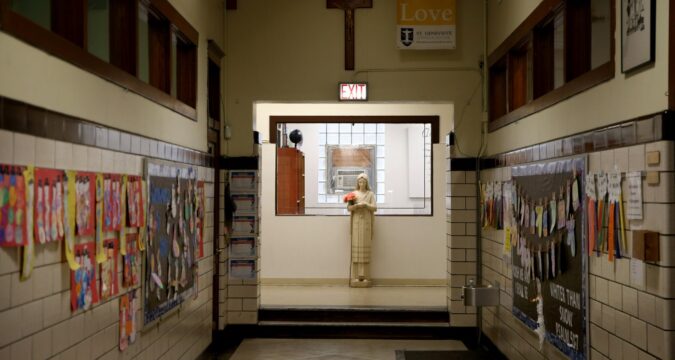
Another year brings another wave of Catholic school closings. These closures aren’t happening because of poor performance or low satisfaction, but because working families can’t afford both property taxes and private school tuition. The lack of affordable, high-quality school choices is devastating to the city.
It’s no coincidence that the golden era for public education in Chicago coincided with the height of the parochial school system. And the decline of both systems mirrors Chicago’s broader demographic collapse — driven largely by the outmigration of middle-income families with children.
Chicago has seen a massive exodus of middle-income residents, who now make up only 16% of the city’s population, down from 50% in 1970. The greatest losses have been among Black families — an estimated 350,000 Black residents have left since 1980.
Most parents in Chicago can’t afford private school tuition. Of the approximately 315,000 Chicago Public Schools students, the vast majority come from low-income or economically disadvantaged households. In Chicago, that often means a household income below about $38,000 — making even modest private school tuition an impossible burden. Without scholarships or tax credit programs, lower- and middle-income families who seek a better option are effectively locked out.
Private schools, particularly Catholic schools, have demonstrated extraordinary success — even in communities struggling with poverty. In the 2024-25 school year, 75% of Archdiocese of Chicago students meet grade level in reading compared with just 41% of Illinois students per i-Ready, and 67% of Catholic school students are at grade level in math compared with 28% of Illinois students. Chicago Archdiocese schools had 10 National Blue Ribbon recipients in 2025, the most by a single school system in a single year in the history of program.
During the COVID-19 pandemic, Catholic schools again proved their resilience. While CPS remained closed for extended periods — among the longest shutdowns in the nation — Catholic schools in the archdiocese reopened for in-person learning in the fall of 2020. As a result, their students experienced minimal learning loss and fewer social-emotional setbacks; public school students saw devastating declines in achievement and well-being.
Critics claim that when students receive scholarships or state aid to attend private schools, this influx of money robs public schools. That’s false. Student-centered funding means dollars follow the child to the school providing their education. In fact, taxpayers save money when students use scholarships or vouchers because the average cost per voucher student is significantly lower than the per-pupil cost in district schools. According to estimates from the Illinois Policy Institute, public schools save roughly $12,000 per student who received an Invest in Kids scholarship — one reason per-pupil funding in CPS has risen as enrollment has fallen.
Union leaders also argue that public funds should be used only to improve traditional public schools. But this is a false dilemma. Policymakers can strengthen public schools and expand choice. The two are not mutually exclusive.
Another common myth is that private schools have an unfair advantage because they don’t have to serve challenging students. Yet large districts, including Chicago’s, operate selective enrollment and magnet schools that screen by test scores or other factors. Research consistently shows that competition from private schools encourages public schools to improve communication with families, replace ineffective staff and innovate instruction. A 2021 analysis cited by the Fordham Institute found that 26 out of 28 empirical studies on school choice programs showed positive or neutral effects on public schools — including better graduation rates and college enrollment, especially for Black students.
In the long term, the city could invite state-recognized parochial and private schools to become “contract schools,” allowing CPS to include those students in state aid counts. Catholic schools facing closure might also be converted into charter schools, preserving their academic legacy while aligning with state accountability systems.
The pandemic exposed how fragile and unresponsive the traditional public education system can be in times of crisis. In contrast, many Catholic and independent schools showed agility, leadership and community connection.
Strong public schools and thriving private schools are not enemies. They are the two lungs of a healthy civic body. If one collapses, the entire city — its families, workforce and moral core — will eventually suffocate.
Paul Vallas is an adviser for the Illinois Policy Institute. He ran against Brandon Johnson for Chicago mayor in 2023 and was previously budget director for the city and CEO of Chicago Public Schools.
Submit a letter, of no more than 400 words, to the editor here or email letters@chicagotribune.com.
https://www.chicagotribune.com/2026/02/09/opinion-catholic-schools-threaten-public-schools-chicago/


