Category: News
From DOJ To Ballot Box: The Rise Of Lawfare Candidates
From DOJ To Ballot Box: The Rise Of Lawfare Candidates
Authored by Julie Kelly via RealClearInvestigations,
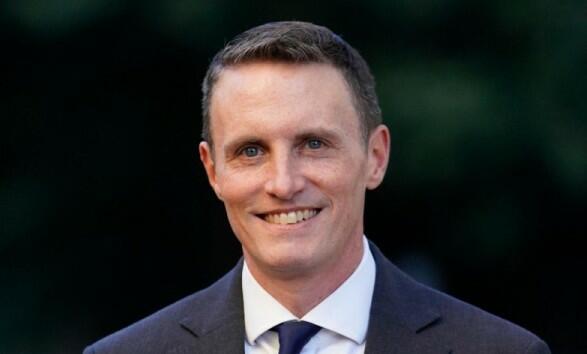
One of the beneficiaries of Virginia’s aggressive attempt to gerrymander the state for Democratic advantage could be a former federal prosecutor whose campaign for Congress hinges on his efforts to use the law to target President Trump and his supporters.
When a slim majority of Virginia voters gave the legislature authority last month to create congressional districts that could give Democrats a 10-1 advantage, J.P. Cooney cheered the outcome in a message on social media, boasting that the new district he was running in had been drawn “expressly for the purpose of standing up to Donald Trump’s and MAGA’s corruption.”
Although the fate of Virginia’s 7th Congressional District remains unclear – a state judge immediately blocked the measure, and the issue is expected to end up before the Supreme Court – Cooney’s candidacy represents a small but growing wave of former prosecutors who are running on their anti-Trump bona fides. So far, at least two other former Justice Department officials are seeking office by touting their work against the president, his supporters, and his current administration. All are running as Democrats.
To their supporters, these candidates represent a principled stand against what they see as the lawless excesses of the Trump administration. To many Republicans, the entry of supposedly neutral federal prosecutors into the brass knuckle world of politics confirms their suspicions that the DOJ is filled with partisans who used their power to target the president and the MAGA movement in general.
Ryan Crosswell, who is running for Congress as a Democrat in Pennsylvania’s 7th Congressional District, resigned from his position as an assistant U.S. Attorney in the Southern District of New York last year, after the Justice Department sought to drop the indictment against then New York City Mayor Eric Adams on corruption charges. Crosswell’s superiors decided the case should be dropped over evidence suggesting the Biden DOJ had targeted the mayor because he was a vocal critic of the administration’s immigration policies.
In what has become a popular tactic by anti-Trump DOJ lawyers, Crosswell issued a public resignation letter: “I cannot fathom how anyone would do this to the public servants he is supposed to be leading. And the damage done was not limited to two offices – it appalled prosecutors throughout the Department and our alumni.”
In his video announcement, Crosswell showed a clip of Trump walking into a courthouse (followed by now acting Attorney General Todd Blanche) and denounced the president for forcing prosecutors to “drop a case against one of his friends.” (It is unclear whether Adams is actually a “friend” of Trump’s.)
In Minneapolis, former Assistant U.S. Attorney Julie Le is using her opposition to Trump’s immigration policies in her bid to replace another fierce Trump critic, Rep. Ilhan Omar, in the Democratic primary. Le gained national attention in February when she had a meltdown before the judge. “What do you want me to do? The system sucks. This job sucks. And I am trying every breath that I have so that I can get you what you need,” Le said, referring to the DOJ’s overwhelming caseload. Le also told the judge, “We have no guidance or direction on what we need to do.”
Impeccable Anti-Trump Credentials
Le was quickly fired. She told the Washington Post that “she had never voted for Trump and opposed his brash enforcement style.” While Croswell and Le are hoping their anti-Trump credentials will help usher them into office, their record of resistance pales in comparison to Cooney’s, whose record of anti-Trump activity goes back a decade.
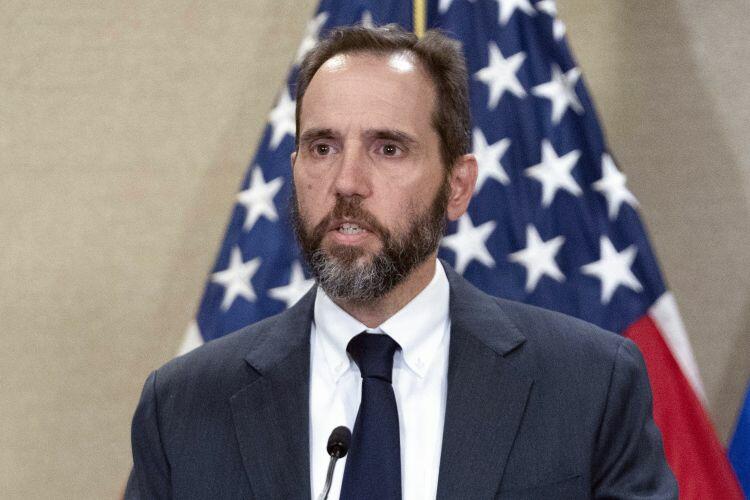
Cooney – a Notre Dame grad where he served as the president of the College Democrats club before earning a law degree at the University of Virginia – launched his campaign in a crowded field by boasting about his key role in several anti-Trump prosecutions pursued by Attorney General Merrick Garland and Special Counsel Jack Smith between 2021 and 2025. After Attorney General Merrick Garland appointed Smith as special counsel in November 2022, Cooney became his top deputy in the DOJ’s Jan. 6, 2021-related indictment against the president in Washington. They pushed for a quick trial before Election Day. Cooney also successfully sought a gag order against the president one year before the 2024 presidential election, banning the president from making any public statements about potential witnesses in the case, which included former administration officials such as Vice President Mike Pence and former Chairman of the Joint Chiefs of Staff Mark Milley, who were at the time criticizing Trump’s plan to again run for office.
Cooney, then chief of the fraud and public corruption section of the U.S. Attorney’s office in Washington, drafted the initial plan for how the DOJ could pursue Trump, as well as several figures and organizations who had participated in the events of Jan. 6. But Cooney’s plan was so aggressive, according to a 2023 Washington Post article, that it alarmed top FBI and DOJ officials and was immediately scuttled.
Trump fired Cooney shortly after Inauguration Day.
The J6 case against the president was dropped after Trump won the 2024 election, but Cooney wants to finish the job. “We have the evidence to convict this president,” Cooney said, pointing to the White House, in one social media post. “That justice can still come.” Cooney also insists that if Trump hadn’t “escaped trials by winning the election,” the president right now “would be in prison.”
“Cooney was the mastermind of the J6 case against the president,” John Lauro, the president’s trial counsel in the J6 case in Washington, told RealClearInvestigations. “Smith and Cooney used the sacred powers of the DOJ against Trump and political movement. Now we see the ultimate fruition of that with Cooney running for office as a far left Democrat and to use his experience as a persecutor against Trump to get an advantage in the far left wing of the Democratic party.”
Jack Smith Endorsement
Jack Smith is endorsing his longtime colleague – the pair worked together at the Obama DOJ’s public integrity unit – calling Cooney “a man of integrity who has committed his career to upholding the rule of law, and he’s the model of who our country needs in public service.”
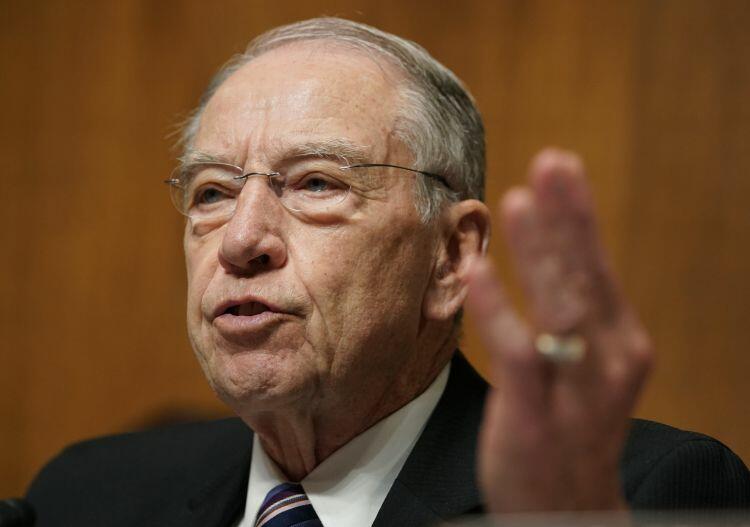
The president and congressional Republicans disagree. Cooney is currently the subject of both House and Senate investigations for allegedly abusing his authority at the DOJ to pursue Trump and his allies. During an April 21 hearing, Senate Judiciary Committee Chairman Charles Grassley accused Cooney and other former Biden DOJ officials of “literally trying to destroy” the country; Grassley, an Iowa Republican, released an extensive trove of text messages and emails between Cooney and Molly Gaston, his co-counsel in the J6 case against Trump.
Immediately following the events of Jan. 6, Cooney worked with Gaston to also investigate a handful of Republican House members for allegedly conducting “reconnaissance tours” on Jan. 5. That accusation was made by then Democratic Congresswoman Mikie Sherill, now the governor of New Jersey. Sherill claimed groups of individuals, some perhaps tied to Republican lawmakers, were walking inside the Capitol the day before the protest in an effort to scope out the building.
In a Jan. 16, 2021, text to Gaston, Cooney said he believed the “tour/map thing has legs.” He stated that Sherill’s allegations “made perfect sense” to him. “I am fairly confident that we are going to put a map or some other information relevant to coordinated activity in the hands of an extremist group and trace it back to a congressional office.”
Gaston replied, “yep.” A week later, the FBI Washington field office opened “Operation Rampart Twelve” to investigate Sherill’s accusations; the inquiry initially focused on Reps. Lauren Boebert and Paul Gosar based on groups of individuals walking near each representative on Jan. 5, 2021. (Sherril also made a similar allegation against Rep. Barry Loudermilk (R-Ga.), who was cleared by Capitol Police after a separate investigation.)
FBI headquarters closed “Operation Rampart Twelve” a year later, after finding no evidence to support Cooney’s claims.
Cooney’s anti-Trump fingerprints stretch from Special Counsel Robert Mueller’s investigation to “Arctic Frost,” the Biden DOJ’s investigation into Trump and hundreds of Republican organizations, donors, and officeholders for the so-called “fake electors” plan. Emails released last year by Grassley’s committee showed Cooney’s central role in obtaining the toll records of several Republican members of Congress related to the probe.
“It’s impossible to buy Democrats’ claim that Arctic Frost was a nonpartisan, by-the-book investigation when Jack Smith’s top henchman is now openly campaigning as a Democrat and running on a platform of impeaching President Trump,” a spokesperson for the Senate Judiciary Committee told RCI. “Cooney’s campaign is saying the quiet part out loud. Arctic Frost was never about justice – it was always about using the federal justice system to take down President Trump and the Republican Party. Thanks to Chairman Grassley’s oversight, which has exposed the Biden administration’s internal records, Americans are seeing the dark reality of the weaponized Arctic Frost investigation.”
But three ongoing federal criminal investigations into the president, a year before the 2024 election, were not enough for Cooney. A few months before Smith handed down his first indictment against the president in Florida for allegedly taking classified documents with him to Mar-a-Lago after leaving the White House, Cooney wanted to open yet another line of inquiry into Trump’s involvement in a song produced by the so-called “J6 Prison Choir,” a group of inmates detained at a special prison in Washington. Cooney wanted to know whether Trump was profiting from sales of the song. “Can we do some work on this to nail down Trump’s role in this?” Cooney wrote to his colleagues at the special counsel’s office in March 2023, referring to a Forbes article about the project.
“The special counsel’s team was filled with inbred ideologues,” Lauro said
Excessive Sentences, False Rumors
After longtime Trump confidant Steve Bannon was found guilty by a D.C. jury in 2022 on two counts of contempt of Congress, Cooney sought excessive prison time for Bannon’s refusal to cooperate with the Select January 6 Committee. He filed a 24-page sentencing memo for two misdemeanors that are rarely, if ever, prosecuted in the nation’s capital; he asked Judge Carl Nichols to send Bannon to prison for six months and pay a $200,000 fine. “The rioters who overran the Capitol on January 6 did not just attack a building – they assaulted the rule of law upon which this country was built and through which it endures. By flouting the Select Committee’s subpoena and its authority, [Bannon] exacerbated that assault,” Cooney wrote.
Nichols sentenced Bannon to four months in prison and imposed a $6,500 fine.
It was another sentencing request in a separate Trump-related case that offended both the DOJ’s inspector general and House Republicans. Cooney was part of the government’s team prosecuting Roger Stone, a longtime Trump associate, for allegedly interfering in the bogus Russia collusion investigation. Just like Bannon, Stone was found guilty by a D.C. jury of all charges, including obstruction and making false statements.
Cooney attempted to throw the book at Stone, asking for a sentence of between seven and nine years in prison. But the following day, Cooney’s boss at the office, who had already sparred with Cooney over what he saw as an excessive sentencing request, filed a separate sentencing recommendation, informing Judge Amy Berman Jackson that the initial memo “does not accurately reflect the Department of Justice’s position on what would be a reasonable sentence in this matter.”
That prompted Cooney, according to then-DOJ Inspector General Michael Horowitz, to start rumors claiming President Trump and Attorney General Bill Barr had intervened to help Stone obtain a lower sentence. A report issued in 2024 by Horowitz, following an extensive investigation into the Stone sentencing controversy, “did not identify documentary or testimonial evidence that the actions and decisions of those involved in the preparation and filing of the first and second sentencing memoranda were affected by improper political considerations or influence.” House Judiciary Chairman James Jordan subsequently opened a congressional investigation into Cooney’s false claims of political interference in the matter.
Attempts to reach Cooney’s and Crosswell’s campaigns were unsuccessful. Despite repeated requests, a DOJ spokeswoman declined to comment on their candidacies.
Cooney’s years-long pursuit of the president and everyone around him, Lauro insists, helped Trump get elected in 2024. “Because of [Cooney’s] efforts, President Trump won the presidency. So he was terrific for the president and the MAGA movement in that regard.”
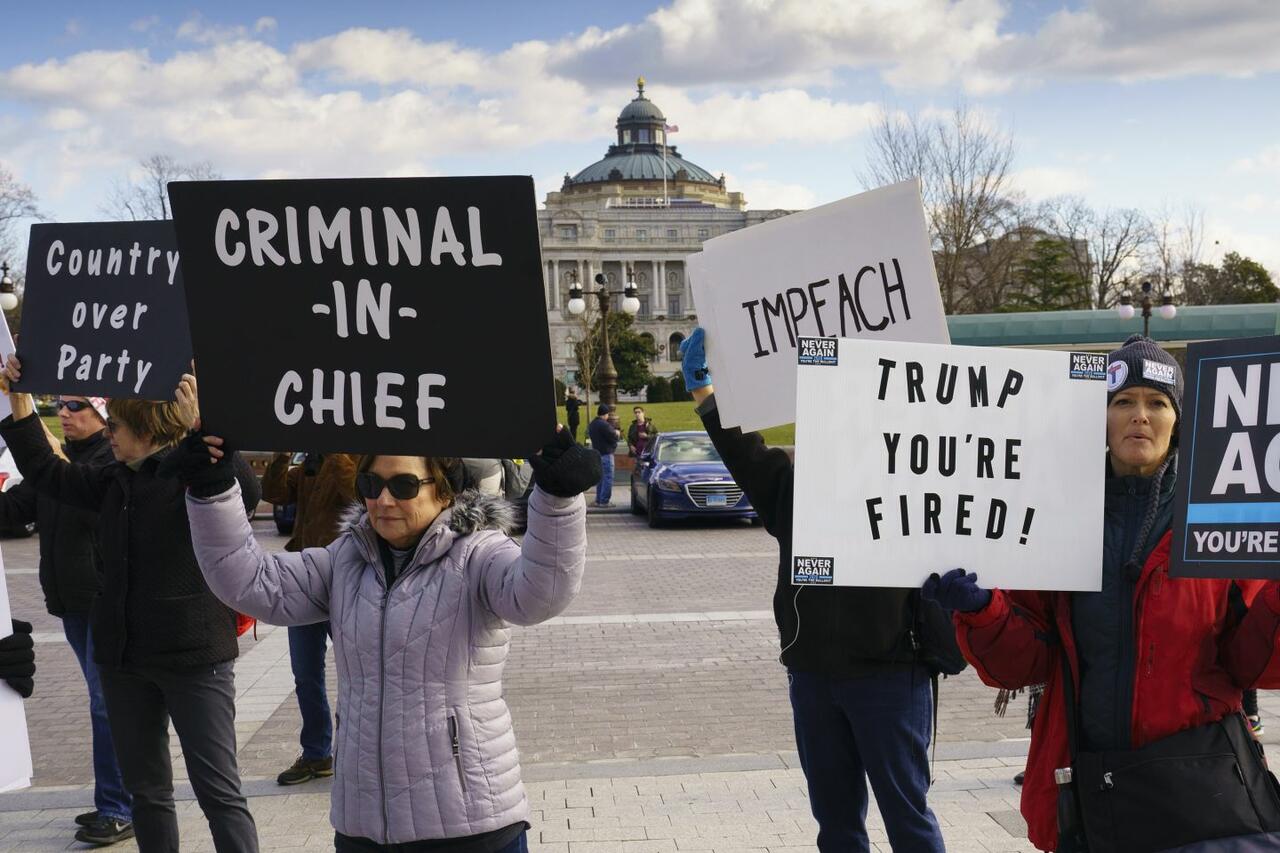
Still, Cooney’s anti-Trump legacy may not be finished yet. If Cooney wins his Virginia race and Democrats retake the House in the fall midterm elections, the former prosecutor could play a central role amid reports that his party is already planning to impeach Trump.
Tyler Durden
Tue, 05/05/2026 – 15:40
https://www.zerohedge.com/political/doj-ballot-box-rise-lawfare-candidates
The Nuclear Co. And Brookfield Partner For New Large Reactor Projects
The Nuclear Co. And Brookfield Partner For New Large Reactor Projects
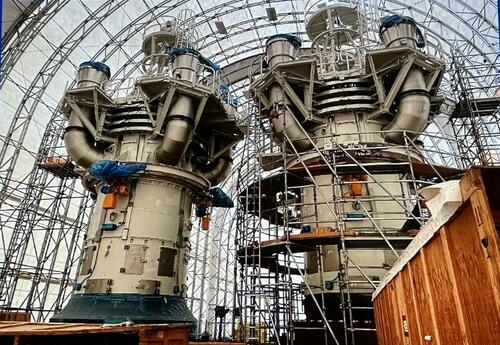
Brookfield announced that it has formed a partnership with The Nuclear Company (TNC), to create a new company for developing Westinghouse reactor technology.
This new company, which remains unnamed, is being positioned as a world-leading nuclear project execution company.
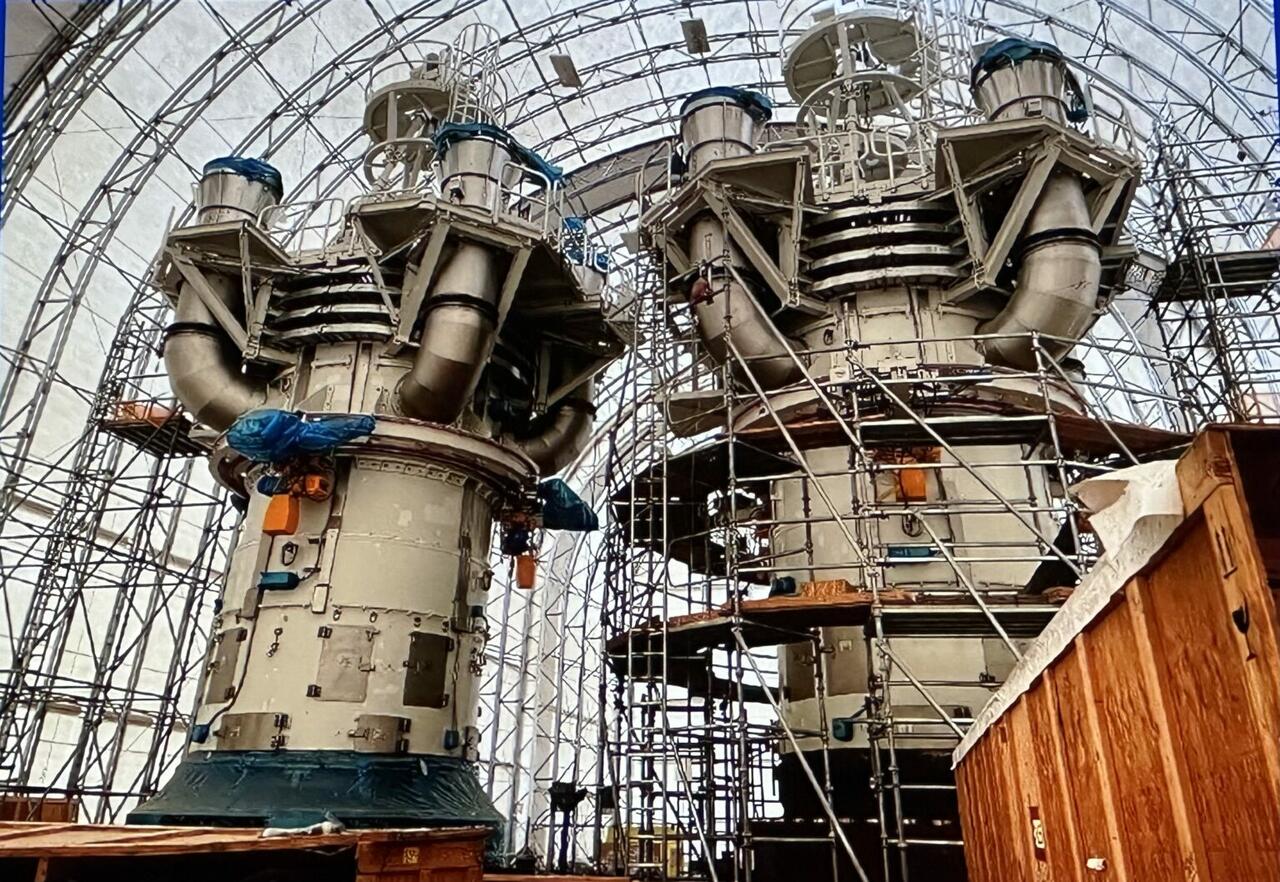
A few weeks ago, we covered how Bloomberg anticipated an announcement for new AP1000s. But it appears TNC is focusing the JV’s efforts, in the near term, on the possible restart and completion of the two AP1000 reactors at VC Summer in South Carolina.
Westinghouse originally attempted to construct the two large reactors in 2017, but eventually canceled the project after costs spiraled out of control. Brookfield is now performing the studies necessary to make a Final Investment Decision by 2027, which would mean purchasing the partially-completed assets from Santee Cooper for $2.7 billion.
The new company will also offer execution capabilities for deploying Westinghouse’s smaller AP300 design with “end-to-end project management, licensing support, and oversight of engineering, procurement, construction and commissioning activity.”
TNC’s Chief Nuclear Officer, Joe Klecha, frames the announcement as finally addressing what the nuclear industry has been lacking in order to truly unleash the nuclear renaissance build out phase, “We know what it takes to deliver nuclear. What’s been missing is a model that brings together the people, the capabilities, and the capital to do it at speed and scale. That’s what this partnership creates.”
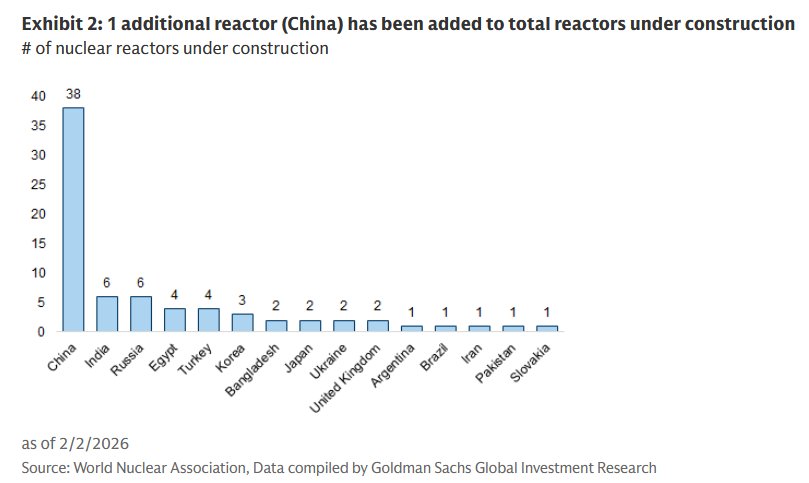
The timelines are still relatively disappointing. Every month China seems to be adding another reactor to their “under construction” stack, with India gaining speed as well. As the months go on, it becomes harder and harder to take the nuclear renaissance seriously in the United States, given the lack of nuclear energy being added to the grid.
It’s also bewildering that Brookfield and Cameco are still leaving money on the table with the previously announced $80 billion worth of support from the US government.
These massive amounts of money remain untouched since they were announced in October of last year.
The progress being made under programs like the DOE Reactor Pilot Program are promising. But the program’s wins, with being close to taking kilowatt-scale reactors critical for the first time in decades, struggle to stand out when China is adding over 1,000 megawatts of energy to their grid every month or two.
Tyler Durden
Tue, 05/05/2026 – 15:20
https://www.zerohedge.com/energy/nuclear-co-and-brookfield-partner-new-large-reactor-projects
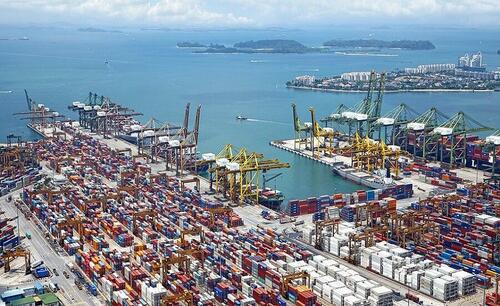
Iraq Offers Huge Discounts Up To $33 Per Barrel For Oil Shipments Via Hormuz
Iraq Offers Huge Discounts Up To $33 Per Barrel For Oil Shipments Via Hormuz
By Charles Kennedy of OilPrice.com
OPEC’s second-largest producer, Iraq, is offering huge discounts of up to $33.40 per barrel off the official selling prices for its crude that has to move through the Strait of Hormuz.
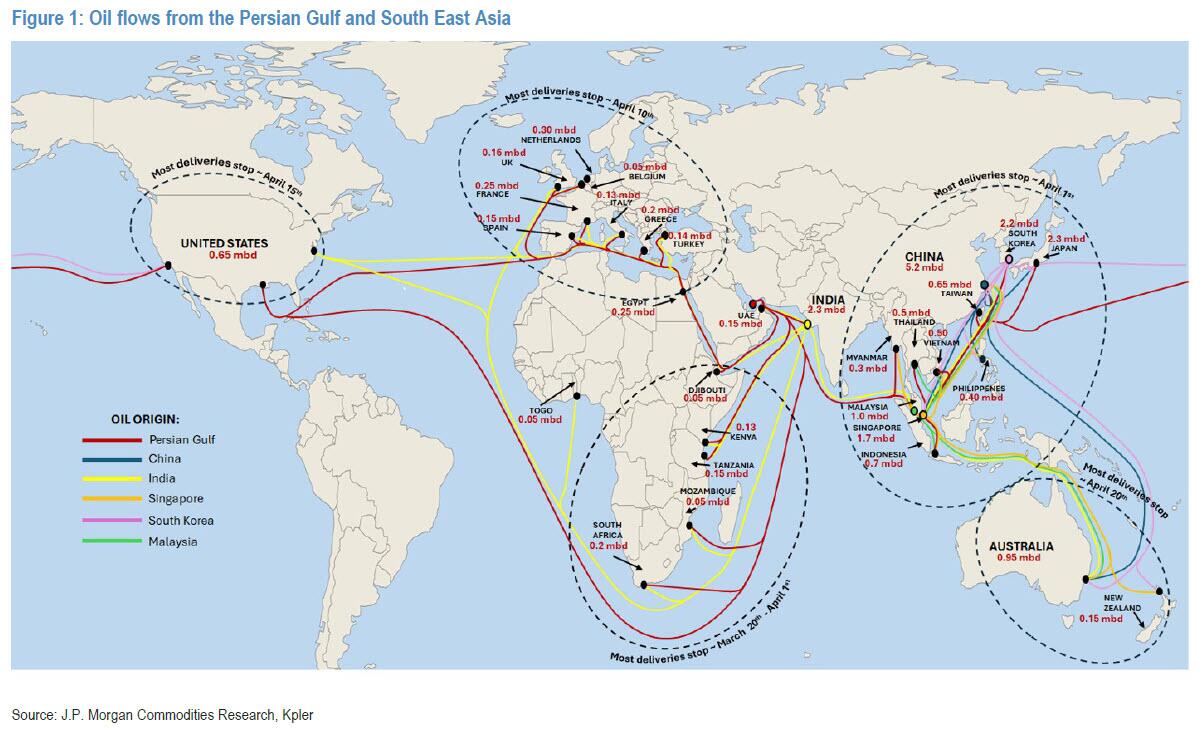
Iraq’s oil production and exports have been severely crippled due to the hostilities in the Middle East and the de facto closure of the Strait of Hormuz, which is the only way to move Iraqi Basrah crude grades.
Iraq was one of the first Gulf producers to slash upstream production and now exports a small part of its crude via a pipeline to the Turkish Mediterranean coast. But its key export port at Basrah, which handled the bulk of exports prior to the war, is constrained due to the unpassable Strait of Hormuz. Iraq has shipped some cargoes eastward out of the Strait thanks to bilateral agreements with Iran’s forces, but tankers now have to move empty westward of the Strait and travel deep into the Persian Gulf to load from Basrah.
The inbound movement at the Strait of Hormuz is at a standstill, and renewed tensions, blockades, the U.S. Project Freedom to guide ships, the Iranian threats to said project, and Iranian expansion of the area of control at Hormuz are further complicating tanker movement west into the Persian Gulf.
Iraq is now offering a discount of $33.40 per barrel off the official selling price of its flagship Basrah Medium crude loading from Basrah on the Gulf in May, Bloomberg News reported on Tuesday, citing a May 3 notice by Iraqi state oil marketing company SOMO.
Basrah Medium that would be loaded between May 1 and 10 would be priced at a discount of $33.40 a barrel below the OSP, and at a $26-per-barrel discount between May 11 and 31, according to the notice seen by Bloomberg.
Basrah Heavy for loading in May is being offered to buyers at $30 below the OSP.
If a buyer agrees to some of the offers, SOMO’s notice says that “force majeure shall not be applicable to this offer, given that it has been issued under existing exceptional conditions already known to all parties.”
Tyler Durden
Tue, 05/05/2026 – 15:00
https://www.zerohedge.com/energy/iraq-offers-huge-discounts-33-barrell-oil-shipments-hormuz

Russia & Ukraine Declare Ceasefires That Will Begin On Different Days
Russia & Ukraine Declare Ceasefires That Will Begin On Different Days
Authored by Dave DeCamp via AntiWar.com,
Russia said on Monday that it would observe a ceasefire with Ukraine on May 8 and May 9 to observe Victory Day, when Russia celebrates the Soviet Union’s victory against Nazi Germany in World War II, but it’s unclear if the truce will hold, as Ukrainian President Volodymyr Zelensky responded by declaring a ceasefire that will start earlier.
“As of today, there has been no official appeal to Ukraine regarding the modality of a cessation of hostilities that is being claimed on Russian social media,” Zelensky wrote on X.
“We believe that human life is far more valuable than any anniversary ‘celebration.’ In this regard, we are announcing a ceasefire regime starting at 00:00 on the night of May 5–6. In the time left until that moment, it is realistic to ensure that silence takes effect. We will act reciprocally starting from that moment,” the Ukrainian leader added.
Russia’s ceasefire declaration came with a warning that if Ukrainian attacks targeted Moscow during Victory Day celebrations, the Russian military would respond with major attacks on the Ukrainian capital, a response to Zelensky suggesting Ukraine could hit a Russian military parade that will take place in Moscow on May 9.
“Should the Kiev regime attempt to implement its criminal plans to disrupt the celebration of the 81st anniversary of Victory in the Great Patriotic War, the Russian Armed Forces will launch a retaliatory, massive missile strike on the center of Kiev,” the Russian Defense Ministry said.
“Russia, despite its capabilities, has previously refrained from such actions for humanitarian reasons. We warn the civilian population of Kyiv and employees of foreign diplomatic missions of the need to leave the city promptly,” the ministry added.
On Monday, a Ukrainian drone hit a high-rise apartment building in Moscow. According to Russia’s TASS news agency, 26 Ukrainian drones targeted the Russian capital from May 2 to May 4.
Heavy Russian attacks hit Ukraine on Monday, killing at least six people in Kharkiv and two in the Kherson region, according to Ukrainian officials.
Ukraine has also stepped up its attacks on Russian oil infrastructure, hitting infrastructure on the Black Sea, causing massive fires and raining oil down from the sky.
Tyler Durden
Tue, 05/05/2026 – 14:25
https://www.zerohedge.com/geopolitical/russia-ukraine-declare-ceasefires-will-begin-different-days
Trump’s Project Freedom Likely Triggered By Oil Market’s One-Month Countdown To Chaos
Trump’s Project Freedom Likely Triggered By Oil Market’s One-Month Countdown To Chaos
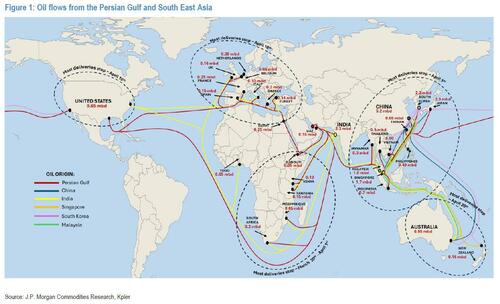
What is well established about President Trump’s newly announced Project Freedom is that the U.S. military is helping “guide” commercial vessels out of the Strait of Hormuz.
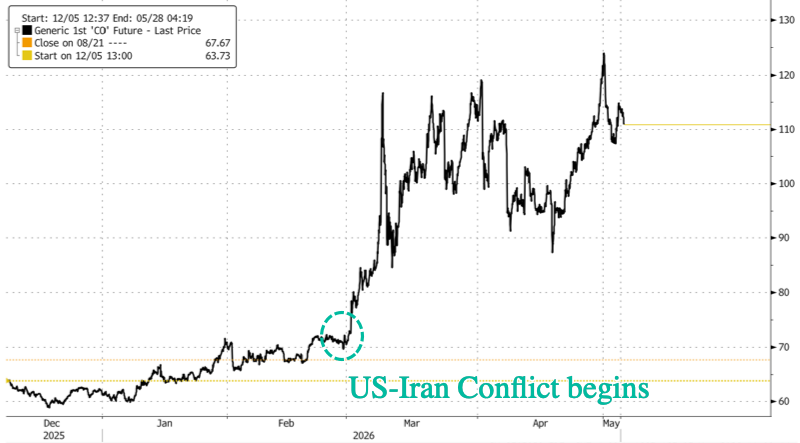
The battle over the Hormuz chokepoint comes as the oil market appears to be one month away from a potential “tipping point.” Without a resolution, traders warn that global crude and refined-product stockpiles could be drawn down to dangerous levels, creating dire conditions for another violent leg higher in fuel prices that could spark economic chaos.
Last week, ConocoPhillips was the first to warn about imminent “critical shortages” of oil for some nations as the Iran war that has crippled global energy flows enters its third month.
“The biggest challenge we’re about to face is that the markets sort of had a bit of a grace period initially when the tankers that left the Persian Gulf in late February were still on the water; now all of those have reached their destination,” ConocoPhillips CFO Andy O’Brien told analysts last Thursday, touching on a critical subject we outlined to readers at the start of April.
“We are going to start to see some import-dependent countries potentially start to face critical shortages as we get into the June-July time frame,” at which point the dreaded “demand destruction” kicks in, O’Brien warned.
ConocoPhillips’ ominous warning was followed very shortly by President Trump’s Project Freedom plan to provide military escorts for ships through Hormuz. On Monday, two US Navy destroyers transited the waterway and entered the Persian Gulf after navigating an Iranian barrage of missiles, drones, and gunboats. This allowed two US-flagged ships to safely transit through the maritime chokepoint to safer waters.
Trump’s Project Freedom appears to be a response to the dire warnings from oil giants and Wall Street analysts, who see demand destruction quickly approaching if the Hormuz chokepoint remains severely disrupted.
“We do not have months,” Frederic Lasserre, head of research at Gunvor, one of the world’s largest oil traders, told Financial Times.
Lasserre warned that “huge pain” is coming for some countries as fuel shortages appear imminent, adding, “It goes beyond gasoline at the pumps to industry shutting down, and you enter recession.”
He gave a timeline of when the energy crisis could worsen: “The tipping point is clearly June. This is the point at which something has to give.”
Energy Aspects founder Amrita Sen issued a similar warning: if the US-Iran conflict continues through June, global buffers could be exhausted, with Brent crude futures soaring as high as $200 per barrel.
“The repricing is from today onwards. We expect significant upside to both crude and products,” Sen noted, suggesting prices could climb towards the $150 to $200 a barrel range.
Helima Croft, head of global commodity strategy at RBC Capital Markets, warned, “We may be on the cusp of a sentiment shift as people are starting to realize that the US messaging may not represent reality.” She noted that a continued Hormuz disruption this month could push Brent towards $140.
“From the start, the White House has been very successful in messaging that this would be a short war, and now it looks like something that could be sustained through the summer,” Croft said.
So far, price increases have been contained by existing inventories, floating inventories, SPR releases, cuts in Asian demand, and refineries shifting output toward diesel and jet fuel.
Goldman analysts have warned of a petrochemical shock, and signs are already emerging of some Asian factories shuttering production lines amid the fuel price shock.
FT quoted an anonymous executive at a large commodity trading house as saying, “We had these buffers for the first two months. Refineries were able to switch the products that they were making because of the time of year. They really maxed out their jet fuel and diesel production.”
Latest on Polymarket:
Strait of Hormuz traffic returns to normal by end of May?
Yes 16% · No 85%
View full market & trade on Polymarket
It becomes entirely clear that Trump’s Project Freedom to reopen the Hormuz chokepoint was likely a nudge from the oil industry, which has set a one-month timeline from a crunch point that could send the global economy into a tailspin.
Tyler Durden
Tue, 05/05/2026 – 14:05

The Precious Paper Problem: The Divergence In Western Bullion Markets
The Precious Paper Problem: The Divergence In Western Bullion Markets
Authored by Armin Sidhu via The Mises Institute,
Gold has nearly doubled in two years. Silver has outpaced it. For the commodity that backed money for most of human history and that central banks still treat as the final settlement asset, these moves should represent a clean signal about physical scarcity and monetary demand. Western gold prices no longer carry that information cleanly.
The prices quoted in London and New York are increasingly detached from the physical reality of who owns what gold, where it sits, and whether it can be delivered on demand.
What looks like a bull market is the early indication of a pricing system failure.
Context
Western bullion markets operate on a credit model. The London Bullion Market Association (LBMA) runs the largest gold market in the world, but most of the gold traded there is held in what the industry calls “unallocated” accounts. This means the customer holds a paper claim on a clearing bank rather than title to a specific bar in a vault.
When an investor buys an ounce through an LBMA member bank, the bank records a liability on its balance sheet and does not transfer ownership of any particular piece of metal. The Commodity Exchange in New York (COMEX) works on similar principles for futures contracts. Historically, fewer than one percent of COMEX contracts ever resulted in physical delivery. The rest were closed out or rolled forward as bookkeeping entries.
Eastern bullion markets operate on a property model. The Shanghai Gold Exchange (SGE)—the largest Asian gold venue and the operational arm of China’s central bank for physical gold—requires sellers to deposit physical metal before trading and buyers to pay in full upfront. More than 90 percent of SGE spot contracts result in actual delivery of actual bars.
The Shanghai Futures Exchange—the second major Chinese precious metals venue—operates on similar physical-first principles for its gold and silver futures. India’s retail and institutional buyers import and hold physical metal directly. Dubai’s trading hub treats allocated, segregated storage as the default condition rather than the premium option.
This difference reflects a philosophical choice about what gold is. Western markets have built their infrastructure around credit claims on pooled metal. Eastern markets have built theirs around title transfer of specific bars. The size of the gap between those two systems’ prices is now the most important indicator in the global bullion market.
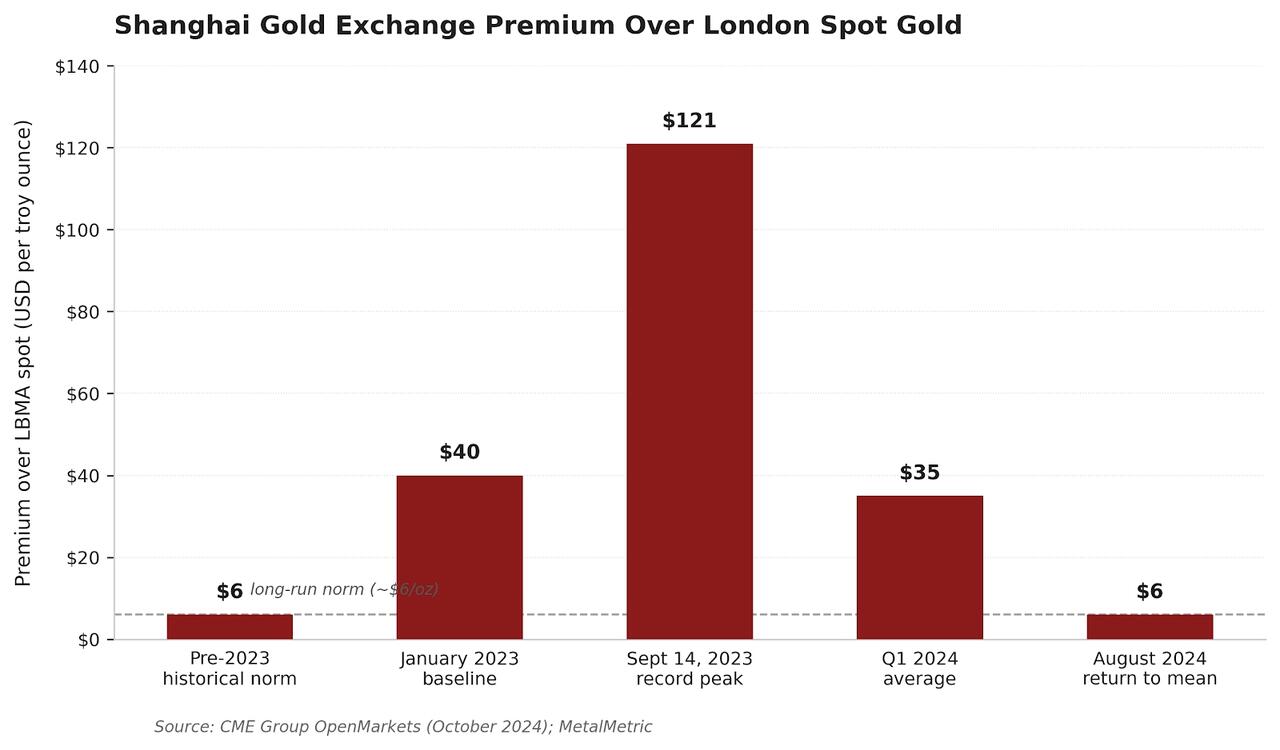
Figure 1: Shanghai Gold Exchange premium over London spot gold at selected moments, 2023-2024.
Sources: CME Group OpenMarkets and MetalMetric.
Geo-Economic Implications
When two systems price the same asset on different principles, the weaker system loses credibility first. That process is underway in Western paper markets, and the mechanism is straightforward. If a clearing bank owes ten customers an ounce each but holds only two ounces in the vault, the bank is solvent so long as the customers never ask for delivery.
When they do ask, the bank either delivers to the first two and defaults on the other eight, or it rushes to the physical market to buy metal at whatever price it takes. That forced bid is what produced the 70-dollar premium of New York futures over London spot during the March 2020 delivery crunch and the 40-to-60-dollar spreads that opened again in January 2025.
The deeper economic problem goes beyond the stress episodes themselves. What matters is what those episodes reveal about the reliability of Western gold prices as information. Investors hold gold as a hedge against inflation, currency debasement, and monetary policy errors. That function depends on a credible, deliverable price.
When the quoted price represents a paper claim that might or might not be convertible into metal under pressure, the signal stops working. Portfolio managers begin to discount the LBMA benchmark. Physical buyers ignore it. Central banks ignore it, which is exactly what their recent accumulation behavior suggests. A financial system that cannot produce a reliable price for its oldest asset has quietly lost control of one of its most important instruments.
The economic cost of this failure falls on savers. Anyone holding gold as insurance against currency risk faces a second, unacknowledged risk: that the reference price used to value their holdings does not correspond to metal that can actually be delivered.
Geopolitical Implications
Reserve currency status depends on trust in the financial architecture behind the currency. The United States dollar remains the dominant global reserve asset because sovereign holders believe American institutions will honor their claims.
That belief was shaken in February 2022 when Western allies froze approximately three hundred billion dollars in Russian central bank reserves. It is being shaken further by the growing suspicion that Western bullion markets may not be able to physically deliver the gold they say they hold.
Sovereign gold accumulation by China, India, Poland, Turkey, and others functions primarily as a risk management response to a technical problem rather than a political statement. If the LBMA commercial float cannot reliably meet demand from its own customers, then a foreign central bank with tonnes held in London custody must ask what happens to its claim during a stress episode.
The answer explains the repatriation programs now underway in Germany, the Netherlands, Hungary, Austria, Romania, and India. These decisions are prudential. The same logic drives sovereign wealth funds and ultra-high-net-worth investors toward direct physical custody in Singapore and Dubai, where allocated storage is contractually enforceable and the jurisdictional risk is lower.
The longer Western regulators tolerate this paper-to-physical mismatch, the faster marginal reserve decisions move eastward. Each stress episode that forces clearing banks to scramble for metal is watched by finance ministries worldwide as evidence that the Western system cannot honor its own contracts under pressure.
The dollar’s reserve status rests on the premise that American-backed financial promises are the most reliable claims on earth. That premise is being tested by a market the Treasury does not regulate and cannot easily reform.
The Reforms
Three reforms would address the core problem without requiring new bureaucracy or expanded regulatory authority.
First, restore traditional bailment law to unallocated bullion accounts. Under Anglo-American common law, a custodian holding property on behalf of a client cannot pledge or sell that property without explicit authorization. Bullion banking has been allowed to operate as an exception to this rule, treating customer gold as a bank asset that can be lent, leased, and rehypothecated at the bank’s discretion. Ending the exception would require any account marketed as gold ownership to correspond to a specific, identifiable bar held on the customer’s behalf.
Second, prohibit the rehypothecation of client bullion. When a bank holds a customer’s gold and simultaneously pledges that same gold as collateral on its own borrowings, the customer’s ownership is compromised without their knowledge or consent.
Calling the practice financial innovation does not change its underlying character. A straightforward prohibition would eliminate the legal foundation for the synthetic gold claims that now dominate Western markets.
Third, pass the Gold Reserve Transparency Act of 2025—House Resolution 3795—introduced by Representative Thomas Massie. The bill would require a Government Accountability Office physical assay of all United States gold reserves and full disclosure of every sovereign gold transaction over the past fifty years.
If the Treasury holds the metal it claims, an audit costs almost nothing and settles a question open since the early 1960s. If it does not, the public has a right to know before the answer becomes a crisis.
These three reforms share a common principle. They ask Western bullion markets to honor the property rights that the rest of the financial system takes for granted.
Forecast and Conclusion
Gold is supposed to be the simplest asset class on earth. It produces no cash flows, carries no counterparty risk by its physical nature, and derives its value from supply and demand for a physically finite element.
The difficulty now facing anyone trying to interpret its price comes entirely from the inflationary credit structures that Western markets have built around it.
Over the next several years, the divergence between Western paper prices and Eastern physical prices will widen. Western financial media will describe the resulting spreads as volatility. Eastern buyers will treat them as discounts on real metal and accumulate accordingly.
Central banks will bypass Western benchmarks because they no longer trust those benchmarks to reflect the underlying asset. As this continues, the basic question of what gold is actually worth at any given moment becomes harder to answer with confidence.
The correction is fundamentally about restoring property rights in a market that quietly abandoned them.
New regulators, committees, and Basel frameworks are not the answer.
Western bullion markets can fix themselves by admitting that a bar of gold is not a credit instrument, that a customer’s deposit is not a bank’s asset, and that the price of the oldest store of value on earth should reflect the metal itself, not the paper claims stacked on top of it.
Tyler Durden
Tue, 05/05/2026 – 13:45
https://www.zerohedge.com/precious-metals/precious-paper-problem-divergence-western-bullion-markets

Apple Shares Jump On Report Next iOS Will Allow Users To Choose Rival AI Models
Apple Shares Jump On Report Next iOS Will Allow Users To Choose Rival AI Models
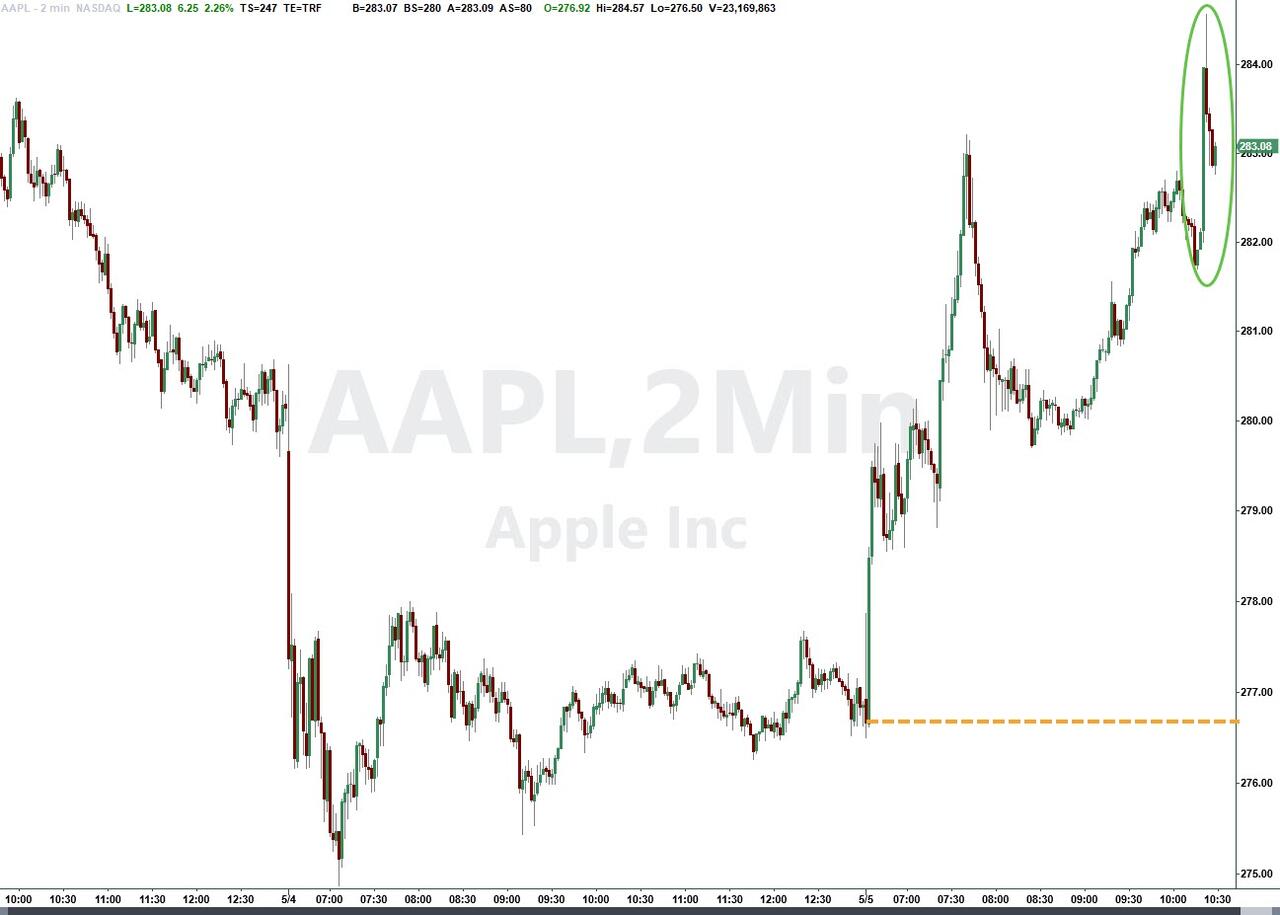
Having appeared to be behind the game on its AI offerings for months, Apple will reportedly allow users choose from a range of outside artificial intelligence services to power features across its software, building on a strategy to turn its devices into a comprehensive AI platform.
Bloomberg reports that, according to people with knowledge of the matter, Users will be able to select from multiple third-party AI models for tasks like generating and editing text and images, according to people with knowledge of the matter.
The change is slated for iOS 27, iPadOS 27 and macOS 27 this fall, said the people, who asked not to be identified because the plans are private.
The iOS update will let users choose from AI model providers that opt in by adding support through their App Store apps. So far, Apple has been testing integrations internally with at least Alphabet Inc.’s Google and Anthropic PBC, according to the people with knowledge of the matter.
Inside iOS 27, Apple refers to the capability as “Extensions.”
It lets users select which AI services they want to power Apple Intelligence features via the Settings app.
Apple shares extended gains on the report…
Bloomberg adds that the Apple Intelligence platform, introduced in 2024, currently offers ChatGPT as the only third-party option in features like Siri, Writing Tools and Image Playground.
It’s all part of Apple’s bid to gain an edge in the artificial intelligence market – with a twist.
Rather than building the best AI software and services itself, the company is looking to make it easy for customers to find a wide range of options on its devices.
Certainly seems a lot cheaper than dropping all that unprecented CapEx on the data centers and building their own (though at what ‘other’ cost to the platform)?
Tyler Durden
Tue, 05/05/2026 – 13:30
Trump Admin Working To Ease Memory Chip Crunch And Soaring Prices With Supply Chain Coalition
Trump Admin Working To Ease Memory Chip Crunch And Soaring Prices With Supply Chain Coalition
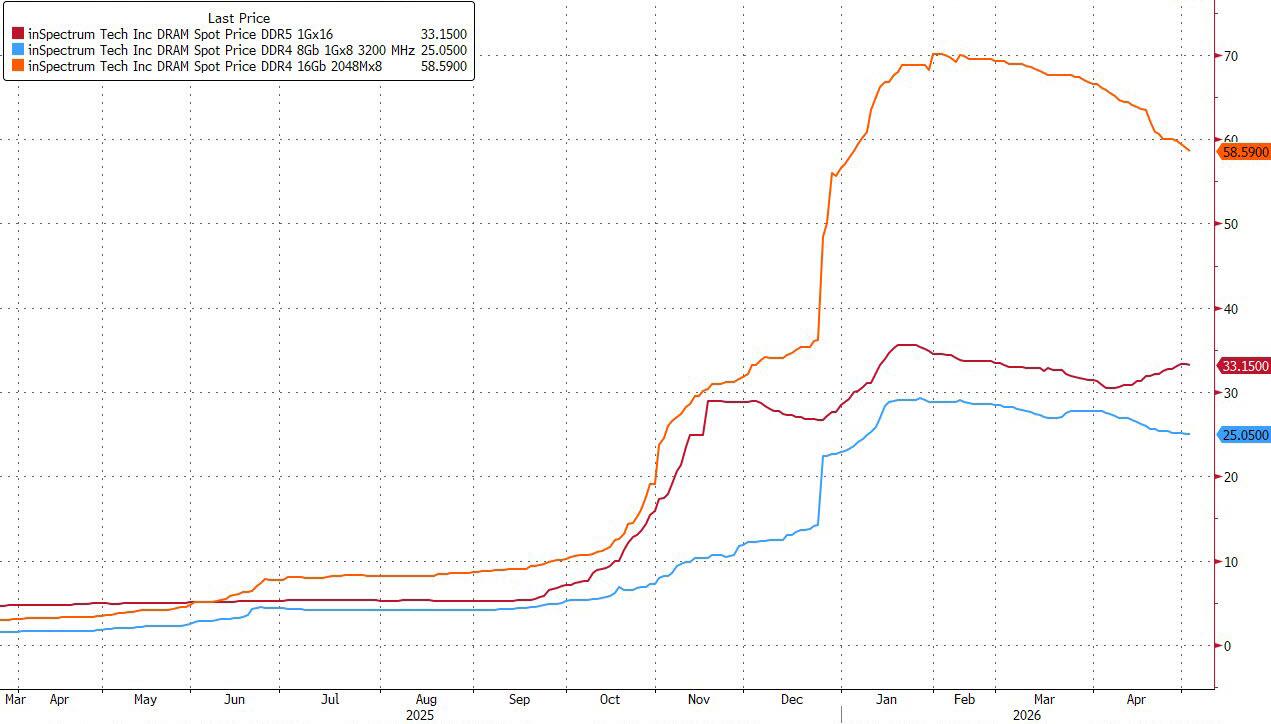
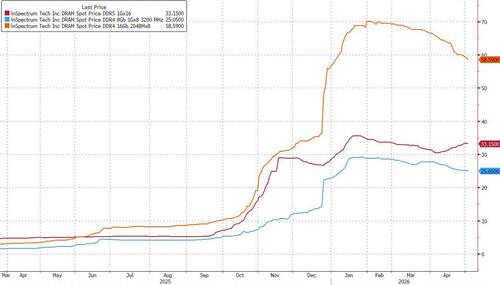
In a world where high commodity prices are the cure for high commodity prices, it was only a matter of time before we saw a surge in oil output in response to near-record oil prices, as Diamondback did ovenright. The same logic applies to memory chips, another commodity, whose prices have exploded in recent months due to soaring demand by data centers.
And while markets expect prices to drop once more supply comes on line, the proposed timline – which spans well into 2027 – is unacceptable, meanwhile the raging memory prices are translating into higher prices for virtually all electronics at a time when inflation is already set to explode higher.
Which is why the US is working to address the global memory chip shortage through a supply chain coalition with allies in Asia, Europe and the Middle East, Nikkei Asia reported citing a US official.
The State Department unveiled the Pax Silica initiative in December, a coalition with allies to secure supply chains involving semiconductors, artificial intelligence and critical minerals while reducing dependence on China.
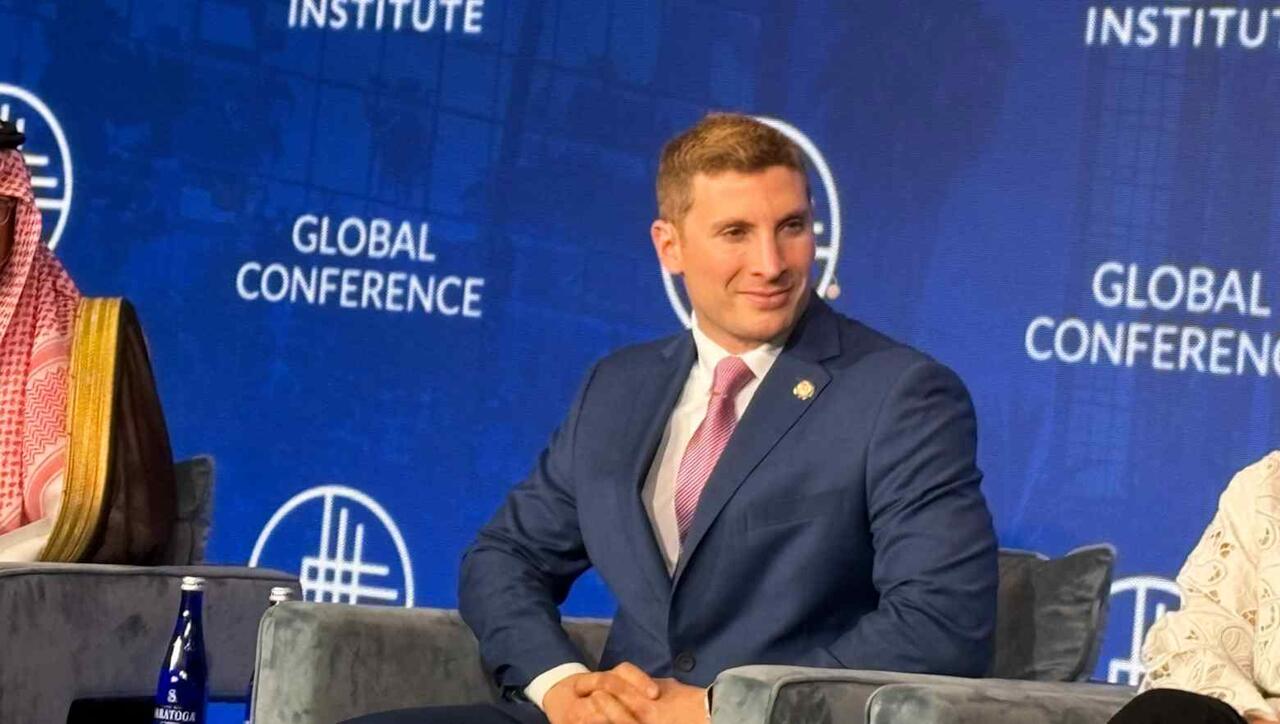
Fourteen countries including India, Japan, South Korea, Singapore and the Philippines have joined the coalition, with Norway set to do so this week, Jacob Helberg, undersecretary of state for economic affairs, told Nikkei Asia on the sidelines of the 2026 Milken Institute Global Conference.
The global memory chip supply shortage continues to worsen as the industry struggles to keep pace with skyrocketing demand boosted by artificial intelligence, weighing on tech companies big and small from AI chipmakers to Apple.
The Trump administration is looking to address the memory chip crunch by leveraging the supply chain coalition, particularly with Asian allies such as South Korea.
“Addressing the memory shortage is, for us, a key priority to advance through the Pax Silica initiative,” Helberg said. “It’s possible for us to partner in a bilateral and plurilateral way with an excellent framework to actually spin up projects that help us move the needle.”
One example of that partnership, Helberg said, is the 4,000-acre industrial hub being set up on the Philippine island of Luzon by Washington and Manila. Helberg will lead a delegation of U.S. officials and business leaders to the Philippines later this month to discuss details of the use of the massive industrial park.
It remains to be decided how much of the land will be used for chip manufacturing, mineral refining or some other key manufacturing, he said.
“What we do know is we want memory to be in the mix in our strategy, and so if we don’t end up partnering with the Philippines for memory, we’ll easily partner with someone else for the memory piece,” Helberg said, adding that the U.S. “would very much like to partner with companies like Samsung and SK Hynix” on addressing the memory chip crunch. It isn’t clear how such a partnership would change the status quo since both companies are booked solid well into the future.
Meanwhile, President Trump is expected to visit Beijing on May 14-15, and supply chain issues including semiconductor and rare-earth export controls could be discussed when he meets Chinese President Xi Jinping.
“President Trump will be heading to Beijing with the American delegation with maximum optionality and leverage because he has really positioned the United States to enhance its position at many different layers of the supply chain,” Helberg said.
Regardless of the outcome of the meeting, initiatives such as Pax Silica that support supply chain de-risking from China will continue, Helberg said.
“The president can actually have a very productive and fruitful trip to China, while at the same time continuing to make progress on all of our supply chain security initiatives,” he said.
Tyler Durden
Tue, 05/05/2026 – 13:25
Hormuz “Deserted” As Iran Expands Area Of Control; Hundreds Of Ships Cluster Near Dubai
Hormuz “Deserted” As Iran Expands Area Of Control; Hundreds Of Ships Cluster Near Dubai
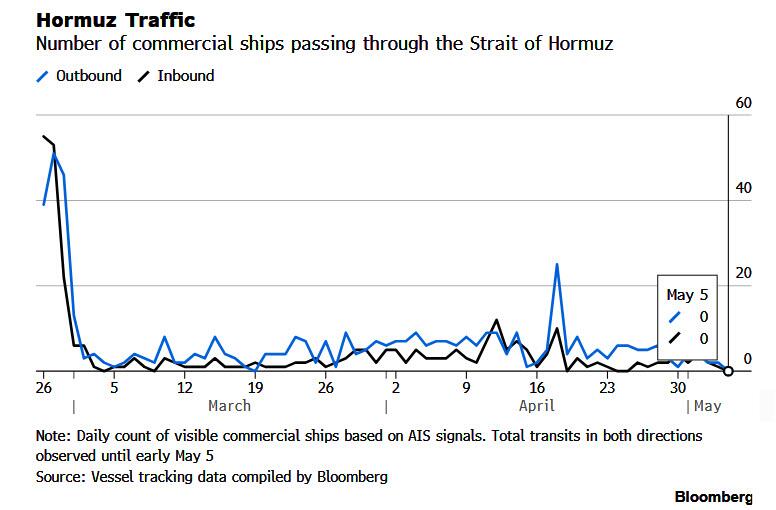
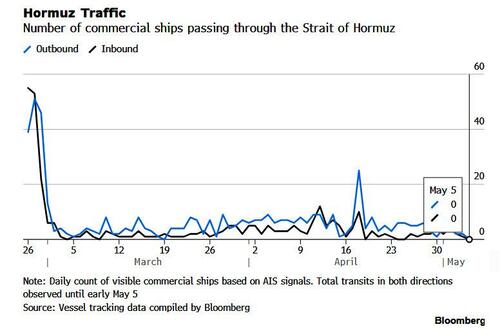
The Strait of Hormuz has become a ghost town, er strait, with traffic grinding to a complete halt as no new commercial ship crossings were recorded despite a US effort to guide vessels through the waterway, according to Bloomberg.
While Maersk confirmed that its vessel Alliance Fairfax transited the strait on Monday under US military protection, Tuesday saw zero traffic following a day of violence that included attacks on vessels and missile strikes targeting the United Arab Emirates.
Confusion was rampant after Washington maintained that a safe passage exists, with two US destroyers reportedly entering the Gulf, but the heightened tensions kept commercial shipping at bay.
Two US 🇺🇸 destroyers confirmed to be inside Persian Gulf after transiting Strait of Hormuz by satellite image TODAY 👇
Spotted doing UAE 🇦🇪 ship anchorages missile defense at
25.4042, 54.7606
25.4562, 54.7382 https://t.co/BDXi9njOR1 pic.twitter.com/2ticpJ3ptH
— Tom Bike (@tom_bike) May 5, 2026
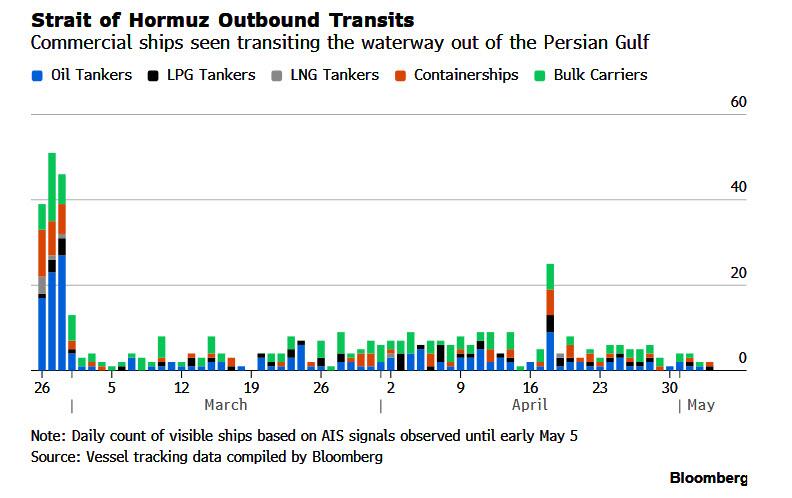
On Monday, two US vessels, one of them a vehicle carrier, moved out of the Persian Gulf under military escort while keeping their tracking signals off. Visible outbound activity during the same period was limited to an Iran-linked liquefied petroleum gas carrier, a small feeder containership, and a tiny regional cargo ship.
Ships transiting Hormuz with active AIS signals over the past day were confined to the narrow northern lane approved by Tehran. Also, widespread AIS spoofing has further clouded the picture, making independent verification of ship traffic virtually impossible
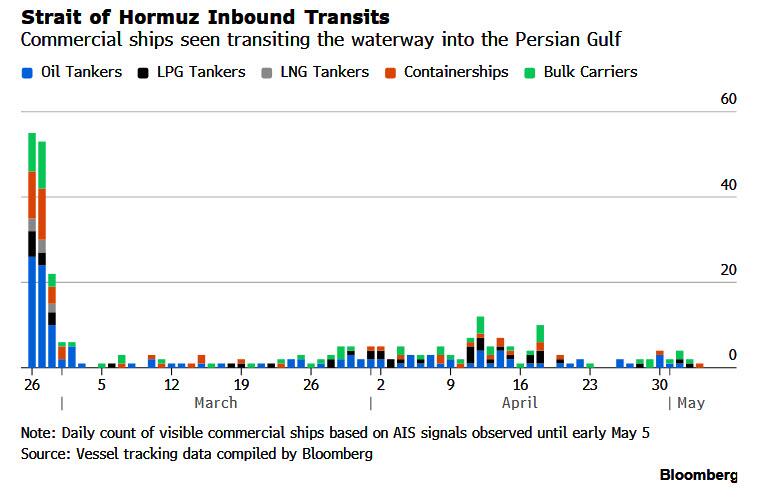
As reported previously, most of the recent Iran-linked departures have stalled in the Gulf of Oman; it remains unclear whether these vessels are following regional trading patterns or are being held up by a US naval blockade positioned further east. Only one containership entered the Persian Gulf on Monday before the flare-up in regional hostilities; there were no inbound transits on Tuesday.
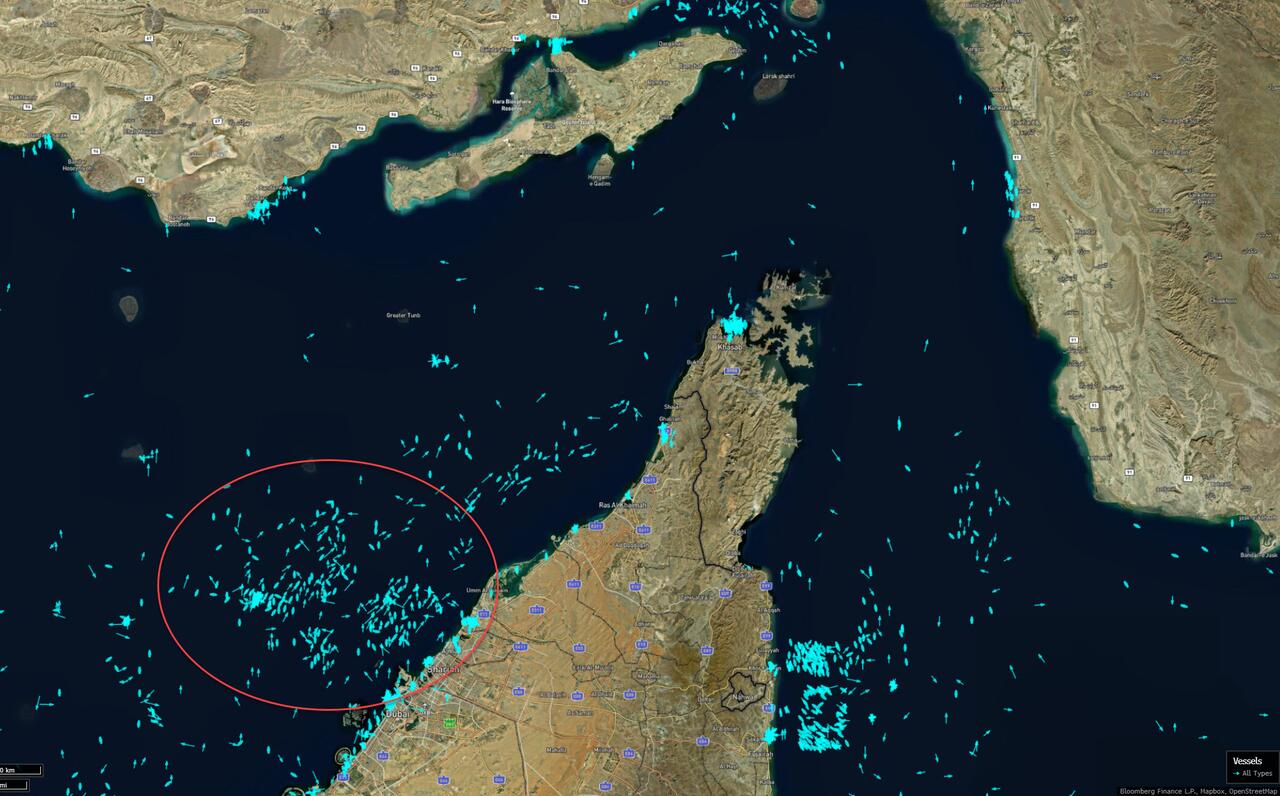
While the fragile ceasefire held, about five dozen vessels moved toward Dubai in just one day, joining a growing cluster of at least 363 ships currently off the emirate in the Persian Gulf as Iran signaled it is expanding the area around Hormuz it now controls.
Iran’s Islamic Revolutionary Guard Corps (IRGC) unveiled on Monday a new map showing expanded areas around the critical chokepoint that Iran now claims to have under control. The area extends from a line between Kuh-e Mobarak in Iran and south of Fujairah in the UAE, and from another line between the end of Iran’s Qeshm Island and Umm Al Quwain in the UAE, according to the IRGC Navy.
Dubai, one of the seven emirates of the UAE, is just outside this new expanded area under Iranian control. Since Monday, nearly 60 vessels of all types have moved toward Dubai to an area of a large cluster of ships monitored by Bloomberg News. At least 363 vessels are in this area off Dubai, at least according to their tracking signals, which have become increasingly difficult to monitor and read since the war began and the Strait of Hormuz was closed.
The tensions in the area re-escalated on Monday, after the announcement by U.S. President Donald Trump of an operation dubbed “Project Freedom”, to guide ships stuck in the Strait of Hormuz out of the waterway. Iran responded to the announcement with a warning that U.S. forces “will be attacked if they intend to approach and enter the Strait of Hormuz”.
Iran on Monday attacked the port of Fujairah, a vital oil hub that sits right outside the Strait of Hormuz, and which saw several attacks before the U.S.-Iran ceasefire was announced in early April.
As the ceasefire looks increasingly fragile as of Tuesday, while dark oil loadings and transit activity from Iran continues.
“Kharg Island is operating under a near-total dark posture,” maritime intelligence firm Windward said on Monday, adding that Iranian oil cargo routes to Asia start to shift via Indonesia’s Lombok Strait, avoiding the more visible Strait of Malacca.
Tyler Durden
Tue, 05/05/2026 – 12:50
https://www.zerohedge.com/energy/hormuz-deserted-iran-expands-area-control-ships-cluster-dubai
Stablecoin Proposal Still ‘Falls Short’ Of Protecting Bank Deposits: US Banks Say
Stablecoin Proposal Still ‘Falls Short’ Of Protecting Bank Deposits: US Banks Say
Authored by Brayden Lindrea via CoinTelegraph,.com,
America’s largest banking groups said they remain dissatisfied with the CLARITY Act’s newly proposed language on stablecoin yield, arguing that it fails to protect bank deposits.
In a statement Monday, the bankers acknowledged that US Senators Thom Tillis and Angela Alsobrooks are “seeking to achieve the correct policy goal” in prohibiting stablecoin yield but noted that the CLARITY Act’s “proposed language” currently “falls short of that goal.”
“It is imperative that Congress get this right,” the American Bankers Association said in a joint statement with the Bank Policy Institute, Consumer Bankers Association, Financial Services Forum and Independent Community Bankers of America.
The dispute between bankers and the crypto industry over stablecoin yield has stalled the bipartisan bill, which passed the House of Representatives in July by a 294-134 vote.
There are concerns that the CLARITY Act may not pass before the US midterm elections in November 2026, which could further hinder its progress.
Banking groups have previously cited studies suggesting that widespread stablecoin adoption could lead to trillions in outflows from the US banking system, particularly from community banks, which may not have enough balance-sheet flexibility to absorb these outflows without resorting to higher-cost wholesale borrowing.
In the Monday statement, the bankers also cited an article by Stanford-trained economist Andrew Nigrinis to argue that stablecoin yields driving bank deposit outflows “could reduce all consumer, small-business, and farm loans by one-fifth or more, making it essential for the prohibition to be clear and transparent.”
However, White House economists reported in April that banning stablecoin yield may increase bank lending by only $2.1 billion, a marginal net increase of about 0.02%.
Bankers want “loophole” closed
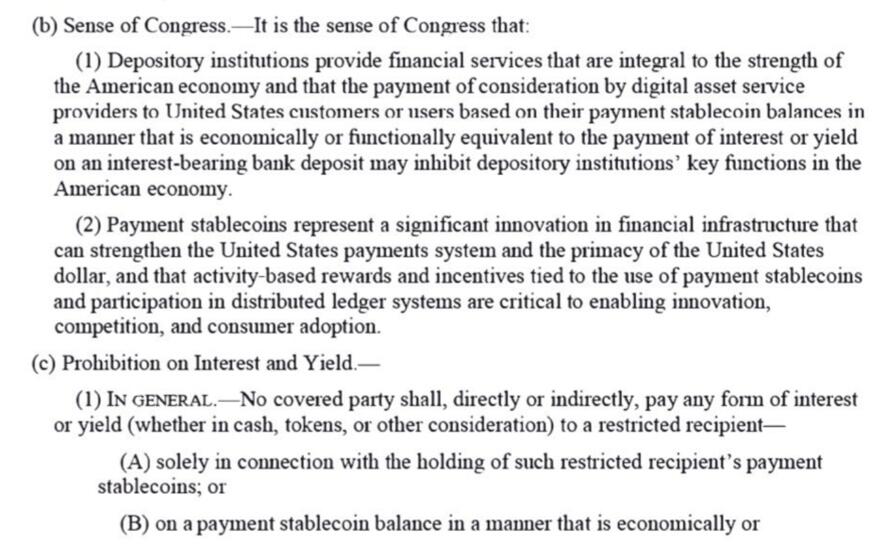
The bankers contested the language of Section 404, arguing that it allows crypto platforms to pay users bank-like interest or yield outside traditional rules.
Extract of the “SEC 404. Prohibiting interest and yield on payment stablecoins” document. Source: Alex Thorn
“This is a significant loophole that must be addressed,” the bankers said, adding that they will be sharing “detailed suggestions for strengthening the proposed language with lawmakers in the coming days.”
However, Tillis said the current text of the CLARITY Act strikes a compromise by prohibiting stablecoin rewards on idle balances while allowing crypto platforms to “offer other forms of customer rewards.”
“Most importantly, it helps put us on a bipartisan path to pass the CLARITY Act, providing the regulatory certainty needed to foster innovation. Some in the banking industry may not want either of these things to happen, and we respectfully agree to disagree.”
The current text of the CLARITY Act was made public on Friday, with Coinbase and other members of the crypto industry pushing for a Senate markup next week.
Tyler Durden
Tue, 05/05/2026 – 12:35