Category: News

Evanston 3-bedroom penthouse with 3 parking spots: $1.7M
Address: 1720 Maple Ave., Unit 2710, Evanston
Listed: Nov. 21, 2025
Price: $$1,699,000
Listing agent: Michael Marin, Signature Homes Realty, 847-312-1014
This top-floor duplex in Evanston’s Optima Views high-rise building has three bedrooms, 3½ bathrooms and floor-to-ceiling windows with views of downtown Chicago, downtown Evanston and Lake Michigan. The unit, which has high ceilings, comes with three indoor, heated parking spaces. The kitchen has stainless steel appliances, a new backsplash, an island and white cabinets. The living room, dining room, kitchen and half-bath are located on the main floor, and the bedrooms, full bathrooms and storage rooms are on the second floor. The primary suite has a walk-in closet and a bath with a double vanity, a bathtub and a standing shower with double shower heads. The unit also has two balconies, a laundry room, a private elevator and a storage locker.
This condo at 1720 Maple Ave., Unit 2710, Evanston, has two balconies that offer views of downtown Chicago and Evanston as well as Lake Michigan. (Petr Poliak)
This condo at 1720 Maple Ave., Unit 2710, Evanston, has two balconies that offer views of downtown Chicago and Evanston as well as Lake Michigan. (Petr Poliak)
This condo at 1720 Maple Ave., Unit 2710, Evanston, has two balconies that offer views of downtown Chicago and Evanston as well as Lake Michigan. (Petr Poliak)
This condo at 1720 Maple Ave., Unit 2710, Evanston, has two balconies that offer views of downtown Chicago and Evanston as well as Lake Michigan. (Petr Poliak)
This condo at 1720 Maple Ave., Unit 2710, Evanston, has two balconies that offer views of downtown Chicago and Evanston as well as Lake Michigan. (Petr Poliak)
This condo at 1720 Maple Ave., Unit 2710, Evanston, has two balconies that offer views of downtown Chicago and Evanston as well as Lake Michigan. (Petr Poliak)
This condo at 1720 Maple Ave., Unit 2710, Evanston, has two balconies that offer views of downtown Chicago and Evanston as well as Lake Michigan. (Petr Poliak)
This condo at 1720 Maple Ave., Unit 2710, Evanston, has two balconies that offer views of downtown Chicago and Evanston as well as Lake Michigan. (Petr Poliak)
This condo at 1720 Maple Ave., Unit 2710, Evanston, has two balconies that offer views of downtown Chicago and Evanston as well as Lake Michigan. (Petr Poliak)
Some listing photos are “virtually staged,” meaning they have been digitally altered to represent different furnishing or decorating options.
To feature your luxury listing of $1,000,000 or more in Chicago Tribune’s Dream Homes, send listing information and high-res photos to ctc-realestate@chicagotribune.com.
https://www.chicagotribune.com/2026/02/10/evanston-optima-views-2710/
‘I feel like there’s no help’: Mother, family members question lack of charges in woman’s 2022 shooting death
The last time Mariely Rivera’s daughter was in her house, she got in her mother’s bed, laid down next to her and hugged her.
“Mom, I have made my decision,” her daughter said. “I’m going to go back with him.”
Stephanie Gutiérrez was 20 — an adult — and all her mother could do was ask her to think about what she was doing. Gutiérrez shared a 1-year-old son with a partner who, according to Rivera, abused her.
Soon after, she was back with her boyfriend and texted a friend: “I’m so sad I swear I should’ve never (came) back sis.”
Two days later, Gutiérrez was dead.
On Oct. 30, 2022, Chicago police officers were called to the 6800 block of West Grand Avenue on the city’s Northwest Side, according to a police report. They found Gutiérrez unresponsive on a sidewalk suffering from a gunshot wound.
Detectives immediately noticed something wrong with the scene, according to police records. Even though Gutiérrez was found outside, it was clear the shooting happened inside the home.
Her boyfriend told detectives that Gutiérrez was hit by a bullet fired from a vehicle in a drive-by shooting, according to a summary of a police interview obtained by the Tribune. When detectives confronted him with evidence that pointed to an indoor shooting, the boyfriend asked for a lawyer.
More than three years have since passed. Heartbroken, Rivera has waited for charges that have not come.
She is not alone — though the Chicago Police Department reached a 71% homicide clearance rate last year, that means almost 1 in 3 families have yet to see justice for their loved ones. The cleared figure also includes older cases that police believe they solved in prior years.
Rivera’s daughter’s case, like many others, is considered cleared because detectives submitted it to prosecutors, even though it was rejected for charges in 2024.
That leaves Rivera with a case caught in a legal knot: Detectives consider the case solved, even though there has been no prosecution.
Prosecutors say they have a high burden to meet when charging criminal cases: They must be able to prove in court, beyond a reasonable doubt, that the defendant committed the alleged offense.
In the Gutiérrez case, prosecutors conducted an “extensive review” of the evidence presented by police in 2024 and declined charges, finding that “the evidence did not meet the burden of proof required to approve criminal charges,” according to a statement from their office.
The prosecutors told the family of their decision that year, according to Rivera and the office.
Now Rivera just hopes to keep her daughter’s homicide case alive. On June 20, her attorney sent a letter to former First Assistant State’s Attorney Anna Demacopoulos asking the office to take a fresh look at the case.
“The Cook County State’s Attorney Office under Eileen O’Neill Burke has committed to prioritizing public safety and taking a firm stance against domestic violence,” the letter said.
The attorney later also wrote to Demacopoulos’ replacement, but the family is still waiting and hoping for any possible movement on the case.
Attempts to reach the boyfriend, who the Tribune is not naming because he has not been charged, were not successful. Messages left at phone numbers for the boyfriend and his mother and an email sent to a former attorney were not returned.
The boyfriend has prior convictions in Cook County for burglary, fleeing police and possessing a stolen vehicle. The alleged domestic abuse does not appear to have been reported to police.
“It’s a feeling of like frustration and anger,” Rivera said, and in her view, “knowing that he’s just out there getting away with murder.”
‘She had a good heart’
Gutiérrez was the second oldest of six children. A young mother, she was enamored with her son, Josiah.
“In my head I always have her as kissing him,” Rivera said. “I always have that in my mind.”
Gutiérrez loved being in the sun, and often wrote her mother little notes for Valentine’s Day or other occasions.
You couldn’t complain about other people in front of her, Rivera said. Her daughter hated when people talked about others behind their backs.
She liked to eat out, particularly spicy chicken wings.
“She had a good heart,” Rivera said.
She met her boyfriend in high school and the relationship was troubled, her mother said.
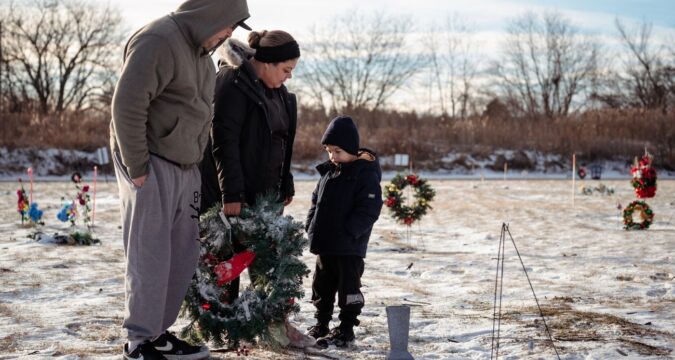
The grave of Stephanie Gutiérrez is seen at Fairview Memorial Park in Northlake on Jan. 15, 2026. Gutiérrez was shot and killed in 2022 in Chicago. (E. Jason Wambsgans/Chicago Tribune)
Family members provided dental records that show that Gutiérrez was treated on Nov. 19, 2021, for a broken tooth. In the letter to Demacopoulos, the family said Gutiérrez told a friend that her boyfriend punched her and knocked one out.
The summer before she was killed, Rivera said her daughter broke up with her boyfriend because he hit her. Rivera said she noticed a bruise on her daughter’s face and wanted to confront him.
“Mom, don’t tell him anything,” Rivera said her frightened daughter told her.
Gutiérrez moved back home for a time, but was pulled back to the father of her child. Her mother was deeply concerned.
“I couldn’t do anything but tell her, just think about it,” Rivera said.
Later, in text messages to a friend, Gutiérrez said she regretted going back to her boyfriend.
“He been beating my ass since I got here calling me all type of (expletive),” she texted on Oct. 28, 2022. “I’m finna leave.”
“Today,” she added.
But in two days, police would find her dead on the sidewalk.
The investigation
When the officers arrived, they found her boyfriend standing near her, according to a police report, shirtless and covered with blood.
The report noted that a witness reported seeing the boyfriend drag her out to the sidewalk.
Gutiérrez was wearing black leggings and a black hooded jacket, according to an autopsy report. She had mismatched socks and white polish on her toes.
Gutiérrez was pronounced dead on the scene around 3:20 a.m., and her boyfriend was taken into custody. Hours later, around 7:30 a.m., detectives interviewed the boyfriend with a prosecutor present, according to a fact sheet that summarizes the encounter.
The boyfriend first said that he and Gutiérrez were getting ready to leave the home and walk out the door when someone in a car drove by and let off some shots. He said the front door was not open.
Detectives then told him that there was no damage to the front door, according to the summary.
Actually, the boyfriend said, they were outside, and Gutiérrez was shot on the sidewalk.
The investigators then told the boyfriend that the evidence points to Gutiérrez being shot indoors. Inside the home, a pool of blood was on the living room floor, and a live round was found in a McDonald’s bag in the apartment, records show.
There were no cartridge casings or blood outside.
The boyfriend asked for a lawyer and the interview ended.
The detectives then spoke with the three other people in the home early that morning: the boyfriend’s sister and her partner, as well as a friend, records show. The friend told police that he was drinking and listening to music with Gutiérrez and her boyfriend, according to a summary of the interview.
He said the boyfriend was flashing a gun. Later, he dozed off, then awoke to the boyfriend yelling, he reported.
He said he came out of the bedroom, and saw the boyfriend holding Gutiérrez. There was blood everywhere.
The sister and her partner were asleep, and reported to police that they woke up to pounding on their door. According to the summary of the police interviews, they saw the boyfriend dragging Gutiérrez out to the sidewalk.
Quest for justice
On the morning of Oct. 30, Mariely Rivera was watching her infant grandson and trying to get hold of her daughter, hoping to drop the boy off before her hair appointment.
She couldn’t reach her daughter, and drove by the house. The lights were on, but it was empty, so she took the baby to her appointment.
That’s where she got the phone call that changed her life and set her on a path seeking justice for her daughter.
Her other daughter called her and told her detectives had come to their door. She put the investigator on the phone who told her the news. She heard her daughter scream on the other end of the phone call.
“My whole body went numb,” she said. “I couldn’t even cry.”
Four-year-old Josiah, with his grandmother, Mariely Rivera, visits the grave of his mother, Stephanie Gutiérrez, on Jan. 15, 2026, in Northlake. (E. Jason Wambsgans/Chicago Tribune)
Autumn turned to winter and Rivera began learning how to live with the pain. She has custody of her daughter’s son, who now knows Rivera as “mommy,” even as she keeps her daughter alive for him, taking him on graveside visits.
The early days and months were particularly difficult, Rivera said, because the boy was so attached to his mother. All the while, Rivera waited for an arrest.
“I was thinking there was going to be an arrest,” she said. “There were only four people with her that day.”
By 2023, she hired a lawyer, whose private investigator did a number of interviews, including with friends and family members who reported that they noticed signs of abuse or that Gutiérrez disclosed past abuse.
Rivera told the Tribune she met in 2024 with a prosecutor in the state’s attorney’s office’s Felony Review Unit, who told her no charges would be filed.
Last year, Rivera hired a new attorney, Matt Fakhoury, a former Cook County prosecutor himself, who made pleas to Demacopoulos and her successor, Craig Engebretson, to further investigate whether charges could be filed.
“This is the type of case she specifically wanted to be state’s attorney for,” Fakhoury said of Burke, who took over from her predecessor Kim Foxx two years after Gutiérrez was killed. “This is a domestic violence case with a gun.”
The letter to Demacopoulos also argues that the facts support a charge of concealing a homicide, alleging that the boyfriend moved her body outside to “stage a false narrative of a drive-by shooting.”
More recently, in November, Fakhoury wrote to Engebretson saying the family “is extremely anxious” about the investigation.
In response to questions from the Tribune, the state’s attorney’s office said it is open to “reviewing any new or additional evidence related to this incident that is presented by law enforcement.”
“The CCSAO recognizes the profound impact that acts of violence have on victims and their families. Our decisions are guided by the law, the facts and our responsibility to pursue justice with integrity and accountability,” the office said.
Rivera said she is not giving up. She’s written letters and even taken to TikTok.
“I feel like there’s no help,” she said. “There’s nothing you can do.”
https://www.chicagotribune.com/2026/02/10/stephanie-gutierrez-shooting-death/

Helmut Paul: Why the loss of the Kennedy Center should matter to Chicago
Chicagoans might reasonably ask why turmoil at the Kennedy Center in Washington should concern us. After all, we have our own great institutions: Lyric Opera, the symphony, world-class museums and neighborhood theaters that punch far above their weight.
But what is happening to the Kennedy Center is not a parochial arts dispute. It is a warning about how quickly cultural stewardship can be dismantled — and how much a city, and a country, loses when that happens.
For more than 40 years, I lived in the Washington area. The Kennedy Center was not an occasional treat; it was part of civic life. My husband and I attended regularly, donated consistently and watched the institution go through multiple renovations. Those changes felt like care: investment in continuity, not reinvention for its own sake.
What appears to be unfolding now feels very different. It looks less like evolution than hollowing-out — a rapid stripping of institutional identity and seriousness, justified as “change.” When cultural memory is treated as disposable, the damage is not just aesthetic, it is civic.
We often talk about infrastructure as something concrete: roads, bridges and transit lines. Cultural institutions are infrastructure of a different kind. They train people to sit still, to listen, to tolerate ambiguity, and to encounter ideas and emotions that don’t fit neatly into slogans or talking points. Those habits matter, especially in a democracy that increasingly rewards speed, outrage and simplification.
A strong cultural institution creates a shared space where strangers practice attention together. You don’t have to agree with the work onstage, but you do have to stay in the room with it. That discipline — of listening before reacting — is precisely what public life is losing.
When an institution like the Kennedy Center is destabilized, the consequences ripple outward. Donors get skittish during times of uncertainty. Artists plan careers around stability, not volatility. Young audiences never form the habit of attendance when the place they might have grown into becomes a battleground or a shell.
This matters to Chicago because no institution is immune. If a national cultural center can be gutted abruptly, regional flagships should take note. The lesson audiences absorb is blunt: Serious art is optional, and the people who care about it are expendable. That lesson undermines every company trying to build trust, loyalty and long-term engagement.
There is also the quieter loss that rarely makes headlines: grief. Cultural institutions hold decades of personal memory. We mark anniversaries there. We take visiting friends there. We learn, over time, how to listen. When such a place is hollowed out, the loss lands like a death — sudden, disorienting and strangely private, because grief for culture is often dismissed as indulgent.
Chicago understands this better than most cities. We know what it means to fight for institutions that anchor civic identity. We also know how fragile they can be without vigilant stewardship. The question is not whether arts organizations should change — they must — but whether change is guided by care, continuity and public trust, or by political expediency and contempt.
Calling this moment “just a programming dispute” misses the point. What is at stake is whether cultural memory is treated as a shared inheritance or as a disposable asset. Once continuity is broken, it is painfully hard to rebuild. Donor confidence evaporates. Talent looks elsewhere. Audiences drift.
The Kennedy Center was meant to symbolize a national commitment to serious culture in public life. If that commitment can be dismantled so casually, the responsibility on cities like Chicago grows. We must defend our institutions not as luxuries, but as civic necessities.
A city — and a country — that cannot protect its cultural anchors chooses a thinner public life. That is not renovation. It is demolition.
Helmut Paul is the founder The Vanguard Initiative for the Arts and Enterprise, which supports artists and organizations working at the intersection of culture and civic life.
Submit a letter, of no more than 400 words, to the editor here or email letters@chicagotribune.com.
https://www.chicagotribune.com/2026/02/10/opinion-kennedy-center-closing-impact-chiacgo-arts/
Josephine Lee: In an age of anxiety and division, the arts are not an ‘extra,’ they’re a lifeline
In November, I halted a rehearsal and walked out.
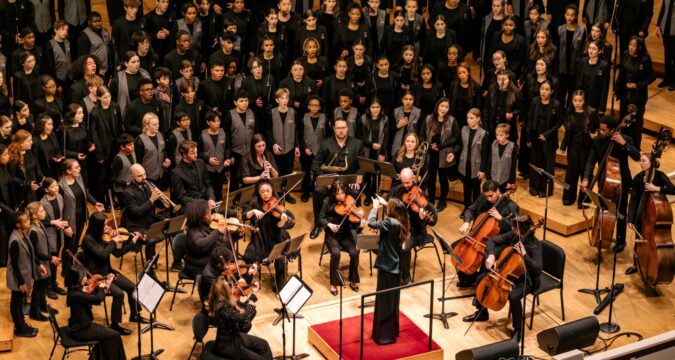
My choir was preparing for our winter concert at Symphony Center. Thousands would attend the two performances. But the singers really struggled with Samuel Barber’s haunting “Agnus Dei,” which was to accompany huge overhead photographs of loved ones that our singers and staff had recently lost.
It was exquisitely difficult music for young voices. Eight parts simultaneously sung with no section carried by another. It required something teenagers don’t always possess at 5 p.m. after school, or first thing Saturday mornings: focus, patience and collaboration.
The kids sounded like a slow-motion train wreck. Some attempted to muscle through off-key. Others closed their mouths when harmonies got complicated. This persisted, and I realized they had neither memorized the song nor practiced it, as they had been asked.
“Is this just too hard?” I finally asked the group. “Are you committed to doing the work this piece requires?”
In frustration, I left. The kids were startled.
At the start of our next rehearsal, I was still unsure if “Agnus Dei” had to be cut. But something was different. The mood shifted, and singers seemed focused, more accountable to one another. They had decided, collectively, to meet the moment.
This exchange captured two important lessons I’ve learned over 26 years leading thousands of young people in Uniting Voices Chicago.
The first is that children want to be challenged. Again and again, I’ve seen them rise to the occasion. High expectations draw out excellence and build confidence. Second, young people need places where they can express themselves, work side by side with peers from different backgrounds toward a shared goal and feel a sense of belonging that isn’t always experienced in school.
Rates of depression, anxiety, loneliness, trauma and suicidal thinking among young people have surged in recent years, prompting major pediatric and child-psychiatry organizations to declare a national emergency in 2021. Some measures have improved slightly since the height of the pandemic, but the overall picture remains sobering: Too many teenagers and pre-teens feel isolated, unmoored and overwhelmed.
Arts programs like Uniting Voices aren’t just extras. They’re part of a community’s mental health and civic health infrastructure.
A growing body of research suggests engagement in the arts supports psychological well-being, helping young people regulate emotion, manage stress and build social connection. But you don’t need a study to marvel at what happens inside a rehearsal room. Young people arrive tired, distracted by electronic devices and burdened by the day. Then they begin to sing. Their breath deepens and attention sharpens. They listen — to the music and to one another. For hours, they are fully present, together.
There is another dividend to this work, one relevant to the polarized world in which we find ourselves.
Arts programs bring people together around shared goals that require contact, cooperation and trust. The nearly 4,000 young people involved in Uniting Voices hail from every Chicago ZIP code. They sing in 36 languages across genres, from classical to gospel to hip hop. With each piece, they step into someone else’s history, culture or story. Through repeated contact, and through challenge, failure, support and success, they learn how to work across difference with respect.
At a time when many traditional arts spaces are disappearing, that matters. Young people need opportunities outside of school where they can gather to work toward something meaningful. They need space to find their people, be known by adults who care.
Counterintuitively, our arts infrastructure has become more fragile than ever. Public and private funding has retrenched. Arts programs such as ours are often the first to be trimmed when budgets tighten.
Young people carry academic pressure, family stress, identity questions and fear about the future. Last fall, we canceled a rehearsal after a federal law enforcement operation unsettled families and onlookers within sight of our downtown practice space. On top of everything else, kids didn’t also need to feel unsafe coming to rehearsal.
We must stop treating arts programs as “enrichment” that can be trimmed when budgets tighten. We should fund them as protective factors for young people. We should build intentional partnerships between schools, community arts organizations and the youth mental-health ecosystem, so that students in need of belonging and structure can find it as readily as they would tutoring or sports.
When we create conditions of excellence — when we set a high bar and then support young people to reach it — they rise. Not because they are perfect, but because they are hungry for meaning.
Two weeks after our botched rehearsal, Voice of Chicago delivered a stunning performance of “Agnus Dei”. The piece elicited tears and held the room in silence for over eight minutes as images of lost loved ones flashed overhead. In that performance, Chicago’s youth had created beauty, a moment that allowed grief to be shared by the thousands who filled Symphony Center.
Josephine Lee is the president and artistic director of Uniting Voices Chicago, formerly Chicago Children’s Choir, which engages nearly 4,000 youth across Chicago through 12 neighborhood choirs, 85 school-based programs and two citywide ensembles.
Submit a letter, of no more than 400 words, to the editor here or email letters@chicagotribune.com.
https://www.chicagotribune.com/2026/02/10/opinion-arts-education-youth-chicago/

Fat Tuesday 2026 guide: Where to go for Mardi Gras and Carnival restaurant and bar specials
Whether called Fat Tuesday, Mardi Gras or Shrove Tuesday, the day before Ash Wednesday is celebrated around the world as a last chance to enjoy decadent food and party before the Lenten fast begins. Chicago doesn’t go all out for the occasion like New Orleans or Rio de Janeiro, but you can get a taste of those traditions at area bars and restaurants offering entertainment from brass bands to burlesque shows, along with special menus featuring gumbo, king cake, sazaracs and hurricanes. Don a mask and some beads and head to one of these 19 spots for some delicious revelry.
All events and specials take place Feb. 17 unless otherwise specified. Check out our Paczki Day guide if you want to celebrate Polish-style with some delicious fried treats.
The Loop and Near North Side
Industry Ales
A five-course Mardi Gras dinner ($125) at 6:30 p.m. Friday includes crawfish boudin croquettes, blackened pork tenderloin, beignets and drink pairings. (230 S. Wabash Ave., industryales.com)
Lirica
The Navy Pier restaurant celebrates Brazilian Carnival Feb. 13-21 with specials including baked goat cheese, muffaleta sliders, crawfish dip and beignets. Don Julio hosts a special tasting from 4-6 p.m. Feb. 16. (900 E. Grand Ave., liricarestaurant.com)
Shaw’s Crab House
A Mardi Gras menu offered Feb. 12-17 includes chargrilled oysters ($21), crawfish etouffee ($32), fried shrimp po’boy ($22), sazerac ($16) and hurricanes ($17). Come on Fat Tuesday for a shrimp boil ($50) and live music from the Mike Wheeler Band in the Oyster Bar from 5-8 p.m. (21 E. Hubbard St., 312-527-2722, shawscrabhouse.com)
North Side & Northwest Side
Big Jones
Chef Paul Fehribach serves a special menu through Mardi Gras, including crawfish boudin balls ($15), seafood gumbo ($24), shrimp & grits ($23), red beans and rice ($10) and sizzling jambalaya ($36). Add on a hurricane, daiquiri or sazerac and a mini king cake filled with espresso cream. (5347 N. Clark St., 773-275-5725, bigjoneschicago.com)
Cody’s Public House
The bar plays Mardi Gras-themed music all night and hosts a buffet from The Graystone Tavern at 7 p.m. featuring gumbo, jambalaya, rice and cornbread. Drink specials include $6 Lagunitas, $10 hurricanes and $30 Surfside buckets. Try plenty of gumbo at a cook-off at 2 p.m. Sunday while drinking $10 sazeracs, $10 Pimm’s cups and $30 surfside buckets. (1658 W. Barry Ave., 773-799-8217, codyschicago.com)
Junebug Cafe
Grab a king cake for four ($35) along with other French and Creole bites such as beignets ($6-$10) and chicken and smoked sausage gumbo ($8-$29). (4042 N Milwaukee Ave., 773-905-6507, junebugchicago.com)
Lottie’s Pub
Bourbon Street comes to Bucktown with $7 Crown Royal shots, $10 gumbo, $10 hurricanes, $12 Cajun chicken sandwiches and $12 shrimp tacos offered Feb. 12-17. (1925 W. Cortland St., 773-489-0738, lottiespub.com)
Smack Dab
The Rogers Park breakfast spot offers gumbo and rice ($24), jambalaya ($15), mini-king cake ($12) and take and bake Mardi Gras cinnamon rolls ($16) for pickup. (6730 N. Clark St., 872-241-9111, exploretock.com/smackdabchicago)
West Side & Near West Side
Alliance Bakery
The West Town bakery offers a 10-inch green, purple and yellow king cake for $40. (1837 W. Grand Ave., 773-278-0366, alliancebakery.com)
Easy Bar
Stop in for a free slice of king cake from Scafuri Bakery and if you find a baby inside you’ll win swag from New Belgium. The Wicker Park spot offers $4 beer, seltzer and cider all night and everything is half price 4-6 p.m. (1944 W. Division St., 773-227-4644, easybarchicago.com)
Estelle’s
The Wicker Park bar doles out beads and offers $6 hurricane shots and $10 hurricanes. DJ Papa G spins from 11 p.m. to 4 a.m. (2013 W. North Ave., 773-782-0450, estelleschicago.com)
Ina Mae Tavern
This Wicker Park icon offers a full schedule of festivities leading up to Fat Tuesday including $10 Mardi Gras cocktails 4-6 p.m. Friday, a Second Line brunch Sunday featuring live music 1-4 p.m., and a Lundi Gras bash on Monday with $12 po’boys, $5 Abitas and live music at 6 p.m. Doors open at noon Fat Tuesday for music from the Four Star Brass Band 4:30-6:30 p.m., a burlesque show at 9:30 p.m. and $12 hurricanes. (1415 N. Wood St., 773-360-8320, inamaetavern.com)
Scafuri Bakery
A 10-inch king cake ($25-$28) features French pastry dough with cinnamon, cannoli or raspberry filling. The green, gold and purple sugar represent power, justice and faith. Pick it up Sunday or Tuesday. (1337 W. Taylor St., 312-733-8881, scafuribakery.com)
South Side & Near South Side
The Chicago Firehouse
The steakhouse’s ninth annual Fat Tuesday party 6-10 p.m. features a performance by the High-Hat Second Line, a premium open bar, and a buffet including red beans and rice, a spicy crawfish boil, seafood gumbo and a bananas foster station. (1401 S. Michigan Ave., 312-786-1401, chicagofirehouse.com)
Daisy’s Po-Boy and Tavern
King cake at Daisy’s Po-Boy and Tavern. (Virtue Hospitality Group)
The New Orleans-inspired sandwich shop from chef Erick Williams serves cinnamon and cream cheese flavored bundt-style king cake ($8) crafted by Virtue pastry chef Becky Pendola through Feb. 18 along with other Mardi Gras specials. (5215 S. Harper Ave., 773-675-8767, daisyspoboychicago.com)
Norman’s Bistro
Feast on New Orleans-inspired fare during a bash ($10) including a best mask contest, raffles, a live brass band and DJs. (6-10 p.m. 1001 E. 43rd St., 773-966-5821, normansbistro.com)
Weber’s Bakery
The family-owned bakery offers cinnamon king cake with cream cheese and buttercream icing ($16). (7055 W. Archer Ave., 773-586-1234, webersbakery.com)
Suburban and multiple locations
Bennison’s Bakery
The North Shore staple offers the traditional French Galette des Rois almond cake with a crown for whoever finds the baby, along with plain, cream cheese, apple, cherry and praline pecan versions of the gaudier New Orleans king cake through Feb. 20. (1000 Davis St., Evanston, 847-328-9434, bennisonscakes.bakesmart.com)
Buck Russell’s Bakery & Sandwich Shop
Preorders are highly encouraged for king cakes that serve 8 to 10. (1137 Greenleaf Ave., Wilmette, 847-920-4222, buckrussells.com)
Deerfields Bakery
Chocolate- and almond-filled king cakes are available for $24 along with Mardi Gras-themed cookies ($4.25-$4.75), cupcakes ($2.95), and drip cake ($37). (201 N. Buffalo Grove Road, Buffalo Grove, and 813 N. Waukegan Road, Deerfield, 847-520-0068, deerfieldsbakery.com)
The Graceful Ordinary
Chef Chris Curren offers New Orleans-inspired specials, including hearth-seared Gulf shrimp with Calabrian chili butter, fire-roasted gumbo blanc, blackened redfish with a dirty rice croquette, and bananas foster-style beignets. (3 E. Main St., St. Charles, 331-235-5803, thegracefulordinary.com)
Prairie Moon
Get a taste of New Orleans with specials offered Feb. 13-17, including shrimp and grits ($18), crawfish and Gulf shrimp etouffee ($22), jambalaya ($17) and bananas foster bread pudding ($8.95). (1635 Chicago Ave., Evanston, 847-864-8328, prairiemoonrestaurant.com)
Publican Quality Bread
Publican Quality Bread king cake. (Greg Wade)
Feed 10 to 12 with king cake ($20) topped with purple, green and gold sugar. (1759 W. Grand Ave., 312-605-1618, and 211 Harrison St., Oak Park, 312-736-1981, exploretock.com/publicanqualitybread)
Samantha Nelson is a freelance writer.
https://www.chicagotribune.com/2026/02/10/fat-tuesday-restaurant-bar-specials-chicago/
Editorial: Donna Miller for 2nd Congressional District
If anyone doubts the size and scope of Black leadership talent in Chicago, then they were not present for our endorsement meetings in regard to the storied 2nd Congressional District. Although many of the candidates are not easy to differentiate on the issues of the day, they represent multiple generations and backgrounds.
The 2nd District has been a Democratic stronghold for decades. And the representative of its people, mostly located on much of Chicago’s Far South Side and in the city’s southern suburbs and exurbs, and extending south to Danville, has been an African American since 1980. After Robin Kelly announced she was running for Senate in lieu of seeking reelection, the seat became an open contest on the Democratic side, which is the only viable side.
One candidate has a very famous name: Jesse Jackson Jr., the 60-year-old son of Jesse Jackson, the famed civil rights leader and former presidential candidate.
The younger Jackson represented this district in the U.S. House from 1995 until 2012, when he announced his resignation. The following year, he admitted to violating federal law by using campaign funds to make personal purchases and pleaded guilty to one count of wire and mail fraud. He was sentenced to 30 months in federal prison and was released on March 26, 2015. Although he and his backers sought a pardon from President Joe Biden, Jackson did not receive one.
Some of his rivals have noted that former felons without such an illustrious name often struggle for employment, which is a fair point. But in our view, Jackson served his time, has eloquently made the case for his political redemption, and reflected on his mistakes. So to our minds, he has every right to run again. The issue of his ongoing political viability is one for voters to decide, but it is also a choice that we suggest be made with an eye on the fresh alternatives without personal baggage.
That said, Jackson’s visit with us served as a reminder that Jackson remains a formidable rhetorician and a passionate (actually, yet more passionate) defender of the people of his district and his own record, with an acute sense of the importance of economic investment in the 2nd, as typified by his support, then and now, for a new airport without its boundaries. Especially when challenged by less famous rivals, he became strikingly animated and leaned heavily on his previous congressional experience, not surprising to us but a smart mode of differentiation nevertheless. “We need a visionary economic plan that can connect the 2nd Congressional District to the global economy,” he told us. Amen to that.
“I bring 17 years of seniority to the process,” Jackson emphasized, adding: “Things have not been the same since I left.”
Logic demands that those voting for him will have to be in agreement. For our part, we feel that Jackson’s future service will best be performed outside Congress.
That leaves a multiplicity of other candidates to consider.
With a graduate degree from the University of Chicago, Adal Regis, 38, is the whip-smart son of Haitian immigrants and an avowedly progressive candidate who worked in Kelly’s office as well as that of former New York U.S. Rep. Nita Lowey. Regis touts endorsements from Democratic strategist and former Tribune reporter David Axelrod and the lawyer-pundit Van Jones. He told us that people are suffering in the 2nd District and that the wealth gap is widening. He said he supports Medicare for all and also spoke eloquently on the need to connect the 2nd District to the global economy. “Any effort to address public safety that does not factor in job creation and livable wages is likely to fail,” he noted, “as people must provide for their families and may take desperate measures otherwise.”
Willie Preston, 41, currently the state senator in Illinois’ 16th District and a feisty campaigner, talked with us about his real-life experience doing blue-collar jobs and also discussed some of the resentment he sensed in the district toward the funds spent on migrants rather than on those who have been here for many generations. He especially noted how many Blacks in the 2nd have cited the longtime understanding that police stations were not a place of refuge for them, even if they became one for recent arrivals. Preston is the maverick candidate who most eschews Democratic orthodoxy; we enjoyed his populist, free-thinking spirit, but he’d be a head-spinning departure for this district.
Robert Peters, 40, is another currently serving state senator (he represents the 13th District in Springfield), and he discussed his many progressive priorities with us, including his support for Medicare for all and his interest in fighting the wealth and death gaps, all too palpable in the district. “I strongly support a wealth tax and a tax on loans for the very wealthy,” he told us.
Peters, who is on the left of his party, has a compelling personal story: Born hard of hearing to a drug-addicted mother, he says what drove into politics was the sense that so many Americans were becoming isolated. He made much of the need for Congress to “have principles” and, in our meeting, emphasized the importance of vision.
Metropolitan Water Reclamation District Commissioner Yumeka Brown, 47, has many progressive positions. When she talked to us, she emphasized health care needs and the need to alleviate poverty. “Legislatively, I would focus on lowering everyday costs and raising economic security,” she told us. “That starts with making housing more affordable by expanding affordable housing supply and increasing federal investment in housing assistance and community development.”
Eric France, who runs a management consulting firm and has limited political experience, is one of several candidates in the primaries who are coming from the private sector and bringing that business-world experience to stack against longtime politicians. France also expressed concern about the economic health of the 2nd District, calling it “the forgotten stepchild.”
“I fix stuff,” France said, bluntly, implying a pragmatism he believed to be lacking in other candidates. He also noted that the disinvestment in this district “did not start with Donald Trump and it won’t end with Donald Trump.”
Also running are Patrick J. Keating, Toni C. Brown and Sidney Moore, whom we have judged to have not mounted substantial campaigns for this competitive seat.
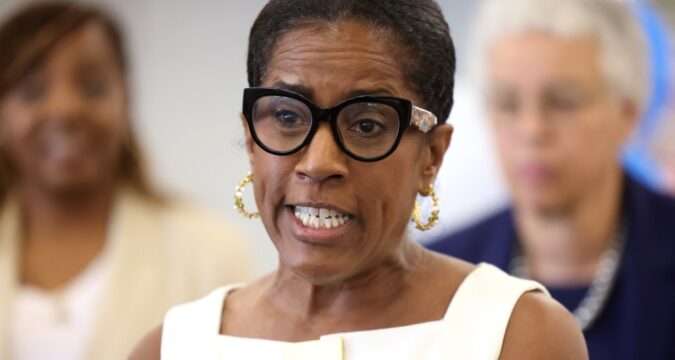
So while especially noting the longtime service of Jackson and the future-forward intellect we saw in Regis, along with much talent elsewhere, our endorsement in the 2nd goes to Donna Miller, currently serving as a Cook County commissioner, who we feel offers the best combination of experience and moderate, pragmatic points of view that will serve a district with multifarious needs.
“Illinois families have been paying the second-highest property tax rates in the nation,” she told us, describing that as “a significant factor in addressing my key priorities related to healthcare, affordability and seniors.” That burden was not something similarly emphasized by the other candidates in the race.
Many others running for this seat emphasized their support for substantial increases in the federal minimum wage, to $25 an hour and beyond. Miller, 60, had the guts to acknowledge that many of the small businesses in her district couldn’t survive increases at that level; she called for a baseline around $17 an hour with exceptions for jobs designed to offer young people training and experience.
Speaking of small businesses, Miller also spoke specifically about her plans to help them succeed, saying she planned “legislation that modernizes and simplifies small business tax provisions.”
On a separate subject, we found the way Miller discussed immigration to be carefully reasoned and well-informed, emphasizing her conviction that while the nation needs its immigration laws, “we must end racial profiling and ensure immigration enforcement upholds our Constitution and our values.” As the leading woman in this race, Miller also was careful to emphasize to us such issues as the importance of reproductive rights, similarly important to this board. We think she will be the smart choice of many of the women in the 2nd, although hardly confined there.
Readers should note that the only Republican on the ballot is Mike Noack. We will address his candidacy in the fall, although the 2nd District has not sent a Republican to Congress since the 1950s.
Donna Miller is endorsed.
Submit a letter, of no more than 400 words, to the editor here or email letters@chicagotribune.com.
https://www.chicagotribune.com/2026/02/10/editorial-donna-miller-for-2nd-congressional-district/

Letters: Let’s teach our young people about their right to vote when they come of age
Democracy does not sustain itself. It survives only when each generation is intentionally welcomed into civic life and given a real opportunity to participate. That responsibility feels especially urgent today, as young people remain deeply engaged on the issues shaping our future but are still the least likely age group to be registered and voting.
This disconnect is not apathy. It is structural. Registration deadlines, confusing rules and inconsistent access make participation harder at the very moment young people become eligible to vote. When that first opportunity is missed, civic engagement too often never fully takes hold.
That is why I introduced HB4339, the Rev. Jesse Jackson, Sr. Young Voter Empowerment Law.
Nearly 61 years ago, Americans watched in horror as peaceful marchers in Selma, Alabama, were attacked for demanding the right to vote. That violence helped lead to the Voting Rights Act of 1965 and reinforced a truth that still matters today: Access to the ballot must be actively protected.
Jackson emerged from that movement with a lifelong commitment to expanding democratic participation. He understood that progress is not permanent. Naming this legislation in his honor is not symbolic. It is a commitment to carry that work forward.
HB4339 requires Illinois high schools to offer students a voluntary, nonpartisan opportunity to register to vote. It does not tell students who to vote for or what to believe. It explicitly prohibits partisan activity in schools and ensures the process is educational, neutral and student-centered.
Schools are where civic identity begins to form. By meeting students where they already are, we normalize participation and help ensure young people are not excluded from democracy before they ever have the chance to engage.
Throughout our history, expanding democracy has meant removing barriers, such as ending literacy tests, poll taxes and intimidation. Today, the barriers look different, but they are no less real. Expanding access now means recognizing that lifelong civic participation begins early. Young people who register and vote in their first eligible election are far more likely to remain engaged for decades.
At a time when voting rights protections are being rolled back across the country, investing in youth voter engagement is not radical. It is responsible governance.
— State Rep. Kimberly Du Buclet, D-Chicago
Athletes’ fall from grace
Mark Mitchell wrote a lengthy op-ed on the common thread among college athletes who have been accused of fixing games (“Here is the common thread among college athletes accused of fixing games,” Feb. 5). The common thread? “Weak schools, poor neighborhoods and families with limited structure,” as well as living in “low-mobility counties.” But while Mitchell lists these issues, he admits he does not have a “clean policy fix.”
In addition, even in identifying this common thread, Mitchell perhaps leaves out more than he includes. First, while these young athletes may be the ones more likely to get involved with gamblers, Mitchell omits the fact that the vast majority of young athletes with this common thread do not get involved with gamblers. They know that it is wrong, and they don’t do it.
Also, Mitchell leaves out the fact that these young athletes have something most young people in their situation do not have: a chance to get a college degree at little or no cost to themselves and their family. They were blessed with an athletic ability, and the advantages that come with it, an ability most of their compatriots do not have.
Which is, perhaps, the real story here: We need to do our best and play by the rules, and if it seems unfair that there are some for whom things are easier, remember that nothing can be perfectly fair and, in any case, there are probably others for whom it is harder.
— Patrick J. Allen, River Forest
Support needed for all
Regarding Mark Mitchell’s op-ed: The bigger issue is how to make support available for all of the young people in such circumstances — not just a chosen few. And, of course, how to ensure that providing such resources produces a better overall societal outcome.
The recent news stories about fixing games have gotten a lot of attention, but the real question is about the actions of people in general, not just elite athletes.
— Jay Kosta, Endicott, New York
Bears’ negotiation tactics
Many understand that building a new football stadium can be a daunting task for any developer or management team. We also understand that the effort can be just as frustrating for city and state officials. Chicago, Arlington Heights and northwest Indiana are experiencing anticipation, expectation and frustration as they negotiate and wait for a decision.
To what extent are the Bears using each of these locations as bargaining chips when the decision overwhelmingly favors Arlington Heights?
The Bears knew they would encounter resistance downstate for Chicago and Arlington Heights. Enter Indiana. The Bears understood that Indiana would have to offer a package that was attractive and very difficult to turn down. They also anticipated that it could be the catalyst that would force Illinois to inflate their offer. It worked! Now, Illinois is talking about a $895 million infrastructure support package for the Arlington Heights site.
I believe the public understands the merits of certain negotiation tactics. However, I also believe Chicago and Indiana understand the difference between sincere and disingenuous.
The Indiana legislature has moved with breakneck speed to complete a package that would be difficult for the Bears to turn down. Three sites have been proposed with all kinds of impressive incentives. Many believe the Indiana package will be hard to turn down.
However, the big question remains: Why would Bears ownership spend $197 million on a piece of land in Arlington Heights and then build a stadium in Indiana? Also, we must not forget the Bears are worth over $8 billion. They are not worried about going broke. They just want to make sure the squeeze has been a successful tush push!
— George Comer, Crown Point, Indiana
Home to a new team?
I am no sports fan and especially am not in favor of any taxpayer money in any city or state going to sports franchises (or private schools, businesses or casinos — don’t get me started!).
But if the Chicago Bears go to Indiana, don’t they have to forfeit their name? Let the Bears go, and Soldier Field can become the home of a new Chicago team. Who will take it on and build a great new team from scratch?
Maybe they can even steal some of the existing Bears players.
— Leslye Winslow, Riverwoods
Maple Tree Inn memories
Thank you for the wonderful story by Cam’ron Hardy about Maple Tree Inn (“Milestone,” Feb. 4). I was lucky enough to work there from 1975 to 1978, when it was in an old two-flat on Western Avenue in Chicago with a wine cellar in the basement and a beer garden. I remember when Katie was born. Her dad, Charlie, was quite a character but sure knew how to cook.
When the restaurant first opened, it served delicious American fare. The sauerkraut soup with a dollop of sour cream and the ginger cake with hot lemon sauce were my favorite menu items. Sure wish I had asked Charlie for those recipes!
— Sheila Hansen, Western Springs
Submit a letter, of no more than 400 words, to the editor here or email letters@chicagotribune.com.
https://www.chicagotribune.com/2026/02/10/letters-021026-voting-high-school/

Daniel DePetris: Ukraine and Russia are both suffering as the war enters its fifth year
When the Russian army unleashed its large-scale air and ground invasion of Ukraine in February 2022, there was widespread expectation that the war would wrap up in Moscow’s favor relatively quickly. During the war’s first week, the U.S. intelligence community delivered an assessment to the administration of President Joe Biden that Russian forces could capture Kyiv, the Ukrainian capital, in days. The projection wasn’t entirely outlandish at the time; the Russians, after all, had far more men and a federal budget that dwarfed Ukraine’s own, which meant that Russian President Vladimir Putin could keep the conflict going until the Ukrainian army collapsed.
Those first assessments have proven wildly off the mark. The war in Ukraine will enter its fifth year later this month, a consequence of stiff Ukrainian military resistance, poor Russian decision-making, the emergence of drone warfare and the combatants’ inability to agree on how to settle it. President Donald Trump’s administration, meanwhile, continues to try to facilitate peace talks between Putin and Ukrainian President Volodymyr Zelenskyy, a process that is as laborious and unsatisfying as you might expect from two leaders who view each other as illegitimate.
At this point in the war, both sides are suffering greatly. Gone are the days when one side or the other makes spectacular territorial gains that change the contours of the map. The last time the Ukrainians recaptured large swaths of territory was in the fall of 2022, when their soldiers beat back unprepared Russian troops from a large section of Kharkiv in Ukraine’s northeast. Moscow has managed to capture several midsize towns in the Donbas region since 2024, but not without massive personnel losses. The war has shown that the Russian army is far from the juggernaut many in the West assumed it was. War-games conducted that once anticipated a Russian blitzkrieg into Eastern Europe now look fanciful.
Four years into Europe’s largest conflict since World War II, the trend lines aren’t particularly bright for either party. Ukraine may now be the envy of the West for resisting the big, bad Putin with such tenacity, but as the smaller party in a war of attrition, Ukrainian policymakers must be wondering how long the fighting can go on before they need to reassess their negotiating position.
The Ukrainian army continues to hold their defensive lines in the east of the country, and its mastery in drone warfare has forced the Russians to move away from the large-scale infantry assaults of previous years. Yet the relentless Russian bombardment of Ukraine’s energy infrastructure in the dead of winter, combined with the Ukrainian army’s smaller pool of fighting-aged men, is having a terrible impact on the country’s morale.
More Ukrainians are contemplating the unthinkable: ceding territory for peace. The Kyiv International Institute for Sociology found that 40% of Ukrainians would support handing over the Donbas in exchange for security guarantees, which suggests that with the right incentives, Zelenskyy could at least consider a trade he has been unwilling to make since the fighting started.
The Russians, however, aren’t exactly basking in glory. Despite the robotic-like confidence coming from the Kremlin’s top policymakers and propagandists, the Russian army’s territorial gains over the last year have been abysmally small. You would need a microscope to compare today’s battlefield maps with the those of last year. The Russian army has captured less than 1.5% of Ukrainian land since the beginning of 2024, at a cost of tens of thousands of fatalities every month. There have been approximately 1.2 million Russian casualties, including dead, injured and missing, an astonishing figure in its own right that will have a detrimental effect on Russia’s long-term demographic outlook.
The Russian economy, which actually grew during the first few years of the war, is now flirting with recession. The Trump administration’s sanctions against Russia’s top two oil companies and Washington’s enforcement against unregistered tankers carrying Russian crude have forced Moscow to hike the discounts it’s willing to offer to potential buyers. Russian oil is now selling for $20 dollar per barrel less than the international benchmark, which at roughly $67 per barrel is lower than it was a year prior. Russian oil revenue declined by 50% in January compared with the same month last year, and if the trend continues, Putin will need to start figuring out how to make up for the financial losses. His options range from a higher tax rate on the Russian population, shifting more money to the military from other areas of the Russian budget or taking on more debt.
For President Trump, none of this is necessarily a bad thing. In an ideal world, the desperation the Russians and Ukrainians are feeling on the battlefield would induce them to settle the war diplomatically, which is one of Trump’s top foreign policy goals. Last week, Ukrainian and Russian officials engaged in direct talks in the United Arab Emirates, a development that likely wouldn’t have happened if Putin and Zelenskyy didn’t feel at least some incentive to partake.
Related Articles
Daniel DePetris: What kind of deal is the US looking for in Cuba?
Daniel DePetris: Donald Trump stirs up trouble in US-Canada relations
But the bad news is that outside of a mutual prisoner exchange, both sides walked away muttering the same old positions. Putin wants the Ukrainian army to withdraw from the entire Donbas, hand it over to the Russians and formally acknowledge that the region is now officially part of the Russian Federation. Putin also rejects any deal that would include U.S. or Western security guarantees to Kyiv. Zelenskyy, predictably, is continuing to press for those very same guarantees and countered with his own proposal for the Donbas: The region can be an internationally supervised and demilitarized free trade zone under Ukrainian administrative control.
Trump reportedly gave Ukraine and Russia until June to sign a peace deal. Anything is possible. But the more likely scenario is the war continuing through the year, with both sides betting the other one will eventually sue for peace on its terms.
Daniel DePetris is a fellow at Defense Priorities and a foreign affairs columnist for the Chicago Tribune.
Submit a letter, of no more than 400 words, to the editor here or email letters@chicagotribune.com.
https://www.chicagotribune.com/2026/02/10/column-russia-ukraine-war-fifth-year-depetris/
‘We were blindsided’: Parents push back after archdiocese says time to mobilize has passed
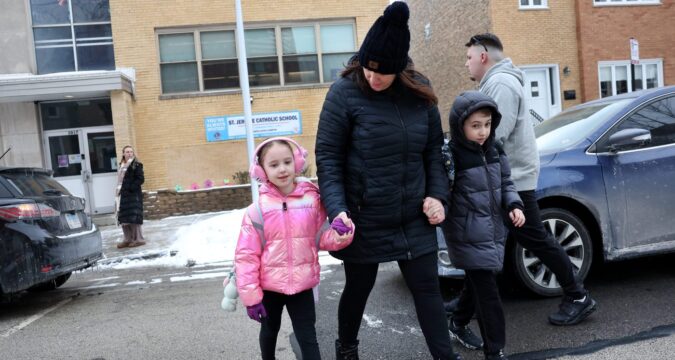
Since the Archdiocese of Chicago announced plans to shutter six schools at the end of the 2025-26 academic year, parents like Alicia Ferro, whose two children attend St. Jerome Catholic School in Armour Square, are scrambling to keep their school open.
But according to the archdiocese, the window to save their schools has passed — and its decision to close the schools is final. That leaves parents at St. Jerome and another school, Sts. Bruno and Richard School in Archer Heights, insisting they were blindsided.
At St. Jerome, some parents say they weren’t told the school closure was on the horizon, before the archdiocese’s Jan. 22 announcement. “Parents were never given the opportunity to get these efforts put into play,” Ferro told the Tribune. “Now, you’re just here scrambling — trying to figure out what you’re going to do with your kids. They basically tied your hands.”
The archdiocese, however, maintains that it fulfilled its responsibility to inform school officials of potential closures. While the archdiocese doesn’t directly communicate with families, school and parish officials do, according to Scott McDonald, a spokesperson for the archdiocese.
Specifically, at St. Jerome, the archdiocese had been in discussions with the church parish and school administrators for more than a year, McDonald said in an email to the Tribune last week.
The archdiocese made school officials aware of the schools’ dire situations at the start of this school year, said Greg Richmond, superintendent of schools for the archdiocese, in an interview with the Tribune.
But somewhere along the line, the communication chain from the archdiocese to parish and school officials, and then to parents, failed, according to Ferro and other parents at the shuttering schools who spoke to the Tribune.
By the time the archdiocese announced the school closures last month, some parents said it was the first time they’d heard the schools were at risk of closing. They say they should’ve been made aware long ago and are wondering who let them down: the archdiocese, school officials or both. Now the future of their children’s education is in limbo, parents said, and they are concerned about the accessibility of Catholic education.
Jessica Tellez, a parent with two children at St. Jerome, said she regularly attended school board meetings last academic year and does not recall hearing of a potential school closure.
“That was never a topic. They never sent out any letters,” Tellez said. “It was never a discussion in the meetings. It was never provided to the parish community.”
The Tribune’s requests for comment from St. Jerome’s principal, Mary Hyland and the parish pastor, the Rev. Antonio Musa, were unanswered at press time.
School closure conversations typically occur between the archdiocese and school administrators like the principal, pastor, school board and financial council, McDonald said.
From there, the archdiocese said it allows the school administrators to decide how, when and what they communicate to the broader school community.
St. Stanislaus Kostka Academy to close after 151 years
Susana Alvarez, whose children attend Sts. Bruno and Richard said the earliest warning that the school was in trouble came in November — just over a month before the January deadline — leaving families little time to find solutions. Four of Alvarez’s six children now attend the school, after the older two graduated.
A November letter obtained by the Tribune informed Sts. Bruno and Richard families that enrollment had fallen below 180 students in the current school year — “a 16% decrease from last year and 35% drop from the 2022-23 school year.” It also highlighted the school’s $586,000 deficit.
“Given this year’s lower enrollment and depletion of one-time supports, we are not able to cover essential expenses, such as health insurance, salaries, and other operating costs, without outside assistance,” the letter said.
Leveraging her professional experience as a chief financial officer, Alvarez said she moved swiftly to create an operational plan outlining new funding sources and marketing strategies, which she said the principal, Mary Arevalo, presented to the archdiocese in early January. Arevalo did not return requests for comment by press time, and the archdiocese declined to address the circumstances of specific schools.
But the school’s deficit overshadowed the proposal, Alvarez said. Just weeks later, families at Sts. Bruno and Richard learned they were on the list of schools being closed.
The news devastated Alvarez, who has been part of the school community since 2010 and leaned heavily on the community when her husband passed away five years ago.
Susana Alvarez, center, walks to her car with her kids after they were dismissed for the day from Sts. Bruno and Richard School in Archer Heights on Jan. 29, 2026. (Eileen T. Meslar/Chicago Tribune)
The closure means Alvarez’s children will face their second school transition in nearly four years. St. Bruno merged with St. Richard in 2022 after a parish consolidation.
“The parents are devastated,” Alvarez said. “We don’t want to go anywhere else. We love our school. … This is the second time we would have to now find a new school to go to.”
After learning of the archdiocese’s decision in January, Idalia Navar, whose two children also attend Sts. Bruno and Richard, wishes school families had been warned a year in advance. “I do think they should have prepared us better if this was the plan for the school,” Navar said. “You know, this is affecting everyone — the kids, the teachers, the staff members.”
The archdiocese maintains that conversations with parish and school officials about Sts. Bruno and Richard being at risk of closure occurred more than a year ago.
Despite the finality of the school closures, both school communities are drafting plans to overturn the decision — and Alvarez said she will fight until the end to do so. Sts. Bruno and Richard parents launched a Donorbox last month, which has a goal of $1 million. By press time Monday, $4,501 had been raised.
“I choose to keep my faith and keep fighting,” Alvarez said. “We are going to do everything we can to raise the funds.”
The archdiocese’s vision moving forward is to reverse declining enrollment trends and ensure that Catholic education remains accessible, Richmond said.
Susana Alvarez talks with another parent as she waits for her children outside Sts. Bruno and Richard School in Archer Heights on Jan. 29, 2026. (Eileen T. Meslar/Chicago Tribune)
But Ferro questioned how that vision aligns with the closures and the instability families now face. “What’s going to happen is the reverse, where people are now considering, ‘Do I send my child to Catholic school?’” she said.
If efforts to overturn the decision to close Sts. Bruno and Richard are unsuccessful, Alvarez said she is already considering a future for her children that does not involve Catholic school.
“I would not put my kid in another Catholic school, nor will I put them in CPS either — so they would have to be homeschooled,” Alvarez said. “Because we are not gonna do this every year.”
For now, Ferro is uncertain what’s ahead for her children’s education.
Although she teaches in Chicago Public Schools, Ferro said she wants her children to receive the Catholic education she had. With St. Jerome closing, her CPS options are limited, she added, because the application deadline for the districts’ elementary choice schools has passed.
While the archdiocese said no additional school closures are planned, Richmond acknowledged that circumstances can change quickly. The archdiocese, which is affiliated with 179 Catholic schools in the Chicago area, prefers that schools have around 220 to 240 students enrolled, he said, and fewer than 200 is a cause for concern.
Enrollment data for the current school year for both St. Jerome and Sts. Bruno and Richard are not publicly available. The number of schools currently below the archdiocese’s 200-student threshold was not readily available. During the 2024-25 school year, St. Jerome had 114 students and Sts. Bruno and Richard had 191, according to the Illinois State Board of Education, the only publicly available data.
Alicia Ferro picks up her third grader and kindergartener from St. Jerome Catholic School in Chicago’s Armour Square neighborhood on Jan. 30, 2026. (Chris Sweda/Chicago Tribune)
If enrollment is a deciding factor in whether schools are at risk of closure, Tellez, the Sts. Bruno and Richard parent, worries that down the line, there will be fewer and fewer choices for students to obtain a Catholic education. “So, it’s concerning and makes it seem like there won’t be very many left as the years go by if that’s going to be the criteria,” Tellez said.
The archdiocese feels the impact of each closure alongside families, Richmond said.
“Any school closes, we also feel that loss,” he said. “Not nearly to the extent that the parents do at those schools, but it’s a sad day for us as well.”
https://www.chicagotribune.com/2026/02/10/catholic-schools-closings-parents-reaction/
Do People Trust The Media Or Government More?
Do People Trust The Media Or Government More?
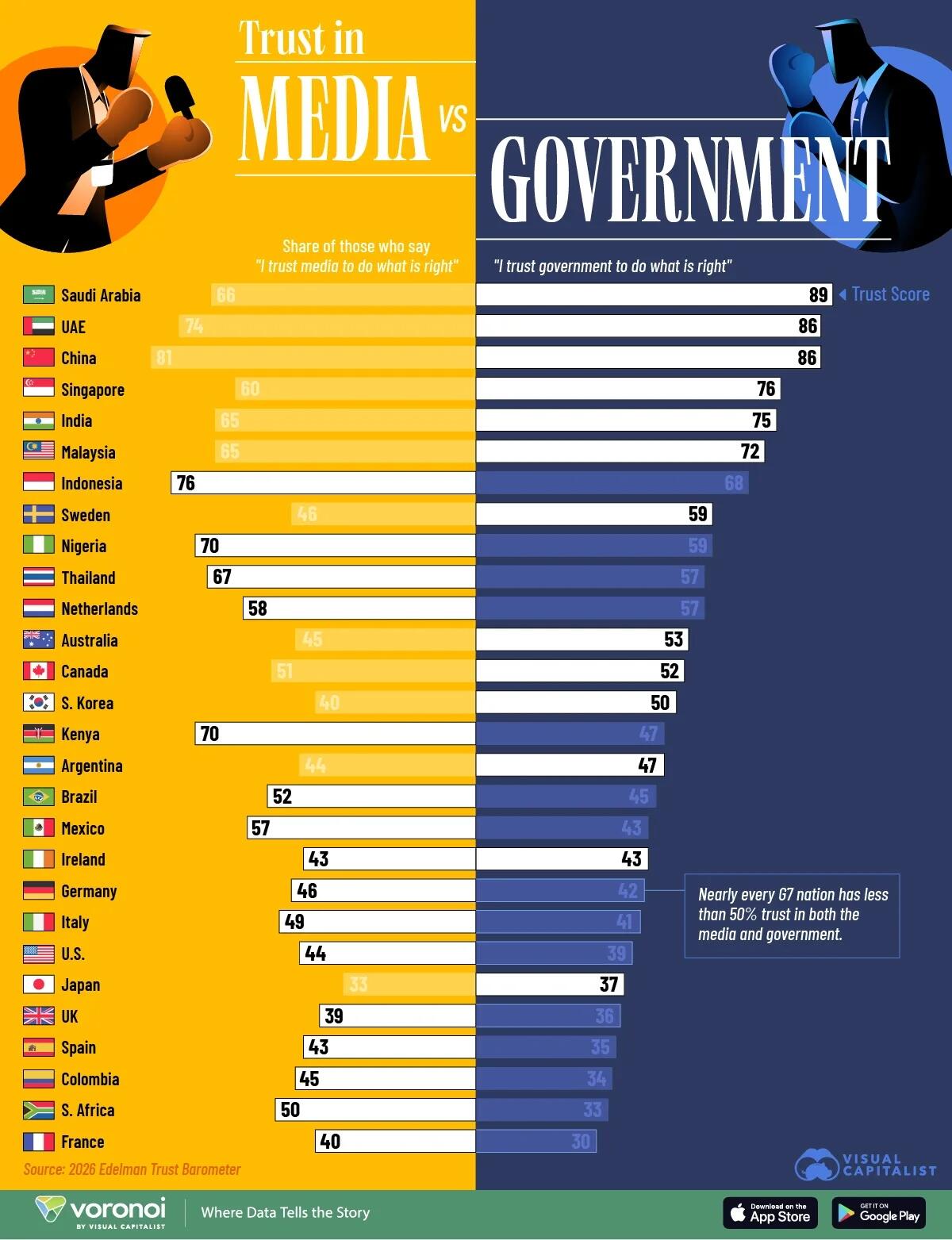
Trust in institutions shapes how societies function—from whether people follow public health guidance to whether they believe election results. Yet confidence in governments and the media has diverged sharply across countries.
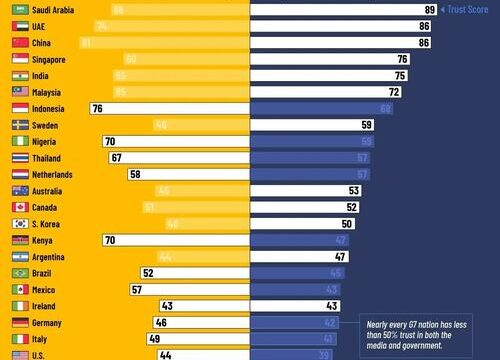
This visualization, via Visual Capitalist’s Niccolo Conte, shows whether people trust the media or the government more, based on responses from nearly 34,000 people across dozens of countries.
The data comes from the 2026 Edelman Trust Barometer. Respondents were asked whether they trust the government and the media to “do what is right.”
High Government Trust in the Middle East and Asia
Countries such as Saudi Arabia, the UAE, China, and Singapore show higher trust in government than in media.
Saudi Arabia tops the list, with an 89% government trust score compared to 66% for media—a 23-point gap.
Country
Government Trust Score
Media Trust Score
Media or Govt
🇸🇦 Saudi Arabia
89
66
Govt
🇦🇪 UAE
86
74
Govt
🇨🇳 China
86
81
Govt
🇸🇬 Singapore
76
60
Govt
🇮🇳 India
75
65
Govt
🇲🇾 Malaysia
72
65
Govt
🇮🇩 Indonesia
68
76
Media
🇸🇪 Sweden
59
46
Govt
🇳🇬 Nigeria
59
70
Media
🇹🇭 Thailand
57
67
Media
🇳🇱 Netherlands
57
58
Media
🇦🇺 Australia
53
45
Govt
🇨🇦 Canada
52
51
Govt
🇰🇷 South Korea
50
40
Govt
🇰🇪 Kenya
47
70
Media
🇦🇷 Argentina
47
44
Govt
🇧🇷 Brazil
45
52
Media
🇲🇽 Mexico
43
57
Media
🇮🇪 Ireland
43
43
Equal
🇩🇪 Germany
42
46
Media
🇮🇹 Italy
41
49
Media
🇺🇸 United States
39
44
Media
🇯🇵 Japan
37
33
Govt
🇬🇧 United Kingdom
36
39
Media
🇪🇸 Spain
35
43
Media
🇨🇴 Colombia
34
45
Media
🇿🇦 South Africa
33
50
Media
🇫🇷 France
30
40
Media
Media Trusted More in Many Western Democracies
In much of Europe and the Americas, trust tilts toward the media rather than the government.
Countries like France, Spain, the U.S., and the UK all show higher media trust scores, even though overall trust levels are relatively low.
France stands out at the bottom of the ranking, with just 30% trusting the government versus 40% trusting the media.
Large Trust Gaps Signal Institutional Tension
Kenya shows the largest pro-media gap, with media trusted by 70% compared to just 47% for government.
Conversely, Sweden, Japan, and South Korea lean more toward government trust, though with lower absolute scores than high-trust countries in Asia or the Middle East. Ireland is the lone country where trust in media and government is equal.
If you enjoyed today’s post, check out Trump Trade Shake-Up: Which Countries Are Winning Vs. Losing? on Voronoi, the new app from Visual Capitalist.
Tyler Durden
Tue, 02/10/2026 – 05:45
https://www.zerohedge.com/geopolitical/do-people-trust-media-or-government-more