Category: News

Today in Chicago History: U.S. Sen. Barack Obama announces run for president in Springfield
Here’s a look back at what happened in the Chicago area on Feb. 10, according to the Tribune’s archives.
Is an important event missing from this date? Email us.
Front page flashback: Feb. 11, 1916
Anarchist Jean Crones was suspected of poisoning several hundred people at the banquet for Chicago’s Archbishop George Mundelein on Feb. 10, 1916, but he fled the city, leaving his chemical supplies in his South Side boarding house room, which the Tribune described as a “laboratory of death.” (Chicago Tribune)
1916: A few hundred of the city’s most prominent people gathered at the stately University Club at the corner of Michigan Avenue and Monroe Street for a dinner welcoming the new Catholic archbishop, George Mundelein.
All were marked for assassination by an anarchist cook named Jean Crones, who spiked the soup stock with arsenic. When dinner was served, some of the highest flyers of Chicago were laid low, falling to the floor, groaning in agony and vomiting. But none died.
Weather records (from the National Weather Service, Chicago)
High temperature: 63 degrees (1876)
Low temperature: Minus 18 degrees (1899)
Precipitation: 0.96 inches (1960)
Snowfall: 9.7 inches (1981)
Vintage editorial: A celebration of women’s suffrage: ‘It has been a long fight and a hard one’
1869: The Woman Suffrage Convention — the first of its kind in Chicago — was held at Library Hall.
University of Wisconsin junior William Orpet turned himself into police on Feb. 12, 1916, and said he was with Marian Lambert in Helm’s Woods in Lake Forest when she died. Orpet claimed Lambert swallowed poison, which caused her death. (Chicago Tribune)
1916: Deerfield-Shields High School senior Marian Lambert was found dead in Helm’s Woods near a train station in Lake Forest.
William Orpet was tried for murder but was found not guilty by jury after the substance found that killed Lambert was potassium cyanide, not liquid cyanide.
William Orpet, 20, was accused of murdering his girlfriend, Marion Lambert, 18, and leaving her freezing body in Helm’s Wood in Lake Forest on Feb. 9, 1916. (Chicago Tribune historical photo)
1969: The Chicago Housing Authority practiced racial segregation by locating most of its public housing in poor neighborhoods, a federal judge ruled in a suit brought by the ACLU three years prior.
Judge Richard B. Austin held that the CHA board and staff had good intentions, but they have been the victims of a state law giving the City Council final approval on the selection of public housing sites, the Tribune reported.
1980: Northwestern, coached by 27-year-old Mary DiStanislao, won its second straight Big Ten women’s basketball tournament, beating Minnesota 86-72 in the title game at Wisconsin.
“I just couldn’t get into the flow,” Michael Jordan said after a jittery performance during the NBA All-Star Game on Feb. 10, 1985. (Chicago Tribune)
1985: Michael Jordan made his NBA All-Star Game debut. Controversy arose with talk of a “freeze out” supposedly led by Isiah Thomas to keep the ball away from the popular rookie. Thomas later denied this was intentional. Jordan shot 2 for 9, scoring seven points in 22 minutes.
U.S. speed skater Bonnie Blair waves flowers after winning the gold medal in the women’s 500-meter race at the XVI Winter Olympics in Albertville, France, on Feb. 10, 1992. Flanking Blair is silver medal winner Qiaobo Ye of China, left, and bronze medal winner Christa Luding of Germany. Some thought they represented the past, present and future of speed skating. (John Gaps III/AP)
1992: Speedskater Bonnie Blair won her second gold medal in her second consecutive Olympics. She did it by completing the 500 meters in 40.33 seconds at Albertville, France.
Vintage Chicago Tribune: Our local Winter Olympians of Games past
Blair became one of the most decorated U.S. women in Winter Olympics history. She competed in four Olympics and won five gold and one bronze speedskating medals between 1988 and 1994. The three-time World Sprint Champion also won 19 world sprint medals.
Sen. Barack Obama and wife Michelle after he announced his candidacy for President of the United States at the Old State Capitol in Springfield on Feb. 10, 2007. (Pete Souza/Chicago Tribune)
2007: U.S. Sen. Barack Obama announced his candidacy for the presidency outside the Old State Capitol in Springfield, which was the site of Abraham Lincoln’s “House Divided” speech on June 16, 1858.
Obama urged Americans who hear “destiny calling” to join him “in the unfinished business of perfecting our union.” About 15,000 people braved frigid temperatures to watch Obama speak before he departed to campaign in Iowa.
He defeated Republican candidate John McCain in the Nov. 4, 2008, election and became the nation’s 44th president.
Want more vintage Chicago?
Subscribe to the free Vintage Chicago Tribune newsletter, join our Chicagoland history Facebook group, stay current with Today in Chicago History and follow us on Instagram for more from Chicago’s past.
Have an idea for Vintage Chicago Tribune? Share it with Kori Rumore and Marianne Mather at krumore@chicagotribune.com and mmather@chicagotribune.com
https://www.chicagotribune.com/2026/02/10/february-10-chicago-history/
Today in History: Deadly tornado kills 21 in St. Louis area
Today is Monday, Feb. 10, the 41st day of 2025. There are 324 days left in the year.
Today in history:
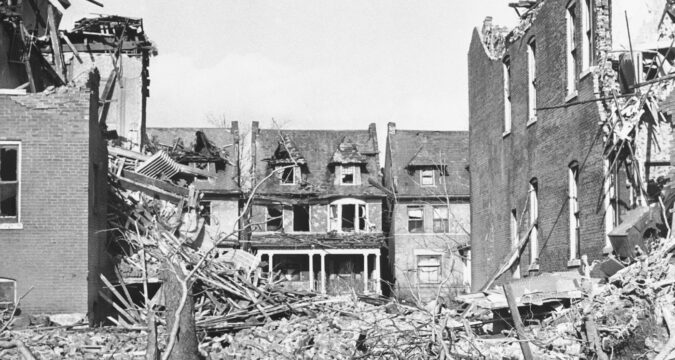
On Feb. 10, 1959, an F4-intensity tornado tore through the St. Louis area, killing 21 people and injuring 345.
Also on this date:
1736, the treaty ending the Seven Years’ War was signed in Paris, with France ceding its territory in Canada to Great Britain.
In 1936, Nazi Germany’s Reichstag passed a law investing the Gestapo secret police with absolute authority, exempt from any legal review.
In 1962, on the Glienicke Bridge connecting West Berlin and East Germany, the Soviet Union exchanged captured American U-2 pilot Francis Gary Powers for Rudolf Abel, a Soviet spy held by the United States.
In 1967, the 25th Amendment to the U.S. Constitution, dealing with presidential disability and succession, was adopted as Minnesota and Nevada ratified it.
In 1981, eight people were killed when a fire set by a busboy broke out at the Las Vegas Hilton hotel-casino.
In 1996, world chess champion Garry Kasparov lost the first game of a match in Philadelphia against an IBM computer dubbed “Deep Blue.” (Kasparov ended up winning the match, 4 games to 2; however, he was defeated by Deep Blue in a rematch the following year.)
In 2009, a U.S. commercial satellite and a defunct Russian satellite accidentally collided in orbit over Siberia, destroying both and creating a large debris field in space.
In 2018, a double-decker bus lost control and crashed in a Hong Kong suburb, killing 19 people and injuring dozens more in the southern Chinese city.
Related Articles
Today in Chicago History: Bears’ Steve McMichael selected for Pro Football Hall of Fame
Today in History: ‘Parasite’ wins Academy Award for Best Picture
Today in History: First US execution using lethal gas takes place
Today in Chicago History: WGN-AM’s Bob Collins killed in midair plane collision in Zion
Today in History: Great Baltimore Fire begins
In 2021, severe winter storms caused catastrophic wide-scale power outages in Texas that left millions in the dark and lasted several days. At least 40 people died in Texas in the storm and its aftermath.
Today’s birthdays: Opera singer Leontyne Price is 98. Actor Robert Wagner is 95. Singer Roberta Flack is 88. Olympic swimming gold medalist Mark Spitz is 75. Golf Hall of Famer Greg Norman is 70. Basketball Hall of Fame coach John Calipari is 66. Filmmaker Alexander Payne is 64. TV host-political commentator George Stephanopoulos is 64. Sen. Lisa Blunt Rochester, D-Del., is 63. Political commentator Glenn Beck is 61. Actor Laura Dern is 58. Writer-producer-director Vince Gilligan (TV: “Breaking Bad”) is 58. Football Hall of Famer Ty Law is 51. Actor-filmmaker Elizabeth Banks is 51. Basketball Hall of Famer Tina Thompson is 50. Reggaeton singer Don Omar is 47. Actor Uzo Aduba is 44. Actor Stephanie Beatriz is 44. Actor Emma Roberts is 34. Olympic swimming gold medalist Lilly King is 28. Actor Chloe Grace Moretz is 28. Actor Yara Shahidi is 25.

“Today, We Are Preparing For War”: French Defense Chief Says Europe Has Until 2030, Cites Russia As Biggest Threat
“Today, We Are Preparing For War”: French Defense Chief Says Europe Has Until 2030, Cites Russia As Biggest Threat
France and Europe have four years to prepare for war, said Fabien Mandon, chief of the defense staff of the French Armed Forces, who cited Russia as Europe’s biggest threat.
His speech at a major naval conference outlined that France, as well as its allies, must take into account that this war will break out in the near future and that the French military must be ready by 2030.
“Today, we are preparing for war,” he said, according to BreakingDefense.
During his speech at the naval conference, Mandon stated that France is not prepared for war and the country had “an insufficient number of ships and armaments.”
He stated the nation needs “more missiles with greater range and lethality.”
Mandon recently made headlines for stating that Europeans and the French must be ready to lose children in a war, stating:
“You have to accept that you will lose your children,” which is necessary to defeat Russia during a November speech at the National Congress of French Mayors.
His words caused national shock, while the representatives of the parliamentary parties protested sharply in connection with his comment.
As in November, he named Russia as the main source of the threat of war.
Tyler Durden
Tue, 02/10/2026 – 05:00
P95 mask vs. N95 mask
Are P95 or N95 masks best?
Masks are a part of everyday wear for many construction, factory and medical workers. Learning which masks are most effective and how they work to protect you is vital for choosing the best option.
P95 and N95 are rating classifiers for masks manufactured to keep people from inhaling dust and other small particles in unsafe environments. P95- and N95-rated masks protect their wearers from microorganisms, body fluids and small particles that could spread the virus.
General mask standards
Before going into the specifics of the P95 and N95 masks, you should have a basic understanding of mask standards. Disposable masks are grouped into three main types — single-use, surgical and respirator.
Single-use masks are the thinnest, often made of only one layer. Filtration requirements are minimal to nonexistent.
Surgical masks have to filter at least 95% of small particles to attain certification in the United States. However, surgical masks made in China only need a 30% rating and Europe does not have a minimum requirement. With this in mind, be wary of where your mask is being made and shipped from.
A certified respirator mask must be able to filter 95% of small particles from the air in the United States and China. The requirement is lower in Europe, these masks only have to reach an 80% filtration standard.
P95 and N95 ratings
P95 and N95 masks share a number rating of 95, meaning they remove 95% of small particles from the air. Though they are the same in number, they do differ in letter class: P95 masks are oil-proof (P) while N95 masks are not oil-proof or oil-resistant (N).
P95 mask
You might know P95 masks by their more common name — dust masks. The classification P95 means that the mask is resistant to oil and can filter 95% of airborne particles. Before COVID-19, P95 masks were well known by people in wildfire danger zones, since they can protect wearers from harmful heavy smoke.
A P95 mask usually costs between $5 and $10, unless you purchase them in bulk, which can significantly lower the price.
P95 mask pros
In the heat of the pandemic, N95 masks became difficult even for medical professionals to find. The P95 mask became a reliable alternative that was both affordable and effective. These masks can be used multiple times if cleaned and kept in a dry place. They filter most small particles in the air, including oil-based ones.
P95 mask cons
Most P95 masks are not classified as medical-grade and they do not meet the requirements for sealing or filtering that medical-grade masks have. P95 masks are better suited for industrial use than for medical purposes. Never use a P95 mask past its filter life, as this can be dangerous, especially if the mask is contaminated.
Best P95 mask
3M Particulate Respirator 8577, P95 (Pack of 10)
This mask is approved by NIOSH, meaning the National Institute of Occupational Safety and Health has tested and verified its effectiveness. It has carbon-layered filtering and cool-flow exhalation that keep the mask comfortable for long periods. The nose clip is adjustable, and the mask loops around the back of the head for a snug fit.
N95 mask
N95-rated masks have multiple layers that protect against 95% of non-oil-based particles in the air. These masks are certified by NIOSH and the Centers for Disease Control and Prevention. Most N95 masks are used in industrial settings, similar to P95-rated masks, but there are N95 masks that are manufactured for health care purposes.
N95 masks are slightly cheaper than P95 masks, costing $2-$5 per mask.
N95 pros
The N95 mask can filter dirt, bacteria, viruses and allergens such as pollen. For an extra layer of protection, you can wear a disposable N95 mask under a standard respirator. N95 masks can protect two people from one another, reducing the chance of transferring any harmful particles to one another. These masks are medical-grade due to their tight fit and layered filtering.
N95 cons
The N95 mask will not protect against oil-based particles in the air. Facial hair prevents the mask from properly sealing to your face, diminishing its guarantee of protection. It should not be used past its filter life, for it will be ineffective and you will find it difficult to breathe. All N95 masks cleared by the Food and Drug Administration are single-use only, and prolonged usage can lead to their contamination.
Best N95 mask
BYD Care N95 Respirator (20-Pack With Individual Wrap)
This pack of masks is also approved by NIOSH. Each mask has three layers of nonwoven fabric that can be folded closely over the nose and mouth. The head straps are made of elastic and wrap around the back of your head instead of looping over your ears like most standard masks. Pressing your hands on the mask and inhaling will fit it tightly to your face, ensuring your protection.
Should you get a P95 mask or N95 mask?
Both P95 and N95 masks are made for comfort and safety, tied with snug elastics that wrap around your head instead of your ears. Both products are suitable for industrial and everyday environments, making them a wise investment for anyone.
But P95 masks do everything N95 masks can, with an added resistance to oil-based particles. They share a number rating, making them equally efficient in obstructing potentially dangerous particles. Although both can be thrown away after one use, P95 masks can be reused if clean and free of contamination. They are slightly more costly, but the payoff is a longer-lasting product.
Prices listed reflect time and date of publication and are subject to change.
Check out our Daily Deals for the best products at the best prices and sign up here to receive the BestReviews weekly newsletter full of shopping inspo and sales.
BestReviews spends thousands of hours researching, analyzing and testing products to recommend the best picks for most consumers. BestReviews and its newspaper partners may earn a commission if you purchase a product through one of our links.
Distributed by Tribune Content Agency, LLC.
https://www.chicagotribune.com/2026/02/10/p95-mask-vs-n95-mask/
Mapping The Global Cost Of Living In 2026
Mapping The Global Cost Of Living In 2026
How does the cost of living vary across countries in 2026?
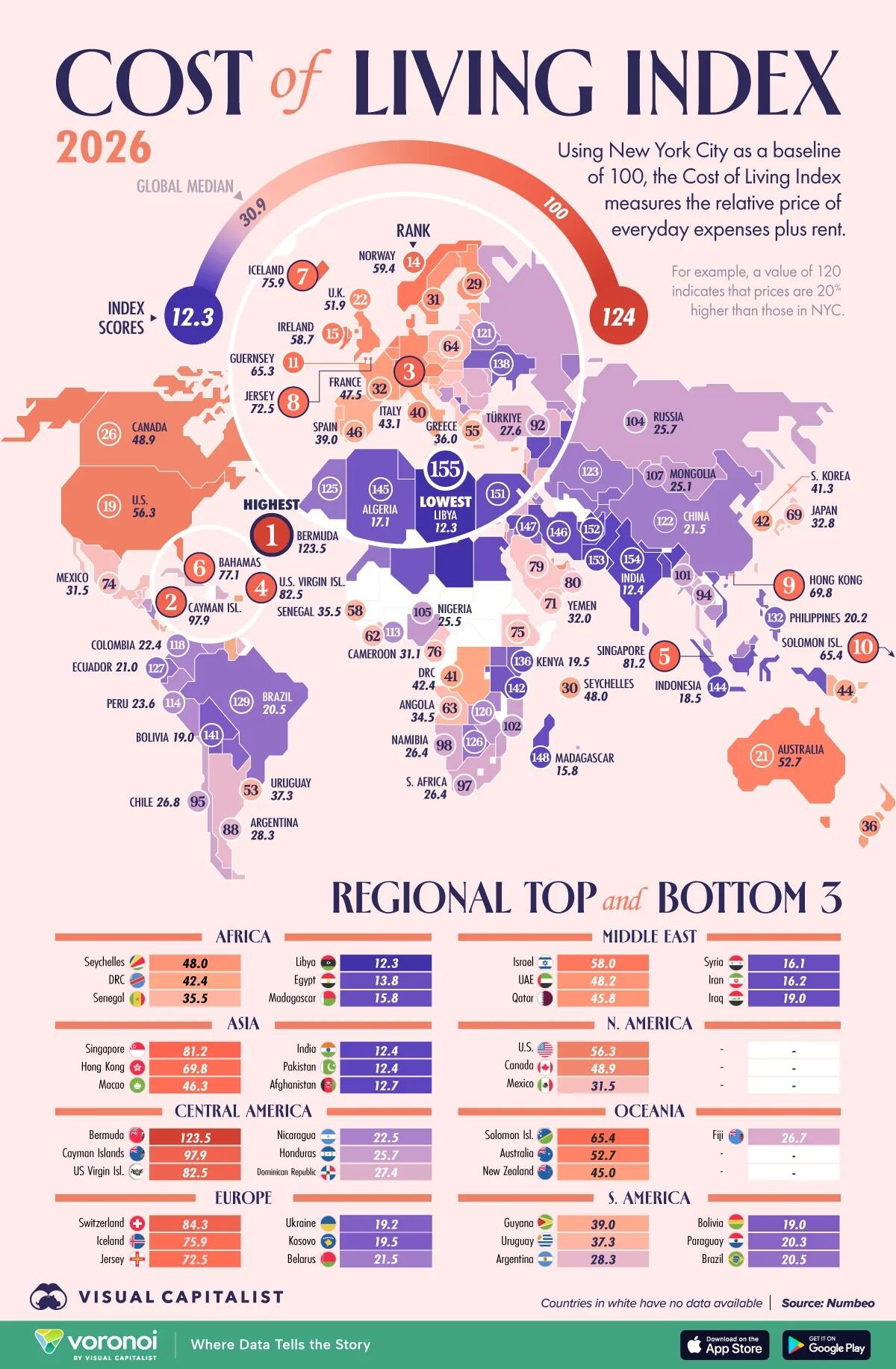
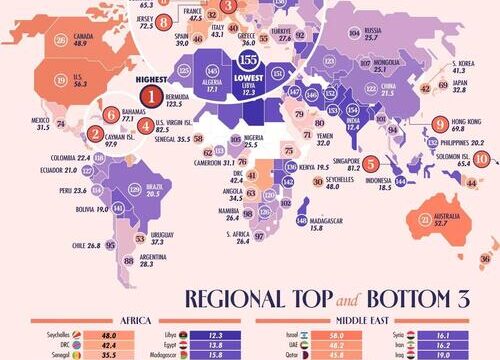
To find out, this graphic, via Visual Capitalist’s Dorothy Neufeld, visualizes Numbeo’s Global Cost of Living Index, which measures the price of everyday expenses, including rent, relative to New York City (baseline of 100).
If a country has an index score of 80, prices are 20% lower than in New York. Scores above 100 indicate higher everyday costs.
While inflation has eased in many regions, the cost of living remains a major global challenge. Across 28 countries, home prices have risen more than 50% since 2020, and grocery costs have risen sharply in countries such as Mexico, Germany, and Malaysia, continuing to strain household budgets worldwide.
Global Cost of Living by Country
Below, we show the cost of living index for 155 countries or territories in 2026, highlighting stark differences in everyday costs around the world.
Bermuda has the highest cost of living worldwide, a British Overseas Territory synonymous with high-end real estate, luxury tourism, and offshore wealth.
RankCountryCost of Living Index 2026
1🇧🇲 Bermuda123.5
2🇰🇾 Cayman Islands97.9
3🇨🇭 Switzerland84.3
4🇻🇮 U.S. Virgin Islands82.5
5🇸🇬 Singapore81.2
6🇧🇸 Bahamas77.1
7🇮🇸 Iceland75.9
8🇯🇪 Jersey72.5
9🇭🇰 Hong Kong 69.8
10🇸🇧 Solomon Islands65.4
11🇬🇬 Guernsey65.3
12🇱🇺 Luxembourg65.2
13🇬🇮 Gibraltar63.9
14🇳🇴 Norway59.4
15🇮🇪 Ireland58.7
16🇮🇱 Israel58
17🇳🇱 Netherlands57.9
18🇩🇰 Denmark56.6
19🇺🇸 United States56.3
20🇮🇲 Isle Of Man55.7
21🇦🇺 Australia52.7
22🇬🇧 United Kingdom51.9
23🇦🇹 Austria50.7
24🇬🇩 Grenada49.4
25🇩🇪 Germany49
26🇨🇦 Canada48.9
27🇧🇪 Belgium48.6
28🇦🇪 United Arab Emirates48.2
29🇫🇮 Finland48
30🇸🇨 Seychelles48
31🇸🇪 Sweden47.8
32🇫🇷 France47.5
33🇲🇴 Macao (China)46.3
34🇶🇦 Qatar45.8
35🇦🇩 Andorra45.2
36🇳🇿 New Zealand45
37🇨🇾 Cyprus44.6
38🇵🇷 Puerto Rico44.3
39🇲🇹 Malta44.1
40🇮🇹 Italy43.1
41🇨🇩 Democratic Republic of the Congo42.4
42🇰🇷 South Korea41.3
43🇪🇪 Estonia40.5
44🇵🇬 Papua New Guinea39.2
45🇸🇮 Slovenia39.1
46🇪🇸 Spain39
47🇬🇾 Guyana39
48🇯🇲 Jamaica38.7
49🇨🇿 Czech Republic38.6
50🇨🇷 Costa Rica38.3
51🇵🇹 Portugal38.3
52🇲🇻 Maldives38.1
53🇺🇾 Uruguay37.3
54🇭🇷 Croatia37.1
55🇬🇷 Greece36
56🇧🇭 Bahrain35.9
57🇵🇦 Panama35.6
58🇸🇳 Senegal35.5
59🇱🇹 Lithuania35.3
60🇹🇹 Trinidad And Tobago35.2
61🇸🇰 Slovakia35.2
62🇨🇮 Ivory Coast34.5
63🇦🇴 Angola34.5
64🇵🇱 Poland34.4
65🇱🇻 Latvia34.3
66🇹🇼 Taiwan33.9
67🇧🇳 Brunei33.6
68🇰🇼 Kuwait33.3
69🇯🇵 Japan32.8
70🇭🇺 Hungary32.3
71🇾🇪 Yemen32
72🇧🇿 Belize32
73🇦🇱 Albania31.7
74🇲🇽 Mexico31.5
75🇪🇹 Ethiopia31.3
76🇨🇲 Cameroon31.1
77🇲🇪 Montenegro31
78🇵🇸 Palestine30.9
79🇸🇦 Saudi Arabia30.4
80🇴🇲 Oman30
81🇨🇻 Cape Verde29.6
82🇷🇸 Serbia29.5
83🇱🇧 Lebanon29.5
84🇦🇲 Armenia29.5
85🇬🇹 Guatemala29.5
86🇸🇻 El Salvador29.4
87🇨🇺 Cuba28.3
88🇦🇷 Argentina28.3
89🇸🇷 Suriname28.2
90🇧🇬 Bulgaria28
91🇷🇴 Romania27.8
92🇹🇷 Turkey27.6
93🇩🇴 Dominican Republic27.4
94🇹🇭 Thailand27.2
95🇨🇱 Chile26.8
96🇫🇯 Fiji26.7
97🇿🇦 South Africa26.4
98🇳🇦 Namibia26.4
99🇲🇩 Moldova26.4
100🇲🇺 Mauritius26.1
101🇲🇲 Myanmar26
102🇲🇿 Mozambique25.9
103🇭🇳 Honduras25.7
104🇷🇺 Russia25.7
105🇳🇬 Nigeria25.5
106🇯🇴 Jordan25.3
107🇲🇳 Mongolia25.1
108🇧🇦 Bosnia And Herzegovina25
109🇿🇼 Zimbabwe24.2
110🇻🇪 Venezuela24
111🇬🇪 Georgia24
112🇰🇭 Cambodia23.7
113🇬🇭 Ghana23.7
114🇵🇪 Peru23.6
115🇲🇰 North Macedonia23.2
116🇲🇾 Malaysia22.9
117🇳🇮 Nicaragua22.5
118🇨🇴 Colombia22.4
119🇱🇰 Sri Lanka22
120🇿🇲 Zambia22
121🇧🇾 Belarus21.5
122🇨🇳 China21.5
123🇰🇿 Kazakhstan21.4
124🇦🇿 Azerbaijan21.3
125🇲🇦 Morocco21.1
126🇧🇼 Botswana21
127🇪🇨 Ecuador21
128🇺🇿 Uzbekistan20.6
129🇧🇷 Brazil20.5
130🇰🇬 Kyrgyzstan20.4
131🇵🇾 Paraguay20.3
132🇵🇭 Philippines20.2
133🇹🇯 Tajikistan19.8
134🇺🇬 Uganda19.6
135🇽🇰 Kosovo (Disputed Territory)19.5
136🇰🇪 Kenya19.5
137🇷🇼 Rwanda19.4
138🇺🇦 Ukraine19.2
139🇻🇳 Vietnam19.1
140🇮🇶 Iraq19
141🇧🇴 Bolivia19
142🇹🇿 Tanzania18.8
143🇹🇳 Tunisia18.5
144🇮🇩 Indonesia18.5
145🇩🇿 Algeria17.1
146🇮🇷 Iran16.2
147🇸🇾 Syria16.1
148🇲🇬 Madagascar15.8
149🇧🇩 Bangladesh13.8
150🇳🇵 Nepal13.8
151🇪🇬 Egypt13.8
152🇦🇫 Afghanistan12.7
153🇵🇰 Pakistan12.4
154🇮🇳 India12.4
155🇱🇾 Libya12.3
Many of the world’s most expensive places, in terms of cost of living, are islands and often tax shelters or financial centers. The U.S. Virgin Islands, Jersey, and Cayman Islands all make the top 10 in the cost of living index. High concentrations of wealth, combined with heavy reliance on imports, push up prices across these island economies.
Switzerland ranks third overall, with Zurich named the world’s most expensive city in 2026. Beyond a strong Swiss franc, high wages and elevated living standards significantly drive up costs.
Singapore has the highest cost of living in Asia, placing fifth worldwide. Limited land availability has fueled high real estate prices, while the country’s reliance on imports—around 90% of its food—adds further cost pressures.
The U.S. ranks 19th globally, with a cost of living index score of 56.3. By comparison, the global median index score in 2026 stands at 30.8.
To learn more about this topic, check out this graphic on the world’s most unaffordable housing markets.
Tyler Durden
Tue, 02/10/2026 – 04:15
https://www.zerohedge.com/personal-finance/mapping-global-cost-living-2026

Comienza el Año Nuevo Lunar en China con una previsión récord de 9.500 millones de viajes
Associated Press
BEIJING (AP) — Liu Zhiquan planificó un viaje en tren de más de 30 horas a Chengdu, la capital de la provincia de Sichuan, a unos 2.000 kilómetros (1.242 millas) de Beijing, donde trabaja en la construcción.
Es uno de los cientos de millones que se espera que viajen a sus ciudades de origen como parte del mayor desplazamiento de humanidad del mundo, o “chunyun” como se le llama en China, antes del Año Nuevo Lunar el 17 de febrero.
“Las cosas parecen peores este año que el pasado. La economía está mal y es cada vez más difícil ganar dinero”, expresó.
Liu eligió un tren más lento para ahorrar dinero: un tren de alta velocidad tomaría sólo nueve horas pero cuesta más del doble.
No obstante, decidió hacer el viaje de 30 horas para estar en casa para el festival, la única época del año en que los trabajadores de todo el país toman vacaciones y pasan tiempo con sus seres queridos.
El gobierno de China estima que se realizarán 9.500 millones de desplazamientos durante el período de 40 días alrededor del festival, un récord histórico, según información de la Comisión Nacional de Desarrollo y Reforma. Aproximadamente 540 millones de esos viajes se realizarán en tren, y 95 millones por aire. El resto será por carretera.
En un país donde se espera que los trabajadores hagan largas jornadas, incluidos los fines de semana, y tengan pocos días de vacaciones anuales, el festival del Año Nuevo Lunar es un tiempo valioso.
En una estación de tren en Beijing, los pasajeros abarrotaban las áreas de espera con grandes bolsas y maletas mientras esperaban sus trenes. Otros comían fideos instantáneos, un refrigerio fácil ya que las estaciones proporcionan agua caliente de forma gratuita.
Tian Duofu, una joven que recientemente comenzó a trabajar a tiempo completo en Beijing, dijo que esperaba con ansias las vacaciones de nueve días, que comienzan el 15 de febrero. “Se ha vuelto más difícil para una gran familia reunirse. Después de comenzar a trabajar, me di cuenta de que unas vacaciones tan largas son raras y nos vemos cada vez menos en persona, lo que hace que el Festival de Primavera sea significativo”.
“El Año Nuevo es el festival del año, y si no volvemos a casa, no podremos disfrutar del ambiente festivo”, dijo Tian Yunxia, una mujer de la provincia de Henan que tiene un puesto de desayunos en Beijing. “Quiero ir a casa para ver a mis hijos, mis nietos y mi esposo”.
___
Esta historia fue traducida del inglés por un editor de AP con la ayuda de una herramienta de inteligencia artificial generativa.

Reporte muestra un retroceso en los esfuerzos anticorrupción en democracias y alerta sobre EEUU
Por GEIR MOULSON
BERLÍN (AP) — Los esfuerzos de las democracias establecidas contra la corrupción en el sector público parecen estar decayendo, según una encuesta publicada el martes que sirve como barómetro de la corrupción percibida a nivel mundial. Se expresó preocupación por los acontecimientos en Estados Unidos y el impacto en otros lugares de los recortes de financiamiento de Estados Unidos.
El Índice de Percepción de la Corrupción de Transparencia Internacional para 2025 otorgó el primer lugar a Dinamarca, con 89 puntos de 100, seguida por Finlandia y Singapur. Al final se encontraban Sudán del Sur y Somalia con nueve puntos cada uno, seguidos por Venezuela. El trío líder no cambió, y los últimos tres sólo en que Sudán del Sur ganó un punto para igualar a Somalia.
La mayoría de los países fallan, mientras las democracias retroceden
El grupo dijo que la mayoría de los países están fracasando en mantener la corrupción bajo control, y 122 de las 182 naciones y territorios encuestados lograron menos de 50 puntos. El promedio global del año pasado fue de 42, perdiendo un punto y en su nivel más bajo en más de una década. Sólo cinco países obtuvieron más de 80 puntos en el reporte de 2025, frente a 12 hace una década.
El informe lamentó que “demasiado a menudo, estamos viendo una ausencia de buena gobernanza y liderazgo responsable”.
También señaló “una tendencia preocupante de democracias que ven un empeoramiento de la corrupción percibida”.
Entre ellas señaló incluso a Nueva Zelanda, que bajó dos puntos a 81, y Suecia, que se mantuvo en 80; así como Canadá, Reino Unido, Francia y Estados Unidos, que obtuvieron 75, 70, 66 y 64 puntos respectivamente.
Preocupaciones sobre Estados Unidos
Estados Unidos bajó un punto desde 2024 para su peor desempeño hasta ahora bajo la metodología que Transparencia comenzó a usar para su clasificación global en 2012, ubicándose en el puesto 29 en el primer año del segundo mandato del presidente Donald Trump.
“Aunque los datos aún no reflejan completamente los acontecimientos en 2025, el uso de cargos públicos para atacar y restringir voces independientes como ONG y periodistas, la normalización de políticas conflictivas y transaccionales, la politización de la toma de decisiones procesales y acciones que socavan la independencia judicial, entre muchas otras, envían una señal peligrosa de que las prácticas corruptas son aceptables”, dijo el informe.
Transparencia Internacional también argumentó que la decisión de Estados Unidos “de congelar temporalmente y luego degradar la aplicación de su Ley de Prácticas Corruptas en el Extranjero… envía una señal peligrosa de que el soborno y otras prácticas corruptas son aceptables”.
Trump dijo hace un año, cuando congeló la aplicación de la ley de 1977 que prohíbe a personas o empresas que operan en Estados Unidos dar dinero o regalos a funcionarios extranjeros para ganar o retener acuerdos en esos países, que “suena bien en papel, pero en la práctica, es un desastre”. Para sus detractores, la ley ha obstaculizado injustamente a las empresas estadounidenses mientras los rivales extranjeros se aprovechan.
Por otro lado, Transparencia dijo que “los recortes de ayuda de Estados Unidos al financiamiento de grupos de la sociedad civil en el extranjero que examinan a sus gobiernos han socavado los esfuerzos anticorrupción en todo el mundo”. Sostuvo que “los líderes políticos en varios países también han tomado esto como una señal para apuntar y restringir aún más a voces independientes, como ONG y periodistas”.
Los altibajos
La organización mide la percepción de expertos sobre la corrupción en el sector público en todo el mundo según 13 fuentes de datos, incluyendo el Banco Mundial, el Foro Económico Mundial y empresas privadas de riesgo y consultoría.
Los puntajes de cincuenta países han disminuido de forma significativa desde 2012, con Hungría, ahora con 40 puntos; Turquía, con 31; y Nicaragua, con 14, entre los que más han caído.
Al mismo tiempo, dijo que 31 países han mejorado significativamente, destacando a Estonia (76 puntos), Seychelles (68) y Corea del Sur (63).
Rusia permaneció cerca del fondo del índice con un puntaje sin cambios de 22. Transparencia Internacional citó una “gobernanza totalmente centralizada y opaca que suprime a los medios, la sociedad civil y la oposición política” en el país.
Casi cuatro años después de la invasión a gran escala de Rusia, Ucrania subió un punto a 36 después de que un escándalo de corrupción en el sector energético forzara renuncias de alto nivel. Transparencia Internacional dijo que la movilización de la sociedad civil protegió instituciones clave anticorrupción y se incrementaron las investigaciones, aunque “se necesitan más reformas para proteger de la malversación los fondos de defensa y reconstrucción”.
___
Esta historia fue traducida del inglés por un editor de AP con la ayuda de una herramienta de inteligencia artificial generativa.
Germany’s “Recovery” Is Just Debt-Fueled Military Orders
Germany’s “Recovery” Is Just Debt-Fueled Military Orders
Submitted by Thomas Kolbe
Friedrich Merz finally has a positive headline. In December, industrial orders surged. But behind the costly statistical recovery lies nothing more than the buildup of a debt-financed defense sector.
It took some lead time, but the Chancellor now finally has a success story. For December 2025, Germany’s Federal Statistics Office reported a 7.6% month-on-month jump in industrial orders. November had already provided a first boost with a rise of over 5%—right in the midst of a severe economic crisis.
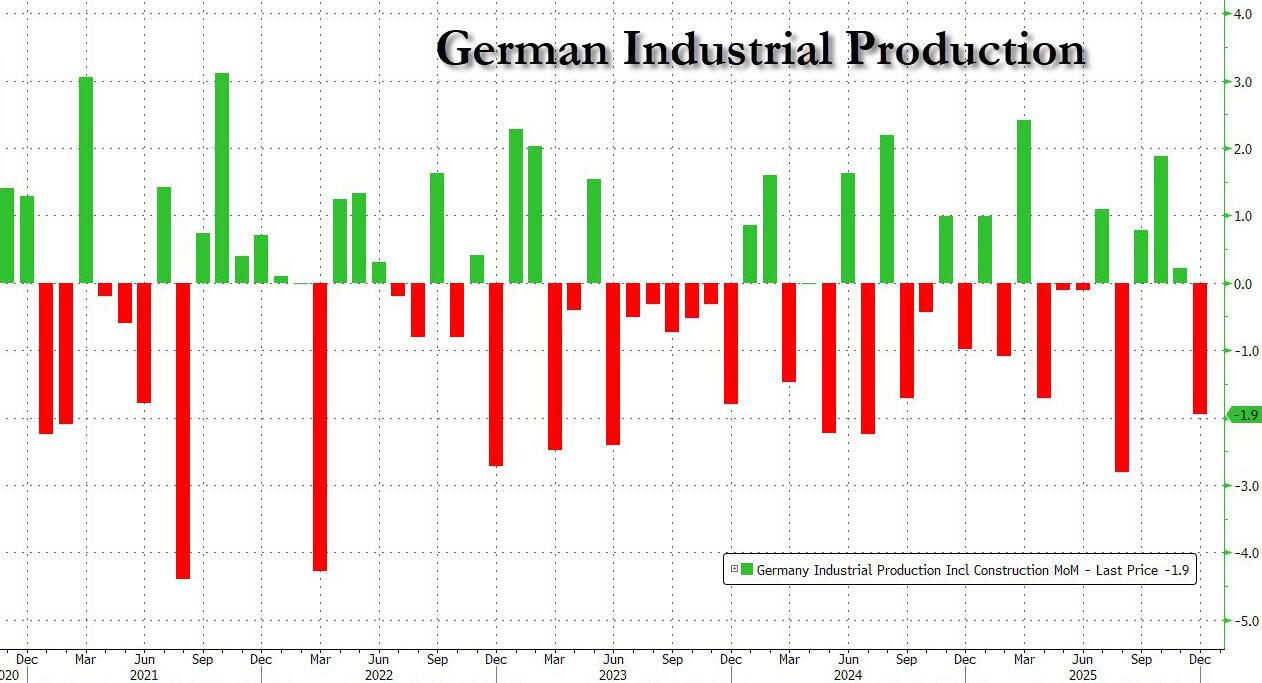
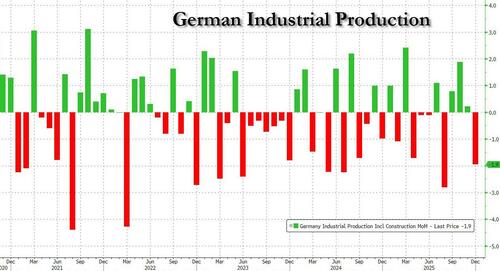
Industrial production, meanwhile, fell 1.9% in December, sliding back into negative territory—a fact largely lost in the media’s cheerleading. That the once-proud German automotive industry saw a 6.3% drop in orders also barely registered amid the general sigh of relief.
But once you dissect the data and strip out large orders, a very different picture emerges. The apparent surge in orders shrinks to a mere 0.9%.
What happened? Experience shows that this comes from “Other Vehicle Manufacturing,” which jumped roughly 9.5%. This category is dominated by defense equipment. In short: the federal government’s debt-financed special fund has found its way into German military production.
Or put differently: the government can now take a public victory lap after plunging citizens into massive debt to generate a short-term statistical effect in the super-election year 2026. Nobody wants to appear a total failure.
What is celebrated as an economic turnaround is in reality a statistical masking of the transition from market-based order to a debt-fueled administrative economy.
The military buildup is basically the last gasp of a policy that, in stubborn Keynesian mode, keeps trying to replace the gaps in Germany’s industrial economy with a “managed economy.” This strategy ties up resources and personnel, diverting exactly the capital needed for real investment under better conditions.
Goods are produced that no one demands on the market. A few pockets get richer. It’s classic client politics in the Berlin–Brussels style. Nothing new in the West, really.
The Real Situation
The real state of the German economy is shown in construction. The HCOB Germany Construction PMI, a monthly leading indicator, fell in January to 44.7 points. Values below 50 signal contraction.
After a brief uptick in December to 50.3, mostly due to energy network investments, the German construction sector plunged back into recession in January—mirroring the entire Eurozone.
For four years now, this central economic sector has been essentially frozen. Investments are held back; new projects, especially commercial ones, are nowhere to be found. The sector remains in prolonged stagnation.
Excessive energy costs, Kafkaesque regulation from Brussels and Berlin, and stifling interventions like rent caps are the recipe for a recession set in stone.
Expect billion-euro programs for subsidized public housing soon, purely to create a statistical illusion of recovery.
System-Compatible Criticism
The federal government can finally breathe. Expensive for taxpayers, but apparently worth it politically. Applying Keynesianism to the defense industry is among the dumbest of political moves. Driving a nation deeper into debt to produce goods that either rust or are used destructively is maximal political nihilism—bordering on madness.
The fact that the state-friendly media celebrates this “recovery” implies two things: complete media submission to government goals, and statistical validation to continue reshaping German society into a green, militarized command economy.
Silence from German business leadership confirms that politics has morally inoculated this strategy. The perpetuated narrative of an imminent Russian invasion now legitimizes the defense buildup.
Similarly, under the Green Deal, years of effort have embedded the fairy tale of saving the world via CO₂ reduction deep in public consciousness, with most voters still supporting the course. Criticism now appears climate-hostile, irresponsible, and anti-scientific.
Compliance is no longer enforced through coercion, but through reshaping business rationality. Every new regulation or CO₂ levy creates companies that survive only within the state’s subsidy architecture.
Result: media-friendly, calibrated language dominates discussions of “bureaucracy relief.” It is system-compatible fine-tuning, subtly orchestrated by Brussels. No one risks reputational loss in this highly repressive media environment.
Business has learned to couch criticism to avoid upsetting the Kaiser while remaining eligible for support. We see conditioned obsequiousness leading us steadily toward a new socialism.
* * *
About the author: Thomas Kolbe, a German graduate economist, has worked for over 25 years as a journalist and media producer for clients from various industries and business associations. As a publicist, he focuses on economic processes and observes geopolitical events from the perspective of the capital markets. His publications follow a philosophy that focuses on the individual and their right to self-determination.
Tyler Durden
Tue, 02/10/2026 – 03:30
https://www.zerohedge.com/markets/germanys-recovery-just-debt-fueled-military-orders

Demócratas ven “insuficiente” la oferta de la Casa Blanca sobre ICE mientras expira financiamiento
Por EEUU-CONGRESO-SEGURIDAD NACIONAL
WASHINGTON (AP) — Los líderes demócratas afirman que una propuesta de la Casa Blanca es “incompleta e insuficiente” y exigen nuevas restricciones a la ofensiva migratoria del presidente Donald Trump, amenazando con un cierre del Departamento de Seguridad Nacional (DHS, por sus siglas en inglés).
El líder demócrata del Senado, Chuck Schumer, y el líder demócrata de la Cámara de Representantes, Hakeem Jeffries, dijeron en una comparecencia el lunes por la noche que la contrapropuesta de la Casa Blanca a la lista de demandas que transmitieron durante el fin de semana “no incluía ni detalles ni texto legislativo” y no aborda “las preocupaciones que los estadounidenses tienen sobre la conducta ilegal de ICE”. La propuesta de la Casa Blanca no se hizo pública.
El comunicado de los demócratas llega mientras el tiempo se agota, con la amenaza de otro cierre parcial del gobierno que podría comenzar el sábado. Entre las demandas de los demócratas se incluye un requisito de órdenes judiciales, que los agentes del DHS vayan mejor identificados, nuevos estándares de uso de la fuerza y el fin de la discriminación racial. Dicen que esos cambios son necesarios después de que dos manifestantes murieran baleados por agentes federales en Minneapolis el mes pasado.
El líder de la mayoría del Senado, John Thune, republicano de Dakota del Sur, había expresado optimismo el lunes por la mañana sobre las inusuales negociaciones entre los demócratas y la Casa Blanca, diciendo que había “progreso hacia adelante”.
Thune dijo que era una buena señal que ambas partes estuvieran intercambiando documentos, y “con suerte, pueden encontrar un terreno común aquí”.
Pero llegar a un acuerdo sobre el tema candente de las redadas migratorias será difícil, especialmente cuando los legisladores de base en ambos partidos eran escépticos sobre encontrar un terreno común.
Los republicanos se han resistido a las solicitudes de los demócratas y algunos tienen sus propias demandas, como incluir legislación que requeriría demostrar la ciudadanía antes de que los estadounidenses se registren para votar y restricciones a las ciudades que, según ellos, no hacen lo suficiente para combatir la inmigración ilegal.
Y muchos demócratas que están furiosos por la ofensiva agresiva del Servicio de Inmigración y Control de Aduanas (ICE, por sus siglas en inglés) han dicho que no votarán a favor de dar otro centavo de financiamiento para Seguridad Nacional hasta que las redadas se reduzcan radicalmente.
“Hacen falta cambios drásticos en el Departamento de Seguridad Nacional antes de que avance un proyecto de ley de financiamiento del DHS”, dijo Jeffries el lunes por la mañana. “Punto. Fin de la discusión”.
Trump trata con los demócratas
El Congreso está tratando de renegociar el proyecto de ley de gastos del DHS después de que Trump accediera a una solicitud demócrata de que se separara de una ley de gasto más amplia que se convirtió en ley la semana pasada. Ese paquete extendió el financiamiento de Seguridad Nacional a los niveles actuales solo hasta el 13 de febrero, creando una breve ventana para la acción mientras los dos partidos discuten nuevas restricciones sobre el ICE y otros agentes federales.
Los demócratas hicieron las demandas de nuevas restricciones sobre el ICE y otros cuerpos de seguridad federales después de que el enfermero de UCI Alex Pretti fuera baleado y asesinado por un agente de la Patrulla Fronteriza de Estados Unidos en Minneapolis el 24 de enero, y algunos republicanos sugirieron que hacían falta nuevas restricciones. Renee Good fue baleada por agentes de ICE el 7 de enero.
Aunque accedió a separar el financiamiento, Trump no ha respondido públicamente a las demandas específicas de los demócratas.
La secretaria de prensa de la Casa Blanca, Karoline Leavitt, dijo a finales de la semana pasada que el gobierno de Trump está dispuesto a discutir algunos puntos de la lista de los demócratas, pero “otros no parecen estar basados en ningún sentido común, y son inaceptables para este gobierno”.
Demandas demócratas
Schumer y Jeffries han dicho que quieren que los agentes de inmigración se quiten las máscaras, muestren su identificación y se coordinen mejor con las autoridades locales. También han exigido una política más estricta de uso de la fuerza para los agentes federales, salvaguardas legales en los centros de detención y una prohibición de rastrear a los manifestantes con cámaras corporales.
Entre otras demandas, los demócratas dicen que el Congreso debería poner fin a los arrestos indiscriminados, “mejorar los procedimientos y estándares de órdenes judiciales”, asegurar que la ley sea clara en que los agentes no pueden entrar en propiedad privada sin una orden judicial y requerir que antes de que una persona pueda ser detenida, se verifique que la persona no es ciudadana de Estados Unidos.
Los republicanos han dicho que apoyan el requisito de que los agentes del DHS tengan cámaras corporales, algo que estaba en el proyecto de ley original del DHS, pero se han resistido a muchas de las otras solicitudes demócratas.
“Quitarles las máscaras a los oficiales y agentes de ICE, la razón por la que no podemos hacer eso es que los sometería a un gran daño, sus familias a un gran riesgo porque la gente los está exponiendo y atacando”, dijo el lunes el presidente de la Cámara de Representantes, Mike Johnson, republicano de Luisiana. “Tenemos que hablar sobre cosas que sean razonables y alcanzables.”
El senador de Tennessee Bill Hagerty dijo en “Fox News Sunday” que los demócratas están “tratando de motivar a una base radical de izquierda”.
“La izquierda se ha pasado completamente de la raya, y están amenazando la seguridad de nuestros agentes para que no puedan hacer su trabajo”, dijo Hagerty.
Consecuencias de un cierre
Además de ICE y la Oficina de Aduanas y Protección Fronteriza de Estados Unidos, el proyecto de ley de seguridad nacional incluye financiamiento para la Agencia Federal para el Manejo de Emergencias y la Administración de Seguridad en el Transporte. Si el DHS cierra, Thune dijo la semana pasada, “hay una muy buena posibilidad de que podamos ver más problemas de desplazamientos” similares al cierre del gobierno de 43 días del año pasado.
Los legisladores de ambos partidos han sugerido que podrían separar el financiamiento para ICE y la Patrulla Fronteriza y aprobar el resto para el viernes. Pero Thune ha recibido la idea con escepticismo, diciendo en cambio que el Congreso debería aprobar otra extensión a corto plazo para todo el DHS mientras negocian las posibles nuevas restricciones.
“Si se necesita tiempo adicional, entonces con suerte los demócratas estarían dispuestos a otra extensión”, dijo Thune.
Es poco probable que muchos demócratas voten por otra extensión. Pero los republicanos podrían potencialmente ganar suficientes votos en ambas cámaras de los demócratas si se sienten esperanzados sobre las negociaciones.
“La pelota está en la cancha de los republicanos”, dijo Jeffries el lunes.
___
Los periodistas de Associated Press Joey Cappelletti y Lisa Mascaro contribuyeron a este despacho.
___
Esta historia fue traducida del inglés por un editor de AP con la ayuda de una herramienta de inteligencia artificial generativa.
France Has The Most Paid Vacation Days In Europe
France Has The Most Paid Vacation Days In Europe
Europe is widely known for its generous work-life balance policies, and paid time off is a major part of that reputation.
Across the continent, employees are legally entitled to a combination of paid vacation days and public holidays, with totals varying widely by country.
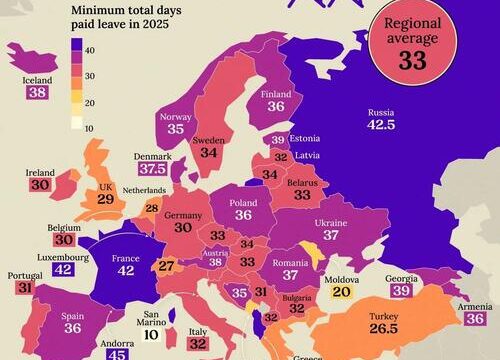
This map, via Visual Capitalist’s Niccolo Conte, shows the minimum total number of paid leave days in Europe in 2025.
The data for this visualization comes from World Population Review.
Europe’s Most Generous Leave Policies
Several countries stand out for offering more than 40 days of paid leave annually. Andorra tops the ranking with 45 days, including 31 paid vacation days and 14 paid public holidays.
Countries such as France, Luxembourg, Malta, and Russia also provide more than 40 days of total paid leave.
CountryMinimum Paid Leave
🇦🇩 Andorra45
🇷🇺 Russia42.5
🇫🇷 France42
🇱🇺 Luxembourg42
🇲🇹 Malta41
🇦🇱 Albania40
🇬🇪 Georgia39
🇪🇪 Estonia39
🇦🇹 Austria38
🇮🇸 Iceland38
🇩🇰 Denmark37.5
🇺🇦 Ukraine37
🇷🇴 Romania37
🇪🇸 Spain36
🇵🇱 Poland36
🇫🇮 Finland36
🇦🇲 Armenia36
🇳🇴 Norway35
🇧🇦 Bosnia and Herzegovina35
🇸🇪 Sweden34
🇸🇰 Slovakia34
🇱🇹 Lithuania34
🇨🇾 Cyprus34
🇨🇿 Czechia33
🇭🇺 Hungary33
🇧🇾 Belarus33
🇭🇷 Croatia33
🇸🇮 Slovenia33
🇮🇹 Italy32
🇧🇬 Bulgaria32
🇱🇻 Latvia32
🇲🇰 North Macedonia32
🇵🇹 Portugal31
🇷🇸 Serbia31
🇩🇪 Germany30
🇧🇪 Belgium30
🇮🇪 Ireland30
🇬🇧 UK29
🇬🇷 Greece29
🇳🇱 Netherlands28
🇨🇭 Switzerland27
🇹🇷 Turkey26.5
🇲🇪 Montenegro21
🇲🇩 Moldova20
🇯🇪 Jersey19
🇸🇲 San Marino10
The regional average sits at 33 days, and many countries fall close to this level. Nations such as Czechia, Hungary, Croatia, Slovenia, and Belarus offer between 32 and 34 days of paid leave per year.
Lower Leave Totals at Europe’s Edges
At the lower end of the spectrum, San Marino offers the fewest paid leave days at just 10, followed by Jersey, Moldova, and Montenegro, all of which fall well below the European average.
Meanwhile, countries like Germany, Belgium, and Ireland sit near the middle, offering around 30 days of total paid leave—still higher than many non-European economies.
If you enjoyed today’s post, check out The Rise of Senior Populations by Region on Voronoi, the new app from Visual Capitalist.
Tyler Durden
Tue, 02/10/2026 – 02:45
https://www.zerohedge.com/personal-finance/france-has-most-paid-vacation-days-europe