Category: News

Jonathan Zimmerman: Epstein files reveal affirmative action for the rich and powerful
In 1995, a retired insurance executive named Walter Kaye recommended a friend’s daughter for an unpaid internship at the White House. You will remember her name: Monica Lewinsky.
But you probably don’t remember Kaye, who had contributed about $350,000 to the Democratic National Committee. He had advised Bill Clinton on how to use his personal insurance policies to pay his legal expenses in the Paula Jones sexual harassment case. Kaye had been an overnight guest at the White House. And he was “very tight’ with Hillary Clinton, a former Clinton administration official said.
He was also close to Lewinsky’s mother, who asked him to put in a good word for her 21-year-old daughter. Lewinsky would later have a scandalous affair with Bill Clinton, who was impeached for lying about it. Nobody batted any eye at an otherwise unremarkable young woman getting a plum Washington internship simply because of her connections to the rich and powerful.
I’ve been thinking about that history amid recent news that Jeffrey Epstein helped filmmaker Woody Allen get his daughter into Bard College. Wealthy people get an unfair advantage in college admissions and everything else. Let’s call it what it is: affirmative action for the rich.
And it’s on rich display in the Epstein files. In 2016, Epstein emailed Bard President Leon Botstein and asked him to coordinate a visit to the campus for Soon-Yi Previn, Woody Allen’s wife. A frequent correspondent with Epstein, Botstein wrote back and said he was “delighted to help.”
The same day, Previn sent a note to Botstein. “Thank you so much for your offer to help our daughter, Bechet Allen, get into Bard College,” Previn wrote. “I will take you up on the offer.:)”
In a statement last week, Bard College said that Bechet Allen “was accepted on the merits of her own qualifications for admission.” Perhaps so. But it’s a whole lot easier to display your merits when a billionaire financier is vouching for you.
The Bard College campus in Annandale-on-Hudson, N.Y., March 19, 2025. (Arden Wray/The New York Times)
All of this comes amid attacks by the administration of President Donald Trump of race-based affirmative action and its pledges to return to the ideal of merit. “We believe that whether you are a doctor, an accountant, a lawyer, or an air traffic controller, you should be hired and promoted based on skill and competence,” Trump told Congress back in March. “You should be hired based on merit.”
That rings hollow coming from the same administration that recently sent out a recruiting message seeking prosecutors for the Department of Justice who “support President Trump.” That’s affirmative action based on ideology, not race. No Democrats or Never-Trump Republicans need apply.
Despite its insistence upon “merit-based admissions policies” at universities, meanwhile, the White House hasn’t moved to challenge the most obvious form of affirmative action for the rich: legacy preferences. Over 500 institutions still give you a leg up if your mom or dad went there. But we haven’t heard a peep about that from Trump.
Maybe that’s because three of Trump’s own children attended the University of Pennsylvania, where Trump went (and where I teach).
Trump’s brother, Fred Trump Jr., was an old friend of a Penn admissions officer. In 1966, Trump Jr. called his buddy and told him Donald Trump wanted to transfer to Penn from Fordham. Shortly after that, Donald came down to speak with his brother’s friend. And he was accompanied at the interview by his father, the real estate mogul Fred Trump Sr.
Would Trump have gotten into Penn without the boost he received from his moneyed connections? We don’t know. But here’s what we do know: affirmative action for rich people makes all of our institutions poorer.
Just ask Walter Kaye. In 1998, he told a grand jury that he regretted helping Lewinsky get her internship at the White House.
Bill Clinton bears the primary responsibility for their affair and everything that came after it. The reality is that Lewinsky wouldn’t have been at the White House without affirmative action for the rich. It happens every day. And that should be a scandal, too.
Jonathan Zimmerman teaches history and education at the University of Pennsylvania. He serves on the advisory board of the Albert Lepage Center for History in the Public Interest.
Submit a letter, of no more than 400 words, to the editor here or email letters@chicagotribune.com.
https://www.chicagotribune.com/2026/02/11/opinion-jeffrey-epstein-files-woody-allen-connections/

For immigrant-owned cafes and restaurants in Chicago, solidarity against ICE is not one-size-fits-all
Last month, a national shutdown swept the country, urging people to observe a day without school, work or shopping as a way to demand changes to federal immigration enforcement. At Chicago’s Daley Plaza in the Loop, hundreds gathered despite the cold. Dozens of businesses closed shop. Many others, however, stayed open. But not because they wanted to.
The economic blackout on Jan. 30 was a protest against U.S. Immigration and Customs Enforcement actions following the fatal shootings in Minnesota of Renee Good, a 37-year-old mother of three, who was killed by an ICE officer on Jan. 7, and Alex Pretti, a 37-year-old VA nurse, killed by border patrol agents on Jan. 24.
Leading up to the demonstration against ICE, many restaurants and cafes took to social media to decry the Trump administration’s actions, but explained to customers that they were not in a financial position to close in solidarity, with payroll and rent on the horizon.
Hundreds of businesses in Chicago, notably in immigrant neighborhoods, are still trying to recover from a downturn in sales after being hit from all sides by intense immigration enforcement activity that swept the city in recent months. As many brace for another such storm, the burden of balancing activism and survival has gotten heavier.
“These are very interesting times, and I think it’s important for everyone to know that solidarity can look a little different to everybody, especially for a Hispanic-owned, or immigrant-owned small business,” said Raoul Adwan, owner of Thrd Coffee in the city’s Bucktown neighborhood. “For us, we’re in our slow season, and losing just one day could mean a lot and we have to be responsible for our staff.”
Thrd Coffee stayed open for the nationwide blackout. Adwan, who is half Mexican and half Bolivian, said some of his baristas told him they preferred the coffee shop stay open because they needed the shifts. He also noted that an elderly taquero who Thrd Coffee partners with was confused about why his restaurant saw fewer customers than usual that day.
“I wish we were in a better position to participate,” Adwan said, adding that activism sparked on social media has its limitations. “But I was like, ‘man, how is it possible that I only found out about this the day before?’”
Alma Blancarte-Mora, co-owner of Bueno Days in Pilsen, learned of the call for a shutdown a few days beforehand, so she was able to more easily close. But the coffee shop paid staff that Friday to help with back-of-house tasks and ongoing marketing projects.
“We strongly believe that being in America, economic disruption is the only way that we may be able to get heard. If they won’t listen through protests or through people educating themselves on what is possible, maybe they’ll listen if businesses close and people don’t spend money,” said Blancarte-Mora. “But you can’t just call someone off, especially out of our younger staff. Everyone has responsibilities and things that they need to pay for.”
As another step in solidarity, Blancarte-Mora and her husband, shop co-owner Cristóbal Mora, sell shirts and tote bags that say “Made Possible by Immigrants.” On the back the shirts list actions of humanity that are “free”: choosing compassion over control, defending freedom for all, celebrating duality.
“When everything started happening with ICE, we were like, ‘What is Bueno’s way to say what we truly feel? It’s very easy to get enraged and angry at everything that’s going on, and we thought — what we do, and our everyday lives as U.S. citizens, is not possible without immigrants,” said Blancarte-Mora. “It’s disheartening to see what’s going on because so many beautiful things in our country are made by immigrants. It was our way to say that immigrants are what make America beautiful.”
The merchandise, designed by Mora, is available in store and online, and will be a continued part of the Bueno Days brand.
Blancarte-Mora said many restaurants, bakeries and cafes that stayed open did so partly because they had already stocked perishable inventory for that day.
“And although still a risk for us because we do have dairy and make all of our syrups and all of our drinks in-house, it was just something that we were willing to risk because the message was more important,” she added.
For Eyad Zeid, owner of Nabala Cafe in Uptown, the decision not to participate somewhat landed on the cafe’s supply of milk, syrups and pastries, but the financial risks of closing the shop on its busiest day of the week ultimately outweighed everything else.
“Since we’ve opened, there’s been a lot of different calls for a general strike in the last two-plus years and every time, there’s no real plan in place, there’s no real organizing, it’s mostly ‘Hey, there’s this thing on Instagram. Are you going to participate?’” Zeid said. “But I think from the perspective of any small business in Chicago, the margins are super, super thin and shutting down for a day without an explicit purpose and actual accomplishment that will come from it is really difficult.”
Large-scale protests or single-day actions to disrupt the economy seldom result in immediate policy changes, a common challenge in advocacy work, said Brayden King, professor of management and organizations at Northwestern University.
“You have to ask, what’s the incremental added effect of having people unite around this boycott and others that will come after it, and I think lots of people, including the owners of these businesses, are asking, ‘Is it worth it for us to bear the pain, when we’re not the one causing it?’” King offered. “In the cases where the government is the target, whether these strikes or shutdowns are effective hinges on a lot of things, but mainly it’s about people’s voices being heard.”
Protests and strikes that pop up in response to federal immigration tactics create visibility, but for economic disruption to make a dent, the movement would have to span a longer period of time, King said.
“Let’s say you need to go buy diapers, you’re not going to do without diapers and suddenly start using cloth diapers — so you may support the boycott on Friday and then go buy the diapers on Saturday. That has negligible economic impacts because you’re just transferring your purchase from one day to another,” King said. “From a macro perspective, ongoing organizing has to cause people to change their behavior.”
Zeid, Nabala Cafe’s owner, admits that he’s more cynical about the impact of a shutdown. But Nabala Cafe has been at the forefront of Palestinian activism for more than two years, becoming a true “third place” for the community. Eyad reiterated that solidarity looks different for different people, and that for Nabala Cafe, their physical store is how they’ve shown up for vulnerable groups.
“Having places to gather that are free and outside of the home is crucial to just a well-functioning society in general,” Zeid said. “Nabala Cafe especially is a spot that is used and frequented by activists and organizers, and I think that’s kind of our bread and butter.”
Zeid said he’s encouraged by the growth of cafes and small businesses that double as places to gather in turbulent times or simply to find like-minded people on social justice issues. But there are limitations too, on what can become a traditional third place.
“Coffee shops are as close as they come to third places. Culturally, it’s really become a part of the ethos of what it means to be a coffee shop — we won’t kick you out if you don’t buy anything, you can sit (for hours) alone or with people, yes there are some rules at different places, but in general, they’re pretty accessible,” he said.
A couple of days before the Jan. 30 economic boycott, Zeid posted on Instagram that he would remain open, explaining that the business is already scraping by and that losing a day of sales would not be feasible, especially without a plan from local on-the-ground organizing groups. The post garnered hundreds of comments. Many were annoyed, while others agreed that a better approach should be taken next time, with organizers mobilizing weeks or months ahead of schedule.
The U.S. doesn’t have an extensive history of general strikes, particularly since the mid-20th century, said Bob Bruno, director of the labor studies program at the University of Illinois. That’s in large part because of legal barriers.
The National Labor Relations Act has governed the rights of American workers to organize, strike and collectively bargain since 1935. Though the law protects the rights of private-sector workers to join unions, it also puts significant limits on the issues over which they can legally walk off the job. Generally speaking, strikes must be connected to the direct economic interests or working conditions of a particular workplace to be legal, and unions are typically hesitant to endorse strikes that would leave their members open to getting fired.
Saru Jayaraman, president of One Fair Wage and director of the Food Labor Research Center at the University of California at Berkeley, told the Tribune that grassroots strikes such as the one on Jan. 30 are not typically endorsed by labor unions due to a lengthy endorsement process.
“These are really popping up from just outrage on the streets, but I will say I have seen a ton of labor folks at these rallies so even if the institutions are not endorsing, I think there’s a lot of personal support for mass action,” Jayaraman said.
The strike instead was organized through National Shutdown, a decentralized grassroots movement across multiple cities, and was endorsed by 50501, CodePink, Defend Immigrant Families Campaign, the Council on American-Islamic Relations, the Palestinian Youth Movement and several other groups.
“Everybody has to discover for themselves what level of risk and sacrifice they’re willing to partake in. But change will not happen without that,” she added. “Ultimately, the power that we have is our ability to withhold our labor.”
Jackson Flores, executive director of DishRoulette Kitchen, a nonprofit providing funding and education to small businesses across Chicago, said real impact goes beyond a single event and comes from consumers making longer-term choices about how they spend their money.
Jackson noted that dozens of restaurants donated to mutual aid organizations on Jan. 30 as a show of solidarity, and continue to do so. Adwan, of Thrd Coffee, donated 20% of sales to the Illinois Coalition for Immigrant and Refugee Rights. Justin Lerias, pastry chef and owner of Del Sur Bakery in Lincoln Square, donated 100% of the shop’s profits from that day’s sales and raised $3,229 for ICIRR. Boka Restaurant Group also supported ICIRR in lieu of closing its restaurants, donating $50,000 toward the coalition and the National Immigration Law Center.
At Thrd Coffee, customers can also purchase solidarity stickers designed by Studio Malt. The stickers feature the Morton Salt logo of a girl holding an umbrella and pouring a box of salt. On the bottom of the sticker, it says “(expletive) ICE.”
“It always boils down to the hospitality industry, despite its own struggles, continuing to support immigrants in more ways than one,” Jackson said.
Chicago Tribune’s Talia Soglin contributed.
https://www.chicagotribune.com/2026/02/11/chicago-restaurants-national-shutdown/

Column: Telling the amazing story of Black jockey Isaac Burns Murphy
Currently preparing for her latest adventure in entertainment, Nancy Hays could recently be found inside the pleasant Landmark Theater complex in Highland Park, working with a few collaborators, preparing to bring to life the remarkable story of a Black man born enslaved in 1861 who became a giant as a jockey
”He was a sports superstar with class, sophistication, and impeccable integrity,” writes Hays. “He was a great son, pupil, mentor, husband, friend — and a great American.”
But before we get to that fellow — name Isaac Burns Murphy, and I am willing to bet that few if any of you have ever heard of him — let’s learn about Hays.
She was born and raised in downstate Champaign, the middle child of a doctor and retired nurse and, she says, “just wild about, obsessed with anything to do with arts and entertainment.” She started early, performing as Dorothy in a small-town production of “The Wizard of Oz.”
That was followed by jobs dancing at theme parks and being a vocalist for her high school’s jazz band. “My parents didn’t know quite what to do with me,” she says. “They thought I might need to have a plan B and so I majored and graduated from the U. of I. with a degree in advertising.”
She had a long on-and-off relationship with Nashville’s music industry during and after college, but put stardom on hold to marry attorney Sean Heffernan in 1988, in what she calls “the best decision of my life.” He is now retired, having spent much of his career in city and county government.
“And he has supported his crazy arts-obsessed wife for decades,” says that wife.
Their four children were also attracted to the arts. “They all performed in theater around town when they were young,” Hays said.
Years ago, Hays started a company producing charitable and corporate events, and in 2019 mounted a show for the National Precast Concrete Association at Churchill Downs, the famous thoroughbred racing facility in Louisville, Kentucky, long home to the Kentucky Derby.
“I found myself in a small museum on the second floor, sort of hidden away,” she says. “And there was a tiny exhibit about the part that Black jockeys played in the early days of racing and particularly about this one remarkable man.”
And thus she was introduced to the aforementioned Isaac Burns Murphy.
“I was overwhelmed,” she says. “I know this was a difficult time in American history, the year between the Emancipation and Jim Crow. But Isaac Murphy was extraordinary.”
She refers to him as “the Michael Jordan of his time,” and in support of that argument can tell you that he won three runnings of the Kentucky Derby and was the first jockey to be inducted into the National Museum of Racing and Hall of Fame at its opening in 1955. His father, Jerry, had escaped slavery and fought in the Union army in the Civil War. His hugely influential mother, America, also had been enslaved. The story of Murphy’s career included many winning mounts, millions of dollars in purses, controversies and poisonings.
Musician and author Nancy Hays poses with her book “Riding for America,” outside Wayfarer Theaters on Feb. 3, 2026, in Highland Park. The book, about Black jockey Isaac Murphy, has been adapted into a stage production. (John J. Kim/Chicago Tribune)
Hays did find one book about Murphy, 2013’s “The Prince of Jockeys: The Life of Isaac Burns Murphy” (University of Kentucky Press) by Pellom McDaniels III, a former pro football player and professor at Emory University. She wanted to consult with McDaniels shattered but he died in 2020.
She collaborated on a screenplay with her son, Eddie Heffernan. He was a graduate of Stanford University and an alumnus of the 2015 first class of the Harold Ramis Film School at Second City, working as a writer and actor. They used that screenplay as the foundation for a book, “Riding for America,” which Hays calls “a story of resilience, excellence, and the enduring impact of Black achievement in American history.”
It is a fine book, one large part a fictionalized tale, a smaller non-fiction section and a short study guide, all peppered by fine illustratons and photos. Sunday’s performance at Landmark is similar to those that have been visiting area schools. Hays’ team consists of singer and actor Jazzma Pryor, singer and actor Eldridge Shannon; Stephan Mazurek on projection design and Shelley Strasser handling lighting, props and costumes.
I have enjoyed and wagered on thoroughbred horse racing. I know it has been a rich white man’s sport but until now didn’t realize the significance of Black jockeys in the early days of horse racing in this country.
Musician and author Nancy Hays, center, and actor Jazzma Pryor, right, rehearse scenes from “Riding for America” at Wayfarer Theaters on Feb. 3, 2026, in Highland Park. (John J. Kim/Chicago Tribune)
“The great solar eclipse of 1879 … and the first use of photo-finish photography were also historically significant moments in Isaac’s lifetime,” Hays writes. “At the time of his birth, enslaved people were not permitted to read or write. … The fact that Isaac was literate made a profound difference in his life and career.” And he could ride.
Though statistics from that era are often debated, many cite that Murphy won 628 of his 1,412 starts, a 44% victory rate. That has never been equaled. As Hall of Fame jockey Eddie Arcaro said, “There is no chance that his record of winning will ever be surpassed.”
Or that we will ever see the likes of Isaac Burns Murphy come our way again.
“Riding for America: The Isaac Murphy Story” is 4 p.m. Feb. 15 at Wayfarer Theaters, 1850 2nd St., Highland Park; wayfarertheaters.com
rkogan@chicagotribune.com
https://www.chicagotribune.com/2026/02/11/black-jockey-isaac-burns-murphy/

Letters: How US can improve Cuba’s situation and our own
Cuba faces acute challenges including food security, energy shortages, rising disease rates and ongoing economic contraction. Creating conditions that encourage citizens to remain and contribute to national recovery is critical. Cuba’s private sector and agricultural community both are seeking avenues for economic advancement and self-determination — principles supported by the United States. U.S. agriculture can play a pivotal role by supporting Cuba’s private sector and farm cooperatives.
The framework to support the Cuban people and ensure food security is already in place. U.S. law has permitted agricultural exports to Cuba for 25 years, yet there are significant opportunities for expansion if executive support is forthcoming. Over the past four years, Cuba has changed its import purchases from the government to its private sector, which today buys an estimated 70% of food imports. Despite this shift, U.S. exports including rice, wheat, pork, beef, soybeans, milk, animal feed, fertilizer and farm equipment remain limited.
To address this imbalance and to help alleviate food security, it is recommended to approve U.S. Treasury licenses for investment in Cuban private businesses and agriculture, contingent upon reciprocal measures from the Cuban government. Such steps would enhance the autonomy and productive capacity of Cuba’s private sector, including farm cooperatives, many of which have the title to their land. Facilitating investment in these entities would foster mutually beneficial trade, thereby improving the competitiveness of U.S. agricultural exports by increasing their purchasing power.
Further, collaboration between agricultural producers, researchers and scientists should be promoted. Increased joint research is necessary to control common pests and diseases and safeguard shared natural resources. Importantly, Cuban farmers, researchers and scientists represent civil society actors whose contributions benefit both countries.
To achieve meaningful change in Cuba, it is essential to begin with shared priorities: ensuring food security and economic stability, with a dynamic private sector playing a key role.
Facilitating agricultural investment, promoting scientific collaboration and broadening bilateral trade would address pressing concerns, while encouraging Cuban citizens to remain and actively participate in the nation’s recovery.
— Paul Johnson, chair, U.S. Agriculture Coalition for Cuba, and partner, Focus-Cuba
Neutral on murderous policy
Foreign affairs columnist Daniel DePetris continues to do a disservice educating Tribune readers on America’s illegal, immoral and criminal foreign policies that have degraded and destroyed numerous countries.
Case in point is his commentary “What kind of deal is the US looking for in Cuba?” (Feb. 3).
For DePetris, it’s all about U.S. foreign policy interests without any mention of their illegality and immorality.
He references how America’s murderous Venezuelan policy, killing over 200 in the boat bombings and capturing sitting Venezuelan President Nicolás Maduro, is a “a force-multiplier for the administration’s Cuba policy, which centers on increasing economic pressure on the island until its aging rulers either wither away or negotiate their own demise.”
It may be a “force-multiplier,” but it’s in service of another notch on America’s murderous regime-change belt that toppled regimes in Afghanistan, Iraq, Libya, Syria and Venezuela; the hope is that Cuba and Iran will follow. DePetris writes in such neutral, clinical terms that the uneducated would have nary a clue of how degrading, indeed murderous, U.S. policy truly is on hundreds of millions of people worldwide.
Only at the end does DePetris point out “normalizing the U.S.-Cuba relationship would be the most effective and least costly policy proposal on the table.” Most effective and least costly for whom? The United States, of course, not the Cuban people, who may suffer another 66 years unless sensible commentators push back. That certainly does not include DePetris.
DePetris inadvertently refutes 66 years of America’s shameful Cuban policy by stating the obvious, which applies to the aforementioned five regimes America toppled: “Cuba isn’t a real national security threat to the United States anyway (and) can’t possibly compete with U.S. primacy.”
Sadly, the Tribune Editorial Board seldom editorializes on U.S. foreign policy, the most critical existential issue facing Americans. Instead, it has outsourced foreign affairs to DePetris, a proponent of U.S. exceptionalism, who will never challenge America’s annual trillion-dollar war machine wreaking havoc worldwide.
— Walt Zlotow, West Suburban Peace Coalition, Glen Ellyn
Getting Trump to back down
Columnist Elizabeth Shackelford (“What history tells us about fighting the repression we are seeing here,” Feb. 6) is correct in characterizing some of Immigration and Customs Enforcement’s methods as abusive and oppressive.
To be sure, arresting undocumented immigrants who have committed violent crimes is a worthy goal. Yet, in trying to achieve this goal, ICE has been unnecessarily oppressive at times, and these actions deserve intensive and focused protests. If the federal agents’ methods are not challenged, President Donald Trump will allow the abuse to escalate.
The good news is that Trump can be made to back down. In the face of protests over his resistance to the release of the Jeffrey Epstein files, Trump capitulated. After it received severe backlash, Trump played down his statement that the U.S. would “take over” the Gaza strip. Public outrage has already resulted in the reduction of federal agents in Minnesota.
Large and coordinated protests are the way to go. Trump’s ego can take only so much criticism.
— Terry Takash, Western Springs
Problems with classification
Few Americans realize that immigration enforcement operates under a legal fiction created in the 1890s. It is classified as “civil,” even though the government uses criminal‑style power — detention, raids and property seizure — without the constitutional protections required in criminal cases. The U.S. Supreme Court has repeatedly upheld this arrangement, not because it is just but because the law calls it “civil.”
This loophole has produced a parallel justice system with fewer rights and less oversight. It is structurally unsound, constitutionally incoherent and dangerous to leave in place.
I’ve drafted the Due Process in Civil Enforcement Act (DPCEA) to correct this. It would restore judicial warrants, guarantee counsel and ensure that due process applies whenever the government restricts a person’s liberty or livelihood. It also would supersede the outdated statutes and court cases that created this problem.
A constitutional democracy cannot tolerate two systems of justice. It’s time to bring immigration enforcement back under the rule of law.
— Richard Garling, Grayslake
Blame game over immigration
Members of the current administration continually refer to the influx of undocumented immigrants as something that occurred during the Joe Biden administration. President Donald Trump, Attorney General Pam Bondi, Homeland Security Secretary Kristi Noem and others continually frame the immigration issue as something caused by the prior administration. If this were true, then how is it that so many of the immigrants who are being brutally detained by Immigration and Customs Enforcement and Customs and Border Protection agents have resided in the country for more than five years?
Since 1981, Republican and Democratic presidents have deported millions of people, showing that the issue is not just from the prior administration.
It is time to stop blaming a prior administration and do something about improving the way that immigration is addressed. There needs to be a way for immigrants who have been productive members of our society to become citizens.
— Raul Saleme, Naperville
Submit a letter, of no more than 400 words, to the editor here or email letters@chicagotribune.com.
https://www.chicagotribune.com/2026/02/11/letters-021126-cuba-us/

French Wine, Spirits Exports Sink To 20-Year Low As Demand Sours
French Wine, Spirits Exports Sink To 20-Year Low As Demand Sours
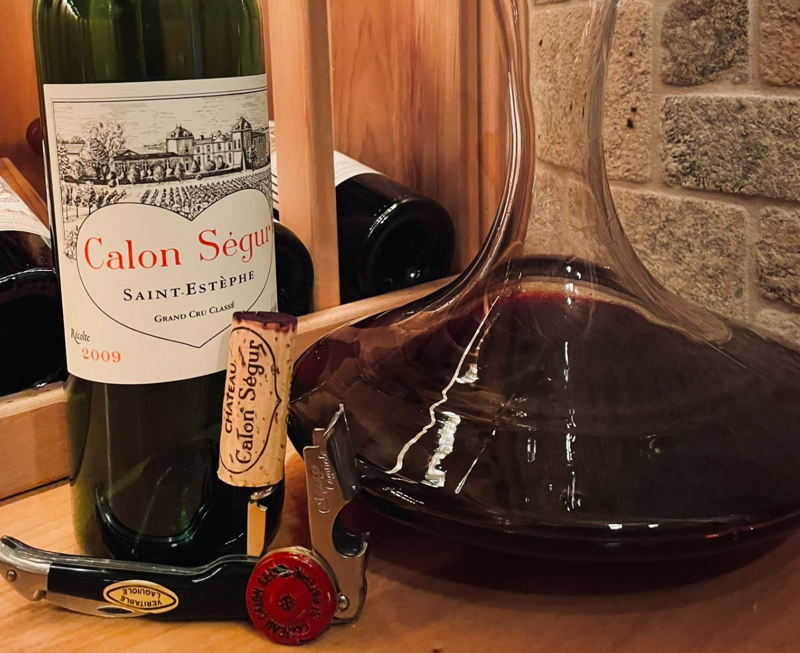
Trade wars, along with a generational shift away from wine, have pushed Bordeaux winemakers into turmoil, with French wine and spirits exports sinking to their lowest level in two decades.
“In volume, our exports have been in a slump and are at their lowest level in at least 20 years,” Gabriel Picard, president of FEVS, the country’s federation of wine and spirits exporters, told Bloomberg at the Wine Paris fair on Tuesday.
Gabriel Picard
Picard warned that wine sales have been sliding since 2022. In an earlier statement, he said, “Geopolitical tensions, trade conflicts, exchange-rate fluctuations, and the loss of consumer confidence have all weighed on our exports.”
In a separate interview with Reuters at Wine Paris, he added, “There is a real decline in the U.S., and the volume correction may not have been sufficient.”
He warned, “We may see another volume correction in 2026.”
Wine Map Of France
FEVS data show that exports in 2025 declined 8% in value to $17 billion compared with 2024. Volumes fell by about 3%.
The Wine Paris trade fair is a push by President Macron to search for solutions to the industry’s crisis. The French government is paying winemakers in Bordeaux to rip up their vines to reduce oversupply.
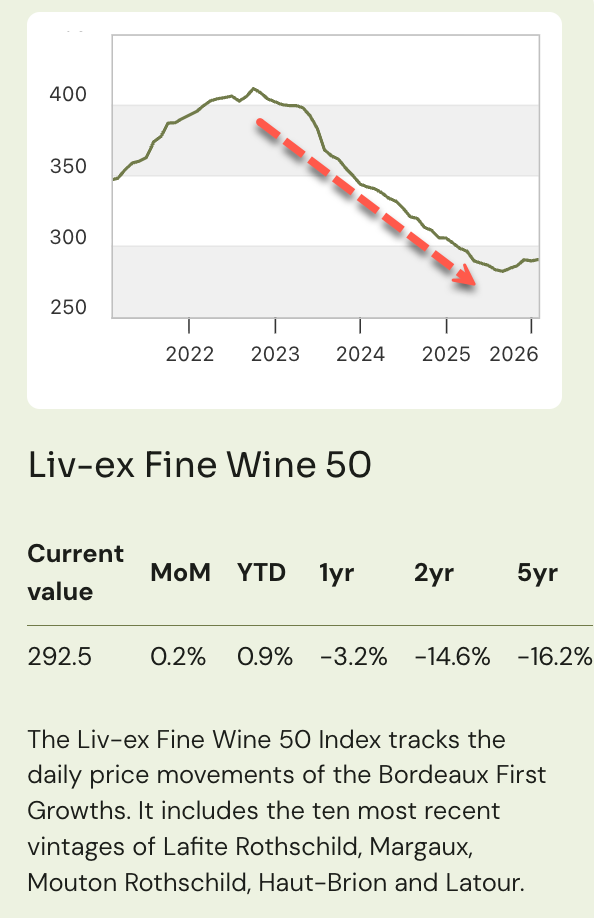
Looking at markets, the Liv-ex Fine Wine 50, a benchmark index from Liv-ex that tracks daily price moves in Bordeaux First Growths, comprises 50 component wines and shows the bust underway since peaking in early 2023.
“Twenty years ago, people liked robust reds with a high alcohol content, but today they’re looking for fresher, lighter wines, so producers in Bordeaux are returning to an old winemaking method to suit new tastes,” Bernard Burtschy, a wine critic for Le Figaro, told The Times.
Tyler Durden
Wed, 02/11/2026 – 05:45
https://www.zerohedge.com/markets/french-wine-spirits-exports-sink-20-year-low-demand-sours

The best hawthorn berry supplement for heart health
Which hawthorn berry supplements are best?
Hawthorn berries grow on trees and shrubs native to Europe, North America and Asia. They belong to the Crataegus genus and are nutrient-rich. They have been used medicinally for centuries to alleviate digestive problems, heart failure and to reduce blood pressure.
If you’re looking for a hawthorn berry supplement, Health’s Harmony Hawthorn Berry 4:1 Extract is a nutrient-rich capsule with 665 milligrams of hawthorn berry per serving.
What to know before you buy a hawthorn berry supplement
What is a hawthorn berry?
First used in traditional Chinese medicine, hawthorn berries are an herbal remedy with a range of health benefits. Its leaves and fruit are used medicinally and are high in antioxidants and potential anti-inflammatory properties. They range from yellow to deep red to black and have a tart, mildly sweet taste. They grow on shrubs and small trees and are in the rose family. They became popular as a medicinal aid in Europe and North America in the late 1800s to treat digestive issues, high blood pressure, heart failure and digestive issues.
The botanical name is Crataegus oxyacantha. Other names include English hawthorn, whitethorn, mayblossom, maybush and mayflower.
What are the benefits of hawthorn berry supplements?
Hawthorn berries have been used medicinally for over a thousand years, but their exact benefits require further research for full verification.
Antioxidant-rich. The antioxidants found in hawthorn berries fight the free radicals that lead to disease. Whether from an unbalanced diet or environmental factors, your body can become compromised and more vulnerable to damage. Antioxidants boost your immune system and promote overall health. The antioxidants specific to hawthorn berries may benefit some cancers, heart problems, type 2 diabetes, asthma and premature skin aging.
Calming properties. Hawthorn berries may soothe your nervous system. They have a mild sedative effect and improve circulation for overall nerve function health. They may also lower blood pressure, which helps calm the nervous system.
Anti-inflammatory. Chronic inflammation is a leading cause of disease. Inflammation associated with asthma and type 2 diabetes may benefit from hawthorn berry supplements.
Lower blood pressure. The most common use of hawthorn berry is to treat high blood pressure. Traditional Chinese medicine relied on it to reduce blood pressure by dilating blood vessels. More research is needed to ensure this benefit’s viability.
Lower cholesterol. Imbalanced fat chemical levels in your blood may lead to unhealthy buildup that causes heart attacks or strokes. Hawthorn berry extract has been shown to lower cholesterol and triglyceride levels.
Soothe digestive issues. Hawthorn berries have been used for years to soothe stomach pain and boost overall digestive health. The fiber found in the berry acts as a prebiotic. Prebiotics reduce constipation and indigestion. They also promote the growth of healthy gut bacteria. Food digests more quickly and moves through your body easier, which soothes indigestion.
Fight hair loss. The polyphenols in hawthorn berries may reduce hair loss, but more studies are needed to prove their efficacy in stimulating hair growth.
Heart health. Hawthorn berry extract has been used to promote heart health and reduce fatigue associated with heart disease and damage.
How do you take hawthorn berry supplements?
Hawthorn berry supplements are easy to add to your diet. Hawthorn berry supplements typically include the berry, its leaves and the plant’s flowers. The berry has the most concentrated amount of antioxidants. They are difficult to find in their raw form, but capsules and tinctures are readily available online or in your health food store. You can mix the liquid extract, powder or tincture into your favorite juice, smoothie or shake. You can also consume hawthorn berry tea using its dried leaves or buy specially made tea.
What to look for in a quality hawthorn berry supplement
Form
Hawthorn comes in capsules, dried leaves or flowers, liquid tinctures and extracts. If you have difficulty swallowing pills, consider another form of hawthorn berry supplement. Tinctures and extracts are easy to mix with your favorite juice, tea, smoothie or shake. Hawthorn berry may also be in juices, jams and other food products.
Dose
The most common hawthorn berry supplement dose is daily between 250 and 500 milligrams. Some studies suggest that the minimum dosage for effectiveness is 300 milligrams. It’s important to note that the Food and Drug Administration does not regulate herbal supplements. Consult with your doctor before taking hawthorn berry supplements to ensure that they are safe for use.
Vegetarian-friendly
Capsules are often made with gelatin, an animal byproduct. If you are vegetarian or vegan, look at the ingredient list to ensure no gelatin was used.
Side effects
Hawthorn berry supplements are generally considered safe to consume. Mild side effects may include nausea and dizziness. If you take prescribed medications for heart health, blood pressure or cholesterol, consult with your doctor before taking hawthorn berry supplements. It’s important to note that hawthorn berry supplements will not stop an angina attack.
How much you can expect to spend on hawthorn berry supplements
Hawthorn berry supplements range in price from $9-$15 depending on form and quality.
Hawthorn berry supplement FAQ
Can you eat hawthorn berries?
A. Yes. The leaves, fruit and flowers are all edible.
Do hawthorn berries make you sleepy?
A. Hawthorn berries may have a mild sedative effect. It relaxes the nervous system and promotes an overall calm.
Who should not take hawthorn berry supplements?
A. If you are taking heart medications, you should not take hawthorn berry supplements. It may also negatively interact with sedatives or sleep medications. Women who are pregnant or breastfeeding should not take hawthorn berry supplements.
What are the best hawthorn berry supplements to buy?
Top hawthorn berry supplement
Health’s Harmony Hawthorn Berry 4:1 Extract
What you need to know: These capsules contain 665 milligrams of antioxidant-rich hawthorn berries per serving for immune support.
What you’ll love: The 4:1 hawthorn berry extract is lab-verified and gives you 2660 milligrams of fresh berries to last for four full months.
What you should consider: These capsules are not vegan and are made with gelatin.
Top hawthorn berry supplement for the money
Swanson Premium Hawthorn Berry Capsules
What you need to know: They are made locally in the United States and contain 565 milligrams per capsule.
What you’ll love: This capsule is cost-effective and comes with a 100% money-back guarantee.
What you should consider: Capsules may be difficult to swallow for consumers who have trouble ingesting pills.
Worth checking out
Hawthorn Berry Extract by Horbaach
What you need to know: This potent extract is rich in antioxidants to support overall wellness.
What you’ll love: Tinctures are easy to mix in with juice or your favorite smoothie. It’s naturally free of gluten and genetically modified organisms.
What you should consider: Some consumers may not like the taste of hawthorn berry extract.
Prices listed reflect time and date of publication and are subject to change.
Check out our Daily Deals for the best products at the best prices and sign up here to receive the BestReviews weekly newsletter full of shopping inspo and sales.
BestReviews spends thousands of hours researching, analyzing and testing products to recommend the best picks for most consumers. BestReviews and its newspaper partners may earn a commission if you purchase a product through one of our links.
Distributed by Tribune Content Agency, LLC.
https://www.chicagotribune.com/2026/02/11/the-best-hawthorn-berry-supplement-for-heart-health/

Today in History: Pope Benedict XVI announces resignation
Today is Tuesday, Feb. 11, the 42nd day of 2025. There are 323 days left in the year.
Today in history:
On Feb. 11, 2013, during a routine morning meeting of Vatican cardinals, Pope Benedict XVI announced he would resign as pope effective Feb. 28; it was the first papal resignation in nearly 600 years.
Also on this date:
In 1847, American inventor Thomas Alva Edison was born in Milan, Ohio.
In 1937, a 6-week-old sit-down strike against General Motors ended, with the company agreeing to recognize and negotiate with the United Auto Workers union.
In 1945, U.S. President Franklin D. Roosevelt, British Prime Minister Winston Churchill and Soviet leader Josef Stalin signed the Yalta Agreement, in which Stalin agreed to declare war against Imperial Japan following Nazi Germany’s capitulation.
In 1975, Margaret Thatcher was elected leader of Britain’s opposition Conservative Party.
In 1990, South African anti-apartheid activist Nelson Mandela was freed after 27 years in prison. (Mandela would be elected president of South Africa four years later.)
In 1990, in one of the biggest upsets in sports history, 42-1 underdog Buster Douglas knocked out the previously undefeated heavyweight champion Mike Tyson at Japan’s Tokyo Dome.
In 2008, the Pentagon charged Khalid Sheikh Mohammed and five other detainees at Guantanamo Bay with murder and war crimes in connection with the Sept. 11 attacks.
In 2011, Egyptian President Hosni Mubarak resigned in the wake of pro-democracy protests, ending three decades of authoritarian rule.
In 2012, singing superstar Whitney Houston was found dead in a hotel room bathtub in Beverly Hills, California, on the eve of the Grammy Awards; she was 48.
Related Articles
Today in Chicago History: Jackie Robinson West stripped of Little League baseball championship
Today in Chicago History: U.S. Sen. Barack Obama announces run for president in Springfield
Today in History: Deadly tornado kills 21 in St. Louis area
Today in Chicago History: Bears’ Steve McMichael selected for Pro Football Hall of Fame
Today in History: ‘Parasite’ wins Academy Award for Best Picture
In 2020, the World Health Organization gave the official name of COVID-19 to the disease caused by the coronavirus that had emerged in the Chinese city of Wuhan.
Today’s birthdays: Actor Tina Louise is 91. Former Florida Gov. Jeb Bush is 72. Sen. Tammy Baldwin, D-Wis., is 63. Musician Sheryl Crow is 63. Former Alaska Gov. Sarah Palin is 61. Actor Jennifer Aniston is 56. Actor Damian Lewis is 54. Surfer Kelly Slater is 53. Musician D’Angelo is 51. Singer-actor Brandy is 46. Singer Kelly Rowland is 44. Actor Natalie Dormer is 43. Actor Taylor Lautner is 33. Singer-songwriter Khalid is 27.

Today in Chicago History: Jackie Robinson West stripped of Little League baseball championship
Here’s a look back at what happened in the Chicago area on Feb. 11, according to the Tribune’s archives.
Is an important event missing from this date? Email us.
Front page flashback: Feb. 12, 2015
The Jackie Robinson West Little League team was stripped of its national title on Feb. 11, 2015, after its leaders knowingly fielded players who lived outside the team’s residential boundaries. (Chicago Tribune)
2015: Little League International took away the Jackie Robinson West team’s national championship, saying its officials knowingly fielded players who lived outside the team’s residential boundaries — and then tried to cover up their deception.
Weather records (from the National Weather Service, Chicago)
High temperature: 70 degrees (1999)
Low temperature: Minus 14 degrees (1885)
Precipitation: 0.83 inches (2009)
Snowfall: 8.3 inches (1956)
Actor Fritz Klein, center, delivers Abraham Lincoln’s Farewell Address at the Old Train Depot on April 17, 2005, at the same Springfield location where the speech was originally delivered by Lincoln before he departed by train for Washington, D.C., on Feb. 11, 1861. (Seth Perlman/AP)
1861: President-elect Abraham Lincoln boarded a train in Springfield, which was bound for Washington, D.C.
“To this place and the kindness of this people I owe everything,” he told the crowd. “Here I have lived a quarter of a century, and have passed from a young man to an old man. Here my children were born, and one lies buried. I now leave, not knowing when or whether ever I may return, with a task before me greater than that which rested upon the shoulders of Washington.”
Vintage Chicago Tribune: World’s Columbian Exposition, 1893 and Century of Progress, 1933-1934
1891: Ground was broken in Jackson Park for construction of buildings for the World’s Columbian Exposition of 1893.
Donald S. Perkins, of the Jewel Co., second from left, huddles with ministers who are part of Operation Breadbasket in Chicago on April 28, 1967, “in an effort to build a stronger economic base for Negro people in Chicago community through the programs,” according to UPI. With Perkins are, left to right, the Reverends Stroy Freeman, Martin Luther King and Jesse Jackson. (UPI Telephoto)
1966: Martin Luther King Jr. threatened boycotts against local industries (starting with bread, milk, soup and soft drink companies) — an extension of his Operation Breadbasket campaign in Atlanta — that refused to hire Black workers.
Jesse Jackson headed the initiative and became its national director in 1967.
Bison at Midewin National Tallgrass Prairie pause for a moment as they graze on Jan. 16, 2016. (Allen Cunningham/Daily Southtown)
1996: President Bill Clinton established the Midewin National Tallgrass Prairie at the 19,000-acre site of the former Joliet Army and Ammunition Plant, making it the nation’s first national tallgrass prairie.
Bison were reintroduced to the land in 2015.
Six inmates escaped from the most secure tier of Cook County Jail on Feb. 12, 2006 — just one day after another inmate escaped from another jail division by hiding in a laundry truck. (Chicago Tribune)
2006: Six inmates — two charged with murder — escaped from Cook County Jail. After plotting the scheme for months, the six men — Tyrone Everhart, of Markham, and Francisco Romero, Arnold Joyner, Michael McIntosh, Eric Bernard and David Earnest, all of Chicago — made their move. The men, who set a fire and overpowered at least two guards, allegedly had the assistance of at least one guard in the Special Incarceration Unit, where inmates with discipline problems spend 23 hours a day in their cells. All were recaptured in a little more than 24 hours.
Vintage Chicago Tribune: Jailbreak!!!
The incident occurred only hours after the capture of another inmate, Warren C. Mathis, who escaped from the jail the previous day. Mathis rode out of jail aboard a truck, which contained inmates’ dirty laundry.
Cook County Sheriff Tom Dart, left, and Emmett Till’s cousin Simeon Wright talk about Till’s original casket that sits in disrepair in a structure on the grounds of Burr Oak Cemetery in Alsip on July 10, 2009. (Zbigniew Bzdak/Chicago Tribune)
2015: Brothers Keith and Terrence Nicks were found guilty by separate juries of desecration of human remains, removal of human remains and removal of more than 10 gravestones and markers.
They were charged after a 2009 FBI and Cook County sheriff’s office investigation revealed 1,500 bones of at least 29 people sprawled across the grounds at Alsip’s Burr Oak Cemetery — the same cemetery where lynching victim Emmett Till is buried.
Want more vintage Chicago?
Subscribe to the free Vintage Chicago Tribune newsletter, join our Chicagoland history Facebook group, stay current with Today in Chicago History and follow us on Instagram for more from Chicago’s past.
Have an idea for Vintage Chicago Tribune? Share it with Kori Rumore and Marianne Mather at krumore@chicagotribune.com and mmather@chicagotribune.com
https://www.chicagotribune.com/2026/02/11/february-11-chicago-history/
PM Meloni Calls Olympic Protesters “Enemies Of Italy And Italians”
PM Meloni Calls Olympic Protesters “Enemies Of Italy And Italians”
Italian Prime Minister Giorgia Meloni called anti-Olympic protesters enemies of the country after demonstrators clashed with police in Milan on Saturday and disrupted train traffic with sabotage actions.
In a post on Instagram, the Italian Prime Minister emphasized that while many people are working to make the Olympics a success and present a positive image of Italy, there are those who, in her opinion, are acting specifically against the country.
“Thousands upon thousands of Italians are working around the clock to ensure that everything runs smoothly during the Olympics.
“Many are doing so as volunteers because they want their country to make a good impression and be admired and respected,” she posted.
“Then there are those who are enemies of Italy and Italians, protesting ‘against the Olympics’ and ensuring that these images are broadcast on television around the world.
“This comes after others cut railway cables to prevent trains from running,” her post continued.
“Once again, we express our solidarity with the police, the city of Milan, and all those who will see their work undermined by these gangs of criminals,” Meloni concluded.
On Saturday, thousands of people protested against the Olympics in Milan, one of the main venues for the event, reports Hirado. During the demonstration, a group of about 100 people broke away from the crowd and clashed with police, throwing fireworks, smoke bombs, and bottles.
Police also used water cannons to restore order. Authorities said six people were arrested after the riots. The incidents also disrupted rail traffic.
Although Meloni made no mention of what Italians are protesting specifically, there have been ongoing protests against the use of U.S. ICE agents for anti-terrorism efforts during the Winter Olympics as well as against Israel’s participation in the Games.
Tyler Durden
Wed, 02/11/2026 – 05:00
https://www.zerohedge.com/geopolitical/pm-meloni-calls-olympic-protesters-enemies-italy-and-italians

Best bladder control supplement
Which bladder control supplements are best?
Involuntary urination is a scary condition for most people, and specific medical issues, stress or aging can lead to incontinence. But there are steps you can take, such as using bladder control supplements, to reduce the effect of incontinence on your daily life. The Azo Bladder Control with Go-Less Daily Supplement is highly effective and trusted for controlling bladder leaks and frequent urges.
What to know before you buy a bladder control supplement
What is incontinence?
Incontinence is a medical condition where your bladder involuntarily releases either all or part of its liquid contents. This condition might not be a huge deal in your daily life. Some people simply have a small amount of bladder leakage when they laugh too hard.
Others have a more incapacitating condition where they find themselves struggling to hold it in. Bladder control supplements can give you the support you need if you feel as if you are in a constant battle with your bladder to do all of the things you want.
Common ingredients
Herbal ingredients are most commonly used in bladder control supplements to provide health support for overactive bladders, including buchu, cornsilk and horsetail.
Cornsilk: Cornsilk is the silky top you find on corn that pokes out of a corn cob husk. This silky top has been used for years to treat and get rid of bladder infections, but it can also help decrease the urge to pee.
Horsetail: Horsetail is a fern found in swampy terrain that includes antioxidant benefits. This fern can help calm incontinence naturally and soothe inflamed bladders.
Buchu: Buchu is a flowering South African plant that’s been used for centuries in traditional medicine and is commonly seen as an overactive bladder remedy.
Other herbs: Besides these three herbs, there are also other herbs, such as saw palmetto, gosha-jinki-gan and minerals like magnesium that you will commonly find in these supplements.
Choosing a supplement
Bladder control supplements are considered a complementary overactive bladder treatment, which means they are taken in combo with other treatments, including prescription medication, diet and exercise changes and pelvic floor strengthening exercises.
But this doesn’t mean that a bladder control supplement can’t have a huge effect on maintaining your bladder until it’s time to go to the bathroom. Search for whole-sourced bladder control supplements with user reviews and active ingredients that indicate they work for other people with the same condition.
What to look for in a quality bladder control supplement
Active ingredients
The active ingredients of a bladder control supplement are naturally the biggest distinguishing factor since these ingredients determine the color, taste and efficacy of the supplement. If you are searching for a particular ingredient, make sure to check the full list of ingredients and note how far the ingredient is up on the list. The higher up an ingredient is, the greater the concentration of the ingredient. You might also want to choose a supplement with non-GMO or organic ingredients.
Quantity
It might make sense for you to purchase bladder control supplements in bulk, so you can get three to four months’ worth of these supplements, based on the amount of money you want to invest. If you don’t buy them in bulk, choosing a smaller size allows you to test out the new bladder control supplement with less of a commitment.
Refrigeration
Some bladder control supplements must strictly be refrigerated or do best when they’re refrigerated, as with other supplements.
How much you can expect to spend on a bladder control supplement
Bladder control supplements cost about $15-$50, depending on the ingredients, quantity and whether or not the supplements are sourced organically.
Bladder control supplement FAQ
What medical issues can lead to an overactive bladder?
A. There are multiple conditions that can lead to overactive bladder, but the National Association for Continence cites diabetes, multiple sclerosis and the nerve damage that comes with these conditions as the main causes.
Are there any alternative options to help you control your bladder?
A. Consider retraining your bladder with surgery, prescription medication, pelvic exercises and careful timing. But make sure to speak to your physician about what works best for you, your body and your needs.
What’s the best bladder control supplement to buy?
Top bladder control supplement
Azo Bladder Control with Go-Less Daily Supplement
What you need to know: This top-selling bladder control supplement is highly effective and trusted for controlling bladder leaks and frequent urges.
What you’ll love: This product is made by a trusted and reputable brand and composed of a proprietary mix of pumpkin seed extract and soy germ extract to help boost your bladder muscles. The supplement also decreases urgency and leakage for most users.
What you should consider: There are occasional issues with water retention or stomach upset after use.
Top bladder control supplement for the money
PlantVital D-Mannose Urinary Tract Treatment
What you need to know: This highly effective natural bladder control supplement contains ingredients that limit bacterial growth and improve the overall health of your urinary tract.
What you’ll love: This product comes with a combo of plant-based ingredients that promote proper urinary tract and bladder function. The supplement is also non-GMO, natural and vegan and helps prevent urinary tract infections.
What you should consider: The big capsules are hard for some people to swallow.
Worth checking out
Terry Naturally SagaPro Bladder Health
What you need to know: This supplement features proven results and natural ingredients, which earns it repeat customers.
What you’ll love: This product is non-GMO and vegan and doesn’t include any sugar or artificial additives. It also includes angelica archangelica extract, which supports your bladder muscles for improved control.
What you should consider: It might take longer than expected to see noticeable improvements.
Prices listed reflect time and date of publication and are subject to change.
Check out our Daily Deals for the best products at the best prices and sign up here to receive the BestReviews weekly newsletter full of shopping inspo and sales.
BestReviews spends thousands of hours researching, analyzing and testing products to recommend the best picks for most consumers. BestReviews and its newspaper partners may earn a commission if you purchase a product through one of our links.
Distributed by Tribune Content Agency, LLC.
https://www.chicagotribune.com/2026/02/11/best-bladder-control-supplement/