Category: News
Editorial: Saba Haider for Illinois 84th House District Democratic primary
The west suburban 84th District features a primary battle between Democrats Jared Ploger and Saba Haider, vying to succeed Rep. Stephanie Kifowit, who is running for Illinois comptroller.
Ploger, a Valley View School District middle school teacher, comes wrapped with an endorsement from the Chicago Teachers Union and told us of many progressive positions, including the state not participating in the Educational Choice for Children Act, presumably a prerequisite for the CTU endorsement.
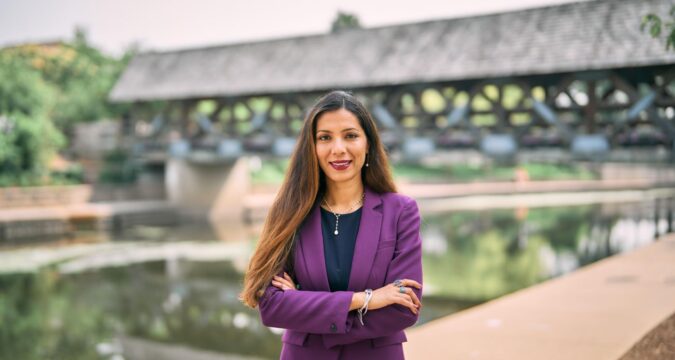
A DuPage County Board member who has a business providing wellness services, Haider is an immigrant from India. Her campaign foregrounds her interest in the economic development of the district, her background in the provision of mental health services and notes her environmental bona fides and her master’s degree in wildlife science, which would be an interesting addition to the Springfield Democrats.
Saba Haider has our endorsement.
Read all of the Tribune Editorial Board’s endorsements for the 2026 Illinois primary election here.
Submit a letter, of no more than 400 words, to the editor here or email letters@chicagotribune.com.

Black History Month is 100. Can its Bronzeville birthplace outlast the age of Trump?
The history of Black History Month began 100 years ago, in the old YMCA building on South Wabash, a wide-shouldered block of pale red brick erected in 1913. It was once the nexus of Bronzeville, the premier gathering spot. At least 80 Chicago organizations met there regularly. When the Harlem Globetrotters (which formed in Bronzeville) were still a novelty, they trained regularly in its gym, for years. If you moved to Chicago during the Great Migration and didn’t have a place to stay, you stayed here, maybe. If you were lucky. During the peak of the Great Migration, the YMCA turned away 20 travelers a day.
The people who work there now, the small staff of the Renaissance Collaborative — which bought the building in 1992, rescuing it from demolition — don’t assume you know any of that. They figure Chicagoans do not know Black History Month took shape here.
When program manager Tara Balcerzak began fundraising for the building’s latest renovation, she told the group’s founder, Patricia Abrams, that she would lean into its role in the creation of Black History Month. Abrams said everyone already knew that; she’d told that story herself for years, while she raising $11 million for the first restoration of the Y.
They’ve since learned people forget, said Fara Taylor, director of finance.
She smiled sadly. “You need to remind them, remind them once more — then again.”
Except, here’s the irony about having to remind them: Considering the political climate, is it possible to draw too much attention to the old YMCA and its history? Balcerzak wonders that. Of course, they do need the attention, she said; she just worries what it could mean in 2026. Even this newspaper story worries her.
A staircase in the lobby once led upstairs to apartments that now have an exterior entrance at the historic YMCA building in Chicago, Feb. 5, 2026. (Brian Cassella/Chicago Tribune)
“Yes,” she said, “I feel an urgency to see the restoration through, as soon as possible.” See, a few years ago, to renovate this birthplace of Black History Month, they landed a $436,375 grant from the Historic Preservation Fund, which is administered by the National Park Service. That was before federal agencies started removing Black history from websites, erasing names of Black soldiers from battleships and deciding not to recognize Black History Month.
On a recent Monday afternoon, Balcerzak and Taylor stood outside the building’s indoor swimming pool, which is drained and gray and been waiting a decade for its renovation.
Balcerzak chose her words carefully: “There haven’t been any threats.”
Taylor nodded: “We’ve been lucky — (the grant) doesn’t have certain words attached …”
“Not true,” Balcerzak said, “it’s technically an ‘African American Civil Rights Grant’ …”
“Well,” Taylor considered, “at least ‘YMCA’ comes at the end of alphabetizing.”
Black Ellis Island
“The Black Ellis Island.” That’s how John Adams, founder of the Bronzeville Trail Task Force, which is developing two miles of abandoned rail line from the historic neighborhood to the lakefront, describes the old YMCA. “It’s not a relic,” he said, “it was literally key to generations of Black Chicagoans.” Indeed, it was conceived as a step in self-determination. In 1911, Julius Rosenwald, owner of Sears, Roebuck & Co., on the urging of his friend Booker T. Washington, pledged to build YMCAs in Black neighborhoods across the country; he offered $25,000 for each one, if a community raised another $75,000. He eventually built more than two dozen, but Bronzeville was first to raise funds — in fact, within 10 days of the offer, they had the money, a mix of donations from Black Chicagoans and corporate philanthropy. The first donor: James H. Tilghman, a Black retiree, who gave his life savings, about $1,000.
It opened in 1913 and quickly became a community hub.
African American men gather in the lobby of the Wabash YMCA, circa 1915. (Library of Congress)
Timing was perfect. The Great Migration began in 1915 and soon the building teemed with fledgling organizations (the Chicago Urban League was one of many groups launched here); families stayed on its residential floors until they could find homes; the city founded health drives here and YMCA staff helped people find work. They also hosted dances, creating future families. Civil rights leaders met here; famous faces (Jesse Owens, Richard Wright) visited. At a time when few Chicago parks or beaches were inviting to Black Americans, it was a place to learn to swim and play ping pong and basketball and checkers. In 1919, when racial violence broke out across the city after a Black teenager was stoned and drowned at a lakefront beach, the paychecks of Black stockyard workers were forwarded to the Wabash Y, so they could avoid more attacks.
By the mid-’30s, its ballroom contained a mural celebrating all the building promised: a young man kneels in relief before the YMCA crest and Chicago skyline, surrounded by portraits of Black athletes and doctors and scientists and soldiers and pilots and artists.
A mural hangs above the ballroom at the historic YMCA building in Chicago on Feb. 5, 2026. The mural, entitled “Mind, Body, and Spirit,” was painted by William Edouard Scott in 1936 in the Wabash YMCA. (Brian Cassella/Chicago Tribune)
A need to tell the history
The summer of 1915 was relatively calm in Bronzeville — “not a long, hot summer,” wrote James E. Stamps, who met a young historian named Carter G. Woodson at the Wabash YMCA. Woodson was in town for Fifty Years of Negro Progress, a celebratory exposition at the Chicago Coliseum to mark the anniversary of emancipation. Woodson had a booth, selling posters of Sojourner Truth and Frederick Douglass. He invited Stamps and three others to the Y, where he was staying, to discuss “the need for an organization to give to the world, and particularly to the Negro people, a true story of the Negro.”
Black historians were mostly shut out of meetings of American historians, many of whom insisted Black Americans had no history. So Woodson and friends established the Association for the Study of Negro Life and History (now the Association for the Study of African American Life and History.) A year later, they created the influential Journal of Negro History. In 1926, as the group was floundering, Woodson returned to the Wabash YMCA and announced that the second week of February was now Negro History Week. Fifty years later, it became a month.
American historian and educator Carter G. Woodson, circa 1910s. (Hulton Archive/Getty Images)
Woodson was a restless, ambitious sort, a West Virginia miner and son of former slaves who didn’t enter high school full-time until he was 20. But within 15 years, he had a bachelor’s and master’s degree in history from the University of Chicago; by his late 30s, he was the second Black American to receive a Ph.D. from Harvard (the first being W.E.B. Du Bois). His 1933 book, “The Mis-Education of the Negro,” became a landmark study of how American schools wash over Black Americans, especially their history. He was also known as a “cantankerous person, stern to mentees,” said Jarvis Givens, a Woodson biographer and professor of education and African American studies at Harvard; his latest book is “I’ll Make Me a World: The 100-Year Journey of Black History Month.” “But those same people who thought he was controlling also had a very deep respect for him — they saw him as a person who could be controlling because he was on this mission.”
In many ways, Givens said, by establishing the foundations of Black History Month, “he was demonstrating that what we now call Black studies is an essential part of American history. But really, he was formalizing a tradition that had started going long before him.”
Woodson built on earlier historians who sought a canon of Black figures and events. In 1897, Mary Church Terrell, a teacher in Washington, D.C., convinced her segregated school district to recognize Frederick Douglass Day as an annual commemoration on Feb. 14, Douglass’s recognized birthday. In 1858, William Cooper Nell, a Boston abolitionist, established Crispus Attucks Day, to remind New Englanders that Black people fought and died in the American Revolution. Woodson himself urged Omega Psi Phi, his fraternity, to create a Negro History and Literature Week in 1921, which then became Negro Achievement Week. His Negro History Week, though, first gained traction in schools. By 1932, a number of white schools were also participating.
About 20 years after Woodson’s death in 1950, as Black Studies departments were forming in universities, Black History Months were sprouting on campuses. In Chicago, though, Black History Month was initially Black Liberation Month, the creation of an activist group named The Catalysts. “I was a member and we’d have an event called ‘Black Folk Us’ that would clash with other events in February,” said Carol Adams, the former president of the DuSable Black History Museum in Hyde Park. “There were so many events, you could no longer fit them into one week. So someone suggested a month, and it caught on fast — it became important for school systems to recognize if they were teaching American history without Black people, it was a fiction.”
In 1976, Black History Month was certified by President Gerald Ford, who had been pushed by Black leaders, including ASALH, the group founded at the Wabash YMCA.
A building worth saving
The building, however, was already in steep decline. Said Bernard Turner, executive director of the Bronzeville-Black Metropolis National Heritage Area: “By then a lot of homes and buildings in the neighborhood had become dilapidated from overcrowding and overuse. There was crime, of course, but really there was a lot of overcrowding.” YMCA members were lured away to newer facilities. The YMCA itself left in the late ‘70s. The building closed in 1982, then sat for a decade, a dark husk on a Wabash corner.
The historic Wabash YMCA building in Chicago stands on 38th Street and Wabash Avenue, Feb. 5, 2026. The site was a gathering place during the Great Migration and the spot where historian Carter G. Woodson established the group that created Negro History Week which later became Black History Month. (Brian Cassella/Chicago Tribune)
The old Wabash YMCA seems to lay low on its block these days. It’s almost modest, nothing flashy and, at a glance, not particularly historic looking. It’s two stories of recreational space, beneath three floors of residential apartments; an addition was built in 1945 for more apartments. When the building was acquired by a group of Chicago churches in 1992 — on the concern it was headed for demolition — its 101 apartments were converted into housing for the chronically homeless, which is how it remains. In the time since it reopened in 2000, the addition has had a $23 million restoration, but the YMCA has returned to the building and departed again (in 2015).
Balcerzak and Taylor walked through the recreational floors, pointing out how much work has been done, and how much is left. Last year, the Richard H. Driehaus Foundation donated $105,000 to its revival. But National Park Service money is quickly dwindling.
We walk into the gym, where workers are tearing up its wooden basketball court (not the original floor) with crowbars, stacking blonde slats in a corner. We pass its drained pool. We enter its grand ballroom, where a 30-foot-long mural, W.E. Scott’s “Mind, Body, Spirit,” has already passed through rounds of conservation. Its floor smells like sealant.
You can feel a building returning, slowly.
The Renaissance Collaborative would like it to be a YMCA once again, tucked into a modest history museum. Turner, who worked with them on grants and the building’s story, imagines a set of small classrooms “for children to learn about black history and the Great Migration and touch that actual history, as opposed to only hearing about it.” Balcerzak said when the restoration is completed, eventually, after one more round of fundraising: “We’d like it be what it once was to this community, which is a lot of things.”
An old photo sits outside the pool area while it undergoes restoration in the basement of the historic Wabash YMCA in Chicago on Feb. 5, 2026. (Brian Cassella/Chicago Tribune)
The sentiment sounds almost like activism at a moment when Black History Month is being deemphasized, politicians claim diversity itself is a primary source of our woes and museums are being told to rework exhibitions that tell less than flattering history.
On the other hand, what was once created in these rooms is no longer taken for granted. “Black History Month had started to feel somewhat commercial,” Carol Adams said. “People are now realizing as hard as you fought to get something, you have to fight just as hard to keep it.” John Adams, who is also national treasurer for ASALH, said: “We look to the long game with Black history. We survived slavery, Jim Crow — we’ll survive Trump.” He said the old YMCA was “too personal to Chicago” to let it slip.
On a cold February day, Oji Eggleston, executive director of the Renaissance Collaborative, stopped on the stairs of the building. He swam here as a child. His parents and grandparents had decades of history here. He said he does indeed feel “a huge sense” of weight these days, a pressing need to ensure the home of Black History Month remains. “I have to admit, considering what’s happening in the country, it all hits differently. I mean, the reason that we even have a Black History Month at all is because, 100 years ago, this building, right here, made the room for one.”
cborrelli@chicagotribune.com
https://www.chicagotribune.com/2026/02/16/black-history-month-chicago-birthplace/

These Are The Countries Buying (And Selling) The Most Gold Since 2020
These Are The Countries Buying (And Selling) The Most Gold Since 2020
As gold prices surged more than 230% since 2020, central banks around the world launched one of the largest gold-buying waves in modern history.
For many countries, bullion became more than just a hedge—it became a strategic reserve asset amid rising geopolitical tensions, currency volatility, and growing efforts to diversify away from the U.S. dollar.
Yet not every nation followed the same playbook: some were accumulating gold aggressively, while others were trimming reserves.
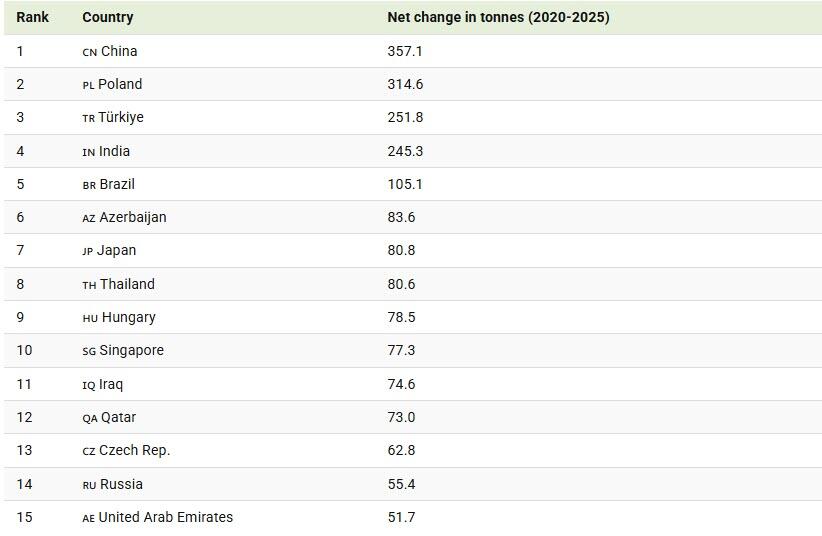
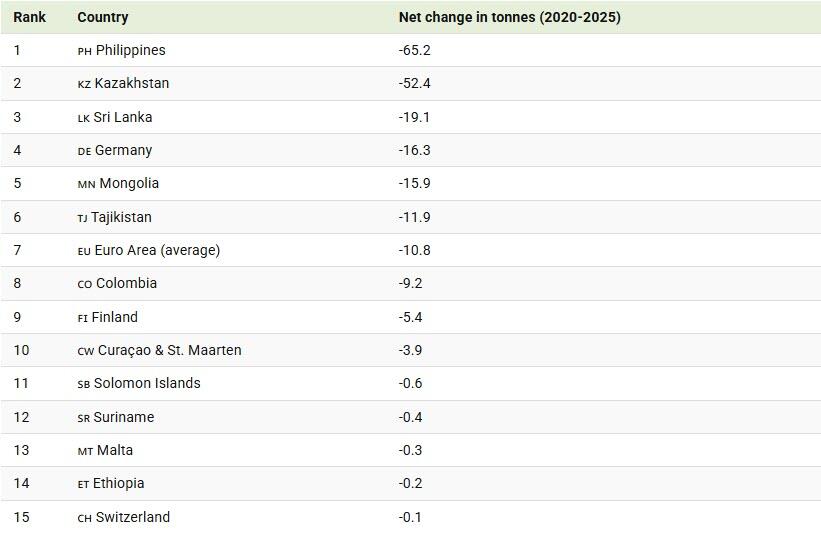
This chart, via Visual Capitalist’s Niccolo Conte, ranks the countries that made the biggest net additions and the largest reductions in gold reserves over the past five years.
The data comes from the World Gold Council.
China and Eastern Europe Lead Gold Buying
Together, the top 15 buyers added nearly 2,000 net tonnes of gold to their reserves over the period, underscoring a broad shift in official sector strategy.
China recorded the largest increase in gold reserves over the period, adding more than 350 tonnes. This move aligns with Beijing’s long-running push to diversify reserves away from the U.S. dollar and reduce exposure to Western financial systems, reinforcing gold’s role as a politically neutral anchor within global reserves.
Poland followed China closely in the ranking, increasing its gold holdings by over 300 tonnes as part of a long-term push to bolster monetary security.
Türkiye and India also ranked among the top buyers. Both countries face persistent inflation pressures and currency volatility, making gold an attractive hedge within official reserves.
Emerging Markets Step Up Accumulation
Beyond the largest buyers, several emerging markets made notable additions. Brazil added more than 100 tonnes, while Azerbaijan’s increase came through its sovereign wealth fund, the State Oil Fund of the Republic of Azerbaijan.
Japan, Thailand, Hungary, and Singapore also expanded reserves, signaling broader global interest in gold as a stabilizing asset during periods of economic uncertainty.
Who Reduced Gold Holdings?
While many central banks were building gold stockpiles, a smaller group reduced exposure, highlighting sharply different reserve priorities.
The Philippines recorded the largest reduction, cutting reserves by more than 65 tonnes. Kazakhstan and Sri Lanka also posted significant declines, often reflecting domestic liquidity pressures or active reserve rebalancing during periods of economic stress.
Several European countries, including Germany and Finland, posted modest reductions. Switzerland’s change was minimal, underscoring its generally stable approach to gold management compared with more active buyers elsewhere.
Taken together, the data shows how gold has reasserted itself as a cornerstone of global reserves, even as countries take sharply different paths in preparing for an uncertain monetary future.
If you enjoyed today’s post, check out The Rise of Major Currencies Against the USD in 2025 on Voronoi, the new app from Visual Capitalist.
Tyler Durden
Mon, 02/16/2026 – 06:45
https://www.zerohedge.com/precious-metals/these-are-countries-buying-and-selling-most-gold-2020
Editorial: Liz Bishop for Illinois 76th House District Republican primary
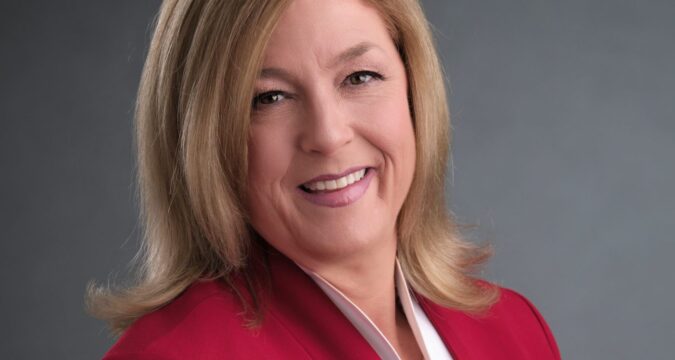
The Republican side of the 76th District, which is centered on DeKalb, home to Northern Illinois University, and includes surrounding communities, features a battle between Liz Bishop, a 65-year-old retired bank examiner, and Crystal Loughran, 63, a teacher and tutor who has challenged Bishop before, always from the right.
We endorsed Bishop in 2024 and see no reason to change our minds this time around.
Bishop is a moderate who is much admired by a Republican leadership that hopes to win this seat, held by first-term Democrat Amy Briel, who defeated Bishop in 2024 by less than 600 votes. Some moderate Democrats may well find Bishop’s positions helpful to the state’s future: “By lowering the overall tax burden,” she told us, “we can attract new job creators, expand the tax base, and collect more taxes from a larger group of taxpayers. Most importantly, this would create more opportunities for our children once they enter the workforce, instead of driving them away to other states with more to offer.”
She also has some strongly held and centrist views on health care. “I would support legislation,” she told us, “to address the issues with health care disparities in Illinois, and I would fight to ensure each family can rely on nearby quality care for emergency services, routine care, and everything in between.”
Springfield Republicans sorely need such a candidate who can work across the aisle and we believe Bishop is the right choice for Republicans who’d like to see more members of their party in a position to curb Democratic excesses. In other words, by getting elected.
Liz Bishop is endorsed.
Read all of the Tribune Editorial Board’s endorsements for the 2026 Illinois primary election here.
Submit a letter, of no more than 400 words, to the editor here or email letters@chicagotribune.com.
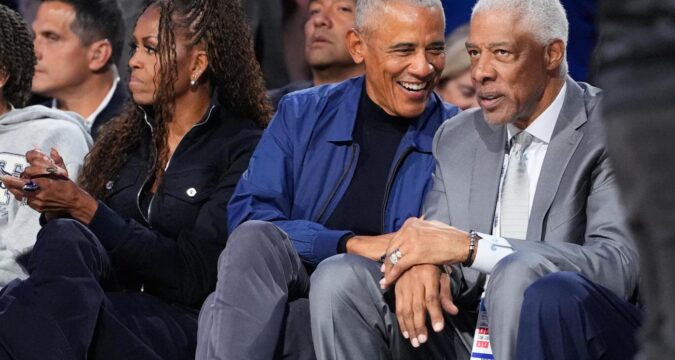
Obama frena rumores sobre extraterrestres y dice que no hay pruebas de contacto
Por The Associated Press
El expresidente de Estados Unidos Barack Obama afirmó que no vio pruebas de que los extraterrestres “hayan hecho contacto con nosotros”, tras un revuelo en redes sociales durante el fin de semana porque dijo en un podcast que los extraterrestres eran reales.
Durante una ronda de preguntas rápidas con el presentador del podcast Brian Tyler Cohen, a Obama le preguntaron: “¿son reales los extraterrestres?”.
“Son reales”, respondió, y continuó: “Pero no los he visto. Y no los están ocultando en el Área 51”.
El expresidente publicó un comunicado en Instagram la noche del domingo en el que pareció aclarar a qué se refería con sus comentarios, que se han vuelto virales.
“Intentaba mantener el espíritu de la ronda rápida, pero como ha llamado la atención, permítanme aclararlo. Estadísticamente, el universo es tan enorme que es probable que haya vida ahí fuera. Pero las distancias entre sistemas solares son tan grandes que la posibilidad de que nos hayan visitado extraterrestres es baja, y no vi ninguna evidencia durante mi presidencia de que seres extraterrestres hayan hecho contacto con nosotros. ¡De verdad!”.
El secretismo en torno al Área 51, un sitio de pruebas ultrasecreto de la Guerra Fría en el desierto de Nevada, ha alimentado durante mucho tiempo teorías de conspiración entre los entusiastas de los ovnis.
En 2013, la CIA reconoció la existencia del sitio, pero no choques de ovnis, extraterrestres de ojos negros ni alunizajes escenificados.
Documentos desclasificados se refirieron por su nombre a la instalación de 8.000 millas cuadradas (20.700 kilómetros cuadrados) después de décadas en las que funcionarios del gobierno de Estados Unidos se negaron a reconocerla.
La base ha sido un campo de pruebas para una serie de aeronaves ultrasecretas, incluido el U-2 en la década de 1950 y, más tarde, el bombardero furtivo B-2.
___
NOTA DEL EDITOR: Se ha corregido una errata en el nombre de presentador del podcast, a Brian Tyler Cohen
___
Esta historia fue traducida del inglés por un editor de AP con la ayuda de una herramienta de inteligencia artificial generativa.

Editorial: Maria Peterson for Illinois 52nd House District Democratic primary
Erin Chan Ding, a freelance journalist and progressive, who has written for this newspaper among other outlets, is running against Maria Peterson in the Democratic primary for the 52nd District.
Residence-wise, it’s a battle between South Barrington (Ding) and North Barrington (Peterson), both vying to unseat incumbent Republican Rep. Martin McLaughlin of Barrington Hills in the fall. It’s all Barrington, all the time, though the leafy district also includes Algonquin, Fox River Grove, Inverness, Island Lake, Volo, Wauconda, and western portions of Libertyville and Mundelein.
Ding, 44, sits on the Barrington Community Unit School District 220 Board of Education and touts that experience. She wants to see more “progressive revenue solutions,” wants to “fix” the Tier 2 state pensions (without dealing much with the cost) and supports a progressive state income tax. She’s also opposed to Illinois participating in the federal tax-credit scholarship program. We were impressed with her detailed answers to our questions but her views put her very much on the left of her party.
Peterson, 63, is a former attorney and a small business owner and talks a more moderate game, notwithstanding some progressive positions.
“Nothing matters more than keeping people healthy and alive,” she told us. “As the federal government continues to pull back funding for health care, vaccines, and essential public health services, Illinois must act as a safeguard. I support policies that protect and expand access to affordable health care, preserve vaccination programs, strengthen community health centers, and defend reproductive health care access. No one in our district should delay care, ration medication, or risk their health because of cost or politics.”
Amen to that.
Peterson and Ding share many policy positions and we admire Ding’s energy and smarts, but we feel Peterson, whose parents came to the U.S. from Mexico, will do best when it comes to paying attention to the state’s finances and economic environment and working with Republicans: “I approach policy through a practical lens rooted in basic needs,” she told us. “If a proposal does not meaningfully improve stability, safety, or opportunity, and if it is not funded and enforceable from the start, I will not vote for it, even if that puts me at odds with party leadership.”
Good. Savvy Democrats also should conclude that Peterson has the best chance of prevailing in the fall. Maria Peterson is endorsed.
Read all of the Tribune Editorial Board’s endorsements for the 2026 Illinois primary election here.
Submit a letter, of no more than 400 words, to the editor here or email letters@chicagotribune.com.
https://www.chicagotribune.com/2026/02/16/editorial-illinois-42nd-house-district-democratic-primary/

Editorial: Jaime Andrade Jr. for Illinois 40th House District Democratic primary
The 40th District, which includes lively Chicago neighborhoods like Irving Park and Avondale, has been represented by Democrat Jaime Andrade Jr., 53, since 2013. He has had very few serious challengers over the years but he has one this time in Miguel Alvelo-Rivera, an organizer who boasts endorsements from such progressive names as U.S. Rep. Delia Ramirez and Ald. Rossana Rodriguez Sánchez, as well as from the Chicago Teachers Union.
Alvelo-Rivera wants to increase the state’s minimum wage to $30 in relatively short order and advocates for holding “Illinois State Police to account for assisting ICE at Broadview.” We were glad our state police were there to try to ensure safety in the face of the unacceptable actions of Immigration and Customs Enforcement and U.S. Border Patrol.
We’ve endorsed Andrade, who is deeply entrenched in this district and is also an IATSE (union) stagehand, several times before, noting his hard work on issues like affordable housing, protecting employees from AI-related job losses and finding ways to curb property tax increases, especially for seniors. He is plenty progressive enough for the voters in this district, but far more likely to support practical, commonsense future solutions for the state’s many problems.
Jaime Andrade Jr. is endorsed.
Read all of the Tribune Editorial Board’s endorsements for the 2026 Illinois primary election here.
Submit a letter, of no more than 400 words, to the editor here or email letters@chicagotribune.com.

India Might Soon Replace Russian Oil With Venezuelan At Scale After All
India Might Soon Replace Russian Oil With Venezuelan At Scale After All
A new US license is being interpreted as prohibiting Venezuelan energy companies from transactions with China among other countries, which if true, could lead to India purchasing the 642,000 barrels of oil per day that China imported on average last year and thus halving its import of Russian oil.
RT drew attention on social media to the Department of the Treasury’s newly issued “Venezuela General License 48” allowing US companies to provide “goods, technology, software, or services for the exploration, development, or production of oil or gas in Venezuela” with two strings attached.
The first one is that any contract that their partners enter into will be governed under the laws of the US, which segues into the second one prohibiting any transactions with Russia, Iran, North Korea, Cuba, and China.
It’s for this reason that RT interpreted the abovementioned license in their tweet as the “US Ban[ning] Venezuelan Oil Producers From Doing Business With Russia & China”.
That’s reasonable since it was explained here that the Trump Doctrine is shaped by Elbridge Colby’s “Strategy of Denial”, which in its simplest form, seeks to deny strategic resources to US rivals such as the previously described countries.
This is especially the case as regards China, the US’ systemic rival, but Trump earlier sent mixed signals.
He recently welcomed Chinese investment in Venezuela’s energy industry, but in retrospect, that might have just been for the sake of managing the Sino-US rivalry amidst their ongoing trade talks.
Trump wants a deal with Xi, which might become much more difficult for his counterpart to agree to if he openly declares his intent for the US to deny China continued access to Venezuela’s strategic resources. It therefore makes sense for the US to quietly implement this policy through its new license instead.
Even prior to its promulgation, Russian Foreign Minister Sergey Lavrov complained that “our companies are being openly forced out of Venezuela”, so this policy was already being informally implemented by Delcy Rodriguez’s government under US pressure. Apart from Cuba, none of the countries that the US’ new license prohibits transactions with are dependent on Venezuelan energy, but cutting them out of this industry serves another purpose arguably even more strategic than denying them its resources.
Trump boasted earlier this month that India agreed to stop purchasing Russian oil as part of the terms of its trade deal with the US and replace its imports with American and possibly Venezuelan oil instead. It was hitherto assessed prior to the US’ new license that “India Is Expected To Only Slowly Reduce Its Import Of Russian Oil” in no small part due to the Venezuelan Ambassador to China confirming his country’s interest in continuing exports to it and Trump welcoming Chinese investment in this industry.
If RT’s interpretation of the license is correct, and Lavrov believes so after complaining about the US’ new prohibition on Venezuelan energy transactions with Russia during his latest appearance at the Duma, then India could purchase the 642,000 barrels per day of oil (bpd) that China imported on average last year.
That’s more than half of the 1 million bpd that India imported from Russia last month, which could lead to a sharp reduction in the budgetary revenue that Russia expected to receive from such sales.
The US is actively monitoring India’s direct and indirect import of Russian oil per the condition under which it recently lifted last summer’s punitive 25% tariff that was imposed because of these dealings.
Therefore, by cutting China out of the Venezuelan energy industry and consequently enabling India to replace its import of that country’s oil, the US is facilitating India’s rapid reduction of Russian oil imports and might even zero it out if this policy is soon replicated with respect to Iran’s oil exports to China.
Tyler Durden
Mon, 02/16/2026 – 06:10

Bajas expectativas rodean las nuevas negociaciones de Rusia y Ucrania mediadas por EEUU
Por ILLIA NOVIKOV
KIEV, Ucrania (AP) — Una delegación ucraniana se dirigía a Ginebra el lunes para otra ronda de conversaciones con funcionarios rusos mediadas por Estados Unidos, antes del cuarto aniversario la próxima semana de la invasión a gran escala de Rusia contra su vecino.
No había expectativas de avances significativos para poner fin a la guerra en las reuniones del martes y el miércoles en Suiza, ya que ambas partes parecen aferrarse a sus posiciones iniciales sobre cuestiones clave, pese a que Estados Unidos fijó junio como plazo para alcanzar un acuerdo. El futuro de las tierras ucranianas ocupadas o ambicionadas por Rusia es un asunto crucial.
Los defensores ucranianos siguen enfrascados en una guerra de desgaste con el ejército más grande de Rusia en un frente de unos 1.250 kilómetros (750 millas). Los civiles ucranianos soportan bombardeos aéreos rusos que con frecuencia les dejan sin electricidad y destrozan viviendas, mientras Ucrania ha desarrollado drones capaces de adentrarse en territorio ruso y atacar refinerías de petróleo y depósitos de armas.
El portavoz del Kremlin, Dmitry Peskov, afirmó el lunes que las conversaciones en Ginebra abordarán “un abanico más amplio de cuestiones relacionadas con los territorios y otros asuntos vinculados a las exigencias que tenemos”. No dio más detalles sobre esos temas.
Un año de esfuerzos de paz por parte del gobierno del presidente de Estados Unidos, Donald Trump, no ha logrado detener los combates. Funcionarios occidentales y analistas señalan que el presidente ruso, Vladímir Putin, cree que el tiempo juega a su favor, que el apoyo occidental a Ucrania se irá debilitando y que la resistencia ucraniana acabará por colapsar bajo la presión.
El general Kyrylo Budanov, jefe de gabinete del presidente ucraniano Volodymyr Zelenskyy, publicó una fotografía en Telegram en la que aparecía de pie junto a un tren con otros miembros del equipo negociador, que está previsto que sea encabezado en Ginebra por Rustem Umerov, jefe del Consejo de Seguridad Nacional y Defensa de Ucrania.
Entrar o salir de Ucrania implica un largo viaje por tierra, incluso para funcionarios de alto rango, ya que el espacio aéreo del país está cerrado debido a la guerra.
El asesor de Putin, Vladimir Medinsky, quien encabezó el equipo de negociadores de Moscú en las primeras conversaciones directas de paz con Ucrania en Estambul en marzo de 2022 y quien ha impulsado con firmeza los objetivos bélicos de Putin, regresa para liderar la delegación de Moscú.
Igor Kostyukov, jefe de la inteligencia militar rusa, y el viceministro de Exteriores Mikhail Galuzin, junto con otros funcionarios, también integrarán la delegación, indicó el portavoz del Kremlin, Peskov.
No estaba claro qué funcionarios estadounidenses estarían en Ginebra. En conversaciones recientes en Abu Dabi, la capital de los Emiratos Árabes Unidos, el gobierno de Trump estuvo representado por los enviados Steve Witkoff y Jared Kushner.
Las delegaciones rusa y ucraniana debían informar a sus líderes antes de que pudiera aceptarse cualquier posible compromiso discutido en Ginebra.
___
Esta historia fue traducida del inglés por un editor de AP con la ayuda de una herramienta de inteligencia artificial generativa.

Letters: The protected bike lanes on Archer Avenue have many supporters
For 10 consecutive weeks, both the supporters and opponents of concrete protected bike lanes on Archer Avenue have gathered at a busy intersection in Brighton Park to express their opinions, but you wouldn’t know that by reading Yunus Emre Tozal’s recent op-ed (“Why concrete barriers alone cannot fix Chicago’s Archer Avenue,” Feb. 9).
Tozal characterizes the neighborhood response to the redesign of Archer as universally negative, but there have been many weeks when supporters have outnumbered opponents during the protests. Not only that, but also, we’ve heard messages of support from neighbors walking home, residents getting off the No. 62 Archer bus and even drivers who’ve shared words of encouragement.
Of course, there are opponents of the project, but they do not represent the entirety of the neighborhood. Talk to our neighbors (in person or on social media), and you’ll find a range of opinion — including outright opposition, enthusiastic support, skepticism that the project will achieve its goal of reducing crashes and a wait-and-see attitude that reserves judgment until construction wraps up later this spring.
For the supporters who have braved the cold since early December, safety on Archer is not an abstract issue. Most of us have shared stories of being hit by cars, and too many of us know people who have been seriously injured or even killed. We’re hopeful that this project will make it safer to get around the neighborhoods we call home: Brighton Park and the surrounding communities of Gage Park, McKinley Park, Archer Heights and Little Village.
Many local supporters have adopted the slogan “Archer is for everybody,” because we believe this major thoroughfare needs to accommodate residents no matter how they get around: drivers, yes, but also pedestrians, cyclists, young people on scooters, parents pushing strollers, and neighbors who are elderly and have disabilities.
A safer and more inviting Archer would encourage more trips by bike or on foot — especially short trips within the neighborhood. This would ease traffic congestion, increase foot traffic for local businesses and provide more opportunities for neighbors to see each other face to face and not just from behind a windshield.
Tozal understands the benefits of this project and states, “For years, Archer Avenue has been a game of Russian roulette. The physical separators are simple geometric solutions that will save lives.”
Many Southwest Siders agree.
— Dixon Galvez-Searle, transit advocacy steward, Southwest Collective
Our automobile dependence
Yunus Emre Tozal made a fine contribution to the discussion of how city development must balance the needs of its residents. There are more than safety concerns at stake, we are reminded.
Chicago was once truly a city of neighborhoods, where residents typically worked, shopped, worshipped and played where they lived. This was not entirely by choice: Strict racial segregation, for instance, locked Black residents into the Black Belt. Yet that experience shaped the map of the city that we know today.
As streetcars gave way to private automobiles, the government built interstates and white flight swelled the suburbs, our city infrastructure was refashioned to favor cars. One consequence was to drain neighborhoods of their amenities and vitality. Major shopping districts (Commercial Avenue, Madison-Pulaski, 63d and Halsted) went into decline. Neighborhood theaters and clubs disappeared.
Today, those advocating for more protected lanes are incrementally pushing us back from our automobile dependence and may presage a rekindling of neighborhoods. This requires adjustment and thoughtful planning, but in the long run, this may benefit local businesses much more than the immediate loss of street parking will hurt.
— Paul W. Mollica, Chicago
Neighborhoods and safety
With respect to Yunus Emre Tozal, I agree that we must engage with communities sincerely as we design infrastructure projects. However, I also ask the same of the community residents who attend those meetings.
As a safe streets activist, I have attended many, and rarely do I find residents eager to engage in sincere conversation. What I see instead are grandstanding and bad-faith arguments presenting an individual’s preference as a community good. It is without question that safer streets bring gentrification — but this is a demonstration of the unmet need that safe, walkable neighborhoods deliver.
We must bring so much beauty and safety to our neighborhoods that we swamp demand and the presence of bike lanes isn’t enough to raise property values.
— Carl Beien, Chicago
Empowering true leaders
President Abraham Lincoln’s birthday was last week, and it got me thinking about what Illinois has looked like at its best: a place and a people that meet moral crisis with courage.
As a state legislator, Lincoln stood against slave catchers backed by the federal government who defiled our state’s laws and terrorized our most vulnerable. As president, he broke the back of Southern slave power forever and inaugurated a “new birth of freedom” in America.
We should remind ourselves of that tradition in these trying times, as our communities are stalked by masked federal agents at the behest of an administration unconcerned with the niceties of civil liberties, even those of American citizens. These spiritual successors of the slave catchers must be confronted, and we should look to Lincoln’s example about how to do it.
As Illinois heads to the polls next month in what is shaping up to be a historically important election, I pray we empower leaders who will use every lawful tool at their disposal to protect our neighbors, demand transparency and hold officials accountable for their abuses of power.
— John Engle, Chicago
A principled stand wins
In endorsing state Sen. Laura Fine for Illinois’ 9th Congressional District (“Laura Fine for Democratic nomination in 9th Congressional District,” Feb. 3), the Tribune Editorial Board says in closing, “she was made to feel uncomfortable for her belief in Israel’s right to defend itself or even to exist. A principled position for a principled Democrat, to our minds.”
Then, in its endorsement for Melissa Bean for the 8th Congressional District (“In 8th Congressional District, Melissa Bean is endorsed for Democrats and Jennifer Davis for the GOP,” Feb. 9), the board says that her main opponent, Junaid Ahmed, “supports banning all U.S. military support to Israel, a position that we believe wouldn’t serve U.S. national security interests.”
I wonder who will be endorsed for my home district of the 7th Congressional District. Can’t wait to find out!
Why is unconditional support of Israel, or any foreign country for that matter, part of the editorial board’s criteria for endorsement? Particularly when that country’s government and military commit war crimes that kill tens of thousands.
As is being seen across the country, most recently with Zohran Mamdani in New York and Analilia Mejia in New Jersey, taking a principled stand on foreign policy while remaining focused on the needs of your constituents is the true path to victory.
Regardless of who the editorial board endorses.
— Mohiuddin Ahmed, River Forest
Submit a letter, of no more than 400 words, to the editor here or email letters@chicagotribune.com.
https://www.chicagotribune.com/2026/02/16/letters-021626-archer-avenue-bike-lanes/