Category: News
‘No Prospect’ Of European Governments Preventing Civil War, Warns British Army Colonel
‘No Prospect’ Of European Governments Preventing Civil War, Warns British Army Colonel
Authored by Steve Watson via Modernity.news,
Major unrest looms as political leaders kick the can down the road on immigration and integration failures, according to a seasoned military expert.
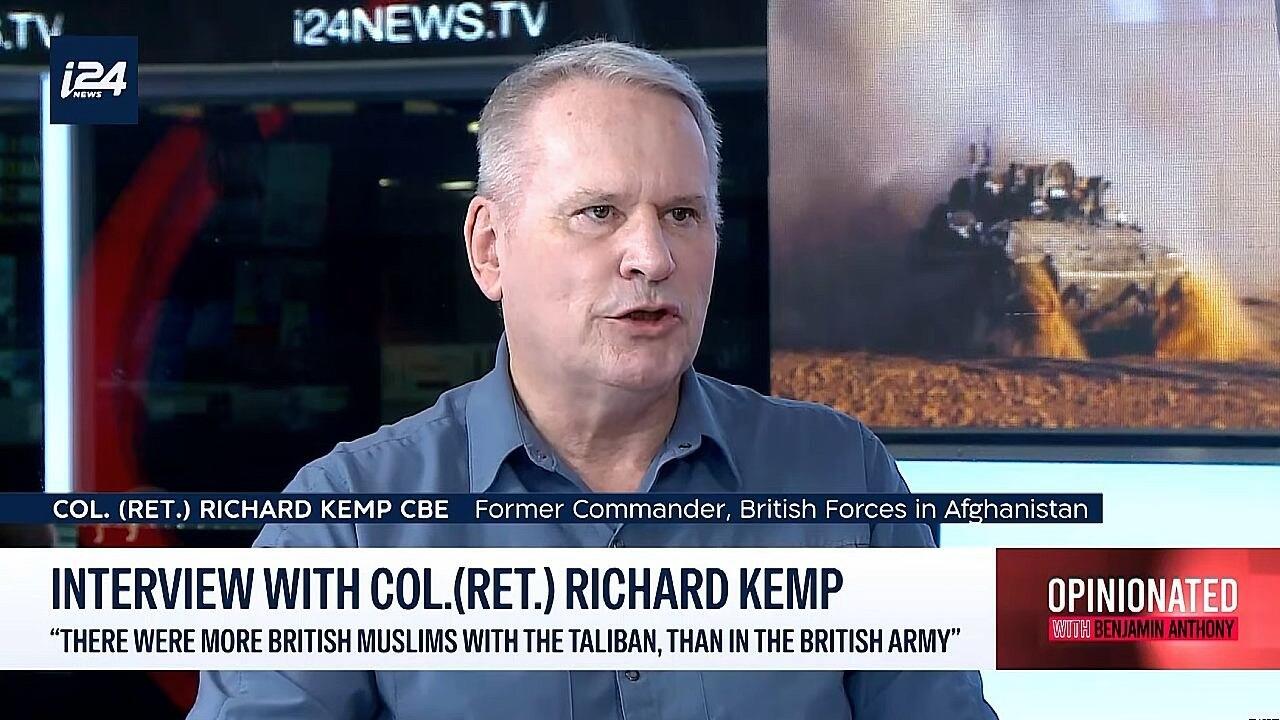
Retired Colonel Richard Kemp, a former commander of British forces in Afghanistan, has issued a stark warning about the trajectory of social cohesion in Europe and Britain. Speaking to Israeli broadcaster i24News, Kemp highlighted how integration breakdowns have worsened over the past two decades, paving the way for inevitable conflict.
“Things have been getting worse, getting bad, for many years, and they are only going to get worse,” Kemp stated, pointing to the reluctance of governments to confront the issues head-on.
Kemp, who also served in counter-insurgency operations in Northern Ireland and held intelligence roles in Westminster and the Cabinet Office, emphasized the lack of political will to address what he termed the “Islamification” of the UK.
“No government, the government now or any prospective government of the UK, has the guts to stop it,” he said. “If they want to take strong action to prevent the Islamification of the UK, it’s going to mean big trouble for them. They don’t want trouble, they look four years ahead, they will kick the can down the road to someone else.”
This political shortsightedness, according to Kemp, is fueling the risk of “civil war in Europe.” He described a potential scenario resembling Northern Ireland but on a far more intense scale, where “you have the indigenous British and some of the immigrant population and the British government all on three different sides fighting against each other.”
The officer attributed the slim chances of maintaining social order to democratic dysfunction and a lack of real choice for voters.
“The big problem that British people have is they don’t have political choice. We don’t really live in a democracy,” Kemp asserted. “Whatever party you vote for, you get the same policies. That applies also to immigration and to the way in which the Islamic population is allowed to grow in numbers and dominance.”
Kemp also noted the rise of Islamist politics in the UK, with Gaza-focused candidates winning seats in high-migration areas. “We’re going to see much more of that in the next election,” he predicted, referencing concerns within the Labour Party, including Health Minister Wes Streeting’s private message: “I fear we’re in big trouble here – and I am toast at the next election. We just lost our safest ward in Redbridge (51% Muslim, Ilford S) to a Gaza independent. At this rate, I don’t think we’ll hold either of the two Ilford seats.”
This isn’t the first time Kemp has raised the alarm. As we highlighted last year, he previously warned of growing unrest over mass migration and allegations of child sexual abuse by new arrivals, stating: “There’s only so much that I think people can take of that, and they’ve been very quiet up until now, the people in the UK have not really raised their voices against this, or in a very limited way only. But the more it develops, and it is going to develop more and more, the more unrest we are going to see.”
In that earlier commentary, Kemp went further: “And they have no option. I’m not encouraging or supporting this, but I think the people will feel they have no option than to take action into their own hand rather than rely on political leaders who are doing nothing, in their eyes. I think there is every likelihood, I don’t know what the timeframe is, but I would go so far as to not just predict civil unrest, but civil war in the UK in the coming years if this situation continues which I believe it will.”
Kemp’s views align with broader expert analyses on Europe’s fracturing societies. King’s College London Professor David Betz has warned that countries like the UK, France, and Sweden are already in a “pre civil war” state, with “dire social instability,” “economic decline,” and “elite pusillanimity” as key precursors.
Betz stated: “We’re already past the tipping point, is my estimation… we are past the point at which there is a political offramp. We are past the point at which normal politics is able to solve the problem… almost every plausible way forward from here involves some kind of violence in my view.”
Betz further urged: “I would probably avoid big cities. I would suggest you reduce your exposure to big cities if you are able,” and concluded: “Things are bad now, but they are going to get very much worse. Hopefully after they will get better, but you will have to go through the period of very much worse before you get there.”
Echoing these concerns, academic Michael Rainsborough described Britain’s path as intentional rather than accidental, rooted in elite strategies of division.
He referenced historical policies under Tony Blair aimed “to rub the Right’s nose in diversity,” and warned of a “descent into what we termed dirty war,” involving internal repression and low-intensity strife.
Rainsborough highlighted the erosion of national sentiment, noting public spaces filled with “Pride flags, Palestinian flags, Ukrainian flags — anything, it seems, but the Cross of St George.”
He cautioned that such dynamics could lead to “Balkanisation — or, in the local idiom, Ulsterisation,” drawing parallels to Northern Ireland’s troubles.
These repeated warnings from military and academic figures underscore a pattern: unchecked mass migration, elite detachment from public will, and a refusal to enforce borders are eroding the fabric of Western societies.
As globalist policies prioritize appeasement over security, the pushback from ordinary citizens grows—demanding leaders who put their own people first, before the powder keg ignites.
Your support is crucial in helping us defeat mass censorship. Please consider donating via Locals or check out our unique merch. Follow us on X @ModernityNews.
Tyler Durden
Mon, 02/16/2026 – 05:00

Una bomba mata a dos personas y deja varios heridos ante una comisaría en Pakistán
Associated Press
PESHAWAR, Pakistán (AP) — Unos explosivos colocados en una motocicleta estallaron cerca de la entrada de una comisaría en el noroeste de Pakistán el lunes, lo que mató al menos a dos personas, incluido un niño, e hirió a varias más, informaron la policía y funcionarios de rescate. La explosión también dañó tiendas cercanas.
El ataque ocurrió en Bannu, un distrito de la conflictiva provincia de Khyber Pakhtunkhwa, que limita con Afganistán, indicó el funcionario policial local Fida Mohammad.
No ofreció más detalles y solo señaló que los muertos y heridos fueron trasladados a un hospital cercano. Aunque ningún grupo se atribuyó de inmediato la autoría, era probable que las sospechas recayeran sobre los talibanes paquistaníes, o TTP.
Pakistán ha registrado un repunte de la violencia en los últimos años, y el gobierno con frecuencia culpa al ilegalizado TTP. Se trata de un grupo distinto, pero estrechamente aliado con los talibanes de Afganistán, que recuperaron el control de ese país en 2021. El aumento de los ataques ha tensado las relaciones entre Islamabad y Kabul, ya que Pakistán acusa al TTP de operar libremente dentro de Afganistán, una acusación que tanto el TTP como Kabul niegan.
___
Esta historia fue traducida del inglés por un editor de AP con la ayuda de una herramienta de inteligencia artificial generativa.

Un homenaje a Lula en el Carnaval de Río plantea riesgos legales
Por MAURICIO SAVARESE
RÍO DE JANEIRO (AP) — El Sambódromo de Río de Janeiro acogió un deslumbrante desfile la noche del domingo en homenaje al presidente brasileño, Luiz Inácio Lula da Silva, en un año en el que se postula para un cuarto mandato no consecutivo. Sin embargo, sus adversarios denunciaron irregularidades y plantearon emprender acciones legales contra el líder de 80 años y la escuela de samba, al alegar que el homenaje era un inicio a su campaña con seis meses de anticipación.
El desfile de la destacada escuela de samba Acadêmicos de Niterói se centró en la trayectoria de Lula, desde una infancia de pobreza en la región noreste de Brasil hasta su posición actual como uno de los líderes más prominentes de América Latina. Sus carrozas, disfraces y canciones fueron puro elogio al presidente, cuyos números en las encuestas han estado casi empatados durante meses.
Lula, el vicepresidente, Geraldo Alckmin, y sus esposas asistieron al desfile pese a los riesgos señalados por analistas jurídicos sobre su presencia, ya que podría desencadenar demandas en el tribunal electoral de Brasil antes y después de las elecciones de octubre.
Tiago Martins, principal organizador del desfile, comentó que los directivos de Acadêmicos de Niterói querían enfocar el tema de este año en el noreste del país, como ocurrió en 2025. Más tarde decidieron que la historia de Lula se ajustaba a ese propósito, pese a los riesgos legales.
“Lula merece un homenaje como este, igual que cualquier otro brasileño que hace mucho por nuestro pueblo”, afirmó Martins a The Associated Press mientras avanzaban los preparativos en Niterói, una ciudad a las afueras de Río. Negó que las letras, las carrozas o los disfraces de las escuelas de samba estuvieran pensados como material de campaña.
Martins señaló que responsables de Acadêmicos de Niterói viajaron a Brasilia con meses de anticipación para presentarle su visión a Lula, quien aceptó recibir el homenaje.
Lula, la primera dama, Rosângela da Silva, y sus invitados lo observaron todo desde el palco del ayuntamiento de Río de Janeiro junto al alcalde, Eduardo Paes. El presidente de Brasil vistió un traje blanco y un sombrero con una franja azul, en referencia a los tradicionales asistentes del Carnaval.
El veterano político vio a muchos asistentes cantar el histórico lema de campaña de Lula, “ole, ole, ole, ola… Lula, Lula”, como parte de una canción de Acadêmicos de Niterói. Uno de los temores de su equipo —una abucheo masivo desde las gradas— no se materializó, ni siquiera cuando salió de los palcos para tomarse fotos en la pista del Sambódromo.
João Santana, jefe de campaña de Lula en su intento de reelección de 2006, no prevé ganancias electorales por el homenaje. Observó que el presidente brasileño podría, de hecho, alejar a algunos votantes moderados y evangélicos que rechazan la conexión entre el Carnaval y la política. Santana también coincide en que Lula enfrenta riesgos legales innecesarios.
“El presidente y la primera dama se han acercado peligrosamente a este desfile. Esto podría salirles mal”, indicó Santana en un video publicado el jueves.
“Podría haber multas”
No es la primera vez que los desfiles de Carnaval han reconocido a Lula, ya que los progresistas como él conforman la mayoría que celebra la fiesta. En 2003, su primer año como presidente, la destacada escuela de samba Beija-Flor presentó una carroza que lo retrataba como un político valiente que combatía el hambre. Nueve años después, la escuela de samba Gaviões da Fiel, con sede en São Paulo, también centró su desfile en Lula.
Pero nunca había ocurrido un homenaje de Carnaval de este tipo en un año de elección presidencial y con un tribunal electoral vigilando de cerca.
“Lula no va a ganar ni un solo voto por ese homenaje; todo el mundo sabe que es popular en el mundo de la samba”, indicó Thomas Traumann, analista político y consultor radicado en Río. Señaló que el principal obstáculo legal pasa por determinar si el gobierno permite un vínculo entre el tributo y la elección. Ese punto de vista podría cobrar fuerza si el presidente o miembros de su gabinete asisten al desfile mientras hacen un uso indebido de recursos públicos en aviones financiados por el gobierno y alojamientos en hoteles.
“Podría haber multas, la pérdida de tiempo gratuito en televisión abierta durante la campaña. Eso importa en una elección reñida”.
Por ahora, el rival más cercano de Lula en su intento de reelección es el senador Flávio Bolsonaro, el hijo de 44 años del expresidente Jair Bolsonaro. Y aunque encuestas recientes muestran a Lula como el favorito, los últimos números sugieren una contienda ajustada.
Un intento de bloquear el desfile
Martins y Acadêmicos de Niterói tienen reparos ante posibles sanciones y multas para ellos mismos y para Lula. La escuela ya había dado indicaciones a sus más de 3.000 participantes para que evitaran el gesto de la “L” con la mano —una referencia histórica al líder izquierdista— durante el desfile de 80 minutos. También se prohibió a los participantes decirles a los 80.000 espectadores en el Sambódromo el domingo que votaran por él.
Algunos políticos de derecha habían intentado bloquear el desfile de Niterói, argumentando que le da a Lula una ventaja injusta mediante una campaña anticipada, algo que no se concede a sus rivales. También señalaron que las escuelas de samba reciben financiamiento público.
“Las escuelas de samba no están para hacer campaña por nadie”, afirmó el legislador Kim Kataguiri en redes sociales antes del desfile. “Presenté una denuncia para impedir que su dinero se use para financiar campañas electorales disfrazadas de homenajes”.
“¿Quieren rendir homenaje a políticos? ¡Entonces háganlo con su propio dinero!”, añadió.
El máximo tribunal electoral de Brasil rechazó las denuncias el jueves, y los jueces dictaminaron que no pueden censurar a una escuela de samba antes de que el desfile tenga lugar. También indicaron que podrían revisar el caso si durante la presentación se produce alguna acción que viole la ley electoral.
En unos meses, la presidencia del tribunal electoral pasará al juez del Supremo Tribunal Federal Kássio Nunes, quien fue nombrado por el adversario y predecesor de Lula, Jair Bolsonaro, un crítico del Carnaval durante su presidencia. Nunes también estará al mando durante la elección presidencial de Brasil en octubre.
___
El periodista de AP Diarlei Rodrigues contribuyó a este despacho.
___
Esta historia fue traducida del inglés por un editor de AP con la ayuda de una herramienta de inteligencia artificial generativa.
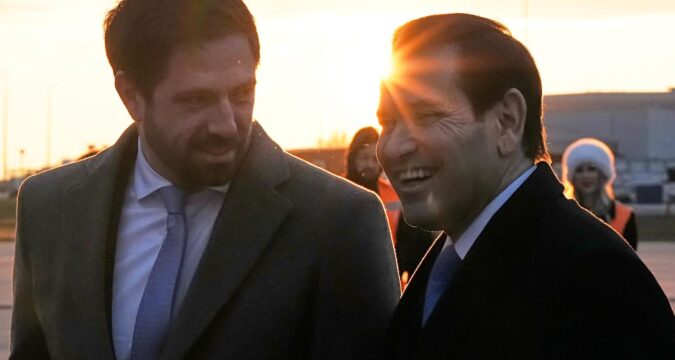
Rubio se reúne con Orbán en Budapest mientras EEUU y Hungría hablan de energía nuclear civil
Por MATTHEW LEE y JUSTIN SPIKE
BUDAPEST, Hungría (AP) — El secretario de Estado de Estados Unidos, Marco Rubio, estaba en la capital húngara el lunes para reunirse con el primer ministro Viktor Orbán y su gobierno, encuentros en los que tenían previsto firmar un acuerdo de cooperación nuclear civil anunciado por el presidente de Estados Unidos, Donald Trump.
Trump ha apoyado expresamente al nacionalista Orbán en su campaña de reelección para los comicios de dentro de dos meses. Orbán y su partido Fidesz enfrentan su desafío más serio en la votación del 12 de abril desde que el populista conservador retomó el poder en 2010.
La escala en la capital de Hungría se produjo después de la visita de Rubio a Eslovaquia el domingo, tras haber asistido previamente a la Conferencia de Seguridad de Múnich en Alemania.
Dirigidas por populistas euroescépticos que se oponen a apoyar a Ucrania y respaldan abiertamente a Trump, Eslovaquia y Hungría ofrecen un terreno amistoso para Rubio mientras impulsa el fortalecimiento de acuerdos energéticos con ambos países de Europa Central.
Ampliamente considerado como el defensor más fiable del presidente ruso, Vladímir Putin, en la Unión Europea, Orbán ha mantenido relaciones cálidas con el Kremlin pese a su guerra contra Ucrania, al tiempo que se ha granjeado el favor de Trump y su movimiento MAGA.
Muchos en MAGA y en el mundo conservador en general ven a Hungría como un ejemplo brillante de nacionalismo conservador exitoso, pese al deterioro de sus instituciones democráticas y a su condición como uno de los países más pobres de la Unión Europea.
En una publicación en su plataforma Truth Social a principios de este mes, Trump respaldó a Orbán para las próximas elecciones y lo calificó de “un líder verdaderamente fuerte y poderoso” y “un verdadero amigo, luchador y GANADOR”.
Trump ha elogiado la firme oposición de Orbán a la inmigración, que tuvo un ejemplo tangible en la valla que su gobierno levantó en la frontera sur de Hungría en 2015, cuando cientos de miles de refugiados huían de Siria y de otros países de Oriente Medio y África.
Otros conservadores de Estados Unidos admiran la hostilidad de Orbán hacia los derechos LGBTQ+. Su gobierno prohibió el año pasado la popular celebración del Orgullo de Budapest y permitió que se utilizara tecnología de reconocimiento facial para identificar a cualquiera que participara pese a la prohibición. También ha prohibido de facto la adopción y el matrimonio entre personas del mismo sexo, y ha impedido que las personas transgénero cambien su género en documentos oficiales.
Orbán se ha mantenido firmemente comprometido a comprar energía rusa pese a los esfuerzos de la Unión Europea por reducir la dependencia de esos suministros, y recibió una exención de las sanciones de Estados Unidos sobre la energía rusa tras una reunión en noviembre en la Casa Blanca con Trump.
Al parecer confiando en que su afinidad política y personal con el líder estadounidense podría rendir dividendos aún mayores, Orbán y su gobierno han intentado atraer a Trump a Hungría antes de las decisivas elecciones del 12 de abril, con la esperanza de que una visita y un respaldo de tan alto perfil impulsen a Orbán —que va rezagado en la mayoría de las encuestas— hasta cruzar la meta.
Budapest ha acogido varias ediciones anuales de la Conferencia de Acción Política Conservadora, o CPAC, y otra fue reprogramada apresuradamente este año para celebrarse en marzo, justo antes de las elecciones en Hungría.
___
Esta historia fue traducida del inglés por un editor de AP con la ayuda de una herramienta de inteligencia artificial generativa.
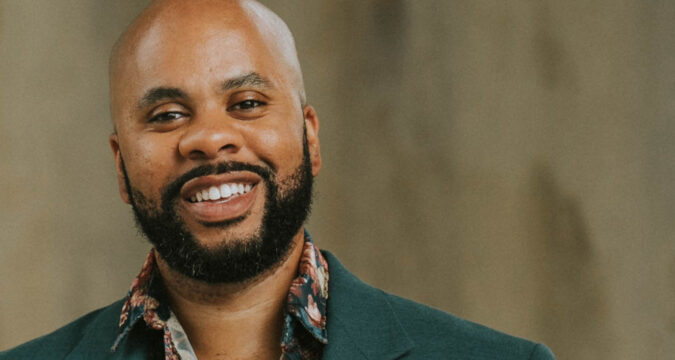
Asking Eric: They asked for leftovers
Dear Eric: I have spent a year helping my elderly parents sell their house and pay off tremendous debt, mostly due to my mother’s spending and hoarding. My father is unable to handle anything due to health issues. I have had help from my family so I’m not alone in this. I am still very involved with helping them with finances and doctors.
They are in a small rental now with no maintenance or yard duties. My issue is the bad feelings I have toward my mother after all we went through packing her house, moving them, dealing with the movers, dumpsters, estate and house sales.
She makes comments often about us taking her things away and taking her money (not true, but it is in safekeeping because of her very poor handling of money).
She also makes backhanded thank-yous attached to criticisms about the way we did everything. I have a hard time being around her anymore.
Our relationship was not great to begin with. I have started therapy and understand I can’t change her or really have expectations of her as she is just incapable, but I still have so much resentment and bad feelings toward her. I’m not sure how to move on.
– Resented Helping Hand
Dear Helping Hand: I’m glad you’ve started therapy. This is a long journey, but you’ve taken the right first step. Your therapist can help you sort through what’s yours to own and what feelings or sentiments you can release. Your therapist can also help you set up good boundaries with your mother, because it sounds like that’s going to be necessary.
A boundary won’t stop her from making remarks, but it can give you options for what to do and say and how to remove yourself from situations that are harmful to your emotional state.
It’s also helpful to right-size your mother’s response. Her hoarding and her financial mismanagement were likely caused by trauma, perhaps trauma that happened early in her life. That trauma hasn’t been addressed and so she’s still suffering, but without the same coping mechanisms. She’s also grieving the loss of her possessions. So, it may help you to remember that some of this is your mother’s pain talking.
You can’t take that away, but you can help guide her toward tools for addressing it. If she’s open to seeing a therapist, that would be wonderful. You might also talk to a financial adviser about other options for keeping her money safe. It sounds like it’s not healthy for her to have unfettered access to it, but there may be ways for her to feel more empowered and for you to feel less responsibility for keeping her away from her worst impulses.
Dear Eric: What do you think about a person that asks to come to your house for dinner, then asks for leftovers to take home? I was taken aback by this. This is a relative of ours.
– Home Cook
Dear Cook: I think it’s a sign that the meal was good enough to want to enjoy it a second time. I’d take it as a compliment. And if you don’t want to part with the leftovers, you can say “no.”
Dear Eric: I would like to expand on your answer to “Heirlooms and More” regarding where collectors can go to gather information on the value of their antiques and other items.
Certified appraisers are the best source for appraisals of valuable possessions. These individuals have specialties in different collecting areas and can provide up-to-date valuations under different scenarios such as replacement, auction and retail shop value. Collectors can research appraisers online by visiting the websites of the Appraisers Association of America (AAA), American Society of Appraisers (ASA) and the International Society of Appraisers (ISA). Appraisers should not charge a percentage of the items’ value nor offer to purchase any items since both these activities can affect the valuation provided.
Major auction houses periodically offer free appraisal days. Finally, there are various price guides (Kovels, for example) that can be consulted which report values of different objects sold at auctions, shows, flea markets and shops.
Local antique dealers are usually not helpful unless the dealers are specialists in the collecting area of the items’ owners. In general, collectors should have an appraisal completed by a certified appraiser before approaching any prospective buyers of their objects. Knowledge is
the best tool to ensure the items are sold at prices commensurate with their value.
Related Articles
Asking Eric: I get a flight-or-fight response when I see him
Asking Eric: I feel policed and judged
Asking Eric: Counseling is an option
Asking Eric: He says no automatically
Asking Eric: Am I being paranoid?
– Fair Appraisal
Dear Appraisal: Thank you for this very thorough insight. Other readers also suggested that the letter writer reach out to a professional downsizer, who might be able to help them get organized and connect the family with an appraiser. There are many good options. I appreciate your comment.
(Send questions to R. Eric Thomas at eric@askingeric.com or P.O. Box 22474, Philadelphia, PA 19110. Follow him on Instagram and sign up for his weekly newsletter at rericthomas.com.)
https://www.chicagotribune.com/2026/02/16/asking-eric-they-asked-for-leftovers/

Ocho muertos en una explosión en tienda de fuegos artificiales en China antes del Año Nuevo Lunar
Associated Press
BEIJING (AP) — Ocho personas murieron y dos sufrieron quemaduras leves en una explosión y un incendio en una tienda de fuegos artificiales en el este de China unos días antes del Año Nuevo Lunar, informaron las autoridades.
El gobierno del condado de Donghai indicó en un comunicado que la explosión, ocurrida la tarde del domingo en una aldea de la provincia de Jiangsu, fue provocada por un residente que encendió fuegos artificiales de manera indebida cerca del establecimiento. No ofreció más detalles sobre lo sucedido.
Encender petardos a medianoche en el Año Nuevo Lunar es una tradición en China, pero en los últimos años muchos lugares han prohibido los fuegos artificiales, al menos en parte por la contaminación del aire.
La costumbre podría volver en algunos lugares después de que varios gobiernos flexibilizaran sus prohibiciones el año pasado.
El Año Nuevo Lunar, también conocido en China como el Festival de Primavera, se celebra el martes. Marcará el inicio del año del caballo en el zodiaco chino.
Tras la explosión del domingo, el Ministerio de Gestión de Emergencias instó a todas las regiones a reforzar la supervisión de la producción, el transporte, la venta y el uso de fuegos artificiales para prevenir futuros accidentes.
Un comunicado del ministerio señaló que debe prohibirse estrictamente probar fuegos artificiales y petardos alrededor de las tiendas, e instó a los gobiernos locales a identificar y eliminar puntos ciegos “para garantizar que la gente tenga un Festival de Primavera seguro, auspicioso y feliz”.
___
Esta historia fue traducida del inglés por un editor de AP con la ayuda de una herramienta de inteligencia artificial generativa.
El Salvador confisca 6,6 toneladas de cocaína en alta mar
Associated Press
SAN SALVADOR (AP) — La Marina de El Salvador interceptó en aguas internacionales un buque que transportaba 6,6 toneladas de cocaína, con un valor aproximado de 165 millones de dólares, informó el domingo el presidente, Nayib Bukele.
“Nuestra Marina Nacional ha realizado la incautación de drogas más grande en la historia de El Salvador”, dijo Bukele en la red social X.
Las fuerzas salvadoreñas interceptaron el buque de apoyo multipropósito FMS EAGLE, de 180 pies de eslora (54 metros de largo), registrado bajo bandera de Tanzania, que transportaba en compartimientos ocultos 330 bultos equivalentes a 6,6 toneladas de cocaína, con un valor aproximado en el mercado negro de 165 millones de dólares, detalló el mandatario.
La droga estaba oculta en tanques de lastre y fue localizada por buzos de la Marina salvadoreña, según el anuncio.
El Salvador informó de la detención de 10 presuntos narcotraficantes: cuatro colombianos, tres nicaragüenses, dos panameños y un ecuatoriano.
El ministro de Seguridad y Justicia, Gustavo Villatoro, reportó recientemente que en lo que va del año se habían incautado 2.815 kilogramos de cocaína, equivalente a 70 millones de dólares.
Las autoridades salvadoreñas incautaron más de 25 toneladas de droga en 2025, la mayoría cocaína, con un valor de más de 618 millones de dólares.
https://www.chicagotribune.com/2026/02/15/el-salvador-confisca-66-toneladas-de-cocana-en-alta-mar/

Finishing outside of medal round fuels the return of Bartlett’s Lilly White to state. ‘Took that to heart.’
Bartlett’s Lilly White learned the hard way about letting the outcome define the experience.
Last season, White finished outside of the medal round at state. It was a stunning setback, but now as a senior, she’s reminding herself to appreciate the wonder and beauty in front of her.
“I think mindset is the most important part,” White said. “I’ve been trying to have fun with my team, stay relaxed and enjoy the moment. I wasn’t rushing anything or forcing anything unnecessary.
“I just stayed patient, worked my moves and wrestled smart. I just treated it like my own match and focused on what I do best.”
White was at her best again Saturday afternoon, securing a 4-0 decision over Glenbard North senior Keagan Edwards in the 130-pound championship match of the Schaumburg Sectional.
It was the second sectional title in three years for White, who advances to the state meet that begins Feb. 27 at Grossinger Motors Arena in Bloomington. Norah Cwik, a senior, also qualified for the Hawks by finishing fourth at 110.
Bartlett’s Lilly White, top, takes control against Glenbard North’s Keagan Edwards in the 130-pound final of the Schaumburg Sectional on Saturday, Feb. 14, 2026. (Michael Schmidt / The Beacon-News)
For White (36-3), it was a moment of truth.
“Lilly is a one-of-a-kind athlete,” Bartlett coach Brian Caputo. “Everything she does is about being the best possible wrestler, whether it’s her diet or preparation.
“It’s not just about winning with her but about being a good person.”
Sophomore 145-pounder Melanie Nava credited White for helping her qualify for the sectional.
Bartlett’s Lilly White, top, works over Glenbard North’s Keagan Edwards in the 130-pound final of the Schaumburg Sectional on Saturday, Feb. 14, 2026. (Michael Schmidt / The Beacon-News)
“As a new wrestler, I learned a lot from Lilly,” she said. “She’s loving, smart, a very kind-hearted person who stands up for us. She doesn’t just say she’s going to work hard.
“She shows it every single practice. She pushes herself and pushes all of us to be better.”
After finishing fifth as a sophomore, White experienced the disappointment of not earning a medal at state as a junior.
“I took that to heart,” she said. “I spent the entire offseason training, working with my coaches on both my wrestling and my mindset. I’ve been fine-tuning everything.
Bartlett’s Lilly White, top, tries to score points on Glenbard North’s Keagan Edwards in the 130-pound final of the Schaumburg Sectional on Saturday, Feb. 14, 2026. (Michael Schmidt / The Beacon-News)
“That’s helped me wrestle better and push harder toward what I want. I want to see myself on that podium. These next two weeks, we’ll keep sharpening everything.”
White improved her career record to 117-14. When she finished fifth as a sophomore, that surprisingly was her first year of wrestling competition.
She was already a savvy, seasoned veteran, however, with a background in jiujitsu. Like wrestling, jiujitsu emphasizes takedowns, control and submission holds instead of punches or kicks.
“I started when I was 9,” White said. “I just love grappling in general. I think it’s great for girls to have that outlet. Starting in jiujitsu helped me be comfortable in scrambles and physical situations.
“The biggest adjustment was learning not to go to my back. Once I figured that out, the transition helped me a lot. I grew up training mostly with boys, so that environment never felt intimidating.”
Bartlett’s Lilly White, right, gets psyched up before her match against Glenbard North’s Keagan Edwards in the 130-pound final of the Schaumburg Sectional on Saturday, Feb. 14, 2026. (Michael Schmidt / The Beacon-News)
White has an effervescent, ebullient personality. By her own admission, she’s loud and personable but never disruptive or rude. Her favorite outdoor activities are ice fishing or hunting.
“I like making jokes and talking to people,” she said. “I enjoy presentations. I’ve always been competitive. I tried cheerleading first, but it wasn’t quite competitive enough for me.
“When I started jiujitsu and began competing against boys, I loved the challenge.”
White won her three sectional matches by a combined seven points.
“I love the toughest matches,” she said. “I like walking off the mat feeling like I’ve been in a battle.
“It means a lot when people say that was a good match. It shows how tough and strong you are — and that’s what I chase.”
Patrick Z. McGavin is a freelance reporter for The Beacon-News.
https://www.chicagotribune.com/2026/02/15/lilly-white-bartlett-girls-wrestling/
Secuestro de mineros mexicanos, el más reciente episodio contra promocionadas mejoras de seguridad
Por AARON IBARRA y MARÍA VERZA
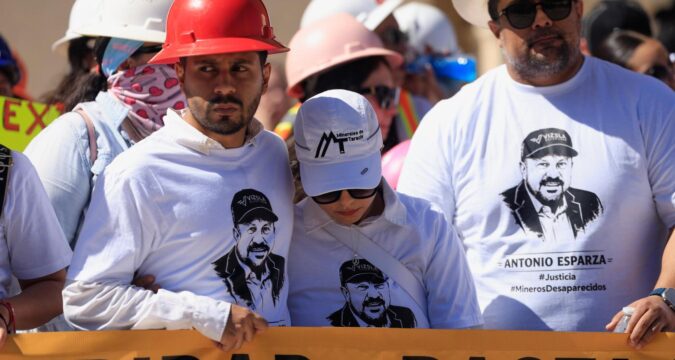
CONCORDIA, México (AP) — Al menos 12 pueblos de la sierra de Concordia, al sur del estado de Sinaloa, en el Pacífico mexicano, lucen casi desiertos y el silencio solo se rompe con el paso esporádico de algún camión. Fue cerca de uno de esos pueblos, Pánuco, donde fueron secuestrados diez trabajadores de una mina de plata y oro canadiense a finales de enero. La mitad ya han sido localizados, pero muertos.
La mayoría de los vecinos de estas comunidades han huido por miedo a las dos facciones enfrentadas del Cártel de Sinaloa que tienen sitiada la región desde septiembre de 2024, explica Fermín Labrador, un anciano enjuto de 68 años de Chirimoyos, un pueblo de Concordia. Otros, añade, fueron “invitados” a irse.
La desaparición de los trabajadores de la mina de plata y oro propiedad de la empresa Vizsla Silver en circunstancias y por motivos todavía sin esclarecer no solo ha aumentado el miedo de la población, también genera cuestionamientos sobre las mejoras en seguridad proclamadas por la presidenta Claudia Sheinbaum.
Tras asumir la gobernante reforzó su estrategia contra los cárteles con más despliegue militar, detenciones y decomisos de droga justo en Sinaloa, el estado de donde sale gran parte del fentanilo que inunda Estados Unidos. En enero, Sheinbaum presentó una marcada disminución en las tasas de homicidios el año pasado como prueba de que su estrategia de seguridad estaba funcionando.
“Este tipo de episodios lo que hacen es derrumbar la narrativa del gobierno federal que insiste en que poco a poco se va dominando la situación”, aseguró el analista David Saucedo. A su juicio, lo que hizo Sheinbaum fue “administrar el conflicto” mientras la guerra dentro del cártel se extiende y está fracturando a la sociedad sinaloense obligándola “a tomar partido por alguno de los dos bandos”.
Seguridad fugaz
El suceso provocó el despliegue de más tropas en la región, búsquedas por tierra y aire, la visita del titular federal de Seguridad, Omar García Harfuch, para coordinar los operativos. El resultado fueron algunas detenciones y el hallazgo de cinco de los trabajadores de la mina entre los cadáveres encontrados en una fosa clandestina.
Sin embargo, el incremento de las fuerzas de seguridad no se tradujo en tranquilidad para los habitantes de esta sierra.
“Toda esa escandalera ha desperdigado a los señores que andan malos del crimen organizado… que pudieran llegar a nuestro pueblo otra vez”, dijo Roque Vargas, activista por los derechos de las personas desplazadas de la sierra de Concordia. También temen ser confundidos y atacados por las fuerzas de seguridad cuando salen del pueblo porque eso ya pasó en otros puntos del estado: hay militares investigados por la muerte de dos niñas en mayo y un universitario a principios de año.
“Estamos prácticamente abandonados”, lamentó.
Cártel dividido
Sheinbaum asumió el poder en octubre de 2024 justo cuando Sinaloa se sumía en una nueva espiral de violencia tras la detención de Ismael “El Mayo” Zambada, supuestamente secuestrado y llevado a Estados Unidos por Joaquín Guzmán López, uno de los hijos de su exsocio Joaquín “El Chapo” Guzmán.
Seguidores de “El Mayo” comenzaron a luchar contra los de “los Chapitos” en una sangrienta batalla por el control de tráfico de fentanilo y otras drogas sintéticas que primero dejaron entre el fuego cruzado a los habitantes de Culiacán, capital de Sinaloa, y luego a todo el estado mientras la administración de Donald Trump ponía a ambas facciones en la mira declarando al cártel “organización terrorista” e incrementaba las presiones sobre Sheinbaum para combatirlo.
En abril pasado, la minera Vizsla, propietaria de la mina con sede en Vancouver, Canadá, anunció la paralización de actividades en la sierra de Concordia por motivos de seguridad. El paro duró un mes.
Este mes, García Harfuch declaró sobre la investigación que los sospechosos arrestados pertenecían a la facción del Cártel de Sinaloa, leal a los hijos de Guzmán, conocidos como “Los Chapitos”, y que habían confundido a los trabajadores con miembros de la otra facción. No se ha explicado cómo se produjo la confusión, ya que Vizsla afirmó que los trabajadores fueron sacados de su sitio.
Minas y crimen
Las minas, junto con otros negocios como los cultivos de aguacate y los oleoductos que transportan gasolina, han atraído desde hace tiempo la atención del crimen organizado en México como fuente de extorsión o para robar el material extraído.
Saucedo, que ha investigado casos en Guanajuato, Sinaloa y Sonora, asegura que otras veces son las propias compañías las que se han aprovechado de grupos armados para contener movimientos sociales en su contra.
Ante esta diversidad de situaciones que se mueven en límites muy difuso, la grandes empresas generalmente han optado por el hermetismo.
En el caso de Concordia, el gobierno mexicano dice que no hay registro de que Vizsla hubiera sufrido extorsiones pero la presidenta anunció que habrá comunicación con todas las empresas mineras en el país —muchas canadienses— para “ofrecer el apoyo que se requiera”.
Vizsla no respondió a solicitudes de comentarios por parte de The Associated Press, pero ha declarado que su objetivo es encontrar a los trabajadores restantes y apoyar a las familias afectadas. Los familiares de uno de los trabajadores declinaron hacer comentarios.
Búsqueda de desaparecidos
En la comunidad de El Verde, en las faldas que se alzan entre el océano y la montaña, Marisela Carrizales se encontraba junto a pancartas con fotografías de personas desaparecidas. El camino que conducía a un lugar donde se descubrieron fosas clandestinas estaba bloqueado por una patrulla. El pueblo circundante permanecía en silencio.
“Aquí estoy, esperando respuestas”, contó el miércoles Carrizales, quien pertenece a uno de los muchos colectivos de búsqueda que se han extendido por todo México para buscar a los desaparecidos. Lleva cinco años y medio buscando a su hijo Alejandro y llegó a El Verde con más de veinte personas que también buscan a familiares desaparecidos para supervisar el trabajo de las autoridades y exigirles que les ayuden a buscar también en otros lugares.
“Tenemos información de que hay muchas más fosas aquí… tenemos que venir a buscarlas”, señaló.
Fue aquí, en la primera semana de febrero, donde las autoridades encontraron una fosa clandestina y luego más en los días siguientes. La Procuraduría General de la República informó que se encontraron 10 cuerpos en un solo lugar, cinco de los cuales han sido identificados como los mineros desaparecidos. Pero la fiscalía del estado de Sinaloa también informó que se encontraron restos adicionales en otras cuatro fosas comunes de la comunidad.
En torno al puerto de Mazatlán, se han multiplicado casos sonados.
En octubre, desapareció un turista mexicano en el bar de un funcionario estatal que renunció después a su cargo. En enero, fue un empresario. En febrero, otros seis turistas mexicanos fueron secuestrados en una zona lujosa de la ciudad turística. Una mujer y una niña que formaban parte de ese grupo fueron encontradas con vida posteriormente en las afueras de la ciudad, pero los hombres que las acompañaban no han aparecido.
Si bien el gobierno ha reforzado la seguridad en Mazatlán antes de las celebraciones de carnaval, en las montañas, maestros, médicos e incluso autobuses no llegan a muchas comunidades por miedo, dijo Vargas, el activista.
Labrador, el anciano de Chirimoyos, dijo que los días que tiene suerte aprovecha la moto de un amigo para ir a su trabajo en una caseta de cobro de la autopista cercana. Si no, le toca caminar 9 kilómetros por los cerros. La persona que se encargaba del transporte público de la zona desapareció en diciembre.
———
Verza reportó desde Ciudad de México.
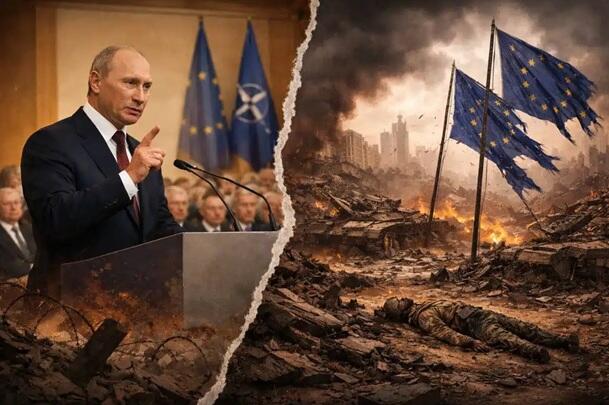
Munich, 2007: The Day The West Was Told ‘No’
Munich, 2007: The Day The West Was Told ‘No’
Authored by Gerry Nolan via The Islander
They like to pretend it came out of nowhere.
They like the bedtime story: Europe was peacefully humming along in its post-history spa — open borders, cheap energy, NATO as a charity, Russia as a gas station with a flag… and then, one day, the barbarian kicked the door in for no reason at all.
That story is not just dishonest. It’s operational. It’s the propaganda you tell yourself so you can keep the addiction going without ever admitting how self-destructive it is.
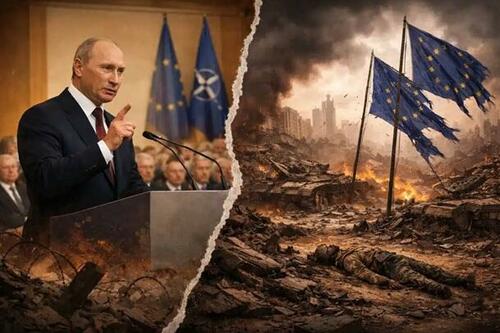
Because the truth is uglier and far more incriminating: In Munich, on February 10, 2007, Vladimir Putin stood on the most flattering stage the Atlantic system owns — the Security Conference where Western officials applaud themselves for maintaining “order” and he laid out, to their faces, the skeleton of the coming disaster. He didn’t whisper it in a back channel. He used the microphone to deliver some much needed medicine, however hard it would be for the Empire to swallow.
He even signaled he wasn’t going to play the usual polite theatre — the kind where everyone agrees in public and stabs each other in classified annexes. He said the format allowed him to avoid “pleasant, yet empty diplomatic platitudes.”
And then he did the unforgivable thing, (gasp!) he described the empire as an empire. He named the unipolar intoxication — that post–Cold War hallucination that history had ended, that power had found its final owner, that NATO could expand forever without consequences, that international law was optional for the enforcer class and compulsory for everyone else.
Putin’s core argument was brutally simple: a unipolar model is not only unacceptable, it’s impossible. Not “unfair.” Not rude. Impossible.
(Because in a world with) “one center of authority, one center of force, one center of decision-making” is a world where security becomes privatized — where the strong reserve the right to interpret rules (with exemptions for themselves), and the weak are told to accept it as morality. (And yes, he put it in exactly those terms — one center, one force, one decision — the architecture of domination.)
And when you build that kind of world, everyone else does the only rational thing left: they stop trusting the wall of law to protect them, and they start arming for survival. Putin said it outright: when force becomes the default language, it “stimulates an arms race.”
This is where the Western client media — professionally disenginuous as ever, clipped one or two spicy lines and missed the larger point: Munich 2007 wasn’t “Putin raging.” It was Russia publishing its redlines in front of the class.
And then came the part that should have frozen the room. Putin named it – NATO expansion. Putin didn’t argue it as nostalgia. He argued it as provocation — a deliberate reduction of trust. He asked the question no Western leader ever answers honestly:
“Against whom is this expansion intended?”
And then he drove the blade in: what happened to the assurances made after the Warsaw Pact dissolved? “No one even remembers them.”
That line matters because it goes well beyond grievance — it’s a window into how Russia saw the post–Cold War settlement: not as a partnership, but as a rolling deception. Expand NATO, move offensive infrastructure, then call it “defensive.” Build bases, run exercises, integrate weapons systems, and insist the other side is paranoid for noticing.
Putin’s formulation was clean: NATO expansion “represents a serious provocation that reduces the level of mutual trust.”
Now pause and look at the psychology of the West in that room. They didn’t hear a warning. They heard audacity. They didn’t hear “security dilemma.” They heard “how dare you speak like an equal.” That’s the cultural glitch at the heart of the Atlantic project: it believes its own core lie and cannot process sovereignty in others without treating it as aggression.
So Munich 2007 became, in Western memory, not the moment Russia told the truth — but the moment Russia “showed its hand.” The implication: Russia’s “hand” was evil, and therefore any response to it was justified. Which is exactly how you sleepwalk into catastrophe.
The real prophecy: not mysticism, mechanics
What was prophetic about Putin’s speech isn’t that he had a crystal ball.
It’s that he understood the West’s incentive structure:
A security system that expands by definition (NATO) needs threats by definition.
A unipolar ideology needs disobedience to punish, otherwise the myth collapses.
A rules-based order that breaks its own rules must constantly produce narrative cover.
An economic model that offshore-outs its industry and imports “cheap stability” must secure energy routes, supply chains, and obedience — by finance, by sanctions, by force.
Putin was saying: you can’t build a global security architecture on humiliation and expect it to be stable. Russia had lived through the wreckage of Yugoslavia, Afghanistan and Iraq and that this playbook would be used again and again, with Georgia, with Syria, Libya, Iran and Russia itself if Putin did nothing.
He was also saying and this is where the Russophobic mass hysteria accelerates — that Russia would not accept a subordinate role in its own neighborhood, on its own borders, under a wannabe hegemon’s military umbrella.
This is where the Western catechism kicks in: “neighborhood” is called “sphere of influence” when Russia says it, and “security guarantees” when Washington says it. And so the hysteria machine warmed up.
You saw it in the immediate reception: Western elites, including Merkel and McCain treating the speech as an insult rather than a negotiation offer. You saw it in the years that followed — the steady normalization of the idea that Russia’s security concerns were illegitimate, and therefore could be ignored with moralistic lectures, free of consequences..
Ignore, expand, accuse, repeat.
That loop is your road to 2022 and to today, in Munich 2026. Groundhog day without learning the vital lessons to end the loop of utter madness.
Munich, Feb 13 (2026): Merz admits the order is dead — and calls it “uncertainty”
Fast forward. Same city. Same conference. Same Western liturgy, just with more panic in the eyes and the nucleus of a terrifying realization.
German Chancellor Friedrich Merz using his best performative courage, murmured that the world order we relied on is no longer there. Framing the post–Cold War “rules-based order” as effectively crumbled and almost begging for a reset in transatlantic relations. He goes further: he talks up a stronger European defense posture, and pointed to discussions with France about a European nuclear deterrent concept, a “European nuclear shield.”
And then comes the line that should be carved into the marble of the Munich conference hall as Exhibit A: Merz argues that in this era, even the United States “will not be powerful enough to go alone.”
Read that again. The BlackRock chancellor on NATO’s spiritual home turf is effectively saying: the empire is overstretched, the illusion of old certainties are gone, and Europe will be left hung out to dry. Talk about strategic vertigo!
And it is exactly what Putin was talking about in 2007: when one axis tries to act as the planet’s owner, the cost accumulates — wars, blowback, arms races, fractured trust, until the system starts to wobble under its own contradictions.
Merz also reported begged the U.S. and Europe to “repair and revive” transatlantic trust. Repair trust with what currency? Because trust isn’t repaired by speeches. Trust is repaired by reversing the toxic and suicidal behaviors that destroyed it.
And those behaviors were precisely what Putin named in 2007:
expanding military blocs toward another power’s borders,
treating international law as a menu,
using economic coercion as a weapon,
and then pretending the consequences are “unprovoked.”
Europe is now gasping at the invoice for that policy set: industrial stress, energy insecurity, strategic dependency, and a political class that can’t admit how it got here without indicting itself.
So instead of confession, you get moral performance. Instead of strategy, you get hysteria and cartoon slogans. Instead of peace architecture, you get escalation management — the art of walking toward the cliff while calling it deterrence.
Merz’s remarks underscore that Europe is being forced to contemplate a harsher security environment and greater responsibility, all of its own suicidal making — but it still frames the Russia question in the familiar moralizing register.
Which is the whole tragedy: they can feel the tectonic plates shifting beneath them, yet they keep reciting the same old prayers that summoned the earthquake.
Why we’re here: the Western addiction to expansion — and the manufactured Russophobia that lubricated it
Russophobia is more than just bloodthirsty prejudice. It’s the (failed) policy tool of choice of the last few empires against Russia. It’s what you pump into the Mockingbird media bloodstream to make escalation feel like virtue and compromise feel like treason.
You don’t have to love everything Russia does to see the mechanism: a permanent narrative of Russian menace makes every NATO move sound defensive, every EU economic self-harm sound righteous, and every diplomatic off-ramp sound like appeasement.
It creates a psychological environment where:
NATO expansion becomes “freedom,”
coups become “democratic awakenings,”
sanctions become “values,”
censorship becomes “information integrity,”
and war becomes “support.”
Putin’s 2007 Munich speech is the most important he ever gave. After years of failed attempts to have Russia included in a shared pan-European security architecture based on indivisible security, Putin warned Russia could no longer accept the threats posed by US global primacy pic.twitter.com/qQg7d3X0g3
— Glenn Diesen (@Glenn_Diesen) August 21, 2025
And once you install that operating system, you can torch your own industry and still call it moral leadership.
That’s the dark comedy of Europe since 2014 — accelerating post 2022: self-sanctioning, deindustrializing pressure, energy price shocks, and strategic submission to Washington’s delusion of carving up Russia, sold as “defending democracy.” Meanwhile, Moscow reads the West’s behavior the same way it read it in 2007: as a hostile architecture closing in, dressed up as virtue.
Putin’s Munich speech — again, not mysticism — warned that when the strong monopolize decision-making and normalize force, the world becomes less safe, not more.
So what did the West do?
It made the “rules-based order” a brand — while breaking rules (international law) whenever convenient. Exceptionalism at almost biblical levels, God’s chosen people. It expanded NATO while insisting the expansion was harmless.
It treated Russian objections as evidence of Russian guilt — which is circular logic worthy of an inquisitor. And it nurtured a media culture that could not imagine Russia as a rational actor responding to a pattern of ugly regime change behavior — only as a cartoon villain driven by pathology. Not analysis but theological warfare.
The punchline Munich won’t say out loud
Here’s the line Munich still cannot speak, even in 2026, even with Merz admitting the old order is gone: The West didn’t misread Putin’s warning. It rejected it because accepting it would have meant limiting itself.
Munich 2007 was a chance — maybe the last clean one — to build a European security architecture that wasn’t just NATO with better PR. A chance to treat Russia as a Great Power with legitimate interests, not a defeated adversary to be regime changed and broken apart.
And now, in Munich 2026, they stand amid the wreckage and call it “uncertainty,” as if the storm blew in from nowhere. The BlackRock Chancellor calls for resets, for revived trust, for Europe to become stronger, for new deterrence ideas.
But the reset Munich needs is the one it refuses:
reset the premise that NATO will remain a viable alliance beyond the war in Ukraine,
reset the premise that Russia must absorb strategic humiliation and accept the inverse, the reality as it is – where it’s in fact Western Europe that is wearing the humiliation.
reset the premise that international law is a tool of the powerful,
reset the premise that Europe’s role is to be the forward operating base and European sovereignty sacrificed to buy the Empire time .
Until that happens, Munich will keep happening — every year, more anxious, more militarized, more rhetorical, more detached from the material reality its own disastrous policies created. And Putin’s “prophecy” will keep looking prophetic — not because he conjured the future, but because he correctly described the machine.
Tyler Durden
Sun, 02/15/2026 – 23:20
https://www.zerohedge.com/geopolitical/munich-2007-day-west-was-told-no