Category: News

Expectations are low for the latest US-brokered talks between Russia and Ukraine
KYIV, Ukraine — A Ukrainian delegation was heading to Geneva on Monday for another round of U.S.-brokered talks with Russian officials, ahead of next week’s fourth anniversary of Russia’s full-scale invasion of its neighbor.
There was no anticipation of any significant progress on ending the war at the Tuesday-Wednesday meeting in Switzerland as both sides appear to be sticking to their negotiating positions on key issues, despite the United States setting a June deadline to reach a settlement. The future of Ukrainian land that Russia occupies or still covets is a central issue.
Ukrainian defenders remain locked in a war of attrition with Russia’s bigger army along the roughly 1,250-kilometer (750-mile) front line. Ukrainian civilians endure Russian aerial barrages that repeatedly knock out power and smash homes, while Ukraine has developed drones that can fly deep into Russian territory and strike oil refineries and arms depots.
The governor of western Russia’s Bryansk region said Monday that air defenses had shot down 229 Ukrainian drones in the previous 24 hours. No other Russian region has come under as many simultaneous drone attacks in a single day, Gov. Alexander Bogomaz said.
Ukraine’s Air Force, meanwhile, said Russia launched 62 long-range strike drones and six missiles of various types at Ukraine overnight.
Kremlin spokesman Dmitry Peskov said Monday that the talks in Geneva will deal with a “broader range of issues related to the territories and other issues connected to the demands that we have.” He didn’t elaborate on the issues.
A year of peace efforts by U.S. President Donald Trump’s administration has failed to stop the fighting. Western officials and analysts say Russian President Vladimir Putin believes that time is on his side, that Western support for Ukraine will peter out and that Ukraine’s resistance will eventually collapse under pressure.
Gen. Kyrylo Budanov, Ukrainian President Volodymyr Zelenskyy’s chief of staff, posted a photograph on Telegram showing himself standing next to a train with other members of the negotiating team, which is due to be led in Geneva by Rustem Umerov, Ukraine’s National Security and Defense Council chief.
Entering or leaving Ukraine entails a long overland journey, even for VIPs, as the country’s airspace is closed because of the war.
Putin’s adviser Vladimir Medinsky, who headed Moscow’s team of negotiators in the first direct peace talks with Ukraine in Istanbul in March 2022 and who has forcefully pushed Putin’s war goals, is returning to lead Moscow’s delegation. Medinsky has written several history books that focus on exposing purported Western plots against Russia and denigrate Ukraine.
Igor Kostyukov, the head of Russian military intelligence, and Deputy Foreign Minister Mikhail Galuzin, along with other officials, will also be in the delegation, Kremlin spokesman Peskov said.
Putin’s envoy Kirill Dmitriev will also travel to Geneva for separate talks with the U.S. on economic cooperation, according to Peskov. Moscow and Kyiv are keen to offer future business opportunities to Washington.
It was not clear which American officials would be in Geneva. At recent talks in Abu Dhabi, the capital of the United Arab Emirates, the Trump administration was represented by envoys Steve Witkoff and Jared Kushner.
The Russian and Ukrainian delegations were to report back to their leaders before any possible compromises discussed in Geneva could be accepted.
https://www.chicagotribune.com/2026/02/16/russia-ukraine-us/

Presidents Day 2026: Here’s what’s open and closed on the holiday
Government offices, the stock market and schools are closed Monday in observance of Presidents Day, but most big retailers are open.
When in doubt, call ahead or look up more specific schedules online for stores in your neighborhood.
Here’s a rundown of what’s open and closed on Presidents Day 2026:
Government offices
Federal and state government offices are closed. Courts and most schools are also closed.
The official designation for the holiday is Washington’s Birthday after first President George Washington, although it has come to be known informally as Presidents Day. Arguments have been made to honor President Abraham Lincoln as well because his birth date falls nearby, on Feb. 12.
Banks and the stock market
U.S. stock markets and banks are closed Monday but will reopen on Tuesday.
Retailers
Most big stores and other businesses are open.
National parks
National parks are open and free to U.S. residents on Presidents Day. Late last year, the National Park Service announced that admission would no longer be free on Martin Luther King Day and Juneteenth, but instead on June 14, which is Flag Day and President Donald Trump’s birthday. But it is still free on other holidays including Presidents Day, Memorial Day and Independence Day weekend.
https://www.chicagotribune.com/2026/02/16/presidents-day-2026-closed-open/
LGBTQ+ Identity Dips In 2025 (But Doubled Over Last Decade)
LGBTQ+ Identity Dips In 2025 (But Doubled Over Last Decade)
Authored by Jeffrey Jones via Gallup,
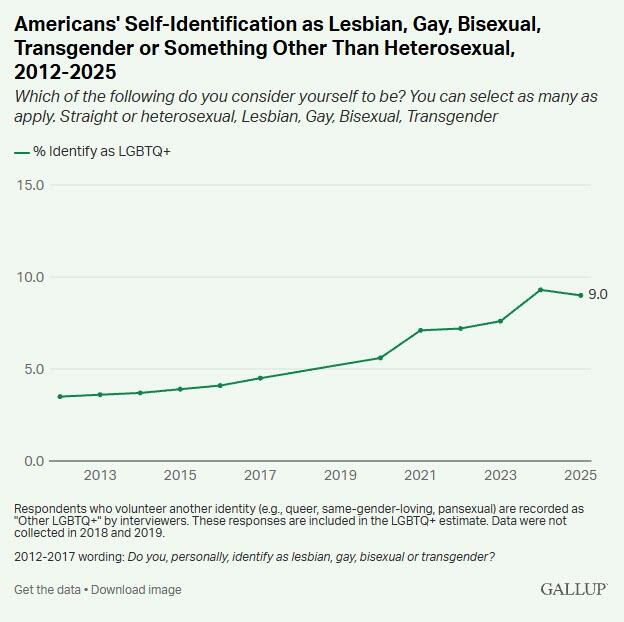
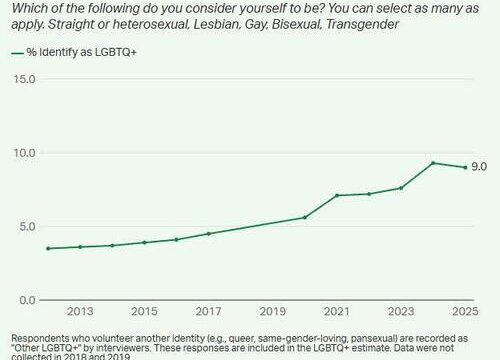
Gallup estimates that 9% of U.S. adults personally identify as lesbian, gay, bisexual, transgender or something other than heterosexual. This percentage is essentially unchanged from last year but remains more than double the 3.5% from 2012, the first year Gallup measured LGBTQ+ incidence. The current figure is also higher than readings of roughly 7% between 2021 and 2023.
The latest results are based on combined data from 2025 Gallup telephone interviews with over 13,000 U.S. adults.
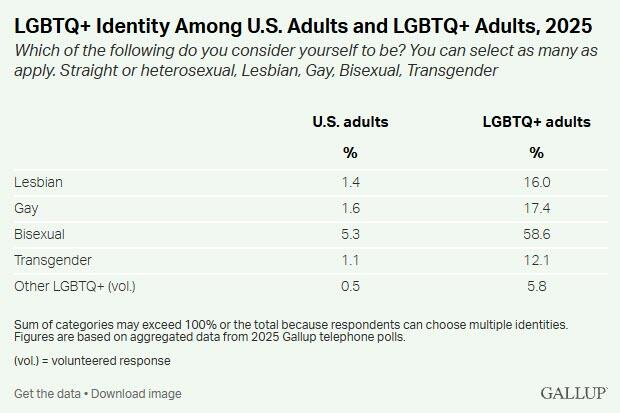
In each poll it conducts, Gallup asks respondents whether they personally identify as heterosexual, lesbian, gay, bisexual, transgender or something else. The vast majority, 86%, say they are heterosexual, while 9% identify with one of the various LGBTQ+ identities and 5% do not give a response.
The largest share of LGBTQ+ adults say they are bisexual, representing more than half of the subgroup and about 5% of the entire U.S. adult population. Meanwhile, 17% of LGBTQ+ adults identify as gay, 16% as lesbian and 12% as transgender, each representing between 1% and 2% of all U.S. adults. Another 6% of LGBTQ+ adults provide another identity, such as queer or pansexual, beyond those included in the survey.
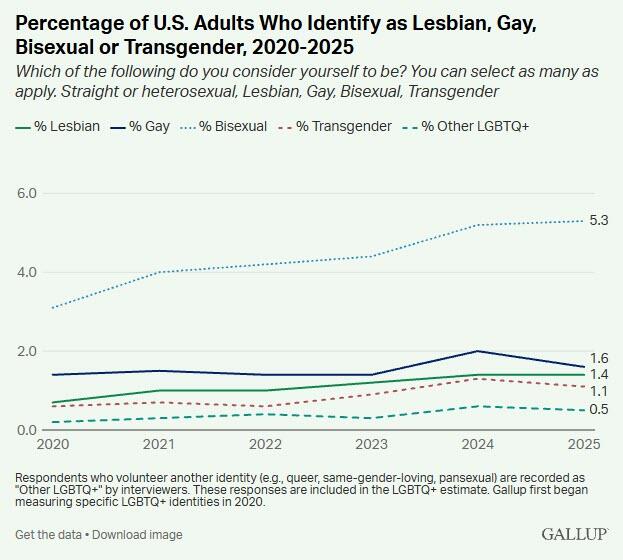
Bisexual identity has consistently been the most common LGBTQ+ identity and has grown sharply since Gallup began measuring lesbian, gay, bisexual and transgender identities as separate categories in 2020. That year, 3.1% of U.S. adults said they were bisexual, compared with the current 5.3%. Other LGBTQ+ identities have also increased over the past six years.
LGBTQ+ Identity Higher Among Younger Adults
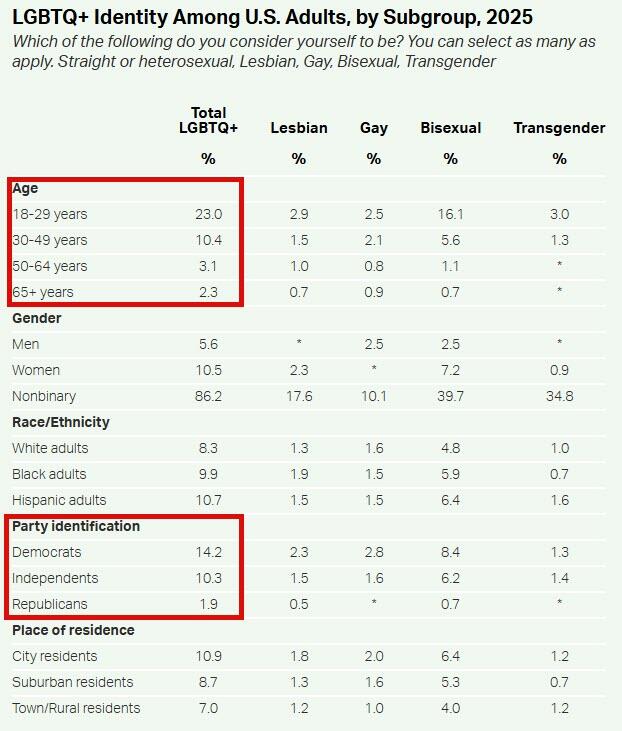
As Gallup has previously demonstrated, the recent increase in LGBTQ+ identification in the U.S. is primarily driven by higher rates among those in the younger generations. In the latest data, 23% of adults under age 30 identify as LGBTQ+, compared with 10% of those aged 30 to 49 and 3% or less among those aged 50 and older.
LGBTQ+ identification is also higher among women than men, primarily because women are much more likely to say they are bisexual. The small proportion of U.S. adults who identify as nonbinary gender overwhelmingly identify as LGBTQ+, particularly as bisexual or transgender.
Democrats are much more inclined than Republicans to have an LGBTQ+ identity. This pattern likely results from LGBTQ+ individuals aligning with the Democratic Party, given the two parties’ stances toward same-sex marriage and other gay rights issues.
City residents are more likely than those living in suburban or rural areas to identify as LGBTQ+, while rates are similar among the major U.S. racial and ethnic groups.
All of these demographic subgroups report higher rates of LGBTQ+ identification than in 2012, the earliest Gallup data. Young adults today versus those in 2012 show the largest increases, and the rate has increased much more among women than men. The smallest increases are among Republicans (1.5% in 2012 vs. 1.9% today) and adults aged 65 and older (1.9% in 2012 vs. 2.3% today).
Implications
LGBTQ+ identification has risen sharply over the past decade, mainly because more young adults today, especially young women, are identifying as LGBTQ+. As more members of Generation Z (those born between 1997 and 2012) reach adulthood, the LGBTQ+ percentage should rise further, given that nearly one in four adults in that generation currently identify as something other than heterosexual. This is in contrast to older Americans, among whom LGBTQ+ identification remains relatively uncommon.
The increase to date also reflects larger shares of Americans, especially those in Gen Z and the millennial generation, considering themselves bisexual. Bisexual identification far outpaces gay and lesbian identification among younger adults, but it is on par with gay and lesbian identification among older generations.
Tyler Durden
Mon, 02/16/2026 – 09:50
https://www.zerohedge.com/political/lgbtq-identity-dips-2025-doubled-over-last-decade
Futures, Global Markets Rise With US Markets Closed For President’s Day
Futures, Global Markets Rise With US Markets Closed For President’s Day
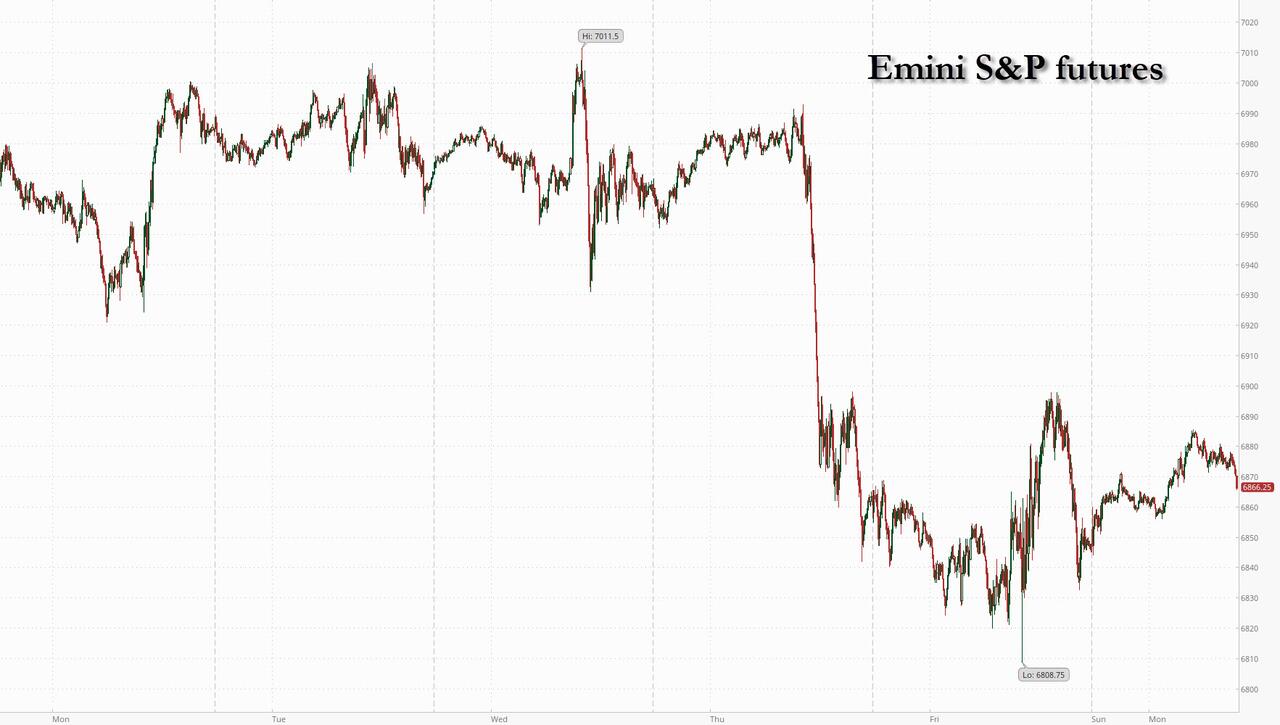
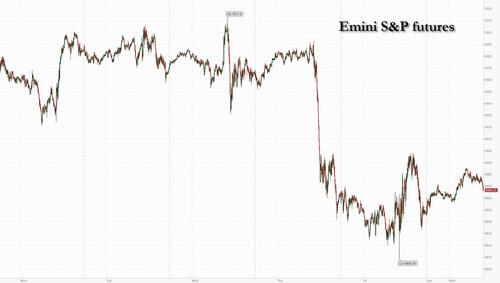
Stocks gained, bitcoin tumbled and bonds steadied after Friday’s cool CPI data reinforced expectations that the Fed will cut interest rates on multiple occasions this year. With US markets closed for the Presidents’ Day holiday and mainland China’s markets closed for Lunar New Year holidays, trading was muted on Monday. As of 9:00am ET, futures on the S&P 500 added 0.4% and Europe’s Stoxx 600 index rose 0.4% as banking shares rebounded from a sharp decline last week. German bunds and Treasury futures were steady after US yields touched the lowest since December on Friday.
The path of US interest rates remains in focus following Friday’s slower-than-expected US inflation print as traders fully price a Fed cut in July and the strong chance of a move in June.
“The backdrop for equities is positive post CPI,” said Andrea Gabellone, head of global equities at KBC Securities. At the same time, there could be “more dispersion ahead as sentiment around key AI-exposed sectors is still very critical,” he added.
That sentiment was echoed by other strategists seeking to distinguish between AI losers and winners.
A JPMorgan Chase & Co. team led by Mislav Matejka urged caution on stocks at risk of AI-driven “cannibalization,” including software, business services and media companies. Meanwhile, banks are developing baskets to capitalize on the divergence: as we first reported last Thursday, Goldman launched a new basket of software stocks that goes long firms that will benefit from AI adoption, while shorting the companies whose workflows could be replaced.
With AI disruption rippling through markets, a lot will come down to earnings resilience, in particular in the US.
“When you look at the current earnings season, the companies are showing 13% of growth,” Nataliia Lipikhina, head of EMEA equity strategy at JPMorgan, told Bloomberg TV. “Overall, this is the reason why we continue to be positive on the S&P.”
Later this week, traders will be watching for ADP private payrolls numbers on Tuesday and the minutes from the Fed’s January meeting on Wednesday for a fresh read on the economy.
European stocks gained with bank shares rebounding, after posting their biggest weekly decline since April on worries about disruption from artificial intelligence. The basic resources sector lags, with Norsk Hydro among Europe’s worst performers as both Goldman Sachs and RBC downgrade the stock. Stoxx 600 rises 0.4% to 620.26 with 253 members down, 336 up, and 11 unchanged. Here are some of the biggest movers on Monday:
NatWest shares rise as much as 4%, the most since October, as Citi analyst Andrew Coombs raises his price target on the UK bank to a Street-high.
Seraphim Space shares rise as much as 9.2%, briefly hitting a new all-time high, after the space tech investment firm said the valuations of its four largest holdings increased over the final months of 2025.
AECI shares rally as much as 6.1%, the most since July, after the South African commercial-explosives maker shared improved 2025 headline earnings per share guidance.
Orsted shares rise as much as 3.8% after analysts at Kepler raise the recommendation to buy from hold over the Danish renewable energy firm’s outlook, despite ongoing uncertainty for the industry in the US.
Norsk Hydro shares fall as much as 4.4%, extending Friday’s 5.9% earnings-triggered drop, after being downgraded at Goldman Sachs and RBC over disappointments and pricing pressures in the Norwegian aluminum company’s downstream business.
Galderma shares slip as much as 2.2% after naming Luigi La Corte as its new chief financial officer following the news back in July that Thomas Dittrich was departing.
Pinewood Technologies shares tumble as much as 32%, the most since April 2024, after Apax Partners said on Friday it will not proceed with a possible cash offer for the car dealership software provider.
FlatexDEGIRO shares drop as much as 7.2% after BNP Paribas downgraded the online brokerage firm to neutral from outperform, saying the price reflects too much optimism about its market position in Germany.
Maurel & Prom shares slump as much as 12%, pulling back after ending last week at a 2015-high, after announcing it is not currently authorized to resume oil and gas operations in Venezuela.
Barratt Redrow shares fall as much as 3.7%, leading a drop in British homebuilders after Rightmove said house prices are stalling.
Asian stocks slipped for a second day, led by declines in Japan as traders booked profits after last week’s post-election rally. Several markets were closed or held shortened trading sessions for the Lunar New Year holiday. The MSCI Asia Pacific Index was down 0.1%. Japan’s Topix Index fell 0.8%, with Mizuho Financial Group Inc. and Toyota Motor Corp. among the companies contributing to the index’s losses.In Hong Kong, AI model developer Minimax Group Inc. surged as much as 30% to more than four times its original listing price, while competitor Knowledge Atlas JSC Ltd. ended 4.7% higher. The market will be closed until Thursday. As investors across the region begin to reevaluate their bets on its artificial-intelligence-driven rally, traders in Japan cashed in gains driven by expectations of Prime Minister Sanae Takaichi’s proactive spending policies last week.Trading in Singapore ended early Monday and will be shut until Wednesday. Equity markets in mainland China, South Korea, Indonesia and Vietnam were closed.
In FX, the yen is the notable mover in currencies, weakening 0.5% against the dollar and pushing USD/JPY back above 153. The offshore yuan is one of the better performers against the greenback. The Bloomberg Dollar Spot Index rises 0.1%.
There is no cash trading in Treasuries due to the Presidents’ Day holiday. European government bonds are little changed
In commdities, gold dipped below $5,000 an ounce, as traders booked profits from a gain in the previous session. Bitcoin tried anf ailed to stage a modest rebound; it last traded around $68,275 after posting its fourth consecutive weekly loss, with the cryptocurrency struggling to find clear direction as a weekend rally fizzled once the momentum ignition algos emerged. WTI crude futures tread water near $62.90 a barrel.
Top Headlines
President Trump said there will be voter ID rules in the mid-term elections this year, whether Congress approves it or not, and they will present a legal argument in an Executive Order. Furthermore, Trump said he has searched the depths of legal arguments not yet articulated nor vetted on this subject, and they will be presenting an irrefutable one in the very near future.
Iran says potential energy, mining and aircraft deals on table in talks with US: RTRS
Pentagon threatened to cut its ties with Anthropic over the company’s insistence that some limitations are kept on how the military uses its AI models: RTRS
UK eyes rapid ban on social media for under 16s, curbs to AI chatbots: RTRS
Rampant AI Demand for Memory Is Fueling a Growing Chip Crisis: BBG
Warner Bros. Weighs Reopening Sale Negotiations With Paramount: BBG
Companies Are Replacing CEOs in Record Numbers—and They’re Getting Younger: WSJ
Europe aims to rely less on US defence after Trump’s Greenland push: RTRS
DOJ Tells Lawmakers Epstein File Redactions Complied With LawL BBG
For College Applicants, Pressure to Make Summers Count Has Gotten Even Worse: WSJ
Fed’s Goolsbee (2027 voter) said on Friday that they are still seeing pretty high services inflation, and he hopes they have seen the peak impact of tariffs, while he added that the job market has been steady, with only modest cooling.
The Break Is Over. Companies Are Jacking Up Prices Again: WSJ
Trade/Tariffs
USTR Greer said the US and Ecuador expect to sign a trade agreement in the coming weeks.
China will waive import value-added taxes on selected seeds, genetic resources, and police dogs through to 2030 to increase agricultural competitiveness and breeding capacity. It was also reported that China will grant zero-tariff access to 53 African nations from May 1st, according to Bloomberg.
Chinese Foreign Minister Wang Yi told his French and German counterparts that China and the EU are partners, not rivals, while he added that China and the EU should manage differences, deepen practical cooperation and work together on global challenges.
A more detailed look at global markets courtesy of Newsquawk
APAC stocks began the week in the green but with gains limited following a lack of major fresh catalysts from over the weekend and amid thinned conditions owing to holiday closures in the region and North America. ASX 200 traded marginally higher with upside led by tech, although gains are capped by underperformance in the utilities, mining, materials and resources sectors, while participants also digested a slew of earnings releases. Nikkei 225 traded indecisively with the index constrained by disappointing Japanese preliminary Q4 GDP data, which showed the economy returned to growth but failed to meet expectations with GDP Q/Q at 0.1% (exp. 0.4%), and annualised GDP at 0.2% (exp. 1.6%). Hang Seng finished higher in a shortened trading session on Chinese New Year’s Eve but with upside limited by tech weakness amid some confusion after the Pentagon added several companies including Baidu, Cosco, BYD, Huawei, Nio, SMIC, Tencent, and more to a list of Chinese firms aiding the military on Friday, but then withdrew the updated list shortly after it was posted. Furthermore, price action was also restricted by the closure of mainland markets and the absence of stock connect flows, which will remain shut for more than a week. US equity futures kept afloat in quiet trade amid the absence of drivers and participants. European equity futures indicate a mildly positive cash market open with Euro Stoxx 50 futures up 0.1% after the cash market closed with losses of 0.4% on Friday.
Asian Headlines
Chinese President Xi called for the anchoring of economic growth around domestic demand as its main driver, in a speech during a key policy meeting late last year that was released on Sunday.
China is to establish a permanent financial support framework to promote rural revitalisation and prevent a slide back into poverty, which represents a shift from transitional aid to long-term support.
China’s market regulator summoned major online platform companies on Friday, including Alibaba, Douyin and Meituan, while it directed them to comply with laws and regulations, and rein in promotional practices, according to Bloomberg.
US Secretary of State Rubio and Japanese Foreign Minister Motegi reaffirmed their commitment to deepen bilateral ties.
Disney (DIS) sent a ‘cease and desist’ letter to ByteDance over Seedance 2.0 and alleged that ByteDance has been infringing on its IP to train and develop an AI video generation model without compensation, according to Axios. It was later reported that ByteDance said it would curb its AI video app following Disney’s legal threats, according to the BBC.
RBI tightened rules for loans provided to brokers and proprietary firms in an effort to reduce market speculation
FX
DXY eked slight gains in rangebound trade after a lack of major catalysts and with US participants away on Monday.
EUR/USD was little changed amid the absence of any major macro catalysts and with light newsflow from the bloc, while comments from ECB President Lagarde and news that the ECB is to make its repo backstop available to other central banks across the world, did little to spur price action.
GBP/USD held on to most of Friday’s spoils but with price action contained by resistance around 1.3650 and following comments from BoE’s Mann that the UK economy is sluggish and tepid, with consumers spending less due to being scarred by high inflation.
USD/JPY edged higher and returned to above the 153.00 level in the aftermath of the weaker-than-expected preliminary Q4 GDP data for Japan.
Antipodeans were mixed with little fresh macro drivers and a lack of tier-1 data from either side of the Tasman.
Fixed Income
10yr UST futures traded little changed and held on to last week’s spoils after returning above the 113.00 level in the aftermath of the softer US inflation data, while price action was contained to start the week by the closure of US cash markets for Washington’s Birthday.
Bund futures lacked demand in the absence of any major catalysts and with light newsflow from the bloc.
10yr JGB futures were marginally higher following disappointing preliminary GDP data for Q4, but with gains limited after failing to sustain a brief reclaim of the 132.00 level.
Commodities
Crude futures were rangebound amid light energy-specific newsflow from over the weekend and after last Friday’s indecisive performance, where attention was on a source report that noted OPEC+ is leaning towards resuming oil output hikes from April, but with no decision made.
Slovak PM Fico said he has information that the Druzhba pipeline has been fixed after damage in Ukraine, although he believes that supplies to Hungary and Slovakia have become a part of political blackmail.
Spot gold took a breather after edging higher in the aftermath of the recent softer-than-expected US inflation data, with price action also contained by the holiday closures across Asia and North America.
Copper futures were subdued, with their largest buyer away for more than a week due to the Chinese New Year/Spring Festival holiday.
Texas venture-backed startup Hertha Metal vowed mass production of steel with 25% cost savings, which could reduce US reliance on imports.
Geopolitics: Middle East
US military is preparing for potential operations against Iran that could last for weeks if US President Trump orders an attack and the US fully expects Iran to retaliate, according to sources cited by Reuters.
US President Trump told Israeli PM Netanyahu during a meeting in December that he would support Israel striking Iran’s ballistic missile program if the US and Iran are not able to reach a deal, according to CBS.
Iran confirmed that indirect talks between the US and Iran will resume in Geneva on Tuesday under the mediation of Oman, while Iranian Foreign Minister Araghchi left for Geneva on Sunday.
Iranian diplomat said Iran is open to nuclear deal compromises if the US discusses lifting sanctions, while it was also reported that Iran said potential energy, mining and aircraft deals are on the table in talks with the US.
Israel’s cabinet approved the proposal to register West Bank lands as ‘state property’, while Palestinians condemned the ‘de facto annexation’ which Peace Now said likely amounts to a ‘mega land grab’.
Geopolitics: Ukraine
US President Trump said on Friday that Ukrainian President Zelensky is going to have to get moving and that Russia wants to get a deal.
US Secretary of State Rubio said they don’t know if Russia is serious about finding an end to the war in Ukraine and will continue to test it, while it was reported that he met with Ukrainian President Zelensky on security and deepening defence and economic partnerships.
Ukrainian drones targeted Russia’s Taman seaport and fuel tanks in the Black Sea region.
UK and European allies were reported on Friday to be weighing seizing Russian shadow fleet ships and tightening curbs on Russia’s economy.
French Foreign Minister Barrot said some G7 nations have expressed a willingness to proceed with a maritime services ban on Russian oil, which they hope to include in the 20th sanctions package that they are actively preparing.
Geopolitics: Other
European Commission President von der Leyen said that they face the very distinct threat of outside forces trying to weaken their union, while she added that mutual defence is not an optional task for the European Union; it is an obligation within their own treaty, and it is their collective commitment to stand by each other in case of aggression.
Pentagon said the US military struck an alleged drug cartel boat in the Caribbean, which killed three people.
DB’s Jim Reid concludes the overnigt wrap
I hope you all had a good weekend. To stay in Winter Olympics mood the family watched “Cool Runnings” last night. I haven’t seen it for 32 years. Please don’t tell anyone but I had a few tears in my eyes at the end. I blamed it on the hay fever that has now started.
There will be a lot of tears out there in markets for other reasons at the moment. Just two weeks ago, the idea of AI-driven disruption still felt like an abstract, almost academic thought experiment—something we could safely revisit once we had clearer evidence of how AI would be deployed and integrated across the economy. Fast forward 14 days, and markets have wiped out well over a trillion dollars of global equity value on the fear that AI could fundamentally reshape business models and compress profitability across a wide range of industries, including software, legal services, IT consulting, wealth management, logistics, insurance, real estate brokerage and commercial real estate.
For months, my published view has been that nobody truly knows who the long term winners and losers of this extraordinary technology will be. Yet as recently as October, markets were implicitly pricing in a world where almost every tech company would come out a winner. Over recent weeks we’ve seen a more realistic differentiation emerge within tech—but that repricing is now rippling into the broader economy with surprising speed.
Some of the sell off in “old economy” sectors feels overdone to me. But as I argued in our 2026 World Outlook back in November, the real challenge is that even by the end of this year we still won’t have enough evidence to identify the structural winners and losers with confidence. That leaves plenty of room for investors’ imaginations—both optimistic and pessimistic—to run wild. As such big sentiment swings will continue to be the order of the day.
My instinct is that the reaction in things like commercial real estate, for example, has been particularly exaggerated. Markets seem to be extrapolating a scenario in which vast numbers of white collar workers are made redundant almost overnight, leading to a dramatic collapse in office demand. If that view turns out to be correct, we’ll be facing societal challenges far larger than anything currently being priced into equities. While trying to catch a falling knife may be too risky for many, beginning to cushion the descent could be sensible in many old economy sectors. Markets can’t sustain a disruption narrative across multiple sectors for months or quarters without concrete evidence — and that evidence is likely to take much longer to emerge. Fascinating times.
As for this week, today is a US holiday but inflation will remain in the spotlight at a global level after Friday’s slightly softer US CPI which helped contribute to a decent rates rally to end the week. Prints are due in the US (PCE – Friday), the UK (Wednesday), Canada (Tuesday) and Japan (Friday). Other economic highlights will include the FOMC minutes (Wednesday), Q4 GDP in the US (Friday), as well as the global flash PMIs (Friday). Earnings reports will feature Walmart (Thursday), Nestlé (Thursday) and BHP (today). It’s the earnings calm before next week’s Nvidia storm.
In the US, this holiday shortened week (President’s Day today) features a data calendar dominated by releases that were pushed back by last year’s government shutdown. The most consequential updates will land on Friday, when the advance estimate of Q4 GDP arrives alongside December’s personal income and consumption figures—key inputs for shaping expectations for the early part of this year.
Our economists expect real GDP growth to slow to 2.5% for Q4, a meaningful step down from the prior quarter’s 4.4% pace. A sizable portion of that deceleration—roughly 70bps—reflects the drag from the record long shutdown. Net trade is once again projected to make a strong positive contribution, driven mainly by subdued imports. December’s international trade report, due Thursday, will help refine the team’s call, as will the advanced goods trade data, which will also guide expectations for inventories—currently seen subtracting about 60bps from growth in Q4.
For markets assessing the underlying pulse of demand heading into 2026, private final sales to domestic purchasers (PFDP) will carry more weight than the headline GDP print. This indicator—closely monitored by Fed Chair Powell—is expected by our economists to slow to 2.0% from 2.9% in Q3, though risks appear tilted upward. One swing factor: Wednesday’s durable goods report, where modest gains outside of transportation could soften the deceleration. On the consumer front, real PCE growth is expected to cool to 2.5% after two quarters of outsized strength but should still signal ample momentum heading into the new year.
Friday’s income and spending report will also offer the latest reading on core PCE, the Fed’s preferred inflation gauge. Our economists expect another 0.4% monthly increase for December, lifting the year over year rate to 2.9%. Updated seasonal factors from last week’s CPI release suggest some mild downward pressure on inflation trends in the second half of 2025. Still, January’s CPI data, although softer than we anticipated, do not translate into equivalent relief for core PCE—in fact, our team currently sees another 0.4% gain for January’s release (delayed until March 13th). Depending on the strength of medical services, airfare, and portfolio management components in the upcoming PPI report, a 0.5% monthly rise cannot be ruled out, which would push the year over year rate toward 3.1%. So don’t get too excited about the softer CPI last week and the huge rates rally.
Additional releases this week will help clarify whether recent severe winter weather has disrupted factory sector activity. January industrial production, due Wednesday, should benefit from a jump in utility output, while weather effects may weigh on the Empire State Survey tomorrow and the Philadelphia Fed survey on Thursday.
Labor market data will also be in focus, particularly Thursday’s jobless claims, which line up with the survey week for the February employment report. As our economists have pointed out, private nonfarm job gains have averaged 103k over the past three months, slightly above the pace at this point in 2025 and matching the start of 2024. See their latest US employment chartbook here.
This week will also feature a dense lineup of Federal Reserve speakers which you can see alongside all the key global data in the day-by-day week ahead calendar at the end as usual.
Moving away from the US, inflation will also be in focus in Japan (Friday) and Canada (tomorrow). For the former, our Chief Japan Economist sees the January nationwide CPI showing a slowdown in both core CPI inflation ex. fresh food to 2.1% YoY (+2.4% in December) and core-core CPI inflation ex. fresh food and energy to 2.7% (+2.9%). Also important will be the global flash PMIs due on Friday as a health check on global growth. In Europe, the spotlight will be on UK inflation (Wednesday), with labour market data due tomorrow and retail sales on Friday. Our UK economist expects headline CPI inflation to drop to 3.0% YoY (3.4% in December) and core CPI also landing at 3.0% YoY (3.2% YoY). See more in his full preview here. In terms of key rate decisions, the RBNZ are expected to remain on hold on Wednesday.
In Asia this morning, things are relatively quiet with mainland Chinese and Korean markets closed for the Lunar New Year. The Hang Seng is up +0.52% while the Nikkei (+0.11%) is edging up after a lower start to its session. That came despite a decent downside miss on Japan’s Q4 GDP data overnight, which rose at an annualised pace of +0.2% versus expectations of +1.6%. S&P (+0.15%) and Nasdaq (+0.06%) futures are also a little higher on this US holiday session.
Finally, the Munich Security Conference wrapped up over the weekend, where key topics included Ukraine, Russia, and the fate of Greenland. And while US Secretary of State Marco Rubio’s speech was nothing like Vice President JD Vance’s at last year’s conference, which triggered a “wake-up” call for European leaders, Rubio reiterated the administration’s view that Europe needed to leave behind its focus on energy policies, trade and mass migration.
Recapping last week now, the tech volatility that has dogged markets since the start of the month broadened into a far more indiscriminate sell-off. The trough came on Thursday, marked by a sharp drop in software stocks, but the weakness extended well beyond tech. Companies across wealth management, real estate and financials suffered double digit declines, underscoring how widespread the pullback has become. Market breadth confirmed this shift as the equal weighted S&P 500 fell -1.37% on Thursday, though it managed to finish the week up +0.29% (+1.04% on Friday). Ultimately, the sell-off left the major US indices on the back foot: the S&P 500 slipped -1.39% (+0.05% on Friday), the Nasdaq lost -2.10% (-0.22% on Friday), and the Magnificent 7 slid -3.24% (-1.11% on Friday).
Although the AI scare dominated sentiment, a heavy slate of US data also shaped the market narrative. Early in the week, softer prints—including flat December retail sales, a dovish Q4 Employment Cost Index, and slower Q4 growth expectations from the Atlanta Fed—pushed Treasury yields lower across the curve. That picture shifted midweek after a stronger than expected January jobs report, which delivered the largest gain in nonfarm payrolls (+130k vs. +65k expected) since December 2024 and reinforced confidence that the US economy carried solid momentum into 2026. Then on Friday, January CPI came in below expectations, adding another dovish note. Although the data offered mixed signals at times, the overall takeaway was sufficiently dovish for traders to increase the number of expected rate cuts by December 2026 to 63.4bps (+7.7bps on the week). This helped drive the largest weekly drop in the 10 year Treasury yield since August 2025, down -15.8bps (-5.0bps on Friday) to 4.05%. The 2 year yield also moved sharply lower, falling -8.9bps to 3.41% (-4.8bps on Friday), its lowest level since 2022.
European markets, meanwhile, delivered a comparatively resilient performance. The STOXX 600 (+0.09%, -0.13% Friday), DAX (+0.78%, +0.25% Friday) and FTSE 100 (+0.74%, +0.42% Friday) all posted modest gains for the week. European sovereign bonds rallied as well, with the 10 year bund yield dropping -8.7bps—its steepest weekly decline since April 2025. That move was outpaced by gilts, which fell -9.8bps (-3.6bps on Friday) despite a sharp early week sell-off triggered by renewed questions surrounding Prime Minister Keir Starmer’s position.
Elsewhere, performance was mixed. Brent crude edged down -0.44% (+0.34% on Friday), while gold extended its upward run, rising +1.56% (+2.43% on Friday).
Will London’s half term week finally give us a quiet week in 2026? You’d probably have to guess at ‘unlikely’.
Tyler Durden
Mon, 02/16/2026 – 09:40
https://www.zerohedge.com/markets/futures-global-markets-rise-us-markets-closed-presidents-day
Muere en Grecia la iraní Dana Eden, productora de la exitosa serie “Teherán”
Por COSTAS KANTOURIS y ELENA BECATOROS
ATENAS (AP) — La productora israelí Dana Eden, conocida sobre todo por ser cocreadora del thriller de espionaje ganador del Emmy “Teherán”, murió de forma repentina en Grecia, reportó el lunes la radiodifusora pública israelí KAN. Tenía 52 años.
Eden fue hallada muerta en un hotel de Atenas, la capital griega, indicó un funcionario de la policía griega, que añadió que los primeros indicios sugieren que la productora se había quitado la vida y que no había sospecha de que haya sido víctima de un crimen. El funcionario habló bajo condición de anonimato, ya que la policía griega no hace comentarios públicos en estos casos.
KAN señaló que Eden estaba en Grecia para el rodaje de la cuarta temporada de la exitosa serie.
“Dana estaba entre las figuras líderes de la industria televisiva de Israel y desempeñó un papel central en la creación y el liderazgo de algunas de las producciones más destacadas e influyentes dentro de la corporación”, afirmó KAN en un comunicado. No reveló la causa de la muerte.
“Su trabajo profesional, su dedicación inquebrantable y su amor por la creación dejaron una profunda huella en la Corporación de Radiodifusión Pública de Israel. KAN comparte el profundo dolor de su familia, amigos y colegas”, agregó la radiodifusora.
En un comunicado publicado en su página de Facebook, la productora de Eden, Donna and Shula Productions, intentó disipar los rumores de que la productora había sido asesinada.
“La productora desea aclarar que los rumores de una muerte criminal o motivada por razones nacionales son falsos e infundados”, resaltó la empresa. “Este es un momento de enorme dolor para la familia, amigos y colegas. Pedimos que se respete la dignidad de Dana y la privacidad de sus seres queridos”.
El ministro de Cultura y Deportes de Israel, Miki Zohar, escribió en una publicación en la red social X que recibió la noticia de la muerte de Eden “con gran tristeza”, y la describió como “una de las productoras más destacadas e influyentes de la industria televisiva israelí”.
“Dana dejó una profunda huella en la creación israelí y llevó nuestra historia a escenarios internacionales con orgullo, talento y valentía”, dijo Zohar.
“Teherán”, que se estrenó en Israel y en Apple TV en 2020, cuenta la historia de Tamar Rabinyan, una joven agente del Mossad encargada de infiltrarse mediante hackeo y desactivar el reactor nuclear iraní para que el ejército israelí pueda perpetrar un ataque aéreo. La serie fue nombrada mejor serie dramática en los 49nos Premios Emmy Internacionales en noviembre de 2021.
Eden comenzó a trabajar en la producción televisiva en Israel en la década de 1990, participando en programas como la comedia “Yom Haem” y el drama criminal “Magpie”, antes de alcanzar el éxito internacional con “Teherán”.
En 2018, su programa “Saving the Wildlife” ganó el premio a Mejor Revista de Televisión para Niños y Jóvenes en los Premios de la Academia de Televisión de Israel.
___
Kantouris colaboró a este despacho desde Salónica, Grecia, y Matt Kemp desde Londres. ___
Esta historia fue traducida del inglés por un editor de AP con la ayuda de una herramienta de inteligencia artificial generativa.

Colleges pursue West Side freshman Prentiss Gates. He chases something else. ‘I just want to get better.’
West Side’s Prentiss Gates is a freshman, but he doesn’t play like one.
College coaches have noticed. The 6-foot-7 forward received an offer from SMU in July, before he had even played in a high school game.
“He’s one of the best shot blockers I’ve seen at this age in a very long time,” West Side coach Chris Buggs said. “He rebounds well, has great hands, runs the floor really, really well and can guard multiple positions. But the biggest (areas) he’s had a major impact in are blocking shots, rebounding and finishing by the rim.”
Gates’ stats back that up. He’s averaging 8.0 points, a team-high 5.0 rebounds and a team-high 3.0 blocks for the Cougars (13-7, 3-0), who have won the Great Lakes Athletic Conference for the second straight season. Those numbers have placed Gates among the state’s top freshmen.
But Buggs said Gates has stayed focused on “keeping the main thing the main thing,” and that’s not recruiting.
“I haven’t really been focusing on that,” Gates said. “My parents and my coaches, they try to take care of my recruiting. I was excited about (the SMU offer), but I made sure not to keep my mind on it because I’m not really worried about whether I have any offers now. I just want to get better.”
West Side’s Prentiss Gates (23) goes for a layup during a nonconference game against Munster in Gary on Friday, Feb. 13, 2026. (Mandy Coppinger / Post-Tribune)
Gates’ father, Prentiss Jr., who played at Kennesaw State and professionally in Puerto Rico, is also a key figure in his development.
“When I’m on the court, he helps me focus,” Gates said. “He still works me out. He’s just been here for me.”
Gates also leans on his older sister Destiny, a sophomore forward on West Side’s girls basketball team, and his close friend and teammate DeShawn Clay Jr. Gates and Clay, a freshman guard, play together not only for West Side but also for Darius Garland Elite in AAU.
The presence of Clay, who is averaging 7.0 points and 3.5 rebounds, has helped Gates adjust to varsity basketball.
“He’s really like a brother to me,” Gates said. “I grew up with him, and I’ve been playing basketball with him all my life. I know his goods and bads, when to pass him the ball and when not to, and I’ve played with him so long that I kind of just know what he’s going to do.”
Gates and Clay spend time together away from their teams, too, mostly playing video games — Gates said he almost always wins — or scrimmaging at a local gym.
Clay agrees that bond makes a difference during games.
“We’ve played with each other for so long, we just know each other’s tendencies and what we can and can’t do,” Clay said. “We don’t try to force anything. We just play together.
“I encourage him. I always bring energy toward him and bring him up when he’s down. We’re basically brothers, so I’m always pushing him to do better, and when he does something good, I’m always there to give him a high-five.”
West Side’s Prentiss Gates (23) challenges a shot during a nonconference game against Munster in Gary on Friday, Feb. 13, 2026. (Mandy Coppinger / Post-Tribune)
That duo makes Buggs optimistic about the Cougars’ future.
“We’ve been a program that’s not focused on actually winning all the time,” Buggs said. “Our main focus has been developing student-athletes. But with the potential they have and the type of people they are, I think they’re definitely going to help us win a lot of games.”
Development remains the priority, especially for Gates.
“It’s a blessing when you’re able to coach a kid like him, who’s very humble and comes from a great family,” Buggs said. “I think he could be a player, depending on how hard he keeps working at it, who plays for a very long time — definitely at the next level in college, and depending on how much he still loves the game, I think he could play after college, for sure.”
Noah Poser is a freelance reporter.
https://www.chicagotribune.com/2026/02/16/gary-west-side-high-school-basketball-prentiss-gates/
Downdetector Users Report Widespread Outages At X, AWS, Cloudflare
Downdetector Users Report Widespread Outages At X, AWS, Cloudflare
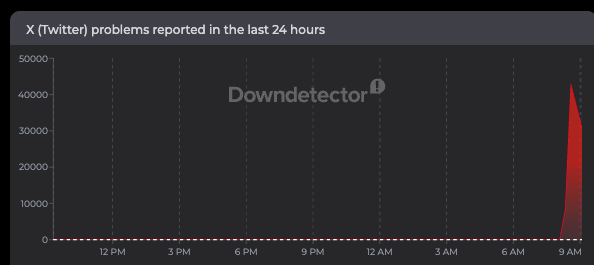
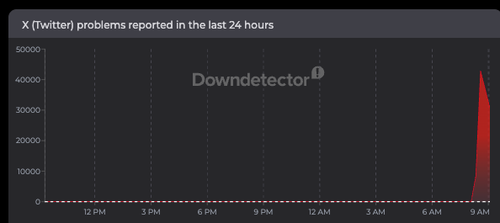
Around 8:00 a.m. ET, users on Downdetector reported outages and disruptions on X across the United States. At the same time, the outage tracker also showed a spike in reported issues involving Amazon Web Services and Cloudflare.
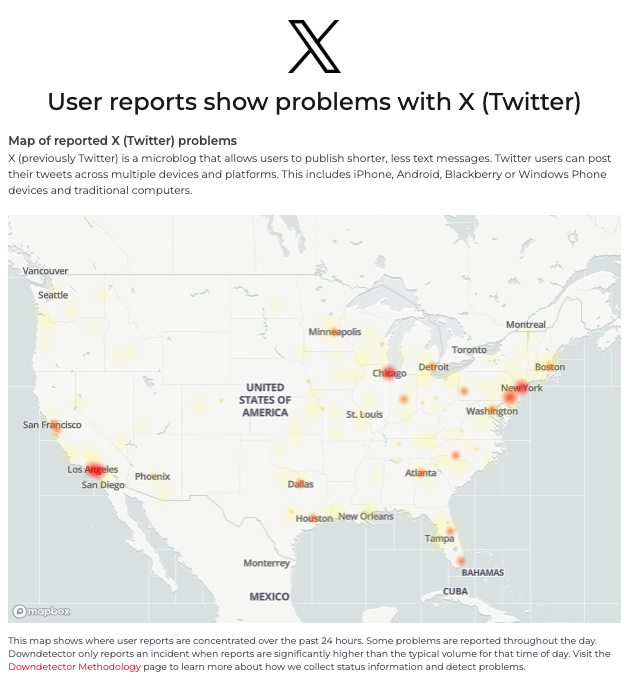
Downdetector users reported X outages and disruptions across major U.S. cities.
Simultaneously, Downdetector users reported outages affecting AWS and Cloudflare, raising the question of whether issues on Musk’s platform are a downstream effect.
*Developing…
Tyler Durden
Mon, 02/16/2026 – 09:30
https://www.zerohedge.com/technology/downdector-users-report-outages-x-aws

Ukraine’s Former Energy Minister Charged With Money Laundering As ‘Operation Midas’ Expands
Ukraine’s Former Energy Minister Charged With Money Laundering As ‘Operation Midas’ Expands
Months after Ukraine was shaken by a sweeping corruption probe into state nuclear giant Energoatom, and subject of international embarrassment given it even touched Zelensky’s office, former Energy Minister Herman Halushchenko has now been formally charged – after authorities detained him while he was allegedly attempting to leave the country.
Halushchenko had been suspended by Zelensky in mid-November, when news of the scandal first hit global headlines. On Monday, Ukraine’s National Anti-Corruption Bureau (NABU) and the Specialized Anti-Corruption Prosecutor’s Office (SAPO) announced that Halushchenko faces formal charges of money laundering and participation in a criminal organization tied to what investigators call the Midas case or Operation Midas.
The former Minister of Energy, Herman Galushchenko, Creative Commons
“The former minister of energy (2021–2025) has been exposed for money laundering and participation in a criminal organization,” the joint statement said, adding that investigators have “expanded the circle of suspects.”
The investigation is focused on members of the alleged network which established an investment fund in Anguilla (the British Overseas Territory in the Eastern Caribbean) in February 2021. The vehicle was marketed as raising roughly €118 million in “investments” – with Halushchenko’s family listed among the contributors – after which millions flowed directly into accounts controlled by the family.
For example, authorities claim part of the funds paid for the education of Halushchenko’s children at elite Swiss institutions, while other sums were deposited into his ex-wife’s accounts, also with a big portion of the money allegedly invested further, “earning extra income for the family’s personal use.”
Halushchenko was energy minister from 2021 to 2025 before being appointed justice minister in July 2025. In November, NABU agents conducted raided offices and properties connected to him as the investigation intensified.
Western mainstream media had almost immediately launched into damage control in the wake of the massive energy scandal, with one op-ed in Bloomberg having tried its best to say it’s not at all Ukraine’s fault, but is actually somehow… the Kremlin behind it(!). Here’s how it began:
There are at least two legitimate responses to allegations that a group of highly placed Ukrainian officials have skimmed $100 million from contracts to repair and protect their nation’s critical energy infrastructure, even as Russian attacks plunge the nation into darkness and cold. One is to despair, the other to celebrate. The second, strange as it may sound, is more logical.
This episode goes to the heart of why Ukrainians are fighting at all. The war began in 2014, after then President Viktor Yanukovych was toppled by mass protests against the epic scale of his corruption and the captivity to Moscow this created. Graft was the glue with which the Kremlin had held…
So even with high officials in Zelensky’s government are caught red-handed by a Ukrainian internal investigation, the ultimate fault lies in Moscow, according to some MSM accounts.
It must be remembered that earlier last year, Zelensky himself found himself at the center of EU pushback and controversy when he attempted to eliminate NABU’s independence, sparking outrage in Brussels some sectors of the Ukrainian populace.
Ukrainians, currently enduring a harsh winter in subzero temperatures and with rolling power outages due to the war, are outraged. But Americans might also need to wake up and take note of how billions in US funds are going into the coffers of a deeply corrupt Ukrainian system.
Tyler Durden
Mon, 02/16/2026 – 09:25

No, George Washington no tenía dientes de madera. Sí lideró el sitio de Boston
Por MICHAEL CASEY
BOSTON (AP) — Más de una década antes de convertirse en el primer presidente de Estados Unidos, George Washington encabezó una campaña crucial en los primeros días de la Revolución. El Sitio de Boston fue su primera campaña como comandante en jefe del Ejército Continental y, en muchos sentidos, preparó el terreno para sus éxitos militares y políticos, celebrados en el Día de los Presidentes.
Tras las batallas de Lexington y Concord, las milicias habían acorralado a los británicos en Boston en abril de 1775. El Congreso Continental, al reconocer la necesidad de un esfuerzo militar más organizado, eligió a Washington para dirigir el ejército recién formado.
El Sitio de Boston y su importancia
En este día hace 250 años, Washington se estaría acercando al final de un sitio de casi un año que mantuvo atrapados a hasta 11.000 soldados británicos y a cientos más de leales. Los británicos ocupaban Boston en ese momento, y el objetivo del sitio era obligarlos a salir.
Una decisión crucial que tomó Washington fue enviar a Henry Knox, un joven vendedor de libros, a Fort Ticonderoga, en Nueva York, para recuperar decenas de cañones. Los cañones, transportados cientos de kilómetros en pleno invierno, al final se utilizaron para disparar contra posiciones británicas. Eso contribuyó a la decisión de los británicos, cuyos suministros menguaban, de abandonar la ciudad en barco el 17 de marzo de 1776.
Los historiadores sostienen que, al abandonar los británicos sus posiciones, celebrado en Boston como el Día de la Evacuación, libró a la ciudad de los leales en un momento crítico, negó a los británicos el acceso a un puerto importante y dio a los patriotas un enorme impulso moral.
“El éxito del Sitio de Boston dio nueva vida e impulso a la Revolución”, explica Chris Beagan, administrador del sitio en Longfellow House, en Cambridge, un Sitio Histórico Nacional que sirvió como cuartel general de Washington durante la Revolución. “Si hubiera fracasado, el control real sobre Nueva Inglaterra habría continuado, y es probable que el Ejército Continental se hubiera disuelto”.
Cómo el sitio moldeó a Washington
El sitio también fue una prueba crucial para Washington. Agrimensor y agricultor, Washington llevaba casi 20 años fuera del ejército después de comandar tropas para los británicos durante la Guerra Franco-India. Su campaña exitosa le garantizó seguir como comandante en jefe el resto de la Revolución.
Doug Bradburn, presidente de Mount Vernon de George Washington, la finca donde vivió Washington y que hoy es museo y sitio histórico, señaló que Washington dio los primeros pasos para crear un ejército geográficamente diverso que incluía milicianos desde Massachusetts hasta Virginia y, al final de la guerra, una fuerza de combate con una representación significativa de personas negras y nativas. Fue el ejército más integrado hasta que el presidente Harry S. Truman desegregó las fuerzas armadas en 1948, señala Bradburn.
Washington, un propietario de esclavos que dependía de cientos de ellos en su hacienda de Mount Vernon, se oponía inicialmente a admitir en el ejército a soldados negros, tanto liberados como libres. Pero, ante la falta de hombres, llegó a comprender que “hay negros libres que quieren alistarse y los necesita para impedir que los británicos rompan el cerco” durante el sitio, explica Bradburn.
Expulsar a los británicos de Boston también convirtió a Washington en una de las figuras políticas más populares del país.
“Él llega a encarnar la causa en un tiempo anterior a que existiera una nación, antes de que existiera una Declaración de Independencia, antes de que realmente se tuviera claro cuál era el objetivo de esta lucha”, indicó Bradburn. “Él se convierte en el rostro del movimiento revolucionario”.
Comandar el ejército durante más de ocho años también preparó a Washington para la presidencia, dijo el historiador militar Rick Atkinson, ganador del Premio Pulitzer. “Quizá lo más importante es que le dio la sensación de que los estadounidenses podían y debían ser un solo pueblo, en lugar de habitantes de trece entidades diferentes”.
Mitos sobre Washington
Su ascenso a la prominencia también dio lugar a numerosos mitos sobre Washington, muchos de los cuales persisten hasta hoy.
Uno de los más populares es el mito del cerezo. Según Mount Vernon, lo inventó uno de los primeros biógrafos de Washington tras su muerte. Supuestamente, a los 6 años dio hachazos a un cerezo y lo admitió cuando su padre lo descubrió, al decir célebremente: “No puedo decir una mentira… sí lo corté con mi hachita”.
El segundo es el mito de los dientes de madera. Se rumoraba que Washington tenía dentaduras postizas de madera y, incluso bien entrado el siglo XX, se citaba a académicos diciendo que sus dientes falsos estaban hechos de madera. No es cierto. Nunca usó dentaduras de madera; en su lugar, utilizó dentaduras con marfil, oro e incluso dientes humanos.
Más que un estadista
Durante su vida, Washington tuvo innumerables ocupaciones. Según Mount Vernon, era conocido como un agricultor innovador y un defensor de la expansión hacia el oeste, al comprar hasta 50.000 acres de tierra en varios estados del Atlántico medio. Tras regresar a su finca, construyó una destilería de whisky que se convirtió en una de las más grandes del país.
Su relación con la esclavitud era compleja. Abogó por poner fin a la esclavitud, y su testamento pedía liberar a todas las personas esclavizadas que le pertenecían tras la muerte de su esposa, Martha Washington. Pero no era dueño de todas las personas esclavizadas en Mount Vernon, por lo que no podía liberarlas legalmente a todas.
Celebración del Día de los Presidentes
Para los admiradores de George Washington, el Día de los Presidentes —que se conmemora cada tercer lunes de febrero— es como su Super Bowl. La festividad, que se originó para celebrar el cumpleaños de Washington —el 22 de febrero—, se ha asociado con buenas ofertas en el centro comercial. Aun así, hay muchos lugares que celebran todo lo relacionado con Washington en este día.
Se prevé una ceremonia de colocación de una corona de flores en la tumba de Washington en Mount Vernon, y un campamento del Ejército Continental. También un desfile en honor a Washington en Alexandria, Virginia, y, en Laredo, Texas, una celebración de un mes incluye un carnaval, certámenes, un espectáculo aéreo y un festival de jalapeño.
_______
Esta historia fue traducida del inglés por un editor de AP con la ayuda de una herramienta de inteligencia artificial generativa.

El todo o nada del esquiador Lucas Pinheiro Braathen: oro para Brasil y caída en eslalon
Por PAT GRAHAM
BORMIO, Italia (AP) — Lucas Pinheiro Braathen no cambiaría la manera en que se lanzó a toda velocidad por el recorrido en el eslalon olímpico el lunes.
Claro, se cayó en la primera manga. Claro, eso acabó con cualquier esperanza de otra medalla.
Pero ese ataque, ese enfoque sin guardarse nada del esquiador brasileño también lo llevó a ganar el oro dos días antes en el eslalon gigante en los Juegos de Milán-Cortina. Fue un oro que le dio a Sudamérica su primera medalla en unos Juegos de Invierno.
Un oro que hizo que los brasileños celebraran en casa y que todos, desde el presidente del país hasta la leyenda del fútbol brasileño Ronaldinho, le enviaran elogios.
En el esquí alpino hay una línea muy fina entre empujar demasiado y contenerse lo justo, y Pinheiro Braathen vivió ambos extremos.
“Tienes que esquiar con el corazón y tienes que dar todo lo que tienes, y eso fue lo que hice”, indicó. “Pero el esquí alpino, lo que lo convierte en el arte que es, es un equilibrio delicado entre estrategia, técnica e intensidad”.
Reconoció que fue un error simple.
En un momento, Pinheiro Braathen estaba en ritmo, con un tiempo rápido y sus esquís “cantando”. Al siguiente, uno de sus esquís se le fue por debajo y acabó dando vueltas sobre la nieve, deslizándose por la pista.
Con eso, se terminaron los Juegos Olímpicos para el esquiador brasileño. Un “DNF” — no terminó.
“Por supuesto que tengo sentimientos encontrados. Dios mío, este deporte. Te eleva hasta el cielo y te estampa de vuelta contra la realidad con la misma rapidez”, afirmó Pinheiro Braathen.
“Me llevo mucho crecimiento, tanto de experiencias hermosas e increíbles, y me llevo también lo que pasó hoy. Ese oro fue producto de todos los altibajos por igual”, agregó.
Pinheiro Braathen, de 25 años, proviene de una familia en la que su madre es brasileña y su padre es noruego. Empezó a competir por Noruega hasta que se retiró de forma abrupta antes de la temporada 2023, para regresar un año después representando a Brasil. Su país celebró su medalla de oro, que, casualmente, coincidió con el Carnaval.
Nada podía quitarle esa sensación — ni siquiera una caída aparatosa.
“Esto significa el mundo para mí, lo significa todo. Cada vez que me paro en esa puerta de salida, eso es lo único que me importa”, dijo Pinheiro Braathe. “Sí, es una sensación complicada mientras estamos aquí ahora mismo. Por supuesto, sobra decir que estoy más que orgulloso. Todavía tengo este sol dentro de mí que está brillando, y estoy muy feliz”.
Las condiciones fueron complicadas para los competidores, con una fuerte nevada y niebla que dificultaba la visibilidad.
“Este es un recorrido al que tienes que ir con todo. Tienes que empujar. Tienes que crearlo todo tú mismo. Yo lo hice, pero hay que hacerlo con aplomo”, manifestó.
Han sido unos días emotivos para Pinheiro Braathen, con tanta gente contactándolo. Está tratando de asimilarlo todo — incluso los momentos bajos tras una caída.
“He llegado a una etapa de mi carrera en la que he aprendido a aceptar también todos los fracasos con gratitud porque sé en qué desembocan. El crecimiento es la respuesta”, sostuvo. “Lo que quizá he podido demostrar en mayor medida es que atreverme a ser quien soy es mi fuente de felicidad, y la felicidad para mí es mi definición de éxito”.
___
Deportes AP: https://apnews.com/hub/deportes