Category: News
Everybody loves the Chach: Pizano’s waiter serves life lessons with pizza
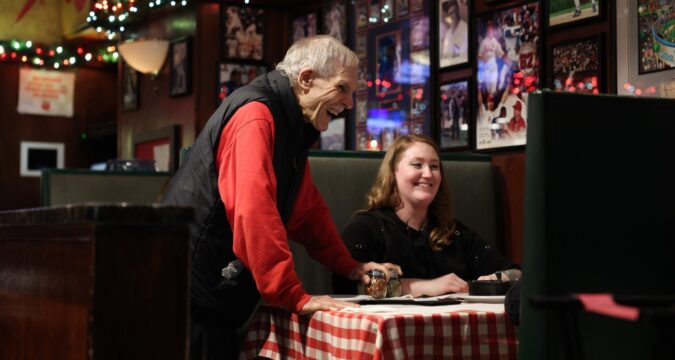
Enter the Madison Street location of Pizano’s Pizza & Pasta and you just might come across a wiry, gray-haired and mustachioed waiter holding court at a table. With the kinetic energy of a preacher or politician, he captivates his customers with inspirational sayings and witticisms.
Like the Rock or Slash, the waiter is known only by his nickname, “the Chach,” and he has been serving Pizano’s customers for more than 30 years. Search online for “the Chach,” and comments like “living legend” and “most inspiring waiter in all of Chicago” pop up. So do photos of customers posing with him. His fan following stretches all the way to Southeast Asia.
Chach, who turns 73 in June, dispenses sage advice to his customers as effortlessly as he dishes out gooey slices of deep-dish pizza.
“I give them something that’s not on the menu. I give them something that’s in here,” he explains, pointing to his heart. “You may walk in as strangers, but you will walk out Pizano family and Chach family.”
“It’s impressive the amount of fan mail we get in the office on behalf of Chach,” says Holly Malnati, Pizano’s director of communications. “Our goal is to become part of your memories, your traditions, and that starts with service. Chach is the definition of good service.”
“I’m not a celebrity,” Chach says. “It’s my way of living life. I’m blessed that people remember me and come back.”
Pizano’s Pizza & Pasta server Joe “the Chach” Ciaccio talks with customer Clayton Mieritz during his evening shift at the East Madison Street location on Jan. 13, 2026, in Chicago. (John J. Kim/Chicago Tribune)
Born into a family with Greek and Sicilian roots, Joseph Ciaccio grew up in Berwyn. He credits his parents, Nick and Angela Ciaccio, with inspiring his hard work ethic and for serving as a significant source of his seemingly limitless store of life lessons. As for his nickname, it was bestowed upon him at age 5 by his kindergarten classmates at Emerson School in Berwyn. He’s been Chach ever since.
In many ways, Chach was destined for the restaurant industry. As a teenager, his first job was working for his father, whose Eagle Store Fixture Co. helped design restaurants and sold equipment to such legendary restaurateurs as Dick Portillo and Rudy Malnati Sr. While assembling equipment for his father, Chach met Rudy’s son, Rudy Malnati Jr. The two became fast friends.
“We were like blood brothers,” Chach says.
They were so close that when Malnati Jr. died on Christmas Eve 2021, no one had the heart to break the news to Chach until his shift was over.
After studying business administration at Illinois State University, Chach had aspirations to pursue a career in law, but he couldn’t conquer the LSAT exam.
“I was a good student, but I didn’t have the natural ability for board exams like the LSAT,” he admitted.
Instead, he took a job expediting permits. Evenings, he worked at Pizano’s, which Malnati Jr. and his mother, Donna Marie Malnati, founded in 1991. Chach was among the restaurant’s earliest employees.
From the start, Chach demonstrated a flair for charming customers with his open personality, welcoming spirit and generous helpings of aphorisms. It’s all a part of his customer engagement process, or what he calls “Chachification.” Depending on where the table conversation is headed, he might share stories, offer something sublime, such as “the two greatest days of your life are the day you were born and the day you figure out why,” or deliver a straightforward helping of common sense: “Be the person you’re supposed to be. Open your mouth and let you come out.”
Pizano’s Pizza & Pasta server Joe Ciaccio, known as Chach since kindergarten, delivers a dessert for a customer he had not seen in 10 years during his evening shift at the East Madison Street location on Jan. 13, 2026, in Chicago. (John J. Kim/Chicago Tribune)
As Chach explains, “I’m going to give you a life lesson that was given to me to make me a better person. I’m going to give you something to think about when you leave.”
The Chachification process has even been known to predict couple compatibility. “I meet couples when they are dating and tell them, ‘you make a nice set of bookends!’” After Chachifying the couple, he can sense whether or not they will make it to the altar. He keeps track: At last count, he has been part of 286 couples. “I’m working on 287,” he laughs.
He credits his ability to connect with customers to his religious faith and his upbringing.
“Goodness is the greatest force in the world,” he says. “When I see goodness, I give it back. The more I give pieces of me, the more life gives back to me.” Still, not everyone who walks into the restaurant, he admits, is Chachifiable. “Some people come here just to have a nice dinner. I don’t force myself on anybody.”
By 2000, Chach quit his expediting job and worked for Pizano’s full time. All the while, especially in the early days, customers enchanted by his personality tried to lure him away with lucrative job offers.
“People from all over — Italy, Vegas, California — I had offers from billionaires,” he says.
But nothing could pry Chach from his post at Pizano’s.
“It became more than the money. It was about the people. The Malnati family is like my own family. They look after me and I look after them. That’s the Sicilian way: the blood looks after the blood.”
Pizano’s Pizza & Pasta server Joe “the Chach” Ciaccio sits for a portrait during his evening shift at the East Madison Street location on Jan. 13, 2026, in Chicago. (John J. Kim/Chicago Tribune)
When formerly Chachified patrons return to Pizano’s on Madison, they typically ask for the Chach. Some even send him gifts. He has a sizable T-shirt collection as a result. On the afternoon we met, he was wearing a black T-shirt from the Himalayas beneath his red Pizano’s polo shirt. He is especially proud of a personalized cup a family sent him recently.
“It says, ‘The Greatest — The Chach.’ I started to cry. People are so kind,” he says.
Among the celebrities Chach has served or met at Pizano’s over the years are Black Crowes lead singer Chris Robinson and actor Antonio Fargas, best known for his role as Huggy Bear on the 1970s TV series “Starsky and Hutch.” One of Chach’s dear friends is former Chicago Blackhawks star Chris Chelios. Lady Gaga would sit at the bar during the years she dated actor Taylor Kinney.
“Oprah’s in here all the time,” Chach says. “It’s her favorite pizza in Chicago.”
When he’s not Chachifying customers, Chach cares for his older sister, a retired schoolteacher who shares his downtown home. He also loves to read “everything from biographies to history, fiction, nonfiction. John Irving is one of my favorite authors. I also like first-time bestselling authors. You never know what you are going to learn.”
Chach has never married — “I never had any luck finding the right gal,” he rues — but customers tell him not to worry, because he has the biggest family in the world.
Decades of being on his feet have taken their toll on Chach’s hip, making it painfully difficult for him to navigate the restaurant these days. An operation planned for this spring should settle things. Otherwise, his vigor is intact.
“The Chach,” the nickname of Pizano’s Pizza & Pasta server Joe Ciaccio, is written on a paper cover on one of his regular tables during his evening shift Jan. 13, 2026, at the East Madison Street location. (John J. Kim/Chicago Tribune)
“People ask me where I get my energy,” he says. “I got off caffeine at 30 years old. I don’t do drugs or smoke. I am who I am because of the good Lord who made me and the good people who raised me.”
He has no plans to retire anytime soon.
“I’m having too much fun here,” he says. “I love my job. I love talking to people. The day I can no longer do my job is the day I don’t come in.”
Robert M. Marovich is a freelance writer.
Big screen or home stream, takeout or dine-in, Tribune writers are here to steer you toward your next great experience. Sign up for your free weekly Eat. Watch. Do. newsletter here.
https://www.chicagotribune.com/2026/02/16/pizanos-the-chach-waiter/

Liz Shulman and William Liang: Why aren’t we talking about the harm AI is doing to students?
“I think, therefore I am,” philosopher René Descartes famously said in 1637. To think means to be alive. Learning how to think is why students go to to school.
As a high school student and high school teacher in different parts of the country, we believe education can still serve that purpose — but we’re worried.
Thinking was still a core value in 2023 when American education took the potential dangers of artificial intelligence seriously. Educational institutions signed contracts with AI detection companies such as GPTZero, ZeroGPT and Turnitin to deter students from cheating and adopted AI policies. They were concerned about academic integrity and critical thinking.
They knew the very thing that schools stand for — the place where young people learn to think, to become fully human — was under threat.
Two years later, under enormous pressure, schools have sold out to AI companies, and students and teachers are bearing the cost. The same systems that politicians hope to steer toward their own ends — consider President Donald Trump’s executive order pressuring schools to integrate AI “into all subject areas” — are being forced into schools as if they carry no risks.
The two of us have experienced firsthand how schools are being pressured to rely on machinery rather than human judgment, to trust these tools precisely where trust matters most — at our educational institutions.
Despite the evidence saying AI is killing students’ critical thinking skills, schools have signed contracts with Big Tech companies, allowing the technology to alter the educational landscape and shape what schools expect from students and educators, who have little say on the matter. The Center for Democracy & Technology estimates the percentage of schools with policies permitting the use of AI for schoolwork nearly doubled from the 2022-23 to 2023-24 school years, even though only 28% of teachers report strong guidance on what to do when they suspect prohibited AI use.
Big Tech’s multibillion-dollar pledges to bring AI into classrooms and communities hail AI’s ability to “democratize access” and “reimagine pedagogy.” Students are told to use these tools “responsibly,” even as no one can explain what this responsibility looks like.
The question is no longer whether AI belongs in education, but how efficiently schools can accommodate it without disrupting daily operations.
Even the country’s largest teacher unions, the American Federation of Teachers and the National Educators Association, have sold out to Microsoft, OpenAI and Anthropic. The AFT signed a $23 million deal providing AI training to educators. One of that partnership’s first efforts is a “National Academy for AI Instruction,” where teachers learn how to use AI for generating lesson plans. The program plans to reach 10% of U.S. teachers over the next five years.
The justification is to put “teachers in the driver’s seat,” according to AFT President Randi Weingarten.
Teachers should have been in the driver’s seat from the start, but some schools have removed the teacher from the classroom completely. In Texas, Arizona, and California, students sit in front of screens for two hours a day while AI “teaches” them at a supposed accelerated and individually tailored pace, reducing teachers to classroom monitors.
We doubt these students are learning how to think for themselves when they’re sitting with chatbots that mimic thought rather than discovering their own original thoughts.
Some AI proponents even claim, such as political analyst Van Jones, that AI is revolutionary for equity and inclusion. Jones called AI “the closest thing to reparations (Black Americans) will ever get.”
We wish AI could close the equity gap, but if AI equalizes anything, it’s access to cheating and the outsourcing of critical thinking. Every day, we see students use it to cheat, whether it’s to write a science lab report, generate an essay draft or do algebra problems.
Fifty percent of students admit AI is hurting their relationships with their teachers, and over 70% of teachers worry AI is diminishing students’ critical thinking skills.
No matter how much money is spent to integrate AI into schools “ethically” and “responsibly,” students have learned the easiest way to complete any assignment is to outsource their thinking by cheating.
“I use it for inspiration,” many students say when teachers talk with them about forming their own original thoughts. “It helps me organize.”
Many students ignore the barriers teachers put on assignments. Some educators use images of red traffic lights (no AI) and green lights (yes AI) at the top of worksheets. Students laugh at these paltry attempts to prevent cheating. We don’t blame them, of course, for becoming dependent on products marketed to them.
Other AI programs are less subtle. The “undetectable” AI assistant Cluely encourages users to “cheat on everything,” including tests and presentations. Perplexity incentivizes students to promote its products on college campuses by giving them money for each student who downloads Comet, its AI browser, and runs ads showcasing how its tool helps students cheat on assignments and exams.
Even more worrisome than cheating on homework is the decline in students’ ability to think for themselves.
Why aren’t schools talking more about these dangers? Since the technology is here to stay, schools need better policies on its use. Students’ work needs to be monitored better, and teachers need to be supported in a return to paper and pencils and more work being done in class. If students cheat, at least they’re copying something that was human generated.
Schools need to better address these dangers before the consequences outweigh the positives. Big Tech may have the money that schools need, but schools shouldn’t sell their souls for the funding they deserve. Besides, public schools remain massively underfunded despite their contracts with tech companies.
The two of us value what school is supposed to be, and we think everyone should, too: It’s the place where you learn how to think and how to be.
Liz Shulman teaches English at Evanston Township High School and in the School of Education and Social Policy at Northwestern University. She is working on a book of stories from the classroom. William Liang is a high school junior living in the San Francisco Bay Area and a columnist at The Hill.
Submit a letter, of no more than 400 words, to the editor here or email letters@chicagotribune.com.
https://www.chicagotribune.com/2026/02/16/opinion-ai-harm-schools-student-learning-cheating/
Michael Peregrine: President Dwight D. Eisenhower deserves history’s gratitude, not its indifference
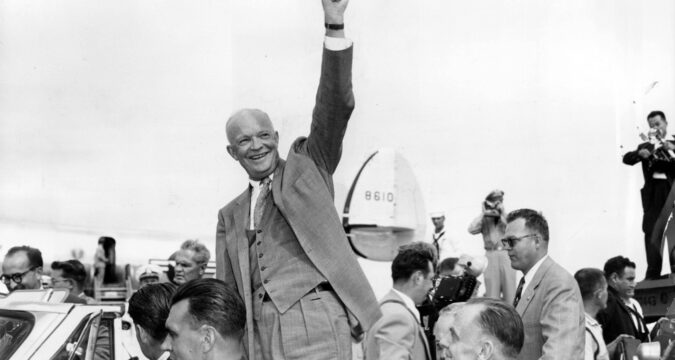
The Interstate Highway System is named after him. The nation’s newest memorial honors him. And the fastest path (sometimes) from downtown heading west is an expressway bearing his name. Dwight D. Eisenhower was one of the most consequential American leaders of the 20th century, and yet on this Presidents Day, we barely remember who he was and what he did.
And that’s a terrible shame, for Eisenhower’s record of service to the nation is simply unparalleled: D-Day commander, supreme commander of NATO, Army chief of staff, president of Columbia University and two-term president of the United States. A highly respected figure to politicians of both parties and a venerated world leader. A lifelong soldier who abhorred armed conflict. A leader of uncommon discretion, decency and grace, who is unfairly recalled — if at all — as an old man who liked to fish and play golf. And that’s a travesty of American history, as even the briefest review of his record will attest.
Eisenhower first came on the national scene as a fast-rising young general in the early days of World War II. He made the hugely difficult recommendation not to reinforce the besieged American forces in the Philippines. He commanded both the invasion of North Africa and the subsequent invasion of Sicily. He then served as supreme commander of the Allied Expeditionary Force in Europe, the war’s most important military role. Eisenhower led the Allied armies across Europe, from the D-Day invasion to Germany’s surrender, while exercising the political skills necessary to preserve the United States’ challenging partnership with Britain, France, Russia and other allies.
After the war, Eisenhower served as Army chief of staff and then led Columbia University before being called back into service by President Harry Truman as the first supreme commander of the newly formed NATO. In that role, Eisenhower promoted the foundational goals of the now-historic alliance and developed its first command structure.
Eisenhower won elections in 1952 and 1956 in a landslide; he led the country to an extraordinary period of domestic tranquility, bipartisan spirit and economic prosperity. Among the major accomplishments of his presidency were the resolution of the Korean War, the establishment of NASA as a civilian agency and his unwillingness to intervene in Vietnam in support of French forces.
As a soldier-statesman, Eisenhower focused on keeping the peace. He urged countries to resolve differences, “not with arms but with intellect and purpose.” He characterized the cost of powerful weapons as “in the final sense, a theft from those who hunger and are not fed, those who are cold and are not clothed. … This is not a way of life at all, in any true sense.” He famously warned the nation of the dangers to arise from “the military industrial complex.”
In retirement, Eisenhower was widely sought for his wisdom and judgment. President John F. Kennedy sought his advice following the failed Bay of Pigs invasion. President Lyndon B. Johnson regularly consulted him on matters ranging from presidential succession in the wake of Kennedy’s assassination to the conduct of the Vietnam War.
Upon Eisenhower’s 1969 death, President Richard M. Nixon observed of Eisenhower’s last years: “Some men are considered great because they lead great armies, or they lead powerful nations. For eight years now, Dwight Eisenhower has neither commanded an army nor led a nation. And yet he remained through his final days the world’s most admired and respected man, truly the first citizen of the world.”
None of this is to say that Eisenhower’s career was without fault. He failed to aggressively confront U.S. Sen. Joseph McCarthy’s political terrorism. His support for the Civil Rights Movement was generally passive. He was slow to react to the rise of Soviet space technology. And for years, Eisenhower failed to earn historians’ appreciation, who misinterpreted his measured tone, lack of flair and willingness to work out of the limelight as the traits of a “do-nothing” president. If that is so, perhaps we need more “do-nothing” political leaders.
Eisenhower was possibly the most extraordinary public servant of the 20th century: soldier, commander, diplomat, educator, president and, in retirement, the ultimate symbol of public dignity and national rectitude. All this is particularly noteworthy in today’s era, where such leadership virtues are seemingly in decline, if not disappearing.
So, on this Presidents Day, do yourself a favor and pull up the video of Eisenhower’s farewell address as president. It’s a little long, but it’s worth the investment of time. You’ll hear a formality of tone that is respectful of the office. You’ll hear his encouragement for “an alert and knowledgeable citizenry” to serve as the bulwark against misplaced power. You’ll hear his call to use America’s power only in the interests of world peace and human betterment.
Chances are you won’t just be impressed; you’ll be shocked. And you’ll wonder if America can continue to produce public servants like Eisenhower.
Michael Peregrine is a retired Chicago lawyer.
Submit a letter, of no more than 400 words, to the editor here or email letters@chicagotribune.com.

No injuries in townhome fire in Geneva, fire department says
No one was injured during a garage fire at a Geneva townhome Thursday evening, the Geneva Fire Department said on Friday.
The fire department was dispatched on Thursday at 5:13 p.m. to a two-story, multi-unit townhome on the 2000 block of Vanderbilt Drive in Geneva for a report of a garage fire, a news release from the fire department said.
Upon arrival, fire companies found light smoke coming from the two-car attached garage, the news release said. The garage sprinkler system had activated, helping control the fire prior to the department’s arrival, according to officials.
All occupants of the townhome had evacuated before firefighters arrived, the release said, and firefighters ultimately brought the fire under control in less than 20 minutes.
The fire originated in the garage, but the cause of the fire remains under investigation, the fire department said. The rest of the townhome remains habitable.
Firefighters from St. Charles, Batavia and Elburn & Countryside assisted Geneva crews at the scene, and the West Chicago Fire Protection District provided station coverage during the incident, the news release said. The Geneva Police Department provided additional support.

Editorial: Charles “Chuck” Lay for Illinois 35th House District Republican primary
The district, traditionally the home of many first responders and filled with moderates who value common sense and old-school community service, includes such Southwest Side neighborhoods as Beverly and Mount Greenwood as well as all or part of Alsip, Orland Park, Worth and Palos Heights, among other suburbs. Mary Gill, a moderate Democrat, currently holds the seat.
In the Republican primary, Chuck Lay, a self-employed resident of Beverly with a background in the technology field, vies against David Dewar, 59, the owner of his own company, Tax-Free Retirement Solutions. Dewar’s search engine-friendly materials leave no doubt as to where this resident of Mount Greenwood Heights stands, declaring Lay is “running as a TRUMP KIRK MAGA RED INTERNATIONAL MOVEMENT (his capitalization) within the Republican Party.” More specifically, Dewar told us he advocates for an end to Illinois’ “sanctuary state status,” the repeal of the no cash bail provisions of the SAFE-T Act and other MAGA-friendly positions. Republican leadership surely is well aware that he has little chance of unseating Gill.
Given the reality of the extreme-MAGA opposition, Charles “Chuck” Lay, of Morgan Park, is by far the shrewder choice for Republican voters in the district, even if he was not responsive to us. Lay, who was raised in a Pennsylvania steel town, Aliquippa, is a more traditional Republican, at least as far as we can tell, focused on “reining in spending,” supporting “pro-active” policing and increasing parental voices in education.
Chuck Lay is endorsed.
Read all of the Tribune Editorial Board’s endorsements for the 2026 Illinois primary election here.
Submit a letter, of no more than 400 words, to the editor here or email letters@chicagotribune.com.

Erin Carlson Mast and Shawn Healy: On Presidents Day, we should consider our civic legacy
In 1838, at age 28, Abraham Lincoln delivered a public speech responding to a rise in mob violence and warning that it could erode trust in public institutions. He asserted that the greatest risk to our nation’s preservation wasn’t an attack from a foreign power but rather destruction from within.
His solution to fortifying our republic was to empower all citizens with the knowledge of and commitment to our Constitution, laws and democratic processes. He called this our shared “political religion.” Today, we might describe this as civic education and civic practice.
Presidents Day invites us not only to reflect on past generations of political leadership but also to consider what kind of civic inheritance we are preparing for the next generation.
On George Washington’s birthday in 1861, Lincoln raised the American flag at Independence Hall in Philadelphia. Addressing the crowd, he declared, “I have never had a feeling politically that did not spring from the sentiments embodied in the Declaration of Independence.”
He made the statement just days before his inauguration, at a moment when several states had already seceded from the Union and concern about the nation’s future was mounting. Lincoln recognized that while the Founders had the shared experience and excitement of creating a new nation, his own generation had no such galvanizing moment and faced the less glorious task of maintaining (and improving upon) what the Founders created.
As the nation approaches the 250th anniversary of the Declaration of Independence, Lincoln’s call to action feels newly relevant. Consider that the children entering kindergarten this year will graduate in the 250th anniversary year of the Constitution. Whether they will inherit and be prepared to maintain a functioning constitutional democracy cannot be left to chance.
The question is not simply how we teach young people about civics, but the role we all play in supporting civic learning and modeling the principles and practices in everyday life that make constitutional democracy not just survive but thrive.
The good news is that we know what works in both formal and informal civic education, and meaningful progress is already underway. The challenge now is scale, shared commitment and the will to treat civic education as essential civic infrastructure rather than a peripheral concern.
Students who experience high-quality civic education are more likely to complete college and develop employable skills, vote, discuss current issues, speak in public with confidence, contact public officials and volunteer in their communities to address issues of common concern.
Across the country, educators, cultural institutions and civic organizations are proving that high-quality civic education engages young people, strengthens democratic skills and builds durable civic habits. For example, the Lincoln Presidential Foundation has produced award-winning short documentaries that can be used by students, educators and lifelong learners, plus companion resources for use in the classroom.
We’re also making progress in passing legislation and policy state by state that are designed to bring civics back into the center of the curriculum. The CivxNow Coalition, a project of iCivics, convenes a national coalition of 415 member organizations united behind the goal of ensuring universal access to a high-quality civic education for all K-12 students.
But we have a long way to go in ensuring Lincoln’s vision. State policies must foster students’ civic development throughout their K-12 trajectories. For most students, Illinois’ included, civics constitutes a single stand-alone, one-semester class in high school. We can and must do better, extending this semester-long course in high school to a full year, and ensuring a dedicated middle school course, too (Illinois does require instruction in civics in grades six to eight thanks to a 2019 law), and dedicated instructional time for civics in elementary school.
Illinois has not tested students in social studies since 2005, and in the current era, what’s tested is what’s taught. Illinois policymakers should consider project-based assessments in civics, where students study an issue of public concern in their communities and construct a plan to solve it through policy innovations and civic engagement.
Finally, Illinois should join 12 other states in recognizing students for excellence in civics with seals on their graduation diplomas.
As we celebrate Presidents Day in the Land of Lincoln during this year of American turning 250, let’s double down on the civic development of the rising generation of Americans. In them, we seek to preserve and strengthen this grand experiment in self-government our Founders established and Lincoln made more perfect.
Erin Carlson Mast is president and CEO of the Lincoln Presidential Foundation. Shawn Healy is the chief policy and advocacy officer at iCivics.org.
Submit a letter, of no more than 400 words, to the editor here or email letters@chicagotribune.com.
https://www.chicagotribune.com/2026/02/16/opinion-abraham-lincoln-presidents-day-civics-education/
Chicago treasurer employee alleges political staff pushed office on US bonds boycott
A whistleblower in City Treasurer Melissa Conyears-Ervin’s office filed a wide-ranging ethics complaint against her late last year, alleging the congressional candidate’s political staff pushed a questionable plan to boycott U.S. Treasury bonds in protest of President Donald Trump, despite internal objections over its financial prudence.
Mauricio Banuelos, a treasurer’s office portfolio manager, sent an eight-page complaint to the public integrity units of both the Illinois attorney general and U.S. Department of Justice in November, pointing to conduct that “may jeopardize public funds or undermine the integrity of government operations,” according to a copy of the document obtained by the Tribune.
Conyears-Ervin’s announcement to not buy U.S. Treasuries has not led to any material changes so far because the city does not have any in its portfolio, making her anti-Trump stance largely symbolic. Banuelos alleges interference from her political campaign shows the proposal was “messaging, not a legitimate investment-policy action.”
His complaint says his “duties place me in a unique position to observe conduct within the Treasurer’s Office that implicates federal, state, and municipal laws, including potential misuse of office for campaign purposes, political influence over fiduciary matters, and retaliation for protected compliance activity.”
Banuelos declined to comment. Illinois Attorney General Kwame Raoul spokesperson Annie Thompson confirmed his office received the complaint but declined to elaborate, citing a policy of not commenting on potential investigations. A message left with the Justice Department’s press office last week was not answered.
Through her campaign spokesperson Tom Bowen, Conyears-Ervin denied the allegations and defended her idea to divest from U.S. Treasuries in the wake of the Trump administration’s federal crackdown by “out-of-control” U.S. Immigrations and Custom Enforcement agents.
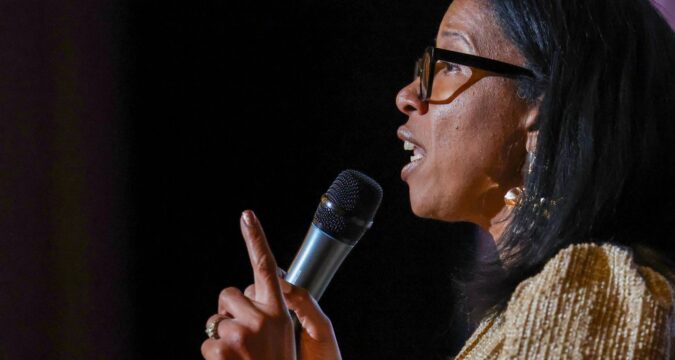
“As I said then, and I so strongly believe now, Chicagoland is under attack by the authoritarian regime of Donald Trump, and we have to fight back with every tool at our disposal,” Conyears-Ervin, who is running for the Democratic nomination to succeed outgoing U.S. Rep. Danny Davis in the 7th Congressional District, said in a statement. “Our actions were responsible, sent a message, and I’ll continue to fight for our community unapologetically.”
Conyears-Ervin last fall vowed to boycott U.S. Treasury Department securities and introduce an ordinance to further divest from money market funds that include such securities.
Ahead of the splashy announcement, her government staffers privately fretted over its political nature potentially opening the city up to liability, according to Banuelos.
“I observed multiple instances where Treasurer Melissa Conyears-Ervin’s congressional campaign directly influenced — and at times commandeered — the official operations of the City Treasurer’s Office,” his complaint says. “These actions materially compromised the Office’s independence, fiduciary obligations, and internal-control integrity.”
Banuelos names Bowen as the political operative who allegedly pressured city staffers. In his statement to the Tribune, Bowen denied playing any role beyond advising the treasurer on a “responsible approach to use the tools of her office to send a message that what ICE is doing is completely unacceptable and Chicago will not sit idly by.”
An employee at the city treasurer’s office since 2017, Banuelos is the latest Conyears-Ervin staffer known to allege ethical violations during her tenure leading the office responsible for managing Chicago’s roughly $11 billion investment portfolio.
Governments are required to exercise “fiduciary prudence” in managing public funds under the Illinois Public Funds Investment Act. The city treasurer’s investment policy also requires that all decisions “ensure the safety of principal, while managing liquidity requirements of debt service and other financial obligations of the City, using authorized investment instruments providing the highest risk-adjusted investment return, while promoting economic development in the City.”
According to a copy of a Nov. 10 email thread obtained by the Tribune, Banuelos’ boss, Chief Investment Officer Craig Slack, forwarded a draft from Bowen of Conyears-Ervin’s prepared remarks to his staff.
“This is what the Treasurer’s Team has prepared,” Slack wrote. “This is despite my persistence that, even with changes to Ordinance, managing the City’s liquidity without the use of (money market) Funds that use (U.S. Treasury) Securities is not practical. I want to discuss other ways to present this.”
Portfolio manager Hector Dox responded with warnings that the boycott would be “financially irresponsible and operationally unfeasible” because U.S. Treasury-backed money market funds are the most liquid and stable options for public investors.
“As fiduciaries of the City of Chicago, it is paramount that we properly inform Treasurer MCE on this matter and strongly advise against it,” Dox wrote. “Attempting to execute this policy would jeopardize the safety, liquidity, and performance of Chicago’s investment portfolio directly undermining the Treasurer’s fiduciary duty to protect taxpayer funds.”
Banuelos added in an email the next morning that the boycott plan needed a formal legal review. Without it, “non-financial or political reasons could be interpreted” and open the office up to violations of state and city codes on public fund investments, not to mention scrutiny from federal authorities.
In his complaint, Banuelos says that on Nov. 12, Slack told him about a conversation he had with Bowen even though, per Slack, “I know I’m not supposed to be talking with them.”
Banuelos then alleges Slack relayed that he told Bowen there were objections within the treasurer’s office about the divestment plan and Bowen responded, “We aren’t actually gonna do it.”
But Conyears-Ervin did go ahead with the announcement, grabbing national headlines as well as criticism that she was pulling a political stunt for her congressional bid. Since then, the decree has led to no material change to the city’s portfolio.
The city was already not invested in U.S. Treasuries at the time, though it did hold over $200 million in those instruments within the past three years.
Meanwhile, the money market holdings that mostly earn interest from Treasury Department securities make up a $2 billion stake in the city’s portfolio, Conyears-Ervin said during the hearing. Divesting from those funds would require the City Council passing an ordinance, but she so far has not introduced such legislation.
Banuelos’ complaint adds that after Conyears-Ervin delivered her remarks, her government media manager, Denae Hill, told him “she had objected to the political nature of the Treasurer’s remarks and had been pressured by campaign operative Thomas Bowen to distribute campaign-aligned messaging through official channels.”
Hill allegedly told Banuelos she had prepared a nonpolitical version “to cover herself,” but Conyears-Ervin used a “campaign-driven version,” according to the complaint.
In his statement, Bowen said he did speak with the treasurer’s staff about the rollout, as outside advisers to elected officials are allowed to do, but denied that he was improperly dictating their duties.
“Non-government advisors routinely engage with government staff to help shape the public-facing message of elected leaders and have been doing so routinely in Illinois, in accordance with all rules and laws,” Bowen wrote. “The final policy and speech reflected the collaboration and differing opinions of staff, experts, and advisors, but was ultimately the decision of the Treasurer. It was a responsible approach to use the tools of her office.”
Other allegations Banuelos flagged in his complaint with the Illinois attorney general and Department of Justice include compliance issues that culminated in an auditor warning, on top of promoting a now-scrapped minority investment initiative for Bally’s Chicago.
He said he raised concerns in January 2025 over a minority-exclusive investment opportunity with Bally’s, the company behind Chicago’s first casino, claiming that unspecified treasurer staffers were uncomfortable with her promotional plans for it.
His complaint says Conyears-Ervin “blurred the boundary between fiduciary management and political marketing” in directing city employees to make fliers on informational sessions about the IPO, which she praised on her personal social media account as a “groundbreaking endeavor.”
The investment opportunity was deemed by the prospectus as a “highly risky” offering at the time, but Bowen pushed back in a statement and said her involvement with the Bally’s offering was within the scope of her office.
“The City Council and Mayor agreed that this investment opportunity for Black residents and women was worthy of inclusion in the Bally’s winning bid,” Bowen wrote in response to the allegations. “It was appropriate to promote the opportunity and give people who are almost never included in financial opportunities like this a chance to participate.”
Bally’s ultimately scrapped the minority requirements in April 2025 and refiled the IPO following federal lawsuits alleging the offering discriminated against white men.
And Banuelos’ complaint says that in June 2025, external auditors warned the treasurer’s office had insufficient staffing to maintain internal controls required under the city’s investment policy, but the recommended corrective action was not taken. The issues include a shift in late 2019 that “redirected all staff efforts toward public-relations and ‘economic-development’ initiatives,” he alleges.
“At internal meetings she stated: ‘This isn’t a 9-to-5 job; I expect you out and about spreading the message,’” per his complaint, which goes on to say that an expansion of her intergovernmental affairs and Financial Education and Empowerment divisions essentially “functioned as personal advance and logistics teams-handling press coordination, errands, chauffeuring, and event support.”
Banuelos was given a seven-day suspension in October after refusing what he said was unlawful work due to concerns that accounts governed by bond indentures required a comprehensive legal review before he could proceed with setting up their investments, per his complaint. He has since filed a union grievance.
Asked about these matters, Bowen in a statement wrote, “We are confident that these allegations dating back seven years do not accurately reflect on the performance of this office and its staff.”
Conyears-Ervin was first elected city treasurer in 2019. Her tenure has been dogged by ethical issues, leading to a $30,000 fine she agreed to pay last fall after the Chicago Board of Ethics found she misused taxpayer resources for personal and political purposes and improperly fired whistleblowers.
Though she agreed to pay the fine after the determination she violated the city ethics ordinance 12 times, Conyears-Ervin has denied all wrongdoing.
The Tribune’s Robert Channick contributed.

Mercedes-Benz Recalls Nearly 12,000 Electric Vehicles, Says Battery Packs Could Ignite
Mercedes-Benz Recalls Nearly 12,000 Electric Vehicles, Says Battery Packs Could Ignite
What happens when spending $70,000 to signal virtue with your fancy EV goes wrong? FIRE!
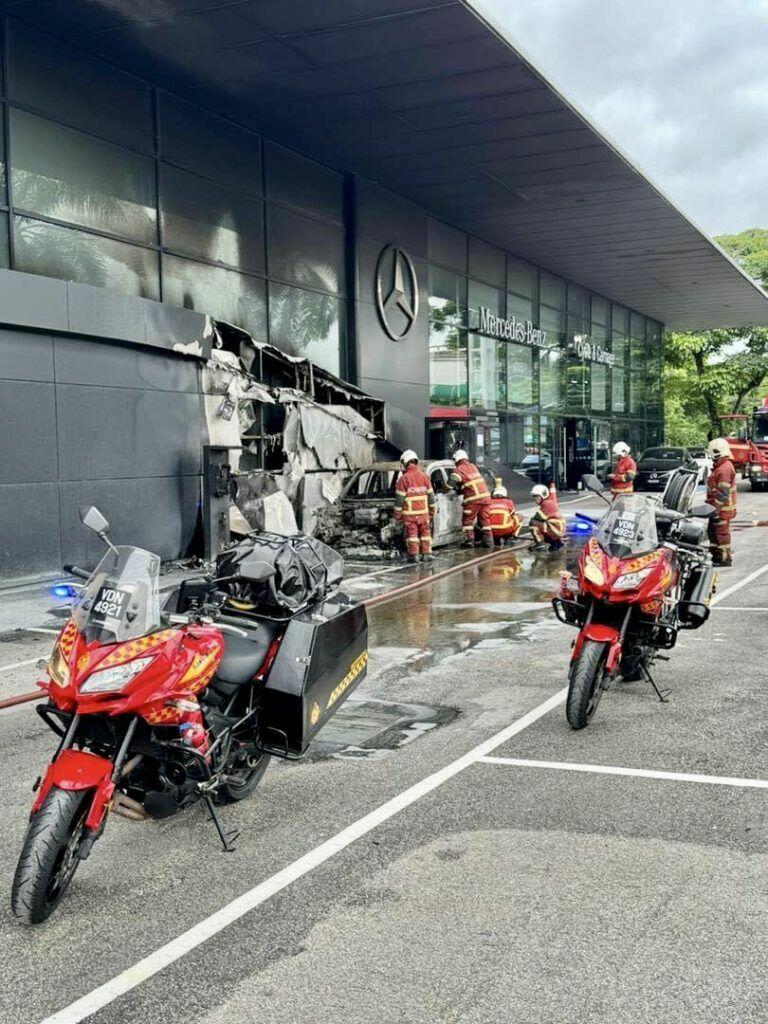
Mercedes-Benz USA has announced a recall of 11,895 electric vehicles due to potentially faulty cells in the automobiles’ high-voltage battery packs that could lead to a fire, like what happened in front of a MBZ dealer in Malaysia in 2024 – though that one was in the middle of charging, while this recall says they can ‘spontaneously catch fire’ either while parked or while driving.
The move comes after the NHTSA issued a safety recall notice posted on X on Feb. 12 announcing that it affected 1,708 Mercedes-Benz EQB 350 4Matic battery-powered SUVs model years 2022-2024. On top of that, 3,674 Mercedes-Benz EQB 250+ hybrid compact SUVs model years 2023-2024 and 6,513 2022-2024 EQB 300 4Matic vehicles were recalled.
According to the agency, the vehicles could spontaneously catch fire either while parked or while driving due to an internal short circuit in the automobile’s high-voltage battery power supply. The issue stems from variations in the battery manufacturing process, the notice stated.
“Certain battery cells in the high-voltage battery, from an early production period, are considered to be less robust against different stress factors potentially occurring during the life of the vehicle,” Mercedes-Benz said.
“If a thermal incident were to occur during driving, the driver would be made aware of the issue by a high-voltage battery warning malfunction message in the instrument cluster. Should the thermal incident occur while the vehicle is parked, the driver would not receive a warning.”
In early 2024, an EQB caught fire while charging outside a MBZ dealership in Jahor Bahru.
As the Epoch Times notes further, the lithium-ion batteries were manufactured by China-based Farasis Energy.
Mercedes-Benz said that after being made aware of vehicles catching fire it issued a software update to remedy the problem. However, in November 2025, two vehicles located in Europe combusted after receiving the software update, triggering an in-depth analysis of the efficacy of the software remedy in markets outside of China.
In December 2025 and January 2026, Mercedes-Benz began working with the battery supplier to tear down and test battery packs and cells. It also conducted an on-site inspection of production methods at Farasis Energy’s manufacturing facilities in Ganzhou in southeastern China.
“MBAG concluded that the effectiveness of the current software update to sufficiently reduce the risk of thermal incidents cannot be fully confirmed for all affected vehicles,” the NHTSA recall notice said.
To date, Mercedes-Benz has received reports of two vehicle fires in the United States that were attributable to faulty battery cells. The company said it would replace battery packs in the recalled vehicles at licensed Mercedes-Benz dealerships at no cost to owners.
Owners of recalled vehicles are advised to only charge their vehicles to 80 percent until they can get their battery packs replaced.
“Out of an abundance of caution, customers are additionally advised to park their vehicles outside,” the recall notice said.
MBAG said a change in production procedures eliminates the issue with faulty cells for vehicles produced after July 31, 2024. Owners will be notified of the recall campaign beginning on Feb. 27. The NHTSA recall number is 26V073.
Tyler Durden
Mon, 02/16/2026 – 05:35
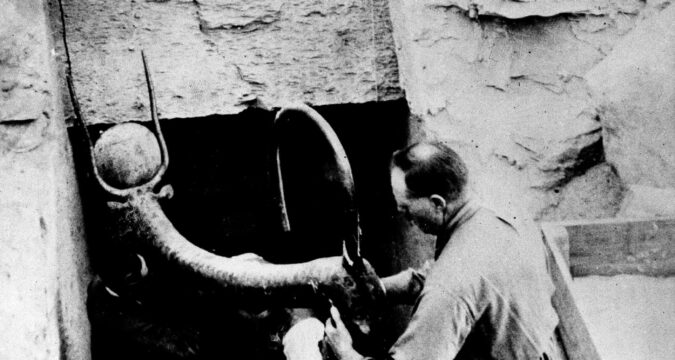
Today in History: King Tutankhamen’s tomb unsealed
Today is Sunday, Feb. 16, the 47th day of 2025. There are 318 days left in the year.
Today in history:
On Feb. 16, 1923, the burial chamber of King Tutankhamen’s recently unearthed tomb was unsealed in Egypt by English archaeologist Howard Carter.
Also on this date:
In 1862, the Civil War Battle of Fort Donelson in Tennessee ended with the surrender of some 12,000 Confederate soldiers; Union Gen. Ulysses S. Grant’s victory earned him the moniker “Unconditional Surrender Grant.”
In 1959, Fidel Castro was sworn in as premier of Cuba, six weeks after dictator Fulgencio Batista announced his resignation and fled the country into exile.
In 1960, the nuclear submarine USS Triton departed New London, Connecticut, on the first submerged circumnavigation by a vessel.
In 1996, eleven people were killed in a fiery collision between an Amtrak passenger train and a Maryland commuter train in Silver Spring, Maryland.
In 2018, in an indictment, special counsel Robert Mueller charged 13 Russians and three Russian companies of an elaborate plot to disrupt the 2016 U.S. presidential election via a social media trolling campaign, aimed in part at helping Donald Trump win the presidency.
Related Articles
Searchers find wreck of luxury steamer lost in Lake Michigan more than 150 years ago
A path to sainthood: Famed evangelist, TV host Archbishop Fulton Sheen to be the first beatified Illinois native
Today in Chicago History: Mayor Anton Cermak shot. ‘I’m glad it was me instead of you.’
Today in History: Female attorneys allowed to argue cases before Supreme Court
Garden Club of Beverly Morgan Park marks 100 years of growth, community spirit
In 2024, Russia’s prison agency announced that Alexei Navalny, activist and Russian opposition leader, had died in the Arctic penal colony where he was serving a 19-year sentence on charges of extremism; the news brought outrage and criticism from world leaders toward Russian president Vladimir Putin.
Today’s birthdays: Businessman Carl Icahn is 89. Author Eckhart Tolle is 77. Actor William Katt is 74. Model-TV personality Janice Dickinson is 70. Actor LeVar Burton is 68. Actor-rapper Ice-T is 67. Tennis Hall of Famer John McEnroe is 66. Football Hall of Famer Jerome Bettis is 53. Olympic track and field gold medalist Cathy Freeman is 52. Actor Mahershala Ali is 51. Rapper Lupe Fiasco is 43. Sen. John Ossoff, D-Ga., is 38. Actor Elizabeth Olsen is 36. Singer-actor The Weeknd is 35.
https://www.chicagotribune.com/2026/02/16/today-in-history-king-tutankhamens-tomb-unsealed/
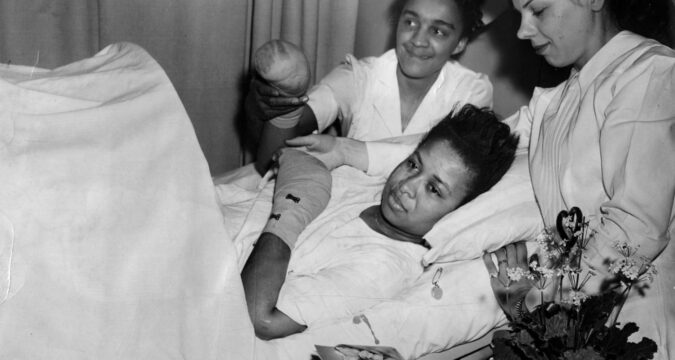
Today in Chicago History: ‘Frozen woman’ Dorothy Mae Stevens feels ‘wonderful’
Here’s a look back at what happened in the Chicago area on Feb. 16, according to the Tribune’s archives.
Is an important event missing from this date? Email us.
Front page flashback: Feb. 17, 1923
Vintage Chicago Tribune: King Tut exhibit draws more than 1 million visitors to the Field Museum
1923: King Tut’s tomb is opened.
Weather records (from the National Weather Service, Chicago)
High temperature: 58 degrees (1921)
Low temperature: Minus 10 degrees (1885)
Precipitation: 1.94 inches (1883)
Snowfall: 6 inches (1997)
The first-ever Chicago Ski Tournament held at Soldier Field on Feb. 16, 1936. A huge slide was erected on the South end of the lakefront arena. An unemployed road worker from Minnesota, Eugene Wilson, 22, won the tournament with a 68-foot jump. A snowstorm prevented the skiers from making attempts on the steel slide, which was erected over the permanent stands in the south end of the arena. (Chicago Tribune historical photo)
1936: A 13-story ski jump — the world’s highest man-made jump at the time — was constructed at Soldier Field for the U.S. Central Ski Association’s annual meet. More than 57,000 people showed up to watch the participants.
An unemployed road worker from Minnesota, Eugene Wilson, 22, won the tournament with a 68-foot jump.
“A snowstorm prevented the riders from making attempts on the steel slide, which was erected over the permanent stands in the south end of the arena,” the Tribune reported.
Dorothy Mae Stevens, 24, tries to walk with her new artificial legs on Jan. 2, 1952, almost a year after she was found frozen in a gangway near Washington Park in Chicago. (George Quinn/Chicago Tribune)
1951: Dorothy Mae Stevens, a 23-year-old whose frozen body had been found on Feb. 7, 1951, lying in a gangway at 3108 S. Vernon Ave., told the Tribune from her bed at Michael Reese hospital that she felt “wonderful.”
She was believed to be the first person to survive a body temperature of 64 degrees.
“I guess I have nine lives like a cat,” she told the Tribune.
Stevens had been trying to get home from a nearby bar when she was found in the gangway. “She was not dressed for subzero weather when found,” the Tribune reported. “She was hatless, wearing only a short spring coat, sweater, skirt, stockings, slip and galoshes.”
Doctors were astonished when Dorothy Mae Stevens, whose body temperature dipped as low as 64 degrees in February 1951, recovered. (Chicago Tribune)
Stevens regained consciousness in the hospital after 12 hours.
The local media gave her a nickname — “the frozen woman” — and kept readers updated about the progress of her recovery. A headline on Feb. 10 read “Frozen woman wiggles toes and takes food.” She was reportedly “fed ice cream and malted milks” on Feb. 11.
Dozens of doctors, medical students, nurses and other hospital staffers cared for Stevens. They initially hoped she’d recover completely, but several of her fingers and both of her legs below the knees had to be amputated.
Dorothy Mae Stevens on Jan. 11, 1974. (John Bartley/Chicago Tribune)
Her doctor published a scientific article calling for research into the severe kind of frostbite Stevens experienced, and she left the hospital determined to help others. She spoke to church groups about her battles with alcoholism and depression.
Stevens died in 1974, of heart failure and pneumonia.
Her obituary in the Tribune reported that she “had no close relatives.” Married — and divorced or widowed — three times, she was living alone in a Stony Island Avenue apartment just before she died.
But the Tribune did give her a final moment of fame. The obituary recalled that her ordeal in a freezing Chicago winter was “listed in the ‘Guinness Book of World Records’ as the coldest temperature ever survived by a human.”
Want more vintage Chicago?
Subscribe to the free Vintage Chicago Tribune newsletter, join our Chicagoland history Facebook group, stay current with Today in Chicago History and follow us on Instagram for more from Chicago’s past.
Have an idea for Vintage Chicago Tribune? Share it with Kori Rumore and Marianne Mather at krumore@chicagotribune.com and mmather@chicagotribune.com
https://www.chicagotribune.com/2026/02/16/february-16-chicago-history/