Category: News

Community news: Museum programs, band concerts and more
PORTER COUNTY MUSEUM TAKES ON WINTER TRADES, ORGAN WORKS
Porter County Museum (PoCo Muse) will host a public event about historic winter trades from 10 a.m. to 2 p.m. Saturday, Feb. 21, at the museum, 20 Indiana Ave., Valparaiso. Living-history interpreters dressed in period garb will describe and demonstrate techniques used by both European settlers and indigenous peoples in our area during the 18th and 19th centuries. The program is interactive, family-friendly, and free of charge.
An exhibit that tells the story of the Hillstrom Organ Works, which produced the popular musical instruments at its Chesterton factory from 1880 to 1913, will open on Thursday at the museum. Founded by a Swedish immigrant from Chicago, the company became a major employer and played a key role in the Swedish community in northern Porter County. PoCo Muse is open from 11 a.m. to 5 p.m. Tuesday through Sunday. Free half-hour guided tours are offered on the third Saturday of each month at 10 a.m. For more information, visit pocomuse.org or find @pocomuse on social media.
MASTER GARDENERS OFFERS VIRTUAL EDUCATION PROGRAM
Master Gardeners will host “Understanding Perennials Where It Matters – Underground” with Dr. Noel Kingsbury at 10 a.m. Saturday via Zoom. Join internationally acclaimed garden writer, educator and researcher Kingsbury for a fresh, science-backed look at perennial plant behavior. Backed by nearly forgotten Polish research from the 1960s and decades of field experience, Noel introduces a practical way to predict how different perennials will grow and spread over time. These easy-to-understand principles require no special training. Contact lakecountymastergardeners@gmail.com to reserve a space or register at https://forms.gle/GkgZhCd1Rt7JqcRR9.
VALPARAISO UNIVERSITY HOSTS TWO BAND CONCERTS
Valparaiso University will host two band concerts Saturday at the Chapel of the Resurrection, 1600 Chapel Drive, Valparaiso. Both concerts are free, open to the public and no ticket is required. At 3 p.m., the Valparaiso University Luce Concert Band will combine with 58 guest students from eight different high schools for the VU Small High School Band Festival. The performance will be a sensory-friendly and welcoming concert. VU music therapy students will lead activities with members of the neurodiverse, autistic and disabled communities in Northwest Indiana. At 5 p.m., the Valparaiso Community/University Concert Band, Valparaiso University Luce Concert Band, and guest musicians from local community bands will present the annual community band festival. The conductor is Jeffrey Scott Doebler, professor of Music and director of Music Education and Bands at Valparaiso University. Leading the music therapy students is Jordy Novak, director of Music Therapy at Valparaiso University. More information is with Doebler at Jeff.Doebler@valpo.edu.
FUTURE STUDENTS GET HELP FILING FAFSA AT IU NORTHWEST
Financial aid professionals will be at Indiana University Northwest from 2 to 4 p.m. Sunday to help incoming college or technical students and their families with financial aid. College Goal Sunday helps students in filing their Free Application for Federal Student Aid (FAFSA). This year’s event will take place on IU Northwest’s campus, 3400 Broadway, in Hawthorn Hall, Room 454. Spanish interpreters will be available. During the event, financial aid volunteers will walk participants through the FAFSA line-by-line and will be available to answer individual questions. Students should attend College Goal Sunday with their parent(s) or guardian(s) and bring the following items: FSA ID username and password, which can be created before the event at studentaid.gov; 2024 tax returns; 2024 W-2 Forms; and other 2024 income and benefits information. Information should be for the student, and, if applicable, their parent(s). Students who attend College Goal Sunday at IU Northwest and submit a completed evaluation form will automatically be entered in a drawing for one of five $1,000 scholarships. The winners will be notified in spring, and scholarships will be sent directly to the higher education institution selected by the winning students. For more information, visit collegegoalsunday.org. The IU Northwest Office of Financial Aid can be reached at 219-981-5622 or at https://northwest.iu.edu/financialaid/.
RESIDENTS INVITED TO SHAPE FUTURE AT WORKSHOP
Porter County will host a community workshop from 5 to 7 p.m. Monday at the Porter County Expo Center, 215 E. Division Road, Valparaiso. Part of the Elevate Porter County Comprehensive Plan, the event will provide the community with an opportunity to participate in an assessment of the county’s economic and community health. The workshop will feature interactive stations and facilitated conversations where participants can explore what saying “yes” to the right development, industries and investments could mean for Porter County’s future. This is a chance for residents to help write Porter County’s next chapter with purpose.
The event is free and open to all Porter County residents, workers, and stakeholders. Registration and more information can be found at elevateportercounty.com. For questions and further information, email mike.Jabo@portercountyin.gov.
https://www.chicagotribune.com/2026/02/16/community-news-museum-programs-band-concerts-and-more/

Palos Fire Protection District Chief Chris Courtney calls it a career after 25 years
Chris Courtney has no regrets about stepping down as fire chief for the Palos Fire Protection District in Palos Park.
“I was ready to start the next chapter of my life,” he said, adding that “it felt good” to walk out of the fire station one last time on Jan. 15 when his retirement took effect. “There are people I’ll miss. Obviously I wish everyone the best, and I have a lot of great memories there. It was a great career.”
And what a career it was, with more than 25 years of service, including his last six as fire chief. Its beginning, however, was somewhat happenstance.
“I was unsure of the path I was going to take, and my father asked me what I wanted to be,” Courtney explained. “We were driving by the fire station, and I said ‘Maybe I’ll be a firefighter.’ I went in and talked to the fire captain, and he was running a fire academy. Before you knew it, I was in the fire department.”
The Palos Heights resident began working part-time for the Palos district after graduating in the fall of 1994 from the fire academy. He earned his paramedic license in June 1995. But soon, he decided to go back to school.
Courtney earned a degree in hospitality from the University of Northern Colorado and a degree in program management from Colorado State University.
“It was difficult to get a full-time job back then. It was almost like a lottery getting a full-time firefighting job,” he said. I kept on testing when I was in school in Colorado. When I graduated, I went to work with an airline carrier. Palos finally called me from an eligibility test. I wasn’t happy in my career and it was time to switch.”
In 2001, he joined the department full time, and he received an MBA from Lewis University in 2022.
The district serves Palos Park and portions of Palos Heights, operating fire stations at 8815 W. 123rd St. and at 13010 S. 104th Ave., both in Palos Park with five paramedic/firefighters on duty at each. The chief works at the 123rd Street station.
“It was a good work environment. You look forward to going to work in the morning. You became close with your colleagues so you knew you’d have fun that day,” he shared about the best thing about being a firefighter and paramedic, adding that his colleagues were “all very professional. They take their job seriously.
“I think the most rewarding part was when people in the ambulance would thank you for helping you. When you dropped (patients) off (at the hospital), you didn’t know how they would do. It was nice when they’d come back and express their gratitude.”
Courtney said his biggest accomplishment as chief was converting the department from a “combination department” to a “career department” during his time as chief. “We had a part-time program that was always very robust. Right before COVID, it became difficult to recruit onboard, part-time firemen. There was always a revolving door. It was difficult to become consistent. We converted the part-time program to a full-time career program (after) a lot of negotiating.”
The Palos Fire Protection District in Palos Park threw a party Feb. 6 at Rooftop Tap in Palos Heights for Chris Courtney, front right, who recently retired as chief last month. The Palos Heights resident, shown holding a chief’s hat with former and current colleagues, began working at the department full time in 2001. A party for friends and family took place the previous weekend. (Sharon Courtney)
Firefighters cook for their colleagues during shifts, and Courtney brought some experience to the firehouse kitchen.
“I cooked everything. I worked at a restaurant in college as a sous chef,” he explained. “That became my foundation to cook, so I always volunteer to cook because I enjoyed it at the firehouse. I think my go-to was always chicken parmesan.”
The kitchen he used was renovated in 2011 after the fire station won a kitchen makeover contest sponsored by IKEA, something mentioned by Sharon Courtney, who he married in 2003 after the couple met in college.
“You would call in and vote like on ‘American Idol,’ she said. “Ana Belaval with WGN News came down. I was there with (youngest daughter) Hattie. She was a baby, and they won the kitchen. It was between Palos Fire and Yonkers, New York.”
“He was the messiest cook ever. They like to work with him because he was an amazing cook, but they didn’t like the cleanup,” she said with a laugh.
Sharon Courtney said although her husband worked hard, he also valued his family. “He worked holidays, birthdays, weekends but always made our family feel special, and we will miss going up to see him at the firehouse. It’s a great group of guys. It’s kind of surreal.
“This is the only life we’ve known for 25 years, and now it’s like ‘OK, what do we do now?’ But it’s been good. It’s provided a very nice life, and he’s worked very hard, and we’re all very proud of him.”
Chris Courtney won a fire prevention poster contest when he attended Palos East Elementary School in Palos Heights. His mom saved the drawing. Decades later, his oldest daughter Ava got top honors in the same contest when she was at Palos East. (Sharon Courtney)
Although it will be a big change, she is a little relieved he retired. “At the end of the day, thankfully there are not a lot of fire calls, but it takes one fire to change someone’s life. I was always grateful when he came home from work safely,” she shared.
She said his retirement from the district is “a testament of how fast time” can pass. “We’re ready for this next chapter in our lives. We’ve been talking about this so long. … We don’t want to look back and regret it.”
The former chief has already started his next chapter – in the construction industry – which means they will be moving to Tampa, Florida.
“Back in the day, firemen always had side jobs. Mine happened to be in flooring,” he said. “I made a lot of connections over the years, and one of my vendors recruited me for the role. It’s something I enjoy, which is important.”
When Courtney retired as fire chief, Michael Gabriele stepped up to take over the role. He’s had plenty of experience working at the district because he’s been there for 23 years.
“I’m excited for the opportunity and looking forward to what the future will bring,” he said. “It’s big shoes to fill. Chris did a lot of great things here.”
Gabriele and Courtney worked the same shift for years. “He basically said on his way out, ‘You’ll do great.”
He described the former chief as an intelligent leader with a strong work ethic. “He cared a lot too. He cared about how things looked all the time as far as what the department was doing. He wanted it to be more modernized, and we did,” Gabriele said. “When we first started, everything was on paper. Now we’re a paperless department. A lot of things got changed that were updated. We finally moved with the times.”
Gabriele said policies more than 20 years old were updated, as well as training documentation, equipment, station alerting and computers. “It was a lot of culture shock for some of the guys. I think we did it a little too fast, but it needed to be done.”
Administrative assistant Dana Fischl, who’s worked at the district for eight years, helped with modernizing the fire district, such as moving payroll to an independent company instead of the township.
“It happened at warp speed, but it needed to happen. It’s proved itself to be where we need to be,” she said. “Just because something works doesn’t mean that it’s working. It was getting done but wasn’t conducive to this day and age, and Chris knew that. … It was a very safe place to be because you knew if he was in charge, things were going to get done.”
Fischl said she’ll miss him. “It was bittersweet to see him walk out the door. He was my seventh or eighth chief. I worked at North Palos. Change is always hard, but there’s a succession plan. It speaks volumes to him as chief.”
Melinda Moore is a freelance reporter for the Daily Southtown.
https://www.chicagotribune.com/2026/02/16/palos-fire-chief-courtney-retires/

Waste Of The Day: Secret Settlements Get Taxpayer Money
Waste Of The Day: Secret Settlements Get Taxpayer Money
Authored by Jeremy Portnoy via RealClearInvestigations,
Topline: Eight Massachusetts state agencies and 13 colleges spent $6.8 million to settle grievances, partly in secret, brought by their own employees from 2019 to 2024, according to a Jan. 16 report from State Auditor Diana DiZoglio.
At least 80 of the 263 settlements contain confidentiality language such as a nondisclosure agreement — to keep certain details confidential between the two parties — which the audit claims is banned by state guidelines.
Key facts: The Massachusetts Port Authority transit agency was responsible for 11 of the settlements, costing taxpayers $1.7 million. Most of the money came from a $1.4 million settlement in 2022 with an employee who alleged they were denied a promotion because of their gender. The details are sealed by an NDA.
Six of the confidential settlements involved alleged sexual harassment, and two involved alleged racial discrimination. Most of the others were about violations of collective bargaining agreements and employees who were fired without cause.
NDAs were seemingly used on an arbitrary basis. None of the colleges and state agencies included in the audit had a written policy explaining when confidentiality language should be used, except the inspector general’s office.
“By not having a documented policy on the use of confidentiality language in state employee settlement agreements, there is a risk that confidentiality language may be abused to cover up harassment; discrimination; or other inappropriate, unlawful, or unethical behaviors, potentially allowing perpetrators to continue to remain in their positions and engage in further inappropriate, unlawful, or unethical behavior,” auditor DiZoglio wrote.
All of the colleges and state agencies receive legal assistance from the state attorney general’s office. The office’s guidelines prohibit nondisclosure agreements, and the attorneys told auditors that all state agencies were made aware of the guidelines.
DiZoglio argued that the NDAs may not even be enforceable. In June 2013, Suffolk County Superior Court sided with the Boston Globe newspaper in ruling that settlements between state agencies and their employees are public records.
Search all federal, state and local salaries and vendor spending with the world’s largest government spending database at OpenTheBooks.com.
Background: The audit is a follow-up to a 2025 report that found 75 state agencies had spent $41 million on more than 2,000 employee settlements from 2010 to 2022.
Summary: Massachusetts’ NDAs hurt the public twice. They essentially use taxpayer funds to cover up potentially unethical behavior perpetrated using taxpayer funds.
The #WasteOfTheDay is brought to you by the forensic auditors at OpenTheBooks.com
Tyler Durden
Mon, 02/16/2026 – 11:40
https://www.zerohedge.com/political/waste-day-secret-settlements-get-taxpayer-money
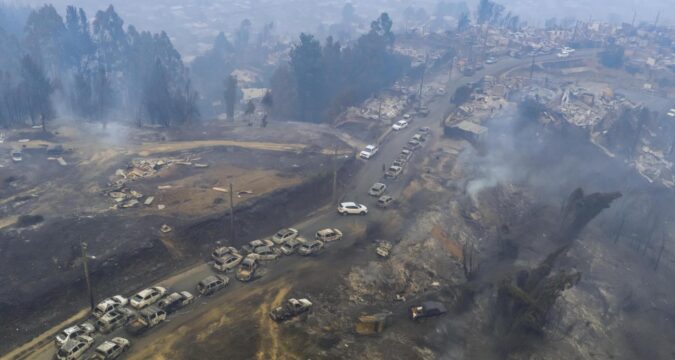
Incendios forestales consumen más de 1.000 hectáreas en Chile y provocan evacuaciones
Associated Press
BUENOS AIRES (AP) — Cuatro incendios forestales que permanecían activos el lunes en Chile han consumido más de 1.000 hectáreas y obligado a realizar evacuaciones, informó la Corporación Nacional Forestal (CONAF) en el marco de advertencias por la existencia de temperaturas extremas en varias regiones del país.
Un incendio forestal denominado “Alto Llico”, en la región céntrica del Maule, ha consumido más de 380 hectáreas, destruido al menos tres viviendas y provocado dos heridos y evacuaciones masivas en la comuna de Vichuquén. Además, el incendio “Cajón de Pejerrey”, también en el Maule, sigue activo tras haber consumido unas 200 hectáreas.
En tanto, el incendio “Ace”, en la región de Valparaíso, afecta unas 300 hectáreas y el “Coroney”, en la región de Ñuble, ha destruido más de 225 hectáreas.
El Servicio Meteorológico de Chile advirtió el lunes que se prevén temperaturas extremas en las regiones de Coquimbo, Valparaíso y Metropolitana durante los próximos dos días. Ante esta situación, el presidente de Chile, Gabriel Boric, publicó un mensaje en sus redes sociales en el que llamó a la población a evitar el uso de maquinaria que genere chispas y a no encender fogatas en zonas rurales o forestales.
“Hago un llamado a mantener la precaución para evitar tragedias”, expresó Boric.
La Dirección Regional del Servicio Nacional de Prevención y Respuesta ante Desastres (SENAPRED) declaró alerta roja en la comuna de Vichuquén debido al incendio forestal iniciado el sábado y que presenta una velocidad de propagación media a alta, según el último informe. El organismo indicó que se registran al menos dos personas lesionadas.
Las causas del incendio en la región del Maule serán investigadas por la CONAF, afirmó Marcelo Rodríguez, jefe del Departamento de Protección contra Incendios Forestales de la institución.
El SENAPRED también declaró alerta roja en la comuna de Linares, en esa misma región, por el incendio “Cajón de Pejerrey”.
El cambio climático provocado por la actividad humana ha intensificado las condiciones que favorecen los incendios forestales en Argentina y Chile, según un estudio publicado la semana pasada por la organización científica World Weather Attribution, especializada en el análisis de fenómenos extremos.
La investigación concluyó que los eventos meteorológicos extremos que contribuyeron a la ocurrencia y propagación de estos incendios fueron hasta tres veces más probables debido al calentamiento global generado por la quema de combustibles fósiles.
Ciertas regiones están recibiendo hasta un 25% menos de precipitaciones, lo que, sumado al aumento de las temperaturas, crea condiciones propicias para la propagación de los incendios.
Un incendio en las regiones de Biobío y Ñuble a mediados de enero mató a 23 personas y destruyó más de 1.000 viviendas, obligando a decenas de miles de personas a evacuar.
Chile incrementó su presupuesto para combatir incendios forestales en un 110% durante los últimos cuatro años, bajo el mandato de Boric. Queda por verse cómo abordará el asunto el presidente electo de derecha, José Antonio Kast, que asumirá en marzo.
Dos de los aliados de Kast en la región, el presidente de Argentina, Javier Milei, y el presidente de los Estados Unidos, Donald Trump, han negado que el cambio climático esté vinculado a la actividad humana.

Feria del libro de Damasco atrae a multitudes, con menos censura en la Siria pos-Assad
Por OMAR SANADIKI y BASSEM MROUE
DAMASCO, Siria (AP) — Abdul-Razzaq Ahmad Saryoul comenzó a publicar libros en Siria en 2003, pero solía abstenerse de participar en la Feria Internacional del Libro de Damasco, que se celebra anualmente, debido a las estrictas medidas de los organismos de seguridad del país y a la prohibición de muchas publicaciones bajo el gobierno de Bashar Assad.
En la primera feria del libro posterior a Assad celebrada en Damasco, que concluyó el lunes, Saryoul se sorprendió cuando le expidieron un permiso el mismo día en que solicitó participar, sin que le preguntaran de qué tratan sus libros. La amplia variedad de títulos disponibles hizo que la feria de este año fuera “sin precedentes”, manifestó.
Otro editor, Salah Sorakji, se mostró orgulloso de ofrecer libros en kurdo en la capital siria por primera vez en décadas. Durante la era de Assad, los kurdos étnicos sufrieron discriminación, incluidas prohibiciones sobre su idioma.
La primera feria del libro desde que Assad fue derrocado en diciembre de 2024 registró una gran afluencia, y los medios estatales informaron que alrededor de 250.000 personas asistieron el primer día, el 6 de febrero, desplazándose hasta el recinto ferial, donde se celebró a unos 16 kilómetros (10 millas) del centro de la ciudad. El director de la feria, Ahmad Naasan, indicó que participaron unas 500 editoriales de alrededor de 35 países.
Un debate sobre textos religiosos
Aunque la nueva libertad de expresión fue ampliamente bienvenida, la introducción de algunos libros antes prohibidos de autores islamistas despertó inquietud entre las minorías religiosas.
Los libros religiosos estuvieron entre los más vendidos en ferias anteriores en el país, de mayoría musulmana suní. Este año, sin embargo, los libros del erudito islámico Ibn Taymiyya —que vivió en Damasco hace siete siglos y cuyas enseñanzas siguen grupos yihadistas suníes— se vendieron abiertamente en la feria tras haber estado prohibidos durante décadas.
La circulación de libros que difunden una ideología extrema encendió las alarmas en Siria, donde los asesinatos sectarios han dejado cientos de alauitas y drusos muertos durante el último año en ataques sectarios perpetrados por combatientes suníes progubernamentales.
Assad, miembro de la minoría religiosa alauita, defendía oficialmente una ideología laica. La dinastía Assad lanzó brutales represiones contra la Hermandad Musulmana y otros grupos islamistas durante las cinco décadas de gobierno de la familia.
El único libro que se sabe que fue prohibido este año—“¿Has oído el discurso de los Rafida?”— incluía alocuciones de audio de Abu Musab al-Zarqawi, el líder de la red Al Qaeda en Irak que murió en un ataque de Estados Unidos en 2006. Según informes, Irak pidió a las autoridades sirias que lo retiraran porque incita al odio contra los musulmanes chiíes.
Un hombre barbado con uniforme militar, que se identificó por su nombre de guerra Abu Obeida, compró un ejemplar del famoso libro de Ibn Taymiyyah “Al-Aqida Alwasitiyeh”, o “Los principios fundamentales del islam”.
“Antes de la liberación, este libro estaba prohibido en Siria”, contó Abu Obeida a The Associated Press cuando se hallaba de pie en un puesto que vendía libros religiosos. “A cualquiera que tuviera un libro así se lo llevaban a la cárcel”.
“Ahora está disponible, gracias a Dios”, agregó, y señaló que en el pasado la gente leía “lo que el Estado quería que leyera”.
Una nueva era
La feria del libro se celebró por primera vez en Siria en 1985 y se interrumpió durante varios años luego que la guerra civil del país comenzara en marzo de 2011.
Hala Bishbishi, directora de la editorial Al-Hala con sede en Egipto, se sorprendió por la cantidad de personas que acudieron, aunque añadió que la feria del libro de Damasco todavía no puede compararse con las que se celebran en los países del Golfo ricos en petróleo.
“Con las circunstancias por las que pasó Siria, esta feria es excelente”, indicó la mujer. Añadió que los autobuses lanzadera entre la feria y el centro de Damasco aumentaron el número de visitantes.
Atef Namous, un editor sirio que había vivido en el extranjero durante 45 años, dijo que participaba por primera vez porque ahora se puede vender cualquier libro en la feria, incluso los importados de países occidentales.
La exposición de este año se celebra semanas después de intensos enfrentamientos entre fuerzas gubernamentales y combatientes kurdos en el noreste. Se alcanzó un acuerdo de alto el fuego y el gobierno en Damasco ha buscado tranquilizar a los kurdos asegurándoles que son ciudadanos iguales en el nuevo orden político.
El presidente interino Ahamd al-Sharaa emitió un decreto el mes pasado que otorga a los kurdos derechos no vistos en décadas, entre ellos restituir la ciudadanía a los kurdos a quienes se les había despojado de ella bajo la dinastía Assad, convertir el kurdo en uno de los idiomas oficiales de Siria, así como reconocer la festividad más importante de los kurdos, la celebración primaveral de Newroz.
“Estamos muy contentos con este paso positivo hacia los kurdos, que durante más de 60 años han sido privados de practicar la cultura kurda”, declaró Sorakji, el editor kurdo, al referirse a que se les permitiera exhibir libros en kurdo por primera vez en muchos años.
Sorakji, que vendía libros de historia, literatura y filosofía en su puesto, dijo que la mayoría de quienes compraban eran kurdos, pero que también había árabes que quieren saber más sobre sus compatriotas.
“Todos somos sirios, pero lo que causó todas las diferencias fue el régimen (de Assad)”, sostuvo.
Otra propietaria de una editorial, Mayada Kayali, señaló que lo más importante que se debe ofrecer a las generaciones más jóvenes, que “han salido de la guerra, la injusticia y la opresión, es conocimiento: conocimiento que les sea accesible, sin imponer restricciones a sus ideas o a sus opiniones”.
___
Mroue reportó desde Beirut.
___
Esta historia fue traducida del inglés por un editor de AP con la ayuda de una herramienta de inteligencia artificial generativa.

Pentagon Threatens To Blacklist Anthropic As ‘Supply Chain Risk’ Over Guardrails On Military Use
Pentagon Threatens To Blacklist Anthropic As ‘Supply Chain Risk’ Over Guardrails On Military Use
The company insists on implementing guardrails over how the US military can use Claude – specifically when it comes to mass surveillance and autonomous weapons – after it was used in the Maduro raid without their knowledge.
The Pentagon is now calling Claude a threat to national security
Some are accusing the overwhelmingly left-leaning company of trying to undermine the Trump administration, while Elon Musk says Claude ‘hates whites, Asians, heterosexuals, and men.’
Defense Secretary Pete Hegseth is reportedly “close” to cutting business ties with Anthropic and designating the firm a supply chain risk – a penalty typically reserved for foreign adversaries, a senior Pentagon official told Axios.
Anthropic’s flagship model, Claude, is already embedded in the military’s classified systems – however the company’s CEO has been pushing for abstract guardrails over ethical concerns for what the government sees as urgent national security needs.
If classified as a national security risk, the designation would force any company that wants to do business with the U.S. military to certify it does not use Anthropic’s AI – effectively blacklisting the firm from large swaths of the defense ecosystem.
“It will be an enormous pain in the ass to disentangle,” the senior official told Axios. “And we are going to make sure they pay a price for forcing our hand.”
Chief Pentagon spokesman Sean Parnell confirmed the review, framing it as a matter of national security.
“Our nation requires that our partners be willing to help our warfighters win in any fight,” Parnell said. “Ultimately, this is about our troops and the safety of the American people.”
Claude was notably used during the January operation targeting Venezuelan leader Nicolás Maduro, highlighting how deeply embedded the software already is within U.S. defense operations. As Axios noted on Saturday:
The tensions came to a head recently over the military’s use of Claude in the operation to capture Venezuela’s Nicolás Maduro, through Anthropic’s partnership with AI software firm Palantir.
According to the senior official, an executive at Anthropic reached out to an executive at Palantir to ask whether Claude had been used in the raid.
“It was raised in such a way to imply that they might disapprove of their software being used, because obviously there was kinetic fire during that raid, people were shot,” the official said.
Since then, Pentagon officials and Anthropic executives have been locked in contentious negotiations over how the military may use the AI, particularly in surveillance, intelligence collection, and weapons development.
Anthropic CEO Dario Amodei has pushed for guardrails to prevent mass surveillance of Americans or the use of AI in fully autonomous weapons systems without human involvement, however the Pentagon says those restrictions are unworkable. Anthropic’s own Acceptable Use Policy (UAP) explicitly prohibits the use of Claude for:
The design or use of weapons
Domestic surveillance
Facilitating violence or malicious cyber operations
These restrictions are not waived for military/government users unless the contract includes specific safeguards that Anthropic judges adequate, however defense officials insist that military AI tools must be available for “all lawful purposes,” arguing that real-world operations are riddled with gray areas that rigid rules cannot anticipate. The same standard is being demanded of other major AI labs, including OpenAI, Google, and xAI.
One source familiar with the talks said senior defense officials had grown increasingly frustrated with Anthropic – and seized the opportunity to escalate the dispute publicly.
Musk piles on – ‘evil’ and ‘misanthropic’
As the Pentagon showdown escalated, Anthropic also found itself under fire from another powerful adversary – Elon Musk.
Earlier this month, Musk launched a blistering public attack after the company announced a massive $30 billion funding round valuing it at roughly $380 billion. Musk labeled the company’s AI “evil” and “misanthropic,” accusing Claude of ideological bias and hostility toward certain demographic groups, accusing it of “hating Whites, Asians, heterosexuals, and men” in its outputs.
Musk – whose own company xAI competes directly with Anthropic – mocked the firm’s name, suggesting that a company branded as Anthropic had paradoxically become anti-human.
Your AI hates Whites & Asians, especially Chinese, heterosexuals and men.
This is misanthropic and evil. Fix it.
Frankly, I don’t think there is anything you can do to escape the inevitable irony of Anthropic ending up being Misanthropic. You were doomed to this fate when you…
— Elon Musk (@elonmusk) February 12, 2026
That said, in January Anthropic cut off xAI’s access to Claude models, which xAI engineers had been using via the Cursor coding tool to speed up internal work. Anthropic enforces a strict policy against using its models to build/train competitors (they had done the same to OpenAI earlier). Musk’s co-founder Tony Wu (who just left) sent an internal note acknowledging the productivity hit but saying it would motivate xAI to build better tools, while Musk later called the cutoff “not good for their karma.”
Musk’s beef isn’t baseless; tests and user reports show Claude often declines queries that could be seen as offensive or non-inclusive (e.g., jokes about certain demographics, historical hypotheticals).
To check for the inner woke programming of Claude and Gemini.
In earlier tests where a hospital triage was used as an example. Claude valued the life of a white man as 1/23 important as a black woman. (I.e. one black woman is more valuable than 23 white men)
— Edward Northman (@EdwardNorthman) December 10, 2025
Musk has positioned xAI’s Grok as a less restricted, “truth-seeking” alternative to what he and allies describe as overly constrained or ideologically filtered models. Anthropic, by contrast, has built its reputation around “constitutional AI” – a framework designed to impose ethical limits on how its systems behave.
High stakes, limited alternatives
Designating Anthropic a supply chain risk would force defense contractors to rip Claude out of their internal workflows – a massive compliance headache given the company’s reach. Anthropic recently said eight of the ten largest U.S. companies already use its technology.
The Pentagon contract at risk is valued at up to $200 million – small compared to Anthropic’s reported $14 billion in annual revenue, but symbolically enormous.
Complicating matters, a senior administration official acknowledged that competing AI models are still “just behind” Claude when it comes to specialized government and classified applications, making an abrupt transition risky.
Still, Pentagon officials appear confident that other AI providers will ultimately agree to the “all lawful use” standard, even as sources close to the negotiations say much remains unsettled.
Tyler Durden
Mon, 02/16/2026 – 11:15

Steve Reaven’s high school boys basketball rankings and player of the week for Lake County
Wauconda and Vernon Hills rise in the rankings.
Top 10
With records through Sunday and previous rankings in parentheses.
1. Warren 27-2 (1): Joel Paasch scores all 17 of his points, including five 3-pointers, in the first quarter of the North Suburban Conference champion’s win over Libertyville.
2. Waukegan 21-7 (2): Trey’Veon Roberts contributes 24 points and eight rebounds in the Bulldogs’ NSC win over Mundelein.
3. Wauconda 23-7 (5): Austin Carlsen and Tony Salemi combine for 33 points as the Bulldogs top Grayslake Central to win the Northern Lake County Conference title.
4. Stevenson 19-9 (4): Donny Williams averages 24.5 points in the Patriots’ two NSC wins, scoring 30 points against Libertyville.
5. Deerfield 17-11 (3): Freshman Drew Schnurman makes his varsity debut after leading the Warriors’ sophomore team in scoring.
6. Grayslake Central 20-9 (6): Carson Woods and Alex Granville combine for 33 points in the Rams’ loss to Wauconda.
7. Vernon Hills 20-9 (10): Matt McCarty records his 300th win in his 23rd season as the Cougars’ coach.
8. Lakes 16-11 (8): Dorian Pullen begins the final week of the regular season with 178 assists, a single-season record for the Eagles.
9. Grant 13-11 (9): Darnell “DJ” Stitts’ buzzer-beating basket lifts the Bulldogs over Grayslake Central as he finishes with 16 points, five rebounds and five assists.
10. Libertyville 14-12 (7): The Wildcats, who have lost four straight, can right the ship against Mundelein.
Player of the Week
Wauconda senior guard Alex Ortega scores 28 points twice, first in a 69-61 Northern Lake County Conference win over Round Lake on Feb. 10 and then in a 66-43 nonconference win over Highland Park on Saturday.
Steve Reaven is a freelance reporter.

El suizo Loic Meillard gana el eslalon y cierra el programa alpino masculino en Milán-Cortina
Por PAT GRAHAM
BORMIO, Italia (AP) — El suizo Loic Meillard aprovechó una sólida segunda manga para ganar el lunes el eslalon masculino, en una jornada en la que el esquiador brasileño Lucas Pinheiro Braathen se cayó en la primera manga, lo que puso fin a su intento de conseguir otro oro olímpico.
Meillard sumó el oro a la plata que ganó en el combinado por equipos y al bronce del eslalon gigante.
La prueba cerró el programa masculino de esquí alpino en los Juegos de Milán-Cortina.
Meillard terminó con un tiempo combinado de dos mangas de 1 minuto y 53,61 segundos. Superó al austríaco Fabio Gstrein por 0,35 segundos, mientras que el noruego Henrik Kristoffersen se quedó con el bronce. También fue un contraste marcado entre mangas, con nieve y niebla por la mañana y el sol asomándose por la tarde.
El noruego Atle Lie McGrath, líder de la primera manga, enganchó una puerta con las piernas y quedó fuera. Estaba tan furioso que lanzó sus bastones de esquí por encima de la red de protección de un lado. Luego salió por fuera de la red del otro lado, avanzando trabajosamente sobre la nieve. Se sentó y después se dejó caer hacia atrás, respirando con dificultad.
McGrath ha estado compitiendo en duelo. Su abuelo murió el día de la ceremonia de inauguración y el esquiador llevó un brazalete en homenaje.
Pinheiro Braathen hizo historia al ganar el eslalon gigante el sábado, convirtiéndose en el primer deportista de Sudamérica en ganar una medalla en unos Juegos Olímpicos de Invierno. Pero en una rápida primera manga se le salió el esquí y su aspiración de sumar otra medalla se terminó. Pinheiro Braathen representó a Noruega antes de cambiarse a Brasil, el país de origen de su madre.
Suiza encabezó el medallero masculino de esquí alpino en Bormio con ocho preseas (cuatro de oro, dos de plata y dos de bronce). Austria (dos platas) e Italia (plata, bronce) sumaron dos cada una, mientras que Brasil (oro), Estados Unidos (plata) y Noruega (bronce) se llevaron una por país.
La fuerte nevada derivó en una complicada mañana de competencia. La prueba contó con 96 esquiadores en la salida, y muchos representaban a naciones no tradicionales en este deporte. De los 96, hubo 49 que no terminaron el recorrido, dos que fueron descalificados y otro que no tomó la salida.
Fue una bajada ceremonial de eslalon para el griego AJ Ginnis. Comentó que una cirugía de tobillo no sanó correctamente y que no podía competir como quería. Esta fue su bajada de despedida.
“Poder estar aquí hoy y pensar en todo lo que las carreras de esquí me han dado en la vida —un título universitario, seguridad y, lo más importante, amigos y personas que se quedarán conmigo para siempre— es algo que, si se lo hubieran dicho a un AJ de 10 años y a sus padres, nunca lo habrían creído”, dijo Ginnis.
Entre los esquiadores en competencia estuvieron el mexicano Lasse Gaxiola y el jamaicano Henri Rivers IV. La madre de Gaxiola, Sarah Schleper, compitió en el super-G y el eslalon gigante en Cortina.
___
Deportes AP: https://apnews.com/hub/deportes
Suecia: Investigan a hombre sospechoso de vender sexo con su esposa a decenas de hombres
Associated Press
ESTOCOLMO (AP) — Un hombre del norte de Suecia es sospechoso de explotar a su esposa y de vender sexo con ella por lo menos a 120 hombres, informó a The Associated Press la fiscal a cargo del caso.
El hombre permanece bajo custodia desde octubre, después de que la mujer denunció los hechos a la policía, mientras los investigadores preparan cargos penales por proxenetismo agravado, señaló la fiscal Ida Annerstedt.
Los fiscales hablaron públicamente el lunes por primera vez sobre el número total de hombres que se cree que estuvieron involucrados. No han revelado el nombre de la pareja. El hombre, que tiene más de 60 años, niega las acusaciones.
Annerstedt no comentó si hubo coacción o si la esposa estaba drogada durante los encuentros sexuales.
La ley sueca penaliza la compra de sexo y el proxenetismo, pero no penaliza la venta de sexo por parte de las trabajadoras sexuales, a quienes se considera víctimas explotadas. Si el esposo es declarado culpable de proxenetismo agravado, podría enfrentar de 2 a 10 años en prisión.
Dos hombres que se cree que compraron sexo con la mujer han sido acusados y es probable que se presenten cargos contra más sospechosos, indicó la fiscal. Se exponen a hasta un año de prisión si son declarados culpables. La compra de servicios sexuales sin contacto físico, a través de internet, también está penalizada en Suecia.
Annerstedt indicó que la acusación formal contra el esposo se presentará el 13 de marzo, y se espera que el juicio comience poco después.
______
Esta historia fue traducida del inglés por un editor de AP con la ayuda de una herramienta de inteligencia artificial generativa.

Coffee Tied To Lower Dementia Risk, Harvard-MIT Study Finds
Coffee Tied To Lower Dementia Risk, Harvard-MIT Study Finds
New research published in JAMA reveals a strong reason to feel even better about being three to four espressos deep before the cash market opens in New York.
Here’s the short version of the findings:
Caffeinated coffee was linked to lower dementia risk. Comparing the highest vs lowest consumption groups, the study reported a hazard ratio of 0.82 (95% CI, 0.76 to 0.89), which means higher caffeinated coffee intake was associated with lower risk.
People also reported less subjective cognitive decline. The higher-intake group had 7.8% prevalence vs 9.5% in the lower-intake group (prevalence ratio 0.85).
The “sweet spot” looked moderate. The most pronounced differences showed up around 2 to 3 cups per day of caffeinated coffee.
Decaf did not show a significant association with dementia risk.
The long-running study, led by researchers from Mass General Brigham, Harvard T.H. Chan School of Public Health, and the Broad Institute of MIT, tracked 131,821 U.S. adults for four decades and documented 11,033 dementia cases. One major finding was a very clear pattern: adults who drank about three cups of coffee per day, or one to two cups of tea, had a much lower risk of dementia and more favorable cognitive outcomes over their lifetimes. Decaf, however, did not show the same relationship.
Both male and female participants who drank more than three cups of caffeinated coffee per day had an 18% lower risk of dementia compared with those who reported little or no daily caffeinated coffee consumption.
“When searching for possible dementia prevention tools, we thought something as prevalent as coffee may be a promising dietary intervention – and our unique access to high-quality data through studies that have been going on for more than 40 years allowed us to follow through on that idea,” said senior author Daniel Wang, associate scientist with the Channing Division of Network Medicine in the Mass General Brigham Department of Medicine and assistant professor at Harvard Medical School.
Wang noted, “While our results are encouraging, it’s important to remember that the effect size is small and there are lots of important ways to protect cognitive function as we age. Our study suggests that caffeinated coffee or tea consumption can be one piece of that puzzle.”
The cognitive upside of caffeinated coffee is clear.
Now take it up a notch: start with premium whole-bean coffee, then level it up significantly with a smart blend of four ingredients: C8 MCT Oil, Ashwagandha, Alpha GPC, and L-Theanine. The result is steadier focus and no scattered brain.
* * *
Support ZeroHedge with our dementia prevention pack:
Brain Rescue: Mental clarity, anti-inflammatory, encourages nerve-growth factor (NGF) and neuroplasticity
IQ Smart Blend Coffee: Tastes great, plus four amazing ingredients
What the four ingredients are (and why they’re infused with the bean):
C8 MCT Oil: A type of medium chain fat (caprylic acid), often marketed for quick energy and ketosis support.
Ashwagandha: An herb often marketed for stress support and calmer mood.
Alpha GPC: choline compound (a building block for acetylcholine, a neurotransmitter tied to memory and attention).
L-Theanine: An amino acid naturally found in tea. Often paired with caffeine because it may help you feel calm and focused, and reduce “coffee jitters.”
Thank you for your support.
Tyler Durden
Mon, 02/16/2026 – 10:55
https://www.zerohedge.com/personal-finance/new-research-caffeinated-coffee-tied-lower-dementia-risk