Category: News
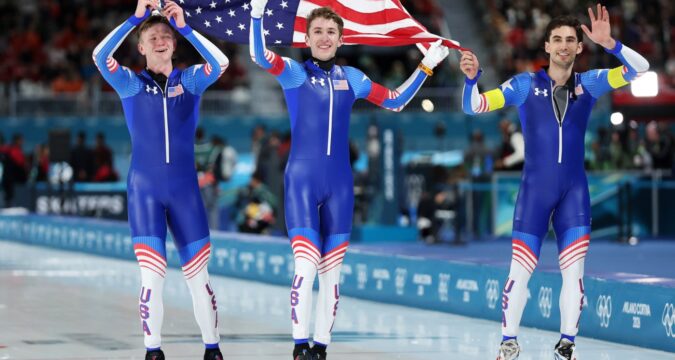
Oak Park’s Emery Lehman — in 4th and final Olympics — and Glen Ellyn’s Ethan Cepuran get silver in team pursuit
A journey that began when he was 9 years old and took him all over the world — from his home in Oak Park to the Olympics in Sochi, Pyeongchang and Beijing, and to global competitions in Norway and Poland — ended Tuesday in the most bittersweet of ways for Emery Lehman: with a flag-draped lap around the ice and a silver medal, seconds short of a dream finish.
For the first four laps of the final race in the men’s speedskating team pursuit, with Lehman in the middle of a trio of Americans who arrived in Milan with the solitary goal of winning gold, Team USA held a growing lead that portended the sort of finish Lehman and his teammates envisioned. For the past season, they had dominated this event on the world stage.
Related Articles
‘Heated Rivalry’ is embraced by fans — and players — at the Winter Olympics: ‘Hockey is for everyone’
LA Mayor Bass joins calls for 2028 Olympics head Casey Wasserman to leave over Jeffrey Epstein ties
Column: Ilia Malinin isn’t the 1st star athlete to flop on the big stage — and he can turn it into a positive
Bold new US trio eyes Olympic figure skating gold while serving as role models for a new generation
Connor Hellebuyck shows why he’s the US starting goalie at the Olympics
They’d won two world championship races. They’d set a world record just three months ago.
And then suddenly, just when Lehman and his teammates entered the final half of the one race they’d most wanted to win for years, their lead narrowed, then disappeared completely. Italy, skating on home ice in front of a crowd that roared louder in the final laps, surged ahead and won by 4.51 seconds, leaving the Americans a consolatory silver medal.
When it ended, Lehman and his teammates, Casey Dawson and Glen Ellyn’s Ethan Cepuran, tried to look happy. They smiled politely while they took their place on the podium and lowered their heads for their medals. They waved to the crowd. They hid well whatever heartbreak or disappointment they carried.
Second place was not what they anticipated after years of training together and rising to the top of their sport. It wasn’t what they expected after setting a world record in team pursuit in 2024 and then breaking it, by a little more than a second, in November in another memorable performance at the Speedskating World Cup in Salt Lake City.
“I don’t think it’s really something that needs to be said,” Lehman said last month, at the U.S. Speedskating Olympic trials in Milwaukee, of the goal of winning gold in team pursuit. His coach reminded him and his teammates of the stakes often, Lehman said, “but between the three of us, it’s just something that’s understood.”
The three had grown close, and Lehman, 29, and Cepuran, 25, are especially so. Cepuran’s father was among Lehman’s first speedskating coaches, and Lehman, who also excelled in hockey and lacrosse growing up, could remember plenty of times at the rink, in his younger years, watching Cepuran try to keep up with the older kids.
Last month, during the trials in Milwaukee, they reflected on their history and bond.
“I’ve known Ethan since he was sitting on a bucket in the middle of the ice,” Lehman said.
“He’s somebody that I’ve looked up to my whole career,” Cepuran said.
Team USA — from left, Ethan Cepuran, Emery Lehman and Casey Dawson — competes in the final of the men’s team pursuit speedskating race at the 2026 Winter Olympics on Tuesday, Feb. 17, 2026, in Milan. (AP Photo/Luca Bruno)
Even then, in the midst of qualifying for another Olympics — Lehman’s fourth and Cepuran’s second — there was a sadness about it because they knew their time skating together was nearing the end. Lehman, who played club hockey at Marquette and earned a graduate degree in engineering from Johns Hopkins, already had decided to retire from competitive speedskating.
He’d devoted his life to the sport for most of the past 15 years, traveling around the world and moving to Salt Lake City, where he spent much of the year training for world championship events. When Lehman competed in the Olympics the first time, in 2014, he was at the time the youngest male ever to make an American Olympic speedskating team.
He was 17 then, and as time passed he watched even younger and faster skaters enter into the sport. Record times became faster. The margins between winning and finishing second, or worse, kept shrinking. The training sessions sometimes felt longer. He said he would not miss the feelings of failure that sometimes accompanied elite competition.
“I’d say well over half the time I’m unhappy with the results or the times or how I’m feeling, or, you know, whatever it is, and that’s tough,” Lehman said last month. “It’s tough to deal with every day. So I don’t think I’ll miss that too much.”
But in the same breath, as he sat inside the rink where he had become an Olympian again, he said he would miss training and chasing excellence. Chasing gold.
Four years ago in Beijing, Lehman won a bronze medal in team pursuit. He, Cepuran and Dawson arrived in Milan as the event favorite, but among them, only Lehman arrived knowing this was it: his final chance to win gold. Cepuran and Dawson, 25, might have another chance in four years. For Lehman, who is moving back to Chicago, there are no more chances.
“Now that it’s real,” he said of his speedskating journey ending, “it’s kind of crazy.”
When his final race ended Tuesday, the Italians began a fervent celebration. NBC’s cameras showed their coach pulling himself over the edge of the rink to join them and locals cheering in the stands.
In the background, there was Lehman with an American flag draped around his back, skating around the Olympic ice one last time.
https://www.chicagotribune.com/2026/02/17/emery-lehman-silver-medal-olympics/

Chicago Blackhawks prospect suspended 20 games after testing positive for prohibited substance
Chicago Blackhawks prospect and Rockford IceHogs goaltender Stanislav Berezhnoy has been suspended for 20 games for violating the terms of the AHL/PHPA Performance Enhancing Substance Program.
He will not be permitted to play again until April 11.
“We were informed last week that Stanislav tested positive for a prohibited substance under the AHL/PHPA’s Performance Enhancing Substance Program,” Hawks general manager Kyle Davidson said in a statement. “While Stanislav did not knowingly take a prohibited substance, we believe his positive test is a result of a supplement he was consuming at the time.
“Stanislav has taken full responsibility for the situation and the organization praises him for the maturity and accountability he has shown. The Blackhawks organization fully supports Stanislav and knows he will use this as an opportunity to grow as he continues his development.”
Berezhnoy has already served one game of his suspension. The consumed substance in question is unknown.
The IceHogs goalie has played in 15 games this season with a 5-9-1 record, 3.18 goals-against-average and a .888 save percentage. He was recalled from Rockford on Jan. 10 after illnesses plagued Spencer Knight and Arvid Söderblom, but did not start.
Seattle Kraken prospect David Goyette will also serve a 20-game suspension for violating the terms of the PESP. He will be eligible to return to the team on April 10.
https://www.chicagotribune.com/2026/02/17/chicago-blackhawks-prospect-suspended/
EEUU no pueden volver a detener a Ábrego Garcia, determina jueza
GREENBELT, Maryland, EE.UU. (AP) — El Servicio de Inmigración y Control de Aduanas no puede volver a detener a Kilmar Ábrego García porque ha expirado el período de detención de 90 días y el gobierno no tiene un plan viable para deportarlo, dictaminó una jueza federal el martes.
El caso del ciudadano salvadoreño se ha convertido en un punto central del debate migratorio después de que el año pasado fuera deportado por error a su país de origen. Desde su regreso, ha estado luchando contra una segunda deportación a una serie de países africanos propuesta por funcionarios del Departamento de Seguridad Nacional.
El gobierno “hizo una amenaza vacía tras otra para expulsarlo a países de África sin ninguna posibilidad real de éxito”, escribió en su orden del martes la jueza federal de distrito Paula Xinis, en Maryland. “Por lo tanto, el Tribunal concluye fácilmente que no hay ‘buen motivo para creer’ que la expulsión sea probable en un futuro razonablemente previsible”.
Ábrego García tiene una esposa y un hijo estadounidenses y ha vivido en Maryland durante años, pero inmigró a Estados Unidos de manera ilegal cuando era adolescente. En 2019, un juez de inmigración determinó que no podía ser deportado a El Salvador porque allí enfrentaba peligro por parte de una pandilla que había amenazado a su familia. Por error, aun así fue deportado allí el año pasado.
Ante la presión pública y una orden judicial, el gobierno del presidente Donald Trump lo trajo de vuelta en junio, pero solo después de conseguir una acusación formal que lo imputa por tráfico de personas en Tennessee. Se ha declarado inocente. Mientras tanto, funcionarios de Trump han afirmado que no puede quedarse en Estados Unidos. En documentos presentados ante el tribunal, los funcionarios señalaron que pretendían deportarlo a Uganda, Esuatini, Ghana o Liberia.
___________________________________
Esta historia fue traducida del inglés por un editor de AP con ayuda de una herramienta de inteligencia artificial generativa.
Ex-etiquette: Alienating our son?
By Jann Blackstone, Tribune News Service
Related Articles
Asking Eric: I’m reluctant to do any more entertaining
Asking Eric: They asked for leftovers
Asking Eric: I get a flight-or-fight response when I see him
Asking Eric: I feel policed and judged
Asking Eric: Counseling is an option
Q. When I got a divorced, I moved to another town with my now-9-year-old son. His father continues to live in our family home and maintain the same friends, which includes my best friend and her husband who also have a son my son’s age. They are best friends, too. When my son visits his father, he wants to play with his old friend, but when my son asked his friend to play, the friend confided that his mother would only let him play if he is with me. My ex heard it. He says I am alienating our son. I didn’t do anything! What’s good ex-etiquette?
A. At face value, you probably believe you didn’t do anything because you most likely didn’t come out and say, “Don’t let your son play with my son when he’s with his father,” but did you say any of the following?
“I’m concerned he’s not watching my son. He came home with scratches I’ve never seen before.”
“I bet he was drinking.”
“There are no rules over there!”
“He’s dating again and she was there when my son got there!
“My son came home and said his father yelled at him. For no reason!”
“He’s emotionally abusive! I know.”
I’m taking a big leap here, but if the answer is yes to even a few of them, I’m not surprised your best friend took it upon herself to be cautious. The statements above are commonly repeated after a breakup by both co-parents. They may be true; they may not be true. What sounds like a lie is often nothing more than two parents remembering the same story in different ways.
So, when you confide in your BFF, she believes you—as she should. And she sees the world through your observations. Basically, you were telling her that her son is not safe at your son’s father’s home. So, when your son calls, the answer is no. And, I wouldn’t be surprised if she told her son, “I don’t want you playing with him at his dad’s,” not thinking her son would pass that on.
But 9-year-olds don’t have adult filters and you never know what a 9-year-old will misconstrue when overhearing comments like above. So, now you have an angry ex and a hurt son who thinks his friend can’t play because his father has done something wrong.“It’s all because of dad.” And, slowly the relationship between dad and son changes.
When I caution parents about badmouthing in front of the children, they rarely admit that they do it. Most say they never say a bad thing, but your situation proves that you may not say things in front of your child, but you might to your best friend who then forms her own opinion and repeats it to her family.
I’m not saying don’t confide in your best friend. That would be ridiculous, but I am saying be cautious about what you are saying. Your son deserves to feel comfortable and loved in both homes. If you truly believe he’s unsafe, then call the agencies that can help. If this is just angry venting, be careful.
You can see how easy it is to cause unintentional damage. That’s good ex-etiquette.
____
(Dr. Jann Blackstone is a child custody mediator and the author of “The Bonus Family Handbook: The Definitive Guide to Co-parenting and Creating Stronger Families. She can be reached at www.bonusfamilies.com or jann@bonusfamilies.com.)
https://www.chicagotribune.com/2026/02/17/ex-etiquette-alienating-our-son/
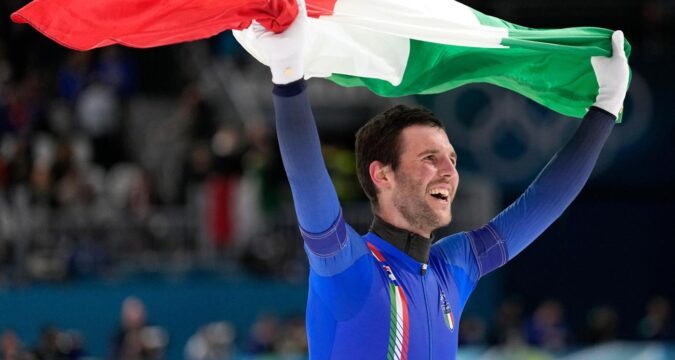
Italia da la sorpresa en persecución por equipos y logra su primer oro desde 2006
CORTINA D’AMPEZZO, Italia (AP) — El equipo masculino italiano de patinaje de velocidad ha vuelto a la cúspide en la persecución por equipos.
Davide Ghiotto, Andrea Giovannini y Michele Malfatti superaron el martes al equipo de Estados Unidos, conformado por Casey Dawson, Emery Lehman y Ethan Cepuran, poseedores del récord mundial, por 4 segundos y medio para atrapar la medalla de oro de la persecución por equipos masculina en el patinaje de velocidad de los Juegos Olímpicos de Milán-Cortina.
Impulsados por los estruendosos vítores del público local en Milán, los italianos terminaron con un tiempo de 3 minutos y 39.20 segundos para darle a su país su primer título olímpico en esta prueba desde los Juegos de Turín 2006.
Estados Unidos comenzó bien la final y lideró en las primeras etapas. Pero los italianos se lanzaron al ataque en las vueltas finales, ampliando su ventaja. Cuando acabó Ghiotto, Giovannini y Malfatti levantaron los brazos y apretaron los puños. En el lado opuesto de la pista, los medallistas de plata Dawson, Lehman y Cepuran se inclinaron hacia adelante, con las manos en las rodillas.
Canadá consiguió su segundo título consecutivo en unos Juegos de Invierno en la persecución por equipos femenina cuando Ivanie Blondin, Valerie Maltais e Isabelle Weidemann —las mismas que ganaron el oro hace cuatro años en Beijing— terminaron en 2:55.81, casi un segundo completo por delante de las subcampeonas de Países Bajos.
Nieve aplaza el slopestyle femenino de snowboard
La final olímpica de slopestyle femenino de snowboard fue retirada del programa del martes debido a una fuerte tormenta de nieve en Livigno.
La final de slopestyle estaba programada para comenzar a la 1 de la tarde, hora local, pero los organizadores informaron que fue cancelada. No se ha anunciado una nueva fecha para la final.
Esto retrasa el intento de la neozelandesa Zoi Sadowski-Synnott de repetir el título. Se clasificó primera el domingo, una ronda inicial que se adelantó un día por las tormentas que se aproximaban
Remate tardío impulsa a Francia al oro en el relevo de biatlón
Francia pasó del último lugar en el primer relevo a estar primera en la vuelta final para asegurar la primera medalla olímpica de oro del país en el relevo masculino de biatlón.
Eric Perrot, el campeón de la Copa del Mundo que se encargó del último relevo para Francia, falló dos disparos en su última tanda de tiro de pie y tenía apenas siete segundos de ventaja sobre el noruego Vetle Sjaastad Christiansen cuando salieron hacia unas pistas de esquí cubiertas de nieve recién caída.
Perrot se mantuvo por delante de Christiansen y llevó a su equipo, integrado por Fabien Claude, Emilien Jacquelin y Quentin Fillon Maillet, a cruzar la meta en primer lugar, con un tiempo de 1 hora, 19 minutos y 55.2 segundos.
Suecia se quedó con el bronce.
Oftebro logra segundo oro en combinada nórdica
El noruego Jens Luraas Oftebro ganó su segunda medalla de oro en combinada nórdica en una semana, al imponerse en el salto de esquí en trampolín grande y la carrera de esquí de fondo de 10 kilómetros. El austriaco Johannes Lamparter obtuvo su segunda plata en Italia y el finlandés Ilkka Herola ganó el bronce.
La prueba comienza con un único salto de esquí por la mañana, en el que se calculan puntos por distancia y estilo para crear una ventaja de tiempo para el mejor saltador. El resto del grupo inicia la carrera de esquí de fondo detrás del líder según la clasificación obtenida en el salto.
Oftebro, que la semana pasada terminó en lo más alto del podio en la prueba de trampolín normal, arrancó 22 segundos por detrás, en el quinto lugar. Herola comenzó 32 segundos atrás, en el séptimo puesto.
Apoyo y protesta en la combinada nórdica
La esquiadora estadounidese Annika Malacinski asistió a la combinada nórdica en los Juegos Olímpicos de Milán-Cortina el martes para animar a su hermano menor, Niklas. También fue a protestar.
La combinada nórdica —salto de esquí y esquí de fondo en una sola disciplina— sigue siendo el único deporte olímpico de invierno que no incluye a mujeres, aunque las mujeres compiten en el circuito de la Copa del Mundo y en campeonatos mundiales.
“Es desgarrador, de verdad lo es”, le comentó Annika a The Associated Press mientras estaba envuelta en un abrigo largo rosa y blanco, antes de tomar asiento en las gradas.
___
Deportes AP: https://apnews.com/hub/deportes

Anthropic–Pentagon Talks Stall Over AI Guardrails
Anthropic–Pentagon Talks Stall Over AI Guardrails
Contract renewal talks between Anthropic and the Pentagon have stalled over how its Claude system can be used. The AI firm is seeking stricter limits before extending its agreement, according to a person familiar with the private negotiations and Bloomberg.
At the heart of the dispute is control.
Anthropic wants firm guardrails to prevent Claude from being used for mass surveillance of Americans or to build weapons that operate without human oversight.
The Defense Department’s position is broader: it wants flexibility to deploy the model so long as its use complies with the law.
The tension reflects a larger debate over how far advanced AI should go in military settings.
Bloomberg writes that Anthropic has tried to distinguish itself as a safety-first AI developer. It created a specialized version, Claude Gov, tailored to U.S. national security work, designed to analyze classified information, interpret intelligence and process cybersecurity data. The company says it aims to serve government clients while staying within its own ethical red lines.
“Anthropic is committed to using frontier AI in support of US national security,” a spokesperson said, describing ongoing discussions with the Defense Department as “productive conversations, in good faith.” The Pentagon, however, struck a firmer tone. “Our nation requires that our partners be willing to help our warfighters win in any fight,” spokesman Sean Parnell said, adding that the relationship is under review and emphasizing troop safety.
Some defense officials have grown wary, viewing reliance on Anthropic as a potential supply-chain vulnerability. The department could ask contractors to certify they are not using Anthropic’s models, according to a senior official—an indication that the disagreement could ripple beyond a single contract.
Rival AI developers are watching closely. Tools from OpenAI, Google and xAI are also being discussed for Pentagon use, with companies working to ensure their systems can operate within legal boundaries. Anthropic secured a two-year Pentagon deal last year involving Claude Gov and enterprise products, and the outcome of its current negotiations could influence how future agreements with other AI providers are structured.
Tyler Durden
Tue, 02/17/2026 – 13:00
https://www.zerohedge.com/markets/anthropic-pentagon-talks-stall-over-ai-guardrails

The accidental danger of bike lanes
Content oversight provided by Studio 1847
The question of how bicycle riders can safely travel roadways has long troubled society. If the roads themselves are made for automobiles to drive on at high speeds, and the sidewalks are for pedestrians who are walking, where do cyclists using bicycles to traverse a city best fit in? In Chicago, the answer became bike lanes, specifically sanctioned lanes between the road and the sidewalk in which cyclists could ride.
However, as Chicago’s bike network has expanded, safety outcomes have become more complicated. While bike lanes were introduced to improve conditions for cyclists, recent city data and crash patterns suggest that some designs may be contributing to new and sometimes more dangerous conflict points, particularly at busy intersections and along high-speed arterial roads, leading to more bicycle accidents in Chicago.
Where the risk is concentrated
Certain Chicago corridors have emerged as consistent danger zones for cyclists, not because people aren’t riding carefully, but because of how traffic patterns, turning movements and infrastructure collide.
At the Wicker Park “Six Corners” intersection of North Avenue, Damen Avenue and Milwaukee Avenue, heavy cyclist volume intersects with complex turning traffic. Right-turning vehicles regularly cross bike lanes at sharp angles, creating a high risk of so-called right hook collisions.
Milwaukee Avenue, often called Chicago’s most heavily used cycling corridor, illustrates the paradox of popularity and danger. While it carries more bike traffic than almost any other street, it has also been the site of multiple high-profile cyclist fatalities. Common causes include “dooring” incidents and delivery vehicles stopping in bike lanes, forcing riders into fast-moving traffic.
In the Loop and central business district, confusion often arises near two-way protected lanes such as Dearborn Street. Bus boarding islands, while effective for transit riders, can create narrow pinch points where cyclists, buses and turning vehicles converge with little margin for error.
High-speed arterials like Western Avenue and Ashland Avenue pose a different problem entirely. With speed limits exceeding 30 miles per hour and narrow travel lanes, even minor driver errors can result in severe or fatal injuries when cyclists are present.
Design conflicts in modern bike lanes
When examining crash patterns, many safety issues stem less from the idea of bike lanes and more from how they are integrated into existing streets.
Protected lanes can create a false sense of security, particularly at intersections. Drivers turning right from general traffic lanes often fail to see cyclists traveling inside protected barriers on the passenger side, an issue traffic engineers now openly acknowledge as a major design challenge.
Maintenance has also become a growing concern. In the winter months, many protected lanes function as snow and debris traps. Without specialized mini-plows, these lanes can become unusable, forcing cyclists back into standard traffic lanes at the most dangerous time of year.
Community resistance has further complicated implementation. In neighborhoods such as Brighton Park, residents have protested bike lanes along corridors like Archer Avenue, arguing that the removal of vehicle lanes increases congestion and could slow emergency response times. These tensions reflect broader questions about how street space is allocated in dense urban areas.
What the data actually shows
Rather than a simple rise or fall in safety, Chicago’s cycling data tells a mixed story.
While total traffic fatalities citywide declined by roughly 30% between 2021 and 2024, reported non-fatal bicycle injuries increased significantly during the same period by as much as 49%, according to some analyses. This suggests that while fewer crashes are deadly, more cyclists are being injured in everyday traffic interactions.
After recognizing that bike lanes on major arterials often produce volatile interactions, the Chicago Department of Transportation has adjusted its approach. Through the Chicago Cycling Strategy, the city has shifted increased attention toward “Neighborhood Greenways,” low-stress residential routes designed to reduce exposure to fast-moving traffic.
Expert perspectives and what comes next
Industrial engineer John Forester wrote in his 2022 book, “Effective Cycling,” that accidents in bike lanes are 2.6 times more likely than on roadways. Safety researchers have long noted that intersections are the most dangerous places for cyclists. Studies consistently show that the vast majority of urban bicycle crashes occur during turning movements or at crossings, rather than mid-block travel. This reality has pushed planners to rethink how bike lanes function at intersections, not just between them.
Rather than layering bike lanes onto streets designed decades ago for cars alone, transportation experts increasingly argue for full corridor redesigns that account for all users from the outset. That approach requires more space, clearer sightlines and designs that reduce decision-making under pressure for both drivers and cyclists.
FAQ
Q: Have Chicago bike lanes increased bicycle safety overall?
A: The results are mixed. While bike lanes have expanded access and visibility for cyclists, injury data suggests that certain designs — particularly on busy arterials — have introduced new risks that are still being addressed.
Q: What are the most common problems with bike lane design in Chicago?
A: Frequent issues include intersection conflicts, “right hook” crashes, dooring from parked cars, delivery vehicles blocking lanes and limited winter maintenance.
Q: Are specific areas seeing higher rates of cycling injuries?
A: Yes. Corridors such as Milwaukee Avenue, parts of the Loop and major arterials like Ashland and Western consistently report higher numbers of cyclist injuries due to traffic volume and speed.
Q: What is the city doing right now to address these risks?
A: Chicago is actively replacing plastic bollards with concrete barriers on key corridors, including major stretches of Kinzie Street, while expanding neighborhood greenways and redesigning intersections with clearer turning protections.
https://www.chicagotribune.com/2026/02/17/the-accidental-danger-of-bike-lanes/

Bruce Springsteen and the E Street Band are coming to Chicago
Bruce Springsteen and the E Street Band have announced a new tour that will bring them to Chicago in April.
The “Land of Hope and Dreams” tour will play the United Center at 7:30 p.m. April 29. Tickets go on sale at noon on Feb. 20 via Ticketmaster and on Springsteen’s website. There are no pre-sales.
The tour of 20 concerts in 16 metro areas launches May 31 in Minneapolis and concludes on May 27 in Washington, D.C.
“We are living through dark, disturbing and dangerous times, but do not despair — the cavalry is coming,” Springsteen said in a statement. “Bruce Springsteen and The E Street Band will be taking the stage this spring from Minneapolis to California to Texas to Washington, D.C., for the ‘Land of Hope and Dreams’ American Tour. We will be rocking your town in celebration and in defense of America — American democracy, American freedom, our American Constitution and our sacred American dream — all of which are under attack by our wannabe king and his rogue government in Washington, D.C. Everyone, regardless of where you stand or what you believe in, is welcome — so come on out and join the United Free Republic of E Street Nation for an American spring of Rock ‘n’ Rebellion! I’ll see you there!”
Springsteen, who released the song “Streets of Minneapolis” in January criticizing ICE actions there, has been politically outspoken during last year’s European dates on the tour. This will be the band’s first North American tour since 2024.
March 31: Minneapolis at Target Center
April 3: Portland, Oregon, at Moda Center
April 7 and 9: Inglewood, California, at Kia Forum
April 13: San Francisco at Chase Center
April 16: Phoenix at Mortgage Matchup Center
April 20: Newark, New Jersey, at Prudential Center
April 23: Sunrise, Florida, at Amerant Bank Arena
April 26: Austin, Texas, at Moody Center
April 29: Chicago at United Center
May 2: Atlanta at State Farm Arena
May 5: Belmont Park, New York, at UBS Arena
May 8: Philadelphia at Xfinity Mobile Arena
May 11 and 16: New York City at Madison Square Garden
May 14: Brooklyn, New York, at Barclays Center
May 19: Pittsburgh at PPG Paints Arena
May 22: Cleveland at Rocket Arena
May 24: Boston at TD Garden
May 27: Washington, D.C., at Nationals Park
dgeorge@chicagotribune.com
https://www.chicagotribune.com/2026/02/17/bruce-springsteen-chicago/

Family and students of the late Paul Rinaldi still inspired by his art work
Marlandy Berrios still feels inspired by her late teacher and mentor, Paul Rinaldi, an acclaimed artist who taught at Prairie State College for more than 20 years.
A recent exhibit celebrating his paintings in the Christopher Gallery of the Chicago Heights college brought it all back.
“He was a sweet and caring teacher,” said Berrios, now an art student at Governor State University who lives in Park Forest. Berrios said Rinaldi taught her to go from drawing and illustrating comic books to objects, people and landscapes.
“He said mistakes are how we grow,” said Berrios.
Glancing around the gallery, Berrios was in awe.
“It’s so beautiful and so colorful … to think Professor Rinaldi did all this for all these years before I was even born,” she said.
That sense of appreciation and wonder was shared by other former students, family members, friends and faculty who attended “Seeing Through Time-Selected Works of a Creative Life.”
There were the bright figurative paintings from the beginning of his career, the colorful abstract work and the more nuanced encaustic paintings, using hot wax.
David Rinaldi stands among paintings by his brother, the late Paul Rinaldi, at the Prairie State College exhibit. (Janice Neumann/for the Daily Southtown)
“From the time Paul started painting, he never really stopped,” said his brother, David Rinaldi, who lives in New York.
He also pointed to the influence of their parents, Nicholas, a poet and novelist who is deceased, and Jacqueline Rinaldi, who were academics and bestowed their four children with their wisdom and culture.
“He works deeply with color, created his own paints,” said David Rinaldi. “After he transitioned into abstract art, he developed a style of painting called encaustic creations, which is an ancient Egyptian art (painting) form using wax.
“I think that’s what he will be best known for,” he said.
His brother spent years in Egypt, where he learned encaustic painting and where he met his former wife, Sherine.
But there was so much more to his brother.
David Rinaldi, far left, talks with other attendees at the exhibit, recalling the talent of his late brother, Paul Rinaldi. (Janice Neumann/for the Daily Southtown)
“He was a very well-regarded educator and teacher here,” said David Rinaldi. “He loved his students and started a scholarship here.”
Some of the painting at the exhibit were on sale, with funds going to that scholarship, the Rinaldi Arts Fund, for art students.
Fabiana Chiu, David Rinaldi’s wife, who is an arts administrator and visual photographer, said her late father-in-law influenced her, too, giving her tips on manipulating the view to improve the contrast and lighten up the photograph.
“He taught me so much about how the composition happens before you even hit click (on the camera),” she said.
Paul Rinaldi’s wife, Haihong Guo, second from left, and David Rinaldi, third from left, attend the Prairie State College exhibit. (Janice Neumann/for the Daily Southtown)
Haihong Guo, Paul Rinaldi’s wife, remembers how much his art meant to him, even when he became sick from cancer. Born in 1961, he died in April, 2025.
“His art makes me feel he comes to life again,” said Guo, who lives in Oak Park, which was also the couple’s home. “He could tell me exactly which year (a painting was done), he would remember it was a very cloudy day and all of a sudden the sun rose.
“That gave him inspiration,” she said.
She also remembers how hard he always worked at his art, but accepted its flaws.
“He said, life is not perfect and his art wasn’t perfect either,” recalled Guo.
The artist’s sister, Tina Banas, said the exhibit was spectacular.
“I’ve seen a lot of this work in his studio, but having it in this format really showcases the beauty and depth of his artistry and it’s wonderful to see the progress,” said Banas.
They also have a brother, Stephen. Paul Rinaldi also leaves behind adult children Francis Rinaldi and Hasan Rinaldi.
Several other students credited Rinaldi with building their confidence.
Bonnie Skold and Anna McDonnell, former students of Paul Rinaldi, stand near one of his paintings in the exhibit at Prairie State College. (Janice Neumann/for the Daily Southtown)
“He really helped me pursue art and make me feel I had a future in it,” said Anna McDonnell, who took studio arts, visual arts, painting and drawing with Rinaldi. “He was really caring and cared a lot about everyone’s success.”
Bonnie Skold, who took some of the same classes, remembers Rinaldi could be a stickler but in a good way.
“I’m very bad about only doing the bare minimum sometimes,” said Skold. “He could see there was a step further than where we were.”
Javier Chavira, the part-time director of the gallery who curated the exhibit, said he had crossed paths with Rinaldi.
“I always admired his work,” said Chavira, an art professor at Governors State University, who has Berrios in his figure drawing class there.
Chavira said some of his art students became tearful when he told them Rinaldi had died. When Chavira became part-time gallery director, he recalled telling also Rinaldi he wanted to give him a solo exhibit. Rinaldi said unfortunately he would be gone before it took place.
“But I want … to show what I’ve done with my life,” Chavira recalled him saying about the possibility of an exhibit.
Janice Neumann is a freelance reporter for the Daily Southtown.
https://www.chicagotribune.com/2026/02/17/paul-rinaldi-paintings-exhibit-prairie-state/

Empresa de Trump solicita marca para aeropuertos que usen su nombre
Por BERNARD CONDON
NUEVA YORK (AP) — La empresa familiar de Trump ha presentado una solicitud para registrar como marca el uso del nombre del presidente en aeropuertos, pero asegura que no planea cobrar una tarifa —al menos en el caso de un cambio de nombre propuesto para uno cerca de su casa en Florida.
Las solicitudes presentadas por la Organización Trump ante la oficina federal de marcas buscan derechos exclusivos para usar el nombre del presidente en aeropuertos y en decenas de artefactos relacionados que se encuentran allí, desde autobuses hasta paraguas y bolsas de viaje, además de trajes de vuelo. Las gestiones se producen en medio del debate en Florida sobre un proyecto de ley estatal para nombrar el aeropuerto de Palm Beach en honor a Trump y de una disputa sobre la financiación de un túnel entre Nueva York y Nueva Jersey, que está enredada con propuestas para que tanto ese túnel como el Aeropuerto Internacional Dulles, en Virginia, lleven su nombre.
La Organización Trump indicó que las solicitudes se activaron por el proyecto en Florida y que no busca ninguna ganancia, sino únicamente protección contra “malos actores”, dado que el nombre Trump es la “marca más infringida del mundo”.
“Para ser claros, el presidente y su familia no recibirán ninguna regalía, tarifa de licencia ni compensación financiera de ningún tipo por el cambio de nombre propuesto del aeropuerto”, manifestó la empresa en un comunicado, al referirse a lo que ahora se llama Aeropuerto Internacional de Palm Beach, cerca del club Mar-a-Lago de Trump.
La empresa no respondió cuando se le preguntó si cobraría regalías por el uso del nombre en otros aeropuertos en el futuro, o en la mercancía incluida en las solicitudes.
Josh Gerben, un abogado especializado en marcas que descubrió las solicitudes durante el fin de semana, señaló que las solicitudes eran las primeras de su tipo que había visto.
“Si bien a presidentes y funcionarios públicos se les han dedicado lugares emblemáticos con su nombre, una empresa privada de un presidente en funciones nunca, en la historia de Estados Unidos, ha solicitado por adelantado derechos de marca antes de que se haga ese nombramiento”, escribió Gerben en su blog.
“Debo ser muy claro: estas son solicitudes de marca completamente sin precedentes”.
Las solicitudes presentadas por una unidad de la empresa familiar llamada DTTM Operations ante la Oficina de Patentes y Marcas son para el uso de tres nombres: President Donald J. Trump International Airport, Donald J. Trump International Airport y DJT.
La familia ha emprendido una ofensiva en el último año para ponerle el nombre Trump a distintas entidades como torres, complejos de golf y desarrollos residenciales en Dubái, India, Arabia Saudí y Vietnam. La empresa también ha estado vendiendo guitarras eléctricas, biblias y zapatillas deportivas con la marca Trump, iniciativas que también están bajo la unidad DTTM.
En respuesta a las críticas de que él y su familia se están beneficiando de la presidencia, Trump ha afirmado que su negocio está en un fideicomiso administrado por sus hijos y que él no participa en el día a día de la empresa.
___________________________________
Esta historia fue traducida del inglés por un editor de AP con ayuda de una herramienta de inteligencia artificial generativa.