Category: News
Comunidad creativa de Trinidad se moviliza para que la gente pueda seguir disfrutando del carnaval
Por ANSELM GIBBS
PUERTO ESPAÑA, Trinidad (AP) — Trinidad y Tobago quedó prácticamente paralizado el martes mientras se acercaba al clímax de su célebre carnaval anual de dos días.
Pero este año, los precios del evento —apodado “el mayor espectáculo de la Tierra” — se han disparado, lo que ha dejado a un número creciente de residentes de la nación caribeña de dos islas sin poder participar.
Los precios de las entradas para fiestas premium costaban casi 700 dólares, mientras que el precio de los disfraces en una popular comparsa superaba los 2.000 dólares.
Conscientes del alza de precios, docentes y músicos están encontrando maneras creativas de hacer que el carnaval sea más accesible para los residentes, cuyos antepasados fueron esclavos a quienes se les prohibía participar en este tipo de festividades.
Joshua Lamorelle, quien va a comunidades empobrecidas y enseña a caminar en zancos de forma gratuita, señaló: “Les está dando a los niños la oportunidad de ser parte de algo que para ellos es muy difícil costear”.
A pocos días de que las escuelas y los negocios cerraran por el masivo desfile callejero del carnaval, que comenzó el lunes, Lamorelle les daba a los estudiantes las últimas indicaciones. Observó cómo Kanye Simmons, de 11 años, se sentaba en un muro y se aseguraba los zancos a las piernas antes de un desfile juvenil.
Caminar en zancos es el pasatiempo favorito de Simmons, incluso más que los videojuegos: “Me parece que es muy educativo y es muy divertido”, dice.
Su madre, Chrisann Clarke, comentó que valora el impulso de Lamorelle por educar a los niños sobre la cultura del país y la historia del carnaval. También agradeció no haber tenido que pagar para que su hijo participara en el desfile, como es habitual.
“En realidad es genial, porque la mayoría de los padres no puede permitírselo”, expresó.
“Nosotros somos el carnaval”
El carnaval en Trinidad y Tobago se celebra los dos días previos al Miércoles de Ceniza, conocidos como Lunes y Martes de Carnaval. Aunque no son feriados nacionales oficiales, decenas de miles de personas se ponen disfraces para participar en el desfile callejero.
El carnaval se remonta al siglo XVIII, cuando colonos franceses llevaron las festividades a las islas, pero prohibieron a los esclavos africanos participar. Para el siglo XIX, africanos que habían sido esclavizados se amotinaron contra funcionarios británicos que intentaron reprimir las celebraciones.
Desde entonces, el carnaval ha evolucionado hasta convertirse en un gran festival y es un contribuyente clave para la economía, ya que emplea a miles de personas y genera millones de dólares en ingresos por turismo.
Con el aumento de los precios de las entradas y los disfraces, la estrella de la música soca Kimba Sorzano se puso creativo para promocionar su nueva música para el carnaval de este año.
Es dueño de un minibús, conocido como “maxi taxi”. Algunas mañanas, ofrece viajes gratis a los pasajeros con la condición de que escuchen su música durante todo el trayecto.
Su táctica de promoción se volvió tan popular que restaurantes de comida rápida se sumaron y añadieron desayuno gratis al viaje.
“Algunas personas quedaron excluidas del carnaval por los precios, pero al mismo tiempo nosotros somos el carnaval”, manifestó Sorzano, quien cree que el verdadero espíritu del carnaval vive en el corazón de los trinitenses y tobagonianos.
No es el único artista que difunde la alegría del carnaval sin costo. La cantante Patrice Roberts organizó un concierto gratuito de música soca a finales de enero que atrajo a más de 10.000 personas.
Al reconocer las dificultades que enfrentan algunas familias, Roberts declaró en un video publicado en redes sociales que sabía que “no todos pueden darse el gusto” este año.
“Esto es para todos los fans, las familias y para cualquiera que todavía quiera sentir la magia”, afirmó Roberts.
Un desfile callejero gratuito para niños
Lamorelle cree que hacer más accesibles el carnaval y otros aspectos de la cultura de Trinidad y Tobago ayuda a enriquecer la vida de las personas.
“Cualquier cosa que haga que los jóvenes mejoren y tengan una mejor visión de la cultura es lo que busco”, explicó.
Este año, Lamorelle formó una comparsa de carnaval para niños, usando su propio dinero para cubrir la mayor parte de los costos, aunque algunos patrocinadores ayudaron.
Es una oportunidad poco común para un país de unos 1,4 millones de habitantes, cuya tasa de desempleo subió a 4,8% en el tercer trimestre de 2025, desde 3,8% en el trimestre anterior, según los datos más recientes del gobierno.
El gobierno ha aprobado nuevos impuestos y aumentó ciertas tarifas desde que fue elegido en abril pasado. Esto ha provocado un alza de precios para los consumidores y pérdidas de empleo, y algunos dicen que se han visto obligados a cerrar sus negocios.
Lamorelle cuenta con el apoyo de personas de su comunidad de Valencia, un pequeño pueblo en el noreste de Trinidad.
“Está haciendo un trabajo maravilloso en la comunidad porque mantiene a los niños más ocupados, en lugar de que estén deambulando y haciendo tonterías”, dijo Nakita De Verteuil, cuyos dos hijos forman parte de la comparsa.
Uno de sus hijos, Josiah De Verteuil, quien representó a un “ladrón de medianoche” mientras iba sobre zancos de 1,2 metros (4 pies) de altura, ve a Lamorelle como un mentor.
“Es una persona muy cariñosa”, indicó el joven de 17 años. “Y para los niños, es uno de los mejores influencers”.
___________________________________
Esta historia fue traducida del inglés por un editor de AP con ayuda de una herramienta de inteligencia artificial generativa.

Review: ‘Miss Julie’ at Court Theatre is a thorny story of desire, here minus the desire
Chicago theater is having an August Strindberg moment. Hot on the heels of “The Dance of Death” at Steppenwolf Theatre comes a chilly and grotesque “Miss Julie” at Court Theatre. Whee!
Opening night was Valentine’s Day, because nothing says romance so much as a twisted, psychosexual drama about a doomed kitchen assignation between a hyped-up Swedish noblewoman and her scheming manservant.
Theaters are under no obligation to genuflect to the calendar, of course. But it looks like the programming at Court has gone a little haywire this winter. The arriving artistic director, Avery Willis Hoffman, needs to hit the reset button. Hard.
“Miss Julie” is, for sure, a famous play and, given its toxic mix of gender, sex and power, it has long attracted the attention of directors who consider themselves edgy or avant-garde. Indeed, it has rewarded such approaches. A brilliant 1997 Anne Bogart production at the Actors Theatre of Louisville, which pulsed with rock music and set the play inside a wrestling ring, still lives in my head after nearly 30 years. That one (starring Jefferson Mays and Ellen Lauren) used a livelier, more women-focused translation by Helen Cooper than the older (and boring) Harry G. Carlson translation currently in play at Court. But honestly, the translation is not really the issue in director Gabrielle Randle-Bent’s production.
The problem is that you just don’t believe any of the three characters in the show — a show that separates the actors from the audience behind a scrim for the entire 95 minutes — actually desire any of the other characters. And yet, however you shake down Strindberg, or wherever or whenever you set the action in his plays, that’s the whole shebang. “The Dance of Death” is a dance with death; “Miss Julie” is a dance of desire. Leading to death, you could argue, petit or otherwise. But a dance of desire nonetheless.
Sure, you get the sense here that Jean (Kelvin Roston Jr.) worries about the potential fallout from what his boss Miss Julie (Mi Kang) wants from him, but not that he sees an upside to said requests as Sweden explodes all around him in a burst of Midsummer fertility. You get the sense that Jean’s fellow-servant girlfriend, the cook Kristine (Rebecca Spence), also worries about the couple’s mutual fate once Miss Julie is unleashed but, in this staging, that concern comes off as a normal person fearing the disruptions of the unbalanced, not the sexual or romantic jealousy the play demands. And while you certainly see that Miss Julie has taken leave of her senses this night, it is never clear why she is coming for Jean because you intuit no actual susceptibility to her own feelings. Rather, she is played as a grotesque in a pastiche, right down to the classic physical writhing on the kitchen counter and the smeared lipstick on her face. That way, alas, lies cliché. And zero sexual tension.
Certainly, there is humor. Certainly, risks are taken. Certainly, a few moments work along with some of the ideas. Certainly, John Culbert’s set has a latent beauty, especially as you first walk into the theater.
Kelvin Roston Jr., Mi Kang and Rebecca Spence in “Miss Julie” at Court Theatre. (Michael Brosilow)
There is a long, silent ballet at the start of the show, wherein Spence’s Kristine kneads and bakes a loaf of bread, but it was never clear to me in service of what, beyond a fatalistic sense of doom. But that can’t be enough with this play.
I mean no disrespect to any of these artists, all of whom I’ve seen do excellent work in the past. “Miss Julie” is a very difficult show to do today.
Chris Jones is a Tribune critic
cjones5@chicagotribune.com
Review: “Miss Julie” (2.5 stars)
When: Through March 8
Where: Court Theatre, 5535 S. Ellis Ave.
Running time: 1 hour, 35 minutes
Tickets: $60-$90 at 773-753-4472 and courttheatre.org
https://www.chicagotribune.com/2026/02/17/review-miss-julie-court-theatre/

A home remedy to boost the immune system
It’s peak cold and flu season, and it seems like everyone around me is getting sick right now. Aside from practicing good hygiene, like washing my hands often and avoiding touching my face, there’s one other thing I do to help feel my best this time of year: Make my five-ingredient tonic.
Related Articles
Seven-layer dip is a game-day classic for a reason
The secret to impossibly fluffy Southern biscuits
My entire family devours these chicken bites in minutes
This Ritz cracker hack is so good
Old-fashioned sticky toffee pudding is the dessert I swear by
I’ve been making this drink for years, and often have a mug before bed in the winter. I’ll also make it before going on a trip to ensure I’m in tip-top shape. I can’t make any claims that it’ll work for you, but if you’re interested in trying it, here’s how I do it.
All you need are five simple ingredients: ginger, garlic, turmeric, lemon and honey. I always eyeball everything, but I’ve included rough measurements below.
First, boil some water. While you’re waiting, prep your ingredients, adding them to the mug as you go. Finely mince one clove of garlic (or push it through a garlic press to make it easier). Finely chop or grate an inch-long piece of peeled fresh ginger. (I like to do the latter, as you get finer pieces. You can also use frozen ginger cubes as well.) Next, add the juice of one whole lemon, about a teaspoon of ground turmeric, and a tablespoon or two of honey (to taste). Pour the boiling water over it, stir, wait a few minutes for it to cool, then drink!
I personally like to drink my tonic right before bed because it’s warm and soothing, but you can drink it any time of day. You can also make the mixture, let it cool, pour it into little jars, and stick them in the fridge for a cold shot instead.
Note: Turmeric can stain, so be mindful when mixing the tonic. You might not want to use your favorite mug!
Potential health benefits
I’m no doctor, but all five of these ingredients are said to have some pretty great health benefits. Ginger is known to have anti-inflammatory and anti-viral properties that can help the body fight off infections. It can also aid with nausea and speed up digestion, thanks to its compound gingerol, which boosts the rate at which food moves through your stomach.
Garlic contains the compound allicin, which can help reduce your risk of getting sick, shorten the length of illness, and lessen symptoms. Turmeric has been used in ayurvedic medicine for centuries and contains the polyphenol called curcumin, which is packed with antioxidants and helps reduce inflammation.
It’ll likely come as no surprise that lemons are packed with antioxidants and vitamin C, which also helps to support your immune system — specifically your white blood cell count, aka your defense system, to fight off any illnesses.
Finally, the honey isn’t just there for sweetness. It also has anti-inflammatory and antibacterial properties.
I drink this combination because it tastes great, and it gives me some peace of mind towards supporting my overall health. It’s great for the winter months, but I love it any time of year.
(Alexandra Foster is an assistant editor for TheKitchn.com, a nationally known blog for people who love food and home cooking. Submit any comments or questions to editorial@thekitchn.com.)
https://www.chicagotribune.com/2026/02/17/ginger-garlic-turmeric-lemon-honey-tonic/
When Both Sides Go Quiet
When Both Sides Go Quiet
Submitted by QTR’s Fringe Finance
There is a political instinct that I’ve developed over the last few decade or so: when both parties are shouting, it’s business as usual. When both parties go quiet, pay attention, because something ugly is probably getting passed or covered up, and the American taxpayer is likely footing the bill of consequences.
Few public controversies in recent memory have generated as much bipartisan distrust as the handling of the Epstein files. Republicans accused Democrats of failing to pursue full transparency while President Biden was in office. Now Democrats accuse Republicans of withholding or slow-walking the release of the complete records. The blame shifts with political control, but the underlying fact pattern remains the same: both parties have figures of influence whose names have surfaced in connection with Epstein’s orbit.
That reality complicates the politics of accountability and fuels public suspicion that neither side is entirely comfortable with full disclosure.
What should have been a straightforward matter of transparency, identifying networks of power, influence, and possible criminal complicity, has instead unfolded as a slow humiliating drip of redactions, procedural delays, partial disclosures and cagey congressional testimony. Each release seems to raise more questions than it resolves. These questions revolve around sex trafficking, exploitation, abuse of minors, coercion and manipulation, elite complicity, obstruction of justice, etc.
But the deeper damage taking place now is not only about the crimes associated with Jeffrey Epstein. It is about institutional response. If only one political party had meaningful exposure to the scandal, the other would likely have been far more relentless in demanding transparency. But this is different. Despite Democrats harping on the files now, they were quiet in the years prior to Trump’s second term and, because Epstein’s connections span media, finance, academia, and politics, the discomfort still appears bipartisan.
And that is precisely what unsettles me.
When both political parties fail to press aggressively on something meaningful, especially something morally explosive, it often suggests that the issue cuts deeper than surface narratives allow. Bipartisan hesitation can signal overlapping vulnerability. Silence across the aisle is rarely accidental.
The horror here is not just what may have occurred in private circles of power, but the perception that the institutions tasked with accountability are reluctant to fully illuminate it. Justice delayed in cases involving elites feels less like procedural caution and more like reputational risk management. Whether or not that perception is entirely fair, it is corrosive.
Meanwhile, Goldman Sachs’ chief legal officer Kathryn Ruemmler announced her resignation after new emails with Epstein came to light, prompting internal pressure at the firm. British political figure Peter Mandelson resigned from the House of Lords and the Labour Party, and Scotland Yard has opened a criminal investigation into his ties with Epstein. In Norway, parliament has launched an external inquiry into prominent diplomats for their connections to Epstein, and police are investigating corruption allegations against former prime minister Thorbjørn Jagland and others.
🔥 50% OFF FOR LIFE: Using this coupon entitles you to 50% off an annual subscription to Fringe Finance for life: Get 50% off forever
Across Europe, these disclosures have triggered formal probes, resignations, and institutional reviews that contrast sharply with the relative lack of accountability for high-profile figures in the United States, where calls for investigations and resignations have largely stalled. I mean, is Les Wexner really allowed to just walk around free at this point? How can that be possible? How are Kimbal Musk and Elon Musk allowed to remain on Tesla’s board? Why isn’t Bill Gates being hauled in front of congress?
I have long argued that Americans should apply the same “when both parties agree, the American public is getting screwed” scrutiny to monetary policy for a similar reason. It is one of the few areas where both major political parties display remarkable convergence. While they wage visible battles over cultural issues and tax rates, they tend to align on central banking frameworks, large scale liquidity interventions, and deficit tolerance. Like other cover-ups, that alignment deserves examination.
Monetary policy operates largely outside daily partisan warfare, yet it shapes purchasing power, asset prices, debt burdens, and wealth distribution. When balance sheets expand aggressively and markets are repeatedly stabilized during downturns, the effects are uneven. Asset holders often benefit first and most. Meanwhile, wage earners experience the lagging side effects such as inflationary pressure, higher living costs, and diminished purchasing power.
Supporters of Modern Monetary Theory argue that sovereign currency systems provide more fiscal flexibility than traditionally assumed. Critics counter that, in practice, repeated interventions risk entrenching a cycle in which gains are privatized and losses are socialized. When markets rise, the wealth effect accrues to those with substantial exposure. When markets falter, public backstops prevent collapse. The middle class absorbs the inflationary residue. And the wealth gap widens:
The structural similarity matters. When both parties avoid aggressive debate on a policy that materially burdens the average American, it raises the same instinctive question of what incentives are being protected. Monetary policy may not carry the visceral grotesqueness of the Epstein scandal, but it carries long term economic consequences that most Americans don’t know they are bearing, and don’t understand that they are being lied to about.
The comparison is not moral equivalence. It is structural parallel. In one case, alleged networks of power may be shielded by mutual hesitation. In the other, a financial architecture persists with limited democratic scrutiny because challenging it would destabilize shared political comfort. In both cases, bipartisan alignment dampens confrontation. Two forms of silence. Two different domains. Both revealing.
Foreign policy, particularly the authorization and funding of wars, has often followed a similar pattern. While domestic issues produce loud partisan divides, military interventions abroad frequently pass with overwhelming support from leadership in both parties. Public debate may flare at the margins, but institutional consensus tends to solidify quickly once action begins.
History shows that major military engagements, from post 9/11 authorizations to prolonged overseas conflicts, have often been backed by broad congressional majorities. The initial votes are decisive. The funding continues year after year. Only later, when costs mount and public opinion shifts, does meaningful dissent emerge. By then, strategic commitments and financial obligations are deeply entrenched.
Again, the pattern is not about moral equivalence between policy domains. It is about incentives. When both political parties converge quickly on matters involving immense money, immense power, or immense liability, scrutiny tends to narrow rather than widen. And when scrutiny narrows at the highest levels, the public’s role shifts from participant to spectator.
When both political parties fail to address something meaningful, when they close ranks instead of competing for exposure, the public should not assume the issue is trivial. More often, it suggests the truth behind the surface may be larger and more consequential than advertised.
Democracies depend not just on disagreement, but on adversarial pressure. When that pressure disappears, citizens are right to lean in, not tune out. When both sides go quiet, the story is rarely over. As the Epstein files are showing, it may simply run far deeper than we are being shown.
Now read:
Today’s Epstein’s Records Destroy Official Narratives
Our Liquidity Addiction Continues
Do DOJ Docs Show Epstein Death Notice A Day Early?
The Hijacking Of Bitcoin: Epstein’s Hidden Network
Why America’s Two-Party System Will Never Threaten the True Political Elites
QTR’s Disclaimer: Please read my full legal disclaimer on my About page here. This post represents my opinions only. In addition, please understand I am an idiot and often get things wrong and lose money. I may own or transact in any names mentioned in this piece at any time without warning. Contributor posts and aggregated posts have been hand selected by me, have not been fact checked and are the opinions of their authors. They are either submitted to QTR by their author, reprinted under a Creative Commons license with my best effort to uphold what the license asks, or with the permission of the author.
This is not a recommendation to buy or sell any stocks or securities, just my opinions. I often lose money on positions I trade/invest in. I may add any name mentioned in this article and sell any name mentioned in this piece at any time, without further warning. None of this is a solicitation to buy or sell securities. I may or may not own names I write about and are watching. Sometimes I’m bullish without owning things, sometimes I’m bearish and do own things. Just assume my positions could be exactly the opposite of what you think they are just in case. If I’m long I could quickly be short and vice versa. I won’t update my positions. All positions can change immediately as soon as I publish this, with or without notice and at any point I can be long, short or neutral on any position. You are on your own. Do not make decisions based on my blog. I exist on the fringe. If you see numbers and calculations of any sort, assume they are wrong and double check them. I failed Algebra in 8th grade and topped off my high school math accolades by getting a D- in remedial Calculus my senior year, before becoming an English major in college so I could bullshit my way through things easier. I am an investor in Mark’s fund.
The publisher does not guarantee the accuracy or completeness of the information provided in this page. These are not the opinions of any of my employers, partners, or associates. I did my best to be honest about my disclosures but can’t guarantee I am right; I write these posts after a couple beers sometimes. I edit after my posts are published because I’m impatient and lazy, so if you see a typo, check back in a half hour. Also, I just straight up get shit wrong a lot. I mention it twice because it’s that important.
Tyler Durden
Tue, 02/17/2026 – 14:00

Cubs and White Sox players tout unity after MLBPA leader Tony Clark’s abrupt resignation
MESA and GLENDALE, Ariz. — Chicago Cubs and White Sox players still were processing MLB Players Association leader Tony Clark’s abrupt decision to resign from his position Tuesday morning.
Word started circulating among players when the news broke that Clark, 53, is stepping down less than 10 months before Major League Baseball’s collective bargaining agreement expires Dec. 1. Clark was scheduled to begin the MLBPA’s annual spring meetings with each team’s players Tuesday, starting with the Cleveland Guardians in the morning and the White Sox in the afternoon. However, the union canceled those plans. The meeting with the Cubs was scheduled for Wednesday afternoon.
A union call with all 30 player representatives and MLBPA executive board leadership was expected Tuesday afternoon. Second baseman Nico Hoerner, in his second season as the Cubs player rep, was unsure what the next steps would entail to replace Clark, the union’s executive director since November 2013.
“I think after we talk today we’ll have a better sense of that,” Hoerner said. “In general, our union is so strong through the strength in numbers and a lot of experience from the entire group, and our confidence is really high.
“The great part about our union is the unity of it. So that’ll be a nice opportunity for everyone to get on the same page and move forward.”
Clark’s resignation coincides with the U.S. Attorney in New York investigating One Team Partners, a licensing company founded in 2019 by the MLBPA, the NFL Players Association and RedBird Capital Partners. The federal investigation has been looking into financial impropriety, specifically whether MLBPA officials used licensing money or equity to improperly enrich themselves. Clark is one of three MLBPA officials on One Team Partners’ leadership board.
“We’ll figure out when the details come out if that was the case,” Cubs left fielder Ian Happ said of the investigation’s role in Clark’s resignation. “Right now I don’t have any information to speculate.”
Happ, the Cubs’ former union rep, found out about Clark’s resignation when he saw a social media post reporting it Tuesday morning.
“I don’t know that it’s ideal,” he said, “but I would say that for the most part the strength of the union is in the players, and the players ultimately are the ones that dictate the direction that any negotiation or any talk is going to go. And so that doesn’t change.”
White Sox pitcher Davis Martin recalled “great conversations” in the past with Clark.
“He unified players really well,” Martin said. “Player unity is the strength of our union, and that’s not changing with whoever is at the top of it.”
Martin is part of a group effort representing the Sox in the union.
“(Outfielder) Austin Slater was our guy, and when Slater got traded (last year), (pitcher) Steven Wilson took over the role,” Martin said. “Then when Steven Wilson got traded (during the offseason), he passed it down to me, (pitcher Chris) Murphy and a couple of others, so we kind of shared the load a little bit.
“It is funny just the realization of how old I am getting and where we’re at. Usually I wasn’t anywhere near these conversations and now we’re in the thick of it. It’s really cool.”
White Sox pitcher Davis Martin warms up with a football during spring training at Camelback Ranch on Monday, Feb. 16, 2026, in Glendale, Ariz. (Eileen T. Meslar/Chicago Tribune)
Like Martin, Sox outfielder Andrew Benintendi still was digesting the news Tuesday morning.
“What’s important is that I think all the players are in unison, as we always have been,” Benintendi said. “We’ll be in discussions in the next day or two.”
Unity was the theme in the Sox clubhouse.
“Ever since I’ve been in the league and been a part of this, there’s never been a question whether the players are together or not because it’s a brotherhood,” Benintendi said. “The connection for the players, the relationships we build with guys on other teams and through discussions, we’re always going to be together no matter what.”
Those ties, Martin said, are built in a variety of ways.
“You’re talking guys who have played together, guys who have played against each other for years, all the way through the minor leagues, all the way through the major leagues,” Martin said. “You get to play with guys and those relationships never change. I can call (former White Sox teammate and current Boston Red Sox pitcher) Garrett Crochet right now and we can have a conversation.
“Unity across the board is our strength. It’s always been our strength, and baseball players in a nutshell are always cut from similar cloth, regardless of country, origin, in general. That’s our perspective.”
Regardless of the timing of Clark’s decision, Martin said, “Player unity, we’re in the same spot.”
“We know what we want, we know where we’re at as a player organization across the board,” he said. “Player reps are going to meet today and get the next steps, and we’re ready to go.”
Veteran Cubs right-hander and former union rep Jameson Taillon echoed the sentiment that the union’s strength doesn’t come from one person but rather the totality of the players.
“It’s always been about that,” Taillon said. “So I don’t know a ton, but I’ll definitely harp on that, that going into a CBA year, it’s all about the players and all about us communicating what we want and need. And I’m confident we’ll find someone good to lead us.”
Taillon expressed confidence in the union’s eight-player executive subcommittee, which includes Marcus Semien, Chris Bassitt, Paul Skenes and Tarik Skubal.
“We’ve done a good job of beefing up the entire organization,” Taillon said. “So obviously this is not ideal, but we’ve got a lot of great people, a lot of smart guys, a lot of very involved players. And hopefully this kind of wakes up players to understand what’s going on and why this is a big year and why this matters.”
Associated Press contributed.
https://www.chicagotribune.com/2026/02/17/chicago-cubs-white-sox-tony-clark-mlbpa-resignation/

Well before sunrise on Fat Tuesday, Paczki lovers pack Harner’s in North Aurora: ‘It’s like forbidden fruit’
Those looking for one last splurge on Fat Tuesday wasted no time getting to one of their favorite spots in North Aurora.
“I came at 5 this morning to buy my usual boxes of Paczki. I come this early because there’s no traffic,” said Dave Nussle of Big Rock at Harner’s Bakery and Restaurant on Tuesday. “We ordered these about two weeks ago. They’re all for family. I’ve been coming down here from Big Rock as long as they’ve been doing it.”
Harner’s at 10 W. State St. in North Aurora lured in its usual big crowd for Fat Tuesday looking to buy Paczki – the popular Polish pastry – with sales beginning more than half an hour before the bakery was expected to open at 5:30 a.m.
At 5:30 a.m. Tuesday, Feb. 17, 2026, co-owner of Harner’s Bakery and Restaurant in North Aurora Jeanine Bennett shows off racks of fried dough waiting to be filled for the annual Fat Tuesday sales of the Polish pastry Paczki. (David Sharos/For The Beacon-News)
“We had all of the orders packed early, so we decided to just let people start coming in,” said Jeanine Bennett, co-owner of Harner’s, whose day actually started at 11:30 p.m. on Monday.
Manager Nicole Washington of Batavia, who has worked at the bakery for 11 years, recalled many previous Fat Tuesdays and the deluge of customers who come out every year.
“We’re very busy from the time we open our doors till the time we close, putting out a whole bunch of Paczki – it’s more of a dense, deep-fried dough with fillings and we make thousands of them,” she said. “Here, we have 10 or 11 different fillings. We only do these once a year and it’s a Fat Tuesday tradition.”
Washington said the restaurant and bakery is normally closed on Tuesday. However, on Fat Tuesday bakers arrive as early as midnight to start preparing to make a staggering number of pastries that people “order ahead of time or stop for early on their way to work.”
“We’re expecting to sell about 25,000 and the amount keeps going up a little every year. We are typically closed on Tuesdays, but we don’t hire extra people – it’s all hands on deck,” she said of Fat Tuesday. “It makes it a lot easier to have everyone come in and help. A lot of people try to get here as soon as possible. They place orders for hundreds at a time.”
The bakery at Harner’s in North Aurora – usually closed on Tuesdays – was open on Fat Tuesday, Feb. 17, 2026, for the sale of Paczki, a Polish pastry. (David Sharos/For The Beacon-News)
Baker Jose Hernandez of Aurora has worked more than 20 years at Harner’s and said the massive Fat Tuesday effort “is kind of fun but also there’s a lot of stuff to manage.”
“Once you do something you like, it’s not bad. We know what we’re doing and that makes a difference,” he said.
The most popular Paczki flavors, Washington said, include the custard-filled “but we don’t take orders for those because it’s a fresh custard that can’t stay out as long.”
A box of Paczki at Harner’s Bakery and Restaurant in North Aurora on Tuesday, Feb. 17, 2026. (David Sharos/For The Beacon-News)
“Chocolate cream and apple are also popular,” she said. “In terms of making these it’s an around-the-clock thing. The bakers come in Monday night and they start frying all the dough up and getting the mixes made. It’s a well-oiled machine, I can tell you that. Everyone is really good at getting their stations prepared and getting everything together. It’s around the clock. It never stops.
“It’s actually exciting for us too. It’s the busiest day of the year for all these employees and we look forward to it,” Washington added.
Jeff Catalano and his wife Melissa of North Aurora said they have been coming to Harner’s on Fat Tuesday for 20 years.
“It doesn’t get old. I’m here early at 5 a.m. every year” to buy Paczki, Jeff Catalano said. “I’m picking up two dozen and so is my wife. I take them to work.
Customers wait at the counter to buy Paczki at Harner’s Bakery and Restaurant in North Aurora on Tuesday, Feb. 17, 2026. (David Sharos/For The Beacon-News)
“This is a tradition,” he said.
Anna Bocanegra of Romeoville said she has made the annual Fat Tuesday pilgrimage to Harner’s for Paczki at least 10 times.
“It’s like forbidden fruit,” Bocanegra said of Paczki. “You can only get them once a year. They’re great, they’re moist, they’re just delicious.”
David Sharos is a freelance reporter for The Beacon-News.

Kris Bryant is ‘in pain every day’ and can’t play baseball for Colorado Rockies — but he’s not retiring
SCOTTSDALE, Ariz. — Kris Bryant has reported to Colorado Rockies spring training, and he has a locker in the Salt River Fields clubhouse, but he’s not a baseball player.
Tuesday, while his teammates went through their first full-squad workouts, Bryant was suited up in Rockies purple, but he was a bystander. He cannot run, let alone compete on the field.
“Any time my feet hit the ground, I feel like I could probably fall over,” Bryant said. “It’s unfortunate and obviously not how I want this to go. I’m here to figure things out and find out if there is a way to get better.”
Bryant, who turned 34 last month, continues struggling with a degenerative back condition that makes everyday life painful and is threatening to end his career. He has still not conceded that retirement is inevitable, saying he “doesn’t want to go there.”
But the Rockies have already put Bryant on the 60-day injured list, and there are no plans for him to play this season.
“We’ve talked a lot,” manager Warren Schaeffer said. “There’s really not much to say about it other than the guy’s back really hurts, and he’s having a tough time progressing.
“We have to prepare like he’s not going to play. That’s just the way we have to go about it, hoping that he has a recovery and a breakthrough. But was of now, his back really, really hurts. It’s a real thing. He just can’t play baseball.”
Bryant has played only 170 games with Colorado since signing a franchise-record seven-year, $182 million free-agent contract before the 2022 season. He’s hit .244 with 17 homers and 61 RBIs. He has three years left on the deal, and the Rockies still owe him $81 million.
The one-time National League MVP and hero of the Cubs’ 2016 World Series championship has been diagnosed with lumbar degenerative disc disease. The condition involves the wear and tear of the spine in his lower back and has required multiple treatments, including an ablation procedure, to manage the pain. He’s tried pilates and hours of physical therapy, but nothing has worked.
“It’s not easy waking up in pain every day, but now we are here,” he said. ‘I’m just trying to determine the next step with the training staff and doctors.”
Asked about calling it quits, Bryant replied, “I’m not going to dive deep into that. I don’t want to misspeak. I haven’t read the reports. My focus is just to find stuff that will help me wake up, hopefully, in a little less pain than the day before.”
Bryant, clearly emotional about the topic, said he still clings to hope.
“Obviously, I have to,” he said. “Because it’s not just something I’m going to deal with now, I’m going to deal with this the rest of my life. I’ve talked to a lot of people about it. I know a ton of people, not just playing baseball, but people who have terrible backs, too.
“I could never have expected this or seen this coming. And now that I’m dealing with it, I wouldn’t wish this on my worst enemy. It’s miserable.”
How miserable?
“Some days it’s hard to grab the toothpaste in front of me,” he said. “It’s not like that every day, but those days it’s like you just wish you had some type of answer.”
What is the pain like?
“There are a lot of different sensations I’m feeling,” he said. “It just feels like I’m being electrocuted in my whole body. It’s not ideal. It’s pretty miserable. Maybe this is part of old age, even though I’m not even old.”
Schaeffer said he feels for what Bryant is going through.
“Just as a human being,” Schaeffer said. “I’m not even close to being in his shoes, but I can relate. I can see how tough it would be on him, with the high expectations for him. … It’s tough for him and we have to be here to support him. That’s all there is to it.”
Schaeffer expects Bryant to contribute to the Rockies’ rebuild as a mentor to young players.
“K.B has done so much in this game, and he’s gone through so many experiences, so of course he can help young players,” Schaeffer said. “When he’s around, it’s to the benefit of the young players, for sure.”
https://www.chicagotribune.com/2026/02/17/kris-bryant-mlb-not-retiring/

Paczki Day in NWI offers a mix of Polish, American traditions
By sunrise in Schererville, trays of freshly made paczki are already lined up inside Carpathia Polish Deli as customers begin arriving for the annual Fat Tuesday tradition.
For manager Jerry Lisicki, paczki season isn’t just a single-day rush. It stretches from Fat Thursday, traditionally observed in Poland, through Fat Tuesday, the American finale before Lent begins.
Margeve Lerner of Valparaiso grabs up goodies as shoppers buy paczkis at Carpathia Deli in Schererville on Tuesday, Feb. 17, 2026. (John Smierciak/for the Post-Tribune)
“We have two days here,” he said. “Fat Thursday is for the Polish people. Fat Tuesday is more for American people.”
Paczkis, traditionally fried in lard and filled with fruit preserves or sweet cream, date back centuries in Poland. The pastry was originally a practical way to use up rich ingredients like butter, sugar and eggs before the fast began. While the modern versions are sweeter and more varied in flavor, the meaning remains rooted in the same pre-Lenten indulgence; one last celebration before 40 days of restraint.
By the time Fat Tuesday arrives, the numbers swell into five digits. The store expects to prepare and sell roughly 10,000 to 11,000 paczki in just one day. The pastries are made overnight and are set out each morning, still fresh, in neat rows of powdered sugar and glossy icing.
In Poland, Fat Thursday, the Thursday before Ash Wednesday, is the primary paczki holiday, with bakeries selling millions nationwide. In the United States, however, the tradition shifted to Fat Tuesday, aligning with Mardi Gras celebrations and American work schedules.
Albert Cekus of Dyer fills a bag as shoppers buy paczkis at Carpathia Deli in Schererville on Tuesday, Feb. 17, 2026. (John Smierciak/for the Post-Tribune)
Schererville is one of the towns in Lake County with the highest percentage of residents reporting Polish ancestry at 13.51%, according to U.S. Census data, so strong Paczki Day sales come as little surprise.
A variety of flavors fill the display, including strawberry, raspberry, apple, raspberry-apple, cherry, pineapple, custard, pudding and Nutella among them. Some are topped simply with powdered sugar; others are finished with orange icing or specialty toppings prepared by the kitchen staff. Each tray rotates quickly as customers move through the store, many stopping at the bakery before continuing their grocery shopping.
Despite the scale, Lisicki describes the tradition as steady rather than growing. “It’s still the same,” he said. “Not more, not less.” What does affect the turnout, however, is the state of the weather when Paczki day arrives each year.
Lisicki said the timing of Fat Tuesday plays a larger role than most people realize. When the holiday lands in early February, snow and subzero temperatures can cut into foot traffic. In mid-March, however, clearer roads and milder air make it easier for customers, particularly older regulars, to make the trip.
Sharon Kotrba of Manteno, Illinois, loads up as shoppers buy paczkis at the Carpathia Deli in Schererville on Tuesday, Feb. 17, 2026. (John Smierciak/for the Post-Tribune)
“The weather is very important,” he said. With many older customers, icy roads or heavy snow often mean people choose to stay home. “If it’s freezing or snowing, people stay safe.”
About 30% of customers are Polish, Lisicki estimated, but many others come with European roots or simply curiosity. Some share stories of grandparents who made pierogi by hand. Others browse the aisles for stuffed cabbage or potato pancakes, hoping to reconnect with flavors from childhood.
For many, Paczki Day is less about indulgence and more about memory; the taste of something familiar, the comfort of ritual and the quiet joy of carrying a box of pastries out into the cold, knowing that once a year, tradition is measured not in hours, but in powdered sugar.
Clare Donnely, who is third-generation Polish, said that Paczki Day is something she looks forward to every year.
Deli owner Iwona Bakiej (left) and manager Jerzy Lisicki hold a box of paczkis at Carpathia Deli in Schererville on Tuesday, Feb. 17, 2026. (John Smierciak/for the Post-Tribune)
“I’m getting ready to bring some to my office for everybody to try,” Donnely said. “The traditional is my favorite, but my favorite non-traditional flavor is the rose. I recommend it to everyone.”
Joseph Litza, whose wife is from Poland, said that there’s nothing like rose paczki straight from Poland, but the custard flavor is his favorite.
Litza, also picking up some pastries for his workplace to share, said that Paczki day is something that his family celebrates every year.
“It’s really exciting, I look forward to introducing it to new people every year,” Litza said.
Tracy Casper of Schererville shops paczkis for co-workers at Carpathia Deli in Schererville on Tuesday, Feb. 17, 2026. (John Smierciak/for the Post-Tribune)
By late afternoon, thousands of pastries will have passed over the counter. The trays will thin, the powdered sugar will settle and another Paczki Day will quietly close. But for Lisicki and the customers who plan their schedules around it, the tradition is already set for next year
Vivian Richey is an intern for the Post-Tribune through the Legacy Foundation’s News Internship Program. The Post-Tribune is solely responsible for all content.
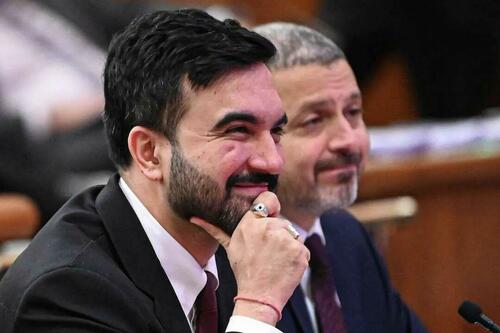
It Begins: Mamdani Plans First NYC Property Tax Hike In Decades To Plug $5 Billion Hole
It Begins: Mamdani Plans First NYC Property Tax Hike In Decades To Plug $5 Billion Hole
New York City property owners are set to ‘enjoy’ the first property tax hike in more than two decades as part of a proposed solution by Mayor Zohran Mamdani to fill a roughly $5 billion budget gap, Bloomberg reports.
“He’s put a pretty extreme option on the table, which is a combination of raising property taxes and taking money from reserves and relying on some pretty aggressive revenue projections to boot,” said NYC Comptroller Mark Levine.
The pitch, set to be unveiled Tuesday afternoon during Mamdani’s preliminary budget proposal, comes one day after Governor Kathy Hochul vowed to kick in another $1.5 billion in additional aid to the city for the current fiscal year and next. Hochul has also committed $510 million for future years to help plug holes in the budget.
Mamdani says that the state should step up even more. Last week, he called on state lawmakers Wednesday to approve a 2 percent personal income tax increase on the city’s wealthiest residents as well as a hike in the corporate tax rate in a bid to close a multibillion-dollar budget gap. Of note, Hochul and the legislature must approve any tax changes.
While Mamdani is handcuffed in many ways when it comes to raising revenue, raising property taxes is something he can do as part of the annual budget process. Homeowners, meanwhile, just had their assessed values jump 5.6%, which will bring the city an additional $325.8 billion – which is separate of Mamdani’s plan.
Mamdani’s own rhetoric about the size and scope of the city’s budget situation has shifted. Earlier this month, just two weeks after describing the city’s $12.6 billion budget deficit as the city’s largest since the Great Recession, Mamdani revealed the hole had actually shrunk by $5 billion, because of higher tax revenue, propelled by personal income tax growth and Wall Street bonuses.
Even threatening to raise property taxes could prove a political lightning rod for Mamdani, after campaigning to reform that system, which has been criticized for overburdening lower- and middle-income residents. The last time the city increased property tax rates was under former Mayor Michael Bloomberg in the early 2000s. –Bloomberg
Meanwhile last month Mamdani said NYC is facing a $12.6 billion deficit over the next two years, which he blamed on his predecessor, Mayor Eric Adams, whose administration he says underbudgeted for various expenses such as cash assistance, rental assistance for homeless residents, special education and overtime costs. In FY 2025, NYC took in over $33 billion in property tax revenue.
Mamdani during his campaign promoted progressive reforms to fund proposals such as free public transit, rent stabilization and housing programs, universal child care, and a $30 minimum wage, leading to his upset win over more moderate Democrats.
He called for a 2 percent surcharge on high earners on the campaign trail.
Estimates suggested it could create approximately $4 billion annually to support increased public services and affordability programs, as well as offset costs for broad social investments while not saddling middle- and low-income residents.
Tyler Durden
Tue, 02/17/2026 – 13:20

DuPage District 5 Dem candidates discuss county clerk, property tax levy
In advance of the March 17 primary, the Naperville Sun asked the Democratic candidates running for the four-year DuPage County Board seat representing the Naperville area’s District 5 to answer a series of questions on the issues. This is the last in a three-part series.
Both previously published articles are available online. The first includes biographical information and asks candidates to explain what they think is the biggest issue facing the county and how it should be addressed. The second covers the topic of affordable housing.
DuPage County is in the midst of an ongoing legal battle with the county clerk over fiscal management. Should the DuPage County Board be seeking to implement guardrails to prevent a similar scenario from happening in the future. If yes, what would you recommend? (Answers edited lightly for clarity.)
DuPage County Board member Sadia Covert is seeking reelection to her District 5 seat, which includes a large portion of Naperville. She faces two challengers in the Democratic primary on March 17. (Sadia Covert)
Sadia Covert: So, I’m going to be honest with you, I cannot comment on this because we are in the middle of a lawsuit. The county board is involved. We’ve been named in the lawsuit so I’m not allowed to talk about it.
Naperville City Councilman Ian Holzhauer, who was re-elected to the Naperville City Council in April 2025, is a candidate in the 2026 Democratic primary election for DuPage County Board District 5. (Ian Holzhauer)
Ian Holzhauer: I think it is very clear that spending decisions should be coming from the county board. I think that is very clear in statute. I think it’s clear in historic practice, and I think the legal argument is very clear there. My strong suspicion is that every level of the Illinois court system that looks at this issue will agree, and that in the very near future we will be following the historic and legal practice of the county board appropriating funds before a department spends them.
Marylee Leu is a candidate in the 2026 Democratic primary election for the DuPage County Board District 5 seat. (Marylee Leu)
Marylee Leu: I think that unfortunately the situation has been flushed out in an area of the public that wasn’t maybe necessarily needed, or not needed. It wasn’t the right venue. But going forward to prevent it for other areas (we need) to make standard operating procedures clear. I don’t think they are written currently, and (they should be) applicable to all other departments, such as the sheriff’s department. So, if we’re (applying) certain treatment to the clerk’s office, we need to apply it to the coroner’s office, the sheriff’s office, the other (countywide offices). Not that we should micromanage any department themselves, but if we expect it from the clerk, then we should also impose it on the rest.
Do you support keeping the county property tax levy flat, even if it limits growth in social services and infrastructure spending? How do you decide how and where to draw the line? (Answers edited lightly for clarity.)
Covert: I have good news on that. We have not increased significantly. We have not increased our property tax levies. It has been pretty much consistent over the years. Now, we have done this while still funding social services and we’ve done an amazing job in funding our social service programs, even though there was acute federal cuts that we had to face.
I think this is because of a couple of reasons. We’re not home rule. A majority of our revenue comes from sales taxes, and we are in the surplus right now. And what I’m proud to say is that as a county board member since 2018, I have always looked for ways in increasing our revenue at the county board (level). One of the things that I did was the cannabis initiative. … Early on in my career, I initiated the passing of cannabis recreational facilities and that brings in significant amounts of sales tax, so that’s one way of getting more revenue.
Another thing that I did is a diversity inclusion imperative, which I got passed. … That led to tapping into newer markets for women-owned businesses, minority-owned businesses, veteran-owned businesses and is tapping into newer talents and new markets to provide them those contracts and opportunities in the county that they otherwise wouldn’t have. That, in turn, is a benefit to us.
Holzhauer: I’m going to push back a little bit on the framing of that question, because I think freezing anything, it may have sort of a veneer of cost discipline but in actuality that might be an illusion.
I’m going to give a very concrete example from my time in elected office. Naperville approved the hiring of six full-time mental health police officers in our crisis response team, which, on its face, costs over a million dollars a year. So one could argue that that is an increase in taxes to pay for that. On the other hand, all you have to do is look at the statistics. Last year, we had over 900 mental health calls, each lasting … over two hours for our police department to respond to, and typically with an officer and a sergeant. So when you look at the cost savings that are going to come in the big picture from having a dedicated mental health team, the overall budget impact is going to, I’m confident, have a more efficient government that runs better in the future, even if there’s a short-term impact on taxes.
Leu: I would absolutely want to keep the taxes flat. I do think that reassessing priorities, utilizing, let’s say, the allocation of (American Rescue Plan Act) funds or some of the other funding, that we look at those routes first. However, if there ever would be a time where an investment does save us money in the long run, that would be not my last resort. It wouldn’t be my first choice, but it would be something I would consider.
cstein@chicagotribune.com
https://www.chicagotribune.com/2026/02/17/dupage-district-5-primary-candidates-clerk-taxes/