Category: News

Editorial: Gabriella Hoxie for Cook County Board 15th District Republican primary
Incumbent Democratic Commissioner Kevin Morrison is running for the 8th Congressional District seat being vacated by Raja Krishnamoorthi, who is locked in a battle for Dick Durbin’s Senate seat. Morrison’s chief of staff, Ted Mason, is uncontested for the Democratic nomination to replace him, while two GOP contenders are facing off to represent a largely northwest suburban district that has elected Republicans in the past.
Gabriella Hoxie, who will be 26 years old on Election Day, is a staffer for Illinois House Republican Leader Tony McCombie. She promises to make property tax relief and affordability centerpieces of her service and rightly laments the “unbalanced partisan breakdown of the county board.”
GOP opponent Daniel Lee, who serves on Hoffman Estates’ Plan Commission and Economic Development Commission, describes himself as “unapologetically conservative.” Given Democrats’ stranglehold on the board, we appreciate Hoxie’s realistic commitment to work across the aisle and unify voters across the district.
Hoxie is endorsed.
Read all of the Tribune Editorial Board’s endorsements for the 2026 Illinois primary election here.
Submit a letter, of no more than 400 words, to the editor here or email letters@chicagotribune.com.
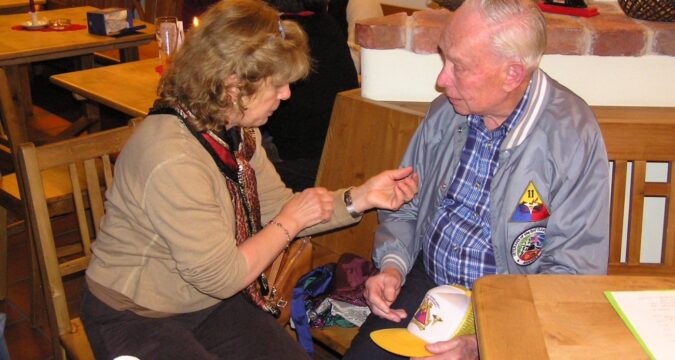
Column: World War II death camp liberator from Aurora featured on ’60 Minutes’
LeRoy “Pete” Petersohn carried a lifetime of trauma from his experiences in World War II.
As a medic in Gen. Patton’s Third Army, he saw horror on the battlefield and was himself injured in the Battle of the Bulge when his Jeep was hit by German artillery.
But what caused him to endure PTSD throughout much of his 87 years was what the Aurora man witnessed as one of the first liberators through the doors of Mauthausen extermination camp in Austria.
Pete’s story has been chronicled several times in this column after he opened up in his later years about those atrocities and again when he was reunited six decades later with the newborn he helped save at the notorious Mauthausen Concentration Camp.
It’s a compelling narrative that’s also been featured in several books. And at 6 p.m. last Sunday, this incredible tale of good triumphing over evil was featured on “60 Minutes.”
The iconic CBS television news show focused on how three pregnant mothers lived to give birth in this last major death camp to be liberated, and how their babies were saved by the U.S. Army medics – especially Petersohn, who spent an entire day carefully lancing and cleaning the infected wounds of a tiny 3-week-old infant.
That baby is now retired research scientist Hana Berger Moran who, along with a second infant, emergency room Dr. Mark Olsky, born in an open coal wagon on the way to the death camp, were reunited with Pete at his home not long before he died in 2010 from brain cancer.
It’s a tale that I hope will someday play out on the big screen and one that was shared on the Paramount Theatre stage in 2016 with Moran and Olsky, as well as Wendy Holden, author of “Born Survivor,” and Pete’s youngest son Brian Petersohn of Montgomery, who has spent considerable time and energy making sure what his father witnessed at the camp will continue to be told through the generations.
It was last March, not long before he and those now 80-year-old “babies” – Moran, Olsky and Eva Clarke – got together at the Humanitarian Awards Dinner for the Illinois Holocaust Museum and Education Center that Brian learned CBS was interested in their story.
Soon after, veteran correspondent Lesley Stahl met with Petersohn at the Martini Banquet Hall in Yorkville, where filming took place as the two went through Pete’s scrapbooks that showed dozens of photos he took inside Mauthausen, including pile after pile of skeletal bodies stacked against walls.
As graphic as those photos were, Pete always insisted they did not convey the full inhumanity – scorched heat from recently used crematorium furnaces and the smell of decay from emaciated prisoners, some of whom died right before the young medic’s eyes.
For as long as Brian Petersohn could remember, after looking through those books, his dad would always ask, “I wonder what happened to the baby” he tried to save. Pete finally got that answer in 2003 when Hana Moran located him and the two met a couple years later at the 60th anniversary of the Mauthausen Camp liberation.
Fast forward 20 years to last spring when Brian and his two sons Josh and Jake “surprised the babies” in Europe for the 80th celebration of the camp’s liberation, where Stahl interviewed him again, including in the motor pool, where Pete had first entered Mauthausen on May 5, 1945.
That celebration – which drew over 20,000 people, including some high European officials – was extremely emotional, said the younger Petersohn, who got another “unexpected surprise” at Gusen I Concentration Camp, which his dad helped liberate before Mauthausen.
There, Brian met a volunteer who, with no introduction, asked if he was a Petersohn. When he said yes, she told him that when she gives tours of Mauthausen in English, “I always use your father’s voice,” taken from the 2003 Mauthausen Survivor Project, to help convey the story of the unspeakable brutalities he encountered.
Anyone who knew Pete would understand why he’d have mixed emotions about all this attention his story is now getting. He was a humble young man who always seemed to have a smile on his face when he left his job in the mailroom at The Beacon-News to go to war. Before returning home, he sent a letter to wife Dorothy describing the atrocities inside the camp and insisted it be published in this newspaper, where he eventually spent his entire career.
In a second segment that ran on the show’s online “60 Minutes Overtime,” Brian Petersohn became emotional as he read from this Beacon-News letter, and Stahl appeared genuinely shocked by the photos Pete took that backed up every word he had documented.
The young soldier’s insistence that this account get published was not about recognition but record, said Brian, adding that his father remained deeply troubled by Holocaust deniers who, even after this “60 Minutes” show ran, tried to flood the comment section with their bad faith claims and recycled conspiracy theories.
Petersohn, whose phone “blew up” with positive calls right after the program aired on Sunday, insists those extremist views are the reason his dad’s story must continue to be told.
It’s not about praise, he insisted, but “proof.”
“Do you think of your father and what he did as heroic?” Stahl asked Petersohn in the final moments of that additional online interview.
His response: “I’m gonna say yes, but then again, I know how humble he was. It was just what he was supposed to do.”
dcrosby@tribpub.com

Chicago Bears Q&A: Is Bradley Chubb worth a serious look? Could Cole Kmet be on the trading block?
The NFL scouting combine is five days away, the next big event on the offseason roster-building calendar.
While the Chicago Bears brass will be getting a look at the top college prospects, the team also will be weighing that potential against possible veteran acquisitions on the free-agent and trade markets. Brad Biggs’ weekly Bears mailbag begins with questions about two such possibilities.
With Bradley Chubb being released, is he worth a serious look in your opinion? — @jm_455999
The Miami Dolphins got busy Monday with a handful of moves. They reportedly will release Chubb, and they announced wide receivers Tyreek Hill and Nick Westbrook-Ikhine and guard James Daniels, a former Bears second-round pick, are being released.
Chubb, the No. 5 pick in the 2018 draft by the Denver Broncos, was rumored to be available before the trade deadline last season, but Miami obviously didn’t get an offer it was willing to accept. He turns 30 in June, and the two-time Pro Bowl selection had 8½ sacks and 20 quarterback hits in 17 games in 2025.
Chicago Bears are raising season ticket prices by an average of 13.5% for 2026
Durability is one question mark for Chubb, who missed the entire 2024 season with a torn ACL and missed 12 games in 2019 with an ACL injury. He had 11 sacks in 16 games in 2023, so he totaled 19½ over his last two full seasons.
At 6-foot-4, 268 pounds, Chubb has the size to play defensive end in Dennis Allen’s scheme, but I view him as a complementary pass rusher at this point. Parting with Chubb, who was slated to earn $20.23 million this season, means the Dolphins couldn’t find a trade partner at that dollar amount.
In eight years in the league, including 2024, Chubb has been durable in only five seasons. He also was limited to seven games in 2021 because of ankle injuries. Maybe the Bears will poke around a little on Chubb, but I have to believe they think they can get 8½ sacks (or more) out of Austin Booker in 2026.
The more edge options there are in general, in both free agency and the draft, the better for the Bears. Yes, they need more juice off the edge. There’s no debating that. My hunch is it’s unlikely Chubb is a top-tier target for them, and they might lean into a good crop of edge defenders in the draft. Once the Dolphins officially terminate Chubb’s contract, he will be free to sign elsewhere and won’t have to wait until the new league year starts March 11.
The price to trade for Maxx Crosby could be so high that it would mean going all in for 2026 but create problems afterward. How do you see that? — @darkseith
For starters, I don’t really look at it that way. When a team has a coach and a quarterback in place that it believes highly in — and the Bears look like they fit those criteria — it should be in position to compete, at least in the conference, every year.
Honestly, it’s my opinion that the term “all in” is often misused. Are there examples of teams doing it? Sure. It can happen when a team has an older quarterback that it wants to gear up for one big, final run. You certainly see front offices that are under pressure to win making aggressive moves in a bid to achieve job security.
But I’m of the mindset that general manager Ryan Poles and coach Ben Johnson are attempting to lay a foundation for success at Halas Hall that will position the Bears to pursue a Lombardi Trophy over a multiple-season window during Caleb Williams’ prime years.
That’s probably not the answer some folks desire, especially those who swing back and forth on every clickbait headline out there. In no way does this preclude Poles from making an aggressive swing at some point — this year or in the near future — but a lot would have to line up and the Bears would have to feel like the foundation is in place.
Raiders defensive end Maxx Crosby chats with a referee during a game against the Broncos on Nov. 24, 2024, in Las Vegas. (L.E. Baskow/Las Vegas Review-Journal/TNS)
If the Las Vegas Raiders trade Crosby, it’s hard to say what the compensation package would need to be. Fox Sports’ Jay Glazer said at the beginning of the month that Crosby is done with the Raiders, and Glazer doesn’t swing and miss very often. Glazer also predicted a trade package would have to exceed what the Dallas Cowboys received from the Green Bay Packers for Micah Parsons: two first-round picks and veteran defensive tackle Kenny Clark.
I’m a little skeptical that Crosby, who will turn 29 in August and has missed seven games over the previous two seasons, would command that much in return. Parsons is 26. In 2018, the Bears traded two first-round picks, a third and a sixth for Khalil Mack, a second and a seventh. Mack was 27.
Could the Bears create cap space to add a player like Crosby? Sure. But it would require a series of uncomfortable decisions and moves. Everyone knows the team’s cap situation is snug right now, and it could be relatively snug again in 2027. The Bears currently have 29 players under contract for 2027 with $277.6 million in cap allocations, the seventh-highest figure in the league.
But peer ahead one more year to 2028, and only 12 players are under contract — nickel cornerback Kyler Gordon is the only one of the bunch not on a rookie deal — with $63.8 million in cap allocations, the second-lowest figure in the league. So the Bears will have plenty of space moving forward, provided they’re wise with resources. That’s why there’s no reason for a doom-and-gloom outlook when it comes to the team’s cap management.
Ultimately, I think Poles will consider all possibilities and likely lean toward keeping his valuable draft capital. For the Bears to have a longer runway when it comes to chasing a Super Bowl, they need more building blocks in terms of draft picks. It’s a mistake to think they can’t be highly competitive in 2026 if they don’t chase the biggest names available. They were one play away from reaching the NFC championship game this past season, and there has to be belief in the building that Williams and a host of other young players will be better and more dynamic in a second season under Johnson.
What to know about the Chicago Bears’ possible move from Soldier Field
Who has the best shot at taking the proverbial “next step” in 2026? — @brooklyncorn
One nice thing for the Bears is that a lot of answers to this question would make sense: tight end Colston Loveland, running back Kyle Monangai, defensive end Austin Booker and wide receivers Luther Burden III, Jahdae Walker and even Rome Odunze. Go ahead and throw in quarterback Caleb Williams, especially in terms of accuracy, and how about interior offensive lineman Luke Newman? The Bears were remarkably healthy at guard and center last season. If that can’t be replicated, they might need to lean on Newman more in Year 2 and they liked what he showed.
It’s unlikely all of the young players experience some big, expected increase in production this coming season, but even if only a handful of them shows that measure of growth, you’re looking at some guys who will be arrow up with expanding ceilings.
Why are fans so delusional in believing that the Bears are set at the running back position? Did they forget how bad this team was on short downs and goal-line runs? — @chitownledez
Bears running back Kyle Monangai (25) celebrates with quarterback Caleb Williams after Monangai made a 15-yard run in the divisional playoff game against the Rams on Jan. 18, 2026, at Soldier Field. (Eileen T. Meslar/Chicago Tribune)
There’s a difference between being “set” and having a backfield that’s more than good enough to execute a productive, efficient rushing offense. The Bears ranked third in the league in rushing and yards per carry last year.
I think recency bias — the divisional playoff loss to the Los Angeles Rams — probably clouds the view a little bit. The offense was not great in the low red zone, ranking tied for 16th in goal-to-go situations at 73.3%. That needs to improve and should with a young quarterback.
In the regular season, here’s how the Bears did running the ball on short downs:
Second-and-1: 10 rushes, eight first downs
Third-and-1: 24 rushes, 18 first downs
Third-and-2: Nine rushes, eight first downs
Fourth-and-1: Five rushes, two first downs
Fourth-and-2: One rush, one first down
And here’s how they did in the postseason:
Second-and-1: None
Third-and-1: Eight rushes, six first downs
Third-and-2: Two rushes, one first down
Fourth-and-1: Two rushes, one first down
When throwing the ball on fourth down in the playoffs, the Bears were 0-for-1 on fourth-and-1 and 1-for-3 on fourth-and-2.
Maybe the offense wasn’t great running the ball on third- and fourth-and-short, but I’d argue the overall numbers were solid. And if Caleb Williams, who is strong, shifty and fast, can be a little better in certain running situations, the numbers would improve a tick. I also think Kyle Monangai, in his second season, probably can improve a little bit in short-yardage situations.
Could Cole Kmet be on the trade block? Heard conflicting stories about him wanting a new start or wanting to stay. — @bears_dubz
Bears offensive coordinator Declan Doyle talks to tight ends Colston Loveland (84) and Cole Kmet (85) before a game against the Packers on Dec. 20, 2025, at Soldier Field. (Brian Cassella/Chicago Tribune)
I haven’t heard anything about Kmet wanting a fresh start elsewhere or anything of that nature. I think the local product is probably happy to remain with the Bears, especially now that they’re coming off a successful season.
Related Articles
Chicago Bears are raising season ticket prices by an average of 13.5% for 2026
What to know about the Chicago Bears’ possible move from Soldier Field
Win or lose, baiting the Chicago Bears could pay off for Portage. Here’s why.
NFL coaching and GM tracker: Ex-Chicago Bears coach John Fox joins Buffalo Bills as senior assistant
NFLPA must stop making ‘team report cards’ public after league wins grievance against players union
Kmet, who turns 27 on March 10, is in the prime of his career, and while he wasn’t as involved in the passing game this past season with the arrival of first-round pick Colston Loveland, that doesn’t mean his abilities have receded at all.
Kmet is signed through 2027. He has a $8.9 million base salary with a $1 million roster bonus (due the fifth day of the league year) and a $100,000 workout bonus for each of the next two seasons. So that’s $20 million total. His cap hit is $11.6 million for each season, and there’s no guaranteed money remaining in the deal.
I think an extension for Kmet would be likelier than the Bears trading him when you consider how significant tight ends are to Ben Johnson’s offense. The Bears could extend Kmet’s contract with a goal of reducing his cap figure for this season, but they also would have to see him being a significant part of the offense in 2028 and maybe 2029. I highly doubt Kmet would agree to an extension simply to reduce his cap hit. He would want that to be a worthwhile move because he likely would have a strong market if he entered free agency a year or even two years from now.
When do you expect the Bears to start making their first cuts and making space via restructures? — @sam_winks
Ryan Poles always has been mindful of doing right by players when he can. Keeping that in mind, my guess is once the Bears have a clear strategy for clearing some cap space, he will make any cuts — after exploring potential trades — sooner rather than later. That could be this week or next.
Linebacker Tremaine Edmunds looms as the likeliest veteran to be released, a move that would create $15 million in cap savings. It’s possible other veterans on smaller contracts could be caught up in a small purge, but that would depend on how much space the Bears want to clear and their plans for how to utilize it.
As far as restructuring contracts to create cap savings, that’s probably on an as-needed basis. The Bears will need to be cap-compliant by the first day of the new league year, March 11.
https://www.chicagotribune.com/2026/02/18/chicago-bears-mailbag-bradley-chubb-maxx-crosby/

Ready for ski mountaineering? What to know about the sport making its Olympic debut.
BORMIO, Italy — The newest sport on the Olympic program goes by the name “skimo,” which is short for ski mountaineering. Its basic principles are just as condensed: Race up the slope and back down as fast as possible.
There’s so much more nuance to it, though, in a sport that traces its roots to the late 19th century. Ski mountaineering became fashionable before the arrival of mechanical lifts, when the only way to go up was by climbing. And the best way to get back down was, of course, skiing.
“I love this sport because it takes me into the mountains and gives me an incredible sense of freedom,” explained Swiss athlete Marianne Fatton, who won the women’s sprint event at the skimo world championships last March. “For me, the Olympic Games were really the cherry on top. I was already incredibly happy just to be able to compete at a high level.”
There’s a range of skimo categories that blend a combination of endurance, technique, speed and Alpine ability. For the Milan Cortina Games, the focus will be on the individual sprint and mixed team relay. The men’s and women’s sprint competitions are Thursday in Bormio, with the mixed relay two days later.
What is the format?
The individual sprint features a bracketed-style setup. The top finishers keep advancing until they reach the final, which will consist of six athletes. The course is composed of an ascent on skis with an assist of “skins,” which are pieces of fabric that allow athletes to hurry uphill but prevent sliding backward. After going through a diamond-shaped pattern, there’s a running section in boots with the skis on their backs and then another uphill section on skis. From there, the athletes remove the skins and ski down.
A typical individual race lasts about three minutes. The total ascent is roughly 70 meters (76 yards) and the course length about 750 meters (0.48 miles).
In the mixed team race, each athlete completes two laps of the course, one after the other. The final takes about 30 minutes. The ascent on that course is about 135 meters (148 yards) and the length around 1,500 meters (0.9 miles).
Athletes can be called for penalties, ranging from unsportsmanlike conduct to technical errors to missing equipment. It can result in adding three to 30 seconds to their time or even a disqualification. For instance, incorrect storage of the skins is a three-second addition while losing the skin before the finish line is a 30-second penalty. Failing to correctly fasten skis on a backpack is a three-second infraction.
What exactly are skins?
Skins are adhesive fabric strips that go on the bottom of the skis while racers traverse uphill. They allow grip to go up without sliding backward. They’re taken off to go downhill and typically placed in the racing suit. The skis are narrow, lightweight and shorter than an Alpine model to help provide more control. They’re designed for efficiency going up and down the mountain.
The boots are lightweight, too, because athletes will be running in them. They have a lever so athletes can toggle back and forth between walk and ski mode. The bindings are designed for quick transitions.
How many are involved?
There will be 36 racers (18 males, 18 females) competing for the medals. Of the total, 35 are making their Olympic debuts; Phillip Bellingham of Australia competed in cross-country skiing at three Winter Games.
The International Ski Mountaineering Federation (ISMF) oversees the sport with about 56 national federations. The sport has seen a 45% increase since it was approved for the Olympics in 2021. There are about 3 million ski mountaineers around the globe, according to ISMF.
The sport has been proposed for the 2030 Winter Games in the French Alps.
Who are the favorites?
It’s wide open. Among the female athletes to watch are Emily Harrop of France and Fatton. On the men’s side, it’s Oriol Cardona Coll of Spain, Thibault Anselmet of France and Jon Kistler of Switzerland. The U.S. has a strong team in the mixed relay in Anna Gibson and Cameron Smith, who recently won a World Cup event.
What qualities are needed?
The races are a mix between cross-country skiing, biathlon and ski-cross. The top athletes have the lung capacity of a cross-country racer and the skills of a downhill racer.
“It’s a fun mix,” explained Harrop, the sprint-race silver medalist at worlds.
No coasting on the downhills either.
“In skimo, the effort is nearly constant,” Fatton explained. “You don’t just glide down. You have to stay fully engaged, skiing aggressively and as fast as possible. For me, the ideal skimo racer needs a very strong VO-2 max, excellent recovery ability, real power and a high tolerance for suffering.”
https://www.chicagotribune.com/2026/02/18/what-is-skimo-ski-mountaineering-olympics/
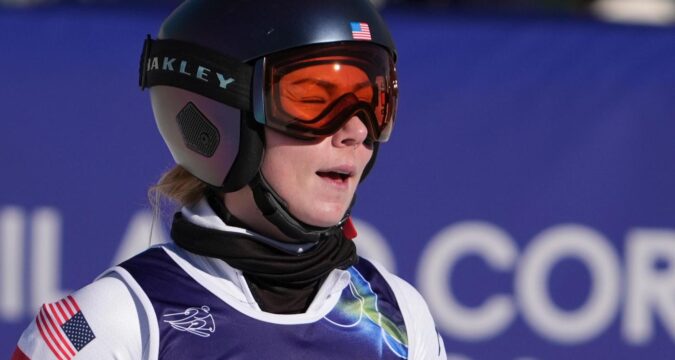
Slalom is Mikaela Shiffrin’s last shot at an Olympic medal. The good news? It’s her best event.
CORTINA D’AMPEZZO, Italy — Mikaela Shiffrin likes to invoke the adage from tennis great Billie Jean King that “pressure is a privilege.” Even if, at times, it doesn’t quite feel like it.
And it might not at the moment for the American skiing star as she prepares for her third and final race at the Milan Cortina Olympics.
Shiffrin heads into Wednesday’s slalom still looking for her first medal at Tofane and her first Olympic medal in a staggering eight years. A bafflingly slow performance in the slalom during women’s combined last week cost Shiffrin and teammate Breezy Johnson a spot on the podium.
The winningest ski racer in history felt faster and more confident during the giant slalom a few days later, with her 11th-place finish more a testament to what she described as the “greatest show” GS had put on in quite some time than her actual performance. Shiffrin was just three-tenths of a second off the podium, a razor-thin margin in an event where the time gap between the winners and the rest of the field is usually far greater.
Shiffrin’s meticulous preparation for her signature discipline — she’s already wrapped up a record ninth World Cup series title in slalom with two races remaining — included reacclimating herself to the singular rhythm of an event where tempo is everything.
You’d think after a 71 slalom wins — including seven this year alone — that would be no big deal. At this point in the 30-year-old’s career, it’s not.
“No matter how many runs of slalom I do it never gets easier,” said Shiffrin, who collected her first Olympic gold in the event as a teenager in Sochi a dozen years ago. “It only gets like you become more aware of how challenging it is.”
And that’s just the physical part. The mental side is another matter entirely.
Shiffrin carries the burden of expectations that are part of the deal — fairly or unfairly — when you cut and paste your name all over your sport’s record book. She has been characteristically transparent while discussing wrangling with those expectations, even though in many ways they’re well outside of her control.
She arrived in the Dolomite Mountains confident those forgettable days in Beijing four years ago when she failed to medal in any of the six events she entered were behind her. The uncharacteristically slow run in the women’s combined left her mystified and subdued. The aggressiveness she displayed in the GS left her upbeat and optimistic.
Still, when she stands in the starter’s house during the final women’s alpine race of these Olympics, the standard set for her will be different from everyone else, including reigning gold medalist Petra Vlhova of Slovakia.
“I can imagine what she’s feeling right now,” Vlhova said. “But … she’s strong and I believe she can make it. But it takes a lot of energy, but I believe that she can do it.”
Vhlova has taken her own winding path back to this moment. She shredded multiple ligaments in her right knee in January 2024 and didn’t return to competition until the women’s combined on Feb. 10. She didn’t finish her run, but it also in a way didn’t matter as she hits what she described as the “restart” button.
During Vhlova’s absence, Shiffrin has cemented her legacy. Her career World Cup wins in all disciplines currently stands at 108 and counting, including eight in her last nine slalom starts dating to the end of last season.
She is, by every measure, the best skier in the field. Yet the course is a little flatter and perhaps a little easier than what they usually encounter. There’s a very real chance things could be just as tight on Wednesday as they were during the GS. Maybe even closer.
It means Shiffrin’s margin for error during her two runs might be smaller than usual, and she knows it. Her run in the women’s combined, when she was 15th, her worst ranking in a slalom race she’s started and finished since 2012, caught her off guard.
A dedicated student of her craft, Shiffrin believes her skis got misaligned a few times. The flat light on a gray afternoon played a factor too. So did a mentality that she admitted didn’t match the moment, something she’ll try to address as she aims to end her fourth trip to the Olympics on an up note.
“I’m kind of going into it with my eyes open that we can see a very similar situation and I will try to handle it differently in my head,” she said.
Such is the challenge that is unique to this once-every-four-years spectacle. There is little debate that Shiffrin is the Greatest of All Time. Her struggles under this specific spotlight, however, have put her in a strange and perhaps unenviable spot.
She has tried to handle it with grace. U.S. Skiing and Snowboarding president Sophie Goldschmidt called Shiffrin “the ultimate role model” and even as she grappled with how a spot on the podium in the combined got away, she made it a point to give longtime teammates Jackie Wiles and Paula Moltzan their flowers after earning their first Olympic medals.
Whatever happens, those that know Shiffrin know she will leave it all out there. If she does that, she can make peace with the result, whatever it may be.
“She has a lot of experience,” Vhlova said. “She knows how to deal with it and as I said, I believe that she can make it.”
AP Sports Writer Andrew Dampf contributed to this story
https://www.chicagotribune.com/2026/02/18/mikaela-shiffrins-slalom-last-shot-olympics/

Editorial: Elizabeth Granato for Cook County Board 12th District Democratic primary
Incumbent Bridget Degnen is not running for reelection and endorsed candidate Catherine “Cat” Sharp as her successor. Sharp dropped out of the race to fight federal charges stemming from a confrontation last year with federal immigration agents near the suburban Broadview ICE facility. Three Democrats remain in the race: Elizabeth Granato, Isaiah White and José “Che-Che” Turrubiartez Wilson. Granato, who took a leave of absence from her job leading the county’s Bureau of Asset Management, is the best bet among the remaining choices. “We need someone who understands procurement, budgets, federal funding streams and health care systems,” she says, pledging that her inside experience will enable her to navigate county government “on Day 1.” Let’s hope so.
Granato gets our endorsement.
Read all of the Tribune Editorial Board’s endorsements for the 2026 Illinois primary election here.
Submit a letter, of no more than 400 words, to the editor here or email letters@chicagotribune.com.

Peru Removes President After Scandal Tied To Chinese Contractor
Peru Removes President After Scandal Tied To Chinese Contractor
Peru’s Congress voted on Tuesday to remove President Jose Jeri from office following a series of undisclosed late-night meetings at a Chinese restaurant with a Chinese state contractor, setting off a political scandal dubbed “Chifagate”, a reference to the country’s Chinese-Peruvian fusion cuisine.
According to SCMP, lawmakers voted 75-24, with three abstentions, to censure Jeri over the unregistered encounters with businessman Zhihua Yang, whose companies have supplied the state and who owns the restaurant and a wholesale outlet in Lima.
The vote took place during an extraordinary session in which seven censure motions, filed between January 21 and January 27, were admitted and debated together. An attempt by Jeri’s party, Somos Peru, to argue that only a presidential vacancy procedure could remove him was defeated 71-34.
Jeri did not attend the debate, maintaining that the censure process denied him the right to mount a defense.
In a televised interview last month, he ruled out resigning voluntarily and described the release of videos as part of a political operation aimed at destabilizing the government ahead of elections; of course that’s what every politicians embroiled in a career-ending scandal would say.
The “Chifagate” scandal started in late December, when TV shows broadcast footage of the president entering a Chinese restaurant in Lima’s San Borja district shortly before midnight, his head covered, alongside the interior minister Vicente Tiburcio.
Days later, he was filmed inside Yang’s wholesale shop, which municipal authorities had temporarily closed earlier that day for regulatory breaches. Neither visit was recorded on the president’s official agenda as required under transparency rules.
Local media also reported that Yang had expressed interest in a proposed contract to install thousands of surveillance cameras on public buses, a project estimated to cost about US$30 million.
Government officials acknowledged discussions with Chinese business representatives but denied any pressure or irregular conduct.
Separate reports said another Chinese businessman, Ji Wu Xiaodong, who faces house arrest over alleged links to illegal logging, had entered the presidential palace several times between December and January. Jeri said he was unaware of Ji Wu’s legal situation and rejected suggestions of wrongdoing.
Throughout the investigation, the now-ousted president refused to resign and rejected the allegations, saying he had granted no favors or contracts. He described the case as “a political operation” aimed at destabilizing his government.
The Attorney General’s office opened a preliminary investigation into possible influence peddling and illegal sponsorship of interests. Under Peruvian law, a sitting president enjoys immunity from prosecution, meaning any criminal case would proceed only after leaving office.
Banana Republic
Jeri took office in October through constitutional succession after the removal of Dina Boluarte and had been in the post for 130 days. Boluarte had replaced the last democratically elected president, Pedro Castillo, in December 2022 after he too was impeached.
Jeri was the seventh president in a decade to lead Peru. Many of his predecessors have been mired in scandal, forcing them to step down or face impeachment.
His removal adds to a decade of political turbulence in which presidents have resigned, been impeached or removed in rapid succession.
Outside Congress on Tuesday, a small group of protesters gathered behind metal barriers demanding Jeri’s resignation. Some held placards and chanted “Que se vaya Jeri” (“Jeri must go”) as police maintained a visible presence.
Before Tuesday’s final vote, opinion polls already indicated that the president’s popularity had been damaged by the scandal. A survey by Datum Internacional and local newspaper El Comercio published on Monday showed his approval rate at 37 per cent, a drop of 21 points since he took office.
Nearly seven in ten respondents said they believed he was implicated in corruption after photographs and videos surfaced showing his meetings with the Chinese businessmen seeking state contracts.
Congressional leaders said a new head of Congress would be elected on Wednesday evening and would then assume the presidency under constitutional succession rules. The interim president will serve until April, when Peru is scheduled to hold general elections to choose a new leader, two vice presidents and a new Congress.
Tyler Durden
Wed, 02/18/2026 – 06:55
https://www.zerohedge.com/political/peru-removes-president-after-scandal-tied-chinese-contractor
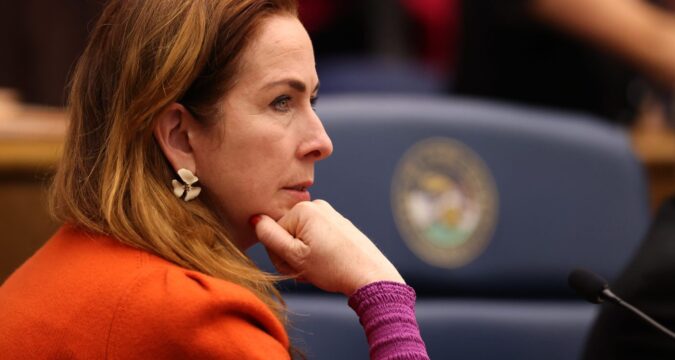
Editorial: Bridget Gainer for Cook County Board 10th District Democratic primary
Incumbent Bridget Gainer has a remarkable record of public service, including her die-hard efforts to breathe life into the Cook County Land Bank — a great idea for redeveloping underused property that has failed to reach its potential. As head of global affairs and policy at insurance giant Aon, she has a busy job, and challenger Drake Warren, an industrial engineer, has committed to serving full time if elected. He raises a good point about her time commitments, but we believe Gainer’s smarts and experience make her an essential problem-solver on the county board. She has pledged to support no future budget that includes property tax increases.
Gainer is endorsed.
Read all of the Tribune Editorial Board’s endorsements for the 2026 Illinois primary election here.
Submit a letter, of no more than 400 words, to the editor here or email letters@chicagotribune.com.
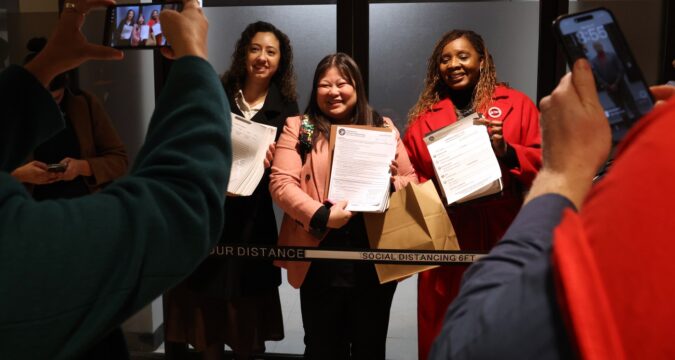
Editorial: Jessica Vásquez for Cook County Board 8th District Democratic primary
Jessica Vásquez replaced Anthony Quezada after he joined the Chicago City Council, attracting criticism that progressives were installing yet another insider in this district encompassing Chicago neighborhoods including Logan Square, Belmont Cragin and Hermosa. Challenger Nicholas Cade, an attorney and former public school teacher, accuses her of being beholden to special interests. Vásquez has had a strong voice in objecting to federal immigration enforcement in the Chicago area. She touts her record of hands-on constituent services, including property-tax assistance, and joins us in calling out what she terms the county’s “poor rollout” of a Tyler Technologies-run computer system, which has led to inexcusably late tax bills. As a member of the county board’s audit committee, she has the potential to make good on her promises to bring about efficiencies and improve county administration.
Vásquez is endorsed.
Read all of the Tribune Editorial Board’s endorsements for the 2026 Illinois primary election here.
Submit a letter, of no more than 400 words, to the editor here or email letters@chicagotribune.com.

Editorial: Patricia Joan “Trish” Murphy for Cook County Board 6th District Democratic primary
Five Democratic candidates are vying to replace Commissioner Donna Miller, who is running for the congressional seat being vacated by Robin Kelly. Voters have a difficult decision, given a talented field. Attorney Wesam Shahed, a first-generation Palestinian American endorsed by Illinois Attorney General Kwame Raoul, has run a well-funded campaign. Veronica Bolling-Franklin is a school board veteran with practical ideas for multiyear forecasting and performance-based budgeting. Antoine Bass has good ideas, too, notably for consolidating duplicative programs and sharing heavy equipment among the district’s municipalities. Also running is child and family advocate Sylvester Fulcher.
This district needs a hands-on doer, and filling the bill is Patricia Joan “Trish” Murphy, daughter of the late Commissioner Joan Murphy. Trish Murphy is a Worth Township supervisor and Democratic committeewoman who pledges to attract businesses and families to an economically challenged part of Cook County. (The district fishhooks from Bridgeview and Justice down the county’s southern border, then back up to Homewood and South Holland). “I have real experience balancing budgets, prioritizing services and delivering improvements without placing undue additional strain on taxpayers,” she says. Shahed is an exciting candidate, but we think Murphy is better prepared to undertake the day-to-day duties of a Cook County Board commissioner.
Murphy is endorsed.
Read all of the Tribune Editorial Board’s endorsements for the 2026 Illinois primary election here.
Submit a letter, of no more than 400 words, to the editor here or email letters@chicagotribune.com.