Category: News

Juez da aval para que siga la construcción del salón de baile de $400 millones en la Casa Blanca
Por MICHAEL KUNZELMAN
WASHINGTON (AP) — Un juez en Estados Unidos rechazó el jueves la solicitud de un grupo conservacionista para impedir que el gobierno continúe la construcción de un salón de baile de 400 millones de dólares en el lugar donde demolió el Ala Este de la Casa Blanca.
El juez de distrito Richard Leon determinó que The National Trust for Historic Preservation tenía pocas probabilidades de prevalecer en su petición para detener temporalmente el proyecto del presidente Donald Trump.
Leon señaló que el grupo tiene más posibilidades de éxito si modifica su demanda.
“Lamentablemente, debido a que ambas partes se centraron inicialmente en la autoridad constitucional del presidente para destruir y construir el Ala Este de la Casa Blanca, el demandante no presentó la causa de acción necesaria para poner a prueba la autoridad legal que el presidente afirma que es la base para llevar a cabo este proyecto de construcción sin la aprobación del Congreso y con fondos privados”, escribió el juez.
El grupo, financiado con aportes privados, presentó la demanda para obtener una orden que pause el proyecto del salón de baile hasta que se someta a múltiples revisiones independientes y obtenga la aprobación del Congreso.
La Casa Blanca anunció el proyecto del salón de baile durante el verano. Para finales de octubre, ya se había demolido el Ala Este por orden del presidente republicano para dar paso a un salón de baile que, según dijo Trump, tendrá capacidad para 999 personas. La Casa Blanca indicó que donaciones privadas, incluidas las del propio Trump, pagarían la construcción prevista de un salón de 90.000 pies cuadrados (8.400 metros cuadrados).
Trump siguió adelante con el proyecto antes de solicitar la opinión de un par de paneles federales de revisión, la Comisión Nacional de Planificación de la Capital y la Comisión de Bellas Artes. El republicano ha llenado ambas comisiones de aliados.
______
Esta historia fue traducida del inglés por un editor de AP con la ayuda de una herramienta de inteligencia artificial generativa.
Indiana ICE immigration bill heads to governor’s desk for final signature into law
The Indiana Senate gave final approval to an immigration bill that allows local and state police to enforce federal immigration laws and for those officers to cooperate with ICE.
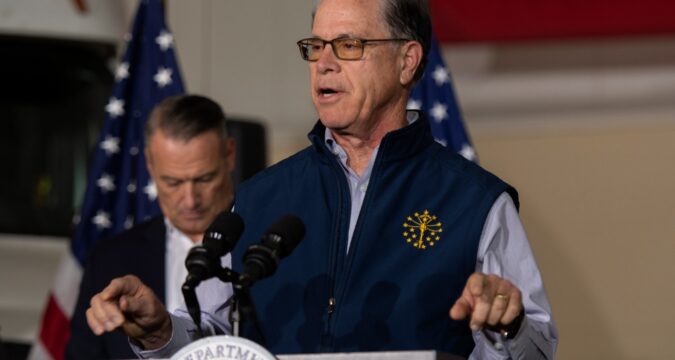
With the 37-11 vote in favor of the bill, it heads to Gov. Mike Braun’s desk for signature to become law. State Sen. Vaneta Becker, R-Evansville, and State Sen. Jean Leising, R-Oldenburg, joined all Democrats present to vote against the bill.
Leising said because she represents a rural district, she was concerned about the impacts the bill will have on the state’s agricultural industry.
For two hours, the Senate discussed the bill as it debated whether to support the amendments the House made to the bill.
State Sen. Liz Brown, who authored Senate Bill 76, said the House made many changes to the bill, including banning written and unwritten sanctuary city laws and requiring that federal employment verification standards are followed, among other things.
“We are a sovereign nation only if we have secure borders. The last administration did a disservice to immigrants and, more importantly, to U.S. citizens by ignoring our immigration laws and removing any barriers to entry,” Brown said. “When President Trump’s teams began asking for state and locals to assist federal law enforcement, it has been of the utmost importance to me that we respect the concerns, safety and otherwise, of law enforcement.”
Senate Bill 76 states that the enforcement of federal immigration laws may be carried out by federal, state or local law enforcement. Under the bill, the Indiana Department of Correction will provide training to all sheriffs-elect on how to cooperate with the United States Immigration and Customs Enforcement.
The bill was amended in the House Judiciary committee by State Rep. J.D. Prescott, R-Union City, to more closely align with the bill he proposed last year, known as the FAIRNESS Act: Fostering and Advancing Immigration Reforms Necessary to Ensure Safety and Security. Brown was criticized by Attorney General Todd Rokita after the 2025 session for not advancing the FAIRNESS Act when it reached a Senate committee she chaired.
The bill allows the attorney general to sue a government agency, school or jail that doesn’t comply with federal immigration officials with a penalty of $10,000 for each violation. The amendment also states that a government body couldn’t be sued for complying with the bill.
If someone is detained under an immigration detainer request, the bill states that the governmental body should give the judge authority to either grant or deny the person’s release on bail, as well as record in their file, comply with and inform the detainee of the immigration detainer request.
The bill prohibits an employer from recklessly or intentionally hiring or employing an undocumented immigrant. The bill allows the attorney general to sue employers who hire undocumented immigrants and report the person to the U.S. Department of Homeland Security.
Further, the bill requires the legislative council to receive a report with data on the number of Hoosiers who aren’t citizens and are enrolled in or receiving benefits through the Indiana Residential Care Assistance Program, public assistance and welfare programs, family assistance services, Medicaid and Community Mental Health Services.
If a law enforcement officer, government body or educational institution is sued, the attorney general shall defend the party, the bill states. It also removes the mens rea standard when it comes to governmental or educational institutions for violating the citizenship and immigration status information and enforcement of federal laws.
The bill allows the governor to withhold state grants or funding to a city that doesn’t comply with the law.
As the Senators were addressing the House amendments to the bill, Lt. Governor Micah Beckwith, the president of the Senate, shared a picture from inside the chamber and his support for the bill as a whole on his “Micah Beckwith For Indiana” Facebook page.
“This is a commonsense immigration bill that gives Indiana the tools we need to uphold the rule of law and ensure that those who are here illegally are no longer draining resources meant for Hoosier citizens,” Beckwith said.
State Sen. Lonnie Randolph, D-East Chicago, voiced his concerns with the way the bill was amended because it still gives local and state law enforcement authority to enforce federal immigration laws without considering the cost of training and increasing police officers’ workload.
Randolph also expressed concern with the employment section of the bill because it will likely lead to company leaders selecting candidates based on preconceived notions about who isn’t an immigrant to avoid breaking the law.
The bill “invites” ICE into Indiana, Randolph said, and with that will come the “untrained and unprofessional” ICE agents who have detained and killed American citizens, as in Minnesota.
“We don’t need these kinds of things at all. It doesn’t help us. It hurts us,” Randolph said.
State Sen. Andrea Hunley, D-Indianapolis, said as a former principal, when she read the sections about schools having to comply with ICE agents, she pictured her former secretary Lisa, a former military police officer, the “first line of defense” for people entering the building.
“Lisa didn’t play. I’m imagining if someone came in and said, ‘Is little Andrea enrolled here?’ … I’ll be darned if anybody gets past Lisa to get into the building,” Hunley said.
Under federal law, schools are required to teach students regardless of immigration status, Hunley said. Under the Family Education Rights and Privacy Act, student information is protected, she said.
So, with Senate Bill 76, school administrators will have to choose between breaking state law or federal law if an ICE agent entered a school and started asking questions about students, Hunely said.
“We can’t get this wrong when we’re talking about kids. I can’t imagine for a moment coming to school to pick up my child and them not being there and me not knowing where they are,” Hunley said.
State Sen. Shelli Yoder, D-Bloomington, said the biggest concern she has with the House changes to the bill was the removal of mens rea, which means before someone can be charged, prosecutors have to prove he or she knowingly broke the law.
As a whole, the bill will impact schools, employment practices and the workforce pipeline. The bill will likely lead to racial profiling in all those areas, Yoder said.
“Immigration status is not visible. Citizenship is not visible. Legal work authorization is not visible. When enforcement depends on suspicion, suspicion inevitably falls on appearance, language, accent and background,” Yoder said.
Republican legislators leaned on divisive rhetoric to differentiate between Hoosiers and illegal immigrants. Many of the Republicans who spoke voiced support for removing undocumented immigrants from the country.
State Sen. Chris Garten, R-Charlestown, said he supported the bill and the methods used to remove undocumented immigrants.
“I don’t care how long they’ve been here. They need to get out. I support every method of getting every (undocumented immigrant) out of Indiana today. I don’t care who they work for. I don’t care how many family members are here. Makes no difference to me,” Garten said.
State Sen. Michael Young, R-Indianapolis, said as Trump said in his State of the Union address, the government should put citizens first.
“To me, our first duty is to protect our citizens, not those who are here illegally,” Young said.
akukulka@post-trib.com
https://www.chicagotribune.com/2026/02/26/indiana-ice-immigration-bill-heads-to-governor/

Ataques de paramilitares sudaneses desplazan a más de 3.000 personas, dice grupo
Por FATMA KHALED
EL CAIRO (AP) — Ataques de fuerzas paramilitares sudanesas contra una localidad en la región occidental de Darfur han desplazado a más de 3.000 personas en los últimos días, informó un grupo de médicos el jueves, mientras la guerra en el país africano se acerca a su tercer año sin final a la vista.
El comunicado de la Red de Médicos de Sudán, que da seguimiento a la brutal guerra del país, se produjo después de una publicación anterior esta semana en Facebook en la que el grupo indicó que el más reciente ataque contra Misteriha, en la provincia de Darfur del Norte, dejó al menos 28 muertos y 39 heridos.
El grupo señaló entonces que las cifras de víctimas eran solo preliminares y que el número real de muertos y heridos probablemente sea mayor.
La localidad es un bastión del líder tribal árabe Musa Hilal, quien también pertenece a la tribu árabe Rizeigat, al igual que la mayoría de los integrantes de las Fuerzas de Apoyo Rápido. No se conocían los motivos del ataque y no fue posible contactar a las FAR para solicitar comentarios.
El conflicto entre las FAR y el ejército sudanés estalló en una guerra en abril de 2023, que hasta ahora ha matado al menos a 40.000 personas y ha desplazado a 12 millones, según la Organización Mundial de la Salud. Grupos de ayuda afirman que el saldo real podría ser muchas veces mayor, ya que los combates en zonas extensas y remotas dificultan el acceso.
El grupo de médicos indicó que las familias desplazadas huyeron de Misteriha durante la noche, sin pertenencias, y que ahora carecen de refugio y alimentos. Señaló que la mayoría de los desplazados son mujeres, incluidas embarazadas, que enfrentan condiciones de salud “extremadamente graves”. Hizo un llamado a brindar “asistencia inmediata y urgente”.
Las FAR intensificaron el lunes su ataque contra la localidad y posteriormente la tomaron, una captura que probablemente refuerce su control sobre Darfur.
Las FAR tomaron el control de el-Fasher, la capital provincial de Darfur del Norte, en octubre, tras 18 meses de asedio. El grupo paramilitar mató a más de 6.000 personas entre el 25 y el 27 de octubre en la ciudad, atrocidades que, según expertos respaldados por la ONU, presentaban “las características propias de un genocidio”.
Mientras tanto, el alto comisionado de la ONU para los Derechos Humanos, Volker Türk, dijo el jueves que su oficina ha documentado un fuerte aumento —más de dos veces y media— en los asesinatos de civiles en 2025 en Sudán, en comparación con el año anterior, con miles de personas aún desaparecidas o sin identificar.
“Esta guerra es fea. Es sangrienta. Y no tiene sentido”, declaró Türk durante una sesión del Consejo de Derechos Humanos en Ginebra. “Si gran parte de la comunidad internacional sigue actuando como un espectador pasivo, entonces algo está fundamentalmente mal con nuestra brújula moral colectiva”.
Los reiterados esfuerzos de diversos países y organizaciones por negociar la paz no han logrado poner fin a la guerra.
___________________________________
Esta historia fue traducida del inglés por un editor de AP con ayuda de una herramienta de inteligencia artificial generativa.

Naperville News Digest: Rotary club accepting scholarship applications; park district planning sports gear swap event
ROTARY CLUB ACCEPTING SCHOLARSHIP APPLICATIONS
Rotary Club of Naperville will accept applications from high school students seeking college scholarships through by Sunday, March 8.
The scholarships recognize students who demonstrate academic achievement, leadership and a commitment to their community, a news release said.
Eligible applicants must live within the attendance boundaries of Naperville School District 203 or Indian Prairie School District 204 and be graduating from high school during the academic year in which they apply.
Seniors attending local parochial high schools who live within District 203 or 204 boundaries can also apply, the release said.
Applications are available at rotaryclubofnaperville.org/grants-scholarships. For more information, contact Maria Caselli at mcaselli@napervillerotary.com.
PARK DISTRICT PLANNING SPORTS GEAR SWAP
Residents can donate gently-used sports gear to keep unwanted equipment out of landfills and receive a voucher towards equipment they may be interested in obtaining.
The Naperville Park District and Accelerated Climate Solutions are partnering together for the Great Gear Swap, which will take place the week of March 16.
Residents can drop off unwanted sports equipment from 8 to 11 a.m. and 4 to 7 p.m. Monday, March 16, through Wednesday, March 18, and from 8 to 11 a.m. Thursday, March 19, at the Fort Hill Activity Center, 20 Fort Hill Drive.
Donors will get a credit voucher available to spend at the sale event from 8 to 11 a.m. and 4 to 6 p.m. Friday, March 20, in the Fort Hill Activity Center’s multipurpose rooms.
No items will be collected on the day of the sale. Donations are not required to attend the sale.
Acceptable donation items include sports balls, baseball bats, rubber batting tees, softball and baseball masks and mitts, hockey and lacrosse sticks, tennis and racquetball rackets and cleats. Items must be in clean and gently used condition; the park district has the right to refuse donations that don’t meet acceptable standards.
A full list of acceptable items to donate is listed on the park district’s website at www.napervilleparks.org/greatgearswap.
DUPAGE COUNTY ANIMAL SERVICES RECEIVES GRANT
DuPage County Animal Services received a grant worth $20,000 to connect pet owners with medical services that would help the pet stay with their family instead of at the shelter.
The Rachael Ray No-Kill Excellence grant was given to the county from Best Friends Animal Society, a leading national animal welfare organization working to save cats and dogs in America’s shelters, DuPage County officials said.
The grant will help reduce the number of animals entering the shelter due to medical concerns and keep the pets with their owners. The goal is to divert as many as 50 cats and dogs, officials said.
DuPage County Animal Services is one of 53 shelters and rescues nationwide to be awarded Rachael Ray Save Them All and Rachael Ray No-Kill Excellence grants this year.
https://www.chicagotribune.com/2026/02/26/naperville-rotary-scholarships-sports-gear-swap/
Average 7Y Auction Stops On The Screws Amid Stock Rout
Average 7Y Auction Stops On The Screws Amid Stock Rout
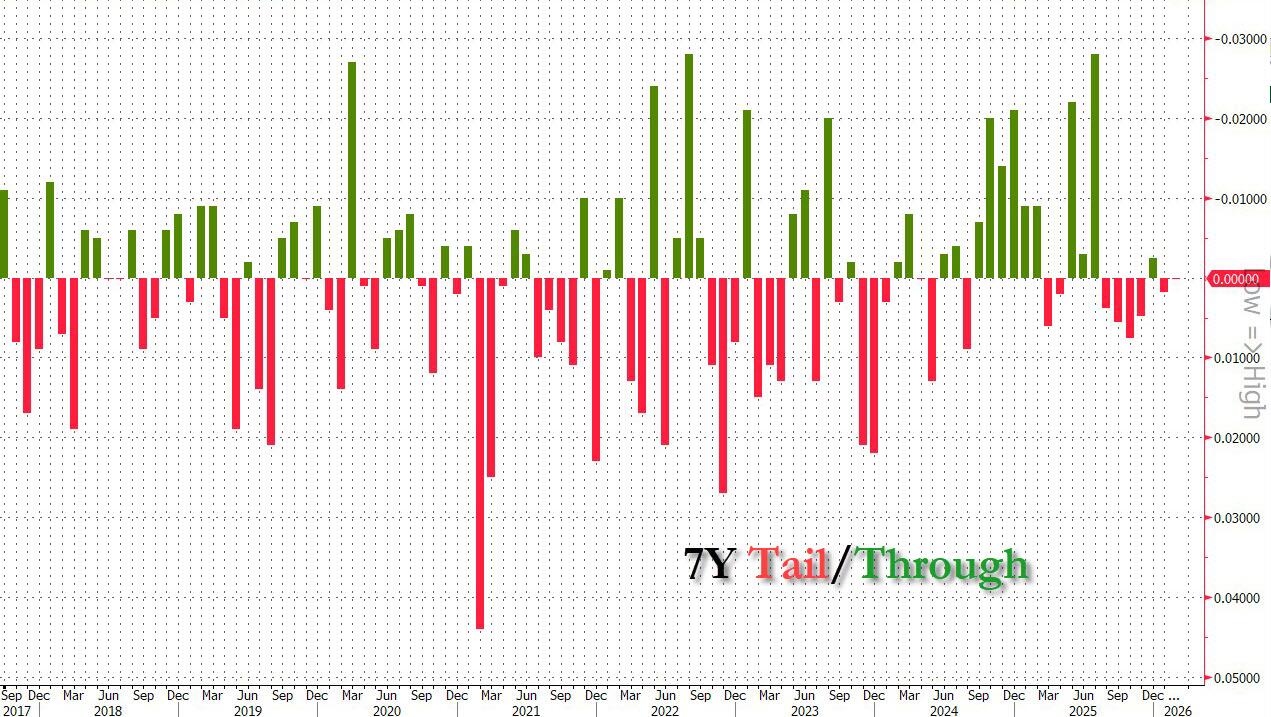
After yesterday’s mediocre 5Y auction, we had just one coupon sale left: 7Y paper at 1pm today. And with today’s wholesale post-Nvidia, risk-off move it was expected to be an easy sale, which is more or less what it was.
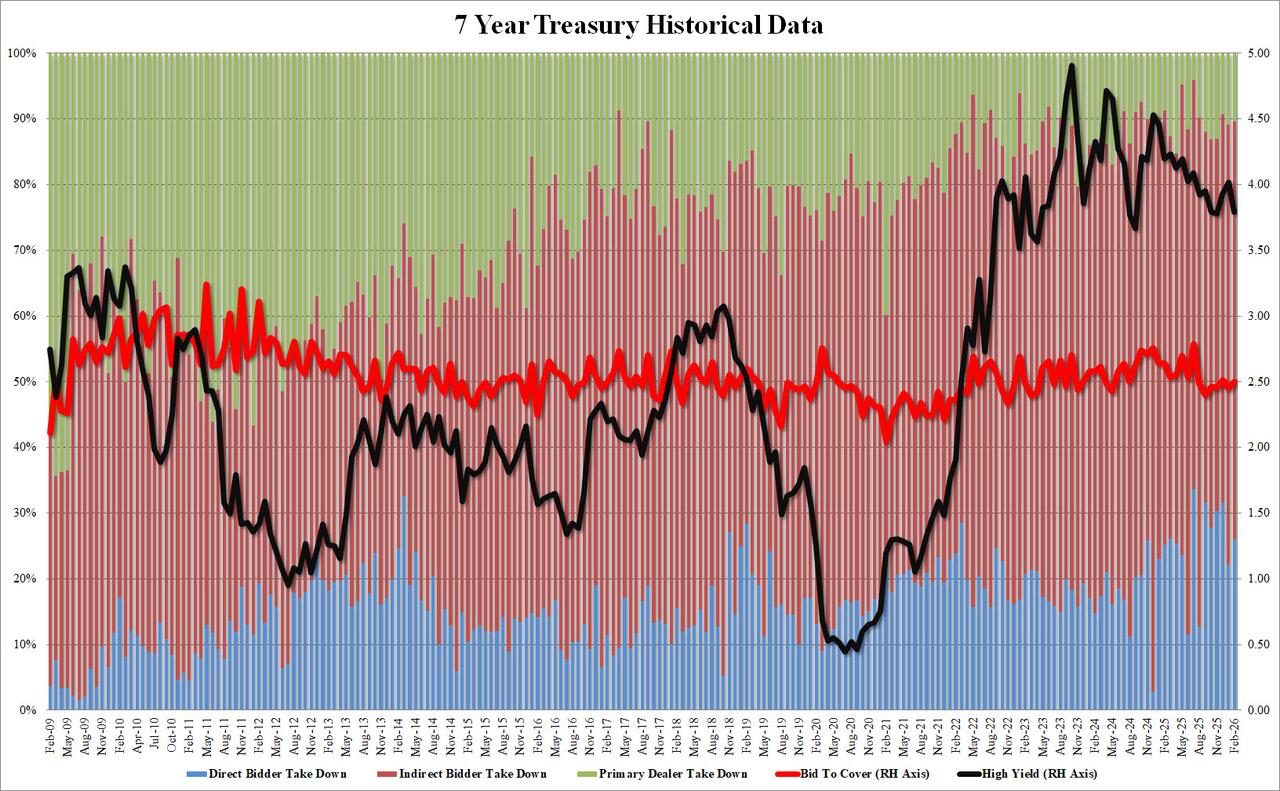
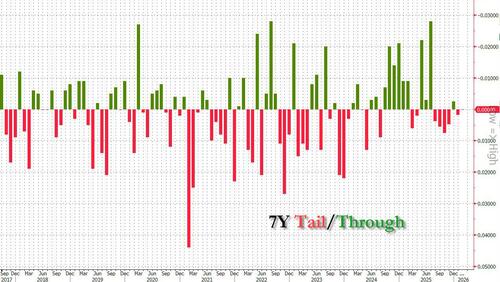
The Treasury sold $44 billion in 1 Year notes at a high yield of 3.790%, down sharply from 4.018% last month, and the lowest since November. The auction also priced on the screws with the When Issued, which was also at 3.790%. It followed 5 auctions in the past 6 months which tailed so relatively speaking, an improvement.
The bid to cover was 2.498, up from 2.454 and also over the recent average of 2.461.
The internals were a bit weaker, with Indirects awarded 63.6%, down from 66.9% in January but above the recent average of 62.6%. And with Directs taking down 26.91%, which was right in line with the six-auction average, Dealers were left with 10.4%, a small drop from last month’s 10.9%.
Overall, this was a solid, if hardly, stellar auction, with average foreign demand and mediocre metrics, which in itself is rather surprising since the money from the equity selling has to be going somewhere and bonds should be seeing more demand, if only in theory.
Tyler Durden
Thu, 02/26/2026 – 13:28
https://www.zerohedge.com/markets/average-7y-auction-stops-screws-amid-stock-rout
Travel Stocks In Focus After Cartel Chaos Erupts In Mexico
Travel Stocks In Focus After Cartel Chaos Erupts In Mexico
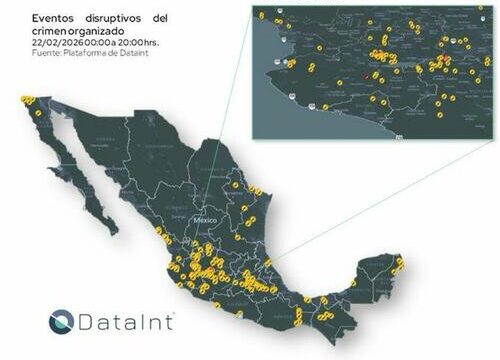
The U.S. State Department has lifted its “shelter in place” alerts for Americans after Mexican special forces, aided by U.S. intelligence, killed a top drug cartel boss, sparking cartel-related chaos across at least one key tourism town in the third-world country just south of the U.S. southern border.
Helicóptero del ejército mexicano operando ayer en Puerto Vallarta (Jalisco) contra el Cartel Jalisco Nueva Generación.
Instagram/Cornett pic.twitter.com/ADcgqnusdW
— Niporwifi © (@niporwifi) February 23, 2026
On Sunday, Mexican Army Special Forces carried out a decapitation strike against the Jalisco New Generation Cartel (CJNG), killing Nemesio “El Mencho” Oseguera Cervantes. The operation triggered dangerous cartel-related uprisings shortly after that, which extended into Monday and Tuesday, with 250 blockades recorded, many of them in Jalisco state.
Footage from Puerto Vallarta, the popular tourist town in Jalisco, was on the front cover of many major U.S. newspapers and sent a chill through the American travel industry that funnels tourists into the region. What Americans saw was cartel gunmen torching vehicles and buildings in an immediate response to the death of El Mencho, reinforcing what everyone has known all along: Mexico is a third-world hellhole.
Officials say at least 62 people died in the raid that caught “El Mencho,” longtime head of the Jalisco New Generation Cartel, and violence that followed. This @vantortech satellite image of yesterday shows thick smoke across Puerto Vallarta, Mexico. More in thread.… pic.twitter.com/Cztlz8IWGY
— Christiaan Triebert (@trbrtc) February 23, 2026
Assessing the impact on the US travel industry is Goldman analyst Lizzie Dove, who found the biggest effect has been on airlines, not cruises or hotels.
For airlines, most U.S. carriers have limited exposure to Mexico. For most, less than 3% of their flights in early 2026 are tied to the country. But if travelers stay cautious, some may shift their plans to safer destinations, including Florida, the Caribbean, and other parts of Latin America.
Focusing on the airline impact, here’s an excerpt from Dove’s note:
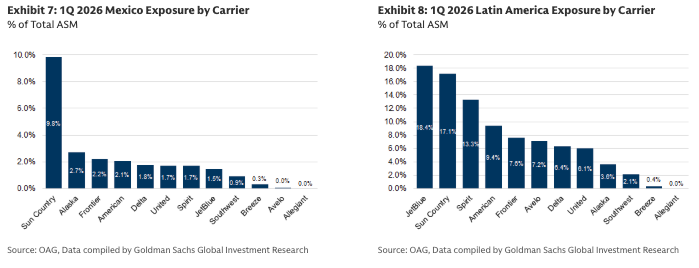
Bottom line: There were significant cancellations in select airports following the events in Mexico over the weekend; however, these cancellations were in-line with or lower than cancellations at airports impacted by Winter Storm Hernando. Separate from the cancellations over the last couple days, the larger question in our view is if there will be a lasting impact on demand. We take no view on the length of the unrest in Mexico. While not directly comparable, we note that other recent geopolitical events have had a short-lived impact, if any, on demand for travel. As such, while there could be an impact from recent events, we could see the dissipation of demand headwinds fairly quickly if the situation is resolved (Volaris, one of the largest airlines in Mexico, resumed normal operations Monday 2/23). In the short-term, Sun Country has the highest exposure to Mexico, with ~10% of 1Q 2026 capacity scheduled to fly to various airports in Mexico. We note that February and March in particular represent seasonally high demand months for North to South travel to warm weather destinations as various regions of the US have spring breaks over this period. It is possible that some trips planned for Mexico could instead be re-booked to a domestic warm weather destination or elsewhere in Latin America/the Caribbean if there are lingering concerns around Mexico over the next couple months.
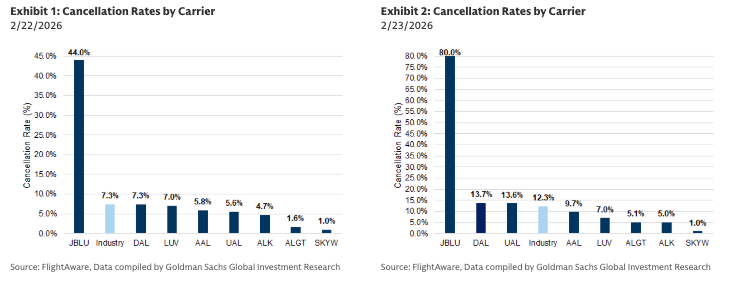
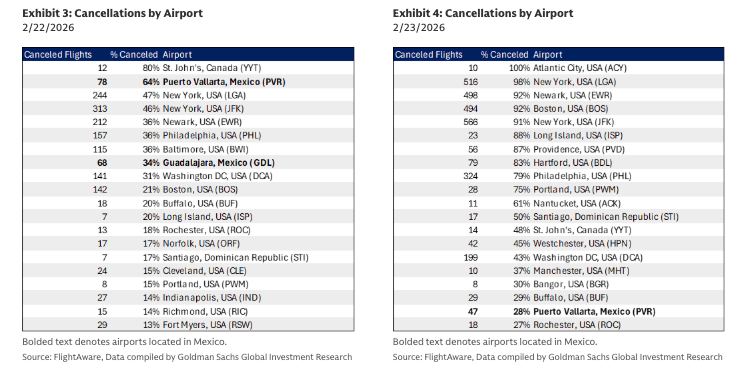
Cancellations were elevated on Sunday 2/22 and Monday 2/23, but largely driven by Winter Storm Hernando. On Sunday 2/22 and Monday 2/23, the industry saw an elevated level of cancellations, some of which were related to the ongoing unrest in Mexico, but with the majority driven by Winter Storm Hernando (see Exhibit 1 and Exhibit 2). For example, JetBlue had significantly higher cancellations than its peers on 2/22, with 44% of flights canceled vs. its competitors canceling less than 10% of flights, but JetBlue has <2% of capacity deployed to Mexico in 1Q 2026. Cancellations at select airports in Mexico were material, even from a global perspective, with Puerto Vallarta and Guadalajara among the top 20 airports with the highest cancellation rates across the world on Sunday 2/22 and Puerto Vallarata in the top 20 again on Monday 2/23 (see Exhibit 3 and Exhibit 4).
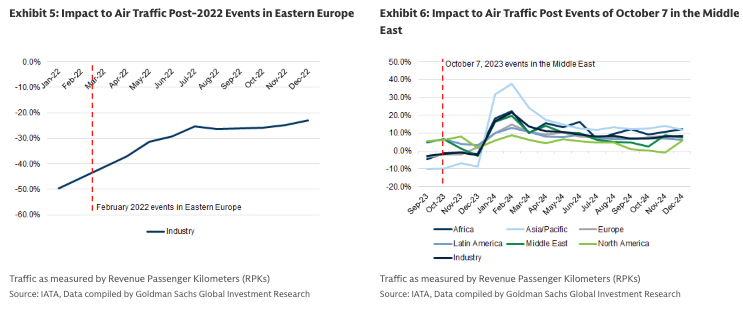
Recent geopolitical events showed short-lived impact to demand. While not directly comparable, if we look to two recent events we see potential for limited lasting impact to air travel demand. For example, while likely complicated by the broader post-pandemic recovery, following the events in Russia/Ukraine in February 2022, global air travel continued to recover (see Exhibit 5) and Delta had not seen any impact for travel to broader Europe as of April 2022. Following the events on October 7, 2023 in the Middle East, there was similarly a limited lasting impact to air travel (Exhibit 6; year-over-year global industry air traffic growth continued to improve following October 2023, and while there was a step-down in Middle Eastern air traffic growth in November and December 2023, January 2024 saw a marked step-up in traffic growth. We acknowledge each event may be different, and look for evidence of whether any potential demand headwind will similarly dissipate fairly quickly.
Mexico exposure is <3% of 1Q 2026 capacity for most US Airlines, except Sun Country. Looking across the US Airlines with greater than 0.1% domestic market share, Sun Country (Not Rated), Alaska (Buy), Frontier (Not Covered), and American (Sell) have the most scheduled capacity exposure to Mexico directly (see Exhibit 7). We do not currently expect a broader impact across Latin America and Caribbean demand, and believe some Mexico trips could be re-booked to other Latin American/Caribbean destinations if there are lingering consumer concerns around Mexico travel over the next couple months. Of the US Airlines with greater than 0.1% market share, JetBlue (Sell), Sun Country (Not Rated), and Spirit (Not Covered) have the most 1Q 2026 capacity scheduled to Latin America (see Exhibit 8). If there is demand to re-book Mexico vacations, domestic warm weather destinations could benefit.
Dove’s view on the impact of hotels appears limited for now, but if travel warnings last, demand could weaken over time. Only a small share of the rooms at major hotel companies are in the affected Mexican states. Hyatt has the highest exposure, while Choice has very little. Hyatt could also soften the blow by moving travelers to its other all-inclusive resorts outside of Mexico.
As for cruises, she said the impact is also minor so far. Only a few Puerto Vallarta port stops have been canceled. Cruise lines do have some Mexico exposure, but many itineraries include multiple destinations, which helps reduce the risk if one Mexican port becomes problematic.
Related:
Cartel Kingpin “El Mencho” Dead. Here’s A Shortlist Of Possible Successors
Mexico’s Cartel Decapitation Strike Fallout: “Not The End, Just The Beginning”
The full travel-impact note is available to Professional Subscribers on our new Marketdesk.ai portal.
Tyler Durden
Thu, 02/26/2026 – 13:20
https://www.zerohedge.com/markets/travel-stocks-focus-after-cartel-chaos-erupts-mexico

Brush fire damages 10 acres of Forest Preserve near Tinley Park
Tinley Park firefighters responded to a brush fire about noon Wednesday on the 6100 block of Oak Forest Avenue, in the Cook County Forest Preserve, said Kristopher Dunn, deputy fire chief administrator.
The fire was under control by about 1:30 p.m., Dunn said. The Forest Preserve and eight other nearby fire departments also responded. Fire damage left fallen trees and leaves, he said.
Stacina Stagner, communications manager at Forest Preserves of Cook County, said her team initially estimated the fire affected five acres of the forest preserves, but after a more thorough check Thursday morning they said it affected 10.3 acres.
She said the fire did not affect any official trails.
The cause of the fire was undetermined as of Thursday morning, butvStagner said area conditions were susceptible to fire Wednesday morning, with a lot of dry fuel on the ground, such as leaf litter and other brush.
Dunn said the Tinley Park area experienced critical fire weather conditions Tuesday that carried into Wednesday.
He advised caution for residents when discarding cigarettes or putting out fires. He said most brush fires are preventable and caused by careless burning.
“Due to dry conditions and forecasted winds, people should definitely use extreme caution with any outdoor burning activities,” Dunn said.
The area has experienced other winter brush fires in recent years. In January 2025, a fire burned for two hours and consumed more than 30 acres of Cook County Forest Preserve. Fifteen fire departments responded to that fire at Bobolink Meadow, near Central Avenue and Flossmoor Road.
Stagner said the Forest Preserves plans to begin prescribed burns, which she said are usually planned for the spring and fall seasons and are an ecological tool to help mitigate wildfires.
These prescribed fires help control invasive shrubs and trees while promoting germination in native plants that have adapted to benefit from fire, according to the Forest Preserves website. Without fire, buckthorn, honeysuckle and other aggressive nonnative species will spread across habitats and shade out native plants, the website said.
Stagner said the spring prescribed burns help warm the ground so wildflowers and different habitats can have a jump start on the growth season.
She said these burns are highly scientific and consider all types of conditions before burning, such as moisture levels and wind direction. She said the preserve prohibits people from trying their own prescribed burns.
More information about the prescribed burns is available at fpdcc.com/nature/prescribed-burning.
awright@chicagotribune.com
Propuesta para prohibir acceso de menores de 15 años a redes sociales genera debate en Ecuador
Por GABRIELA MOLINA
QUITO (AP) — En medio de reparos legales y sociales, la Asamblea de Ecuador comenzó a analizar una prohibición para que menores de 15 años accedan a las redes sociales a través de una reforma legal que expertos consideran que podría restringir sus derechos.
La reforma plantea incluir la prohibición en un artículo del Código de la Niñez y Adolescencia con el fin de reducir los riesgos por “la exposición prematura a contenidos inapropiados y situaciones de ciberacoso”. Agrega que en el país estas denuncias subieron de 22 en 2014 a 124 en 2024 y afectan la salud mental del 53% de esa población.
La propuesta, que es analizada en la Comisión de la Niñez y debería superar dos debates para ser aprobada en el Legislativo, busca que Ecuador se sume a la tendencia de países como Australia que prohíben el acceso a las redes a menores de 16 años, mientras en otras naciones europeas y de la región, como en Colombia, está en análisis.
La asambleísta oficialista Katherine Pacheco, promotora de la iniciativa, aclaró que busca disminuir los riesgos digitales como el ciberacoso, el hackeo, la suplantación de identidad y el abuso sexual en línea (grooming). Plantea, además, sancionar el eventual incumplimiento de las empresas proveedoras de plataformas digitales con multas de hasta el 5% de su facturación anual local.
Sin embargo, la propuesta acumula reparos desde varios sectores.
Freddy Viejo, presidente del Instituto de Derechos Humanos, señaló ante la Comisión que “una política pública orientada a la protección no puede derivar en una limitación indebida a derechos fundamentales como a la información, participación, libertad de expresión y desarrollo progresivo de competencias digitales de los menores”.
Liliana Jayo, psicóloga y docente de la Universidad Católica, lamentó que el proyecto ponga “la carga restrictiva sobre los más vulnerables” en lugar de fomentar la corresponsabilidad de la familia, la sociedad y las empresas proveedoras.
Jayo advirtió a The Associated Press que la prohibición generará un efecto “contraproducente” en los menores porque “ante la prohibición surge el deseo”. Además, el entorno digital es “una puerta de aprendizaje” y de conexión entre adolescentes, una etapa en la que la relación de pertenencia es fundamental y prohibir el acceso causaría “un serio impacto emocional”.
Para Sybel Martínez, directora de Rescate Escolar, una eventual “prohibición puede enviar un mensaje político fuerte, pero si no se resuelve la efectividad, la reforma puede quedarse en el papel”, porque la propuesta no señala cómo las empresas proveedoras pueden evitar el acceso, advirtió.
Martínez apuntó a soluciones integrales como educación digital, protocolos escolares y participación adolescente, entre otras.
Sebastián Pazmiño, de 15 años y que accedió a las redes sociales hace un año bajo la vigilancia de sus padres, admitió que hay riesgos porque las redes “no muestran al mundo como es, muestran cosas del mundo que no son apropiadas para esa edad”. Aun así, “no creo que deben prohibirlas totalmente sino verificar la edad; si tienes 14 años, que no te aparezcan noticias de violencia o acoso sexual”, dijo a AP.
Council hikes fees, decreases times for Naperville Municipal Center meeting rooms
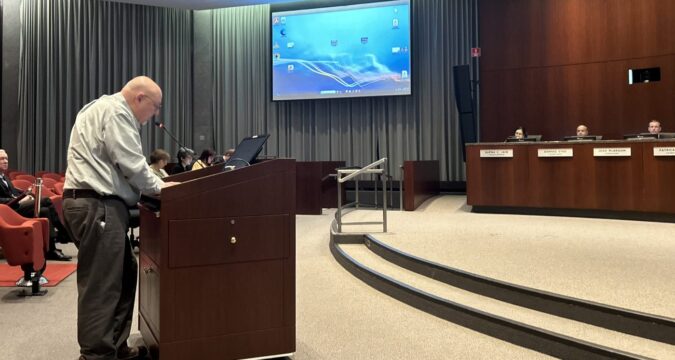
New times and reservation fees are being set for community groups and nongovernmental organizations that want to use Naperville Municipal Center meeting rooms.
In December, city staff requested an end to meeting room reservations for outside organizations due to concerns over security, a decrease in room bookings, and billing and reservation system challenges.
Naperville City Council members rejected the request, arguing that the proposal made the center feel less welcoming to the Naperville community.
Following the discussion, staff returned last week with a suggestion for new availability times and fees, limiting meeting room use by outside organizations to Tuesday, Wednesday and Thursday evenings and increasing room rental fees from $30 and $60 to $90 and $150, better reflecting the administrative, billing and maintenance costs involved.
Outside organizations also will be allowed to reserve meeting rooms during regular city business hours. Security will be increased to address concerns related to oversight, building operations and emergency responses, a change expected to cost about $42,000 more per year, according to a city staff report.
Still, not everyone was fully on board with the new proposal when it was discussed last week.
“Should you approve staff’s newest proposal though there’s really no way of telling just what the outcome will be till we have lived with it for at least a few months?” said John Brubaker, a Naperville resident and member of the Lisle Township Democratic Organization. “I still maintain that this is a philosophical decision more than an economic one,”
Brubaker’s organization is one of the outside groups that frequently uses the municipal center for meetings.
“It would be a shame to waste this beautiful public facility created for and by taxpayers,” Brubaker said. “With the latest proposal, you will still reduce the meeting room capacity in Naperville, and will correspondingly lose some users due to a combination of, well, the three-fold increase in fees, limitations on available evenings and increased competition for time slots during those evenings.”
Some council members agreed with Brubaker’s assessment.
“This is the public’s building. I think it’s important that the public is able to meet here,” said Councilwoman Mary Gibson, who proposed adding Monday evenings back in as an option for outside groups.
Multiple council members also noted that the increased fees may deter some groups from reserving meeting rooms. Previously, the city has not charged for administrative and billing costs associated with meeting room use, only for the expense related to setup and cleaning.
“I’m not supportive of us not charging what it costs us to turn the rooms and provide the setup and takedown,” Mayor Scott Wehrli. The proposed fees may not reflect the expense related to maintaining common areas such as restrooms.
“I think adjusting to at least cover costs for the specific meeting rooms so those can be utilized as efficiently as they possibly can is something I’d be absolutely supportive of,” Wehrli said.
To compromise, the council agreed with increasing reservation fees to reflect present day costs of setting up and cleaning meeting rooms for outside organizations, changing the new reservation fees to $60 and $100.
“I’m comfortable increasing to cover the cost of cleaning,” Gibson said. “As we’ve discussed, there’s technological solutions for scheduling and administrative costs. I’d like to stay consistent and have the fees cover the cleaning cost.”
Staff will update to the council in six months on how the new rental structure is working.
cstein@chicagotribune.com

Judge rejects request to block Trump White House from building its $400 million ballroom project
WASHINGTON — A federal judge on Thursday rejected a preservationist group’s request to block the Trump administration from continuing construction of a $400 million ballroom where it demolished the East Wing of the White House.
U.S. District Judge Richard Leon ruled that The National Trust for Historic Preservation was unlikely to succeed on the merits of its bid to temporarily halt President Donald Trump’s project.
Leon said the group has a better chance of success if it amended its lawsuit.
“Unfortunately, because both sides initially focused on the President’s constitutional authority to destruct and construct the East Wing of the White House, Plaintiff didn’t bring the necessary cause of action to test the statutory authority the President claims is the basis to do this construction project without the blessing of Congress and with private funds,” he wrote.
The privately funded group sued for an order pausing the ballroom project until it undergoes multiple independent reviews and wins approval from Congress.
The White House announced the ballroom project over the summer. By late October, the Republican president had demolished the East Wing to make way for a ballroom that he said will fit 999 people. The White House said private donations, including from Trump himself, would pay for the planned construction of a 90,000-square-foot ballroom.
Trump proceeded with the project before seeking input from a pair of federal review panels, the National Capital Planning Commission and the Commission of Fine Arts. Trump, a Republican, has stocked both commission with allies.
https://www.chicagotribune.com/2026/02/26/trump-white-house-ballroom/