Category: News
“Gold For Me Is A Savings Product”: Rick Rule On Debt, Oil Cycles, & Uranium’s Political Reversal
“Gold For Me Is A Savings Product”: Rick Rule On Debt, Oil Cycles, & Uranium’s Political Reversal
Last night’s discussion featuring Rick Rule, Bill Fleckenstein, and Erik Townsend covered the macro landscape from hard assets to energy markets and nuclear policy.
Below are highlights from Rule’s remarks. (We recommend readers listen to Fleckenstein and Townsend’s full comments in the complete debate, linked at the bottom.)
Gold: “I Have No Interest In Selling”
Rule made clear he views gold not as a trade, but as monetary insurance.
Nominal yields on Treasuries offer little protection if purchasing power continues to erode.
“Owning the U.S. 10-year Treasury getting paid 4.1%, 4.2% in a currency where I think the real deterioration of the purchasing power is limping along to some number more like eight doesn’t make me feel comfortable.”
Rule pointed to structural fiscal imbalances, debt, deficits, and what he estimates at roughly $120 trillion in unfunded entitlement liabilities as the core risk. Policymakers can either default in real terms or inflate away the burden.
“I think they take door two.”
Until he sees a credible political resolution to debt and entitlement obligations and what he considers genuinely positive real yields on fiat savings products, Rule said he has “no interest in selling” his gold.
“Gold for me is a savings product.”
Rick Rule: “Let me tell you what would cause me to sell my gold…” pic.twitter.com/pdNgNQ62uk
— ZeroHedge Debates (@zerohedgeDebate) February 26, 2026
Oil: Short-Term Oversupply, Long-Term Capital Shortage
On oil, Rule was nuanced.
“I believe in the very, very near term that oil is ahead of itself,” he said, citing geopolitical headlines and “news traders in the market.” For the next year to 18 months, he sees a “plurality of supply over demand,” reflecting a softer global economy.
But beneath that near-term slack, he sees a longer-term issue: underinvestment.
Rule estimates global underfunding of sustaining capital in the oil industry exceeds “a billion dollars a day.” In U.S. shale, where “75, 80% of the net present value of the well is 18 months,” reduced reinvestment eventually constrains output.
Ccapital responses are delayed but cyclical. The post-COVID rebound saw oil shoot from $20 oil to $90 after investment froze. Rule suggested that if today’s capital discipline persists, the industry could face a production problem by 2028–2029.
While “nowhere near as bullish” as he was previously, he added: “I still feel quite good about the sector for the five-year time frame.”
— ZeroHedge Debates (@zerohedgeDebate) February 26, 2026
Uranium: From “Wanted Poster” To Subsidies
“Five years ago in the uranium industry, I expected to see a picture of myself in a post office wall with a caption wanted. Now the same morons want to subsidize me.”
Tthe key development is not futuristic reactor technology but politics. Even conventional reactor builds, if pursued at scale, can lower costs through repetition, as demonstrated by China’s serial construction model.
While Rule cautioned that demand growth 10–15 years out does little for present net asset value calculations, he emphasized that the policy turn itself is meaningful. It is the primary catalyst and one that will likely lead to a faster pace of reactor construction… which should reward uranium mining investors or anyone that uses electricity.
“Reliable, abundant, baseload power that doesn’t generate carbon… talk about the well-being of humankind.”
— ZeroHedge Debates (@zerohedgeDebate) February 26, 2026
For the full exchange, including commentary from Bill Fleckenstein and Erik Townsend, listen to the complete debate below.
— zerohedge (@zerohedge) February 25, 2026
Tyler Durden
Thu, 02/26/2026 – 11:20
Risk as infrastructure: Brian Ferdinand shares a systems-based approach to stability
Content oversight provided by Studio 1847
As business environments grow more complex and less predictable, the role of risk management is evolving. Instead of viewing risk as a compliance function or a defensive layer, Brian Ferdinand encourages leaders to treat risk as part of the foundation on which organizations are built. In his view, stability is not the result of favorable conditions. It is the result of deliberate structural design.
Ferdinand shares that many companies respond to risk only after disruption occurs. While reactive measures may address immediate threats, they often fail to resolve deeper structural vulnerabilities. A systems-based approach, he explains, embeds risk awareness directly into decision making, capital allocation and operational planning. This creates consistency in leadership actions, particularly during periods of stress.
He believes that when risk is treated as infrastructure, it shapes how organizations think about growth. Expansion is evaluated alongside exposure. Strategic initiatives are assessed not only for upside potential but also for their impact on resilience. Ferdinand notes that companies that understand their limits tend to outperform those that pursue scale without examining fragility.
According to Ferdinand, clarity of exposure is central to this philosophy. Leaders must map operational dependencies, financial commitments and technological reliance before they commit to new initiatives. This process strengthens preparedness and reduces the need for abrupt corrections later. Organizations that understand where they are vulnerable can adjust early, protecting both capital and credibility.
Ferdinand also emphasizes that risk should not be isolated within a single department. When responsibility is centralized, awareness becomes fragmented. Instead, he suggests integrating risk evaluation into leadership culture. When executives consistently ask how decisions affect stability, the organization develops a shared discipline that supports long-term performance.
Technology plays a significant role in this framework. Data systems can provide real-time insights into operational strain and market shifts. However, Ferdinand cautions that information alone does not create security. Structured interpretation and governance are essential. Technology must operate within clear decision guidelines to be effective.
Adaptability is another key element of treating risk as infrastructure. Ferdinand shares that organizations should avoid building strategies dependent on a single outcome or forecast. A resilient structure is capable of functioning across multiple scenarios. This flexibility allows leaders to respond to change without abandoning their strategic direction.
Importantly, he distinguishes stability from rigidity. A stable organization can absorb disruption and continue operating with confidence. It does not resist change, but it manages change without losing coherence. Companies that prioritize speed over structure may grow quickly, yet they often struggle when external conditions shift.
Ferdinand believes that institutional confidence is strengthened when stakeholders observe disciplined systems guiding leadership decisions. Investors and partners tend to favor organizations that demonstrate measured expansion and thoughtful risk assessment. Over time, this consistency builds credibility that extends beyond individual market cycles.
In Ferdinand’s perspective, risk is not a constraint on ambition. It is a structural element that enables sustainable growth. By designing organizations where risk awareness is embedded into daily operations, leaders create enterprises capable of pursuing opportunity while maintaining stability, even when uncertainty remains constant.

A long life of service to the Beverly Shore Volunteer Fire Department ends
Life revolved around the Beverly Shores firehouse for Andrew Himan and his family, where he spent 54 years as a volunteer firefighter and 42 years as the chief.
The end of Himan’s watchful service to his community came on Saturday, Feb. 21. Himan, 76, a Beverly Shores area resident, died as a result of brain cancer, said his son Andrew “Andy” Himan Jr.
Himan is the longest serving fire chief in Porter County history, and if he doesn’t hold the Indiana state record for longevity as chief, he’s close to it, said his son, Andy, who was his father’s assistant chief and is now the acting chief for the Beverly Shores Volunteer Fire Department.
Up until two weeks ago, Himan was still conducting business as chief from home via his cellphone and email. He went out on his last fire call on Oct. 9 and attended his last meeting of the Beverly Shores Volunteer Fire Department in December, his son said.
“His commitment to the town, the department, the guys, was on the front burner,” Andy Himan said.
A native of Fond du Lac, Wisconsin, Himan joined the U.S. Army for two years of active duty after his graduation from Wheeling High School in Illinois.
Himan’s main career was as a structural steel draftsman. After he graduated from the Milwaukee School of Engineering, Himan was hired by American Bridge in Gary and rented a house with a school friend in Beverly Shores.
Beverly Shores was now his home and the fire service became his passion when he joined the town’s volunteer fire department 54 years ago. After he retired from MC Detailers as a structural steel draftsman, Himan spent about 15 years as a full-time firefighter for what is now the Cleveland-Cliffs Inc. steelworks in Burns Harbor.
“He never thought of himself. He would go into crazy situations,” Andy said about his father.
There was an occasion, back in the early 1980s, when he watched his father run through a blizzard and waist-deep snow drifts to the burning house of a neighbor.
Conditions were treacherous and the roads were impassable. Andy said his father couldn’t do much because the house was fully engulfed and he couldn’t get the fire equipment there. Nevertheless, he risked frostbite helping a neighbor any way he could.
Then there was the time when his father responded to a call and was met by the home’s owner, armed with a machete and intent on burning down his own house. Andrew Himan, at one point, also served with the Beverly Shores Police Department.
When Andrew Himan married Dianna Hughart 51 years ago, their wedding reception, naturally, was held at the Beverly Shores Fire Station.
All three of their sons, Andy, Jeremy and Stephen, spent time around their father at the fire station and joined the Beverly Shores volunteer fire force when they were still teenagers.
And all of Andrew’s three sons now have full-time careers as firefighters. Andy is a captain in the Portage Fire Department, where Jeremy serves as the deputy chief, and Stephen is a lieutenant with the Chesterton Fire Department.
Andrew Himan III, Andy’s son, joined the family business at age 17 with the Beverly Shores Volunteer Fire Department. He now also works as a full-time firefighter for the Portage Fire Department. where his father and uncle are supervisors.
Andy Himan said as the family processes the loss of their father and relives the many stories, they “truly realize how great of a man he was.”
“Growing up in the fire station and seeing it every day we grew up, not even really noticing what it was that he was doing. It was just Dad going on another call,” Andy Himan said. “His loss will truly be felt for years to come, and I definitely feel his presence every time I walk into the station.”
Jay Craig Jr. is Porter’s fire chief and he grew up much like the Himan boys, hanging around the fire station. His father, Lewis Craig, was the chief of the Porter Volunteer Fire Department for 27 years before he died in 2018.
“He reminds me a lot of my dad,” Craig said.
As the Porter chief, Craig said he would frequently cross paths with Himan, especially on calls to the Lake Michigan beachfront.
“He was very passionate about the fire service, always wanting to learn more,” Craig said.
Back before the education of firefighters became more organized, Himan was a founder and board member for the Duneland Fire School that periodically offered training sessions for local firefighters. He was also an original member of the Porter County Fire Association.
In addition to his wife, three sons and a grandson, Himan is also survived by two sisters, five other grandchildren and two great-grandchildren.
Visitation will be held from 4 to 8 p.m. Friday at the Edmonds & Evans Funeral Home, 517 Broadway, in Chesterton. The funeral ceremony will be held at 10 a.m. Saturday at the Chesterton funeral home.
After the funeral service, there will be a processional to the Beverly Shores Fire Station for Himan’s ceremonial last call.
Jim Woods is a freelance reporter for the Post-Tribune.
https://www.chicagotribune.com/2026/02/26/life-of-service-to-beverly-shore-fire-department-ends/
Dos sudafricanos murieron combatiendo por Rusia en Ucrania
CIUDAD DEL CABO, Sudáfrica (AP) — Al menos dos sudafricanos han muerto combatiendo para Rusia en la guerra en Ucrania después de haber sido engañados para viajar allí bajo falsas promesas, informó el ministro de Relaciones Exteriores de Sudáfrica el jueves.
Es la primera vez que las autoridades sudafricanas confirman que algunos de sus ciudadanos fueron atraídos a Rusia con falsas promesas de empleo u oportunidades de capacitación y murieron en la guerra.
El ministro de Relaciones Exteriores, Ronald Lamola, no identificó a las dos personas fallecidas ni precisó cuándo murieron.
El anuncio se produjo mientras visitaba a las familias de 11 sudafricanos que regresaron el miércoles después de que presuntamente fueron reclutados mediante un plan que les prometía capacitación en seguridad en Rusia y terminaron involucrados en el conflicto en Ucrania.
La policía investiga a Duduzile Zuma-Sambudla, hija del expresidente sudafricano Jacob Zuma, por su presunta participación en los desfalcos. Ella niega haber cometido irregularidades, pero renunció el año pasado como legisladora debido a las acusaciones.
Lamola señaló que las dos personas que murieron no estaban vinculadas con el grupo que presuntamente fue reclutado por Zuma-Sambudla.
Ucrania ha dicho que cree que más de 1.700 africanos han sido reclutados para combatir por Rusia.
___________________________________
Esta historia fue traducida del inglés por un editor de AP con ayuda de una herramienta de inteligencia artificial generativa.

Las empresas de IA Suno y Udio enfadaron a la industria musical. Ahora quieren unirse a ella
Por MATT O’BRIEN y RODRIQUE NGOWI
CAMBRIDGE, Massachusetts, EE.UU. (AP) — El director ejecutivo de Suno, Mikey Shulman, acerca una silla al escritorio del estudio de grabación, donde un científico investigador de su empresa de inteligencia artificial está creando una nueva canción.
Su flauta suena prometedora.
La percusión necesita trabajo.
Ninguno de los dos está tocando un instrumento. Teclean algunas palabras descriptivas —afrobeat, flauta, tambores, 90 pulsaciones por minuto— y aparece un ritmo contagioso que anima el edificio de oficinas del siglo XIX donde Suno tiene su sede en Cambridge, Massachusetts. Activan algunas herramientas de edición para perfeccionar la nueva pista.
Al igual que las primeras experiencias con ChatGPT o con generadores de imágenes a partir de texto mediante IA, intentar crear una canción generada por IA en plataformas como Suno o su rival, Udio, puede parecer un poco mágico. No se necesitan habilidades musicales, práctica ni un manantial emocional para conjurar una nueva melodía inspirada en casi cualquiera de las tradiciones musicales del mundo.
Pero el proceso de entrenar la IA con músicos queridos del pasado y del presente para producir aproximaciones sintéticas de su trabajo ha enfurecido a la industria musical y ha puesto gran parte de su poder legal en contra de las dos empresas emergentes.
Ahora, después de que sus usuarios hayan inundado internet con millones de canciones generadas por IA, algunas de las cuales han terminado en servicios de streaming como Spotify, los líderes de Suno y de Udio, con sede en Nueva York, intentan negociar con discográficas para asegurarse un lugar en una industria que los rechazó.
“Siempre hemos pensado que trabajar junto con la industria musical en lugar de contra la industria musical es la única manera de que esto funcione”, manifestó Shulman, quien cofundó Suno en 2022. “La música es tan importante culturalmente que no tiene sentido tener un mundo musical con IA y otro sin IA”.
Sony Music, Universal Music y Warner Records demandaron a las dos startups por infracción de derechos de autor en 2024, al alegar que estaban explotando las obras grabadas de sus artistas.
Desde entonces, ambas han intentado hacer las paces con la industria. Suno, valorada ahora en 2.450 millones de dólares, alcanzó el año pasado un acuerdo con Warner, y Udio ha firmado acuerdos de licencia con Warner, Universal y el sello independiente Merlin. Solo una gran discográfica, Sony, no ha llegado a un acuerdo con ninguna de las dos empresas mientras las demandas avanzan en tribunales federales de Boston y Nueva York. Suno también enfrenta desafíos legales en Europa presentados por grupos que representan a creadores musicales.
El primero de los acuerdos, entre Udio y Universal, provocó un éxodo de usuarios frustrados de Udio a quienes se les impidió descargar sus propias pistas generadas por IA. Pero el director ejecutivo de Udio, Andrew Sanchez, dijo que se siente optimista sobre lo que traerá el futuro, a medida que su empresa adapta su modelo de negocio para permitir que los fans de artistas dispuestos a ello usen la IA para jugar con sus obras y, potencialmente, modificarlas.
“Tener una relación estrecha con la industria musical es fundamental para nosotros”, comentó Sanchez en una entrevista. “Los usuarios realmente quieren tener un vínculo con sus artistas favoritos. Quieren tener un vínculo con sus canciones favoritas”.
Muchos músicos profesionales se muestran escépticos. La cantautora Tift Merritt, copresidenta de la Artists Rights Alliance, ayudó recientemente a organizar una campaña de artistas titulada “Stealing Isn’t Innovation” (Robar no es innovación) —entre ellos Cyndi Lauper y Bonnie Raitt— para instar a las empresas de IA a buscar acuerdos de licencia y alianzas, en lugar de construir plataformas sin tener en cuenta la ley de derechos de autor.
“La economía de la música con IA se construye totalmente sobre la propiedad intelectual, a nivel global, de músicos de todas partes, sin transparencia, consentimiento ni pago. Así que sé que ellos valoran su propiedad intelectual, pero la nuestra ha sido consumida para reemplazarnos”, expresó Merritt en una entrevista en Raleigh, Carolina del Norte.
Shulman sostiene que la tecnología “evoluciona muy a menudo más rápido que la ley”, y que su empresa intenta ser cuidadosa para “no infringir la ley”, pero también “ofrecer productos que el mundo realmente quiere”.
El director ejecutivo de Suno no cree realmente que “a la gente no le guste” hacer música
Cuando la industria musical confrontó por primera vez a Suno por presunta infracción de derechos de autor, la respuesta antagonista de la empresa alejó a profesionales como Merritt.
Como símbolo de esa brecha, el año pasado circuló un clip en el que se citaba a Shulman diciendo: “realmente no es disfrutable” hacer música la mayor parte del tiempo. Shulman empezó a aprender piano a los 4 años, pero después lo dejó. A los 12 retomó la música con el bajo, tocando en bandas de rock en la secundaria y en la universidad. Dijo que esa experiencia le dio algunos de los mejores momentos de su vida.
“Necesitas volverte realmente bueno con un instrumento o realmente bueno con un software de producción”, dijo Shulman en el pódcast “The Twenty Minute VC”. “Creo que la mayoría de la gente no disfruta la mayor parte del tiempo que pasa haciendo música”.
“Está claro que me hubiera gustado haber usado otras palabras”, le dijo Shulman a AP. El contexto, añadió, era que “producir música perfecta requiere muchas repeticiones y no todos esos minutos son las partes más disfrutables de hacer música. En general, obviamente, la música es increíble. Toco música todos los días por diversión”.
El director ejecutivo de Udio presenta a su empresa como la alternativa amistosa
Sanchez, el director ejecutivo de Udio, también quiere que la gente sepa que le encanta hacer música. Es un tenor amante de la ópera que ha cantado en coros y creció entonando a Luciano Pavarotti en la casa de su familia en Buffalo, Nueva York.
Fundada en 2023 por un grupo que incluía a varios investigadores de IA de Google, la compañía emplea ahora a unas 25 personas. Tiene menos usuarios y recaudó menos capital que Suno, lo que reduce su margen de maniobra en las negociaciones con las discográficas.
Pero, al igual que la empresa de transporte por aplicación Lyft, que se presentó como la alternativa amistosa a las tácticas de expansión agresiva de Uber hace más de una década, Udio asume su condición de desvalido.
“Muchas empresas tecnológicas cultivan activamente esta idea de ‘soy un cruzado de la tecnología’ y eso es parte de su identidad”, señaló Sanchez. “Eso aleja a la gente creativa y yo me opongo de manera tajante a eso”.
Sanchez dijo que sabe que no todos los artistas van a adoptar la IA, pero espera que quienes salgan de la sala después de hablar con él se den cuenta de que no está imponiendo una especie de “bravuconería de IA”.
“Si tomaras lo que estamos haciendo y fingieras que la palabra IA no formaba parte de ello, la gente diría: ‘Dios mío. Esto es genial’”.
Algunos ven potencial en la creación musical asistida por IA
En la oficina del sótano de su casa en Philadelphia, Mississippi, Christopher “Topher” Townsend es una banda de un solo hombre: crea y comercializa música góspel que encabeza listas de Billboard —sin cantar él mismo ninguna de las canciones— y lo hace en tiempo récord.
El rapero, cuyas letras reflejan su conservadurismo político, descargó Suno en octubre y, en cuestión de días, creó a Solomon Ray, un cantante ficticio que Townsend describe como una extensión de sí mismo.
Townsend usa ChatGPT para escribir letras, Suno para generar canciones y otras herramientas de IA para crear portadas y videos promocionales bajo el nombre de Solomon Ray.
“Puedo entender por qué los artistas tendrían miedo”, dijo Townsend. “(Solomon Ray) tiene una voz impecable. No se enferma. Ya sabes, no tiene que pedir licencia, no se lesiona y puede trabajar más rápido de lo que yo puedo trabajar”.
Quien intenta disipar ese temor entre artistas aspirantes es Jonathan Wyner, profesor de producción e ingeniería musical en el Berklee College of Music en Boston, que ve la IA generativa como una herramienta más.
“Para el músico creativo, la IA representa tanto enormes beneficios potenciales en términos de agilizar las cosas y, francamente, hacer posibles tipos de creación musical que antes no eran posibles, como hacerla más accesible para la gente que quiere hacer música”, explicó.
Esa visión sigue siendo difícil de vender para artistas que sienten que su trabajo ya ha sido explotado. Merritt dice que le preocupa especialmente que las discográficas hagan acuerdos con empresas de IA que dejen fuera a los artistas independientes. Una carta abierta que ella firmó junto con otros esta semana afirma que “muchos en nuestra comunidad están adoptando la IA responsable como una herramienta de creación”, pero apunta a Suno como un negocio de “golpear y llevarse el botín” que los artistas deberían evitar.
“Los artistas necesitan conocer la diferencia: no todas las plataformas de IA son iguales, y Suno, que está siendo demandada por infracción de derechos de autor, no es una plataforma en la que los artistas deban confiar”, dice la carta firmada por Merritt y otras seis personas.
—————-
O’Brien informó desde Cambridge, Massachusetts, y Nueva York. Ngowi informó desde Cambridge y Somerville, Massachusetts. Los periodistas de AP Sophie Bates, en Filadelfia, Mississippi, y Allen G. Breed, en Raleigh, Carolina del Norte, contribuyeron a este despacho.

US Demands Iran Dismantle Its 3 Main Nuclear Sites In Hours-Long Talks
US Demands Iran Dismantle Its 3 Main Nuclear Sites In Hours-Long Talks
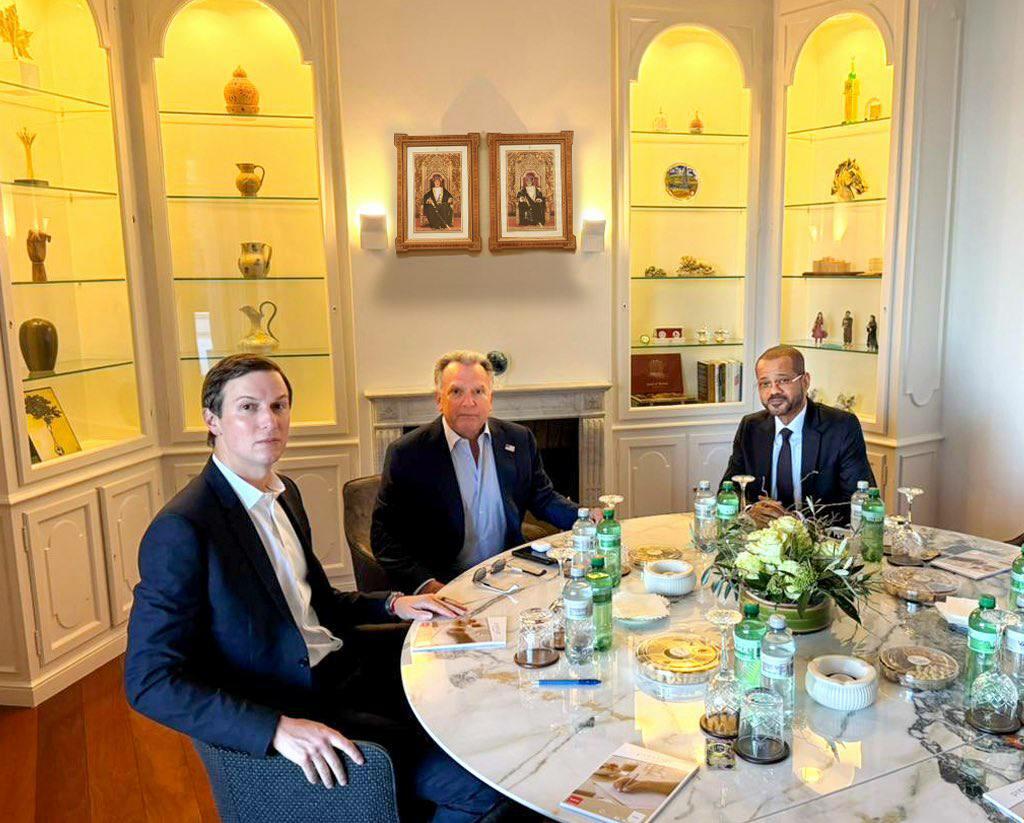
US envoys Steve Witkoff and Jared Kushner held more than three hours of negotiations with Iranian Foreign Minister Abbas Araghchi in Geneva on Thursday in a push to secure a breakthrough on a nuclear deal, with the Omani foreign minister saying the talks will resume later after a pause.
It’s being reported that the message Kushner and Witkoff deliver to Trump after the meeting will shape the president’s decision on whether the launch a military attack on Tehran or refrain for implementation of a permanent deal. While Trump declared in Tuesday’s State of the Union that he prefers diplomacy, he also presented a direct case for war – something which remains deeply unpopular among the American people.
In these and other indirect talks, Omani Foreign Minister Badr al-Busaidi relayed messages between the sides, and then another format has involved direct discussions between US and Iranian negotiators.
Iran presented its long-awaited draft proposal for a nuclear agreement, though not much in the way of details have been revealed. International Atomic Energy Agency Director General Raphael Grossi was among those who participated in the negotiations.
Omani Foreign Minister Badr al-Busaidi, the main mediator, said of the Thursday talks that “we’ve been exchanging creative and positive ideas” and “hope to make more progress.”
Meanwhile, a former head of the IAEA has warned that all wars, “including ‘wars of choice’ have horrific costs” as fears of major conflict between the US and Iran escalate.
Reports that Thursday talks stalled after US side demanded zero enrichment…
🔴🔴 Breaking// Diplomatic sources say the Araghchi–Witkoff talks in Geneva stalled after the U.S. side insisted on “zero enrichment” and the transfer of all 60% enriched uranium to Washington.
Reuters, citing a senior Iranian official, reports that the U.S. also raised…
— Ahmad Samadi (@AhmadSamadi1974) February 26, 2026
“The US is intensifying the drumbeat of war against Iran, with zero explanation of the non-existent legal authority to use force and zero evidence of an ‘imminent threat’ other than hypothetical scenarios based on possible future intentions,” Mohamed ElBaradei wrote on X.
“That is the reason for the restraints and limitations established by international norms… This is Iraq redux … it seems we never learn,” he emphasized.
Fresh reporting in The Wall Street Journal has laid out the main US sticking points:
In the talks, now under way in Geneva, the U.S. negotiators were expected to make clear Iran must dismantle its three main nuclear sites—at Fordow, Natanz and Isfahan—and deliver all of its remaining enriched uranium to the U.S., officials said.
They were also expected to insist that any nuclear deal must last forever and not sunset—the way restrictions rolled off over time under a nuclear pact negotiated under the Obama administration that Republicans have long said was too weak. Trump pulled out of that deal, the Joint Comprehensive Plan of Action, in his first term, reimposing tough sanctions on Iran.
Here the demands US brought to Iran in Geneva:
1) Destroy all 3 nuclear sites: Fordow, Natanz, Isfahan
2) Deliver all enriched uranium to US
3) No sunset clauses
4) Zero enrichment, but can keep Tehran reactor
5) Minimal sanctions relief up front; more if Iran compliant
— Alex Ward (@alexbward) February 26, 2026
These are the very nuclear sites that the US said time and again it “obliterated” during the June war. This comes off Vice President J.D. Vance just the day prior stating that the White House “has seen evidence” that Iran is attempting to build a nuclear weapon.
So Washington is going from proclaiming Iran’s nuclear sites were obliterated to now saying there’s evidence of the Iranians trying to clandestinely build a nuclear warhead. Of course, no evidence or so much as a reference to some kind of intelligence report has been presented to the world.
⚠️ ‘We’ve seen evidence’ Iran is trying to rebuild nuclear weapons says @VP JD Vance.
We’ve heard this exact line before…
Colin Powell at the UN, February 5 2003:
‘We’ve seen evidence’ of Iraq’s mobile bioweapons labs & WMDs.
We all remember what happened next. Turned… pic.twitter.com/O7KiyAsiwx
— Hala Jaber (@HalaJaber) February 25, 2026
There are indeed mounting concerns that history is about to repeat itself, but this time there’s possibly many more American troops in harm’s way, given the significant reach and capabilities of Iran’s ballistic missiles and long-range drones.
* * *
And, well, which is it?
Secretary Rubio said Iran is *not* enriching uranium right now. That seems to contradict the description of Iran’s nuclear program made on Fox over the weekend by US envoy Witkoff pic.twitter.com/uEFvkG1ZqV
— Margaret Brennan (@margbrennan) February 26, 2026
Tyler Durden
Thu, 02/26/2026 – 10:40
One Battle After Another
One Battle After Another
By Michael Every of Rabobank
One Battle After Another
US and Iranian negotiators meet in Geneva today to hear Tehran’s final offer but reports of what they have to say suggests we should prepare for the worst even if Iran sees a “good outlook” for today’s talks. The Kan news agency claims it will only agree to lower uranium enrichment from 60% to 3.67% for seven years, won’t hand over previously enriched material, dismantle the ballistic missile program President Trump just stated can already hit Europe and will soon be able to reach the US, and won’t stop its support for regional terror proxies.
US negotiator Witkoff, seen by critics as a soft touch, says a nuclear deal should last indefinitely while the above is a rehash of the JCPOA Trump spent years deriding (and whose backers often fail to note coincided with Iran processing uranium far beyond the agreed limits in secret underground bunkers). Indeed, VP Vance claimed there’s evidence Iran is trying to rebuild its nuclear program, which provides a US casus belli. It’s already imposed new sanctions on it.
In terms of the framing, Politico claims White House officials believe “the politics are a lot better” if Israel strikes Iran first, which would allow the admin to sell a defensive action in support of an ally. That’s unlikely to be an obstacle to action as soon as Indian PM Modi, who yesterday addressed the Knesset to stand firmly behind Israel “at this moment and beyond”, is wheels up to home later today. Also note the US Navy fleet in Bahrain has taken to sea to avoid a potential Pearl Harbor scenario, and another 12 F-22s are about to leave the UK heading east, joining 11 already there. Pay additional attention to Iran’s threat to escalate if attacked, breaking precedent not to do so regionally beyond Israel and/or token efforts: this is not the same playbook as the past.
This week also saw reported concerns an attack could involve US casualties and deplete munition stockpiles needed against contingencies in Asia. It would be a shocking error if either thought wasn’t front of mind before military pressure began: that points to underlying confidence in what the US has in store, and Iran doesn’t, or a gamble. Yet at this point the US cannot retreat without losing crucial global deterrence power: Iran is a military minnow compared to the States and any stand down would see supplies of Chinese weapons to Tehran step up so a repeat US exercise in years to come would be far more risky and/or unlikely.
In short, the US may be hoping to flip Iran into its camp via regime change. That would be a stunning geopolitical coup. Yet things could go wrong on multiple fronts, which could prove the coup de grace for much of what Trump is trying to achieve on them all.
One other thing needs to be underlined: US success would entrench Trumpism and demolish planned global alternatives; yet failure would do nothing to return ‘rules-based order’ or a benign free-trade backdrop for under-armed and over-dependent ‘middle powers’. It would instead open a Pandora’s Box of instability and volatility across geographies and sectors. As just one example, the IMEC (India-Middle East-Europe Economic Corridor) Modi fulsomely backed in Israel –which will initially involve Cyprus, Greece, and likely Italy, Bulgaria, and Romania– can hardly thrive with a destabilised or antagonised Iran at its centre. There’s a lot more for markets to think about than oil and gas, important and volatile as they are (as the Saudis boost oil output and exports for an Iran attack contingency, and Iran has ramped up oil tanker loadings for the same reason).
US-Ukraine discussions will also continue in Geneva today: it’s unclear if we will see any breakthrough there either given Russia also needs to sign off – and again note talks are happening in Europe, without Europe. Markets don’t seem to be focusing on that dynamic vs the so-called ‘Sell US’ trend, but in the long run it matters. Also note Hungary’s Orbán has deployed troops to guard energy sites over an alleged Ukraine threat to them.
It’s hardly quiet elsewhere: Cuba sunk a US vessel that had strayed into its waters, killing four Americans; Afghanistan threatened Pakistan and accused the latter of supporting ISIS; and UK PM Starmer’s controversial Chagos deal descended into chaos, with a minister telling MPs the process has been paused, then No 10 and the Foreign Office saying it’s still proceeding.
In geoeconomics, the USTR underlined that the US aims to keep China tariffs steady in a 35-50% range ahead of the Xi-Trump meeting, while the universal tariff will be hiked from 10% to 15% “where appropriate.” The USTR also underlined the US wants a deal with Canada where it imposes some sectoral tariffs –as Canada long has on the US– and Ottawa agrees to prevent transshipment from China and Vietnam, etc.; that’s as the Chinese press suggest threatening Canada with a USMCA exit may push it into Beijing’s arms “as a hedge.” Which would then threaten North American geopolitics/economics being dragged through a hedge backwards. Chancellor Merz called for rebalancing Germany’s “unhealthy” trade ties with China. ‘How?’ is the question, as some note that many of the German CEOs travelling with him are still keen on shifting their domestic manufacturing to China and exporting it home from there.
Crucially, Zimbabwe imposed a ban on all exports of all raw minerals and lithium concentrate, as it wants crucial midstream processing to be done domestically to help it move up the value-added ladder in our new resource-centric global great game. Who will respond to that faster – China or the US? (Europe is not yet being mentioned in the mix.) Unrelated, the CME had to halt trading on its flagship metals market for more than an hour again yesterday due to “technical” issues. That does speak to how what we once thought was the global architecture is rapidly breaking down.
In AI space, the Pentagon reportedly took its first step toward blacklisting Anthropic; China’s DeepSeek is to withhold its latest AI model from US chipmakers including Nvidia, an interesting reversal; Canada told OpenAI to boost safety measures or be forced to by the government; and further upstream, France and Sweden are pushing to kill the mechanism to pay for massive EU grid upgrades needed to run AI at scale, among other things.
In the background, higher defence spending helped lift global debt to a record $348 trillion in 2025, according to the IIF –what could go wrong there on either defence or debt?– as the IMF urged Trump to change course on economic policy and stop cutting government jobs. Do these two agencies talk much? And against that backdrop, the Australian financial press today reports: ‘‘Astounding’: No affordable houses for first home buyers in any city’. Let’s just say some of us aren’t astounded by it at all.
Let’s finish with some related Fed-speak. Outgoing Atlanta Fed President Bostic yesterday published his farewell essay, in which he noted, “…the legal and rhetorical battles raging around the central bank right now have caused people across a wide cross-section of our population to begin to doubt the Fed’s independence. This is a major concern…. I won’t be part of the Fed when we see resolutions of these battles. I will be watching closely and hoping that wisdom grounded in the profound success of the US economy over many years prevails.”
Indeed, may wisdom –and good luck— prevail on multiple fronts. I fear we are going to need it.
Tyler Durden
Thu, 02/26/2026 – 10:20
Eli Harper will do anything for No. 1 Kouts. Playing with these teammates ‘means a lot to me.’
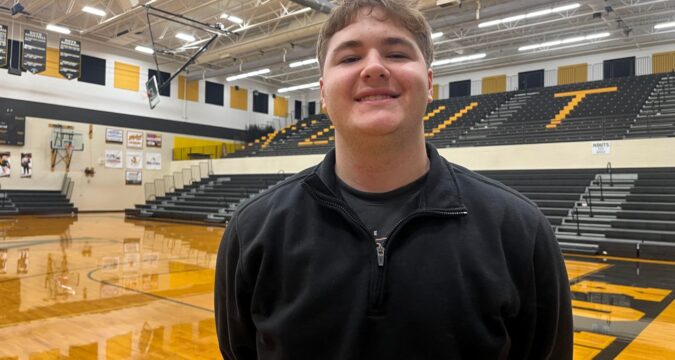
Kouts senior center Eli Harper cuts an imposing figure.
Make no mistake, the 6-foot-3, 250-pound Harper has an edge to him too.
“He’s kind of our enforcer,” Kouts coach Kevin Duzan said. “If things get out of line, he’s not afraid to be the guy that steps up to the other team and says, ‘That’s not going to happen here tonight.’ Sometimes more than the coach likes, but you take a shot at Lucas (Kleckner) driving in there, Eli’s going to make sure you’re aware you don’t take shots at our guys. Not in a bad way. He doesn’t cross the line.
“Don’t mess with them because they’ll stick up for each other. They have each other’s back.”
But Harper said he also likes to “joke around,” and senior forward Landon Garrett described him as “a great kid and one of the goofiest guys I know.”
In short, Harper cares about his teammates and appreciates the time they have together. For the Mustangs (22-0), who are ranked No. 1 in Class 1A in the poll by USA Today, that could be a while.
“I’m ready for sectionals, and I’m glad I’m here with this group of guys,” Harper said. “It means a lot to me, more than they would ever know. It does. It’s a special bond.”
The Mustangs, who won the Porter County Conference round-robin and tournament titles, can complete an undefeated run through the regular season at Tri-Township on Friday before playing Bowman in a Kouts Sectional opener on Tuesday. They reached a semistate final last season and seem poised to take the next step.
“We’re right on track where we want to be,” Harper said. “We do have goals left in the season that we want to get to, and we all know what that is. We just want to work every day toward that goal and become closer together every day as well.
“We want to value the time as most of us are seniors. We have to value our time together for maybe the last month of basketball ever for most of us.”
Kouts’ Eli Harper passes the ball during a Porter County Conference game against Boone Grove in Valparaiso on Friday, Jan. 31, 2025. (Michael Gard / Post-Tribune)
Indeed, Kouts’ tightly knit roster includes seven seniors, four of whom have largely grown up together and have been starting for three seasons. That group includes Harper, who was averaging 9.5 points, a team-high 6.3 rebounds and 3.2 assists before the Mustangs’ win against River Forest on Tuesday.
That foursome also started for the Kouts baseball team that advanced to the 1A state championship game last year. Harper batted cleanup in a lineup devoid of seniors. A first baseman and pitcher, he has started for that team since his freshman season and has committed to play baseball at Marian Ancilla.
With his winters and springs occupied, Harper typically gets inquiries about a certain fall sport.
“People ask me all the time if I play football,” he said. “No, we don’t have it here. Everybody says I’d be good at it because I have good size. But I never played football.”
Harper’s father, Mike, did play football at Trinity International, where his mother, Becky, was an All-American in basketball after setting Kouts records for points in a season, points in a game and assists in a career.
“She was the baller in the family,” Harper said.
Duzan praised her efforts with Harper, noting his footwork in the post. Harper’s a skilled player.
“He’s such a good passer,” Duzan said. “He’s too unselfish for our liking in the post. He needs to shoot more often. But he’s such a good passer. Against Boone Grove, he had 12 assists. He didn’t score a point because he shot like twice. But they were zoning, and he just kept throwing it to guys who were making shots.”
Harper is a throwback player.
“Eli, in our estimation, is a dinosaur,” Duzan said. “He’s one of the last true ‘I’m-going-to-play-with-my-back-to-the-basket’ kind of players. A lot of teams have gone to this motion, five-out offense, more guard-oriented stuff. Eli does the dirty stuff for us.”
Harper has evolved after posting 11.9 points, 7.1 rebounds and 2.5 assists last season.
“Defensively, I’ve had to guard more guards this year,” he said. “Last year, I faced a lot of bigger guys. This year, I’m facing like 6-foot guards instead of 6-2 bigs that are my size. Most of them are smaller than me.
“It’s really just moving your feet. I practice hard when we do those drills to be prepared for that. I’m no small guy. I’m a big guy. But most teams don’t have a big my size, so I end up guarding a smaller guy.”
Kouts’ Eli Harper prepares to bat during the Class 1A state championship game against Indianapolis Lutheran at Victory Field in Indianapolis on Friday, June 20, 2025. (Andy Lavalley / Post-Tribune)
Duzan also noted Harper’s baseball ability translates to basketball.
“He’s a first baseman, so he has pretty good hands in there,” Duzan said. “And then he’s a pitcher, so you better be ready because he’s going to whip it at you and you’re going to have to catch it two-handed.”
Garrett understands what Harper means to the Mustangs.
“Eli’s been a huge part in our success as a team, starting from sophomore year up to now,” Garrett said. “He’s a passionate player who will make plays for his teammates when we need him. He’s a great scorer around the basket and is able to make a move to the basket and finish off the glass too.
“When Eli’s not scoring, he’s able to get his teammates open for shots. Without his skills in the post, it’s harder for our shooters to get the shots they need.”
Harper attempts to fill any role that’s needed.
“I do whatever coach tells me to do,” he said. “That week of the game, whatever he needs me to do the best, that’s what I try to do. Scoring comes. Rebounds come. I know I have to box out hard. It’s just preparing well.
“A lot of us have played together since literally kindergarten. It does help when you have good chemistry with each other. It makes it way easier when you know how each other plays. We’ve just been playing every game (with) no drama to make us disconnect in any way. We can’t take anything for granted. We have to take everything in.”
https://www.chicagotribune.com/2026/02/26/high-school-basketball-kouts-eli-harper/

Corea del Sur relanza comisión de la verdad centrada en fraude de adopciones
Por KIM TONG-HYUNG
SEÚL, Corea del Sur (AP) — Corea del Sur ha relanzado una comisión de esclarecimiento de hechos sobre sus pasadas violaciones de derechos humanos, con un enfoque clave en el fraude y la mala praxis generalizados que corrompieron el histórico programa de adopciones internacionales del país.
La Comisión de la Verdad y la Reconciliación, la tercera en la historia del país, comenzó a aceptar nuevos casos el jueves, meses después que el mandato de la anterior terminara en noviembre con más de 2.100 denuncias sin resolver.
La nueva comisión heredará esos casos, incluidas 311 solicitudes presentadas por adoptados coreanos de Occidente que fueron aplazadas o revisadas de manera incompleta antes que la segunda comisión detuviera en abril del año pasado una investigación histórica sobre las adopciones, tras disputas internas sobre qué casos merecían ser reconocidos como problemáticos.
Defensores afirman que el interés entre los adoptados es mucho mayor esta vez, con cientos que ya solicitan investigaciones, incluidos muchos de Estados Unidos, quienes estuvieron subrepresentados en la indagación anterior pese a que los padres estadounidenses fueron, con diferencia, los principales receptores de niños coreanos durante las últimas siete décadas.
Pero investigadores que integraron la comisión anterior señalaron que podrían pasar meses —posiblemente hasta mayo o junio— para que las nuevas pesquisas realmente comiencen. El gobierno aún no ha designado a un presidente para encabezar la comisión, que no ha conformado equipos de investigación y que, al inicio, será gestionada por funcionarios públicos asignados para recibir y registrar los casos.
La nueva comisión, establecida en virtud de una ley aprobada en enero que amplía su mandato de investigación, también indagará otros abusos de derechos humanos potencialmente atribuibles al gobierno, incluidos asesinatos de civiles en torno a la Guerra de Corea de 1950-53, la represión durante las dictaduras militares de las décadas de 1960 a 1980, y abusos durante décadas contra internos en centros de bienestar.
Bajo el mandato de tres años de la comisión, las solicitudes de investigación deben presentarse hasta el 25 de febrero de 2028, aunque la comisión tiene la facultad de ampliar el plazo y el mandato hasta por cinco años. Los adoptados también podrían presentar sus solicitudes en las embajadas o consulados surcoreanos en los países donde viven.
Seúl lidia con problemas sistémicos
Corea del Sur envió miles de niños al año a Occidente desde la década de 1970 hasta comienzos de la de 2000, con un pico de más de 6.000 al año en promedio en la década de 1980. El país estaba entonces gobernado por un régimen militar que veía el crecimiento poblacional como una gran amenaza para sus objetivos económicos y trataba las adopciones como una forma de reducir el número de bocas que alimentar, lo que contribuyó a lo que hoy es posiblemente la mayor diáspora de adoptados del mundo.
La suspensión de la pesquisa previa sobre adopciones en 2025 se produjo tras una revisión de casi tres años de casos en Europa, Estados Unidos y Australia, durante la cual la segunda comisión confirmó violaciones de derechos humanos en apenas 56 de 367 denuncias presentadas por adoptados.
Aun así, la comisión emitió un importante informe provisional en el que concluyó que el gobierno tiene responsabilidad por un programa de adopciones internacionales plagado de fraude y abusos, impulsado por esfuerzos para reducir costos de bienestar social y ejecutado por agencias privadas que a menudo manipulaban los antecedentes y los orígenes de los niños.
El informe, que cuestionó una narrativa de larga data compartida en Corea del Sur y en los países receptores de Occidente según la cual las adopciones se debían principalmente a preocupaciones humanitarias, coincidió en términos generales con reportajes previos de The Associated Press.
Las investigaciones de la AP, en colaboración con Frontline (PBS), se basaron en miles de documentos y decenas de entrevistas para mostrar cómo el gobierno de Corea del Sur, países occidentales y agencias de adopción trabajaron en conjunto para entregar a unos 200.000 niños coreanos a padres en el extranjero, pese a años de evidencia de que muchos eran obtenidos mediante prácticas corruptas o abiertamente ilegales.
Durante el auge de las adopciones en las décadas de 1970 y 1980, miles de niños fueron registrados como abandonados para que parecieran adoptables bajo las leyes occidentales, aunque los registros sugieren que la mayoría tenía familiares conocidos. Las agencias de adopción pagaban a hospitales y orfanatos por recién nacidos y otros niños y, en algunos casos, cambiaban las identidades de los menores para mantener en marcha las adopciones cuando un niño moría, estaba demasiado enfermo para viajar o era reclamado por sus familias biológicas. Al priorizar su demanda interna de niños, los gobiernos occidentales ignoraron las señales de fraude generalizado y, en ocasiones, presionaron al gobierno surcoreano para que siguiera enviando niños.
El informe de la comisión anterior, que también destacó estos problemas, motivó una inusual disculpa del presidente surcoreano Lee Jae Myung en octubre. Su gobierno anunció después planes para eliminar gradualmente las ya menguantes adopciones internacionales del país para 2029.
El anuncio de diciembre se produjo al tiempo que investigadores de derechos humanos de la ONU expresaban “seria preocupación” por lo que describieron como el fracaso de Seúl para garantizar el esclarecimiento de la verdad y las reparaciones por violaciones vinculadas a adopciones pasadas. Corea del Sur aprobó adopciones en el extranjero de apenas 24 niños en 2025.
Defensores anticipan una ola de denuncias
Boonyoung Han, activista adoptado y colíder del Danish Korean Rights Group, que encabezó la mayoría de las solicitudes de adoptados ante la comisión anterior, indicó que el grupo presentó más de 300 casos ante la comisión recién puesta en marcha el jueves. Una vez que se formen los equipos de investigación, las solicitudes serán revisadas antes de que la comisión decida si emprende pesquisas sobre esas, junto con los 311 casos trasladados.
Han precisó que 118 de las nuevas solicitudes provinieron de adoptados en Dinamarca, y los de Estados Unidos constituyeron el segundo grupo más grande, con 73.
Investigadores de la comisión anterior sostienen que una revisión más amplia de los problemas sistémicos requerirá un examen más minucioso de las adopciones hacia Estados Unidos, donde las brechas de ciudadanía que afectan a adoptados también han generado preocupación en un momento en que el presidente estadounidense Donald Trump impulsa deportaciones agresivas. Los adoptados en Estados Unidos representaron apenas 45 de las denuncias recibidas por la segunda comisión, la mayoría de las cuales fueron presentadas por adoptados en Europa.
Algunos adoptados esperan usar las conclusiones de la comisión para presentar demandas por daños y perjuicios contra el gobierno surcoreano o sus agencias de adopción, lo que de otro modo sería difícil porque la ley surcoreana coloca la carga de la prueba por completo en los demandantes en los casos civiles. La nueva ley otorga a la tercera comisión facultades de investigación más sólidas que su predecesora, incluida la autoridad para solicitar órdenes de registro a través de fiscales si personas o instituciones se niegan a aportar pruebas.
___
Esta historia fue traducida del inglés por un editor de AP con la ayuda de una herramienta de inteligencia artificial generativa.

Design contract approved for Orchard Road sound wall in Aurora: ‘This has been a long time coming’
Aurora is moving forward with hiring a company to design a new sound wall for Orchard Road, which is a project that has been in the works for many years.
The sound wall is set to shield residents living near the busy road on the far West Side of Aurora between Prairie Street and Indian Trail from the well-documented vehicle noise. The exact details of the wall will now be designed by Thomas Engineering Group, LLC, of Aurora, after a nearly $169,000 contract with the company was approved by City Council on Tuesday.
“This has been a long time coming,” Ian Wade of the city’s engineering division told a committee of the Aurora City Council earlier this month. “This project has been ongoing for the better part of a decade now.”
The city’s plan has been to replace the existing wooden fence along the road with a concrete wall that would be something between the current fence and the full Illinois Department of Transportation sound walls used along expressways and interstate roadways. But through research, city staff have found other types of materials that Thomas Engineering will explore, Wade said at the Infrastructure and Technology Committee meeting on Feb. 9.
As part of the engineering of the wall, noise testing will be done along the roadway to make sure that the wall is built using the proper material and at the right height, he said.
The project is expected to cost $6 million, according to the city’s 2026 budget. Thomas Engineering took a preliminary look at the city’s cost estimate and found it was reasonably accurate, Wade said, so the city is confident that it won’t be blindsided by higher-than-expected costs.
A portion of the new sound wall’s construction cost, around $100,000 of the previously-estimated $4 million price tag, was set to be paid for by residents through a special service area property tax, similar to how many other capital projects within the city have been funded. The property owners in the affected area would have gotten the chance to vote on the 25-year tax, and if a majority agreed, the special service area would have been established.
However, the city found out last year that it would have needed to establish multiple different special service areas to help fund the project, according to Ald. Carl Franco, 5th Ward, who represents the part of Aurora where the sound wall is set to go. While that situation was being worked out, the city also learned it had lost $500,000 in state funds previously committed to the project, Franco previously said.
Now, the project is expected to get $800,000 in grants from the state, the 2026 city budget shows. Plus, the 2024 intergovernmental agreement between Aurora and Kane County has the county contributing just over $1 million.
Franco is contributing $645,000 of his own aldermanic ward funds to the project, according to a staff report included online with Tuesday’s City Council meeting agenda. The rest of the cost, roughly $3.6 million, could come from the city’s capital improvement fund, the city’s 2026 budget shows.
However, the more-recent staff report notes that some of the project’s cost could be paid by the 74 adjacent homeowners through a special services agreement to be proposed later this year.
While Franco has been in favor of using a special service area to pay some of the sound wall’s cost, Aurora Mayor John Laesch has been against the idea.
In 2024, when the intergovernmental agreement was before City Council for approval, Laesch suggested the city look into using gambling taxes rather than a special service area to cover the gap. As an alderman at-large at the time, he introduced an amendment to the agreement that said the city would look into other ways to fund the wall in the future, but it was voted down.
When talking about the topic with The Beacon-News last year, Laesch mentioned that the city would hopefully be seeing a “sizable” increase to its gambling tax after the opening of the under-construction Hollywood Casino-Aurora resort.
Construction on the sound wall project is on track to break ground before the end of 2026, city staff have previously said. That work may carry over into early next year, according to Wade.
Once built, the city would be responsible for basic maintenance of the wall while Kane County would do any capital maintenance needed, per an agreement between the two governments that was approved by the Aurora City Council in 2024. The approval of that contract was a major step towards construction, which officials hoped would take place last year but hit delays around its funding.
The current wooden privacy fence that sits along certain portions of Orchard Road was first built as part of the 2004 project to widen the road, according to city staff’s report on the project. The city has been responsible for ongoing maintenance of the fence since then, but now both the city and county believe that those repairs are no longer enough, staff said in the report.
So, the city is now looking to replace that wall because of the ongoing maintenance and safety concerns with the wooden fence, the staff report said, and because of the “considerably increased noise levels in the corridor which have generated persistent complaints from adjacent residences.”
rsmith@chicagotribune.com