Category: News

El nivel del mar aumenta más de lo previsto y pone a millones más en riesgo, dice estudio
Por SETH BORENSTEIN y ANNIKA HAMMERSCHLAG
El aumento del nivel del mar provocado por el cambio climático podría amenazar a decenas de millones de personas más de lo que científicos y planificadores gubernamentales pensaban originalmente, debido a premisas de investigación erróneas sobre cuán altas ya son las aguas costeras, de acuerdo con un nuevo estudio.
Varios investigadores analizaron cientos de estudios científicos y evaluaciones de riesgos, y calcularon que en cerca del 90% de ellos se subestimaron las alturas de referencia del agua costera en un promedio de 30 centímetros (1 pie), de acuerdo con el estudio publicado el miércoles en la revista Nature. Este problema es mucho más frecuente en el Sur Global, el Pacífico y el Sudeste Asiático, y menos en Europa y a lo largo de las costas del Atlántico.
La causa es un desajuste entre la forma en que se miden las altitudes del mar y de la tierra, explicó el coautor del estudio Philip Minderhoud, profesor de hidrogeología en Wageningen University & Research, en Holanda. El científico atribuyó eso a un “punto ciego metodológico” entre las distintas maneras en que se miden ambos factores.
Cada método mide correctamente sus propias áreas, señaló. Pero donde el mar se encuentra con la tierra, hay muchos factores que no suelen tenerse en cuenta cuando se usan satélites y modelos basados en tierra. En los estudios donde se calcula el impacto del aumento del nivel del mar por lo general “no se mira el nivel del mar realmente medido, así que se usó esta cifra de cero metros” como punto de partida, indicó la autora principal Katharina Seeger, de la Universidad de Padua, en Italia. En algunos lugares de la región del Indo-Pacífico, la cifra es de cerca de 1 metro (3 pies), dijo Minderhoud.
Una forma sencilla de entenderlo es que muchos estudios suponen niveles del mar sin olas ni corrientes, cuando la realidad en el borde del agua es que los océanos son agitados constantemente por el viento, las mareas, las corrientes, los cambios de temperatura y fenómenos como El Niño, explicaron Minderhoud y Seeger.
Ajustar a una línea de base más precisa de la altura costera significa que, si los mares suben un poco más de 1 metro (3 pies), como ocurrirá para finales de siglo, según algunos estudios, las aguas podrían inundar hasta un 37% más de tierra y amenazar a entre 77 millones y 132 millones de personas más, se indica en el estudio.
Eso provocaría problemas para planificar y financiar los impactos de un mundo con temperaturas cada vez mayores.
Personas en riesgo
“Hay mucha gente para la cual el riesgo de inundaciones extremas es mucho mayor de lo que se pensaba”, afirmó Anders Levermann, climatólogo del Instituto Potsdam para la Investigación del Impacto Climático, en Alemania, quien no participó en el estudio. Y en el Sudeste Asiático, donde el estudio halló la mayor discrepancia, se encuentra la mayor cantidad de personas amenazadas por el aumento del nivel del mar, agregó.
Minderhoud señaló a las naciones insulares de esa región como un área donde la realidad de la discrepancia se hace evidente.
Para la activista climática de 17 años Vepaiamele Trief, las proyecciones no son abstractas. En su isla natal, en el archipiélago de Vanuatu, en el Pacífico Sur, la línea de la costa ha retrocedido visiblemente durante su corta vida: las playas se han erosionado, varios árboles costeros han sido arrancados de raíz y algunas viviendas ahora están a apenas 1 metro (cerca de 3 pies) del mar durante la marea alta. En Ambae, la isla de su abuela, una carretera costera que va del aeropuerto a su aldea fue desviada hacia el interior por el avance del agua. Varias tumbas han quedado sumergidas y formas de vida enteras se sienten amenazadas.
“Estos estudios no son solo palabras en un papel. No son solo números. Son los medios de vida reales de la gente”, manifestó. “Pónganse en el lugar de nuestras comunidades costeras: sus vidas van a quedar completamente trastocadas por el aumento del nivel del mar y el cambio climático”.
Prestar atención al punto de partida
Este nuevo estudio trata, en gran medida, de cuál es la verdad sobre el terreno.
Los cálculos que pueden ser correctos para los mares en general o para la tierra no son del todo acertados en ese punto clave de intersección entre el agua y la tierra, dijeron Seeger y Minderhoud. Esto es especialmente cierto en el Pacífico.
“Para entender cuánto más alto está un pedazo de tierra que el agua, necesitas conocer la elevación de la tierra y la elevación del agua. Y lo que este artículo dice es que, en la gran mayoría de los estudios, lo que se ha hecho es simplemente asumir que el cero en el conjunto de datos de elevación terrestre es el nivel del agua, cuando, en realidad, no lo es”, explicó el experto en aumento del nivel del mar Ben Strauss, director ejecutivo de Climate Central. Su estudio de 2019 fue uno de los pocos que, según el nuevo artículo, lo hizo bien.
“Simplemente es la línea de base desde la que se parte lo que la gente está entendiendo mal”, sostuvo Strauss, quien no formó parte de la investigación.
Quizá no sea tan grave, dicen algunos científicos
Otros científicos externos señalaron que Minderhoud y Seeger podrían estar exagerando el problema.
“Creo que exageran un poco las implicaciones para los estudios de impacto; el problema en realidad se entiende bien, aunque se aborda de una manera que probablemente podría mejorarse”, opinó Gonéri Le Cozannet, científico del servicio geológico francés. La mayoría de los planificadores locales conocen sus problemas costeros y planifican en consecuencia, indicó Robert Kopp, experto en nivel del mar de la Universidad Rutgers.
Eso es cierto en Vietnam, en el área de alto impacto, dijo Minderhoud. Allí tienen una noción precisa de la elevación, señaló.
Los hallazgos se dan a conocer mientras un nuevo informe de la UNESCO advierte sobre grandes lagunas en la comprensión de cuánto carbono absorbe el océano. En el informe se indica que los modelos difieren entre un 10% y un 20% al estimar el tamaño de ese sumidero de carbono, lo que plantea dudas sobre la precisión de las proyecciones climáticas globales que dependen de ellos.
En conjunto, los estudios sugieren que los gobiernos podrían estar planificando los riesgos costeros y climáticos con una imagen incompleta de cómo cambia el océano.
“Cuando el océano se acerca, se lleva más que solo la tierra que solíamos disfrutar”, afirmó Thompson Natuoivi, defensor del clima de Save the Children Vanuatu.
“El aumento del nivel del mar no solo cambia nuestra costa, cambia nuestras vidas. No hablamos del futuro: hablamos de este mismo momento”.
___
The Associated Press recibe apoyo de la Walton Family Foundation para la cobertura de políticas de agua y medio ambiente. La AP es la única responsable de todo el contenido.
___
Esta historia fue traducida del inglés por un editor de AP con la ayuda de una herramienta de inteligencia artificial generativa.

Dream of owning a flying car? This California company is already selling them
A future with flying cars is no longer science fiction — all you need to order your own is about $200,000 and some hope and patience.
The Palo Alto-based company Pivotal has been developing the technology since 2009 and is nearly ready to bring it to market. The company’s founder Marcus Leng was the first to fly in its real-life version of a flying car in 2011.
Leng engineered an ultralight, electric-powered vertical takeoff and landing aircraft known as an eVTOL. Other VTOL aircraft, such as helicopters, had existed for decades, but Leng’s invention was fixed-wing and didn’t rely on gas.
The Canadian engineer dubbed his creation BlackFly and spent years working on it in secret.
The company moved to the Bay Area in 2014 and by 2018 had developed a second version of BlackFly that laid the groundwork for Helix, the aircraft Pivotal now offers for sale.
“The company kind of came out of stealth at that point and said, ‘This is what we’re up to,’ ” said Pivotal Chief Executive Ken Karklin, who took over company leadership from Leng in 2022.
Those who are curious — and wealthy — can reserve a Helix today with a $50,000 deposit. The aircraft starts at $190,000 with the option of purchasing a transport trailer for $21,000 and a charger for $1,100.
A customer who makes their reservation today could receive their aircraft in nine to 12 months, Karklin said. It takes less than two weeks to learn how to fly it.
In order to complete Pivotal’s flight certification training, a customer has to pass the FAA knowledge test and complete ground school. Training, which takes place at the company’s Palo Alto headquarters and at the Monterey Bay Academy Airport, teaches customers how to control and maintain the aircraft, as well as how to transport and assemble it.
Pivotal, formerly known as Opener, publicly introduced the BlackFly in July 2018. In October 2023, the company unveiled Helix, calling it the first scalable aircraft of its kind.
A handful of California companies are using eVTOL technology to develop what they call air taxis to shuttle people around congested cities. But Pivotal says it offers something different: a single-person aircraft for recreational use and short-haul travel that also has the potential to support emergency response and military operations.
It is uncertain how fast the company and others like it can ramp up production and how communities will react. Not everyone is on board. Darlene Yaplee, president of the Aviation-Impacted Communities Alliance, said there are concerns about having different types of aircraft in limited airspace.
Pivotal has around six early-access customers who already own a version of the BlackFly and are flying it for fun. The aircraft is designed to be accessible and user-friendly, and you don’t need a pilot’s license to operate it.
Tim Lum, a Washington state resident, bought his BlackFly in 2023. He’s since taken it on around 1,200 flights in 100 different locations across the U.S.
Lum, who isn’t an FAA-certified pilot, said owning a BlackFly is like a dream. He can take off and land anywhere with 100 feet of clearance and permission if on private land. He also uses small, private airports.
The aircraft is stored in Twisp, Wash., but Lum has towed it coast to coast, stopping to fly in states such as Florida, Montana and California. He shares it with family and friends who also trained to get certified by the company.
“Something really happens to the synapses in my brain when I’m flying,” Lum said. “Things get sorted out and things make sense. This has opened up more doors for me and the people that I care about than money can buy.”
The Helix is classified as a Part 103 ultralight aircraft, the same regulatory class as a hang glider. It’s meant to be flown less than 200 feet high, in unregulated airspace, and weighs about 355 pounds empty.
Karklin said the company has received about a year’s worth of reservations for Helix. He did not specify the number of customers but said it was more than 10.
Karklin has been getting Pivotal ready for a wider market. The company, which has more than 100 full-time employees, has trained just over 50 people to fly its aircraft. Customers and employees have been trained.
Pivotal’s business will operate across three segments, Karklin said, including personal use, public safety and defense.
“You’re going to see business generated by all three,” he said. “We talk about recreation and short hop travel, and sometimes folks can be a little dismissive about that. I think that’s a huge mistake.”
In 2023, Pivotal leased eight aircraft to an innovation arm of the U.S. Air Force and defense technology firm MTSI. The Air Force conducted nondevelopmental testing and evaluation of the vehicle that informed the latest version of Helix.
Helix will have an electric range of about 30 minutes and a cruise speed of 62 mph, the company said. It takes 75 minutes to charge it using a 240 volt charger.
The noise produced by the aircraft during takeoff and landing is equivalent to a couple of leaf blowers, Karklin said. When flying it is overhead, someone on the ground might not be able to hear it.
Karklin said the simplicity of the aircraft comes with lower cost, lower weight and higher safety. The aircraft, which has only 18 moving parts, is full of redundancy to prevent system failures.
It’s been independently evaluated by the Light Aircraft Manufacturers Assn., and Pivotal’s quality management system has received a certification from SAE International, which sets aviation safety standards.
The company completes flight demonstrations frequently at the Monterey Bay Academy Airport, near the coast in Watsonville.
When Helix flies, it turns heads, Karklin said.
“It’s starting to get very real,” he said. “More people can actually see it in person and touch it and feel it. And then they want to get on.”
Pivotal has around six early-access customers who already own a version of the BlackFly and are flying it for fun. The aircraft is designed to be accessible and user-friendly, and you don’t need a pilot’s license to operate it.(Pivotal)
https://www.chicagotribune.com/2026/03/04/pivotal-flying-car/

Bronze bison will visit the Field Museum as part of Smithsonian tour
A trio of larger-than-life bison sculptures will be displayed outside the Field Museum later this month as part of a cross-country tour.
The sculptures are coming to Chicago’s Museum Campus on March 16-17 from a foundry in Colorado. Chicago’s Field Museum is one of several museum stops on their way to the Smithsonian’s National Museum of Natural History in Washington, D.C., where they will be installed at the museum’s entrance on the National Mall as part of a new exhibition, “Bison: Standing Strong.”
The project and exhibition are part of the Smithsonian’s “Our Shared Future: 250,” an initiative to commemorate the nation’s 250th anniversary. “Bison: Standing Strong” will tell the story of the animals that have been part of the American landscape for 100,000 years and were an essential part of Indigenous cultures. The sculptures, created by artist Gary Staab and scaled about 25% larger than an actual bison, will remain on permanent display on the National Mall.
Bison were once plentiful in Illinois but were hunted close to extinction in the 19th century. As recounted in the tour announcement on Wednesday, bison have since returned to Illinois’ prairie habitats, including the Midewin National Tallgrass Prairie in the Chicago Wilderness region. Additionally, a pair of bronze bison stands on permanent display in Humboldt Park, created for the 1893 World’s Columbian Exposition by Edward Kemeys (who also sculpted the lions outside the Art Institute).
Smithsonian experts accompanying the tour will be at the Field Museum to answer questions about bison conservation, the sculptures and the exhibition in Washington, and the Field will host a presentation by the National Museum of Natural History’s Laura Donnely Smith and Sarah Johnson from 11 a.m. to 1 p.m. March 16.
dgeorge@chicagotribune.com
If you go
9 a.m. to 5 p.m. March 16 and 9 a.m. to 10 a.m. March 17 at the Field Museum, 1400 S. DuSable Lake Shore Drive; www.fieldmuseum.org
Aumento de precio del petróleo por la guerra beneficia a Rusia
Por DAVID McHUGH
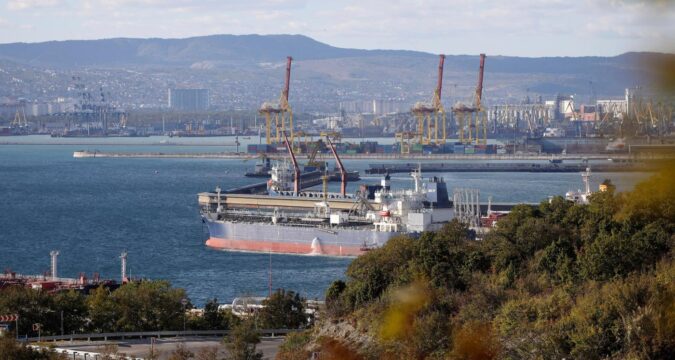
FRÁNCFORT, Alemania (AP) — La disrupción que provoca la guerra con Irán en los suministros de petróleo y gas de Oriente Medio, y el fuerte aumento de los precios, están reforzando la capacidad de Rusia para beneficiarse de sus exportaciones energéticas, un pilar del presupuesto del Kremlin y clave para pagar su propia guerra en Ucrania.
Los precios del petróleo de exportación ruso han subido desde menos de 40 dólares por barril en diciembre hasta alrededor de 62 dólares por barril —primero por el temor a la guerra y luego por la interrupción de casi todo el tráfico de petroleros a través del estrecho de Ormuz, el conducto por el que pasa cerca del 20% del consumo mundial de petróleo.
El petróleo ruso todavía se negocia con un descuento considerable frente al crudo Brent, referencia internacional, que ha subido por encima de 82 dólares desde el precio de cierre de 72,87 dólares del viernes, en la víspera de la guerra. Sin embargo, el crudo ruso ahora está por encima de la referencia de 59 dólares por barril que se asumía en el plan presupuestario del Ministerio de Finanzas ruso para 2026. Los ingresos fiscales por petróleo y gas representan hasta el 30% del presupuesto federal ruso.
Además, la paralización de la producción de gas natural licuado transportado por barco, o GNL, por parte de Qatar incrementará de forma marcada la competencia global por los cargamentos disponibles —incluidos los procedentes de Rusia.
Un cambio de suerte
Rusia había visto caer los ingresos estatales por petróleo y gas a un mínimo de cuatro años de 393.000 millones de rublos (5.000 millones de dólares) en enero, y el déficit presupuestario de 1,7 billones de rublos (21.800 millones de dólares) de ese mes fue el mayor registrado, según cifras del Ministerio de Finanzas.
La menor recaudación se debió a precios globales más débiles y a profundos descuentos alimentados por los obstáculos de Estados Unidos y la Unión Europea a la “flota fantasma” de petroleros utilizada por Rusia para vender petróleo a sus mayores clientes, China e India, desafiando un tope de precios impuesto por Occidente y las sanciones contra las dos mayores petroleras rusas, Lukoil y Rosneft.
El crecimiento económico se ha estancado a medida que el enorme gasto militar se ha estabilizado. El presidente Vladímir Putin ha recurrido a aumentos de impuestos y a un mayor endeudamiento con bancos nacionales dóciles para mantener las finanzas del Estado a flote en el quinto año de la guerra.
“Rusia es una gran ganadora del caos energético generado por la la guerra”, afirmó Simone Tagliapietra, experto en energía del centro de estudios Bruegel en Bruselas. “Precios del petróleo más altos significan mayores ingresos para el gobierno y, por lo tanto, una mayor capacidad para financiar la guerra en Ucrania”.
Amena Bakr, jefa de análisis sobre Oriente Medio y OPEP+ en la firma de datos y analítica Kpler, escribe: “Con el petróleo de Oriente Medio enfrentando disrupciones logísticas, tanto India como China tienen fuertes incentivos para profundizar su dependencia del suministro ruso”.
Además, el precio del gas natural para entrega futura se ha disparado en Europa, lo que plantea dudas sobre los planes de la Unión Europea para poner fin a las importaciones de GNL ruso para 2027, reavivando malos recuerdos de la crisis energética de 2022 después de que Moscú cortara la mayor parte de los suministros de gas por gasoducto debido a la guerra.
Cierre del Estrecho de Ormuz
Mucho depende de cuánto tiempo el estrecho de Ormuz permanezca cerrado a la mayor parte del tráfico marítimo, señaló Alexandra Prokopenko, experta en la economía rusa del Carnegie Russia Eurasia Center en Berlín.
Una conclusión rápida del conflicto devolvería los precios del Brent a aproximadamente 65 dólares por barril y “un pico de corta duración no cambiaría de manera fundamental” el panorama presupuestario de Rusia, indicó. Un escenario intermedio, en el que se reanude parte del transporte marítimo y el petróleo se estabilice en torno a 80 dólares por barril, daría a Rusia “cierto alivio fiscal”, dependiendo de cuánto duren los precios más altos.
Un cierre de largo plazo, con ataques iraníes que dañen refinerías y oleoductos, podría llevar el petróleo a 108 dólares por barril, acelerar la inflación y empujar a Europa al borde de la recesión. “Este escenario aportaría la mayor ganancia inesperada a Rusia”, sostuvo.
Incluso varias semanas de interrupción del GNL del Golfo podrían llevar a que Europa suspenda planes de prohibir nuevos contratos de suministro ruso después del 25 de abril, indicó Chris Weafer, director ejecutivo de la consultora Macro-Advisory Ltd.
“La Unión Europea está bajo aún más presión para trabajar con Estados Unidos y encontrar una solución al conflicto de Ucrania y, muy probablemente, para considerar suavizar el plan de un bloqueo total de las importaciones de petróleo y gas rusos”, manifestó. “Países como Hungría y Eslovaquia, y aquellos que han sido grandes compradores de GNL ruso, presionarán para que se haga esa revisión”.
En cualquier caso, “el presupuesto federal ruso tendrá un resultado mucho mejor en marzo”, apuntó Weafer, debido a menores descuentos sobre el petróleo ruso y “porque hay compradores ansiosos de petróleo ruso y de productos petrolíferos”.
Rusia está dispuesta a aumentar el suministro
El viceprimer ministro ruso, Alexander Novak, declaró que “hay mucha demanda” para el petróleo ruso y que Rusia estaba dispuesta a aumentar los suministros a China e India, informó el miércoles la agencia de noticias Tass.
El jefe del fondo soberano de Rusia, Kirill Dmitriev, lanzó una pulla a la presidenta de la Comisión Europea, Ursula von der Leyen, y a la jefa de política exterior de la Unión Europea, Kaja Kallas, al escribir en X que “seguro que las sabias Ursula y Kaja tienen un plan alternativo para obtener GNL. O quizá no”.
Bélgica, Francia, Holanda y España han seguido importando alrededor de 2.000 millones de metros cúbicos de GNL ruso al mes y, además, Hungría importa 2.000 millones de metros cúbicos al mes a través del gasoducto Turkstream, que cruza el mar Negro, señaló Tagliapietra. Eso sumaría 45.000 millones de metros cúbicos en 2026, el 15% de la demanda total de gas de este año.
“No es fácil reemplazar esto en caso de que el mercado de GNL se estreche con cierres continuados en Qatar”, concluyó.
___________________________________
Esta historia fue traducida del inglés por un editor de AP con ayuda de una herramienta de inteligencia artificial generativa.
QatarEnergy Declares Force Majeure As One-Fifth Of Global LNG Supply Goes Dark
QatarEnergy Declares Force Majeure As One-Fifth Of Global LNG Supply Goes Dark
Qatar’s long-standing image as the world’s most reliable LNG supplier abruptly ended on Wednesday after QatarEnergy halted LNG production and declared force majeure to customers, a major shock to global gas markets given that Qatar accounts for 20% of global LNG exports, with 80% of those volumes to Asia.
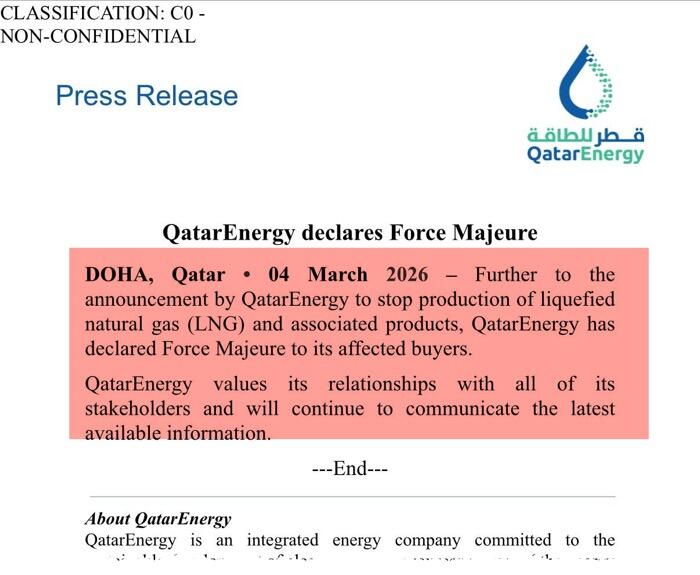
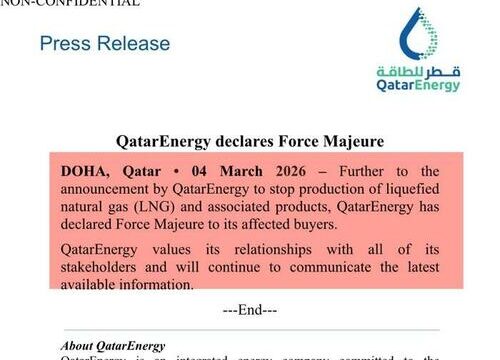
“Further to the announcement by QatarEnergy to stop production of liquefied natural gas (LNG) and associated products, QatarEnergy has declared Force Majeure to its affected buyers,” QatarEnergy wrote in a press release on Wednesday morning.
Qatar’s LNG chief Saad Sherida Al-Kaabi is confronting the biggest energy shocks of his career after an Iranian drone strike earlier this week forced the shutdown of Ras Laffan, Qatar’s top LNG export hub, for the first time in three decades.
The most immediate consequence is reputational. Wall Street analysts say the drone attack may permanently weaken Qatar’s ability to command premium gas pricing and long-term contract terms, as customers, especially in Asia, rethink their exposure to U.S. LNG in the calm warm waters of the Gulf of America.
The duration of the shutdown at the world’s leading LNG exporter is not yet known, but restarting gas liquefaction after a full shutdown can take up to two weeks, with another two weeks needed to return to full capacity. In other words, the shutdown and the time required for liquefaction plants to return to full capacity could last a month or more.
In terms of flows, Qatar’s LNG exports mostly go to Asia. The latest data shows more than 80% of Qatar’s LNG is shipped to China, India, Japan, and South Korea. Europe is also another large customer.
At the start of the week, European gas (TTF) futures nearly doubled on LNG disruptions from the Gulf area due to the Strait of Hormuz being paralyzed.
European Gas Prices Soar 50% After Qatar Shuts World’s Largest LNG Export Plant https://t.co/0Yfq1SWoXq
— zerohedge (@zerohedge) March 2, 2026
On Monday, Goldman analysts wrote (read report) that “significant upside risk to prices from a potential sustained disruption of LNG supply through the Strait of Hormuz. In a scenario where flows halt for one month, we think it is likely that TTF and JKM could approach 74 EUR/MWh ($25/mmBtu) — 130% above current levels — a threshold that triggered large natural gas demand responses during the 2022 European energy crisis.”
Vessel tracking website MarineTraffic said Wednesday morning that traffic in the critical waterway has collapsed by 90%.
“Unlike several other vessel segments where movements have largely ceased, some tankers are still travelling east and west through the strait, with a number of voyages occurring under AIS blackouts,” Kpler analyst Matt Wright wrote in a note.
Tanker traffic through Strait of Hormuz down by 90%
Analysis of vessel activity indicates tanker transits are now around 90% lower than last week. Matt Wright, Principal Freight Analyst at Kpler, explains: “Unlike several other vessel segments where movements have largely… pic.twitter.com/JIhFoAkQKO
— MarineTraffic (@MarineTraffic) March 4, 2026
Related:
US Chemical Companies “Net Beneficiaries” Of Middle East Energy Disruption Crisis
Here’s the latest from UBS analyst Nayoung Kim on “Qatar LNG, Hormuz risks”:
Upgrading 2026 global gas prices on rising geopolitical risks and uncertainty
Global gas prices are surging due to the Middle East conflicts and the effective closure of the Strait of Hormuz. The Qatari LNG production halt has pushed TTF prices to €60/MWh (about $20), with JKM seeing a modest increase to $13.5/mmBtu. Although Qatar sends >70% of its exports to Asia, market reactions suggest Europe as the main concern. How much and how long prices rise depends on the extent and duration of disruptions; our revised forecasts assume disruptions could persist for next 1-2 weeks. Given a tight market, any disruption may cause widespread effects, leading to elevated prices in 2026. We raise TTF to €38 in 1Q26E, €37 in 2Q26E, and €35 on average for 2026E. JKM revised up to $14 in 1H26E and $13 in 2026E. US Henry Hub is less affected but rising US LNG demand may push prices up to $5.00 in 1Q26E, then down to $3.15 in 2Q26E, averaging $4 for 2026E. Longer-term forecasts unchanged (see Figure 1).
How much gas has been impacted so far?
Currently, nearly 140bcm of gas supply is either disrupted or at risk. 1) 118bcm from Middle Eastern LNG exports: Qatar accounts for 110bcm, and the UAE adds 8bcm, together representing 21% of total LNG flows. 2) 10bcm of gas exports from Israel to Egypt have been completely halted. 3) 10bcm of pipeline supply from Iran to Turkey is also at risk. Given the significant volumes involved, markets remain focused on the duration and impact of Qatar’s suspension.
What are the alternatives?
Spare capacity remains limited. The US could increase production in response to prices, but has little room for growth (Figure 15). We see Russian piped gas as the feasible option with capacity of >130bcm but faces political barriers (link). Short disruptions may be offset by later ramp-ups, but persistent supply issues may be hard to resolve without new capacity. Golden Pass start-up is near, yet the project will steadily boost output. It is too early to say the situation mirrors the 2022 energy crisis, yet we cannot dismiss the possibility of additional shocks. The previous supply shortfall was offset equally by reduced demand and increased LNG supply, but now there is little scope for such move.
Are flows shifting? or stalling? how importers to react?
Despite only 7% of Qatar’s exports going to Europe, Europe faces more pressure due to low storage, limited alternatives, and potential for greater competition for spot cargos with Asia. Pre-disruption, EU storage was estimated at 26% by end-March. The ongoing disruption from Qatar throughout March could bring a loss of up to 1bcm. Given Qatar’s monthly exports to Asia (excl. China) reaching 4–5bcm, if these buyers enter the spot market, storage levels could drop further toward 20%. China is less vulnerable given its other fuel/supply options and natgas storage. We expected Europe to need an 8% y/y increase in LNG imports (see our Jan outlook), which may now be even more with Qatar and other disruptions, making the impact most pronounced.
A wide range of outcome and prices; upside risks remain
Uncertainty around Middle East tensions may cause significant volatility in prices, with risks skewed to the upside while conflicts persist. Iran’s attacks on Qatari LNG/energy facilities could drive prices >€100 (or $30) if they escalate. With limited alternatives, prices may stay higher for longer in that case, with potential demand adjustments as situation develops. If US/Israeli operations conclude and Iran ceases attacks soon, risk premiums could drop quickly, lowering prices to ~€30s (or $10-11) as weather gets mild.
The full note can be viewed here and is available to pro subs.
Beyond Qatar, Iraq has shut in 460,000 barrels per day of production at the West Qurna 2 field and will likely be forced to cut more than 3 million bpd if the Strait of Hormuz remains paralyzed. President Trump has offered insurance and U.S. military escorts in an effort to unfreeze the critical maritime energy chokepoint.
China’s massive exposure to cheap energy from Iran and other Gulf nations has infuriated Beijing, and Foreign Minister Wang Yi said that his government will send a special envoy to the Middle East for mediation. China really needs the strait to remain open
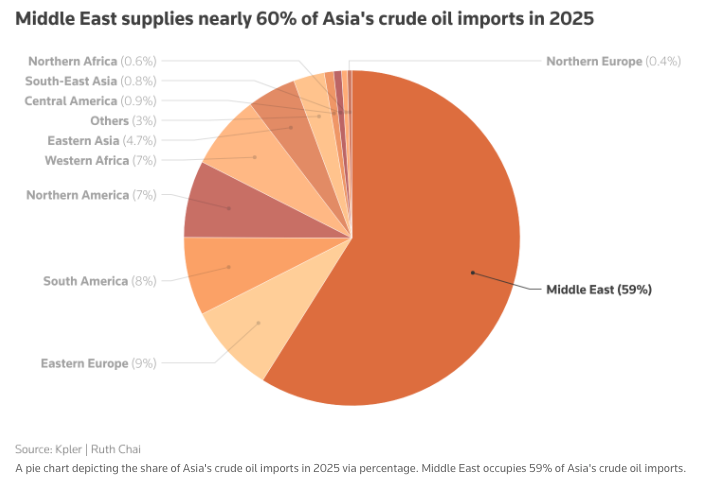
China, the world’s biggest crude importer, sources about half of its seaborne imports – or 5.4 million bpd – from the Middle East.
If the Strait of Hormuz stays disrupted for an extended period, China would take a meaningful energy and industrial hit, first through soaring energy prices, then through supply woes, and ultimately through an economic growth hit. It is increasingly clear that Beijing will do everything in its power to keep the strait open and pressure Tehran to avoid a prolonged shutdown. All of this comes before Trump heads to Beijing.
Tyler Durden
Wed, 03/04/2026 – 11:20

Defense Secretary Pete Hegseth says US ‘can’t stop everything’ that Iran fires even as he asserts air dominance
WASHINGTON — Defense Secretary Pete Hegseth acknowledged Wednesday that some Iranian air attacks may still hit their targets even as he asserted that U.S. military superiority is quickly giving it control of the Islamic Republic’s airspace.
The U.S. has spared “no expense or capability” to enhance air defense systems to protect American forces and allies in the Middle East, Hegseth told reporters at the Pentagon days after the U.S. and Israel attacked Iran in a war that has widened throughout the region.
“This does not mean we can stop everything, but we ensured that the maximum possible defense and maximum possible force protection was set up before we went on offense,” he said.
Israel targets Iran’s security forces and leadership as Iran presses attacks across the region
The acknowledgement that additional drone or missile strikes in the region could cause damage and harm to troops comes as President Donald Trump and top defense leaders have warned that additional American casualties were expected in a conflict that could last months.
U.S. service members “remain in harm’s way, and we must be clear-eyed that the risk is still high,” Gen. Dan Caine, chairman of the Joint Chiefs of Staff, said at the same press conference.
Six soldiers were killed when an Iranian drone strike hit an operations center Sunday in the heart of a civilian port in Kuwait, miles away from the main Army base. The husband of one of the slain soldiers, who was part of a supply and logistics unit based in Iowa, says the center was a shipping container-style building and had no defenses.
Caine declined to answer a reporter’s question about the possibility of deploying ground troops in Iran, something that President Donald Trump has not ruled out.
“I’m not going to comment on U.S. boots on the ground,” Caine said. “I think that’s a question for policymakers. And I don’t make policy, I execute policy.”
Hegseth also signaled a possible longer time frame for the conflict than has previously been floated by the Trump administration, saying it could last eight weeks but that the U.S. has the munitions and the equipment to beat Iran in a war of attrition. He declined to set a specific time range, saying the specific duration of the war would depend on how it unfolds.
“You can say four weeks, but it could be six, it could be eight, it could be three,” he said. “Ultimately, we set the pace and the tempo. The enemy is off balance, and we’re going to keep them off balance.”
More forces continue to arrive in the region, including jet fighters and bombers, Hegseth said, and the U.S. “will take all the time we need to make sure that we succeed.”
Supplies of weaponry aren’t an issue, Hegseth and Caine said, with Hegseth noting that the military used more advanced weapons at the start of the campaign but was switching to gravity bombs now that the U.S. gains control of Iranian skies. Stockpiles of the advanced weapons remain “extremely strong,” the defense secretary said.
Caine said the U.S. has “sufficient precision munitions for the task at hand, both on the offense and defense,” but noted that the military would not be releasing quantities, citing operational security.
“So our air defenses and that of our allies have plenty of runway,” Hegseth said. “We can sustain this fight easily for as long as we need to.”
Tehran has vowed to completely destroy the Middle East’s military and economic infrastructure — signaling the war was nowhere near over and could expand further.
President Donald Trump said this week the campaign are likely to last four to five weeks but that he was prepared “to go far longer than that.”

Boy George eager for his tour bus to arrive Saturday in Gary
Icon of the 1980s rock music decade Boy George doesn’t believe in the distance between yesterday and today.
“I don’t really think there’s any lasting power between what’s old and what’s new because everything exists in what is the moment of now,” Boy George said, speaking by telephone earlier this week promoting his 2026 U.S. and Canada tour.
“But something that has been new for me is using a touring bus from city to city for this new 2026 tour. We started Feb. 18 in Tampa, Florida.”
On Saturday, Boy George and his Culture Club band roll into Gary to play one 7 p.m. concert at Hard Rock Northern Indiana as part of the 20-city tour. It’s Boy George’s first visit to the gaming and entertainment venue in Gary, as it prepares to celebrate its fifth anniversary in May since the brand destination launched in May 2021.
When guests arrive through the main valet drop-off entrance to Hard Rock Northern Indiana, one of the first inside memorabilia display cases has a 1984 stage costume from Boy George sandwiched between wardrobe mannequins highlighting stage attire from Paula Abdul and Kelly Rowland, with Carole King’s framed gold record mounted behind.
“My concerts have a large screen with some clips, and yes, I do a couple costume changes, but audiences shouldn’t expect anything like what Cher does in her concerts,” he said, amused by the verbiage included on the panel displayed with his costume at the Hard Rock.
A sparkling beaded and sequin concert costume of pop star Boy George, center, is displayed among the memorabilia cases at the entrance lobby of Hard Rock Casino Northern Indiana. (Philip Potempa/for Post-Tribune)
The signage reads: “Rising to fame as the lead singer of Culture Club, Boy George combined exaggerated makeup and costumes to create a flamboyant image that became his trademark look.”
“Forget all of that,” Boy George said.
“I’m just me. And that me is someone who has always been different. At first, I was afraid of what it meant to be different and I felt uncomfortable, which people would mistaken for me being unfriendly. Today, I’m very comfortable and not afraid to make eye contact with my audiences.”
He will perform classic hits like “Do You Really Want to Hurt Me,” “Karma Chameleon,” “Church Of The Poison Mind,” “Victims,” “It’s A Miracle” and “The War Song,” joined by original band members Roy Hay on guitar/keyboard and Mikey Craig on bass.
Boy George said one of his early career highlights was meeting his idol Sammy Davis Jr. during the 1985 taping of the television special “Motown Returns to the Apollo.”
“I just remember seeing Sammy backstage and hearing him call my name, this incredible showman,” Boy George said.
“And there were so many others I was so excited to meet, like James Brown, Gladys Knight, Luther Vandross and Smokey Robinson.”
Boy George, who turns 65 this June, said he doesn’t mind knowing that others see him as “a different beast.”
“I speak my mind, and yes, that has gotten me in trouble, yet I’m not afraid to be me,” he said.
“Coming to Gary means being in the hometown of Michael Jackson and the Jackson Family, which makes this concert date even more interesting to me. I love my audiences and everyone has their own opinion. I mean, can you believe this? I share the same birthday as Donald Trump.”
He said he has also built a diversified career through the decades since he first launched his band career with Culture Club in 1982.
After two decades of band touring, he began transitioning to the role of club DJ and, in August 2004, appeared in the transformed space of Marshall Fields’ seventh-floor dining restaurant, the Walnut Room, as host DJ for the annual Glamorama charity event.
In 2023, the boy born as George O’Dowd in Kent, England, who grew up reading “Peter Pan,” found himself cast as Captain Hook for a run in London’s West End.
“I loved doing ‘Peter Pan,’ but it’s not easy doing stage drama, so I learned quite a bit,” he said.
“It prepared me for my time in 2024 and again last year in New York playing the club impresario for 10 weeks in the musical ‘Moulin Rouge!’ which I loved.”
Boy George and his Culture Club band play one concert March 7 at Hard Rock Northern Indiana in Gary as part of a 20-city, North American tour. (Photo courtesy of Hard Rock Casino Northern Indiana)
Boy George also dispels any lore and gossip that he is a rock rival of Stuart Leslie Goddard of London, who broke pop culture barriers in 1980 as music alter ego Adam Ant of Adam and the Ants.
“Adam is a legend and he is the real deal,” Boy George said.
“I was a fan of his before I even began, when he started performing as Adam and the Ants back in 1977. And now, we’ve even performed together on the same stage. He’s joked about me having stolen his glam look. I know a couple of our band members auditioned for Adam’s band first.”
As for turning down work opportunities, Boy George said he “gets asked to do everything, including shows like ‘Dancing with the Stars.’ “
“Are you kidding me, even thinking about doing ballroom dancing?” he said.
“I can’t dance like that. Leave me out.”
Boy George ends this month doing a residency at The Venetian Casino and Hotel Resort in Las Vegas, March 18 -28.
Tickets for Boy George and Culture Club’s concert at 7 p.m. Saturday, March 7, start at $84.35, all reserved seating and only for ages 21 and older. Tickets are available at the casino box office, 5400 West 29th Ave. in Gary, call 219-228-2383 or visit www.hardrockcasinonorthernindiana.com.
Philip Potempa is a freelance reporter for the Post-Tribune.
https://www.chicagotribune.com/2026/03/04/boy-george-arrives-saturday-in-gary/

Líder latino planea crear fondo patrimonial para grupos hispanos del suroeste de EEUU
Por JAMES POLLARD
NUEVA YORK (AP) — El exsecretario de Vivienda Julián Castro prevé al menos una constante para la próxima década.
Se trata de la necesidad de construir un apoyo filantrópico duradero para los latinos en Estados Unidos, que son uno de los grupos raciales o étnicos de más rápido crecimiento del país y a quienes él ve enfrentando un “incendio de cinco alarmas” con retrocesos en oportunidades de educación, negocios e inmigración.
Por eso, el otrora aspirante presidencial trabaja para aumentar los activos y la presencia de la organización sin fines de lucro con sede en California que dirige desde enero de 2024. La Latino Community Foundation (LCF) se comprometió a crear un fondo patrimonial de 250 millones de dólares y ampliar la concesión de subvenciones en los estados del suroeste, según un anuncio realizado el miércoles.
“El destino de Estados Unidos está entrelazado como nunca con el destino de la comunidad latina”, declaró Castro a The Associated Press. “Estamos convencidos de que, al ayudar a garantizar que a la comunidad latina le vaya bien, ayudamos a garantizar que a Estados Unidos le vaya bien en los años venideros”.
El apoyo filantrópico a organizaciones que atienden a personas de ascendencia latinoamericana habitualmente se sitúa por debajo del 1% de toda la financiación, según Hispanics in Philanthropy, pese a que datos del Censo de Estados Unidos indican que casi el 20% de la población del país se identifica como hispana o latina.
Esa disparidad se ha vuelto más evidente a medida que organizaciones sin fines de lucro ayudan a comunidades inmigrantes a atravesar las amplias políticas de control del presidente Donald Trump. El gobierno está ampliando el número de centros de detención y, con el tiempo, podría retener a alrededor de 100.000 inmigrantes. Las redadas en ciudades como Minneapolis y Chicago han congelado barrios predominantemente latinos, donde algunos residentes, independientemente de su estatus migratorio, tienen miedo de salir de casa. También han hecho que los vecinos se apoyen entre sí de nuevas maneras.
La LCF respondió el mes pasado con su primer fondo nacional. Un monto inicial de 500.000 dólares respaldó a cinco beneficiarios en Minnesota, California y Nevada, con el objetivo de exigir rendición de cuentas a los agentes federales de inmigración y proteger contra daños a las familias.
La fundación ha avanzado mucho desde sus inicios en 1989 como un grupo de afinidad de United Way en San Francisco. Pero Castro aspira a otorgar al menos 10 millones de dólares anualmente, como el año pasado, cuando los incendios forestales en el área de Los Ángeles elevaron la entrega total de subvenciones por encima de lo habitual.
Su fondo patrimonial de aproximadamente 35 millones de dólares —“modesto”, señaló Castro, “para los estándares de la filantropía”— no puede cubrir la creciente necesidad a nivel nacional.
“Este es el momento, en estas circunstancias únicas que enfrentamos, de ir a lo grande y buscar dejar una huella real y duradera en la filantropía”, manifestó.
Castro, quien fue alcalde de San Antonio antes de dirigir el Departamento de Vivienda y Desarrollo Urbano de Estados Unidos durante los últimos años del presidente Barack Obama en el cargo, habló en exclusiva con la AP sobre su visión para la fundación. Esta entrevista ha sido editada y condensada para mayor claridad.
Usted preparó el terreno para este paso con subvenciones de movilización del voto en la primavera de 2024 en Arizona y Nevada. ¿Qué aprendizajes de esa experiencia está incorporando a esta expansión?
Existe una enorme necesidad prácticamente en todas partes del país. En las últimas dos décadas, la comunidad latina ha crecido enormemente. No solo en los lugares habituales en los que pensamos, sino en comunidades más pequeñas: en el suroeste, en la zona centro-norte, en todas las regiones del país.
Lo que vi en Arizona y Nevada es que hay muchas excelentes organizaciones sin fines de lucro, arraigadas en sus comunidades locales, que realizan un trabajo sobresaliente. Hay mucho trabajo valioso sobre el terreno para registrar y movilizar votantes, crear más acceso a capital para pequeñas empresas, empoderar a la comunidad latina. Pero está crónicamente subfinanciado.
¿Qué significa hacer este anuncio dado el clima político actual?
Se siente como un imperativo. El momento que atravesamos nos da a mí y al equipo de LCF un sentido adicional de propósito y urgencia para servir a nuestra comunidad. Todos los miembros del equipo tenemos una historia de inmigración. Todos nos sentimos muy afortunados de haber sido bendecidos con mucho de lo que Estados Unidos tiene para ofrecer y de haber podido perseguir nuestros sueños y aspiraciones.
Y eso es lo que queremos para todos en el país —por supuesto, incluidos otros latinos, ya sean inmigrantes recientes o que lleven aquí cinco generaciones. Y lo que veo que ocurre en el país ahora mismo es que se están quitando oportunidades. Se resta en lugar de sumar.
¿Cómo le explicaría lo que un fondo patrimonial puede hacer por una organización como esta a alguien que cuestiona la forma en que este fondo patrimonial lo ayudará a él o a su comunidad?
Es una fuente de inversión para organizaciones sin fines de lucro que no suelen recibir dinero de la filantropía tradicional. LCF nació en parte porque un porcentaje muy pequeño del dinero filantrópico tradicional va a organizaciones lideradas por latinos o por latinas.
Este fondo patrimonial ayudará a garantizar que, si alguien hace un excelente trabajo de base para servir a la comunidad latina, siempre tenga un lugar al cual acudir.
¿Por qué la filantropía tradicional es tan reticente a apoyar a organizaciones lideradas por latinos o que sirven a latinos?
Muchas de estas organizaciones están muy arraigadas en sus propias comunidades locales. Tienen poco personal. No cuentan con redactores de solicitudes de subvención. No tienen expertos en captar recursos filantrópicos. Además, la gran filantropía todavía tiene un largo camino por recorrer en cuanto a parecerse al país y comprender las necesidades de todo el país. Así que creo que es algo que va en ambos sentidos.
Muchos filántropos han dejado de nombrar a las comunidades a las que quieren servir debido a las amenazas del gobierno de Trump contra las subvenciones basadas en la identidad. ¿Qué le da ánimo frente a esa resistencia al tiempo que avanza con este compromiso?
Sabemos que hay una necesidad muy fuerte. Sabemos que esa necesidad va a continuar. Y que las inversiones que hacemos en organizaciones que sirven a latinos son coherentes con la ley vigente.
Es cierto que algunos han empezado a reducir sus inversiones en organizaciones que atienden a personas de determinados orígenes. Eso es lamentable, porque muchas de las desigualdades que hemos visto durante generaciones todavía existen. La Latino Community Foundation está absolutamente comprometida con nuestra misión. Y en las buenas y en las malas, vamos a respaldar a la comunidad.
___
La cobertura de The Associated Press sobre filantropía y organizaciones sin fines de lucro recibe apoyo a través de la colaboración de la AP con The Conversation US, con financiación de Lilly Endowment Inc. La AP es la única responsable de este contenido.
___
Esta historia fue traducida del inglés por un editor de AP con la ayuda de una herramienta de inteligencia artificial generativa.
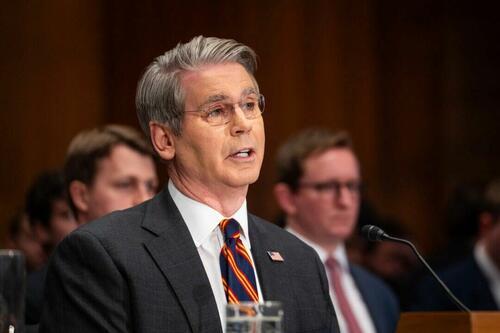
Watch: Bessent Teases ‘Series Of Announcements’ To Stabilize Oil; Says Trump’s 15% Tariff Will Kick In This Week
Watch: Bessent Teases ‘Series Of Announcements’ To Stabilize Oil; Says Trump’s 15% Tariff Will Kick In This Week
Authored by Andrew Moran via The Epoch Times (emphasis ours),
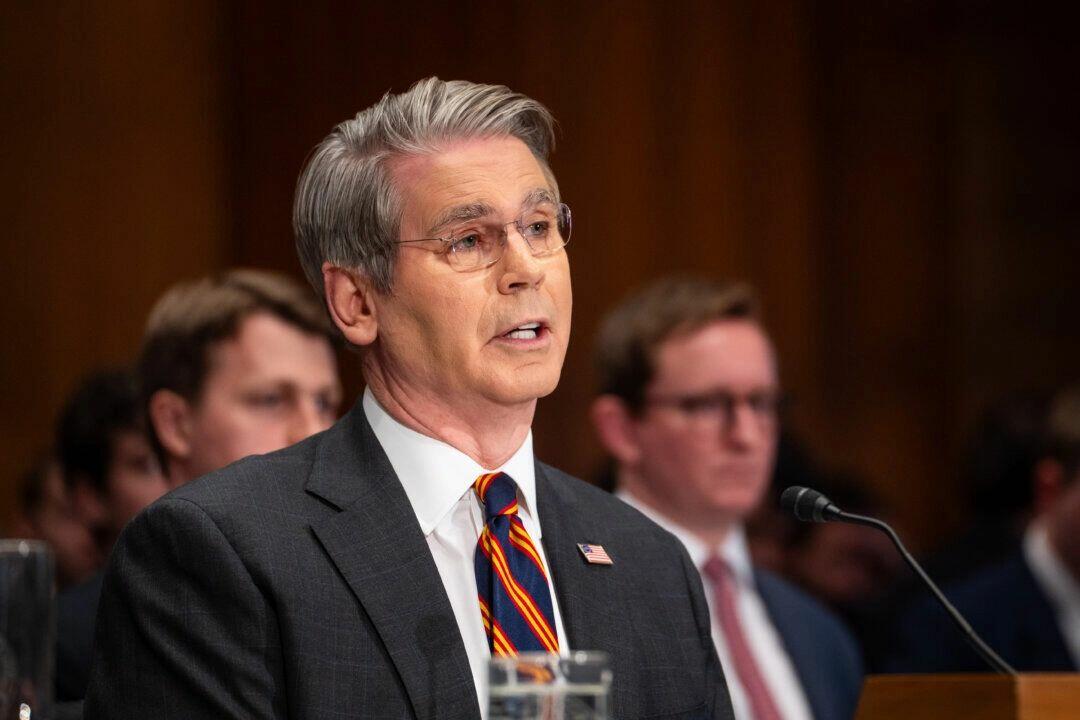
President Donald Trump’s 15 percent global tariff will take effect sometime this week, Treasury Secretary Scott Bessent said.
Following the Supreme Court’s rebuke of the president’s signature economic policy last month, Trump imposed a 10 percent global tariff, invoking Section 122 of the Trade Act of 1974. A day later, Trump pledged to raise the rate to 15 percent.
In an interview with CNBC’s “Squawk Box” on March 4, Bessent confirmed that the new rate would be introduced sometime this week and remain in place for 150 days.
He also anticipates tariff rates would return to the levels that were in place before the high court’s decision.
“It’s my strong belief that the tariff rates will be back to their old rate within five months,” Bessent said.
“They have survived more than 4000 legal challenges. They are more slow moving, but they are more robust.”
Bessent says the global tariffs will be raised to 15% “likely sometime this week,” and adds “it’s my strong belief that the tariff rates will be back to their old rate within 5 months” pic.twitter.com/jBwAcrhf9C
— Aaron Rupar (@atrupar) March 4, 2026
Bessent’s comments come two days after a U.S. federal appeals court rejected the president’s effort to postpone legal proceedings connected to tariff refunds, sending the battle to a lower court.
Estimates suggest the federal government’s tariff refunds could total $175 billion.
Fiscal year-to-date, the administration’s tariffs have generated more than $150 billion, according to Treasury data as of March 2.
Oil Announcements Coming
Global energy markets have been highly volatile since the Iran War, with crude oil and natural gas prices rocketing on fears of supply disruptions.
The president calmed down the oil market on March 3.
In a Truth Social post, Trump said the White House would offer naval escorts and guarantee political risk insurance for commercial oil and gas tankers traveling through the Strait of Hormuz.
The Strait of Hormuz is a vital global chokepoint that handles approximately 20 million barrels of oil and petroleum products per day. It has effectively been shuttered as insurance companies canceled coverage or dramatically raised premiums.
But the administration will make additional announcements to help stabilize prices, Bessent said.
“We have a series of announcements that we’re going to be making,” Bessent stated.
“We began yesterday with the announcement that [Development Finance Corporation] will provide the insurance for both the crude carriers and the cargo ships operating in around the Gulf over the weekend.”
He shrugged off a possible energy shock as the Middle East conflict intensified, saying that the United States and the global marketplace maintain ample supplies.
Bessent: “Over the weekend, Lloyd’s of London nullified the insurance, so the US government is going to step in and provide safe passage through the straits for the oil tankers” pic.twitter.com/ItR5vFSQDG
— Aaron Rupar (@atrupar) March 4, 2026
“This was a well telegraphed geopolitical event. The crude market had already moved substantially over the past two months. The crude markets are very well supplied,” Bessent said.
A barrel of West Texas Intermediate—the U.S. benchmark for oil prices—fell by about 0.5 percent in pre-market trading to around $74 on the New York Mercantile Exchange.
Brent—the international benchmark—was little changed at slightly above $81 a barrel on London’s ICE Futures exchange.
“Oil prices retreated after news the U.S. will ensure safe passage through the Strait of Hormuz, easing fears of a major global supply shock,” Adam Turnquist, chief technical strategist for LPL Financial, said in a note emailed to The Epoch Times.
“Softer oil prices are also helping cool inflation concerns and pull interest rates lower.”
Market watchers had warned that the risk of oil prices reaching $100 were high if the narrow waterway were closed for an extended period.
U.S. stocks also rebounded midweek, with the leading benchmark averages in the green prior to the opening bell.
The blue-chip Dow Jones Industrial Average crashed by as much as 1,200 points on March 2 before paring most of its losses. The tech-heavy Nasdaq Composite Index also fell by about 400 points before trimming its decline. The broader S&P 500 had also fallen by around 1 percent.
Tyler Durden
Wed, 03/04/2026 – 11:00
Crude Stocks Rise 3.5 Million, Highest Since May 2025
Crude Stocks Rise 3.5 Million, Highest Since May 2025
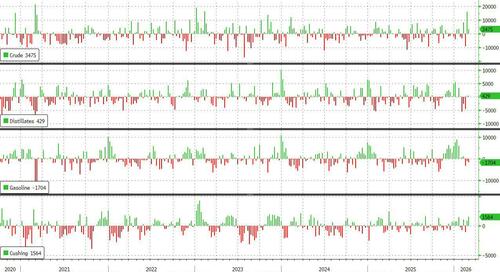
With oil flows passing through the Straits of Hormuz blocked indefinitely, markets were paying especially close attention to today’s weekly DOE report on oil stocks, to see how much capacity the US has in case of a prolonged lockout. The result was satisfactory.
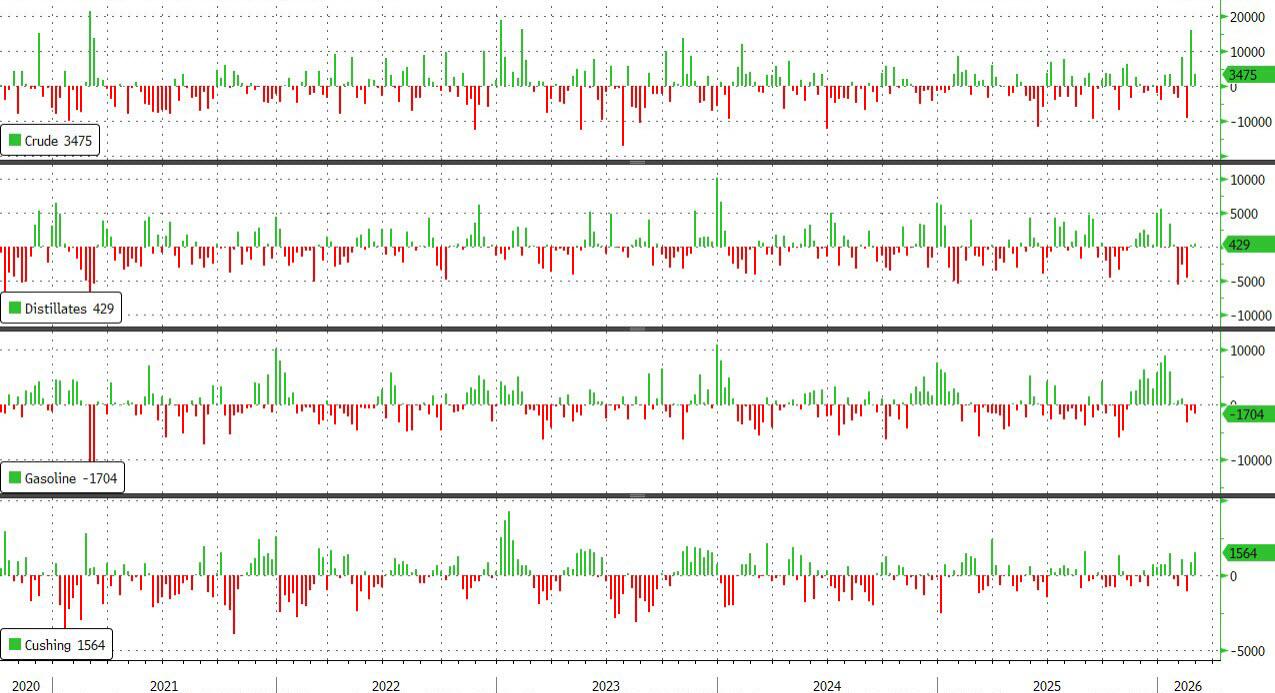
The DOE reported the following weekly changes:
Crude +3.475MM, more than the expected +3.00MM, and the highest since May 2025
Gasoline -1.704MM, down to the lowest since Jan 9, 2026
Distillates +429K, biggest increase since Jan 2026
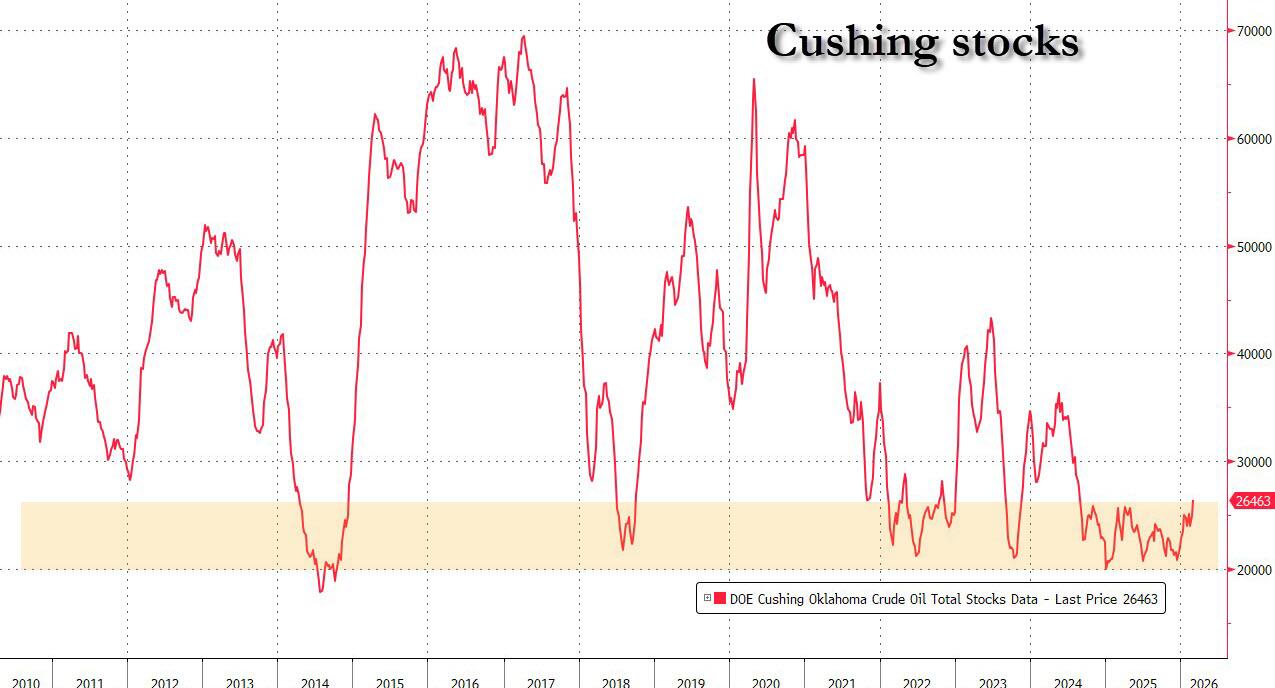
Cushing +1.6MM, rising to the highest since Aug 23, 2024.
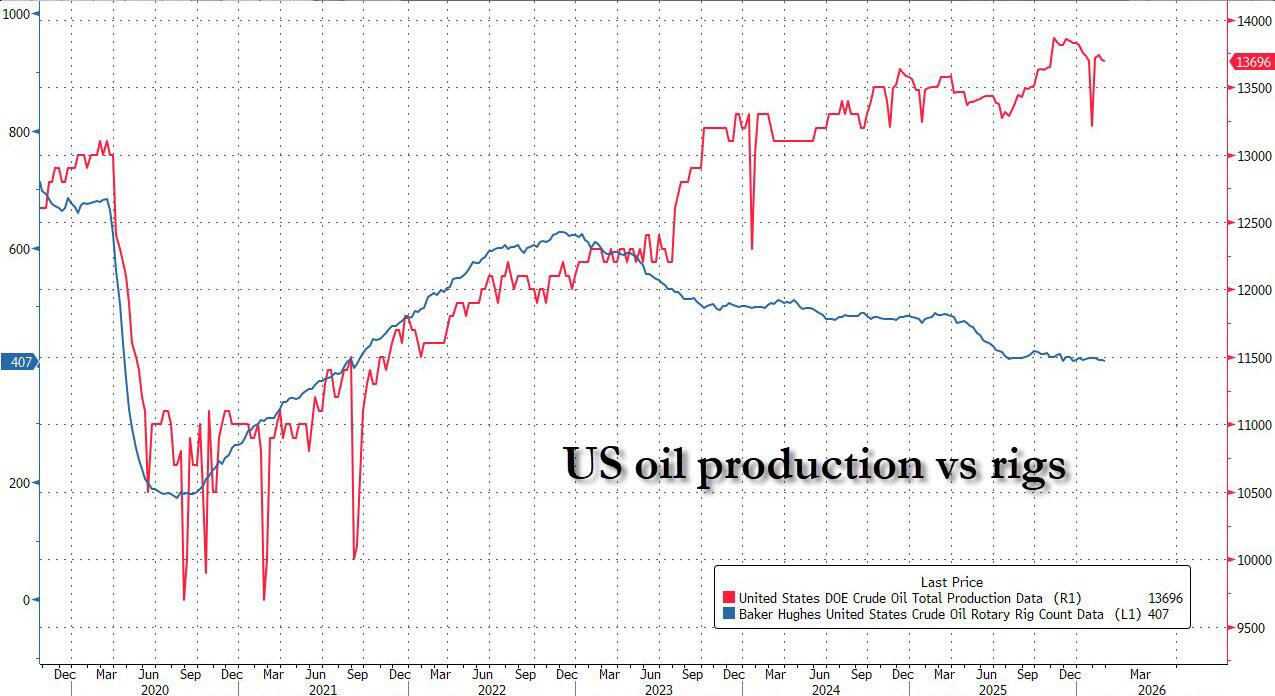
Visually:
Also notable: production dipped modestly by -6kbd to 13.696MMb/d, yet the total US output remains remarkable especially when considering the sharp drop in wells in recent years.
Finally, while still relatively low, Cushing stocks continue to rise, and this week’s 1.6 million barrel increase to 26.5 million pushes them to the highest since August 2024.
Overall, this was a welcome report as it showed that not only is US oil production humming along, but US commercial stocks continue to increase and in a worst case scenario of prolonged Hormuz closure, the US can remain relatively energy independent, even if Asia and especially China and Korea scramble to find alternatives to Gulf energy.
Tyler Durden
Wed, 03/04/2026 – 10:48
https://www.zerohedge.com/commodities/crude-stocks-rise-35-million-highest-may-2025