Category: News

War, Oil And Debt: Which Threats To The US Economy Are Legit?
War, Oil And Debt: Which Threats To The US Economy Are Legit?
Authored by Brandon Smith via Alt-Market.us
It’s the magic number, the line that’s not supposed to be crossed; when a nation’s public debt finally exceeds its GDP. Historically speaking, it’s not a sign of doom like many economists suggest. Numerous countries have sustained for decades with a ratio of well over 100% and many other factors have to be considered before it’s officially time to panic. Of course, there are some cautionary tales.
Greece and Argentina are two examples. A number of developing countries shave been hit with precipitous decline after they hit the 100% mark. In the case of the US, having access to the world reserve currency changes the dynamic dramatically. Debt does not act like debt in an environment where global trade and investment is mostly is priced in dollars and you control the ability to print those dollars at will.
That said, the recent historic milestone has many people suddenly worried about the state of the US system and the precarious nature of the geopolitical landscape going into the future.
Gross national debt for the US crossed the 100% mark back in 2012. The official public debt touched 101% last month. This factor combined with the inflation of the Biden era and the geopolitical uncertainty of the Trump era has the media talking out loud about the kind of crisis we alternative economists have been warning about for quite some time.
It’s certainly an startling change; alternative economists are no longer the voice in the wilderness. But let’s consider for a moment WHY the mainstream has decided to adopt a crisis posture after so many years of ignoring the obvious.
It’s Okay To Talk About A Crash If It Can Be Blamed On Trump
The corporate media has a clear economic bias; optics must be good for establishment endorsed leaders and optics must remain bad for any political leaders on the naughty list. Regardless of what a person might think of Trump’s presidency so far, it’s impossible to ignore the fact that the media spins his every move into a negative, even when he succeeds beyond expectations.
The tariffs are a perfect example – After Trump announced his aggressive strategy to counter outsourcing, the media and Democrats asserted that an unprecedented inflationary disaster was inevitable. This never happened.
They claimed consumers would have to eat the cost of the trade taxes on international corporations. This didn’t happen either. In reality, the CPI barely budged in response to tariffs. Why? Because companies are absorbing the higher costs (as I and some other economists predicted).
The retail markups on goods made overseas are substantial. International conglomerates have plenty of room to take the hit while avoiding raising prices on the shelf. Trump knows this, and anyone who has studied export markets knows this. Yet, the demonization campaign against tariffs was absolutely frantic.
This is just one example of a false threat; an imagined crisis fabricated for the sake of political interests rather than the for sake of protecting the American people. It’s important to be able to discern between very real economic dangers and false narratives designed to target and scapegoat.
Suddenly The Mainstream Is Noticing US Debt
The Committee for a Responsible Federal Budget (CRFB), a Washington-based fiscal watchdog, released a sweeping new report this week warning that policymakers are “woefully underprepared” to handle the next recession or financial shock.
They assert that the national debt crossing the 100% benchmark is one signal among many that the US cannot handle a surprise destabilization event, though they note that interest payments on that debt are the greater concern. By 2036, according to Congressional Budget Office projections, debt is on track to reach 120% of GDP with interest swallowing $0.26 of every dollar the government takes in.
The report also warned about rising inflation dangers associated with monetary policy. This falls in line with reports of tensions between Trump and the Federal Reserve, but corporate news sources are painting the Fed as a kind of “wayward institution” stuck in the middle of a bad situation they have nothing to do with. In reality, the Fed is the cause of most of our nation’s debt and inflation problems; they enable the money printing bonanza and they are unaccountable to the American public.
Fortune Magazine has tied threats of inflation and debt accumulation to the Iran war, and Bloomberg has published articles lamenting an inevitable “wave of global inflation” due to the conflict. I find this fascinating given the media’s refusal to accept that inflation existed after the 2020 election. Bloomberg even asserted that rising inflation was a “mirage” and Fortune reprinted those claims.
The question is not what Trump will do in the face of a crisis event; rather, we must ask what the Fed will do? Will they raise rates again to mitigate inflationary pressure, or will they turn the money printers back on to stave off any potential deflationary consequences. Given their track record, it is likely the Fed will inflate, but high interest rates at this time could also be devastating.
With the GOP ostensibly in control of the government the bankers might be able to divert all blame onto conservatives policies, and to me this is the real concern. Will the Fed pull the plug on the economy simply because they have a convenient scapegoat?
Geopolitical Black Swan Or Minor Blip On The Radar?
Over the past couple years I have warned extensively about war with Iran, specifically in relation to the Strait of Hormuz and the 20% of global oil shipments that travel through it every year. The war itself is superfluous; I have little doubt that the US can and will destroy the majority of Iranian military infrastructure within a couple months. The greater danger is how easy it will be for insurgent elements to keep the strait closed using simple guerrilla tactics.
It doesn’t take much to block up the narrow strait and threaten global oil prices. Securing it would have to be a top priority of the Trump Administration, which seems to be the case given Trump’s latest statements. Troops on the ground are unavoidable to ensure the Hormuz remains clear, and this is going to ruffle a lot of feathers.
The strait is the only legitimate geopolitical leverage Iran has against the US, but not in the way many people assume. It is true that IF the Hormuz remains contested for more than a couple months, the economic effects could cascade into the markets and cause serious instability. However, this instability will initially affect the East, not the West.
Only 7% of US oil imports and 6% of European oil imports pass through the Hormuz. In comparison around 50% of China’s oil imports and 40% of India’s imports rely on the strait. The hardest hit, however, will be Japan, with over 70% of their oil imports relying on ships passing through the Hormuz. And, as most economists know, Japan’s markets are deeply intertwined with US markets through the Yen carry trade.
In Japan, ongoing oil-driven inflation could pressure the Bank of Japan to tighten policy through rate hikes or reduced bond buying. This narrows the carry trade differential, eroding carry profits and potentially triggering an unwind. In other words, it will no longer be cheap for investors to borrow Yen at near zero rates and then buy assets in the US.
Prices would have to rise considerably in order to trigger such a cascade, though. It’s important to note that the panic over an impending energy crisis is currently based on speculation and not legitimate shortages.
When an actual crisis occurs, we’ll know it. When shale oil drillers in the US ramp up production because they KNOW the high prices can sustain them, then it’s time to worry. When we see sustained weekly gas price spikes of 10%-20%, then it’s time to worry. If foreign countries initiate a large scale dump of the dollar as the petro currency, then it’s time to worry.
The war itself would have to carry on for many months to create these conditions and I’m not convinced yet that this will be the case. The expectation among many on the political left (and among libertarians) is that the war in Iran will carry on for years because that’s what happened in Iraq and Afghanistan.
I have to ask this question, though: Has anyone considered the possibility that those wars lasted for decades because they were DESIGNED to go on for decades? Who decided the objectives? Who decided the parameters for success? Who decided that occupation was necessary? It was establishment Neo-cons and Democrats that created the necessity of occupation out of thin air. “Defeating the enemy” became a secondary concern.
The length of the Iran war will not be decided by the current Iranian regime, it will be decided by Trump. If the only objective is to destroy Iran’s ability to project military power and to secure the Hormuz (and avoid occupation of the greater territory), then the war will be short and there will be no energy crisis.
This is not my endorsement of the war in general, just the facts. There are much bigger threats to the US economy and the global economy than Iran right now.
The Real Danger
Iran has the potential to become a “linchpin” disaster, but the conditions are not right for one yet. For now, I continue to believe that the most significant danger to the global economy and the US economy is still the European oligarchy and their push for war with Russia over Ukraine. Any move by the Europeans to deploy troops to the region could result in a large scale war that would dwarf the events in Iran and completely derail already fragile economic structures.
If you’re worried about global Armageddon, look to Ukraine, not Iran.
The largest secondary hazard is domestic. NGO funded leftist riots, terror attacks and movements to burn the country to the ground in the name of Marxist “deconstruction” are more perilous to the US than most of the populace understands. Add to this the increasing number of Islamic terror attacks and we’ve got a recipe for civil breakdown. Internal insurgencies would have to be handled by the armed citizenry rather than sitting around and relying on the government to do everything.
Then you have the Federal Reserve and the Catch-22 policy conundrum. The central bankers could, theoretically, collapse the US economy at any given moment using the sudden whiplash of a large rate hike or a large stimulus program. The financial system would not be able to adapt this time. With Trump in office I would argue that the bank is MORE likely to do this.
There is a fine line between vigilance and hysteria. We have to be careful not to blackpill ourselves into oblivion over events like tariffs or the war in Iran. That said, there are indeed very real catalysts brewing within geopolitics and on the home front. At bottom, there are people out there that desperately WANT the US to collapse.
For them, every crisis is an opportunity to push their agenda forward whether those crises are engineered or not. By extension, some threats are fabricated and exaggerated to conjure up a public frenzy, manipulate popular opinion and destroy the US from within. Knowing what is real and what is illusion is essential to our nation’s survival.
Tyler Durden
Sat, 03/14/2026 – 23:10
https://www.zerohedge.com/economics/war-oil-and-debt-which-threats-us-economy-are-legit

Over 3 Million Iranians Forcibly Displaced Under US-Israeli Bombardment
Over 3 Million Iranians Forcibly Displaced Under US-Israeli Bombardment
More than 3 million Iranians have been displaced by the ongoing US-Israeli war against the Islamic Republic, according to the main UN refugee agency. Ayaki Ito, director of the Division of Emergency and Program Support at the UN refugee agency, has described that the US-Israeli attack has already triggered mass internal displacement across Iran.
“Between 600,000 and 1 million Iranian households are now temporarily displaced inside Iran as a result of the ongoing conflict, according to preliminary assessments, representing up to 3.2 million people,” Ito said.
The dark and twisted irony in all of this is that Washington and Tel Aviv have claimed they want to “help” the Iranian people go “free“… by bombing them and destroying their civic infrastructure, apparently.
Most of those fleeing are leaving Tehran and other major cities as the air war intensifies and the crisis accelerates.
Though there were Friday scenes of large crowds of Iranian in Tehran streets and city squares defiantly protesting the US attacks – even as bombs fell around them – most Iranians are likely trying a way to flee to the countryside, or stay away from big cities in the homes of relatives.
The number of forcibly displaced people “is likely to continue rising as hostilities persist, marking a worrying escalation in humanitarian needs,” the UN official added.
Iran also currently plays host to the largest population of refugees from Afghanistan (with Pakistan also hosting a huge number), in the millions of people. The war in Iran is said to be hitting Afghans hard, as resources must be rushed elsewhere as the bombs fall.
Meanwhile, the death toll from the US-Israeli bombing campaign continues to climb. The official death count is approaching 1500 people, including 165 children killed in a reportedly US double-tap strike on a girls’ school.
The conflict is also fueling a parallel refugee crisis across the region, which could also potentially impact some Gulf regions. For example, Bahrain is experiencing some degree of destabilization as its huge Shia population rises up against the Sunni monarchy, and clashes with police have ensued.
In Lebanon, relentless Israeli strikes have displaced almost 15% of the country’s population, more than 800,000 people, monitors have said.
Mass evacuation orders issued by Israel now cover all of southern Lebanon and large sections of the capital, Beirut, forcing hundreds of thousands to flee as the war spreads across the Middle East.
Tyler Durden
Sat, 03/14/2026 – 22:25

Jet Fuel Prices Soar As War In Iran Ripples Through Global Aviation
Jet Fuel Prices Soar As War In Iran Ripples Through Global Aviation
Authored by Felicity Bradstock via OilPrice.com,
Airlines, including Qantas, SAS, and Air New Zealand, have already announced airfare increases.
Surging jet fuel prices and disruptions in the Strait of Hormuz are squeezing airline operations.
Prolonged conflict could weaken travel demand and deepen pressure on global airline stocks.
As the war in Iran spills over into other parts of the Middle East, energy experts expect the price of several oil and gas products to soar over the coming months, driven by shortages. This will likely affect flight prices, with several airlines warning of anticipated price hikes. It could lead to a travel slump, as consumers wait for prices to fall again.
Australia’s Qantas Airways, Scandinavia’s SAS, and Air New Zealand are three of the airlines to have already announced airfare hikes in response to the ongoing conflict in the Middle East. The airlines cited the abrupt spike in the cost of fuel driven by the U.S.-Israel attack on Iran as the reason for the move.
Jet fuel prices rose from between $85 to $90 a barrel before the attack on Iran to as much as $150 to $200 a barrel this week. This has led several airlines to reconsider their financial outlooks for 2026, as the uncertainty makes it impossible to predict where the price of fossil fuels will go in the coming months.
The war in Iran has led to the closure of the Strait of Hormuz, a key trade corridor connecting the Persian Gulf with the Gulf of Oman and the Arabian Sea. The strait is considered a chokepoint, as there are few alternative options for energy transportation, beyond some limited pipeline networks in the region. The dramatic reduction in the transport of fossil fuels through the strait, which is said to have created the biggest oil supply disruption in history, has driven oil and gas prices up sharply in recent weeks.
An SAS spokesperson told Reuters, “Increases of this magnitude make it necessary to react in order to maintain stable and reliable operations,” adding that the airline has implemented a “temporary price adjustment.”
Some airlines will be more affected than others by the increase in jet fuel prices. For example, several Asian and European airlines, such as Lufthansa and Ryanair, have oil hedging in place, meaning that a part of their fuel supplies is maintained at a fixed rate. However, some companies are concerned that even the hedged fuel reserves may be at risk.
Finnair hedged more than 80 percent of its first-quarter fuel purchases and now worries that the fuel may no longer be available if the conflict continues. Some major jet fuel producers, such as Kuwait, have already been forced to reduce production and export quantities in recent weeks.
Another challenge that is driving airfares up is the closure of several airspaces because of the ongoing conflict, which has affected several Asia-Europe routes. Some airlines have been forced to open alternative flight routes for passengers to reach their destinations. Pilots have also been forced to reroute to avoid the Middle East conflict, while capacity on popular routes has rapidly increased.
“Absent near-term relief, airlines around the world could be forced to ground thousands of aircraft while some of the industry’s financially weakest carriers could halt operations,” Deutsche analysts were reported to have said in a note to clients.
Meanwhile, some companies, such as British Airways, are confident that they can maintain their current ticket prices in the near-term until more is known about the mid- to long-term impact of the conflict. However, British Airways has cut certain routes due to continuing uncertainty, such as its seasonal flights to Abu Dhabi.
The uncertainty means that several airlines, across Asia, Europe, and North America, are seeing their shares plummet. Lorraine Tan, the director of equity research, Asia at Morningstar, stated, “The issue for the airlines now is that travel demand may be curtailed as costs become prohibitive for leisure travellers and as some companies start to limit business travel due to the uncertain outlook.”
On Monday, during a party conference in Florida, U.S. President Trump announced, “We have already won in many ways, but we haven’t won enough,” in reference to the war in Iran. Trump says. The president added, “We go forward more determined to achieve ultimate victory that will end this long-running danger once and for all.” Trump’s speech, as well as mixed messages from the president to several media outlets, have caused greater uncertainty, as there is no clear timeline for the conflict or an idea about when it might end.
The ongoing conflict in the Middle East has already caused significant energy supply chain disruptions, which have driven oil and gas prices up. Meanwhile, uncertainties about when the U.S.-Israeli intervention in Iran will come to an end have led stocks across a range of industries to fall sharply. While many airlines attempt to weather the storm, it is likely that we will see significant price increases in airfares in the coming months.
Tyler Durden
Sat, 03/14/2026 – 21:40
https://www.zerohedge.com/political/jet-fuel-prices-soar-war-iran-ripples-through-global-aviation
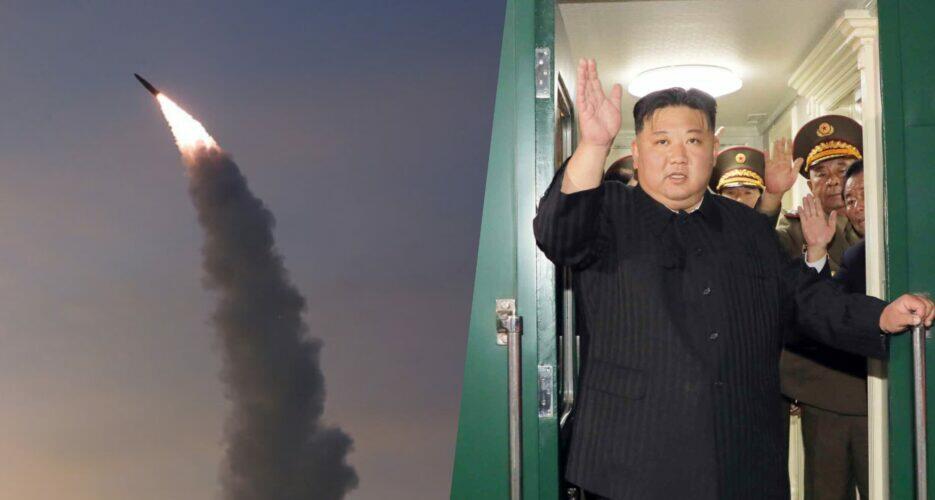
North Korea Fires 10 Ballistic Missiles, Flexing During US Regional Drills
North Korea Fires 10 Ballistic Missiles, Flexing During US Regional Drills
It’s obvious that ‘wars of choice’ never get launched against nuclear-armed powers, and countries like North Korea want to keep it that way, given it is already treated like a ‘rogue’ state by the West.
Saturday saw Pyongyang engage in more muscle-flexing, as its military fired about 10 ballistic missiles toward the eastern sea, according to South Korea’s military said, staging its own show of force as the rival South conducts a joint military exercise with the United States.
Japan’s Defense Ministry indicated the warheads landed in waters outside the country’s exclusive economic zone, which is somewhat typical anytime the north conducts missile tests.
Regional media further says “The Japanese government has convened an emergency response team consisting of officials from relevant ministries and agencies at the crisis management center in the prime minister’s office. The team is collecting information and confirming if there is any damage.”
South Korea is meanwhile on high alert and says it has stepped up surveillance and military readiness in light of the new drills.
Pyongyang’s actions aren’t completely unprovoked, as the muscle-flexing comes as there’s the same south of the border, per NBC:
The launches came as the U.S. and South Korean militaries conduct their annual springtime exercises involving thousands of troops while the Trump administration also wages an escalating war in the Middle East.
The war has raised concerns about potential security lapses in South Korea, as local media — citing security camera footage and other images — have speculated that the U.S. is relocating some missile defense assets stationed in the country to support operations against Iran.
To be sure, while the Kim regime traditionally rages over the drills on its border, claiming they are rehearsals for invasion, although it may well be right: US forces have been flooding into the Pacific over recent years with warships, warplanes, missiles and the army all on standby.
However, some of these regional assets – especially anti-air defense systems – are now being transferred over to the Middle East region amid the now over two-week-long Iran war.
Tyler Durden
Sat, 03/14/2026 – 20:55
Iran War Exposes America’s Unfixed Supply Chains
Iran War Exposes America’s Unfixed Supply Chains
Authored by David Dayen via The American Prospect,
One of the more fascinating sidelights of our war of choice in Iran is how it has reinforced the devastating consequences of our hollowed-out industrial base, consolidated commercial sector, and overreliance on long intermediated supply chains.
For example, the effective closure of the Strait of Hormuz carries implications for not only oil but also fertilizer, right at the height of the spring planting season. About one-third of the world’s fertilizer ships through the strait, and without access, prices have jumped and farmers are anxious. Yet there are enough natural resources in the United States—nitrogen, phosphate, potash—to serve all our fertilizer needs; in fact, in the 1930s and ’40s one of the largest fertilizer producers in the world was the Tennessee Valley Authority. This production was wound down in the 1970s; today the industry is dominated by two to four firms, and that may end up having existential implications for hungry people the world over.
A more comically shortsighted example concerns our depleted stock of munitions, one of the few industrial capacities America has retained but which still is imperiled by concentration and outsourcing. These are of course the basic materials necessary to prosecute a war, and you’d think it would be the one item countries would retain the ability to produce themselves. But our trillion-dollar military operates more like a welfare program to help underprivileged Northern Virginia contractors buy second homes and luxury yachts, not as a force that has what it needs when it needs it. Pacifists should rejoice; stupidity in military supply chains puts a binding limit on how many brown-skinned people we can kill.
In the 1990s, dozens of military contractors were reduced to five prime integrators, something demanded by Clinton Defense Secretary Les Aspin and his deputy (and future defense secretary) William Perry at a meeting known as the “Last Supper.” Nearly all weapons and delivery systems now flow through Boeing, Raytheon, Lockheed Martin, Northrop Grumman, and General Dynamics. Executives at these companies were called into the White House last Friday—less than a week after the war began—to discuss how to accelerate offensive and especially defensive weapons production amid a shortage that already was weighing on the military. This was after Defense Secretary Pete Hegseth said that the war was saved by shifting to smaller bombs rather than “exquisite” munitions for the campaign. If that was the case, why have the meeting?
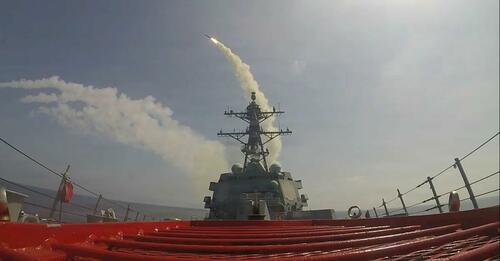
Specifically, the Terminal High Altitude Area Defense (THAAD) missile systems are so complex that only 96 get built per year; about one-quarter of the U.S. stockpile was used last year in Israel’s brief war with Iran, with many more flying every day as this war continues. Patriot interceptor systems are cheaper and easier to build, but inventories were a quarter full before the war started. Offensive Tomahawk missiles can be produced with greater frequency as well, but as of October last year the stockpile of that weapon was far short of its target. Something like $5.6 billion in weaponry was burned off in just the first two days of the Iran campaign. Trump’s lying aside, analysts who know something are clear on this point: The nation has a few weeks of bombing left before running out of the precision munitions typically used in modern warfare.
To be sure, the shortage has much to do with the U.S. selling off weapons to Ukraine and Israel to prosecute their wars. (Ukraine is trying to pull off a trade of Patriot missiles for instruction in intercepting drones.) But it seems impossible that a military that spends more than the next nine militaries combined would reach a point of shortage so rapidly. But that’s what happens when military contractors are really financial market optimization machines.
As The Lever has reported, leading military contractors have spent $110 billion on stock buybacks over the last five years, something so repugnant that even Trump has issued an executive order trying to ban it. Meanwhile, contractual overrun-by-design has become the industry standard. As I wrote last year, Lockheed has an F-35 Joint Strike Fighter that has cost $2 trillion over its lifespan and can’t travel long distances or be used in close-range combat, with hundreds of continuing defects that have not derailed its production. All this cash eventually ends up in the pockets of executives and shareholders.
This is why we have to race to take out opposing defenses quickly before we run out of the products that can do that. If we have a trillion-dollar military, but a week after you start to use it everyone screams that they’ve run out of everything and that more money is needed, then you don’t have a trillion-dollar military; you just have a contractor enrichment factory.
The White House has been rumbling about a $50 billion supplemental funding request, something they obviously find so critical that Republicans might burn up their last reconciliation bill of the year on approving it. Lockheed came out of the White House meeting saying they would “quadruple” Tomahawk production, though they didn’t give a timeline. It’s important to note that current production lines are generally too small for an extreme ramp-up, a fact magnified by the lack of competition. This isn’t about “underperforming” contractors, it’s simply about too few of them.
But there’s a far bigger problem here, as Mark Bowden has written about: America lacks the components for these weapons as much as it lacks the capacity to build them. And the biggest missing components are the rare earth minerals used in missile guidance and other essential systems.
According to the South China Morning Post, the U.S. has just two months of rare earth supply left for its military needs. Now, a Chinese-owned paper may be intentionally saying that, because China has a near-monopoly on the processing of rare earths, the raw materials of which are not that rare. But it certainly wouldn’t be surprising, since rare earths have been used as a tool for leverage in the endless U.S.-China trade wars. China has been turning export controls off and on over the past year, though they were up in January and February by about 20 percent relative to 2025. A high-level meeting will be held on rare earth exports next month.
The Trump administration has been buying stakes in domestic rare earth companies and mining operations, and they are generally aware of the need for resiliency and self-reliance, as the Biden administration was. But destroying the electric-vehicle sector in America, as the Trump administration did, eliminated an additional market for rare earths that might have sustained domestic producers. And the cronyism at work in these financing deals—the recent stake in USA Rare Earth is marred by the fact that Howard Lutnick’s former bank Cantor Fitzgerald is the company’s chief placement agent—suggests that the main goal is less restoring domestic supply chains and more nest-feathering.
Even if they were legitimate deals, rare earth mining and processing can take years to set up, with bombs dropping every day. This means the duration and intensity of our war effort is in some very real way at the discretion of China. That will almost certainly become a subject in upcoming trade negotiations, as the SCMP report indicates.
The U.S. invented rare earth magnets used in all these technologies. We gave away the industry and closed the last processing plant over 20 years ago. The business mantra of moving production to where it is cheapest has bitten us in the ass in countless industries over the years. Bombs are probably the least sympathetic one, but since they’ve become Trump’s go-to means of geopolitics—he’s bombed enough countries in his second term to fill more than two World Cup brackets—it’s worth noting how monopolization, financialization, globalization, and weakened industrial capacity are ruining that imperative, just as they have destroyed our self-sufficiency and pillars of our economy. And if we ever have a national-security threat to the country, it’s been made far more perilous by these forces, which have created unacceptable dependencies on foreign nations.
This was a choice, and like any other choice it can be reversed. But that would require dislodging our lords of capital.
Tyler Durden
Sat, 03/14/2026 – 20:10
https://www.zerohedge.com/geopolitical/iran-war-exposes-americas-unfixed-supply-chains
Meta Plans 20% Layoffs To Divert Capital To Data Centers
Meta Plans 20% Layoffs To Divert Capital To Data Centers
On Friday we noted that Meta has delayed the rollout of its latest AI model because it sucks – and may temporarily license superior models like Gemini to power the company’s AI products.
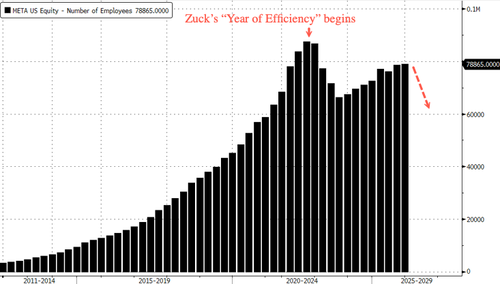
Now, Meta is reportedly mulling a massive new round of layoffs that could affect more than 20% of its workforce as it accelerates spending on AI data center buildouts. The move comes as other hyperscalers consider similar workforce restructurings to redirect capital flows toward AI infrastructure.
Reuters cited people familiar with the plans and said no final decision or timeline has been set for the restructuring. The report added that senior leaders have already been told to begin planning cuts.
Top executives have recently signaled the plans to other senior leaders at Meta and told them to begin planning how to pare back, two of the people said. The sources spoke anonymously because they were not authorized to disclose the cuts. -RTRS
The latest Bloomberg data show Meta’s total workforce at the end of 2025 was about 79,000, meaning a 20% reduction would amount to nearly 16,000 workers. Meta CEO Mark Zuckerberg has already been downsizing the workforce since the 2022-23 “year of efficiency” layoffs.
“This is speculative reporting about theoretical approaches,” Meta spokesperson Andy Stone told the outlet.
Meta’s labor restructuring suggests the insane Covid-era hiring binge is being aggressively unwound. The company cut 11,000 workers in November 2022, or about 13% of its workforce, and it would not be surprising if more cuts are still to come.
Meta plans to spend $600 billion on data centers by 2028 and recently announced it had acquired Moltbook, a social networking platform built for AI agents. Meta is also acquiring Chinese AI startup Manus for $2 billion.
Earlier this month, Bloomberg reported that Oracle was planning to lay off thousands of workers as it spends aggressively on AI data center buildouts. Amazon confirmed in January that it would cut 16,000 jobs, while Block slashed its workforce by half last month.
Let’s not forget this 2023 Goldman note…
so yeah, time to reread this from March 2023:
AI Will Lead To 300 Million Layoffs In The US And Europe https://t.co/iav1uCy07u pic.twitter.com/y5WjW2sPao
— zerohedge (@zerohedge) February 23, 2026
Last week, Palantir CEO Alex Karp delivered an apocalyptic warning to progressives, particularly “highly educated, often female voters, who vote mostly Democrat,” stating that their influence over the economy and broader society will erode as technologies such as AI transfer power to working-class, right-leaning men.
We expect that, in the era of AI, much of the Covid hiring across big tech will be unwound. Those coders will be back to bartending.
Tyler Durden
Sat, 03/14/2026 – 19:25
https://www.zerohedge.com/markets/meta-plans-20-layoffs-divert-capital-data-centers

Influenza Vaccine Effectiveness Lower In Recent Months, Preliminary Data Show
Influenza Vaccine Effectiveness Lower In Recent Months, Preliminary Data Show
Authored by Zachary Stieber via The Epoch Times (emphasis ours),
The effectiveness of vaccines against influenza dropped during the 2025–2026 virus season, officials said on March 12, about two months after the Centers for Disease Control and Prevention (CDC) stopped recommending flu vaccination for all children.
Vaccine effectiveness for late 2025 and early 2026 against outpatient visits and hospitalization was pegged at 14 percent to 48 percent among children, Dr. Lisa Grohskopf, with the CDC’s Influenza Division, said at a meeting hosted by the Food and Drug Administration (FDA).
The shielding among adults was just 22 percent to 34 percent, she said, based on data from CDC networks in 16 states.
Influenza vaccine effectiveness since 2009 has dropped as low as 19 percent and risen as high as 60 percent. It was 56 percent in late 2024 and early 2025, according to the CDC.
Grohskopf said the reasons for the decline from the prior season are not yet clear. Factors could include that fewer people received vaccines and a mismatch between strains in the vaccines and the strains that ended up circulating.
Most influenza cases in recent months have been caused by influenza A viruses, particularly an H3N2 subvariant called subclade K.
Grohskopf said the data are preliminary and could end up changing.
William Gruner, representing Department of War scientists, said at the same meeting that vaccine effectiveness among department networks against influenza-like illness from Nov. 9, 2025, through Feb. 21, 2026, was 32 percent among children and 46 percent among adults.
“Still a lot more data to be collected this season, so things can certainly change,” Gruner said.
They presented to the FDA’s Vaccines and Related Biological Products Advisory Committee during the largely virtual meeting.
Dr. Hayley Gans, a committee member, said she was concerned that the estimates were inaccurate.
“I think this data doesn’t support at least for what we see in pediatrics,” she told Grohskopf.
She also expressed a desire to see a wider population included in the CDC networks.
Gans later said to Gruner: “I just think that when people hear these rates of vaccine efficacy … we just have to be careful how that is sort of interpreted. These are largely efficacious to at least severe disease, at least in pediatrics, the ones that we see that are hospitalized largely fall in the undervaccinated group.
“There is some efficacy that we’re not capturing in all this data that we’re presenting.”
The committee later unanimously voted to advise the FDA to have vaccine manufacturers move forward with updated influenza shots that target two influenza A viruses, including a component targeting H3N2. The composition they recommended is the same that the World Health Organization recommended in February.
Global authorities typically release updated strain recommendations once or twice a year in a bid to improve the effectiveness of flu vaccines by trying to predict which strains will be circulating in the future.
Dr. David Kaslow, director of the FDA’s Office of Vaccines Research and Review, told committee members that the FDA appreciated their recommendation and discussion as officials try to figure out how to develop more effective seasonal influenza vaccines.
The CDC had for years advised virtually all Americans to receive an annual flu vaccination, but in January, with backing from Health Secretary Robert F. Kennedy Jr., it stated that children should receive a flu shot only after they and their parents consult with doctors and take into account the risks and benefits of the vaccines.
“The primary purpose of the childhood influenza vaccine in children is to reduce hospitalizations and mortality in children, as well as transmission to the elderly, who are of higher risk for death, but there are no randomized controlled trials demonstrating these benefits,” the CDC’s acting director at the time, Jim O’Neill, said in a memorandum explaining the decision.
Authors of a 2018 Cochrane Collaboration review said data showed that there was moderate certainty that influenza vaccines reduce flu infections among children. They also reported an inability to assess effectiveness against hospitalization due to a lack of data.
A different review published in 2025 said that influenza vaccines shield children against hospitalization.
The CDC said on its website in early March that seasonal flu activity remains elevated nationally, causing an estimated 26 million illnesses, 340,000 hospitalizations, and 21,000 deaths. It said that vaccination “has been shown to reduce the risk of flu and its potentially serious complications,” and it noted that several antiviral drugs are available for those who do contract the flu.
* * *
Tyler Durden
Sat, 03/14/2026 – 18:40

Honda Projects First Loss Since 1957 – $15.7 Billion – Thanks To EV Strategy Fail
Honda Projects First Loss Since 1957 – $15.7 Billion – Thanks To EV Strategy Fail
Authored by Rob Sabo via The Epoch Times (emphasis ours),
A reassessment of Honda Motor Co., Ltd., corporate electric vehicle (EV) strategy and planned cancellation of three EV models for the North American market could lead to losses totaling approximately $15.7 billion for its fiscal year ending March 31, the company said in a news release on March 12.
It would be the first time Honda has posted an annual loss since its shares were first listed on the Tokyo Stock Exchange in 1957.
Honda said it initiated a strategic shift in its manufacturing plans towards electrification due to major policy changes in the United States that pushed for widespread adoption of EVs—especially in smaller passenger vehicles—as a long-term solution for reaching carbon neutrality.
“Honda had been making steady progress in pursuit of EV adoption by leveraging its stable earnings base provided by existing gasoline and hybrid vehicle business based on technologies and know-how amassed through the development of hybrid models over many years,” the Tokyo-based automobile manufacturer said.
However, Honda said it was forced to reexamine its automobile electrification strategy due to recent changes in the EV business environment that led to declining profitability. Honda reported a near 50-percent year-over-year decline in operating profit for the quarter ended Dec. 31, 2025, due to heavy losses in its EV business segment and the impacts of President Donald Trump’s tariff policies.
Honda also cited economic pressure in Chinese and other Asian markets from new EV manufacturers making software-laden vehicles that are more in line with shifting consumer demand. The expiration of a $7,500 federal tax credit on the purchase of new electric vehicles on Sept. 30, 2025, also led to a significant reduction in consumer demand for EVs in the United States, Honda noted.
“Honda pursued EV adoption with strong determination that striving for carbon neutrality is a responsibility Honda, as a [manufacturer] of mobility products, must fulfill for the future. However, in the U.S., the expansion of the EV market has slowed down due to several factors including the easing of fossil fuel regulations and revisions to EV incentives,” the Japanese automaker said.
Honda said it now will cancel the planned development and market launch of the Honda 0 sport utility vehicle and 0 Saloon, as well as the Acura RSX. Honda unveiled two prototype models of its 0 series lineup at the Consumer Electronics Show in Las Vegas in January 2025.
“Honda automobile business has fallen into an extremely challenging earnings situation due to various factors, including its inability to respond flexibly to these changes in the business environment, compounded by a decline in the profitability of gasoline and hybrid models due to the impact of newly imposed tariffs,” Honda said.
Shares of Honda Motor Co., Ltd. were down nearly 6 percent in intraday trading. Honda’s stock has fallen more than 22 percent over the past six months.
Honda’s EV woes are shared by other automobile manufacturers. In December, Ford Motor Company said it would take a $19.5 billion writedown after discontinuing several EV models due to waning demand.
Tyler Durden
Sat, 03/14/2026 – 17:30

Honda Projects First Loss Since 1957 – $15.7 Billion – Thanks To EV Strategy Fail
Honda Projects First Loss Since 1957 – $15.7 Billion – Thanks To EV Strategy Fail
Authored by Rob Sabo via The Epoch Times (emphasis ours),
A reassessment of Honda Motor Co., Ltd., corporate electric vehicle (EV) strategy and planned cancellation of three EV models for the North American market could lead to losses totaling approximately $15.7 billion for its fiscal year ending March 31, the company said in a news release on March 12.
It would be the first time Honda has posted an annual loss since its shares were first listed on the Tokyo Stock Exchange in 1957.
Honda said it initiated a strategic shift in its manufacturing plans towards electrification due to major policy changes in the United States that pushed for widespread adoption of EVs—especially in smaller passenger vehicles—as a long-term solution for reaching carbon neutrality.
“Honda had been making steady progress in pursuit of EV adoption by leveraging its stable earnings base provided by existing gasoline and hybrid vehicle business based on technologies and know-how amassed through the development of hybrid models over many years,” the Tokyo-based automobile manufacturer said.
However, Honda said it was forced to reexamine its automobile electrification strategy due to recent changes in the EV business environment that led to declining profitability. Honda reported a near 50-percent year-over-year decline in operating profit for the quarter ended Dec. 31, 2025, due to heavy losses in its EV business segment and the impacts of President Donald Trump’s tariff policies.
Honda also cited economic pressure in Chinese and other Asian markets from new EV manufacturers making software-laden vehicles that are more in line with shifting consumer demand. The expiration of a $7,500 federal tax credit on the purchase of new electric vehicles on Sept. 30, 2025, also led to a significant reduction in consumer demand for EVs in the United States, Honda noted.
“Honda pursued EV adoption with strong determination that striving for carbon neutrality is a responsibility Honda, as a [manufacturer] of mobility products, must fulfill for the future. However, in the U.S., the expansion of the EV market has slowed down due to several factors including the easing of fossil fuel regulations and revisions to EV incentives,” the Japanese automaker said.
Honda said it now will cancel the planned development and market launch of the Honda 0 sport utility vehicle and 0 Saloon, as well as the Acura RSX. Honda unveiled two prototype models of its 0 series lineup at the Consumer Electronics Show in Las Vegas in January 2025.
“Honda automobile business has fallen into an extremely challenging earnings situation due to various factors, including its inability to respond flexibly to these changes in the business environment, compounded by a decline in the profitability of gasoline and hybrid models due to the impact of newly imposed tariffs,” Honda said.
Shares of Honda Motor Co., Ltd. were down nearly 6 percent in intraday trading. Honda’s stock has fallen more than 22 percent over the past six months.
Honda’s EV woes are shared by other automobile manufacturers. In December, Ford Motor Company said it would take a $19.5 billion writedown after discontinuing several EV models due to waning demand.
Tyler Durden
Sat, 03/14/2026 – 17:30

Honda Projects First Loss Since 1957 – $15.7 Billion – Thanks To EV Strategy Fail
Honda Projects First Loss Since 1957 – $15.7 Billion – Thanks To EV Strategy Fail
Authored by Rob Sabo via The Epoch Times (emphasis ours),
A reassessment of Honda Motor Co., Ltd., corporate electric vehicle (EV) strategy and planned cancellation of three EV models for the North American market could lead to losses totaling approximately $15.7 billion for its fiscal year ending March 31, the company said in a news release on March 12.
It would be the first time Honda has posted an annual loss since its shares were first listed on the Tokyo Stock Exchange in 1957.
Honda said it initiated a strategic shift in its manufacturing plans towards electrification due to major policy changes in the United States that pushed for widespread adoption of EVs—especially in smaller passenger vehicles—as a long-term solution for reaching carbon neutrality.
“Honda had been making steady progress in pursuit of EV adoption by leveraging its stable earnings base provided by existing gasoline and hybrid vehicle business based on technologies and know-how amassed through the development of hybrid models over many years,” the Tokyo-based automobile manufacturer said.
However, Honda said it was forced to reexamine its automobile electrification strategy due to recent changes in the EV business environment that led to declining profitability. Honda reported a near 50-percent year-over-year decline in operating profit for the quarter ended Dec. 31, 2025, due to heavy losses in its EV business segment and the impacts of President Donald Trump’s tariff policies.
Honda also cited economic pressure in Chinese and other Asian markets from new EV manufacturers making software-laden vehicles that are more in line with shifting consumer demand. The expiration of a $7,500 federal tax credit on the purchase of new electric vehicles on Sept. 30, 2025, also led to a significant reduction in consumer demand for EVs in the United States, Honda noted.
“Honda pursued EV adoption with strong determination that striving for carbon neutrality is a responsibility Honda, as a [manufacturer] of mobility products, must fulfill for the future. However, in the U.S., the expansion of the EV market has slowed down due to several factors including the easing of fossil fuel regulations and revisions to EV incentives,” the Japanese automaker said.
Honda said it now will cancel the planned development and market launch of the Honda 0 sport utility vehicle and 0 Saloon, as well as the Acura RSX. Honda unveiled two prototype models of its 0 series lineup at the Consumer Electronics Show in Las Vegas in January 2025.
“Honda automobile business has fallen into an extremely challenging earnings situation due to various factors, including its inability to respond flexibly to these changes in the business environment, compounded by a decline in the profitability of gasoline and hybrid models due to the impact of newly imposed tariffs,” Honda said.
Shares of Honda Motor Co., Ltd. were down nearly 6 percent in intraday trading. Honda’s stock has fallen more than 22 percent over the past six months.
Honda’s EV woes are shared by other automobile manufacturers. In December, Ford Motor Company said it would take a $19.5 billion writedown after discontinuing several EV models due to waning demand.
Tyler Durden
Sat, 03/14/2026 – 17:30