Category: News

Now They Are Actually Admitting That There Is A Massive “Gravity Hole” Underneath Antarctica?
Now They Are Actually Admitting That There Is A Massive “Gravity Hole” Underneath Antarctica?
Authored by Michael Snyder via The End of the American Dream blog,
For decades, we were told to ignore any of the strange reports that we were hearing about Antarctica. Experts assured us that nothing unusual was going on and that there wasn’t anything to be concerned about. Of course we couldn’t go investigate for ourselves, because as you will see below, there are 72 areas of Antarctica that only those with a special permit are allowed to enter. And if you try to fly to Antarctica without authorization, you will get into all sorts of trouble.
So why all the secrecy?
What are they trying to hide from all the rest of us?
One thing that scientists are admitting about Antarctica is that it sits directly above the strongest “gravity hole” on the entire planet…
Earth may look like a smooth “blue marble” from space, but it’s better to imagine it as a slightly gnarled orange, with an inside that’s firm in parts, but squishier in others. Since the planet isn’t a perfect sphere and its internal density varies across the globe, gravitational pull changes from place to place. Where there’s less mass in the underlying geology, gravity is weaker, and vice versa.
These dips in the gravitational field are formally known as gravity anomalies, but they’re more commonly called “gravity holes”. The largest is found in the middle of the Indian Ocean, spanning over 3 million square kilometers (roughly 1,100,000 square miles), while the strongest is found in Antarctica.
Isn’t that interesting?
It turns out that there is a gigantic “hole” under Antarctica after all.
But the experts are insisting that there really isn’t anything particularly special about it. In fact, they try to make it sound as boring as possible…
A “gravity hole” beneath Antarctica sounds like the plot to a bad sci-fi movie, but it’s a very real situation deep beneath the Earth’s surface stretching back tens of millions of years. The phenomenon thankfully isn’t as apocalyptic as it sounds, either. In fact, researchers say these complex interactions between rock densities, gravitational pull, and sea levels are actually helping them understand how the southernmost continent’s ice sheets evolved, and what their influences mean for the planet’s climate.
Yawn.
That does sound pretty boring.
But could it be possible that there is a lot more to this than we are being told?
It is being reported that the team of researchers that mapped the colossal gravity hole directly under Antarctica was able to use a combination of methods to actually “reconstruct the three-dimensional structure” that exists underneath the continent…
In the study, published recently in Scientific Reports, Forte and Petar Glišović, Ph.D., of the Paris Institute of Earth Physics, mapped the Antarctic gravity hole and revealed how it developed over millions of years. They relied on an Earth-spanning scientific project that combined global earthquake recordings with physics-based modeling to reconstruct the three-dimensional structure inside Earth.
“Imagine doing a CT scan of the whole Earth, but we don’t have X-rays like we do in a medical office. We have earthquakes. Earthquake waves provide the ‘light’ that illuminates the interior of the planet,” Forte said.
It certainly appears that something is down there.
Could some of the reports that we have heard over the years actually be true?
I wouldn’t hold your breath waiting for the truth to come out.
Much of the continent is strictly off limits unless you have a special permit.
In fact, according to Wikipedia there are 72 sites that have been designated as Antarctic Specially Protected Areas…
An Antarctic Specially Protected Area (ASPA) is an area on the continent of Antarctica, or on nearby islands, which is protected by scientists and several different international bodies. The protected areas were established in 1961 under the Antarctic Treaty System, which governs all the land and water south of 60 latitude and protects against human development.[1] A permit is required for entry into any ASPA site.[2] The ASPA sites are protected by the governments of Australia, New Zealand, United States, United Kingdom, Chile, France, Argentina, Poland, Russia, Norway, Japan, India, Italy, and Republic of Korea. There are currently 72 sites.
They take security in Antarctica quite seriously.
When a 19-year-old American named Ethan Guo decided that he would fly down there without permission, he was immediately arrested…
A teenage pilot, who is attempting to fly all seven continents solo, hit a patch of rough air this weekend when Chilean authorities detained him for changing his flight plan without their permission and landing in Antarctica.
Chilean prosecutors say American influencer Ethan Guo, 19, broke “multiple national and international regulations” by changing his flight plans without prior notice, landing on a part of Antarctica where the South American country maintains a territorial claim.
CNN requested a comment from Guo, whose lawyer on Sunday said the young pilot had experienced “complications” while flying.
Yes, tourists can visit Antarctica.
But you must carefully obey the rules, and you must not wander away from the very limited areas that tourists are allowed to see.
Of course most of the good stuff is in areas where tourists are never allowed, and that includes the colossal pyramid that appears to have been man-made…
I have to admit, the symmetry of that structure is quite striking.
But even though it looks like an ancient Egyptian pyramid, the official story is that this is simply a naturally-occurring structure that was shaped by erosion…
In the vast, icy expanse of Antarctica, lies a mountain that, from an aerial view, resembles an ancient Egyptian pyramid. This striking formation, nestled in a sea of snow, has captured the imagination of internet users since it went viral in 2016. However, this pyramid-like mountain is no work of human or alien architects; it’s a product of nature’s slow and relentless erosion.
This unnamed mountain stands about 4,150 feet tall. It’s located in the southern part of the Ellsworth Mountains, a rugged range first glimpsed by American aviator Lincoln Ellsworth in 1935. The mountain’s pyramid shape is particularly notable because it has four steep sides, a feature that isn’t common among mountains.
I wish that I could go see it for myself.
But that certainly isn’t going to happen any time soon.
Interestingly, a “ring of fire” solar eclipse was visible in Antarctica on Tuesday…
A magnificent annular solar eclipse just swept over Antarctica, putting on an impressive display of orbital mechanics as the moon passed in front of the sun at the perfect distance from Earth to create a fiery halo in a darkened sky — at least for the few souls lucky enough to be in a position to see it.
Feb. 17’s annular solar eclipse occurred as the lunar disk slipped between the sun and Earth during its new moon phase. The alignment occurred as the moon travelled through a distant point in its elliptical orbit, making it appear smaller than usual in Earth’s sky.
Today’s eclipse got underway at 4:56 a.m. EST (0956 GMT), as the moon took an ever greater bite out of the solar disk, transforming its burning orb into a glowing crescent, before finally diving entirely within its fiery expanse. The moon — appearing fractionally smaller than usual — was unable to cover the entirety of the sun’s disk, leaving a thin sliver of its outer edge visible to surround Earth’s natural satellite to create a ring in the skies over Antarctica.
So many unusual things are happening in the heavens this year.
Next month there will be a spectacular blood moon eclipse, and the month after that an absolutely enormous comet may be visible to the naked eye during the daytime as it travels very close to the Sun.
We live in such interesting times, and I have a feeling that they will become even more interesting during the months ahead.
Michael’s new book entitled “10 Prophetic Events That Are Coming Next” is available in paperback and for the Kindle on Amazon.com, and you can subscribe to his Substack newsletter at michaeltsnyder.substack.com.
Tyler Durden
Sun, 03/15/2026 – 19:45

Will This Make Chicago Safe?
Will This Make Chicago Safe?
Authored by Steve Watson via Modernity.news,
An ultimatum issued by the Trump administration has pushed the Chicago Transit Authority to unveil a beefed-up security plan, threatening to yank federal funding unless the agency tackles the rampant crime plaguing its trains and buses.
This move comes after a string of brutal attacks exposed the failures of soft-on-crime policies in the Windy City.
The CTA submitted its Revised Security Enhancement Plan to the Federal Transit Administration, detailing a “75 percent increase in monthly system policing hours, aggressive crime reduction targets, and expanded social service support,” according to an official agency statement.
The Chicago Transit Authority unveiling a new security plan after the Trump administration said to tighten security or lose federal funding
The plan includes
– 75% increase in monthly policing hours
– Expansion of the CTA’s mental health outreach to connect people with social… pic.twitter.com/HneLWWDomj
— Wall Street Apes (@WallStreetApes) March 14, 2026
Elements include more patrols from Chicago Police and Cook County Sheriff’s deputies, expanded mental health outreach to connect individuals with housing and services, and tighter collaboration with prosecutors for tougher handling of transit-related crimes.
“The plan is CTA’s formal response to an FTA Special Directive issued in December,” the agency noted, highlighting early signs that recent strategies are curbing crime.
This overhaul follows the FTA’s rejection of an earlier CTA submission, with the Trump administration giving the agency until March 19 to deliver or risk losing up to $50 million in funds.
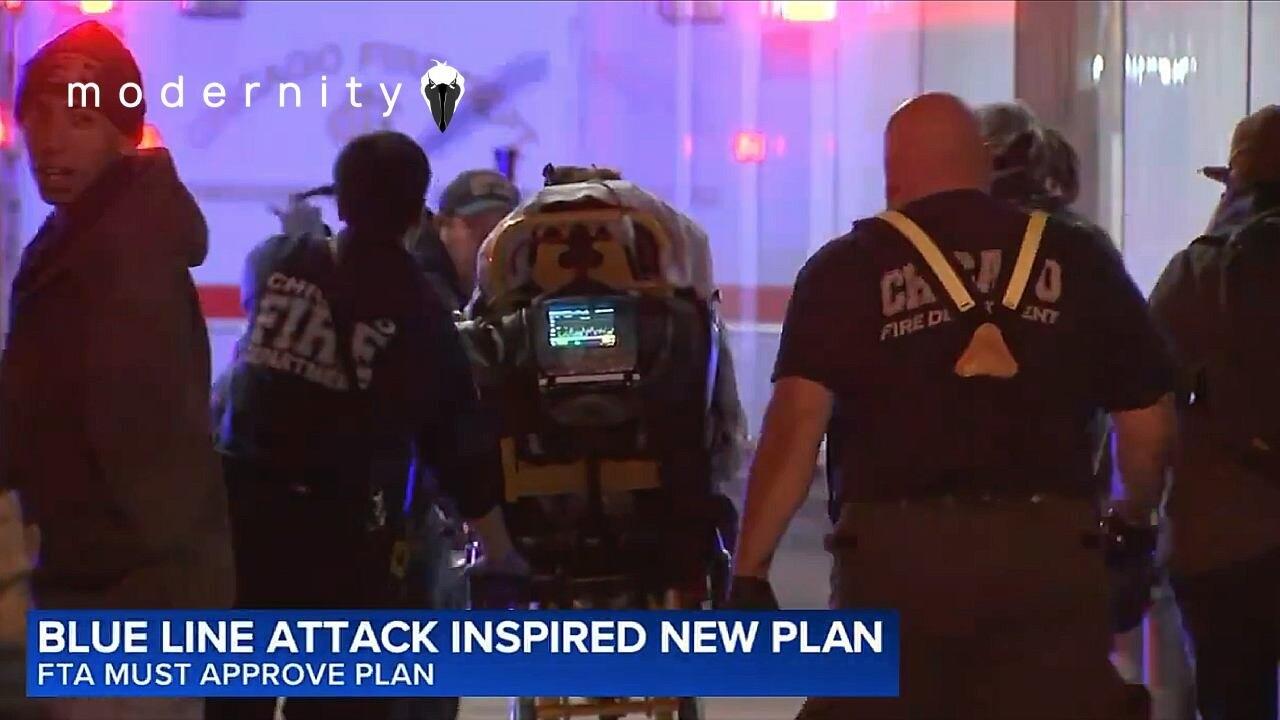
The push stems from high-profile horrors like the November 18 attack where Lawrence Reed, a career criminal with 72 prior arrests, allegedly doused a young woman with gasoline and set her ablaze on a Blue Line train.
That case and many like it have exposed how Democrat leniency under figures like DA Kim Foxx kept predators like Reed on the streets.
The atrocity, captured on surveillance, left the victim with severe burns and sparked national outrage over Chicago’s catch-and-release system.
But it’s part of a broader surge in violence tied to repeat offenders and unchecked illegal immigration in blue cities.
And in Virginia, an illegal immigrant from Sierra Leone with 30 prior arrests, including rape and assault, fatally stabbed mother Stephanie Minter at a bus stop.
These cases echo the same systemic failures: leftist prosecutors and sanctuary policies recycling dangerous criminals back into communities, turning public transit into danger zones.
In Charlotte, Decarlos Brown Jr. with 14 arrests knifed Ukrainian refugee Iryna Zarutska to death on light rail. In Seattle, a repeat offender blinded a 75-year-old woman. Even a schizophrenic cannibal axe murderer got early release in Connecticut.
Trump’s team isn’t playing games. The FTA directive, backed by complaints from riders and threats from the administration, demands real accountability.
“CTA officials said the new security plan will include a 34% increase in policing hours from the Chicago Police Department Public Transit Section,” per CBS News, alongside plans for high-barrier fare gates to curb evasion.
The agency also points to “bolstered by early data showing that crime reduction strategies implemented over the past three months are working.”
Riders have long decried the violence, with assaults up 50% post-defund era, per CPD stats. Chicago’s murder tally topped 600 last year, driving a 7% population drop since 2020 as families flee the mayhem.
This security pivot under Trump pressure marks a shift from Democrat excuses to enforcement—prioritizing safety over coddling criminals.
With the FTA set to review the plan, Chicago’s transit could finally become safer, proving that tougher leadership gets results where progressive pandering fails.
Your support is crucial in helping us defeat mass censorship. Please consider donating via Locals or check out our unique merch. Follow us on X @ModernityNews.
Tyler Durden
Sun, 03/15/2026 – 18:40
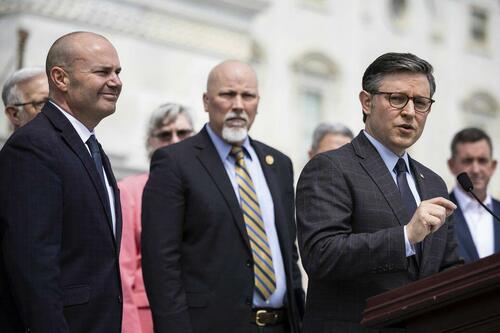
Sen. Mike Lee: We’ve ‘Turned Kind Of A Corner’ On The Save Act
Sen. Mike Lee: We’ve ‘Turned Kind Of A Corner’ On The Save Act
Last week, President Trump announced on Truth Social that he will not sign any new legislation until the Senate passes the Safeguard American Voter Eligibility (SAVE) Act, calling it his top priority ahead of the midterms.
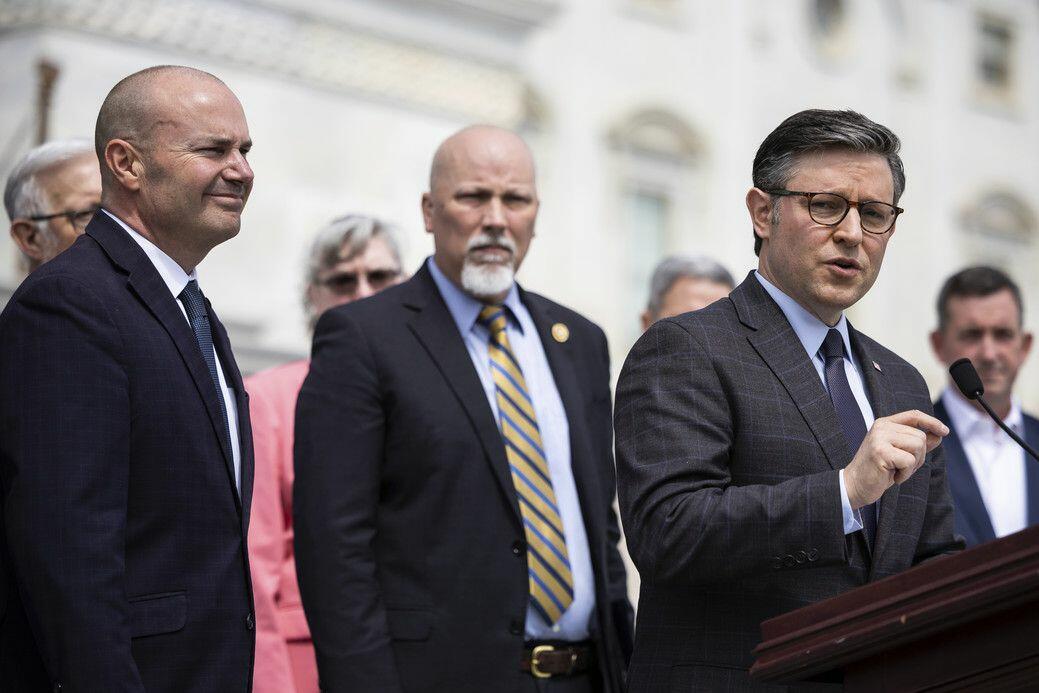
The SAVE Act, introduced in January by Sen. Mike Lee (R-Utah) and Rep. Chip Roy (R-Texas), requires proof of U.S. citizenship to register to vote and a government-issued photo ID to vote. It also requires states to purge non-citizens from existing voter rolls. The bill and its provisions have significant bipartisan support, according to recent polling.
Despite Trump’s threat, Senate Majority Leader John Thune has expressed reluctance to change the filibuster. On Monday, he made it very clear there was no way he was going to change Senate rules to pass the bill.
“Yeah, that’s not going to happen,” Thune said.
But, Sen. Mike Lee (R-Utah) now thinks the SAVE America Act may finally be getting somewhere. Lee, the lead sponsor of the legislation, posted a video update on Friday announcing that he believes we’ve “turned kind of a corner” on the SAVE Act.
After weeks of uncertainty about procedure, Lee said he and Thune have been working through options that could bring the bill to the floor for real debate – not just a choreographed vote designed to fail.
“Okay, important update on the Save America Act and the effort to get it passed,” Lee said in the video. “Look, I am guardedly optimistic. We’ve turned kind of a corner. Over the last few days, there’s been some uncertainty about exactly what procedure we will be and will not be using. In the end, we’ve been working closely with Leader Thune and his staff, and they’ve been great to work with. What we’re coming up with is something that I think is best described as a hybrid version of the talking filibuster.”
Under the Senate’s standard rules, passing most legislation requires 60 votes to end debate – a threshold Democrats have made clear they have no intention of helping Republicans reach. The talking filibuster approach would flip the dynamic. Instead of requiring 60 votes to advance, it would require opponents to physically hold the Senate floor and debate the bill for hours or days on end.
The problem is, of course, Thune – who’s made it clear that he believes the conference lacks the unity to pull it off. He warned that a talking filibuster isn’t just about extended speeches; it also opens the floor to unlimited amendments, meaning Democrats could endlessly propose changes designed to fracture GOP support.
“The talking filibuster issue is one on which there is not, certainly, a unified Republican conference, and there would have to be,” Thune said last month. “If you go down that path, you’re talking about the need to table what are going to be numerous amendments and an ability to keep 50 Republicans unified, pretty much on every single vote. And there’s just not, there isn’t support for doing that at this point.”
The internal pressure on Thune has been substantial. Earlier this month, conservative voices accused him of engineering what they called a “show vote” by bringing the bill to the floor to get Democrats on record opposing the legislation, but doing nothing to actually pass it.
Lee’s ”hybrid” framing could give Thune political cover to move without formally embracing the talking filibuster by name, while still forcing extended floor debate before any cloture filing. By keeping the bill on the floor before invoking cloture, Lee wants to create pressure that a clean procedural vote would not generate.
“We’re going to bring it to the floor,” Lee said. “We’re going to debate it for an extended period of time before filing cloture. And in my view, at least, I don’t want to speak for anyone else, this bill needs to remain on the Senate floor before we file cloture on the bill for as long as it takes to get it done.”
🚨Important Status Update Regarding the SAVE America Act 🚨
We’re making serious progress @LeaderJohnThune and his team have been working closely with us pic.twitter.com/2Nzt1HaZLO
— Mike Lee (@BasedMikeLee) March 13, 2026
Whether that’s enough to move the needle inside the conference remains unclear. What Lee is betting on is momentum and exposure. The longer the bill sits on the Senate floor with cameras rolling and the clock ticking, he believes, the harder it becomes for Democrats to explain to voters why they won’t support something with strong, bipartisan approval.
The strategy is less about parliamentary maneuvering than it is about political pressure. Lee seems to believe the math is starting to move in his direction, and as the lead sponsor of the bill, wouldn’t be saying so if he didn’t believe it.
Tyler Durden
Sun, 03/15/2026 – 18:05
https://www.zerohedge.com/political/sen-mike-lee-weve-turned-kind-corner-save-act
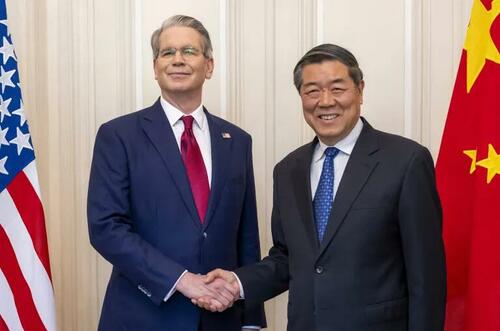
Bessent Leads Trade Talks With China In Paris Ahead Of Trump-Xi Summit
Bessent Leads Trade Talks With China In Paris Ahead Of Trump-Xi Summit
Ahead of the upcoming Trump-Xi summit, China and US have begun a fresh round of trade talks to set the stage for the main event.
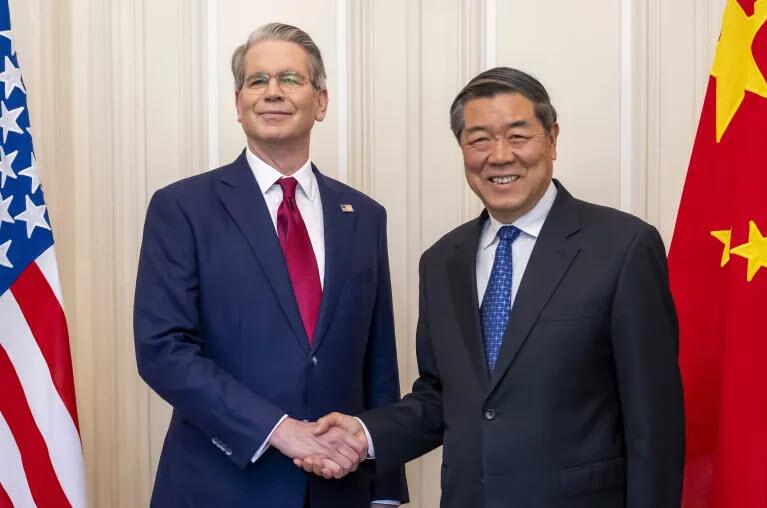
Trade negotiators led by US Treasury Secretary Scott Bessent, US Trade Representative Jamieson Greer and China’s Vice Premier He Lifeng held talks in Paris on Sunday to map out plans for a leaders’ summit later this month. The first day of the talks concluded around 6 pm local time, and the delegations will meet again on Monday, Bloomberg reported. The trade negotiators are expected to review the latest developments in a truce reached in November and discuss topics including the war in Iran as well as investment and purchases.
According to Bloomberg, Bessent, Greer and He have a history of bilateral negotiations. They met in Geneva last May to launch a series of talks that saw follow-on sessions in London, Stockholm, Madrid and Kuala Lumpur. That resulted in a truce under which Washington and Beijing lowered tariffs and export restrictions. Chinese Vice Finance Minister Liao Min and Vice Commerce Minister Li Chenggang are also at the talks.
Bessent said on Thursday that his team will continue to deliver results that put America’s farmers, workers and businesses first. China’s commerce ministry said Friday the two sides are set to discuss “trade and economic issues of mutual concern.”
In January, Greer said the two sides could try to focus on reaching an agreement on trade in non-sensitive sectors in talks ahead of Trump’s visit to China.
The outcomes will set the stage for President Donald Trump’s trip to China from March 31 to April 2, the first visit by an American president to Beijing in nearly a decade.
The talks also marks the first time the two sides are meeting since the US Supreme Court ruled Trump didn’t have the authority to impose tariffs using the International Emergency Economic Powers Act — a tool he used to threaten levies as high as 145% on China.
The Trump administration has since introduced an across-the-board tariff of 10% and vowed to recreate parts of its tariff wall using other authorities. Greer kicked off the process of imposing tariffs under his agency’s Section 301 authority by initiating an investigation into allegations of industrial overcapacity and forced labor practices for several economies, including China.
Trump’s visit to China will be the first for a U.S. president since he went in his first term in 2017. It will come five months after the two leaders met in the South Korean city of Busan and agreed to a one-year truce in a trade war that temporarily saw tit-for-tat tariffs soar to triple digits before the two sides climbed down.
Still, trade remains a source of tensions. The commerce ministry on Friday hit back against the Trump administration’s new trade investigation into 16 trading partners, including China. The investigation – which came after a Supreme Court ruling struck down Trump’s sweeping global tariffs that were imposed last year – could pave the way for new tariffs.
Another issue that could be discussed is the Iran war, especially when global anxiety is soaring over oil prices and supplies. Trump said Saturdaythat he hopes China, France, Japan, South Korea, the United Kingdom and others will send warships to keep the Strait of Hormuz “open and safe.”
Before Sunday’s talks, Gary Ng, a senior economist at French bank Natixis and a research fellow at the Central European Institute of Asian Studies, said the Paris meeting is likely the most important bilateral one before the Xi-Trump summit.
The key issue is “whether China and the U.S. can agree on what is agreed and manage disagreement. Iran is a new factor, but Beijing is more concerned about the flip-flopping of U.S. policies,” he said.
Last week, Chinese Foreign Minister Wang Yi said it would be a “big year” for China-U.S. relations. While he did not confirm the state visit, Wang said that “the agenda of high-level exchange is already on the table.”
Tyler Durden
Sun, 03/15/2026 – 16:35

Energy Secretary Directs Oil Company To Resume Operations In California, Citing National Security
Energy Secretary Directs Oil Company To Resume Operations In California, Citing National Security
Authored by Jacob Burg via The Epoch Times,
Energy Secretary Chris Wright on March 13 directed the Texas-based oil company Sable Offshore Corp. to restore operations in water off southern California.
Wright invoked the Defense Production Act to restore the company’s Santa Ynez Unit and Pipeline System near Santa Barbara to address supply disruption risks that “have left the region and U.S. military forces dependent on foreign oil,” according to a Department of Energy news release.
“The Trump Administration remains committed to putting all Americans and their energy security first,” Wright said in a statement.
“Unfortunately, some state leaders have not adhered to those same principles, with potentially disastrous consequences not just for their residents, but also our national security.
“Today’s order will strengthen America’s oil supply and restore a pipeline system vital to our national security and defense, ensuring that West Coast military installations have the reliable energy critical to military readiness.”
Officials said Sable Offshore Corp.’s facility can replace nearly 1.5 million barrels of foreign-sourced crude oil each month by producing roughly 50,000 barrels per day, resulting in a 15 percent increase to California’s oil production.
The Energy Department noted that the state used to supply nearly 40 percent of the nation’s oil production, with more than 60 percent of the oil refined in California now coming from overseas, including through the now-closed Strait of Hormuz.
This presents “serious national security threats,” the agency said.
Officials also said that restoring Sable Offshore’s operations will “create hundreds of additional American energy jobs while generating millions in local economic activity.”
The action follows President Donald Trump’s executive order from early last year, which reversed former President Joe Biden’s ban on offshore oil drilling on the West and East coasts.
Biden’s effort to shut down 625 million acres of federal waters from oil production was later struck down by a federal court.
Restoring oil production in Southern California comes weeks after the United States joined Israel in coordinated air strikes on Iran, igniting war in the Middle East. Iran has retaliated by striking oil fields and refineries in its Gulf state neighbors, and by shutting down the critical Strait of Hormuz through which 20 percent of the world’s oil travels.
Oil prices have skyrocketed to just over $98 per barrel by March 15, the highest level since oil climbed in 2022 after Russia invaded Ukraine.
California Gov. Gavin Newsom criticized the Trump administration for ordering the restoration of oil drilling off the state’s coast, arguing the Sable Offshore pipeline would only increase total oil production by 0.05 percent and have “no impact on lowering global oil prices.”
“Donald Trump started a war, admitted it would spike gas prices nationwide, and told Americans it was a small price to pay. Now he’s using this crisis of his own making to attempt what he’s wanted to do for years: open California’s coast for his oil industry friends so they can poison our beaches. This wouldn’t lower prices by a cent,” Newsom said in a statement.
“This is an attempt to illegally restart a pipeline whose operators are facing criminal charges and prohibited by multiple court orders from restarting.”
The governor said California would fight the effort in court.
The pipeline was responsible for an oil spill in 2015 in which more than 100,000 gallons of crude oil spilled onshore near Refugio State Beach in Santa Barbara County.
Roughly 21,000 gallons of oil seeped into the Pacific Ocean, and thousands of birds and marine mammals died.
The incident resulted in a $23.3 million settlement and closed 138 square miles of fisheries for multiple weeks.
Tyler Durden
Sun, 03/15/2026 – 16:10

Trump Administration Set To Receive $10 Billion Fee From TikTok U.S. Deal
Trump Administration Set To Receive $10 Billion Fee From TikTok U.S. Deal
The Trump administration is poised to receive roughly $10 billion in payments from investors involved in the recently completed transaction to take control of TikTok’s U.S. operations, delivering an unusual financial windfall tied to the government’s role in keeping the popular social-media platform active in the United States.
ByteDance is the Chinese parent of TikTok. John G Mabanglo/EPA/Shutterstock
The payments are part of the arrangement under which a consortium of admin-aligned investors took control of TikTok’s American business from its Chinese parent company, ByteDance, according to the Wall Street Journal, citing people familiar with the matter. The payments are separate from the capital investors committed to establish a new entity that now operates the platform in the U.S.
Backers of the deal include cloud-computing firm Oracle, private-equity company Silver Lake and Abu Dhabi investor MGX. Those investors and others have already paid the U.S. Treasury about $2.5 billion when the transaction closed in January and are expected to make additional payments until the total reaches about $10 billion, the people said.
President Trump had previously signaled the government expected compensation for facilitating the arrangement. When outlining the framework for the deal in September, he said the United States would receive a “tremendous fee-plus” for its role in allowing the transaction to proceed.
“It hasn’t been fully negotiated, but we’ll get something,” Trump said at the time, arguing that the government’s involvement in securing the agreement justified compensation.
The $10 billion payment would be nearly unprecedented for a government helping arrange a transaction, historians have said. Vice President JD Vance previously said the new TikTok entity running the U.S. operations is valued at about $14 billion in the deal, which some tech analysts have said dramatically undervalues the company.
As part of the agreement, the U.S. entity has to share profits with ByteDance, which licensed its popular algorithm to the new venture so it could be fully trained on Americans and still owns nearly 20%. -WSJ
Under the terms of the arrangement, ByteDance licensed TikTok’s recommendation algorithm to the new American venture, allowing the platform to continue operating with its core technology. ByteDance retains nearly a 20% ownership stake and will receive a share of the new entity’s profits.
Administration officials have defended the fee, saying it reflects Trump’s role in preserving TikTok’s U.S. operations while negotiating with China and addressing national-security concerns raised by lawmakers.
The transaction stems from legislation requiring TikTok’s U.S. business to reduce ByteDance’s ownership or face a shutdown. Lawmakers from both parties had expressed concern that Chinese control of the platform could expose sensitive data on millions of American users.
The TikTok arrangement is part of a broader pattern in which the administration has sought financial stakes or compensation in dealings involving major corporations. The government has taken a nearly 10% stake in Intel and negotiated an agreement to receive a share of chip sales to China from Nvidia in exchange for export licenses.
The administration has also secured influence over the operations of U.S. Steel through a “golden share” agreement tied to its takeover by Japan’s Nippon Steel.
Together, the moves signal a more direct government role in major corporate transactions – one that, in the case of TikTok, could result in one of the largest payments ever associated with a government-facilitated deal.
Tyler Durden
Sun, 03/15/2026 – 15:45
https://www.zerohedge.com/political/trump-administration-set-receive-10-billion-fee-tiktok-us-deal

French Municipal Elections Provide Early Test For Le Pen’s National Rally Ahead Of 2027 Presidential Race
French Municipal Elections Provide Early Test For Le Pen’s National Rally Ahead Of 2027 Presidential Race
Takeaways
France held the first round of municipal elections on Sunday in nearly 35,000 municipalities, serving as an initial indicator of political momentum ahead of the 2027 presidential election.
Marine Le Pen’s National Rally (RN) is seeking to expand its limited local presence, with ambitions focused on southern cities such as Perpignan, Marseille, Nice and Toulon.
Pre-vote polls suggested competitive races in key targets, but full first-round results and projections are emerging gradually after polls closed, with many larger cities expected to head to a March 22 runoff.
Turnout at 17:00 CET was estimated at 48.9%, up from 2020 but below 2014 levels; final estimates around 56-58% at 20:00 CET.
French voters went to the polls Sunday in the first round of municipal elections, casting ballots for mayors and councilors in a vote widely viewed as an early gauge of support for Marine Le Pen’s National Rally (RN) and other parties ahead of the 2027 presidential contest.
The two-round system means most small municipalities will see winners decided Sunday if they secure over 50% of the vote, while larger cities, where no candidate typically reaches an absolute majority – advance to a March 22 runoff. Parties have until Tuesday evening to negotiate alliances, withdrawals or pacts that will shape final outcomes.
The RN, which leads national polls for 2027 (with Le Pen or Jordan Bardella as potential candidates, pending Le Pen’s ongoing EU funds embezzlement appeal), has historically struggled to secure mayoral seats despite strong national performances. The party currently holds only about a dozen cities, with Perpignan (population ~122,000) as its largest stronghold under incumbent Louis Aliot.
Pre-election polling and RN strategy highlighted southern France as a priority area for expansion:
In Perpignan, Aliot was favored to secure re-election, potentially outright or with a strong first-round lead, based on surveys showing him well ahead of fragmented opposition.
In Marseille (France’s second-largest city), RN candidate Franck Allisio polled closely with incumbent Socialist Mayor Benoît Payan (around 32-35% range in surveys), setting up a potential multi-way runoff if the left fragments (e.g., with France Unbowed’s Sébastien Delogu qualifying).
In Nice (fifth-largest), RN ally Éric Ciotti (from his UDR group) held strong pre-vote polling positions against incumbent Christian Estrosi.
In Toulon and surrounding areas, RN’s Laure Lavalette was seen as competitive in a region where the party has parliamentary dominance.
These targets reflect RN’s aim to build grassroots infrastructure – more councilors and mayors for voter mobilization – and test the fraying “Republican Front” (cross-party efforts to block the far right). A symbolic win in a major southern city would mark a breakthrough, though municipal dynamics (local issues like security, public services, drug trafficking and economy) differ from national ones.
On the left, divisions between Socialists and Jean-Luc Mélenchon’s France Unbowed persist, while centrists and the center-right face challenges in places like Paris (Socialist Emmanuel Grégoire frontrunning amid Rachida Dati and others) and Le Havre (Édouard Philippe defending his seat).
Turnout figures showed modest engagement: ~19% at midday in some reports, rising to 48.9% at 17:00 CET nationwide (higher than 2020’s pandemic-affected 38.77% but down from 2014). Final estimates hovered around 56-58% at 20:00 CET.
No comprehensive first-round results or nationwide projections were available immediately after polls closed (between 18:00 and 20:00 CET depending on the area), as counting begins progressively. Early partial tallies from smaller communes may appear soon, but major-city suspense – and any RN progress – will likely clarify overnight or into Monday, with runoffs deciding many high-profile races.
Le Pen, meanwhile, has been courting old money – though there appears to be some friction. As the Straits Times reports:
A new circle of advisers with elite pedigrees is asserting influence, adopting what some National Rally officials describe as a “know-it-all” style that grates on the old guard.
Courting high society risks alienating the base who fuelled the party’s rise and that has long been wary of financiers and high-powered networks, the officials said, speaking on condition of anonymity.
The internal friction comes at a pivotal moment, with the party leading polls roughly a year before the next presidential election, and just as France heads into its two-round municipal vote on March 15 and March 22 – an early test of the party’s electability.
As Marine Le Pen and Jordan Bardella navigate the treacherous path to 2027, the National Rally’s calculated pivot toward France’s corporate and old-money elite – through technocratic advisers and pro-business overtures – represents both its greatest opportunity and its most potent risk. While these bridges could deliver funding, credibility, and a veneer of governability that has long eluded the party, they threaten to erode the populist authenticity that propelled its rise among working-class and disaffected voters. With the municipal elections offering an early, localized litmus test of the RN’s mainstreaming efforts, the coming days and weeks will reveal whether Le Pen’s “de-demonization” strategy can reconcile these worlds – or whether the old guard’s warnings prove prescient, leaving the party close to power yet still unable to seize it
Tyler Durden
Sun, 03/15/2026 – 14:35

Companies Are Starting To Enforce AI Use. Is That A Good Or Bad Thing?
Companies Are Starting To Enforce AI Use. Is That A Good Or Bad Thing?
Years ago, I was working on the editorial side for what was then a hot new media company, and found myself spending more and more time with Johan, the lead programmer, and his team, asking them a lot of annoying questions as it was all so new – certainly to me. I was standing over Johan’s left shoulder, mesmerized by whatever new video game he was obsessing over that week…when suddenly, out of nowhere, a spreadsheet and a pie chart appeared on his screen.
“Whatcha got there, Johan?” asked Jim, Johan’s boss, peering over a sheaf of print-outs as he sharked past the cubicle.
“Hey, just looking at some numbers,” Johan replied. Johan had hit the “game key” in the nick of time – in those days, every video game had a game key – ALT-G if memory serves – calling up a slight variation of the same spreadsheet and pie chart.
This would never happen today. First, you’re probably not working in a cubicle, and if you are, it’s not the game key you’d hit to give your boss the impression that you’re actually doing productive work…it would be the “AI key.”
“Tech Firms Aren’t Just Encouraging Their Workers to Use AI. They’re Enforcing It.”
This article appeared in the February 24 edition of the Wall Street Journal. It includes the subtitle: From startups to giants, including Meta and Google, companies are factoring AI use into performance reviews and trying to track productivity gains
Across industries, companies are now enforcing AI use through performance reviews, dashboards that track adoption, and explicit mandates that tie it to compensation and promotion. What began in Silicon Valley has rapidly spread to consulting firms, banks, manufacturers, hospitals, and even government agencies.
As you’d expect, Meta, Google, Amazon, and Microsoft were the first to move from encouragement to enforcement. Employees at these firms now see AI usage metrics appear in quarterly reviews. Non-adopters have reported stalled promotions or explicit warnings that “AI fluency” is a core competency (The Wall Street Journal, Feb 2026, reporting on internal policies).
The trend has jumped sectors. PwC requires every consultant to complete an “AI + Human Skillset” curriculum and incorporates usage into evaluations (Business Insider, Feb 5, 2026). Colgate-Palmolive’s “AI evangelist” tracks adoption across global teams. Major banks have begun tying bonuses to the number of AI-assisted analyses completed. Even some hospitals now require doctors and nurses to use AI-assisted diagnostic tools for certain procedures.
Why the shift to mandates?
Executives cite three main drivers: intense competitive pressure to keep pace with rivals, investor demands for visible returns on massive AI investments, and internal data showing that voluntary adoption plateaus at around 30–40% of employees. “We’ve made it clear: AI is no longer optional. Every employee is expected to use it, and it’s now part of how we evaluate performance,” said Accenture CEO Julie Sweet (Fortune, March 2026).
The claimed benefits are real…on paper. Early internal metrics at several companies show 10–25% gains in task speed for routine work. Cross-functional teams using AI report faster ideation and fewer silos. But the drawbacks and unintended consequences are mounting.
While mandatory AI adoption offers productivity benefits, recent research reveals significant drawbacks that undermine organizational health.
Surveillance and autonomy erosion. By 2025, 70% of large companies monitor employee activity, with 68% of employees opposing AI-powered surveillance and 59% saying digital tracking damages workplace trust. AI monitoring systems now track keystroke patterns, mouse movements, email content, and even biometric data, including stress levels. Amazon employees report that surveillance creates “fear and anxiety, which creates a dangerous work environment”.
Burnout and intensified demands. AI meant to reduce workload is paradoxically accelerating burnout. Research found that AI leads to fatigue, burnout, and a growing sense that work is harder to step away from as organizational expectations for speed rise. A South Korean study shows AI adoption significantly increases job stress and burnout, while 63% of workers report AI-related fatigue driven by stress and heavy workloads.
Collapsing trust. Recent research revealed that while AI usage jumped 13% in 2025, worker confidence plummeted 18%, creating a “toxic relationship” as employees receive tools without training or support. Deloitte’s TrustID Index showed trust in company-provided generative AI fell 31% between May and July 2025, with trust in agentic AI systems dropping 89%.
Retention risks. Without adequate training, 56% of workers receive no recent skills development despite widespread AI adoption, and 85% say they would be more loyal to employers investing in continuing education – top performers become increasingly vulnerable to departure. Analysis warns of an impending “seniority cliff” as companies that stop hiring juniors eliminate the pipeline for developing senior talent with deep institutional knowledge.
Critics argue the enforcement model is shortsighted.
“You can force usage, but you can’t force wisdom,” said Dr. Ethan Mollick, professor at the Wharton School and author of Co-Intelligence (interview, March 2026). “When AI becomes compulsory, people stop experimenting and start complying — and that’s when the real mistakes happen.” Yet the train has left the station. In boardrooms and earnings calls, executives are increasingly judged on how aggressively they have embedded AI into daily operations.
The message is clear: in 2026, using AI is part of your job. The question companies are only beginning to confront is whether forcing the technology will ultimately make their workforces more cohesive, smarter, and more efficient, or simply more exhausted, distrustful, and replaceable.
Tyler Durden
Sun, 03/15/2026 – 14:00
https://www.zerohedge.com/ai/companies-are-starting-enforce-ai-use-good-or-bad-thing

Anduril Lands $20 Billion Pentagon Contract For “Modern Battlefield” Hardware
Anduril Lands $20 Billion Pentagon Contract For “Modern Battlefield” Hardware
Nine days after Axios reported that Palmer Luckey’s Anduril was raising around $4 billion at a $60 billion valuation led by a16z and Thrive Capital, Luckey landed a major enterprise contract with the US Army worth up to $20 billion over 10 years.
Photo: Kyle Grillot/Bloomberg via Getty Images
Announced on Friday, the deal features a five-year base period with an option to extend for another five years – and includes over 120 separate procurement actions into a single agreement which covers the full range of Anduril’s commercial solutions – including hardware, software, infrastructure, data, computer systems, and technical support services.
“The modern battlefield is increasingly defined by software. To maintain our advantage, we must be able to acquire and deploy software capabilities with speed and efficiency,” said Gabe Chiulli, chief technology officer at the Department of War’s Office of the Chief Information Officer.
The contract centers around Anduril’s proprietary, open-architecture, AI-enabled Lattice platform, which serves as the core for integrating and unifying these capabilities into a mission-ready ecosystem. Recent reporting highlights its role in boosting counter-drone (counter-UAS) interoperability and other emerging needs.
Anduril, founded in 2017 by Luckey (the creator of Oculus VR), has grown rapidly as a defense tech company focused on autonomous systems and AI-driven solutions. Last year, it reportedly generated around $2 billion in revenue. The company has gained traction under the second Trump administration for its emphasis on autonomous military technologies, including drones, fighter jets, and submarines.
In January of last year, it was reported that Anduril will build a weapons megafactory, Arsenal-1, in Columbus, Ohio – which could ‘go hot’ as soon as July 2026. The five million-square-foot facility will be built near Rickenbacker International Airport.
* * *
Please consider supporting ZeroHedge with the purchase of a hat, t-shirt, or multitool. Thank you.
* * *
What Anduril Makes for the US Government and How It’s Used
Anduril specializes in advanced autonomous systems, AI-powered software, and networked defense technologies designed for rapid deployment and scalability – often developed with private R&D funding before government contracts. Its flagship product is the Lattice platform: an open, AI-enabled software system that fuses data from sensors, drones, and other assets to provide real-time command and control (C2), situational awareness, and autonomous decision-making. Lattice integrates third-party and government systems, enabling a “software-defined” approach to warfare where updates happen quickly like commercial tech.
Key products Anduril supplies to the US government (primarily the Department of Defense, including the Army, Marine Corps, Navy, Air Force, and Special Operations Command) include:
Counter-UAS (counter-drone) systems — AI-powered tools to detect, track, and defeat small unmanned aerial threats, used for base protection, force protection, and battlefield defense amid rising drone proliferation (e.g., in contracts with SOCOM and the Marine Corps).
Autonomous aerial systems — Such as the Ghost and Ghost-X small UAS for intelligence, surveillance, reconnaissance (ISR), overwatch, and target identification at the squad level; larger systems like Fury for collaborative combat aircraft prototypes with the Air Force.
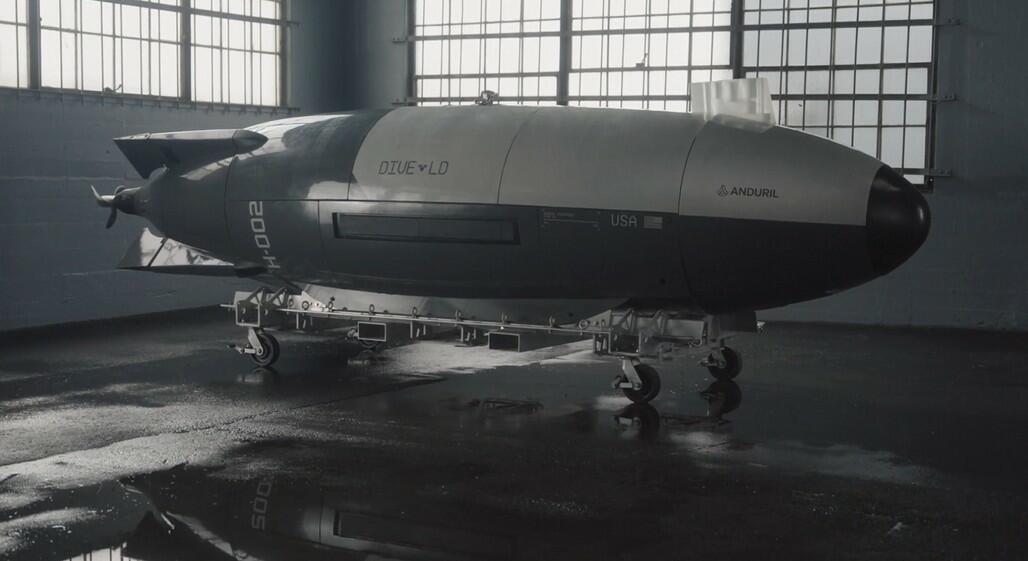
Autonomous underwater vehicles (AUVs) — Including Dive-LD (long-duration) and Dive-XL variants for persistent undersea missions like ISR, mine countermeasures, and anti-submarine warfare; related tech from the Ghost Shark program (developed for allies like Australia) has influenced US Navy selections.
Surveillance and sensor networks — Semi-portable autonomous towers and ground-based systems for persistent monitoring of borders, infrastructure, or land regions (originally prominent in DHS/CBP border security “virtual wall” deployments).
Other hardware and munitions — Precision strike systems like Bolt-M for the Marine Corps’ Organic Precision Fires-Light program (man-packable loitering munitions for infantry squads); solid rocket motors for missiles; and contributions to programs like robotic combat vehicles or Integrated Visual Augmentation System (IVAS) support.
Broader infrastructure — Networked command/control software, data processing, and edge computing to enable “connected warfare” across domains (air, land, sea).
These systems are used to modernize US forces by emphasizing attritable (low-cost, replaceable) autonomous assets, software agility, and countering peer threats (e.g., from China or Russia) through faster innovation cycles. Lattice often acts as the “brain,” creating extensible networks where drones, sensors, and effectors operate together autonomously or semi-autonomously, reducing human risk and enhancing decision speed on the battlefield. This $20B Army contract builds on prior awards (e.g., counter-UAS deals worth hundreds of millions) and signals deeper integration of Anduril’s tech across Army operations.
Tyler Durden
Sun, 03/15/2026 – 13:25

Waiting For Markets To Open
Waiting For Markets To Open
By Peter Tchir of Academy Securities
One thing that has become incredibly consistent during times of financial stress is all of the “green dots” on Bloomberg terminals on Sunday night. This Sunday night is likely to be no different.
There are plenty of questions being asked (at a presentation on Thursday at a conference in Vegas, I may have, for the first time, faced too many questions!). There will be time to figure out how we got here. What went right, what went according to plan, and what didn’t go so well. But now is not the time for that, at least not for investors and corporate decision makers. Now is the time to plan, adapt, and ensure the best possible outcome for what you are responsible for.
The U.S. attacked military installations on Kharg Island on Friday night after the markets closed. Kharg Island is crucial for Iranian oil exports. It has the deep seaports required to load cargo into tankers that then deliver it. However, no energy infrastructure was hit, only military targets (including mine and missile storage facilities). President Trump then threatened to “wipe out” oil infrastructure on Kharg Island if Iranian forces continued to block the Strait of Hormuz. In addition, on Friday, it was announced that the U.S. was sending more forces to the region. The Japan-based Tripoli Amphibious Ready Group includes the America-class amphibious assault ship USS Tripoli, the San Antonio-class amphibious transport dock ships USS New Orleans and USS San Diego, and the embarked 31st Marine Expeditionary Unit. Sending these capabilities to the Persin Gulf will provide CENTCOM with additional options. These forces could be used in maritime interdiction, coastal raids, and help secure targets such as Kharg Island as well as islands in the Strait. This would put additional pressure on Iran. However, the decision to use troops for these missions has not been made just yet. It will also take a week or two for the forces to make it to the region. Please see below for some thoughts on these developments from our Geopolitical Intelligence Group:
“The strike on Kharg Island serves two purposes. First, there is military infrastructure on the island which may well have been involved somehow in enabling Iranian strike operations in the northern Persian Gulf. More importantly, however, it is a signal to the Iranian regime that we are willing, if necessary, to attack the oil infrastructure there. Iran exports around 90% of its oil through the Kharg Island terminal and its loss would be devastating for Iran’s economy. The possible future damage or destruction of the facilities there also effectively removes Iranian oil from the global market for a long time and will certainly have an effect on the market. I’m only speculating here but threatening Kharg Island might also be aimed at pressuring China, which is the recipient of most of Iran’s oil, to exert some positive influence on the regime.”– Neil Wiley, Former Principal Executive, Office of the Director of National Intelligence.
“The deployment of the MEU provides the U.S. with more options and serves as a deterrent against further Iranian escalation. Last night’s strikes and the deployment of the MEU signal to Iran that the U.S. is setting conditions to potentially take the island. However, the administration is clearly trying to prevent further rattling of the oil market by preserving Kharg’s oil infrastructure. I think the preferred options all involve scenarios short of boots on the ground anywhere in the region but that may not be sufficient to secure the concessions/conciliation the U.S. wants from Iran. Unfortunately, the Iranian regime still seems committed to outlasting the U.S.’s tolerance for market worry.”– Admiral Kelly Aeschbach
There are ongoing operations (and presumably back-channel negotiations) occurring as you read this. They will not necessarily end on Sunday night, but by Sunday night/Monday morning, we will have a clearer understanding of where things stand.
Today’s quick note builds on Thursday’s SITREP – Iran Continues to Threaten the Strait of Hormuz.
A few things we do “know.”
Markets are fixated on what is or isn’t transiting the Strait of Hormuz.
As far as we “know” the Strait is passable. There is no physical obstruction blocking ships from transiting it. This has been accomplished by some ships, presumably those laden with Iranian oil destined for their customers, such as China.
There are some questions about mines and unmanned/manned surface vessels.
There are a LOT of questions about potential drone and missile strikes.
The insurance backed by the DFC (The U.S. International Development Finance Corp.), has not encouraged ships to transit. I haven’t been able to access the policy itself, but insurance alone is not going to get ships and their crews moving.
The story is moving beyond oil. Yes, oil gets the most attention, but it is only part of the story.
LNG is less fungible than oil and is likely the first product that causes major disruptions in economies. Diesel, jet fuel, and fertilizers aren’t far behind.
Downstream products like “plastics” may become a problem for supply chains. It is difficult to predict who or what will be hit (like we have seen in previous supply chain shocks), but with plastics in so many products, we may be in for some negative surprises.
Taiwan is dependent on imported LNG and helium (about 50% coming from Qatar), and this is becoming a topic of conversation. When one of the world’s most important countries in terms of making semiconductors enters the conversation, it makes sense to be a little more nervous.
Asia (ex-China) and Europe will be hit first. China has significant stockpiles, refining capacity, and has further restricted exports of refined products. “Force Majeure” seems to be the word of the week in Asia outside of China. Europe went from dependence on Russia to dependence on the Middle East. Maybe adopting ProSec™ and harnessing your own resources (even if not “carbon efficient”) isn’t a bad stop gap for the next decade or so.
Shutdowns are occurring. When you “shut down” a refinery or chemical processing facility, it is not like flicking a light switch. There is a controlled (and time-consuming process) in both directions. It can take a week or more to resume production at full capacity once the decision to start back up is made. This means that the more facilities that are shutdown, the further we are from “normalizing” quickly.
“Simple” solutions aren’t helping.
Government “messaging” has lost its ability to turn markets on a dime. Last Monday we recovered rapidly from Sunday’s overnight price pressures. Every announcement on the conflict, the steps to reduce oil prices, etc., were met with good responses (lower oil prices, higher stock prices). That “mojo” dried up by the end of the week – hence we need to see “solutions.”
If it was “just” about the price of oil, the release of the SPR, evidence that the Saudis are able to use a pipeline to redirect their shipping routes, etc., would all have worked out better than it did for markets coming into the weekend. I do not understand the “waffling” or what seems like “waffling” on suspending at least part of the Jones Act so that the U.S. can supply itself more easily. That sentence seems almost nonsensical, but yes, the Jones Act makes it more difficult for parts of the U.S. to support other parts of the U.S.
The longer it goes on, the worse it is for the global economy and markets.
What we don’t know:
The risk to oil (and LNG, fertilizer, downstream products, and food) shipments. We will be able to make a better assessment on Sunday and again on Monday morning as markets re-open.
It seems clear that the admin is pushing to “normalize” trade and transit as early as Monday, but we don’t yet know if they will be successful.
What will the economic issues be? Very difficult to predict, though Asia (ex-China) and Europe will likely be hit harder and faster than the U.S. and China. However, many “American” goods are manufactured in Asia and certainly require components from Asia.
The timing of “victory.” The definition of “victory” seems to be “evolving.” If a hostile regime that is responsible for over a thousand American deaths over the years can be brought down and the world has a few weeks of higher energy costs and some “manageable” supply chain issues as a result, then the price is probably “worth it.” Academy’s Geopolitical Intelligence Group does not seem concerned about losing, but it is a matter of timing and the cost of that victory in terms of blood and treasure, and that is the question they are all trying to answer.
Bottom Line
Hopefully by Sunday night, or Monday morning, we are watching oil trade down hard and stocks (and bonds) rally. But at this point It remains a hope, not a fact. We will try to evaluate where we stand, how markets should respond, and what is “next” on the table for the U.S. (based on what happens between now and then).
Bonds are not acting as a good hedge – spending fears (globally) and inflation (globally) are pushing on that. I do not see stagflation as a “steady state,” or even that plausible in an energy independent America, but too early to fight that chatter.
We want to write about Private Credit and Software (the two other market-driving forces), but for today, we will stick to this “preparatory note” as we set the stage to provide color and context as we start next week (which is really at 6pm ET Sunday when futures open).
We continue to hope and offer our best wishes to all involved in this conflict, especially to those in service and their families, in these incredibly stressful times.
Tyler Durden
Sun, 03/15/2026 – 12:50