Category: News

US Issues $10M Bounty For Location Info On Mojtaba Khamenei & Ali Larijani
US Issues $10M Bounty For Location Info On Mojtaba Khamenei & Ali Larijani
The US Department of State’s Rewards for Justice program has newly issued a $10 million reward for information on the whereabouts of Iranian Supreme leader Ayatollah Mojtaba Khamenei and Secretary of the Supreme National Security Council Ali Larijani.
The alert calls for information on the two “Iranian terrorist leaders” at a moment of ongoing heavy bombardment of Iran by the US and Israel. Interestingly the State Department said that informants could make people eligible for “relocation”. The Pentagon on Friday said it believes the new Ayatollah is likely wounded and disfigured.
“These individuals command and direct various elements of Iran’s Islamic Revolutionary Guard Corps (IRGC), which plans, organizes and executes terrorism around the world,” the alert stated.
It actually also seeks information on other top security and government officials. Below is the official US statement in part:
Rewards for Justice is offering a reward of up to $10 million for information on the key leaders of Iran’s Islamic Revolutionary Guard Corps (IRGC) and its component branches. These individuals command and direct various elements of the IRGC, which plans, organizes, and executes terrorism around the world.
The Islamic Revolutionary Guard Corps (IRGC), part of Iran’s official military, plays a central role in Iran’s use of terrorism as a key tool of Iranian statecraft.
Already amid the US-Israeli operation, at least 40 high-ranking government and military leaders have been killed. Many were slain in the opening days of the war, including Ayatollah Ali Khamenei.
All of this seems part of a US-Israeli effort to foment spying and defections within Iranian ranks and society. There have been claims this week that Iranian citizens are feeding information to Israel – which of course means they are spying as assets.
It seems the US may not even know what some of the “wanted” officials look like, based on some of the blank photos below:
The U.S. State Department’s Rewards for Justice program is offering up to $10 million for credible information on senior leaders of Iran’s Islamic Revolutionary Guard Corps (IRGC).
The reward aims to identify or locate key figures linked to the IRGC’s leadership and operations. pic.twitter.com/QgTLTQWiAX
— ILRedAlert (@ILRedAlert) March 13, 2026
Israel says it is even bombing Basij/IRGC security checkpoints, and that spotter and spies have assisted on the ground. Whether or not this latter claim is true, it is at the very least intended to sow confusion and distrust on the ground.
Israel and the US are seeking to collapse the system and regime, however, it is showing signs of resiliency on the ground, also as many military analysts have said it is nearly impossible to completely dislodge a government system through sheer airpower alone – also as they warn of the obvious scope creep happening.
Tyler Durden
Fri, 03/13/2026 – 22:40

Seventh Circuit Slams Chicago Judge Over Her “Constitutionally Suspect” Orders Against The Trump Admin
Seventh Circuit Slams Chicago Judge Over Her “Constitutionally Suspect” Orders Against The Trump Admin
There has been an ongoing struggle between district court judges and the Trump Administration over a variety of policies. In the first year, some district court judges issued nationwide injunctions that were largely rejected by the Supreme Court and appellate courts. These conflicts have continued and the intracourt tensions have increased. That was evident with the recent decision of the United States Court of Appeals for the Seventh Circuit, which delivered a virtual haymaker in reversing Judge Sara Ellis, an Obama nominee.
The panel criticized Ellis for limiting the operation of federal officers in Chicago, saying that she “effectively established the district court as the supervisor of all Executive Branch activity in the city of Chicago.”
Protesters and journalists went to Ellis to restrain “Operation Midway Blitz.” They challenged the conduct of Immigration and Customs Enforcement (ICE), Customs and Border Protection (CBP), and the Department of Homeland Security (DHS) under the First and Fourth Amendments, specifically raising the use of tear gas and other chemical agents. Judge Ellis issued a preliminary injunction described by the panel as “sweeping”: “It enjoined all law enforcement officers in the Northern District of Illinois, as well as federal agencies and the Secretary of the DHS, from using certain crowd control tactics and tools. It also required the defendants to regularly inform the court of its efforts at implementing the injunction.”
That included requirements that U.S. Border Patrol Commander Gregory Bovino report to her daily to brief her on his activities. The panel found that her order “impermissibly infringes on separation of powers principles.”
Notably, this order came after various district courts were reversed on such orders, but Judge Ellis went forward with another attempt at a sweeping injunction. She reinforced her order by certifying a class action and then including 170 pages of fact-finding in her long order.
After the operations ended, the plaintiffs were not eager to have the case reviewed on appeal. While the plaintiffs asked for dismissal with prejudice, Judge Ellis refused. She instead dismissed without prejudice and departed from standard rules on such dismissals. This was meant to allow a resumption of litigation.
That led to an interesting (and telling) issue for the Seventh Circuit. Ordinarily, the court would have simply declared the case moot (as Judge Frank Easterbrook would have in dissent). However, two judges clearly felt that Judge Ellis needed a corrective measure on appeal for her future handling of such cases:
“The district court’s order may also spawn adverse legal consequences. Because the district court dismissed this case without prejudice—against the plaintiffs’ unopposed request for a dismissal with prejudice—any class members or the lead plaintiffs could refile these claims tomorrow. They could ask the district court to reinstate a near-identical preliminary injunction, adopting the facts and legal reasoning from the district court’s order.”
It reaffirmed that Judge Ellis’s order was “overbroad” and “constitutionally suspect.”
It made clear that “federal courts do not exercise general oversight of the Executive Branch” and that the district court “likely abused its discretion by issuing such a sweeping injunction.”
The decision not to simply dismiss this case was clearly meant to send a message not only to Judge Ellis but also to other such judges who are exceeding their authority in seeking to limit Trump policies and programs.
Here is the opinion: Chicago Headline Club v. Noem
Tyler Durden
Fri, 03/13/2026 – 22:15

Democrat Lawmakers in Minnesota Pass Draconian Gun Laws After Silencing Largest Gun Rights Group
Democrat Lawmakers in Minnesota Pass Draconian Gun Laws After Silencing Largest Gun Rights Group
The Minnesota Senate rammed through sweeping gun control measures on Friday, after deliberately sidelining the state’s largest pro-Second Amendment organization with just 6 minutes of testimony, while gun control supporters got 32 minutes of speaking time on the flagship gun ban bill.
Illustration: Sarah Grillo/Axios
The Democrat-controlled Senate Judiciary and Public Safety Committee, chaired by Sen. Ron Latz (DFL), advanced S.F. 3655 – a near-total ban on semiautomatic rifles and magazines holding more than 10 rounds – on a strict 6-3 party-line vote. Latz admitted they “prioritized individual testifiers over organizations” – yet anti-gun groups still got slots while the state’s biggest 2A voice was frozen out.
Before allowing input from the public, the Minnesota Gun Owners Caucus – representing tens of thousands of law-abiding citizens – warned the public yesterday that committee staff had already told them the hearing schedule was “full” – effectively blocking them from offering in-person testimony on the core bills: the semi-auto ban, the magazine ban, repeal of state preemption (opening the door to a patchwork of local gun laws), and new carry restrictions at the State Capitol and schools.
The largest & most effective gun rights group in Minnesota was just told we can’t testify against most of the gun control bills tomorrow.
Why?
Because the schedule is “full.”
Apparently, there’s plenty of room for gun control activists and other testifiers, but not the people… pic.twitter.com/NJqhnB3BXb
— MN Gun Owners Caucus (@mnguncaucus) March 12, 2026
Caucus Director of Government Relations & Advocacy Anna Leamy did manage to testify on a secondary privacy bill (S.F. 3836, which would expose permit-to-carry holder data to harassment and passed on a voice vote). She stood firm when Latz tried to grill her on the partisan ties of the “Violence Prevention Project” pushing for taxpayer-funded gun-control propaganda. But on the bills that actually matter – the ones that would turn everyday hunters, sport shooters, and self-defense gun owners into felons – the largest gun rights group in Minnesota was effectively silenced.
Senator @RonLatzMN attempted to grill our Anna Leamy, challenging her testimony about the partisan alignment of the Violence Prevention center, who are trying to get a $1 million blank check from MN taxpayers to push for gun control. Anna stood firm, because she’s right.
The…
— MN Gun Owners Caucus (@mnguncaucus) March 13, 2026
“This isn’t democracy. That’s rigging the hearing,” the caucus stated bluntly before today’s vote — and the numbers proved them right.
Because SCOTUS hasn’t ruled clearly on semi-automatic rifle bans and magazine bans – so they pull this crap.
— MN Gun Owners Caucus (@mnguncaucus) March 13, 2026
These bills are textbook draconian. S.F. 3655 doesn’t just target so-called “assault weapons”; it criminalizes nearly every modern semiautomatic rifle and standard-capacity magazine in common use. Grandfathering is a joke: current owners face registration, home inspections by law enforcement, storage mandates, and transfer bans.
The Bills
SF 3655 (Semiautomatic Military-Style Assault Weapons and Large-Capacity Magazines Ban)
Bans manufacture, import, transfer, ownership, or possession of “semiautomatic military-style assault weapons” (e.g., AR-15, AK-47 variants and similar rifles/pistols/shotguns with features like pistol grips, folding stocks, threaded barrels, or detachable magazines) and large-capacity magazines (>10 rounds or parts to make them). Current owners can grandfather items by certifying/registering with state/local authorities by Feb 1, 2027 (fee required, renew every 3 years), with strict storage rules, limited use (e.g., no hunting, only on private property or ranges), no transfers (except surrender/destruction), and possible inspections. Violations are felonies (up to 5 years prison/$25,000 fine). Effective August 1, 2026. Exceptions for law enforcement/military.
SF 3836 (Firearm Permit Data Classification and Retention)
Makes data on revocation, suspension, or voiding of a permit to carry a firearm public (previously more protected). Also makes permit data public if the holder dies by suicide with a firearm or from police use of force. Extends retention requirements for these records (e.g., 6 years for denied/revoked/voided permits or specified death cases). General active permit application/purchase data remains private; sheriffs must purge non-essential inactive records annually except in these cases. No broad public release of current permit holder lists.
Democrats hold the trifecta in Minnesota. Gov. Tim Walz and his DFL allies have been itching to push this agenda since taking full control. Today they showed exactly how they plan to do it: limit debate, stack the clock, and steamroll constitutional rights while pretending it’s “public safety.”
Tyler Durden
Fri, 03/13/2026 – 21:50

SNAP Recipients Sue Trump Administration Over Sugary Food Restrictions
SNAP Recipients Sue Trump Administration Over Sugary Food Restrictions
Authored by Naveen Athrappully via The Epoch Times,
Supplemental Nutrition Assistance Program (SNAP) beneficiaries sued the Department of Agriculture on March 11 over the issuance of waivers to five states restricting certain types of foods that can be purchased under the program.
On May 19 last year, Agriculture Secretary Brooke Rollins issued a waiver to Nebraska that bans SNAP recipients in the state from buying soda or energy drinks. As of March 4 this year, the Department of Agriculture (USDA) has approved similar waivers for 22 states in total.
In addition to soda and energy drinks, the additional waivers prohibit the purchase of fruit and vegetable drinks with less than 50 percent natural juice, as well as candy, unhealthy drinks, soft drinks, prepared desserts, sugar-sweetened beverages, and processed foods and beverages. Different states ban one or more of these items.
In the lawsuit, filed at the U.S. District Court for the District of Columbia, plaintiffs argued that the USDA’s actions amount to “authorizing a patchwork of state-by-state food prohibition regimes.”
“These changes deprive SNAP recipients and their families of the food they need to maintain their health and employment, and in some cases, to survive,” the lawsuit alleged. “Individuals with chronic illnesses are losing access to products they need to manage blood sugar or sustain diets they need to maintain baseline health care needs.
“Families must choose between using scarce cash to purchase restricted items or foregoing essential household expenses such as rent, utilities, or transportation. These harms are tangible, ongoing, and irreparable.”
The lawsuit specifically challenges SNAP waivers issued for Colorado, Iowa, Nebraska, Tennessee, and West Virginia, the states in which the five plaintiffs reside.
In 2018, the USDA had rejected similar food restriction proposals on SNAP purchases. According to the lawsuit, this was because the agency concluded that the restrictions would force the government to draw arbitrary lines among food products, limit food choices for households without clear evidence of health benefits, impose significant burdens on retailers, and increase administrative costs.
“Even though the challenged waivers present the same defects USDA previously recognized, they were approved without any attempt to address, let alone resolve, those concerns,” the complaint stated.
By approving the five waivers, the defendants are in violation of the Administrative Procedures Act and the Food and Nutrition Act of 2008, the lawsuit claims.
Plaintiffs have asked the court to deem the food restriction waivers as unlawful.
The Epoch Times reached out to the USDA for comment but did not receive a response by publication time.
SNAP Restrictions and Health
While announcing SNAP waiver approvals for six states in December 2025, Rollins justified the need for food restrictions as a way to improve people’s health.
“President Trump has made it clear: we are restoring SNAP to its true purpose—nutrition. Under the MAHA initiative, we are taking bold, historic steps to reverse the chronic diseases epidemic that has taken root in this country for far too long,” Rollins said in a Dec. 10 statement.
“With these new waivers, we are empowering states to lead, protecting our children from the dangers of highly-processed foods, and moving one step closer to the President’s promise to Make America Healthy Again.”
Rollins and Health Secretary Robert F. Kennedy Jr. are strong advocates of banning food items deemed unhealthy from SNAP as part of the Make America Healthy Again agenda. Kennedy said he hopes that all states will have asked for, and received approval for, SNAP restrictions by the end of 2026.
In June 2025, Kennedy called on all state governors to exclude sugary drinks from the SNAP program. “Taxpayer dollars should never bankroll products that fuel the chronic disease epidemic,” he said at the time.
A study published on Dec. 8, 2024, in Frontiers in Public Health found that consuming more sugary drinks was linked to a higher risk of developing cardiovascular diseases than eating sweet food items such as pastries.
“Liquid sugars, found in sweetened beverages, typically provide less satiety than solid forms—they make you feel less full, potentially leading to overconsumption,” Suzanne Janzi, the study’s co-author, said in a statement.
“Context also matters—treats are often enjoyed in social settings or [for] special occasions, while sweetened beverages might be consumed more regularly.”
The waivers have already been implemented in eight states: Idaho, Indiana, Iowa, Louisiana, Nebraska, Oklahoma, Utah, and West Virginia.
The waivers will come into effect in the remainder of the year in Arkansas, Colorado, Florida, Hawaii, Missouri, North Dakota, Ohio, South Carolina, Tennessee, Texas, and Virginia.
The waivers are set to be implemented in 2027 or 2028 in three states: Kansas, Nevada, and Wyoming.
Tyler Durden
Fri, 03/13/2026 – 21:25
Iranian State TV Drops Rare Footage From The Heart Of Hormuz Strait
Iranian State TV Drops Rare Footage From The Heart Of Hormuz Strait
In his first public statements of the war, Ayatollah Mojtaba Khamenei stressed Thursday that “the Strait of Hormuz must remain closed.” Or rather, it is clearly closed to all but those countries Tehran gives approval to.
Simultaneously Iranian state TV circulated rare “on the ground” direct reporting from the Strait of Hormuz. In fact, they had a correspondent literally in a fast-boat narrating what he saw in terms of surrounding stranded tankers.
Clearly it’s also meant to intimidate the United States and the West – a form of psychological warfare – at a moment when extreme uncertainty lingers over global oil markets.
The footage is possibly the first such local ‘from the scene of the crisis’ reporting – given the whole area has been on de facto lockdown under continued threat of Iranian missile and drone attacks, also given new reports the strait is being mined by the IRGC Navy.
The country’s ambassador to the United Nations Amir Saeid Iravani has said, “Iran fully respects and remains committed to the principle of freedom of navigation under the law of the sea.” However, he stressed that “the current situation in the region, including in the Strait of Hormuz, is not the result of Iran’s lawful exercise of its right of self-defense. Rather, it is the direct consequence of the destabilizing actions of the United States in launching aggression against Iran and undermining regional security.”
As for the fresh ‘inside the Strait’ view offered by the Iranian war correspondent below, PressTV describes the dramatic clip as “A field documentary from the heart of the Persian Gulf and the Strait of Hormuz, which shows vessels that remain silent – yet are targeted by the IRGC if they shift even a few meters.”
A field documentary from the heart of the Persian Gulf and the Strait of Hormuz, which shows vessels that remain silent—yet are targeted by the IRGC if they shift even a few meters.
Follow https://t.co/B3zXG73Jym pic.twitter.com/XBqz6bWwq0
— Press TV 🔻 (@PressTV) March 12, 2026
Tyler Durden
Fri, 03/13/2026 – 21:00
https://www.zerohedge.com/geopolitical/watch-rare-reporting-footage-heart-hormuz-strait

The Pacific Northwest’s Anti-Democracy Progressives
The Pacific Northwest’s Anti-Democracy Progressives
Authored by Jeff Eager via RealClearPolitics,
Seattle, which is home to Amazon and Microsoft, currently employs some 193,000 well-compensated Washingtonians working in the tech sector. One major reason that Seattle emerged as the first big tech hub outside of California is obvious: It is the only West Coast state with no state income tax. Its state constitution forbids an income tax. High wage workers and entrepreneurs seeking a piece of the relatively laid back, outdoors-focused Pacific Northwest lifestyle can move to Washington without taking a state-mandated pay cut.
For the progressive Democrats who dominate state politics in the Pacific Northwest, money in the pockets of anyone other than the government and its political allies is wasted. To grab more of it, legislative Democrats in Washington are pushing through an income tax in the guise of a “millionaire’s tax” that would levy a 9.9% tax on incomes over $1 million. Just yesterday, as the “millionaire’s tax” neared the finish line in the Washington legislature, former Starbucks CEO Howard Schultz announced he and his wife have relocated from Seattle, where they lived for 47 years, to Miami. Florida has neither a state income tax nor a state income tax masquerading as a “millionaire’s tax.”
The constitutionality of the bill rests on progressives’ expectation that the Washington Supreme Court will completely abandon decades of precedent deeming income taxes unconstitutional. The expectation may not be unfounded: Five of nine justices were appointed by Democratic governors. Democrats also voted down an amendment to forbid applying an income tax to lower income levels, signaling the “millionaire’s tax” is likely to become a “thousandaire’s tax” if Democrats get their way.
What makes this proposed tax truly egregious, however, is its attempt to stop voters from having any say in it. The Democrats’ tax bill includes a necessity clause that precludes a voter referendum that could overturn the new income tax. So long as the majority-progressive-appointed state Supreme Court goes along, progressives will have upended 90 years of constitutionally prohibited income taxes while shielding it from a vote of the people.
Additionally, Washington progressives have taken a brazen step to undermine local governance in the state. The state house just passed a bill giving unelected bureaucrats appointed by the governor the power to remove any elected sheriff in the state based on vague guidelines, overriding local voters’ ability to select their own law enforcement. The move is an effort to exert progressive control of sheriffs in rural parts of the state who have questioned unpopular and difficult-to-enforce laws, such as COVID restrictions and gun regulations.
Not to be outdone by its neighbor to the north, Oregon’s progressive governance is also thumbing its nose at the will of the voters. The Beaver State, which has made itself into an economic backwater, has long levied high state income taxes, driving businesses and people who earn money for a living out of state. (The state’s second largest business, the $12 billion Dutch Brothers coffee chain, left the state last year, taking its corporate tax revenue with it.) The state’s economy, always tenuous, is now crumbling. Oregon’s unemployment rate of 5.2% is third worst in the nation, better than only California (5.5%) and New Jersey (5.4%). Layoffs since the beginning of 2025 are comparable to job losses during the Great Recession.
Oregon progressives charge forward undaunted. The Democratic legislative supermajority voted in February to disconnect Oregon’s tax code from the federal code so the state can continue to tax job-creating business investment at the higher rate eschewed by D.C. Republicans’ Big Beautiful Bill. The disconnect will not help attract the investors needed to stabilize Portland’s cratering downtown real estate market, where values, when buyers can be found, are a fraction of what they were five years ago. Investors recently rated Portland as the worst place in the country to invest in real estate other than Hartford, Connecticut.
Punitive rates of income taxation are not enough for Oregon Democrats. For the past year, they’ve tried to muscle through the largest tax increase in state history. It is a deeply unpopular package consisting of fuel tax increases to pay for more unionized transportation workers and a doubling of the state payroll tax to fund public transportation – even though the state is shedding jobs at an historic rate and such a massive payroll tax will only make things worse.
Those increases, which would hit consumers’ wallets directly, fomented a tax revolt among Oregon’s left-leaning and normally placid electorate. It took Gov. Tina Kotek and the backroom persuasion of the Service Employees International Union two legislative sessions, including the longest special session in state history, to eke out passage of the tax increases in the face of overwhelming public opposition.
Kotek then waited to sign her signature bill to try to deprive opponents of the ability to collect signatures to repeal it. That tactic backfired spectacularly; opponents collected nearly 250,000 signatures from an electorate of 3 million voters in weeks, setting the tax hike on a path to near-certain defeat this November.
Not having learned their lesson, Oregon Democrats are again trying to frustrate voter involvement by moving the date of the repeal vote from November to May, so that Kotek, who is up for reelection, and other Democrats, need not appear on the same ballot as their radioactive tax increase. This is in spite of the fact that the voter repeal petition signed by so many Oregonians specifically said the ballot measure was to be voted on in the November election.
Pacific Northwest progressives’ crusade against allowing the voters a direct say in their schemes is ironic. In 1902, Oregon was one of the first states in the union to adopt voter initiatives and referenda to supplant, in the eyes of that era’s progressives, the corrupt and elite legislators blocking the popular will. Washington state joined not long after.
Yet, today’s progressives are the elites in Washington and Oregon, dominating every function of state government and culture. Their rule depends on seizing an ever-increasing share of the resources of private citizens to distribute among progressives’ sprawling and union-dominated political coalitions.
And despite their obvious policy failures and responsibility for crumbling state economies, Pacific Northwest progressives have decided that the will of the people no longer matters. Voters cannot be permitted to stand in the way of the elite definition of “progress.”
Jeff Eager is an attorney, former mayor of Bend, Oregon, and author of “Oregon Roundup” on Substack.
Tyler Durden
Fri, 03/13/2026 – 20:35
https://www.zerohedge.com/political/pacific-northwests-anti-democracy-progressives

Vance Sidesteps Questions On Reported Differences With Trump Over Iran War
Vance Sidesteps Questions On Reported Differences With Trump Over Iran War
The national media has begun to take note this week that the Iran War is expected to dominate the midterm conversation. This is especially after Republican Sen. Rand Paul’s recent warnings. As we reported, he said days ago midterm elections could be “disastrous” if the Iran war persists into a quagmire.
“Already, we are behind the eight ball as far as the electoral process,” Paul had told Fox Business. “I think if you add in high gas prices, high oil prices, and if we are still bombing Iran with kinetic action — people don’t want to call it war — if there’s still kinetic action that causes oil to be over $100, I think you’re going to see a disastrous election,” the libertarian senator added.
If the war continues into the summer and even the fall, this would further raise real concern for US Vice President JD Vance as he eyes the 2028 presidential election. The longer it goes, the more likely that Republican voters would turn on the White House.
Since Trump’s Operation Epic Fury started, there are reports that Vance has canceled some public appearances.
But there were some instances Friday and this week of him being in front of the camera, fielding some difficult questions from reporters. Importantly, he avoided a particular question over his personal views of the Iran war. Here’s how it went:
US Vice President JD Vance is pressed several times by reporters today to respond to comments made by President Donald Trump earlier this week that he was less enthusiastic about launching a war with Iran.
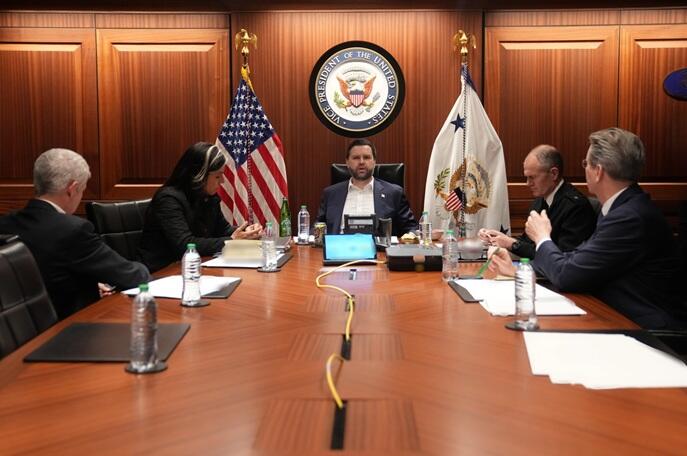
“The president and I and the entire senior team are talking about the options” in the Situation Room, Vance responds.
“It’s important for the president of the United States to talk to his advisers without” those advisers “running their mouths,” he adds, without directly answering the question or denying the premise.
Reports have mounted of Vance expressing concern about the US finding itself in a protracted conflict with Iran.
One thing is for sure: just like Trump, Vance had while on the campaign trail eloquently articulated the need to stay out of foreign quagmires which don’t ultimately serve Washington’s interest or which can be deemed America First.
Vance smiles as a reporter points out that Trump said he was relatively unenthusiastic about striking Iran pic.twitter.com/YPJ8633KIw
— Aaron Rupar (@atrupar) March 13, 2026
Like Trump, he has critiqued America’s ‘forever wars’ in places like Iraq or Afghanistan. And of course, recent history shows that Bush’s 2003 Iraq invasion and long bloody occupation was a big reputational black eye for the Republican Party for many years after, paving the way for an Obama presidency from 2009 to 2017.
In the case of the Iran war, which Trump has called an “excursion” – if the US can’t find a way to extricate itself soon while giving off perceptions of ‘victory’ – then it could prove politically very costly not just for Republicans in the midterms but even for the future presidency in 2028 and beyond.
Vice President JD Vance on what he told President Trump before the Iran War began:
“It’s the most classified space anywhere in the world. I hate to disappoint you, but I’m not gonna tell you what I said in that classified room.” pic.twitter.com/F8pzKDdhNe
— The American Conservative (@amconmag) March 13, 2026
This would especially be the case if US action in Persia morphed into a ground war. With such foreign interventions and ‘wars of choice’ – the pattern is the longer the conflict goes, the more unpopular it becomes among voters at home.
In 2009, Gen. Anthony Zinni (US Marine and retired head of US Central Command) warned about getting into war with Iran:
“If you follow this all the way down, eventually I’m putting boots on the ground somewhere. And like I tell my friends, if you like Iraq and Afghanistan, you’ll love Iran.”
Remembering Gen. Anthony Zinni’s 2009 warning about a war with Iran:
“If you follow this all the way down, eventually I’m putting boots on the ground somewhere. And like I tell my friends, if you like Iraq and Afghanistan, you’ll love Iran.” pic.twitter.com/2ObGZg4cdU
— Matt Duss (@mattduss) March 13, 2026
There have been several reports this week, and as Operation Epic Fury is about to enter week three, that Trump’s advisers are looking for a politically expedient offramp, even though the Commander-in-Chief himself hasn’t shown signs the US will back off its military campaign.
With Vance, if he can give off public signs that he is indeed “skeptical” over the Iran war, then this might actually help him among many MAGA voters.
In the meantime, probably moments like the below won’t help things…
TRUMP: “When (the war) is over the economy will bounce right back.”
KILMEADE: “When are you gonna know when it’s over?”
TRUMP: “When I feel it in my bones.” 🤔 🤷🏼 pic.twitter.com/vAmKZ0Pgrj
— The Tennessee Holler (@TheTNHoller) March 13, 2026
Tyler Durden
Fri, 03/13/2026 – 20:10
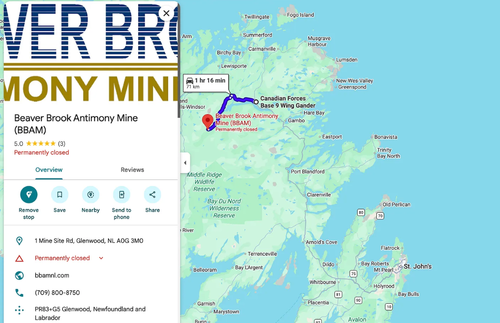
China Owns Canada’s Only Antimony Mine And Shuttered It In Critical Minerals Power Play
China Owns Canada’s Only Antimony Mine And Shuttered It In Critical Minerals Power Play
Submitted by The Bureau’s Sam Cooper (emphasis our own),
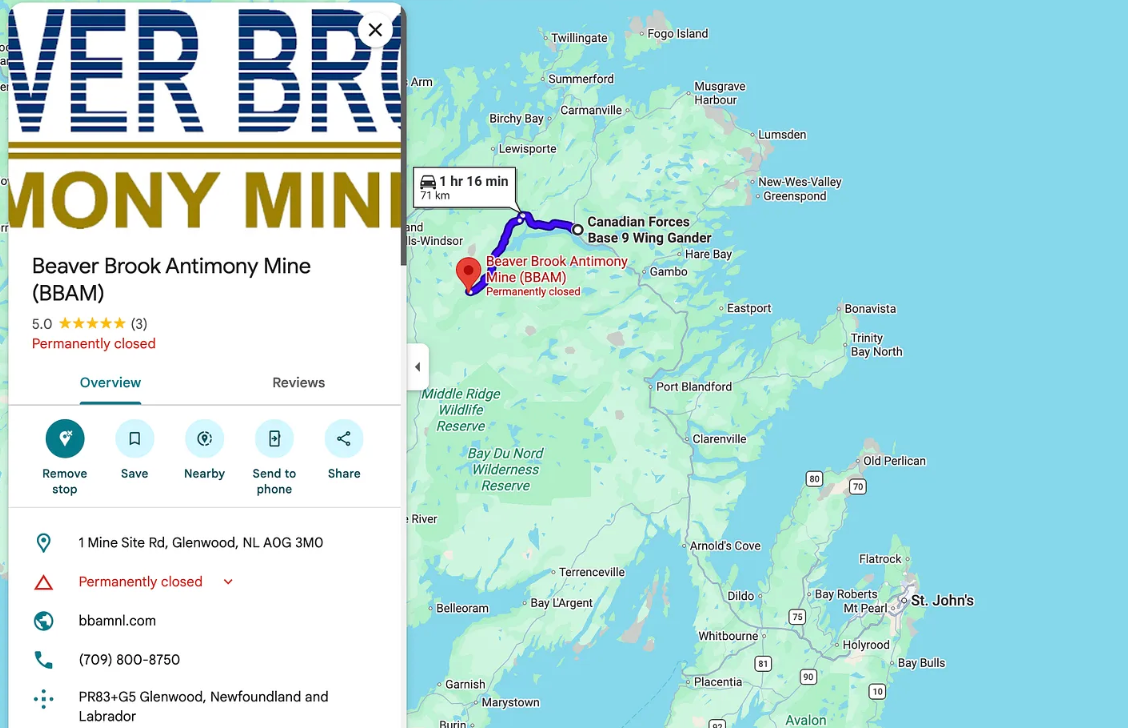
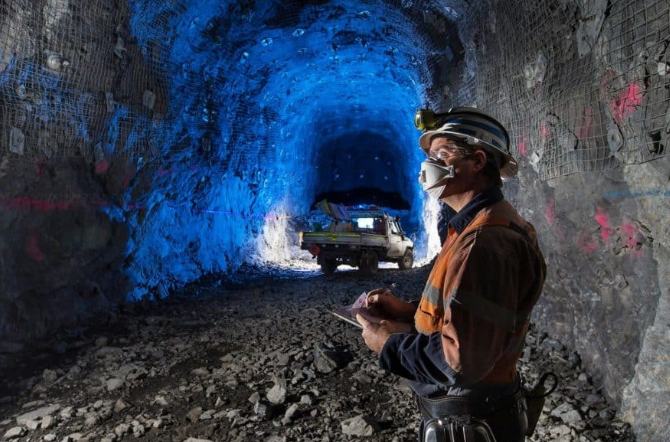
In the rugged interior of Newfoundland, an hour’s drive west from the Canadian Forces Base in Gander, sits a dormant mine with profound implications for the nation’s security and prosperity. Beaver Brook could be the largest North American producer of antimony — a critical mineral threaded through the entire spectrum of modern military hardware, from small arms and artillery shells to advanced missile seekers and night-vision goggles.
But China owns the mine and shut it down in early 2023 — one year before Beijing imposed export controls blocking antimony sales to U.S. military end users, driving prices from about US$5,900 per tonne to more than US$50,000.
Antimony forms in crystalline masses, often clustered in dark silver needles — nature’s own suggestion of the gunmetal world it enters. It was little known before Washington recognized that Beijing had quietly secured a near-monopoly over the world’s critical mineral supply, antimony among them. The metal fires every conventional round, hardens military components, and provides the infrared edge that defines lethality in modern conflict. Armies could not sustain combat for even a single day without it — a reality that has driven urgent U.S. efforts to stockpile it, revive domestic processing, and cut reliance on China and Russia.
The Newfoundland mine was acquired in December 2009 by Hunan Nonferrous Metals Corporation, a Chinese state-linked producer, for $29.5 million. It went silent in 2013 — the year Xi Jinping secured his presidency — revived in 2019 under China Minmetals Rare Earth Group, employed roughly 100 workers, shipped concentrate to China, and was abruptly shuttered again in 2023. It has not produced since.
In a microcosm, The Bureau’s reporting on Beaver Brook surfaces a contest that is reshaping geopolitics in ways inconceivable only a few years ago — one waged not with weapons but through control of the materials that make weapons. The questions it raises for Canada are urgent.
Is Beijing deliberately keeping this strategic mine dormant to constrain global supply and freeze out Western competitors? Are Chinese party-state mining operatives in Canada blocking what could be Ottawa’s trump card in its stalled trade negotiations with Washington — an administration now spending billions and scouring the Western Hemisphere, from Greenland to Argentina, to secure non-China-dependent supply chains? Could Canada invoke national security powers to compel Beijing’s divestiture and reclaim the asset? And would it dare to — while Mark Carney moves Canada into deeper strategic alignment with Beijing, spanning electric vehicles and the critical mineral supply chains that sit at the heart of the new global security order?
Some in the industry have been watching Beaver Brook for exactly this reason.
Anthony Vaccaro, president of The Northern Miner, told the Central MinEx 2025 conference that the stakes for antimony were rising. “It’s an important mineral. We need it. We need to make sure our military is strong, but China is absolutely dominating it,” he said. “Prices have been surging on antimony and the Americans have woken up to it.”
He cited The Northern Miner’s own 2004 assessment — that at full production, Beaver Brook would rank as North America’s only primary antimony mine, producing about five percent of the world’s supply. The contrast between Ottawa and Washington’s response is telling.
Perpetua Resources is developing a lower-grade antimony deposit in Idaho on more than $80 million in Defense Department funding and a federal financing commitment of up to $2 billion. Canada’s better deposit sits idle in Chinese hands.
“That is what the U.S. government is looking to secure,” Vaccaro told the conference.
“Well, lo and behold, Newfoundland and Labrador has the biggest antimony potential mine in all of North America. Who owns it? Why isn’t it in production? The Chinese own it. We have this critical asset that’s Canadian, on care and maintenance by the Chinese.”
The minister most directly responsible for Canada’s critical minerals file is Tim Hodgson, appointed by Prime Minister Mark Carney as Minister of Energy and Natural Resources. His ministry oversees the federal critical minerals strategy, the sovereign minerals fund, and the Investment Canada Act framework governing foreign control of strategic assets.
The Bureau submitted questions to Ministers Hodgson, Anand, and Joly before publication. The questions have been acknowledged, but not answered before deadline for this story.
China Minmetals is not a commercial mining company in any sense Western regulators would recognize. It is one of China’s largest state-owned resource conglomerates — Communist Party leadership embedded, operations spanning mining, metals production, trading, and engineering across dozens of countries. By its own description, it is a “national team” and the “main force to ensure the security of resources.”
It is directly supervised by China’s State-owned Assets Supervision and Administration Commission. In practical terms, that places the company inside China’s industrial strategy — particularly in sectors considered essential to technology manufacturing, defense systems, and the global energy transition. In 2021, the company became a core shareholder in the formation of China Rare Earth Group, a state-directed merger designed to concentrate Beijing’s control over a strategically vital mineral industry.
Ottawa’s response to China Minmetals’ outsized strategic presence in Canada has been notably absent.
In November 2022, it ordered three Chinese companies to divest from Canadian critical mineral firms on national security grounds — Power Metals Corp., Lithium Chile, and Ultra Lithium, all minor lithium exploration plays.
Canada’s only primary antimony mine remained untouched. In November 2024, the government approved Zijin Mining Group’s acquisition of a Pan American Silver critical minerals asset, citing rigorous scrutiny and security undertakings. Fourteen months later, Zijin announced a C$5.5 billion all-cash takeover of Toronto-based Allied Gold Corporation.
The Bureau’s review of corporate records identified a Canada-based executive connected to China Minmetals — the enterprise that controls Beaver Brook — whose involvement in discussions about the mine’s future was flagged by a Canadian mining source. Independent review of the same executive’s profile disclosed a concurrent role at Zijin Mining Group, the firm now acquiring Allied Gold and the Pan American Silver asset.
The same pattern reaches into Canada’s Arctic.
Through MMG, China Minmetals controls the Izok Corridor Project in the Kitikmeot region of Nunavut — a 1,083-square-kilometer package of high-grade copper, zinc, lead, silver, and gold claims, among the most significant undeveloped mineral corridors in the North.
MMG has linked its development to the proposed Grays Bay Road and Port, which would open the first all-weather land route and deep-water Arctic port in that part of the country. Commercially, that unlocks the ore body. Strategically, it determines who builds Canada’s Arctic infrastructure.
The proposition carries immediate military concerns.
On March 12, 2026, Prime Minister Carney announced $35 billion in Arctic military and infrastructure spending — repackaging funds first earmarked by Justin Trudeau’s government in 2022 — and referred the Grays Bay Road and Port to his government’s Major Projects Office for fast-track approval. The same road MMG has identified as essential to unlocking the Izok Corridor. Canada’s sovereignty-asserting Arctic plan would, if executed, directly accelerate the strategic position of a Chinese state enterprise in Canada’s North. Carney’s plan also specifically designated 5 Wing Goose Bay in Labrador as a Deployed Operating Base — a forward platform for F-35s and allied NORAD training operations — deepening the military significance of a province that also hosts, an hour’s drive from 9 Wing Gander, the dormant Beaver Brook antimony mine in Chinese state hands.
The sovereignty concern in Canada’s Arctic was already on record in Ottawa six years ago. A 2019 House of Commons Standing Committee report warned that China had shown “considerable interest” in Arctic shipping routes, infrastructure, and resource access. Duane Smith of the Inuvialuit Regional Corporation delivered the plainest verdict: “We stand here on the edge of the continent waving our maple leaves at China, at Russia, at the U.S. and at any others who have designs on our Arctic.”
The Chinese academic literature is candid about why. A 2023 paper by researchers including Menglong Li of Jilin University frames China’s Arctic position with notable directness. Russia dominates the Northern Sea Route, it says, and Canada and Russia treat Arctic passages as internal waters.
China — though not an Arctic state — is a legitimate outside stakeholder whose role should grow, the paper argues.
The paper quotes Xi Jinping directly: “I hope that the international community will attach great importance to development issues, promote the establishment of global development partnerships, and achieve stronger, greener, and healthier global development. A sustainable Arctic is the only way out. The peace, stability, and sustainable development of the Arctic region will be beneficial to the whole world and accelerate the pace of economic globalization,” the quote from Xi continues.
“In this era of great change, we should abandon the confinement of the Cold War mentality and strengthen cooperation between the East and the West. We should not distinguish by ideology but work hard for the common interests of all mankind. If human society can reach beneficial cooperation on the Arctic issue, it will become a template for resolving other disputes, and it will be a new chapter in history to sell part of the interests in exchange for the common development of all mankind.”
Reading between the language of environmentalism and globalism and humanism, General Secretary Xi’s hardened CCP language and objectives can be easily discerned.
China Minmetals’ global reach has sometimes broached conflict.
Its subsidiary MMG — the same entity straddling the Nunavut deep-water port that Carney’s $35 billion Arctic plan has now fast-tracked — operates Las Bambas, one of the world’s largest copper mines, in Peru’s Apurimac region. Acquired in 2014 for $5.85 billion and in production since 2016, Las Bambas topped the Business and Human Rights Resource Centre’s global ranking of transition mineral conflicts in 2024, with more than 100 documented allegations of abuse. Indigenous communities report polluted water, blocked ancestral lands, and environmental assessments they say concealed risks to local aquifers. Lima declared states of emergency over unrest at the mine four times between 2015 and 2022. Three protesters were killed by gunfire in 2015. More than 300 people have been charged or jailed for opposing its operations, according to monitors including the United Nations Special Rapporteur on human rights defenders. MMG says it pursues dialogue and operates in compliance. The record tells a more complicated story.
In Brazil, MMG’s February 2025 acquisition of Anglo American’s Barro Alto and Niquelândia nickel mines for $500 million drew antitrust complaints from a Dutch-Turkish rival — whose $900 million bid was passed over — filed in Brasilia and Brussels. Critics warned the deal could hand China 52 to 62 percent of Brazil’s nickel output. The American Iron and Steel Institute asked the White House to intervene, arguing it would give Beijing direct influence over a metal critical to electric vehicle batteries and stainless steel. The European Commission opened a formal probe in November 2025 into MMG’s state ties. The transaction remained under scrutiny in early 2026.
Understanding how Beijing built its Western Hemisphere mining positions — and why governments from Ottawa to Washington were so slow to see it — requires going back further.
While Western industrial policy in the 1990s and 2000s operated on the assumption that trade made war obsolete — a variant of Fukuyama’s “End of History” thesis — Chinese strategic planners were reading their history differently. The lesson they drew from the past century of American dominance was not that economic integration creates peace. It was that whoever controls the physical inputs of modern industry controls the terms on which everyone else does business.
The Chinese Communist Party’s minerals strategy was, like most of its 5-, 25-, and 100-year plans, patient, systematic, and nearly invisible to Western publics until reversing it became expensive. China produces approximately 48 percent of the world’s mined antimony and refines the overwhelming majority of what is processed globally. For gallium — essential to semiconductors and communications equipment — China controls 98.8 percent of refined global output. For rare earth elements, which power the magnets in every electric vehicle, every wind turbine, and most advanced weapons systems, China accounts for roughly 60 percent of mining and over 90 percent of processing. The International Energy Agency has calculated that China dominates refining for 19 of the 20 key strategic minerals the energy transition and defense industry require.
Back to Newfoundland.
One year after China Minmetals shuttered North America’s most significant antimony mine, on August 14, 2024, Beijing announced that antimony exports would require a government license, effective the following month. In October, Chinese shipments fell 97 percent against the prior month. In December, Beijing escalated: it banned antimony exports to United States military users specifically — the first time China had directed a critical minerals restriction against a single country rather than the world at large. The price at Rotterdam doubled in two months, then doubled again.
In February 2025, China added tungsten to its export control list. In April, seven heavy rare earth elements were placed under licensing requirements globally. Then, in January 2026, China issued Announcement No. 1 of 2026, prohibiting all dual-use exports to Japan for military end users or any purpose that could enhance Japan’s military capabilities.
The trigger was Japanese Prime Minister Sanae Takaichi’s statement that a Chinese military attack on Taiwan could legally constitute a threat to Japan’s survival. On February 2, 2026, President Trump announced Project Vault: a strategic reserve for critical minerals backed by a $10 billion Export-Import Bank loan. Two days later, Secretary of State Marco Rubio convened 54 countries and the European Commission at the State Department for the first Critical Minerals Ministerial, launching FORGE — the Forum on Resource Geostrategic Engagement — as the successor to the Minerals Security Partnership. Eleven new bilateral frameworks were signed. The stated ambition: a preferential trading bloc for critical minerals, with minimum price floors designed to make Western production viable against Chinese state-subsidized output.
Canada attended the FORGE ministerial. It was not among the eleven countries that signed a new bilateral critical minerals framework with Washington.
The U.S. Defense Department has committed $245 million in antimony offtake to U.S. Antimony Corporation, the only antimony smelter in North America, based in Thompson Falls, Montana, currently running at a fraction of its mandated target.
Perpetua Resources, developing the Stibnite gold-antimony project in Idaho, has received more than $80 million in Defense Department funding.
“Perpetua never would’ve been able to build a mine here five or ten years ago,” Vaccaro told Central MinEx 2025. “It’s this federal funding. So critical.”
Vaccaro’s presentation ranged broadly — critical minerals, great-power competition, a world reorganizing around strategic resource control. But on Beaver Brook, he zeroed in on something specific: what he described as circulating chatter in Canadian mining and political circles about Beijing’s real intentions for the mine.
“I will tell you, there’s rumors that the Chinese use this — that Beaverbrook is on care and maintenance, but if the price of antimony stays high and other projects come on, they can turn the tap on, flood the market a little bit, drive the price back down, discourage others from entering,” he said.
“There’s rumors that that’s one of the games they’re playing. There’s certainly nothing stopping them currently from doing that. So I think this is going to be a very interesting asset to look at as possibly a microcosm for what’s going on on that big geopolitical scale.”
There is a harder lens through which to view Beaver Brook — the hardened geopolitical logic that sovereignty is expressed not only through the votes of citizens, but through jobs, productivity, presence, and utility. By that measure, a dormant mine in Chinese hands in the interior of Newfoundland is a statement of power, and not Ottawa’s.
Then there is polar projection — the map centered on the North Pole that NORAD has always used, the one that shows the world as it actually is rather than as Mercator flattened it. Russia and Canada face each other across the Arctic Ocean. Greenland bridges them. Newfoundland’s coast is the eastern hinge of North America’s Arctic exposure, closer to Moscow than to Vancouver.
The province no longer hosts permanent U.S. military bases — Fort Pepperrell, Argentia, and Ernest Harmon Air Station belong to another era. But 9 Wing Gander, roughly an hour’s drive from Beaver Brook, anchors search and rescue and continental air operations on the island. To the north, Five Wing Goose Bay in Labrador serves allied low-level training and NORAD-related activity. The province sits at the intersection of Arctic strategy and transatlantic defense — North America’s eastern gateway to the North Atlantic, close neighbor to Greenland across the Labrador Sea — at a moment when both are being urgently renegotiated.
The questions The Bureau put to Carney’s mining minister Tim Hodgson, a Goldman Sachs banking alumnus, were direct: Has the government assessed Beaver Brook as a strategic asset within North American defense-industrial supply chains? Has any national security review been conducted into Chinese state control of Canada’s only primary antimony mine? Does the 2023 rationale for not requiring Chinese divestiture — policy uncertainty — still apply, given Beijing’s subsequent ban on antimony exports to United States military users? Has Ottawa raised Beaver Brook with Washington as part of critical minerals cooperation? Has any mechanism been considered to restart production? The questions were acknowledged. They were not answered before deadline.
Ottawa’s inaction and China’s potentially intentional dormancy of one of the world’s most significant antimony deposits is not a question of market inertia or supply and demand.
It is a test of sovereignty — one that sharpens as Newfoundland’s geostrategic salience grows, its ports and radar installations forming a bulwark near American strategic assets in Greenland at a moment of intensifying Beijing activity in the Arctic, including through state-linked mining footholds like the Izok Corridor in Nunavut.
Meanwhile in Glenwood, where Beaver Brook workers have waited for work that did not return, life is slower than it might be. A Tim Hortons. A gas station. A Legion hall. Population roughly 700. Canada’s latent potential in microcosm.
Tyler Durden
Fri, 03/13/2026 – 19:45

Panic Buying Sweeps India As War Disrupts Cooking Gas Supplies
Panic Buying Sweeps India As War Disrupts Cooking Gas Supplies
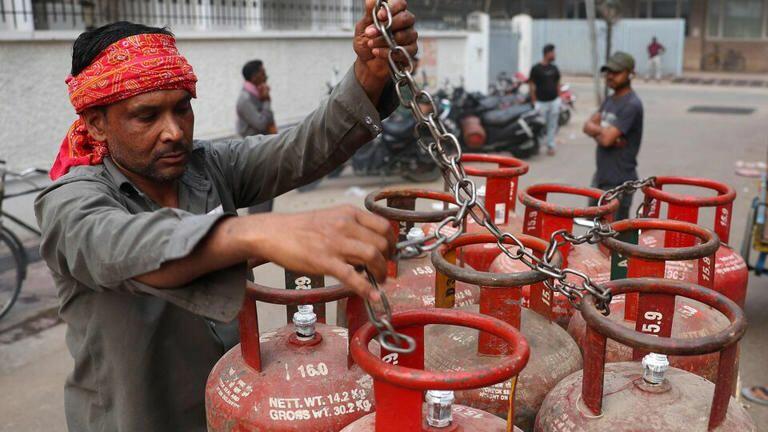
Long lines are forming outside cooking gas dealers across India as fears of shortages spread following disruptions to fuel imports linked to the war in the Middle East.
At a small distribution shop in Pune, gas dealer Vishal Vilas Mandhare has watched demand surge in recent days. Customers arrive carrying empty cylinders, pressing him and his staff for answers about when the next delivery of liquefied petroleum gas, or LPG, will arrive.
“The dealers are facing as much trouble as the customers,” he told Bloomberg, “just a different kind.”
India depends heavily on LPG for everyday cooking, and millions of households rely on regular cylinder refills to prepare meals. But since hostilities in the Middle East began disrupting a major share of India’s fuel imports, panic buying has spread, straining the country’s vast distribution system.
India is the world’s second-largest consumer of LPG and imports about 90 percent of the fuel it uses. Shipments for the week beginning March 9 are estimated at about 270,000 tons, the lowest level since April 2023, according to data from the analytics firm Kpler. Supplies from the Middle East have been sharply curtailed after attacks on Iran by the United States and Israel led to the closure of the Strait of Hormuz, a critical route for energy shipments.
India’s LPG network includes roughly 26,000 distributors serving more than 333 million households. While many families receive subsidized cylinders through government programs, migrant workers and small businesses that rely on the open market have been particularly hard hit. As supplies tighten and authorities ration deliveries, informal distributors have begun charging higher prices.
The rush to secure cylinders has also strained booking systems. Indian Oil Corp.’s online reservation portal briefly crashed on Thursday amid the surge in demand, adding to delays and prompting complaints from customers.
People queue up to book LPG cylinders at a gas agency in Prayagraj on Wednesday. (PTI Photo)
Government officials say they are working to stabilize supplies. Oil Minister Hardeep Puri recently told Parliament that India is seeking additional LPG cargoes from countries including the United States, Norway, Canada, Algeria and Russia. Authorities are also in discussions with Iran to ensure safe passage for shipments headed to India.
Domestic refiners have been ordered to increase output, raising local LPG production by 28 percent, Mr. Puri said. The government has also raised retail LPG prices for the first time in a year in an effort to moderate demand.
State-run companies say the national distribution network continues to function, though demand has surged in some areas. “The network remains stable and adequate,” a spokesman for Bharat Petroleum Corp. said, adding that distributors in some regions were seeing unusually high bookings driven by precautionary purchases.
“There is no shortage of gas anywhere. Consumers will continue to receive LPG cylinders at the prescribed price. Both gas agencies and the public must avoid unnecessary hoarding,” said District Magistrate VK Singh.
Yet, there is definitely a shortage of commercial LPG cylinders.
In Prayagraj, several hotel and restaurant operators claim commercial cylinders are being sold for ₹2,500– ₹2,600 in the open market.
A dhaba owner in George Town said he called the delivery worker of his gas agency on Tuesday morning to request a commercial cylinder. The worker allegedly said it could be arranged for ₹2,500. “I urgently needed it for my business, so I agreed,” he said. –Hindustan Times
For dealers like Mr. Mandhare, the current rush has echoes of past crises. During the Covid-19 pandemic, many faced similar scenes of anxious customers lining up for essentials. “We know how to handle upset and panicked customers,” he said. “This is nothing we can’t handle.”
Tyler Durden
Fri, 03/13/2026 – 19:20
https://www.zerohedge.com/geopolitical/panic-buying-sweeps-india-war-disrupts-cooking-gas-supplies

CDC: Little-Known Virus With No Vaccine Spreading In US
CDC: Little-Known Virus With No Vaccine Spreading In US
Authored by Zachary Stieber via The Epoch Times (emphasis ours),
The human metapneumovirus (HMPV) is spreading in the United States, including in California and the Great Lakes region, according to the Centers for Disease Control and Prevention.
A person receives a vaccine in Los Angeles in a file photograph. Robyn Beck/AFP via Getty Images
Symptoms include cough, fever, and nasal congestion, and, unlike better-known respiratory viruses, HMPV does not have a vaccine or known treatments, the CDC stated.
“There’s no specific treatment that’s generally recommended,” Dr. Dean Blumberg, chief of pediatric infectious diseases at the University of California–Davis Children’s Hospital, said in a video released by the school.
“For the youngest children, using a bulb syringe to clear the congestion can be useful. Sometimes a humidifier or vaporizer may be useful, especially if they have something like croup as a complication of infection and trying to make sure that they don’t get dehydrated and get enough fluids.”
Hospitalized patients typically receive supportive care, or oxygen if they need it, and intravenous fluids to prevent or treat dehydration.
Of nationwide tests that were positive for respiratory viruses in the week that ended on Feb. 28, 5 percent tested positive for HMPV—the highest percentage for HMPV since mid-2025. The percentage is lower than that of influenza and respiratory syncytial virus (RSV) but higher than that of COVID-19, according to the National Respiratory and Enteric Virus Surveillance System.
California and New Jersey are among the states that have recently reported HMPV cases. According to the CDC, cases have been recorded in all regions of the country.
Data voluntarily reported to the California Department of Public Health from clinical laboratories show an increase in HMPV test positivity to 8.6 percent during the week that ended on Feb. 28, a spokesperson for the department told The Epoch Times in an email on March 10.
The HMPV levels in California at this point are higher than during four of the past five respiratory virus seasons. The seasons run from the fall into the following year.
“While levels are currently higher than previous seasons, HMPV most commonly causes mild respiratory illness in people of all ages,” the spokesperson said. “Severe illness is less common. However, it can occur in young children, older adults, those with chronic medical conditions, and people with weakened immune systems.”
Blumberg also stated that symptoms are usually mild but that the virus can lead to more severe complications, particularly in young children, the elderly, and others with weaker immune systems.
HMPV usually starts circulating later in the season than influenza and RSV, researchers with the University of Pittsburgh School of Public Health and other institutions said in a study published in February.
They found that the virus also peaks later, often in April.
The researchers said that the study shows that HMPV was “an important cause” of respiratory symptoms among both children and adults.
Experts recommend practicing good hygiene during the virus season to prevent HMPV and other viruses, including covering one’s mouth when coughing or sneezing and frequently washing one’s hands.
Tyler Durden
Fri, 03/13/2026 – 18:55
https://www.zerohedge.com/medical/cdc-little-known-virus-no-vaccine-spreading-us