Category: News
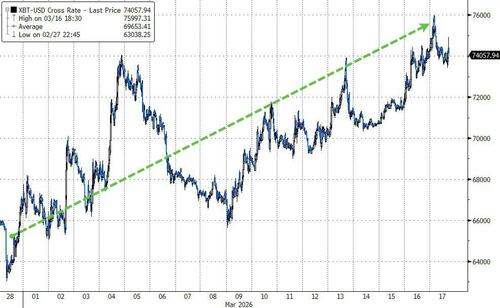
Bitcoin’s Ownership Base Is Maturing, Reducing Reliance On Retail: Analysts
Bitcoin’s Ownership Base Is Maturing, Reducing Reliance On Retail: Analysts
Authored by Micah Zimmermann via BitcoinMagazine.com,
Bitcoin investors have shown surprising resilience despite recent market turbulence, fueled by institutional investors and aggressive corporate treasury buyers.
Analysts say this trend highlights a structural shift in ownership that could support long-term growth.
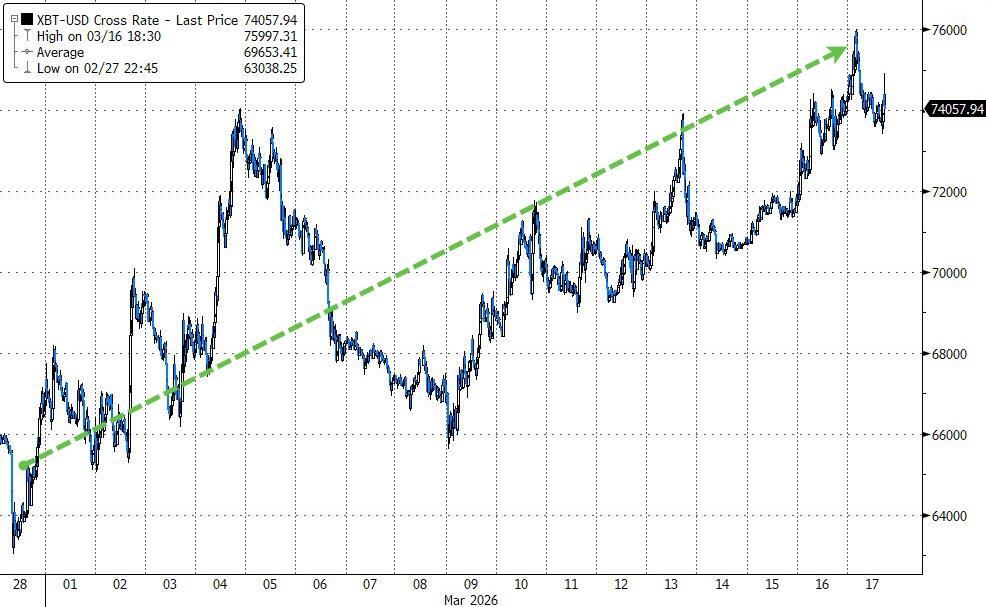
Institutional demand is clearly back, with “four consecutive sessions of ETF inflows and aggressive spot demand…suggesting one thing: institutional buyers have returned and they’re ready to increase their holdings around current prices, which recovered to above $70k as a result,” Bitfinex said in a note to Bitcoin Magazine.
Bitfinex wrote that “a sustained break above resistance could trigger momentum expansion, as positioning and the balance of flows suggest that the market is preparing for its next directional move after weeks of range trading.”
Bitwise Chief Investment Officer Matt Hougan also noted Bitcoin ETFs have held up despite a roughly 50% price drop since October 2025, underlining institutional commitment.
“The best evidence we have is in the ETF market,” Hougan said, according to Coindesk reporting.
“Bitcoin ETFs accumulated roughly $60 billion in net flows from their launch in January 2024 through October 2025. Since October 2025, prices are down 50%, but we’ve seen less than $10 billion in outflows from ETFs,” he said.
Hougan described institutional investors as exhibiting “diamond hands,” maintaining positions despite severe market drawdowns. He attributes this persistence to the non-consensus status of BTC.
Hougan said that institutional investors who buy into BTC today are still sticking their neck out and standing out from their peers. That career risk, he explained, fosters unusually high conviction, meaning investors allocating capital to bitcoin today tend to be 80–90% convinced of its long-term value rather than mildly optimistic.
This conviction underpins Hougan’s reaffirmed long-term bitcoin forecast of $1 million per coin.
“The wildest thing about my $1 million prediction is that it’s not wild at all,” he said. “All you need for bitcoin to get to $1 million is for the global store of value market to continue to grow as it has for the past 20 years and for bitcoin to become a minor but material part of that market.”
Last week, Hougan argued that skepticism over Bitcoin reaching $1 million stems from a misunderstanding of its valuation, as many analysts use “static math” that ignores the rapidly growing global store-of-value market.
Framing BTC as an emerging competitor to gold, he estimates that with a $38 trillion market and BTC’s fixed supply of 21 million coins, the $1 million price target is plausible.
Bitcoin isn’t very speculative anymore
Supporting this thesis, Bernstein analysts also noted that bitcoin’s ownership base has matured, reducing reliance on retail speculation.
In a March 16 research note seen by Bitcoin Magazine, they highlighted the growing influence of spot BTC ETFs and corporate treasury buyers such as Strategy.
The firm described Strategy as a “bitcoin central bank of last resort,” citing its aggressive accumulation model, which has added more than 66,000 BTC so far in 2026 at an average cost near $85,000. Strategy’s total holdings now exceed 761,000 BTC, valued around $56 billion.
Bernstein emphasized that institutional inflows are reshaping BTC’s ownership structure. Spot ETFs absorbed about $2.1 billion in inflows over three weeks, nearly offsetting year-to-date outflows of $460 million.
Institutional vehicles now control roughly 6.1% of BTC’s total supply, while coins inactive for over a year represent approximately 60% of circulating supply, signaling a growing base of long-term holders.
On top of this, on-chain indicators point to a late-stage bear cycle, as Lacie Zhang of Bitget Wallet explained to Bitcoin Magazine:
“The convergence of on-chain indicators such as realized price and MVRV suggests Bitcoin may be entering the late stage of a typical bear cycle, a phase historically associated with long-term accumulation rather than continued capitulation.”
Despite short-term macro headwinds, the current conditions signal a strategic accumulation phase, with BTC likely fluctuating between $68,000 and $84,000 as longer-term investors position for the next cycle.
Tyler Durden
Tue, 03/17/2026 – 11:45
https://www.zerohedge.com/crypto/bitcoins-ownership-base-maturing-reducing-reliance-retail-analysts

Las Vegas Cops Refuse To Release Violent Repeat Offender, Defying Judge’s Order
Las Vegas Cops Refuse To Release Violent Repeat Offender, Defying Judge’s Order
Authored by Debra Heine via American Greatness,
Las Vegas Metro police are refusing to release a violent repeat offender, in defiance of a local judge’s order.
The career criminal, 36-year-old Joshua Sanchez-Lopez, has been arrested 35 times, with a rap sheet that includes involuntary manslaughter, drugs and car theft, according to the New York Post.
The legal standoff began in January, when police arrested Sanchez-Lopez on a warrant for grand larceny of a motor vehicle.
Justice Eric Goodman set Sanchez-Lopez’s bail at $25,000 and ordered his release with an ankle monitor once he posted bond.
The program allows defendants to leave jail and wear an ankle bracelet. Various levels of the program require different levels of confinement. Goodman ordered Sanchez-Lopez to high-level electronic monitoring, which Dickerson described as house arrest. About 450 defendants are in the program at a time.
Sanchez-Lopez reportedly posted bail on January 24, but the Las Vegas police refused to place him in the program, given his history of failing to comply with the rules. Attorneys for Metro filed a petition last week challenging the judge’s authority to release him, arguing that the Department has the authority to declare a defendant too dangerous to release.
In a letter to the court, the department gave three reasons for refusing the judge’s order.
Sanchez-Lopez’s history of failing to appear in court
His previous bench warrants
His past violations of electronic monitoring rules
Police cited a case in 2020, where Sanchez-Lopez, armed with a gun, ran from the cops and later joked about his ankle monitor on Snapchat and gloated about being “chased again.”
“We have to take a look at that and say, ‘Is this somebody who our electronic supervision program can monitor safely in the community?” Mike Dickerson, assistant general counsel for Metro police, told KLAS. “This is an issue of public safety.”
Goodman last month threatened to hold the police department and Clark County Sheriff Kevin McMahill, who heads Metro police, in contempt of court for defying his order.
In its petition, filed on March 9, the department asked “for the justice court to stop trying to force Clark County Sheriff Kevin McMahill to violate his statutory duty.”
Sanchez-Lopez’s public defender told KLAS the cops are out of line.
“Metro’s argument is flat wrong,” attorney P. David Westbrook told the outlet. “It is the job of the elected judge to decide whether someone charged with a crime should be released and under what conditions.
“The idea that a Metro employee can overrule a judge’s release order and keep someone locked up should worry anyone who believes in the Constitution and the rule of law,” Westbrook said.
Metro’s Office of Public Information also provided the following statement to KLAS:
On Monday, March 9, 2026, the Las Vegas Metropolitan Police Department filed a petition with the Nevada Supreme Court asking for a writ of prohibition against the Justice Court of the Las Vegas Township.
LVMPD is asking for the justice court to stop trying to force Clark County Sheriff Kevin McMahill to violate his statutory duty. The justice court is threatening contempt proceedings against Sheriff McMahill for not releasing a pretrial detainee to LVMPD’s electronic supervision program even though the sheriff determined that electronic supervision of that individual would pose an unreasonable risk to public safety and communicated his determination to the justice court.
Sheriff McMahill’s authority to evaluate whether electronic supervision of a defendant poses an unreasonable risk to public safety is clearly defined in NRS 211.250(2) and NRS 211.300.
The Justice Court of the Las Vegas Township has the authority to release dangerous people into our community. However, the sheriff will not violate the law to assist those few judges who seek to use LVMPD’s electronic monitoring program in disregard of public safety and the safety of the dedicated LVMPD corrections officers who administer the electronic monitoring program.
Sanchez-Lopez’s case is scheduled to return to Goodman’s courtroom on Thursday, March 19, KLAS reported.
The case comes as the public becomes increasingly concerned about the dire consequences of liberal, soft-on crime policies amid a slew of appalling stories in the news featuring homicidal maniacs, illegal alien gangbangers, and career criminals being released back onto the streets again and again to victimize innocent Americans thanks to lenient judges like Goodman, Soros district attorneys and Blue State sanctuary politicians.
Tyler Durden
Tue, 03/17/2026 – 11:05
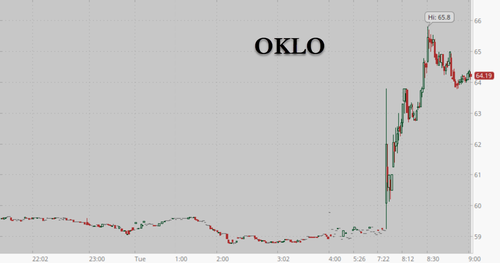
“Demand For Critical Isotopes Rising, Supply Limited”: Oklo Lands First NRC License & Another DOE Milestone
“Demand For Critical Isotopes Rising, Supply Limited”: Oklo Lands First NRC License & Another DOE Milestone
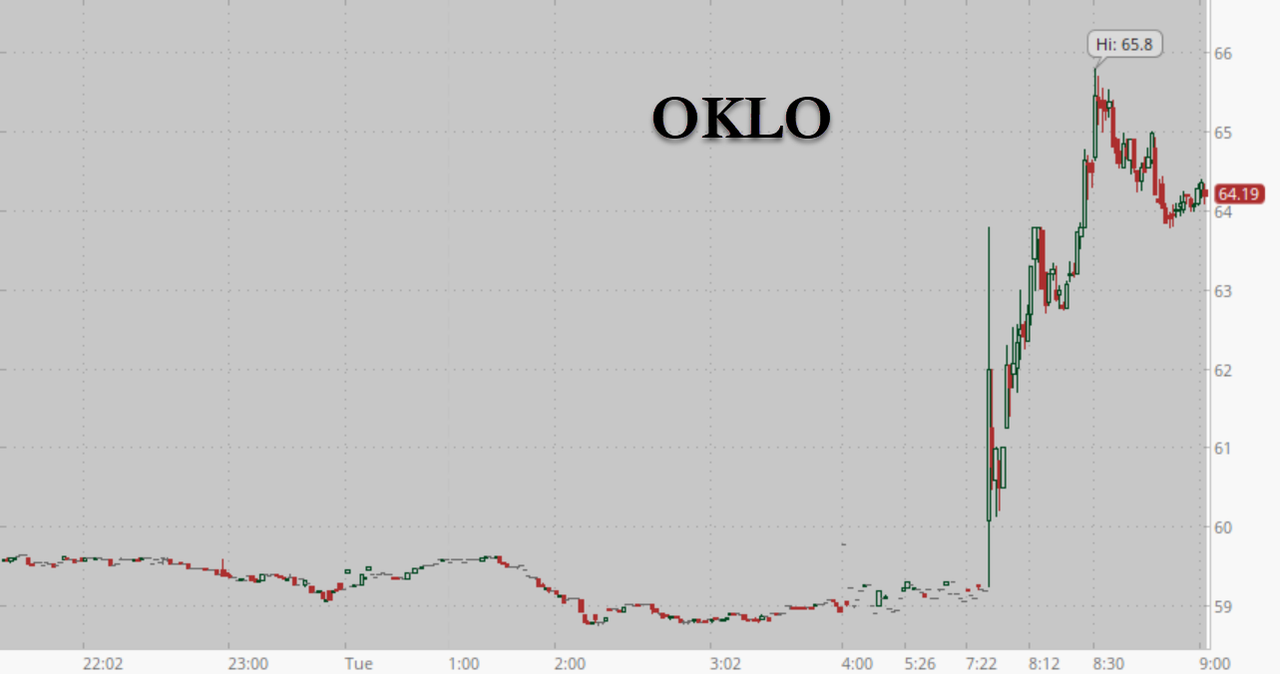
In a double dose of regulatory green lights delivered on the same day, Oklo and its wholly owned subsidiary Atomic Alchemy just notched two meaningful milestones that underscore America’s push to reclaim control over critical nuclear supply chains.
*Oklo Announces DOE Approval for Nuclear Safety Design Agreement of Aurora Powerhouse at Idaho National Laboratory
— zerohedge (@zerohedge) March 17, 2026
The news sent the stock flying in early morning trading.
What happened?
First, the U.S. Nuclear Regulatory Commission issued Atomic Alchemy its inaugural materials license. The permit authorizes the company to receive, possess, process, repackage, and distribute up to 2 curies of radium-226 (material currently treated as waste) along with sealed sources of cobalt-60 and americium-241 for calibration. Operations will kick off at Atomic Alchemy’s Idaho Radiochemistry Laboratory in Idaho Falls, paving the way for initial commercial sales of recovered isotopes used in cancer therapies, medical research, advanced manufacturing, and national security applications.
Oklo CEO Jacob DeWitte said, “Demand for critical isotopes is rising, but U.S. supply remains limited. This work helps create a more resilient and dependable domestic supply chain of isotopes and supports the transition from early operations to durable, commercial isotope production in the United States.”
Hot on its heels came the second announcement: the Department of Energy approved the Nuclear Safety Design Agreement (NSDA) for Oklo’s flagship Aurora powerhouse at Idaho National Laboratory. Following the recent signing of an Other Transaction Agreement under DOE’s Reactor Pilot Program, the NSDA marks the first formal step in the accelerated authorization pathway. Oklo has already requested review of its Preliminary Documented Safety Analysis, building on the project’s September 2025 groundbreaking and the earlier NSDA win for its Aurora Fuel Fabrication Facility.
Oklo $OKLO Announces U.S. Department of Energy Approval for Nuclear Safety Design Agreement of Aurora Powerhouse at Idaho National Laboratory
This is an acronym word salad for folks not versed in DOE-STD-1271
Oklo has signed an Other Transaction Agreement (OTA) with the DOE to… pic.twitter.com/KErZGDNXPK
— Steffan Szumowski (@UnoMasReactor) March 17, 2026
The Aurora-INL deployment, powered by recycled fuel from the historic Experimental Breeder Reactor II, sets the stage for eventual NRC commercial licensing while demonstrating how fast-fission tech can pair with isotope production for multi-stream revenue. The reactor design already scored a huge win after it was announced Oklo will be partnering with Meta to deploy multiple reactors to support the hyperscalers’ data centers.
As we detailed back in January in our coverage of Oklo’s isotope business, the company is pursuing multiple revenue streams, unlike typical reactor developers who just focus on power off‑take agreements.
Oklo is reporting earnings after the bell later today and could share more details on their Atomic Alchemy isotope business. Analysts are looking for updates on reactor deployment timelines, new partnerships with hyperscalers or other power off‑takers, and some more clarity on nuclear fuel recycling efforts.
Tyler Durden
Tue, 03/17/2026 – 10:50
https://www.zerohedge.com/energy/oklo-lands-first-nrc-license-and-another-doe-milestone
Fire Erupts Atop Manhattan Skyscraper
Fire Erupts Atop Manhattan Skyscraper
Dramatic footage has flooded X, showing what appears to be a fire atop a skyscraper in Midtown Manhattan at 6 East 43rd Street, New York City.
The FDNY is operating at a fire on East 43rd Street in Manhattan. pic.twitter.com/SlJ0UrbSY8
— FDNY (@FDNY) March 17, 2026
Footage:
Fire on Madison #nyc. Hope everyone is safe pic.twitter.com/5yLzvGmbh1
— Gabriel (@gabriel_horwitz) March 17, 2026
6 East 43rd Street is on fire. #nyc #fire pic.twitter.com/6rEynZ3u9J
— John Smith (@JohnSmithrx3e) March 17, 2026
Happening now in Midtown Manhattan. The Mr just sent a picture. Anyone know what’s going on? pic.twitter.com/GAhRDfdw9e
— I Can’t Even (@PalleyKara) March 17, 2026
*Developing
Tyler Durden
Tue, 03/17/2026 – 10:20
https://www.zerohedge.com/markets/fire-erupts-atop-manhattan-skyscraper

Trump-Appointed Counterterrorism Director Joe Kent Resigns In Protest Over U.S. War With Iran
Trump-Appointed Counterterrorism Director Joe Kent Resigns In Protest Over U.S. War With Iran
In a massive break from President Trump and MAGA, Joe Kent, Director of the National Counterterrorism Center (NCTC), announced his immediate resignation on Tuesday, citing irreconcilable opposition to the ongoing U.S. military operations against Iran.
Kent declared he could not “in good conscience support the ongoing war in Iran,” stating unequivocally that Iran posed “no imminent threat to our nation” and that the conflict was initiated “due to pressure from Israel and its powerful American lobby.” The move comes weeks into active strikes targeting Iranian nuclear sites, leadership, and infrastructure, with Iranian retaliation underway and global oil markets feeling the strain.
After much reflection, I have decided to resign from my position as Director of the National Counterterrorism Center, effective today.
I cannot in good conscience support the ongoing war in Iran. Iran posed no imminent threat to our nation, and it is clear that we started this… pic.twitter.com/prtu86DpEr
— Joe Kent (@joekent16jan19) March 17, 2026
Kent, a retired Green Beret with 11 combat deployments, former CIA paramilitary officer, and Gold Star husband who lost his wife Shannon in a 2019 ISIS-claimed suicide bombing in Syria, framed his exit as a defense of the “America First” principles Trump championed during his 2016, 2020, and 2024 campaigns. He praised Trump’s first term for decisively striking Qasem Soleimani and defeating ISIS without escalating into endless wars, noting that until June 2025, Trump recognized Middle East conflicts as a “trap” draining American lives and wealth. However, Kent alleges that “early in this administration, high-ranking Israeli officials and influential members of the American media deployed a misinformation campaign” that undermined Trump’s platform, deceived him into believing Iran posed an imminent threat with a “clear path to a swift victory,” and echoed tactics used to draw the U.S. into the “disastrous Iraq war.” He explicitly compares the current situation to Iraq, warning against repeating the mistake that cost thousands of American lives.
“As a veteran who deployed to combat 11 times and as a Gold Star husband who lost my beloved wife Shannon in a war manufactured by Israel, I cannot support sending the next generation off to fight and die in a war that serves no benefit to the American people,” Kent wrote.
The resignation carries profound weight as Kent was a Senate-confirmed Trump loyalist installed in July 2025, not a career holdover. As head of the NCTC – tasked with assessing terrorist threats from Iranian proxies and beyond – Kent is directly challenging the administration’s justification for the conflict. The letter, addressed personally to the president and thanking DNI Tulsi Gabbard, signals deeper fractures in the MAGA coalition or prompts a policy pivot, Kent’s bombshell exit underscores the high personal and political stakes of America’s latest Middle East engagement.
The resignation effectively places Kent within a growing bloc of Republican lawmakers who have opposed the Iran campaign from the outset, elevating what had been a vocal but limited faction into a more institutionally significant challenge to the administration’s approach.
Rep. Thomas Massie (R-KY) and Sen. Rand Paul (R-KY), longtime advocates of non-interventionist “America First” foreign policy, were among the earliest critics of the strikes, warning they risk entangling the U.S. in another costly and open-ended Middle East conflict. Both have argued in recent weeks that the operation mirrors the strategic missteps that led to the Iraq and Afghanistan wars, calling for de-escalation and greater congressional oversight.
The most prominent political voice amplifying that message has been Rep. Marjorie Taylor Greene (R-GA), who has emerged as one of the war’s fiercest critics within Trump’s base. Since the first strikes in late February, Greene has repeatedly denounced the operation in media appearances and on social platforms, calling it a betrayal of Trump’s campaign pledge to avoid new foreign entanglements.
On Saturday, Greene told CNN that the Republican base is fractured “along generational lines.”
“Many of the older Americans from the Baby Boomer generation that watch Fox News all day long very much believe the talking points on Fox News, and they have spent decades of their lives convinced that fighting these wars is the right thing to do,” she explained.
Marjorie Taylor Greene: “It’s turned into some perverted, deranged version of MAGA now that nobody wants” pic.twitter.com/OceBnJpLnp
— Aaron Rupar (@atrupar) March 16, 2026
Developing…
Tyler Durden
Tue, 03/17/2026 – 10:15
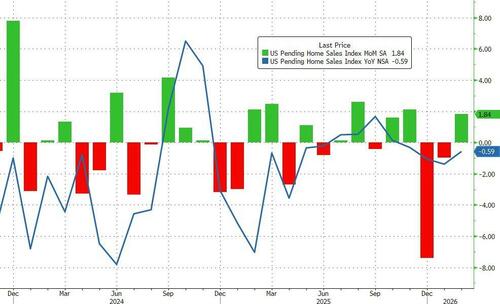
US Pending Home Sales Barely Bounce Off Record Lows Despite Tumbling Rates In Feb
US Pending Home Sales Barely Bounce Off Record Lows Despite Tumbling Rates In Feb
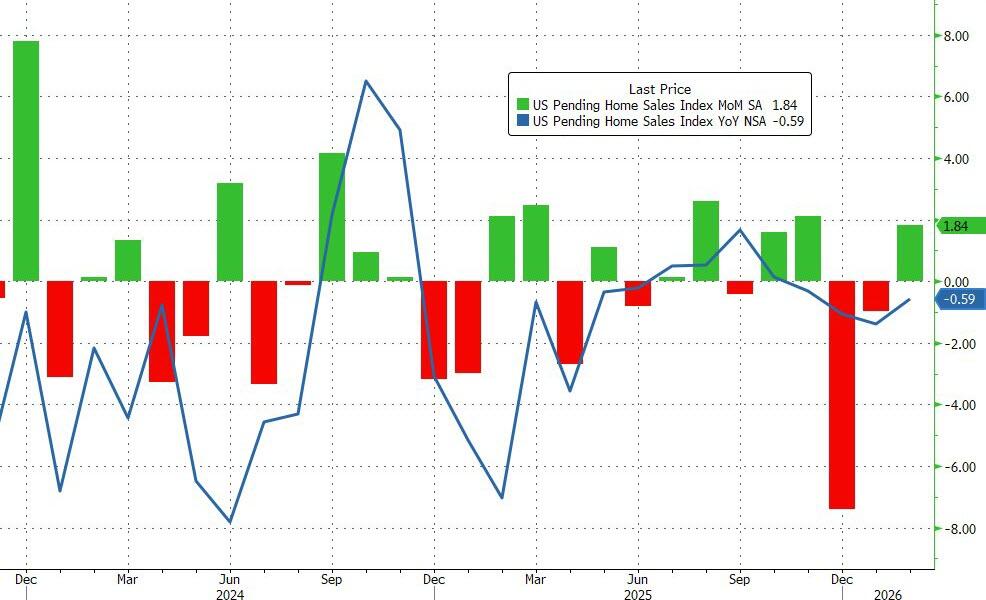
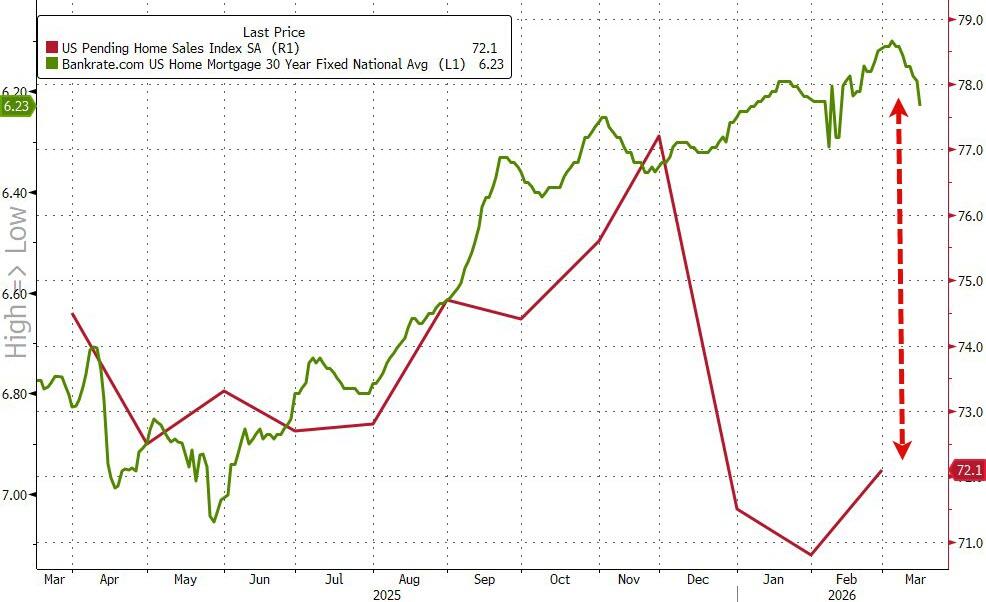
After reaching a record low last month – with the decline blamed on weather – pending home sales bounced modestly in February (up 1.8% MoM vs -0.6% MoM exp and -10.% MoM prior).
Year-over-year home sales continue to decline (down 0.6% YoY)…
Source: Bloomberg
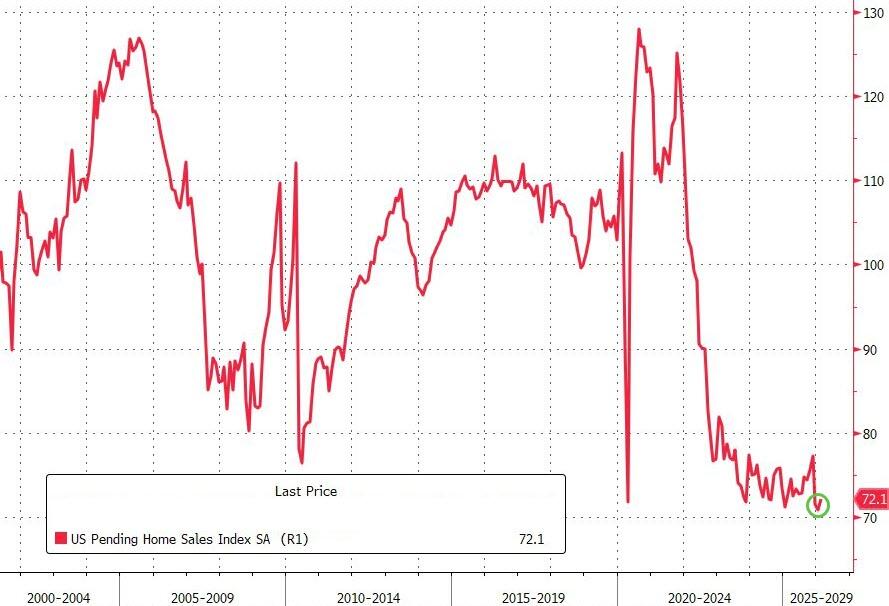
…just barely off of all-time-record lows…
Source: Bloomberg
Pending home sales in the South, the biggest home-selling region in the country, increased 2.7%.
They rose 4.6% in the Midwest and edged up in the West.
Contract signings dropped in the Northeast.
Mortgage-rates have tumbled (to their lowest since 2022) – helping affordability – so what is holding pending home sales back?
Source: Bloomberg
“The slight gain in pending contracts appears to be driven by improved affordability conditions. However, those conditions could reverse if higher oil prices lead to an uptick in mortgage rates,” NAR Chief Economist Lawrence Yun said in a statement.
Indeed, it certainly won’t help in April that in the first week of March, mortgage rates jumped by the most since September as war with Iran sparked concerns about inflation.
Housing affordability has been a key issue ahead of November’s midterm election. President Trump has taken several steps to boost home ownership, including signing two executive orders last week aimed at improving access to mortgage credit and easing environmental rules to speed up development projects.
As a reminder, pending-homes sales tend to be a leading indicator for previously owned homes, as houses typically go under contract a month or two before they’re sold.
Tyler Durden
Tue, 03/17/2026 – 10:08

Will The Iran War Trigger A Dollar Crisis?
Will The Iran War Trigger A Dollar Crisis?
The oil spike has moderated and markets are mellow for the time being, but could the long-term economic consequences of this war just be getting started?
U.S. allies have shown a lackluster response after President Trump’s request for assistance in reopening the Strait of Hormuz — a corridor carrying roughly 20% of global oil supply — and this may spell a trend of what’s to come. What happens when oil-producing Gulf states have had enough of our/Israel’s foreign policy machinations and, as a result, begin to de-dollarize or offload U.S. sovereign debt?
Tonight at 7pm ET, wealth manager Peter Schiff, proponent of the Austrian school of economics, and Rabobank global strategist Michael Every will square off on these questions and debate whether the Iran war will undermine the foundations of dollar dominance.
Moderating the discussion is the great Dave Collum, chemistry professor at ZeroHedge and long-time friend of ZH.
Schiff: Dollar’s Days Numbered
Schiff has long argued that U.S. fiscal deficits, monetary expansion, and reliance on foreign capital have put the dollar on an unsustainable trajectory. In recent commentary on the Iran conflict, he warned the war could accelerate those vulnerabilities.
The U.S. economy and labor market were already weakening, and inflation strengthening, before the war with Iran began. Now, as those problems get worse, Trump can blame them on a war he will insist we had no choice but to fight. Stagflation will be sold as the cost of freedom.
— Peter Schiff (@PeterSchiff) February 28, 2026
According to Schiff, the combination of higher oil prices, massive war spending, and renewed inflation pressures could trigger a severe economic downturn and destroy purchasing power for Americans. The conflict could be the catalyst that finally exposes structural weaknesses he has warned about for years: a heavily indebted U.S. economy dependent on monetary stimulus and foreign financing.
When other countries start offloading their dollars, it may be rapid and jarring. As Schiff is fond of saying, stocks take the escalator up and the elevator down.
Every: Manufactured Hegemony
Rabobank’s Michael Every takes a different approach.
Less worrisome, he sees Hormuz being opened in two to three weeks:
1/2
Some thoughts on the Iran War on CNBC which are not quite as their headline puts it.
Our base case remains thst Hormuz is reopened by the end of this month or early April.
Yet geopolitically, that’s more likely to be through US force escalation (“The only way out is…
— Michael Every (@TheMichaelEvery) March 16, 2026
Rather than collapsing the dollar, crises can actually reinforce its dominance, as global investors rush into U.S. assets during periods of uncertainty. Indeed, in the opening days of the Iran conflict the dollar initially strengthened even as global markets tumbled.
Every also sees the war as a geopolitical chess move that can strengthen the U.S. dollar. If the post-war Iranian regime is more subservient to the Americans, they would control another crux of the world’s energy trade.
Tune in tonight at 7pm ET to witness the showdown. Right here on the ZeroHedge homepage and streaming on X.
Tyler Durden
Tue, 03/17/2026 – 10:00
https://www.zerohedge.com/economics/will-iran-war-trigger-dollar-crisis
The Kobayashi Maru Scenario
The Kobayashi Maru Scenario
By Michael Every of Rabobank
The Kobayashi Maru Scenario
Yesterday’s Global Daily by Ben Picton, ‘The Wrath of Kharg’, couldn’t help but get me thinking about the infamous Kobayashi Maru scenario in Star Trek II: The Wrath of Khan. For those unfamiliar, back when Star Trek was a popular franchise based on serious ideas, not an unpopular one based on frivolous ones, Starfleet Academy tested its budding starship captains by making them try to rescue the simulated crew of a disabled freighter stranded in dangerous territory. Abandoning them was a failure; yet every attempt to retrieve them would be met by an ever-increasing number of attackers. Crucially, this no-win scenario was a key test of officer candidates’ characters, not their tactics or strategy.
The question today is if President Trump is himself caught in a Kobayashi Maru scenario given:
If he retreats from Iran, it’s a geopolitical defeat the equivalent of the 1956 Suez Crisis; and he may not even be able to retreat if Iran refuses to stop the war regionally.
If he continues to attack, energy markets will panic further. The Israeli press says the country is preparing to fight for another month vs Iran and Hezbollah in Lebanon, not the three weeks alluded to yesterday; and Iran is now targeting upstream oil and gas fields (such as Shah in the UAE), not just refineries and export terminals, threatening energy supply, not flow.
Yet in Star Trek II we hear that Captain Kirk, in his youth, found a novel solution to the no-win outcome: he reprogrammed the computer, so victory was possible, winning a commendation for original thinking. “I don’t like to lose,” he tells a logical Vulcan who had already failed the test. Indeed, even as the media are calling this war Operation ‘Epic Folly’ –and recalling that oil prices vs physical supply, and bunker fuel, jet fuel, and diesel are worse– the futures market continues to price for cheaper energy within a few months. Even with backwardation showing the current physical squeeze, which seems to suggest an inherent view there will be no long-run disruption to the region’s energy flows: and US assets are not tanking more than others on the suggestion this is due to a looming 1956 defeat. Or is that just the normal science fiction of mean-reverting “because markets” thinking? Let’s be clear: it’s very easy to see how things can get far worse. However, there are arguably ways things can also improve as a result.
On one hand, Treasury Secretary Bessent says the US is fine with some Iranian, Chinese, and Indian vessels having successfully made it through Hormuz. Why wouldn’t they be? If Iran starts letting everyone but the US and Israel through —neither of whom use it— then the blockade is effectively over. Yet that argues for Iran not to do so to any great extent.
If true that means blockade is effectively over https://t.co/wHQy1ksNWp pic.twitter.com/spl1c7fVTf
— zerohedge (@zerohedge) March 14, 2026
On the other, the underlying logic is that Trump also needs to reprogram the no-win scenario via further escalation of his own. As an example, Trump has announced his long-awaited looming trip to Beijing is unlikely to happen because of the war: he wants a delay of a month or so. In short, only if the war ends without a US retreat can Trump and Xi discuss the US-China relationship. The messaging is crystal clear. So is that China can get energy from the Western hemisphere to replace Iran and the GCC if needed. So is the US ability to then put a foot on the hosepipe in certain geopolitical circumstances – as it is now doing with Iran at far greater distance, risk, and cost. But that doesn’t mean it isn’t part of a future deal.
For those who can’t join those dots, note that after Trump blocked most oil exports to it after flipping Venezuela by force, the communist Cuban government has just embraced perestroika, allowing Cuban American exiles to return to the island and open private-sector businesses. That’s yet another Russian-Chinese-Iranian ally that seems in the process of being flipped into the US camp. The world is changing radically and rapidly – and it’s not something one just gets to sit out in splendid isolation.
Indeed, while NATO allies and Japan and South Kore (so far) won’t send ships to help reopen Hormuz despite Trump threats to NATO and even key Asian security alliances, the “It’s not our war” crowd must note that the longer this drags on, the more painful it risks getting for them. Moreover, they may also come to see that an angrier nuclear Iran with ballistic missiles, which can happen if the regime survives, would have huge implications for everyone. Japan’s PM Takaichi is reportedly ‘weighing her options’ and could agree to join a Hormuz coalition for freedom of navigation in principle, according to the Japan Times.
By contrast, the EU is saying “Don’t “blackmail” us’: but it arguably is being – in which case, who has the greater leverage and risks the larger fallout? Notably, Europe is also arguing ‘Not one molecule!’ and has ruled out relaxing a Russian gas ban, which logically only leaves the US as an LNG supplier. Via a transitive geopolitical process, that also places Europe on the same side as the US vs Iran, a key supporter of Russia vs Ukraine… and then vs China(?) Meanwhile, with India pushing to now deepen new EU ties even further, does that tie the EU to the US via that South Asian route too, or to pro-Russia India?
The first of the major central banks to have to try to grapple with this today was the RBA. They opted to raise rates 25bps to 4.10%, as expected. They also noted that sustained higher energy prices will add to inflation and that risks on that front have tilted further to the upside: indeed, Aussie inflation is seen staying above target for “some time” even as there are “material uncertainties” about the economic outlook. The Reserve Bank also added it “will do what’s necessary to deliver its price and jobs goals” – but, in the worst case, what if they run in opposite directions ahead? The Aussie 10-year yield, which managed to break through the psychological 5% level yesterday, is now back at around 4.92%. AUD softened slightly on the decision.
What will the other central banks say and do this week? And what will they say and do next month if this really is a Kobayashi Maru scenario for them rather than one they can simply reprogram with a new liquidity acronym?
Tyler Durden
Tue, 03/17/2026 – 09:45

Iraq Negotiates With Iran To Reopen Vital Oil Shipping Route
Iraq Negotiates With Iran To Reopen Vital Oil Shipping Route
Authored by Tsvetana Paraskova via OilPrice.com,
The federal Iraqi government is in contact with Iran to persuade Tehran to allow some Iraqi oil tankers to pass through the Strait of Hormuz, Iraq’s Oil Minister Hayyan Abdul Ghani said on Tuesday.
“There is communication with Iran regarding allowing the passage of some Iraqi oil tankers,” the minister said in statements carried by the Iraqi News Agency (INA).
Iraq, unlike Saudi Arabia and the United Arab Emirates (UAE), doesn’t have any options – even partial – to bypass the Strait of Hormuz, which has been closed for over two weeks now, forcing Baghdad to slash oil production as storage sites and tankers available in the Gulf filled up.
Iraq was the first to announce more than a week ago it was slashing crude oil production amid the de facto blockade of the Strait of Hormuz.
Last week Iraq said it would maintain crude oil production at roughly 1.4 million barrels per day (bpd) as the war disrupting the Persian Gulf continues to cripple the country’s export routes.
Before the war, Iraq, OPEC’s second-largest producer behind Saudi Arabia, produced more than 4.4 million bpd.
But with no way out of the Gulf for all these barrels, Iraq and the other major producers are forced to slash upstream production.
Initial losses of about 5 million bpd have already hit about 10 million bpd, according to estimates by the International Energy Agency (IEA) in its monthly report published last week.
For Iraq, the situation is more critical than the other Gulf producers—its dependence on oil revenue is the highest in the region, and unlike Kuwait, the UAE, and Saudi Arabia, Baghdad doesn’t have a huge sovereign wealth fund to lean on.
So Iraq is also scrambling to restore a northern oil export route that would send crude from the Kirkuk fields directly to Turkey’s Mediterranean port of Ceyhan, as the southern export route via the Strait of Hormuz has been effectively closed for weeks.
Tyler Durden
Tue, 03/17/2026 – 09:25
https://www.zerohedge.com/geopolitical/iraq-negotiates-iran-reopen-vital-oil-shipping-route

SK Chairman Warns Global Memory Crunch May Last Until 2030
SK Chairman Warns Global Memory Crunch May Last Until 2030
SK Group Chairman Chey Tae-won warned that the global high-bandwidth memory crunch, driven by AI data center buildouts, will last until the end of the decade.
Chey told reporters on the sidelines of Nvidia’s annual developer conference, ‘GTC 2026,’ at the San Jose Convention Center in California on Monday that the memory chip shortage could last another four to five years, with supply unlikely to catch up to demand until 2030.
He explained, “The supply shortage problem stems from a wafer shortage, and it takes at least four to five years to secure more wafers,” adding, “We expect the supply shortage (across the industry) to persist at over 20% until 2030.”
“I will do my best to stabilize prices,” he noted. “I understand that our CEO (Kwak No-jung) will soon announce a new plan to stabilize DRAM prices.”
Chey was asked by a reporter about plans to move manufacturing plants or production capacity to the US under President Trump’s ‘Make America Great Again’ industrial base buildout. He responded that, at the moment, intentions are mostly focused on facilities in South Korea.
He explained, “It is the same wherever we go, and even if we establish production capabilities outside of Korea, it takes the same amount of time. Since Korea already has an established foundation, we can respond much more quickly, which is why we are focusing on Korea.”
Chey’s timeline for how long the memory crunch will linger is set to cause a “tsunami-like shock” across the global smartphone industry, according to a recent report from the market research firm International Data Corporation. The shock is expected to spread to every consumer electronics company that heavily relies on memory, first squeezing margins and then forcing companies to raise prices for consumers.
Bloomberg Markets Live reporter Michael Ball warned the other week that the memory crunch is becoming yet another bottleneck for AI data center buildouts.
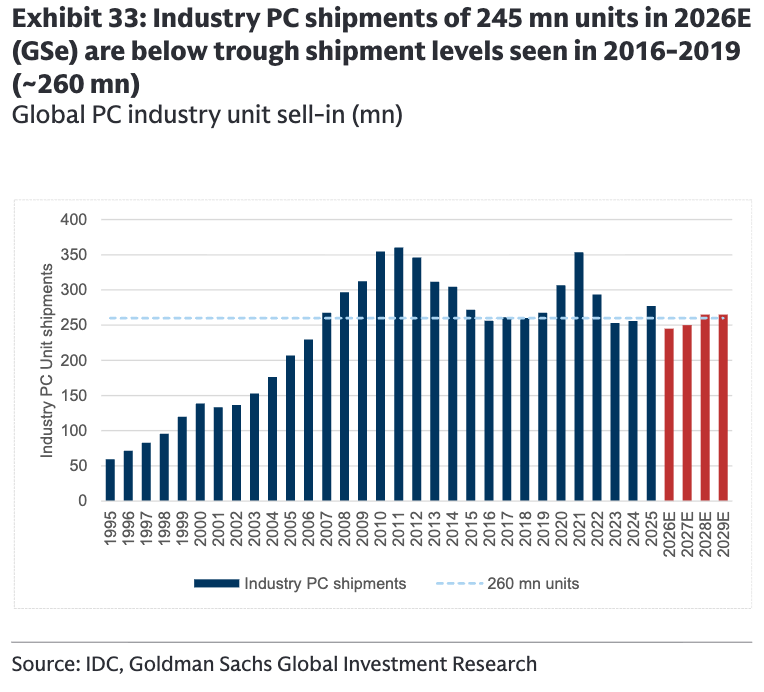
Last week, Goldman analyst Katherine Murphy told clients that a “structural supply crunch in the memory market” will “put constraints on the availability of PCs and drive vendors to raise prices in order to protect thin margins.”
Murphy forecast that shipments in 2026 will slide by about 12% year over year to 245 million units, with consumer PCs declining 15% year over year to 108 million units and commercial PCs down 9% year over year to 137 million units.
“As of March 2026, we expect PC unit shipments at DELL and HPQ will be down high single digits to low double digits year over year in C2026, with AAPL PC units up modestly year over year on new product launches, including the entry-level MacBook Neo,” the analyst noted.
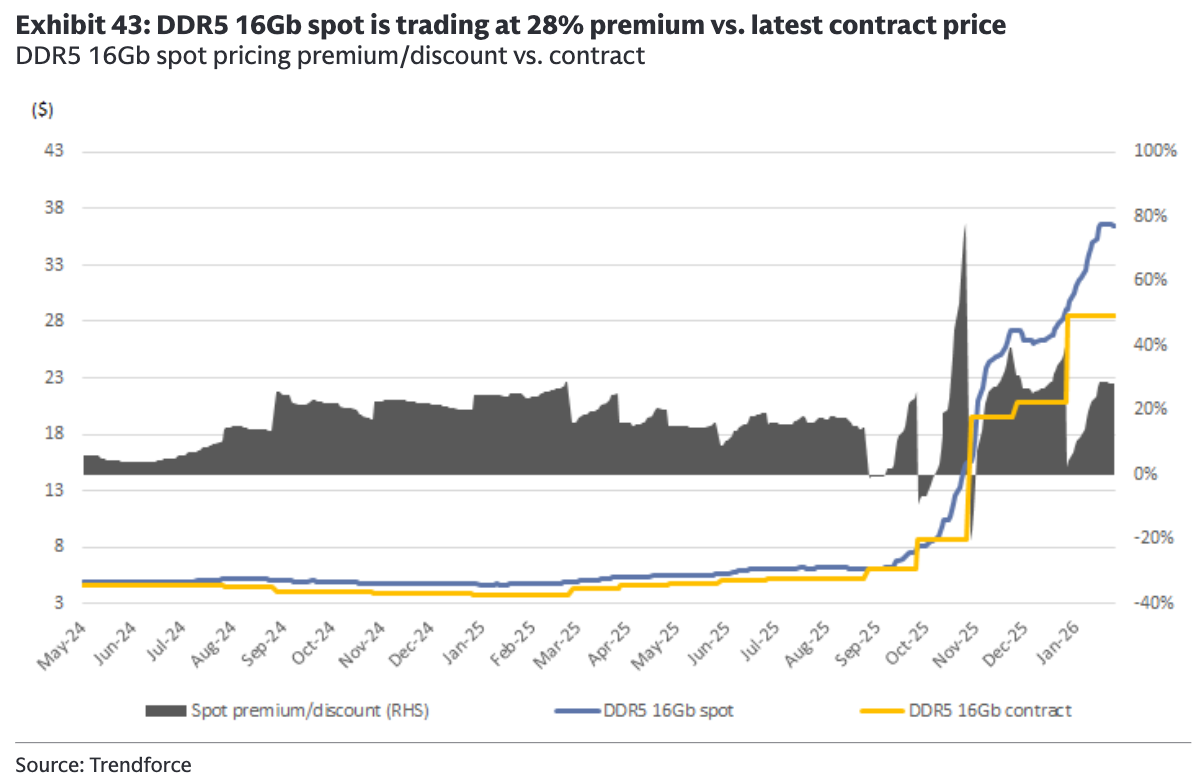
Murphy said the soaring DRAM and NAND component costs, which typically account for 20% of a PC build’s total cost, will account for about 40% under the current pricing regime.
Professional subscribers can read much more about the memory crunch on our new Marketdesk.ai portal.
Tyler Durden
Tue, 03/17/2026 – 09:05
https://www.zerohedge.com/technology/sk-chairman-warns-global-memory-crunch-may-last-until-2030