Category: News

Biden-Appointed Judge Blocks RFK Jr’s Appointees To Vaccine Panel
Biden-Appointed Judge Blocks RFK Jr’s Appointees To Vaccine Panel
Authored by Stacey Robinson via The Epoch Times,
A federal judge in Massachusetts ruled on March 16 that Health Secretary Robert F. Kennedy Jr. illegally appointed 13 new members to an influential vaccine panel beginning last June.
Biden-appointed district Judge Brian Murphy also blocked that panel’s guidance memo revising the childhood immunization schedule and declared its previous votes invalid.
Murphy ruled Kennedy committed “a technical, procedural failure” by skirting around the Advisory Committee on Immunization Practices (ACIP) to change the vaccine recommendations for children.
He said the government committed a similar mistake by removing the previous members of that committee, and replacing them “without undertaking any of the rigorous screening that had been the hallmark of ACIP member selection for decades.”
The plaintiffs, led by the American Academy of Pediatrics, originally sued after Kennedy ordered the Centers for Disease Control and Prevention to stop recommending the COVID-19 vaccine for pregnant women and healthy children.
The suit was later expanded to challenge the restructuring of the ACIP and its changes to childhood vaccine recommendations.
Tyler Durden
Mon, 03/16/2026 – 19:20
https://www.zerohedge.com/political/biden-appointed-judge-blocks-rfk-jrs-appointees-vaccine-panel

SEC Preparing Proposal To Eliminate Quarterly Reporting Requirement
SEC Preparing Proposal To Eliminate Quarterly Reporting Requirement
Very soon,10-Qs may be a thing of the past.
The Securities and Exchange Commission is preparing a proposal to eliminate the requirement to report earnings quarterly and instead give companies the option to share results twice a year, the WSJ reports citing people familiar with the matter.
In preparation for the proposal – which could be published as soon as April – regulators have been talking to officials at the major exchanges to discuss how they may need to adjust their rules. Once published, the proposal will be subject to the usual public comment period. After that period, which typically lasts at least 30 days, the SEC will vote on it. There are no guarantees it will ultimately happen.
The push for semiannual reporting gained steam late last year. As the WSJ reported last September, the Long-Term Stock Exchange petitioned the SEC to eliminate the quarterly earnings report requirement. Within days, President Trump and SEC Chairman Paul Atkins both said they supported the idea.
Publicly traded US companies have reported results every three months for the past 50-plus years. Trump briefly explored the idea of moving to semiannual earnings reports during his first term, but the effort went nowhere.
Those in favor of less-frequent reporting requirements believe a switch could help boost the shrinking number of public companies in the U.S. Among the reasons companies cite as to why they remain private is the time-consuming and costly clerical work required to list and maintain publicly traded shares.
Any change is likely to face opposition from investors who rely on the transparency of regular disclosures.
While the rule is expected to make quarterly reporting optional, and not eliminate quarterly reports altogether, it is unlikely that many companies will voluntarily subject themselves to intense public scrutiny at a time when AI is making decades-old corporate moats disappear virtually overnight. Alternatively, it could also make capital raising far more challenging for companies that opt out since investors could be anxious to allocate capital in companies that do not publish up to date snapshots of their financial matters.
Tyler Durden
Mon, 03/16/2026 – 18:30
https://www.zerohedge.com/markets/sec-preparing-proposal-eliminate-quarterly-reporting-requirement

US Cities Face Water Stress Amid Crumbling Infrastructure
US Cities Face Water Stress Amid Crumbling Infrastructure
Authored by Autumn Spredemann via The Epoch Times,
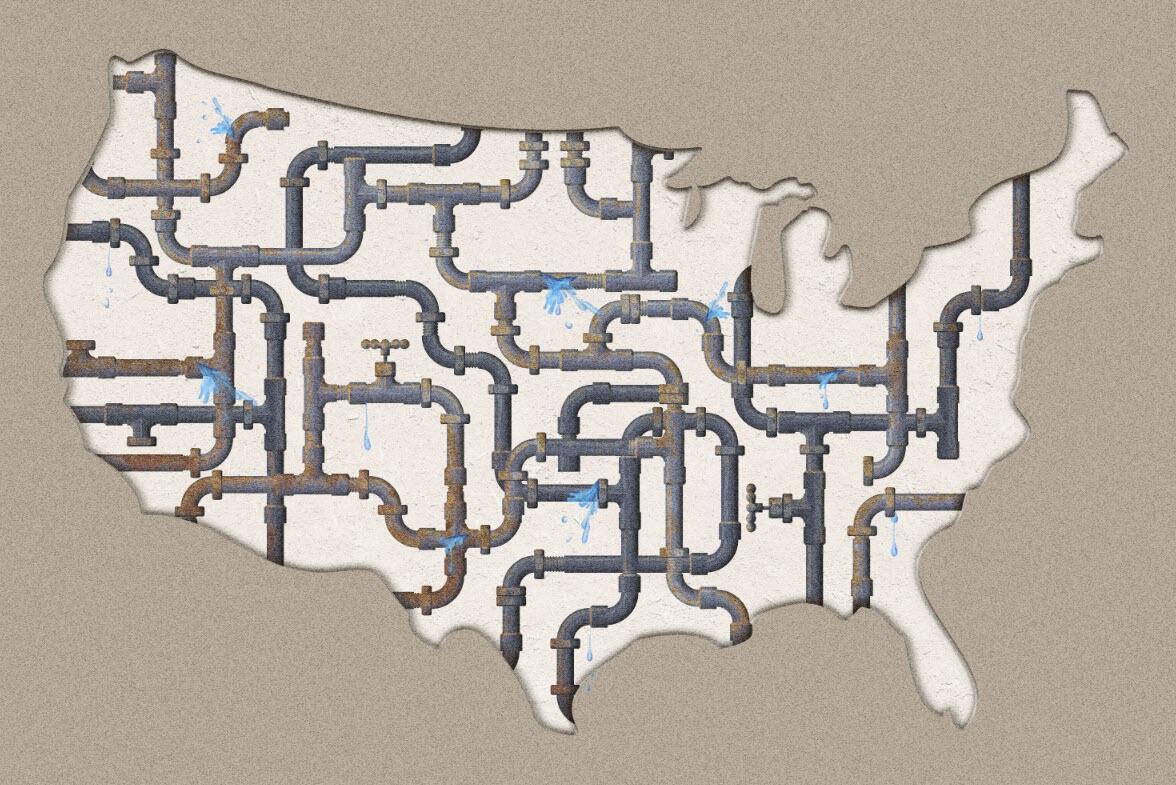
Across large swaths of the United States, drought conditions and the explosion of data centers have brought renewed attention to the future of the water supply. But the biggest concern may be something local governments have known about for years: aging pipes and other decaying infrastructure that could threaten supply even when water is abundant.
More U.S. cities have been facing water stress in recent years. Drought conditions affected more than a third of the nation last year, with almost 30 million Americans living in areas with high water stress, according to the U.S. Geological Survey.
At the same time, data centers can consume upward of 5 million gallons of water per day. That’s the equivalent usage of a town with a population between 10,000 and 50,000 people. The number varies, but an estimated 4,149 data centers are currently operational in the United States, with another 2,788 announced or under construction.
But while drought and data center-related water consumption continue to make headlines, an estimated 6.75 billion gallons of treated drinking water are slipping through the cracks in America’s pipes every single day.
It’s a problem U.S. officials have seen coming for more than a decade.
A 2014 U.S. Government Accountability report found 40 out of 50 state water managers anticipated supply shortages in their states under “average conditions” within 10 years.
Fast forward to last year, when 75 percent of U.S. city officials and more than half of business executives said they expect water risks to outpace all other infrastructure threats, according to a Schneider Electric study.
“Water is not just essential for life—it’s the backbone of America’s economic strength—yet today the U.S. is facing a major water crisis, driven by dwindling supply and outdated infrastructure,” Sophie Borgne, Water and Environment Segment president at Schneider Electric, stated in a press release.
A general view of the Google Midlothian Data Center in Midlothian, Texas, on Nov. 14, 2025. Data centers can consume more than 5 million gallons of water per day, adding pressure in regions already facing water shortages that threaten residential access, industrial growth, and long-term urban resilience. Ron Jenkins/Getty Images
Most U.S. water pipes are between 45 and 100 years old, and many contain toxic elements such as lead and copper, according to the U.S. Environmental Protection Agency (EPA).
In its 2025 infrastructure report card, the American Society of Civil Engineers gave U.S. drinking water a C- score and wastewater management a D+ due to the ongoing battle to replace U.S. water pipes.
“The nation’s water infrastructure is aging and underfunded. More than 9 million existing lead service lines pose health concerns,” the engineers stated in the report.
The study authors also noted that “funding shortfalls” remain a problem in state-level funding for the necessary upgrades to drinking water pipes. They also observed that only an estimated 30 percent of these utility companies have fully implemented a water asset management plan, and less than half are even trying to implement one.
In October 2024, the EPA announced its final rule on replacing lead piping nationwide, with compliance required to begin that year. The ultimate goal was to replace all aging and leaking drinking water pipes nationwide within 10 years. The agency stated that the country’s drinking water systems would need $625 billion for pipe replacement, treatment plant upgrades, and additional assets.
“[With] the latest data from 2025, EPA estimates that there are 4 million lead service lines across the country, down from 9 million previously estimated,” an EPA spokesperson told The Epoch Times.
The spokesperson said an additional $3 billion in state funding is available to reduce exposure to lead in drinking water.
“EPA is committed to Making America Healthy Again by ensuring that all Americans can rely on clean and safe drinking water,” the spokesperson said, adding that the agency’s free water technical assistance program is available to “help drinking water systems identify, plan for, and replace lead pipes in the communities they serve.”
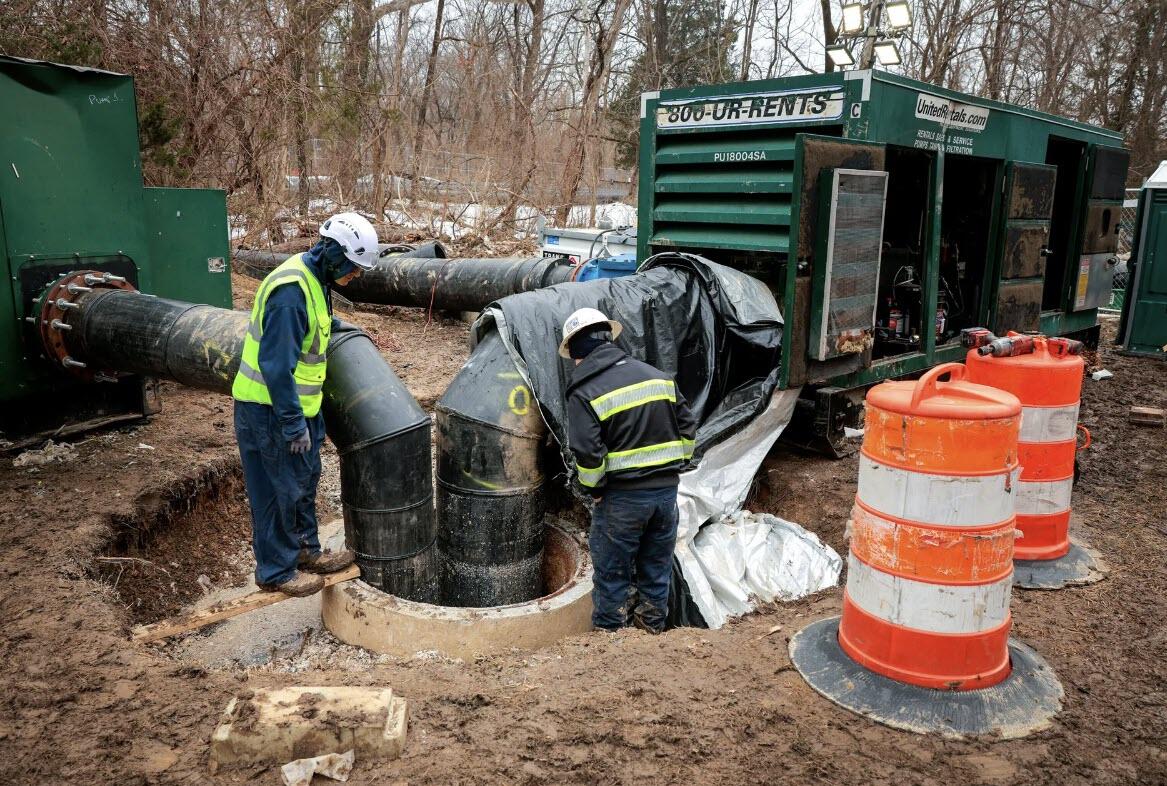
Workers use giant pumps to move sewage around a broken section of the Potomac Interceptor in Cabin John, Md., on Feb. 16, 2026. An estimated 6.75 billion gallons of treated drinking water are slipping through the cracks in America’s pipes every single day. Chip Somodevilla/Getty Images
Doing the Math
Presently, water lost to faulty pipe infrastructure is costing U.S. utilities $6.4 billion annually. So why is this decades-in-the-making problem still ongoing? Some say it’s because the math doesn’t work.
“While the $6 billion loss of 2 trillion gallons of treated drinking water—nearly 20 percent of the drinking water consumed in the U.S.—to old pipes and crumbling infrastructure sounds large, it must be put in perspective,” Jeff Stollman told The Epoch Times.
As an economist and technology futurist, Stollman prepares impact forecasts for industries, government, and the environment. He said the cost of replacing leaky water pipes ranges from $1 million to $4 million per mile, depending on pipe size, location, and installation method.
“The United States has over 2.2 million miles of underground drinking water pipes, with a significant portion reaching the end of their 75 to 100 year life. The cost of replacing half of these pipes at the lower range cost of $1 million per mile would therefore require municipalities to come up with $1.1 trillion. And this estimate is certainly low,” he said.
“Losing $6 billion a year, it would take nearly 200 years for the current losses to equal the cost of replacement.”
Compounding this, many older municipalities are “cash-strapped” as it is, he said.
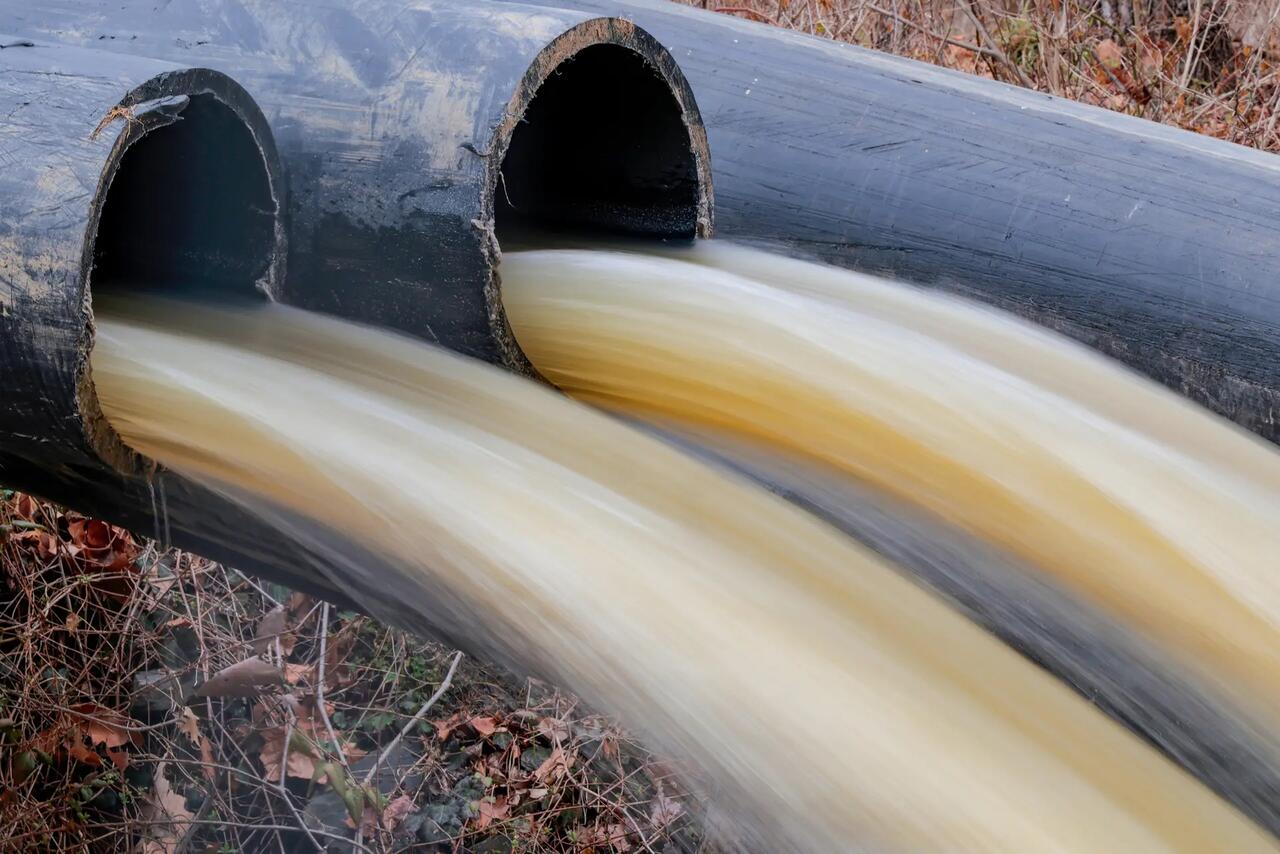
A pipe diverts water into the C&O Canal in Cabin John, Md., on March 5, 2026. Most U.S. water pipes are between 45 and 100 years old, and many contain toxic elements such as lead and copper, according to the U.S. Environmental Protection Agency. Heather Diehl/Getty Images
Outside of federal assistance, Stollman said, state and municipal officials will likely need to raise utility prices to cover the improvements.
“This doesn’t mean that this [pipe changing] shouldn’t be done. But utilities will likely have to raise the cost of water more than 7 cents [per] gallon,” he said.
The soaring cost of water bills is already a concern for many. Since 2022, water bills have increased across the board.
In the Midwest, bills were higher than the national average, but the Mid-Atlantic region saw the greatest year-over-year increase in 2024 at 9.5 percent, according to a Bank of America analysis.
Bluefield Research observed in 2025 that U.S. water and sewer bills had risen 24 percent over the previous five years.
“The cost of maintaining and upgrading water infrastructure continues to rise, and these costs are being passed down to ratepayers,” Megan Bondar, an analyst at Bluefield Research, said in a press release.
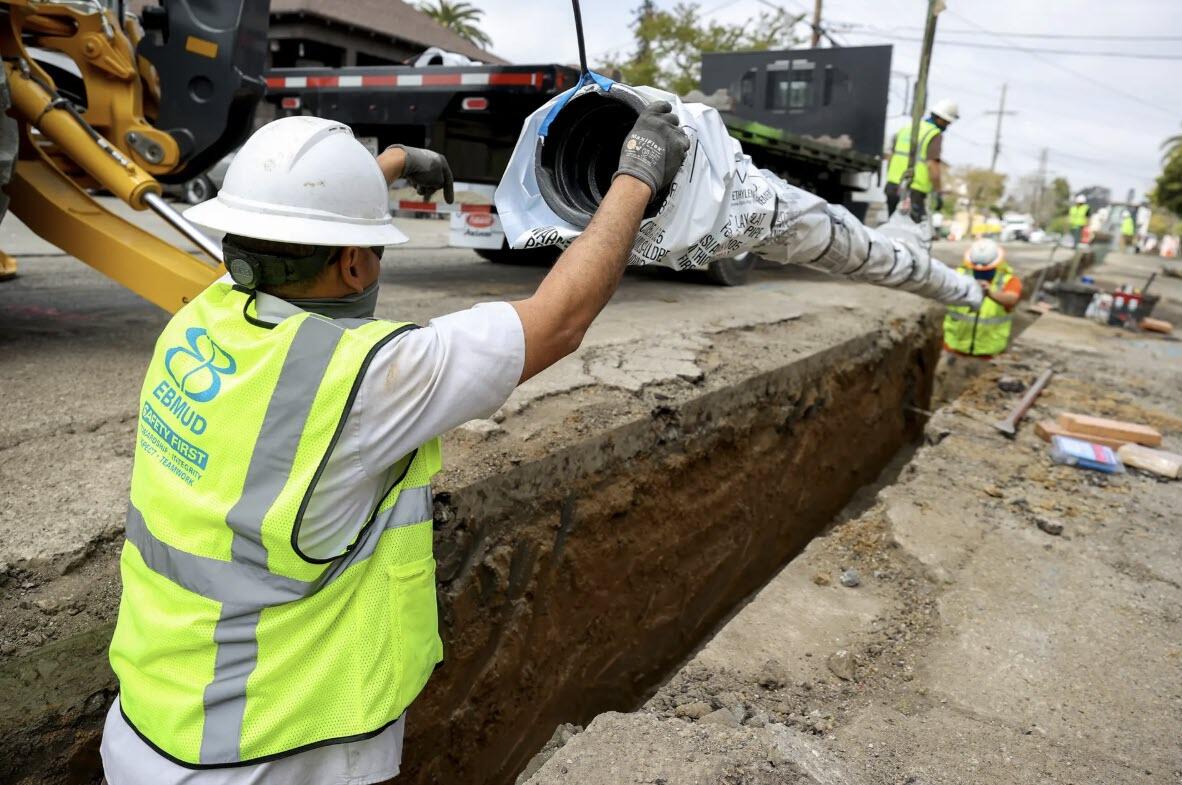
Workers with the East Bay Municipal Utility District install a new water pipe in Oakland, Calif., on April 22, 2021. The Environmental Protection Agency issued a final rule in 2024 requiring water systems nationwide to identify and replace lead pipes within 10 years. Justin Sullivan/Getty Images
Down The Drain
Neno Duplan, CEO of Locus Technologies, said recent federal infrastructure funding “is helpful but insufficient to fully modernize century-old networks nationwide.”
Duplan has extensive experience with surface and subsurface hydrology. He told The Epoch Times that the full elimination of U.S. pipe leakage is neither “technically feasible nor economically rational.”
He said utilities optimize around what he called an “economic level of leakage,” balancing repair costs with water value.
He believes the most pressing investment need isn’t leaky water pipes, but resilient source protection, advanced treatment, and contamination mitigation.
That said, Duplan said the trillions of gallons seeping from American water pipes come at a high price tag.
“The direct impact of leakage is economic: higher operating costs, rate pressure, and occasional localized service interruptions,” he said.
Water lost from pipes isn’t gone entirely, but generally finds its way back into the hydrologic cycle via soil infiltration, aquifer recharge, or surface flow.
“The real issue is not physical loss of water molecules. The real issue is loss of treated, pressurized, potable water service and the economic and energy waste associated with producing water that never reaches a paying customer,” he said.
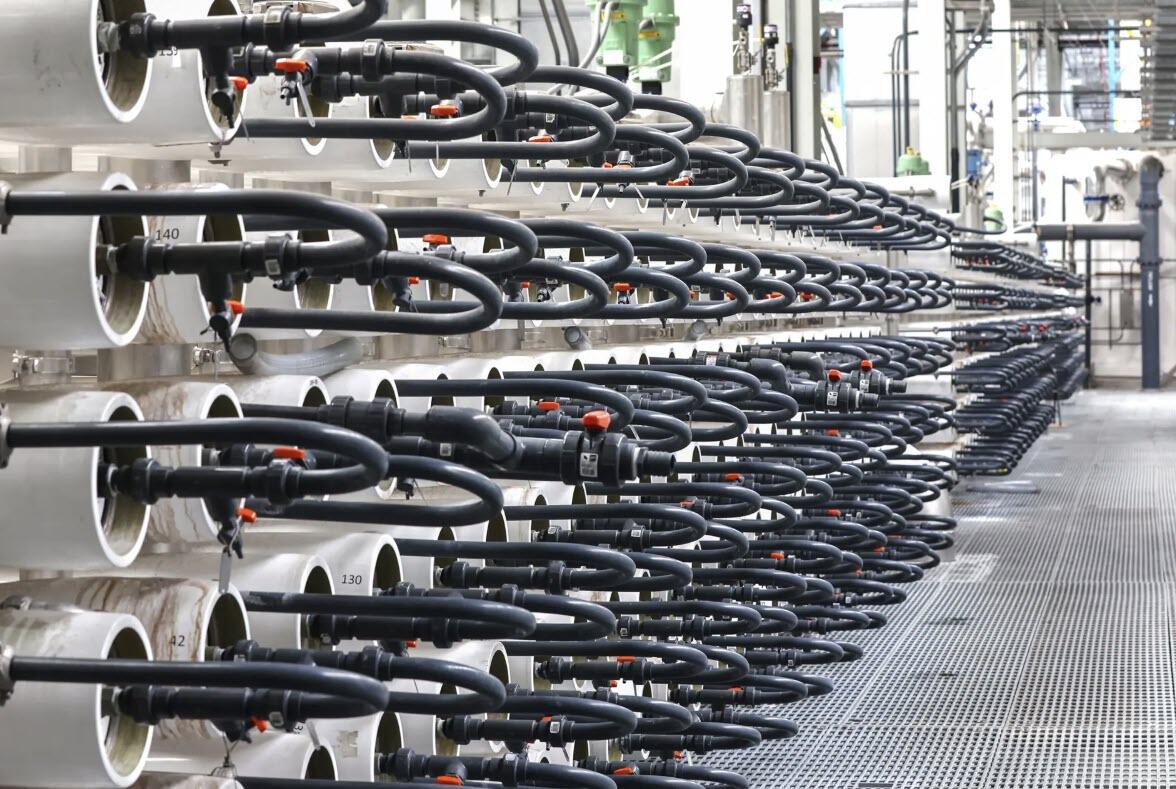
Reverse osmosis pressure vessels treat wastewater at the Groundwater Replenishment System, the world’s largest wastewater recycling plant, in Fountain Valley, Calif., on July 20, 2022. In its 2025 infrastructure report card, the American Society of Civil Engineers gave U.S. wastewater management a D+ due to the ongoing battle to replace U.S. water pipes. Mario Tama/Getty Images
While Duplan doesn’t expect the water hemorrhaging from America’s pipes to create scarcity on its own, he said it creates problems with delivery reliability and pressure management.
“Infrastructure failure can prevent treated water from reaching customers even when the raw water supply is adequate,” he said.
California, Texas, Florida, New York, and Illinois account for more than one-third of all infrastructure-related water losses, according to Bluefield Research.
While states including California and Texas have taken steps to standardize reporting and validation requirements for utility companies, many “still lack accurate, validated data—hindering transparency, performance benchmarking, and corrective action,” Bondar said in a press release.
Contamination is also a growing concern, which can increase water stress by reducing available freshwater.
“A far larger systemic threat to U.S. water security is contamination, because contaminated water requires energy-intensive treatment before it can be returned to beneficial use,” Duplan said. “Treatment, remediation, and advanced purification are capital and energy-intensive processes. That is where the true risk and cost lie.”
Duplan believes U.S. water supplies face the cumulative challenges of “aging assets, energy-intensive treatment, contamination risks, and allocation management under climatic variability.”
A car passes a burst water pipe damaged by strong winds and heavy rain from Hurricane Florence in Wilmington, N.C., on Sept. 14, 2018. Replacing aging water pipes can cost between $1 million and $4 million per mile, depending on pipe size, location, and installation method, according to experts. Andrew Caballero-Reynolds/AFP via Getty Images
In January, the United Nations said the current state of water “crisis” in many countries and cities has become the new normal.
“The patterns observed around the world are not those of a system struggling through a temporary crisis,” the agency wrote. “They indicate that many key renewable water systems have crossed thresholds where full restoration is no longer realistic, even with large investments.”
Cities Take Action
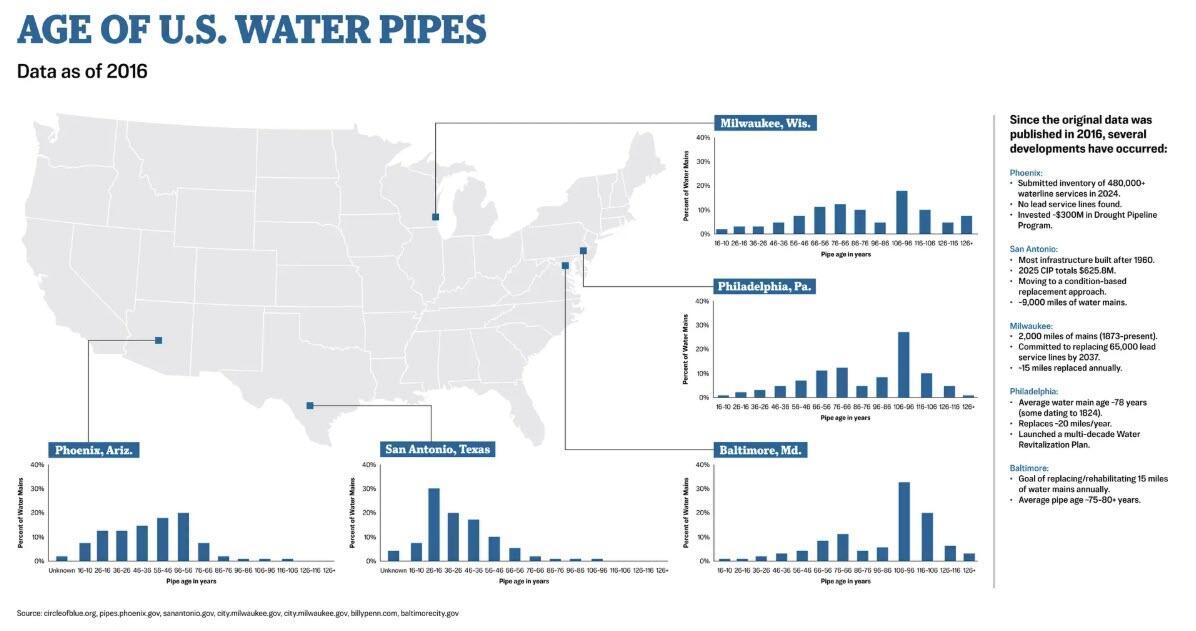
Since 2016, new federal rules and local investment programs have reshaped how cities track and upgrade water infrastructure. Revisions to the EPA’s lead and copper rule finalized in 2021 required utilities to inventory service line materials by October 2024, shifting the focus toward identifying pipe materials—especially lead—rather than documenting pipe age.
Cities have also expanded replacement efforts. In Baltimore, where pipes average roughly 75 to 80 years old, about 15 miles of mains are replaced or rehabilitated each year.
Milwaukee maintains about 2,000 miles of mains dating to 1873 and plans to replace 65,000 lead service lines by 2037.
In Philadelphia, where some pipes date back to 1824, about 20 miles are replaced annually.
Meanwhile, Phoenix reported more than 480,000 waterline services in a 2024 inventory and no lead lines, while San Antonio is shifting toward condition-based pipe replacement across its roughly 9,000-mile network.
Tyler Durden
Mon, 03/16/2026 – 18:05
https://www.zerohedge.com/political/us-cities-face-water-stress-amid-crumbling-infrastructure

North Korean Operatives Infiltrating U.S. Companies Through Remote Tech Jobs
North Korean Operatives Infiltrating U.S. Companies Through Remote Tech Jobs
North Korean operatives are quietly working inside U.S. companies through remote technology jobs, funneling millions of dollars back to Pyongyang and potentially gaining access to sensitive corporate systems, according to investigators and U.S. officials, according to NBC News.
The scheme relies on workers posing as American job applicants using stolen identities and fake credentials to secure high-paying remote roles, particularly in software development and artificial intelligence. Authorities warn the tactic allows the regime to bypass international sanctions while embedding operatives inside Western companies.
An investigation by the Virginia-based cybersecurity firm Nisos found that suspected North Korean IT workers apply to thousands of jobs using fabricated résumés and multiple online personas. Once hired, the workers often operate from overseas — frequently from China — while U.S.-based facilitators help maintain the illusion that they are located domestically.
These facilitators run so-called “laptop farms,” where company-issued computers are physically kept in the United States and remotely accessed by workers abroad. Investigators say the workers also coordinate applications, interviews, and references within tightly organized teams to increase their chances of being hired.
NBC News writes that the scheme has expanded rapidly since the rise of remote work during the COVID-19 pandemic, which made it easier for overseas workers to obtain jobs without appearing in person. Authorities say the salaries — sometimes exceeding $300,000 per worker — are largely sent back to the regime of Kim Jong Un, helping fund North Korea’s weapons and ballistic missile programs.
U.S. officials estimate the operation now affects hundreds of companies and generates hundreds of millions of dollars annually for the North Korean government.
Investigators say some operatives hold multiple jobs simultaneously, applying to dozens of roles a day and coordinating through organized networks that track applications and interviews. In some cases, the workers are accused of stealing proprietary data, cryptocurrency, or sensitive technical information while employed. Officials warn that even after the workers are discovered and fired, they may leave behind hidden system access that could later be exploited, raising broader national security concerns.
Tyler Durden
Mon, 03/16/2026 – 17:40

The Greatest Risk For The Global Economy Is Stagflation Driven By Governments, Not Oil
The Greatest Risk For The Global Economy Is Stagflation Driven By Governments, Not Oil
The current oil price forward curve shows that the current global energy shock may be significant but short-lived. The forward curve presents a steep disinflationary trend to $80 per barrel by the end of 2026. Markets are discounting a short war with limited impact on supply but immediate ripple effects on markets and importing economies.
In the worst case, a new energy shock triggered by war with Iran would bring stagflation pressures across the global economy, especially in the economies that have been unable to strengthen their energy supply chains since 2022, like the European Union, which is still in a low-growth environment subject to significant impact from energy shocks. Even if the conflict is short‑lived, the disruption to the Strait of Hormuz and Gulf infrastructure has made the oil market go from an oversupply of 4 million barrels per day, according to the IEA, to a tight balance, as shipping routes come under pressure.
The Strait of Hormuz carries almost 25% of seaborne oil exports and a large share of liquefied natural gas (LNG) flows, which makes it the most sensitive energy route. However, 80% of the traffic through the strait goes to Asia, mostly China. That is why the Chinese government has halted all refined product exports from China, trying to limit the risk of supply constraints.
We must also remember that $100 a barrel today is not equivalent to $100 per barrel in 2008. In current dollar terms, the 2008 oil crisis would only trigger at $190 per barrel. Adjusting for inflation is important.
Non-OPEC supply is also a differential factor from other crises, as it has increased significantly since 2008, contributing to a more stable market despite rising prices. The current energy shock is entirely different from 2008 for the United States.
In 2008, the United States production stood at barely 5 million barrels per day. Today, the US is the largest oil producer in the world at 13.7 million barrels per day.
In 2008, dry natural gas output was around 56 billion cubic feet per day. It is projected to reach 106 billion cubic feet daily in 2026. Natural gas energy independence exists in the US, and with the inclusion of Canada and Mexico, North America’s oil independence is nearly complete.
Even considering all these differences compared with other instances, an energy shock would immediately increase fuel prices at the pump but also raise the cost of electricity, heating, fertilizers, plastics, chemicals, and many manufactured goods that depend on petrochemical inputs.
These secondary price effects may quickly feed into consumer and producer inflation, even if other disinflationary factors mitigate the overall CPI impact.
In energy‑importing economies such as the EU, Japan, South Korea, Taiwan, India, and parts of Latin America, higher fuel bills will likely hit households that are already suffering from persistent inflationary pressures due to uncontrolled government spending and money printing.
For countries like Pakistan, which relies heavily on imported LNG, and several Southeast Asian nations, the shock could trigger a relevant balance‑of‑payments stress, currency depreciation, and even the risk of rationing as fiscal buffers are exhausted.
The current level of US dollar reserves of emerging economies is elevated, but not enough to entirely offset the impact of an energy crisis on the purchasing power of their currencies.
If governments decide to “combat” the energy crisis by increasing spending and subsidies, which is the same as printing money, the macroeconomic impact would be stagflationary: higher inflation with weaker or no growth.
The biggest risk for inflation will not be the impact of energy prices only, but the response from governments if they decide to spend and print their way out of the war’s impact.
The most significant risk for the global economy would come if central banks decided to hike rates due to energy price spikes. Hiking rates would halt investment, consumption, and job creation and have no impact on prices driven by an external geopolitical factor.
If the war continues for an extended period, it could lead to a revision in global growth forecasts, which were already weak for 2026. The IMF had already estimated a slowdown to around 3% or less, and the Iran‑related shock may mean tighter financial conditions.
A long war could lead to a domino of recessions in energy-importing regions, while resource-rich exporters would see an economic boost that would not counterbalance the impact on the largest economies, primarily importers.
The greatest risk now is, as always, a domino of policy mistakes.
Developed economies’ governments may feel tempted to spend and print, ignoring the lack of fiscal space and the already persistent inflation created by the errors made during Covid-19 and the political response.
Governments might intensify their deficit spending, and central banks might repeat their mistakes from 2021-2024 by raising rates at the most inopportune time.
Stagflation is an unlikely outcome, but if it arrives, it will be entirely created by policy mistakes from governments and central banks.
Tyler Durden
Mon, 03/16/2026 – 17:15

The Greatest Risk For The Global Economy Is Stagflation Driven By Governments, Not Oil
The Greatest Risk For The Global Economy Is Stagflation Driven By Governments, Not Oil
The current oil price forward curve shows that the current global energy shock may be significant but short-lived. The forward curve presents a steep disinflationary trend to $80 per barrel by the end of 2026. Markets are discounting a short war with limited impact on supply but immediate ripple effects on markets and importing economies.
In the worst case, a new energy shock triggered by war with Iran would bring stagflation pressures across the global economy, especially in the economies that have been unable to strengthen their energy supply chains since 2022, like the European Union, which is still in a low-growth environment subject to significant impact from energy shocks. Even if the conflict is short‑lived, the disruption to the Strait of Hormuz and Gulf infrastructure has made the oil market go from an oversupply of 4 million barrels per day, according to the IEA, to a tight balance, as shipping routes come under pressure.
The Strait of Hormuz carries almost 25% of seaborne oil exports and a large share of liquefied natural gas (LNG) flows, which makes it the most sensitive energy route. However, 80% of the traffic through the strait goes to Asia, mostly China. That is why the Chinese government has halted all refined product exports from China, trying to limit the risk of supply constraints.
We must also remember that $100 a barrel today is not equivalent to $100 per barrel in 2008. In current dollar terms, the 2008 oil crisis would only trigger at $190 per barrel. Adjusting for inflation is important.
Non-OPEC supply is also a differential factor from other crises, as it has increased significantly since 2008, contributing to a more stable market despite rising prices. The current energy shock is entirely different from 2008 for the United States.
In 2008, the United States production stood at barely 5 million barrels per day. Today, the US is the largest oil producer in the world at 13.7 million barrels per day.
In 2008, dry natural gas output was around 56 billion cubic feet per day. It is projected to reach 106 billion cubic feet daily in 2026. Natural gas energy independence exists in the US, and with the inclusion of Canada and Mexico, North America’s oil independence is nearly complete.
Even considering all these differences compared with other instances, an energy shock would immediately increase fuel prices at the pump but also raise the cost of electricity, heating, fertilizers, plastics, chemicals, and many manufactured goods that depend on petrochemical inputs.
These secondary price effects may quickly feed into consumer and producer inflation, even if other disinflationary factors mitigate the overall CPI impact.
In energy‑importing economies such as the EU, Japan, South Korea, Taiwan, India, and parts of Latin America, higher fuel bills will likely hit households that are already suffering from persistent inflationary pressures due to uncontrolled government spending and money printing.
For countries like Pakistan, which relies heavily on imported LNG, and several Southeast Asian nations, the shock could trigger a relevant balance‑of‑payments stress, currency depreciation, and even the risk of rationing as fiscal buffers are exhausted.
The current level of US dollar reserves of emerging economies is elevated, but not enough to entirely offset the impact of an energy crisis on the purchasing power of their currencies.
If governments decide to “combat” the energy crisis by increasing spending and subsidies, which is the same as printing money, the macroeconomic impact would be stagflationary: higher inflation with weaker or no growth.
The biggest risk for inflation will not be the impact of energy prices only, but the response from governments if they decide to spend and print their way out of the war’s impact.
The most significant risk for the global economy would come if central banks decided to hike rates due to energy price spikes. Hiking rates would halt investment, consumption, and job creation and have no impact on prices driven by an external geopolitical factor.
If the war continues for an extended period, it could lead to a revision in global growth forecasts, which were already weak for 2026. The IMF had already estimated a slowdown to around 3% or less, and the Iran‑related shock may mean tighter financial conditions.
A long war could lead to a domino of recessions in energy-importing regions, while resource-rich exporters would see an economic boost that would not counterbalance the impact on the largest economies, primarily importers.
The greatest risk now is, as always, a domino of policy mistakes.
Developed economies’ governments may feel tempted to spend and print, ignoring the lack of fiscal space and the already persistent inflation created by the errors made during Covid-19 and the political response.
Governments might intensify their deficit spending, and central banks might repeat their mistakes from 2021-2024 by raising rates at the most inopportune time.
Stagflation is an unlikely outcome, but if it arrives, it will be entirely created by policy mistakes from governments and central banks.
Tyler Durden
Mon, 03/16/2026 – 17:15
Armor-Piercing Ammo Metal Up 557% As China Chokes Supply, War Demand Surges
Armor-Piercing Ammo Metal Up 557% As China Chokes Supply, War Demand Surges
Tungsten, used in missiles, tank rounds, armor-piercing ammunition, and some smaller-caliber munitions, has surged in price over the last year as China curbed exports and global supplies tightened.
This is a major concern, as multi-front conflicts – from the Middle East to Eastern Europe – are depleting interceptor missile supplies.
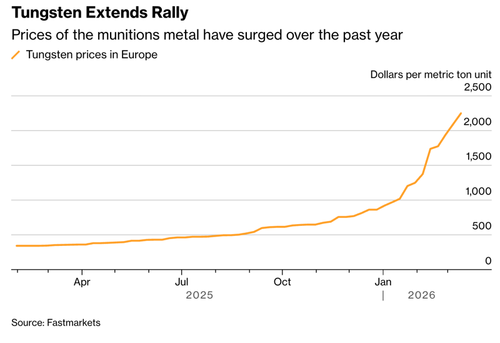
Bloomberg cites new data from commodity price reporting agency Fastmarkets showing tungsten prices have surged to $2,250 per metric ton this month, up 557% since Beijing added certain tungsten products to its export control list in February of last year.
“In my 12 years working across the commodity space and dealing with a lot of weird and wonderful metals, I have never seen a market as tight as tungsten is right now, aside from maybe lithium in 2021,” George Heppel, vice president of commodity research, told Bloomberg.
He warned, “This isn’t like lithium, where there was a huge pipeline of projects that could come online.”
The problem with rare earth metals is that China dominates the global market. It controls roughly 79% of global tungsten mined output, which Western companies rely on heavily.
According to Project Blue, a London-based commodity research firm, manufacturers have been searching for alternative supplies since China significantly tightened export controls last year. Chinese shipments of restricted tungsten products were down about 40% last year, the firm said.
The tungsten squeeze highlights why the Trump administration has been furiously rewriting global supply chains away from China, especially with the push to build out domestic rare earth supply chains critical for the military and semiconductor industries.
“The industrial base is desperate for material,” said Almonty Industries CEO Lewis Black, whose firm is set to begin commercial production at the site of an idled mine in South Korea and is seeking to develop the first U.S. tungsten mine in a decade.
“We’ve never been in a situation where the market is determining the price,” Black said. “So we don’t really know where it’s going to settle.”
One year ago, Black warned his customer base was in a “state of disbelief” amid China’s tightening of global supplies.
“It’s the warning shot, because we cannot exist without it,” Black told Bloomberg’s Annie Lee in an interview at the time.
He noted: “Our economy, manufacturing, defense, everything, is so dependent on it. And yet, Russia, China and North Korea have about 90% of the output.”
Shares of Almonty in the U.S. are up 127% this year, as the market is waking up to the fact that this company is expected to become one of the largest tungsten producers outside China.
Almonty is also developing a U.S. tungsten project in Montana that it says could become the first U.S. tungsten mine in about a decade.
Military-related tungsten demand is set to surge this year because the metal is used in missile components and other weaponry deployed in the conflict zones of the Middle East and eastern Ukraine. Major U.S. defense companies have already signaled to the Trump administration that missile production will quadruple, putting even more pressure on critical metals.
Tyler Durden
Mon, 03/16/2026 – 16:50
Armor-Piercing Ammo Metal Up 557% As China Chokes Supply, War Demand Surges
Armor-Piercing Ammo Metal Up 557% As China Chokes Supply, War Demand Surges
Tungsten, used in missiles, tank rounds, armor-piercing ammunition, and some smaller-caliber munitions, has surged in price over the last year as China curbed exports and global supplies tightened.
This is a major concern, as multi-front conflicts – from the Middle East to Eastern Europe – are depleting interceptor missile supplies.
Bloomberg cites new data from commodity price reporting agency Fastmarkets showing tungsten prices have surged to $2,250 per metric ton this month, up 557% since Beijing added certain tungsten products to its export control list in February of last year.
“In my 12 years working across the commodity space and dealing with a lot of weird and wonderful metals, I have never seen a market as tight as tungsten is right now, aside from maybe lithium in 2021,” George Heppel, vice president of commodity research, told Bloomberg.
He warned, “This isn’t like lithium, where there was a huge pipeline of projects that could come online.”
The problem with rare earth metals is that China dominates the global market. It controls roughly 79% of global tungsten mined output, which Western companies rely on heavily.
According to Project Blue, a London-based commodity research firm, manufacturers have been searching for alternative supplies since China significantly tightened export controls last year. Chinese shipments of restricted tungsten products were down about 40% last year, the firm said.
The tungsten squeeze highlights why the Trump administration has been furiously rewriting global supply chains away from China, especially with the push to build out domestic rare earth supply chains critical for the military and semiconductor industries.
“The industrial base is desperate for material,” said Almonty Industries CEO Lewis Black, whose firm is set to begin commercial production at the site of an idled mine in South Korea and is seeking to develop the first U.S. tungsten mine in a decade.
“We’ve never been in a situation where the market is determining the price,” Black said. “So we don’t really know where it’s going to settle.”
One year ago, Black warned his customer base was in a “state of disbelief” amid China’s tightening of global supplies.
“It’s the warning shot, because we cannot exist without it,” Black told Bloomberg’s Annie Lee in an interview at the time.
He noted: “Our economy, manufacturing, defense, everything, is so dependent on it. And yet, Russia, China and North Korea have about 90% of the output.”
Shares of Almonty in the U.S. are up 127% this year, as the market is waking up to the fact that this company is expected to become one of the largest tungsten producers outside China.
Almonty is also developing a U.S. tungsten project in Montana that it says could become the first U.S. tungsten mine in about a decade.
Military-related tungsten demand is set to surge this year because the metal is used in missile components and other weaponry deployed in the conflict zones of the Middle East and eastern Ukraine. Major U.S. defense companies have already signaled to the Trump administration that missile production will quadruple, putting even more pressure on critical metals.
Tyler Durden
Mon, 03/16/2026 – 16:50

“…The Entire Internet Has Doomer Fatigue”
“…The Entire Internet Has Doomer Fatigue”
Authored by James Howard Kunstler,
“I can tell the entire internet has doomer fatigue.”
– Catturd on X
The mysterious financial repo markets – which practically no one outside of banking understands (and even some banking insiders don’t) – started showing some signs of stress recently (forward rates spiking: 1Y1Y SOFR has risen nearly 50 bps in two weeks, signaling growing concern among dealers and investors about future funding costs); though not near the level they did in September 2019, just before You-Know-What sucker-punched the world with lockdowns, stolen elections, and fake vaccines. Half of America still hasn’t got its head straight… and here we go again.
The private equity outfits, like giant BlackRock, are wobbling so hard that they had to “gate redemptions” — meaning, investors can’t pull their money out of funds going dark with dubious collateral. It’s exactly what sparks panics. Money can only stand so much unreality. The Rube Goldberg machine of finance — a scaffold of insane complexity designed to bamboozle the rubes — is threatening to fly apart. The world only needs so many pre-owned yachts.
Plus, there’s a war on, which has disrupted the regular flow of the world’s primary resource: oil.
That’s the really-real side of the picture. The Strait of Hormuz remains closed.
You’ve got to wonder how much additional pounding the lunatic state of Iran can take.
It’s not clear who is even in charge there. Iran’s supposed foreign minister, one Aras Araghchi, is suddenly offering to give up those 440 kilos of 60-percent enriched uranium that are at the heart of this quarrel.
Sounds a little surrender-ish, though he made the offer with a certain defiant bluster. Let’s see where that goes.
Maybe the war will be over sooner than you thought.
Watch and listen starting at 13:00-minute Mark:
With all this in motion, things slip-sliding all over the place, the week ahead may be one in which nobody can think straight or get a straight answer.
Here’s something to chew on: do you think Great Britain is our dear friend because we speak the same language? Great Britain has been allowing Iran’s ruling Revolutionary Guard to park its money in London for half a century while Lloyd’s offers jacked-up insurance rates to all those tankers faring through the Strait of Hormuz.
This dynamic has made world oil up to 15-percent more expensive since the 1970s, and Britain’s banks have been creaming off the premium all the while. Trillions. Mr. Trump is putting an end to that racket while he also terminates Iran’s ability to export Jihad thuggery throughout the Middle East. That’s the meaning behind the Abraham Accords and the new Board of Peace set up to figure out Gaza — and probably to replace the broken United Nations as a mediating force in the region’s long-running conflicts.
Mr. Trump is also sending a message to China: the US will have something to say about the flow of oil going there out of the Persian Gulf, which is to say most of China’s imported oil. (The US imports relatively little oil out of the Persian Gulf, two to three percent of total US oil consumption which is 20-million barrels a day.) This is pretty serious power politics, but notice that China has not started World War Three over it. Mr. Trump and Xi are still talking, and are scheduled to meet in Beijing in April. Meanwhile, Xi is having plenty of trouble of his own with twitchy PLA generals, a staggering deflationary export economy, and a lot of angry young people thrown out of work.
One thing our country will not get a straight answer on this week is the SAVE Act. Senate Majority Leader John Thune made noises over the weekend about staging a half-assed “debate” on the floor, a demi-filibuster. . . then holding a guaranteed-to-fail cloture vote. . . making it impossible to reach a place where the bill might be subject to a simple majority vote. The procedural bullshit at issue is surely a challenge for the general voting public to understand. The bottom line is that Majority Leader Thune is entirely in-charge of the filibuster process and could make it work to advantage the SAVE Act if he wanted to. He could call for a full, “standing” filibuster that would require the bill’s opponents to explain themselves — that is, to explain why they prefer election fraud.
So, for now, the Save Act will fail to pass. The public will register the failure, if not the twisted route that got it there, and they will be mighty pissed-off. The really interesting part is what happens after all this is acted out, especially Senator Thune’s comic attempt to explain why he did this. And especially if, in the weeks just ahead, the nation watches federal indictments rain down for election fraud in Georgia, Wisconsin, and other states where so many weird things happened right before our eyes in November, 2020, 2022, and 2024. Sometime after that, the SAVE Act will come up for a vote again, and with a vengeance!
Tyler Durden
Mon, 03/16/2026 – 16:25
https://www.zerohedge.com/geopolitical/entire-internet-has-doomer-fatigue
“…The Entire Internet Has Doomer Fatigue”
“…The Entire Internet Has Doomer Fatigue”
Authored by James Howard Kunstler,
“I can tell the entire internet has doomer fatigue.”
– Catturd on X
The mysterious financial repo markets – which practically no one outside of banking understands (and even some banking insiders don’t) – started showing some signs of stress recently (forward rates spiking: 1Y1Y SOFR has risen nearly 50 bps in two weeks, signaling growing concern among dealers and investors about future funding costs); though not near the level they did in September 2019, just before You-Know-What sucker-punched the world with lockdowns, stolen elections, and fake vaccines. Half of America still hasn’t got its head straight… and here we go again.
The private equity outfits, like giant BlackRock, are wobbling so hard that they had to “gate redemptions” — meaning, investors can’t pull their money out of funds going dark with dubious collateral. It’s exactly what sparks panics. Money can only stand so much unreality. The Rube Goldberg machine of finance — a scaffold of insane complexity designed to bamboozle the rubes — is threatening to fly apart. The world only needs so many pre-owned yachts.
Plus, there’s a war on, which has disrupted the regular flow of the world’s primary resource: oil.
That’s the really-real side of the picture. The Strait of Hormuz remains closed.
You’ve got to wonder how much additional pounding the lunatic state of Iran can take.
It’s not clear who is even in charge there. Iran’s supposed foreign minister, one Aras Araghchi, is suddenly offering to give up those 440 kilos of 60-percent enriched uranium that are at the heart of this quarrel.
Sounds a little surrender-ish, though he made the offer with a certain defiant bluster. Let’s see where that goes.
Maybe the war will be over sooner than you thought.
Watch and listen starting at 13:00-minute Mark:
With all this in motion, things slip-sliding all over the place, the week ahead may be one in which nobody can think straight or get a straight answer.
Here’s something to chew on: do you think Great Britain is our dear friend because we speak the same language? Great Britain has been allowing Iran’s ruling Revolutionary Guard to park its money in London for half a century while Lloyd’s offers jacked-up insurance rates to all those tankers faring through the Strait of Hormuz.
This dynamic has made world oil up to 15-percent more expensive since the 1970s, and Britain’s banks have been creaming off the premium all the while. Trillions. Mr. Trump is putting an end to that racket while he also terminates Iran’s ability to export Jihad thuggery throughout the Middle East. That’s the meaning behind the Abraham Accords and the new Board of Peace set up to figure out Gaza — and probably to replace the broken United Nations as a mediating force in the region’s long-running conflicts.
Mr. Trump is also sending a message to China: the US will have something to say about the flow of oil going there out of the Persian Gulf, which is to say most of China’s imported oil. (The US imports relatively little oil out of the Persian Gulf, two to three percent of total US oil consumption which is 20-million barrels a day.) This is pretty serious power politics, but notice that China has not started World War Three over it. Mr. Trump and Xi are still talking, and are scheduled to meet in Beijing in April. Meanwhile, Xi is having plenty of trouble of his own with twitchy PLA generals, a staggering deflationary export economy, and a lot of angry young people thrown out of work.
One thing our country will not get a straight answer on this week is the SAVE Act. Senate Majority Leader John Thune made noises over the weekend about staging a half-assed “debate” on the floor, a demi-filibuster. . . then holding a guaranteed-to-fail cloture vote. . . making it impossible to reach a place where the bill might be subject to a simple majority vote. The procedural bullshit at issue is surely a challenge for the general voting public to understand. The bottom line is that Majority Leader Thune is entirely in-charge of the filibuster process and could make it work to advantage the SAVE Act if he wanted to. He could call for a full, “standing” filibuster that would require the bill’s opponents to explain themselves — that is, to explain why they prefer election fraud.
So, for now, the Save Act will fail to pass. The public will register the failure, if not the twisted route that got it there, and they will be mighty pissed-off. The really interesting part is what happens after all this is acted out, especially Senator Thune’s comic attempt to explain why he did this. And especially if, in the weeks just ahead, the nation watches federal indictments rain down for election fraud in Georgia, Wisconsin, and other states where so many weird things happened right before our eyes in November, 2020, 2022, and 2024. Sometime after that, the SAVE Act will come up for a vote again, and with a vengeance!
Tyler Durden
Mon, 03/16/2026 – 16:25
https://www.zerohedge.com/geopolitical/entire-internet-has-doomer-fatigue