Category: News

Bovino Out-Out: Top Border Patrol Official Plans To Retire
Bovino Out-Out: Top Border Patrol Official Plans To Retire
Authored by Aldgra Fredly via The Epoch Times (emphasis ours),
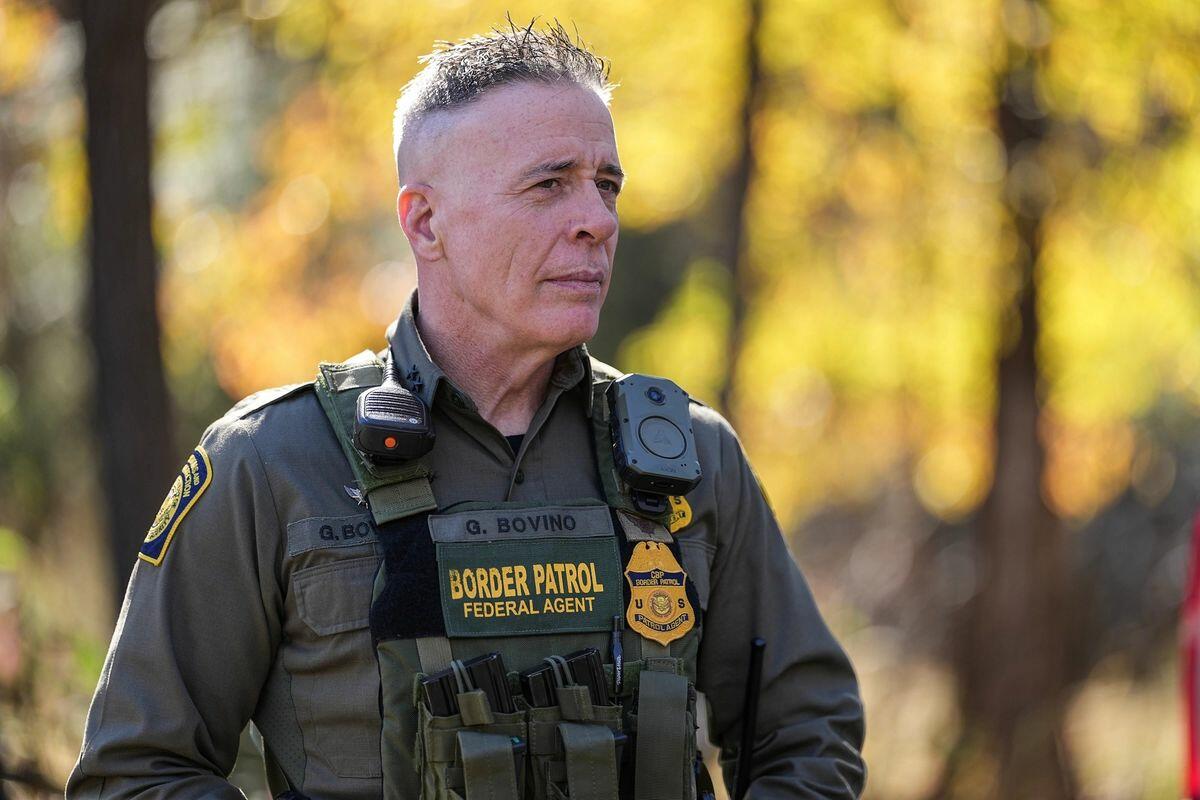
Customs and Border Protection commander-at-large Gregory Bovino, who has led federal immigration raids in several major cities, said on March 15 that he will retire from the agency at the end of March.
Bovino made the announcement during an interview with Breitbart Texas but did not specify the reason for his decision to retire or indicate whether he had formally notified the agency.
“The greatest honor of my entire life was to work alongside Border Patrol agents on the border and in the interior of the United States in some of the most challenging conditions the agency has ever faced,” he said.
“Watching these agents out there giving it their all in some of the most dangerous of environments we have ever faced was humbling,” Bovino added.
Bovino joined the Border Patrol in 1996 in California’s El Centro sector and was assigned by the Trump administration last year to lead its immigration operations in some of the nation’s largest cities.
He had led immigration enforcement operations in cities such as Los Angeles, Chicago, Charlotte, New Orleans, and Minneapolis, which resulted in the arrests of thousands of illegal immigrants.
More than 5,000 illegal immigrants convicted of crimes were arrested during operations in Los Angeles between June and August 2025, according to the Department of Homeland Security (DHS).
The crackdown triggered legal challenges from officials who were opposed to federal immigration enforcement.
In October 2025, Judge Sara Ellis of the U.S. District Court for the Northern District of Illinois ordered Bovino to appear in court every weekday to report on federal immigration enforcement in Chicago. The order was later blocked by the Seventh Circuit Court of Appeals.
In January, Bovino was removed from his leading role in Operation Metro Surge in Minneapolis after federal agents fatally shot two U.S. citizens—Renee Good on Jan. 7 and Alex Pretti on Jan. 24—during immigration enforcement operations in the city.
President Donald Trump later assigned border czar Tom Homan to take over and oversee immigration enforcement operations in Minnesota, as well as to investigate fraud in state programs.
During a Fox News interview aired on Jan. 27, Trump said of Bovino’s departure from Minnesota: “I don’t think it’s a pullback. It’s a little bit of a change. Everybody in this room that has a business … you make little changes. You know, Bovino’s very good, but he’s a pretty out there kind of a guy, and in some cases, that’s good; maybe it wasn’t good here.”
In a Jan. 26 social media post, Trump said that Homan has not been involved in operations in Minnesota but that Homan is familiar with many officials there.
The Epoch Times has reached out to U.S. Customs and Border Protection for comment on Bovino’s remarks, but did not receive a response by publication time.
Tyler Durden
Tue, 03/17/2026 – 20:10

Did Two Weird Events At The Oscars Just Expose Woke Hollywood’s Greatest Fear?
Did Two Weird Events At The Oscars Just Expose Woke Hollywood’s Greatest Fear?
It’s no secret that the Oscars has largely abandoned its role as a showcase for the art of film, devolving into a schizophrenic fever dream of woke rants, political declarations and progressive platitudes that never seems to end. Yes, the event has always had political moments; celebrities are often very dumb people and the dumbest of people all think they are geniuses with something profound to say. However, there has been a distinct and disturbing change in the past decade.
The community’s cultism has gone far beyond its habit of gatekeeping against conservative views. The worst elements of Hollywood’s social control are aimed at people who have already pledged fealty. If they step out of line in the slightest, the collective sets out to remind them of their place. And you don’t have to do much to be marked for punishment; all you have to do is tell the truth.
One such example of this probably went under the radar of most people, including those few Americans who actually cared to watch the Oscars. But the name of actor Timothee Chalamet (Oscar nominee best know for his role in the Dune films) kept popping up throughout the night as the butt of jokes.
The Hollywood media has launched an all out attack on Chalamet, some asserting that “His arrogant swagger has turned off fans..” and others arguing that he deserved to be “taught a lesson” with a snub from the Academy (and he was snubbed). One would think he must have said something horrible to invoke such wrath.
His arrogant swagger, which has turned off fans, Academy voters and even Doja Cat, is a roadmap for how not to win
https://t.co/T9KFZOXQe9
— The Times and The Sunday Times (@thetimes) March 16, 2026
During a discussion on movie making with Variety and CNN in Austin, TX, Chalamet committed the worst of all sins: He suggested that Hollywood might be losing cultural relevancy. On the issue of the survival of the industry he noted:
“I’m really right in the middle…Cause I admire people, and I’ve done it myself, [who] go on a talk show and go, ‘Hey, we gotta keep movie theaters alive. You know, we gotta keep this genre alive.’ And another part of me feels like, if people wanna see it, like ‘Barbie,’ like ‘Oppenheimer,’ they’re gonna go see it and go out of their way and be loud and proud about it. And I don’t want to be working in ballet or opera, or things where it’s like, ‘Hey, keep this thing alive.’ Even though it’s like, no one cares about this anymore. All respect to the ballet and opera people out there. I just lost 14 cents in viewership…”
His observations are entirely logical – It was simply an analogy to illustrate his hope that cinema remains self-sustaining instead of a niche that pleads for its own survival. And it is true that no one, save a tiny minority of enthusiasts, cares about opera and ballet anymore. But Hollywood elites raged over his comments and even dedicated a number of attacks throughout the Oscars as a way to humiliate him.
As time passed it was clear that the event was becoming a struggle session for Chalamet instead of an awards ceremony. The event included a ballet dancer in the final musical number as a message to the actor, while Conan O’Brien and award winners made numerous jabs. He reportedly walked out of the event after an endless barrage of insults – All because he said out loud that Hollywood might be in trouble.
On the other side of weird, top YouTuber Markiplier (Mark Fischbach) received an invitation to the Oscars as part of the industry’s partnership with YoutTube and was set to walk the red carpet, only to find himself “whisked away” from the cameras by the event’s VIP handlers.
Markiplier reveals why he missed the #Oscars red carpet:
“I’m here at the Oscars I swear! So… funny story about why I wasn’t on the red carpet. I was somehow TOO VIP and they whisked me away. And I didn’t know better not to go with them! I swear I just went the wrong way. The… pic.twitter.com/eKLStjXl3m
— Film Updates (@FilmUpdates) March 15, 2026
Markiplier’s recent low budget film “Iron Lung” (based on a video game) is being heralded as a shot across the bow of Hollywood. Made for only $3 million, the horror flick has received critical acclaim and earned a reported $47 million at the box office. It’s a massive profit margin and it crushes the majority of competing Hollywood films, most of which lost money in the last year (Oscar winner and pro-Antifa movie “One Battle After Another”, lost over $100 million).
Iron Lung was made in Austin, TX and completely sidestepped the industry, setting a precedent for future independent filmmakers by proving that in the digital age, Hollywood no longer matters as long as you can tell a good story.
Some critics say that the Oscars “mix-up” was deliberately designed to keep the YouTuber out of the limelight. In other words, they wanted to avoid giving attention to a creator that might fuel discussions about online distribution and decentralization. These are the kinds of changes that will undermine Hollywood’s control.
Markiplier says the incident must have been a “mistake”, but others are not convinced. There is a reason why the indie film market has been eroded in recent years. The only low budget movies that make it through the Hollywood filter are woke screeds. It is becoming clear that the only reason the legacy film business still exists is to act as a propaganda wing for the progressive religion.
Ultimately, these two incidents highlight a system in decay; a system fearful of losing its influence over pop culture, youth culture, the art world and western society overall. Events like the Oscars expose an underlying weakness; the progressive “mean girls” club is losing its grip as it doubles down and closes ranks. These are acts of desperation relegated to a community that is quickly fading into obscurity.
Tyler Durden
Tue, 03/17/2026 – 19:45

Kansas Introduces Medical Freedom Act; Would Impose $50,000 Fines For Vax Mandates Or Medical Discrimination
Kansas Introduces Medical Freedom Act; Would Impose $50,000 Fines For Vax Mandates Or Medical Discrimination
Authored by Jon Fleetwood via JonFleetwood.com,
A new bill introduced last week in the Kansas Legislature would prohibit government agencies, employers, schools, and businesses from denying services or employment based on a person’s medical decisions, including whether they accept or refuse vaccines, tests, masks, or other medical interventions.
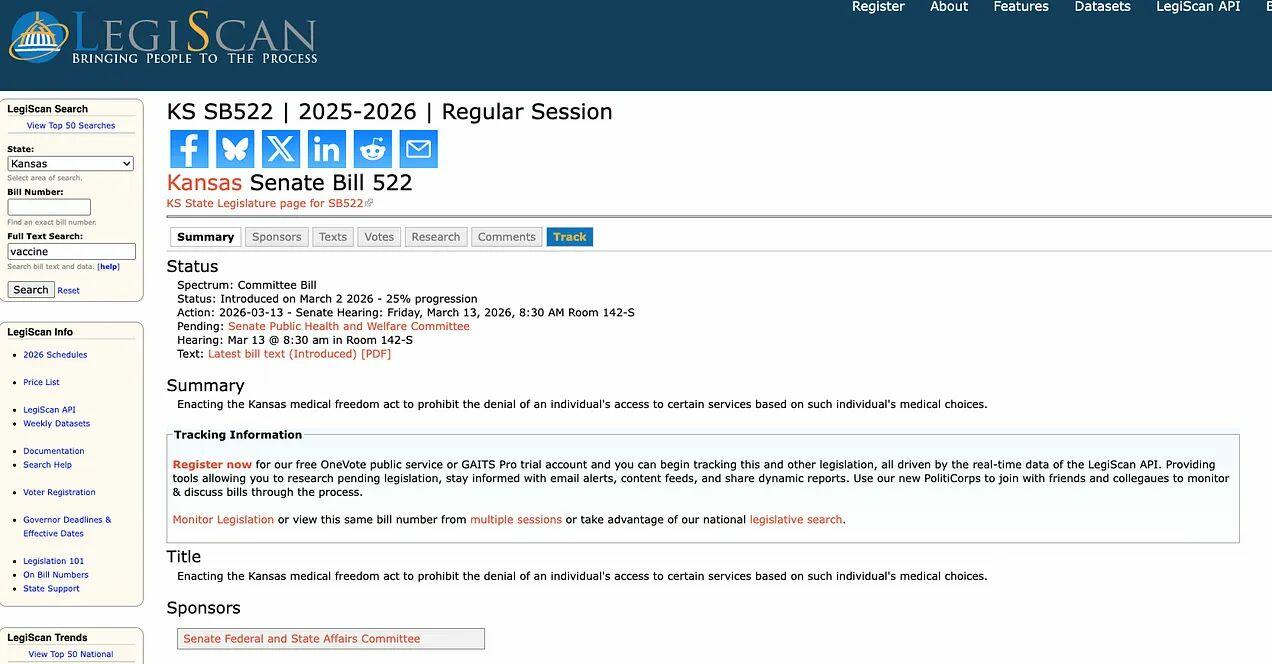
The legislation, Kansas Senate Bill 522, was introduced March 2, 2026, during the 2025–2026 legislative session and is currently pending before the Senate Public Health and Welfare Committee, where lawmakers are scheduled to consider the measure in a committee hearing.
The bill was requested for introduction by the Kansas Senate Committee on Federal and State Affairs, a legislative committee responsible for advancing policy proposals related to statewide governance and regulatory matters.
You can contact Kansas state senators here and voice your support for the bill.
What the Bill Would Do
SB522 would establish the “Kansas Medical Freedom Act,” prohibiting both government and private entities from denying services, employment, access to events, or public benefits based on whether an individual accepts or refuses a medical intervention.
The legislation defines “medical intervention” broadly to include vaccines, masks, diagnostic tests, medications, devices, and other health-related treatments.
Under the proposal:
Private businesses could not deny services or access to individuals based on their use or refusal of medical interventions.
Employers—both public and private—could not require medical interventions as a condition of employment.
Schools, conferences, and educational institutions could not require medical interventions for entry or participation.
Government agencies could not condition licenses, permits, benefits, or access to public buildings or transportation on compliance with a medical intervention.
The bill also states that these protections would apply even during declared emergencies, meaning they could not be suspended during a public health crisis or state of emergency.
Individuals who believe their rights were violated under the law could file complaints with the Kansas Attorney General, who would be authorized to investigate and impose civil penalties of up to $50,000 per violation.
Strengths of the Bill – & Areas Lawmakers May Want to Strengthen
One of the strongest provisions of SB522 appears in Section 5, which states:
“The provisions of this act shall apply at all times and shall not be suspended, nullified or otherwise disregarded during any declared emergency, public health crisis or state of emergency issued by any local, state or federal authority.”
This language is significant because pandemic mandates were largely justified under emergency powers.
By stating the law cannot be suspended during emergencies—including those declared by federal authorities—the bill attempts to close the same legal pathway used during COVID-19 to impose vaccine mandates, mask mandates, and other public health orders.
At the same time, several areas could be strengthened before final passage.
First, while the bill is titled as legislation “relating to medical mandates,” its core mechanism is to prohibit the penalties used to enforce those mandates. The bill bars governments, employers, schools, and businesses from denying employment, services, or access to venues based on an individual’s acceptance or refusal of a medical intervention. By removing the primary enforcement tools used during COVID—such as job loss, service denial, or exclusion from public spaces—the legislation effectively makes medical mandates extremely difficult to enforce in practice. Lawmakers may nevertheless wish to clarify this further by explicitly stating that governments cannot impose universal mandates for vaccines, testing, masking, or other medical interventions.
Second, the bill does not address quarantine or isolation powers, which were heavily used during the COVID response. Current public health statutes often allow officials to restrict movement or isolate individuals during outbreaks. Legislators could consider adding due-process protections, such as requiring individualized medical evidence or court orders.
Third, although the bill effectively blocks discrimination tied to vaccination status, it does not explicitly prohibit vaccine passport systems. Stating this directly could remove ambiguity.
Fourth, the legislation does not address insurance or financial discrimination tied to medical decisions, such as premium surcharges or employer penalties imposed on individuals who decline certain medical interventions.
Finally, enforcement depends largely on investigations by the Kansas Attorney General, who may issue civil penalties for violations. Some lawmakers may consider adding a clearer private right of action, allowing individuals to sue directly if their rights under the law are violated.
Taken together, SB522 represents a significant attempt to prevent COVID-style medical mandates and discrimination, while leaving several areas where lawmakers could further strengthen the protections before the bill reaches final passage.
Read the rest here…
Tyler Durden
Tue, 03/17/2026 – 19:20

“That Wasn’t Public”: Trump Stuns Johnson By Blurting Out GOP Rep.’s Dire Medical Condition
“That Wasn’t Public”: Trump Stuns Johnson By Blurting Out GOP Rep.’s Dire Medical Condition
President Donald Trump casually revealed Monday that Rep. Neal Dunn (R-FL) was facing a terminal heart diagnosis and would have been “dead by June” without the president stepping in to connect him with top White House doctors.
The stunning disclosure came during a White House lunch with Kennedy Center Board members, where Trump and House Speaker Mike Johnson (R-LA) chatted with reporters about the brutal Republican math of holding onto power with just a couple-vote edge.
President Trump on Rep. Neal Dunn’s initial terminal diagnosis: “He would be dead by June.”
Speaker Johnson: “Okay, that wasn’t public.” pic.twitter.com/HJunoPSD0n
— CSPAN (@cspan) March 16, 2026
“Death is very bad when you’re the speaker, and you have a majority of two or three. But we had it, and then we had another death,” Trump said. “We had one man who was very ill. It looked like he wasn’t going to make it. I don’t know. I don’t I won’t mention his name.“
Then the president went straight for it: “He would be dead by June.”
Johnson looked blindsided, quipping, “That wasn’t public, but, yeah, it was grim.”
The speaker quickly identified the mystery lawmaker as Dunn, the Panhandle Republican who’s a retired surgeon himself.
“Congressman Neal Dunn of Florida had had some real health challenges, and it was very serious,” Johnson explained. “And I mentioned it to the president, and I said, ‘Congressman Dunn is a real champion and a patriot, because he’s still coming to work, and if others got this diagnosis, they would be apt to go home and retire.’”Trump pressed: “What was the diagnosis?”
“I think it was a terminal diagnosis,” Johnson replied, prompting Trump’s blunt follow-up, saying, “dead by June.”
Trump then credited his fast action of hooking Dunn up with White House physicians and specialists for the dramatic turnaround, giving the congressman a “new lease on life” and sparing Republicans a devastating special-election headache.
Dunn announced back in January he won’t seek a sixth term and will retire at the end of this Congress.
Tyler Durden
Tue, 03/17/2026 – 18:40

Trump Admin Seeks Alternative Fertilizer Supplies
Trump Admin Seeks Alternative Fertilizer Supplies
Authored by Evgenia Filimianova via The Epoch Times (emphasis ours),
The Trump administration is working on securing alternative fertilizer supplies for U.S. farmers as conflict with Iran threatens shipping through the Gulf, White House economic adviser Kevin Hassett said on March 17.
Washington had already taken steps to offset potential shortages, including authorizing increased production in Venezuela and opening discussions with Morocco, Hassett said, speaking on CNBC’s “Squawk Box.”
“We’ve put established licenses for Venezuela to produce more fertilizer. We’ve had discussions with Morocco, which has the largest reserve of potash anywhere on Earth,” the White House adviser said.
“And so we’ve been all over the fertilizer problem. And I’m not saying that we can eliminate what disruption there is so far, but we can minimize it for sure.”
Fertilizer is critical to crop yields and the global food supply. Most fertilizers contain nitrogen, phosphorus, and potassium, the three primary nutrients needed for plant growth, according to the U.S. Environmental Protection Agency.
Because of its importance, fertilizer supply disruptions can ripple through food systems.
The effective closure of the Strait of Hormuz following the onset of the Iran war last month has led to a sharp disruption to global shipping, particularly for oil and energy flows, driving up prices and forcing importers to seek alternative routes.
A March 11 report by the Center for Strategic and International Studies said that 20 to 30 percent of global fertilizer exports, including about 35 percent, of urea shipments, transited the Strait of Hormuz in 2023.
European Union foreign policy chief Kaja Kallas warned on March 16 that shortages could have long-term consequences.
“If there is a lack of fertilizers this year, there’s going to be also food deprivation next year,” she said.
German Foreign Minister Johann Wadephul also cautioned on March 16 that shipping disruptions in the Gulf could drive up global food prices because fertilizers move through the region.
Hassett acknowledged disruptions could not be fully eliminated but said they could be reduced.
Asked whether alternative supplies would be prioritized for domestic use, Hassett said the focus was squarely on U.S. agriculture. He said fertilizer supplies were a top concern, because U.S. farmers apply large quantities during the spring planting season.
He noted that common fertilizers include ammonia-, urea- and nitrogen-based products, as well as potash, which is typically applied in the fall but still crucial to crop yields.
“A lot of this stuff is made from liquid natural gas,” Hassett said, adding that one major facility in Qatar supplies a significant share of fertilizer used in the United States. “It supplies maybe about 20 percent of the fertilizer in the U.S.,” he said.
Supply Chains
Fertilizer distribution in the United States depends on a complex transportation network linking imports, domestic production, and inland distribution.
According to U.S. Department of Agriculture transportation data, imports typically arrive at major ports on dry bulk vessels or enter by rail from Canada, then move inland by barge, rail, pipeline, and truck.
In the Middle East region, Saudi Arabia accounted for 24 percent of U.S. phosphorus fertilizer imports and 4 percent of nitrogen fertilizer imports over the past year. Israel supplied 16 percent of U.S. phosphorus fertilizer imports, while Lebanon accounted for 5 percent.
Import volumes also follow a seasonal pattern tied to farming cycles. USDA data show shipments rise sharply in late winter and early spring ahead of planting, fall during the growing season, and increase again toward winter preparation.
Between February 2025 and January 2026, potassium imports were consistently the largest, at roughly 928,000 tons in April and about 573,000 tons in December.
Nitrogen imports peaked at around 923,000 tons in March 2025, then dropped from nearly 360,000 tons to around 309,000 tons in June and July, respectively, while phosphorus imports were far smaller and more variable.
War Outlook, Economic Impact
Hassett expressed confidence that the conflict would be relatively short, citing the administration’s planning and coordination with allies.
“We are basically getting briefed on every nuance of the war every day and then thinking through the economic implications,” he told CNBC on March 17, adding that officials had prepared for disruptions across sectors “from fertilizer to getting fuel to the West Coast.”
He said the administration believed the conflict would last weeks rather than months, consistent with President Donald Trump’s earlier timeline.
“The bottom line is that the timeline that President Trump has stated over and over is that it’s a four- to six-week war and that we’re ahead of schedule,” Hassett said.
Despite higher fuel costs, he said the U.S. economy remained resilient.
“The U.S. economy is fundamentally sound,” he stated, adding that Iran had not significantly damaged U.S. economic performance.
Tyler Durden
Tue, 03/17/2026 – 18:20
https://www.zerohedge.com/commodities/trump-administration-seeks-alternative-fertilizer-supplies

Amazon Accelerates Last-Mile Delivery War With New 1-Hour Option
Amazon Accelerates Last-Mile Delivery War With New 1-Hour Option
Amazon is intensifying the last-mile delivery war with its announcement of an ultrafast delivery service, featuring new one-hour and three-hour options.
Amazon Launches 1-Hour Delivery in Hundreds of U.S. Cities
Bad for Instacart
— zerohedge (@zerohedge) March 17, 2026
The new one-hour and three-hour delivery services will be available in 2,000 cities and towns, enabling customers to order from 90,000 items across categories such as groceries, cleaning supplies, health products, electronics, toys, clothing, and home goods.
The service is built into Amazon’s existing same-day network, with new search filters, storefront pages, and product labels that make eligible items easier to find.
“The convenience of 1-hour delivery is currently available to customers in hundreds of cities and towns across the U.S., including parts of major metropolitan areas like Los Angeles, Chicago, and Washington, D.C., and smaller cities such as Des Moines, Iowa; Boise, Idaho; and American Fork, Utah,” Amazon wrote in a press release.
Prime members pay discounted fees of $9.99 for one-hour delivery and $4.99 for three-hour delivery, while non-Prime customers pay $19.99 and $14.99, respectively.
Amazon’s push for one-hour delivery is certainly an acceleration in the last-mile delivery war, as it seeks to gain market share from Walmart Spark, Instacart, DoorDash, Uber Eats, and others.
Shares of Instacart, DoorDash, and Uber were mostly higher in the early U.S. cash market, suggesting the Amazon news has so far gone unnoticed by investors.
Tyler Durden
Tue, 03/17/2026 – 18:00
https://www.zerohedge.com/technology/amazon-accelerates-last-mile-delivery-wr

Greenwald: 9/11-Like Mass Casualty Attacks Could Trigger Permanent Emergency Measures
Greenwald: 9/11-Like Mass Casualty Attacks Could Trigger Permanent Emergency Measures
Authored by Steve Watson via Modernity.news,
Tucker Carlson sat down with independent journalist Glenn Greenwald for a pointed exchange that cut straight to concerns over free speech limits and the risk of domestic fallout from the ongoing Iran conflict.
Greenwald laid out a sobering scenario: mass casualty attacks on U.S. soil could trigger sweeping “emergency measures” that, once imposed, become fixtures of American life—just as the Patriot Act did after 9/11.
The conversation opened with Greenwald addressing a noticeable imbalance in what passes for acceptable criticism in public life.
“It’s interesting that there’s no criticism of our country that is banned or even discouraged — only of a foreign country,” Carlson observed.
TUCKER: “It’s interesting that there’s no criticism of our country that is banned or even discouraged — only of a foreign country.”
GLENN GREENWALD: “It’s bizarre, Tucker.”
TUCKER: “If you can’t criticize a foreign country, then that country’s in charge, right? What other… pic.twitter.com/ieddwzdi9e
— The Vigilant Fox 🦊 (@VigilantFox) March 16, 2026
Carlson pressed further: “If you can’t criticize a foreign country, then that country’s in charge, right? What other conclusion should I draw?”
Greenwald responded: “I can’t really provide you with a cogent one.”
The discussion then turned to security threats inside the United States.
“Are you concerned that there could be attacks here in the United States?” Carlson asked.
Greenwald answered directly: “I feel like there was already an attack in the United States. That Austin shooting. We haven’t heard much about it, but it seemed pretty clearly linked to the Iran war.”
Tucker Carlson’s guest warns “mass casualty attacks” like 9/11 could impose new “emergency measures” that never go away.
TUCKER: “Are you concerned that there could be attacks here in the United States?”
GREENWALD: “I feel like there was already an attack in the United States.… https://t.co/XckwzDJaf7 pic.twitter.com/BWxBH81YPq
— The Vigilant Fox 🦊 (@VigilantFox) March 16, 2026
He added: “I would be very, very surprised if there aren’t others.”
Greenwald went on to outline the broader pattern such events could set in motion.
“I do think if it gets to the point where this really gets out of hand and you start to see mass casualty attacks in the United States, the history of the United States and other countries leaves no doubt that emergency measures will be instantly imposed, and those emergency measures don’t go anywhere when there are emergencies.”
He pointed to a clear historical precedent.
“That was the history of the Patriot Act. The Patriot Act was this radical, extremist, un-American law that we needed, supposedly, in the wake of 9/11. They assured us, ‘Oh, don’t worry, it’s going to be temporary.’”
“Here we are, 2026. It’s part of our woodwork, and nobody ever talks about it anymore. That’s how quickly these things can get normalized,” Greenwald concluded.
The exchange highlights a recurring tension: how quickly governments can expand surveillance and emergency powers in response to crisis, only for those powers to linger long after the immediate threat fades. Greenwald’s reference to the Patriot Act serves as a reminder that assurances of temporariness often prove hollow once the machinery of control is in place.
Critics of such measures have long argued that they erode foundational liberties under the guise of protection. The pattern repeats across administrations and conflicts—temporary becomes permanent, exceptional becomes ordinary.
Greenwald’s warning carries weight precisely because it rests on documented history rather than speculation. The Austin incident, however briefly covered in mainstream outlets, fits into a larger conversation about spillover effects from foreign entanglements reaching American shores.
As tensions persist, the question of how the U.S. responds to any future incidents remains open. What is clear from the record is that once emergency frameworks lock in, rolling them back demands sustained public vigilance.
Freedom does not defend itself. History shows it slips away quietly when citizens stop paying attention to the fine print attached to every new “temporary” power grab.
This interview arrives on the heels of fresh scrutiny surrounding Carlson himself.
Just days earlier, the White House denied claims that Carlson had been targeted in what amounted to a CIA spy operation tied to his pre-war communications with Iranian contacts and potential FARA implications.
Your support is crucial in helping us defeat mass censorship. Please consider donating via Locals or check out our unique merch. Follow us on X @ModernityNews.
Tyler Durden
Tue, 03/17/2026 – 17:40

Watch: Humanoid Robot Returns Tennis Shots With 96% Accuracy In Simulation Tests
Watch: Humanoid Robot Returns Tennis Shots With 96% Accuracy In Simulation Tests
Authored by Atharva Gosavi via Interesting Engineering,
Galbot Robotics has released a video on its official X handle on March 16 showing a humanoid robot rallying tennis shots with a human player in real time.
The demonstration showcases the company’s LATENT system, developed in collaboration with researchers from Tsinghua University and Peking University.
The system was tested on the Unitree G1 humanoid robot, which demonstrated the ability to respond to fast-moving balls, navigate across the court, and sustain rallies with a human opponent.
“For the first time, a humanoid robot can sustain high-dynamic, long-horizon tennis rallies with millisecond-level reactions, precise ball striking, and natural whole-body motion,” Galbot’s X post read.
Teaching robots on limited movement data
🎾Your humanoid tennis player is here!🤖
Introducing LATENT (Learning Athletic Humanoid Tennis Skills from Imperfect Human Motion Data) — the world’s first real-time whole-body planning and control algorithm for athletic humanoid tennis.
For the first time, a humanoid robot can… pic.twitter.com/gCi38wxHVQ
— Galbot (@GalbotRobotics) March 16, 2026
One of the key challenges in training robots for sports lies in the lack of accurate human movement data. This is especially true for tennis, where players cover large areas, balls can reach speeds of up to 30 m/s, and racket-ball contact lasts only a few milliseconds.
To address this, the researchers avoided recording full matches. Instead, they focused on collecting short fragments of essential movements such as forehands, backhands, and side steps.
The data were captured using a motion-tracking system within a compact 3×5-meter court, more than 17 times smaller than a standard tennis court. A total of five players contributed approximately five hours of recorded motion data.
From basic motions to coordinated gameplay
Using this dataset, the LATENT system first trains the robot to replicate individual movements.
These learned actions were combined into sequences that allowed the robot to perform specific tasks, including reaching the ball, executing a shot, and returning to a designated position on the court.
To improve real-world performance, the model was trained in a simulation environment where key physical parameters, such as the robot’s and the ball’s mass, friction, and aerodynamics, were randomly varied.
This approach helped reduce the gap between simulated training and real-world conditions.
“Our key insight is that, despite being imperfect, such quasi-realistic data still provide priors about human primitive skills in tennis scenarios,” they said.
“With further correction and composition, we learn a humanoid policy that can consistently strike incoming balls under a wide range of conditions and return them to target locations, while preserving natural motion styles,” they continued.
Real-world validation
In simulation tests, the system achieved up to 96% success in forehand shots. When deployed on a real Unitree G1 robot, it demonstrated the ability to maintain rallies with a human player and consistently return the ball to the opponent’s side of the court.
The researchers noted that this approach could extend beyond tennis to other domains where capturing complete human motion data is difficult, including football, badminton, and other sports-related robotic skills.
“Although this work primarily focuses on the tennis return task, the proposed framework has the potential to generalize to a broader range of tasks where complete and high-quality human motion data are unavailable,” they concluded.
Tyler Durden
Tue, 03/17/2026 – 17:00
https://www.zerohedge.com/ai/video-humanoid-robot-returns-tennis-shots-96-accuracy-simulation-tests
“We’re At War”: Ecuador Deploys 75,000 Troops, Launches Anti-Cartel Missile Strikes; Colombia Warns “We’re Being Bombed”
“We’re At War”: Ecuador Deploys 75,000 Troops, Launches Anti-Cartel Missile Strikes; Colombia Warns “We’re Being Bombed”
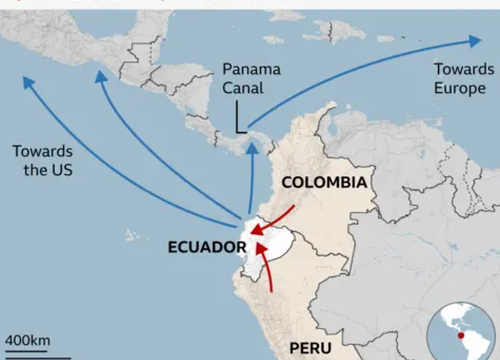
On Sunday, Ecuador launched a massive anti-cartel offensive involving 75,000 troops, armored vehicles, and helicopters, with support from the U.S., in what Interior Minister John Reimberg described as a “very strong offensive,” according to BBC News.
“We’re at war,” Reimberg said. “Don’t take any risks, don’t go out, stay home.”
35 mil efectivos de @PoliciaEcuador desplegados en Guayas, Los Ríos, Santo Domingo de los Tsáchilas y El Oro. Listos por 🇪🇨.
A las mafias: se les acabó su tiempo.
Nada nos detiene. pic.twitter.com/q2vP6CSG73
— John Reimberg (@JohnReimberg) March 15, 2026
The cartel crackdown is part of a new 17-country alliance against cartels, unveiled by President Trump earlier this month.
While authorities have not said whether U.S. troops will directly participate in the operation, the two countries have already carried out joint strikes earlier this month, and the FBI is opening a field office in Ecuador to help target organized crime, money laundering, and corruption.
On March 3, Ecuadorian and U.S. military forces launched operations against Designated Terrorist Organizations in Ecuador. The operations are a powerful example of the commitment of partners in Latin America and the Caribbean to combat the scourge of narco-terrorism.
Together,… pic.twitter.com/MrkKZcrDbs
— U.S. Southern Command (@Southcom) March 4, 2026
Last week, the U.S. and Ecuador signed a trade agreement that will unlock “commercially meaningful market access” for U.S. agricultural and industrial exports to 18 million consumers, Trade Representative Jamieson Greer said in a press release.
Ecuador’s President Daniel Noboa, one of Trump’s top allies in the region, has spent the last few years targeting drug cartels and criminals.
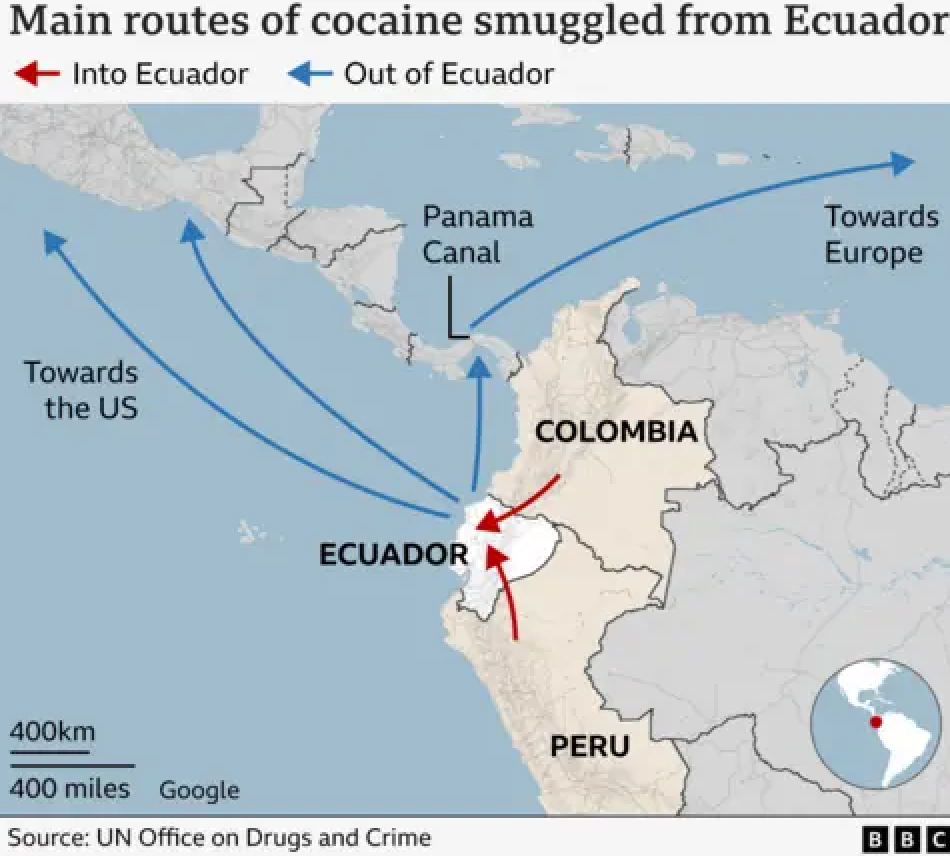
For context, about 70% of the cocaine produced in Colombia and Peru transits Ecuador.
Before the operation, Latin American leaders attended an international meeting, called “Shield of the Americas”, and hosted by Trump in Mar-a-Lago. At the summit, Trump said cartel gangs were “cancer” and urged Latin American counterparts to eradicate the cancer.
“We don’t want it spreading,” Trump added.
Shortly after the summit, Noboa wrote on X:
“For too long, the mafias thought that America was their territory. That they could cross borders, move drugs, guns and [spread] violence without consequences. Their time has run out.”
Meanwhile, on Tuesday, as the operation is underway, Noboa rejected allegations that the military operation against cartels was bombing targets in neighboring Colombia.
🔴 #Urgente El gobierno de Daniel Noboa ataca con cohetes militares y destruye 129 campamentos de minería ilegal en Zamora Chinchipe.
Los campamentos se encontraban dentro del Parque Nacional Podocarpus. pic.twitter.com/rlwlGvfChW
— Reacción Nacional (@RNacional_News) March 16, 2026
Noboa said on X that his government “is fighting narco terrorism in all its forms” and “bombing places that serve as hideouts for those groups, of which many are Colombian,” but only within Ecuadorian territory.
¡EL BLOQUE DE SEGURIDAD EN ACCIÓN!
3 OBJETIVOS MILITARES NEUTRALIZADOS; OBJETIVO DE ALTO VALOR DE “LOS TIGUERONES” CAPTURADO! 💪
1⃣ Durante el toque de queda, el #BloqueDeSeguridad a través de las @FFAAECUADOR destruyó 3 objetivos militares, eliminando así uno de los espacios… pic.twitter.com/T9rq2akAxw
— Ministerio de Defensa Nacional del Ecuador (@DefensaEc) March 16, 2026
Noboa was responding to Colombian President Gustavo Petro, who said on X on Monday, “We are being bombed from Ecuador, and it’s not rebel groups who are doing it.”
🇨🇴🇪🇨 | LO ÚLTIMO: Gustavo Petro denunció que el territorio colombiano “está siendo bombardeado desde Ecuador”.
Dijo que se encontró una bomba en la zona fronteriza que, según él, fue “lanzada desde un avión”.
Afirmó que los responsables no son grupos armados irregulares, y… pic.twitter.com/eOjPjj6lRj
— Alerta Mundial (@AlertaMundoNews) March 17, 2026
We suspect the hostilities in South America would not have been lost in the news cycle if it weren’t for the US-Iran conflict, which makes headlines around the clock.
¡ATAQUE NOCTURNO: MINERÍA ILEGAL BAJO FUEGO EN “OPERACIÓN PODOCARPUS”!
Atacar la minería ilegal es velar por la seguridad de nuestras familias ecuatorianas.
➡️Las @FFAAECUADOR mantienen una ofensiva sostenida contra las estructuras criminales dedicadas a la minería ilegal… pic.twitter.com/vZ7xTgKslK
— Ministerio de Defensa Nacional del Ecuador (@DefensaEc) March 17, 2026
¡BLOQUE DE SEGURIDAD GOLPEA LAS RUTAS DEL NARCOTRÁFICO: SE INHABILITA PISTA CLANDESTINA UTILIZADA POR EL CRIMEN ORGANIZADO!💪
➡️El #BloqueDeSeguridad, a través de la @FuerzaAereaEc, ejecutó una operación estratégica para inhabilitar un área utilizada para… pic.twitter.com/UX2ul1TIRm
— Ministerio de Defensa Nacional del Ecuador (@DefensaEc) March 17, 2026
🚨¡OPERACIÓN “PODOCARPUS”: DESTRUCCIÓN DE 129 CAMPAMENTOS DE MINERÍA ILEGAL Y AFECTACIÓN ECONÓMICA DE $3 MILLONES A LAS MAFIAS PARA RECUPERAR TOTALMENTE ESTE TERRITORIO!🚨
➡️Con un gran despliegue militar, durante nueve días de operaciones sostenidas en el Parque Nacional… pic.twitter.com/acae76SmhX
— Ministerio de Defensa Nacional del Ecuador (@DefensaEc) March 16, 2026
🔴 #Urgente El Gobierno de Daniel Noboa en Ecuador dispone capturas de narcoteroristas vivos o mu3rtos pic.twitter.com/ULhhj6947o
— Reacción Nacional (@RNacional_News) March 16, 2026
The anti-cartel operation in Ecuador comes weeks after Mexican special forces killed a top cartel leader. Earlier this year, the U.S. conducted a regime-change operation in Venezuela, and communist Cuba increasingly appears to be the next domino at risk of falling. Taken together, the Trump administration is dismantling the old order across the Americas – one long defined by drug cartels, leftist rule, and economic decay.
* * *
Please consider supporting ZeroHedge with the purchase of a multitool – or anything else from our store.
Tyler Durden
Tue, 03/17/2026 – 16:40
VDH: Our New Ungracious Immigrants
VDH: Our New Ungracious Immigrants
Authored by Victor Davis Hanson via American Greatness,
The Traditional Immigrant
Silicon Valley was energized by legal immigrants from all over the world who founded eBay, Google, Nvidia, SpaceX, Stripe, Sun Microsystems, Tesla, Yahoo, and a host of others.
The Greek American Elia Kazan’s 1963 film America, America is a fictional account based on the Herculean struggle of the director’s uncle to immigrate to the United States from an impoverished and hostile Turkish Anatolia.
The film summed up Americans’ traditional view of immigrants: They had risked everything for the chance to reach America, and once there, became hyperpatriotic in their gratitude for the magnanimity of their new hosts.
An excellent example is the recently released memoir from Encounter Books, American Trojan, by former University of Southern California president and Cypriot immigrant Dr. Max Nikias. It resonates with thankfulness to America for offering him opportunities undreamed of elsewhere.
He and his wife arrived in the U.S. from war-torn Cyprus nearly penniless but determined to work hard, master English, and enrich the country that welcomed them with their talents and education. What followed was an amazing American trajectory that saw Nikias become president of the University of Southern California—arguably the most successful one in recent memory.
I grew up in rural California surrounded by hard-working immigrant farm families from Armenia, India, Japan, and Mexico. Their work ethic, love of America, and productive farms were models for U.S. non-immigrants. Such immigrants explained why the San Joaquin Valley was the most productive and richest agricultural region in the nation.
My own Swedish grandfather, disabled by poison gas while fighting on the Western Front in World War I, loved all things Swedish, but not nearly as much as his beloved America.
Four Hansons fought on the front lines of World Wars I and II. One was disabled, and another was killed on Okinawa. And all felt blessed that their parents and grandparents had gotten to America.
Gratitude and Ingratitude
But recently, something has gone terribly wrong with immigration—an open border, of course, but also a change in legal immigration as well as student visitors.
During World War II, Japanese Americans fought heroically in horrific conditions in Italy in the famous 442nd Regimental Combat Team and 100th Infantry Battalion—even as their families were interned in the Western United States. Few native-born Americans were more loyal or patriotic than the Japanese Americans.
And now?
While America is at war with Iran and de facto with its terrorist proxies, crowds of immigrants, visitors, and foreign students in New York scream anti-American slogans as they cheer on our enemies in theocratic Iran and its terrorist proxies, Hezbollah and Hamas.
Are we surprised, then, when Islamic terrorists begin hunting down Americans on our own soil?
On campuses today, thousands of Middle Eastern international students, mostly arriving from autocratic, tribal, and failed nations, have staged often violent demonstrations in the years following the October 7, 2023, massacre. They are not shy about cheering on the Hamas slaughter of Israeli civilians.
These pro-Hamas students have not just damned Israel but also often harassed Jewish Americans. They revile their host America and expect Americans to smile and shrug.
It is hard to determine whether such zealots hate the U.S. more than they love living in America and preserving their student visas and work permits.
Hating or Loving the Great Satan?
Take Dr. Fatemeh Ardeshir-Larijani. She is the daughter of Ali Larijani, one of the late Supreme Leader Khamenei’s murderous henchmen. He sent his daughter Fatemeh to the top schools in the satanic United States. She was eventually even hired as a professor at Emory University—at least until popular outrage at the Larijani family’s hypocrisy prompted her dismissal.
To our enemies in Iran, we may be the “Great Satan.” But Iranian theocrats apparently prefer their children and other relatives to study and get rich in Luciferian America. So, many send their kids to universities in the USA.
Another surreal example is the case of Mahmoud Khalil, who arrived on a student visa at Columbia University and soon led the “Gaza Solidarity Encampment.”
When the State Department sought to revoke his temporary visa, the Left made Khalil a veritable martyr. Apparently, his university supporters reasoned that the U.S. had an obligation to invite to its shores those who are active supporters of terrorists like Hamas.
New York Mayor Zohran Mamdani, a naturalized citizen from Uganda whose parents became public figures and multimillionaires in America, in the past has had little good to say about his adopted country.
His quite public wife, Rama, whose parents were naturalized Syrian citizens, illustrated a book that was rife with antisemitism. It’s no accident that after October 7, she posted “likes” of social media praise of the terrorist Hamas killers, who are sworn enemies of her own country.
Many Somali immigrants of Minneapolis repaid the kindness of Americans in welcoming them from war-torn Somalia by committing the greatest welfare fraud in U.S. history, which may reach $9 billion in theft. Their iconic representative, Ilhan Omar, has voiced antisemitic vitriol, downplayed 9/11, claimed the U.S. has a dictatorship worse than the one she fled, and said the U.S. was turning into one of the worst countries in the world. That is the thanks she returns for entering a hospitable America under controversial circumstances and dubious legality.
Hating—or Hating to Leave—America?
Stranger still is the attitude of visitors and illegal aliens when they finally face deportation.
Joe Biden allowed 10–12 million foreign nationals to illegally enter the U.S. during his tenure, among them some 500,000 known criminals. In the years since his inauguration, not a day goes by without news that illegal aliens of that era have murdered, assaulted, been arrested for felonious acts, or caused horrific auto accidents.
One of them was Kilmar Ábrego Garcia, an illegal alien from El Salvador, who long ago was ordered to be deported for his unlawful entry and residence.
Instead, he too became an icon to the Left when he was recently and belatedly facing permanent deportation. He had clearly ignored his earlier deportation orders, and was an alleged gang member, an often violent spousal abuser, and a human trafficker.
Ábrego Garcia apparently felt he had a right to enter the U.S. illegally. He successfully made a mockery of our immigration laws. But he presciently expected that soon hundreds of thousands of dollars of free legal help would come his way, ensuring he could stay in the country for which he showed utter contempt.
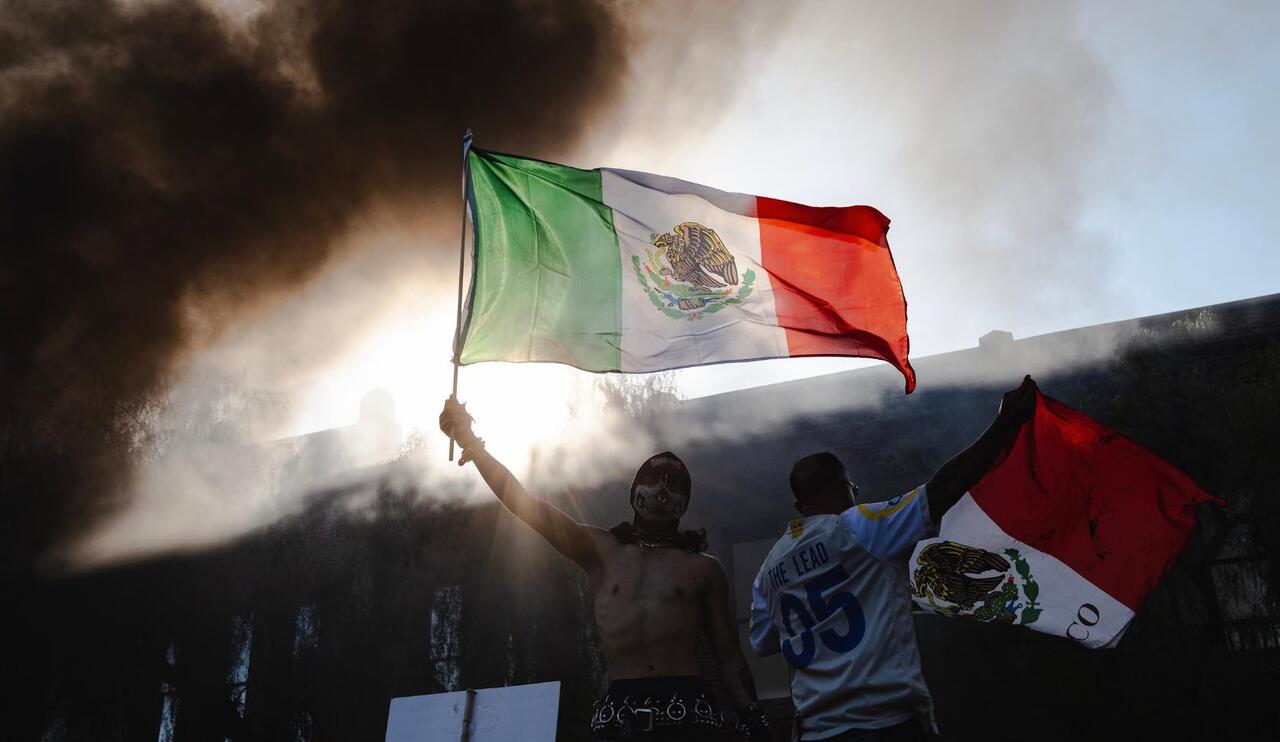
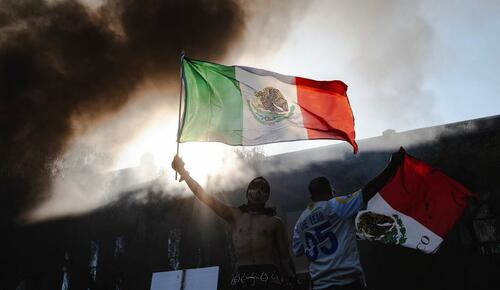
And in the U.S., one of the most bizarre aspects of recent protests against ICE efforts involved episodes of Mexican nationals waving the flag of the country to which under no circumstances they wished to return, even as they burned the flag of the nation in which they insisted they had an innate right to stay.
Our New Americans Killing Americans
Yet the immigration disaster transcends student visas and illegal aliens, since it extends to many naturalized citizens as well.
Consider the terrorist acts that have transpired in just the last eight days.
On March 1, Ndiaga Diagne, a naturalized U.S. citizen originally from Senegal, shot up a beer garden in Austin, Texas. He murdered three people and wounded 14 others. Diagne wore a “Property of Allah” sweatshirt, along with an Iranian flag T-shirt.
On March 7, 2026, Emir Balat, the son of a naturalized citizen from Turkey, and Ibrahim Kayumi, the son of naturalized Afghan refugees, threw IEDs toward a conservative protest outside Gracie Mansion, the New York mayor’s residence.
The media sought to cover up their Islamist motives but could not, given that the two terrorists openly boasted of their aims. Indeed, the two bragged that they wanted to achieve something “bigger than the Boston Marathon bombing.”
That was a reference to Tamerlan and Dzhokhar Tsarnaev, the murderous Chechen-immigrant brothers. In 2013, they murdered three and injured hundreds at the Boston Marathon. Their aim too was apparently to further the so-called global “Islamic cause.”
This same week, on March 12, Mohamed Bailor Jalloh, another naturalized U.S. citizen, this time from Sierra Leone, went into an ROTC meeting at Old Dominion University in Norfolk, Virginia. Once there, he murdered the instructor, Lieutenant Colonel Brandon Shah, a decorated combat veteran. Jalloh shouted “Allahu Akbar” as he fired. Jalloh had previously been convicted for attempting to support ISIS but was released before serving his full sentence.
That same March day, Ayman Muhammed Ghazali, a naturalized U.S. citizen born in Lebanon, whose family in the Middle East currently has strong Hezbollah terrorist ties, drove his car rigged with explosive fireworks into Temple Israel in West Bloomfield, Michigan.
Ghazali was killed by security guards before he could carry out his homicidal plan. Hezbollah, remember, in the past, butchered hundreds of Americans in Lebanon.
There is an endless list of illegal aliens and naturalized citizens who have killed hundreds of Americans, both as common criminals and as would-be jihadists.
And not all the killing is intentional. Thousands of driver’s licenses have been issued to both illegal aliens and legal residents from all over the world, including those who do not understand English, cannot pass a commercial driver’s test, and are utterly unqualified to drive. Is it any surprise that we have recently witnessed serial horrific crashes, where incompetent drivers rammed their 80,000-pound semi-trucks into unsuspecting drivers?
What Happened to Immigration?
So what made the U.S. adopt such a suicidal immigration and visitation policy—one that welcomes in millions illegally, hundreds of thousands who are known criminals, tens of thousands of students who despise the U.S., and thousands of terrorists themselves and their sympathizers?
In the mid-1960s, amid the Great Society’s dreams of transforming America, new immigration laws were passed that ended the older quota process. That traditional system tended to favor better-off immigrants from Europe and the former British Empire to reflect somewhat the founding demographics of the republic.
But the new law junked the prior merit-based system and instead admitted immigrants chiefly on the basis of family ties and the purported need of the host country for inexpensive labor—with most now arriving from Asia, Africa, and Latin America. Suddenly, far less important for entry were critical skill sets, English mastery, high school diplomas, proof of self-support, and knowledge of, or familiarity with, the American system.
But in the subsequent 60 years, Democrats went even further beyond the 1965 Hart–Celler Act efforts to change the demography of the U.S. They began welcoming in anyone, legal or not, who simply crashed the border or claimed they wanted to study in the U.S. The old melting pot was banished, replaced by the “salad bowl.”
Immigration was seen by the Left as the answer to why they had never been able to complete their socialist agendas amid a skeptical American public. Supposedly, by welcoming in a “diverse” demographic, poor and without English fluency, they would grow the welfare state, creating a new dependent constituency.
The new immigrants and visitors were envisioned as left-wing voters-to-be who would look to the Democratic Party as their guarantors of open borders, a new entitlement society, and a criminal justice system that saw the perpetrator as a victim—and the real criminal as a racist America itself.
Diversity, the Immigration Force Multiplier
The new “diversity” ideology peaked under Barack Obama and Joe Biden. The subtext of their open-borders nihilism was a new oppressor/oppressed binary.
It dictated that traditional America was still too white, too traditionalist, too Christian, too unfairly successful—and too hostile to the Democratic-socialist agenda of a mandated equality of result achieved through massive coercive government redistributive efforts.
Under this warped view, the criminally minded Ábrego Garcia became a victim of supposed “Gestapo” ICE “goons” (ironic, when patriotic and skilled Mexican American officers disproportionately staff ICE ranks).
The Tsarnaev Boston Marathon killers became “hot” underdog freedom fighters. So the supposedly sexy, photogenic young murderer Dzhokhar Tsarnaev was highlighted on the cover of Rolling Stone.
The more Mahmoud Khalil took on the mantle of an anti-American, pro-Hamas activist, the more the Left rallied to his cause.
When Major Nidal Hasan, the son of naturalized Palestinian immigrants, slaughtered 13 and wounded 32 fellow soldiers at Fort Hood, the Pentagon resisted efforts to tie him to the Islamic terrorist cause. That was hard to do, since he screamed “Allahu Akbar!” as he mowed down his fellow soldiers.
Then Army Chief of Staff George Casey responded to the mass murder with his lamentation on CNN that, “As great a tragedy as this was, it would be a shame if our diversity became a casualty as well.” He sought to quash any speculation about Hasan’s Islamic motives, in fear that the ensuing truth might endanger the Army’s diversity efforts.
Then we come to the case of Eileen Gu, the recent American Winter Olympic multi-medalist skier.
She was born in San Francisco to a Chinese immigrant mother and an American father and lived her entire life in the U.S. But Gu chose to compete in the games for communist China, despite its efforts to isolate, dehumanize, and eventually vastly “reduce” its Uyghur minority population.
Dr. Frankenstein and his Monster
The final irony: Why do so many criminals believe they can enter the U.S. illegally and get away with murder?
Is it because they feel contempt for any nation that opens its borders, requires no background checks, destroys its own immigration laws, and weaponizes its criminal justice system to make the criminal the victim and the state his victimizer?
Why do so many burn the U.S. flag while waving the flag of Mexico, a country they have no intention of returning to?
Is it because they sense they might be praised for “celebrating diversity,” as the popular culture would term such abject cultural schizophrenia?
Why would the Tsarnaev brothers repay the country that took them in by killing innocent Americans?
Would it be because, in their formative years in American schools, their teachers and texts emphasized what was wrong with a supposedly exploitative U.S.?
Why, in the middle of a near-existential war with Iran to stop its efforts to obtain nuclear-tipped ballistic missiles pointed at the U.S. and its allies, would naturalized citizens feel so free to slaughter Americans for the cause of Islam?
Would it be because they sense from left-wing universities and popular culture that it is a virtual open season on Jews?
Or that any time an Islamic terrorist commits an act, a Democratic operative will warn America of “Islamophobia”—as if, say, mowing down soldiers at Fort Hood is the lesser crime?
Why would a rich, privileged Eileen Gu feel no discomfort competing for a murderous regime whose agenda is to displace her country from its global preeminence in favor of a communist dictatorship?
Is it because in our relativist modern America, Gu’s “truth” is just as meaningful as any other? And who, after all, is qualified to judge anything or anyone?
Who created our current Frankensteinian monstrosities?
We did.
We are the Dr. Frankensteins who asked nothing of immigrants, in a complete break from our nation’s past.
And we got our wish for a new, quite different class of immigrants, who treated the U.S. the very way they were taught to do by the Left: as an evil entity that deserved what it got.
And we sure have gotten it.
Tyler Durden
Tue, 03/17/2026 – 16:20
https://www.zerohedge.com/political/vdh-our-new-ungracious-immigrants