Category: News
Why Is Australia Not Already Rationing Fuel?
Why Is Australia Not Already Rationing Fuel?
Authored by ‘Fast Eddy’ via ‘The World according to Fast Eddy’ substack,
I’m an Australian Wholesale Fuel Trader
An insider’s explanation of what is going on…
The commentary below was lifted from a Reddit post.
Other than the issues I have already raised in previous articles How Is Iran Blocking and Mining Hormuz? And so it begins…. the question I am asking after reading this analysis is:
Why is Australia Not Already Rationing Fuel?
I’m the pricing, sales and trading guy at one of Australia’s fuel importers. It’s been an insane two weeks on the trading and supply front, but now it’s the weekend and my brain is still wired running at 150%.
My partner asked me last night in detail to explain the overall situation. I thought I’d share my knowledge here and happy to answer questions. I’ll respond when I can throughout this weekend!
Note we don’t have any retail sites so I can’t really speak for retail fuel. I also obviously can’t share anything proprietary.
1. Australian fuel is 90% imported these days, mainly from Asia.
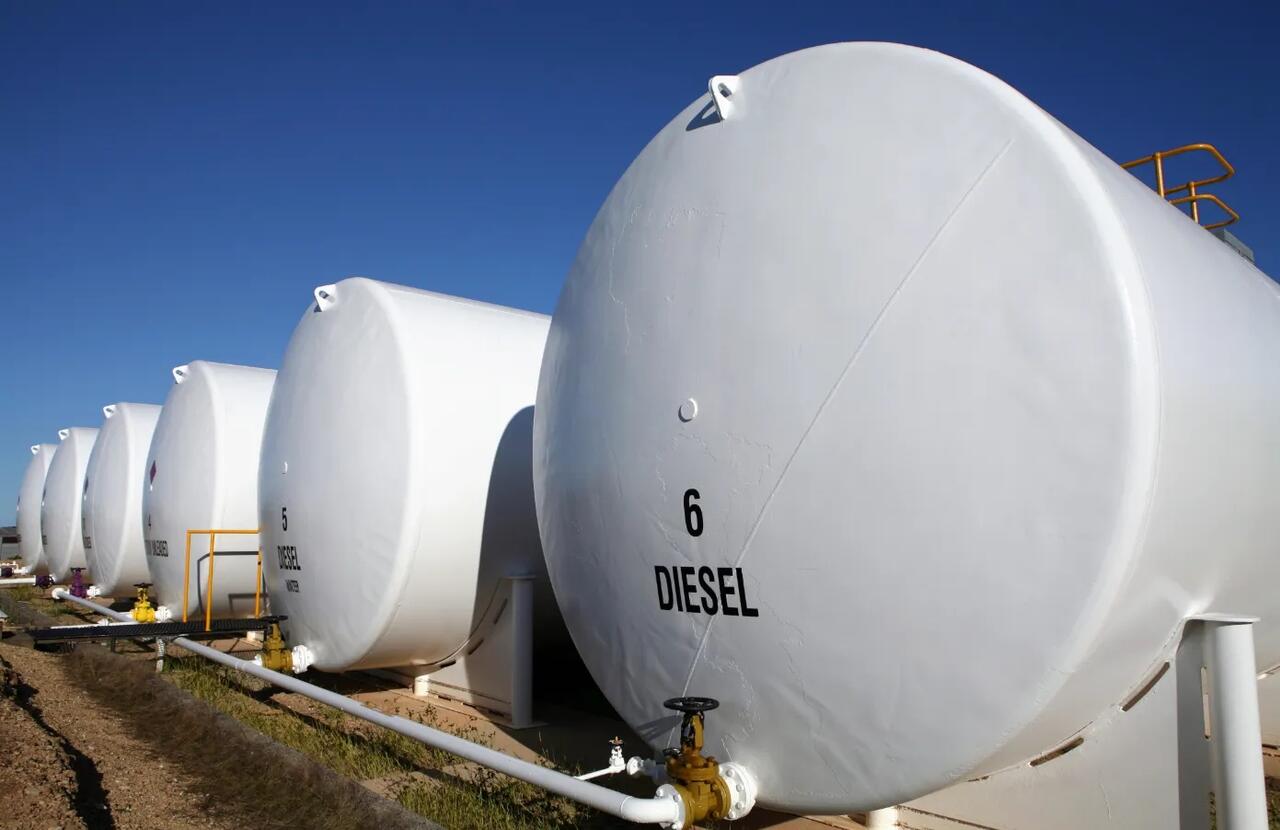
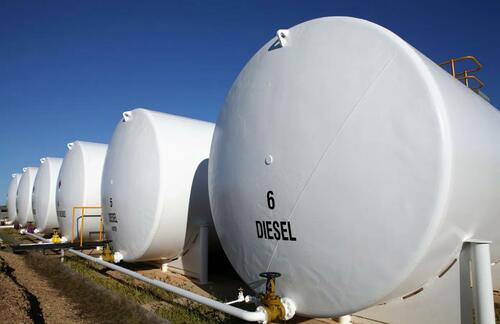
The Asia refiners are more competitive and have economies of scale that compete Australian refineries, that’s why most of our have closed. Australia for over a decade has not met the internationally agreed 90-day buffer of fuel reserves in the country, we sit a roughly 32 days of stock. This is the fault of both Labor and Liberal governments in the past. Note: it’s easy to store crude oil but much more difficult to store refined products like diesel and petrol, they are flammable and go off after a few months of sitting in a tank. It is very expensive to build brand new storage tanks, which is why no commercial personal is doing it – this is why we import so much oil throughput.
2. Not all crude oils are the same.
The Asian refineries are set up to refine medium sour crude (far more experienced chemical engineers, or Google, can give you more info of the API and Gravity ranges of crude oil types). This is mainly produced by the Middle East. It is very hard to replace this crude oil into the refineries at short notice. So it doesn’t matter how many barrels the US releases from its crude stock piles as that is a “light sweet crude” (and is prohibitively expensive on the ocean freight component). Asian refiners have been cancelling contracts and governments like Thailand and China are banning diesel and petrol exports to keep these critical fuels in their own countries. Therefore, it has gotten very expensive to source alternative cargos to supply Australia (something called the MOPS Premia has skyrocketed. So has backwardation).
The best analysis I am reading is a soon as the Middle East waterway (Strait of Hormuz) opens up, it will still be 1.5 to 2 months before the Asian refiners are running at full capacity again.
Ed: Australia – and I am sure most countries – do not have stored fuel that will last this long even with rationing.
The critical mining industry in Australia runs on diesel…
If this situation does not urgently get resolved, we will soon be dead men walking.
Meanwhile, the world sits on it’s hands watching and refusing to act.
Am I alone in thinking there is something wrong with this picture?
Note you can’t just shut down a refinery, these things are designed to run 24/7. Shutting down completely puts equipment at serious risk of damage, therefore refiners are choosing to run at say 50% capacity to delay to running out of crude oil feedstock and not damage refinery equipment.
3. While Brent crude has gone from say 70 to 100 USD/barrel (ie roughly 40%), refined products like diesel, petrol and jet fuel, have spiked far higher relatively speaking.
This mainly comes down to the regional supply and demand issues being experienced in Asia. Note Australian fuel is roughly priced as Singapore fuel + ocean freight + local costs. Therefore you can’t just take the increase in Brent crude (main type of crude oil) and assume that’s the increase in cost to the fuel that you buy. Diesel seems to be facing far worse supply constraints compared to petrol aka gasoline (and jet fuel even worse than that). I’ll link a great article at the end on why jet fuel is spiking so much more (it’s a free article on substack)
4. Regional Australia wholesale diesel All the oil majors (Mobil, BP, Ampol etc) are understandably holding onto their own product to keep supplying their own retail stations (this was the case last week at least).
They stopped selling in the wholesale market. The oil majors years ago largely exited regional Australia and delivery services to farms etc. Independent wholesale business filled in this gap. They do not import their own fuel, but rather buy on the wholesale spot market (where I sell to them), and therefore usually have no term supply guarantees from BP, Ampol etc. Given regional Australia still runs on diesel fuel for all farming, food transportation etc, this is why you hear regional Australia having a fuel crisis more than the cities. This is why I believe that the electrification of key transportation supply chains is critical for Australia’s future. So for Chris Bowen, our Energy Minister, saying he is working with the majors to secure more diesel that is dedicated/prioritised for regional communities, I have no idea how the government are practically going to pull that off (price caps? Allocated volume with some sort of government mandated fixed price? Who knows how it’ll work, but it sounds nice in a speech).
5. Conclusion/generic thoughts
This situation isn’t resolving itself anytime soon unfortunately. There is a saying commodity trading – “high prices cure high prices and low prices cure low prices”. When the price sky rockets, demand drops off where possible or supply is increased. When there’s super low prices, supply reduces as said suppliers can’t stay in business selling at those low prices. In this current high prices situation, supply can’t increase right now, so the only lever is to reduce demand. If the price is kept low by governments, demand would stay around, you would have no more supply coming into Australia, and you would eventually run out of fuel.
Neither is a good situation, but running out of fuel entirely is probably worse than having some fuel at a high price, which theoretically destroys some flexible demand.
Tyler Durden
Thu, 03/19/2026 – 22:40
https://www.zerohedge.com/energy/why-australia-not-already-rationing-fuel
Comey Subpoenaed For Alleged ‘Grand Conspiracy’ Against Trump
Comey Subpoenaed For Alleged ‘Grand Conspiracy’ Against Trump
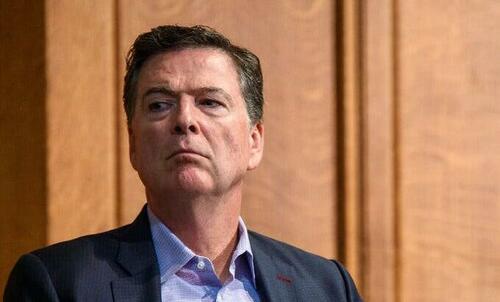
Former FBI Director James Comey has been slapped with a subpoena as part of a wide-ranging case against Obama-Biden-era officials who helped frame Donald Trump is a Russian asset in a “grand conspiracy.”
The grand jury subpoena, issued last week by the U.S. Attorney’s Office for the Southern District of Florida, focuses on Comey’s role in the preparation of the January 2017 Intelligence Community Assessment that concluded Russia sought to influence the election in favor of Trump and against Hillary Clinton. The probe, which Trump allies have described as examining a “grand conspiracy” against the president, has issued more than 130 subpoenas in total, according to Axios, citing people familiar with the matter.
The investigation is being overseen by a grand jury in Fort Pierce, Fla., under U.S. District Judge Aileen Cannon, a Trump appointee who previously presided over the classified-documents case against Trump that was dismissed in 2024. The U.S. attorney for the Southern District of Florida, Jason A. Reding Quiñones, a Trump appointee, is leading the effort.
Representatives for Comey declined to comment on the subpoena. The Justice Department doesn’t typically confirm or comment on ongoing grand-jury proceedings.
The move marks a significant escalation in scrutiny of Obama-era officials who were involved in the early stages of the Russia investigation, including the FBI’s Crossfire Hurricane probe and the special counsel inquiry led by Robert Mueller. Comey, who was fired by Trump in May 2017 amid the Russia probe, has long been a central figure in debates over those investigations.
Democrats and former officials are pissed, of course, and have described it as politically motivated retribution against adversaries from the 2016 election cycle. Supporters argue it addresses unresolved questions about potential abuses of authority or procedural irregularities in how the Russia inquiries were conducted.
The Intelligence Community Assessment, which Comey helped oversee as FBI director, has been a point of contention for years. Trump allies have questioned aspects of its sourcing and conclusions, particularly regarding the inclusion of material related to the controversial Steele dossier.
This development unfolds against a backdrop of heightened political and legal tensions in Trump’s second term, with the Justice Department under Attorney General Pam Bondi pursuing several high-profile reviews of prior administrations’ actions.
No charges have been announced in connection with the investigation, and it remains unclear what specific information prosecutors are seeking from Comey or how he intends to respond to the subpoena. Grand-jury proceedings are secret, and details are expected to emerge slowly, if at all, absent court filings or official disclosures.
The subpoena to Comey renews focus on one of the most divisive episodes in recent U.S. political and law-enforcement history, with potential implications for how past investigations are viewed and whether additional former officials will face similar demands.
Tyler Durden
Thu, 03/19/2026 – 22:15
https://www.zerohedge.com/political/comey-subpoenaed-grand-conspiracy-investigation-against-trump

Disclosure? US Government Registers Aliens.gov Domain
Disclosure? US Government Registers Aliens.gov Domain
Authored by Steve Watson via Modernity.news,
The momentum behind President Trump’s drive to expose hidden UAP files continues to build, now underscored by fresh reminders of why such secrets have been buried for decades.
The Executive Office of the President has registered the aliens.gov domain, a quiet but unmistakable step toward a potential public portal for declassified materials on unidentified anomalous phenomena.
This follows Trump’s directive to release all related government files related to alien and extraterrestrial life, UAP, and UFOs.
The odds of aliens being confirmed this year are soaring.
16% chance.https://t.co/kTHTu8DkIZ
— Polymarket (@Polymarket) March 18, 2026
The New York Post has indicated that forthcoming disclosures “could include videos, photos of non-human craft proving we aren’t alone.”
Trump’s UFO release could include videos, photos of non-human craft proving we aren’t alone : source https://t.co/jSGeC8mtoG pic.twitter.com/J8glIjmIIH
— New York Post (@nypost) March 14, 2026
As we previously covered, filmmaker Dan Farah also predicted on Joe Rogan’s podcast that Trump could declare humanity is not alone, confirming recovered non-human technology amid a secret global race.
We also previously highlighted former Bank of England analyst Helen McCaw’s warning to prepare for potential economic shock from disclosure, including market volatility and loss of institutional trust.
Now, with aliens.gov secured in the registry, the administration appears intent on forcing transparency where predecessors allowed compartmentalization to persist. Skeptics have dismissed accounts, but pilots, radar data, and credible military witnesses continue to describe phenomena that defy conventional explanations.
Trump’s approach—declassifying UAP records—prioritizes the public’s right to know over entrenched secrecy. Whether the domain launches as a full disclosure hub or not, the barriers are eroding. Americans, and the rest of the world, deserves the full picture on what has been observed in our skies, especially when it involves potential interference with critical defenses.
JUST IN – Trump says he has directed the release of all government files related to “alien and extraterrestrial life, UAP, and UFOs.” pic.twitter.com/JLRFhBaRSq
— Disclose.tv (@disclosetv) February 20, 2026
A former U.S. Air Force missile launch officer has reiterated claims that UFOs once rendered nuclear missiles inoperable at a key Cold War installation. Robert Salas, who served at Malmstrom Air Force Base in Montana in 1967, described the incident on the Danny Jones Podcast.
Salas urges that guards reported strange fast-moving lights that halted above the facility, followed by a craft with a reddish, pulsating glow hovering near the front gate. One guard was injured in the encounter.
Salas recounted how alarms then sounded in the underground control center: the launch panel showed one missile dropping offline, then the rest in rapid succession. “Within moments, all ten missiles at the site became inoperable,” Salas claims.
Security teams dispatched to the silos reportedly halted after seeing lights hovering overhead, too frightened to proceed. An official investigation could not identify the cause, despite the systems’ heavy shielding against external interference.
Salas and others were required to sign secrecy agreements afterward. He has spoken publicly in recent years, linking the event to similar reports of UAP interest in nuclear facilities.
This testimony aligns with patterns documented over decades: intrusions over restricted nuclear airspace that known technology could not match or explain. As Secretary of State Marco Rubio has noted in prior comments, there have been “repeated instances of something operating in the airspace over restricted nuclear facilities, and it’s not ours.”
Your support is crucial in helping us defeat mass censorship. Please consider donating via Locals or check out our unique merch. Follow us on X @ModernityNews.
Tyler Durden
Thu, 03/19/2026 – 21:50
https://www.zerohedge.com/technology/disclosure-us-government-registers-aliensgov-domain

SoCal Heat-Wave Prompts Health Warning Of High Bacteria Levels At Los Angeles Beaches
SoCal Heat-Wave Prompts Health Warning Of High Bacteria Levels At Los Angeles Beaches
Authored by Jack Phillips via The Epoch Times,
Health officials warned that some Southern California beaches may be unsafe for swimming due to elevated bacterial levels this week amid elevated temperatures across the region.
The Los Angeles County Department of Public Health on March 18 said that visitors should avoid swimming, surfing, or playing in the ocean waters between Malibu and Santa Monica due to bacteria levels that it said exceed state health standards.
“These warnings are issued because recent water samples showed bacterial levels exceeding health standards, which may increase the risk of illness,” the department warned.
The health department did not elaborate on the species or type of bacteria that prompted the warnings.
The warnings issued by the county health department appear to apply mainly to areas near storm drains, restrooms, and creeks.
Specifically, the advisory said the warnings applied to areas within 100 yards up and down the coast from:
the Culver Boulevard storm drain at Dockweiler State Beach
the public restrooms at Leo Carrillo State Beach in Malibu
Walnut Creek at Paradise Cove
the Wilshire Boulevard storm drain at Santa Monica Beach (north of Tower 12)
Topsail Street in Venice
the lagoon at Topanga Canyon Beach in Malibu
Escondido Creek at Escondido State Beach
and the entire swim area at Mother’s Beach in Marina del Rey
Advisories were lifted at Inner Cabrillo Beach in San Pedro, the Santa Monica Pier in Santa Monica, the Marie Canyon Storm Drain at Puerco Beach, the Santa Monica Canyon Creek at Will Rogers State Beach near Will Rogers Tower 18, and the Malibu Lagoon at Surfrider Beach, the Los Angeles Health Department said.
Temperatures in Southern California are under a “long-duration heatwave” throughout this week, according to the National Weather Service (NWS). Temperatures are around 25 to 35 degrees Fahrenheit above normal, and a number of daily records will be broken, the weather agency said.
Forecasters say that for March 19 and March 20, temperatures across Los Angeles are set to exceed 90 degrees Fahrenheit, while the weekend will see lower temperatures.
“Numerous and widespread daily and March monthly record highs are likely, with some locations in California already breaking their March monthly records on Tuesday,” the NWS wrote in a bulletin Thursday.
Elevated bacteria at beaches have long been a concern for some groups. Nearly two-thirds of beaches tested nationwide in 2024 experienced at least one day in which indicators of fecal contamination reached potentially unsafe levels, conservation group Environment America said in a report issued last summer.
The group reviewed beaches on the coasts and Great Lakes and found that 84 percent of Gulf Coast beaches exceeded the standard at least once. The number was 79 percent for West Coast beaches, 54 percent for East Coast beaches, and 71 percent for Great Lakes beaches, it said.
The report also said more than 450 beaches were potentially unsafe for swimming on at least 25 percent of the days tested.
Tyler Durden
Thu, 03/19/2026 – 21:00

Bezos Plots Colossal $100 Billion Fund To Transform Companies Using AI: WSJ
Bezos Plots Colossal $100 Billion Fund To Transform Companies Using AI: WSJ
Amazon founder Jeff Bezos is in early discussions to raise as much as $100 billion for a new investment vehicle aimed at acquiring and revitalizing manufacturing companies through the application of artificial intelligence, according to the Wall Street Journal.
The proposed fund, described in investor materials as a “manufacturing transformation vehicle,” would target companies in strategic industrial sectors such as semiconductor fabrication, defense and aerospace. Bezos has held preliminary meetings with some of the largest asset managers in Asia and the Middle East, though the talks remain at an nascent stage, the Journal said.
The initiative is closely linked to Project Prometheus, the AI startup Bezos co-founded and co-leads as CEO. Launched in late 2025 with $6.2 billion in initial funding—much of it from billionaire himself—the company is developing advanced AI models designed to understand and simulate the physical world.
Project Prometheus, valued at roughly $30 billion following its initial round, is separately pursuing additional capital, the Journal also reported.
The unprecedented surge in investment into artificial intelligence has raised a host of unresolved questions. Is the AI boom a bubble destined to burst? And perhaps more pressingly, how will the world muster sufficient energy to sustain this revolutionary technology amid soaring power demands from data centers?
In an interview at Italian Tech Week in October, Bezos offered an answer to the second question.
The Amazon founder predicted that “gigawatt-scale” data centers—massive facilities capable of drawing power on the scale of entire cities—will begin to be constructed in orbit within the next 10 to 20 years. The billionaire argued that the orbital installations would harness constant, uninterrupted solar energy, free from clouds, weather, or nighttime interruptions that constrain terrestrial operations.
“These giant training clusters…will be better built in space, because we have solar power there, 24/7. There are no clouds and no rain, no weather,” Bezos said during a fireside conversation with Ferrari and Stellantis Chairman John Elkann. “We will be able to beat the cost of terrestrial data centers in space in the next couple of decades.”
Jeff Bezos plans to build a data center in space within the next 10+ years.
Unlimited solar energy available 24/7, space is an ideal location for data centers.$AMZN AWS is set to make major moves out there. pic.twitter.com/KJCEO973eQ
— Bourbon Capital (@BourbonCap) October 3, 2025
The concept of orbital data centers has gained traction among tech giants as Earth-based facilities devour electricity and water to cool their racks of servers. Continuous sunlight and zero weather make space an appealing option – at least in theory.
But Bezos acknowledged there are serious hurdles ahead: maintenance and upgrades would be far more difficult in orbit, rocket launches are costly, and any failure could wipe out billions in hardware in a flash.
Still, the Amazon founder insisted that as launch costs fall and technology improves, the economics will eventually tilt in space’s favor.
Tyler Durden
Thu, 03/19/2026 – 20:35
https://www.zerohedge.com/ai/bezos-plots-colossal-100-billion-fund-transform-companies-using-ai-wsj

Super Micro Co-Founder Arrested In Alleged $2.5 Billion Nvidia Chip Smuggling Scheme
Super Micro Co-Founder Arrested In Alleged $2.5 Billion Nvidia Chip Smuggling Scheme
Federal prosecutors have charged a co-founder of Super Micro Computer Inc. and two associates with participating in a scheme to divert roughly $2.5 billion in advanced Nvidia chips to China, according to an indictment unsealed Thursday afternoon. The charges mark a notable escalation in Washington’s effort to police the flow of high-end artificial-intelligence hardware, shifting focus from overseas resellers to individuals with direct ties to U.S. technology firms.
The indictment alleges that the defendants obtained restricted graphics processors – used to train large AI models – and routed them through intermediaries to obscure their ultimate destination. U.S. export rules bar the sale of the most advanced chips to China without a license, citing national-security concerns.
U.S. prosecutors have charged three men – senior executive Yih-Shyan “Wally” Liaw (the co-founder), Ruei-Tsang “Steven” Chang, and Ting-Wei “Willy” Sun – with conspiring to divert billions of dollars’ worth of advanced U.S.-made AI servers to China, bypassing strict export bans.
The servers (packed with powerful restricted Nvidia chips) are banned from sale to China without special government approval because of national security risks. No licenses were ever obtained. Authorities say the group used a combination of third-party entities and altered shipping documentation to bypass those restrictions. Details on the volume and value of the shipments weren’t immediately available.
How the Alleged Scheme Worked:
The group used a company in Southeast Asia as a front buyer to place huge orders with a California-based U.S. manufacturer.
Once the servers arrived in Southeast Asia, they were quickly repackaged and secretly shipped to customers in China through a network of brokers.
Cover-Up Tactics:
Fake documents claiming the Southeast Asian company was the real end-user.
When audits happened, they staged warehouses with non-working “dummy” replica servers.
One defendant allegedly posed as a lawyer during a U.S. government inspection.
Text messages show they knew the rules were tightening but rushed shipments anyway (e.g., “We need to speed these up before May 13!”).
They’ve been charged with three counts; Conspiracy to violate the Export Control Reform Act, Conspiracy to smuggle goods from the United States, and Conspiracy to defraud the United States (impairing Commerce Department licensing and enforcement).
The case places an unusual spotlight on Super Micro, a Silicon Valley company that has emerged as a key supplier of servers configured with Nvidia processors for data centers and cloud providers. The inclusion of a co-founder raises questions about whether the alleged activity reflects isolated conduct or broader compliance gaps, though prosecutors haven’t accused the company itself of wrongdoing.
Shares of Super Micro fell sharply in extended trading following reports of the charges, reflecting investor concern that the case could disrupt relationships with customers and suppliers or invite additional scrutiny from regulators.
A Persistent Weak Point
U.S. officials have spent the past several years tightening export controls on advanced semiconductors, aiming to limit China’s ability to develop cutting-edge AI systems with potential military applications. Yet enforcement has lagged behind policy.
Investigations and industry disclosures have repeatedly shown that restricted chips continue to reach Chinese buyers through a web of resellers and transshipment hubs in Asia. The result is a gray market that has proven difficult to eliminate, even as Washington expands blacklists and licensing requirements.
The latest case suggests a shift in strategy. Rather than focusing primarily on overseas networks, prosecutors appear increasingly willing to pursue individuals closer to the source of supply – where access, knowledge and documentation can be harder to disentangle.
“The conduct by these individuals alleged in the indictment is a contravention of the Company’s policies and compliance controls, including efforts to circumvent applicable export control laws and regulations,” Supermicro said in a statement. “Supermicro maintains a robust compliance program and is committed to full adherence to all applicable U.S. export and re-export control laws and regulations.”
This isn’t the first time Super Micro has made news for shady practices. Back in 2020, the company (and its then-CFO) were slapped with a $17.5 million SEC settlement for years of classic accounting gimmicks – prematurely booking revenue on servers that were still sitting in warehouses, shipping incomplete units, and all the usual channel-stuffing tricks that inflated profits by hundreds of millions. Fast-forward to 2024, and short-seller Hindenburg dropped a bomb accusing Supermicro of ongoing related-party deals tied to the CEO’s family in Taiwan/China, more revenue-recognition games, and enough red flags that Ernst & Young quit as auditor and the DOJ opened a criminal probe.
High Stakes for the AI Supply Chain
The chips at the center of the case are among the most sought-after components in the global technology industry. Nvidia’s high-performance processors underpin everything from generative-AI models to advanced analytics systems, and demand has surged as companies race to build out AI infrastructure.
That demand has also created incentives to circumvent restrictions. Industry executives have privately acknowledged that once chips leave the U.S. or authorized distributors, tracking their final destination becomes challenging.
Related:
2 Chinese Nationals, 2 Americans Charged With Smuggling Nvidia Chips To China
For Super Micro, the episode comes at a pivotal moment. The company has benefited from a boom in AI-related spending, positioning itself as a fast-growing provider of specialized server systems. Any perception of compliance failures could complicate that trajectory, particularly if customers or partners reassess risk.
Tyler Durden
Thu, 03/19/2026 – 20:10

NASA May Shrink Boeing’s Moon-Mission Role While Handing SpaceX Core Rocket Responsibilities
NASA May Shrink Boeing’s Moon-Mission Role While Handing SpaceX Core Rocket Responsibilities
President Donald Trump’s NASA chief could soon announce Boeing’s diminishing role in returning astronauts to the Moon, while leaning heavily on Elon Musk’s SpaceX rocket company to do the heavy lifting.
Boeing’s Space Launch System (SLS), originally the rocket backbone of the Artemis mission, would no longer carry the Lockheed Martin-built Orion crew capsule to the Moon. Under the new plan, SpaceX’s Starship would take the lead.
NASA Administrator Jared Isaacman plans to meet with the companies working on the Artemis program next Tuesday, including Boeing, SpaceX, and Blue Origin, to discuss progress and current paths forward. Sources close to the program said any significant changes could face immediate Congressional scrutiny.
“NASA is committed to using the SLS architecture through at least Artemis V, which is necessary to support both human landing system providers, and their associated acceleration plans to return American astronauts to the Moon,” Isaacman said in a statement. “We’re incredibly supportive of both our HLS providers and their plans to accelerate America’s path forward to the moon,” Isaacman added.
SpaceX will ultimately deliver millions of tons to the Moon to build a self-growing city there and same for Mars
— Elon Musk (@elonmusk) March 19, 2026
If Isaacman does boot SLS from the core rocket during the launch of the Orion crew capsule to the moon, it would be a massive blow to Boeing, which has been mired in setbacks ranging from Starliner capsule issues to SLS launch delays. Notably, Starship still lacks a fully successful orbital flight.
The effort to swap SLS for Starship shows Isaacman’s urgent push to accelerate Artemis timelines (target: 2028 landing) after years of delays and cost overruns, with SLS missions costing over $4 billion each.
Isaacman has also been weighing alternatives for the HLS on the Moon from both SpaceX and Jeff Bezos’ Blue Origin – both of which hold multibillion-dollar contracts to develop Moon landers for Artemis.
Tyler Durden
Thu, 03/19/2026 – 19:45

Minnesota Audit: State Agency ‘Accidentally’ Blocked Kickback Investigation Into Autism Services
Minnesota Audit: State Agency ‘Accidentally’ Blocked Kickback Investigation Into Autism Services
Authored by Janice Hisle via The Epoch Times (emphasis ours),
A state agency erred when it blocked autism-services kickbacks from being investigated—a decision based on the agency’s flawed, decades-old definition of “fraud,” according to a Minnesota audit released March 17.
That was the key finding of the state’s Office of Legislative Auditor, a state watchdog that conducted a two-year special review. The autism-services program that auditors examined is among many health and welfare benefits that Minnesota’s Department of Human Services runs or oversees.
For months, Minnesota has been a focal point for government-program fraud that could total billions of dollars, with dozens of people, mostly Somalis, having been charged and convicted since 2022. Additional schemes emerged late last year and remain under investigation, with more charges expected, prosecutors have said.
Concerns about fraud have recently expanded nationwide. On March 16, President Donald Trump signed an executive order creating an anti-fraud task force. Saying that other states such as California and New York may have fraud problems that are worse than Minnesota’s, the president directed Vice President JD Vance and Federal Trade Commission Chairman Andrew Ferguson to root out fraud in federally funded social services and welfare programs.
During the Minnesota audit, investigators told auditors that they believed they lacked “authority to investigate allegations of kickbacks” in the autism program without additional claims of “fraud, theft, abuse, or error.”
The department’s fraud definition, set in 1995, failed to specifically include “kickbacks.” Those are payments or “anything of value” to induce referrals to providers of federally funded health care—a practice that is illegal under federal law, the report noted.
Auditors opined that the department had misapplied or misinterpreted a rule that includes that fraud definition. The agency had the power to amend the rule and correct an erroneous federal-law citation “without any legislative action,” the report stated.
“Had [the department] done so at any point since 1995, it would have had clear authority to suspend payments” to providers who were strongly suspected in kickback schemes, according to the report.
Auditors recommended that the agency amend its fraud definition “to clearly include kickbacks”—or lawmakers should do so, the report says.
James Clark, inspector general for the state Department of Human Services, said the department agrees with that recommendation.
However, in his written response appended to the report, Clark said the standard rulemaking process could take a year or two to complete, unless officials or lawmakers agree to fast-track it.
The autism-services program, which has operated in Minnesota since 2013, aims to provide “early intervention” for autism-diagnosed patients who are under age 21.
Under the program, providers receive reimbursement for services rendered.
Federal prosecutors have brought charges against at least two people for alleged autism-services fraud in Minnesota.
Late last year, prosecutors also said that many more suspects remained under investigation for allegedly failing to provide autism services—or for allegedly paying kickbacks to parents who fraudulently enrolled their children for services they didn’t need or never received.
The number of Minnesota autism-service businesses grew from about 150 in 2020 to more than 500 in 2024. Similarly, the number of autism-service recipients nearly tripled during that period, from about 1,400 patients in 2020 to more than 5,600 patients in 2024.
During that same timeframe, the program’s cost burgeoned from about $38 million to nearly $325 million.
Faced with that dramatic expansion and other concerns, lawmakers strengthened state laws in 2025, the legislative auditor’s report noted.
Auditors examined complaints that the state Department of Human Services’ investigative division received between July 2017 and February 2024.
That sample included seven completed investigations that were handled appropriately, auditors concluded.
However, among 25 complaints that were dismissed without further investigation, three involved alleged kickbacks. The auditors concluded the agency should have done more in those instances.
The auditors’ report does not disclose dollar amounts of the alleged kickbacks, nor does it say whether the faulty definition of fraud could have affected other state-administered programs.
Tyler Durden
Thu, 03/19/2026 – 19:20

Obama Judge Strikes Down Ten Commandments In Arkansas Classrooms
Obama Judge Strikes Down Ten Commandments In Arkansas Classrooms
Authored by Zachary Stieber via The Epoch Times (emphasis ours),
A federal judge has struck down a law in Arkansas that required the display of the Ten Commandments in classrooms, finding it violated children’s rights.
U.S. District Judge Timothy Brooks (Obama) ruled on March 16 that not enjoining the law, Act 573, would violate the religious and Free Exercise rights of children in public school.
“Act 573’s purpose is only to display a sacred, religious text in a prominent place in every public-school classroom. And the only reason to display a sacred, religious text in every classroom is to proselytize to children,” Brooks wrote.
“Nothing could possibly justify hanging the Ten Commandments—with or without historical context—in a calculus, chemistry, French, or woodworking class, to name a few. And the words ‘curriculum,’ ‘school board,’ ‘teacher,’ or ‘educate’ don’t appear anywhere in Act 573. Accordingly, there is no need to strain our minds to imagine a constitutional display mandated by Act 573. One doesn’t exist.”
John Williams, legal director of the American Civil Liberties Union of Arkansas, one of the plaintiffs, said in a statement that the ruling shows “Arkansas lawmakers cannot sidestep the First Amendment by mandating that a particular version of the Ten Commandments be displayed in every classroom.”
Brooks had on Aug. 4, 2025, preliminarily enjoined the law in certain districts. It went into effect statewide the day after.
Arkansas officials had argued that the law was legal and should not be struck down.
The act was approved by state lawmakers and signed by Republican Arkansas Gov. Sarah Huckabee Sanders in 2025.
“The 10 Commandments aren’t just the foundation of our faith—they’re the foundation of every law and moral code in the West,” Sanders said in a March 17 post on X. “That’s why we are appealing this ruling.”
Several other states have recently enacted similar laws.
A different federal judge blocked Louisiana’s law requiring schools to display the Ten Commandments, but the U.S. Court of Appeals for the Fifth Circuit in February overturned that decision, finding that the case was not ready to be litigated yet because there were unresolved questions, including how the Ten Commandments would be displayed and whether teachers would reference them during classes.
Dissenting judges in that case pointed to the Supreme Court’s 1980 decision striking down a similar law in Kentucky.
Lawsuits are ongoing against a Texas law, signed in 2025, that required public school classrooms to feature the Ten Commandments. The Fifth U.S. Circuit Court of Appeals heard arguments in one of the cases earlier this year.
Tyler Durden
Thu, 03/19/2026 – 18:20
https://www.zerohedge.com/political/obama-judge-strikes-down-ten-commandments-arkansas-classrooms

US Fast-Tracks Billions In ‘Emergency’ Arms Sales To Gulf, Bypassing Congress
US Fast-Tracks Billions In ‘Emergency’ Arms Sales To Gulf, Bypassing Congress
On the one hand President Trump and Pentagon chief Pete Hegseth have declared that America is ‘winning’ against Iran, having destroyed its navy and air defenses, and having seriously degraded its missiles – but on the other the admin has put in for a more than $200 billion supplemental request to Congress to fund the war.
It seems Congress will likely eventually sign off on this gargantuan figure – for an ‘excursion’ which should end ‘soon’ we are told by Trump – given that even the effort to pass so much as a War Powers resolution gets repeatedly stymied.
Still, the US administration is busy bypassing standard congressional review requirements, on Thursday approving a series of emergency arms sales across the Middle East, at a moment US regional allies are being pummeled by Iranian drones and ballistic missiles.
The argument is that Washington’s allies are in imminent danger, and given that indeed vital Gulf infrastructure is getting hit quite seriously – new arms have to be rushed over there on an emergency basis.
According to details in Saudi-owned Al Arabiya:
The largest package was approved for the United Arab Emirates, totaling more than $8 billion. It includes the $4.5 billion sale of a Terminal High Altitude Area Defense (THAAD), $2.10 billion for FS-LIDS counter-drone systems, $1.22 billion in Advanced Medium-Range Air-to-Air Missiles (AMRAAMs), and $644 million in F-16 munitions, including GBU-39 small diameter bombs and Joint Direct Attack Munitions (JDAMs).
In parallel, Washington approved an $8 billion deal for Kuwait to buy Lower Tier Air and Missile Defense Sensor Radars, significantly enhancing the country’s missile detection and tracking capabilities.
Jordan was also included in the emergency approvals, with a $70.5 million package covering aircraft support and munitions to sustain operational readiness.
Notably, a US base all the way over in Jordan, the Muwaffaq Salti Air Base, was struck by Iran in the opening days of the war, satellite imagery showed.
This development of all these newly approved ’emergency’ arms and weapons shipments begs the question: is this more evidence that Washington is settling in for a ‘long war’?
Day 1: it’s going to take a couple of days
Day 20: ok we need 200 billion dollars
— Alon Mizrahi (@alon_mizrahi) March 19, 2026
After all, Trump has given no timeline despite being repeatedly asked, and Israel too is saying the anti-Iran campaign is not even halfway complete. In the end it’s certainly not the American people ‘winning’ here (and they are not going to think so especially at the gas pump either), but the major defense firms.
Tyler Durden
Thu, 03/19/2026 – 18:00