Category: News
Panamá, Curazao y Haití se clasifican directamente al Mundial por la CONCACAF. Jamaica y Surinam al repechaje
CIUDAD DE PANAMÁ (AP) — Panamá, Curazao y Haití se clasifican directamente al Mundial por la CONCACAF. Jamaica y Surinam al repechaje.

Con 2 tantos de Freeman EEUU arrolla 5-1 a Uruguay y llegará al año mundialista en racha invicta
TAMPA, Florida, EE.UU. (AP) — Alex Freeman anotó dos veces, mientras que Sebastian Berhalter y Diego Luna marcaron un gol por cabeza para que Estados Unidos arrollara el martes 5-1 a Uruguay, con lo cual llegará al año del Mundial del que será coanfitrión montado en una racha invicta de cinco partidos.
Los locales consiguieron cuatro tantos en la primera mitad. Tanner Tessmann añadió un gol a los 68 y Estados Unidos marcó cinco contra un oponente sudamericano y contra una de las mejores 30 selecciones del ranking por primera vez.
Los estadounidenses, 16tos del escalafón, continuaron su recuperación otoñal después de actuaciones mediocres en la Liga de Naciones de la CONCACAF y la Copa Oro.
Sólo les quedan dos amistosos más en marzo, probablemente contra Bélgica y Portugal, antes de que el entrenador argentino Mauricio Pochettino anuncie su convocatoria para la Copa del Mundo.
Freeman, Berhalter y Tessmann anotaron sus primeros goles internacionales y Estados Unidos consiguió cinco contra un equipo ajeno a la CONCACAF por primera vez desde que aplastó 5-1 a Escocia en 2012. Los estadounidenses han ganado cuatro partidos, incluidos tres consecutivos, durante la racha invicta de cinco cotejos contra equipos clasificados para la Copa del Mundo.
Rodrigo Bentancur de Uruguay fue expulsado a los 64 por deslizarse con los tachones por delante para embestir a Berhalter. La Celeste, clasificada en el puesto 15 y rumbo a su quinta Copa del Mundo consecutiva, había llegado al amistoso con una racha invicta de seis partidos.
Berhalter, hijo del exseleccionador Gregg Berhalter, adelantó a Estados Unidos a los 17 con un tiro libre y Freeman cabeceó un tiro de esquina de Berhalter a los 20.
Freeman añadió un gol a los 31 y Luna amplió la ventaja a cuatro tantos a los 42.
Con una alineación inicial compuesta principalmente por suplentes, Estados Unidos anotó cuatro goles en una mitad por primera vez contra un equipo sudamericano.
El uruguayo Giorgian de Arrascaeta anotó con una chilena en el primer minuto del tiempo de descuento de la primera mitad, su 13er gol internacional, después de que el portero Matt Freese y los defensores Auston Trusty y Mark McKenzie se estorbaron mutuamente y no lograron despejar el balón.
Antes del inicio y nuevamente al final del partido, Pochettino abrazó a su compatriota Marcelo Bielsa, el técnico de Uruguay, quien lo fichó cuando tenía 13 años para Newell’s Old Boys en Argentina.
Estados Unidos se adelantó después de que Manuel Ugarte cometió una falta sobre Haji Wright justo al lado del área. Berhalter tiró una pared con Sergiño Dest y disparó de primera para vencer al portero Cristopher Fiermarin dentro del poste lejano.
Freeman superó a Bentancur para cabecear el tiro de esquina de Berhalter y hacer la segunda diana. Timmy Tillman se deslizó para ganar un desafío contra Nahitan Nández, lo que llevó al tercer gol. Tillman abrió para Trusty, quien tocó el balón hacia Freeman. Dribló entre Ronald Araújo y Manuel Ugarte para anotar desde corta distancia, convirtiéndose en el segundo defensor estadounidense con un coblete después de Aaron Long en 2019 contra Trinidad y Tobago.
Luna consiguió su cuarto gol internacional después de que un centro de Tillman se desvió en Rodrigo Zalazar y rodó en dirección suya, cerca del punto de penalti.
Tessmann cabeceó un centro de Gio Reyna, otro que ingresó en la segunda mitad, tras un saque de esquina corto.
Pochettino cambió a nueve jugadores de inicio, manteniendo solo a Freese y Dest.
_____
Deportes AP: https://apnews.com/hub/deportes

Michelin announces 2025 awards, and Chicago has new one-star and two-star restaurants
The Michelin Guide Northeast ceremony in Philadelphia on Tuesday night saw Chicago add a new one-star restaurant, Feld, and a two-star restaurant, Kasama, to its repertoire. The ceremony featured restaurants from Chicago, New York, Washington, D.C., Philadelphia and Boston.
Feld’s first Michelin star might not be a surprise for those who have experienced the 27-course tasting menu at the Ukrainian Village restaurant. In the Michelin guide, Feld is cast as a farm-focused experience worthy of a star.
“Chicago native Chef Jacob Potashnick highlights in-season products, and the same ingredient may be highlighted in different forms, like raw asparagus with a cured lemon emulsion, tempura fried or as a juice accompanying fresh cheese, or in main dishes like poached Maine halibut with a maitake mushroom purée, maitake mushroom and thyme foam and a piece of grilled maitake mushroom,” the guide states.
Feld also received a Michelin Green Star award, which “highlights restaurants at the forefront of the industry when it comes to their sustainable practices.” Daisies in Logan Square retained its Green Star for another year.
Kasama, the Filipino bakery and restaurant in Chicago’s East Ukrainian Village neighborhood owned by chefs Tim Flores and Genie Kwon, was bumped up to two stars.
“Flores’ background provides inspiration for this modern interpretation of Filipino cuisine, while Kwon’s pastry training elevates the sweet side of things,” the guide states. “In a simple space, the two cook with striking originality. Homey traditional preparations are reimagined in elegant, inventive ways, as in an ‘adobo’ of mussels and wild mushrooms that balances tangy, sweet and savory.”
Kasama chef and owners Tim Flores and Genie Kwon at their restaurant in Chicago on Feb. 17, 2022. (John J. Kim/Chicago Tribune)
Kasama first joined the guide in the Bib Gourmand list and then achieved one star in 2022, when it became the first Filipino restaurant in the world to receive a Michelin star.
On Tuesday night, Flores, who was not at the ceremony, was comically represented by a cutout of his head, while Kwon accepted the accolade.
“You know, we never thought we would open a tasting menu restaurant,” Kwon said. “We wanted to open a neighborhood place. And we opened it in July of 2020 and every decision that we’ve made has been to protect our team and ensure their job security. And looking back, I can’t even believe we’re here.”
Ever, chef Curtis Duffy’s celebrated fine dining restaurant in Fulton Market, was recognized with a Service Award for Amy Cordell, its chief operating officer.
Since opening in 2020, Ever has become an acclaimed dining destination for its imaginative gastronomy. In a statement to the Tribune, the restaurant, which also retained two Michelin stars, nodded to its attention to detail and dedication to storytelling.
“I’m extremely proud of everything we’ve accomplished this year,” Duffy said. “We’ve experienced a lot of change and a lot of growth, and I’m grateful that our commitment to our guests’ experience has stayed consistent through it all.”
Stars are given out by anonymous inspectors to restaurants and are a coveted symbol of success for chefs, though the award is given to the full team. When awarding restaurants with stars, Michelin Guide inspectors take into account five criteria: ingredient quality, harmony of flavors, the mastery of culinary techniques, how the chef’s personality shines through their cuisine and consistency across the entire menu and over time. The inspectors — former restaurant and hospitality professionals — also reassess restaurants to ensure they continue to serve diners the same excellent standard of cooking year after year.
Related Articles
Review: Kasama was supposed to be a neighborhood cafe. It’s become one of the best restaurants in the world.
Restaurant review: Feld goes beyond farm to table in Chicago
Review: Can a $285, 10-course tasting menu succeed during the coronavirus pandemic? Ever, the latest from chef Curtis Duffy, rises to the challenge
Restaurant review: Alinea turns 20 in Chicago, and our critic says it’s time to let go of the balloon
Announced last week, Alinea, the modernist tasting menu restaurant by chef and owner Grant Achatz, was demoted from three stars, the highest rating, to two stars. Michelin awarded the restaurant three stars when the guide first came to Chicago in 2010, a distinction it had retained since then.
Tribune critic Louisa Chu reviewed Alinea this year and gave the restaurant two out of four stars, recognizing the industriousness of the staff, but noting “overly sweet, salty and truffled flavors.” Chu also offered: “Plus, it’s time to let go of The Balloon, one of too many signature courses.”
In a statement on social media, Achatz expressed disappointment at the reduction to two stars.
“For 20 years, Alinea has been devoted to pushing creativity, rigor, and the pursuit of perfection in our craft. That commitment remains as unwavering today as it was on day one, and will continue until the back door of 1723 locks for the last time,” he said.
While the star ranking is most well-known, the guide also provides a number of other awards, including Bib Gourmand, recognizing well-priced, quality food. Chicago’s new Bib Gourmands are Mirra, Nadu and Taqueria Chingón. The additions to the selected restaurants list are Astor Club: Chef’s Table, Creepies, Oliver’s and Tama.
Ever, 1340 W. Fulton St., ever-restaurant.com
Feld, 2018 W. Chicago Ave., feldrestaurant.com
Kasama, 1001 N. Winchester Ave., kasamachicago.com
Chicago restaurants with Michelin stars:
Three stars: Smyth
Two stars: Alinea, Ever, Kasama, Oriole
One star: Atelier, Boka, Cariño, El Ideas, Elske, Esmé, Feld, Galit, Indienne, Mako, Moody Tongue, Next, Schwa, Sepia, Topolobampo
The full Michelin guide for Chicago, including Bib Gourmand and selected restaurants, is available at guide.michelin.com
Alinea by chef Grant Achatz demoted from three Michelin stars in Chicago
Big screen or home stream, takeout or dine-in, Tribune writers are here to steer you toward your next great experience. Sign up for your free weekly Eat. Watch. Do. newsletter here.
https://www.chicagotribune.com/2025/11/18/michelin-2025-chicago-stars/
How A Missed Train In 1876 Led To The Adoption Of Standard Time
How A Missed Train In 1876 Led To The Adoption Of Standard Time
Authored by Gerry Bowler via The Epoch Times (emphasis ours),
In July 1876, Sandford Fleming, a Scottish Canadian engineer, was standing on an Irish railway platform fuming—he had misread his timetable, confusing a.m. and p.m., and as a result had missed his train. Spurred by this inconvenience, Fleming began thinking how a 24-hour clock would have made this sort of mistake impossible. But his highly inventive mind did not stop there: he had visions of worldwide time zones, 24 of them around the globe, each comprising 15 degrees of longitude and each an hour different.
The notion of standardized time would be an extremely valuable one in an age of unprecedented railway expansion and increased travel. It was customary for each locality to keep to a different time, making timetables an unreliable nightmare and accidents much more likely to happen. In October 1841 near Westfield, Massachusetts, two trains operating on the same track, one east-bound, the other west-bound, collided because of inaccurate timekeeping. Only two people died in that crash, but 20 passengers and crew died near Pawtucket, Rhode Island, in 1853 because of a similar miscommunication, with a new train conductor using a milkman’s borrowed watch upon which to base his train’s schedule.
Fleming, also an inventor and scientist, was a tireless advocate of scientific cooperation, founding the Royal Society of Canada and the Canadian Institute. He promoted his concept through publications, presentations to scientific societies, and extensive lobbying with railroad executives with whom he had excellent connections due to his extensive experience with the Intercontinental Railway and the Canadian Pacific Railway (CPR).
He enlisted scientific allies across North America and Europe and spearheaded transatlantic cooperation to make his proposal a reality. In this work he was assisted by astronomer and meteorologist Cleveland Abbe, the head of the United States Weather Bureau, who had urged standardization of clocks in other to ensure consistency from his far-flung reporting stations.
The climax of their campaign arrived on Nov. 18, 1883—known as “The Day of Two Noons.” At noon on this date, North American railroads officially adopted the system of standard time zones. Railroad clocks across the continent switched from local time to one of the four primary zones: Eastern, Central, Mountain, and Pacific. This historic moment, coordinated by the General Time Convention (later renamed the American Railway Association) and railroad managers, represented a dramatic shift for millions. In cities such as New York, residents watched as their clocks marked noon twice: once by the sun, and once by the new standard. The transition was so significant that some regarded it as an affront to tradition and a dangerous break with nature.
This new system specifically followed Fleming’s recommendations and gave structure to North American industry and commerce. The immediate effect was a drastic reduction in railway accidents and scheduling errors, paving the way for faster, safer travel and more efficient movement of goods and people.
Fleming’s advocacy extended beyond North America. He participated in high-profile international conferences, culminating in the 1884 International Meridian Conference in Washington, D.C. Here, his proposals played a pivotal role in persuading delegates from over 20 countries to adopt the Greenwich Meridian as the prime meridian, the basis for a new global standard of timekeeping. Countries gradually established legal frameworks to adopt standardized time zone usage for civil and commercial purposes.
Today, Canada has six times zones from Newfoundland (always a tricky 30 minutes different) to the Atlantic, Eastern, Central, Mountain, and Pacific zones. The continental United States has five, plus four more for their island possessions in the Pacific and Caribbean. Russia has an amazing 11 time zones, while autocratic China has only a single one.
Fleming’s vision permanently altered how societies measure, understand, and organize time. The widespread adaptation of his time zone model meant that, for the first time, vast regions could be coordinated with precision, whether for train schedules, telegraph messages, or cross-continental business. This system remains essentially unchanged in the 21st century, a testament to the enduring value of Fleming’s intellectual achievement and his ability to foster cooperation.
Fleming was an astonishingly productive man, one that Canadians—who are presently suffering a dearth of heroes (particularly from the 19th century)—ought to know more about. He had keen ideas about electoral reform, favouring a system of proportional representation, and he advocated for transoceanic undersea cables connecting North America, Europe, and Australia. In 1851, he designed Canada’s first postage stamp.
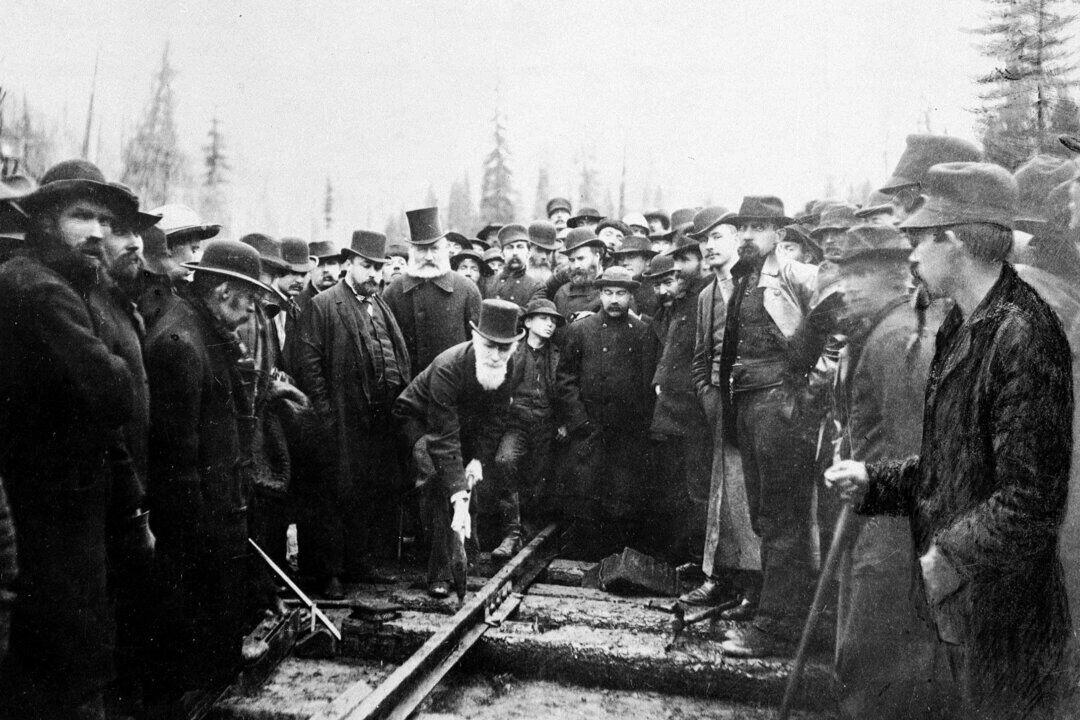
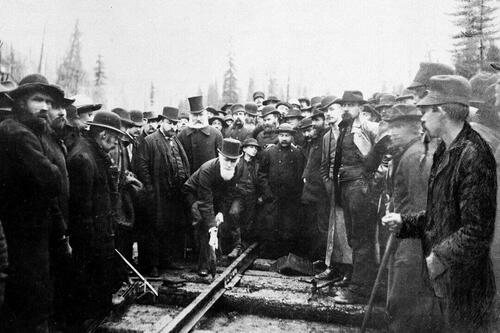
Fleming’s work on railways in the Maritime provinces and in the construction of the CPR was of paramount importance in securing Canadian unity. For those of you familiar with the photograph of the pounding of the CPR’s “last spike,” he is the tall bearded gentleman in a top hat standing behind CPR director Donald Smith, who is wielding the hammer. For his many services to his country, Fleming was knighted in 1897.
Views expressed in this article are opinions of the author and do not necessarily reflect the views of The Epoch Times or ZeroHedge.
Tyler Durden
Tue, 11/18/2025 – 21:45
https://www.zerohedge.com/political/how-missed-train-1876-led-adoption-standard-time

Georgia jumps to coveted No. 4 in College Football Playoff rankings; Ohio State, Indiana, Texas A&M stay 1-2-3
Georgia nabbed the fourth and final projected first-round bye in the College Football Playoff rankings released Tuesday, while undefeated Ohio State, Indiana and Texas A&M held onto the top three positions.
The Bulldogs rose one spot thanks to Alabama’s loss to Oklahoma over the weekend — a result that dropped the Crimson Tide six spots to No. 10 and lifted Oklahoma three notches to eighth.
The top four teams in the rankings released Dec. 7 will receive byes in this season’s playoff, which starts Dec. 19 with the 5-8 seeds hosting first-round games on campus and concludes with the title game a month later.
The selection committee endured a shakeup of its own last week, when chair Mack Rhoades, the athletic director at Baylor, abruptly stepped down and was replaced by Arkansas AD Hunter Yurachek
This ranking, along with those coming out the next two Tuesdays, are all about positioning. Two teams outside the committee’s top 12 would be in a bracket that assures spots for the five best-ranked conference champions.
Miami is the best ACC team … but not so fast
But it’s not that simple for No. 13 Miami. Even though the Hurricanes have the Atlantic Coast Conference’s best ranking, their two losses in the ACC make them a long shot to play in the conference title game.
It leaves room for No. 16 Georgia Tech and No. 19 Virginia to become the ACC’s titlist, and could place added weight on Miami’s opening-week win over No. 9 Notre Dame in the Hurricanes’ push for an at-large spot.
“They haven’t been in similar comparative pools to date,” Yurachek said of Miami and Notre Dame. “But Miami is creeping up in that range where they will be compared to Notre Dame if something happens above them.”
Best of the rest and the bubble
No. 24 Tulane is now the third Group of 5 conference leader in three weeks to own the projected fifth automatic spot.
The Green Wave’s spot in the bracket would also be contingent on winning the American Conference (and staying ahead of any other G5 champions), where they, along with Navy, East Carolina and North Texas all have only one loss.
At No. 5 was Texas Tech, followed by Mississippi and Oregon.
The bubble teams both come from the Big 12: No. 11 BYU and No. 12 Utah.
College Football Playoff Week 12 rankings
Ohio State 10-0
Indiana 11-0
Texas A&M 10-0
Georgia 9-1
Texas Tech 10-1
Ole Miss 10-1
Oregon 9-1
Oklahoma 8-2
Notre Dame 8-2
Alabama 8-2
BYU 9-1
Utah 8-2
Miami 8-2
Vanderbilt 8-2
Southern California 8-2
Georgia Tech 9-1
Texas 7-3
Michigan 8-2
Virginia 9-2
Tennessee 7-3
Illinois 7-3
Missouri 7-3
Houston 8-2
Tulane 8-2
Arizona State 7-3
Forget Florida. Oswego’s Conor Tully concentrates instead on turning up defensive heat. ‘It’s a funny story.’
Football comes first for Oswego’s Conor Tully, so the Sunshine State will have to wait.
The senior linebacker smiled while relaying the news. The Panthers extending their season with a third straight playoff win has thrown a wrench into the vacation plans of his parents, Tom and Kim.
“It’s a funny story,” Conor said. “They’re both big sports fans and know how big a deal this is for the community. They were scheduled to go to Orlando this weekend with my aunt and uncle to see family — enjoy warm weather.”
Not now.
Not after Oswego (10-2) advanced to a 5 p.m. Saturday state semifinal game against resurgent Lockport (9-3) by virtue of a 24-21 come-from-behind quarterfinal win over Maine South (10-2).
Conor Tully is the leading tackler for the Panthers, who will be making the program’s first semifinal appearance since winning the state title in 2003.
“They said it’s the best canceled vacation they’ve ever had,” Conor said of his parents.
It has been a fun ride for Tully, coming on the heels of his lost year as a junior. Sidelined all season by a broken foot, he had briefly given thought to calling it quits for football.
“I was watching from the sidelines in a boot,” Tully said. “I didn’t know if I wanted to play, But after seeing how this season has gone, I’ve decided I want to look into playing at the next level.”
It’s understandable, considering he has 92 tackles with eight for loss, an interception, two forced fumbles and two pass breakups. He also plays baseball, but football is his No. 1 sport.
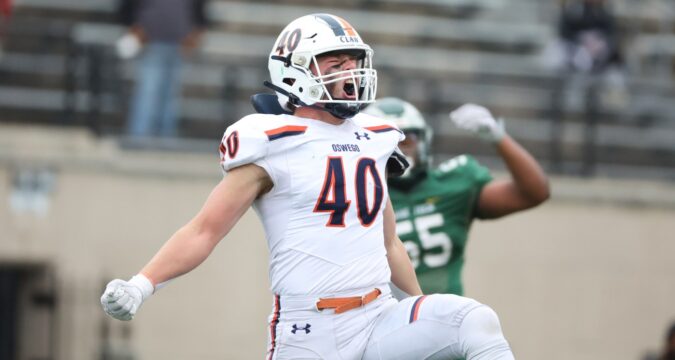
Oswego’s Conor Tully (40) celebrates after tackling Lane Tech’s Shamar Pipes (81) during a Class 8A second-round playoff game at Lane Stadium in Chicago on Saturday, Nov. 8, 2025. (Talia Sprague / The Beacon-News)
“I found football just watching on TV as a kid and remember thinking, ‘Wow, this is so cool. I’ve gotta play this when I grow up,’” he said.
Tully did, but it took time with his parents being wary of injury.
“Eighth grade was actually my first year of tackle football,” he said.
Then, Tully played fullback and linebacker on the freshman and sophomore teams at Oswego before focusing on defense in preparation for his junior year.
Oswego’s Caden Cooney (11) tackles Lane Tech quarterback Blake Perkins (4) during a Class 8A second-round playoff game at Lane Stadium in Chicago on Saturday, Nov. 8, 2025. (Talia Sprague / The Beacon-News)
The foot diagnosis came late in preseason camp.
Tully was behind a trio of standout senior linebackers in 2024 who led the Panthers to a 9-0 regular-season record and the conference title. They lost in the second round of the playoffs.
As Oswego’s weakside linebacker, Tully now teams up with junior Caden Cooney in middle and junior Cam Loghmani on the strong side.
Last weekend’s challenge included trailing 14-0 after two possessions as Maine South took advantage of a no-huddle offense led by Indiana-bound junior quarterback Jameson Purcell.
“We were just looking at each other,” Tully said. “We weren’t pointing fingers or yelling at each other. We just knew we had to do better and did.
“We talked about the hurry-up offense all week and got the look from our scout team. When you see them run it? It’s a little faster than scout, yeah.”
Oswego’s Conor Tully (40) makes a tackle for loss against Yorkville during a Southwest Prairie West game in Oswego on Friday, Sept. 26, 2025. (Jeremy Toney / The Beacon-News)
Defensively, however, the Panthers got it together and produced five takeaways.
Oswego coach Brian Cooney credited the game plan of defensive coordinator John Hugunin that featured different fronts.
“Maine South is a good program,” Cooney said. “Sit in anything too long and they’re gonna find a weakness and exploit it.”
Tully, who had six tackles, showed how far he has come.
“My first varsity playing time as a senior and starting in Week 1, I didn’t know what to expect,” he said. “I hadn’t played since sophomore year. That first tackle I kind of settled in.”
Since then, Tully has been rock solid.
“As a junior, it’s hard to predict how much he would have played,” Cooney said. “But if he had played like he’s played this season, we would have found some way to get him on the field.
“Conor always plays a good game. He hasn’t had a bad one yet.”
https://www.chicagotribune.com/2025/11/18/conor-tully-oswego-ihsa-football/

Beijing Jumps Back Into US Soybean Market, Snaps Up 20 Cargo Loads After Abrupt Pause
Beijing Jumps Back Into US Soybean Market, Snaps Up 20 Cargo Loads After Abrupt Pause
After the Trump-Xi trade agreement cooled the tit-for-tat tariff war and opened the door for a more stable phase of negotiations, we’ve been tracking a series of agricultural twists and turns that can only be viewed as a rollercoaster ride:
China Boosts U.S. Soybean Purchases Following Trump-Xi Trade Talks
Then this.
China’s Purchases Of U.S. Soybeans Abruptly Stops
Now we’ve come full circle after Bloomberg reported Tuesday that China has returned to the U.S. soybean market, purchasing nearly a million tons, or about 20 cargo ships worth, for December and January delivery.
Traders told BBG that state-owned giant Cofco made the purchases from both Pacific Northwest and Gulf Coast ports. As we’ve previously reported, these purchases end the one-week pause in buying and signal Beijing’s continued commitment after last month’s trade truce.
That commitment: the Trump administration says Beijing pledged to buy 12 million tons of U.S. soybeans by year-end and 25 million tons annually for the following three years.
Trump told reporters on Friday aboard Air Force One that China has already begun the buying process and expects “a lot of soybean purchases,” potentially even before spring.
On Monday, U.S. Agriculture Secretary Brooke Rollins told Fox Business, “We’ve already got about 330,000 TONS out… we’re going to get that deal signed – then, we’re off to the races.”
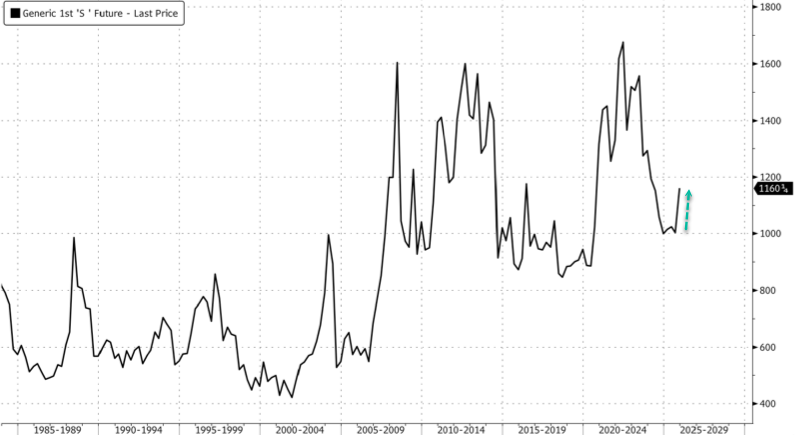
Chicago soybean futures were up more than 3% on Monday before easing in the overnight session.
The renewed demand may lift bean prices much higher.
Tyler Durden
Tue, 11/18/2025 – 21:20

No hay pruebas de que cada ataque a botes con supuestas drogas salve 25.000 vidas, como dice Trump
Por MELISSA GOLDIN
El presidente de Estados Unidos, Donald Trump, ha asegurado repetidamente que los ataques militares contra embarcaciones que supuestamente transportan drogas que su gobierno ha llevado a cabo durante más de dos meses tanto en el mar Caribe como en el océano Pacífico salvan las vidas de cientos de miles de personas en Estados Unidos.
Su mención más reciente de esas cifras fue el lunes, cuando respondía preguntas de periodistas tras anunciar una iniciativa que permitirá obtener entrevistas para visas con mayor rapidez a los extranjeros que viajen a Estados Unidos para la Copa Mundial de la FIFA el próximo año.
Pero los expertos dicen que esta es una interpretación sumamente simplista de la situación.
Este es un vistazo más detallado de los hechos.
TRUMP: “Por cada bote que hundimos, salvamos 25.000 vidas estadounidenses”.
LOS HECHOS: Las cifras para sustentar tal afirmación de Trump no cuadran, y, en ocasiones, ni siquiera existen. Por ejemplo, el número de personas que mueren cada año por sobredosis de drogas en Estados Unidos es mucho menor que la cantidad que Trump dice que se han salvado gracias a los ataques a lanchas que su gobierno ha llevado a cabo desde septiembre.
“La afirmación de que cada uno de los ataques del gobierno contra presuntos botes de narcotráfico salva 25.000 vidas es absurda”, indicó Carl Latkin, profesor de salud pública de la Universidad Johns Hopkins, quien estudia el consumo de sustancias. “La evidencia es similar a la de que la Luna está hecha de queso. Si observas con atención, notarás un parecido. No obstante, un análisis minucioso de esta afirmación indica que carece de toda credibilidad”.
Según los últimos datos preliminares de los Centros para el Control y la Prevención de Enfermedades de Estados Unidos (CDC, por sus siglas en inglés), se registraron aproximadamente 97.000 muertes por sobredosis de drogas en Estados Unidos durante el periodo de 12 meses que finalizó el 30 de junio. Esto representa una disminución del 14% con respecto a las 113.000 estimadas para el periodo de 12 meses previo.
Los datos finales de los CDC reportan 53.336 muertes por sobredosis en 2024 y 75.118 en 2023.
El ejército estadounidense ha atacado 21 embarcaciones en el mar Caribe y en el Pacífico Oriental desde que comenzaron los ataques el 2 de septiembre —el más reciente el 15 de noviembre—. Si se utilizan las cifras de Trump, esto significaría que los ataques han evitado 525.000 muertes por sobredosis de drogas en Estados Unidos —una cifra muy superior a la cantidad de muertes por sobredosis ocurridas en los últimos años—. Esto implicaría, esencialmente, que el gobierno salva más vidas de las que se habrían perdido sin dichos ataques.
Lori Ann Post, directora del Instituto de Salud Pública y Medicina de la Universidad Northwestern, explicó que “no hay forma empíricamente sólida de afirmar que un solo ataque ‘salva 25.000 vidas’”, incluso si la aseveración se interpreta de una manera más amplia para incluir la prevención de trastornos por consumo de sustancias y las consecuencias en cascada que provoca. Entre los problemas que señaló se encuentran la falta de datos verificables sobre la carga de los barcos o de modelos publicados que vinculen los ataques a las embarcaciones con cambios en el consumo de drogas, así como la capacidad de los mercados para adaptarse a pérdidas aisladas de suministro.
“Las cifras y los datos no lo avalan”, puntualizó Post, quien estudia las muertes por sobredosis de drogas y los factores económicos que impulsan la crisis de los opioides.
Latkin agregó que afirmar que una dosis letal de una droga se traduce automáticamente en una muerte es una “visión muy simplista”, ya que distintas personas tienen tolerancias diferentes.
Trump da como justificación de los ataques el argumento de que Estados Unidos se encuentra en un “conflicto armado” con los cárteles del narcotráfico, y afirma que los botes atacados su ejército son operados por organizaciones terroristas extranjeras que inundan las ciudades estadounidenses con drogas. Ni Trump ni su gobierno han confirmado públicamente la cantidad de drogas supuestamente destruidas en los ataques.
Anna Kelly, portavoz de la Casa Blanca, reiteró las cifras de Trump cuando se le pidió evidencia que respaldara sus afirmaciones sobre cuántas vidas se salvan. En un correo electrónico, escribió: “El presidente Trump tiene razón: cualquier bote que traiga veneno letal a nuestras costas tiene el potencial de matar a 25.000 estadounidenses o más. El presidente está dispuesto a utilizar todos los recursos del poder estadounidense para impedir que las drogas inunden nuestro país y para llevar a los responsables ante la justicia”.
Latkin señaló que esta estimación también ignora la realidad de que, incluso si el gobierno de Trump logra eliminar una fuente de drogas ilegales con sus ataques a barcos, otras seguirán existiendo. Comparó esto con la industria de la comida rápida, y explicó que eliminar un par de restaurantes no mejoraría significativamente la salud de los estadounidenses, ya que existen muchas otras fuentes donde los consumidores podrían obtener los mismos productos u otros similares.
“Es increíblemente ingenuo pensar que reducir la oferta en un lugar erradicará el problema, pues se trata de un negocio enorme”, subrayó.
Los opioides fueron responsables del 73,4% de las muertes por sobredosis de drogas en 2024 en Estados Unidos, según los CDC. Eso incluye un 65,1 % por fentanilo producido ilegalmente. Pero si bien los ataques contra embarcaciones se han centrado principalmente en lanchas en el mar Caribe, el fentanilo suele traficarse a Estados Unidos por tierra desde México, donde es producido con productos químicos importados de China e India.
Las tasas de mortalidad por sobredosis comenzaron a aumentar de forma constante en la década de 1990 debido a los analgésicos opioides, seguidas de oleadas de muertes causadas por otros opioides como la heroína y, más recientemente, el fentanilo ilícito. Nuevas cifras de los CDC muestran que el descenso que comenzó en 2023 ha continuado. Los expertos no están seguros de las razones de esta disminución, pero citan una combinación de posibles factores. Entre ellos se encuentra el fin de la pandemia de COVID-19, años de esfuerzos para aumentar la disponibilidad de naloxona —un fármaco que revierte la sobredosis— y los tratamientos contra la adicción, y cambios en las drogas mismas.

Incendio en el suroeste de Japón causa daños en 170 casas y obliga a evacuaciones
TOKIO (AP) — Cuadrillas de bomberos combatían la mañana del miércoles un incendio fuera de control que ha arrasado con un vecindario en el suroeste de Japón, donde más de 170 personas se han visto obligadas a evacuar.
Al menos 170 hogares han resultado dañados y un hombre de unos 70 años fue reportado como desaparecido, informó la Agencia de Manejo de Incendios y Desastres de Japón.
El incendio comenzó la noche del martes en medio de fuertes vientos cerca de un puerto pesquero en la ciudad de Oita y se extendió hacia un bosque. Oita se encuentra en la isla de Kyushu, en el sur del país.
Una residente comentó a la Agencia de Noticias Kyodo que huyó rápidamente sin poder llevar consigo muchas de sus pertenencias debido a que el fuego “se propagó en un abrir y cerrar de ojos”.
___
Esta historia fue traducida del inglés por un editor de AP con la ayuda de una herramienta de inteligencia artificial generativa.

Pennsylvania School District Using AI-Enabled Wi-Fi To Search Students For Firearms
Pennsylvania School District Using AI-Enabled Wi-Fi To Search Students For Firearms
Authored by Michael Clements via The Epoch Times (emphasis ours),
A Pennsylvania school district is using artificial intelligence to keep guns off its campuses. But civil liberties advocates have warned that the technology could lead to mass surveillance and violation of constitutional rights.
The Chartiers Valley School District in Allegheny County has implemented AI that harnesses the district’s Wi-Fi signals to determine whether people are carrying weapons as they enter the schools.
The technology, called Wi-AI, was developed by CurvePoint of Pittsburgh. CurvePoint grew out of AI research at Carnegie Mellon University.
According to the company, Wi-AI uses “spatial intelligence” to find weapons such as guns before they enter a school.
The AI system analyzes a space and detects where potential weapons are located by interpreting “how Wi-Fi signals reflect off people and objects.”
Once a possible weapon is found, security personnel, school administrators, or others can go to the location to determine whether there is actually a threat.
It is now in use at Chartiers Valley School District high school, middle school, and primary school campuses. CurvePoint CEO Skip Smith said that in a recent test, the system found a pistol hidden in a backpack. He said the technology has a 95 percent success rate, failing only 4 percent of its searches.
Smith said the Wi-AI does not carry the same privacy concerns of other security systems because it does not rely on facial recognition or biometric data.
“We don’t know it’s you,“ Smith told The Epoch Times. ”We have no biometric information about you. Our system just sees a big bag of salt water.”
Darren Mariano, president of the Chartiers Valley Board of School Directors, said the district is excited to be the first in the country to adopt the technology.
“The safety of our students and staff is always our top priority,” he said in a statement. “We’re thrilled to be the first district in the nation to implement this groundbreaking technology.”
But some say the technology should be approached with caution.
Jeremy Rovinsky is a constitutional law professor at Crestpoint University in Phoenix. He said the Constitution’s Fourth Amendment protections against unlawful search and seizure apply to public school students, although the standard is slightly different in a school setting.
Under the Fourth Amendment, a government official must have probable cause to believe that a crime is being committed before obtaining a search warrant.
However, in New Jersey v. T.L.O., the Supreme Court ruled that a school administrator needed to have only a “reasonable suspicion” that the search would turn up evidence of a crime.
In that case, a teacher reported that two students had been smoking in a girls restroom.
One of the 14-year-olds denied the allegation. An administrator searched the girl’s purse and found cigarettes, what appeared to be marijuana, paraphernalia for smoking marijuana, and evidence that she was selling pot to her classmates.
The student was found to be delinquent in juvenile court. She appealed the decision on the grounds that the search was illegal.
Reasonable Suspicion
The high court ruled that the administrator had a reasonable suspicion for the search based on the teacher’s report and that a search warrant was not required.
In a message to The Epoch Times, Rovinsky said the law also recognizes “administrative searches.” These are non-intrusive, general searches that are targeted to preventing a specific danger such as keeping guns out of school.
Still, Rovinsky wrote, new technology should be introduced carefully to ensure that it does not become a constitutional problem.
“While school authorities have greater latitude to search students and their possessions than authorities outside of school, the scope of what counts as reasonable imposes limits on school searches,” Rovinsky wrote.
Seattle-based lawyer Evan Oshan said the technology could devolve into allowing warrantless searches of every person to enter the campus based on no evidence or reasonable suspicion.
If not checked, according to Oshan, the technology could be implemented in all public spaces, creating an even larger surveillance state.
“We’re normalizing constant surveillance of our children under the guise of safety,” Oshan wrote in a message to The Epoch Times. “This dragnet approach sweeps up everyone, guilty and innocent alike, which is precisely what the Fourth Amendment was designed to prevent.”
Smith agreed that the technology will grow. However, he said, growth will provide more benefits than risks.
He said the technology can be used to monitor the elderly or those with dementia, or to provide security and marketing data by tracking for business.
“Our view of the future is we’re offering inferences on how spaces are being used … but without capturing, you know, private information on who the individual [user] is,” he said.
He acknowledged that AI is a relatively new technology and that some glitches may arise. But he said that as the Wi-AI learns, the company will prioritize privacy and security.
Oshan’s view is not quite as rosy.
“This technology creates a slippery slope,“ he said. ”Today it’s Wi-Fi signals searching for weapons in schools. Tomorrow it’s on public transportation, in shopping malls, at government buildings. Where does it end? The Constitution provides the guardrails, and we ignore them at our peril.”
Tyler Durden
Tue, 11/18/2025 – 20:55