Category: News
Funcionario británico advierte a Rusia que responderán a incursiones tras avistar barco espía
Associated Press
LONDRES (AP) — Reino Unido advirtió el miércoles a Rusia que estaba preparado para enfrentar cualquier incursión en su territorio después de que se detectara al barco espía Yantar en el límite de las aguas territoriales británicas al norte de Escocia.
El secretario británico de Defensa, John Healey, afirmó que el buque ruso apuntó con láseres a los pilotos de aviones de vigilancia que monitoreaban su actividad.
“Mi mensaje para Rusia y para Putin es este: Os vemos. Sabemos lo que están haciendo”, afirmó Healey en una reunión informativa en Londres. “Y si el Yantar viaja hacia el sur esta semana, estamos preparados”.
Funcionarios británicos dijeron que el Yantar forma parte de la Armada del Kremlin y está diseñado para realizar labores vigilancia en tiempos de paz y de sabotaje durante tiempos de guerra. Por este motivo, Londres y sus aliados monitorean su actividad y trabajan para impedir sus operaciones cada vez que se acerca a aguas territoriales británicas.
“Forma parte de una flota rusa diseñada para poner en riesgo nuestra infraestructura submarina y la de nuestros aliados”, apuntó Healey, en referencia a los ataques a oleoductos y cables submarinos registrados en el mar Báltico a principios de año.
Esta no es la primera vez que el Yantar pone a prueba las defensas británicas, según Healey. Después de una advertencia el año pasado, la embarcación dejó las aguas territoriales d Reino Unido rumbo al Mediterráneo. Cuando en enero navegó por el canal de la Mancha, fue seguido por la HMS Somerset, una fragata que patrulla en las aguas que rodean al país.
___
Esta historia fue traducida del inglés por un editor de AP con la ayuda de una herramienta de inteligencia artificial generativa.
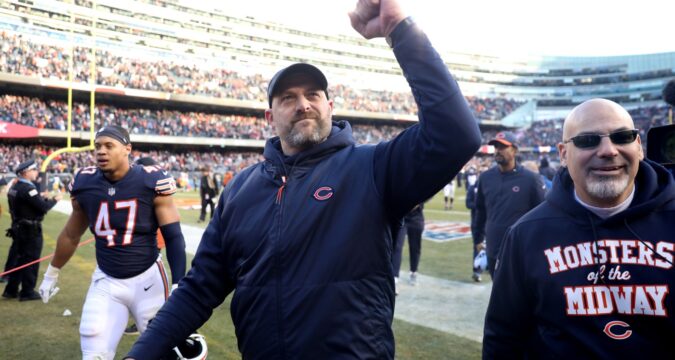
Chicago Bears Q&A: How is this season different from Matt Nagy’s ‘fluky’ NFC North title in 2018?
The first-place Chicago Bears — that might take some getting used to — will seek their eighth win in nine games Sunday when the Pittsburgh Steelers, with or without Aaron Rodgers, visit Soldier Field.
Is all this early success in coach Ben Johnson’s first season sustainable? Remember, the Bears won a division title seven years ago in another first-time head coach’s debut season. Brad Biggs’ weekly Bears mailbag begins there.
How is this season different than Matt Nagy’s fluky first season? Tell us fans this is different and why. — Dhana M., Peoria
I don’t know that the Bears’ success in 2018 was a fluke because that implies there was an element of luck or pure happenstance to it. That team had a dominant defense led by coordinator Vic Fangio. It was the best unit the Bears have fielded since the height of the Lovie Smith era.
Consider their rankings in key defensive metrics:
Scoring: 1st (17.7 ppg)
Total defense: 3rd (299.7 ypg)
Rushing defense: 1st (80.1 ypg)
Passing defense: 7th (219.7 ypg)
Opponent passer rating: 1st (72.9)
Third down: 4th (34.3%)
Red zone: T-5th (50%)
Takeaways: 1st (36)
The team’s success that season wasn’t fueled by luck. It was driven by a great defense that held 10 of 16 opponents to 17 or fewer points. Fangio departed to become the Denver Broncos head coach after the season ended with the “double doink” playoff loss to the Philadelphia Eagles.
The issue — and I think what you’re really getting at here — is how can the success the team is enjoying under Ben Johnson (7-3 and first place in the NFC North entering Week 12) be sustainable when the organization was unable to build on what the Bears did in 2018?
The Bears really thought they had something cooking when the 2019 season began. It was the 100th year of the franchise. There was talk of a Super Bowl run. The NFL put the Bears and Green Bay Packers in the Thursday prime-time slot to open the season, and Nagy’s offense, with quarterback Mitch Trubisky starting Year 3, fell flat in a 10-3 loss. It was a sign of offensive struggles to come.
Meanwhile, the defense didn’t maintain its lofty status with Fangio out of the picture. Nagy went 8-8 in Year 2 and followed that with another 8-8 season in which the Bears snagged a wild-card spot. It was all downhill from there.
What’s the difference this time around? Well, there are a lot of them. The Bears don’t have a singularly dominant unit. Quarterback Caleb Williams will be going into Year 3 in 2026 and has had a better start to his career than Trubisky. There’s better infrastructure around the position than there was when Nagy was getting started. It’s unlikely defensive coordinator Dennis Allen will be departing anytime soon, so Johnson shouldn’t have to handle that kind of staff turnover.
This is an interesting topic worth exploring down the road because people will want to know if the Bears are putting together the kind of season that can be a launching pad to further success. The 2010 Bears couldn’t build off their success after coming within one game of the Super Bowl, and the 2018 Bears missed a golden opportunity. The franchise last had consecutive winning seasons in 2005 and 2006.
A ton of football remains to be played — seven games. So we’ll have a much better idea of who the 2025 Bears are in two months, and that in theory will make it easier to project into the future. Johnson has put down a good foundation to this point, and the remainder of the season will be very interesting. Let’s see how it plays out before we start looking too far ahead.
Monday’s article referenced the Bears’ strength of victory and you mentioned that Ben Johnson didn’t select the schedule. Absolutely true. Please make sure you advocate that the Bears had the second-toughest schedule coming into the season. People don’t remember that. You play who is in front of you. I’m tired of hearing people ask who they beat. — Rob M.
You make a valid point. The Bears’ 2025 opponents had a .571 winning percentage in 2024, tied with the Detroit Lions and just behind the New York Giants (.574). As you know, the landscape can change pretty quickly in the NFL, and the slate of games the Bears have played to this point certainly doesn’t present as one of the more difficult schedules in the league. Strength of schedule based on the previous season can be used as a reference point during the offseason, but once things get rolling, that changes.
Entering Week 12, 19 teams have at least five wins. Of those 19, the Bears’ strength of victory (the winning percentage of the opponents they’ve defeated) is the lowest at .285. That’s because they count wins over the Las Vegas Raiders (2-8), New Orleans Saints (2-8), Cincinnati Bengals (3-7) and Giants (2-9), among others.
The next-lowest is the Kansas City Chiefs at .346. There are other teams with good records and low strengths of victory:
Broncos (9-2): .357
Patriots (9-2): .359
Colts (8-2): .361
Packers (6-3-1): .371
But as you can see, there’s a pretty good gap between those teams and the Bears. I’ve always said you can look at the list of quarterbacks a team has faced to get a decent handle on how challenging the schedule has been. That list hasn’t been overwhelming this season.
No one is taking anything away from the Bears’ 7-3 record and position atop the NFC North. They’ve handled adversity with some key injuries to their defense. They’ve adjusted quickly to new schemes on both sides of the ball and shown time and again they have the moxie to close out close games in the final minutes. You can only beat the teams on your schedule, and that’s what the Bears have done since an 0-2 start.
What is your assessment of Ben Johnson’s play calling from Sunday’s game against the Vikings? I found at least a handful of calls utterly confusing and detrimental. For example, end of the first half, third-and-1, and he didn’t run it. That failed conversion allowed Minnesota another possession and eliminated the opportunity to score before halftime. That’s just one example off the top of my head. I know we all praise Ben Johnson for his creativity — but sometimes I wonder if he misses the obvious and boring calls in an attempt to out-think the defensive coordinator. — Brian G.
Johnson is pretty transparent postgame and the day after games when he talks about calls he’d like to have back. This week was no different. I can’t imagine the play you’re referring to is one of them.
It was third-and-1 and the Bears were on their 29-yard line with 25 seconds remaining in the half. The offense needed a chunk play if it was going to have a chance for points before halftime. A deep pass to Rome Odunze didn’t connect, and the Bears punted. Minnesota took over on its 39 with 10 seconds remaining. Did the Vikings have a chance to score? Sure. But the odds were extremely low and their lateral play went nowhere.
The Bears are fourth in the league in total offense at 373.8 yards per game. They’re No. 2 in rushing. They’re eighth in scoring at 25.8 points per game and tied for second with only six turnovers. A ton is going right for this offense, and more times than not, Johnson is making a good call.
C.J. Gardner-Johnson’s impact vs. Kyler Gordon’s availability. Who gets more snaps? — @the1calledcj
Bears nickel back C.J. Gardner-Johnson (35) celebrates with safety Jaquan Brisker (9) after sacking Giants quarterback Jaxson Dart on Nov. 9, 2025, at Soldier Field. (Eileen T. Meslar/Chicago Tribune)
That’s something the Bears will have to sort through in the near future, provided Gordon returns healthy to the 53-man roster. It’s possible they could open the 21-day return-to-practice window for Gordon on Wednesday. Ben Johnson has said all along the team expected Gordon’s stay on injured reserve to be on the shorter side, and he now has missed the minimum four games.
For the sake of discussion, let’s say Gordon is back on the practice field this week. In that scenario, how much practice time is required before the team feels comfortable restoring him to the roster and using him in a game? He has missed an awful lot of time (eight of 10 games) dating back to the first week of August, when he was initially injured. My hunch is the team would want to see him ramped up for two weeks in practice before considering using him in a game, but every player and every injury situation is unique.
When Gordon is in the mix, then the question becomes appropriate: What does defensive coordinator Dennis Allen do? I would expect Gordon to be the starting nickel cornerback. The Bears made him the league’s highest-paid player at that position in the offseason. It’s not like Gardner-Johnson is going to Wally Pipp him.
There are a variety of ways Allen could incorporate Gardner-Johnson when Gordon is back. The first that comes to mind is the dime package. The Bears have used dime (six defensive backs) for 48 snaps this season, 8.2%. That ranks 19th in the league. Allen could expand on the dime package versus certain opponents. It’s also possible he gets creative and maybe uses Gardner-Johnson as a safety in certain situations. Just spitballing. Could he remove Jaquan Brisker in certain looks and use Gardner-Johnson?
“There’s probably a lot of things we could do,” secondary coach Al Harris said last week when I asked how things could shake out. “But that’s just a bridge we’ve got to cross when we get there.”
Assuming the Bears give Darnell Wright his fifth-year option or an extension, what do you see as the plan for their other players in that draft class and eligible for a second contract? — @greggisp
Based on how he’s playing, the likeliest scenario for Wright is the team exercising the fifth-year option in his contract and then looking to hammer out a multiyear extension that could be finalized in the spring or over the summer. There won’t be any rush to strike a new deal, but the team can save a little money by doing a deal before the season starts, and Wright can lock up security.
You’re probably looking at a big deal too. It’s premature to speculate on numbers with seven games remaining, but just know there are six right tackles with an average annual salary of $20 million or more.
Wright’s contract situation will be the biggest piece of business for general manager Ryan Poles. After that, I’m not sure there is another player the team will want to pay. The remainder of the season could drive a decision one way or the other with a couple of players.
Bears defensive tackle Gervon Dexter Sr. (99) celebrates after he and defensive end Montez Sweat (98) sacked Giants quarterback Jaxson Dart on Nov. 9, 2025, at Soldier Field. (Eileen T. Meslar/Chicago Tribune)
Defensive tackle Gervon Dexter Sr. has four sacks. I’m curious how the team views him. His playing time has dipped a little recently. In the last three games, he was on the field between 51.5% and 57.5% of the snaps. Through the first seven games, that figure was hovering around 66%, but the Bears have been using nose tackle Andrew Billings and working in Grady Jarrett more after he returned from his right knee injury.
Dexter is a big guy with a ton of talent. He’s sort of a tweener. He’s not an ideal three-technique and he’s not exactly what you’re seeking in a nose tackle. But he can play both and he’s strong. Suffice to say, Dexter has a lot to play for in the remaining seven games.
Cornerback Tyrique Stevenson has been better this season, but has his play risen to the level that the team would want to explore extension discussions? The Bears could bring back Stevenson next year and have him play in a contract season before making a decision.
Four picks from the 2022 draft will be coming out of contract: Safety Jaquan Brisker, left tackle Braxton Jones, defensive end Dominique Robinson and safety Elijah Hicks. Aside from Wright, five players from the 2023 draft will have one year remaining and be eligible for an extension: Dexter, Stevenson, running back Roschon Johnson, linebacker Noah Sewell and cornerback Terell Smith.
Given Brisker’s history of concussions, my guess is the Bears will look to rebuild at safety and consider re-signing Kevin Byard III, who leads the NFL with five interceptions. Maybe they like the idea of Robinson and/or Hicks returning on a modest one-year contract. As far as the other 2023 picks, they’ll probably be back in a position where they have to compete for a spot in 2026 in the final year of their contracts.
I don’t know what the numbers say and frankly don’t care about the rankings of the Bears special teams. I know they periodically make good plays like the Devin Duvernay return at Minnesota but mostly seem average at best. It seems like they return kickoffs to the 26- or 27-yard line and give up returns between the 35 and 40. The punt teams aren’t any better. Am I wrong? Is Richard Hightower doing a good job? Did Ben Johnson bring him back because he thinks he’s good or was there just no one out there that was better? — Dave K., Albuquerque, N.M.
The Bears had one disastrous game on special teams this season in Cincinnati, and they overcame a series of major errors — including a kickoff return for a touchdown and a blocked field goal — to win 47-42. They’ve also won two games largely because of special teams at the end: the Week 4 game in Las Vegas with Josh Blackwell’s blocked field goal and Sunday’s win in Minnesota when Duvernay’s 56-yard kickoff return set up Cairo Santos’ 48-yard field goal on the final play.
What you’re overlooking is that Hightower set up that final return by showing the Vikings one look — and Blackwell nearly broke a kickoff return all the way — and then giving a different look at the end with Duvernay. There’s nuanced strategy that goes into this.
The Bears are tied for ninth in the league with an average starting field position of the 30.9-yard line on kickoffs. They’re 23rd in opponents’ starting field position (31.3), a figure that would be much better if not for the touchdown by the Bengals.
Punt coverage hasn’t been great, and the Vikings hit the Bears for a big one Sunday. Kickoff coverage needs to be tightened up, but it was good this past week and Santos executed some really good kicks that resulted in an average starting point of the 23-yard line for the Vikings on five kickoffs.
We can find a play or two every week on special teams that needs to be better. That’s the nature of that phase. No different than offense and defense. But this unit has come up big in some big moments, and Hightower and his players have responded since Cincinnati.
Hightower gave Johnson one advantage when he retained him in that he was familiar with players on the roster. The group has evolved a little bit. If we’re going to discuss the shortcomings this season — and there have been some — we need to dive into what has gone right as well.
How would you assess the job Tory Taylor has done so far this season? — Mike F., Chicago
Bears holder Tory Taylor jumps to celebrate a game-winning field goal by kicker Jake Moody to defeat the Commanders on Oct. 13, 2025, at Northwest Stadium in Landover, Md. (Brian Cassella/Chicago Tribune)
We have a smaller sample size to work with this season, and that’s a very good thing, right? Taylor has been good — and he was really good as a holder, handling the switch to Jake Moody when Cairo Santos was sidelined and making that situation seamless. His gross average of 48.1 yards is 12th in the league, and the net average of 39.5 ranks 22nd.
The latter figure took a hit in the fourth quarter Sunday when Vikings rookie Myles Price had a 43-yard return, the longest the Bears have allowed this season. While Taylor has given up some return yardage in a few instances this season when he outkicked his coverage, that wasn’t the case on this play. So a punter’s net average is closely tied to the performance of the coverage team.
While Taylor has only 11 punts inside the 20-yard line, his 35 total punts rank near the bottom of the league, and Ben Johnson isn’t turning to special teams a whole lot when the offense is around midfield. I think Taylor is just scratching the surface too. He has a wealth of talent, a variety of kicks and the leg strength to absolutely crush the ball in the specific instances when special teams coordinator Richard Hightower wants that. If the Bears cover well the rest of the season, that net average should climb back above 40.
Looking ahead, can you compare the amount of say this coaching staff will have in free agency and the draft with how much of a say the previous coaching staff had? — @0ccamsrazorburn
Related Articles
Aaron Rodgers has a broken left wrist, but the Pittsburgh Steelers QB still might play vs. Chicago Bears
Are the Chicago Bears legitimate contenders to win the NFC North? 5 pressing questions after Week 11.
Jake Moody joins the Washington Commanders off the Chicago Bears’ practice squad
What we learned from the Chicago Bears, including why Ben Johnson isn’t talking about the playoffs
New York Jets bench struggling QB Justin Fields for Tyrod Taylor
Ben Johnson’s opinion carries a ton of weight in the building. He’s the top-paid person in the football operation, and he has justified his hiring with how the team has performed to this point. It’s fair to imagine he has more sway in personnel decisions than his predecessor, Matt Eberflus, did. Any major decision is going to run through him. But that’s natural. General manager Ryan Poles doesn’t want to saddle his coach — whether it’s Johnson, Eberflus or whoever — with a player he doesn’t deem as a fit.
The Bears don’t want to get into a situation, though, where the coaching staff is dictating every personnel move. There have been plenty of examples around the league in which coaches gained too much control in those situations (based on a lot of success) and eventually things unraveled.
Poles has a scouting staff that spends the entire year evaluating the college and pro sides. The best teams lean on their scouting departments to do their job before it reaches the point of making a decision. The scouts vet the makeup of players and do the exhaustive legwork required to give a complete picture. Johnson and his coaches simply don’t have the time to do that. They will get involved in that aspect of the process after the season ends. They will meet draft prospects and provide valuable input. But the scouting staff has to do its job first.
The short answer is, yes, I think Johnson has more say than Eberflus did and maybe more than Matt Nagy had before him. That’s probably a good thing because he has a unique way of viewing players, their strengths and how they fit the vision. But the Bears still have to lean into the work their scouts do.
https://www.chicagotribune.com/2025/11/19/chicago-bears-mailbag-ben-johnson-matt-nagy/
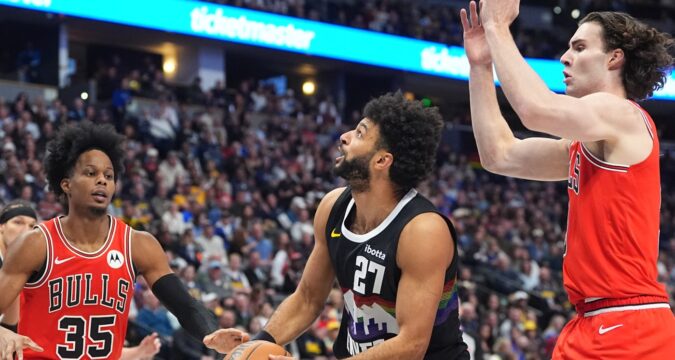
Why the Chicago Bulls can’t stop opponents from getting to the rim — and it starts at the 3-point arc
Billy Donovan couldn’t believe his eyes.
It was too easy. Midway through the second quarter of the Chicago Bulls’ double-overtime loss Sunday in Utah, Jazz guard Isaiah Collier curled over a screen at the top of the key. Bulls forward Julian Phillips had ducked under the initial screen, emerging on the other side already low in his defensive stance.
What came next wasn’t fancy or complex.
Guard Keyonte George passed the ball to Collier, then moved across the arc to accept a dribble hand-off. Phillips picked him up on the switch. George received the ball, planted his right foot and torched past Phillips with a single dribble. He needed only one more touch before he entered the paint unencumbered, waltzing past three scrambling defenders who were a step too late in helping before he rolled the basket through the rim.
Donovan tipped his head to the sky, jaw clenched in frustration tinged with disgust.
“We just can’t afford that,” he said after the loss.
These simple errors define a Bulls defense that hasn’t held its water in the early weeks of the NBA season. Despite outperforming expectations with a 7-6 record, the Bulls have been bleeding points in both wins and losses as they rank 19th in the league in defensive rating (115.9).
And win or lose, the defensive shortcomings always point back to the same source: The Bulls can’t stop their opponents from getting to the rim.
The Bulls give up the league’s fifth-most points in the paint (54.9 per game). A glaring 77% of those points were scored within the restricted area, one of the most valuable scoring targets on the court.
For the top scorers in the league, the Bulls defense offers the relative resistance at the rim of an off-brand piece of tissue paper. Opposing teams make a league-high 21.1 shots per game in the restricted area. The most egregious example occurred in a Nov. 7 loss to the Milwaukee Bucks in which Giannis Antetokounmpo took 21 shots in the restricted area and made 14.
Bucks forward Giannis Antetokounmpo shoots against Bulls forward Matas Buzelis on Nov. 7, 2025, at Fiserv Forum in Milwaukee. (Patrick McDermott/Getty Images)
Bulls opponents are shooting 66.2% in the restricted area, far from the highest figure in the league. (For reference, the Sacramento Kings allow opponents to shoot a league-high 74.6% inside the restricted area.) But due to their high volume of opportunities, opponents still profit at the rim against the Bulls more than any other team.
Early in the season, Donovan blamed this lack of rim protection on a lack of physicality from the Bulls, who struggled to contest players on their path to the basket. He hounded players to force their bodies into plays, inciting a quiet transformation as the Bulls have drawn nine charges in their first 13 games.
But last-minute rotations serve only as a stopgap. The source of the problem in the paint is rooted where most drives to the rim begin — the 3-point arc.
“It’s really, really, really hard to bring help on straight blow-bys,” Donovan said. “If a guy catches it and just goes right by the defender, it’s nearly impossible to get over there quick enough. You’ve got to be able to handle at least one dribble effectively.”
Donovan doesn’t pretend this is easy. He believes closing out to be one of the hardest aspects of defense, matched only by recovery in transition. NBA players are too quick, intelligent and shifty on the perimeter. It takes significant preparation, discipline and communication to effectively knock guards off their trajectory toward the basket.
And sometimes a blow-by exists as the lesser of two evils. If the Bulls are trying to run a sharpshooter off the 3-point arc, they’re willing to accept the sacrifice of giving that player a path to the rim. Donovan can live with that type of acquiescence.
But those instances are the exception, not the norm. The Bulls often give up blow-by drives after simple guard-to-guard passes and dribble hand-offs above the break — the exact scenario in which George flew past Phillips at the top of the key in Utah.
These are uncomplicated plays. Sometimes they trigger a perimeter switch. More often they simply ask a Bulls defender to cut his feet and take an appropriate first step to force a driving guard to take a parabolic path to the rim rather than a straight line.
Donovan pointed to this weakness again after the loss to the Jazz, in which the Bulls were blown by 22 times as Utah scored nine baskets in the restricted area.
“There’s got to be a little bit more resistance on the ball,” Donovan said.
Guard Josh Giddey draws the most ire — and opponent attention — for his individual defense. Giddey is the first to admit his weaknesses. Although he can utilize his length as a 6-foot-7 jumbo guard, Giddey’s choppy footwork on the perimeter often leaves him stranded as a liability more than an asset.
Bulls guard Josh Giddey defends Hawks guard Dyson Daniels on Oct. 27, 2025, at the United Center. (AP Photo/David Banks)
Teams hunt Giddey as a result, creating schemes that force him to switch onto their best player through screens and off-ball shifts. And opponents know one of the best avenues to the rim against the Bulls is paved by getting Giddey to fly out to the perimeter in an overeager closeout.
For a team that already struggles defensively, this glaring weakness has been a sore spot throughout Giddey’s short tenure with the team. But although Giddey often produces the most eye-popping errors at the perimeter, Donovan doesn’t believe the Bulls can lay the blame on him.
Related Articles
Chicago basketball report: Bulls add to their Ring of Honor — and an Illinois freshman is ‘wired different’
3 takeaways as Chicago Bulls snap their 5-game losing streak with an improbable win they needed ‘super bad’
Coby White looked like his old self in his return to the court. Is that enough to save the Chicago Bulls?
Coby White leads the Chicago Bulls off the bench, but the Utah Jazz win 150-147 in 2 OT
Chicago Bulls embrace a pragmatic identity after skid: ‘We’re not talented enough not to play desperate’
“It really comes down to the personal pride of one-on-one guarding,” Donovan said. “He’s tried to do that. But to be honest with you, for us defensively — it’s not just Josh; I’m not putting it all on Josh — our team, we’ve got to be much, much better at containing the basketball.”
For forward Isaac Okoro, the most stalwart defender on the Bulls roster, shoring up this weakness comes down to a basic basketball aphorism: KYP, or Know Your Personnel.
The Bulls show their hand too early and too often in closing out to driving threats, rushing their approach toward their assignment and giving up a lane to the basket as a result. This only worsens once an initial blow-by occurs — defenders spring into scramble mode, impatiently attempting to close off any new opportunities.
“We’re closing out to guys that want to drive, and that opens up the paint and that causes other drives and other closeouts and sprays and open 3s,” Okoro said. “We’ve got to know who we’re closing out to and when we’re just containing the drive.”
It’s a simple theory to explain. The application is more complicated — and leaves almost zero margin for error. But the Bulls don’t have a choice.
Without shutting off this deluge of points at the rim, their defense will remain a sieve through which points — and losses — will continue to flow.
https://www.chicagotribune.com/2025/11/19/chicago-bulls-defense-restricted-area/

Evanston pastors arrested, charged with misdemeanors at Broadview ICE protest
Two pastors of Evanston churches were among 21 arrested on Nov. 14 outside of U.S. Immigration and Customs Enforcement’s Broadview processing facility. One said he was beaten, bruised and had his hands zip-tied so tightly they went numb. They have a Dec. 3 court date where they will face three misdemeanor charges.
Rev. Michael Woolf, of the Lake Street Church of Evanston, and Rev. Luke Harris-Ferree, of Grace Lutheran Church, were charged with obstruction, disorderly conduct and for walking on a highway, according to a news release from the Cook County Sheriff’s Office. Woolf told Pioneer Press that he will continue to protest for what he believes in.
“I’m willing to take that risk because of the gospel,” Woolf said. “For me, I have to act like it is Jesus who is locked up there.”
In a statement, the Cook County sheriff’s office said that around 50 protesters left a designated protest area outside of the processing center and assembled on a blocked-off road on Nov. 14. The bulk of arrestees face charges of obstruction, disorderly conduct and pedestrian walking on highway, per the sheriff’s office.
Broadview police said two of their officers were injured during the skirmish and transported to Loyola University Medical Center in Maywood for treatment. The officers have been released, but are now sidelined due to their injuries. One Illinois State Police trooper and a Cook County sheriff’s deputy also reported injuries.
Woolf said while he is praying for the injured law enforcement officers, and that he doesn’t want for anyone to get hurt, he suspects that the officers might have been hurt while executing inappropriate crowd control tactics.
“I don’t know anybody who would say that was professional deployment,” Woolf said, when he saw officers deploy billy clubs at the scene.
In Woolf’s case, he said he was outside of the Broadview facility to pray for those who are in custody.
“We want the facility to be closed because we know that it’s torture,” Woolf said. Throughout federal immigration authorities’ Operation Midway Blitz, immigrant supporters have accused ICE of violating its own guidelines, which say the facility shouldn’t hold people for more than 12 hours.
The immediate area outside of the facility in Broadview has become a focal point for protests against the Trump administration’s Midway Blitz operation. Though the administration has repeatedly said it is detaining violent offenders who are the “worst of the worst,” an analysis of over 600 detainees showed less than 3% of them had a criminal record. None had any conviction for murder or rape, per previous reporting.
A Chicago Tribune investigation found that people have been held under custody at the facility for up to four days, despite a lack of beds, showers or access to private bathrooms.
Rev. Michael Woolf of Lake Street Church in Evanston was arrested and charged with misdemeanors at an anti-ICE protest in Broadview on Nov. 14, 2025. Woolf is seen here marching towards Great Lakes Naval Station during a peaceful protest on Sept. 20, 2025. (Dominic Di Palermo/Chicago Tribune)
Upon arrival at the Broadview facility, Woolf said he was immediately met with force from Broadview police officers, Cook County sheriffs and Illinois State Police officers.
“We were completely peacefully assembled,” he said. “I told them (local officers) that they abduct children, and that they always have a choice on whether they want to protect that or they want to find another way.”
What happened next happened in quick succession, Woolf said. He was readjusting a drawstring backpack, which contained a water bottle and a protein shake, on his back when a commanding officer told nearby agents, “he’s going,” and reached for his arm that was reaching to his backpack.
According to video footage found on social media, Woolf was slammed to the ground by four officers. Pressed against the ground, agents zip-tied his wrists so tight that his hands went numb, he said.
“They also choked me with my pectoral cross too,” Woolf said. “I don’t know of a more meaningful image and more meaningful metaphor, really, of what’s going on there.”
When he tried to get a Broadview officer to loosen the zip-tie, Woolf said the officer told him, “no one wants to hear you talk” and to “shut the **** up.”
Lutheran Grace Church Pastor Luke Harris is facing misdemeanor charges after protesting outside of U.S. Customs and Enforcement’s processing facility in Broadview on Nov. 14, 2025. Harris is pictured at a May Day rally organized by Indivisible Evanston on May 1, 2025 at Fountain Square. (Richard Requena/Pioneer Press)
Harris-Ferree declined to respond to a request for comment on his arrest and treatment.
Woolf said he has spoken with Harris-Ferree since Nov. 14, but declined to go into detail regarding what they spoke about.
When asked if he knew if Harris-Ferree was injured, Woolf replied, “I know that it’s impossible to go through what we went through and not have bruises all over your body.”
Woolf said his faith motivates him to return to Broadview. “People of faith and faith leaders have always been able to tease out the difference between what is moral and what is legal,” he said.
“There are many things that are legal that are immoral and wrong. Broadview is one thing that I suppose is legal somehow in this country but it is immoral and it is wrong at the same time.”
“I think faith leaders have an obligation to tease out the difference between the two, and sometimes that comes with risk… it’s a moral and spiritual emergency, and I have to act like Jesus is locked up in Broadview, and that means taking some risks,” Woolf said.
In Broadview on Monday, Mayor Katrina Thompson signed a declaration of civil emergency after the village and its elected officials were the subject of bomb and death threats, according to the Chicago Tribune.
“I will not allow threats of violence or intimidation to disrupt the essential function of our government, and I will not allow other elected officials, village hall staff or residents to be placed in harm’s way,” Thompson said in a prepared statement after the Nov. 14 altercation.

Her Rich Goodwill account is TikTok famous for the stuff she finds in Hinsdale’s trash
Claudia von Thrift — which is not her real name, but we’ll get to that — wants to make something clear. She is not one of those don’t-buy-anything-this-Christmas people. She is not looking to take an activist stance against conspicuous consumption. “I am as bougie as they come,” she said, reaching into her utensil drawer and pulling out a very expensive silver knife. She owns several of these, she said. She does buy lavish things. She will not apologize for spending extra money on anything she won’t need to replace.
She went into a closet.
She emerged with a plaid winter trench coat from Burberry, the kind that would cost the month’s rent for a very nice apartment. A couple of decades ago, when Claudia von Thrift was in high school in Glen Ellyn, she wore this coat all the time. Her family had serious money. She drove their BMW because her father wouldn’t let her drive one of his Porsches. She is bluntly disarming about her background. Her family was extremely wealthy, and for a while, Christmas — she waves her hands above her, as if conjuring a rain of a palatial, old-world opulence — meant tens of thousands of dollars of presents.
Her eyes go wide as she says this; she’s not exaggerating.
All of this is important to know if you’re going to understand why Claudia von Mallinckrodt, 35, a pretty well-off tech sales professional and Hinsdale resident with two kids and a husband who works in private equity, transformed this year into Claudia von Thrift, a popular influencer with almost one million followers and a compelling, thoughtful and even shocking purpose: She wants to show you what her rich neighbors throw out.
She wants to show you the original paintings they leave in the trash, the new children’s bikes they set on the curb for anyone to take, the perfectly clean Ralph Lauren blankets, the high-end strollers, the air fryers, the Pottery Barn rugs, the West Elm home furnishings, the Crate & Barrel loungers, the Vineyard Wine sweaters. One morning at her house, she showed me a $400 artificial Christmas tree from Target she had pulled off a curb the day before. It was still in its box. Beside it were plastic tubs of garland.
Her videos, which she posts on Instagram and TikTok as The Rich Goodwill, are not shaming or accusatory. She doesn’t zoom in on enormous homes themselves. She focuses on their trash and steers away from larger points about sustainable living and unchecked consumerism and the vast divide in social classes around Chicago. But if your algorithm lands on her videos with any regularity, it’s hard not to feel those things.
She hunts around the western suburbs whenever she finds time. She leaps out of her car and inspects anything by the side of the road that appears promising. If it seems almost new — she tends not to restore or refurbish anything — she loads it into her SUV, then posts a video online and tells her followers: If you want this, DM me. Then she just gives it to them. She never charges them. She’s even shipped things on her own dime.
She calls it “rehoming.”
Her mother, she says, has bugged her: “She gets ticked off — ‘You’re giving away things and you could resell them online for $100 or more.’ But number one, I don’t need the money, and number two, I tell her, ‘You don’t understand Mom, bear with me.’ When I started showing her checks I was getting from TikTok, she said, ‘OK, I get it.’” Since spring, Claudia von Thrift has made more than $20,000 from TikTok alone.
She says she is making a point about buying less and that she doesn’t want your stuff in a landfill, contributing to environmental collapse — she’s just not going to say it outright.
The roots of all this, after all, are personal — almost superhero-origin-like in their drama.
“My family had a number of tragedies, all at once,” she explains. Her parents got divorced and her father lost his company during the mortgage implosion of 2008, then more money when other businesses went south. “You think the worst is over, until my dad’s house burned down.” According to von Mallinckrodt, there was no insurance bailout. She was at Pepperdine University in Malibu when her mother called: The house was gone, they’d lost almost everything, including the dogs. The family went on food stamps.
“I remember going into a community center to get meals and my sister recognized people, so we’re walking through with our heads down. We were not able to buy food, yet at the same time, I never wanted people to know we had no money. So about then, I started to spend a lot of my time trying to find nice things that cost way less. That tends to make you notice just how nice some secondhand things actually are. Even if I did buy new, I was making sure it was like 80% off. I was trying to cover up my shame.”
By the time she and her husband moved to Hinsdale a couple of years ago, she was astonished at the prosperity by the side of its roads, among recycling bins and leaf bags. Claudia von Mallinckrodt doesn’t say this in a self-aggrandizing way. She’s not self-righteous. She knows she was comfortable once, temporarily less comfortable, and now comfortable again. She says it because she wonders if her neighbors know how cavalier they can be with what they own. “That experience made me notice how much beauty and usefulness can still exist in things others overlook,” she says.
But mostly, she says it because she can’t believe her luck.
Claudia von Mallinckrodt collects an armchair left out with the trash Sunday, Nov. 16, 2025, in Hinsdale. Under the name Claudia von Thrift, the tech worker runs a social media account called The Rich Goodwill where she documents things people leave at the curb and offers them to her followers. (Brian Cassella/Chicago Tribune)
Before we went curb shopping, we sat beneath a $700 West Elm chandelier she found and kept for herself. In the next room was a large painting someone had left out, its price tag ($2,100) still attached. Beside it were a trio of thin, decorated Christmas trees she found. Upstairs in the kids’ room, an elegant velvet rocking chair — another find. Mondays are trash days, so she goes out every Sunday. She always finds something.
She’s often told to hunt on the North Shore, in Lake Forest and Winnetka and Wilmette, but she’s fine in Hinsdale, which often ranks among the top 10 wealthiest suburbs in the nation, ahead of the North Shore. Before I can even ask, she answers the obvious:
“I don’t really know why people leave stuff like this on their curbs. I don’t, not really. People read so many different things into this. It’s very debatable. Are people guarding their stuff instead of taking the time to donate it? I would bet eight out of 10 times, they’re hoping for someone like me to come along and just take it. But what if it isn’t picked up, right? I do see things marked as trash, with a $4 trash sticker attached (for oversized trash items). I meet homeowners who say, ‘You saved me from buying a sticker.’ Are people so rich that they don’t take time on this nitty-gritty? Or are rich people just constantly changing their styles because they can afford it? Probably that, too. Some of it is generational — they don’t feel as sentimental about stuff that was passed down. You see a lot of toys because their kids are going through phases. They could find a way to donate that, except that also takes time. I assume, in their hearts, they want someone to have it, and they’re doing a good thing. Or maybe that is a whole other conversation.”
She’s short and speaks in a loud, confident voice and has pale blue eyes and comes off slightly intense, though totally ready for primetime. She has heard she has some haters in town, locals who don’t like seeing their homes flash by in the backgrounds of her videos. She suspects some of that hate has come from just how quickly she’s taken off.
Last year, while on maternity leave, she found herself driving daily to a nearby Goodwill known for high-end luxury items — “the rich Goodwill.” In January, back at work and mourning those hunts, she started to stop for curbside finds and film the results. Her first videos were nothing special, images of her treasure with a text narration. But she liked it so much she wondered if she could be an influencer, so she watched a 20-minute video about social-media algorithms, and she began putting herself in her posts. Her videos, which were getting about 1,000 or so views, began getting 700,000 views. Then 3.9 million views. Then 6.2 million. She’s since been contacted by at least two TV production companies, and she’s starting to get recognized in the supermarket.
Claudia von Mallinckrodt collects a Pottery Barn rug left out with the trash, Nov. 16, 2025, in Hinsdale. (Brian Cassella/Chicago Tribune)
On a bright Sunday morning, before heading out on another hunt, a car backed into von Mallinckrodt’s driveway and popped its hatchback. Layla Judah, a follower from Gurnee, had arrived to pick up a child’s plastic water table. She’s becoming a regular. “Claudia is just super cool,” she said, sounding like one of the many comments on von Mallinckrodt’s videos. “You kind of get a high off this!”
“You do!” von Mallinckrodt said.
A few minutes later, we set out.
And immediately passed Judah, who was inspecting a new curbside toy a block away. “That’s so great,” von Mallinckrodt said, looking delighted. “I want to destigmatize this.” That said, von Mallinckrodt herself still gets nervous. She prefers to stop at homes that don’t have any residents in front. She doesn’t want to be confronted. She works quickly.
She drives slowly.
She leaned forward in her seat and scanned her head at every intersection. She’s stop and go, stop and go. After college, before moving back to Illinois, she worked as a private investigator. You can see those chops. “You train yourself to pay attention. You notice stuff on the curb casually, but once you’re actively paying attention, you start to see everything.” We stop at a pair of upholstered chairs; she loads the one less worn into her SUV. We continue, haltingly. She takes long, quiet moments, then continues on.
“For a while my neck hurt,” she said. “The constant swiveling. But I’ve built a muscle.”
She spots a rolled-up rug between boxes.
She jumps out and bends and inspects the back of it. “Oh my god! Pottery Barn! That seals the deal.” She shoulders the rug and slides it into the trunk of the SUV. Her 3-year-old son hums to himself in the back and watches the curled rug poke over the seat.
Claudia von Mallinckrodt records a video of a Pottery Barn rug she found to offer it to her followers, Nov. 16, 2025, in Hinsdale. (Brian Cassella/Chicago Tribune)
We drive past stacks of cardboard and rows of leaf bags.
“OMG!” she shouts.
Ahead of us is a children’s firehouse, its large fabric facade fitted onto a metal framework. She pulls in front of its house. The garage door is open. People are home. She gets nervous. She speedwalks to the trash, inspects and reports, “Crate & Barrel!” She pulls fabric off of frame, tears down the metal poles and bundles everything into her arms and walks to the car. She looks like a bank robber with her arms full of loose cash.
“Whoo!” she shouts.
She’s breathless, so excited that she’s forgotten to film herself. That firehouse, she’ll give her children for Christmas. They’ll be getting several curbside finds. She sits for a second, then pops open her door and returns for two rubber toy animals. She loads them in, too. She can’t help herself, she explains. She figured the hunt would take hours, but within 20 minutes, the car was packed and we headed to her house for unloading.
She draws out the rug and uncurls it in her backyard.
“People ask if I’m afraid of bedbugs, and no, I’m not — I mean, you see where these rugs come from.” She studies it. There’s a small hole in the center, the width of a pole. She pulls out her phone and turns on the camera and tells her followers this is a Pottery Barn, and there is a hole, but know what? Just put something over that and you’re good.
“Just let me know if you want it.”
cborrelli@chicagotribune.com

‘Wizard of Oz’ collection goes on display at the Driehaus museum
Among the wealthier families of Chicago’s Gilded Age, the Nickersons were a prominent name in banking. They resided in a three-story mansion located just a block-and-a-half west of Michigan Avenue from 1883, when the home was built, until 1900, when the family decamped for New York.
More than a hundred years later, another notable figure in Chicago’s moneyed circles would become the owner of the mansion. That would be hedge fund manager Richard H. Driehaus. Two decades before his death in 2021, he purchased and rehabbed the building to serve as a museum for his personal art collection.
Through March, the museum will exhibit items he accumulated relating to the MGM movie musical “The Wizard of Oz,” for which 1900 was also a pivotal year.
That was when the movie’s source material, L. Frank Baum’s “The Wonderful Wizard of Oz,” was first published. The book would spawn several sequels (some of which are on display), the aforementioned 1939 Judy Garland film and various subsequent riffs on the story that have emerged in the decades since — literary, cinematic and a Broadway musical — including “Wicked: For Good,” in theaters now, which is the obvious peg for the exhibit.
It is a small array of items, but they are intriguing nevertheless.
The centerpiece is a pair of red sequined shoes, aka Dorothy’s ruby slippers. The glass case is directly under a chandelier, so they do indeed sparkle in the light.
These are not, however, shoes that Garland wore in the film. They are a reproduction made by Western Costume Company, which “purportedly had some involvement with the beading/sequin application of the originals,” says curator Laura Woolley. “They claim this, although there have been a lot of people who claim to have worked on the shoes.”
According to Woolley, “They created these in 1989 to commemorate the 50th anniversary of the film. They intended to do a limited run of 500 pairs, but they were expensive to create, and so by all accounts fewer than 20 of these were ever produced due to lack of orders at that price point. Despite being replicas, they are valuable now because so few were made back in 1989.”
Displayed next to the shoes is a reproduction of the Cowardly Lion’s medal of courage, which the wizard gave him at the movie’s end, prompting Bert Lahr’s adorable line reading: “Shucks, folks, I’m speechless.”
“I can’t 100% say for certain who made the courage medal,” Woolley says, “but it may have been commissioned by a collector named James Comisar, who commissioned one just like it made from the original mold used to create the one that appeared on screen. Comisar famously owned the original African lion hide costume worn by Bert Lahr in the film and he wanted a replica of the medal to use when displaying his lion costume.”
Emerald City townsman Jacket, 1938 wool. (Antonio Perez/Chicago Tribune)
Driehaus also collected “Oz” books, including one that boasts on the cover text that it is “the only edition containing the complete original text on which the famous Metro-Goldwyn-Mayer movie is based.” (Movie tie-ins, a marketing strategy as old as cinema itself!)
Wandering through the exhibit is akin to falling down a rabbit hole on Wikipedia. None of this information is new or especially in-depth, but unless you’re an Oz-head, it may be new to you, including the various titles in the book series: “The Giant Horse of Oz,” “The Purple Prince of Oz,” “Glinda of Oz.” I can’t speak to their quality in terms of story, but it’s conspicuous that Hollywood has been adapting and re-adapting the first book over and over, to the exclusion of these others.
Related Articles
Walking in the Loop? Look down. You may be passing new markers of city’s Race Riot of 1919.
Fedora man unmasked: Meet the teen behind the Louvre mystery photo
Aurora Public Art debuts “The Unbroken Thread: Native and Indigenous Art” showcase
The Rock & Roll Hall of Fame ceremony is this weekend. Who’s getting in, and who’s honoring them?
What to know about the 4 suspects in the Louvre crown jewels heist
There’s an additional costume piece on display, a cropped Emerald City townsman’s jacket in bright green and a butter yellow that has faded from its original pale green. Apparently, it was an enormous challenge to find the right green in a dye that would remain stable.
The Garland film famously had multiple directors and multiple screenwriters, and one of those scripts is among the Driehaus collection.
Also: correspondence between various creative parties working on the movie; a spiral-bound costume key book (which includes black-and-white photos of various wardrobe items); and small matte paintings. There are placards throughout providing background information. “This original matte painting appears when the Emerald City is seen on-screen for the first time,” reads one. “In film, matte paintings are used to create seamless composite images that combine live-action sequences with expansive painted backgrounds. This black-and-white photograph was used by the special effects team to ensure the live-action sequence registered properly with the matte painting.”
Matte painting of the Emerald City, 1938, pastel on board. (Antonio Perez/Chicago Tribune)
Driehaus began buying various “Oz” items at auction in 1990 and this is the first time the collection is on view to the public. (They are otherwise stored in a climate-controlled art warehouse off-site.)
The items are on display in two galleries on the third floor, which were originally used as guest bedrooms when the mansion was a residence. Unlike the blank white walls of more traditional museum spaces, the rooms still look like Victorian-era bedrooms, minus, obviously, any beds.
But if you squint, you can almost picture a very rich child of the early 20th century curled up by a window, lost in an “Oz” book while city life teems below.
“The Land of Oz: Beyond the Page” is on display through March 15, 2026, at the Driehaus Museum, 50 E. Erie St. For more information, go to driehausmuseum.org
https://www.chicagotribune.com/2025/11/19/wizard-of-oz-driehaus-museum/

Newly-Leaked Emails Expose A Legitimate LGBTQ Mafia Presence At The BBC
Newly-Leaked Emails Expose A Legitimate LGBTQ Mafia Presence At The BBC
Authored by Olivia Murray via AmericanThinker.com,
If we’re lucky, the BBC may soon cease to exist.
As you may have already heard, President Trump’s threat to sue the outlet for an edited speech that was grotesquely distorted and then aired in a documentary has increased from $1 billion to $5 billion—in the wake of Trump’s threat, BBC released a statement that admitted to a “regretful” editing job, but denied any wrongdoing. However…The Telegraph kind of blew that claim up, reminding us that in 2022, the BBC also aired a similarly-edited version of the same speech on its Newsnight program:
Spliced footage of the speech, which aired in an episode in 2022, made it appear that Mr Trump was encouraging his supporters to riot.
The edit was similar to a version aired in a Panorama documentary broadcast last year.
What a doozy, because as James Zumwalt wrote today, I don’t think the BBC is going to win this one. Seems like this should be understood for a global media company, but if you create a new video product by cutting and splicing, which yields a conflation of separate remarks to push a narrative that doesn’t exist, and then you air that manufactured footage to millions(?) of people, I’d argue that’s basically the definition of libelous and defamatory action.
While the BBC swears there’s no “pattern” of wrongdoing, a new report from the New York Post suggests otherwise. According to newly-leaked emails,
Female staff at the BBC complained to editors for years that the publicly-funded British broadcaster had been hijacked by the ‘trans’ agenda, newly-leaked emails dating back to 2020 show.
In the emails, female staff complained that biologically male transgender sex offenders were being referred to in stories as women, and that articles were avoiding the use of the words ‘girls’ and ‘women’ when discussing topics such as menstruation and birth control….
Of course, this is expected for a leftwing outlet with an obvious agenda, but it gets a little worse: the company appears to have invited in a legitimate LGBTQ mafia presence:
An internal memo revealed that all trans stories were subject to ‘effective censorship’ by specialist LGBTQ reporters hired as gatekeepers at the BBC, who refused to cover gender-critical stories.
And, per the women who worked at the BBC, the LGBTQ “specialists” would bully wayward journalists, punishing dissent, and creating a “culture of fear” in the office:
The women also described a culture of fear at the BBC, where even veteran reporters didn’t dare to stray from the position on trans issues, lest they be branded ‘transphobic,’ the Times reported.
[snip]
‘Any questioning or insufficiently enthusiastic championing risked being labeled as bigoted … It felt like activism, not news,’ one BBC staffer told the Sunday Times.
The BBC was reportedly not interested in any story that was “critical” of the LGBTQ movement, no matter how newsworthy. A new exposé about “hormone blockers” being used on small children? Not to be reported on. A story about a cross-dressing man assaulting women in his prison unit? Obviously he must be called a woman.
Now, the BBC, being publicly-funded, has an in with Britain’s education system:
🚨LEFTIST PROPOGANDA FLOODS BRITISH SCHOOLS
“Use trusted sites like BBC and the Guardian instead of The Sun, random blogs or youtube channels”
This is some of the stuff being taught to our children
The Guardian left X because it kept getting community noted for lying pic.twitter.com/sp1oKvBLEl
— Basil the Great (@BasilTheGreat) November 3, 2025
Trump’s lawsuit could bring down the whole house of cards. Godspeed.
Tyler Durden
Wed, 11/19/2025 – 06:30
https://www.zerohedge.com/political/newly-leaked-emails-expose-legitimate-lgbtq-mafia-presence-bbc

Editorial: Jesús ‘Chuy’ García’s House reprimand reminds us that the Chicago Way does not play well out of town
Chicago politics long has had a deserved national reputation for sleaziness. In announcing his retirement plans too late for other Democrats to vie for the open seat while secretly dispatching his organization to collect signatures for his chief of staff to succeed him, U.S. Rep. Jesús “Chuy” García wrote his own inauspicious chapter in that not-so-grand tradition.
This page condemned his ignoble action, but, in the days since, we’ve still been surprised to see this addition to the Chicago wall of shame gain so much national attention.
U.S. Rep. Marie Gluesenkamp Perez, a moderate Democrat representing a swing district in Washington state, courageously introduced a measure to reprimand García for his stunt. Heckled by fellow Democrats as she spoke Monday on the House floor, a clearly nervous Perez said, “No one has the right to subvert the right of the people to choose their elected representatives.”
She was absolutely right, and García’s House Democratic defenders, beginning with Minority Leader Hakeem Jeffries of New York, played this issue exactly wrong. Here in the zero-sum Trump era, Democrats had a chance to stand up for democracy even when it meant taking one of their own to task, and their myopic leaders blew the opportunity.
The House on Tuesday voted 236-183-4 to reprimand García. After staunchly defending García on Monday in an unsuccessful bid to keep the measure from getting a floor vote, 23 Democrats joined with the majority the following day, including Illinois congressmen Bill Foster and Eric Sorensen. Perez no doubt will get her share of side-eye from fellow Democrats over the coming days and weeks, but she performed a valuable service, both for the nation and for Illinois.
For the country, she demonstrated that politics doesn’t have to be strictly an us-versus-them exercise and that calling out wrongdoing by one of your own can be noble — especially if, as in this case, you’re serving the cause of upholding democracy.
For Illinois and Chicago, this sudden and unexpected national spotlight on the details of our sordid politics is actually welcome — that is, if you’re interested in good government and fair elections.
García, long celebrated on the left as a consistent progressive voice and the candidate who gave Rahm Emanuel a run for his money for Chicago mayor, unintentionally has done Chicago a service. His manipulation of the electoral process in Illinois to cheat Democratic voters out of a choice of candidates for an open seat has given Americans an education on how machine politics actually works here.
And the humiliation and criticism he is getting from around the country hopefully will make the next veteran pol looking to bequeath his or her office to a chosen successor think twice. García has demonstrated there’s a serious price to pay for such shenanigans, not just in the moment as your colleagues rebuke you on the House floor but as an important part of your legacy following decades of public service.
Yes, politicians in other states have used the same tawdry maneuver. But it’s been a regular practice in Illinois, and it shouldn’t happen again.
We could even give this suddenly verboten maneuver a name: the García gambit.
Submit a letter, of no more than 400 words, to the editor here or email letters@chicagotribune.com.

Jesse Wright: When it comes to tourism, it’s all about diversity
For years working for a newspaper in Clarksdale, Mississippi, I met with and reported on endless efforts to promote the Delta, bring tourists to the area and, with them, revenue.
It’s hard work, getting tourists to Mississippi. And boy, people work hard doing it. Say what you will about that state. Just about every little town on every little highway has some kind of historical marker. (First liquor store in the state? That’s a marker.) The thinking is, once tourists are in the state, give visitors reasons to stay. There’s a blues trail, a history trail and a writers trail, and that’s to say nothing of the Gulf Coast or the casinos — places tourists typically want to visit anyway. Because the thing is, if you want to attract all tourists, you’ve got to offer something for everybody.
So, it just makes sense that with a city as diverse as Chicago, the folks at Chicago’s tourist bureau, Choose Chicago, should have an Inclusive Tourism and Community Engagement department.
Nobody is going to forget about Navy Pier and the Magnificent Mile. Nobody is going to stop having conferences at McCormick Place. But given how popular Airbnb and other rental properties are, it is obvious visitors are willing to stay and visit all areas of the city, and it just makes sense to offer virtual tours, if not actual plaques and maps, for the less-hyped areas.
Now, it’s worth noting that tourism isn’t a panacea for depressed economies, be they whole states or little neighborhoods. Tourism is also very fickle and subject to slow periods, and downtowns and the service economy aren’t going to provide tons of well-paying jobs. But nobody in Clarksdale complains when, each April, the streets bulge with visitors for the blues festival. That festival is a small piece of a larger pie as those same tourists usually travel south and hit up New Orleans, or north to Memphis — but they stay in the area. I have talked to a fair number of visitors, and for a lot of them, that Mississippi stop is part of a much bigger, once-in-a-lifetime adventure.
And the thing is that some Chicago neighborhoods can at least offer that small-pie piece. Tourists are a diverse bunch, and it pays to pay attention to that diversity. There are visitors who come to Chicago for the food. There are visitors who come for the music. Lord knows they come for sports. There are people looking to see obscure sights and spend time off the beaten path. Those people have money.
This approach is a win for locals, too. Chicagoans have a lot of pride in their neighborhoods, and being part of a big, important story, being recognized for having the best of something or for history or architecture, it’s no small thing for neighborhoods. If we expect kids to respect the city and the place they’re from, to know their history and to honor the past, we should promote these things.
In a world-class destination city, visitors should be able to download an app and have a pretty good idea of where the best hot dogs are or where they can go to get a Rainbow Cone (a food trail would make sense) or where Muddy Waters is buried or where Roberts Temple is located (the site of the Emmett Till funeral) and on and on. One need only to look on the various Chicago forums on Reddit to understand that visitors are eager to explore the city and spend more time outside of downtown. We need to help them do that.
Editorial: Chicago tourism fundamentally is about downtown, not all 77 neighborhoods.
I once spent the better part of an afternoon and evening wandering down Devon Avenue eating Indian and Middle Eastern delights. If you like window shopping and international snacking, you could do a lot worse. After you fill up there, go a bit farther down Devon, and you’ll hit one of the cutest old Dairy Queen locations left in the area. It looks like a place out of time, ripped from a Life magazine photo essay on Midwest suburbia, and, if it’s a hot summer night, expect a line of families and teens out the door.
Of course, strictly speaking, that’s in Park Ridge, just across the street from Chicago, and, in any case, you’ll likely have to go through the Edison Park neighborhood to get there.
And everybody knows, according to the Tribune Editorial Board, tourists don’t bother with that neighborhood.
Jesse Wright is a freelance journalist and the former editor of the Clarksdale Press-Register in Mississippi. He is an avid explorer of lesser-known places and points of disinterest.
Submit a letter, of no more than 400 words, to the editor here or email letters@chicagotribune.com.
https://www.chicagotribune.com/2025/11/19/opinion-chicago-tourism-neighborhoods-diversity/
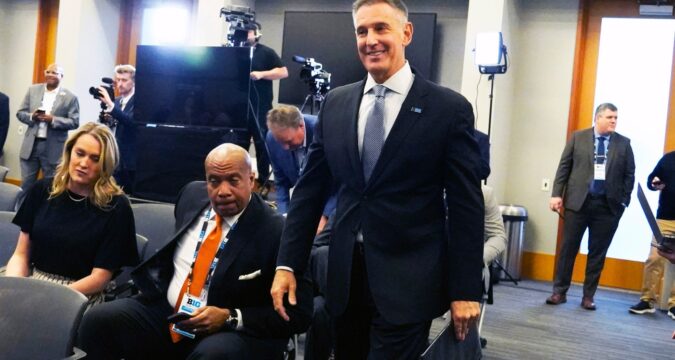
Editorial: Hey, Big Ten football schools! Have you not heard of the Chicago parking meter debacle?
Former Mayor Lori Lightfoot once told us that selling out Chicago’s future parking meter revenue to investors far from the city was perhaps the worst decision of municipal governance in the history of municipal governance.
She made a good case. Mayor Richard M. Daley’s 75-year deal, as we’ve said here many times, was an unmitigated disaster that sold out Chicagoans for too little in return and remains no small cause of Chicago’s current budget woes. Now we see the Big Ten schools potentially falling prey to the same kind of temptation to let in private investment so as to get, and spend, money from the future now.
As reported in The Wall Street Journal, Big Ten Commissioner Tony Petitti has been arguing that the league’s 18 schools should take an offer of $2.4 billion of privately sourced cash in return for handing over some of their future earnings from media rights.
Tempting for sure. It’s getting mighty expensive to run a football program that now likely involves paying student-athletes, if that’s even the term anymore, as much as $20.5 million each. And with the revenue challenges faced by some of the Big Ten’s schools (there are fewer international students and 18-year-olds out there), you can see why Petitti’s suggestion that each school receive at least $100 million right now got a sympathetic hearing. There are fancy new dorms to be built and flashy practice facilities to entice recruits, although the notion that these things are still what motivates potential running backs is becoming quaint.
If you’ve not been paying attention, college football now is all about the money. (The reason that the $2.4 billion would not be divided equally is that not all Big Ten schools have the same media drawing power).
The top of the pecking order includes Ohio State University, the number one team in the country and its archrival, the University of Michigan, which has an elected and thus politically savvy Board of Regents. Reportedly, those Michigan governors are questioning the rush to follow Petitti’s plan. The Buckeyes should suspend the traditional rivalry here and support the team “up north.”
In this instance, the Wolverines are the winners. Chicago’s parking meter debacle is a reminder that when private capital fronts future cash for those in need of it in the present (such as a city desperate to balance a budget), the proposed deal generally is good for private investment and less good for whomever is getting the money now.
And, frankly, the people offering those deals (in this case, UC Investments, which manages the retirement funds for University of California employees) generally are more sophisticated in their financial analytical skills than the recipients of said funds, such as university presidents. In this case, the plan would be to create a spinoff entity called Big Ten Enterprises, essentially a holding company for media payouts and sponsorship deals. UC would then get a 10% stake in those rights in return for the $2.4 billion in up-front money.
Granted, giving away 10% of the future is a lot better than what the city of Chicago chose, which was to give away 100% of the future. Still, we think there are are numerous downsides for the schools.
Number 1 is that they will be contractually bound together, unable to leave the Big Ten for years.
Number 2 is that more power will reside in the Big Ten athletics bureaucracy, making the schools less in charge of their own fiscal and thus educational destiny.
Number 3 is that we don’t know how much media rights will bring in to the schools years from now, given that we hardly know what the media landscape actually will look like in the future. That’s not to mention the college football landscape, which just went through an unanticipated revolution.
Number 4 is that the media-drawing power structure within the league might change as coaches shift and winners become losers, causing all kinds of intra-league strife.
Number 5 is letting private investment into a league made up entirely of mission-based public universities.
Number 6 is the likelihood that the fees for those who negotiated this deal are likely far higher than the salary of your average assistant professor.
Number 7 is the generalized danger of selling out any kind of future revenue; it can be akin to selling your house to a flipper. Or getting a payday loan.
Number 8? Is college football not corrupted enough by money already without this?
We could get up to 10 if we tried, but that poetry is long gone, too, given that the Big Ten is now 18 schools, with students in smaller sports making cross-country flights all for the benefit of the schools’ bottom lines.
We see them at airports all the time, studying on the floor and looking exhausted.
So good for the U. of M. regents in applying the brakes here and reminding their peers that these mostly land-grant schools have responsibilities to their students, alumni and the citizenry of their home states which should come before kowtowing to the money-making schemes of their athletic league.
“We believe that the Big Ten has failed to consider many alternatives to this plan that avoid selling our soul to private capital,” Michigan regent Chair Mark Bernstein told the Journal.
“Selling our soul” is just the right verbiage in our minds. And, if a school ever were indeed to make such a culture-changing deal, it should at least be doing it for its own reasons and on its own terms.
Submit a letter, of no more than 400 words, to the editor here or email letters@chicagotribune.com.
https://www.chicagotribune.com/2025/11/19/editorial-big-ten-football-private-equity-tony-petitti/