Category: News
RFK Jr. Says Hospitals Must Serve Healthier Food
RFK Jr. Says Hospitals Must Serve Healthier Food
Authored by Zachary Stieber via The Epoch Times (emphasis ours),
U.S. health officials on March 30 informed hospitals they must provide patients with more nutritious food.
The Centers for Medicare and Medicaid Services (CMS) stated in a memorandum to hospitals across the country that they must comply with certain conditions to receive federal funding, including making sure that menus and diets meet the nutritional needs of patients.
Officials noted the January release of new dietary guidelines, which emphasize limiting ultra-processed foods, refined carbohydrates, and sugar-laden products in favor of whole foods such as whole milk and meat.
Hospitals “should review and revise food and nutrition service policies, standard menus, therapeutic diet protocols, and food procurement practices to align with the [guidelines], which support contemporary evidence on diet quality and health outcomes,” the letter stated.
A good diet for a patient might feature steel-cut oats with berries and nuts for breakfast, grilled salmon with quinoa and roasted vegetables for lunch, and a lentil-based entree with a side salad later in the day, according to the document.
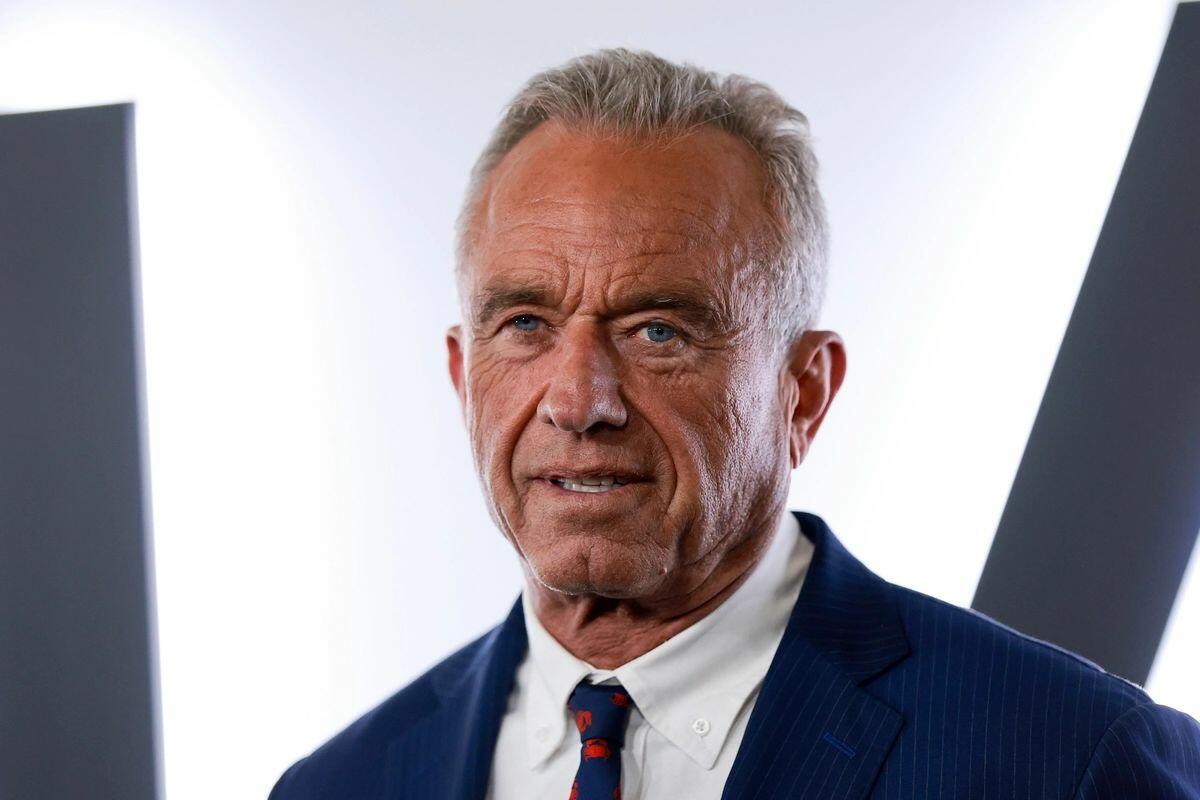
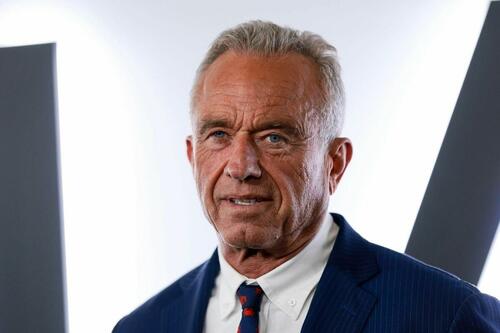
Health Secretary Robert F. Kennedy Jr., at an event in Florida that was held in part to coincide with the memo, said that it was “essentially a federal mandate” that would help incentivize hospitals to serve better food.
“The food at hospitals is so uniformingly, appallingly bad that it is now a pejorative,” he said. “If you tell somebody that this tastes like hospital food, it’s not a compliment.”
CMS is a division of Kennedy’s Department of Health and Human Services.
Dr. Mehmet Oz, the administrator of CMS, said in a statement that “hospitals are meant to heal—but too often, the food they serve holds patients back.”
“It’s time for hospitals to prioritize real, nutrient-dense food, cut ultra-processed options, and align meals with evidence-based medical needs.”
Oz and Kennedy said that revamping menus would lead to faster recovery and lower readmission rates for patients.
The event also included the announcement that Nicklaus Children’s Hospital had committed to sourcing 5 percent of its food from local farmers in Florida.
The hospital will look to add 1 percent to that percentage each year moving forward.
“This means that kids getting cancer treatment will eat real protein, from the producers here in Florida,” said Hannah Anderson, director of the Healthy America campaign from the America First Policy Institute, which hosted the event.
“This means that kids getting treatment for debilitating diseases will get whole milk. And this means that the kids who are fighting infection are getting the vitamin C and vitamin A from food that’s grown right here in Florida.”
Tyler Durden
Tue, 03/31/2026 – 17:15
https://www.zerohedge.com/medical/rfk-jr-says-hospitals-must-serve-healthier-food

Bullet Used in Charlie Kirk Murder Doesn’t Match The Alleged Weapon, Defense Claims
Bullet Used in Charlie Kirk Murder Doesn’t Match The Alleged Weapon, Defense Claims
There’s a new wrinkle in the case against Tyler Robinson, the 22-year-old charged with assassinating conservative activist Charlie Kirk. Defense attorneys revealed last week that federal ballistic analysis cannot link the bullet that killed Kirk to the rifle prosecutors say Robinson used.
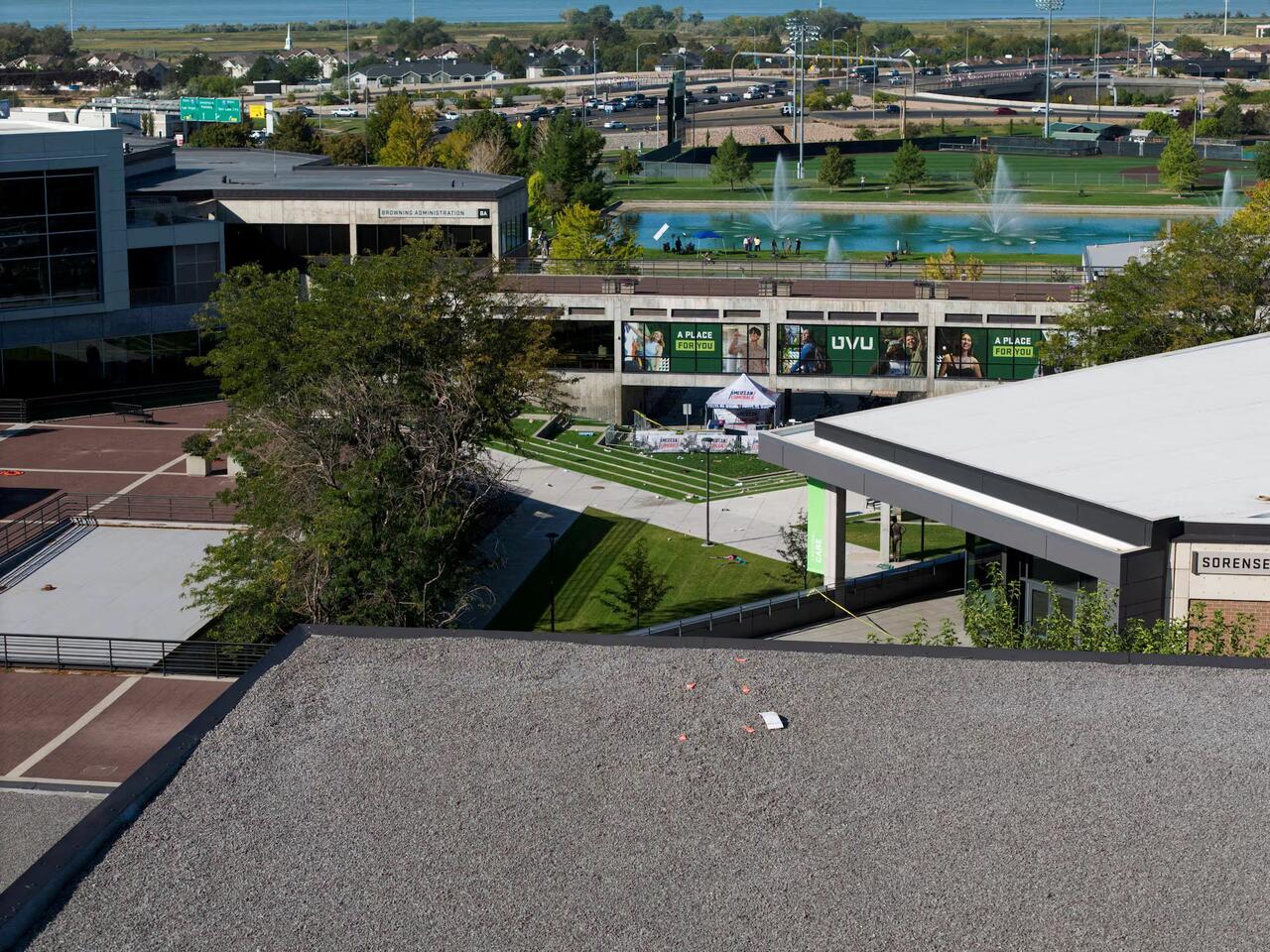
Robinson faces charges of aggravated murder, along with multiple felony counts, for the September 10, 2025, killing of Kirk at Utah Valley University in Orem, Utah. Prosecutors are seeking the death penalty. The case seemed, from the outside, fairly straightforward: Robinson reportedly confessed to his father, who told a youth pastor with ties to the U.S. Marshals Service, and Robinson himself surrendered to the Washington County Sheriff’s Office the following night.
Prosecutors say DNA consistent with Robinson’s was recovered from the trigger, the fired cartridge casing, and two unfired cartridges on the rifle found near the scene.
However, in a motion filed Friday, Robinson’s attorneys disclosed that they had received an ATF summary report with an unexpected finding. “Regarding the firearm evidence, the defense has been provided with an ATF summary report which indicates that the ATF was unable to identify the bullet recovered at autopsy to the rifle allegedly tied to Mr. Robinson,” the motion reads. The defense added, “Although the State has not indicated an intent to produce this report at the preliminary hearing, the defense may very well decide to offer the testimony of the ATF firearm analyst as exculpatory evidence.”
Authorities recovered an old German bolt-action Mauser Model 98 .30-06 caliber rifle used in both World Wars from a forested area near the shooting site. The FBI is conducting additional ballistic tests, but the results are still pending. Until they arrive, the defense is sitting on an ATF report that they believe actively undermines the state’s physical evidence narrative.
Here’s, by the way, what a .30-06 does:
DNA questions are also piling up alongside the ballistic ones. Defense attorneys point out that forensic reports show multiple people’s DNA on some items, which they argue demands more sophisticated analysis than a standard single-contributor examination.
“As these cases indicate, determining the number of contributors to a DNA mixture, and determining whether the FBI and the ATF reliably applied validated and correct scientific procedures … is a complicated process which requires the assistance of various types of experts, including forensic biologists, geneticists, system engineers, and statisticians, all of whom must review and evaluate” several categories.
The defense has received roughly 20,000 files – 61,500 pages, 31 hours of audio, and more than 700 hours of video spread across 5,000-plus clips. Defense attorneys say it will take at least 60 days to make a first pass through the material, and are now asking the court to push the May 18 preliminary hearing back by at least six months.
The preliminary hearing itself is not a trial. It’s the moment prosecutors must demonstrate sufficient cause to proceed. That makes the ATF report strategically critical right now. If the defense can successfully use it to cast doubt on the state’s physical evidence package at this early stage, the downstream implications for a capital case are significant.
However, it’s debatable how crucial it really is. Prosecutors still have DNA evidence, an alleged text message in which Robinson reportedly told his romantic partner he targeted Kirk because he “had enough of his hatred,” and witness testimony from Robinson’s parents and roommate. The confession to his father remains a cornerstone of the state’s case.
The defense is also pushing for a televised trial, insisting that having the court proceedings “as public as possible helps to quell and contradict the tide of misinformation,” and will limit conspiracy theories.
Tyler Durden
Tue, 03/31/2026 – 16:50
https://www.zerohedge.com/political/bullet-used-charlie-kirk-murder-doesnt-match-alleged-weapon
One Man Thinks He Knows “Why Everything Sucks”
One Man Thinks He Knows “Why Everything Sucks”
Authored by Matt Van Swol via X,
I think I know why everything sucks…
…and it’s because everything is fake
We are getting fake college degrees that cost 4 years and six figures that teach you fake education and get you fake jobs.
We are eating fake food, with fake ingredients, funded by fake research.
We are scrolling through fake lives, with fake relationships, who take fake, curated vacations to promote brands that make fake products.
We are voting for fake candidates, who run on fake promises, inside a fake system that was never designed to fix anything.
We are raising kids in fake schools that teach fake history, fake science, which quietly produce fake adults who can’t think for themselves.
We are watching fake news, about fake crises, produced by fake journalists, for fake outrage.
We are borrowing fake money that was printed from nothing, to fund a fake economy that would collapse in an afternoon if people stopped pretending it was real.
We are buying fake organic food that’s just a paid label, and drinking fake juice with two percent juice in it, and putting fake cheese on cheeseburgers that’s just “cheese product” on fake burger meat.
We are donating to fake nonprofits where the money never makes it to the people and then funding fake foreign aid that buys real weapons to prop up fake governments.
We are going to fake therapy that teaches fake coping skills instead of telling you hard truths.
We are buying fake furniture made of fake wood that’s actually compressed sawdust and glue that looks like wood, ships in fourteen boxes with instructions written in a fake language that isn’t quite any language, requires tools it doesn’t include, takes 4 hours to build, wobbles on day 1, and is totally destroyed in 6 months.
We are downloading fake “free” apps that charge a subscription after three days for AI features that don’t work, hidden behind a paywall we didn’t see, protected by a privacy policy we didn’t read, buried inside Terms of Service written by lawyers specifically so we wouldn’t read them, that we agreed to by tapping a button the size of a thumbnail, that gave a company we’ve never heard of the right to sell our data to companies we’ll never hear of, to build a profile on us we’ll never see, to influence decisions we’ll never know were made.
IT. IS. ALL. FAKE.
And we all yearn for what was once real.
Don’t you remember? Did you forget?
There was a time with a simple handshake between men was a contract.
When bread went stale because… well, that’s what real bread does!
When kids played outside all day until it was dark, and nobody tracked them.
When a family could live off a single income.
When music was made by people who LIVED something real and you could feel it.
When schools was HARD… and that was the point!
When doctors knew your name and your family, they even came to your house.
When you bought something once… and it was yours forever.
When the chair your grandmother bought once lasted 70 years and she passed it onto your dad.
And now nothing is real, and that’s why everything sucks.
I think I know why everything sucks…
…and it’s because everything is fake
We are getting fake college degrees that cost 4 years and six figures that teach you fake education and get you fake jobs.
We are eating fake food, with fake ingredients, funded by fake research.… pic.twitter.com/lmhoUGVi23
— Matt Van Swol (@mattvanswol) March 30, 2026
Tyler Durden
Tue, 03/31/2026 – 16:25
https://www.zerohedge.com/personal-finance/one-man-thinks-he-knows-why-everything-sucks

Gearing Up For Artemis II: NASA’s High-Stakes Test Run Around the Moon
Gearing Up For Artemis II: NASA’s High-Stakes Test Run Around the Moon
NASA is gearing up for Artemis II, its first crewed mission to the moon since the Apollo era—but this one is more of a high-speed dress rehearsal than a landing, according to KSL.com. Four astronauts will take a roughly 10-day trip that loops around the moon and comes straight back, with no orbiting or moonwalks.
The crew—Reid Wiseman, Victor Glover, Christina Koch, and Jeremy Hansen—marks a few firsts: the first woman, first person of color, and first non-American assigned to a lunar mission. Koch already holds the record for the longest single spaceflight by a woman, while Glover previously made history aboard the International Space Station. Hansen, representing Canada, is the only rookie in the group.
They’ll launch aboard NASA’s massive Space Launch System rocket, with the Orion capsule on top. After liftoff, the plan is to spend about a day in an elongated orbit around Earth, practicing navigation by flying close to a spent rocket stage—without docking, just eyeballing the distance. As commander Wiseman put it, “Sometimes simple stuff is the best.”
KSL writes that from there, Orion will fire its engine and send the crew on a long arc toward the moon, roughly 244,000 miles away. Using a “free-return” trajectory—basically letting gravity do most of the work—they’ll swing around the far side and travel about 5,000 miles beyond it, farther than any humans have gone before. The moon will loom large during the flyby, and the crew is expected to document rarely seen regions of its far side.
After about six days, they’ll slingshot back toward Earth, wrapping up the mission with a Pacific Ocean splashdown just under 10 days after launch. Engineers will be paying close attention to Orion’s heat shield during reentry, since it took heavy damage during an earlier uncrewed test.
The mission hasn’t been perfectly smooth so far—fueling issues like hydrogen leaks have already caused delays—but Artemis II is still a crucial step. NASA ultimately wants to return astronauts to the lunar surface, and this flight is meant to prove they can get there—and back—safely.
Tyler Durden
Tue, 03/31/2026 – 15:45
https://www.zerohedge.com/markets/gearing-artemis-ii-nasas-high-stakes-test-run-around-moon
New Restrictions On SNAP Purchases To Take Effect In More States In April
New Restrictions On SNAP Purchases To Take Effect In More States In April
Authored by Tom Gantert via The Epoch Times (emphasis ours),
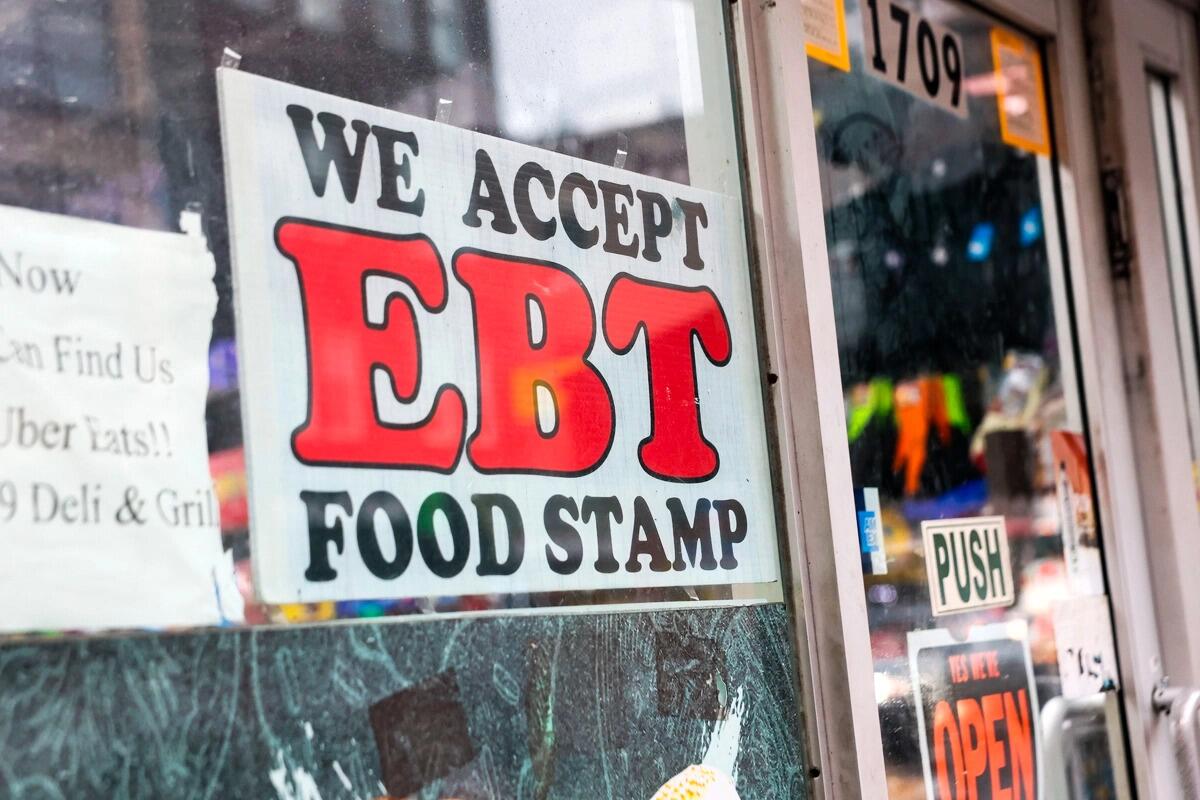
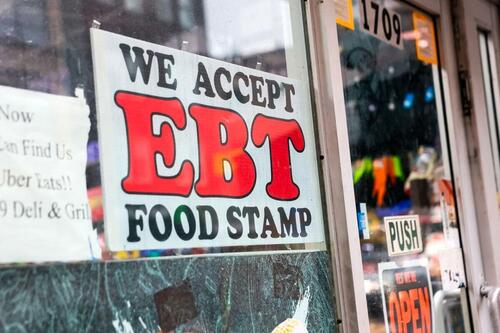
Food stamp recipients in Florida, Texas, and West Virginia will face restrictions on buying certain kinds of less nutritious items such as soda and candy, some starting in April.
West Virginia’s restrictions became effective on Jan. 1, but retailers have until April 1 to be fully compliant.
The U.S. Department of Agriculture (USDA) has approved Colorado’s restrictions waiver, but the state has delayed implementation of restrictions on certain items for food stamp recipients until after April 30 and stated that it would have a final vote on April 3 on the program.
The Trump administration is clamping down on soda and candy being charged to food stamps, as 22 states now have been approved to restrict certain purchases under the program. The restrictions still require state approval before taking effect.
Kansas, Nevada, Ohio, and Wyoming were the latest states to receive USDA approval for food and beverage restrictions.
The Supplemental Nutrition Assistance Program (SNAP), also known as food stamps, had 40.7 million people participating nationwide at a monthly cost of $7.97 billion as of November 2025.
“The Trump Administration is leading bold reform to strengthen integrity and restore nutritional value within the Supplemental Nutrition Assistance Program,” the USDA stated on its website. “USDA is empowering states with greater flexibility to manage their programs by approving SNAP Food Restriction Waivers that restrict the purchase of non-nutritious items like soda and candy. These waivers are a key step in ensuring that taxpayer dollars provide nutritious options that improve health outcomes within SNAP.”
For example, starting on April 1, Texas residents will not be able to buy candy or sweetened drinks on their SNAP-provided Lone Star Cards. Those restrictions will ban such purchases as candy bars, gum, and taffy, as well as nuts, raisins, or fruits that have been “candied, crystallized, glazed or coated with chocolate, yogurt or caramel.”
Texas also will ban sweetened non-alcoholic beverages made with water that contain 5 or more grams of sugar or artificial sweetener, according to Texas Health and Human Services.
The USDA also maintains the Restaurant Meals Program in nine states, including New York and California, which allows eligible participants to use their SNAP debit card at qualified fast food restaurants. Those restaurants include such food chains as KFC, Subway, Taco Bell, McDonald’s, and Popeyes. To be eligible for the program, participants must be 60 years of age or older, disabled, homeless, or the spouse of a SNAP client who is eligible for the Restaurant Meals Program.
The Food Research & Action Center, a nonprofit advocacy group, is opposed to SNAP benefit restrictions on items such as candy and soda.
“State efforts to restrict what SNAP recipients can buy with their benefits are expanding across the country—despite evidence that they are harmful, burdensome, and ineffective,” the Food Research & Action Center stated on its website.
The organization said that the modifications of such programs are time-consuming and “fiscally irresponsible” and that research shows that “SNAP participants eat no differently than other Americans.”
The Food Research & Action Center stated: “Policing food choices is ineffective, undermines American values, and worsens food insecurity. The real solution is strengthening SNAP with adequate benefits, access to healthy foods, and proven produce incentives.”
The USDA also offers a SNAP healthy incentive program that provides coupons, discounts, gift cards, and bonus food or extra money to participants who purchase specified healthy foods.
Tyler Durden
Tue, 03/31/2026 – 15:25
https://www.zerohedge.com/political/new-restrictions-snap-purchases-take-effect-more-states-april

In Revolutionary Statement, Fidel Castro’s Grandson Embraces “Capitalism With Sovereignty”
In Revolutionary Statement, Fidel Castro’s Grandson Embraces “Capitalism With Sovereignty”
What is awkward for Democrats and their left-wing activist network of politicians and dark-money funded nonprofits is that the latest CNN interview with Fidel Castro’s grandson shattered years of left-wing America’s weird obsession with Cuban communism.
Sandro Castro told CNN’s Patrick Oppmann that he would welcome a deal with President Trump and said many on the island want “capitalism with sovereignty,” a remarkable admission from deep inside the Castro family that Cuba’s failed economic model is no longer the pathway for the Carribean island nation suffering from decades of economic collapse, and more recently, a completely collapsed power grid.
Oppmann asked Castro: “And what would your grandfather, Fidel Castro, say if he knew that you’re more capitalist than communist?”
Castro responded: “My grandfather was a person who had his principles like everyone else. But as well he respected others’ opinions. That’s my way of thinking.”
Oppmann asked: “But all the capitalists left Cuba.”
Castro responded: “There are many people in Cuba that think in a capitalistic way. There are many people who want to do capitalism with sovereignty. I think the majority of Cubans want to be capitalist, not communist.”
NEW: While drinking a beer, Fidel Castro’s grandson says he is a capitalist and says if it were up to him, he would welcome a deal with President Trump during an interview with CNN.
“There are many people here [in Cuba] who want to have capitalism with sovereignty.” pic.twitter.com/zrIvQ6uH4Z
— Collin Rugg (@CollinRugg) March 30, 2026
We have detailed at length that the Democratic Socialists of America politicians in Washington and left-wing NGOs funded by billionaire foundations have a weird obsession with defending communism and visiting Cuba.
Is There A “Cuba Connection” Behind The Radicalization Of America’s Nonprofit Left
Cuba, Venezuela, China, And America’s Left-Wing Revolution
Just last week, the head of a U.S. left-wing nonprofit, reportedly linked to a Marxist propaganda network connected to a China-based billionaire, organized a trip of unhinged white liberals to the island to champion communism.
Yet even Fidel’s own grandson is now embracing an economic transition from communism to capitalism, something the Trump administration is trying to orchestrate, while America’s own Democratic Party and left-wing NGOs have yet to read the tea leaves around the world that far-left regimes and communism have fallen – just look at South America.
Meanwhile, Democrats last week in America at No Kings: Communism.
Ok fine…I’m down with this one No Kings protest:
“There is only one solution:
Communist Revolution!” pic.twitter.com/nq1CEKhdum
— Power to the People ☭🕊 (@ProudSocialist) March 28, 2026
“No Kings”, but communism is okay!
For the record, estimates suggest that communist regimes worldwide are responsible for the deaths of between 85 million and over 100 million people during the 20th century alone.
These deaths resulted from mass executions, man-made famines,… pic.twitter.com/j4LEbeLk2b
— 🇺🇸🗽LoneStarPatriot🗽🇺🇸 (@LoneStarPa00) March 31, 2026
‘No Kings’ protests are just plain communism. They must be stopped or avoided in any free country. pic.twitter.com/OgvwPrs7QQ
— Russell Yeagley (@ryeagleyjr) March 31, 2026
Seems like Fidel’s own grandson wants food, electricity, and internet. Only possible with capitalism.
Tyler Durden
Tue, 03/31/2026 – 15:05

American Journalist Shelly Kittleson Kidnapped In Baghdad
American Journalist Shelly Kittleson Kidnapped In Baghdad
American freelance journalist Shelly Kittleson, who reports primarily on Middle Eastern and Afghan affairs, was kidnapped in Baghdad earlier today. She has written for outlets including Al-Monitor, Foreign Policy, BBC News, Politico, and others.
Alex Plitsas, a CNN national security analyst and former senior Pentagon official under former President Barack Obama, confirmed on X that Kittleson was “abducted and may have been taken hostage in Baghdad by Kataib Hezbollah.”
🚨🚨🚨 I can confirm that my friend Shelly Kittleson was abducted and may have taken hostage in Baghdad by Khatib Hezbollah. Whereabouts and condition unknown. I am her designated U.S. point of contact. If you have information please provide to law enforcement and send me a DM.
— Alex Plitsas 🇺🇸 (@alexplitsas) March 31, 2026
Middle East-based Al Sharqiya TV cited the Iraqi Interior Ministry, stating: “A vehicle belonging to the kidnappers of the American journalist overturned during a security pursuit, and one of them was apprehended.”
الداخلية العراقية: انقلاب عجلة تابعة لخاطفي الصحفية الأميركية أثناء مطاردة أمنية والقبض على أحدهم#الشرقية_نيوز pic.twitter.com/vlwl6Bask1
— AlSharqiya TV – قناة الشرقية (@alsharqiyatv) March 31, 2026
Footage of the kidnapping has circulated on X.
American 🇺🇸 journalist Shelly Kittleson has been kidnapped in central Baghdad, Iraq 🇮🇶 by unidentified perpetrators affiliated with Iranian 🇮🇷 backed Iraqi Shiite militias
There is no official confirmation yet, but @shellykittleson‘s colleagues whom I spoke to say her… https://t.co/Zn6tjbp83h pic.twitter.com/yTPlDMGer8
— Saad Abedine (@SaadAbedine) March 31, 2026
Iraqi 🇮🇶 Interior Ministry said American 🇺🇸 freelance journalist Shelly Kittleson was kidnapped by unidentified armed men (Iranian 🇮🇷 backed militias) in central Baghdad & that during a pursuit the vehicle belonging to the kidnappers was intercepted which overturned as they… https://t.co/cOAwUZn6hq pic.twitter.com/ciUo05iUbF
— Saad Abedine (@SaadAbedine) March 31, 2026
*Developing…
Tyler Durden
Tue, 03/31/2026 – 14:50
https://www.zerohedge.com/geopolitical/american-journalist-shelly-kittleson-abducted-baghdad

Another Greek Tanker Sneaks Through Strait Of Hormuz
Another Greek Tanker Sneaks Through Strait Of Hormuz
Another Greek-controlled oil tanker has crossed the Strait of Hormuz, despite Iran’s declaration that only “friendly” vessels will be allowed to make the transit, marking the fourth such voyage since hostilities in the Middle East began.
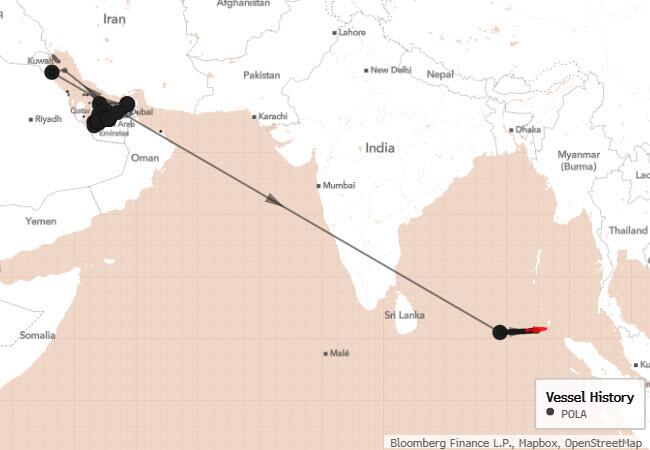
The suezmax Pola, which switched off its tracking system in the Persian Gulf on March 10, was detected again on Monday by the Automatic Identification System: it was located several thousand miles away.
The ship was sailing in the eastern Indian Ocean near the maritime corridor off the coast of Indonesia’s Sumatra island, according to vessel tracking data compiled by Bloomberg.
Its reappearance obviously confirms the tanker successfully crossed the Strait of Hormuz. The tanker, laden with roughly 1 million barrels of crude, is en route to Thailand, according to data from intelligence firm Kpler.
The Pola is the fourth vessel managed by Dynacom Tankers Management Ltd. to make the passage through Hormuz with its transponder switched off since its effective closure. The firm also sent the oil tankers Shenlong, Smyrni and Marathi through the narrow waterway earlier this month.
While Iran continues to bar “hostile” entities from the strategic waterway, several Asian countries, including Thailand, have secured bilateral agreements to allow passage through the Strait for some tankers and cargo ships. However, Greece is not among the countries publicly viewed by Tehran as “friendly.”
Still, risks to shipping in the Persian Gulf remain high, with Iran hitting a fully laden Kuwaiti tanker off Dubai in a drone strike last night.
Tyler Durden
Tue, 03/31/2026 – 14:20
https://www.zerohedge.com/geopolitical/another-greek-tanker-sneaks-through-strait-hormuz

Stock Market Breadth: Warning Or Opportunity?
Stock Market Breadth: Warning Or Opportunity?
Authored by Lance Roberts via RealInvestmentAdvice.com,
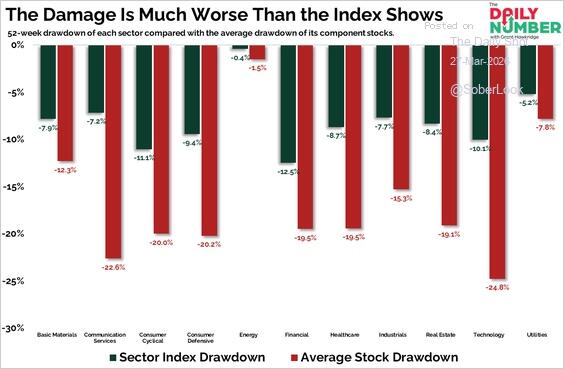
The S&P 500 is down roughly 7% from its January 27 all-time high. Unsurprisingly, the media is full of “red” headlines discussing the seemingly “endless” correction we are in. Unsurprisingly, previously complacent investors are now anxious, as nothing seems to be working. But that index-level headline conceals something far more alarming: stock market breadth has collapsed. According to Morgan Stanley, approximately 42% of S&P 500 members are already down 20% or more from their 52-week highs. More than 200 companies are in their own private bear markets, even as the index itself is not.
This was a point we noted in this past weekend’s Bull Bear Report:
“J.P. Morgan captured the paradox: the S&P 500 is down only ~9% despite oil rising 70% and the Fed shifting from pricing two cuts to a 50% probability of a hike, and software falling 20%. As we noted recently, a much larger correction is underway in the market.”
While “times have been tough lately,” this is not a new phenomenon. Stock market breadth deterioration almost always precedes index-level damage, not the other way around. On March 9th, we noted in Technical Deterioration: Risk Management Is Key:”
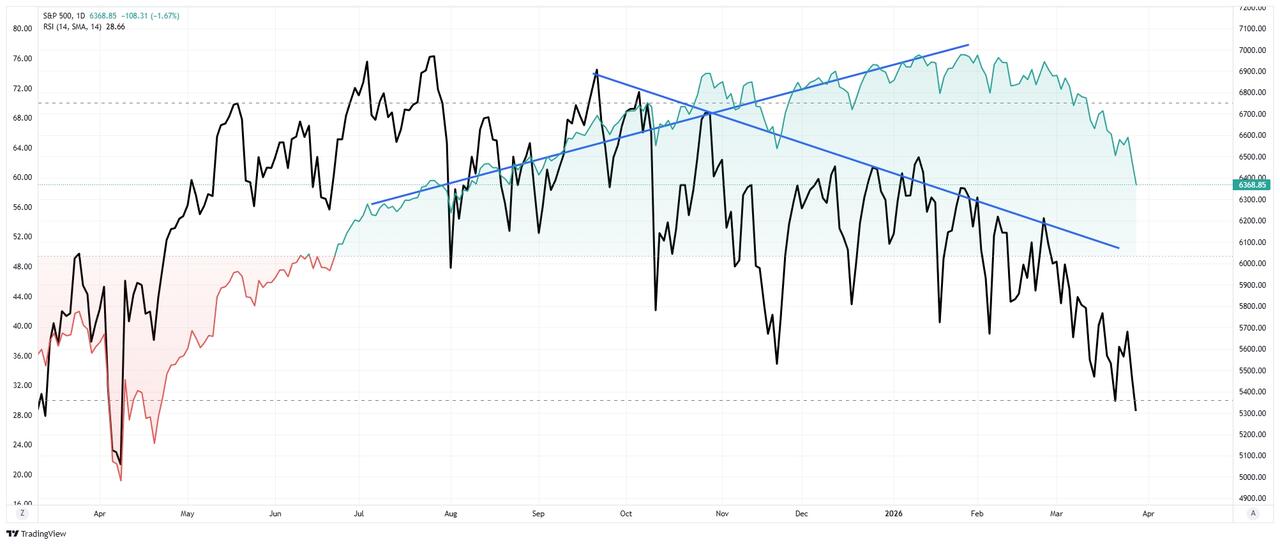
“More importantly, the RSI exhibited a textbook bearish divergence at the all-time high: price made a new peak, but momentum did not confirm. We repeatedly discussed that divergence was the earliest signal of the distribution phase now unfolding. With the RSI not in oversold territory below 30, there is room for more pressure before a technical bounce becomes probable.”
Here is an updated chart showing that previous divergence. Along with waning stock market breadth, relative strength is now in oversold territory.
What’s unusual today is the degree of divergence between individual stocks and the cap-weighted index. When a handful of stocks carry enough weight to paper over widespread internal damage, investors holding diversified portfolios feel the pain long before the headlines acknowledge it.
Furthermore, as detailed in The 200-DMA Just Broke, the deterioration is not uncommon of corrective markets. That break, combined with deeply oversold momentum readings and AAII bearish sentiment, creates a historically specific setup.
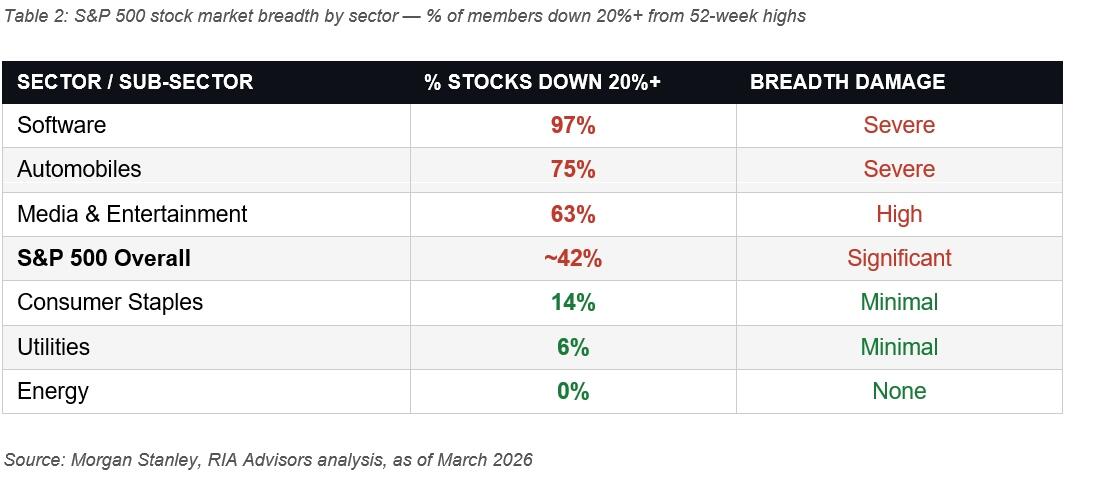
The breadth story is quite fascinating. The software sector has 97% of its S&P 500 members 20% of more below their respective 52-week highs. Automobile stocks follow at 75%, with media and entertainment at 63%.
The other end of the distribution is equally instructive. Energy stocks have zero members in bear territory. Utilities sit at just 6%, and consumer staples at 14%. Those numbers confirm the rotation that’s been underway since January.
“Significant rotation trades, characterized by heavy trading activity in and out of various sectors and factors, have led to large daily divergences in the performance of certain sectors. The market’s surface may look calm, but beneath it, passive investors are actively shifting between narratives, valuations, and risk exposures.” — RIA Advisors, February 2026
So, what likely happens next?
Reading the 200-DMA Break: Six Signals, Mixed Picture
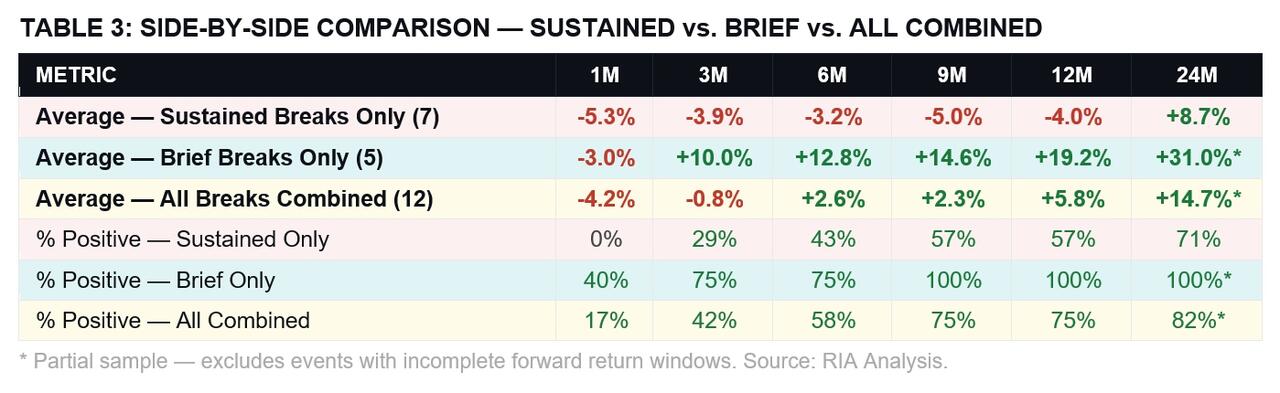
Since 2000, the S&P 500 has broken its 200-DMA on a sustained basis seven times. The average one-month return following those breaks was -5.3%, and none produced a positive first-month return. The average 12-month return after a sustained break was -4.0%.
But the distinction between a sustained break and a reflexive whipsaw matters enormously. When the 200-DMA was already flat or declining before the price crossed below, every major bear market since 2000 followed: 2000, 2008, 2022. When the 200-DMA was still rising at the break, as it is currently, the average 12-month return was +19.8%, with a 100% hit rate for positive returns at 3, 6, 9, and 12 months.
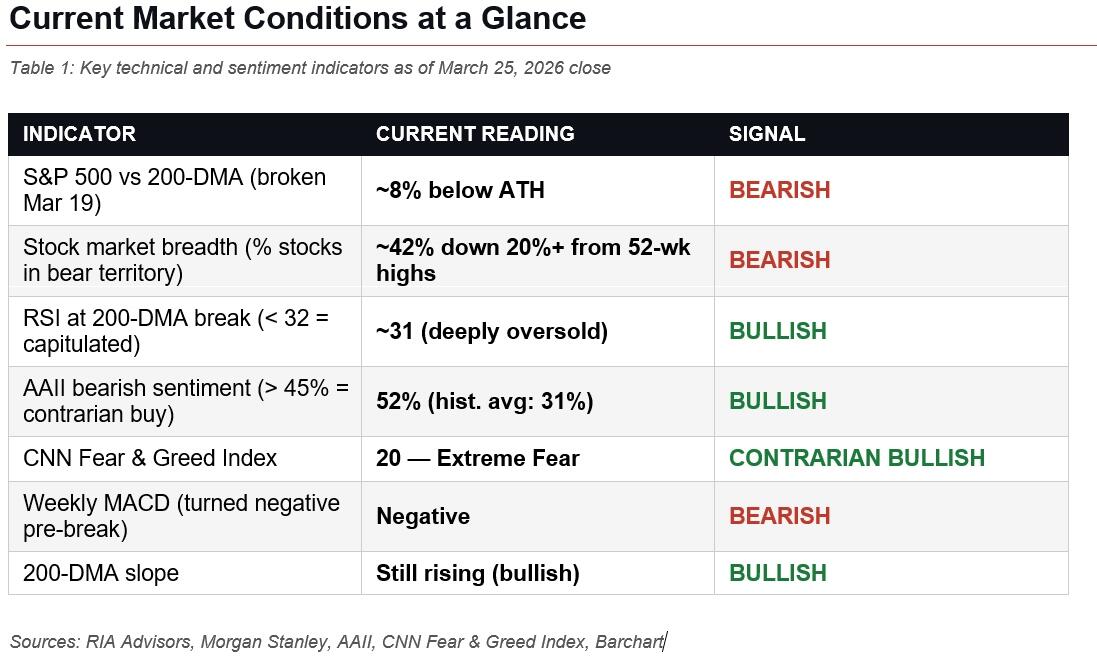
Today’s scorecard is mixed. The 200-DMA is still rising, RSI is now below 30, and AAII bearish sentiment has risen sharply. and well above the 45% contrarian threshold. These are all still bullish. Against that, the weekly MACD had already turned negative before the price break, which has preceded every sustained bear since 2000. Stock market breadth, measured by the percentage of S&P 500 stocks above their 200-day moving averages, has dropped sharply and is below the 60% level that historically characterizes whipsaw recoveries.
Bank of America’s Michael Hartnett described the current environment as approaching a “buyable washout.” He is probably correct, but until the Iran situation is resolved, or at least a path to resolution is visible, the risk of a deeper decline can not be discounted. However, investors shouldn’t panic-sell this correction. As JPMorgan’s global market strategist, Jack Manley, noted:
“When there’s a bad sell-off, that bad sell-off is typically followed by a strong bounce back. Given the nature of this sell-off, the likelihood for that bounce back, whenever it occurs, to be pretty concentrated and pretty powerful is that much higher.”
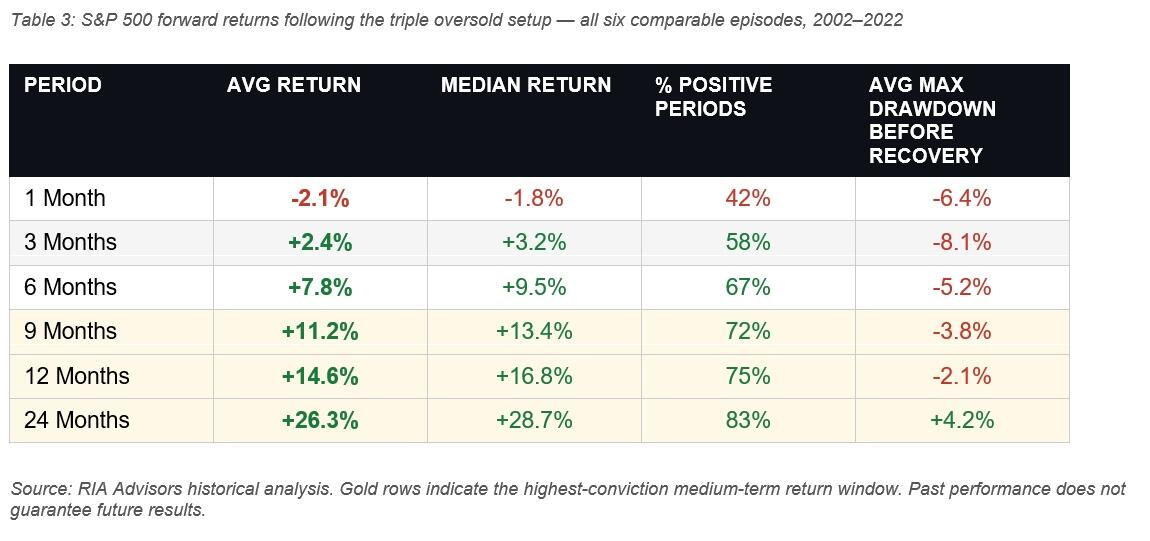
In that previous article, we examined every instance since 2000 where all three conditions aligned simultaneously: stock market breadth deterioration with 40% or more of S&P 500 members in bear territory, the index trading below its 200-DMA, and both MACD and RSI in oversold territory. Six comparable episodes emerged:
October 2002,
March 2009,
February 2016,
December 2018,
March 2020, and
October 2022.
If those dates don’t mean anything to you, those were the months that previous corrections and bear markets ended…not began.
Yes, the near-term picture is uncomfortable, and the average one-month return in these setups is -2.1%, with only 42% of periods producing positive outcomes. While pain tends to extend, and a lower low within one to three months is the historical norm rather than the exception, it serves to wash out weaker hands.
It is the medium- and long-term data that convey the real message. By 12 months, the average return climbs to +14.6%, with 75% of comparable periods producing positive outcomes. At 24 months, average returns reach +26.3%, and the positive hit rate rises to 83%. The investor who stayed positioned through the fear, in all six of these episodes, came out far ahead of the investor who sold into it.
The Permanent Cost of Panic Selling
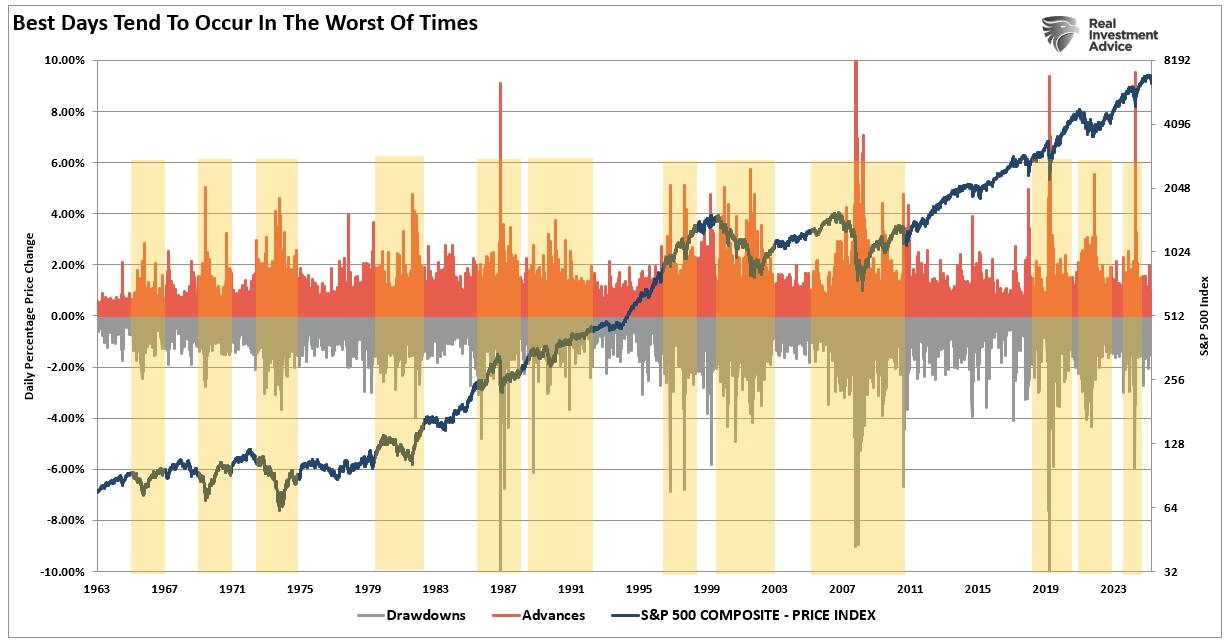
The single most damaging decision most investors make during periods of falling stock market breadth is selling. The data on this is unambiguous. Seven of the market’s 10 best days in any given 20-year period occur within two weeks of the 10 worst days, according to JPMorgan Asset Management research. The best days follow the worst days because fear-driven selling creates dislocations that are rapidly corrected. You can see this in the chart below, that the best and worst days are clustered together.
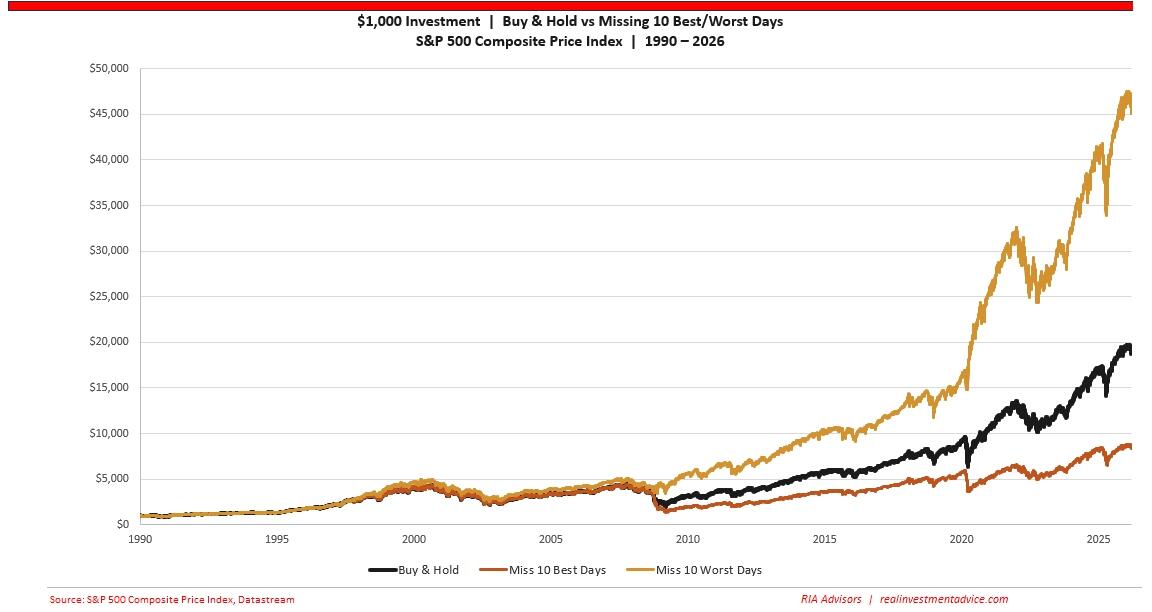
In other words, while investors are always told to just “buy and hold” because they will miss the 10-BEST days if they don’t, investors should focus on mitigating the risk of significant capital losses during those periods.
This doesn’t mean you can effectively miss all the bad days; however, given that higher-volatility periods tend to cluster, understanding when to reduce exposure can significantly improve outcomes over time. Even if you miss the 10-best days along the way. That math applies with particular force in setups like the current one. Since 1974, according to data compiled by Clear Perspective Advisors, the S&P 500 has returned more than 24% on average following a market correction. Only 25% of the 48 corrections since World War II have progressed into full bear markets. In other words, there is a 75% chance this correction will not turn into a bear market. However, dismissing that 25% entirely is just as foolish for future outcomes.
The One Variable That Changes Everything
The honest caveat to all this data is the recession. The two worst outcomes in the six-episode dataset, 2002 and 2008, were both accompanied by genuine economic contractions that extended the drawdown far beyond what the averages suggest. In those cases, forward returns at 12 months were still negative.
Today’s macro environment doesn’t yet show the classic recessionary signatures that preceded those two episodes. The 200-DMA is still rising, not declining, but time will change that. The Fed retains room to cut rates, but higher sustained oil prices could curtail that. Furthermore, deeply oversold sentiment indicators have historically correlated more with fear peaks than with the beginning of prolonged selling cycles. But oversold markets can, and have, become even more so previously.
Whether the Iran conflict and its oil price transmission into consumer spending and corporate margins eventually tips the economy into contraction remains the central unresolved question. That question is the one thing that investors need to guard against the most.
Goldman Sachs has held its 7,600 year-end S&P 500 target through the recent sell-off, anchored by projections of roughly $309 per share in 2026 earnings and $342 in 2027. That base case rests on 12% earnings growth and an economy that continues to expand despite the headwinds from the Iran conflict. Goldman’s own bear cases are sobering: a moderate growth shock takes the index to 6,300, while a severe oil-driven disruption could push it as low as 5,400, with the forward P/E compressing from 21x to 16x in the worst case.
JPMorgan has moved more decisively in the other direction, cutting its year-end target to 7,200 from 7,500 on March 19, citing oil supply shut-ins of 8 million barrels per day, the highest on record, and warning that markets are dangerously underestimating the demand destruction risk. JPMorgan strategist Dubravko Lakos-Bujas explicitly flagged near-term downside to 6,000–6,200, noting that four of five oil shocks since the 1970s have preceded a recession. Neither bank is calling for 2008. But the spread between their base cases and their downside scenarios has rarely been this wide.
Here is the most important point.
“Stock market breadth will eventually resolve, either by individual stocks recovering toward the benchmark level, or by the index itself catching down to the damage that’s already been inflicted.”
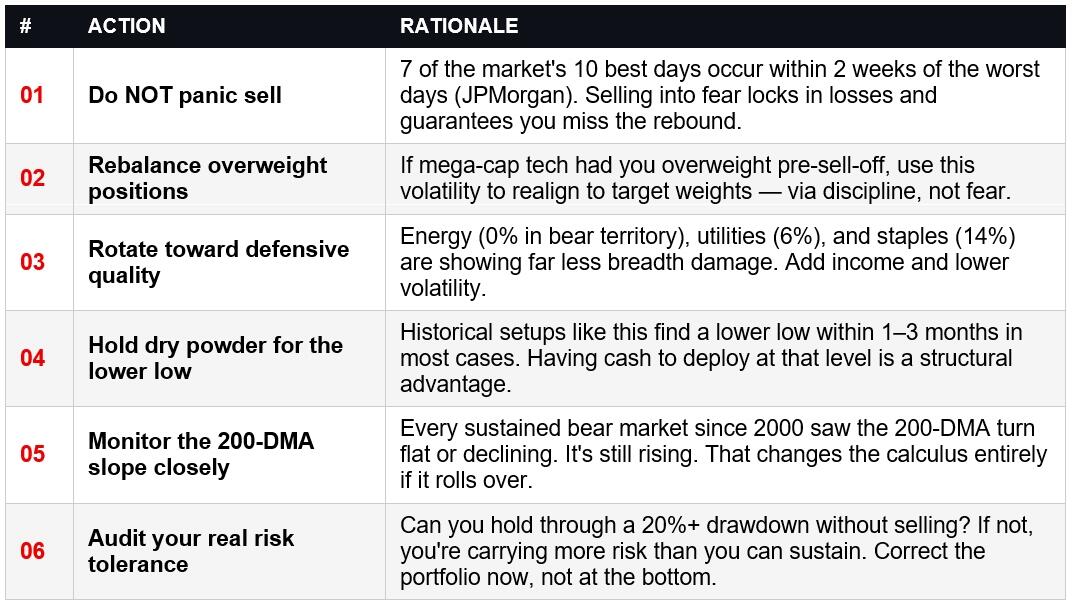
History says the former is far more likely given the current configuration of indicators. Given that backdrop, here are some steps to consider with respect to your own personal situation, goals, and objectives.
Stock market breadth, by any measure, is at levels historically associated with significant forward returns for patient investors. Three of the six key indicators that separate a brief, recoverable 200-DMA break from a sustained bear market are currently bullish, not bearish. That doesn’t mean the pain is over, as near-term data suggest a lower low is possible. However, for investors who can navigate the storm, clearer skies and calmer tides will eventually prevail
The goal isn’t to time the bottom. Nobody does that consistently. The goal is to avoid permanent capital impairment from panic selling, reduce risk through disciplined rebalancing, and be positioned to participate in the recovery. Based on every comparable episode in the modern era, that recovery has come, and it has come faster than the fear of the moment would suggest.
Tyler Durden
Tue, 03/31/2026 – 14:00
https://www.zerohedge.com/markets/stock-market-breadth-warning-or-opportunity

Air Canada CEO Out After Admitting In PR Video That He Can’t Speak French
Air Canada CEO Out After Admitting In PR Video That He Can’t Speak French
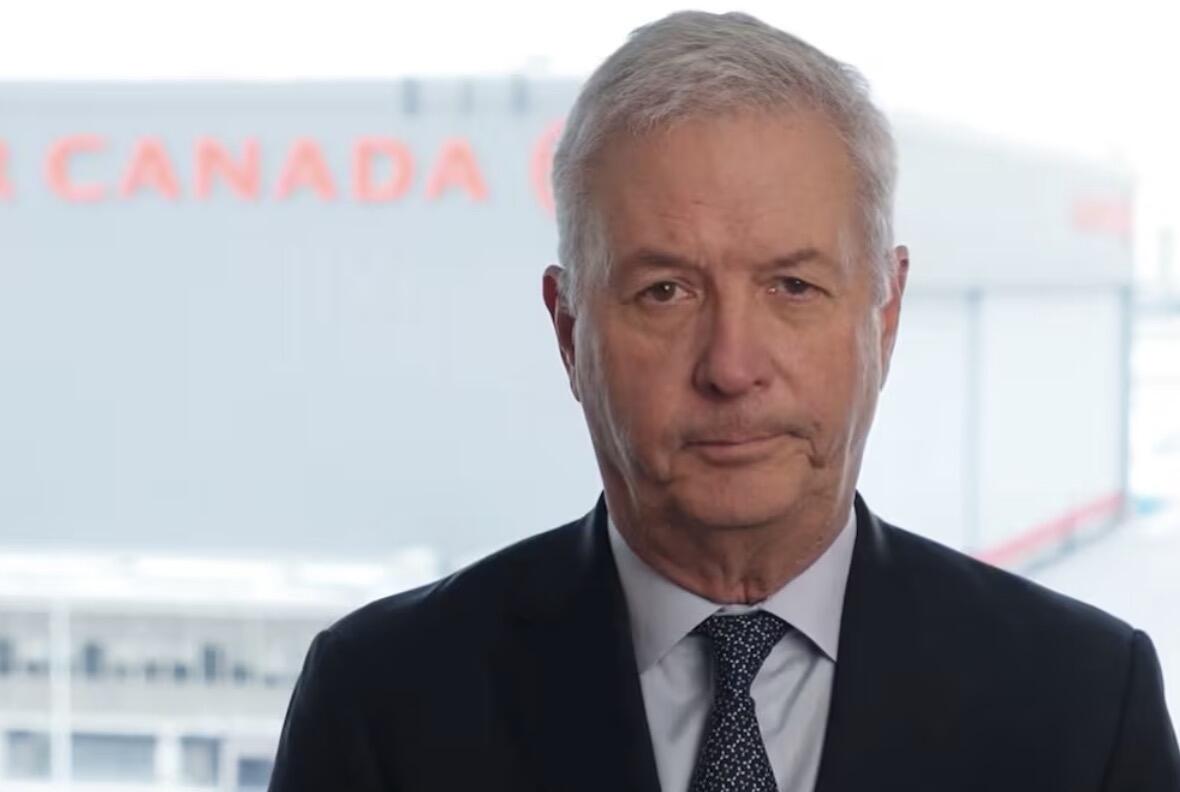
Michael Rousseau is on his way out as head of Air Canada, after a crisis response that somehow made a bad situation worse – and then kept digging.
The backdrop: a fatal March 22 crash at LaGuardia Airport involving a flight from Montreal to New York City. Two pilots were killed.
Rousseau responded with a video offering his “deepest sorrow for everyone affected,” but delivered almost all of it in English, tossing in a token “bonjour” and “merci” like that would smooth things over, according to Bloomberg.
It did not.
In Quebec—where language politics are less “preference” and more “contact sport”—the backlash was immediate.
The National Assembly of Quebec unanimously called for him to go, and Prime Minister Mark Carney slammed the video as a “lack of judgment and lack of compassion.” Notably, one of the deceased pilots was from Quebec, which made the whole thing land even worse.
Rousseau tried damage control, noting he’d taken hundreds of hours of French lessons and saying his shortcomings had “diverted attention from the profound grief.”
Unfortunately, after years in Montreal and all that studying, he still couldn’t get through a serious statement without subtitles—at which point the problem kind of explains itself.
Bloomberg wrote that with complaints piling up and a parliamentary grilling (partly in French, the horror) looming, the exit became inevitable.
He’ll step down by the end of Q3, and the board is now very publicly emphasizing that the next CEO should, you know, speak both official languages.
So yes—there were operational challenges, political pressure, and a tragic accident.
But in the end, what really grounded him was French: studied extensively, deployed minimally, and apparently career-ending when it mattered most.
Tyler Durden
Tue, 03/31/2026 – 13:40
https://www.zerohedge.com/markets/air-canada-ceo-out-after-admitting-pr-video-he-cant-speak-french