Category: News

Madness At The Grocery Store
Madness At The Grocery Store
Authored by Jeffrey Tucker via The Epoch Times,
Sometimes it is just a mood. Sometimes it’s the store or the product. Regardless, I can hardly go to the grocery store these days without a sense of shock at how much I’m spending even while buying as little as possible.
Money-saving tactics—choosing cheaper venues, substituting products, just eating less—don’t seem to work anymore.
Grocery days used to be happy. Smiles all around. The bounty was all around us. We met people and had quick and charming conversations, even talking about recipes with strangers and making short introductions in line.
The bad mood from shopping started years ago—a year after COVID-19 pandemic lockdowns began, when prices started responding to the flood of newly printed money funding stimulus payments. The checkout line was filled with grumpy people wearing masks. People stopped talking with one another except to register shock. You left feeling like you had been pillaged.
Time healed that wound even though prices kept rising and predictably so. We all started making changes. Less eating out. No more restaurant cocktails, which had oddly doubled in price, because menu items are hard to change. We stopped shopping at the fancy stores and found the grittier venues. We joined wholesale shopper’s clubs and bought in bulk to save money.
This worked for a while to keep the bills down and the budget in check. There are so many money-saving tricks you can use, such as giving up products you never should have bought anyway and buying things such as vinegar and baking soda instead of branded junk. It’s shocking, once you look around the house, how profligate we’ve been during boom times.
All seemed like it was going to be OK after the inauguration in 2025, when price increases stopped and inflation fell dramatically. The prices of 2019 would never come back, of course. The dollar had lost some 30 percent of its valuation in a mere five years. Dealing with that psychologically wasn’t easy, but at least good times were coming. We could make up in income and salary what we’ve lost in purchasing power.
Those times seem to be at an end. Our money-saving tricks are not working anymore. Every once in a while, we like to sample what it was like in the old days and go out to dinner. The bill comes and the shock hits hard. It seems like we are paying twice what we did before all this chaos hit. What were we thinking getting those appetizers anyway, when we could have spent the same amount for 5 pounds of chicken at the store?
I had to check my sense against the empirical data. Sure enough, Truflation, which tracks price increases in real time, reveals that right now goods inflation is running close to 4 percent. Services and resources are on the rise too, having changed course from last year at this time.
Then I decided to check what industry was saying. Over three months, inflation for groceries is up by 2 percent. This is in addition to a 40 percent rise since 2019.
Maybe 2 percent increases since January don’t sound terrible. However, remember that to compare it to the way we usually measure inflation, we have to annualize that number. We also have to compound it because past prices are added to new ones.
The end result of what industry is currently reporting right now is an astounding 8.2 percent inflation rate in grocery prices alone. That’s more in keeping with what I saw. I would swear that I noticed the difference from just two weeks ago. It’s enough to make one’s heart race and wonder about the future.
Who is to blame? When I hear that businesses are gouging people, we should generally dismiss such claims. Of course businesses want to charge more, while the consumer wants to pay less. The price is the point of agreement between supply and demand. That’s just basic economics, something not well understood by media reporters and political activists.
There are a number of factors at work here. The driving force right now is higher gas prices adding dramatically to transportation costs. Groceries are particularly affected by this. Growers are anticipating a very difficult season. Petrol is hard to come by in Australia and Latin America now, and some nations are already rationing. Fertilizer prices have soared to the point at which farmers cannot afford it.
Futures markets understand this. Speculations about future prices are discounted to the present.
That’s a major factor, but also there is no more room left in pricing metrics to forestall price increases at the consumer end. Tariffs forced distributors onto the edge of profitability in any case. There is also renewed devaluation of the dollar taking place, as the inflation of the past five years had not entirely been squeezed through the tube.
It all adds up and hits everyone very hard. This is certainly a time for pulling back in every possible way. It is also a time to get a freezer for your home, even if it is a small one. Meat is certain to be rising in price at a dramatic rate in the coming months, even if the war somehow comes to an end, which does not seem likely for a long time. Even small apartments can viably store 50 pounds of meat in the freezer.
I cannot help but feel awful for restaurants. During the good times, people got used to eating out several times per week, even nightly. That is no longer viable except for the very rich. If you can get away with $50 per person you are very lucky. Twice that is more common. Many chains are shutting down, and many more will in the coming months.
When I was a kid, eating out in my family hardly ever happened. There were restaurants, of course, but far fewer. That was during the last great wave, and eating out was first to go. Home cooking was the norm for my generation, at the tail end of the baby boomers. I can easily adapt. It’s much harder for younger people who have never been taught cooking skills and never needed to economize. This is changing by necessity.
I’ve warned many times over several years of a second wave of inflation to match the trajectory of the 1970s. It seems to be unfolding now but with a perfect storm of factors: continued monetary devaluation, tariffs, exploding energy prices, supply chain breakages, and war. One steps back in amazement that the powers that be would have taken such risks with the American (and world) standard of living, but here we are.
Most people in what we once called the middle class have already pulled back dramatically. Homes are out of the question. People who can have dropped medical insurance by necessity and decided to embrace the risks. Travel plans have been canceled not only because of rising prices, but also because of uncertain wait times at airports, plus gas prices. With a new round of pummeling from grocery prices, we are now forced to take that final step into a seriously degraded standard of living, while increases in wages and salaries are out of the question right now.
There are fixes to all these problems, but politicians seem to have other priorities.
What is the outlook for the future? Only a year ago, I was optimistic. These days, not so much. My memories are returning of the values that shaped my grandmother’s life: saving pie pans, canning vegetables, and clipping coupons whenever possible. She was a great and happy woman shaped by the Great Depression, words we hoped would never apply to the times of our lives. And yet here we are.
Tyler Durden
Wed, 04/01/2026 – 20:30
https://www.zerohedge.com/personal-finance/madness-grocery-store

“He Ran On No Wars – Now We Have One”: Michael Savage Breaks With Trump Over Iran
“He Ran On No Wars – Now We Have One”: Michael Savage Breaks With Trump Over Iran
Another notable Trump supporter has come out against the US-Israel war in Iran. In a candid and pointed monologue delivered on his syndicated radio show marking his 84th birthday, longtime conservative voice Michael Savage directly challenged President Donald Trump’s handling of the Iran conflict. Savage, a staunch America First advocate, did not mince words: “He [Trump] has good intentions. He liked to have no war. Now we have a war. He ran on the platform of no wars. And now we have a war. Who is whispering in his ear?”
“That’s not to say Iran is a good nation,” Savage continued. “We know the Mullahs are crazy and they live in the 7th century,” but pushed back strongly against the idea that military escalation is the solution, adding, “but maybe war isn’t the answer.”
He warned against the “stop them before it’s too late” mindset, invoking the famous The Godfather reference to the argument for stopping Hitler at Munich – and warning that bombing Iran may have severe unintended consequences.
“Do you ever think about that? What is to prevent Russia from finally saying I’m gonna join Iran in this war now? And Russia says they are going [to] send Russian troops into Iran to defend the Iranian soil. What if they do that? Is that stupid to think of?”
Savage also questioned the effectiveness of the strikes: “A year ago they were told their nuclear capacity was completely destroyed. What’s left for them to fight with? Well… Think by bombing them they’re going to stop?”
Savage Advice
“We appeal to President Trump – as I said for four weeks now – declare victory before it’s too late. But apparently nobody hears me.”
“Nobody wanted this war. Everybody wants this war to end as quickly as possible. Anyone with a conscience knows that. Nobody’s buying the big lie.”
On his 84th birthday, Michael Savage come out against the war in Iran pic.twitter.com/mfnJ5osS61
— The_Real_Fly (@The_Real_Fly) April 1, 2026
Savage has been notably opposed to neoconservative foreign policy adventures. He was one of the earliest major conservative voices to turn against the Iraq War in the mid-2000s – famously prioritizing “Borders, Language, Culture” over endless Middle East entanglements – and has repeatedly criticized hawkish influences in Republican administrations. During Trump’s first term, Savage voiced strong opposition to John Bolton’s influence and U.S. strikes in Syria. In recent weeks leading up to his birthday remarks, Savage has repeatedly warned that the military is “out of control” and urged the administration to think through the ramifications of escalation.
Savage is far from alone among prominent conservative commentators raising similar concerns. Tucker Carlson has repeatedly warned that the Iran escalation betrays Trump’s “no new wars” campaign promise and has questioned who is pushing the administration toward conflict.
Tucker Carlson gives a “super simple” explanation for why Israel would want to drag America into a hot war with Iran.
“It’s hard to say this, but the United States didn’t make the decision here. Benjamin Netanyahu did.”
“This happened because Israel wanted it to happen. This is… pic.twitter.com/XECY7TkTjy
— The Vigilant Fox 🦊 (@VigilantFox) March 3, 2026
Megyn Kelly has publicly asked who “talked Trump into” the current path. Laura Ingraham has expressed doubts on air about the rush to broader war, while paleoconservative stalwart Pat Buchanan has long sounded alarms about neoconservative influence returning to the White House.
NEW: Megyn Kelly says the US service members who died in the war with Iran died for Iran or Israel, says she thinks the US is fighting Israel’s war.
“No one should have to die for a foreign country. I don’t think those four service members died for the United States.”
“I think… pic.twitter.com/WFtIErRNsA
— Collin Rugg (@CollinRugg) March 3, 2026
And of course, Trump attacked them for saying so.
The divide highlights tension within the conservative movement between America First non-interventionists and those favoring a more aggressive stance toward Iran, such as Mark Levin.
At 84, Michael Savage remains as independent and outspoken as ever. His core question lingers: if President Trump campaigned so forcefully against new wars, then “Who is whispering in his ear?” — and why is that voice apparently louder than the millions of voters who expected a different approach.
Tyler Durden
Wed, 04/01/2026 – 20:05
Dubai Crackdown Hits Iran’s Economic Lifeline, Squeezes IRGC Networks
Dubai Crackdown Hits Iran’s Economic Lifeline, Squeezes IRGC Networks
By Negar Mojtahedi of Iran International
The arrest of dozens of IRGC-linked money changers in the United Arab Emirates is one of the most serious blows yet to Tehran’s sanctions-evasion network, laying bare how heavily the Islamic Republic has depended on Dubai as an economic lifeline.
Sources familiar with the matter told Iran International that UAE authorities detained dozens of money changers tied to financial entities linked to Iran’s Revolutionary Guards, shut down associated companies and closed their offices. The crackdown follows days of mounting regional tensions and comes after other measures targeting Iranian nationals, including visa revocations and tighter travel restrictions through Dubai.
For years, Dubai has served as Iran’s main offshore financial artery, where oil proceeds, petrochemical revenues and rial conversions were turned into dollars, dirhams and euros beyond the reach of the country’s battered domestic banking system.
“This is going to be a real problem for Tehran because Dubai was an economic lung for the Iranian regime,” Jason Brodsky of United Against Nuclear Iran told Iran International.
“That is economic pressure and diplomatic isolation in a way that the UAE is able to employ against the Iranian regime, and it will have a very considerable impact.”
“Most critical hub”
According to Miad Maleki, a former senior US Treasury sanctions strategist and now a senior fellow at FDD, the UAE is not just one sanctions-evasion hub among many.
“The UAE is the single most critical jurisdiction in the Iranian regime’s sanctions-evasion architecture,” Maleki said.
Dubai’s exchange houses have long given the IRGC and the Quds Force access to the hard currency needed to finance proxy groups including Hezbollah, Hamas, the Houthis and militias in Iraq.
The detention of trusted IRGC-linked money changers threatens networks that took years to build.
“These trust-based sarraf (money changer) relationships, bank accounts and corporate structures are not quickly replaceable,” Maleki said.
He added that even exchange houses untouched by the crackdown were now likely to think twice before processing Iran-linked transactions, sharply raising both the cost and the risk of doing business with the Guards.
The pressure comes as Iran’s domestic economy is already under severe strain: Foreign reserves, once estimated at around $120 billion in 2018, had fallen below $9 billion by 2020, leaving Iran increasingly reliant on offshore currency channels.
Dubai as ‘washing machine’
Mohammad Machine-Chian, a senior economic journalist at Iran International, said the UAE remains Iran’s most important economic conduit after China. “The UAE is Iran’s most critical economic lifeline after China,” he said.
He said Dubai’s free zones host hundreds of Iranian-linked shell companies used to mask oil and petrochemical sales, launder proceeds and channel hard currency back to Tehran.
Bilateral trade has hovered between $16 billion and $28 billion in recent years, with Iranian non-oil exports alone reaching roughly $6 billion to $7 billion annually, according to Machine-Chian.
A sustained crackdown could cost Tehran tens of billions of dollars in revenue streams while severing what he described as Iran’s “USD cash lifeline.”
Dubai has also functioned as a transit point for illicit Iranian funds moving onward to North America, including transfers routed to the United States and Canada through correspondent banking and hawala networks.
As Maleki put it, “Dubai is the washing machine: Iranian oil proceeds and rial conversions go in, sanitized dirham and dollar transactions come out.”
From diplomacy to backlash
Beyond the financial damage, analysts say the crackdown reflects a broader political rupture between Tehran and the Persian Gulf states. Brodsky said Iran’s attacks on neighboring countries had transformed the strategic environment in the region.
“The relationship between Iran and the GCC countries is not going to go back to the way it was before Operation Epic Fury,” he said.
Where Persian Gulf states had once pushed for diplomacy, Iran’s retaliation has instead driven them closer to Washington and Israel.
For years, Tehran sought to encircle Israel in what it called a “ring of fire” through regional proxies.
Now, Brodsky said, the Islamic Republic has reversed that dynamic.
“They wanted to encircle Israel in a ring of fire,” he said. “Now they are basically encircling themselves in a ring of fire because they’ve been angering their neighbors with all of their attacks.”
He said that reversal could carry long-term consequences, including deeper Persian Gulf-Israel security coordination and new openings for the Abraham Accords.
“The missile threat and drone threat have become paramount in this conflict,” Brodsky said. “That could drive these countries even closer to the US and Israel.”
‘Collapse within weeks’
The UAE crackdown comes as signs of mounting economic distress are mounting inside Iran. Sources previously told Iran International that President Masoud Pezeshkian had warned senior officials that without a ceasefire, the economy could face collapse within weeks.
Across major cities, ATMs have been running short of cash, banking services have faced intermittent disruptions and government workers have reported months of delayed salary payments.
With inflation in essential goods already above 100 percent before the war, the loss of Dubai’s financial channels could deepen the regime’s crisis.
For Tehran, the arrests in the UAE are more than a financial disruption. They may signal that one of Iran’s most dependable external pressure valves is starting to close.
Tyler Durden
Wed, 04/01/2026 – 19:40

Minnesota Judges Enabling Somali Fraud Epidemic With Slaps On Wrist
Minnesota Judges Enabling Somali Fraud Epidemic With Slaps On Wrist
The Feeding Our Future fraud is the largest pandemic-relief theft in American history – $250 million stolen, mostly by Somali immigrants who fabricated meal counts and pocketed federal child nutrition funds.
The prosecutions have dragged on for years.
Now that sentences are finally coming down, a troubling pattern is emerging: the punishments don’t seem to fit the crime.
U.S. District Judge Nancy Brasel — nominated to the bench in 2018 through a package deal between the first Trump administration and Minnesota’s Senate Democrats — has been at the center of two recent sentencing decisions that have taxpayers seething.
On March 29, she sentenced Abdul Abubakar Ali to one year and one day in prison. Ali ran a shell company called Youth Inventors Lab under Feeding Our Future’s sponsorship, orchestrated $3 million in fraud, submitted fake invoices claiming more than one million meals served, and served none. Federal sentencing guidelines recommended 30 to 37 months. Prosecutors asked for two and a half years. Brasel gave him a sentence of just one year and a day. That extra day is not accidental — it’s the legal threshold that makes Ali eligible for transition to a halfway house on good behavior.
One day later, Brasel sentenced Zamzam Jama to six months. Jama stole $5.6 million — nearly twice what Ali took — and was the first of six Jama family defendants associated with a Rochester restaurant to face sentencing; all were linked to the same fraud network. Prosecutors requested 16 months. Sentencing guidelines called for 10 to 16 months. Brasel issued a downward departure and handed Jama a sentence of just half a year. Jama must also pay $491,000 in restitution — a mere fraction of the $5.6 million she stole — and serve one year of probation.
When reports of widespread abuse went viral last year due to the investigations by independent journalist Nick Shirley, Gov. Tim Walz insisted on maintaining control of the investigation.
“This [was] on my watch,” the governor said at the time. “I am accountable for this, and more importantly, I am the one that will fix it.”
Unfortunately, federal judges in Minnesota are failing to give the fraudsters the sentences they deserve, and this will hardly serve as a deterrent to stop the fraud.
The contrast with how other jurisdictions handle similar fraud is actually quite jarring. Earlier this month, a North Carolina federal court sentenced four people in a $12.7 million Medicaid kickback scheme that exploited substance abuse patients. The ringleaders — who falsified records to deceive auditors — each received six years. Another defendant got two years, and another two and a half years. U.S. Attorney Ellis Boyle even mentioned the Minnesota fraud in response to these sentences.
“This is shocking Minnesota-Somali-style fraud right here in North Carolina. For too long, government has allowed grifters to steal taxpayer dollars with impunity. Here, these vultures exploited particularly susceptible drug abusers trying to recover their lives and dignity. Shameful abuse, no remorse. They better learn, and everyone should get the message. Cheaters. Never. Win.”
The math is simple and damning.
In North Carolina, fraud leaders who stole $12.7 million each were sentenced to six years.
In Minnesota, a fraudster who stole $5.6 million got six months, and another who ran a $3 million scheme got just over a year.
The deterrent value of the Minnesota sentences is approximately zero.
The question that hangs over all of this is whether the judiciary in Minnesota has become the final link in a chain of institutional permissiveness. Walz’s administration looked the other way while $250 million vanished. Minnesota Democrats who depend on Somali-American voter turnout had every political incentive to keep the issue quiet. And now a federal judge is handing out sentences so light they barely register as consequences. The message sent to anyone considering the next fraud scheme is that Minnesota is still open for business.
Tyler Durden
Wed, 04/01/2026 – 19:15
https://www.zerohedge.com/markets/minnesota-judges-enabling-somali-fraud-epidemic-slaps-wrist
Expect Electricity Prices To Rise Further, Analysts Warn
Expect Electricity Prices To Rise Further, Analysts Warn
By Robert Walton of UtilityDive,
U.S. electricity prices have risen significantly in recent years, though “national trends mask stark differences” in state prices, according to an April 1 analysis by Lawrence Berkeley National Laboratory and The Brattle Group.
Whether you take a “crisis” or “more nuanced view” of the increases – the analysis offers both – one thing is likely, according to the report: “Record levels of [investor-owned utility] rate increase requests & regulatory approvals suggest additional near-term price increases absent policy/market actions.”
There were $18 billion in rate increases proposed last year, according to the analysis, and about two-thirds of utility rate proposals were approved from 2021-2025.
IOU revenue increase requests in 2025 “exceeded any point since the mid-1980s, suggesting continued price increases in near term as regulators consider the requests,” the analysis said.
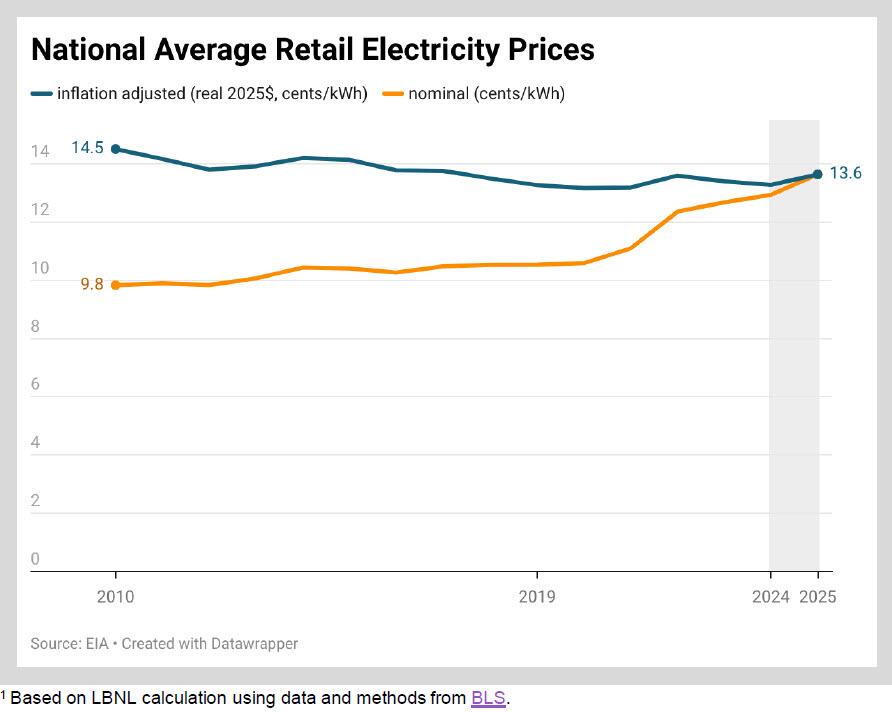
In the “crisis view” of electricity price drivers, national prices have surged since 2019 through 2025, up 33%. There are larger increases in California, the Northeast and parts of the Mid-Atlantic. A third of U.S. households spend more than 5% of their income on electricity, according the report.
The “nuanced” view notes that price increases have largely tracked inflation, and 29 states saw a decline in inflation-adjusted prices from 2019-2025. In most areas, electricity burdens are lower than they were in 2019.
Residential customers “have faced larger recent retail electricity price increases than have commercial and industrial customers,” the analysis said.
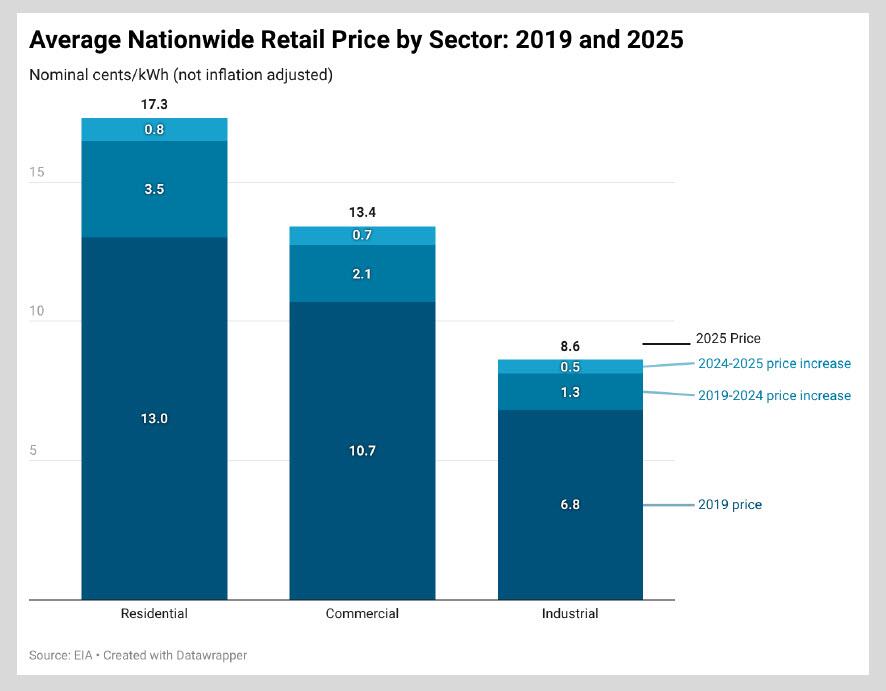
From 2019 to 2025 the nominal price of a kilowatt-hour rose 33% for residential customers, 26% for commercial and 27% for industrial. All-sector average retail electricity prices increased 5.3% in 2025 compared to 2024, they said.
“Residential retail electricity price increases have been significant: broadly in line with some other household expenditures but higher than others,” researchers said.
The average U.S. residential price of electricity, in nominal dollars, went from 13 cents/kWh in 2019 to 17.3 cents/kWh in 2025. Commercial customers saw prices increase from 10.7 cents/kWh to 13.4 cents/kWh. And industrial prices went from 6.8 cents/kWh to 8.6 cents/kWh.
The primary drivers of recent price increases include fuel and wholesale supply, distribution costs, the cost of new generation, transmission costs, storm recovery and capacity prices, the report said.
LBNL and Brattle’s analysis is a data update to 2025 work they did on factors driving electricity prices.
Tyler Durden
Wed, 04/01/2026 – 18:50
https://www.zerohedge.com/markets/expect-electricity-prices-rise-further-analysts-warn
Pentagon Prepares A-10 Warthog Surge As Mideast Fleet Set To Double
Pentagon Prepares A-10 Warthog Surge As Mideast Fleet Set To Double
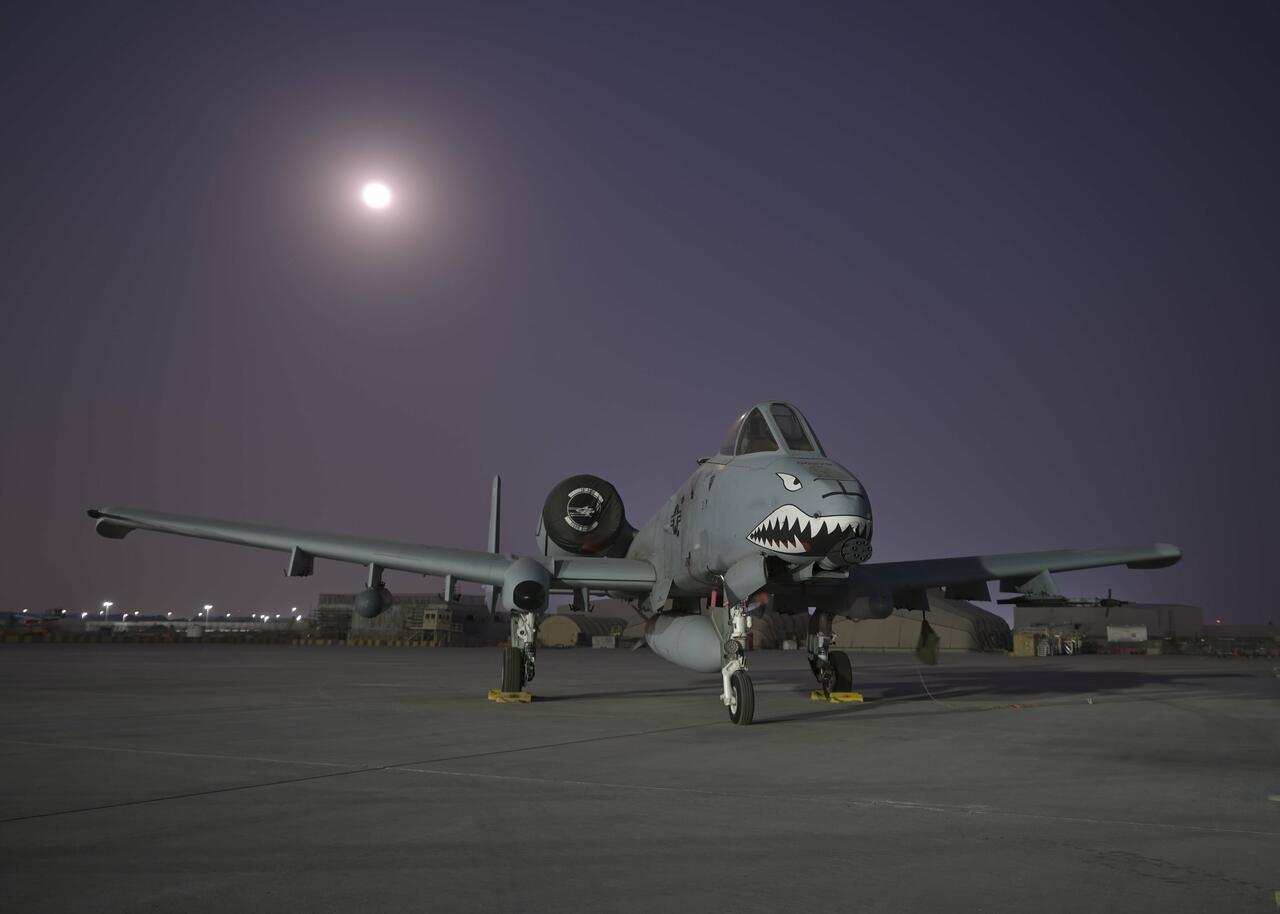
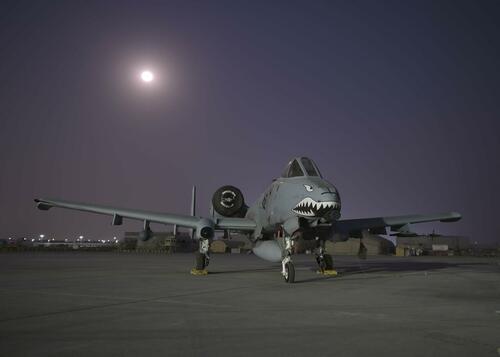
The Department of War is preparing to double its fleet of Fairchild Republic A-10 Thunderbolt IIs, better known in the aviation community as “Warthogs,” in the Middle East in the very near term, The New York Times reported Wednesday.
The surge of additional Warthogs, as many as 18, on top of the roughly dozen A-10s already operating in the region, has already been used to sink Iranian boats in the Hormuz chokepoint and strike Iran-backed militias in Iraq, according to the NYT, citing DoW officials. The expanded fleet suggests a broader aviation campaign in and around Hormuz and could even play a critical role in supporting a potential seizure of Kharg Island, Iran’s main oil hub in the northern Persian Gulf.
U.S. military sustainers are on top of their game. pic.twitter.com/EK9eqF4fc8
— U.S. Central Command (@CENTCOM) March 20, 2026
As of early 2026, the US Air Force had 162 A-10s remaining in its inventory. Air & Space Forces Magazine reported the service had 219 A-10s as of late 2024, then cut 57 aircraft in fiscal 2025, leaving 162 going into fiscal 2026.
The surge in A-10s suggests that as many as 30 could soon be operating in the Gulf region, representing about 18.5% of the USAF’s fleet.
The A-10’s most fearsome weapon is the 30mm GAU-8/A seven-barrel Gatling gun, which fires at an astonishing 3,900 rounds per minute. Typical A-10 armament also includes:
AGM-65 Maverick missiles
Laser- and GPS-guided bombs Mk-82 500-lb and Mk-84 2,000-lb bombs
Unguided and laser-guided 2.75-inch rockets
AIM-9 Sidewinder missiles
Chaff, flares, and jammer pods for self-protection
The NYT cited flight-tracking data indicating that US-based A-10s heading to the region have been stopping at Royal Air Force Lakenheath, a base in England, before continuing on to the Gulf region.
#BREAKING 12 US A-10C Thunderbolt II ‘Warthogs’ just landed at RAF Lakenheath in the UK en route to the Middle East for Operation Epic Fury. pic.twitter.com/ZcBXcStozP
— MCBN (@MCBNNEWSS) April 1, 2026
“The planes could be used to help U.S. ground forces seize territory near the Strait of Hormuz, the crucial waterway Iran has effectively closed, or Kharg Island, Iran’s main oil hub in the northern Persian Gulf,” the outlet said.
Earlier this month, Zoltan Pozsar of Ex Uno Plures noted that the Trump administration is “methodically building a portfolio of assets” from Venezuela to the Panama Canal to Iran’s oil flows and the Strait of Hormuz, a strategy aimed at reasserting American dominance, securing the empire for years to come, and tightening the screws on Beijing after last year’s rare earths stunt.
“Iran and Kharg Island are next. Iran is a Chinese vassal and so Kharg Island is basically a Chinese asset. Iran and Kharg Island will soon be a U.S. asset. The same with the SoH – it will soon be a U.S. asset,” Pozsar noted.
And this.
In case you missed… Every Army Base and Army National Guard Base in America was training and testing on Black Hawk and Apaches today. Every one. Normal when you’re definitely not invading a country. pic.twitter.com/nxMsr8w86i
— Roger (@rdd147) April 1, 2026
Checking in today here are the BlackHawks…
Notice Fort Cavazos, TX, the largest Blackhawk base in the country. Nothing. Most blackhawks have been shipped, a few remain for training, and a lot of training happening 24-7 pic.twitter.com/cLMw7AabhZ
— Roger (@rdd147) April 1, 2026
Is this why we are moving excavators via train to the naval boat yards in San Diego?
Maybe it’s just for sand castles in Iran.
They’re gonna go for it.
Watch what they do. Not what they say. https://t.co/VTFYKxG5G3 pic.twitter.com/6PzYFYcv5E
— EconstratPB (@EconstratPB) March 31, 2026
The surge in A-10s suggests the US is preparing for a dirtier, more prolonged campaign centered on Hormuz, coastal targets, and possibly a seizure or raid of Kharg Island or others.
Tyler Durden
Wed, 04/01/2026 – 18:25
https://www.zerohedge.com/military/pentagon-prepares-10-warthog-surge-mideast-fleet-set-double

America’s Half-Trillion-Dollar Sewage Problem
America’s Half-Trillion-Dollar Sewage Problem
Authored by Autumn Spredemann via The Epoch Times (emphasis ours),
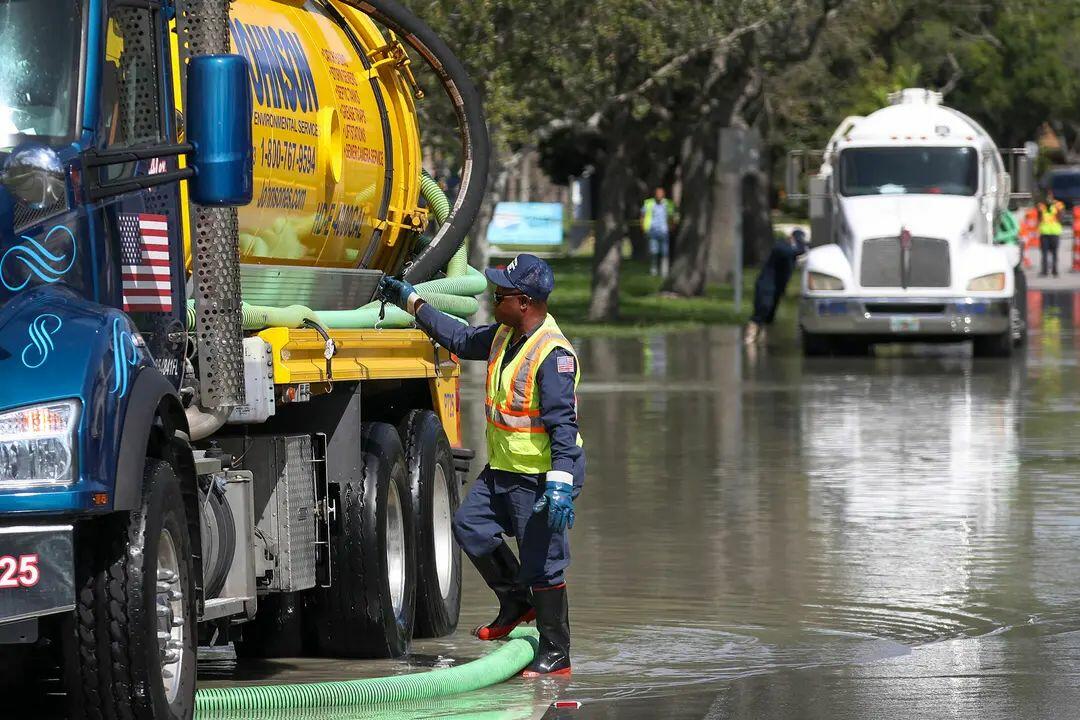
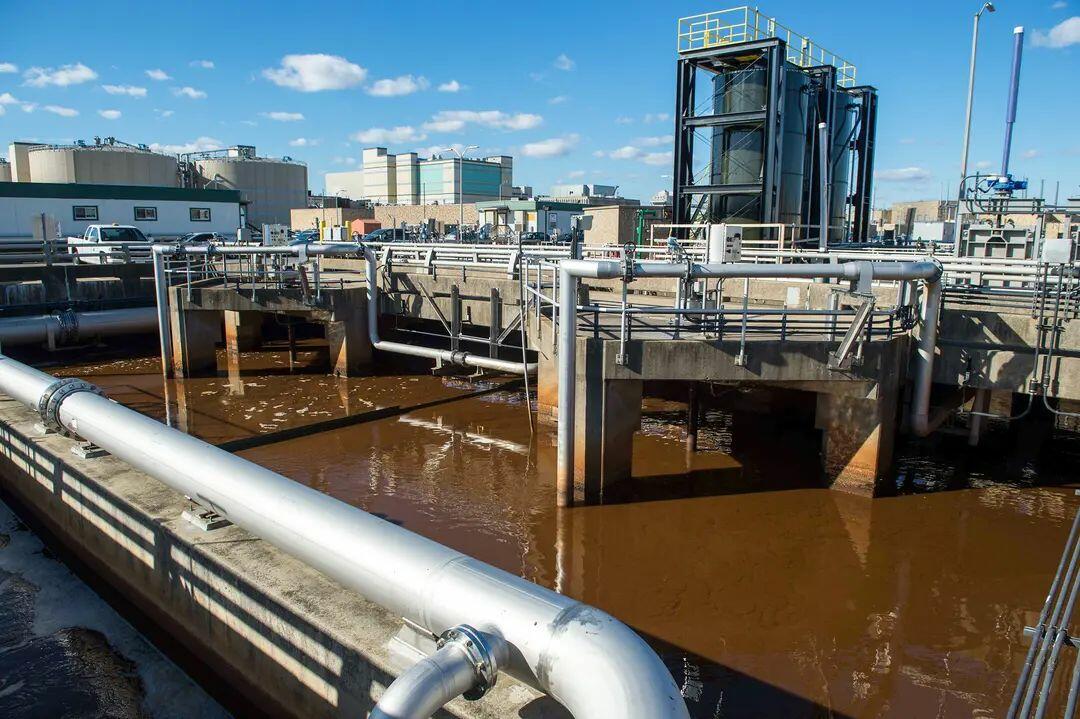
Beneath city streets and suburban neighborhoods, a vast network of pipes and wastewater treatment systems is reaching the end of its life. This subterranean infrastructure is already suffering tens of thousands of failures per year, while exposing millions of Americans to contamination risks.
Utilities, plumbing experts, and environmentalists warn that the scope of the problem has expanded rapidly in recent years. As of 2024, the Environmental Protection Agency (EPA) estimated that $630 billion in wastewater infrastructure investment would be needed to repair and replace deteriorating systems. At the same time, extreme weather events and growing populations were putting additional strain on America’s aging pipes.
The American Society of Civil Engineers (ASCE), in its 2025 report card, gave U.S. wastewater infrastructure a D-plus, which the group largely attributed to a lack of funding to meet the needs of communities with failing systems.
Meanwhile, average utility prices for wastewater consumers increased from $35 per month to nearly $65 per month between 2010 and 2020, ASCE researchers found. Even still, they said, rising utility prices aren’t “keeping pace with the growing costs for utilities to provide routine operation and maintenance.”
Paradoxically, as household water and sewer bills increased more than 24 percent between 2020 and 2025, wastewater infrastructure renewal and replacement rates for large-scale projects actually decreased over the past decade, from 3 percent to 2 percent, according to the ASCE analysis.
The scope of the problem becomes clearer when considering the sheer volume of sanitary sewer overflows. As of April 2025, the EPA estimated there were between 23,000 and 75,000 overflow incidents per year, and that didn’t include sewage that backed up into buildings or residential homes.
Some of the reasons for these spills included blockages, line breaks, design defects, and overloaded treatment systems.
A spokesperson for the EPA told The Epoch Times that the agency is “committed to accelerating investments in water infrastructure by stewarding federal funding appropriated by Congress.”
Recent funding highlights from 2025 include the Clean Water State Revolving Fund and Water Infrastructure Finance and Innovation Act, which committed $13 billion for infrastructure improvements in communities across the nation, according to the EPA spokesperson.
When asked about the staggering volume of sewer overflows per year, the agency representative emphasized the value and importance of this network.
“EPA estimates that our nation’s sewers are worth a total of more than $1 trillion,“ the representative said. ”The collection system of a single large municipality is an asset worth billions of dollars and that of a smaller city could cost many millions to replace.
“Ongoing maintenance and rehabilitation can add value to the original investment by maintaining the system’s capacity and extending its life. The costs of rehabilitation and other measures to correct [sanitary sewer overflows] can vary widely by community size and sewer system type.”
The United States’ wastewater pipe network is a part of the national infrastructure that has been neglected for years and suffers “chronic underinvestment,” according to the Association of State Floodplain Managers.
The country has roughly 800,000 miles of sewer pipes, according to ASCE’s 2021 report card. For perspective, the National Highway System only covers an estimated 164,000 miles, according to the Department of Transportation.
Within that sprawling web, the average age of sewer pipes is around 45 years, ASCE’s 2021 report found. But in some American cities, sewer systems date back a century or more: in the city of St. Louis, for example, some sewer lines were built in Civil War days. And parts of Philadelphia’s working sewer system date back to 1800, Municipal Sewer and Water reported in 2025.
“Wastewater treatment systems are meant to act as a barrier to disease both for public health and environment,“ Laura Underwood, director of digital water solutions for Locus Technologies, told The Epoch Times. ”If you have overflows or failures, these events can release pathogens into waterways and increase the risk of gastrointestinal illnesses, skin infections, and contamination of recreational or drinking waters.”
Close to Home
Underwood has worked within the utility space as a compliance director for water and wastewater treatment operations. She didn’t sugarcoat the reality of what further delays in upgrades will cost Americans.
“You will continue to see more frequent overflows and plant bypasses. These spills and untreated discharge events can lead to degraded waterways with increased contamination risks to the public and environment,” she said.
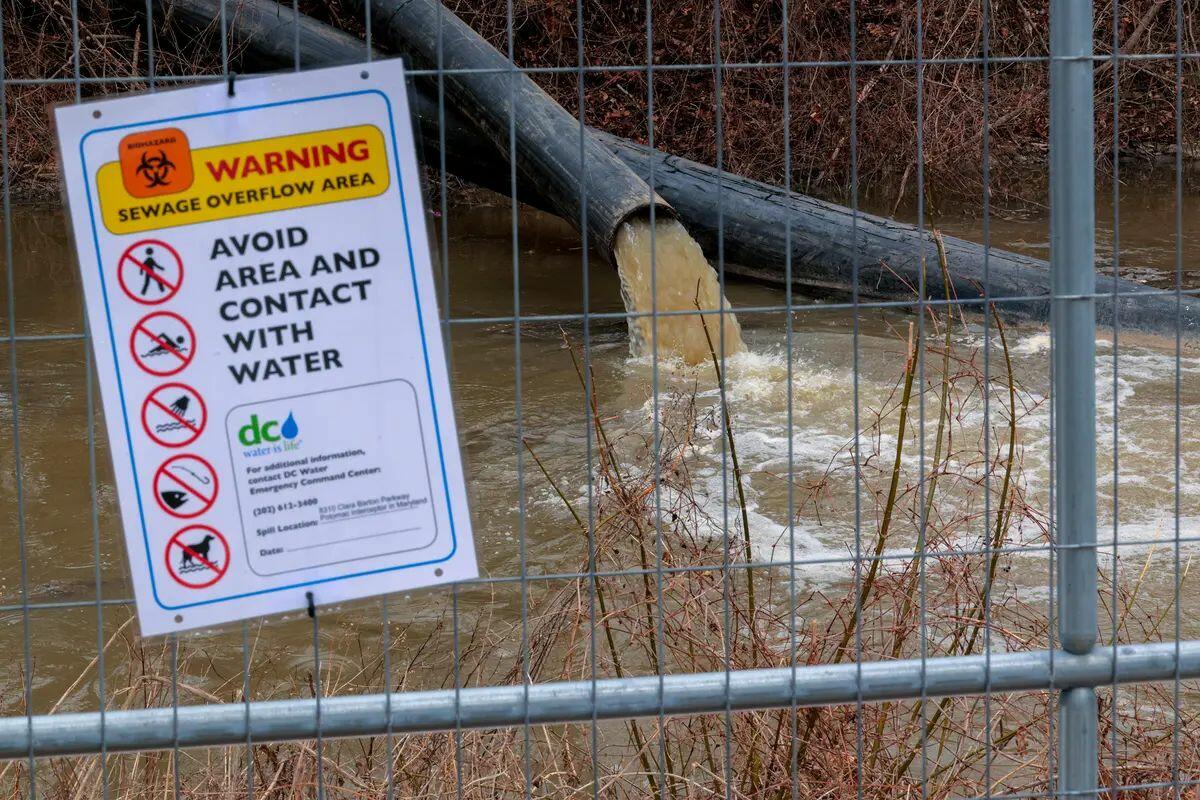
This isn’t some speculative future problem. In January, more than 250 million gallons of sewage entered the Potomac River near Washington. The event marked one of the worst incidents of its kind in U.S. history; President Donald Trump called it a “massive ecological disaster.”
In an account published on the American Rivers website, a witness to the Potomac River disaster, Gary Belan, recalled arriving at the site of the sewage overflow and seeing “several massive pumps” diverting raw waste into the C&O canal area, which runs parallel with the river.
Belan said the area is a “popular spot to walk, bike, and access the river for fishing and boating.” He said he’s been taking his kids there since they were toddlers.
“There is a literal river of sewage flowing open along the towpath that parallels the canal,” he wrote. “The estimated repair time is going to be 9 [to] 10 months, disrupting the communities nearby. This doesn’t include time for the environmental remediation.”
Some industry insiders say surface water contamination is far from the only hazard of aging sewer system failures.
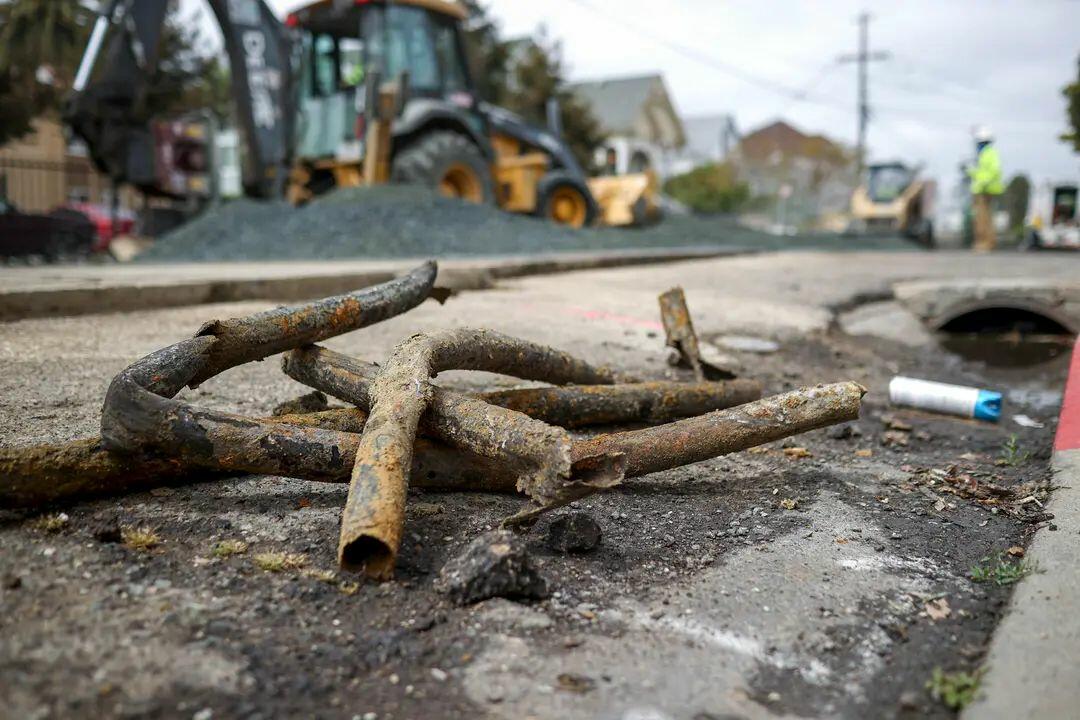
“The biggest challenge I see on the ground is aging pipes, specifically the catastrophic failure of cast iron and clay sewer laterals that connect individual properties to the main municipal line,” master plumber Steven Morgan told The Epoch Times. “These pipes were installed 50 [to] 80 years ago and are now collapsing, cracking, and being invaded by tree roots.”
Morgan is the head of technical training and development at 24hr Supply and deals with the ugly truth of America’s antiquated wastewater network regularly. He said a lot of people don’t understand how aging sewer infrastructure can cost them directly and dearly.
“Homeowners don’t realize they’re responsible for the section from their house to the street, and when it fails, they’re looking at $8,000 [to] $25,000 in emergency repairs,” he said.
Morgan believes the real problem is that these failures create blockages and backups that force raw sewage into basements during heavy rains.
“Multiply that across an entire neighborhood with aging infrastructure, and you’ve got a public health crisis waiting to happen,” he said.
“The pipes aren’t just old, they’re fundamentally incompatible with modern water usage patterns and climate realities like increasingly intense storms.”
Direct contact with contaminated water spills in places such as basements, lawns, streets, or recreational areas can cause serious health concerns. Contaminated water can contain bacteria, viruses, parasites, worms, and industrial chemicals such as per- and polyfluoroalkyl substances, commonly known as PFAS or “forever chemicals.”
Official data put the number of Americans affected by waterborne pathogens annually at 7.15 million, according to the Centers for Disease Control and Prevention. Within that group, about 118,000 are hospitalized and 6,630 die from related illnesses.
Long Range Impacts
Leaky pipes take on a whole new dimension when it’s toxic sludge entering rivers and other water resources. Groundwater contamination is prevalent at 85 percent of EPA Superfund project cleanup sites.
“Failing sewer lines or poorly maintained [wastewater] lagoons can allow untreated sewage to seep into groundwater. However, this is typically a smaller-scale localized contamination,” Underwood said.
“I would say there is a larger contamination risk with [treatment] plant bypasses where a portion of untreated wastewater is discharged to a surface water outfall.”
A 2023 study from the University of Parma observed that leaky sewers negatively impacted not only surface and groundwater but also subsurface aquifers.
“Sewer pipeline ruptures are a severe risk to groundwater quality. When sewerage deterioration conditions occur, aquifers can be contaminated by contaminants contained within sewer water,” the study said.
Read the rest here…
Tyler Durden
Wed, 04/01/2026 – 18:00
https://www.zerohedge.com/medical/americas-half-trillion-dollar-sewage-problem
The Actual Problem With America’s Energy Security Is Starting To Reveal Itself…
The Actual Problem With America’s Energy Security Is Starting To Reveal Itself…
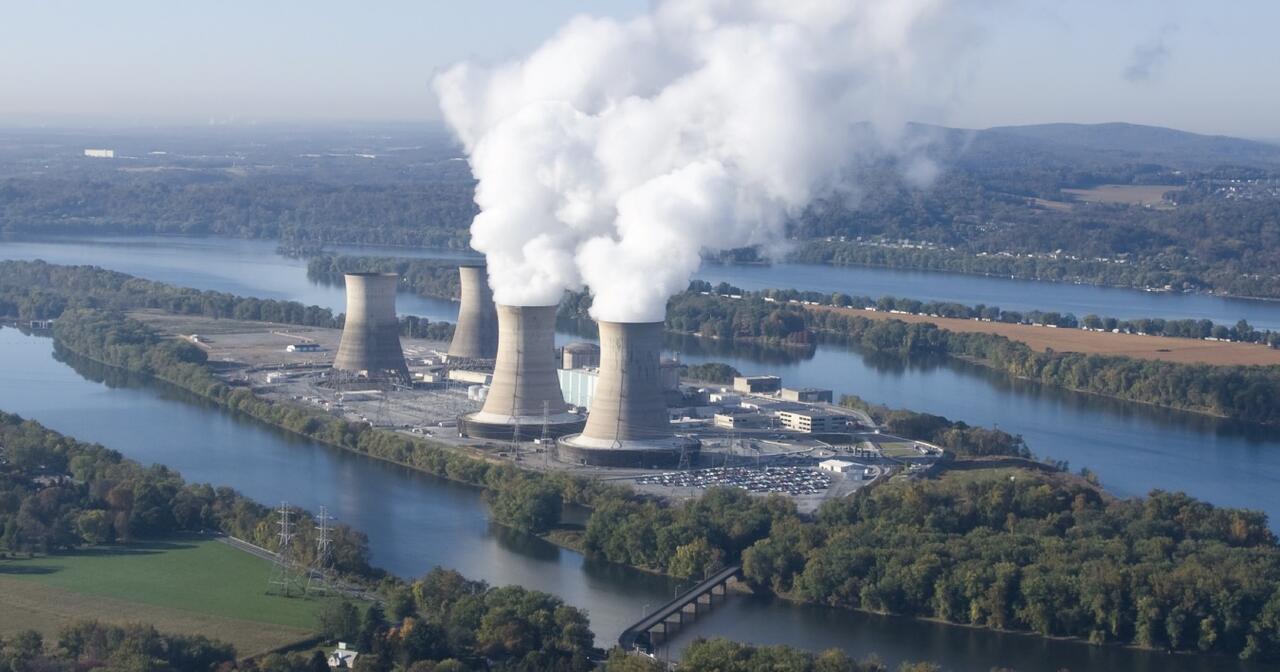
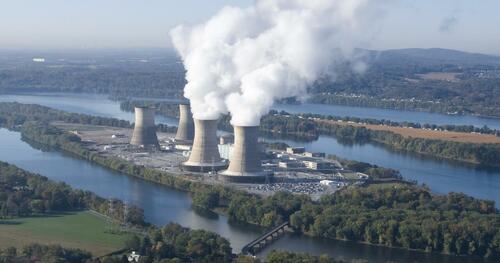
Constellation Energy’s high-profile effort to revive one of the Three Mile Island reactor plants, now renamed the Crane Clean Energy Center, has run into a four-year-tall roadblock: the grid itself.
The company had targeted a restart in the second half of 2027 to deliver roughly 835 megawatts of nuclear power to Microsoft data centers under a long-term agreement.
Yet PJM Interconnection, the regional grid operator, reports full deliverability could take until 2031.
The holdup stems from needed transmission upgrades.
The $1 billion loan secured by Constellation has only been followed by delays…
BOOM
*CONSTELLATION GETS $1B US LOAN TO REOPEN THREE MILE ISLAND
— zerohedge (@zerohedge) November 18, 2025
Constellation pushed back quickly, insisting the plant remains on schedule for 2027 operations and that it is actively negotiating with PJM and local utilities to shorten the timeline. The 2031 date, the company said, reflects only the point of complete certainty around upgrades rather than an outright bar to earlier partial output.
The real culprit is not the data centers driving the demand. Tech giants and hyperscalers are not conjuring the problem out of thin air. Decades of underinvestment in transmission lines, permitting bottlenecks, and overloaded interconnection queues have left the grid ill-equipped for any surge, whether from nuclear restarts, renewables, or new industrial loads. PJM’s own studies show the system has evolved since Three Mile Island’s 2019 closure, yet the backlog of projects, both generation and demand, continues to grow. Utilities and operators face the same squeeze whether the request comes from a reactor or a server farm.
Less than a year ago, Bloomberg reported Constellation Energy moved the restart date up one year from the original 2028 completion date to 2027. The reactor owner noted the connection to the PJM grid would take another year, to 2028. Yet, here we are nine months later and that grid connection timeline has already moved out an additional three years.
Just last month, the IEA warned electricity demand is rising fast while over 2,500 GW of projects worldwide sit stalled in connection queues, with the U.S. portion especially strained. We also noted transmission projects routinely face five-to-seven-year delays from permitting and interconnection hurdles.
The pattern is clear. Data centers expose the weakness; they do not create it.
Until transmission spending and permitting catch up with the real-world need for reliable power, even the cleanest, most reliable plants will sit idle longer than planned.
The Three Mile Island delay is simply the latest symptom of a system that has been neglected for far too long.
* * * Grab it here
Anza Big Bowie – now THAT’s a knife! pic.twitter.com/oEZ6HVaMYg
— ZeroHedge Store (@ZeroHedgeStore) August 25, 2025
Tyler Durden
Wed, 04/01/2026 – 17:40
https://www.zerohedge.com/energy/grid-delays-hit-three-mile-island-restart-pjm-delays-until-2031
John Mearsheimer Asks: Will Trump Go Kamikaze?
John Mearsheimer Asks: Will Trump Go Kamikaze?
There is much talk about President Trump preparing to launch a ground attack against Iran. In the media discourse, much is made of the fact we have about 50,000 troops in the region. See for example these three articles.
One might think those are all combat troops and we therefore have roughly three combat divisions available to invade Iran. But that is not true.
Until recently, there were about 40,000 US troops in the region, which were mainly a mixture of Air Force, Army, and Navy forces. Very importantly, there were few Army or Marine combat troops, although there were certainly some special forces. But they are of little use for major combat operations, for which you need organized combat units like battalions, brigades, regiments, and divisions.
In essence, until recently, there was hardly any organized ground power in the Middle East, which is what you need to invade and hold Iranian territory. As Napoleon was known to say: “God is on the side of the big battalions.”
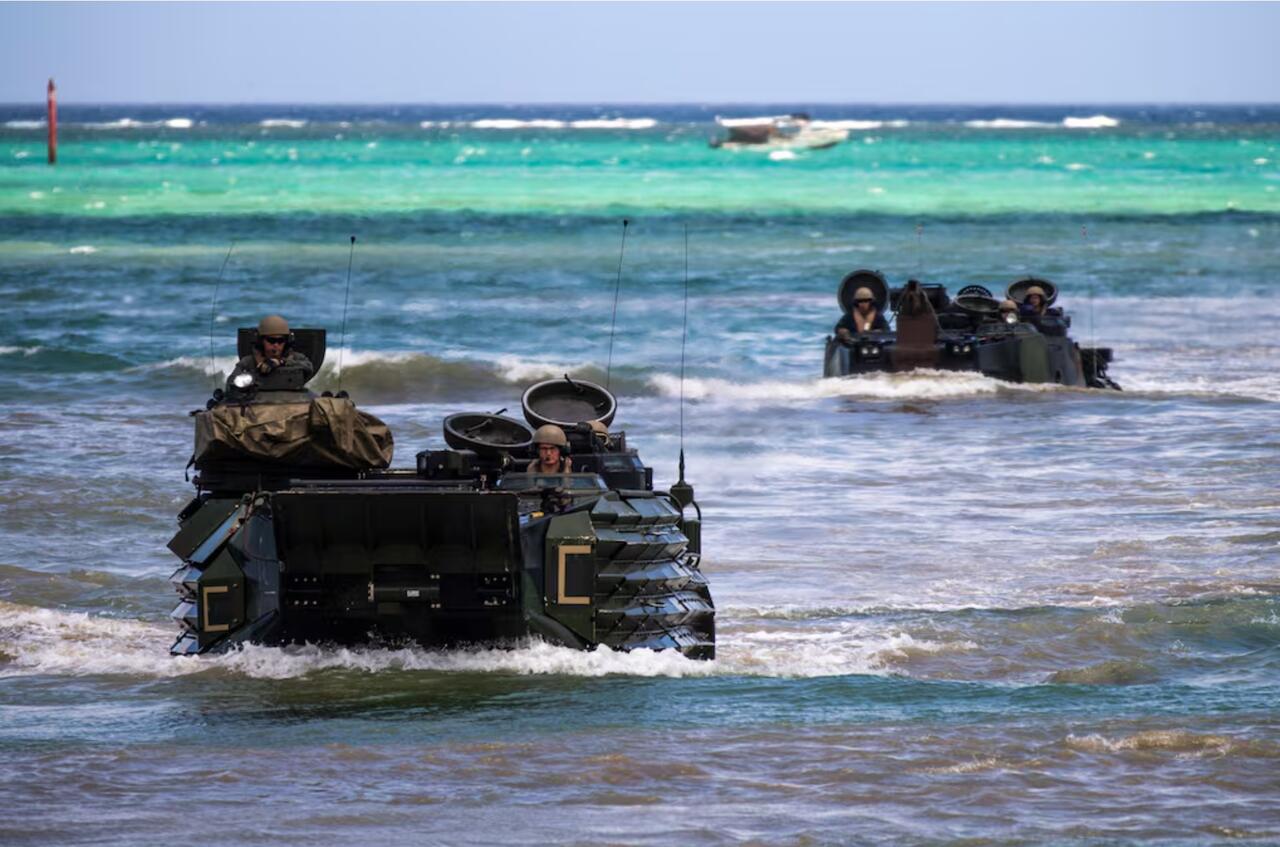
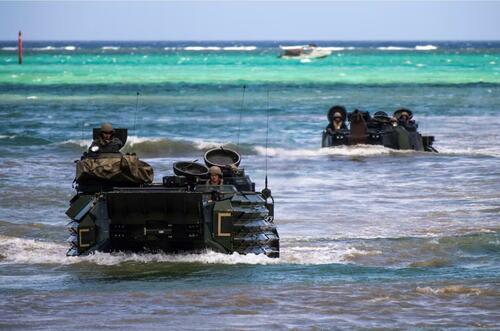
Marine Corps image, illustrative/Camp Schwab, Okinawa
President Troop has recently sent about 2,000 combat troops from the 82nd Airborne Division to the Middle East as well as the 31st Marine Expeditionary Unit (MEU) comprised of about 2,500 combat troops. There is another MEU – the 11th – on its way to the Middle East from California, which I assume will add another 2,500 combat troops. That MEU is not expected to arrive until mid-April. That means there will be a total of roughly 7,000 combat troops organized in combat units after mid-April, but 4,500 before then.
That is a tiny force with little chance of conquering and holding Iranian territory, especially when you consider that:
1) all these units are light infantry,
2) they have not prepared to fight this particular war and are doing it on the fly,
3) supporting them logistically when they are in combat will be very difficult,
4) Iran has mobilized an army of about a million men and is lying in wait,
5) the Iranian army is likely to put up fierce resistance as not only will it be defending sacred territory, but the fighting forces will surely understand they are facing an existential threat,
6) the skies over the US troops are likely to be filled with deadly drones – think Ukraine where it is hard for either side’s soldiers to move in the open without getting killed,
7) Iranian ballistic missiles, rockets, and artillery will be directed at the US forces.
There is talk that President Trump might send another 10,000 combat troops to the Middle East, but that has not happened yet as best I can tell. Even if it happens, however, the resulting force would still only have 17,000 combat troops. It is worth noting that there will be no Israeli forces involved in the invasion.
Finally, I assume that the combat forces from the 82nd have to be located on a US base or bases once they get to the Middle East. But the Iranians have basically wrecked or seriously damaged the 13 major US installations in the region. So, where do they go and won’t Chinese and Russian intelligence spot them wherever they are and tell the Iranians, who will strike at them?
The Marines, on the other hand, will be on giant amphibious assault ships like The USS Iwo Jima (31st) and the USS Boxer (11th). Can ships like that be located near the Persian Gulf, much less in the Strait? Would they not be sitting ducks? All the big Navy ships are parked far away from the Gulf today for good reason.
I must be missing something here, because I don’t understand how we could possibly have a serious ground force option.
Maybe with some luck we could take a small island in the Persian Gulf, but I don’t think we could hold it, and even if we did, it would hardly affect the course of the war. In the process, many Americans would die for a lost cause.
Tyler Durden
Wed, 04/01/2026 – 17:20
https://www.zerohedge.com/military/john-mearsheimer-asks-will-trump-go-kamikaze

Tankers Seized By US Carried 20 Million Barrels Of Iranian Crude To China
Tankers Seized By US Carried 20 Million Barrels Of Iranian Crude To China
Nine tankers seized by the US since it began taking direct action against the so-called shadow fleet that transport illicit oil around the world have delivered more than 20 million barrels of Iranian crude to China since 2013, according to the WSJ. The figures form part of a new report that provides an insight into the level of support China has given Iran by buying its sanctioned oil.
Between 2013 and 2025, these nine vessels delivered 20.3 million barrels of Iranian crude to Chinese ports, the report said, citing data from Kpler. The vessels also carried 37.9 million barrels of Venezuelan crude and 11.1 million barrels of Russian crude to Chinese ports.
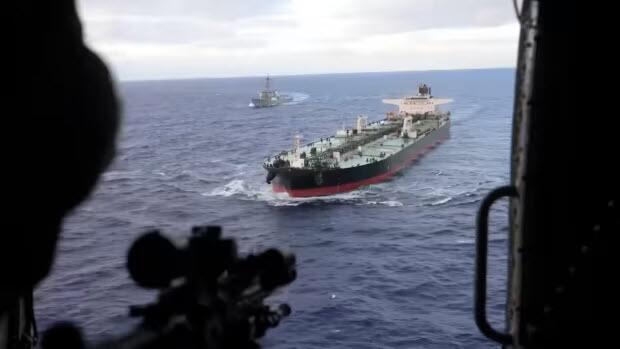
U.S. forces taking control of an oil tanker in the Indian Ocean
Altogether, that crude is worth at least $4 billion, according to the report, which is set to be released soon by Republicans on the House Select Committee on China, and seen by The Wall Street Journal.
To be sure, the amount from the seized vessels represents just a small fraction of the oil China has imported from Iran, a process which has accelerated since the Iran was started, lifting Iran’s output to the highest in years.
Still, it underscores how China has been a major user of the shadow fleet, bankrolling Iran, as well as Venezuela and Russia. In 2025, China received a third of the crude oil carried by shadow and sanctioned tankers and 10% of heavy refined products such as fuel oil and crude residuals, the report said, citing Kpler data.
Shadow fleet vessels carrying sanctioned cargo have also used China’s BeiDou satellite navigation in an effort to operate outside Western oversight, the report said. BeiDou is Beijing’s answer to the U.S. Global Positioning System, or GPS, and offers positioning, navigation and timing data globally. China’s Foreign Ministry didn’t respond to a request for comment.
Tyler Durden
Wed, 04/01/2026 – 17:00
https://www.zerohedge.com/energy/tankers-seized-us-carried-20-million-barrels-iranian-crude-china