Category: News

India Unveils AI Kamikaze Drone As Global Powers Rush To Acquire Cheap Loitering Munitions
India Unveils AI Kamikaze Drone As Global Powers Rush To Acquire Cheap Loitering Munitions
The most visible weapon in the wars across Eurasia, from Ukraine to the Middle East, is the low-cost one-way attack drone. It has forever changed the economics of war and how war is fought on the modern battlefield by enabling swarm strikes at a fraction of the cost of traditional air-delivered munitions. Ukraine and Russia both proved this, and the last five weeks of the U.S.-Iran conflict have really confirmed it.
In many ways, the war in Ukraine accelerated what could very well be warfare of the 2030s, driven by the hyperdevelopment of low-cost consumer technologies that can be dual-use or easily weaponized. From FPVs and AI-enabled kill chains to drone boats, ground robots, and one-way attack drones, the modern battlefield has been transformed by low-cost, scalable, and increasingly autonomous war machines. It is an emerging threat we warned readers about right before the Gulf conflict, because countermeasures against drones are lacking at scale and are unaffordable.
In the Gulf theater, Iran has used these low-cost drones to strike data centers, U.S. military installations, and civilian infrastructure. In a prolonged war of attrition, mass-produced, cheap drones are increasingly likely to prevail over low-production, very expensive interceptor missiles in the long run. The Trump administration has smartly woken up to this new era of warfare and, secretly through the Department of War, deployed its own Iranian-style kamikaze drones (we reported in the first week of the conflict).
Military strategists around the world are now taking notes and copying the drone playbooks being written in real-time by active players in both Eurasian conflicts. As we noted the other week, China has likely already ramped up mass production of Iranian- and Russian-style one-way attack drones.
Taken together, the speed at which these drones are proliferating across battlefields is very alarming, and yet another country appears set to begin mass production: India.
Indian defense news website Indian Defense Research Wing reports that startup HoverIt has developed DIVYASTRA MK2, an advanced long-range strike drone.
“With an operational range projected between 1500 to 2000 kilometers and a flight endurance of 8 to 12 hours, the platform is designed to operate deep inside adversary territory, enabling both persistent surveillance and precision strike missions without immediate reliance on forward bases,” Defense Research Wing wrote in the report.
India’s own attack drone is here! 🇮🇳🔥
The Divyastra MK1, with a massive 500 km range, is a true nightmare for Pakistan. #DivyastraMK1 #IndianArmy #MakeInIndia #DefenceNews #DroneTech pic.twitter.com/Tcf03TnaL3
— NewsMatrix (@PabanSingh82441) March 29, 2026
The report added, “The UAV is expected to incorporate advanced AI-driven swarm intelligence, enabling coordinated operations with multiple platforms for saturation attacks, distributed surveillance, and adaptive mission execution.”
Every serious country with a proper defense manufacturing base will be retooling some production lines for these cheap drones. The problem emerging is that the rapid pace of development and deployment has left much of the world unprepared.
Tyler Durden
Thu, 04/02/2026 – 04:15

France Approves Record Number Of Asylum Applications In 2025, Up 12% YoY
France Approves Record Number Of Asylum Applications In 2025, Up 12% YoY
The latest data released by the National Court of Asylum reveals a historic statistical milestone: asylum grants in France have reached an unprecedented peak.
In 2025, a record 78,782 individuals were granted asylum, marking a 12 percent increase over the previous year. The recognition rate has also climbed to an all-time high of 52.1 percent – or 47.1 percent when excluding unaccompanied minors.
The initial stage of the asylum process is managed by the French Office for the Protection of Refugees and Stateless Persons (OFPRA). If a claim is denied, applicants may appeal to the National Court of Asylum. While various forms of protection exist, the ultimate goal for many is the status of “refugee,” as it opens rights similar to those of the French in most areas, including social welfare, education, and housing.
The asylum system remains highly accessible, despite President Emmanuel Macron saying year after year that France needs to reduce immigration, just as he did in 2023.
“Are we flooded with immigration? No. You cannot say that. But the current situation is not sustainable, and we need to reduce immigration significantly, starting with illegal immigration. We have a duty to deliver,” the French president said at the time.
Polling shows the vast majority of French want a reduction in immigration, and even a majority of women want zero immigration, both legal and illegal.
France already has the largest Muslim population in Europe, leading to serious cultural, societal, and even security problems. Unlike policies debated or implemented in nations like Italy or Denmark, which seek to reduce the ability for individuals to apply for asylum, France has very generous laws, including allowing those already present on French soil to apply for asylum directly. This creates a significant challenge for the state, as even when applications are denied, authorities have an extremely difficult time removing people. Macron, for instance, stated his goal was a 100 percent deportation rate. France’s actual deportation rate has remained in the teens since then, averaging around 15 percent.
In fact, France has gone from record to record in terms of overall immigration every single year. Last year, Remix News reported that a record 6 million foreigners live in France, after a record 400,000 migrants arrived in the country in 2024. Earlier this year, Remix News reported that a record number of first-time residency permits were issued in 2025.
Nevertheless, despite soaring public pressure, more asylum applications are being approved than ever. Even during the peak of the 2015 migration crisis, France did not grant asylum at these levels. Wars continue to be a major factor. For the second consecutive year, Ukrainians represent the largest group of asylum seekers, followed closely by nationals from the Democratic Republic of the Congo and Afghanistan.
Beyond geopolitics, the increasingly broad jurisprudence of the National Court of Asylum plays a pivotal role.
In 2025, the court recognized automatic refugee status for all people from the Gaza Strip, then from the West Bank.
In other words, Palestinians have almost virtually unlimited access to French territory.
The court also recognized an automatic right to women from Iran and Somalia, which are deemed unfriendly states for women.
Similar protections were extended to homosexual individuals from Egypt, Guatemala, and, as of late 2024, Sri Lanka.
Once again, this liberal attitude towards asylum is not backed by the French public, with polling showing that 61 percent of the French want the right of asylum restricted in the country.
According to the BVoltaire publication, there is an “urgent call to reform. Proponents argue that France must consider renegotiating international conventions and amending the Constitution, asserting that both the efficiency of the State and the preservation of French identity are currently at risk.”
Tyler Durden
Thu, 04/02/2026 – 03:30
https://www.zerohedge.com/geopolitical/france-approves-record-number-asylum-applications-2025-12-yoy
Ayatollah Breaks Silence, In Written Message Praises Hezbollah & Shia Leaders Of Iraq
Ayatollah Breaks Silence, In Written Message Praises Hezbollah & Shia Leaders Of Iraq
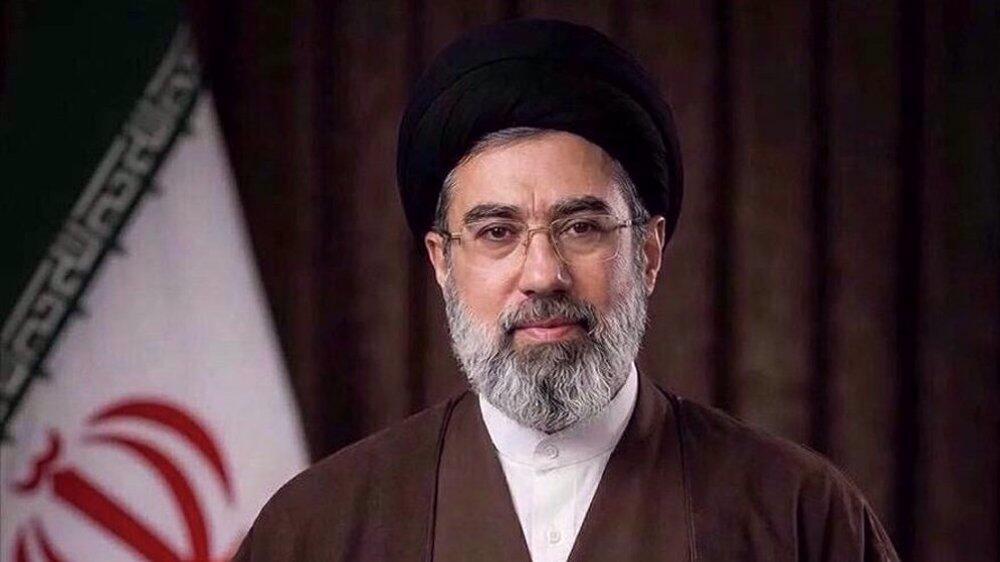
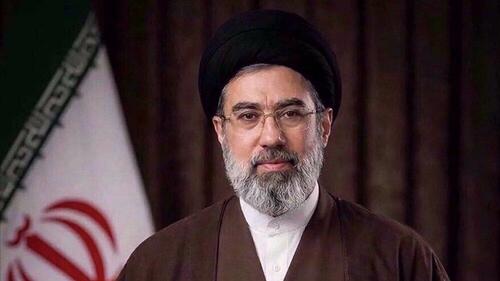
The new, younger Ayatollah Khamenei – who may have been wounded in the early days of US-Israeli strikes, hasn’t been seen in any public way, not even on TV, throughout the war. There have not so much as been any official recent images of him circulated.
But Mojtaba Khamenei has apparently been issuing some limited written statements, mainly encouraging foreign proxies in their joining the war against US and Israeli forces in the region. State media has indicated he’s not making public appearances given the ongoing relentless bombing campaign and the Islamic Republic’s wartime footing.
After a long period of relative silence, a message from Khamenei was publicized on Monday. In the message attributed to him, he “expressed his appreciation to the supreme religious authority (in Iraq) and the people of Iraq for their clear stance against aggression against Iran and their support for our country,” Iran’s ISNA news agency said, referring to the Iraq-based Grand Ayatollah Ali Sistani. Sistani is based in Iraq and has long been a highly revered Shia cleric in the region.
The 56-year old Khamenei has on Wednesday apparently broken his silence again, this time praising Hezbollah for joining the war against Israel. Hezbollah has been launching hundreds of rockets on northern and central Israel, amid an emerging ground campaign in southern Lebanon, also as Israel bombs Beirut from the air.
In the new words carried by Iranian state media, he praised Hezbollah for its “perseverance, steadfastness and patience” against “the most ruthless enemies of the Islamic world.”
Meanwhile, the CIA and Mossad are said to be trying to uncover Mojtaba Khamenei’s whereabouts and status. His 86-year old father did not appear to have been in hiding at all when he was slain by airstrike on the very first day of Operation Epic Fury.
The most likely explanation could be that the younger Khamenei is directing the war from a much more secure and hidden setting, for example a deep underground bunker – or in a remote part of the country.
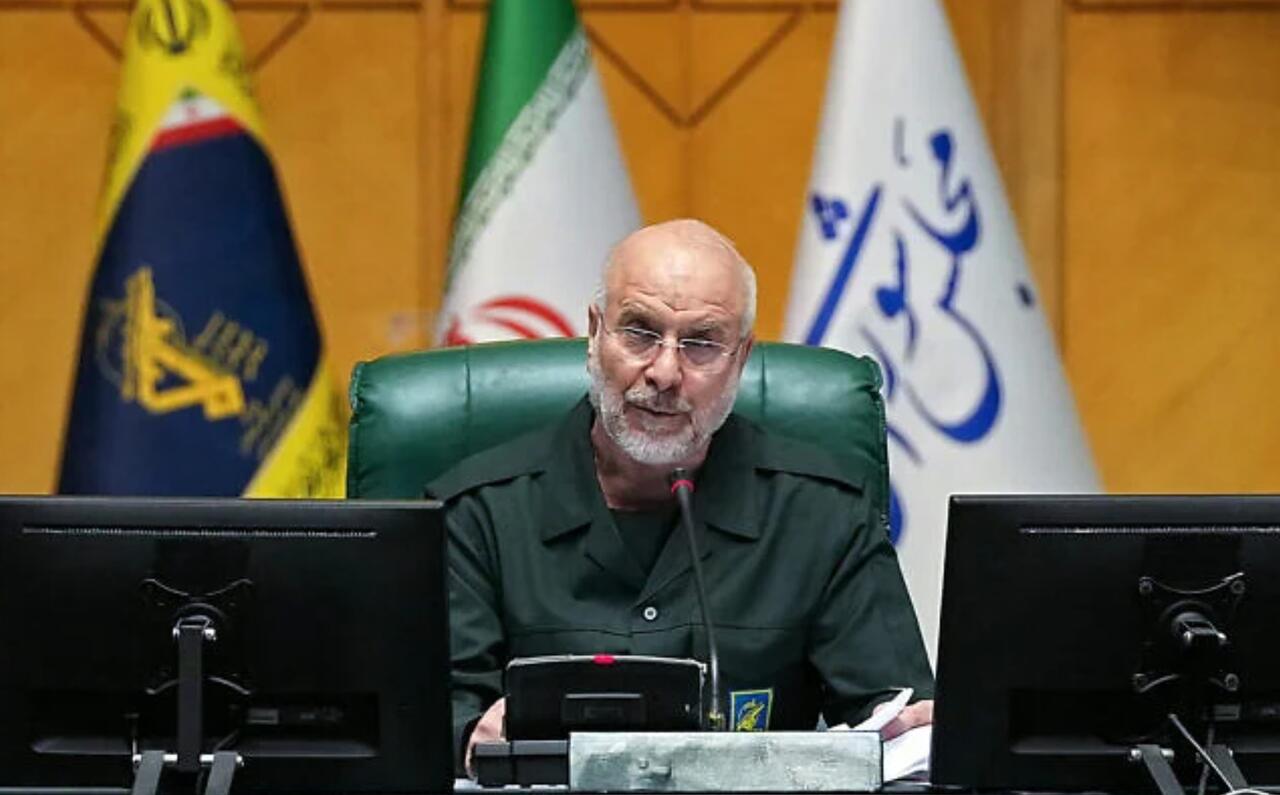
Iran’s Parliament Speaker Mohammad Bagher Ghalibaf, via AFP
But some analysts have questioned why he wouldn’t make a video address, even if pre-recorded, offering to the world proof that he is a alive and is running the country and war. As for the most visible day-to-day leader, this is parliament speaker Mohammad Bagher Ghalibaf.
Tyler Durden
Thu, 04/02/2026 – 02:45

Indians Are Online Bragging About Scamming Europe’s Education System
Indians Are Online Bragging About Scamming Europe’s Education System
Authored by Steve Watson via Modernity.news,
Europe is literally paying Indians hundreds of euros a month to “study” while its own students can’t afford rent and are drowning in debt.
In a now-viral video, an Indian student in Europe boasts about the arrangement. He explains how the EU provides him with 1400 euros every single month that covers rent, travel, and meals, with zero student debt, while he still saves 600 euros every single month.
He walks through what he calls “elite scholarship secrets,” noting that a simple bachelor’s degree, a valid passport, and basic English proficiency suffice — adding that “IELTS is not always mandatory” and a certificate from some random school abroad will do.
europe literally paying Indians 1400 euro a month to “study” here while our own students can’t afford rent and are drowning in debt.
this guy is literally bragging about scamming the system with a degree that’s worth less than a high school diploma in the west.
total subversion… pic.twitter.com/IA0yxdlaaY
— pallasmaxxer (@pallasmaxxer) March 30, 2026
The poster highlighted the post with clear frustration: “literally bragging about scamming the system with a degree that’s worth less than a high school diploma in the west… total subversion of our education system and you are the one footing the bill. Peak comedy.”
In follow-ups, the same account pointed out that the individual admits “you don’t need to be a topper to get 1400 euro a month… a 75% gpa from a third world uni — literally a mediocre 6.5/10 here… you don’t even need a real English test.”
This reflects a broader pattern visible online where some Indians treat European scholarships and student visas as an easy backdoor.
Other posts have referenced credential issues in India, including claims that one can simply buy degrees and credentials in India and use them to secure educational places in Europe with a visa.
The same dynamic has played out for years in the UK. Former universities minister Jo Johnson previously slammed the high drop-out rates among Indian and Bangladeshi students — the highest among international cohorts — with concerns that “one in four” drop out to take up jobs while remaining on student visas.
? ICYMI
‘1 in 4 students from India and Bangladesh drop out of their UK university course. So, come over here, bring your dependents, then just drop out and crack on with your life.’@PatrickChristys asks if we should impose an ‘absolute cap’ on immigration. pic.twitter.com/aGfgk1xOqU
— GB News (@GBNEWS) December 15, 2023
He called for stricter rules requiring overseas students to prove they can support themselves for the full duration of their course to prevent abuse.
More recently, UK Indo-Pacific Minister Seema Malhotra flagged a surge in student asylum claims as clear “visa abuse.” She stated: “We’ve seen visa abuse in the case of legal routes, where people have gone legally and then sought to overstay when their visas weren’t extended.”
UK universities are shutting out applicants from Pakistan and Bangladesh because of concerns over visa abuse and tougher Home Office rules https://t.co/AbCtu4C4XD pic.twitter.com/JP9PwOosBR
— Financial Times (@FT) December 4, 2025
Official figures showed around 16,000 international students applied for asylum last year after completing courses, with another 14,800 in the first half of 2025.
Completely agree with @ZiaYusufUK
Shabana Mahmood has suspended student visas for four countries. They made up 3,000 out of the 400,000 student visas last year.
The student visas from Bangladesh are x3 higher, Pakistan and Nigeria x10 higher but they’re not on the list. A sham. pic.twitter.com/MNDKJfxbUA
— Chris Rose (@ArchRose90) March 4, 2026
Indian student numbers to the UK have already fallen amid tighter controls.
UK minister flags visa ‘abuse’ as student asylum claims surge https://t.co/Wqd1i1E0Ho
— BBC News (UK) (@BBCNews) November 25, 2025
‘We should change the law to say if you come in on a student or tourist visa, you cannot seek asylum!’
Former Conservative MP Louise Mensch reacts to new reports into how Britain’s visa system is being gamed, with Pakistanis making up a disproportionate number of cases. pic.twitter.com/q5bXTYrF51
— GB News (@GBNEWS) November 23, 2025
Reform leader Nigel Farage has repeatedly called out the absurdity of the student visa route, including how it has allowed foreign students to bring large numbers of dependents.
In one exchange, he put it plainly: “If you come to university in Britain, you can’t just bring your Mum with you.”
He highlighted the previous policy that saw 460,000 study visas issued in 2023 along with 144,000 dependents, describing it as “absolutely batty” and noting that universities had become “drunk on foreign money.”
Farage argued this setup does little to benefit British students and contributes heavily to net migration figures.
Farage has repeatedly argued that the economic case for mass migration has collapsed, pointing out how it drags down GDP per capita and leaves average Britons poorer despite headline growth figures.
This fits a wider picture. A report from the Centre for Migration Control revealed that 1.6 million migrants in the UK are unemployed or economically inactive, costing taxpayers £8.5 billion a year — a figure that does not even include asylum accommodation or foreign student subsidies.
The analysis described the situation as “the very definition of a Ponzi scheme.”
Europe and the UK have spent years importing large numbers of students under the banner of “excellence” and economic benefit. Instead, taxpayers subsidize stipends and visas while native young people struggle with debt and housing costs.
When the arrivals treat the system as a joke — openly bragging about minimal effort for maximum payout — and even bring extended family on the back of student visas, the subversion becomes impossible to ignore.
The response must be straightforward: close the loopholes, enforce real standards, deport those gaming the rules, and put citizens first. Continuing the current approach only accelerates the burden on working people and erodes trust in institutions.
Your support is crucial in helping us defeat mass censorship. Please consider donating via Locals or check out our unique merch. Follow us on X @ModernityNews.
Tyler Durden
Thu, 04/02/2026 – 02:00
Why The Shield Of The Americas Matters Now: Noem’s Latin American Visit Signals A New Security Doctrine
Why The Shield Of The Americas Matters Now: Noem’s Latin American Visit Signals A New Security Doctrine
Authored by Duggan Flanakin via The Epoch Times (emphasis ours),
The rapid evolution of U.S. national security strategy in the Western Hemisphere has taken a decisive turn with the launch of the Shield of the Americas—a multinational initiative that is already reshaping diplomatic, military, and law enforcement cooperation across the region.
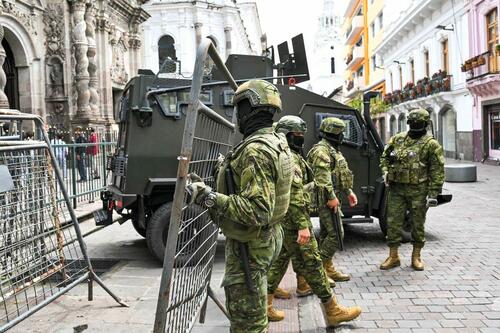
The importance of this initiative has come into sharper focus in recent weeks, following former Homeland Security Secretary Kristi Noem’s reassignment as special envoy and her engagements with Ecuadorian leadership, as well as meetings with leaders across Latin America.
Far from a symbolic gesture, the Shield of the Americas represents a strategic recalibration grounded in urgent realities: transnational crime, migration pressures at their origin, and in the process, intensifying geopolitical ’soft power’ competition.
But at its core, the Shield of the Americas is a coordinated security coalition designed to combat drug cartels, disrupt trafficking networks, and address illegal migration through joint intelligence and military cooperation. Its formation in March 2026 brought together more than a dozen nations from Latin America and the Caribbean, signaling a renewed emphasis on hemispheric alignment, at a time when these threats have become transnational to an unprecedented degree.
The timing is not coincidental. The United States continues to face unprecedented challenges tied to fentanyl and synthetic opioid trafficking—much of it linked to cartel networks operating across borders. These organizations are no longer localized criminal enterprises; they are sophisticated, multi-billion-dollar operations with global reach.
The Shield’s emphasis on intelligence sharing and coordinated enforcement acknowledges a simple truth: no single country can address this threat alone.
This is where Noem’s visit becomes especially significant.
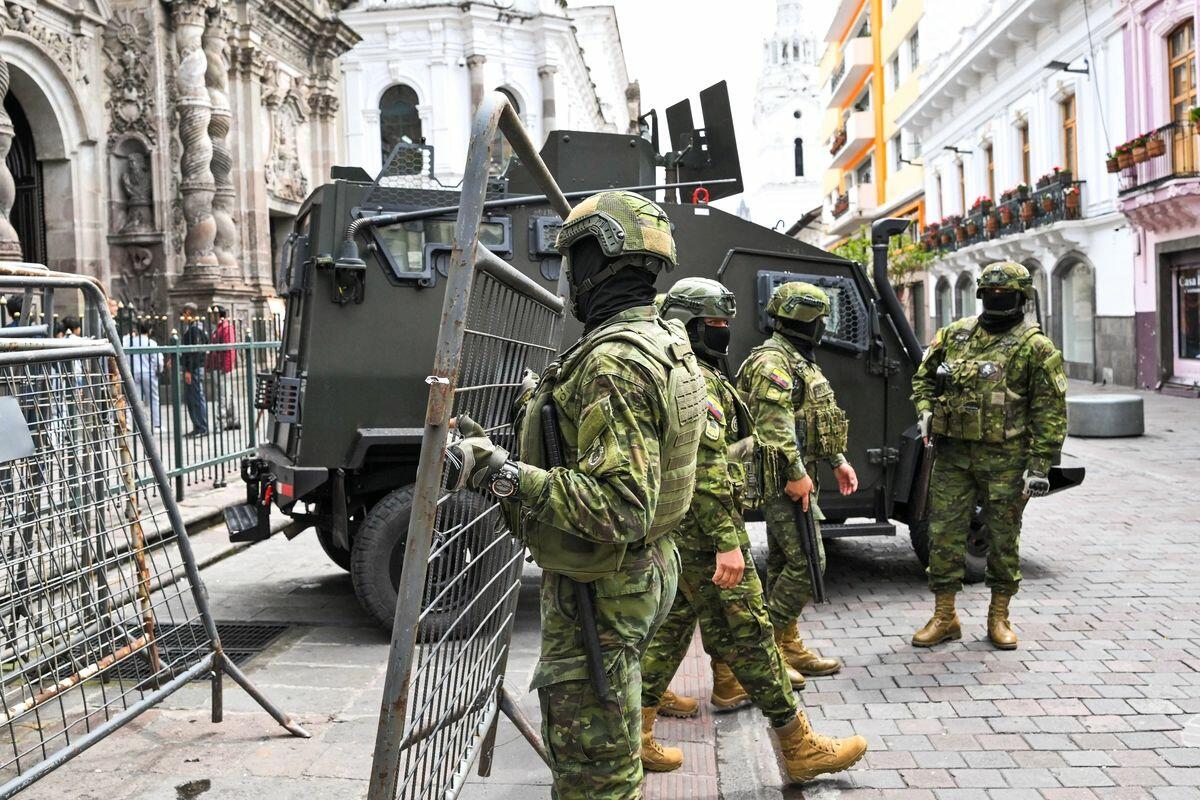
Ecuador, her final stop, has emerged as a frontline state in the fight against narcotrafficking, with its geographic position making it a key transit hub for drugs moving from South America to North American and European markets. Recent joint U.S.-Ecuador operations underscore both the urgency of the challenge and the necessity of partnership.
In turn, the Shield provides the institutional framework to scale such cooperation—transforming ad hoc engagements into sustained, strategic collaboration.
Critically, the initiative also reflects a broader geopolitical imperative. The Western Hemisphere is increasingly contested terrain, with China expanding its economic and political influence through infrastructure investments, telecommunications, and resource extraction. The Shield of the Americas explicitly seeks to counter this influence by strengthening alliances and reinforcing U.S. leadership in the region.
In this sense, the initiative is not only about security—it is about shaping the future alignment of the Americas in a rapidly evolving global order.
Skeptics have raised concerns about the militarized aspects of the Shield, noting that its emphasis on coordinated military action represents a departure from more traditional approaches centered on law enforcement. Yet this critique overlooks the scale and sophistication of the threat landscape.
Cartels today operate with capabilities that rival those of insurgent groups, leveraging advanced technology, financial networks, and paramilitary tactics. Addressing such threats requires a commensurate response.
Moreover, the Shield is not solely a military construct. It is a platform for comprehensive engagement—encompassing intelligence sharing, economic cooperation, and governance initiatives. By aligning participating countries around shared objectives, it creates the conditions for more effective, coordinated action across multiple domains.
Noem’s role as special envoy is central to this effort. Her mandate is not merely diplomatic; it is operational, tasked with translating high-level agreements into actionable partnerships on the ground. Her track record has her primed for success. And this week, her engagement with Ecuadorian leadership exemplified this approach, reinforcing bilateral ties while advancing the broader objectives of the coalition.
Ultimately, the importance of the Shield of the Americas lies in its recognition of interconnected realities. Drug trafficking fuels migration; migration strains border systems; geopolitical competition exploits instability. Addressing these challenges in isolation is no longer viable.
The Shield offers a model rooted in collective action, shared responsibility, and strategic alignment. In doing so, it marks a significant evolution in U.S. foreign policy toward the region, one that acknowledges both the risks and the opportunities of a more integrated hemispheric approach.
As Noem’s visit demonstrates, the success of this initiative will depend not on rhetoric, but on execution.
If the Shield can translate its ambitious vision into tangible results—disrupting cartels, strengthening partnerships, and stabilizing key regions—it may well prove to be one of the most consequential security initiatives in the Americas in decades.
Views expressed in this article are opinions of the author and do not necessarily reflect the views of The Epoch Times or ZeroHedge.
Tyler Durden
Wed, 04/01/2026 – 23:25

China Tests World’s Heaviest 7-Ton Cargo Drone With 1,850-Mile Range For Recon Ops
China Tests World’s Heaviest 7-Ton Cargo Drone With 1,850-Mile Range For Recon Ops
Authored by Aamir Khollam via Interesting Engineering,
China has pushed further into heavy unmanned aviation with the first flight of the Changying-8 (CY-8), which it claims is the world’s heaviest cargo drone.
China’s Changying-8 (CY-8) cargo drone.
The aircraft combines high payload capacity with short-runway performance, targeting logistics operations across remote, high-altitude, and island regions.
The newly tested Changying-8 (CY-8) blends high payload capacity with short runway performance, signaling a push toward flexible, all-terrain aerial supply systems.
The aircraft completed its first test flight on Tuesday in Zhengzhou, located in central China’s Henan province.
It lifted off after a short ground run of 280 meters and stayed airborne for about 30 minutes.
According to state broadcaster CCTV, engineers used the flight to verify key onboard systems, including avionics, propulsion, and intelligent flight controls.
Built for heavy payloads
The CY-8 stands out for its size and carrying capability. It reaches a maximum take-off weight of 7 tonnes. The drone itself weighs 3.5 tonnes and can carry an equal load.
Its airframe stretches 17 meters long with a wingspan of 25 meters. Engineers designed a fully enclosed cargo bay with a volume of 18 cubic meters.
The aircraft includes both front and rear access doors, allowing faster turnaround during loading and unloading operations.
CCTV described the platform as an “unmanned aerial heavy truck.” The drone relies on twin turboprop engines and supports short take-off and landing operations.
This design allows it to operate on basic runways with limited infrastructure.
“This cargo drone is highly adaptable to its environment, uses twin turboprop engines, and has the ability to take off and land on simple runways in high-altitude areas, as well as perform short take-offs and landings,” said Cai Hangqing, chairman of Beijing Northern Changying UAV Technology, as reported by SCMP.
Developers built the CY-8 to support both civilian and military roles. The drone can switch payload configurations quickly, making it suitable for a wide range of missions.
CCTV reported that operators can deploy it for emergency communications, weather modification, and electronic reconnaissance.
It can also support logistics, disaster relief, and supply delivery in difficult terrain.
The drone’s design focuses heavily on high-altitude performance.
It can operate in regions such as the Tibetan Plateau, where elevations range between 4,000 and 5,000 meters.
Engineers also optimized it for island operations, enabling use on short and simple airstrips.
The CY-8 requires less than 500 meters for take-off and landing.
It also offers a range of more than 1,850 miles, extending its operational reach across remote or strategically sensitive areas.
Expanding global competition
China’s latest drone arrives as competition intensifies in the heavy cargo UAV segment.
Beijing continues to invest in uncrewed systems capable of operating in extreme environments.
Other Chinese projects are already in progress. Air White Whale is developing the W5000, a larger 10-tonne-class cargo drone.
A scaled prototype recently completed its maiden flight.
China has also tested a heavy-lift unmanned helicopter, the Boying T1400. That platform targets operations from mountainous regions to maritime zones.
The United States is advancing similar systems.
California-based Sabrewing developed the RH-1-A Rhaegal cargo drone, which completed its first hover flight in 2022.
A larger variant is expected to reach a maximum take-off weight of 6.25 tonnes.
Unlike the CY-8, Sabrewing’s design uses vertical take-off and landing. This removes the need for runways and enables operations in confined spaces.
The company has already secured collaborative orders from the US Air Force.
China plans to continue flight testing of the CY-8. The developer aims to move toward full-scale production before the end of the year.
Tyler Durden
Wed, 04/01/2026 – 23:00
First Valero Refinery, Now Largest U.S. Gasoline Pipeline Damaged In Georgia
First Valero Refinery, Now Largest U.S. Gasoline Pipeline Damaged In Georgia
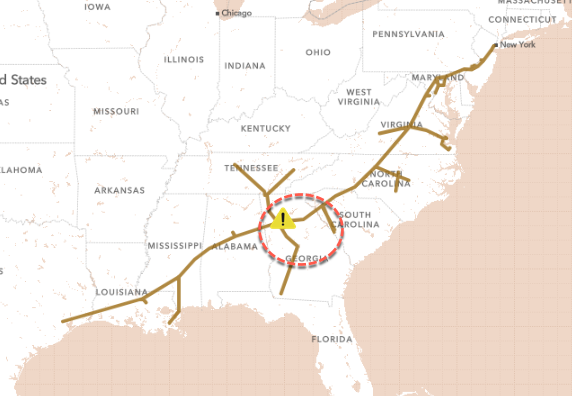
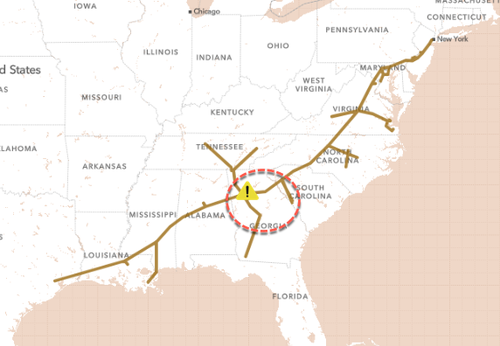
Colonial Pipeline’s Line 1, the largest U.S. gasoline pipeline running from Houston toward the East Coast, has halted operations after a third-party work crew damaged a section of the line in Georgia.
Bloomberg reported that the line stopped shipping fuel after the damage occurred on Tuesday in Paulding County, Georgia.
“Line 1 is out of service while our team coordinates response and repair efforts,” Colonial said in a statement cited by the outlet.
The outage hits a critical fuel artery that carries about 1.5 million barrels per day of gasoline from Houston to North Carolina, supplying an East Coast market that remains heavily dependent on pipeline deliveries due to limited local refining capacity.
While the rest of Colonial’s pipeline system remains operational, any prolonged shutdown risks further tightening fuel supplies at a time when the war in Iran has pushed the U.S. national average price for regular gasoline to the politically sensitive level of $4 per gallon.
Let’s remind readers that the 380,000-barrel-per-day Port Arthur, Texas, Valero refinery experienced an explosion last week at its 47,000-bpd unit 243 diesel hydrotreater. The good news is that the refinery has since restarted operations.
First a refinery, now a pipeline. One has to wonder whether these “industrial accidents” are early signs of sabotage, particularly at a time when energy infrastructure is being destroyed across Russia, Ukraine, and the Middle East.
Brookfield Infrastructure owned Colonial pipeline down
Is it me or are we seeing tit for tat moves against energy infrastructure? First refineries, now a pipeline. pic.twitter.com/X0B6yyMs68
— Arthur Vandelay (@ArturoVandelayI) April 1, 2026
Certainly lots of questions here.
Tyler Durden
Wed, 04/01/2026 – 22:35
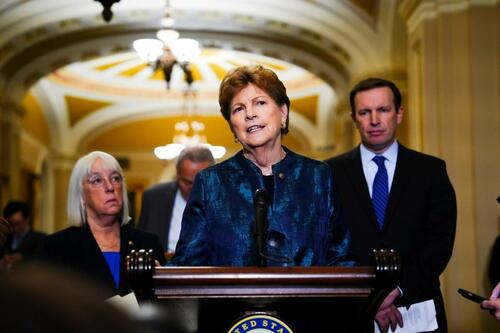
Senators Plan Taiwan Trip Ahead Of Trump’s Summit With Xi Jinping
Senators Plan Taiwan Trip Ahead Of Trump’s Summit With Xi Jinping
Authored by Jacob Burg via The Epoch Times,
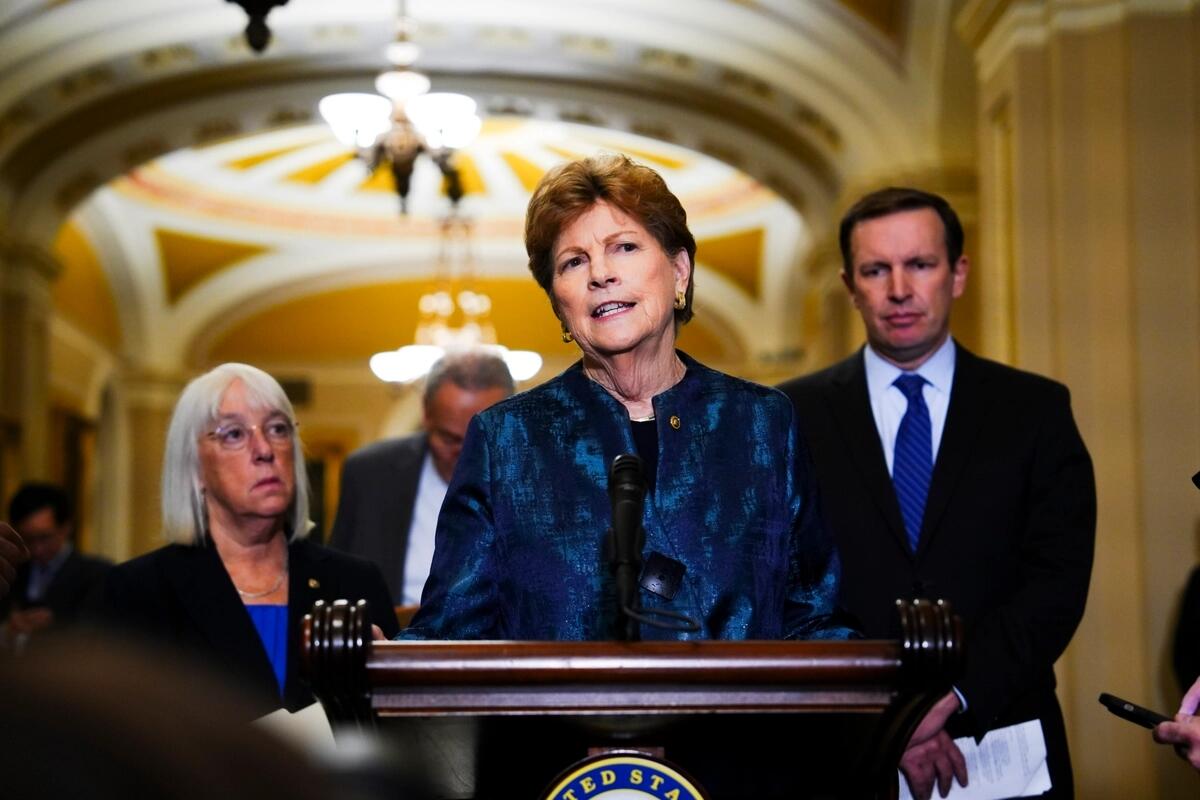
Four U.S. senators from both sides of the aisle are planning to visit Taiwan, Japan, and South Korea within the coming days to strengthen U.S. alliances that they see as critical to challenging China’s sphere of influence.
Sen. Jeanne Shaheen (D-N.H.), who serves as the ranking Democrat member of the Senate Foreign Relations Committee, announced the trip on March 28.
Sens. John Curtis (R-Utah), Thom Tillis (R-N.C.), and Jacky Rosen (D-Nev.) will join her on a trip to Taipei, Taiwan; Tokyo; and Seoul, South Korea, ahead of U.S. President Donald Trump’s May summit with Chinese leader Xi Jinping in Beijing.
The trip could cause friction with Chinese leadership, which opposes other countries having relations with Taiwan and sees such activities as a challenge to Beijing’s claim of sovereignty over the independent island.
While Taiwan is backed by the United States for its democracy, Trump’s recent floating of potential arms sales to Taiwan in discussions with Xi has highlighted implications about the future of U.S. policy toward the island.
“This bipartisan delegation demonstrates Congress’s commitment to these alliances and partnerships is unwavering and will endure well beyond any one administration,” Shaheen said in a statement.
The U.S. lawmakers are planning to meet with both political leaders and defense officials during their trip as a display of reassurance to the United States’s Asian allies.
“Our alliance with Taiwan is one of the most strategically and morally significant partnerships America has in the Indo-Pacific,” Curtis said in a statement.
Taiwan’s economic relationship with the United States has been a key concern for the Trump administration, as Washington relies on the island for computer chip production.
Taiwan’s semiconductor production drove a trade imbalance of nearly $127 billion during the first 11 months of 2025. In February, the Trump administration reached a deal with the island that removed 99 percent of its trade barriers with the United States.
A bipartisan group of U.S. lawmakers during a visit to Taiwan last year called for the United States to partner more closely with the self-governing island.
That trip resulted in conversations that were “optimistic and forward-looking,” Sen. Chris Coons (D-Del.) said at the time. Coons visited Taipei last April with Sens. Pete Ricketts (R-Neb.) and Ted Budd (R-N.C.).
There were also discussions about potential military action against Taiwan by China.
“Of course, there is the possibility that Xi Jinping would decide that this is the right time for the Chinese Communist Party to take aggressive action,” Coons said.
“I think it’s exactly the wrong thing for them to do. I think they would find a forceful and united response.”
Tyler Durden
Wed, 04/01/2026 – 22:10
https://www.zerohedge.com/geopolitical/senators-plan-taiwan-trip-ahead-trumps-summit-xi-jinping

Activist Mayor Of Boise Forced To Take Down Pride Flag Flown For A Decade
Activist Mayor Of Boise Forced To Take Down Pride Flag Flown For A Decade
Conservative states across the US have taken action in recent months to begin the arduous process of removing the stain of the woke movement from America’s streets and public buildings. For the last decade, the far-left ideological crusade has left its mark everywhere while using “marginalized” identity groups as a moral shield.
Though they claim to be acting as a civil rights movement, the reality is that “Pride” and LGBT activist groups are entirely political. The pride flag is a political, ideological and some would argue religious symbol of cultural dominance planted across the country as a means to claim ownership.
The State of Idaho is no longer tolerating this insurgency. On Tuesday, Mayor Lauren McLean was forced to remove the Progress Pride flag from display in Downtown Boise after Governor Brad Little signed HB 561. The bill, brought by Rep. Ted Hill, R-Eagle, limits local governments to flying only the American flag, state flags, official military flags, recognized tribal flags, and the official flag of an Idaho university or college.
The response from Democrats has been dramatic, to say the least, with a somber proclamation of “Transgender Day” to mourn the loss of the pride flag. Idaho also recently passed one of the strictest laws in the nation against transgenders using incorrect bathrooms and public facilities.
Initial laws passed by the state in 2025 required that only “official flags” be flown on public land and government buildings. However, McLean and city officials attempted to bypass the law by making the pride flag an “official” flag of Boise. Governor Little closed the loophole and instituted fines of $2000 per day for those cities that refuse to cooperate.
Leftist officials held a bizarre ceremony for the removal of the pride flag, which once again shines a light on the cult-like nature of the woke movement.
BREAKING: Boise mayor forced to take city hall’s LGBTQ+ flag down after law passes pic.twitter.com/PUdjgSgETf
— End Wokeness (@EndWokeness) March 31, 2026
Similar reactions have taken place in cities across the US where pride flag have been forced on the populace by city officials and were then removed by the state government.
Boise, Idaho, has flown a Pride flag outside City Hall for more than a decade, primarily during “Pride Month” in June and related events. However, in the last four years under Democrat Mayor Lauren McClean, the flag has stayed flying year-round, often displayed alongside other flags like the U.S., Idaho, City of Boise, and POW/MIA flags.
The presence of radical left symbolism in the middle of one of the reddest states in the US is a reminder that there are progressive controlled cities and leftist activists everywhere. They are not relegated to blue states, and unlike conservatives, they are highly aggressive in their efforts to claim territory and maintain power.
This is often expressed in the concept of “visibility”, which leftists mention often. It’s the idea that the “rights” of activist groups are not being respected unless they are allowed to shove their political symbols in the faces of everyone on a regular basis.
It’s not enough that the public tolerates these groups. The public must be forced to see them at all times, until people accept their activist ideology as sacrosanct. The best possible path forward for Americans is to do the opposite and erase woke visibility as much as possible. Civil rights are not a free license to impose fringe ideological views on the rest of the population.
Tyler Durden
Wed, 04/01/2026 – 21:45
https://www.zerohedge.com/political/activist-mayor-boise-forced-take-down-pride-flag-flown-decade

Sharia Law In Texas? Rep Exposes Muslim-Only Enclaves Operating Next To Police HQs
Sharia Law In Texas? Rep Exposes Muslim-Only Enclaves Operating Next To Police HQs
Authored by Steve Watson via Modernity.news,
Texas Congressman Keith Self has dropped a bombshell on the growing reality of Sharia-adherent communities taking root inside the United States. Far from some future hypothetical, these enclaves are here, now, and operating openly in his own district.
Self laid it out plainly: “Sharia is alive, well, and operating in Plano, Texas. Right now, as I speak, there is an existing Sharia-adherent enclave run by the East Plano Islamic Center in my congressional district. It’s been functioning for 12 years right in our midst. This is not a hypothetical or future threat. It is here, now and operational.”
He continued: “It is a parallel society, a de facto Sharia enclave operating in defiance of full assimilation into American law situated immediately adjacent to the very law enforcement facilities meant to protect our communities.”
Texas Congressman Keith Self confirms Muslims are practicing Sharia Law and building ‘Muslim only’ communities
He says Islamic Centers are being strategically planned next to our police training facilities
“Sharia is alive, well, and operating in Plano, Texas. Right now, as I… pic.twitter.com/iPXwPDsVmu
— Wall Street Apes (@WallStreetApes) March 31, 2026
The congressman highlighted a disturbing pattern: “Alarmingly, as a matter of fact, a pattern of Islamic centers being built next to police training facilities is emerging. There’s also one in Irving, Texas. Intimidation, is clearly the intent.”
Mass immigration without any expectation of assimilation has created no-go zones and parallel legal systems on U.S. soil. While open-borders globalists in Washington and blue-city mayors bend over backward to accommodate every cultural demand, everyday Americans are left watching their neighborhoods transform into something unrecognizable.
This Texas development fits the same pattern of demographic replacement and cultural takeover we’ve already highlighted recently in New York City.
Overflowing mosques force hundreds of Muslim men to spill onto public sidewalks and streets for Friday prayers — blocking roads and turning working-class neighborhoods into scenes straight out of an Islamic nation.
Back in February, a mass Ramadan prayer took over Times Square, complete with chants of “Allahu Akbar” echoing through one of America’s most iconic landmarks while thousands laid out prayer mats in the middle of the street.
The message is crystal clear: what starts as “diversity” and “religious freedom” quickly becomes dominance. Public spaces get repurposed, local laws get ignored, and law enforcement finds itself staring down facilities deliberately built to send a message.
Plano and Irving are not anomalies — they are the logical extension of years of unchecked migration and elite refusal to demand loyalty to American values.
Congressman Self’s exposure comes at a critical moment. With Trump in the White House and America First policies gaining ground, there is finally political will to confront these threats head-on. Mass deportations, strict assimilation requirements, and an end to sanctuary policies aren’t just good ideas — they are national security necessities. Parallel societies have no place in a sovereign republic.
The alternative is the slow erosion of the rule of law, one enclave at a time, until the country is unrecognizable. Texans — and Americans everywhere — are right to demand action before Sharia-adherent zones spread any further. This isn’t about faith; it’s about sovereignty. One nation, one set of laws. Anything less is surrender.
Your support is crucial in helping us defeat mass censorship. Please consider donating via Locals or check out our unique merch. Follow us on X @ModernityNews.
Tyler Durden
Wed, 04/01/2026 – 21:20