Category: News

The 10 best books of 2025: Censorship, crime and compassion
There are 49 books in front of me, stacked like colorful bricks in a wall. These are the 49 books I didn’t include in the Chicago Tribune’s 10 Best Books of 2025. If you’re curious about the recipe for this list, here’s how I do it: I read all year long, and when I finish a book and loved it — a comic book, a mystery, a history, essay collection, novel — I set it aside. As months roll on, the stack climbs, teeters. It lives inside a closet. Occasionally, I hear a collapse when the stack gets too tall.
By July, the rumbling begins.
Then, sometime in November, when I can no longer read another thing and the deadline for this list approaches, I drag it all out of the closet and intuitively separate out the books I haven’t been able to shake. When I have 10, I have a list. I wish it were more thoughtful. I do shift books in and out of the top 10 pile until I feel certain: My favorites. But basically, that’s the process.
Then, afterwards, I feel terrible.
The first week of January I recall thinking, of course Adam Ross’s “Playworld,” a disturbing novel about a child actor and a much older woman, will make the top 10 in December. Nope. Was there a lovelier physical book this year than “Syme’s Letter Writer,” an ode to correspondence by the New Yorker’s Rachel Syme? Not really, and yet, that didn’t make the final 10, either. Alexis Okeowo’s “Blessings and Disasters,” a portrait of Alabama, deserved more readers. Same goes for “The Autobiography of H. Lan Thao Lam,” Lana Lin’s communing with the spirit of Gertrude Stein, via Naperville. And same for Kevin Nguyen’s irreverent, prescient “My Documents,” which pictures the U.S. government putting Vietnamese-Americans in camps. And Virginia Feito’s delightfully cold “Victorian Psycho.” And Jeff Chang’s great Bruce Lee biography, “Water Mirror Echo.”
All of those and about 40 others should be in this top 10, too.
Still … what’s here? I’m jealous of anyone reading these for the first time. In no order:
“Clam Down: A Metamorphosis” by Anelise Chen. Technically a memoir, though so hilarious and original, it’s impossible to read as genre at all but rather, a novelistic tale of a writer weathering a divorce who opens a typo-ridden email from her mother, imploring her to “clam down.” Surrounded by social media, buried in research, Chen decides to embrace the metaphor: Should she retreat into a hard shell? Or open up and trudge on?
“Red Scare: Blacklists, McCarthyism and the Making of Modern America” by Clay Risen. I can’t quite put my finger on why, but the year was agog in echoing histories of hypocritical censorship and political bullying that eventually left the nation is a different place. A powerfully patient narrative account that goes beyond the familiar images of Congressional hearings and Joe McCarthy to the everyday fear-mongering that created a network of repression — and the everyday courage that, one day, toppled the hysteria.
“The Gossip Columnist’s Daughter” by Peter Orner. The best Chicago novel in ages. Rooted in Orner’s real background as a Highland Park native with family connections, a mesh of obsession, broken friendships and the nagging persistence of family legends, bundled into a true crime that was never solved: the murder of Karyn “Cookie” Kupcinet.
“A Guardian and a Thief” by Megha Majumdar. Two tales and a clock. A mother’s passport is stolen just before she gets her son and father escape to Ann Arbor. A pickpocket will do anything to feed his family. An instant classic, set against societal collapse and the wrenching calculations and contradictions families make to survive.
“Sick and Dirty: Hollywood’s Gay Golden Age and the Making of Modern Queerness” by Michael Koresky. An uncommonly fun and sophisticated dark cultural history that will drive you back to film. Did you know the Hollywood production codes (1934-1968) that buried gay life started with a meeting at Loyola University? Do you know how gay filmmakers carried on nevertheless, with clandestine cleverness? An absorbing landmark of film criticism at a moment when the practice itself is fading out.
“Lost in the Dark, and Other Excursions” by John Langan. Not a household name, but someday. Langan, the most bracingly classical of the new horror writers, is swinging for greatness here, with dense nail-biters that draw on the erudite, swirling language of Shelley and Lovecraft but lean back into the character-driven snap of Stephen King. An author tracks the extras on a horror DVD to a bleak history. Notes to a review of a Frankenstein novel lead to a vast darkness. An essay on horror lit grows very nasty. Langan, never far from the past, yet fond of experiments, reads like the future.
“Do Admit! The Mitford Sisters and Me” by Mimi Pond. A sprawling, virtuosic group-biography of the six infamous sisters who escaped their country estate, then tumbled through a 20th century of scandals, fascist friends and journalistic triumphs. Page after page, Pond, one of our great underrated cartoonists, finds original paths through history.
“A Marriage at Sea: A True Story of Love, Obsession and Shipwreck,” by Sophie Elmhirst. A word-of-mouth smash over the summer with good reason: What begins as survival tale — an economical, riveting account of a couple in 1972 whose boat is struck by a whale, then spend months alone in the open ocean, starving and despondent — heads to surprising depths once they are found, and are uncomfortable with dry land, the way their story gets told and their own feelings about what exactly survived the disaster.
“King of Ashes” by S.A. Cosby. Proof that crime fiction isn’t always a churn of brand-name antiheroes. And yet Cosby’s star continues upward, reminding us again that broad appeal and comfortable beats doesn’t mean empty writing. His latest may be inspired by “The Godfather” — a son returns to his family crematory business and ailing patriarch, only to face a power grab and the blowback of revenge — but it deposits you in seriously Shakespearean territory. Blissfully pulpy and mournfully tragic, all at once.
“Murderland: Crime and Bloodlust in the Time of Serial Killers,” by Caroline Fraser. You know the feeling you’d follow some writers anywhere? I felt it with Fraser in “Prairie Fires: The American Dreams of Laura Ingalls Wilder,” her 2018 Pulitzer winner. The grip only tightens here, dragging you into a scary, thrillingly reckless patchwork of correlation. The premise, that ecological pollution in the Pacific Northwest of the ‘60s and ‘70s bred a generation of neurologically-singed human monsters, likely is not airtight, and yet, a great writer can root you. Part true crime, part corporate screed, part coming-of-age memoir, part Rachel Carson, part victim memorial, Fraser constructs an enormous mood board dense with villains and propulsive detail, crossing, crisscrossing.
A masterpiece, and the best book I read all year.
cborrelli@chicagotribune.com
https://www.chicagotribune.com/2025/12/03/the-10-best-books-of-2025-censorship-crime-and-compassion/

Jake Thies’ interception is one more moment to remember for a ‘great player’ as Fenwick wins 6A state title
NORMAL, Illinois — Fenwick junior Jake Thies had already played with a leg infection in the Class 6A state semifinal against Nazareth.
So the 6-foot, 180-pound safety/running back wasn’t going to miss the state championship game, which had been postponed from Saturday to Tuesday due to a winter storm.
“I knew I was going to play, but I didn’t know how good I would be,” he said. “Beginning of the (semifinal) week, I couldn’t even walk, missed a few days of school. I got it as good as I could before the Naz game, ready to play.
“This week, it started feeling a little better. It still bothers me a little bit. But it’s the state championship. I’m going to play.”
Thies most certainly did. Capping an impressive performance that included two touchdown runs, he returned an interception 39 yards to East St. Louis’ 3-yard line with 2:30 left, all but sealing Fenwick’s second state title. Senior quarterback Jamen Williams Jr. scored on the next play as the Friars won 38-28 at Illinois State’s Hancock Stadium.
“There was no one in my zone, so I started sinking, looking for work,” Thies said of his interception. “It’s a play I’ve made a few times this year. I saw him coming across the field, and I saw the quarterback look at him, so I just made a play on it.”
Fenwick’s Jake Thies (8) returns an interception late in the fourth quarter of the Class 6A state championship game against East St. Louis at Illinois State’s Hancock Stadium in Normal on Tuesday, Dec. 2, 2025. (Vincent D. Johnson / Pioneer Press)
It may have looked like Thies was in the right place at the right time, but Fenwick coach Matt Battaglia would beg to differ.
“I think our defensive coordinator, John Grayson, has said on pretty much every interception Jake has had, he’s been in the wrong spot,” Battaglia said. “We allow our guys to play with freedom, play fast.
“Jake’s a great player. Everyone saw it (Tuesday). It helps when you have a great team around him playing complementary football.”
It still seemed like Thies, whose father, Scott, is Fenwick’s athletic director, was in the middle of every big moment. He led the Friars (11-3) with 100 rushing yards on nine carries, including two touchdown runs; with three catches for 61 yards; and with 19 tackles, including seven solo.
Fenwick quarterback Jamen Williams Jr. (12) rolls out of the pocket to pass during the Class 6A state championship game against East St. Louis at Illinois State’s Hancock Stadium in Normal on Tuesday, Dec. 2, 2025. (Vincent D. Johnson / Pioneer Press)
Williams completed 8 of 14 passes for 155 yards and two touchdowns to senior wide receivers Cameron Garrett and Raphiel Stewart. Thies’ older brother Tommy, a senior safety, and senior linebacker Mike Murphy, who also had a leg infection in the past week, each had 14 tackles.
East St. Louis (10-4) rushed for 354 yards, with junior running back Myson Johnson-Cook accounting for 181 yards and two touchdowns on 26 carries.
Thies’ contributions started on the Friars’ first offensive play of the game. Fenwick got the ball at the Flyers’ 4-yard line after a bad snap on a punt, and Thies scored his 15th rushing touchdown of the season on the next play.
“Anytime you get the ball at the plus-four to start out your first drive, it’s a good thing to happen,” Battaglia said. “It’s just one play. That’s a really good team that we played against.”
Fenwick’s Jake Thies (8) reacts after scoring a touchdown against East St. Louis during the Class 6A state championship game at Illinois State’s Hancock Stadium in Normal on Tuesday, Dec. 2, 2025. (Vincent D. Johnson / Pioneer Press)
It turned out to be a tone-setter, however. Tommy Thies, a Miami of Ohio recruit, could see the difference.
“They had a sense that they brought down their level,” Tommy Thies said. “We knew that any opportunity we could get we had to take advantage of and we had to go full force. We’re not coming to lose this game. We’re going to play as hard as we can, as long as we can and see the outcome.”
East St. Louis coach Darren Sunkett conceded as much after the game.
“We just started off on a bad foot,” Sunkett said. “We never really got into the flow of the game. We were right there, but we just never got totally going.”
One play after East St. Louis tied it at 21-21 in the third quarter, Jake Thies delivered again, taking the ball 74 yards to the end zone.
“I was just trusting my speed,” he said. “I knew once I got into the open field, they weren’t going to catch me. Good play call, coaches saw something, and I read it like we went over it in practice, found the gap and burst through.”
Fenwick players celebrate with fans after defeating East St. Louis in the Class 6A state championship game at Illinois State’s Hancock Stadium in Normal on Tuesday, Dec. 2, 2025. (Vincent D. Johnson / Pioneer Press)
Williams had several key moments of his own after a rough start that included an interception when East St. Louis led 13-7. But his 37-yard touchdown pass to Garrett in the second quarter gave Fenwick a one-point lead at halftime.
“I started off real slow,” Williams said. “I think I was just either too amped up or I was pressing too much, and I just had to calm down, trust my teammates, trust my coaches. Then I made those big plays.”
When Williams scored the final touchdown, the emotions started to flow.
“It was a big play,” he said. “I was going nuts. I blacked out, saying some very rated-R words.”
Battaglia, who also led Fenwick to the 5A state title in 2021, offered a few words about his players.
“These guys are tough,” Battaglia said. “These guys are a special group of kids who play together as a team. We played a lot of really talented teams, but when you take everything that encompasses a team — the brotherhood, the bonding, the fighting each play, playing for each other — there’s no better team than these guys right here.
“This is a special group.”
Paul Johnson is a freelance reporter.
https://www.chicagotribune.com/2025/12/03/football-6a-state-final-east-st-louis-fenwick-jake-thies/

A Third Of Glasgow Schoolchildren Don’t Speak English
A Third Of Glasgow Schoolchildren Don’t Speak English
Authored by Steve Watson via Modernity.news,
Nearly one in three children in Glasgow’s primary schools do not speak English as their first language, according to new council data, highlighting a dramatic shift driven by record migration levels that are overwhelming local resources and raising urgent questions about integration and public services.
The figures, revealed in a Telegraph report, show 31% of pupils in the city’s primaries requiring English as an additional language support, up from 25% five years ago, amid Scotland’s net migration hitting 50,000 annually.
As classrooms grapple with translation demands and parents voice fears over cultural silos, the crisis underscores a broader UK strain where rapid demographic changes are testing the limits of cohesion without adequate planning.
‘This is a symptom of an immigration system that is way too overrun…’
Political Commentator @DobbsandPolicy reacts to news that almost 30% of students in Glasgow do not speak English as their first language. pic.twitter.com/ttfceYjm6k
— GB News (@GBNEWS) December 2, 2025
Glasgow City Council’s latest census data indicates 31% of primary school pupils—over 7,000 children—now need English language support, a 24% jump since 2020, per the Telegraph.
The most common languages are Arabic, Polish, Urdu, and Punjabi, reflecting waves of refugees from Syria, Ukraine, and Afghanistan alongside EU migration.
Council education chief Councillor Christina Cannon admitted, “We have seen an explosion in the number of children who need English as an additional language support.”
? Almost one in three pupils in Glasgow does not speak English as their main language, analysis shows
Take a look at our data-led study below ?https://t.co/6SWq10xVgh
— The Telegraph (@Telegraph) December 1, 2025
She added, “This is putting huge pressure on our schools and teachers, who are doing an incredible job but are stretched thin.”
The report notes over 100 schools now have dedicated EAL coordinators, but funding lags behind demand, with one headteacher quoted anonymously, “We’re using Google Translate for parent meetings—it’s not sustainable, and kids are falling behind in core subjects.”
Glasgow’s transformation stems from Scotland’s “unprecedented” migration surge, with net inflows topping 50,000 yearly since 2022, driven by asylum seekers, refugees, and post-Brexit EU arrivals, per National Records of Scotland.
The city, Scotland’s largest, absorbed 10,000 asylum seekers in 2024 alone under SNP policies, overwhelming housing and education. As the Telegraph details, this has led to “language silos” in neighborhoods like Pollokshields, where Arabic dominates, and parents report “parallel societies” forming.
Over time would take generations not 2 years
— darran (@gynoshwad) December 2, 2025
SNP education secretary Jenny Gilruth stated “Migration is a good thing for Scotland’s economy, but we need better funding for integration programs.” Critics like Tory MSP Murdo Fraser counter, “The SNP’s open-door policy is creating ghettos—schools can’t cope without massive investment.”
Residents in Glasgow’s ‘diverse’ east end express growing concern over cultural divides. One mother, speaking to the Telegraph, said, “My son’s class has 15 different languages—it’s wonderful in theory, but he’s struggling because the teacher spends half the day translating.”
A local teacher added, “We’re seeing cliques based on language, not ability—it’s dividing kids before they start.”
When 3 in 10 pupils can’t speak English as a first language, that’s not “diversity” — it’s the result of an immigration system totally out of control.
Schools can’t teach properly, standards drop, and integration becomes impossible.
This isn’t sustainable, and everyone knows it.
— Ben Crichton (@Bencrichton_3) December 2, 2025
Fraser further warns that “Without urgent action, we’ll see more ‘parallel societies’ like in parts of London, where integration fails and tensions rise.”
The report ties this to national trends, with 20% of England’s pupils needing EAL support, but Glasgow’s 31% rate is among the highest, straining a system already short 1,000 teachers.
The data isn’t just numbers—it’s a wake-up call for a city transformed by migration without the infrastructure to match. As Cannon urges, “We need ring-fenced funding now, or our schools will break.” With SNP ministers promising reviews but no immediate cash, Glasgow’s classrooms teeter on the brink, a microcosm of a much wider migration crisis.
If they don’t have English as a first or main language, what are they learning and IMPORTANTLY, are allowances made for their lack of English, thus downgrading their qualifications?
— Matthew Harper No DMs – We’re in big trouble (@MattHarperUK) December 2, 2025
Your support is crucial in helping us defeat mass censorship. Please consider donating via Locals or check out our unique merch. Follow us on X @ModernityNews.
Tyler Durden
Wed, 12/03/2025 – 06:30
https://www.zerohedge.com/geopolitical/third-glasgow-schoolchildren-dont-speak-english

Tailandia levanta la prohibición de venta de alcohol por la tarde antes de las fiestas de fin de año
Associated Press
BANGKOK (AP) — Tailandia levantó el miércoles una prohibición de 53 años sobre la venta minorista de bebidas alcohólicas por la tarde, una medida que se espera ayude a impulsar el turismo durante las fiestas de fin de año, así como las ventas en lugares como bares y tiendas de proximidad.
La prohibición de 2 de la tarde a 5 de la tarde se levantará de manera experimental durante 180 días, después de lo cual se evaluarán sus efectos.
La prohibición vespertina de la venta de cerveza, licores y vino se promulgó en 1972, cuando Tailandia estaba bajo régimen militar, aunque las razones originales de la medida no están claras. Tailandia es predominantemente budista y la religión desalienta el consumo de sustancias que produzcan ebriedad, aunque tomarlas es algo común.
Ahora se permite a los consumidores comprar dichas bebidas desde las 11 de la mañana hasta la medianoche, según una enmienda a la Ley de Control de Bebidas Alcohólicas que se hizo oficial el martes con su publicación en la Gaceta Real. Aunque las ventas terminan a medianoche, los clientes en locales nocturnos pueden seguir bebiendo hasta la 1 de la mañana
Mientras se consideraba el cambio, había preocupaciones de que extender el horario de consumo pudiera agravar el problema de la conducción bajo los efectos del alcohol.
Las ventas de bebidas alcohólicas por la tarde a menudo han estado en una zona gris, con exenciones para aeropuertos, algunos lugares de entretenimiento y hoteles. La aplicación de la ley era inconsistente según el vecindario y a menudo era posible hacer ventas clandestinas en pequeñas tiendas y restaurantes.
En muchas zonas se impuso una prohibición integral de la venta de alcohol de forma temporal durante la pandemia de coronavirus en un esfuerzo por frenar la propagación del virus.
___
Esta historia fue traducida del inglés por un editor de AP con la ayuda de una herramienta de inteligencia artificial generativa.

Dalibor Rohac: The US and the world need Poland as a full member of G20
For the first time in the group’s 17-year history, the G20 summit in Johannesburg last month was marked by a complete absence of the United States at the negotiating table. The situation was made all the more striking by the fact that the meeting had been held just days before the U.S. government took over the G20’s rotating, yearlong presidency; it is preparing for next year’s summit at the Trump National Doral resort in Miami.
As President Donald Trump’s administration rethinks its own role in the G20, there is one easy step that it can take to make the group better, and more closely aligned with the U.S. interests: Invite Poland to participate as a full-fledged member. During President Karol Nawrocki’s visit to Washington in September, Trump extended an invitation to next year year’s summit. Yet, Poland ought to be there not simply as a guest and an observer but as an active participant, able to shape the agenda.
The G20 is an odd, largely informal and loosely structured entity, which started as an outgrowth of the earlier G7 and G8 meetings, currently encompassing the 19 largest economies in addition to the European Union and the African Union. The first summit took place in Washington in the wake of the global financial crisis of 2008, and the weight of the evidence suggests that bargains made at the meeting were critical in preventing the crisis from dragging the world back into another Great Depression.
Many criticisms can be mounted against the forum. Smaller countries have good reasons to fear the realpolitik that the new concert of great powers brought back into a supposedly multilateral, rules-based international system. The G20 tries to deflect the charge by “engaging,” through numerous talking shops, with civil society organizations, women’s rights groups, unions and other organizations. For Trump’s United States, the organization paying lip service to progressive issues du jour — climate, health care and equity — is naturally suspect. In addition to the president’s hostility to South Africa’s leadership, the meeting’s agenda is a main reason for the U.S. boycott this year.
Yet, it seems safe to assume that the G20 is here to stay, despite its current crisis. As a result, the United States would do well not to turn its back on the forum but shift its center of gravity toward friendly and like-minded countries. Facilitating Poland’s full membership is the easiest and most straightforward way to achieve that goal.
Poland is fully qualified for membership. This year, it became the world’s 20th largest economy, and Polish real incomes are on a par with Japan. Poland is the most important regional power in a part of the world that has recently seen the deepest challenge to world peace and the international order since 1945 — Russia’s war against Ukraine — and yet has no representation at the forum, unlike Russia. And, finally, Poland is America’s most reliable and consistent ally on the European continent.
To bring Poland to the table, in addition to France, Germany, the United Kingdom and Italy, is to rectify an age-long blind spot of U.S. and Western policymaking, which has reduced Central and Eastern Europe to an object, shaped by great powers — instead of a geopolitical force endowed with agency.
To give a voice to Poland is also to give a voice to Ukraine, whose survival — as Polish political elites understood already in the 1920s — is essential to Poland’s own nationhood. It is to give a voice to a host of smaller but important Nordic and Baltic nations, with whom Poland shares a basic strategic outlook. And given the G20’s focus on the economy, it is also to give a voice to the only major European economy with a recent track record of major structural reforms and consistently solid rates of growth.
Poland’s accession is unlikely to be opposed by China, as Warsaw’s relations with Beijing have been as cordial and constructive as possible given the realities of China’s support for the Russian war effort. Russia, of course, would throw a tantrum. Yet, it would be a perfectly tolerable outcome if Russia suddenly started boycotting the meetings because of Poland’s presence. The Kremlin has not been a good-faith participant in the G20 proceedings for some time, and to rely on Vladimir Putin’s Russia’s to manage, say, the next global financial crisis would require a heavy dose of naivete.
If the United States seeks a constructive reset of its relationship with the G20 following its absence from Johannesburg — a big “if,” perhaps — there are few better choices than using next year’s forum to elevate Washington’s most reliable European partner, friend and ally.
Dalibor Rohac is a senior fellow at the American Enterprise Institute in Washington, D.C.
Submit a letter, of no more than 400 words, to the editor here or email letters@chicagotribune.com.
https://www.chicagotribune.com/2025/12/03/opinion-poland-g20-united-states/
Ray LaHood, former GOP congressman and Obama’s transportation secretary, named head of Edgar Fellows program
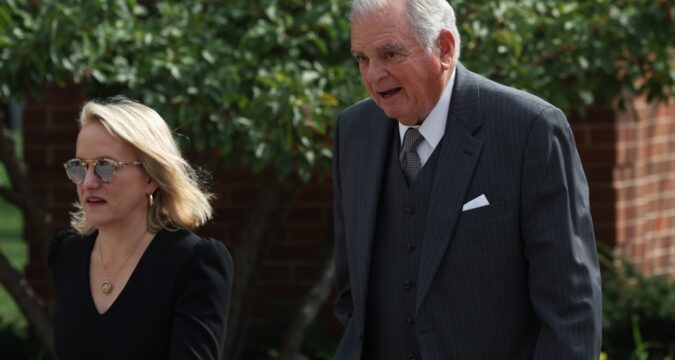
Former U.S. Transportation Secretary and U.S. Rep. Ray LaHood has been named to lead the Edgar Fellows program, which promotes bipartisan leadership in Illinois government. He succeeds its founder, the late Gov. Jim Edgar.
LaHood, a former Republican congressman from Peoria who went on to serve in Democratic President Barack Obama’s Cabinet, has been a longtime contributor to the program’s annual leadership seminar.
He was named distinguished director of the program by the nonprofit board Wednesday and will take on a larger role in outreach and civic engagement as well as in supporting the financial sustainability of the organization’s initiatives.
“Edgar Fellows is Jim’s living legacy to the State of Illinois,” former Illinois first lady Brenda Edgar said in a statement. “The entire Edgar family is pleased that longtime friend and respected Illinoisian Ray LaHood will be joining the organization in this important role.
We know that he will continue to reinforce the importance of principled, bipartisan leadership.”
Edgar, a two-term Republican governor who served from 1991 to 1999, died on Sept. 14 at the age of 79 from complications of pancreatic cancer. A popular moderate, he founded the Fellows Program in 2012, which annually brings together 40 early- to mid-career professionals to explore leadership and public policy. The program, affiliated with the University of Illinois, reflects Illinois’ geographic, ethnic and political diversity.
In a statement, LaHood thanked Brenda Edgar and the board of directors “for their trust and confidence to lead this outstanding program.”
“I am honored and humbled to be named distinguished director of Edgar Fellows,” LaHood said. “We plan to continue with the vision of our beloved Gov. Edgar to recognize and develop bipartisan leadership for Illinois.”
https://www.chicagotribune.com/2025/12/03/ray-lahood-head-edgar-fellows/

Tribune’s 2025 Holiday Cookie Contest: Get the winning recipes
The three winning cookie recipes for the 39th annual Tribune Holiday Cookie Contest all pay tribute to bakers from years ago; whether it’s a mother, grandmother or a best friend’s mom.
Here are the recipes for Pracny-Inspired Nut Crescents, the first-place recipe by Janet Lapen; Eggnog Crème Brûlée Cookies, the second-place recipe by Lauren Wagner; and MMMM Cookies (Mom’s Mandelbread Modified for Marty), the third-place recipe by Elyse Tish.
To learn about what inspired these readers to create these recipes, read the story here. Happy baking!
First place: Pracny-Inspired Nut Crescents
The Tribune holiday cookie contest first-place winner, the Pracny-Inspired Nut Crescents by Janet Lapen of Downers Grove. (Brian Cassella/Chicago Tribune)
My favorite cookie of all time is the Czech pracny. I first tasted this cookie at age 6, soon after my family moved to Forest Park. That’s where I met my best friend, Marion, whose mother, Blanche, was an exceptional baker. Every Christmas, Blanche made pracny cookies, which are richly flavored with cinnamon, clove and cocoa, and pressed into ornate molds before baking. As a young girl, Blanche had learned to make pracny with her neighbor, who later passed down the treasured molds to her. Each year, Blanche invited my mother, Marion and me to help press the dough, filling her kitchen with the scent of spice and laughter. After Blanche passed, Marion and I continued the tradition. I made the dough, she brought the molds and together we baked!
Now, more than 60 years later, our daughters join us in the kitchen to carry on this tradition. What began as a childhood memory has become a beloved family pastime, connecting generations. Wanting to share that magic, I created an easier version of pracny, a simple recipe without a cookie mold that still captures the same warmth, love and spiced aroma of Blanche’s original cookies that I hope all can enjoy! — Janet Lapen, Downers Grove
Prep time: 45 minutes to 1 hour
Refrigeration time: 1 hour (optional)
Bake time: 15-18 minutes
Yield: 45 cookies
Ingredients
1 cup softened butter (salted)
1 1/2 cups powdered sugar (plus more for dredging cookies when cooled)
1 teaspoon vanilla extract
1 3/4 cups flour
2 teaspoons cinnamon
1/2 teaspoon ground cloves
1 tablespoon unsweetened cocoa powder
1 1/2 cups finely chopped walnuts
Directions
Cream butter and powdered sugar together until thoroughly mixed. Add vanilla.
Mix flour, spices and cocoa powder in a separate bowl.
Alternate adding the flour mixture and nuts to the butter and sugar mix.
Mix until completely combined. Chill the dough for at least an hour.
Preheat oven to 350 degrees Fahrenheit. Form generous tablespoon portions of dough into crescent shapes.
Place on parchment-lined cookie sheets, space cookies about 1 inch apart.
Bake for 15-18 minutes.
Let cookies cool for 2-3 minutes on the cookie sheet before transferring to the cooling rack.
Dredge completely cooled cookies in powdered sugar or sift powdered sugar on top of cookies.
Note: We did not find it necessary to chill the dough. We recommend sifting the powdered sugar for a better consistency.
Second place: Eggnog Crème Brûlée Cookies
The Tribune holiday cookie contest second-place winner, the Eggnog Crème Brûlée Cookies by Lauren Wagner of Joliet. (Brian Cassella/Chicago Tribune)
Every December, the first thing that meant “Christmas” to me wasn’t the tree or the lights — it was the sound of my grandma pouring eggnog into three little glasses for her, my mom and me. We’d sit by the window, watching the snow fall, talking about what cookies to bake next. Eggnog was our shared comfort — creamy, sweet and full of warmth — and it always meant we were together. I created these Eggnog Crème Brûlée Cookies as a tribute to those afternoons. They capture that cozy flavor I grew up with, but turn it into something elegant and new — a soft cookie infused with eggnog and a touch of warm spice, topped with a silky eggnog glaze and a crackly caramelized sugar top. Each bite has the rich nostalgia of the holidays with a little sparkle of creativity. This cookie reminds me that tradition doesn’t have to stay the same to stay special. It’s a blend of my family’s favorite winter drink and my love of baking, a recipe that bridges generations. When I crack through the brûlée top and taste the creamy sweetness underneath, I’m right back in that kitchen — three generations laughing, baking and sharing a glass of eggnog on a cold winter day. — Lauren Wagner, Joliet
Prep time: 20 minutes
Refrigeration time: 30 minutes (optional)
Bake time: 10-12 minutes
Yield: 32 cookies
Ingredients
Cookies:
2 1/4 cups flour
1/2 teaspoon baking powder
1/4 teaspoon baking soda
1/2 teaspoon salt
1/2 teaspoon ground nutmeg
1/2 cup unsalted butter, softened
3/4 cup sugar
1/4 cup light brown sugar
1 large egg
1/4 cup eggnog
1 teaspoon vanilla extract
1/2 teaspoon rum extract (optional)
Glaze:
1 cup powdered sugar
2 1/2 tablespoons eggnog
1/4 teaspoon vanilla extract
Pinch of salt
Brûlée topping:
1/4 cup sugar
1/4 teaspoon ground nutmeg
Instructions:
Preheat your oven to 350 degrees Fahrenheit and line a baking sheet with parchment.
Whisk together flour, baking powder, baking soda, salt and nutmeg in a medium bowl. Set aside.
Beat the butter and sugars until fluffy in a large bowl — about 2–3 minutes. Add the egg, eggnog, vanilla and rum extract (if using) and mix until smooth. Gradually stir in the dry ingredients until just combined. The dough will be soft — chill it for 30 minutes if it’s too sticky.
Scoop about a tablespoon of dough for each cookie and flatten slightly. Bake 10-12 minutes, until the edges are just turning golden. Let cool completely.
Make the glaze while the cookies cool: whisk powdered sugar, eggnog, vanilla and a pinch of salt until smooth.
Spread a teaspoon of glaze on each cookie. Sprinkle the sugar and nutmeg mixture on top and carefully torch it to caramelize, or broil briefly on a low temperature while watching closely. Let it cool for a few minutes until the sugar sets.
Note: We recommend using a torch instead of broiling the cookies.
Third place: MMMM Cookies (Mom‘s Mandelbread Modified for Marty)
The Tribune holiday cookie contest third-place winner, the MMMM Cookies, Mom’s Mandelbread Modified for Marty, by Elyse Tish of Glenview. (Brian Cassella/Chicago Tribune)
My mother was not much of a cook or baker, but she had a few items in regular rotation. One was the Jewish cookie mandelbread — but with an unusual twist. Instead of raisins, nuts, or chocolate chips, Mom used candied fruit and citrus peel (the kind sold around Christmas for fruitcakes) and added that to the dough. She would stock up on candied fruit/peel mix at seasonal sales, and kept them in her cabinet year-round. The cookies were hard and dry — but OK dunked in coffee. (Mom had a pot-a-day caffeine habit, more if the neighbors dropped by for a cup and a chat. And she always pulled a couple of her cookies out of the freezer for them.) Mom is gone now. My husband, Marty, is not a coffee drinker. He never liked Mom’s mandelbread. Too tough and crunchy, and not enough chocolate. I modified the recipe to his favorite flavor combo — orange and chocolate. The added cocoa also changed the texture, resulting in a soft, chocolate cookie with a little citrus kick. Still delicious with a hot mug of coffee, but the MMMM recipe melts in your mouth, with a bit of orange chew. The orange icing is just to make it fancy. I add it only for special occasions. — Elyse Tish, Glenview
Prep time: 15 minutes
Refrigeration time: 2 hours
Bake time: 40 minutes
Yield: 48 cookies
Ingredients:
Cookies:
1 cup vegetable oil
1 cup sugar
3 large eggs
1 teaspoon orange extract or emulsion
Zest of one orange
3 cups all-purpose flour
1/4 cup cocoa (dark)
1 teaspoon baking powder
1/2 teaspoon salt
1/2 cup semi-sweet mini chocolate chips
4 ounces diced candied orange peel
Icing:
1 3/4 cups powdered sugar (more as needed to get to drizzle texture)
Zest of one orange (about 1 teaspoon)
2 tablespoons fresh orange juice (more as needed to get to drizzle texture)
Directions:
Mix together oil and sugar until combined, then add eggs one at a time. Add orange extract and zest.
Sift together all the dry ingredients and add to the sugar/egg mixture.
Once the dough is smooth and sticky, add the chocolate chips and candied orange peel in and mix.
Cover the dough and refrigerate for at least 2 hours.
Heat oven to 350. Using your hands, take chilled dough and form four long cylinders, each 8-9 inches long. Place two on each of two cookie sheets lined with a baking mat or parchment paper.
Bake at 350 degrees Fahrenheit for 25 minutes.
Take the mandelbread out. Cool and then slice the mandelbread about 1/2 inch pieces. If you like a dryer, crunchier cookie, (more biscotti-like) toast the sliced pieces for 15 minutes in a 250-degree Fahrenheit oven.
While cookies are cooling, make the icing by mixing powdered sugar, orange zest and juice.
When cookies are completely cool, pipe on or drizzle on orange icing. Let icing dry to solid.
Note: When cutting the cookies, we recommend cutting straight across and not on a bias; the cookies will hold their shape better. If you have trouble sourcing the candied orange peel, which is a seasonal item, you can use orange zest instead and double the chocolate chips for additional texture.
The cover of the Chicago Tribune’s book “Holiday Cookies, Second Edition.” (Chicago Tribune)
For more winning cookie recipes from all four decades of the Tribune’s Holiday Cookie Contest, grab a copy of our cookbook, “Holiday Cookies, 2nd Edition,” at chicagotribune.com/holidaycookies.
Big screen or home stream, takeout or dine-in, Tribune writers are here to steer you toward your next great experience. Sign up for your free weekly Eat. Watch. Do. newsletter here.
https://www.chicagotribune.com/2025/12/03/2025-cookie-contest-recipes/

Editorial: Taxpayers in suburban District 214 wish they got the same consideration as the Chicago Bears
As the presumptive future home of the Chicago Bears, the northwest suburbs continue to find themselves in the spotlight, garnering more attention than folks in that area are typically accustomed to getting. As the Bears push for things like property tax certainty to make their move as cost-effective as possible, area homeowners are wishing they could get the same thing.
Instead, they’re concerned major hikes could be on the horizon, as Township High School District 214 flirts with a potential referendum that could raise as much as $850 million.
We think the district, which serves Arlington Heights, Prospect Heights, Buffalo Grove, Wheeling, Rolling Meadows and Elk Grove Village, must first ensure its own house is in order.
Officials recently launched an independent audit of its purchasing-card system after a district employee allegedly used his district credit card to make more than $37,000 in unauthorized Home Depot purchases, the Daily Herald reported. That employee, Jorge V. Villagómez, was the former building and grounds supervisor at Prospect High School. He was charged Oct. 3.
Now the district has to make sure there aren’t any other issues. The $45,000 audit, conducted by the law firm of Baker Tilly, will examine purchases made using 91 district-issued cards, with results and a proposed plan of action expected in early 2026.
We like financial responsibility, and we appreciate when public officials demand accountability when something goes wrong. So we applaud the district’s efforts to ensure there’s no other abuse occurring — and taxpayers can take some comfort in knowing this recent loss will be covered by insurance.
That reassurance won’t erase residents’ concerns about what comes next, though.
A significant referendum would mean annual property tax bills would rise by hundreds of dollars — a prospect that drew little enthusiasm in the district’s own feedback process. It appears the district may be scaling back any potential referendum request as a result.
District 214 officials have been asking residents to share their thoughts on these proposals, and unsurprisingly received word that residents want a more cost-conscious plan. Given three options — a low-, medium- and high-end amount — respondents opted for the lowest figure offered, a referendum to raise $400 million that district officials said would add $198 in property taxes for a home worth $396,500. Nearly a quarter of respondents said they wouldn’t support any additional funding. We recognize that district facilities have maintenance needs, but we can’t imagine asking voters to approve anything more than $400 million, and we’d prefer to see any proposal come in well under that amount.
District 214 includes schools like Prospect High School, John Hersey High School and Buffalo Grove High School, which find themselves on the top of the list for high-performing secondary schools in the state. Like many districts across Illinois, however, 214’s enrollment is declining, with its student population dropping by nearly 300 since 2018, according to state data. We would hope any renovation proposals would take that into account.
All things considered, we understand that safe, functional school buildings are an essential part of our education system. Nobody questions that, and residents certainly want kids to have what they need. The problem is in the disconnect between the eye-popping tax bills homeowners are already paying and district officials telling them it needs more revenue.
Findings from the district’s audit should give taxpayers clarity on its employee credit card accountability long before they’re asked to weigh in on any potential referendum. We hope that those in charge don’t pursue a plan that would price out the families who’ve long called the northwest suburbs home.
Submit a letter, of no more than 400 words, to the editor here or email letters@chicagotribune.com.

Steve Chapman: Why is Donald Trump courting war with Venezuela?
Of all the decisions a president can make, the most perilous is going to war. The Vietnam War doomed Lyndon Johnson, just as the Korean War did Harry Truman. The Iraq invasion was a political debacle for George W. Bush. The lesson is that presidents should avoid war at almost any cost.
But Donald Trump, no student of history, has not absorbed that lesson. For months, he has been courting war with Venezuela: blowing up boats alleged to be smuggling drugs, massing naval forces and fighter jets in the Caribbean, demanding the resignation of President Nicolás Maduro and declaring the closure of Venezuela’s airspace.
He may hope these measures will be enough to get rid of Maduro. If they aren’t, Trump appears poised to launch direct attacks on Venezuela. In a Thanksgiving address to U.S. troops, he said those strikes are “going to start very soon.”
Why he would be willing to take such a hazardous step is not obvious. Trump ran on a promise to stay out of foreign conflicts. He has no idealistic mission to spread democracy. Venezuela hasn’t attacked U.S. targets or built weapons of mass destruction. Most of his supporters don’t care who governs Venezuela, or how.
Trump has framed his policy as essential to smashing drug cartels and stopping the flow of lethal drugs. But fentanyl is what accounts for most U.S. overdose deaths, and it comes mostly from China and Mexico. What comes from Venezuela is cocaine, the majority of which goes to Europe.
This dubious pretext lost all credibility, though, when Trump pardoned former Honduran President Juan Orlando Hernández. He was serving a 45-year prison sentence for working with cartels to smuggle cocaine into the U.S. — or, as he reportedly put it, “shove the drugs right up the noses of the gringos.”
A war against Venezuela has several possible outcomes, most of them bad. It could fail, cementing Maduro in power as the leader who vanquished the Yanquis. It could force him out only to plunge his country into violent chaos. It could mean new waves of Venezuelans trudging toward our southern border. It could lead to a U.S. ground invasion and insurgent warfare.
So what is driving Trump to risk his presidency on a war that the public doesn’t want? It may be foolish to attribute rational purposes to someone so impulsive and destructive. But one obvious motive is his insatiable desire to exert his power abroad as well as at home. He needs not only to dominate others, but also to be seen as dominant.
Being an incurable bully, Trump looks for weaker nations he can abuse, as when he threatened to seize Greenland from Denmark, take back the Panama Canal from Panama and make Canada the 51st state.
He also has unfinished business. In his first term, Trump adopted a “maximum pressure policy” against the Venezuelan ruler, vowing that “Maduro’s grip of tyranny will be smashed and broken.” It wasn’t, and though the American people have forgotten his failure, Trump has not. His appetite for retribution has no limit.
But with this president, it’s also important to follow the money. Trump has a cash register where his heart should be. Running in 2016, Trump offered his plan for the U.S. role in Iraq: “Take the oil.” As president, he said he was keeping troops in Syria “only for the oil.”
This year, he forced Ukraine to agree to share vast sums in future revenues from its mineral resources with the U.S. Trump never stops looking for targets to plunder and treasure to extract.
In peace talks, The Wall Street Journal reports, Trump envoy Steve Witkoff and Russian negotiators have been “charting a path to bring Russia’s $2 trillion economy in from the cold — with American businesses first in line to beat European competitors to the dividends.” Russian oligarchs “have sent representatives to quietly meet American companies to explore rare-earth mining and energy deals.”
Polish Prime Minister Donald Tusk took a dim view of the administration’s approach: “We know this is not about peace. It’s about business.”
The same motive is undoubtedly behind Trump’s obsession with Venezuela, which has the world’s largest oil reserves. Replacing Maduro is meant to open up an array of lucrative opportunities — which Trump could distribute to enrich himself, reward his cronies and bend corporations to his will.
The looming conflict brings to mind an earlier war in which Ulysses S. Grant saw combat. “I do not think there was ever a more wicked war than that waged by the United States on Mexico,” the former general and president lamented late in life. “I am always ashamed of my country when I think of that invasion.”
But not every president is capable of shame.
Steve Chapman was a member of the Tribune Editorial Board from 1981 to 2021. His columns, exclusive to the Tribune, now appear the first week of every month. He can be reached at stephenjchapman@icloud.com.
Submit a letter, of no more than 400 words, to the editor here or email letters@chicagotribune.com.
https://www.chicagotribune.com/2025/12/03/opinion-donald-trump-venezuela-war-chapman/

SEIU looks to beef up CPS ranks amid dispute with CTU
The Service Employees International Union is looking to beef up its ranks within Chicago Public Schools, a development with significant implications both for the workers it is looking to organize — and for city politics.
SEIU Local 73 filed a petition to add about 1,600 school-based CPS workers to its ranks with the Illinois Educational Labor Relations Board on Nov. 10. But the union’s one-time ally, the Chicago Teachers Union, contends that some of those workers rightfully belong to the CTU.
The dispute is the latest development in a feud between the two progressive labor unions that has its roots in a turf war over other jobs within the school district.
The two politically powerful labor unions worked together to help elect Chicago Mayor Brandon Johnson, but have feuded bitterly over the last year.
Both SEIU and CTU say the so-called “miscellaneous” workers — who work in a wide variety of support roles including as tutors and recess monitors — are poorly paid and receive no benefits. Both unions argue that the workers are sometimes misclassified, filling roles that unionized support staff in either SEIU or CTU also perform, but for less pay and no benefits.
Local 73’s president, however, said an “overwhelming majority” of the miscellaneous workers want to join SEIU.
“After years and years of working with no union protections or collective voice on the job, miscellaneous workers have taken bold action to organize an overwhelming majority of their coworkers to join with SEIU 73,” the local’s president, Dian Palmer, said in a statement.
CTU, meanwhile, maintains that some of the miscellaneous workers are rightfully theirs.
In 2022, the union filed a grievance against the school district, alleging that some of those workers fall within its ranks. The grievance is still pending, CTU says.
The union said that miscellaneous workers are “frequently misused” and asked to fill in for jobs including teachers assistants and school clerks.
“We have long requested that CPS recognize the union as the exclusive bargaining representative of miscellaneous employees performing CTU bargaining unit work,” CTU’s deputy general counsel, Thad Goodchild, said in a statement.
CTU said that it filed an information request with CPS this week for the precise role of each miscellaneous worker.
The teachers union could have also filed a petition to intervene in SEIU’s petition to represent the miscellaneous workers and force an election between the unions. Doing so would have required it to have the support of at least 15% of the workers in question.
No petitions to intervene had been filed in the case, the state labor board confirmed Monday.
CPS could also object to SEIU’s petition to unionize the miscellaneous workers and has until Dec. 8 to do so, according to the labor board. On Tuesday, a representative for the board said no objections had yet been filed in the case.
A spokesperson for CPS said in a statement that the district does not comment on pending litigation, and did not offer further comment on the dispute or SEIU’s petition.
Chicago Board of Education President Sean Harden told the Tribune he was aware of CTU’s grievances, and his priority is that the district “respect all of our workers.” He noted CPS may still need “hash out” their representation.
“I don’t know that it’s our place to really designate on (which union) they should be,” Harden said. “But ultimately, on whatever side they land on, they should be treated fairly.”
SEIU said it was full steam ahead on bringing the miscellaneous workers into its fold.
“We are committed to bringing these low wage workers, who are barely scraping by, to the bargaining table as soon as possible,” Palmer, of SEIU, said. “We will continue through the legal organizing process.”
In a statement provided through Local 73, miscellaneous worker Elizabeth Espitia of the Frank W. Gunsaulus Scholastic Academy in Brighton Park said that she believed a union would “[ensure] that decisions about our working conditions, compensation, and resources are made fairly and transparently.”
Local 73 already represents about 13,000 support staff within CPS, including security officers, bus aides and special education classroom assistants. CTU, meanwhile, represents about 30,000 workers within the district, the majority of whom are teachers.
Then Chicago Teachers Union president Jesse Sharkey, right, walks with SEIU 73 president Dian Palmer, left, and other members of both unions, as they enter Yates Elementary School in Chicago on Nov. 1, 2019. (José M. Osorio/Chicago Tribune)
The fracture between the once-allied unions has its roots in a dispute over special education jobs. Last year, SEIU accused the teachers’ union of trying to pass a contract proposal that it said would effectively take jobs from SEIU and give them to CTU.
The teachers union pushed back against that characterization, and CTU members ultimately approved a contract without the controversial proposal earlier this year, but not before SEIU threatened to sue the district over CTU’s proposal and then passed a statewide resolution declaring itself “under attack” by the teachers union.
The fractured relationship between the two politically powerful labor organizations, which has manifested in public spats and bullying accusations, has political implications in Chicago.
The CTU, for which Johnson once worked as an organizer, is the only major union that has publicly supported the mayor in his challenging third budget fight this fall. SEIU, once a major labor ally for Johnson, has stayed on the sidelines, taking away some of the mayor’s political firepower as he works to pass a budget that reflects his progressive vision for the city.
Neither union offered further comment on their relationship. CTU instead blamed the district for sowing division.
“We understand that CPS has also misused some miscellaneous employees to serve as school security officers, custodial workers, and other SEIU position titles,” Goodchild, of CTU, said. “Rather than working with its employees’ unions to resolve these issues, CPS managers are deciding to shortchange school staff and opting to attempt to create conflict the CTU is determined to prevent among workers and their unions.”
The teachers’ union is also looking to add workers to its CPS ranks: In October, CTU filed a petition to organize social and emotional learning specialists. The union did not say how many workers were included in the petition.
Tribune reporter Alice Yin contributed.
https://www.chicagotribune.com/2025/12/03/seiu-cps-workers-dispute/