Category: News
Iran Scrambling To Restore Bombed Missile Bunkers Within Hours After Being Struck
Iran Scrambling To Restore Bombed Missile Bunkers Within Hours After Being Struck
Iran’s resilience after more than a month of very heavy US-Israeli bombing has become obvious. The country’s somewhat ancient air force and navy have been largely obliterated, and yet all the while the Iranian military has kept up intense ballistic missile and drone strikes on Israel and Gulf states. Tehran’s missile arsenal is what is understood to have always been formidable.
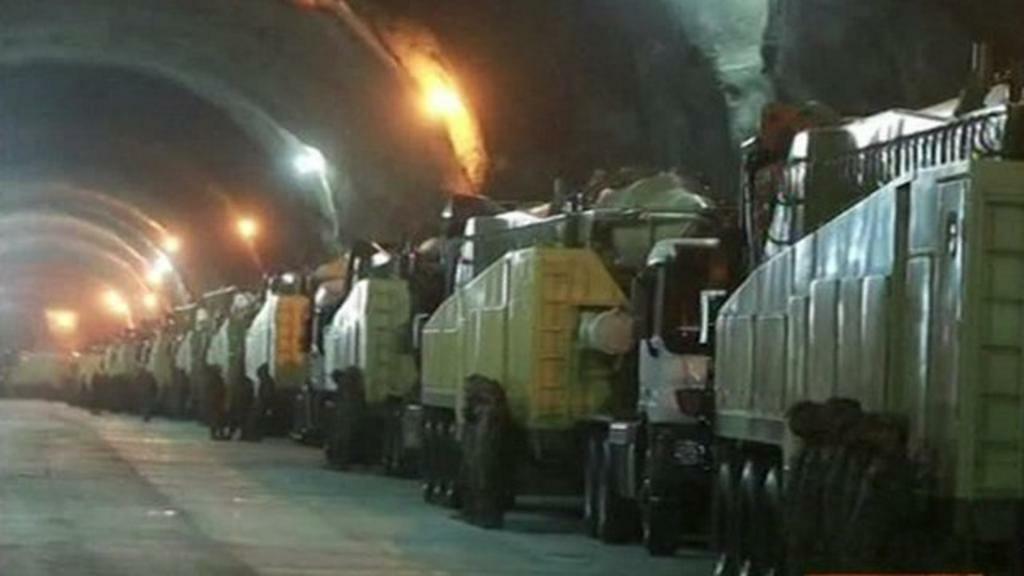
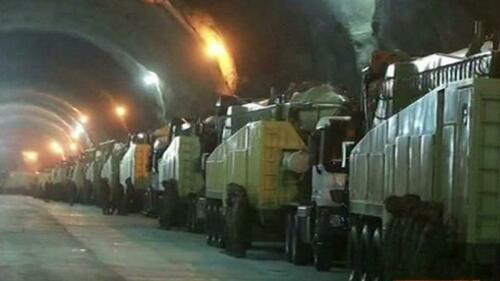
And now US intelligence has freshly assessed that Iranian personnel are busy excavating bombed underground missile bunkers and silos and restoring them to operation within a mere hours of US and Israeli strikes.
The New York Times on Friday featured American intelligence analysis saying that Tehran has retained a substantial number of missiles and mobile launchers, raising serious doubts on how close Washington actually is to eliminating the Islamic Republic’s missile capability.
The report states that Washington cannot determine how many launchers have been destroyed because Iran has deployed decoys. Underground bunkers and silos may appear damaged, but launchers are rapidly recovered from rubble and returned to use through the quick work of excavators and heavy equipment.
Anna Kelly, a White House spokeswoman, has painted a rosy picture from the Pentagon’s point of view: “Here are the facts: Iranian ballistic missile and drone attacks are down 90 percent, their navy is wiped out, two-thirds of their production facilities are damaged or destroyed, and the United States and Israel have overwhelming air dominance over Iran,” she said.
A senior Western official in the NY Times stated that Iran is firing approximately 15-30 ballistic missiles and 50-100 suicide drones per day across the region.
US officials additionally told the Times that Iran aims to preserve as much of its missile-launch capability as possible to sustain its threat posture throughout the conflict and after it ends.
Some of the remaining launchers are currently inaccessible, buried under rubble from repeated airstrikes, but there’s the expectation that Iran will race to dig them out. NYT further cites the following:
Haaretz, the Israeli publication, reported earlier that Iran had used bulldozers to dig out missile launchers that had been buried, or “corked,” in underground bunkers.
President Trump and US planners around him probably didn’t expect the Islamic Republic to put up as much of a fight as it’s still able to do this many weeks into Operation Epic Fury.
Tehran was heavily bombed last night. Ishfahan was the main target. Visible secondary explosions suggests that underground weapon storages and missile silos were penetrated by the bunker busters.
Huge loss for Iran.#IranWar #middleastconflict #MiddleEastConflict pic.twitter.com/T7HEzhPJyh
— Global Conflict Monitor (@watchdog_global) March 31, 2026
Iranian missiles have continued to wreak havoc across Israel especially, with citizens spending many hours each day huddled in shelters, especially in central Israel and Tel Aviv.
* * *
Tyler Durden
Sat, 04/04/2026 – 15:10

DHS Rescinds Policy Requiring Secretary Review Of Contracts Above $100,000
DHS Rescinds Policy Requiring Secretary Review Of Contracts Above $100,000
Authored by Kimberly Hayek via The Epoch Times (emphasis ours),
The Department of Homeland Security (DHS) rescinded a policy on March 31 that required the department secretary to personally approve every contract and grant exceeding $100,000.
Homeland Security Secretary Markwayne Mullin issued the reversal across all DHS components, including Customs and Border Protection (CBP) and U.S. Immigration and Customs Enforcement (ICE). The change ends an earlier directive from former Homeland Security Secretary Kristi Noem that required the secretary’s office to handle routine purchasing decisions previously handled at lower levels.
However, contracts and grants above $25 million will still require secretary review.
DHS stated that the move will “streamline the contract process and empower components to carry out their mission to protect the homeland and make America safe again.” The department told The Epoch Times in a statement that Mullin “re-evaluated the contract processes to make sure DHS is serving the American taxpayer efficiently.”
Mullin signaled the shift at the department during his confirmation hearing this month.
“I’m not a micromanager,” he said, referring to Noem’s policy. “We put people in, we empower them to make decisions. What is required to come up to my level, we’ll make decisions.”
Noem’s policy, signed shortly after she took office in 2025, sought to tighten oversight of taxpayer dollars at a time when DHS managed billions in contracts for border security, immigration detention, and disaster response.
In September 2025, a Senate Homeland Security and Governmental Affairs Committee review found 1,034 Federal Emergency Management Agency contracts, grants, or disaster-assistance awards that were pending or delayed. The average approval took three weeks, affecting housing inspections, temporary sheltering, and aid distribution after the July 2025 Texas floods and Hurricane Helene.
The change comes as Mullin seeks to reduce bureaucratic gridlock.
The policy shift does not alter core missions funded through contracts, such as ICE detention operations or CBP’s use of surveillance technology and logistics support. Officials say the streamlined approach will help DHS respond faster to both routine needs and emerging threats.
During Noem’s first seven months, DHS saved taxpayers $13.2 billion by reducing grant contracts and cutting 8 percent of non-law enforcement personnel.
The policy also resulted in terminating 118 bad contracts and accelerating state-led recovery funding to get money to victims faster and prevented up to $1.3 billion in external fraud.
Noem left DHS earlier this year after President Donald Trump tapped her for a new hemispheric envoy role focused on regional security.
During his Senate confirmation hearing on March 28, Mullin told senators he would maintain “a very clear line of communication with every one of our agencies’ heads on their authority that [Congress] gave to them within their parameters.”
“But we’re also going to be very responsible for the taxpayer dollars,” he said.
Tyler Durden
Sat, 04/04/2026 – 14:35

Artemis II Now Closer To Moon Than Earth
Artemis II Now Closer To Moon Than Earth
Authored by T.J.Muscaro via The Epoch Times,
Artemis II’s four moon-bound astronauts are officially closer to the Moon than the Earth.
Mission Control confirmed the milestone to the crew at 10:59 p.m. CT on April 3, three days into their historic flight around the moon.
As of 11 p.m., NASA astronauts Reid Wiseman, Victor Glover, and Christina Koch, and Canadian Space Agency astronaut Jeremy Hansen and their Orion spacecraft Integrity were more than 136,000 miles away from the Earth.
This point was also far beyond the halfway point of the more than 252,000 miles they will ultimately reach from home.
Koch noted that the whole crew looked around at each other, acknowledging the milestone.
“We can see the moon out of the docking hatch right now,” she said. “It is a beautiful sight. We’re seeing more and more of the farside, and it’s just a thrill to be here.”
Though now closer to the moon, they still won’t enter its gravitational influence for more than a day.
According to mission leaders, everything is running smoothly, and a planned course-correction burn was canceled because the spacecraft remained on a precise heading.
After two days of critical checkouts, manual test flights, and a series of engine firings from the first crewed launch of the most powerful human-rated rocket NASA’s ever assembled to the first trans-lunar injection burn in more than 50 years, the crew and Mission Control have been able to settle into a much calmer pace.
The first pictures of Earth taken from Integrity were received and shared with the world on the morning of April 3. The crew spoke with members of the media and reflected on how the Earth looked from their vantage point. And upon waking on Day 3, they were able to talk to their families for the first time since the launch.
They then proceeded with the day’s objectives, which focused heavily on testing medical and emergency systems, including performing a CPR demonstration, evaluating the medical kit, and testing the Deep Space Network’s emergency communication.
They were also scheduled to take some pictures of the moon, rehearse cabin configurations in preparation for their upcoming lunar flyby, and find time to exercise during the day.
Each crew member is required to use the flywheel exercise machine—which is like a cross between a resistance cable and a rowing machine—for at least 30 minutes each day.
A view of Earth taken by NASA astronaut and Artemis II Commander Reid Wiseman from the Orion spacecraft’s window after completing the translunar injection burn on April 2, 2026. NASA
Artemis II’s 10-day flight around the moon and back kicked off with a two-day gauntlet of checkouts, tests, and multiple engine burns. After launching from Kennedy Space Center aboard NASA’s Space Launch System, the crew was placed into an elongated elliptical orbit that carried them tens of thousands of miles above Earth.
The crew then began configuring the interior of their Orion crew capsule for flight before taking manual control of the spacecraft to test out its maneuverability.
Glover, who took the controls, noted that the Orion capsule performed wonderfully and flew better than the simulator.
After that, the crew settled into their first rest period, but had to wake up halfway through to perform an engine burn that kept them in a stable orbit and the correct course ahead of the trans-lunar injection burn that would come several hours later.
But, things have not gone completely perfect. There was an unexpected communications dropout, the toilet was not working properly, and they experienced several censor issues, which have persisted throughout the mission. A helium issue was also detected on the service module.
However, mission leaders reported that all problems had been overcome or mitigated through redundancies, as was the case with the helium. NASA leadership credited the enduring problem-solving to the way teams on the ground continue to work with the moon-bound crew in real time.
“It makes me very happy to see that, although we have some minor issues to deal with, the team operates very well, both on the ground—between our mission evaluation room, our flight control team—and with the crew,” Howard Hu, NASA’s Orion program manager, told The Epoch Times.
On Day 4, the crew of Artemis II will once again fly Integrity manually as they get closer to the moon. They will also attempt to take a “selfie” by utilizing a camera on the end of one of Integrity’s solar panels to take a picture of the spacecraft with the Earth in the background.
Tyler Durden
Sat, 04/04/2026 – 13:25
https://www.zerohedge.com/technology/artemis-ii-now-closer-moon-earth

Gen Z Women Are Ditching The ‘Girlboss’ Lie For Tradwife Life, Putting Family First
Gen Z Women Are Ditching The ‘Girlboss’ Lie For Tradwife Life, Putting Family First
Authored by Steve Watson via Modernity.news,
Gen Z women are rejecting the decades-long feminist push that told them family comes second to careers or ‘fame’ and ‘independence’ at all costs.
Fox News host Lara Trump breaks down the new reality playing out among young women.
The clip highlights a fresh EduBirdie study showing young women ranking their dream lives, with the “tradwife” path—stable marriage, children, and a focus on home and family—coming in at a commanding 47 percent. The old “girlboss” dream of luxury, money, and solo hustle scores just 23 percent.
🚨 BOOM! Gen Z women are DITCHING the “girlboss” lie and going FULL tradwife, putting FAMILY and real life first again! pic.twitter.com/yLfD1xJz4F
— Gunther Eagleman™ (@GuntherEagleman) April 4, 2026
Trump laid it out clearly on air. “For so long, there was this feminist movement that tried to push and tell us that we should all just kind of put aside wanting to start a family. Don’t worry about getting married, don’t worry about having kids. You should solely focus on your career.”
She continued, noting what so many women have experienced firsthand: “And I know so many women—and you probably do too… who got to a certain age and realized wait a minute. This is something I actually want. In many cases they either had huge struggle to have children or they couldn’t do it at all and they were left absolutely devastated.”
Trump was quick to push back against the usual leftist attacks. “But you’re right. This isn’t about locking women up in the home and saying like you can’t go out and pursue things independently. This is about women continuing to work and having independent pursuits of their own but it’s a focus on returning to family.”
She drove the point home with a truth many mothers already know: “Those of us with families of our own know it doesn’t matter what I do the rest of my life. Most powerful title I will ever have is title Mom.”
As we’vce previously highlighted, mundane office jobs have been increasingly pushed on women as an ‘attractive’ alternative to starting a family and become a wife and mom.
So called feminists have sold girlboss careerism as exciting and liberating, only for it to deliver burnout, regret, and a fertility crisis instead.
This is a direct backlash against the girlboss narrative that dominated media and culture for years, promising fulfillment through endless hustle while quietly sidelining marriage and motherhood. Young women watched older generations burn out, delay families until it was too late, or end up alone and regretful. Now they’re choosing differently.
The EduBirdie findings noted that nearly half of Gen Z women now rank the tradwife lifestyle—happily married with kids, man as primary earner, emphasis on peace and security—above the high-pressure corporate path. After years of being sold the idea that career must come first, many are simply opting out of the exhaustion.
This makes my heart so happy. Women feeling free to be who they want to be and see who they’re told to be.
— Austinblondelimits Rissa (@RissaMiller2) April 4, 2026
The world is slowly healing!
— Momma Chandy (@MommaChandy) April 4, 2026
Of course, the usual critics chimed in with the tired script about women being forced into “baby factories,” but the data and the sentiment on the ground tell a different story. Young women aren’t being coerced—they’re waking up to what actually delivers lasting fulfillment after watching the alternative fail.
This move toward family-first living aligns with a broader cultural reset. After years of woke messaging that demeaned traditional roles, Gen Z is choosing stability, real relationships, and the freedom that comes from building a home rather than climbing a corporate ladder that often leads nowhere rewarding.
It’s a quiet but powerful rejection of the left’s attempt to redefine womanhood around endless ambition and away from the very things that have sustained societies for generations.
The message is clear: family isn’t a setback—it’s the ultimate win. And more young women are embracing that truth every day.
Your support is crucial in helping us defeat mass censorship. Please consider donating via Locals or check out our unique merch. Follow us on X @ModernityNews.
Tyler Durden
Sat, 04/04/2026 – 12:15
Major US Shale Producer To Boost Output, And It Suggests One Thing
Major US Shale Producer To Boost Output, And It Suggests One Thing
Last month, roughly three weeks into the U.S.-Iran conflict, UBS chief economist Arend Kapteyn told clients that one reason this Middle East energy shock is “not like the 2011-2014 shale boom” is the lack of a comparable response from the U.S. shale patch. In other words, the oil shock was viewed as temporary by major shale players and not worth adding new drilling rigs to the mix.
But now, on day 35 of Operation Epic Fury, that assumption about a less responsive U.S. shale patch in the face of soaring energy prices looks increasingly stale. President Trump’s remarks earlier this week were viewed by some analysts as less of a de-escalation. Trump said, “We are going to hit them extremely hard. Over the next two to three weeks, we’re going to bring them back to the Stone Age.”
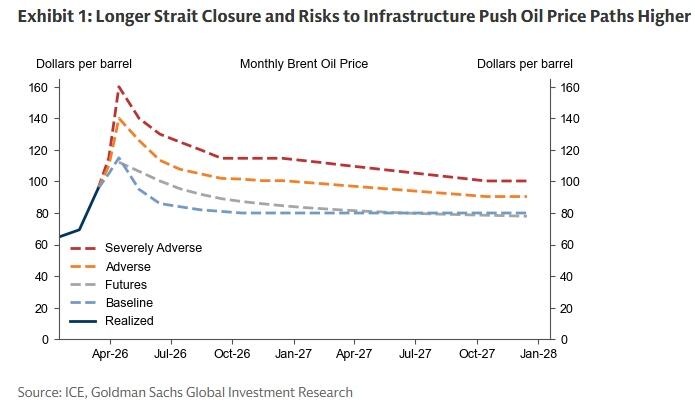
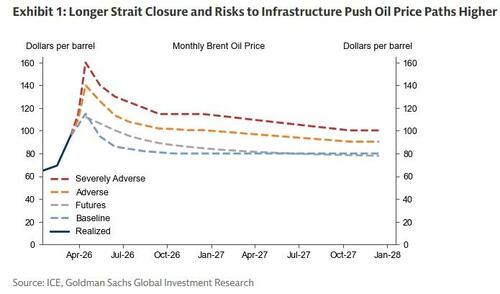
Since Kapteyn’s mid-March note, Wall Street has also started to reprice the duration of the energy shock. Goldman last week raised its 2026 Brent forecast to $80 a barrel, while Reuters polling shows much of the Street expects crude to be over $82 this year, up from the low $60s earlier this year, reflecting that the Hormuz chokepoint won’t fade quickly.
Context here matters because the energy mess in the Gulf is no longer being treated as a “temporary” shock, and shale can no longer afford to ignore it. The longer Hormuz remains disrupted and the more Trump signals a prolonged military campaign, the greater the odds of a response from America’s shale complex.
The first sign that U.S. shale players are beginning to respond to higher prices, and the admission that elevated WTI prices are here to stay, comes from billionaire oil wildcatter Harold Hamm’s Continental Resources, which plans to increase production shortly.
“Continental is increasing our capital budget, which will increase production,” CEO Doug Lawler told Bloomberg in a statement.
Lawler did not explain how much production will increase or how many new rigs will be brought online. Continental operates in North Dakota, Oklahoma, Wyoming, Texas, and has recently expanded into Argentina’s Vaca Muerta.
As of 4Q25, Continental produced 475,000 barrels of oil equivalent per day, with 43% from the Bakken and 23% from the Permian.
Before the conflict, Continental planned to spend about $2.5 billion in 2026, down 20% from 2025, as fears of a global glut emerged and WTI in the low $60s heavily weighed on shale economics.
“If you think that’s because they want to help lower energy prices, think again. Any oil company that commits to boosting future investment thinks oil prices will stay high and wants to cash in,” former Yahoo Finance reporter Rick Newman wrote on X, responding to the Bloomberg story.
If you think that’s because they want to help lower energy prices, think again
Any oil company that commits boost future investment thinks oil prices will stay high and wants to cash in
— Rick Newman (@rickjnewman) April 2, 2026
The question now is whether Continental’s move will spur other shale players to bring on rigs and increase production…
… and, if so, that may add industrial tailwinds for the U.S. economy while also weighing on consumers through elevated fuel prices at the pump (at first) before production increases and weighs down prices.
Tyler Durden
Sat, 04/04/2026 – 11:40
https://www.zerohedge.com/energy/major-us-shale-producer-boost-output-and-it-suggest-one-thing
FBI Arrests Eight Suspects In $60 Million LA County Over Hospice Fraud
FBI Arrests Eight Suspects In $60 Million LA County Over Hospice Fraud
Authored by Madeline Shannon via The Center Square,
The FBI made multiple arrests Thursday in Los Angeles County in connection with allegations over a total of $60 million in hospice-related Medicaid fraud.
First Assistant U.S. Attorney Bill Essayli announced the arrests for Operation Never Say Die during a news conference.
“Federal agents from multiple agencies descended on fraudsters throughout Southern California, executing multiple arrests and search warrants,” Essayli told reporters.
Early this morning, the FBI and partners arrested 8 of 15 defendants charged in connection with 9 separate health care fraud investigations focusing on hospice fraud and other schemes. The arrests were made in and around Los Angeles County, as well as in Court d’Alene, Idaho.… pic.twitter.com/FAPVRNdtLy
— FBI Los Angeles (@FBILosAngeles) April 2, 2026
Eight people were arrested, Essayli said, and charges will be brought against 15 individuals who are accused of defrauding $60 million in health care fraud in greater Los Angeles County, including allegedly operating fraudulent hospice care businesses.
Lolita Minerd, 65, from Anaheim, ran Artesia-based Topanga Hospice Care, which ran a $9.1 million price tag over five years, Essayli said.
According to Essayli, one couple said they were approached by Minerd at a grocery store to sign up as patients for her hospice care business. Essayli said they each received $300 a month from Minerd for allowing her to use their names as patients for her business.
Medicare paid $8.5 million on fraudulent claims filed on this couple’s behalf, Essayli said.
Another couple, Gladwin and Amelou Gill, who were both previously convicted of tax evasion charges, were barred by law from opening a hospice, so they used their daughter’s name to open the hospice care, Essayli said. He added their hospice received more than $4 million in Medicare reimbursement payments, and he noted they discharged 70% of their patients.
Another person named in the press conference, Nita Palma, 76, who was previously convicted of health care fraud and is in a federal prison in Seattle, operated another hospice fraud company in Glendale with her husband Adolfo Catbagan, 68, of Glendale, for more than a year and a half, Essayli said. He added the couple submitted more than $4.8 million in fraudulent hospice care claims and got back more than $3.2 million from Medicare.
“This is not just a fraud problem. This is a California problem,” Essayli said during the press conference.
“The problem you see in California is that there is no vetting and no checking. They do not care because it’s not their money.”
The press conference followed an early morning arrest of Gladwin and Amelou Gill in Los Angeles.
Dr. Mehmet Oz, the administrator for The Centers for Medicare and Medicaid, said during the news conference that he was present in Los Angeles during the couple’s arrest.
“These law enforcement leaders and these brave men and women that I was able to witness this morning go after these criminals are doing God’s work,” Oz said.
“And they’re going to be able to do it more effectively because there’s been a demand made by the president and vice president of an all-of-government effort.”
One of the hospice care facilities billed Medicare more than $9.1 million over five years for the care of patients who were supposedly terminally ill, Essayli said. He added the facility discharged 85% of their patients – five times the national average for a facility that is supposed to care for dying patients.
Assemblymember Alexandra Macedo, R-Tulare, reacted on Thursday to the arrests.
“Dr. Oz was excited to share with me that arrests were happening, and that this was just the beginning of what they would be doing out in California to combat hospice fraud,” Macedo told The Center Square on Thursday.
“But they have a lot of questions as to how this was allowed to happen under [Gov.] Gavin Newsom’s watch for as long as it did.”
Macedo conducted a hospice fraud investigation herself in recent weeks, finding multiple hospice care businesses registered to addresses that are the locations of empty lots or run-down, empty buildings, according to previous reporting by The Center Square.
Her investigation showed that 300 separate businesses were tied to a small number of addresses, which she drove out to herself. She also found that many of the phone numbers associated with those businesses were disconnected. Macedo sent the results of her investigation to Congress.
“What my investigation showed me is who the ‘straw men’ were as the registered agents,” Macedo told The Center Square.
“But there is very clearly somebody teaching them how to do this, or, in my opinion, a puppet master, so finding out who these people are attached to will come out with time.”
According to the U.S. House Committee on Oversight and Government Reform, Medicare, which reimburses hospice care providers, was defrauded an estimated $3.5 billion from fraudulent Medicare reimbursement payments just in Los Angeles County.
“The recent hospice fraud arrests in California are a stark reminder that government healthcare programs are vulnerable to abuse without strong oversight,” state Sen. Tony Strickland, R-Huntington Beach, told The Center Square on Thursday, answering questions by email.
“Millions in taxpayer dollars were siphoned off while vulnerable patients were put at risk. It’s time for real accountability, aggressive enforcement, and consequences for those who failed to act.”
Some Democratic and Republican lawmakers who have authored Medicare-related legislation in California or who represent districts that include Los Angeles did not respond to The Center Square on Thursday.
Other lawmakers on both sides of the aisle communicated through a spokesperson that they were not available to comment. The Centers for Medicare and Medicaid and the FBI did not respond to The Center Square’s requests for comment.
While representatives with Newsom’s office were not immediately available to discuss the arrests, they directed The Center Square to a comment that Newsom’s press office posted on X on Thursday morning.
“Great to see the federal government root out fraud in Trump’s federal health care system in California!” the press office said. “We’re fully supportive.”
The post goes on to note “@CAGovernor Gavin Newsom banned new hospice licenses in 2021 because of rampant fraud.”
Tyler Durden
Sat, 04/04/2026 – 11:05
Trump Reminds Iran “48 Hours Before All Hell Will Reign Down” As Search For Missing US Pilot Continues
Trump Reminds Iran “48 Hours Before All Hell Will Reign Down” As Search For Missing US Pilot Continues
Summary
President Trump reminds Iran of deal timeline, threatens “all hell will reign down” if time runs out.
Israel launched heavy strikes on Tehran, targeting Iranian air-defense and ballistic-missile sites, while a projectile also hit the perimeter of Iran’s Bushehr nuclear plant
The U.S. military continued search operations for an American airman who ejected after an F-15E fighter jet was shot down over Iran
* * *
President Trump Reminds Iran of Timeline, Threatens “All Hell Will Reign Down”
As the long weekend continues, President Trump has issued a statement on his social media feed, reminding Iranian negotiators of his timeline for a deal:
Remember when I gave Iran ten days to MAKE A DEAL or OPEN UP THE HORMUZ STRAIT.
And then the threat:
Time is running out – 48 hours before all Hell will reign down on them.
Glory be to GOD! President DONALD J. TRUMP
The odds of ‘boots on the ground’ have soared to 83% by the end of the month:
It seems the stock market’s hope (diverging from oil’s surge) was misplaced…for now.
Search Operations Continue for Missing Airmen Continues
With U.S. and Israeli air-delivered munitions still striking targets across Iran, and Tehran retaliating by hitting high-value sites around the Gulf area, while continuing to disrupt the Strait of Hormuz, the conflict is now entering its sixth week with no credible signs of near-term de-escalation. Add in President Trump’s speech last week, which warned that intense targeting could continue for a few more weeks, and it’s a very fair assessment that the conflict will carry into next week, with momentum and escalation to the upside.
On Saturday, the U.S. military continued search operations for an American airman who ejected after an F-15E fighter jet was shot down over Iran, marking the first downed U.S. aircraft in the conflict. One crew member was rescued, but the second remained missing, with Iranian forces also racing to find the missing pilot.
The downed F-15 jet came shortly after a U.S. Black Hawk was hit by ground fire, and an A-10 Thunderbolt II reportedly crashed Friday near the Hormuz chokepoint. Friday was not a great day for U.S. aircraft as the conflict intensified.
C-17 Globemaster IIIs are on the move.
🇺🇸🇮🇷 With one of the F-15 pilots still missing in Iran, the U.S conducted the largest visible airlift of the war so far.
C-17s carrying tons of cargo to the Middle East, along with KC-135 refueling tankers, essential for extended duration airstrikes.pic.twitter.com/rHPKx04dYb https://t.co/v9atjkSCGN
— Mario Nawfal (@MarioNawfal) April 4, 2026
Strikes Continue on Both Sides
In a rapidly escalating phase of the US-Israel war on Iran (now around day 36+ since late February strikes that targeted Iranian leadership and infrastructure), Tehran has intensified its retaliation while the US and Israel press air campaigns. Iranian missiles struck central Israel on Saturday, triggering widespread sirens and causing visible damage, including to residential areas and an industrial zone near Beersheba. Reports mentioned cluster bomb effects and shrapnel injuries, though Israeli defenses intercepted many projectiles.
At the same time, Israel launched heavy strikes on Tehran, targeting Iranian air-defense and ballistic-missile sites, while a projectile also hit the perimeter of Iran’s Bushehr nuclear plant, according to the semiofficial Iranian Tasnim news agency. The International Atomic Energy Agency said Iran had notified them about the incident.
🚨🇮🇷🇮🇱 The IDF just posted footage of a ballistic missile launcher being destroyed in Tabriz, Iran’s 4th largest city, deep in the northwest.
That’s the IDF reaching across the entire country to take out the thing shooting at Tel Aviv.
They found it, filmed it, and posted it.… https://t.co/YOKobSXGY1 pic.twitter.com/hMhX5uhTLc
— Mario Nawfal (@MarioNawfal) April 4, 2026
Let’s not forget President Trump’s speech on Wednesday, in which he suggested the conflict could continue for weeks and insisted the missing airman would not alter efforts to negotiate an end to the conflict.
Iran launched a fresh missile barrage at central Israel, causing fires, damage in areas like Negev, Rosh Haayin, Bnei Brak, and reports of cluster munitions; minor injuries reported, with one man hurt in Bnei Brak.
An apparent Iranian drone damaged the Dubai headquarters of the U.S. tech giant Oracle on Saturday after Iranian forces threatened dozens of US firms. Iran has been targeting Gulf area data centers, and reports of a water desalination plant on Friday made headlines.
Latest headlines
(courtesy of Bloomberg):
US Military Losses
Iran shot down a US F-15E Strike Eagle fighter jet on Friday, with one crew member still missing and search-and-rescue operations ongoing [APW] [BN] [APW]
A second US combat plane reportedly crashed in the Persian Gulf the same day [BN] [APW]
Iran has called on the public to find the ‘enemy pilot’ and is promising a reward [APW]
Iran says it used a new air defence system to target the US fighter jet [NS1]
Iranian Attacks
Iran’s Revolutionary Guards targeted an Israel-linked ship, the MSC Ishyka, with a drone attack in the Strait of Hormuz, setting it on fire [NS8] [NS1]
Iranian cluster missiles hit central Israel with at least four impact sites and reports of vehicles on fire [NS8]
Missile fragments impacted near Tel Aviv after an Iranian missile barrage, with no casualties reported [JPT]
US-Israeli Strikes
US-Israeli strikes allegedly hit multiple areas in Iran on Saturday, targeting government-affiliated and industrial facilities including the Bushehr nuclear site [NS8]
More than 30 universities across Iran have been directly targeted by US-Israeli strikes since the war began in late February [NS8]
The US destroyed the B1 Bridge in Karaj on April 2 in two separate bombings, targeting what Iran describes as a civilian engineering project [NS8]
Diplomatic Efforts
Pakistan, Turkey, and Egypt are working to bring the US and Iran back to the negotiating table with a compromise framework focusing on ending hostilities and reopening the Strait of Hormuz [NS8]
Global Impact
The war has entered its sixth week with energy prices rising and little sign that Iran will back down or reopen the vital Strait of Hormuz [BN]
Senegal has banned all but essential foreign trips for government ministers due to cost-saving measures triggered by the energy crisis linked to the Iran war [APW]
Chinese firms with ties to the military are marketing detailed intelligence on US force movements as the war continues [WPT]
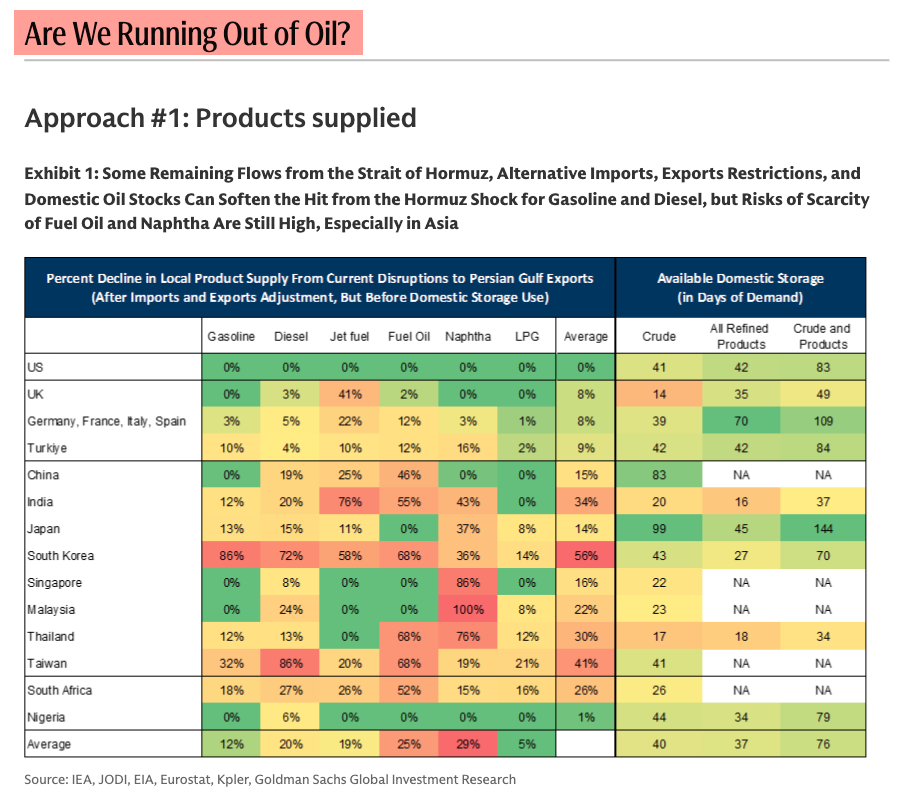
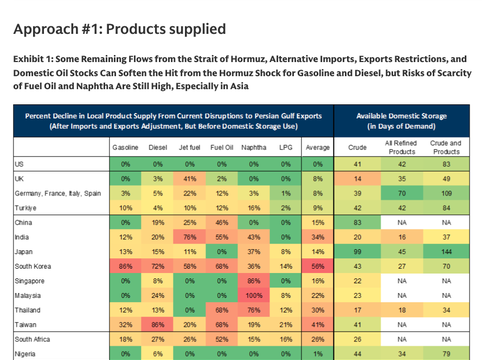
In commodity markets, the ongoing energy shock, with crude and LNG facilities across the Gulf area disrupted and the Hormuz chokepoint still clogged, prompted Goldman analyst Yulia Zhestkova Grigsby to ask on Friday evening: “Are We Running Out Of Oil?”
“As the last tankers that crossed the Strait of Hormuz before the war are reaching their destination, concerns about potential oil shortages are rising,” Grigsby told clients.
She said, “We analyze country-product-specific oil markets, identify pockets of potential extreme tightness, and discuss the potential evolution of near-term shortages if the Strait of Hormuz remains effectively closed for longer.”
“Our three-way analysis highlights already critically low supplies of petrochemical feedstocks — naphtha and LPG — in Asia, with cross-product scarcity in multiple Asian countries in April,” the analyst added.
To end the week, Brent futures and WTI futures both closed Friday in triple-digit territory as traders are becoming increasingly alarmed not just of the crude oil and LNG shortage spreading worldwide but also of petrochemical supply disruptions that are inbound that could affect plastics production, the core material that is bedrock for the modern economy.
Let’s remind readers of how the energy shock dominoes fall.
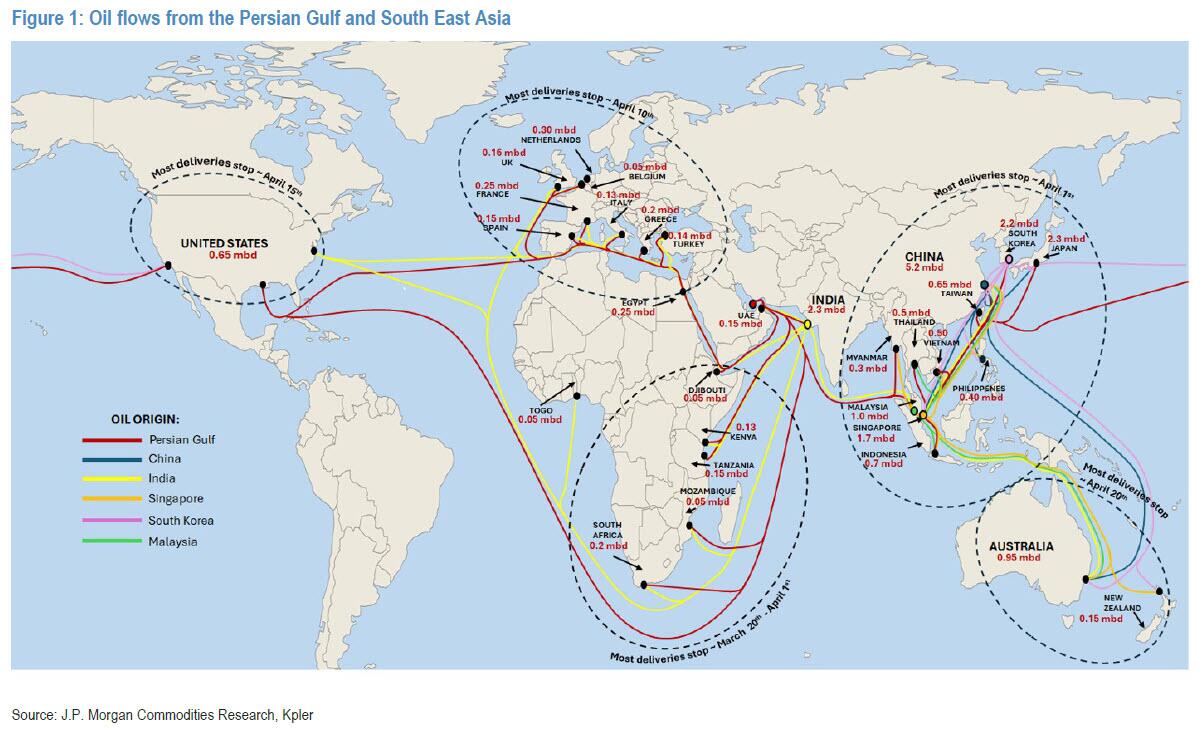
JPMorgan analysts mapped out how the energy shockwave from the Iran war spreads across the world, hitting Asia first, then Africa and Europe, before settling on the US – primarily California.
We’ll provide updates throughout the day as the situation in the Middle East is ongoing.
Tyler Durden
Sat, 04/04/2026 – 10:30
Downed U.S. Drone Appears On TikTok Live As Iraqi Children Try To Sell It
Downed U.S. Drone Appears On TikTok Live As Iraqi Children Try To Sell It
As the U.S.-Iran conflict enters its second month, America’s Low-Cost Unmanned Combat Attack System, or LUCAS, is becoming increasingly visible across the Middle East theater, a sign that the Department of War has learned one critical lesson from both the Iranian drone playbook and the Ukraine-Russia war: cheap drones are the future of warfare.
The latest news on LUCAS comes from an unverifiable TikTok video, amplified on X, which appears to show a downed drone seized by Iraqi children who are reportedly trying to sell it.
If authentic, the footage is another reminder that low-cost drones are proliferating so widely across the region that they will likely spread to other parts of the world.
Iraqi boys trying to sell crashed drone on TikTok
That’s a U.S. LUCAS kamikaze drone (Low-Cost Uncrewed Combat Attack System), reverse-engineered from Iran’s Shahed-136.
Dimensions: ~3 meters long, ~2.4 meters wingspan. pic.twitter.com/DPJ9nKFp03
— Eye on Palestine (@EyeonPalestine) April 4, 2026
In a separate video reposted on X, Iranian forces appear to have recovered a LUCAS drone in the Persian Gulf area.
🚨 BREAKING:
🇮🇷🇺🇸 Iranian forces seized a largely intact U.S.-made LUCAS drone, a Shahed-type system, in the Persian Gulf.pic.twitter.com/WjrtvLuadf https://t.co/0n1GC5O4x0
— Mario Nawfal (@MarioNawfal) April 3, 2026
In the first week of the U.S.-Iran conflict, Iraqi civilians reportedly found an entirely intact LUCAS.
Locals in Iraq appear to have recovered a crashed and almost entirely intact Low-Cost Unmanned Combat Attack System (LUCAS), an American copy of the Iranian Shahed-136 Attack Drone, which is confirmed to have been used recently by Task Force Scorpion Strike during U.S. attacks on… pic.twitter.com/SEqO6627en
— OSINTdefender (@sentdefender) March 2, 2026
Our coverage on LUCAS:
US Launched Kamikaze Drones Against Iran, Reflecting Lessons Learned From Ukraine
India Unveils AI Kamikaze Drone As Global Powers Rush To Acquire Cheap Loitering Munitions
Latest on combat drones:
Ukraine Becomes World’s AI Weapons Laboratory
UAE Unveils Jet-Powered Kamikaze Drone As War Gets A Lot Scarier
And, of course, the massive security gap that has followed:
Micro AI Sentry Guns May Be Next Layer Of Defense For Data Centers Against Kamikaze Drones
Next for these suicide drones is the integration of AI to fully automate the kill chain, as well as upgraded engines that will accelerate flight, allowing them to evade even some of the world’s most advanced air defense systems.
Tyler Durden
Sat, 04/04/2026 – 09:55
https://www.zerohedge.com/military/downed-us-drone-appears-tiktok-live-iraqi-children-try-sell-it
How Will AI-Driven Automation Actually Affect Jobs?
How Will AI-Driven Automation Actually Affect Jobs?
Authored by Alex Imas and Soumitra Shukla via Ghosts of Electricity,
One of the most widely cited findings in AI policy comes from a 2023 paper by Eloundou, Manning, Mishkin, and Rock titled “GPTs are GPTs.” The title is a nice double meaning: the paper studies how general-purpose technologies (GPTs) powered by large language models (also GPTs) may reshape the labor market. The headline finding is that around 80% of U.S. workers could have at least 10% of their tasks affected by LLMs, and roughly 19% may see half or more of their tasks impacted. Broadly, these exposure measures try to capture how “exposed” the occupation is to AI as a function of whether AI can augment the tasks involved in the job: direct exposure is defined as “whether access to an LLM or LLM-powered system would reduce the time required for a human to perform a specific DWA or complete a task by at least 50%.” The authors are crystal clear on this in the paper: exposure corresponds to the capacity of AI to be involved in the job, not the extent to which the job can be automated away.
But the word “exposure” turned out to bring on all sorts of anxieties about exactly that—displacement. And perhaps for this reason, these AI exposure measures have routinely gone viral on social media over the last couple of months.
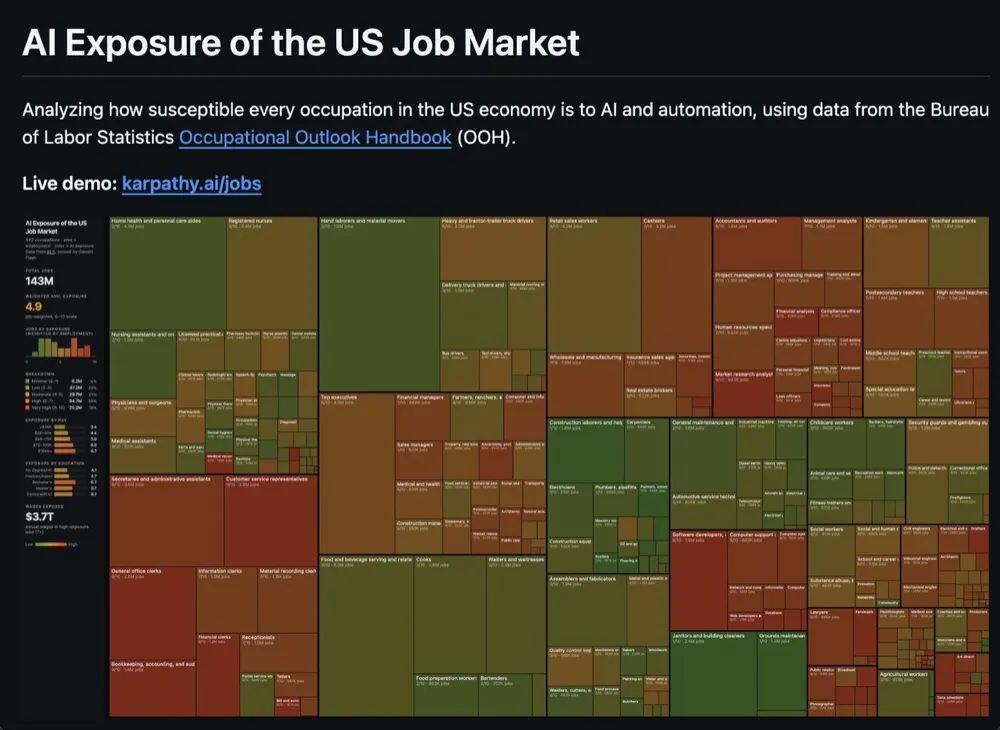
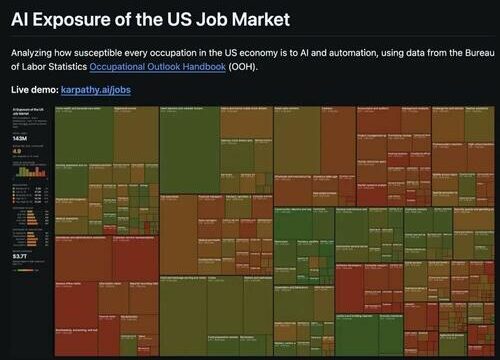
A recent example is by Andrej Karpathy, one of the co-founders of OpenAI and a leader in how to think about AI more generally (e.g., he coined both the terms “jagged intelligence” and “vibe coding”). His dashboard, which he described as a “vibe-coded” weekend project, was a ranking of how exposed major occupations are to AI-driven automation. It quickly went viral on X, as it fed all of the already-existing narratives about rapid job loss due to AI.
After seeing the dashboard sensationalized and spread like wildfire, Karpathy clarified that his “exposure” scorecard was based on a quick, LLM-generated measure of how digital a job is, and was never meant to be a serious forecast of which occupations will shrink or disappear. While his own project website made the same caveat, it was largely ignored on X. To butcher the well-known phrase: “A vibe coded weekend project will travel twice around the world before the caveat has time to put its pants on.”
What this recent episode illustrates, however, is that such exposure measures have caught the public eye but are routinely misread (with some proposing a moratorium on the term “exposure” altogether). When people hear that a job is “80% exposed” to AI, they picture 80% of that job disappearing. The actual economics of AI exposure and job loss are pretty far from that characterization.
What is a “job”?
A job is a set of tasks; a person typically gets paid based on how well they complete all of the tasks associated with the job. So let’s say you’re a project manager. Your job involves a bunch of tasks like generating ideas, outlining those ideas succinctly and getting feedback from team members, putting together presentations, and a bunch of rote work (e.g., approving time sheets, fielding logistics). As the AI models become better, you’ve realized that you can automate many of these things: AI can do a lot of the rote work for you, and can even help you put together presentations. According to the exposure measure, your job is now “exposed” to AI. What happens to your job and what happens to your wage? Well, if automating some of the tasks frees up time to generate better ideas, your overall productivity goes up—you become even more valuable to the firm. Humans are still employed and if anything the wages go up.
On the other hand, if AI automates all of the tasks—let’s say your job only involves two tasks and they both get automated—then yes, human labor will get displaced. Importantly, the fewer the number of tasks (what we call the dimensionality of a job), the greater the incentive of the company to automate it in the first place. This is the part much of the analysis on automation misses: adopting AI into an existing organization is costly, so the firm will be more likely to invest if it can automate the job, not just the task. “Exposure” and risk of automation is not just a function of model capabilities, it also depends on firm incentives. And this is not a hypothetical: we now have plenty of evidence that such incentives matter greatly for what gets automated and when (e.g., firms are much more likely to automate when the cost of human labor increases).
Lastly, even if AI makes people more productive and yields higher wages, there can still be massive layoffs in that sector if consumers do not “absorb” the increased productivity: if productivity-driven price drops do not increase demand for the product, then fewer workers will be needed in that sector.
More generally, a task being exposed to AI—even if that exposure corresponds to full automation of that task—can potentially lead to higher wages and more hiring for that occupation. Or it can lead to layoffs and even full displacement. Whether exposure leads to better or worse labor market outcomes for workers depends on two key variables: the elasticity of consumer demand in that sector (how much more of the product people buy as prices decrease), and the dimensionality of the job (how many tasks are involved in that job). As we hope to convince you by the end of the piece, we should be a lot more worried about jobs like trucking and warehousing than we currently are.
The standard approach to automation
Let us start with the “standard” approach to thinking about automation. First, we decompose jobs into tasks using a taxonomy like O*NET, then evaluate how many of those tasks can be automated or augmented by AI. The total impact on the job is a weighted average of how much each task was improved, which means you can build an “exposure index”—typically defined as what share of a job’s tasks can AI do?—and that index maps linearly into how much the job is affected (see, e.g., Michael Webb’s already-classic paper). This approach has been enormously useful for mapping the landscape of AI’s potential reach. But it contains an assumption that is almost certainly wrong for most real-world jobs: it assumes tasks are separable. That is, automating task A has no effect on the productivity of task B, and the overall impact is just the sum of parts.
Consider the jobs that you know. There are many out there where the output consists of doing many different things right, not just some of them. You can’t have a cook who follows most of the steps of a recipe, a drummer who is mostly on the beat, a programmer whose code only partially works (or, for that matter, a professor who only does the research half of the job…though some have tested this requirement). These are jobs where each task needs to be completed successfully for the output to be acceptable.
Put differently, the tasks are not separable; they are complements, i.e., doing one task right or wrong affects how well you can do others in the job in order to complete it. That tasks within a job are complements rather than substitutes seems quite plausible for most real-world production. And this has a wide range of important implications for how AI will actually affect jobs.
The O-ring model of jobs
The idea that complementary tasks create nonlinear productivity goes back to Michael Kremer’s classic 1993 paper, “The O-Ring Theory of Economic Development”. The name comes from the tragic Challenger disaster: a single faulty O-ring caused the catastrophic failure of the entire system. Kremer’s insight was that if production requires many steps, and each step needs to be done well for the final product to have value, then productivity becomes a multiplicative rather than a linear function of skill. A worker who makes slightly fewer errors per task will be dramatically more productive overall, because those small quality gains compound across every step.
This task-based model of jobs has gained fresh relevance with a recent paper by Joshua Gans and Avi Goldfarb, “O-Ring Automation,” which applies Kremer’s framework directly to AI-driven automation. While their model might appear simple at first glance, its implications are far-reaching and profound. At least one of us (Alex) has been obsessed with this paper for months (see here, here, and here).
Gans and Goldfarb build a model of a firm where each worker’s job is composed of n tasks. The job’s output is multiplicative in the quality of each task—this is the O-ring production function:
A worker has a time endowment h and allocates it across the n tasks. If task s is performed manually, the worker spends h_s hours on it and generates quality:
where a is labor productivity, assumed constant across tasks (a simplifying assumption). The worker’s time constraint is:
The firm can also choose to automate any task by renting a piece of capital that delivers a fixed quality θ at cost r per task. This is the key part to pay attention to: whether firms invest in automating a task depends on the trade-offs embedded in this problem. Once a task is automated, the worker no longer needs to spend any time on it.
So far the setup is quite simple. The interesting part is what the multiplicative structure of the production function implies once automation enters the picture.
How can automation raise wages?
Now suppose a firm chooses to automate k out of n tasks. What happens to the worker, and how does that affect the wage?
Before automation, the worker allocates time evenly across all n tasks, which is optimal given the symmetric structure. Each manual task therefore receives h/n hours and has quality a · h/n. Total output is:
After k tasks are automated at quality θ, the worker now has all h hours to allocate across only n – k remaining manual tasks. Each manual task now gets h/(n-k) hours, producing quality a · h/(n-k). Total output becomes:
So output rises after partial automation if and only if:
This is an important condition which states that if the automated task quality θ is at least as good as the worker’s original pre-automation manual quality on those tasks, then the output increases for sure. Output does not automatically rise just because some tasks are automated; it rises when the quality of automation is high enough.
But here is the key insight: because automation also frees the worker to concentrate more time on the remaining tasks, output can increase even if the automated tasks are performed at slightly lower quality than the worker originally achieved before automation. Automation lets the worker concentrate on fewer tasks, raising the quality of each one. This is the “focus effect.” Because of the functional form of the production function, higher quality on the remaining manual tasks doesn’t just add to output—it multiplies through the production function. The worker becomes more productive precisely because they’re doing fewer things.
When the automation quality is sufficiently high relative to what the worker was producing manually on those tasks, the worker’s marginal product rises—and so (typically) does their wage. Partial automation, in the O-ring world, is often a complement to human labor rather than a substitute for it, which increases the worker’s wage.
But this is not necessarily good news for labor
Higher worker productivity is good for wages, but does it lead to more jobs or fewer? This depends on consumer demand. Each worker makes one calculator a day and the firm has 10 workers. All calculators are sold at the prevailing price. Now imagine each worker becomes much more productive so that each worker can make 10 calculators. The price of each calculator falls (costs fall), but consumers still demand roughly the same number of calculators. This is the case of inelastic demand—one that does not respond much to prices. Now the firm will fire 9 of the workers. But what if consumers buy way more calculators at lower prices, i.e., demand is very elastic. Then the firm will actually end up hiring more workers to meet the new demand, despite the fact that they’re more productive.
More generally, if demand is elastic (elasticity > 1), then a price decrease leads to a more-than-proportional increase in quantity demanded. Output expands a lot. The firm needs more workers to produce this higher output, even though each worker is now more productive. Net effect: more hiring.
If demand is inelastic (elasticity < 1), a price decrease leads to a less-than-proportional increase in quantity demanded. Output does not expand much and the firm can produce the same (or slightly more) output with fewer workers since each one is more productive. Net effect: displacement.
This is closely related to a popular idea commonly referred to as Jevons’ paradox: when a resource becomes more efficient to use, total consumption of that resource often increases rather than decreases. When the steam engine made coal more efficient, coal consumption skyrocketed because so many new applications became economically viable. The same logic applies to labor: if AI makes a worker dramatically more productive, and demand for that product is elastic, one may end up with more workers in that occupation, not fewer.
Why job dimensionality matters: The case of firm incentives
The relationship between tasks and the elasticity of consumer demand is an important dimension for predicting AI-driven displacement, but one variable that is often overlooked is the number of tasks in the job itself, i.e., its dimensionality. A job’s dimensionality matters for two reasons.
First, conditional on a task being automated, a low-dimensional job is more likely to be fully displaced. If a job has 20 tasks and one gets automated, a human worker is still required to do the other 19 tasks. But if a job has one task and one task gets automated, that job is gone. Second—and this dimension is perhaps overlooked the most—organizations have a stronger incentive to automate tasks the fewer non-automated tasks are left in the job. Imagine that automating a task requires a $10 million dollar investment (buying the software, onboarding, connecting it to the rest of the system, etc.). In one case, this task is the only non-automated task left in a job; in the other case, if this task is automated, there are 19 other non-automated tasks left. The firm has a much higher incentive to automate the task in the first case than the second because it can then replace the worker and reap the cost savings involved.1
Because of this, firms have a stronger incentive to invest in technology to automate low dimensional jobs. In a low-dimensional job, automating all or most of the core tasks can eliminate the position and the wage bill altogether. That makes the return to automation much larger. In other words, not all “unexposed” tasks matter equally: in some jobs the remaining tasks still keep the existing worker at the firm; in others they do not.
This gives a clear prediction: even if a job is not currently “exposed” to AI, in the sense that AI is not being used for the tasks involved, if it is low dimensional and the technology is getting close to automating the tasks, it should be considered at risk. Firms will work harder and invest more to automate the task(s) involved than in the case where jobs have many non-automated tasks.
Trucking and warehousing, the overlooked canaries in the coal mine
This is why we think people should be more worried about jobs like trucking and warehousing.
Roughly 3 million Americans drive trucks for a living. Many are in their 50s, have been driving for decades, and live in communities where trucking is an economic backbone. Trucking is one of the best jobs one can get without a college degree. The actual work of a long-haul truck driver is dominated by a few core functions: moving the truck safely from point A to point B. The logistics, loading/unloading, etc. are all done by others. If autonomous driving becomes reliable on long-haul routes, the job of a truck driver is not just being augmented; it is fundamentally threatened and may even be displaced entirely. And that possibility is no longer theoretical. Companies such as Aurora Innovation and Kodiak Robotics are already running large-scale autonomous trucking pilots and commercial deployments on constrained routes. Warehousing tells a similar story. Warehousing employs millions of U.S. workers, and many warehouse jobs—picking, packing, sorting, pallet movement—are relatively narrow and increasingly automatable. Abroad, firms are already operating highly automated “dark warehouses” that run around the clock with minimal human labor. These warehouses look nothing like what we see today: they are designed from the ground up to be run by machines.
Now compare that to a knowledge worker, say, a management consultant. The job combines research, data analysis, client communication, presentation design, strategic reasoning, team coordination, and relationship management. That’s at least seven or eight distinct complementary tasks. Claude or Codex might automate the first pass on the data analysis and slide deck creation, but the consultant is still needed for everything. In O-ring terms, automating some tasks can make the remaining ones more valuable by allowing the worker to allocate more time to them—the consultant can spend more time talking to the client and making them comfortable with the implementation, getting buy-in from the various units, etc. As a consequence, wages may rise, and employment may rise too if better output and lower prices expand client demand.
You can see the same logic in many high-stakes professions such as medicine and academia. There are now over 870 FDA-approved radiology AI tools, and 66% of doctors use at least one AI tool, mainly for note dictation and diagnostic support. But these tools are augmenting radiologists and physicians, not replacing them. AI typically handles the routine pattern recognition aspect of the job, freeing doctors to focus on complex cases, patient communication, and clinical judgment. Likewise, academics have been debating whether advances in AI make research assistants more or less valuable. As AI automates routine analytical tasks, both professors and RAs can concentrate more on ideas and judgement, thereby expanding output and demand for skilled research labor. This is yet again the O-ring focus effect in practice.
Same in our lab. Each additional member can do so much more, the challenge is getting everyone up to speed, having open discussions on best ways to use these tools vs not and building a culture where people feel valued more not less. https://t.co/0nEwUadRPF
— Abhishek Nagaraj 🗺️ (@abhishekn) March 18, 2026
What do exposure indices capture?
Let us bring this back to the exposure framework. In the standard approach, a management consultant is highly “exposed” to AI whereas a truck driver is not. But does this mean that the consultant is at higher displacement risk than the truck driver? Not necessarily. The consultant’s high exposure may actually be good news because it means AI will augment many of their complementary tasks, triggering the focus effect and potentially raising wages. On the other hand, the truck driver’s moderate exposure on a single critical task is much more dangerous because trucking companies have a much higher incentive to automate the task of driving, and once that’s done, the job is gone as well. These incentives are already playing out in practice:
NEWS: Jeff Bezos is in talks to raise $100 billion for a new fund that would buy up manufacturing companies and seek to use AI technology to accelerate their path to automation.
It’s linked to Jeff’s Project Prometheus AI startup, which aims to build AI products for engineering… pic.twitter.com/6zlXRQHhOY
— Sawyer Merritt (@SawyerMerritt) March 19, 2026
The relevant object therefore is not average task exposure, but the structure of bottlenecks and how automation reshapes worker time around them. Two jobs with identical exposure scores can have completely opposite displacement risks depending on whether their tasks are complements, whether demand for their output is elastic or inelastic, and the incentives of the firm to invest in automation. The workers at greatest risk are not necessarily those with the highest average exposure, but those whose jobs are built around a small number of core tasks that AI can automate.
1 In the case where jobs are not fully automated, the cost savings from automating the marginal task will depend on the complementarities between the other tasks in the job. The exact relationship is worked out in the O-ring model of automation paper.
Alex Imas is a professor at UChicago Booth. Doing research on Economics and Applied AI. Substack here.
Tyler Durden
Sat, 04/04/2026 – 09:20
https://www.zerohedge.com/economics/how-will-ai-driven-automation-actually-affect-jobs

Netanyahu Boasts 70% Of Iran’s Steel Production Capacity Destroyed
Netanyahu Boasts 70% Of Iran’s Steel Production Capacity Destroyed
Israeli Prime Minister Benjamin Netanyahu stated in Friday remarks that Israeli airstrikes have wiped out roughly 70% of Iran’s steel production capacity, dealing a major blow to its ability to manufacture weapons – from missiles and drones to ships.
“Together with our American friends, we continue to crush the terror regime in Iran. We are eliminating commanders, bombing bridges, bombing infrastructures,” Netanyahu began in a video statement.
Illustrative image, via Steel Radar
“In recent days, the Air Force has destroyed 70% of Iran’s steel production capacity,” he added. “This is a tremendous achievement that deprives the Revolutionary Guards of both financial resources and the ability to produce many weapons.”
But we should also add that this appears part of the Israeli strategy to bring about government and societal collapse, something Netanyahu has at times been more out in the open about.
Israel was the first to begin attacking Iranian energy infrastructure, having hit Pars gas field last month – an action which the White House distanced itself from.
What has become clear is that Iran’s two largest producers – Khuzestan Steel Company and Mobarakeh Steel Company – have both been knocked offline after repeated US-Israeli strikes, with officials warning it could take months to restore operations, and that’s assuming this can be done even as the bombs still rain down.
President Trump has meanwhile warned that Washington has yet to begin “destroying what’s left” of the Islamic Republic’s infrastructure.
Major bridges have already been taken out, and even medical and pharmaceutical complexes, along with instances of deadly attacks on schools.
But for each escalation on Iran’s infrastructure, the IRGC has been hitting back at Israeli and Gulf sites in kind. This has even included reportedly attacking American tech companies based in the Gulf.
Tyler Durden
Sat, 04/04/2026 – 08:45
https://www.zerohedge.com/geopolitical/netanyahu-boasts-70-irans-steel-production-capacity-destroyed